
Upper Respiratory Tract Infection Treatment Market Size and Share
Market Overview
| Study Period | 2020 - 2031 |
|---|---|
| Market Size (2026) | USD 49.36 Billion |
| Market Size (2031) | USD 70.90 Billion |
| Fastest Growing Market | Asia-Pacific |
| Largest Market | North America |
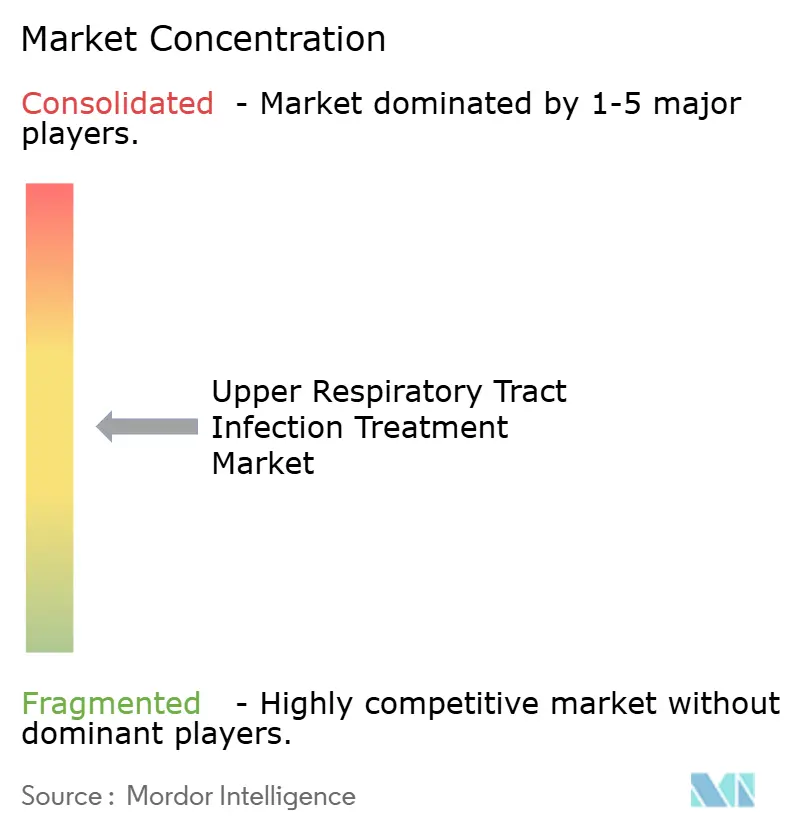
| Market Concentration | Medium |
Major Players *Disclaimer: Major Players sorted in no particular order Image © Mordor Intelligence. Reuse requires attribution under CC BY 4.0. | |
Upper Respiratory Tract Infection Treatment Market Analysis by Mordor Intelligence
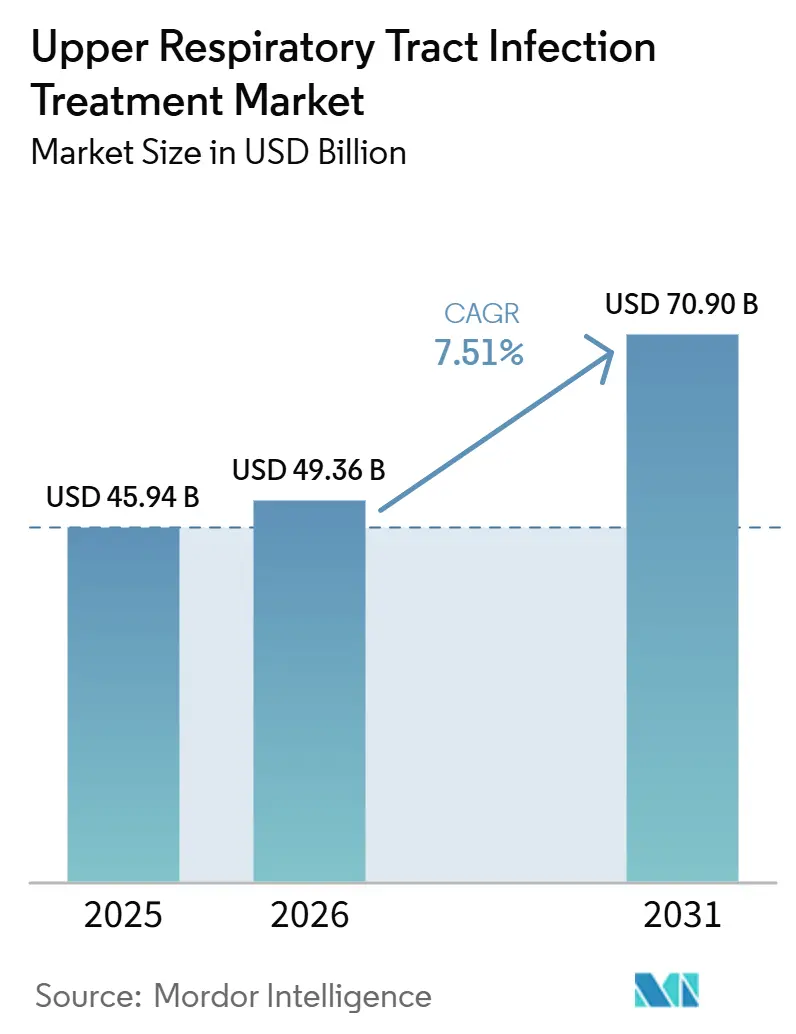
The Upper Respiratory Tract Infection Treatment Market size is projected to be USD 45.94 billion in 2025, USD 49.36 billion in 2026, and reach USD 70.90 billion by 2031, growing at a CAGR of 7.51% from 2026 to 2031.
The upper respiratory tract infection treatment market is supported by the frequency of seasonal viral illness and by wider use of nonprescription symptom relief. Public health efforts to curb avoidable antibiotic use are changing the treatment mix toward symptomatic products and antivirals. This shift can reduce antibiotic volumes while keeping treatment demand steady across retail, online, and clinical settings. Product reformulation, pediatric guidance, and remote care are also changing how people access treatment. The upper respiratory tract infection treatment market, therefore, depends on the balance between accessible self-care and clinically appropriate prescribing.
Key Report Takeaways
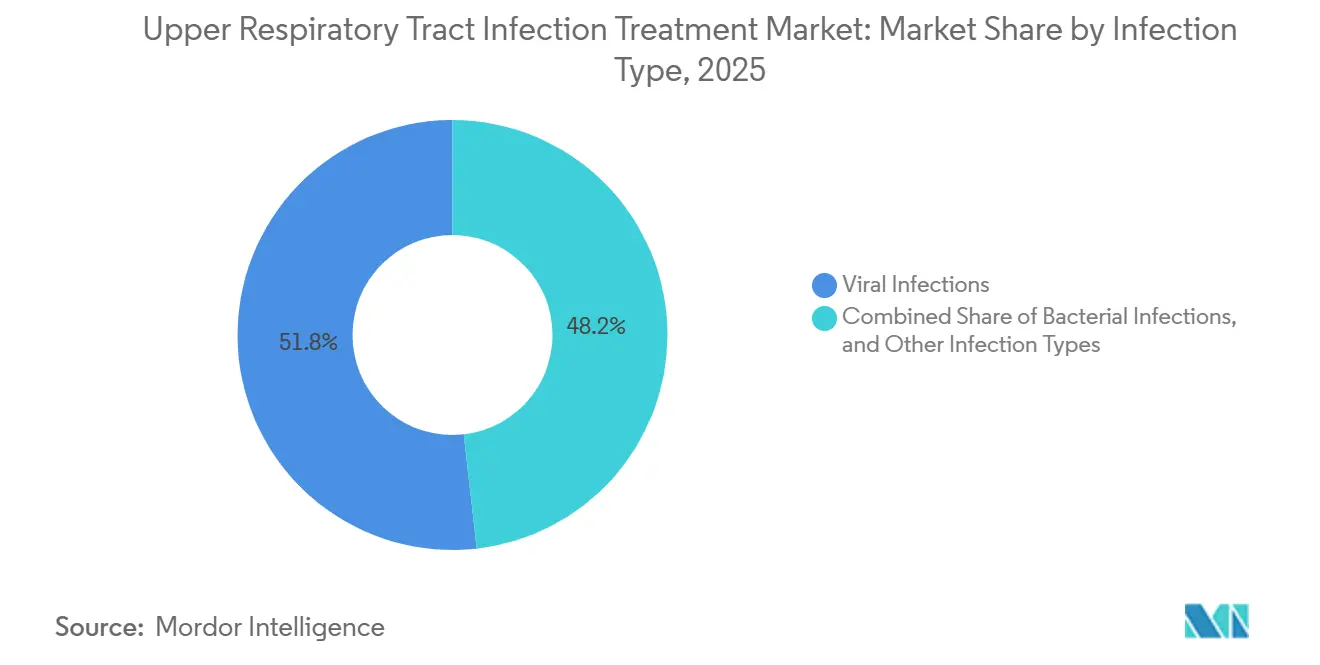
- By infection type, viral infections held 51.81% of the upper respiratory tract infection treatment market share in 2025 and are forecast to grow at 8.62% CAGR through 2031.
- By treatment type, antibiotics held 30.90% of the upper respiratory tract infection treatment market share in 2025, while NSAIDs are forecast to grow at 9.59% CAGR through 2031.
- By route of administration, oral formulations held 55.37% revenue share in 2025, while inhalation is forecast to grow at 9.00% CAGR through 2031.
- By age group, adults held 57.00% revenue share in 2025, while the pediatric segment is forecast to grow at 8.91% CAGR through 2031.
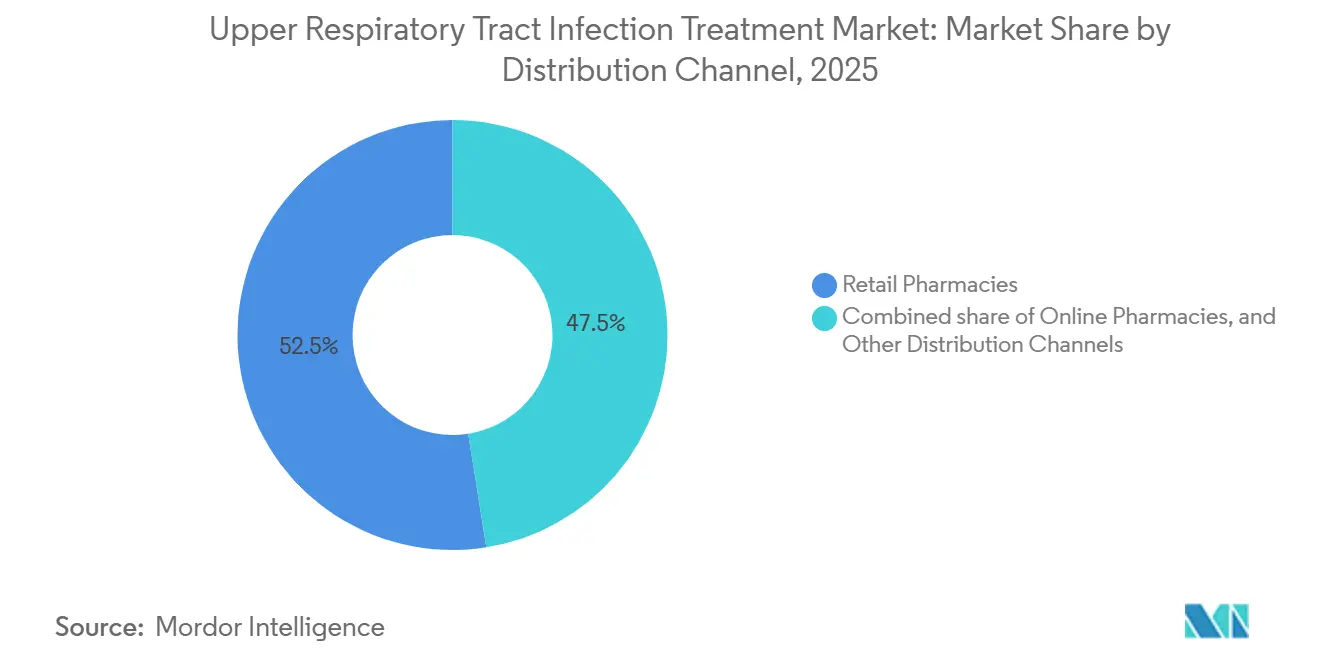
- By distribution channel, retail pharmacies held 52.50% revenue share in 2025, while online pharmacies are forecast to grow at 10.44% CAGR through 2031.
- By indication, the common cold held 42.41% revenue share in 2025, while sinusitis is forecast to grow at 9.08% CAGR through 2031.
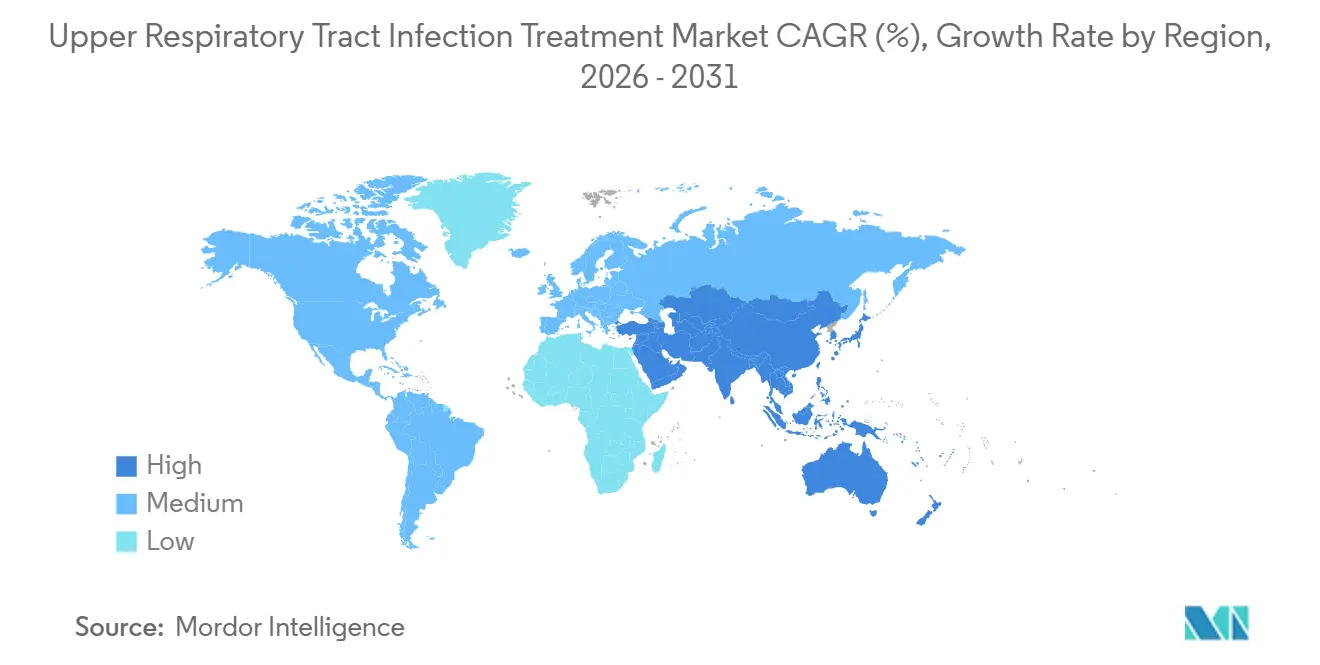
- By region, the North America region held 38.70% revenue share in 2025, while the Asia-Pacific region is forecast to grow at 11.26% CAGR through 2031.
Note: Market size and forecast figures in this report are generated using Mordor Intelligence’s proprietary estimation framework, updated with the latest available data and insights as of January 2026.
Market Trends and Insights
Drivers Impact Analysis of Upper Respiratory Tract Infection Treatment Market*
| Driver | (~) % Impact on CAGR Forecast | Geographic Relevance | Impact Timeline |
|---|---|---|---|
| Rising Burden of Viral Upper Respiratory Infections | +1.8% | Global, strongest in APAC and MEA | Short term (≤ 2 years) |
| OTC Self-Care Expansion for Symptom Relief | +1.5% | North America & Europe, expanding to APAC | Short term (≤ 2 years) |
| Stewardship Shift Away from Unnecessary Antibiotic Use | +1.0% | Global, with early gains in North America, EU, and Australia | Medium term (2–4 years) |
| Faster Reformulation Cycles for Nonprescription Cold and Flu Products | +0.8% | North America & APAC core, spill-over to Latin America | Medium term (2–4 years) |
| Telemedicine-Linked Prescribing for Seasonal URI Episodes | +0.7% | North America & Europe primarily, with adoption in APAC | Medium term (2–4 years) |
| Pediatric Care Standardization in School-Age Respiratory Outbreaks | +0.6% | Global, with early gains in UAE, EU, and North America | Long term (≥ 4 years) |
| Source: Mordor Intelligence | |||
Rising Burden of Viral Upper Respiratory Infections
South-East Asia and sub-Saharan Africa recorded the highest incidence rates in the recent past. These regions provide a large base of treatment need as more consumers use formal pharmacy channels[1]GBD 2021 Upper Respiratory Infections Collaborators, “Global, Regional, and National Burden of Upper Respiratory Infections and Otitis Media, 1990-2021: A Systematic Analysis From the Global Burden of Disease Study 2021,” The Lancet Infectious Diseases, sciencedirect.com. Rhinoviruses cause an estimated 50% of cold-related upper respiratory infections, yet no licensed antiviral specifically targets them. The upper respiratory tract infection treatment market has a clear gap where companies can develop treatments for this common cause of illness. The circulation of RSV, influenza, and COVID-19 alongside rhinoviruses can extend demand for symptom management beyond the traditional winter period.
OTC Self-Care Expansion for Symptom Relief
The upper respiratory tract infection treatment market benefits consumers can identify routine symptoms and obtain suitable relief without a physician visit. Digital symptom checkers and at-home tests have shortened the path between symptom onset and product purchase. These tools can help consumers decide when self-care is suitable and when clinical assessment is needed. Combination products that include decongestants, antihistamines, and analgesics remain relevant for people seeking relief from several symptoms. Manufacturers can use clearer labels and age-appropriate formats to support informed purchase decisions. The upper respiratory tract infection treatment market also gains from wider retail availability, although OTC products must remain aligned with clinical guidance and safety requirements.
Stewardship Shift Away from Unnecessary Antibiotic Use
Antimicrobial stewardship is changing the upper respiratory tract infection treatment market because many upper respiratory illnesses are viral. The CDC reported that at least 28% of outpatient antibiotic prescriptions in the United States were unnecessary, and 75% of sinusitis visits resulted in an antibiotic prescription. A 2025 study found that primary care telemedicine was associated with a 12.1-percentage-point reduction in pediatric antibiotic prescribing. The prescribing rate was 34.6% for telehealth visits and 46.8% for in-person visits, with no increase in follow-up visits or later antibiotic prescriptions. This approach can direct demand toward NSAIDs, antivirals, and symptomatic products that do not contribute to resistance pressure. It also requires manufacturers to show that product claims support appropriate care rather than routine antibiotic use.
Faster Reformulation Cycles for Nonprescription Cold and Flu Products
The upper respiratory tract infection treatment market is seeing more frequent updates to nonprescription cold and flu products. Consumer interest in ingredient transparency and pediatric formats supports this activity. Clinical guidance has recognized NSAIDs and selected botanical agents, including eucalyptus-derived 1,8-cineole, ivy, thyme, and pelargonium extracts, as options in acute respiratory infection management. A 2025 cohort study of 57,971 upper respiratory tract infection patients found that ketoprofen had the lowest switching rate among prescribed NSAIDs, with a hazard ratio of 0.40. The study also reported stronger persistence for rapid-onset salt formulations of dexibuprofen and ibuprofen. These findings give manufacturers a clinical basis for product formulation and retail positioning.
Restraints Impact Analysis of Upper Respiratory Tract Infection Treatment Market*
| Restraint | (~) % Impact on CAGR Forecast | Geographic Relevance | Impact Timeline |
|---|---|---|---|
| Antibiotic Resistance and Stewardship Constraints | -1.2% | Global, most acute in South-East Asia and Sub-Saharan Africa | Short term (≤ 2 years) |
| Weak Efficacy Perception for Some OTC Decongestants | -0.5% | North America & Europe primarily | Medium term (2–4 years) |
| Self-Limiting Disease Nature Limits Premium Rx Uptake | -0.9% | Global, pronounced in cost-sensitive markets | Medium term (2–4 years) |
| Regulatory Scrutiny on Ingredient Safety and Label Claims | -0.6% | North America & Europe, expanding to APAC | Long term (≥ 4 years) |
| Source: Mordor Intelligence | |||
Antibiotic Resistance and Stewardship Constraints
Antibiotic resistance limits the role of broad-spectrum antibiotics in the treatment of upper respiratory tract infections. The World Health Organization reported that 1 in 6 laboratory-confirmed bacterial infections globally in 2023-2024 were resistant to first-line antibiotics. The rate reached 1 in 3 infections in the WHO South-East Asia and Eastern Mediterranean Regions. This limits the clinical utility of antibiotics in regions with substantial infection burden and growing prescription use. It also increases the need for careful diagnosis and for non-antibiotic options where they are clinically appropriate. The upper respiratory tract infection treatment market must respond with therapies that improve symptom care while supporting responsible antimicrobial use.
Self-Limiting Disease Nature Limits Premium Rx Uptake
Many uncomplicated upper respiratory infections are resolved within 7-10 days, which limits demand for high-cost prescription therapies. The University of Florida Health guideline issued in 2025 described supportive care as the basis of care for uncomplicated viral upper respiratory tract infections in children aged 6 months to 12 years. The guideline did not recommend antibiotics, OTC decongestants, or antihistamines for this pediatric group. This guidance directs demand toward supportive and evidence-based treatment options. It can also make it harder to establish a premium price for prescription products when rest, hydration, and symptom monitoring are sufficient. The upper respiratory tract infection treatment market must therefore match product value with the clinical severity of each indication.
*Our forecasts treat driver/restraint impacts as directional, not additive. The impact forecasts reflect baseline growth, mix effects, and variable interactions.
Upper Respiratory Tract Infection Treatment Market Segment Analysis
By Infection Type:
Viral Infections Lead Demand and GrowthViral infections held 51.81% of the upper respiratory tract infection treatment market in 2025 and are forecast to grow at 8.62% CAGR through 2031. Their position reflects the high frequency of rhinovirus, RSV, and influenza infections. The upper respiratory tract infection treatment market size for viral infections is supported by demand for symptom relief as well as antiviral development. Bacterial infections remain important because antibiotics are used for conditions such as bacterial sinusitis and streptococcal pharyngitis. Fungal infections are smaller and serve a more specialized clinical need.
No licensed therapy specifically targets rhinovirus despite its role in an estimated 50% of common colds. This gap gives antiviral developers a defined area for research and development. Viral treatment approaches must also respond to overlapping respiratory virus seasons. Infections may be clinically similar at the onset, which makes an appropriate diagnosis important before treatment selection. Companies that develop therapies for well-defined viral indications can compete on medical need rather than only on established product categories. The upper respiratory tract infection treatment market remains dependent on antiviral progress, diagnostic clarity, and access to symptomatic care.



By Treatment Type:
NSAIDs Grow as Prescribing ChangesAntibiotics held 30.90% of revenue in 2025. Antibiotics retain a substantial role in bacterial sinusitis, streptococcal pharyngitis, and mixed-etiology protocols. Their use is also subject to stewardship programs that discourage treatment where infection is likely viral. NSAIDs are forecast to grow at 9.59% CAGR through 2031. NSAIDs address fever and inflammation and are gaining attention as an initial response for viral upper respiratory tract infections. Antivirals, antihistamines, cough suppressants, expectorants, and decongestants address different symptoms and care requirements. This range of treatments allows the upper respiratory tract infection treatment market to serve varied episodes and patient needs.
A Phase 3 trial published in 2025 found that pelubiprofen was non-inferior to loxoprofen for fever reduction in acute upper respiratory tract infections. The trial reported a comparable safety profile for the 2 treatments. These results support further work on NSAID formulations that offer a rapid onset. Treatment makers must also distinguish products by indication, safety profile, and patient age. Antibiotic developers retain opportunities when bacterial disease is clearly identified. The upper respiratory tract infection treatment industry is therefore moving toward a treatment mix that places more weight on responsible symptomatic care.
By Route of Administration:
Oral Products Remain Central While Inhalation ExpandsOral formulations held 55.37% of revenue in 2025. Oral products remain accessible and familiar across pharmacy, clinic, and home-care settings. They also cover many established treatment types, including analgesics, antihistamines, antibiotics, and antivirals. Intravenous therapies remain relevant for severe presentations and for patients receiving hospital care. Topical products cover narrower needs, such as nasal sprays and throat applications. These patterns preserve the role of oral dosing in the treatment of upper respiratory tract infections.
Inhalation is forecast to grow at 9.00% CAGR through 2031. Inhalation growth reflects interest in intranasal antivirals, inhaled corticosteroid approaches, and local delivery technologies. Local administration may support treatment directed at the mucosal site of illness. It can also provide an alternative to systemic dosing when that approach suits the indication. Manufacturers with device knowledge can use this capability to create differentiated delivery formats. The choice of administration route still depends on clinical presentation, age, and the patient's ability to use the product correctly. The upper respiratory tract infection treatment market will maintain a broad route mix rather than shift entirely away from oral formulations.
By Age Group:
Pediatric Care Supports Faster GrowthAdults held 57.00% of revenue in 2025. Adult demand reflects broad healthcare use and OTC spending. Pediatric growth is linked to interest in age-appropriate formulations and school-age respiratory outbreak management. The upper respiratory tract infection treatment market size for pediatric care also reflects concern that standard OTC cough and cold products may not be suitable for children under 6 years. Geriatric patients have a smaller volume base but may need more clinical intervention because of complications and comorbidities. These differences require product makers to design formats, doses, and labels for distinct patient groups.
The pediatric segment is forecast to grow at 8.91% CAGR through 2031. China published an expert consensus on etiologic diagnosis and clinical management of acute respiratory tract infections in children in 2025. The guidance formalizes treatment pathways for pediatric prescribers. The UAE Ministry of Health and Prevention also issued a pediatric upper respiratory tract infection guideline in June 2024. National guidelines can make clinical expectations clearer for medicines used in children. They also encourage manufacturers to align pediatric products with local prescribing practices. The upper respiratory tract infection treatment market has room for formats that meet age-specific safety and dosing expectations.
By Distribution Channel:
Online Pharmacies Gain Faster AccessRetail pharmacies held 52.50% of revenue in 2025. Retail locations remain important because they offer convenience, pharmacist guidance, and prescription collection. Hospital pharmacies provide prescription and parenteral products for more serious cases and complications. Online channels offer another way to obtain eligible OTC and prescription products. Their growth reflects consumers’ wider use of digital purchasing in healthcare. The upper respiratory tract infection treatment market benefits when channel choice supports timely and appropriate access.
Online pharmacies are forecast to grow at 10.44% CAGR through 2031. Online pharmacy operators can use purchase data to understand seasonal demand and common symptom combinations. This can support product availability and targeted consumer communication. Manufacturers may use digital partnerships to improve visibility of relevant OTC products. Channel activity must still respect rules for prescription dispensing, advertising, and patient privacy. Physical pharmacies remain valuable where consumer questions need pharmacist support. The upper respiratory tract infection treatment market is likely to use both local pharmacy services and online convenience as part of its distribution model.
By Indication:
Common Cold Leads While Sinusitis Grows FasterThe common cold held 42.41% of revenue in 2025. The common cold leads because it has the broadest incidence among upper respiratory tract infection diagnoses. Sinusitis growth is connected to improved distinction between bacterial and viral disease and to therapies for chronic rhinosinusitis. Pharyngitis and laryngitis provide recurring prescription and OTC demand throughout the year. Conditions such as epiglottitis and laryngotracheobronchitis occur less often but may require more intensive care. This varied indication base supports the upper respiratory tract infection treatment market across routine and more severe presentations.
Sinusitis is forecast to grow at 9.08% CAGR through 2031. Sanofi and Regeneron presented EVEREST data in June 2025 showing Dupixent outperformed omalizumab across all endpoints in chronic rhinosinusitis with nasal polyps. The result shows the importance of targeted treatment in refractory sinusitis. It also distinguishes chronic rhinosinusitis care from routine common cold symptom management. Accurate diagnosis remains central because sinusitis can have bacterial, viral, inflammatory, and chronic forms. Companies serving this area need to define which patient population a product is intended to treat. The upper respiratory tract infection treatment market continues to contain both broad OTC demand and specialized prescription opportunities.
Geography Analysis
North America Upper Respiratory Tract Infection Treatment Market
North America held 38.70% of revenue in 2025, the largest regional share in the upper respiratory tract infection treatment market. The region has high OTC use, established retail pharmacy networks, and broad access to branded and generic treatments. Telehealth adoption can also support the assessment of routine respiratory symptoms. Stewardship efforts are changing treatment selection and reducing avoidable antibiotic use. This creates room for symptom relief products and antivirals when clinically appropriate.
Europe Upper Respiratory Tract Infection Treatment Market
Europe has a varied prescription environment because reimbursement and OTC rules differ across national markets. Germany has a strong generic medicine base, while France has meaningful spending on OTC cold remedies. The United Kingdom’s NHS stewardship programs also shape prescribing behavior. GSK’s European application to expand Arexvy to adults aged 18 years and older was accepted by the EMA in June 2025[2]GSK, “GSK’s RSV Vaccine, Arexvy, Accepted for Regulatory Review by the European Medicines Agency for Adults 18+,” GSK, gsk.com. The upper respiratory tract infection treatment market size in Europe is influenced by mature pharmacy access and continuing oversight of product safety.
APAC, MEA and South America Upper Respiratory Tract Infection Treatment Market
Asia-Pacific is forecast to grow at 11.26% CAGR through 2031, the fastest regional rate. This expansion reflects population scale, higher access to formal pharmaceutical channels, and a mix of local and multinational suppliers. India’s manufacturers, including Cipla, Sun Pharma, and Dr. Reddy’s, serve price-sensitive demand with respiratory generics. Pediatric guidelines in China and the UAE also show the wider regional importance of standardized care pathways. The Middle East and Africa grow from a smaller base, with GCC pediatric guidance and South African private and public demand supporting activity. South America is supported by Brazil and Argentina, though currency volatility and healthcare spending constraints limit near-term adoption of premium products.

Competitive Landscape
The upper respiratory tract infection treatment market is moderately fragmented across prescription, consumer health, and generic product categories. GSK, Pfizer, Sanofi, AstraZeneca, Johnson & Johnson, and Boehringer Ingelheim compete with broad branded portfolios. Cipla, Teva, Viatris, and Sun Pharmaceutical compete in generic and price-sensitive product lines. Companies increasingly differentiate through indication coverage, delivery format, and access to digital channels. This structure means no single participant has a decisive position across every treatment type.
AbbVie announced a USD 10.9 billion agreement to acquire Apogee Therapeutics in June 2026. The transaction adds a respiratory and immunology pipeline that includes IL-13 and TSLP programs. Sanofi acquired Vicebio in July 2025 for USD 1.15 billion upfront and up to USD 450 million in milestones. The acquisition added a bivalent RSV and hMPV vaccine candidate and Molecular Clamp technology. These transactions show that larger companies value respiratory assets that extend across prevention, treatment, and related immunology needs.
Competitive openings remain in rhinovirus-specific antivirals, digital consumer health services, and pediatric formulations. No licensed product specifically targets rhinovirus, despite its role in an estimated 50% of common colds. Diagnostic tools can also support appropriate treatment by distinguishing among respiratory pathogens. Generic manufacturers in India and China continue to apply secondary patent and formulation strategies in established antibiotic and decongestant categories. This puts price pressure on mature products and encourages originators to invest in differentiated products. The upper respiratory tract infection treatment market is thus competitive across innovation-led and value-led product lines.
Upper Respiratory Tract Infection Treatment Industry Leaders
GlaxoSmithKline plc
Johnson and Johnson
Boehringer Ingelheim International GmbH
Pfizer Inc.
Sanofi
- *Disclaimer: Major Players sorted in no particular order
Upper Respiratory Tract Infection Treatment Market Companies Covered in this Report
- Abbott Laboratories
- Abbvie
- Alcon
- AstraZeneca
- Bayer
- Boehringer Ingelheim
- Chiesi Farmaceutici
- Cipla
- Dr. Reddy’s Laboratories Ltd.
- GlaxoSmithKline
- Johnson & Johnson
- Merck
- Mylan
- Novartis
- Pfizer
- Roche
- Sanofi
- Sun Pharmaceuticals Industries
- Teva Pharmaceutical Industries
- Viatris

Recent Industry Developments in Upper Respiratory Tract Infection Treatment Market
- June 2026: AbbVie announced a USD 10.9 billion all-cash agreement to acquire Apogee Therapeutics, adding a clinical-stage respiratory and immunology pipeline including zumilokibart (anti-IL-13) and APG333 (anti-TSLP) for asthma; the deal, expected to close in Q3 2026, accelerates AbbVie’s entry into large-scale respiratory immunology markets.
- March 2026: GSK received expanded FDA approval for Arexvy (RSV vaccine) in adults aged 18-49 years at increased risk, extending the vaccine’s approved population to an estimated 21 million Americans previously ineligible and sharpening competition with Pfizer’s Abrysvo and Moderna’s mResvia in the younger at-risk adult cohort.
- June 2025: Sanofi began early shipments of Beyfortus (nirsevimab) for the 2025-2026 RSV season, months ahead of schedule, citing increased demand since launch; the product remains the only RSV prophylactic monoclonal antibody approved for all infants, and continued supply scaling reinforces Sanofi’s pediatric respiratory franchise.


Global Upper Respiratory Tract Infection Treatment Market Report Scope
As per the report’s scope, upper respiratory tract infection (URTI) treatment primarily addresses symptom management, including nasal congestion, sore throat, and cough, rather than directly targeting the underlying illness. Given that most URTIs are viral, the treatment approach centers on supportive care and allowing sufficient time for natural recovery.
The upper respiratory tract infection market is segmented by infection type, treatment type, route of administration, age group, distribution channel, indication, and geography. By infection type, the market is segmented into bacterial infections, viral infections, and fungal infections. By treatment type, the market is segmented into antibiotics, antivirals, antifungals, decongestants, expectorants, antihistamines, cough suppressants, and NSAIDs. By route of administration, the market is segmented into oral, intravenous, inhalation, and topical. By age group, the market is segmented into pediatric, adult, and geriatric. By distribution channel, the market is segmented into retail pharmacies, hospital pharmacies, and online pharmacies. By indication, the market is segmented into common cold, sinusitis, pharyngitis, laryngitis, and other indications. Geographically, the market is segmented across North America, Europe, the Asia-Pacific region, the Middle East and Africa, and South America. The market report also covers the estimated market sizes and trends for 17 countries across major regions globally. For each segment, the market size and forecast are provided in terms of value (USD).
| Bacterial Infections |
| Viral Infections |
| Fungal Infections |
| Antibiotics |
| Antivirals |
| Antifungals |
| Decongestants |
| Expectorants |
| Antihistamines |
| Cough Suppressants |
| NSAIDs |
| Oral |
| Intravenous |
| Inhalation |
| Topical |
| Pediatric |
| Adult |
| Geriatric |
| Retail Pharmacies |
| Hospital Pharmacies |
| Online Pharmacies |
| Common Cold |
| Sinusitis |
| Pharyngitis |
| Laryngitis |
| Other Indications |
| North America | United States |
| Canada | |
| Mexico | |
| Europe | Germany |
| United Kingdom | |
| France | |
| Italy | |
| Spain | |
| Rest of Europe | |
| Asia-Pacific | China |
| Japan | |
| India | |
| Australia | |
| South Korea | |
| Rest of Asia-Pacific | |
| Middle East and Africa | GCC |
| South Africa | |
| Rest of Middle East and Africa | |
| South America | Brazil |
| Argentina | |
| Rest of South America |
| By Infection Type | Bacterial Infections | |
| Viral Infections | ||
| Fungal Infections | ||
| By Treatment Type | Antibiotics | |
| Antivirals | ||
| Antifungals | ||
| Decongestants | ||
| Expectorants | ||
| Antihistamines | ||
| Cough Suppressants | ||
| NSAIDs | ||
| By Route of Administration | Oral | |
| Intravenous | ||
| Inhalation | ||
| Topical | ||
| By Age Group | Pediatric | |
| Adult | ||
| Geriatric | ||
| By Distribution Channel | Retail Pharmacies | |
| Hospital Pharmacies | ||
| Online Pharmacies | ||
| By Indication | Common Cold | |
| Sinusitis | ||
| Pharyngitis | ||
| Laryngitis | ||
| Other Indications | ||
| By Geography | North America | United States |
| Canada | ||
| Mexico | ||
| Europe | Germany | |
| United Kingdom | ||
| France | ||
| Italy | ||
| Spain | ||
| Rest of Europe | ||
| Asia-Pacific | China | |
| Japan | ||
| India | ||
| Australia | ||
| South Korea | ||
| Rest of Asia-Pacific | ||
| Middle East and Africa | GCC | |
| South Africa | ||
| Rest of Middle East and Africa | ||
| South America | Brazil | |
| Argentina | ||
| Rest of South America | ||


Key Questions Answered in the Report
What is the 2026 value of the upper respiratory tract infection treatment market?
The value is estimated at USD 49.36 billion in 2026 and is forecast to reach USD 70.90 billion by 2031.
Which infection type leads to treatment demand?
Viral infections led with 51.81% revenue share in 2025 and are forecast to grow at 8.62% CAGR through 2031.
Which treatment category is growing fastest?
NSAIDs are forecast to grow at 9.59% CAGR through 2031, while antibiotics held the largest treatment type share at 30.90% in 2025.
Why are online pharmacies becoming more important?
Online pharmacies are forecast to grow at 10.44% CAGR through 2031, supported by digital purchasing and easier access to eligible products.
Which region is growing fastest?
Asia-Pacific is forecast to grow at 11.26% CAGR through 2031, supported by population scale and wider formal pharmacy access.
What restricts the use of antibiotic treatments?
Resistance and stewardship initiatives limit inappropriate antibiotic use, particularly where upper respiratory illness is likely viral.
Page last updated on:





