
Turf Grass Biocontrol Agents Market Size and Share
Market Overview
| Study Period | 2021 - 2031 |
|---|---|
| Market Size (2026) | USD 9.29 Billion |
| Market Size (2031) | USD 12.91 Billion |
| Growth Rate (2026 - 2031) | 6.80 % |
| Fastest Growing Market | Asia-Pacific |
| Largest Market | North America |
| Market Concentration | Medium |
Major Players *Disclaimer: Major Players sorted in no particular order Image © Mordor Intelligence. Reuse requires attribution under CC BY 4.0. | |
Turf Grass Biocontrol Agents Market Analysis by Mordor Intelligence
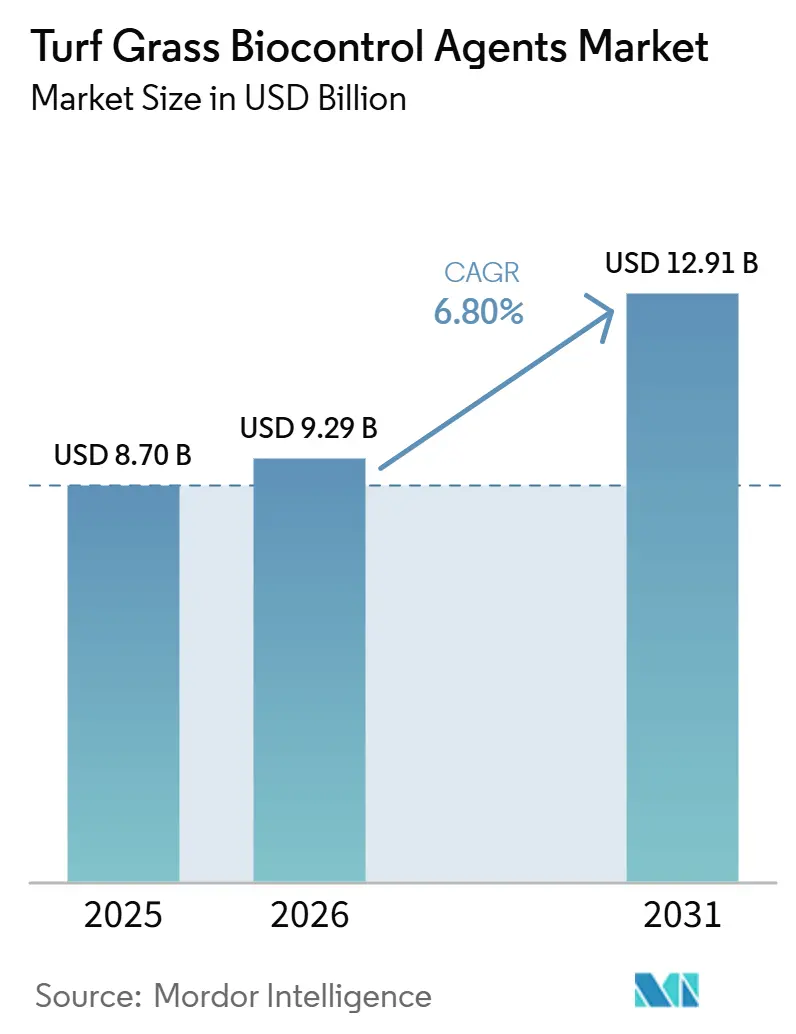
The turf grass biocontrol agents market size was valued at USD 8.70 billion in 2025 and estimated to grow from USD 9.29 billion in 2026 to reach USD 12.91 billion by 2031, at a CAGR of 6.80% during the forecast period (2026-2031). The turfgrass biocontrol agents market is growing as managed turf operators are moving away from synthetic fungicide programs and toward preventive biological protocols that meet tighter residue and input rules. In the United States, the Environmental Protection Agency is streamlining review processes for several low-risk biopesticides, which supports a faster path for new biological actives in the turfgrass biocontrol agents market[1]Source: U.S. Environmental Protection Agency, “EPA Proposes Streamlined Registration Review Process for Several Low Risk Biopesticides,” U.S. Environmental Protection Agency, epa.gov. In Europe, Directive 2009/128/CE is reinforcing the shift by setting pesticide use and risk-reduction targets that favor biological alternatives on professional turf surfaces. The turfgrass biocontrol agents market is also benefiting from higher disease pressure linked to warmer nights, longer leaf-wet periods, and earlier seasonal activity of key turf pathogens, which make preventive use more practical for golf courses and sports fields.
Key Report Takeaways
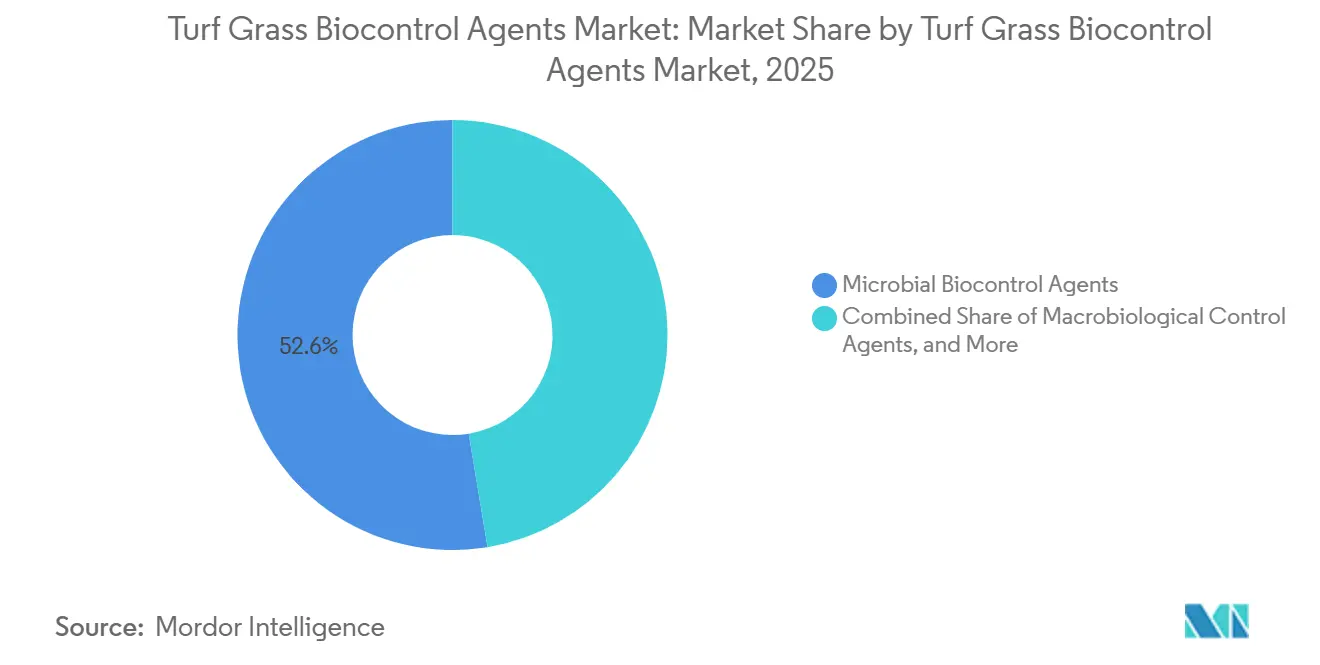
- By type of biocontrol agent, microbial biocontrol agents held the largest segment, 52.6% of the turf grass biocontrol agents market share in 2025, and the same segment is the fastest-growing segment, projected to grow at an 11.6% CAGR through 2026 to 2031.
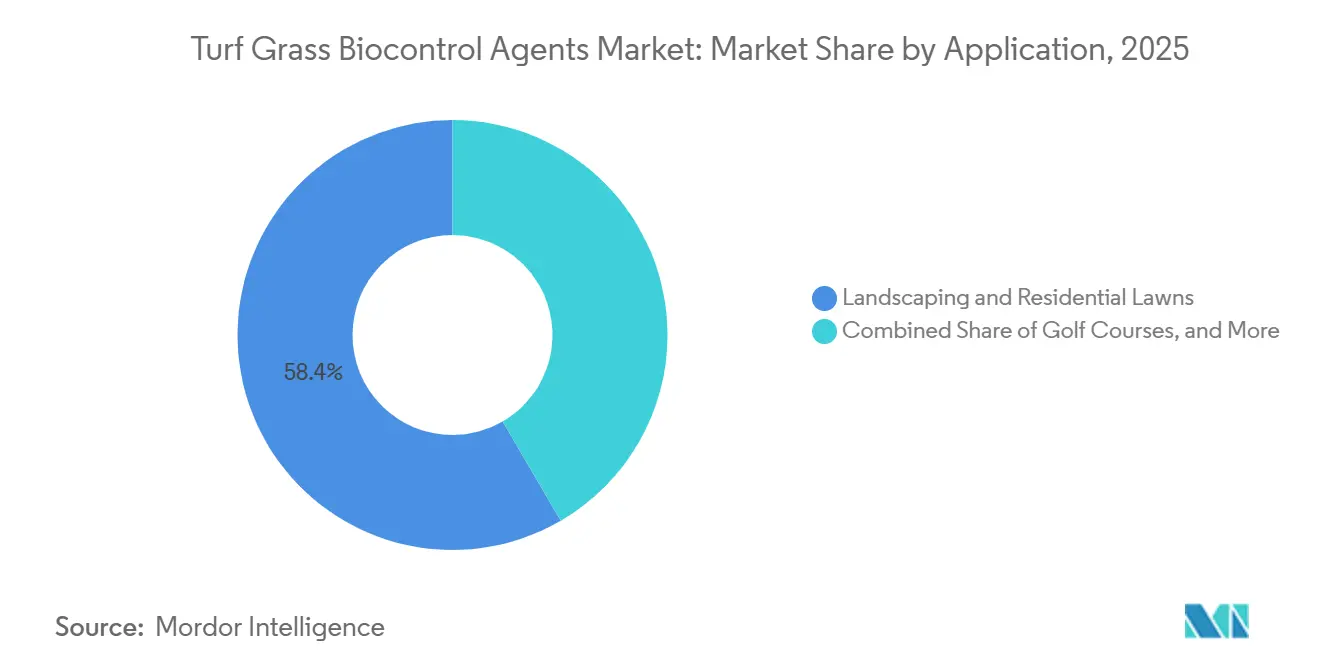
- By application, landscaping and residential lawns hold the largest segment, accounted for 58.4% of the turf grass biocontrol agents market size in 2025, while golf courses are the fastest-growing, forecast to expand at a 9.4% CAGR through 2026 to 2031.
- By formulation, liquid formulations lead the market, accounted for 57.3% of the turf grass biocontrol agents market share in 2025, while encapsulated and suspension formulations identified as the fastest-growing, forecast to expand at a CAGR of 11.0% through 2026 to 2031.
- By geography, North America held the largest region, 34.7% of the turf grass biocontrol agents market size in 2025, while Asia-Pacific recorded the fastest-growing region, projected CAGR at 8.3% through 2026 to 2031.
Note: Market size and forecast figures in this report are generated using Mordor Intelligence’s proprietary estimation framework, updated with the latest available data and insights as of January 2026.
Global Turf Grass Biocontrol Agents Market Trends and Insights
Drivers Impact Analysis*
| Driver | (~) % Impact on CAGR Forecast | Geographic Relevance | Impact Timeline |
|---|---|---|---|
| Rising regulatory preference for low-residue turf inputs | +1.8% | Global, highest intensity in Europe and North America | Medium term (2-4 years) |
| Replacement cycle from synthetic turf fungicides to biological programs | +1.5% | Global, strongest adoption in North America and Western Europe | Medium term (2-4 years) |
| Growth in golf course and sports field stewardship budgets | +1.2% | North America, Europe, Asia-Pacific core markets | Long term (≥ 4 years) |
| Rising disease pressure from climate volatility and heat stress | +1.4% | Global, particularly acute in Europe and Asia-Pacific | Short term (≤ 2 years) |
| Microbial strain innovation, shelf-life, and formulation advances | +0.9% | Global, with early adoption gains in North America | Long term (≥ 4 years) |
| Precision turf monitoring improves biological product timing | +0.6% | North America, Europe, Asia-Pacific core markets | Medium term (2-4 years) |
| Source: Mordor Intelligence | |||
Rising Regulatory Preference for Low-Residue Turf Inputs
The turfgrass biocontrol agents market is seeing a shift in regulation from a background factor to a direct purchasing driver. European policy is narrowing the room for conventional chemistry and raising the value of biological programs that fit integrated pest management goals. In the United States, the Environmental Protection Agency is proposing a streamlined registration review process for several low-risk biopesticides, which improves the commercial outlook for new biological products. This matters because turf managers often need a solution that can stay inside compliance rules without disrupting disease control plans. As a result, the turf grass biocontrol agents market is gaining support from operators who now treat biologicals as a practical requirement rather than a voluntary sustainability upgrade.
Replacement Cycle From Synthetic Turf Fungicides to Biological Programs
The turfgrass biocontrol agents market is also supported by resistance issues in conventional fungicide programs. Research and field discussions on dollar spot indicate that Clarireedia spp. can develop resistance across important fungicide classes, underscoring the need for rotation strategies in managed turf[2]Source: Agronomy Editorial Team, “Synergistic Pest Management Strategies for Turfgrass: Sustainable Control of Insect Pests and Fungal Pathogens,” MDPI Agronomy, mdpi.com. That pattern changes adoption behavior because many turf managers now start with biological tank mixes before moving into broader biological programs. This stepwise shift reduces risk and lets superintendents test fit, timing, and consistency inside familiar spray schedules. Over time, that approach is likely to keep expanding the turfgrass biocontrol agents market, even without a full ban on synthetic products.
Growth in Golf Course and Sports Field Stewardship Budgets
Budget growth at premium venues is creating a favorable setting for the turf grass biocontrol agents market. Golf courses and stadium-grade sports fields are under pressure to deliver visual quality, playability, and environmental compliance at the same time. That mix makes biological programs easier to justify because the cost of visible turf damage is high at these venues. The result is a wider use of preventive products, soil health inputs, and multi-season disease management plans across professional turf sites. As these programs become more established, the turf grass biocontrol agents market benefits from reference cases that other institutional grounds managers can follow.
Rising Disease Pressure From Climate Volatility and Heat Stress
The turfgrass biocontrol agents market is benefiting from changing disease conditions across many turf environments. Warmer nights, longer periods of leaf wetness, and milder winters are increasing the incidence and seasonal range of brown patch, dollar spot, grey leaf spot, and Microdochium nivale on cool-season and transitional turf. The University of Georgia also confirmed active dollar spot infections in spring 2025 research plots, which supports the need for earlier and more preventive disease planning. These conditions expand the time window for biological use, as managers need more tools that can be applied before disease pressure peaks. That is helping the turf grass biocontrol agents market move closer to routine seasonal use rather than occasional trial use.
Restraints Impact Analysis*
| Restraint | (~) % Impact on CAGR Forecast | Geographic Relevance | Impact Timeline |
|---|---|---|---|
| Inconsistent field performance versus conventional chemistries | -1.2% | Global, most acute at professional high-traffic venues | Short term (≤ 2 years) |
| Higher application discipline and timing requirements | -0.8% | Global, most pronounced in institutional and public grounds segments | Medium term (2-4 years) |
| Shorter shelf life and cold-chain sensitivity for some live agents | -0.7% | Middle East and Africa, South America, Asia-Pacific developing markets | Long term (≥ 4 years) |
| Fragmented registration pathways across turf uses and countries | -0.9% | Europe, Asia-Pacific | Medium term (2-4 years) |
| Source: Mordor Intelligence | |||
Inconsistent Field Performance Versus Conventional Chemistries
Performance variability remains the clearest restraint in the turf grass biocontrol agents market. Research on turf biologicals shows that field results can shift with soil temperature, ultraviolet exposure, desiccation stress, compaction, and soil pH, especially on high-traffic surface. That matters more in premium venues because even limited disease expression can affect revenue, reputation, and field scheduling. Turf managers therefore compare biological programs against a very high visual and performance standard. Until consistency improves further, this issue will continue to slow adoption in parts of the turf grass biocontrol agents market.
Higher Application Discipline and Timing Requirements
The turf grass biocontrol agents market also faces an operational barrier because biological products often require more disciplined use than conventional chemistries. Effective application depends on accurate diagnosis, close timing, and a solid understanding of how the product fits with disease cycles and existing inputs. These demands are manageable for premium golf venues with strong agronomy teams, but they are harder for institutional grounds operators working with limited staff and tight budgets. The result is a split adoption pattern between highly skilled operators and the broader middle tier of users. That gap slows volume expansion across the turf grass biocontrol agents market.
*Our forecasts treat driver/restraint impacts as directional, not additive. The impact forecasts reflect baseline growth, mix effects, and variable interactions.
Segment Analysis
By Type of Biocontrol Agent: Microbial Agents Define Category Breadth
Microbial biocontrol agents accounted for 52.6% of the turf grass biocontrol agents market in 2025 and represented the broadest functional segment across disease, pest, and soil health uses. The segment is projected to expand at a 11.6% CAGR through 2031, well above the overall pace of the turf grass biocontrol agents market. This lead stems from the wide range of organisms, including Trichoderma, Bacillus, and Beauveria bassiana, across both foliar and root-zone programs. The category is also easier to build into preventive schedules because microbial products can be used in rotation, in tank mixes, or in longer seasonal plans.
Biochemical biocontrol agents remain smaller, but they are gaining ground in premium turf settings that want residue-free products with more predictable handling characteristics. Macrobiological control agents, mainly entomopathogenic nematodes, keep a stable role in white grub and related soil pest programs where their efficacy is well understood. Plant extract and natural compound products remain the smallest type segment, but they benefit from a simpler regulatory fit in some pathways and from growing interest in low-residue tools. Research showing more than 95% white grub mortality from a sequenced Metarhizium and Heterorhabditis program indicates that the turf grass biocontrol agents industry is moving toward combination programs rather than single-agent use



By Application: On-Field Venues Anchor Demand, Residential Lawns Signal Next Growth Wave
Landscaping and residential lawns accounted for 58.4% of the turf grass biocontrol agents market in 2025, underscoring that professional-use settings still anchor demand. Within that group, golf courses are forecast to record a 9.4% CAGR through 2031 as course managers embed biologicals into routine agronomic planning rather than use them only as trial products. This pattern fits the operating model of golf, where disease prevention, surface quality, and input compliance all matter across a long season. Sports fields are following a similar path, with high-visibility facilities seeking turf protection systems that support playability and environmental targets simultaneously.
Landscaping and residential lawns still offer greater opportunities in the turfgrass biocontrol agents market. Municipal restrictions on synthetic inputs in some urban settings are making contractors more receptive to biological programs, but the product pathway remains less defined than it is for golf and stadium turf. A 2024 case study from Nostoc Biotech showed the successful use of GRANITE on a golf course facing Melolontha grub pressure, and such use cases can translate into high-end landscape applications[3]Source: Nostoc Biotech, “Solución ecológica para Melolontha en campo de golf,” Nostoc Biotech, nostoc.es. Sod farms and public parks remain smaller application segments, but they fit the turf grass biocontrol agents industry well because residue concerns and public-use settings support the case for lower-chemical maintenance plans.
By Formulation: Liquid Dominance Reflects Infrastructure Realities, Encapsulation Gains Ground
Liquid formulations accounted for 57.3% of the segment in 2025, underscoring how strongly the turfgrass biocontrol agents market still follows existing spray infrastructure. Professional golf and sports venues already have liquid application systems, which lower switching friction when managers add biological products to their programs. Liquid formats also fit the common transition model, where biologicals are first used as tank-mix partners before becoming a larger part of the disease plan. This infrastructure advantage has kept liquid products in the lead across the turf grass biocontrol agents market.
Granular formulations remain relevant on institutional grounds and in residential settings, where broadcast spreaders are more common than spray rigs. Powder products still serve some warm-climate markets because they can be easier to move than cold-chain-sensitive live formulations, even if their relative position is narrowing. Encapsulated and suspension formulations are identified as the fastest-growing segment, forecast to expand at a CAGR of 11.0% from 2026 to 2031, and are emerging as the most promising growth area because they can improve stability, extend shelf life, and reduce handling constraints. That direction matters because the turf grass biocontrol agents market needs better logistics and better field consistency at the same time, especially outside the most mature distribution regions.
Geography Analysis
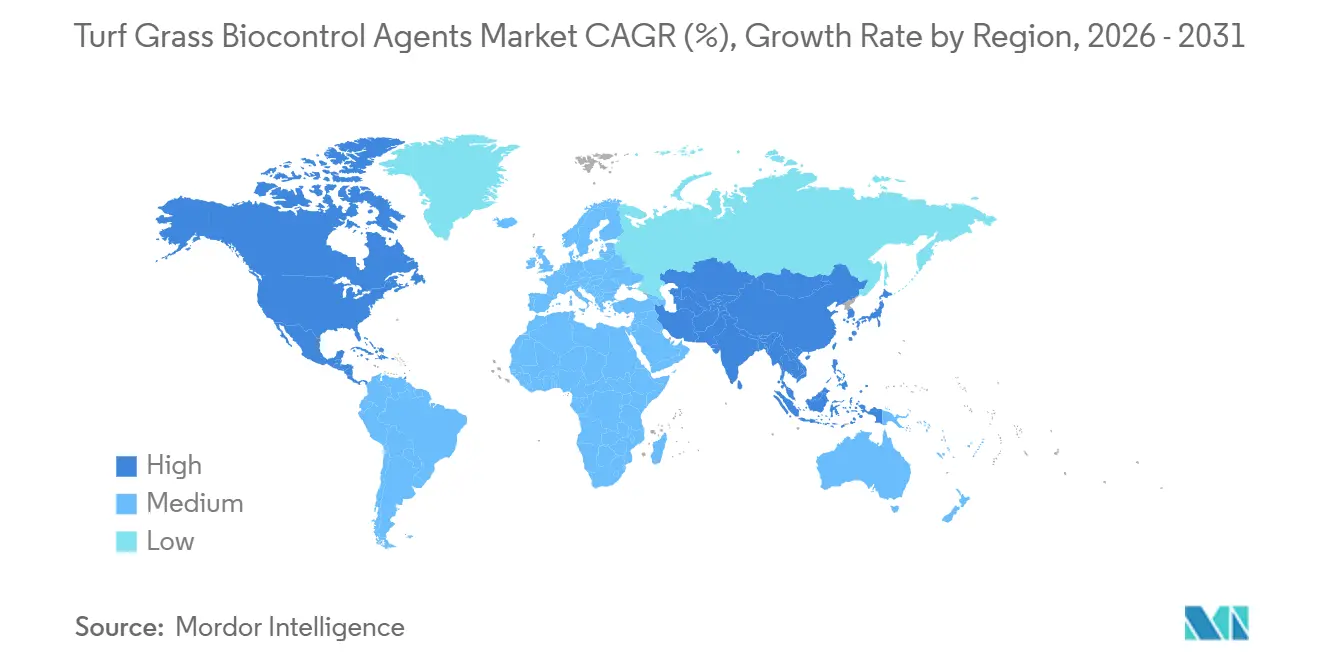
North America accounted for 34.7% of the turf grass biocontrol agents market share in 2025, maintaining its leading position. This dominance is attributed to a well-established professional turf infrastructure, mature biological product distribution channels, and a robust low-risk biopesticide regulatory framework. The Environmental Protection Agency’s proposed streamlining of regulations for low-risk biopesticides is projected to sustain product availability in the region. While North America is projected to grow steadily, its growth rate is anticipated to be slower than the global average due to its already mature market. Europe is projected to experience growth driven by regulatory support and increased investment in premium turf. Directive 2009/128/CE continues to promote reduced pesticide usage and stronger integrated pest management practices, providing biological products with a clearer long-term role in professional turf management. The region's growth is further supported by the rising demand for sustainable and environmentally friendly solutions in the turf industry.
The Asia-Pacific region is forecast to be the fastest-growing market for turf grass biocontrol agents, with a projected CAGR of 8.3% through 2031. This growth is supported by the development of golf courses in China, Japan, and Australia, increased construction of sports fields, and a shift toward lower-chemical maintenance practices. The region's rapid urbanization and growing middle-class population are driving investments in recreational facilities, including golf courses and sports complexes, which require high-quality turf management. Governments in the region are also promoting sustainable agricultural and landscaping practices, further encouraging the adoption of biocontrol agents. Additionally, increasing awareness of the environmental and health benefits of biocontrol agents over chemical pesticides is driving market growth. The presence of emerging markets such as India and Southeast Asian countries, where the adoption of biocontrol agents is still in its nascent stage, presents significant growth opportunities for market players.
The Middle East is projected to expand as golf and premium sports venue projects continue in Saudi Arabia and the UAE, where heat and water stress enhance the importance of integrated turf management programs. Africa is forecast to grow at a slower pace due to challenges in cold-chain logistics and specialty distribution. However, gradual demand from sports venues and golf course development is projected to support market growth in the region. The increasing focus on sustainable practices and the development of local distribution networks are projected to gradually address the logistical challenges in Africa, paving the way for steady market growth.

Competitive Landscape
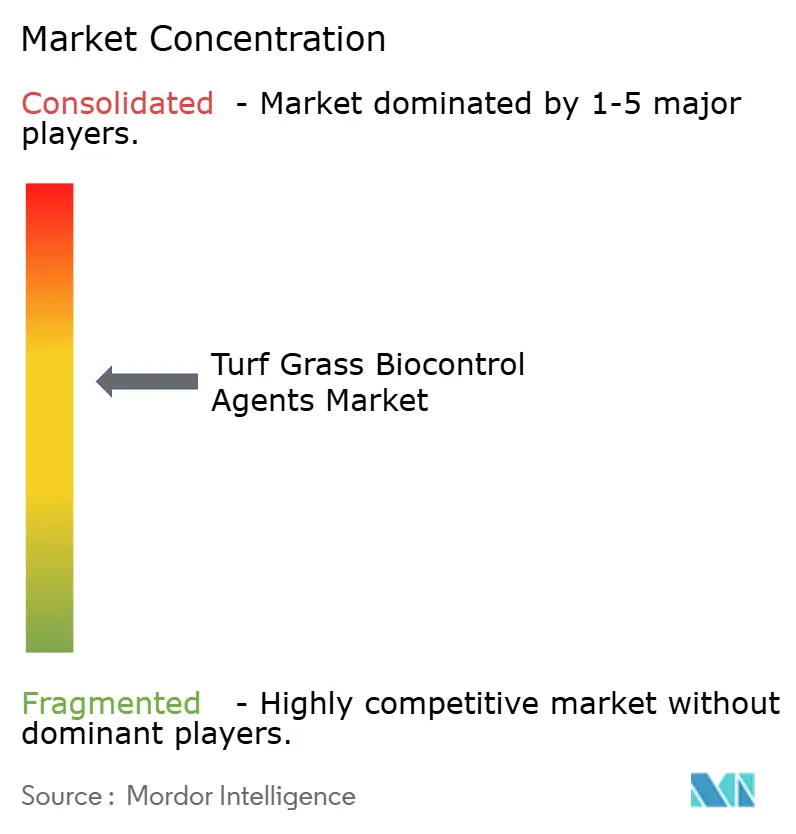
The turf grass biocontrol agents market is moderately concentrated, with competition split between diversified crop science companies and specialist biological firms. Syngenta Group, Bayer AG, BASF SE, UPL Limited, and Corteva Agriscience. benefit from broad channel access and established turf relationships. Koppert, Certis Biologicals, BioWorks, Valent Biosciences, and BioSafe Systems bring more specialized biological depth and a stronger focus on formulation and application fit. This structure gives the turf grass biocontrol agents market a mix of scale, product reach, and targeted innovation. It also means that market leadership depends as much on distribution and field confidence as it does on the active ingredient itself.
Large companies are using acquisitions and partnerships to strengthen their positions in the turfgrass biocontrol agents market. BASF completed the acquisition of AgBiTech in March 2026, expanding its biological crop protection footprint and reinforcing its interest in markets such as Brazil. These moves show that scale players and specialist firms both see room to deepen biological turf offerings through deals rather than only through internal development.
White-space opportunities remain open across warm-climate formulations, institutional grounds, and public-use turf settings within the turf grass biocontrol agents market. Smaller participants such as Bionema, Corebiologic, TeraGanix, and BioSafe Systems can still build share by offering turf-specific support and faster field feedback loops. Product registrations also matter because they give firms a usable bridge into broader integrated pest management programs, as seen in BioWorks’ 2025 EPA registration for PRINCIPLE WP and Pro Farm Group’s 2025 EPA registration for RinoTec Technology. Overall, the turf grass biocontrol agents market is competitive enough to stay innovative, but concentrated enough for scale, portfolio depth, and label coverage to matter.
Turf Grass Biocontrol Agents Industry Leaders
Syngenta Group
Bayer AG
BASF SE
UPL Limited
Corteva Agriscience
- *Disclaimer: Major Players sorted in no particular order

Recent Industry Developments
- March 2026: BASF Agricultural Solutions completed the acquisition of AgBiTech from Paine Schwartz Partners, gaining ownership of biological insect control technologies and manufacturing facilities across the USA, Australia, and Brazil. The deal reinforces BASF's biologicals position and directly expands capacity for the Brazilian market, one of the fastest-growing biocontrol geographies globally.
- June 2025: BioWorks obtained EPA (Environmental Protection Agency) registration for PRINCIPLE WP, a broad-spectrum bioinsecticide based on Beauveria bassiana, with both indoor and outdoor label coverage. The product is OMRI (Organic Materials Review Institute)-listed and suitable for use in integrated pest management programs, including professional turf applications.
- June 2025: Koppert and Amoéba have entered into a significant distribution agreement for Amoéba's European Union (EU)-approved biofungicide, which utilizes patented amoeba technology. This agreement encompasses 18 European countries and the United States, following the approval of Amoéba's biocontrol active substance by European Union (EU) member states.


Global Turf Grass Biocontrol Agents Market Report Scope
Biocontrol agents in turf grass are living organisms, including bacteria, fungi, insects, or nematodes, utilized to suppress, control, or prevent pests, diseases, and weeds in turf grass ecosystems. These agents operate through natural biological processes instead of relying on chemical pesticides. Turf grass biocontrol agents market report is segmented by type of biocontrol agent (microbial, macrobiological, biochemical, and plant extract), application (golf courses, sports fields, landscaping, sod farms, and public parks), formulation (liquid, granular, powder, and encapsulated and suspension), and geography (North America, South America, Europe, Asia-Pacific, and Middle East, and Africa). The report offers forecasts in terms of Value (USD).
| Microbial Biocontrol Agents |
| Macrobiological Control Agents |
| Biochemical Biocontrol Agents |
| Plant Extract and Natural Compound Biocontrols |
| Golf Courses |
| Sports Fields |
| Landscaping and Residential Lawns |
| Sod Farms |
| Public Parks and Institutional Grounds |
| Liquid Formulations |
| Granular Formulations |
| Powder Formulations |
| Encapsulated and Suspension Formulations |
| North America | United States | |
| Rest of North America | ||
| South America | Brazil | |
| Rest of South America | ||
| Europe | Germany | |
| United Kingdom | ||
| France | ||
| Russia | ||
| Rest of Europe | ||
| Asia-Pacific | China | |
| India | ||
| Japan | ||
| Australia | ||
| Rest of Asia-Pacific | ||
| Middle East and Africa | Middle East | Saudi Arabia |
| United Arab Emirates | ||
| Turkey | ||
| Rest of Middle East | ||
| Africa | South Africa | |
| Nigeria | ||
| Rest of Africa | ||
| By Type of Biocontrol Agent | Microbial Biocontrol Agents | ||
| Macrobiological Control Agents | |||
| Biochemical Biocontrol Agents | |||
| Plant Extract and Natural Compound Biocontrols | |||
| By Application | Golf Courses | ||
| Sports Fields | |||
| Landscaping and Residential Lawns | |||
| Sod Farms | |||
| Public Parks and Institutional Grounds | |||
| By Formulation | Liquid Formulations | ||
| Granular Formulations | |||
| Powder Formulations | |||
| Encapsulated and Suspension Formulations | |||
| By Geography | North America | United States | |
| Rest of North America | |||
| South America | Brazil | ||
| Rest of South America | |||
| Europe | Germany | ||
| United Kingdom | |||
| France | |||
| Russia | |||
| Rest of Europe | |||
| Asia-Pacific | China | ||
| India | |||
| Japan | |||
| Australia | |||
| Rest of Asia-Pacific | |||
| Middle East and Africa | Middle East | Saudi Arabia | |
| United Arab Emirates | |||
| Turkey | |||
| Rest of Middle East | |||
| Africa | South Africa | ||
| Nigeria | |||
| Rest of Africa | |||


Key Questions Answered in the Report
What is the 2031 outlook for turf grass biocontrol agents?
The market is forecast to reach USD 12.91 billion by 2031 from USD 9.29 billion in 2026, growing at a 6.8% CAGR.
Which product type leads demand in turf grass biocontrol agents?
Microbial biocontrol agents led with 52.6% share in 2025 and are also the fastest-growing type at an 11.6% CAGR through 2031.
Why are golf courses adopting more biological turf protection solutions?
Golf courses need consistent playing quality, lower residue programs, and better disease prevention, which is why they are projected to grow at a 9.4% CAGR through 2031.
Which region is growing fastest for turf grass biocontrol agents?
Asia-Pacific is the fastest-growing region, with an 8.3% CAGR projected through 2031.
Page last updated on:





