
Thailand Aesthetic Wellness Market Size and Share
Market Overview
| Study Period | 2022 - 2032 |
|---|---|
| Forecast Data Period | 2027 - 2032 |
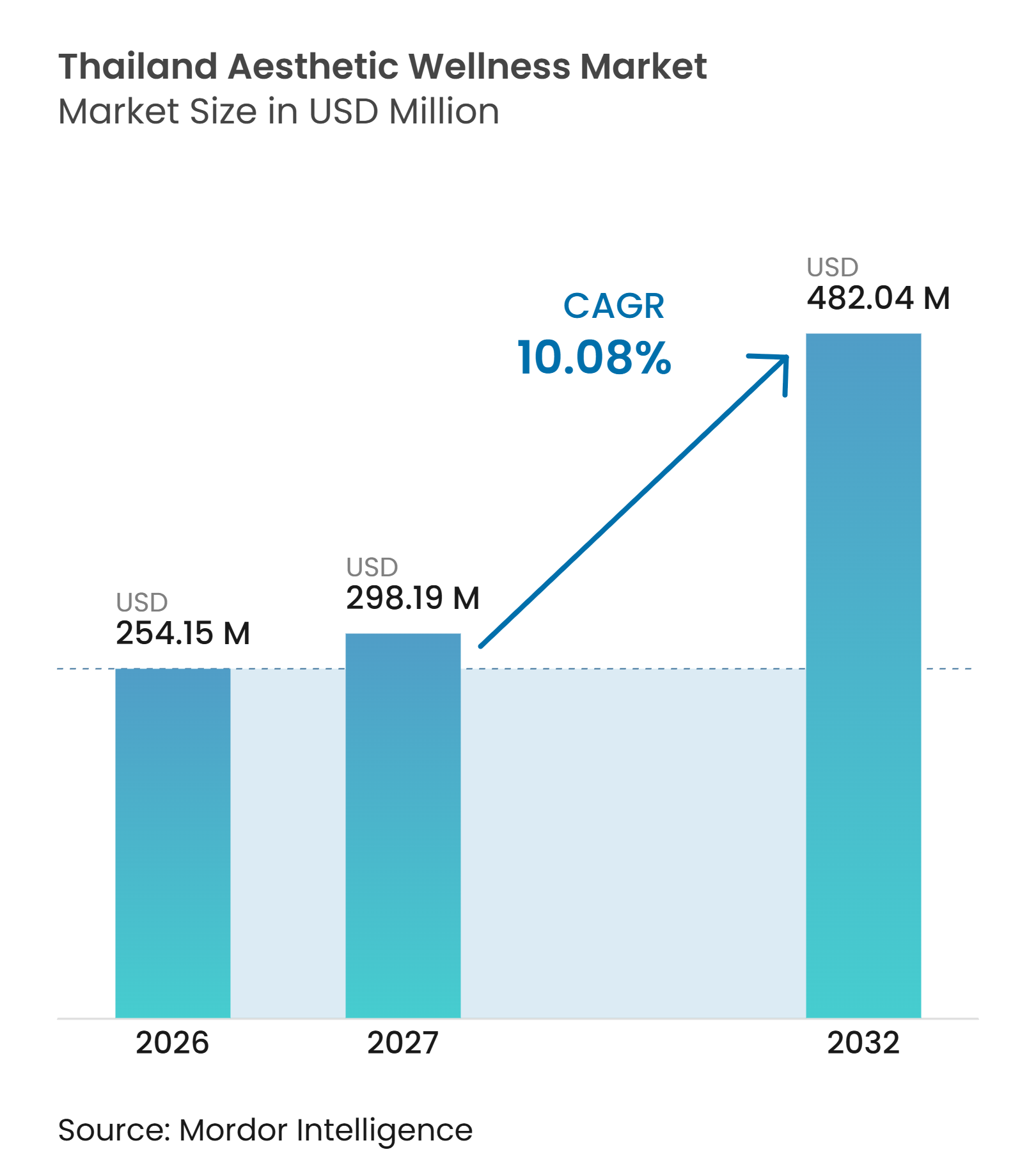
| Base Year Market Size (2026) | USD 254.15 Million |
| Market Size (2027) | USD 298.19 Million |
| Market Size (2032) | USD 482.04 Million |
| Growth Rate (2027 - 2032) | 10.08 % |
| Market Concentration | Low |
Major Players *Disclaimer: Major Players sorted in no particular order Image © Mordor Intelligence. Reuse requires attribution under CC BY 4.0. | |
Thailand Aesthetic Wellness Market Analysis by Mordor Intelligence
The Thailand aesthetic wellness market size was valued at USD 254.15 million in 2026 and is estimated to grow from USD 298.19 million in 2027 to reach USD 482.04 million by 2032, at a CAGR of 10.08% during the forecast period (2027-2032). Demand is shifting toward treatments that provide visible results with minimal recovery time, supporting investment in minimally invasive procedures and device-based care. Thailand benefits from its established health and wellness tourism industry, supported by a broad network of health tourism operators and direct health service providers. Providers are integrating clinical services with recovery, hospitality, and digital booking experiences, particularly in Bangkok and tourism-driven regions. The Thailand aesthetic wellness industry offers opportunities for operators that maintain clinical standards while expanding access beyond the capital.
Key Report Takeaways
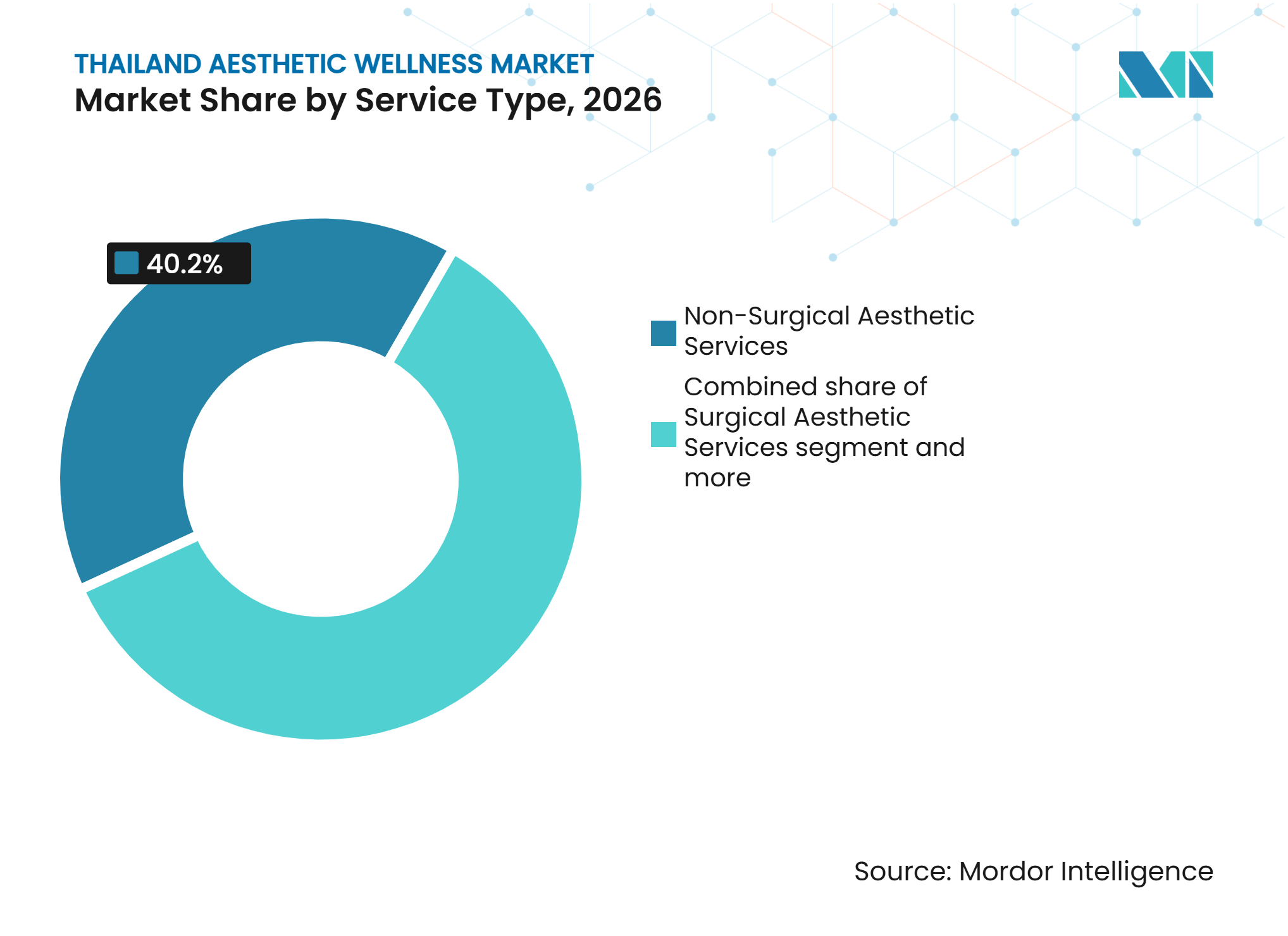
- By service type, Non-Surgical Aesthetic Services accounted for 40.20% of the Thailand aesthetic wellness market share in 2026, and Minimally Invasive Aesthetic Services are projected to grow at a 13.10% CAGR through 2032.
- By treatment category, Facial Aesthetics and Skin Rejuvenation accounted for 33.40% of the Thailand aesthetic wellness market share in 2026, and Injectables and Biostimulatory Treatments are projected to grow at a 12.80% CAGR through 2032.
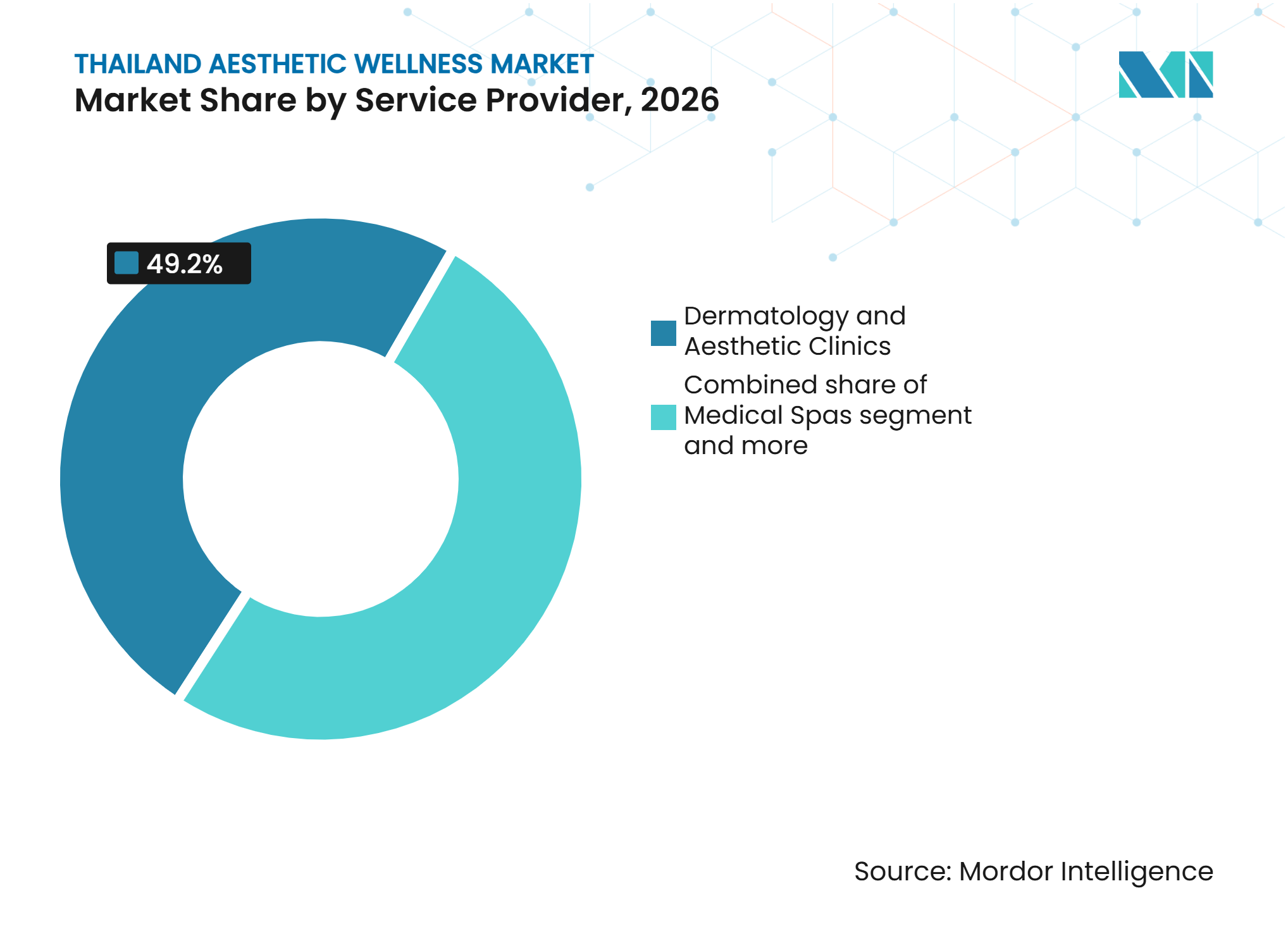
- By service provider, Dermatology and Aesthetic Clinics accounted for 49.20% of the Thailand aesthetic wellness market share in 2026, and Medical Spas are projected to grow at a 12.10% CAGR through 2032.
- By end user, Female consumers accounted for 82.70% of the Thailand aesthetic wellness market size in 2026, and the Male segment is projected to grow at a 10.90% CAGR through 2032.
- By geography, Bangkok and Metropolitan Area accounted for 51.40% of the Thailand aesthetic wellness market size in 2026, and Northeastern Thailand is projected to grow at an 11.27% CAGR through 2032.
Note: Market numbers in this report are based on Mordor Intelligence's proprietary estimation framework, which combines nine months of actuals with Q4 projections for base year 2026.
Market Trends and Insights
Drivers Impact Analysis of Thailand Aesthetic Wellness Market*
| Driver | (~) % Impact on CAGR Forecast | Geographic Relevance | Impact Timeline |
|---|---|---|---|
| Growth in Minimally Invasive and Short-Downtime Treatments | +2.2% | National, with early concentration in Bangkok, Phuket, and Chiang Mai | Medium term (2-4 years) |
| Expansion of Medical and Wellness Tourism | +1.8% | Southern Thailand, Bangkok, and spillover to Northern Thailand | Short term (≤ 2 years) |
| Aging-Population Demand for Longevity and Rejuvenation | +1.5% | Bangkok Metropolitan Area and Central Thailand | Long term (≥ 4 years) |
| Younger-Generation and Inclusive Aesthetic Adoption | +1.0% | National, with LGBTQIA+ and Generation Z concentration in urban centers | Medium term (2-4 years) |
| Digital Discovery and Social-Commerce Conversion | +0.8% | National, with stronger adoption in Bangkok | Short term (≤ 2 years) |
| Clinic Network Expansion Beyond Bangkok | +1.2% | Northern, Northeastern, and Southern Thailand | Medium term (2-4 years) |
| Source: Mordor Intelligence | |||
Growth in Minimally Invasive and Short-Downtime Treatments
Minimally invasive treatments support demand in Thailand’s aesthetic wellness market by offering cosmetic improvements with generally shorter recovery periods than many surgical procedures. These services can accommodate consumers seeking treatments that fit around work and travel schedules. According to 2025 International Society of Aesthetic Plastic Surgery (ISAPS) survey, plastic surgeons in Thailand performed 166,583 aesthetic procedures in 2025. Botulinum toxin procedures totaled 24,700, while hyaluronic acid filler procedures reached 9,120[1]. These figures highlight the role of injectables in the country’s aesthetic treatment mix. Investment in professional training and treatment technologies also supports service development. In June 2025, Candela Thailand and Candela Asia-Pacific hosted the “Mastering Complex Pigmentation” symposium in Bangkok, bringing aesthetic professionals together to discuss PicoWay treatment techniques. THE KLINIQUE also offers Candela Matrix PRO AI laser treatments within its skin-treatment portfolio. Multi-application lasers and radiofrequency platforms can help providers address pigmentation, skin texture and skin tightening through different treatment protocols. However, treatment selection, practitioner training, patient suitability and compliance with applicable Thai medical-device and healthcare advertising regulations remain important considerations.
Expansion of Medical and Wellness Tourism
Medical and wellness tourism remains a key demand channel for the Thailand aesthetic wellness market, as international visitors often combine treatments with accommodation and recovery services. The Ministry of Tourism and Sports reported that the health tourism sector generated THB 670 billion (USD 21.27 billion) in annual revenue in 2025, including THB 220 billion (USD 6.99 billion) from direct health service businesses[2]. This ecosystem gives providers access to hotels, transport links, medical interpreters, and referral networks. Bangkok benefits from direct-flight connectivity and specialist care providers. Southern destinations combine treatments with resort stays, while Northern destinations integrate aesthetic care with wellness travel. These models support comprehensive patient journeys beyond a single clinic visit. International wellness tourists spent USD 1,735 per trip in Thailand in 2023, compared with USD 367 for domestic visitors. This gap supports multilingual consultations, transparent treatment plans, and structured follow-up. Consistent clinical governance remains essential, as adverse outcomes can affect patient confidence and Thailand’s medical tourism reputation. The Department of Health Service Support oversees clinic operations and issues guidance for aesthetic providers. Providers offering accredited care, documented patient information, and recovery support are better positioned to serve inbound demand.
Aging-Population Demand for Longevity and Rejuvenation
Thailand’s aging population supports demand for longevity and rejuvenation services addressing visible aging and broader wellness needs. In 2024, approximately 13.7 million people aged 60 and above accounted for 20.83% of the population[3]. This demographic shift strengthens the potential customer base for anti-aging treatments, including skin rejuvenation, skin tightening, and wrinkle reduction, particularly among consumers able to afford private aesthetic services. The Thailand aesthetic wellness market serves this segment through clinical assessments, phased treatment plans, and services emphasizing safety and continuity of care. Compared with younger, first-time consumers, older clients often prioritize sustained skin health and age-management outcomes over short-term cosmetic trends. Providers are responding by expanding into skin health and longevity alongside conventional cosmetic procedures. In 2025, Teeraporn Hospital invested more than THB 630 million (USD 20 million) to develop its specialized hospital and expand into Skin & Longevity services. The facility combines surgical facial care with anti-aging services, including pre-procedure assessments and post-treatment monitoring, supporting referrals between aesthetic clinicians and hospital specialists. Providers must communicate clinical suitability and treatment outcomes accurately while complying with Thai Food and Drug Administration requirements for lawful, truthful cosmetic claims.
Younger-Generation and Inclusive Aesthetic Adoption
Younger consumers and LGBTQIA+ patients are expanding the services sought from aesthetic providers. They prioritize privacy, accessible consultations, treatment visualization, and convenient digital communication. Relevant services for some LGBTQIA+ patients include gender-affirming procedures, facial surgery, and body contouring. Thailand’s clinical capabilities can support domestic and international demand. Clinics need informed consent processes and consultation settings that respect patient goals and confidentiality. The Thailand aesthetic wellness market can benefit when providers integrate inclusivity into clinical quality rather than relying only on targeted promotion. Younger patient groups are also reshaping customer acquisition and retention. First-time customers often use social media to research procedures and compare practitioner credentials, reviews, and aftercare options before booking. Digital content is more useful when it explains treatment limitations, safety requirements, and recovery expectations rather than focusing only on before-and-after images. Thai Food and Drug Administration (Thai FDA) advertising guidance requires truthful and lawful claims, shaping online communication. This oversight can support informed decisions and reduce unrealistic expectations. Providers that combine compliant digital communication with patient-centered care can build durable relationships with younger and diverse patient groups.
Restraints Impact Analysis of Thailand Aesthetic Wellness Market*
| Restraint | (~) % Impact on CAGR Forecast | Geographic Relevance | Impact Timeline |
|---|---|---|---|
| Intense Price Competition and Margin Compression | -1.5% | National, most acute in Bangkok and urban secondary cities | Short term (≤ 2 years) |
| Shortage of Qualified Aesthetic Specialists | -0.9% | National, with greatest constraint in Northern and Northeastern Thailand | Long term (≥ 4 years) |
| Inconsistent Post-Treatment Follow-Up for International Patients | -0.6% | Bangkok, Phuket, and Pattaya | Medium term (2-4 years) |
| Regulatory Ambiguity and Patient-Safety Risk | -0.7% | National, with greater exposure in provincial and secondary city markets | Medium term (2-4 years) |
| Source: Mordor Intelligence | |||
Intense Price Competition and Margin Compression
Price competition constrains provider margins in the Thailand aesthetic wellness market, even as market value expands. Smaller clinics use discounts and bundled treatment packages to attract patients, particularly in Bangkok and secondary urban centers. Mid-tier providers face rising costs for physician recruitment, equipment upgrades, and digital promotion while competing against established brands and lower-cost clinics. Persistent price-led competition can reduce resources available for clinical training, equipment maintenance, and post-treatment support, widening the gap between premium providers and cost-focused operators. Although patients benefit from broader pricing options, transparent practitioner credentials and facility standards remain essential for informed treatment decisions. Hospital-linked providers can differentiate through clinical infrastructure, surgical support, and integrated care rather than discounts alone. In 2025, Dermaster upgraded its Ratchaphruek location to a hospital format, introducing positive-pressure operating rooms and longevity services. This investment strengthens its service differentiation through facilities and clinical capabilities. Clinics can also develop recurring skin-health, maintenance, and longevity programs to encourage repeat visits and improve revenue visibility. However, these models require upfront capital and consistent service delivery. Long-term margin resilience depends on credible clinical differentiation, patient retention, and disciplined cost management.
Shortage of Qualified Aesthetic Specialists
Limited specialist availability constrains service expansion in the Thailand aesthetic wellness market, particularly for procedures requiring advanced surgical expertise. ISAPS survey data from different reporting years indicate approximately 475 plastic surgeons in Thailand, compared with 2,739 in South Korea[4]. Although these figures reflect different reporting periods, the disparity highlights differences in the reported size of the specialist workforce. Concentration of experienced practitioners in Bangkok also creates potential coverage challenges for provincial clinics, although regional workforce data are needed to establish the extent of this imbalance. Providers outside major urban centers can face difficulties securing qualified specialists for complex procedures, increasing reliance on referrals and limiting the range of treatments offered locally. Workforce constraints also heighten patient-safety risks when clinics lack transparent staffing arrangements or adequate clinical oversight. The Thai Consumer Protection Organization has called for stronger inspections, compensation mechanisms, and standards addressing ghost-physician practices. The Department of Health Service Support under Thailand’s Ministry of Public Health oversees relevant healthcare-facility regulations and licensing requirements. Providers need verifiable physician credentials, transparent attendance records, documented referral pathways, and clear accountability for treatment outcomes. Expanding supervised clinical training and strengthening professional governance are essential to support safe capacity growth. As clinic networks expand beyond major cities, access to qualified specialists and consistent clinical oversight will remain important constraints on service availability and quality.
*Our forecasts treat driver/restraint impacts as directional, not additive. The impact forecasts reflect baseline growth, mix effects, and variable interactions.
Consumer Preferences & Spending Patterns
Consumer preferences are shifting across age groups and treatment types. Kasikorn Research Center (KResearch) projected that Thailand’s cosmetic surgery and aesthetic medicine market would reach THB 76.5 billion (USD 2.43 billion) in 2025, up 2.8% year on year. Surgical procedures accounted for 79% of total procedures in 2023, compared with 75% in 2019. Separately, the United States Commercial Service cited a 2023 Thai survey in which 11% of Gen Z respondents considered medical aesthetics highly important, compared with 9% of Gen Y, 5% of Baby Boomers, and 3% of Gen X respondents. These trends indicate opportunities for providers offering surgical expertise and age-appropriate non-surgical options. KResearch projected clinics’ market share would decline from 90% in 2021 to 85% in 2025 due to price competition and greater hospital participation. Thailand’s broader wellness economy reached USD 42.7 billion in 2024, including USD 14 billion from wellness tourism. Providers can build on these trends by offering tailored treatment plans, transparent pricing, and coordinated aesthetic and wellness experiences.
Service Market Performance Intelligence
Thailand’s aesthetic wellness pricing varies by treatment complexity, practitioner qualifications, facility standards, and aftercare services. Thailand’s wellness tourism generated USD 14 billion in 2024, up 36.4% year on year. International wellness tourists spent an average of USD 1,637 per trip, compared with USD 587 for domestic wellness tourists. Although these figures cover wellness tourism broadly rather than aesthetic procedures, they indicate opportunities for treatment-and-travel packages. Clinics can support higher fees through transparent pricing, specialist credentials, and recovery services instead of discount campaigns.
Customer acquisition increasingly depends on digital discovery, social media, and online consultation requests. Galderma Thailand’s 2025 GAIN Business Forum included TikTok strategy and customer experience training for clinic partners, demonstrating digital engagement’s role in clinic development. Promotional content must comply with Thai regulations. In September 2025, the Thai FDA confirmed that cosmetic advertising does not require a license if it remains truthful and non-misleading. Clinics can improve conversion and retention through accurate treatment information, consultation-led bookings, and structured post-treatment follow-up rather than relying only on paid reach.
Thailand Aesthetic Wellness Market Segment Analysis
By Service Type:
Minimally Invasive Procedures Redefine Growth TrajectoryNon-Surgical Aesthetic Services accounted for 40.20% of total market value in 2026, while Minimally Invasive Aesthetic Services are forecast to grow at a CAGR of 13.10% through 2032. Non-surgical care includes laser procedures, radiofrequency-based treatments, and skin-focused services that generally require minimal downtime. Its large share reflects the accessibility of repeat treatments and the relevance of skin care across age groups. Minimally invasive care offers patients more visible results than many surface-level procedures, with limited recovery time and outpatient convenience. However, it requires appropriate practitioner training, device protocols, and informed patient selection.
Surgical Aesthetic Services remain important for patients requiring more substantial or lasting interventions. These procedures support Thailand’s reputation in facial surgery and gender-affirming care but require specialist capacity and structured recovery. Hospitals and clinically equipped centers can support this segment through surgical facilities and escalation capabilities. The Others category includes hair restoration and complementary treatments that broaden service offerings and support repeat patient visits. Providers can use these services to build ongoing patient relationships but should not substitute them for medically appropriate assessments. The Thailand aesthetic wellness market benefits from aligning procedure intensity with patient needs and safety requirements.



By Treatment Category:
Injectables Emerge as the Highest-Momentum CategoryFacial Aesthetics and Skin Rejuvenation accounted for 33.40% of the total market value in 2026. The category includes treatments for skin quality, facial lines, pigmentation, volume loss, and other aesthetic concerns. Facial care plays a central role in clinical and consumer-facing service portfolios. Patients can access treatments through surgical, minimally invasive, and non-surgical approaches. This flexibility enables providers to tailor care to recovery preferences and budgets. Providers also need to communicate treatment benefits, limitations, and maintenance requirements clearly.
Injectables and Biostimulatory Treatments are expected to grow at a CAGR of 12.80% through 2032. Growth reflects interest in treatments that patients can repeat as part of a maintenance plan. Galderma Thailand’s clinic-partner programs demonstrate the importance of training and patient communication in injectable care. Body contouring, hair removal, and hair restoration remain complementary categories that help clinics serve a broader patient base. Providers should align treatment menus with clinician competencies and avoid presenting new technologies as suitable for every patient. The Thailand aesthetic wellness industry benefits when innovation is supported by professional standards and reliable follow-up care.
By Service Provider:
Clinics Dominant but Medical Spas AcceleratingDermatology and aesthetic clinics accounted for 49.20% of the total market value in 2026. Their position reflects a service model centered on outpatient consultations, repeat visits, and non-surgical and minimally invasive treatments. Clinics often serve as the first point of contact for patients considering aesthetic care, particularly for services that do not require hospital admission. However, clinics require defined referral pathways for patients whose needs exceed the facility’s scope. The Thailand aesthetic wellness market retains this clinic-led structure because it aligns with the high-volume, routine nature of many treatments.
Medical spas are forecast to grow at a CAGR of 12.10% through 2032. Growth is driven by demand for care in wellness-oriented settings among domestic consumers and international visitors. Hospitals and surgical centers remain important for complex procedures requiring greater clinical support. Medical spas and hospitals address different patient needs within the same local care ecosystem. Providers can differentiate through setting, service experience, and clinical capabilities while maintaining consistent standards. Patients should receive clear information on procedures appropriate for medical spas, clinics, and hospitals.

By End User:
Male Segment Signals a Structural Shift in DemandFemale consumers accounted for 82.70% of total market value in 2026. This share reflects established demand among women for facial care, skin rejuvenation, body treatments, and surgical services. Providers have historically designed service menus and communications for this patient group. This large customer base continues to support routine service volumes and repeat treatment plans. However, patient expectations are increasingly individualized by age, lifestyle, and desired outcomes. Clinics need to maintain trusted female-focused care while avoiding assumptions that limit relevance for other groups.
The male segment is forecast to expand at a CAGR of 10.90% through 2032. Male patients seek services supporting skin quality, hairline maintenance, sweat management, and facial contouring with natural-looking outcomes. This growth encourages providers to use consultation approaches and treatment explanations that address broader patient concerns. Digital communication can help normalize initial consultations, but marketing content must remain truthful and comply with Thai Food and Drug Administration (Thai FDA) regulations. The Thailand aesthetic wellness industry can address this demand through inclusive service design, practitioner transparency, and patient-specific goals. These measures are more sustainable than narrow demographic marketing.
Geography Analysis
Bangkok and the Metropolitan Area accounted for 51.40% of total market value in 2026. Their clinical infrastructure, specialist base, hospital network, clinic presence, and international connectivity support this concentration. Patients can access surgical centers, hospital-based aesthetic programs, and non-surgical clinics. In 2025, Dermaster expanded its Ratchaphruek facility into a hospital-format site with positive-pressure operating rooms and longevity services. Bangkok remains a key location for international partnerships and inbound patients. SBC Medical Group Holdings Incorporated’s agreement with BLEZ ASIA for a dermatology clinic in Asok reflects this role. Clinics must meet licensing and advertising requirements.
Northeastern Thailand is forecast to grow at a CAGR of 11.27% through 2032. Branded clinics in Khon Kaen, Nakhon Ratchasima, and Udon Thani improve access to consultations and non-surgical treatments. Expansion requires specialist availability, centralized governance, referral networks, language services, documentation, and aftercare. THE KLINIQUE’s planned Chiang Rai opening highlights cross-border opportunities, although Chiang Rai is in Northern Thailand.
Southern Thailand can link aesthetic care with tourism in Phuket and Koh Samui. Northern Thailand can combine aesthetic services with traditional Thai medicine and retreats. International wellness tourists spent USD 1,735 per trip in Thailand in 2023. Clear recovery pathways and hospital partnerships remain important. Central Thailand outside Bangkok offers convenient clinic and hospital access. Providers should tailor services to local clinical capacity, tourism, border-area demand, and proximity to Bangkok.
Service Provider Network & Expansion Intelligence
Thailand’s aesthetic wellness network includes dermatology clinics, medical spas, hospitals, and specialized aesthetic centers. Bangkok benefits from concentrated clinical infrastructure, retail access, and international connectivity. The Ministry of Tourism and Sports reported 92,813 health tourism operators nationwide in 2025. Independent clinics provide routine treatments, while hospitals offer surgical facilities and multidisciplinary care. Outside Bangkok, opportunities depend on qualified specialists, advanced equipment, and reliable referral pathways.
Expansion extended into provincial markets and international patient services. THE KLINIQUE announced a THB 300 million (USD 9.53 million) investment for 10 branches in 2025, including Chiang Rai and Surat Thani. SBC Medical Group Holdings Incorporated announced a November 2025 partnership with BLEZ ASIA to develop a dermatology-focused clinic in Bangkok’s Asok district, initially targeting Japanese expatriates. AMARA Clinic and Doctor Mek Clinic also launched AM International Hospital in May 2025. These initiatives increased competition in geographic reach, specialist capabilities, patient safety, and international service delivery.
Competitive Landscape
Market Concentration
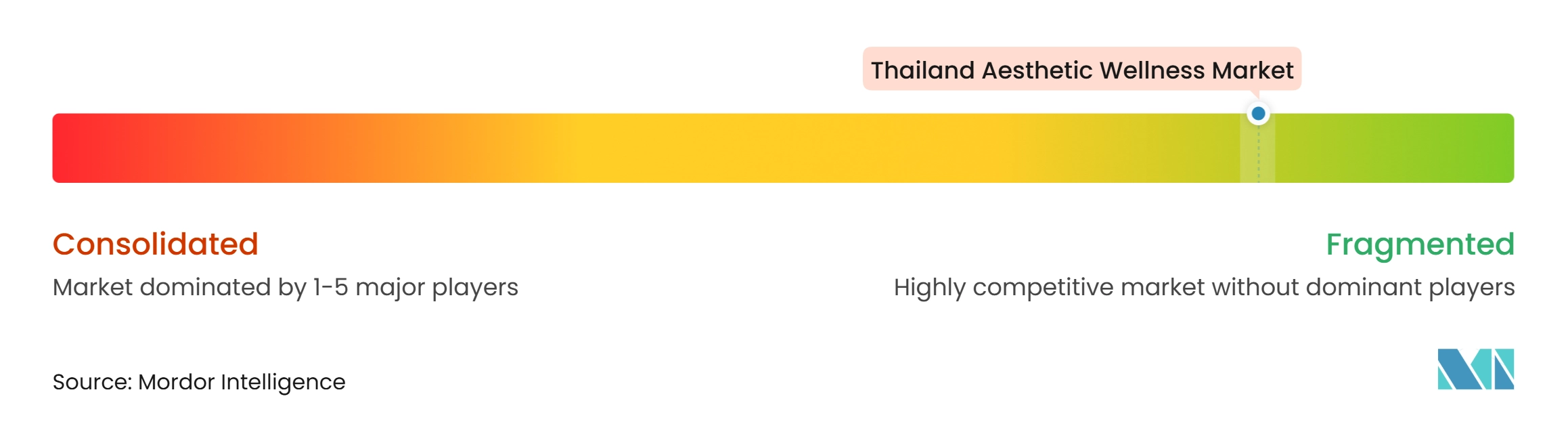
The Thailand aesthetic wellness market is fragmented, with provider groups competing alongside independent clinics and hospital-based service programs. Competition centers on physician reputation, access to devices and injectables, geographic reach, service quality, and the ability to serve international patients. Larger providers can standardize training, patient communications, and referral processes, while independent clinics can compete through local reputation and clinical specialization. Supplier relationships support competitive strategies. Galderma Thailand's GAIN Business Forum provided clinic partners with training in digital strategy, cross-selling, and customer experience in 2025. Candela's Bangkok symposium also supported professional engagement on pigmentation treatment protocols in 2025. These initiatives can facilitate responsible technology adoption, although clinical independence and product suitability remain essential. Sustainable differentiation relies on practitioner expertise, patient outcomes, and transparent care. SBC Medical Group Holdings Incorporated entered Thailand through a consulting agreement with BLEZ ASIA to establish a dermatology-focused clinic in Bangkok. AMARA Clinic and Doctor Mek Clinic launched AM International Hospital to serve domestic and Southeast Asian patients. The competitive balance will depend on whether networks expand while maintaining patient safety and service consistency.
Thailand Aesthetic Wellness Industry Leaders
-
Vayo Group
-
DEKA Asia Pacific Co., Ltd.
-
Astraco Medical Networks Ltd.
-
Aesthetics by Ampex
-
LYVON Co., Ltd.
- *Disclaimer: Major Players sorted in no particular order
Thailand Aesthetic Wellness Market Companies Covered in this Report
- Vayo Group
- DEKA Asia Pacific Co., Ltd.
- Astraco Medical Networks Ltd.
- Aesthetics by Ampex
- LYVON Co., Ltd.
- Rojukiss International Public Company Limited
- Karmarts Public Company Limited
- S&J International Enterprises Public Company Limited
- Do Day Dream Public Company Limited
- Successmore Being Public Company Limited
- Skin Laboratory Public Company Limited
- ICC International Public Company Limited
- Better Way (Thailand) Co., Ltd.
- SSUP Group
- DOD Biotech Public Company Limited
- Osotspa Public Company Limited
- Mega Lifesciences Public Company Limited
- Aesthetic Plus Co., Ltd.
- Galderma Group AG
- Candela Corporation
Recent Industry Developments in Thailand Aesthetic Wellness Market
- September 2026: Aura Bangkok Clinic opened a clinic in Suvarnabhumi Airport’s international departure hall, introducing doctor-led aesthetic services to international travelers. The company operates 20 branches and reports more than 100,000 treatment cases, extending Thailand’s aesthetic services into a high-traffic travel setting.
- May 2026: SBC Medical Group Holdings Incorporated and BLEZ ASIA opened a new aesthetic dermatology section at BLEZ CLINIC in Bangkok’s Asok district, with pico-laser services scheduled to launch in June 2026. The initiative expands access to Japanese-standard aesthetic care and strengthens SBC’s presence in Thailand.
- November 2025: Marubeni announced plans to increase its stake in Thailand-based Karmarts by up to 10 percentage points, from 18%, with a maximum investment of THB 1.25 billion (USD 0.04 billion) through a partial tender offer planned for February 2026. The investment aims to expand sales channels across Southeast Asia.
- May 2025: AMARA Clinic and Doctor Mek Clinic launched AM International Hospital in Bangkok, targeting aesthetic and wellness patients. The announcement outlined plans to attract patients from Indonesia, Malaysia, Singapore, and neighboring markets, strengthening its regional medical-tourism ambitions.
Thailand Aesthetic Wellness Market Report Scope
The Thailand aesthetic wellness market report examines demand for aesthetic treatments and wellness-oriented appearance enhancement services across Thailand. The market is segmented by service type (Non-Surgical Aesthetic Services, Minimally Invasive Aesthetic Services, Surgical Aesthetic Services, and Others); treatment category (Facial Aesthetics and Skin Rejuvenation, Injectables and Biostimulatory Treatments, Body Contouring and Shaping, Hair Removal and Hair Restoration, and Other Aesthetic Treatments); service provider (Dermatology and Aesthetic Clinics, Medical Spas, Hospitals and Surgical Centers, and Others); end user (Male and Female); and region (Bangkok and Metropolitan Area, Central Thailand excluding Bangkok, Northern Thailand, Northeastern Thailand, and Southern Thailand). The study analyzes market drivers, including growing demand for minimally invasive and short-downtime procedures, medical and wellness tourism, aging-related rejuvenation, younger-generation adoption, digital discovery, social commerce, and clinic expansion beyond Bangkok. It also assesses restraints such as price competition, margin pressure, shortages of qualified specialists, inconsistent post-treatment follow-up for international patients, and regulatory ambiguity and patient-safety risks. The report evaluates the regulatory landscape, technological outlook, Porter’s five forces analysis, service-provider networks, new launches, geographic penetration, pricing, customer acquisition trends, consumer preferences, spending patterns, competitive landscape, market concentration, strategic developments, market shares, and company profiles. It further identifies white-space opportunities, unmet needs, international patient services, cross-border aesthetic treatment packages, men’s aesthetic treatments, preventive skin rejuvenation, and future market prospects. The report provides market size and growth forecasts in USD value for 2022-2032 across Thailand and its regional markets.
Segmentation Overview
Key Questions Answered in the Report
What is the projected value of Thailand aesthetic wellness services by 2032?
The Thailand aesthetic wellness market is forecast to reach USD 482.04 million by 2032, growing at a 10.08% CAGR from 2027.
Which service type is growing fastest in Thailand aesthetic wellness services?
Minimally Invasive Aesthetic Services are forecast to grow at a 13.10% CAGR through 2032, supported by demand for visible outcomes with limited downtime.
Which category has the strongest growth outlook?
Injectables and Biostimulatory Treatments are projected to expand at a 12.80% CAGR through 2032.
Why is Bangkok important for aesthetic care in Thailand?
Bangkok accounted for 51.40% of the 2026 value because it has concentrated specialist capacity, hospitals, clinics, travel links, and international patient services.
What are the main barriers facing aesthetic service providers in Thailand?
Price competition, limited specialist availability, inconsistent international patient follow-up, and patient-safety risks can limit provider growth.
How are providers expanding Thailand aesthetic wellness services?
Providers are adding provincial branches, hospital-format facilities, digital communication capabilities, and international partnerships to reach domestic and inbound patients.