
Syntactic Foam Market Size and Share
Market Overview
| Study Period | 2021 - 2031 |
|---|---|
| Market Size (2026) | USD 170.11 Million |
| Market Size (2031) | USD 218.56 Million |
| Growth Rate (2026 - 2031) | 5.14 % |
| Fastest Growing Market | Asia-Pacific |
| Largest Market | North America |
| Market Concentration | Low |
Major Players *Disclaimer: Major Players sorted in no particular order Image © Mordor Intelligence. Reuse requires attribution under CC BY 4.0. | |
Syntactic Foam Market Analysis by Mordor Intelligence
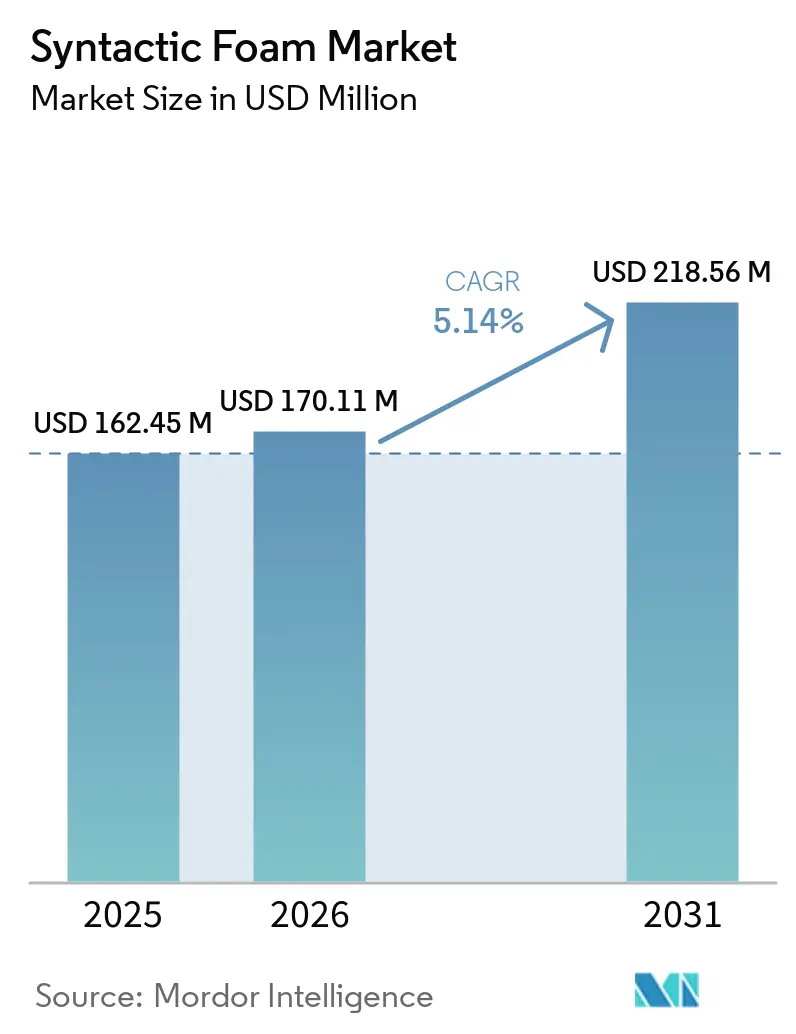
The syntactic foam market size was estimated at USD 162.45 million in 2025 and is estimated to grow from USD 170.11 million in 2026 to USD 218.56 million by 2031, at a CAGR of 5.14% during the forecast period (2026-2031). Hollow microspheres embedded in a rigid matrix provide high buoyancy and compressive strength at densities below 0.7 g/cm³. This combination supports use in deepwater systems and aerospace structures where both pressure resistance and low weight are required. Investment in ultra-deepwater oil and gas infrastructure remains a key driver of demand for the syntactic foam market. Aircraft lightweighting and floating offshore wind applications are also expanding the addressable demand base. Suppliers with proven qualifications and reliable production capacity are positioned to benefit from these requirements.
Key Report Takeaways
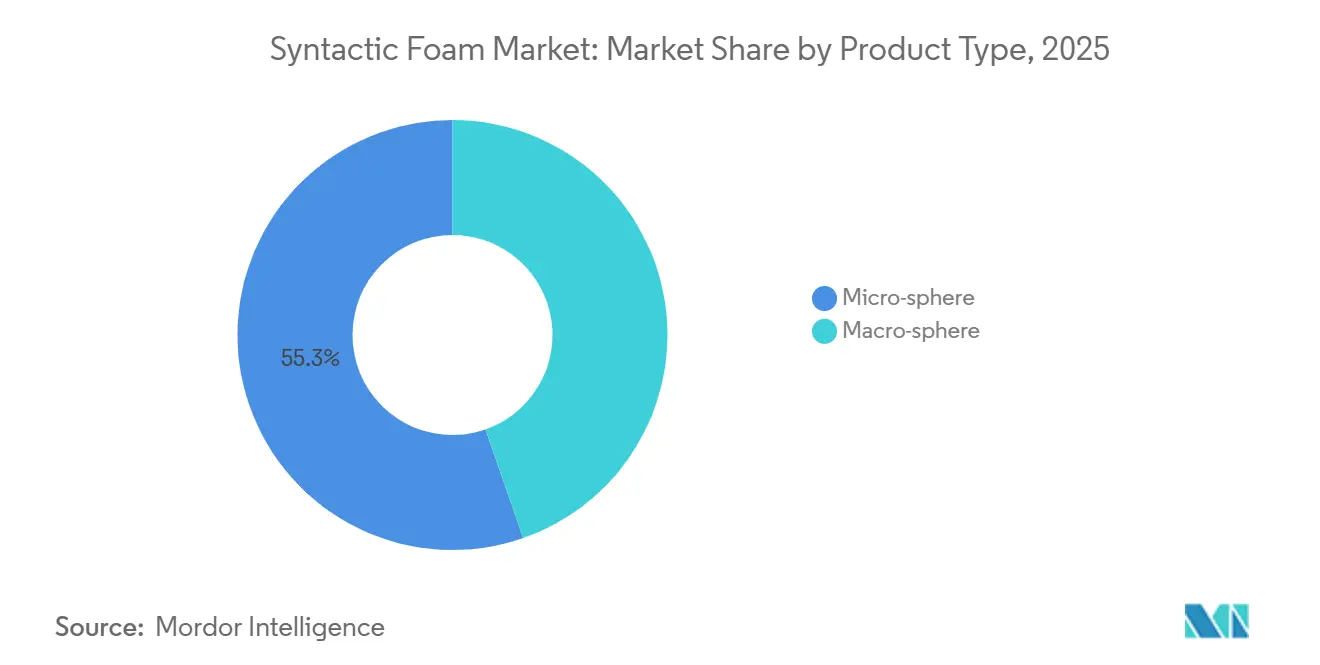
- By product type, micro-sphere syntactic foam held 55.34% of the syntactic foam market share in 2025, while micro-sphere grades are forecast to grow at a 5.45% CAGR through 2031.
- By matrix type, polymer matrix syntactic foam held 39.15% of the syntactic foam market share in 2025, while hybrid matrix syntactic foam is forecast to grow at a 5.78% CAGR through 2031.
- By filler type, glass microspheres held 77.56% share in 2025, while ceramic microspheres are forecast to grow at a 6.12% CAGR through 2031.
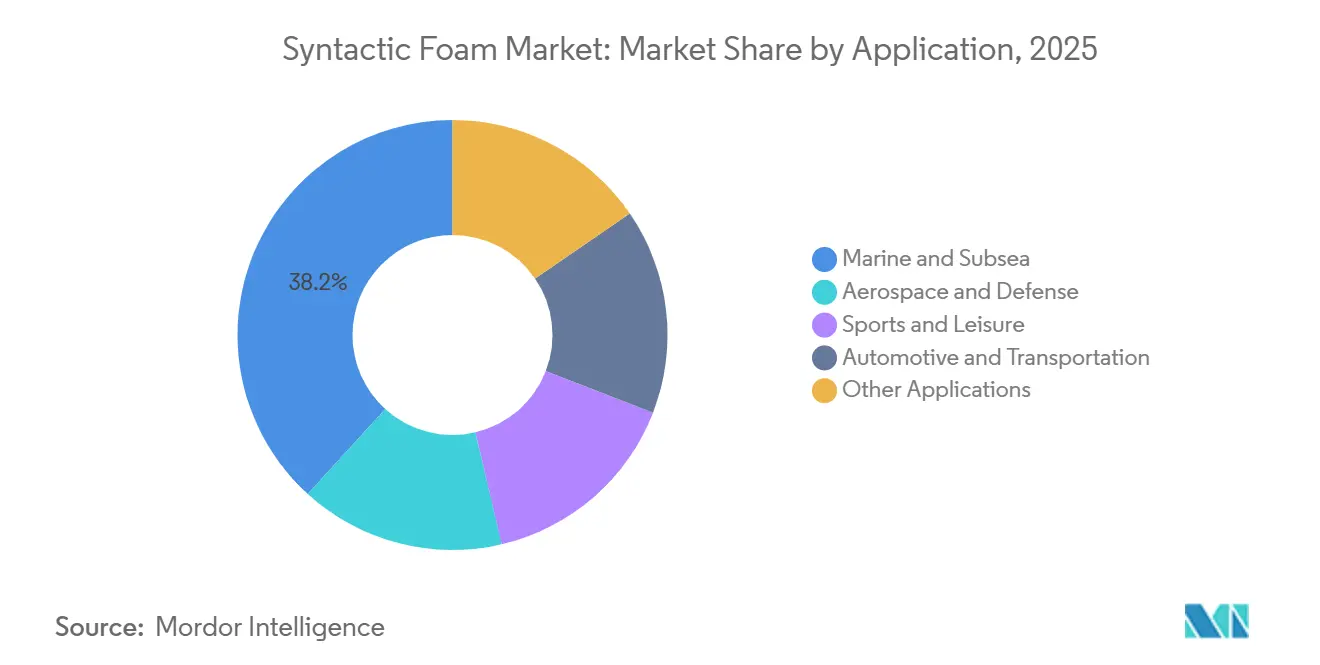
- By application, marine and subsea accounted for 38.24% of the market in 2025, while this application is forecast to grow at a 6.34% CAGR through 2031.
- By geography, North America held 36.63% share in 2025, while Asia-Pacific is forecast to grow at a 5.96% CAGR through 2031.
Note: Market size and forecast figures in this report are generated using Mordor Intelligence’s proprietary estimation framework, updated with the latest available data and insights as of January 2026.
Market Trends and Insights
Drivers Impact Analysis of Syntactic Foam Market*
| Drivers | (~) % Impact on CAGR Forecast | Geographic Relevance | Impact Timeline |
|---|---|---|---|
| Deepwater and Ultra-Deepwater Project Expansion | +1.6% | North America, South America, West Africa | Medium term (2-4 years) |
| Offshore Oil and Gas and Oceanography Demand | +1.0% | Global, with concentration in the North Sea, the Middle East, and the Asia-Pacific offshore basins | Short term (≤ 2 years) |
| Aerospace Light Weighting and Advanced Aircraft Programs | +0.8% | North America, Europe, and the Asia-Pacific | Long term (≥ 4 years) |
| Marine Renewable Energy and Floating Infrastructure | +0.5% | Europe, East Asia, and the U.S. East Coast | Long term (≥ 4 years) |
| Precision Microsphere and Resin Formulation Advances | +0.5% | Global, with research activity in North America, Europe, and China | Medium term (2-4 years) |
| Source: Mordor Intelligence | |||
Deepwater and Ultra-Deepwater Project Expansion
TotalEnergies and APA Corporation sanctioned the USD 10.5 billion Block 58 deepwater development in Suriname in 2026. The project targets 220,000 barrels per day from 2028. ExxonMobil's USD 7 billion Hammerhead project in Guyana is moving toward a 2029 start-up. These developments create future demand for buoyancy assemblies used on risers, jumpers, and flow lines at water depths of 2,000 to 3,000 meters. The U.S. Gulf of Mexico produced 1.87 million barrels per day in early 2026, with deepwater operations accounting for more than 90% of that output. At depths above 3,500 meters, few materials can provide the same balance of buoyancy and pressure resistance, which supports demand for the syntactic foam market. Project timing is also relevant, as tieback developments require buoyancy components during subsea installation, not only at production start-up. This increases the importance of delivery capability and approved product availability across the syntactic foam market.
Offshore Oil and Gas and Oceanography Demand
Natural gas investment is projected to reach USD 330 billion in 2026, the highest level in a decade. A meaningful share of this spending is directed toward liquefied natural gas (LNG)-linked subsea developments that require flow-line insulation and buoyancy systems. Autonomous underwater vehicles and remotely operated vehicles also use microsphere syntactic foam for controlled buoyancy. These vehicles support climate monitoring, deep-sea mining surveys, and defense sonar activities. This demand source is less connected to oil price cycles and can provide stable sales for syntactic foam suppliers. CNOOC, ONGC, and POSCO International increased deepwater exploration activity from 2024, expanding demand beyond the Gulf of Mexico and Brazil corridor. A wider regional project base can reduce reliance on a single offshore basin and gives the syntactic foam market more opportunities to serve different customer qualification requirements.
Aerospace Light Weighting and Advanced Aircraft Programs
The Boeing Company filed patent application US20260034747A1 in early 2026 for a method of manufacturing syntactic foam parts using optimized resin infusion sequencing. The filing indicates that aircraft manufacturers are exploring more controlled production methods for syntactic foam components. Epoxy syntactic systems qualified to Boeing BMS 5-28 specifications are used for structural edge fills, radome cores, and antenna housings. Syntactic foam sandwich cores can reduce weight by 20-35% relative to aluminum honeycomb while also improving moisture resistance and impact tolerance. These characteristics are relevant for nacelle acoustic liners, wing-root fairings, and fuselage interior panels. Qualification cycles of 3 to 5 years can translate current design wins into supply arrangements that extend beyond 2031.
Marine Renewable Energy and Floating Infrastructure
Floating offshore wind is creating a new structural use for syntactic foam outside conventional oil and gas applications. The European Commission expects EU floating wind capacity to reach 3 GW by 2030 and exceed 40 GW by 2040. Global installed floating wind capacity is expected to exceed 7 GW by 2030[1]. These projects use syntactic foam in buoyancy columns, dynamic cable flotation modules, and mooring-line fairings. The applications require higher quantities of more standardized grades than those used for bespoke deepwater buoyancy blocks. Diab identifies marine renewable energy, including wave and tidal systems, as a separate growth application for its subsea materials.
Restraints Impact Analysis of Syntactic Foam Market*
| Restraints | (~) % Impact on CAGR Forecast | Geographic Relevance | Impact Timeline |
|---|---|---|---|
| Specialty Microsphere and Resin Cost Volatility | -1.2% | Global, with pronounced exposure in North America and Asia-Pacific sourcing networks | Short term (≤ 2 years) |
| High Qualification and Validation Burden | -0.9% | Global, with the highest compliance intensity in North America and Europe | Medium term (2-4 years) |
| End-of-Life Recycling and Thermoset Circularity Gaps | -0.7% | Europe, with growing pressure in North America | Long term (≥ 4 years) |
| Source: Mordor Intelligence | |||
Specialty Microsphere and Resin Cost Volatility
Hollow glass microspheres are the primary buoyancy component in many syntactic foam grades. The limited number of global filler suppliers increases exposure to plant outages, silica price changes, and logistics disruptions. 3M Glass Bubbles are widely used as an input for subsea and aerospace formulations. Specialty epoxy resins are commonly linked to crude oil derivative prices. Input prices can therefore increase when offshore customer spending and material demand are at their highest. Smaller formulators with lower purchasing volumes face greater exposure to this cost pressure.
High Qualification and Validation Burden
Deepwater and aerospace syntactic foam grades must complete application-specific qualification before commercial use. Testing can take 2 to 5 years and includes hydrostatic pressure tests under operational conditions at depths of 6,000 to 11,500 meters. Aerospace materials also require destructive, environmental, and fatigue testing under customer process specifications. These requirements restrict how quickly a new supplier or formulation can enter the syntactic foam market. Base Materials completed a multiyear testing program with Det Norske Veritas (DNV) and received type approval across all 7 Subtec grades in 2025[2]. This demonstrates the time, facilities, and technical evidence required to establish credibility for the highest-specification applications.
*Our forecasts treat driver/restraint impacts as directional, not additive. The impact forecasts reflect baseline growth, mix effects, and variable interactions.
Syntactic Foam Market Segment Analysis
By Product Type:
Micro-spheres Anchor Deep-rated Precision DemandMicro-sphere syntactic foam accounted for 55.34% of the market share in 2025. Its role in deepwater buoyancy reflects the need to control density within 0.01 g/cm³. Hollow glass or ceramic micro-spheres allow formulators to reach exact density targets, which designers use to balance net lift against hydrostatic crush resistance. A 2024 study found that silane modification of hollow glass microspheres improved interfacial bonding with epoxy and strengthened the resulting composite. Micro-sphere grades are expected to grow at a 5.45% CAGR through 2031 as oceanographic and floating infrastructure platforms expand their use.
Macro-sphere foam is used in lower-depth applications where buoyancy and cost are prioritized over tight density control. Drill riser buoyancy systems and large subsea floats are key applications for this format. Macro-sphere materials can offer cost and production-time advantages at depths below 700 meters. Matrix Composites & Engineering produces both product types at its syntactic foam facility and has designed macro-sphere drill riser buoyancy modules rated to 20,000 feet, thereby broadening the depth range macro-sphere products can address. Manufacturing improvements are narrowing the performance gap between micro-sphere and macro-sphere products, as tighter microsphere size distributions yield more consistent properties in larger-format products.

By Matrix Type:
Polymer Incumbency and the Hybrid MomentumPolymer matrix syntactic foam held a 39.15% share in 2025. The material benefits from flexible processing, long qualification histories, and established mechanical performance. Epoxy matrices are widely used in deep-rated subsea applications due to low water absorption and strong hydrostatic crush resistance, and they work well with hollow glass microsphere fillers. Ceramic and metal matrices can offer similar properties but typically involve higher costs and more complex processing. A 2025 study reported that epoxy hybrid foams incorporating expandable and hollow glass microspheres achieved densities as low as 0.5 g/cm³, 60% porosity, and improved char residue at high temperatures.
Hybrid matrix syntactic foam is projected to expand at a 5.78% CAGR between 2026 and 2031. Engineers combine polymer, ceramic, and fiber-reinforced components to improve crush strength while retaining low density. Reducing thermoset content also addresses recycling concerns. Ceramic matrix grades serve high-temperature aerospace applications, including thermal protection systems for spacecraft fairings. Aluminum-based metal matrix grades are used in automotive crash absorbers and defense armor where energy absorption is important. Research published in 2025 found that aluminum matrix syntactic foam with fly ash cenospheres and short basalt fibers improved compressive strength and energy absorption, supporting further development of metal matrix grades for transportation and defense applications.
By Filler Type:
Glass Microsphere Incumbency, Ceramic Microsphere MomentumGlass microspheres represented 77.56% of the market share in 2025. Decades of qualification history and established supply chains support their position. They have a verified record across depth ratings from 2,000 to 11,500 meters under major classification frameworks, and their lower cost relative to ceramic alternatives allows use across a broad range of depth tiers. 3M Glass Bubbles are designed to provide low density and isostatic crush resistance for insulation and buoyancy applications. Glass microspheres remain the default filler for many commercial grades used across subsea, aerospace, and automotive applications.
Ceramic microspheres are forecast to grow at a 6.12% CAGR through 2031. Their higher crush strength and lower water absorption are valuable in environments where pressure and temperature challenge the integrity of glass microspheres. They are suited to ultra-deepwater systems rated beyond 8,000 meters, including full-ocean-depth submersibles and deep-sea mining intervention equipment. ISO 13628 performance requirements for subsea production systems can favor ceramic composites at the deepest operating tiers. A 2025 study showed that ceramic cenosphere-filled aluminum matrix foams with short basalt fibers improved energy absorption and limited crack propagation under compression, supporting the use of ceramic filler in structural and defense applications beyond conventional buoyancy.
By Application:
Marine Subsea Duality and Aerospace's Rising ReachMarine and subsea applications accounted for 38.24% of the syntactic foam market in 2025 and are the fastest-growing application area, with a projected CAGR of 6.34% through 2031. Demand comes from deepwater oil and gas, oceanographic research, and marine renewable energy. Typical uses include buoyancy for Remotely Operated Vehicles (ROVs) and Autonomous Underwater Vehicles (AUVs), riser fairings, pipeline insulation, and dynamic cable flotation modules. DNV-ST-F119 is a key classification standard for deepwater syntactic buoyancy materials, and type approvals held by ALSEAMAR, Base Materials, and Trelleborg Applied Technologies are important for high-specification project tenders.
Aerospace and defense is the second-largest application area, with syntactic foam used in radomes, nacelle fairings, wing-root fills, and naval sonar domes. Electric Vertical Take-Off and Landing (eVTOL) platforms and next-generation unmanned combat aircraft are emerging design areas. Sports and leisure applications include surf craft hulls, helmets, ski cores, and performance marine craft. Automotive and transportation applications include underbody shields, crash structures, and battery enclosure components, which can reduce vehicle weight by 15-25% compared with aluminum structures. Other applications include acoustic panels, cryogenic insulation for Liquefied Natural Gas (LNG) carriers, and construction fillers, offering suppliers a more diverse sales base.
Geography Analysis
North America Syntactic Foam Market
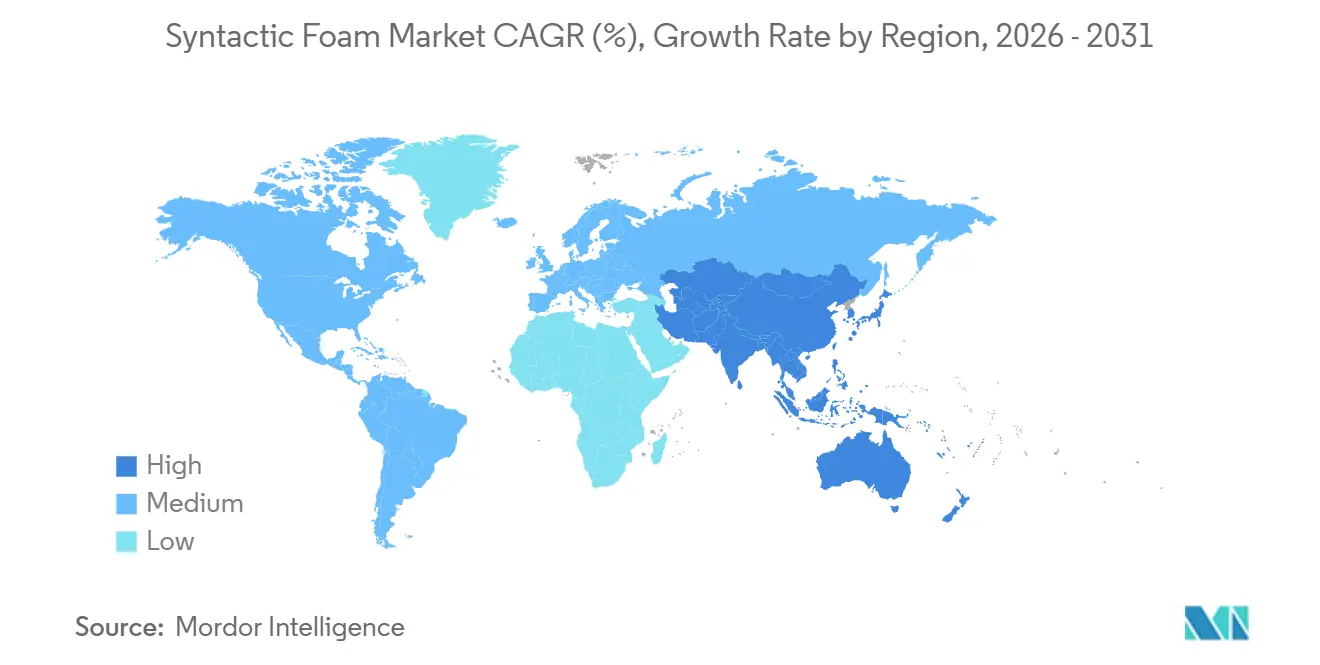
North America held a 36.63% share in 2025 and is expected to retain regional leadership through 2031. Gulf of Mexico activity is a primary source of demand for buoyancy modules, riser fairings, and flow-line insulation. U.S. deepwater production reached 1.87 million barrels per day in early 2026 and contributed more than 90% of total Gulf output. The region also has a concentration of aerospace original equipment manufacturers, Tier 1 suppliers, and qualification laboratories. These organizations use syntactic foam in structural panels, radomes, and interior components. A mature Remotely Operated Vehicle (ROV) and Autonomous Underwater Vehicle (AUV) supply chain also supports demand from oceanographic, survey, and military customers.
APAC Syntactic Foam Market
Asia-Pacific is projected to record the fastest regional growth at a 5.96% CAGR through 2031. China National Offshore Oil Corporation (CNOOC)-led activity in the South China Sea includes semi-submersible rigs operating at depths above 1,500 meters. India's Oil and Natural Gas Corporation (ONGC) is advancing deepwater blocks in the Krishna-Godavari and Andaman basins. These programs require syntactic foam for thermal insulation and buoyancy systems. Japan's aerospace manufacturers and South Korea's naval shipbuilders add demand for structural panels and acoustic materials. Malaysia and Indonesia are also increasing activity in shallow- to mid-depth offshore operations, extending demand to mid-tier buoyancy products. Suppliers in this region need to align product specifications with local project requirements, and their ability to do so will influence their participation in the syntactic foam market as regional offshore activity expands.
EMEA and South America Syntactic Foam Market
Europe maintains a position through North Sea oil and gas operations and a growing pipeline of floating offshore wind projects. EU targets call for 111 GW of offshore wind capacity by 2030 and 317 GW by 2050. Brazil's pre-salt fields and the Block 58 development in Suriname support South American demand for subsea buoyancy and riser insulation. Saudi Aramco's offshore gas work and South Africa's developing deepwater frontier add demand in the Middle East and Africa. West Africa's established oil provinces continue to use buoyancy modules for riser management on active installations. These regions provide a broader geographic base of suppliers capable of meeting local specifications and delivery requirements. The mix of mature and developing offshore provinces gives the syntactic foam market a range of operating environments and increases the value of field experience across different depths and installation conditions.
Competitive Landscape
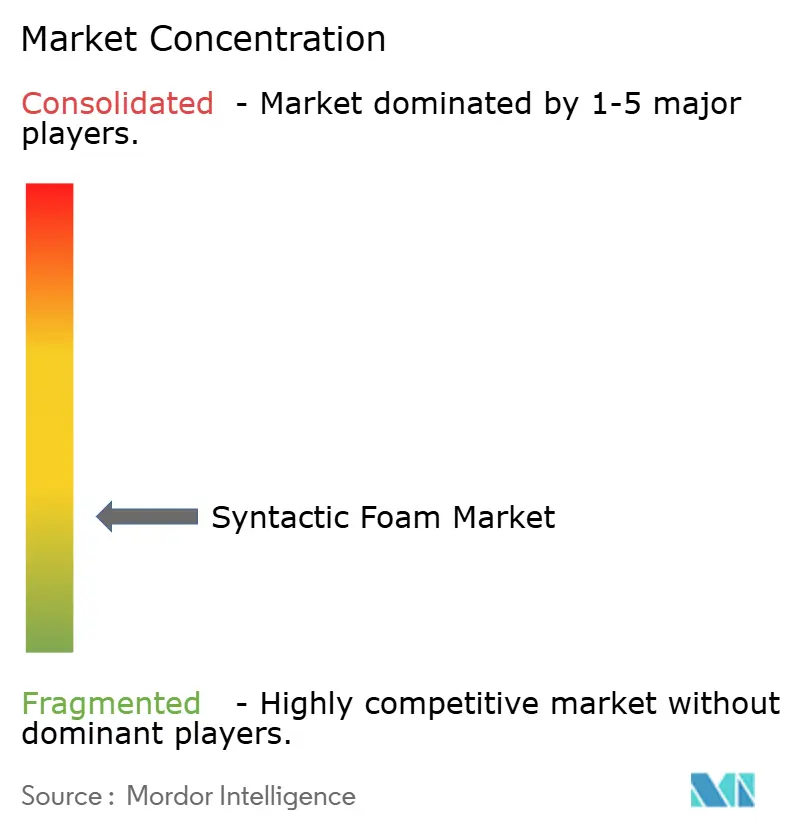
The syntactic foam market is fragmented. Trelleborg AB, Matrix Composites & Engineering, Diab Group, and Base Materials Ltd compete on proprietary formulations, full ocean-depth qualification experience, and testing capabilities. Compliance with DNV-ST-F119 and API 16F is an important requirement for suppliers serving deep-rated projects. In July 2025, Base Materials became the first manufacturer to receive full DNV type approval across its 7-grade Subtec syntactic buoyancy portfolio. The approval covers operating depths from 2,000 to 11,500 meters and strengthens the company's position in deepwater tenders. These qualifications allow suppliers to demonstrate performance before equipment is selected, and that evidence can carry more weight than price, where component failure would place a subsea system at risk.
The mid-tier supplier group includes SynFoam, Acoustic Polymers Ltd, Taizhou Cbm-future New Materials S&T Co. Ltd, ALSEAMAR, and F-TEC. These companies often compete on lead time, customized formulations, and pricing for shallower-rated or specialized requirements. Chinese manufacturers are increasing their participation in standard-rated products, which is putting pressure on mid-market prices. Established suppliers are responding by focusing on applications with more demanding qualification requirements. Trelleborg Applied Technologies is qualifying its TG-6000R formulation for resident remotely operated vehicles (ROVs) that remain submerged at operating pressure for up to 2 years, and the company ships foam containers each month for global ROV production programs. This product direction reflects demand for materials that can remain reliable during extended submerged service and illustrates why long-term pressure performance is a key competitive factor in the syntactic foam market.
Boeing's 2026 patent activity indicates continuing manufacturer interest in proprietary syntactic foam production methods, which could shift some high-volume aerospace work toward more controlled original equipment manufacturer supply arrangements. Suppliers with aerospace exposure need to maintain material performance and process knowledge as customer requirements evolve. Floating offshore wind remains an accessible growth area for companies capable of developing modular foam grades for dynamic cable and buoyancy column applications. Such grades will require relevant certification before larger deployments are expected in the mid-2030s. At the Abu Dhabi International Petroleum Exhibition and Conference (ADIPEC) 2025, Matrix Composites & Engineering signed a distribution agreement with Treadwell Group to improve access for subsea buoyancy and syntactic foam products in Southeast Asia. The arrangement targets deepwater projects in the South China Sea and Timor Sea, connecting a specialist supplier with regional commercial channels where offshore development is creating new demand for syntactic foam.
Syntactic Foam Industry Leaders
-
ALSEAMAR
-
Trelleborg AB
-
Diab Group
-
DeepWater Buoyancy, Inc.
-
CMT Materials LLC
- *Disclaimer: Major Players sorted in no particular order
Syntactic Foam Market Companies Covered in this Report
- ALSEAMAR
- Acoustic Polymers Limited
- Acoustic Polymers Ltd
- AFGlobal Corporation
- AIS
- Base Materials Ltd
- CMT Materials LLC
- Cocobuoyancy
- DeepWater Buoyancy, Inc.
- Diab Group
- F-TEC
- Matrix Composites & Engineering Ltd
- SynFoam
- Taizhou Cbm-future New Materials S&T Co.,Ltd.
- Trelleborg AB
Recent Industry Developments in Syntactic Foam Market
- July 2026: Matrix Composites & Engineering secured a second major contract to supply subsea buoyancy modules for a Gulf of Mexico project with an international energy services contractor. This addition to the company's subsea work, secured in the 2026 financial year, indicates a recovery in demand for deepwater tieback activity.
- November 2025: Matrix Composites & Engineering signed a distribution agreement with Tredwell at ADIPEC 2025 to expand commercial access to subsea buoyancy and syntactic foam products across Southeast Asian markets, targeting deepwater pipelines in the South China Sea and Timor Sea.
Global Syntactic Foam Market Report Scope
Syntactic foam is a lightweight, high-strength composite material made by embedding tiny hollow spheres, called microballoons or microspheres, within a solid matrix of polymer, metal, or ceramic.
The syntactic foam market is segmented by product type, matrix type, filler type, application, and geography. By product type, the market is segmented into macro-sphere and micro-sphere. By matrix type, the market is segmented into polymer matrix, ceramic matrix, metal matrix, and hybrid matrix. By filler type, the market is segmented into glass microspheres and ceramic microspheres. By application, the market is segmented into marine and subsea, aerospace and defense, sports and leisure, automotive and transportation, and other applications. The report also covers market size and forecasts for the syntactic foam across 15 countries in major regions. The market sizes and forecasts are provided in terms of value (USD).
Segmentation Overview
| Macro-sphere |
| Micro-sphere |
| Polymer Matrix |
| Ceramic Matrix |
| Metal Matrix |
| Hybrid Matrix |
| Glass Microspheres |
| Ceramic Microspheres |
| Marine and Subsea |
| Aerospace and Defense |
| Sports and Leisure |
| Automotive and Transportation |
| Other Applications |
| Asia-Pacific | China |
| India | |
| Japan | |
| South Korea | |
| ASEAN Countries | |
| Rest of Asia-Pacific | |
| North America | United States |
| Canada | |
| Mexico | |
| Europe | Germany |
| United Kingdom | |
| France | |
| Italy | |
| NORDIC Countries | |
| Rest of Europe | |
| South America | Brazil |
| Argentina | |
| Rest of South America | |
| Middle East and Africa | Saudi Arabia |
| South Africa | |
| Rest of Middle East and Africa |
| By Product Type | Macro-sphere | |
| Micro-sphere | ||
| By Matrix Type | Polymer Matrix | |
| Ceramic Matrix | ||
| Metal Matrix | ||
| Hybrid Matrix | ||
| By Filler Type | Glass Microspheres | |
| Ceramic Microspheres | ||
| By Application | Marine and Subsea | |
| Aerospace and Defense | ||
| Sports and Leisure | ||
| Automotive and Transportation | ||
| Other Applications | ||
| By Geography | Asia-Pacific | China |
| India | ||
| Japan | ||
| South Korea | ||
| ASEAN Countries | ||
| Rest of Asia-Pacific | ||
| North America | United States | |
| Canada | ||
| Mexico | ||
| Europe | Germany | |
| United Kingdom | ||
| France | ||
| Italy | ||
| NORDIC Countries | ||
| Rest of Europe | ||
| South America | Brazil | |
| Argentina | ||
| Rest of South America | ||
| Middle East and Africa | Saudi Arabia | |
| South Africa | ||
| Rest of Middle East and Africa | ||
Key Questions Answered in the Report
What is current market size of Syntactic Foam Market?
The syntactic foam market size was estimated at USD 162.45 million in 2025 and is estimated to grow from USD 170.11 million in 2026 to USD 218.56 million by 2031, at a CAGR of 5.14% during the forecast period (2026-2031).
Which application leads to the demand for syntactic foam?
Marine and subsea applications led with a 38.24% share in 2025 and are projected to grow at a 6.34% CAGR through 2031.
Why are glass microspheres widely used in syntactic foam?
Glass microspheres held a 77.56% share in 2025 because they combine an established qualification record, low density, and broad availability across depth tiers.
Which region is growing fastest for syntactic foam?
Asia-Pacific is projected to expand at a 5.96% CAGR through 2031, supported by offshore energy, aerospace, and naval activity.