
Swollen Knee Treatment Market Size and Share
Market Overview
| Study Period | 2020 - 2031 |
|---|---|
| Market Size (2026) | USD 9.09 Billion |
| Market Size (2031) | USD 12.12 Billion |
| Fastest Growing Market | Asia-Pacific |
| Largest Market | North America |
| Market Concentration | Low |
Major Players *Disclaimer: Major Players sorted in no particular order Image © Mordor Intelligence. Reuse requires attribution under CC BY 4.0. | |
Swollen Knee Treatment Market Analysis by Mordor Intelligence
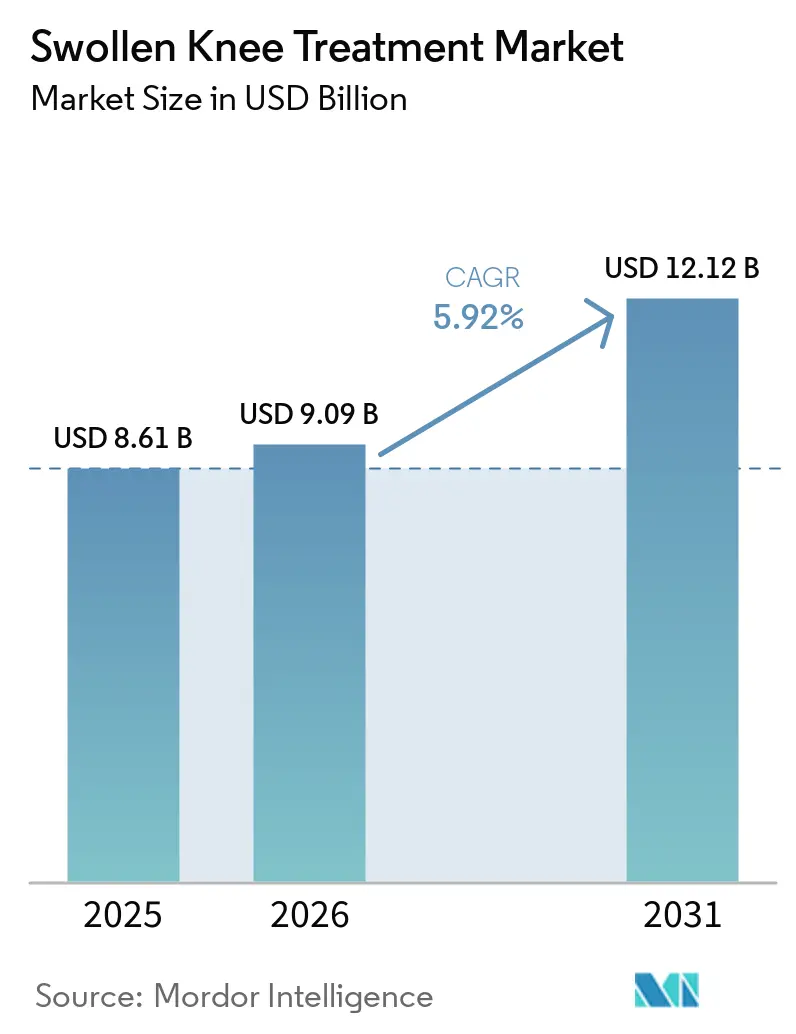
The Swollen Knee Treatment Market size was valued at USD 8.61 billion in 2025 and is estimated to grow from USD 9.09 billion in 2026 to reach USD 12.12 billion by 2031, at a CAGR of 5.92% during the forecast period (2026-2031).
Demand is supported by a global knee osteoarthritis population of 374.7 million cases, which is projected to reach 658 million by 2045, alongside obesity-related cartilage damage. Knee osteoarthritis represented more than 56% of the global osteoarthritis burden in 2025, keeping it central to treatment demand. Care is moving toward outpatient procedures, single-injection therapies, and monitoring tools that can support recovery outside hospitals. Companies can gain by linking procedures, braces, and rehabilitation services, while coverage policies and evidence requirements continue to limit uptake of some products.
Key Report Takeaways
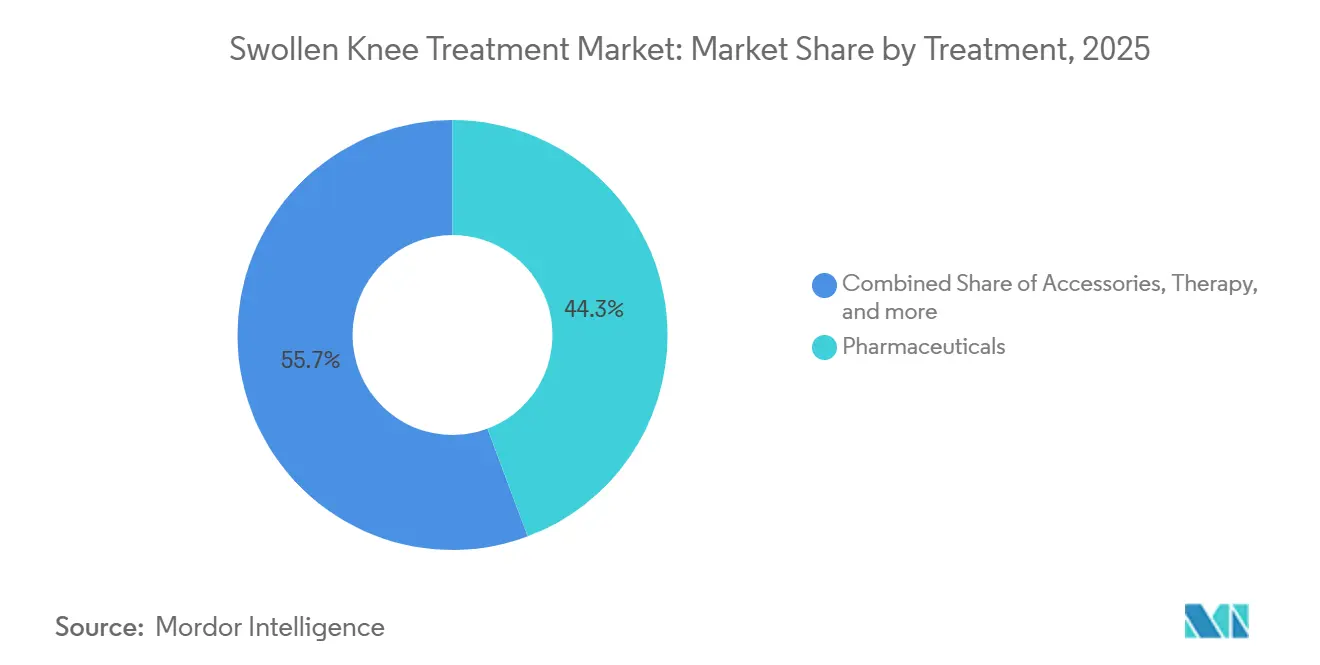
- By treatment, pharmaceuticals held 44.28% revenue share in 2025, while accessories are forecast to grow at a 7.80% CAGR through 2031.
- By indication, osteoarthritis held 44.03% revenue share in 2025, while sports and traumatic injuries are forecast to grow at a 7.82% CAGR through 2031.
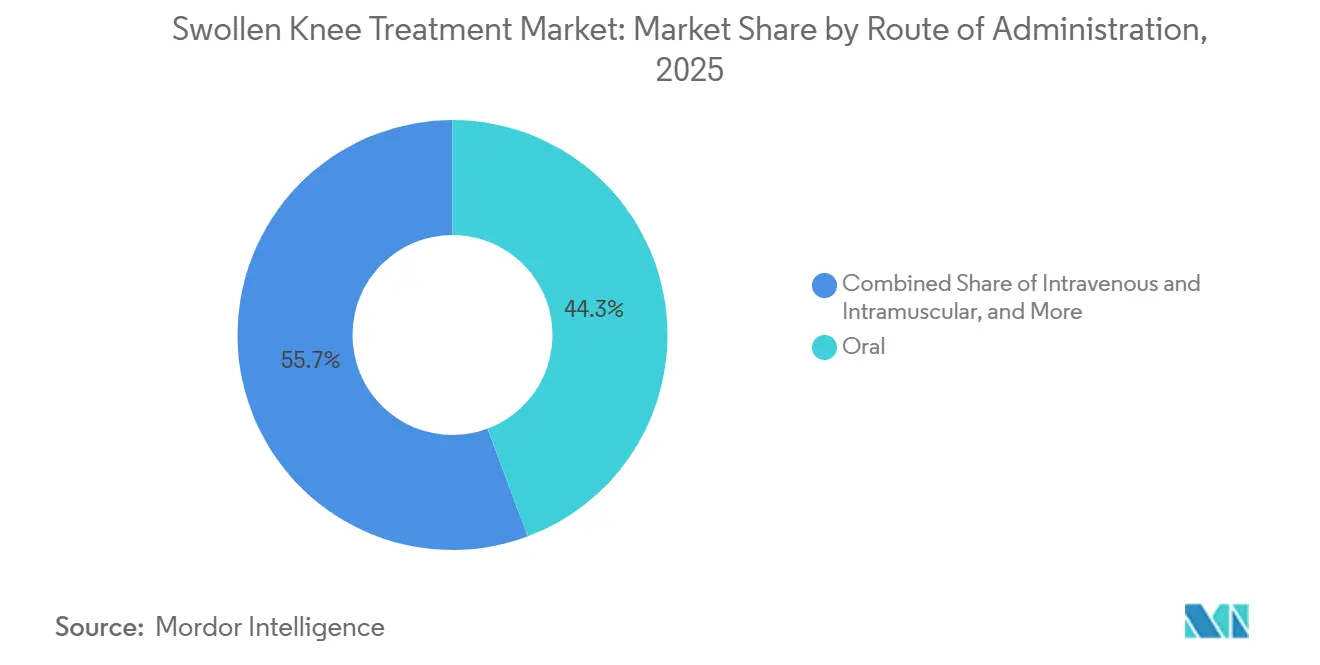
- By route of administration, oral administration held 44.28% revenue share in 2025, while procedural and surgical treatment is forecast to grow at an 8.26% CAGR through 2031.
- By end user, hospitals held 47.35% revenue share in 2025, while orthopedic clinics are forecast to grow at a 7.78% CAGR through 2031.
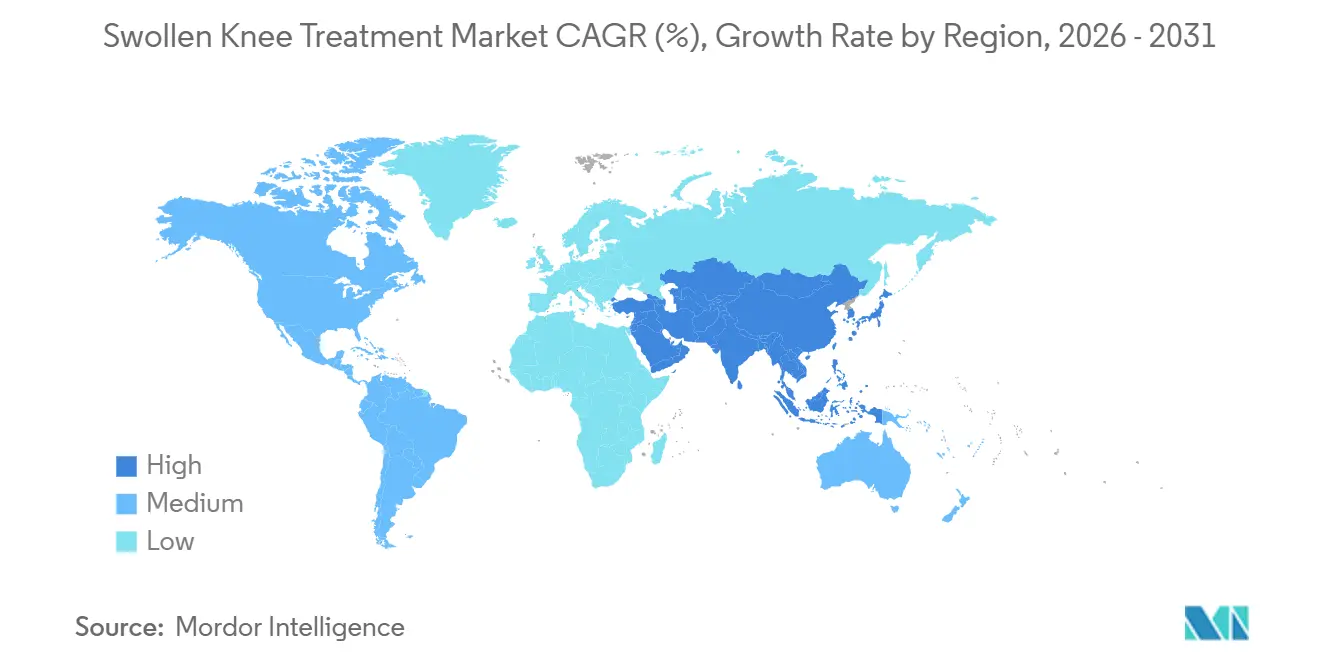
- By region, North America held 41.85% revenue share in 2025, while the Asia-Pacific region is forecast to grow at an 7.78% CAGR through 2031.
Note: Market size and forecast figures in this report are generated using Mordor Intelligence’s proprietary estimation framework, updated with the latest available data and insights as of January 2026.
Global Swollen Knee Treatment Market Trends and Insights
Drivers Impact Analysis*
| Driver | (~) % Impact on CAGR Forecast | Geographic Relevance | Impact Timeline |
|---|---|---|---|
| Aging-Related Growth in Knee Osteoarthritis | +1.8% | Global, highest in high-income Asia-Pacific, Western Europe, and North America | Long term (≥ 4 years) |
| Rising Obesity-Associated Knee Disease | +1.3% | Global, concentrated in North America, core Asia-Pacific, and emerging Middle East and Africa economies | Medium term (2-4 years) |
| Expansion of Minimally Invasive and Outpatient Care | +0.9% | North America, with spillover to Europe and Asia-Pacific | Short term (≤ 2 years) |
| Longer-Acting and Single-Injection Therapies | +0.7% | Global, with early adoption in North America, Japan, and South Korea | Medium term (2-4 years) |
| Sensor-Enabled Bracing and Digitized Rehabilitation | +0.5% | North America, Europe, and Asia-Pacific urban centers | Medium term (2-4 years) |
| Earlier Intervention Through Obesity and Musculoskeletal Care Integration | +0.5% | Global, with early gains in North America and Western Europe | Medium term (2-4 years) |
| Source: Mordor Intelligence | |||
Aging-Related Growth in Knee Osteoarthritis
Knee osteoarthritis affected 33.6% of U.S. adults aged 65 years and older in 2025, and the rate reached 42.1% among women in this age group. Symptomatic rates rose from 7% at age 45 to 12% at age 60, which extends demand beyond the oldest patient groups[1]American Academy of Family Physicians, “Knee and Hip Osteoarthritis,” FP Essentials, aafp.org.. High-SDI countries carried an age-standardized prevalence of 4,656.7 per 100,000 people, but middle-SDI countries have greater room for diagnosis and care. Incidence peaked at ages 50 to 64, bringing more working-age patients into the swollen knee treatment market. This patient group favors treatment in the swollen knee treatment market that can preserve mobility and reduce time away from work. It also supports demand for therapies and recovery protocols that can delay late-stage care.
Rising Obesity-Associated Knee Disease
Obesity and hyperlipidemia were associated with more severe synovitis and poorer functional outcomes after total knee arthroplasty in patients with knee osteoarthritis. Higher obesity classes were also associated with greater health care use and knee osteoarthritis medication consumption. Eli Lilly reported that retatrutide reduced WOMAC pain scores by up to 75.8% and produced average weight loss of 28.7% at 68 weeks in people with obesity and knee osteoarthritis. The results place weight management alongside orthopedic treatment for an overlapping patient population. Better weight control can improve joint mechanics before surgical care is needed. This link broadens the treatment pathway addressed by the swollen knee treatment market.
Expansion of Minimally Invasive and Outpatient Care
Robotic-assisted total knee arthroplasty accounted for 8.5% of the United States utilization in 2020 and is projected to represent 70.1% of 2.63 million annual procedures by 2030. Patients receiving robotic-assisted procedures had shorter hospital stays of 1.9 days compared with 2.8 days for other procedures. The same study reported lower complication rates for robotic-assisted treatment. Same-day discharge shifts activity toward analgesic management, remote rehabilitation, and outpatient physical therapy. Japan expanded insurance coverage in 2024 for femoral distal osteotomy and arthroscopic meniscal stabilization, adding joint-preserving options. These care settings can redirect spending within the swollen knee treatment market away from longer inpatient episodes.
Longer-Acting and Single-Injection Therapies
Single-injection hyaluronic acid regimens were associated with a 13-month longer delay to total knee arthroplasty compared with no hyaluronic acid use. They also extended the time to surgery by 4 months beyond multi-injection regimens. GC Wellbeing received approval in South Korea for Healroad Once Inj., a single-dose hyaluronic acid product, increasing local competitive pressure. Biosplice submitted an NDA for lorecivivint in January 2026 after 11 clinical trials reported pain, function, and medial joint-space-width findings. Longer dosing intervals could strengthen the value proposition for intra-articular injections. A successful approval would alter pricing expectations within the swollen knee treatment market.
Restraints Impact Analysis*
| Restraint | (~) % Impact on CAGR Forecast | Geographic Relevance | Impact Timeline |
|---|---|---|---|
| Safety Risks and Restricted Use of Long-Term Analgesics | -1% | Global, especially North America and Western Europe | Short term (≤ 2 years) |
| Reimbursement Uncertainty for Viscosupplementation and Biologics | -0.9% | North America, especially U.S. Medicare and Medicaid, with spillover to European health technology assessment markets | Medium term (2-4 years) |
| Difficulty Demonstrating Disease Modification in Heterogeneous Knee Disease | -0.4% | Global, with strong pressure from the FDA and European Medicines Agency | Long term (≥ 4 years) |
| Fragmented Protocols for PRP, Stem-Cell, and Regenerative Therapies | -0.4% | Global, especially markets with formal health technology assessment review | Long term (≥ 4 years) |
| Source: Mordor Intelligence | |||
Safety Risks and Restricted Use of Long-Term Analgesics
Chronic NSAID use carries cardiovascular, gastrointestinal, and renal risks, leading clinical guidance to favor the lowest effective dose for the shortest period. The Hong Kong College of Orthopedic Surgeons recommends topical NSAIDs as first-line management for knee osteoarthritis and oral products as second-line treatment. Germany's DGOU guideline in May 2025 also emphasized limited NSAID dosing and removed glucosamine from its recommendations. Meta-analyses reported limited benefit for non-tramadol opioids and discontinuation rates of 22%, compared with 15% for controls. These restrictions place pressure on branded oral analgesics and opioid-containing products. The result limits pharmaceutical growth in the swollen knee treatment market.
Reimbursement Uncertainty for Viscosupplementation and Biologics
CMS reduced the 2025 Physician Fee Schedule conversion factor by 2.93%, from USD 33.29 to USD 32.35. The reduction affects physician-office and outpatient economics for hyaluronic acid injections. Medicare LCD Article A56157 has created audit and claim-denial exposure for viscosupplementation providers. Medicare Advantage plans can require prior authorization and prior corticosteroid treatment for these products. Coverage for bone marrow aspirate concentrate, adipose-derived cell therapies, and platelet-rich plasma remains inconsistent across U.S. payers and European assessment bodies. South Carolina Blues classified orthopedic stem-cell applications as investigational in 2024.
*Our forecasts treat driver/restraint impacts as directional, not additive. The impact forecasts reflect baseline growth, mix effects, and variable interactions.
Segment Analysis
By Treatment: Accessories Gain Ground as Digital Tools Reshape Conservative Management
Pharmaceuticals held 44.28% of the swollen knee treatment market share in 2025, supported by NSAIDs, corticosteroids, and hyaluronic acid viscosupplements. These products remained common first- and second-line options for knee swelling. Within pharmaceuticals, single-injection regimens are shifting value toward cross-linked and ultra-high-molecular-weight hyaluronic acid products. Evidence that these products may delay surgery supports their use before surgical intervention. The disease-modifying osteoarthritis drug category had seen repeated clinical failures. Biosplice submitted its lorecivivint NDA to the FDA in January 2026. The submission could mark the first major advance in this category in nearly 28 years. It could also change how pharmaceutical treatment is positioned in the swollen knee treatment industry.
Accessories are projected to grow at a 7.80% CAGR through 2031, making them the fastest-growing treatment category. Smart and sensor-enabled supports lead to this expansion. Wearable-based telerehabilitation also produced greater neuromuscular adaptation than conventional physiotherapy[2]A. M. Kauppila et al., “Efficacy of the mHealth-Based Exercise Intervention re.flex,” JMIR mHealth and uHealth, mhealth.jmir.org.. Unloader and functional braces retain substantial use in osteoarthritis. Post-operative and rehabilitative braces are also expanding as total knee arthroplasty moves to ambulatory settings. Surgical treatment retains volume through replacement and arthroscopy. Robotic approaches can increase capital-equipment spending and support implant standardization. This mix gives accessories a larger role in the swollen knee treatment market.



By Indication: Osteoarthritis Leads While Sports Injuries Accelerate
Osteoarthritis accounted for 44.03% of indication revenues in 2025. The condition had a global patient population of 374.7 million, sustaining its position throughout the forecast period. The United States direct annual costs per patient ranged from USD 3,719 to USD 4,518. The indication uses pharmaceuticals, therapy, accessories, and surgical treatment. Broader coverage of joint-preserving procedures in Japan and Germany can extend intervention before total replacement. Rheumatoid arthritis was the second-largest indication. It is supported by corticosteroid and biologic prescribing. It also benefits from established reimbursement pathways in the United States and Europe. These patterns keep osteoarthritis at the center of the swollen knee treatment market.
Sports and traumatic injuries are forecast to grow at a 7.82% CAGR through 2031. Organized sports participation and greater awareness of acute knee effusion management support this rate. Aspiration, arthrocentesis, physical therapy, and meniscal or ligament reconstruction benefit from this demand. Smart support can also monitor recovery for active patients. The FDA approved MACI Arthro in August 2024 for arthroscopic delivery in adults with cartilage defects up to 4 cm². The expanded label addressed 20,000 additional patients annually and increased Vericel's target surgeon base from 5,000 to 7,000. Gout, crystal arthropathies, bursitis, tendinopathy, infection, and septic arthritis remained smaller but distinct sources of demand. They mainly require aspiration, corticosteroid injections, or antimicrobial pharmaceutical care. This diversity broadens activity in the swollen knee treatment industry.
By Route of Administration: Procedural Care Gains Weight
Oral administration held 44.28% of the route-of-administration revenue in 2025. NSAIDs, non-NSAID analgesics, and opioid prescriptions supported its broad use in primary and secondary care. Guidance restricting dose and duration is limiting oral treatment growth. The DGOU guideline directed prescribing toward limited NSAID use and exercise-based management. Similar care approaches favor topical and intra-articular alternatives. This shifts revenue from oral products toward procedural and surgical care in the swollen knee treatment market. The change occurs within pharmaceuticals as well as across the wider care pathway. It makes the swollen knee treatment market less dependent on prolonged oral drug use.
Procedural and surgical administration is projected to grow at an 8.26% CAGR through 2031. The route includes corticosteroid, hyaluronic acid, platelet-rich plasma, bone marrow aspirate concentrate, and regenerative injections. It also includes arthroplasty, arthroscopy, and cartilage repair. A meta-analysis of 38 studies covering 83,888 outpatient joint arthroplasties reported lower odds of readmission, emergency department use, and complications for day-case surgery. The respective odds ratios were 0.83, 0.62, and 0.70 compared with inpatient care. This setting can make surgery more accessible and cost-efficient. Intravenous and intramuscular routes continue to serve septic arthritis, rheumatoid arthritis flares, and post-operative analgesia. Their growth is expected to track the overall swollen knee treatment market rather than exceed it.
By End User: Hospitals Retain Scale While Orthopedic Clinics Add Volume
Hospitals accounted for 47.35% of end-user revenue in 2025. They remain the principal setting for total knee replacement, complex revision procedures, intravenous drug administration, and inpatient rehabilitation. Research published in 2026 documented a large movement of primary total knee arthroplasty from inpatient to outpatient facilities in the United States. This movement reduces hospital volume for elective orthopedic procedures. Hospitals are responding through investments in robotic surgical platforms. The strategy seeks to retain procedure volumes and strengthen relationships with surgeons. Ambulatory surgical centers are gaining elective procedure volume. CMS set a 2.9% update for 2025 outpatient and ambulatory surgical center payments. These factors preserve hospital relevance in the swollen knee treatment market while altering the site of care.
Orthopedic clinics are forecast to grow at a 7.78% CAGR through 2031. Clinics handle outpatient corticosteroid, hyaluronic acid, and platelet-rich plasma injections. They also provide brace fitting, physical-therapy-adjacent services, and post-operative monitoring. These activities transfer naturally from hospital settings in the swollen knee treatment market. Rheumatology clinics serve a separate demand base in rheumatoid arthritis, gout, and crystal arthropathy. Biologic and disease-modifying antirheumatic drug prescribing remains concentrated in those clinics. Digital operating tools target the administrative workload across outpatient musculoskeletal practice. Such tools can affect workflow efficiency as well as procedure capacity. This supports clinic participation across the swollen knee treatment market.
Geography Analysis
North America held 41.85% of the swollen knee treatment market share in 2025. High procedural intensity, established reimbursement for surgery and injections, and an aging population support the region. The United States's knee osteoarthritis prevalence reached 33.6% among adults aged 65 years and older. The shift toward ambulatory surgical centers lowers hospital elective volume while raising contributions from ambulatory centers and clinics.
Europe was the second-largest regional market in 2025. Germany, the United Kingdom, and France carried the highest absolute osteoarthritis patient volumes in the region. DGOU issued an evidence-based gonarthrosis guideline in May 2025 that removed glucosamine and electrotherapy from recommendations. The policy directs care toward exercise-based treatment, followed by pharmacological or surgical options where needed.
Asia-Pacific is projected to grow at a 7.88% CAGR through 2031, the fastest rate among regions. Japan and South Korea have high age-standardized knee osteoarthritis prevalence, supported by policy and product changes. Japan added femoral distal osteotomy and arthroscopic meniscal stabilization to national insurance coverage in 2024. South Korea saw GC Wellbeing's 2024 approval for Healroad Once Inj., adding competition in single-injection hyaluronic acid treatment. China drives absolute volume growth in the swollen knee treatment market through health care infrastructure development. India and Australia, along with the smaller Middle East and Africa and South American markets, extend the swollen knee treatment market opportunity through investment, manufacturing incentives, reimbursement, and population aging.

Competitive Landscape
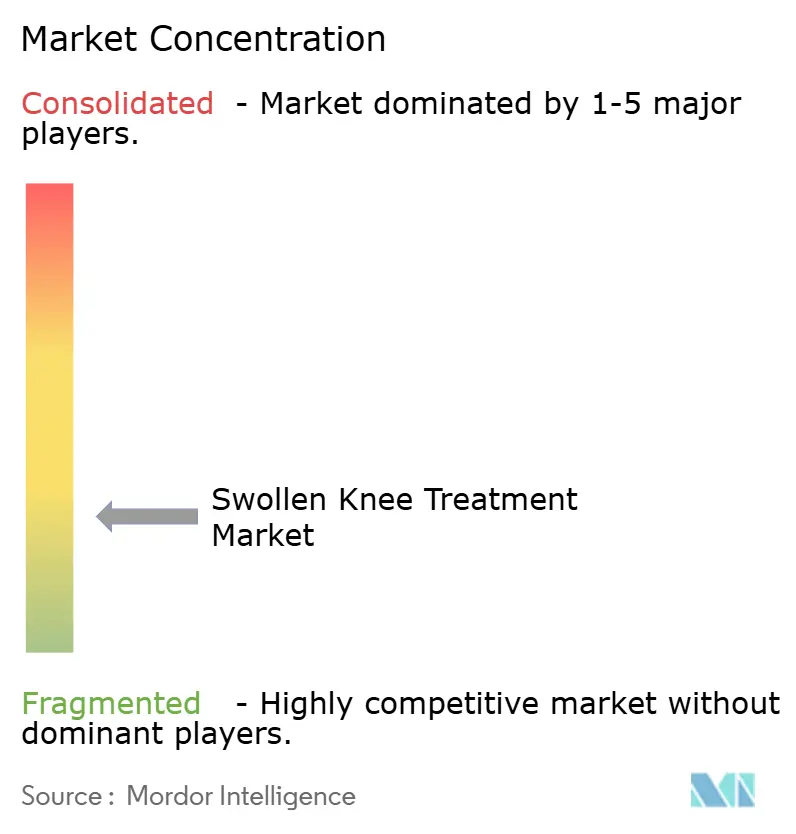
The swollen knee treatment market is fragmented because leadership is divided across treatment categories. Stryker and Zimmer Biomet lead surgical implant activity, while Anika Therapeutics, Bioventus, Seikagaku, and Fidia Farmaceutici are active in viscosupplementation. Össur and Bauerfeind are established in braces and accessories, and Vericel, Kolon TissueGene, and MEDIPOST represent regenerative medicine activity. No company leads across all treatment categories, leaving room for linked digital rehabilitation and intra-articular treatment pathways.
Stryker has used its Mako robotic platform to support surgical accounts and differentiate its implant offer. J&J MedTech has also invested in surgical robotics across its orthopedic portfolio. Zimmer Biomet has been restructuring its United States commercial organization after account losses, showing the importance of hospital and surgeon relationships. Anika filed its final FDA PMA module for the Hyalofast cartilage repair scaffold and prepared an NDA for Cingal. The company reported more than 1 million CINGAL injections across more than 40 international markets.
Doron Therapeutics began a Phase 3 study for MOTYS in October 2025, with planned enrollment of 300 patients. Biosplice submitted an NDA for lorecivivint in January 2026, and MEDIPOST advanced Cartistem toward a United States Phase 3 program. FDA requirements create lengthy development paths for regenerative therapies. These requirements favor firms that can fund clinical development and maintain quality systems. The swollen knee treatment market, therefore, has separate leaders rather than one cross-category leader.
Swollen Knee Treatment Industry Leaders
Pfizer Inc.
Sanofi S.A.
Smith & Nephew plc
Stryker Corporation
Zimmer Biomet Holdings, Inc.
- *Disclaimer: Major Players sorted in no particular order

Recent Industry Developments
- August 2026: Flagler Health raised USD 50 million in a Series B round to deploy an AI-native operating system for musculoskeletal practices. The platform targets administrative burden across outpatient specialty care, which it estimates at 2 hours of documentation for every clinical hour.
- June 2026: KiOmed Pharma and DongKwang Pharmaceutical signed an exclusive licensing and distribution agreement for KioMedinevsone in South Korea. The partnership had potential value exceeding EUR 95 million (USD 104 million), based on the supplied mid-2026 conversion.


Global Swollen Knee Treatment Market Report Scope
As per the scope of the report, swollen knee treatment encompasses medical and at-home care interventions aimed at reducing excess fluid, inflammation, and pain in the knee joint.
The swollen knee treatment market is segmented by pharmaceuticals, therapy, accessories, and surgical treatment. By pharmaceuticals, the market is segmented into non-steroidal anti-inflammatory drugs, non-NSAID analgesics, corticosteroids, hyaluronic acid and viscosupplementation, disease-modifying osteoarthritis drugs, opioid analgesics, and other pharmaceuticals. By therapy, the market is segmented into physical therapy and rehabilitation, intra-articular injection therapy, bone marrow aspirate concentrate therapy, adipose-derived and cell-based therapies, aspiration and arthrocentesis, and nerve blocks and patient-controlled analgesia pumps. By accessories, the market is segmented into assistive devices and bracing, compression sleeves and wraps, unloader and functional braces, post-operative and rehabilitative braces, smart and sensor-enabled supports, and other accessories. By surgical treatment, the market is segmented into arthroscopy, meniscal and ligament reconstruction, cartilage repair and resurfacing, osteotomy, partial knee replacement, total knee replacement, and other surgical treatments.
By indication, the market is segmented into osteoarthritis, rheumatoid arthritis, sports and traumatic injuries, gout and crystal arthropathies, bursitis and tendinopathy, infection and septic arthritis, and other indications. By route of administration, the market is segmented into oral, intravenous and intramuscular, procedural and surgical, and other routes of administration. By end user, the market is segmented into hospitals, orthopedic clinics, rheumatology clinics, ambulatory surgical centers, and other end users. By geography, the market is segmented as North America, Europe, Asia-Pacific, the Middle East and Africa, and South America. The market report also covers the estimated market sizes and trends for 17 countries across major regions globally. The report offers the value (in USD) for the above segments.
| Pharmaceuticals | Non-Steroidal Anti-Inflammatory Drugs |
| Non-NSAID Analgesics | |
| Corticosteroids | |
| Hyaluronic Acid and Viscosupplementation | |
| Disease-Modifying Osteoarthritis Drugs | |
| Opioid Analgesics | |
| Other Pharmaceuticals | |
| Therapy | Physical Therapy and Rehabilitation |
| Intra-Articular Injection Therapy | |
| Bone Marrow Aspirate Concentrate Therapy | |
| Adipose-Derived and Cell-Based Therapies | |
| Aspiration and Arthrocentesis | |
| Nerve Blocks and Patient-Controlled Analgesia Pumps | |
| Accessories | Assistive Devices and Bracing |
| Compression Sleeves and Wraps | |
| Unloader and Functional Braces | |
| Post-Operative and Rehabilitative Braces | |
| Smart and Sensor-Enabled Supports | |
| Other Accessories | |
| Surgical Treatment | Arthroscopy |
| Meniscal and Ligament Reconstruction | |
| Cartilage Repair and Resurfacing | |
| Osteotomy | |
| Partial Knee Replacement | |
| Total Knee Replacement | |
| Other Surgical Treatments |
| Osteoarthritis |
| Rheumatoid Arthritis |
| Sports and Traumatic Injuries |
| Gout and Crystal Arthropathies |
| Bursitis and Tendinopathy |
| Infection and Septic Arthritis |
| Other Indications |
| Oral |
| Intravenous and Intramuscular |
| Procedural and Surgical |
| Other Route of Administrations |
| Hospitals |
| Orthopedic Clinics |
| Rheumatology Clinics |
| Ambulatory Surgical Centers |
| Other End Users |
| North America | United States |
| Canada | |
| Mexico | |
| Europe | Germany |
| United Kingdom | |
| France | |
| Italy | |
| Spain | |
| Rest of Europe | |
| Asia-Pacific | China |
| Japan | |
| India | |
| Australia | |
| South Korea | |
| Rest of Asia-Pacific | |
| Middle East and Africa | GCC |
| South Africa | |
| Rest of Middle East and Africa | |
| South America | Brazil |
| Argentina | |
| Rest of South America |
| By Treatment | Pharmaceuticals | Non-Steroidal Anti-Inflammatory Drugs |
| Non-NSAID Analgesics | ||
| Corticosteroids | ||
| Hyaluronic Acid and Viscosupplementation | ||
| Disease-Modifying Osteoarthritis Drugs | ||
| Opioid Analgesics | ||
| Other Pharmaceuticals | ||
| Therapy | Physical Therapy and Rehabilitation | |
| Intra-Articular Injection Therapy | ||
| Bone Marrow Aspirate Concentrate Therapy | ||
| Adipose-Derived and Cell-Based Therapies | ||
| Aspiration and Arthrocentesis | ||
| Nerve Blocks and Patient-Controlled Analgesia Pumps | ||
| Accessories | Assistive Devices and Bracing | |
| Compression Sleeves and Wraps | ||
| Unloader and Functional Braces | ||
| Post-Operative and Rehabilitative Braces | ||
| Smart and Sensor-Enabled Supports | ||
| Other Accessories | ||
| Surgical Treatment | Arthroscopy | |
| Meniscal and Ligament Reconstruction | ||
| Cartilage Repair and Resurfacing | ||
| Osteotomy | ||
| Partial Knee Replacement | ||
| Total Knee Replacement | ||
| Other Surgical Treatments | ||
| By Indication | Osteoarthritis | |
| Rheumatoid Arthritis | ||
| Sports and Traumatic Injuries | ||
| Gout and Crystal Arthropathies | ||
| Bursitis and Tendinopathy | ||
| Infection and Septic Arthritis | ||
| Other Indications | ||
| By Route of Administration | Oral | |
| Intravenous and Intramuscular | ||
| Procedural and Surgical | ||
| Other Route of Administrations | ||
| By End User | Hospitals | |
| Orthopedic Clinics | ||
| Rheumatology Clinics | ||
| Ambulatory Surgical Centers | ||
| Other End Users | ||
| By Geography | North America | United States |
| Canada | ||
| Mexico | ||
| Europe | Germany | |
| United Kingdom | ||
| France | ||
| Italy | ||
| Spain | ||
| Rest of Europe | ||
| Asia-Pacific | China | |
| Japan | ||
| India | ||
| Australia | ||
| South Korea | ||
| Rest of Asia-Pacific | ||
| Middle East and Africa | GCC | |
| South Africa | ||
| Rest of Middle East and Africa | ||
| South America | Brazil | |
| Argentina | ||
| Rest of South America | ||


Key Questions Answered in the Report
What is the market size of swollen knee treatment in 2026?
The swollen knee treatment market is estimated to reach USD 9.09 billion in 2026, growing at a CAGR of 5.92% during 2026 to 2031.
What is driving demand for swollen knee treatment?
A growing knee osteoarthritis population and obesity-related knee disease support demand. Outpatient procedures and longer-acting injections also expand treatment options.
Which treatment category is growing fastest?
Accessories are forecast to grow at a 7.80% CAGR through 2031, supported by smart supports, remote monitoring, and rehabilitation needs.
Why is osteoarthritis important in swollen knee care?
Osteoarthritis held 44.03% of the indication revenue in 2025 and affects a large global patient population. It requires pharmaceutical, therapy, accessory, and surgical options.
How are outpatient procedures changing knee care?
Outpatient arthroplasty can reduce readmissions, emergency department use, and complications compared with inpatient care. It also shifts volume toward ambulatory centers and clinics.
Which region is growing fastest for swollen knee treatment?
Asia-Pacific is forecast to grow at a 7.88% CAGR through 2031, supported by policy changes, high osteoarthritis prevalence, and health care development.
What limits adoption of injectable and regenerative treatments?
Reimbursement uncertainty, audit risk, variable payer coverage, and the need for stronger evidence can limit adoption.
Page last updated on:





