
Sterilization Monitoring Market Size and Share
Market Overview
| Study Period | 2021 - 2032 |
|---|---|
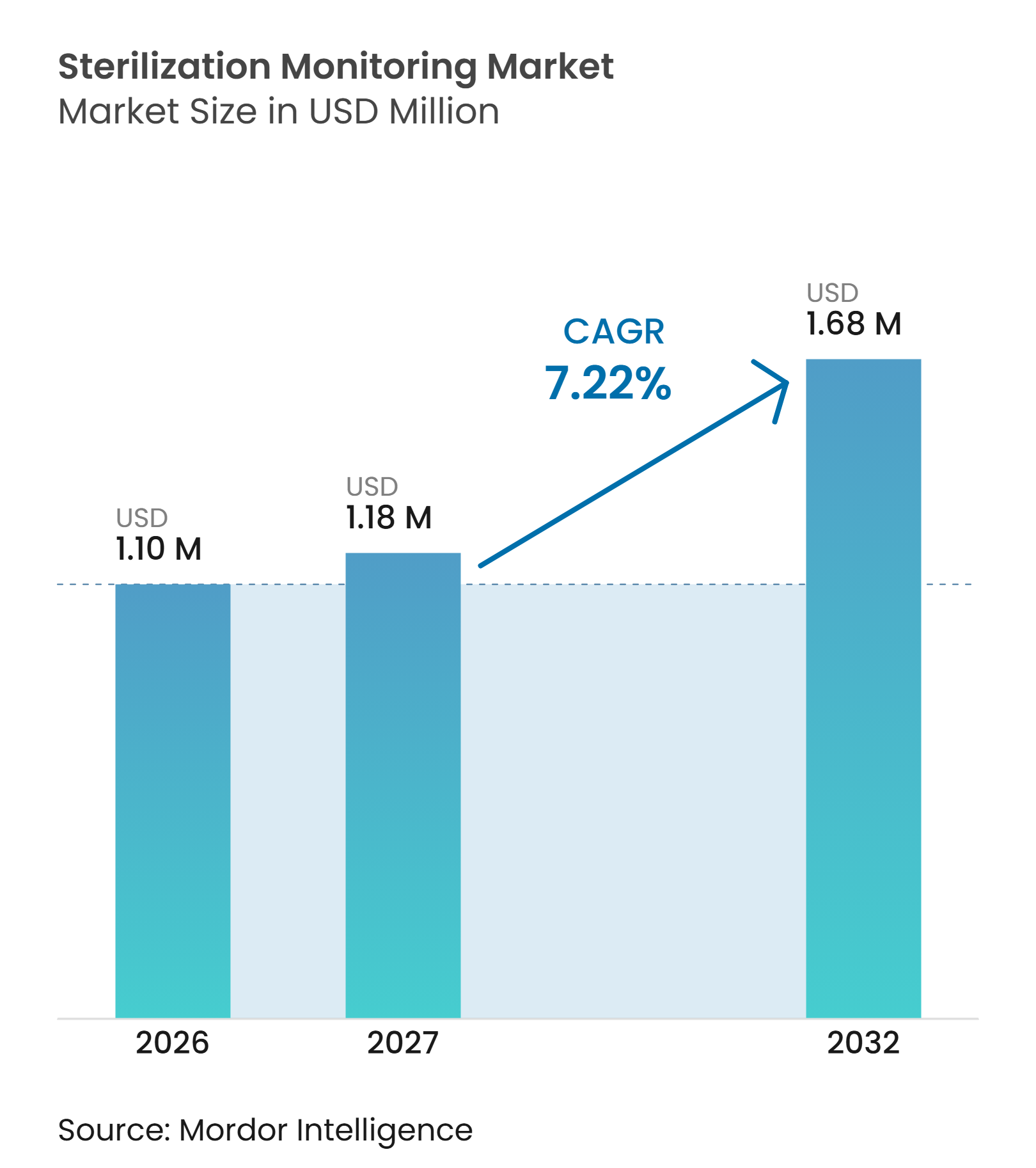
| Market Size (2027) | USD 1.18 Million |
| Market Size (2032) | USD 1.68 Million |
| Growth Rate (2027 - 2032) | 7.22 % |
| Fastest Growing Market | Asia-Pacific |
| Largest Market | North America |
| Market Concentration | Medium |
Major Players *Disclaimer: Major Players sorted in no particular order Image © Mordor Intelligence. Reuse requires attribution under CC BY 4.0. | |
Sterilization Monitoring Market Analysis by Mordor Intelligence
The Sterilization Monitoring Market size was valued at USD 1.10 million in 2026 and is estimated to grow from USD 1.18 million in 2027 to reach USD 1.68 million by 2032, at a CAGR of 7.22% during the forecast period (2027-2032).
Demand is supported by requirements to monitor each sterilization cycle and maintain auditable records before releasing processed loads for clinical or commercial use. Hospitals, ambulatory surgery centers, dental clinics, pharmaceutical manufacturers, and medical device manufacturers increasingly rely on validated monitoring workflows. Competition is shifting from replacement indicators toward connected systems that integrate readers, indicators, and instrument-tracking records. Established suppliers benefit from regulatory clearances and installed systems that increase switching costs, while lower-cost systems and interoperable data tools create opportunities in facilities operating mixed sterilizer fleets across the sterilization monitoring market.
Key Report Takeaways
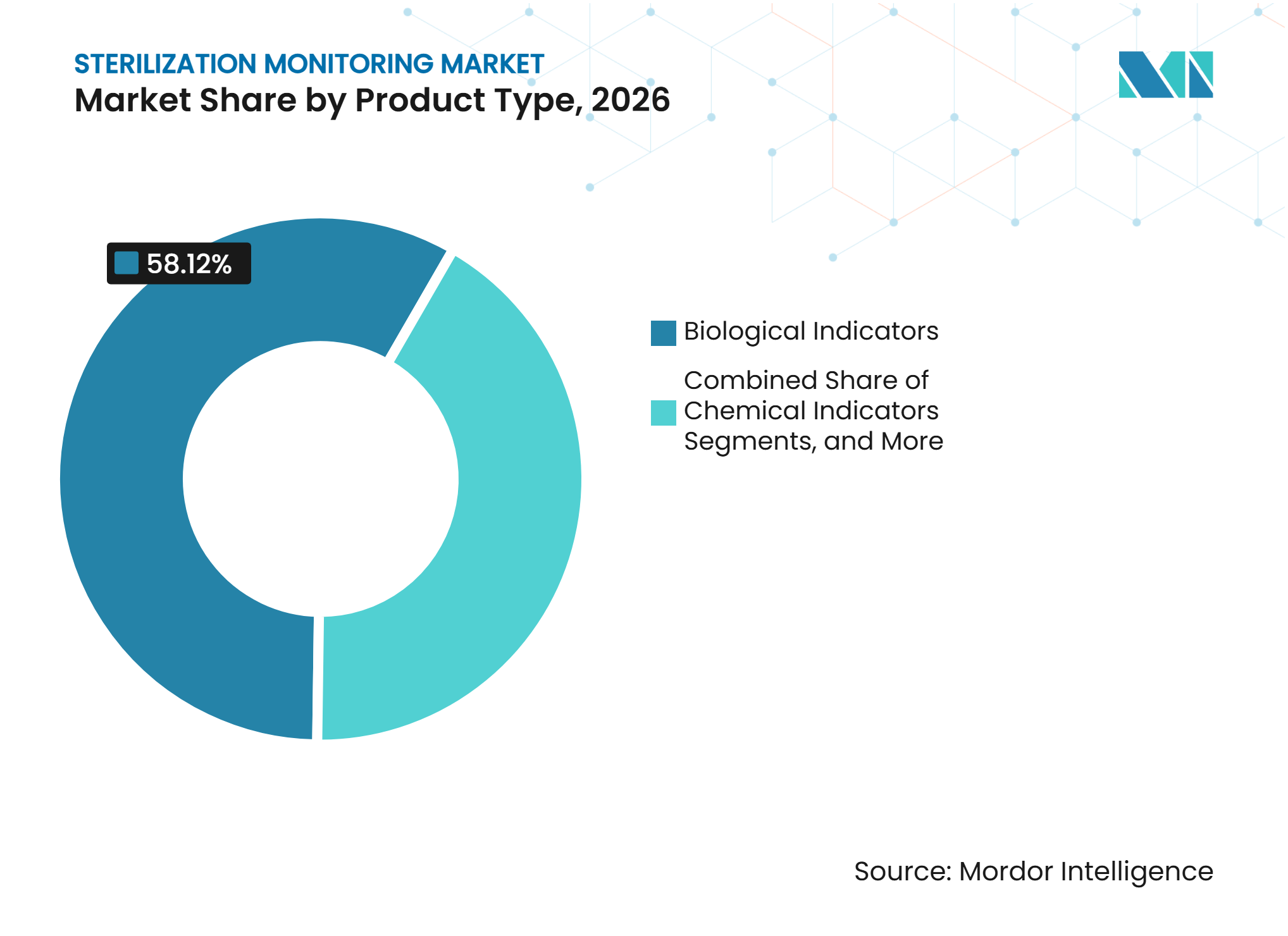
- By product type, biological indicators held a 58.12% share in 2026, while chemical indicators are projected to expand at an 11.55% CAGR through 2032.
- By technology, biological monitoring accounted for 51.45% of the market in 2026, while chemical monitoring is projected to grow at a 10.46% CAGR through 2032.
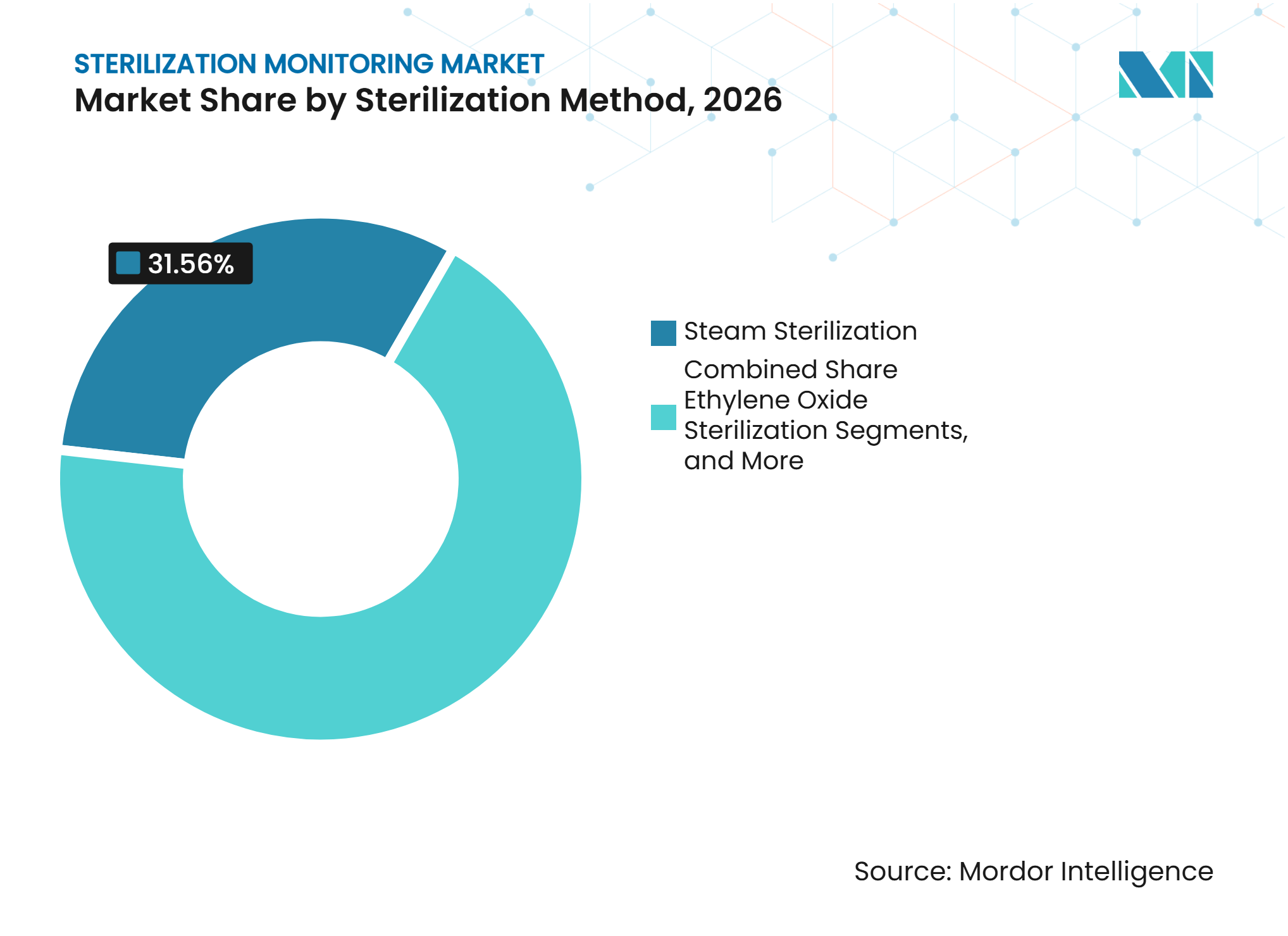
- By sterilization method, steam sterilization represented 31.56% of the market in 2026, while hydrogen peroxide sterilization is projected to grow at a 9.78% CAGR through 2032.
- By process, equipment and process monitoring held 62.77% of the market in 2026, while exposure monitoring is projected to grow at a 10.44% CAGR through 2032.
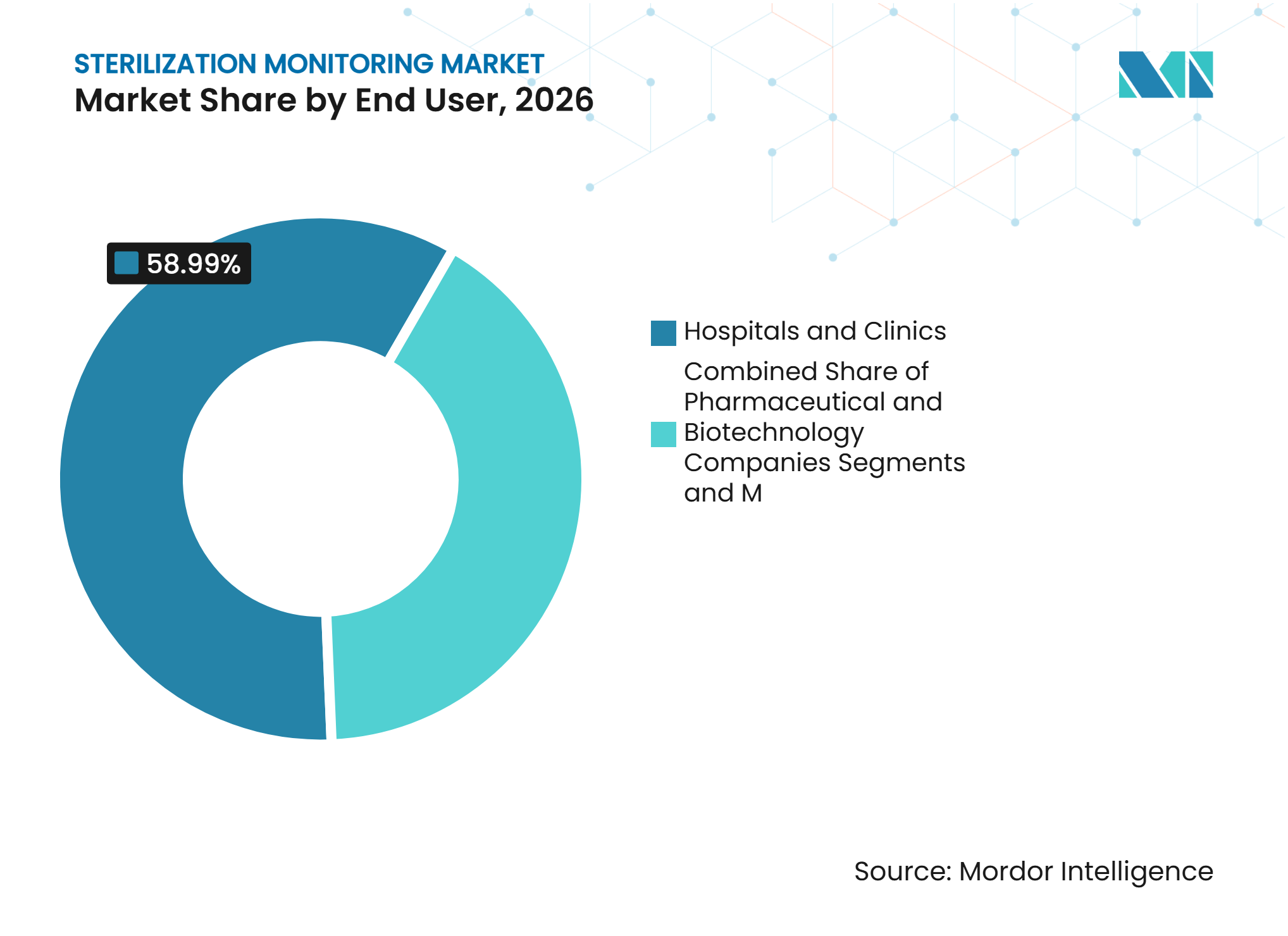
- By end user, hospitals and clinics accounted for 58.99% of the market in 2026, while pharmaceutical and biotechnology companies are projected to grow at a 12.32% CAGR through 2032.
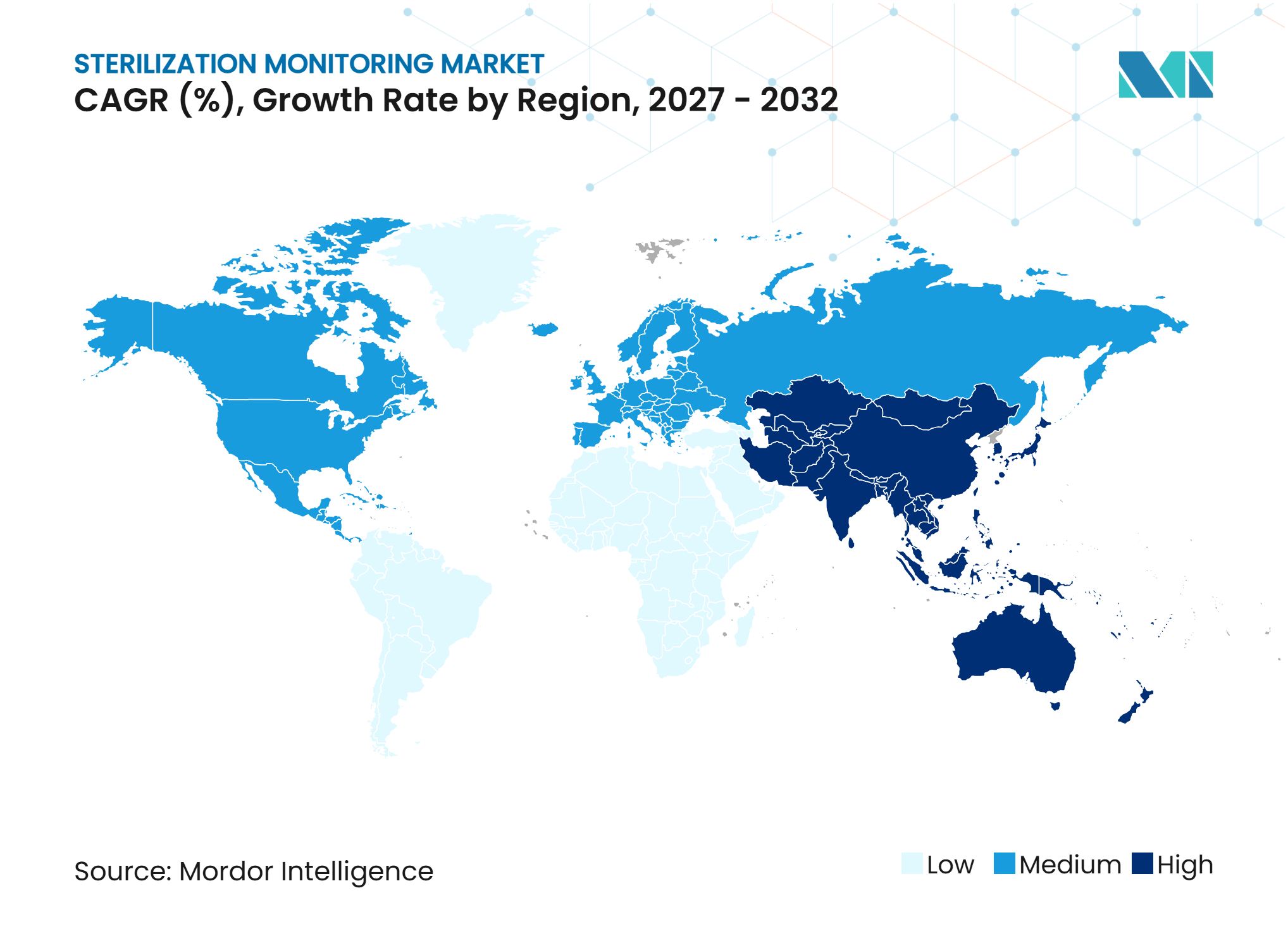
- By geography, North America held 36.79% of the market in 2026, while Asia-Pacific is forecast to grow at an 11.56% CAGR through 2032.
Note: Market numbers in this report are based on Mordor Intelligence's proprietary estimation framework, which combines nine months of actuals with Q4 projections for base year 2026.
Market Trends and Insights
Drivers Impact Analysis of Sterilization Monitoring Market of Sterilization Monitoring Market*
| Driver | (~) % Impact on CAGR Forecast | Geographic Relevance | Impact Timeline |
|---|---|---|---|
| Rising sterilization volumes in hospitals, dental clinics, and ambulatory surgery centers | +1.7% | Global, highest in North America and Asia-Pacific | Short term (≤ 2 years) |
| Mandatory monitoring of implant loads and higher-risk cycles | +0.9% | North America and Europe | Medium term (2-4 years) |
| Expansion of pharmaceutical and medical device manufacturing | +1.3% | Asia-Pacific core, with spillover to Middle East and Africa | Long term (≥ 4 years) |
| Shift toward rapid-readout biological indicators and digital records | +1.2% | Global, led by North America | Medium term (2-4 years) |
| Low-temperature sterilization adoption for heat-sensitive devices | +0.8% | North America and Europe, with early gains in Asia-Pacific | Medium term (2-4 years) |
| Sterilization traceability as a recall-containment and audit-control tool | +0.9% | Global | Long term (≥ 4 years) |
| Source: Mordor Intelligence | |||
Rising Sterilization Volumes in Hospitals, Dental Clinics, and Ambulatory Surgery Centers
The sterilization monitoring market is growing with procedure volumes, as single-use monitoring products are required for each processed load. Ambulatory surgery centers are handling a wider range of procedures previously performed in hospitals, increasing the need for documented sterile processing workflows. Orthopedic procedures are particularly significant because implant loads require biological indicator monitoring under ANSI/AAMI ST79. As joint procedures shift to ambulatory settings, indicator use per facility may grow faster than overall procedure volumes.
Mandatory Monitoring of Implant Loads and Higher-Risk Cycles
Monitoring implant loads is a patient safety requirement, as facilities must quarantine loads until biological indicator results are available. Faster readout times improve sterile processing capacity and instrument availability for patient care. Advanced Sterilization Products is expected to introduce the BIOTRACE Instant Read Steam System in August 2025, offering a seven-second readout time compared with 20 minutes or more for standard systems. Similarly, Solventum introduced its Attest eBowie-Dick Test System in March 2025, providing a digital pass-or-fail result in less than five seconds and reducing test paper waste by 94%.
Expansion of Pharmaceutical and Medical Device Manufacturing
Pharmaceutical and medical device manufacturers require intensive sterilization monitoring because each run must follow validated protocols and Good Manufacturing Practice documentation requirements. This requirement supports recurring demand for biological indicators, chemical indicators, and process challenge devices. Getinge is integrating Siemens SIMATIC WinCC Unified into next-generation cGMP washers and sterilizers in November 2025 to support validation under EU GMP Annex 1. Nelson Laboratories launched RapidCert Biological Indicator Sterility Testing in September 2025, reducing lot-release confirmation from seven days to 48 hours.
Shift Toward Rapid-Readout Biological Indicators and Digital Records
Rapid readout technologies and digital traceability are shifting the sterilization monitoring market toward platform-led solutions. Hospitals increasingly require records that link sterilization cycles with instrument sets, staff actions, and released loads. Digital records support audits, investigations, and recalls while increasing the cost and complexity of changing suppliers after workflow standardization. Connected systems therefore compete on indicator performance, rapid confirmation, and the ability to generate complete, retrievable records.
Restraints Impact Analysis of Sterilization Monitoring Market of Sterilization Monitoring Market*
| Restraint | (~) % Impact on CAGR Forecast | Geographic Relevance | Impact Timeline |
|---|---|---|---|
| High cost of readers, process challenge devices, and validated consumables | -1.0% | Global, most acute in price-sensitive markets in South Asia, South America, and Middle East and Africa | Medium term (2-4 years) |
| Ethylene oxide safety, environmental, and capacity constraints | -1.1% | North America and Europe | Medium term (2-4 years) |
| False positives, operator error, and quarantine burden | -0.6% | Global | Short term (≤ 2 years) |
| Fragmented records and interoperability gaps across sterile processing departments | -0.7% | Global, most acute in mid-tier hospitals without enterprise information technology | Long term (≥ 4 years) |
| Source: Mordor Intelligence | |||
High Cost of Readers, Process Challenge Devices, and Validated Consumables
Readers, incubators, and process challenge devices require substantial upfront investment, which can strain the budgets of small surgery centers and dental clinics. New rapid-readout systems also require local validation, alert threshold setting, and staff training, extending implementation timelines by several months. These requirements discourage facilities from replacing established monitoring methods. As a result, large health systems are better positioned to adopt connected rapid-readout platforms, while smaller facilities continue using conventional systems with lower initial costs. Mesa Laboratories reported 4.7% constant-currency revenue growth in its Sterilization and Disinfection Control business for fiscal year 2026, indicating sustained pricing discipline among institutional buyers.
Ethylene Oxide Safety, Environmental, and Capacity Constraints
Ethylene oxide remains essential for sterilizing devices that cannot tolerate heat or moisture; however, its safety profile creates operational uncertainty for facilities that depend on this method. In March 2026, the U.S. Environmental Protection Agency published a proposed rule to rescind risk-based emission standards under the 2024 National Emission Standards for Hazardous Air Pollutants requirements for commercial ethylene oxide sterilization facilities. If finalized, the proposal estimates USD 280 million in capital compliance cost savings and USD 50 million in annual compliance expenditure savings.[1] Regulatory changes can delay investments in alternative sterilization methods and associated monitoring infrastructure, while complicating capacity planning for contract sterilizers and device manufacturers. This uncertainty slows purchasing decisions despite the continued need for sterilization monitoring.
*Our forecasts treat driver/restraint impacts as directional, not additive. The impact forecasts reflect baseline growth, mix effects, and variable interactions.
Sterilization Monitoring Market Segment Analysis
By Product Type:
Biological Indicators Remain Essential for Implant-Cycle MonitoringBiological indicators held 58.12% of the sterilization monitoring market share by product type in 2026. Their leading position reflected their critical role in validating microbial lethality for implant loads and pharmaceutical cycles. With a defined spore population, these indicators provided direct evidence of process effectiveness when used under validated protocols and required controls. This made them essential in high-risk applications despite the faster preliminary feedback offered by other monitoring methods.
Chemical indicators are forecast to grow at a CAGR of 11.55% from 2027 to 2032, driven by the need for rapid cycle-condition feedback. They support routine monitoring and low-temperature workflows involving sensitive instruments. Solventum launched its Attest Super Rapid VH₂O₂ Clear Challenge Pack in June 2025, combining chemical and biological monitoring in a ready-to-use format. Mechanical and electronic systems also provide cycle data and auditable records, enabling suppliers to offer integrated solutions for institutional tenders.



By Technology:
Biological Monitoring Retains the Validation Role While Chemical Monitoring ExpandsBiological monitoring held 51.45% of the sterilization monitoring market in 2026, reflecting its role as the primary microbiological validation method. Biological indicator results provide direct evidence of microbial kill following an appropriate incubation period. This capability remains important in implant processing, pharmaceutical manufacturing, and device validation, where release decisions require documented evidence. Its established installed base and integration into validated workflows continue to support demand.
Chemical monitoring is forecast to expand at a CAGR of 10.46% from 2027 to 2032. Growth is supported by Class 5 integrating and Class 6 emulating indicators that respond to critical sterilization conditions. These products provide rapid first-line feedback, helping staff identify exceptions before they affect subsequent workflow stages. Electronic and connected systems increasingly link results to instrument records and quality databases, strengthening traceability and documentation.
By Sterilization Method:
Steam Holds the Broadest Installed Base While Hydrogen Peroxide ExpandsSteam sterilization represented 31.56% of the market in 2026, supported by its established role in high-volume hospital workflows. It remains widely used because it is compatible with standard metal surgical instruments and offers a lower per-cycle cost than alternative methods. The extensive installed base of autoclaves also supports demand for related monitoring supplies, reader systems, and routine testing protocols. Steam remains suitable for high-throughput processing of reusable metal instruments in hospitals and surgery centers.
Hydrogen peroxide sterilization is forecast to grow at a CAGR of 9.78% from 2027 to 2032. It is used for heat-sensitive flexible endoscopes, robotic instruments, and electronic components that may be damaged by steam cycles. The need for method-specific testing supports demand for chemical and biological indicator systems designed for low-temperature cycles. A 2026 survey of 360 hydrogen peroxide plasma sterilizers in Chinese hospitals found that only 44.8% were connected to information systems, indicating opportunities for electronic monitoring and traceability solutions.

By Process:
Equipment and Process Monitoring Provides the Core Compliance WorkflowEquipment and process monitoring accounted for 62.77% of the sterilization monitoring market in 2026. This segment includes sterilizer performance tests, Bowie-Dick tests, and parametric cycle verification to confirm that equipment operates as expected. These activities occur at defined intervals and remain necessary regardless of changes in procedure volumes or instrument demand. Their recurring nature creates a stable demand base and provides the documentation required for quality reviews and release decisions.
Exposure monitoring is forecast to grow at a CAGR of 10.44% from 2027 to 2032, driven by increased documentation requirements for implant-containing loads, flexible endoscopes, and pharmaceutical batches. Hospitals are also increasingly linking instrument sets to sterilization cycles through barcodes and radio-frequency identification. A 2025 unique device identification study demonstrated that integrated mechanical, chemical, and biological results could be tracked across 157,614 instrument sets with a zero-error rate. These systems can improve recall readiness and reduce the time required to locate instrument sets during reviews.
By End User:
Hospitals Generate the Largest Volume While Pharmaceutical and Biotechnology Companies Grow FastestHospitals and clinics held 58.99% of the end-user segment in 2026, driven by high sterilization cycle volumes and a diverse surgical instrument mix. These facilities process implant loads, endoscopes, and reusable instruments that require distinct monitoring methods and documentation levels. Large healthcare systems are increasingly standardizing sterile processing across sites, supporting the adoption of common indicators, readers, and traceability records across the sterilization monitoring market.
Pharmaceutical and biotechnology companies are forecast to grow at a 12.32% CAGR from 2027 to 2032. In Good Manufacturing Practice (GMP) settings, each sterilization cycle must meet data integrity and validation requirements before a batch advances through the approved process. Contract sterilization providers and medical device manufacturers require validated, audit-ready systems, including biological indicators and process challenge devices, to manage high cycle volumes, regulatory exposure, and process documentation.
Geography Analysis
North America
North America held 36.79% of the sterilization monitoring market share in 2026, supported by a highly regulated sterile processing environment. ANSI/AAMI ST79 requires biological monitoring for every implant load, while cycle documentation requirements drive recurring demand for monitoring products and auditable records. Food and Drug Administration clearance remains a key market-access requirement for biological and chemical indicator suppliers. Advanced Sterilization Products introduced the BIOTRACE system in August 2025 with clearance, while Solventum’s VH₂O₂ Clear Challenge Pack also entered the market with clearance. Digital readers that integrate results with tracking systems support hospitals in strengthening audit trails.
Asia-Pacific
Asia-Pacific is forecast to grow at a CAGR of 11.56% from 2027 to 2032. China and India drive growth through expanding hospital infrastructure and medical device manufacturing. China’s hospital accreditation requirements support recurring biological monitoring, while India’s manufacturing growth increases the need for validated sterilization processes and documented cycle controls. The 2026 Sichuan survey found that 44.8% of 360 hydrogen peroxide plasma sterilizers were connected to an information system, highlighting opportunities for digital traceability. Japan and South Korea are mature markets where hospital accreditation and export requirements support higher monitoring intensity.
Europe, Middle East and Africa, and South America
In Europe, EN ISO 11138, EN ISO 11140, and EU GMP Annex 1 guide monitoring and documentation in hospital and pharmaceutical settings. The revised EU GMP Annex 1 has increased the need for formal documentation upgrades among pharmaceutical manufacturers in Germany, France, and the United Kingdom. In the Middle East and Africa, adoption varies between Gulf Cooperation Council markets using Joint Commission International and CBAHI accreditation practices and lower-resourced healthcare systems in sub-Saharan Africa. The South African Health Products Regulatory Authority recalled STERIS VERIFY S3060 Dual Species Biological Indicators in September 2026 after the spore population fell below the minimum shelf-life specification. South America remains price-sensitive, although Brazil’s ANVISA requirements are moving larger hospitals toward ISO-aligned practices.
Competitive Landscape
Market Concentration
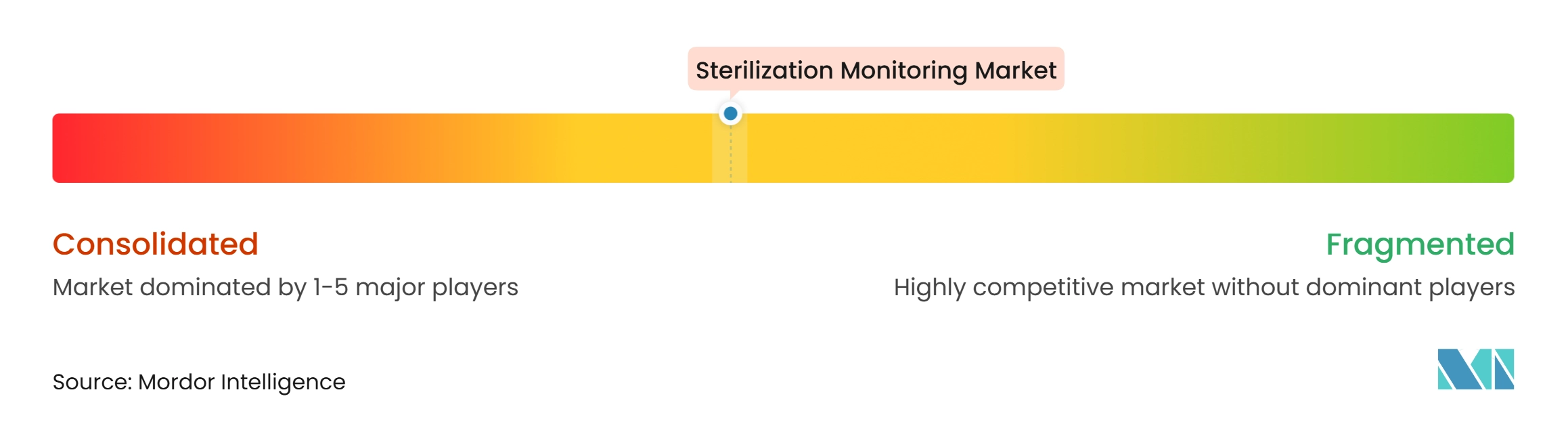
The sterilization monitoring market is moderately consolidated, with established suppliers serving the premium segment. Solventum, STERIS, Mesa Laboratories, and Getinge lead the market through regulated product portfolios, hospital contracts, and digital workflow solutions. Terragene, Tuttnauer, NiGK, Propper, and Belimed compete through regional presence, application-specific offerings, and competitive pricing. Leading suppliers benefit from regulatory documentation, established customer relationships, and integrated portfolios of indicators, readers, and record-management components.
Suppliers are increasingly developing integrated systems that combine monitoring results with hospital tracking data. Solventum’s Attest eBowie-Dick Test System generates digital results for instrument tracking records. Mesa Laboratories completed the GKE integration through a USD 9.555 million holdback payment in April 2025, expanding its chemical indicator and process challenge device footprint across Europe and Asia. STERIS reported USD 281.5 million in Applied Sterilization Technologies revenue for the quarter ended September 30, 2025, reflecting 10% reported growth and 7% constant-currency organic growth.
Opportunities remain for interoperable platforms that consolidate biological, chemical, and mechanical monitoring data from mixed sterilizer fleets. Lower-cost rapid-readout systems also enable smaller suppliers to serve resource-constrained facilities. Getinge and SteriPro announced a partnership in November 2025 to improve sterile processing operations through an off-site service model. This expansion into operational services and outsourced data management, alongside active niche competitors, supports the market’s semi-consolidated structure.
Sterilization Monitoring Industry Leaders
-
Solventum Corporation
-
STERIS plc
-
Getinge AB
-
Propper Manufacturing Co., Inc.
-
Mesa Laboratories, Inc.
- *Disclaimer: Major Players sorted in no particular order
Sterilization Monitoring Market Companies Covered in this Report
- ANTONIO MATACHANA, S.A.
- Belimed
- E.C.S. S.r.l.
- Etigam B.V.
- Getinge
- H.W. Andersen Products Ltd.
- Hu-Friedy Mfg
- Liofilchem S.r.l.
- LISTER BIOMEDICAL CO., LTD.
- Mesa Laboratories, Inc.
- NiGK Corporation
- Parasure Limited
- PMS Healthcare Technologies Ltd.
- Propper Manufacturing Co., Inc.
- Shinva Medical Instrument Co., Ltd.
- Solventum Corporation
- Steelco
- STERIS
- Terragene S.A.
- True Indicating
- Tuttnauer
Recent Industry Developments in Sterilization Monitoring Market
- March 2026: The U.S. Environmental Protection Agency proposed rescinding risk-based emission standards under the 2024 NESHAP for commercial ethylene oxide sterilization facilities. If finalized, the proposal was estimated to save USD 280 million in capital costs and USD 50 million in annual compliance expenditures.
- November 2025: Getinge integrated Siemens SIMATIC WinCC Unified into its next-generation cGMP washers and sterilizers. The interface improved cleanroom efficiency and supported a unified validation workflow.
- September 2025: Nelson Laboratories launched RapidCert Biological Indicator Sterility Testing, reducing sterility confirmation from the compendial seven-day standard to 48 hours for lot release and sterilization validation.
Global Sterilization Monitoring Market Report Scope
As per the scope of the report, sterilization monitoring is a quality assurance process used to verify that a sterilization cycle has successfully reached the required conditions, such as temperature, pressure, exposure time, and sterilant penetration, to destroy all forms of microbial life, including bacterial spores.
The sterilization monitoring market is segmented by product type, technology, sterilization method, process, end user, and geography. By product type, the market is segmented into biological indicators, chemical indicators, and mechanical and electronic monitoring systems. By technology, the market is categorized into biological monitoring, chemical monitoring, mechanical monitoring, and electronic and connected monitoring. By sterilization method, the market is segmented into steam sterilization, ethylene oxide sterilization, hydrogen peroxide sterilization, formaldehyde sterilization, dry heat sterilization, gamma-ray, X-ray, and electron-beam sterilization, and liquid peracetic acid and other chemical sterilization methods. By process, the market is segmented into equipment and process monitoring, exposure monitoring, load monitoring, pack monitoring, and others. By end user, the market is segmented into hospitals and clinics, ambulatory surgery centers and dental clinics, pharmaceutical and biotechnology companies, medical device manufacturers, contract sterilization service providers, and others. By geography, the market is analyzed across North America, Europe, Asia-Pacific, the Middle East and Africa, and South America. The report also covers the estimated market sizes and trends for 17 countries across major regions globally. The report offers market sizes and forecasts in terms of value (USD) for the above segments.
Segmentation Overview
| Biological Indicators |
| Chemical Indicators |
| Mechanical and Electronic Monitoring Systems |
| Biological Monitoring |
| Chemical Monitoring |
| Mechanical Monitoring |
| Electronic and Connected Monitoring |
| Steam Sterilization |
| Ethylene Oxide Sterilization |
| Hydrogen Peroxide Sterilization |
| Formaldehyde Sterilization |
| Dry Heat Sterilization |
| Gamma, X-Ray, and Electron-Beam Sterilization |
| Liquid Peracetic Acid and Other Chemical Sterilization |
| Equipment and Process Monitoring |
| Exposure Monitoring |
| Load Monitoring |
| Pack Monitoring |
| Others |
| Hospitals and Clinics |
| Ambulatory Surgery Centers and Dental Clinics |
| Pharmaceutical and Biotechnology Companies |
| Medical-Device Manufacturers |
| Contract Sterilization Service Providers |
| Others |
| North America | United States |
| Canada | |
| Mexico | |
| Europe | Germany |
| United Kingdom | |
| France | |
| Italy | |
| Spain | |
| Rest of Europe | |
| Asia-Pacific | China |
| India | |
| Japan | |
| Australia | |
| South Korea | |
| Rest of Asia-Pacific | |
| Middle East and Africa | GCC |
| South Africa | |
| Rest of Middle East and Africa | |
| South America | Brazil |
| Argentina | |
| Rest of South America |
| By Product Type | Biological Indicators | |
| Chemical Indicators | ||
| Mechanical and Electronic Monitoring Systems | ||
| By Technology | Biological Monitoring | |
| Chemical Monitoring | ||
| Mechanical Monitoring | ||
| Electronic and Connected Monitoring | ||
| By Sterilization Method | Steam Sterilization | |
| Ethylene Oxide Sterilization | ||
| Hydrogen Peroxide Sterilization | ||
| Formaldehyde Sterilization | ||
| Dry Heat Sterilization | ||
| Gamma, X-Ray, and Electron-Beam Sterilization | ||
| Liquid Peracetic Acid and Other Chemical Sterilization | ||
| By Process | Equipment and Process Monitoring | |
| Exposure Monitoring | ||
| Load Monitoring | ||
| Pack Monitoring | ||
| Others | ||
| By End User | Hospitals and Clinics | |
| Ambulatory Surgery Centers and Dental Clinics | ||
| Pharmaceutical and Biotechnology Companies | ||
| Medical-Device Manufacturers | ||
| Contract Sterilization Service Providers | ||
| Others | ||
| By Geography | North America | United States |
| Canada | ||
| Mexico | ||
| Europe | Germany | |
| United Kingdom | ||
| France | ||
| Italy | ||
| Spain | ||
| Rest of Europe | ||
| Asia-Pacific | China | |
| India | ||
| Japan | ||
| Australia | ||
| South Korea | ||
| Rest of Asia-Pacific | ||
| Middle East and Africa | GCC | |
| South Africa | ||
| Rest of Middle East and Africa | ||
| South America | Brazil | |
| Argentina | ||
| Rest of South America | ||
Key Questions Answered in the Report
What is the projected value of the sterilization monitoring market by 2032?
The market is projected to reach USD 1.68 billion by 2032, growing from USD 1.18 billion in 2027 at a 7.22% CAGR.
Which product category leads sterilization monitoring demand?
Biological indicators lead by product type with 58.12% share in 2026 because they are central to implant-load monitoring and validation workflows.
Which end-user group is expected to grow fastest?
Pharmaceutical and biotechnology companies are forecast to grow at a 12.32% CAGR through 2032, supported by validated Good Manufacturing Practice workflows.
Why are rapid-readout biological indicators important?
They shorten the time needed to obtain a result, helping sterile processing teams manage implant-load quarantine and instrument availability.
Which sterilization method is growing fastest?
Hydrogen peroxide sterilization is forecast to grow at a 9.78% CAGR through 2032 because heat-sensitive devices need low-temperature processing.
Which region is forecast to expand fastest?
Asia-Pacific is forecast to grow at an 11.56% CAGR through 2032, supported by hospital accreditation requirements and medical device manufacturing growth.