
Sports Bicycle Market Size and Share
Market Overview
| Study Period | 2022 - 2032 |
|---|---|
| Market Size (2027) | USD 19.75 Billion |
| Market Size (2032) | USD 28.08 Billion |
| Growth Rate (2027 - 2032) | 7.29 % |
| Fastest Growing Market | Asia-Pacific |
| Largest Market | North America |
| Market Concentration | Low |
Major Players *Disclaimer: Major Players sorted in no particular order Image © Mordor Intelligence. Reuse requires attribution under CC BY 4.0. | |
Sports Bicycle Market Analysis by Mordor Intelligence
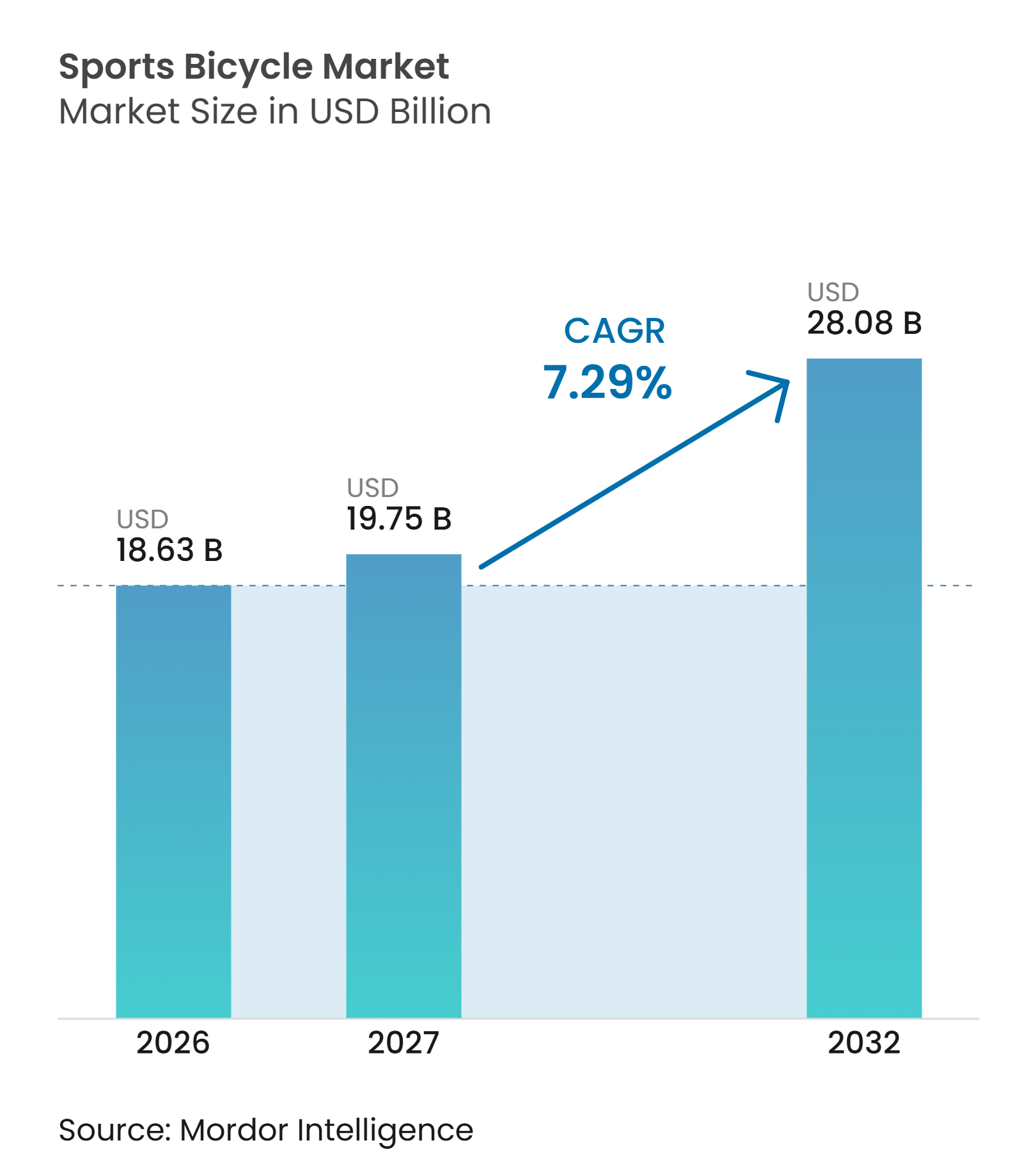
The sports bicycle market size is expected to grow from USD 18.63 billion in 2026 to USD 19.75 billion in 2027, and is forecast to reach USD 28.08 billion by 2032, at a 7.29% CAGR over 2027-2032. The market is supported by rising health consciousness, increasing participation in recreational and competitive cycling, and growing consumer interest in performance-oriented mobility and outdoor activities. Technological advancements in bicycle design, lightweight materials, gear systems, and electric-assist technologies are broadening consumer adoption, while improved cycling infrastructure and organized sporting events are strengthening participation. Growing interest in gravel riding, mountain biking, endurance cycling, and multi-day cycling tourism is encouraging demand for versatile, performance-oriented bicycles. The expansion of specialty retail networks, digital sales channels, and direct-to-consumer platforms is improving product accessibility and consumer engagement. Increasing investment in cycling events, professional racing, and recreational cycling communities is further supporting market visibility, product innovation, and long-term demand.
Key Report Takeaways
-
By product type, mountain bicycles held 37.83% of the sports bicycle market share in 2026, while gravel bicycles are forecast to grow at an 8.83% CAGR from 2027 to 2032.
-
By mode of operation, conventional bicycles accounted for 64.73% of the sports bicycle market size in 2026, while electric bicycles are projected to expand at a 9.63% CAGR from 2027 to 2032.
-
By frame material, aluminum alloy held a 47.68% market share in 2026, while carbon fiber is forecast to advance at an 8.43% CAGR from 2027 to 2032.
-
By application, recreation accounted for 32.63% of the market share in 2026, while adventure cycling is forecast to grow at an 8.63% CAGR from 2027 to 2032.
-
By price range, mid-range bicycles held 40.33% market share in 2026, while premium and high-end bicycles are projected to register an 8.23% CAGR from 2027 to 2032.
-
By end user, adults accounted for 84.64% market share in 2026, while kids and youth are forecast to expand at an 8.93% CAGR from 2027 to 2032.
-
By gender, unisex bicycles accounted for 39.67% market share in 2026, while women-specific bicycles are forecast to grow at an 8.83% CAGR from 2027 to 2032.
-
By distribution channel, specialty bicycle retailers held a 52.33% market share in 2026, while online retail and direct-to-consumer channels are projected to grow at a 9.43% CAGR from 2027 to 2032.
-
By geography, North America accounted for 34.20% market share in 2026, while Asia-Pacific is forecast to expand at an 8.63% CAGR from 2027 to 2032.
Note: Market numbers in this report are based on Mordor Intelligence's proprietary estimation framework, which combines nine months of actuals with Q4 projections for base year 2026.
Market Trends and Insights
Drivers Impact Analysis of Sports Bicycle Market*
| Driver | (~) % Impact on CAGR Forecast | Geographic Relevance | Impact Timeline |
|---|---|---|---|
| Rising fitness and recreational cycling participation | +1.4% | Global, with intensity in North America, Europe, and Asia-Pacific core | Medium term (2–4 years) |
| Expansion of dedicated cycling infrastructure and trail networks | +1.2% | Europe and North America (federal land agencies) | Long term (≥ 4 years) |
| Growing consumer preference for premium, high-performance sports bicycles | +1.1% | Global, led by North America and Western Europe | Medium term (2–4 years) |
| Rising adoption of electric-assist sports bicycles | +1.6% | Global; strongest in Europe, Asia-Pacific core, and North America | Short to medium term (≤ 4 years) |
| Increasing popularity of gravel cycling and mixed-terrain riding | +1.0% | Europe (Germany, France, Austria), North America, South Africa | Short term (≤ 2 years) |
| Expansion of cycling tourism and adventure recreation | +0.8% | Europe (Italy, Germany, France), South America, Asia-Pacific | Long term (≥ 4 years) |
| Source: Mordor Intelligence | |||
Rising Fitness and Recreational Cycling Participation
Growing health consciousness and increasing interest in active lifestyles are encouraging consumers to incorporate cycling into their regular fitness and recreational activities, supporting demand for sports bicycles. According to Sport England's April 2026 Active Lives Adult Survey, 6.1 million adults in England participated in cycling for leisure or sport at least twice during the 28 days preceding the November 2024–25 survey, compared with 5.8 million in the corresponding previous-year period[1]. This increase reflects continued engagement with cycling as a form of physical activity and recreation, supporting demand for bicycles suited to regular exercise and recreational riding. As consumers increasingly incorporate outdoor physical activities into their lifestyles, cycling participation provides a broader foundation for demand for sports bicycles.
Expansion of Dedicated Cycling Infrastructure and Trail Networks
Increasing investment in dedicated cycling infrastructure, including protected bicycle lanes, interconnected cycling routes, and off-road trails, is improving accessibility and creating more opportunities for sports and recreational cycling. Governments and transport authorities are prioritizing the development of connected cycling networks to encourage active mobility and support wider recreational use. According to the United Kingdom Department for Transport's June 2026 announcement, the government planned to invest GBP 4.5 billion in active travel infrastructure over five years, aiming to deliver 5,000 new walking, wheeling, and cycling routes and 10,000 safer crossings by 2030[2]. Such infrastructure development is expected to improve access to cycling facilities, encourage greater bicycle usage, and support demand for sports bicycles.
Growing Consumer Preference for Premium, High-Performance Sports Bicycles
Increasing consumer interest in enhanced riding experiences, advanced bicycle engineering, and specialized cycling equipment is supporting demand for premium, high-performance sports bicycles. Cycling enthusiasts are increasingly prioritizing features such as lightweight frame materials, aerodynamic designs, precision-engineered components, advanced suspension systems, and improved gear technologies to enhance riding efficiency, comfort, and control. Manufacturers are responding by investing in product innovation, incorporating advanced materials, refining bicycle geometries, and introducing models tailored to competitive and performance-oriented recreational cycling. The growing emphasis on product quality, technical specifications, and specialized riding capabilities is encouraging consumers to consider higher-value bicycles, supporting the expansion of the premium sports bicycle market.
Rising Adoption of Electric-Assist Sports Bicycles
Growing consumer interest in electric-assist bicycles is expanding the accessibility of sports cycling by enabling riders to undertake longer journeys, navigate challenging terrain, and take on more demanding cycling activities with additional pedaling support. Improvements in battery efficiency, motor technology, and bicycle integration are encouraging manufacturers to incorporate electric-assist systems into mountain, gravel, and road bicycle designs. According to the German Bicycle Industry Association (ZIV), approximately 2 million e-bikes were sold in Germany in 2025, accounting for 52.7% of total bicycle and e-bike sales. Electric mountain bicycles were the largest e-bike product category, accounting for 38% of e-bike sales, highlighting the relevance of electric assistance in performance-oriented cycling[3]. This growing adoption is encouraging manufacturers to expand their electric-assist sports bicycle portfolios.
Restraints Impact Analysis of Sports Bicycle Market*
| Restraint | (~) % Impact on CAGR Forecast | Geographic Relevance | Impact Timeline |
|---|---|---|---|
| High maintenance costs of sports bicycles | -0.8% | Global; most acute in emerging markets and secondary cities | Medium term (2–4 years) |
| Supply-chain and component cost volatility | -1.0% | Global; most acute for North America-bound shipments | Short term (≤ 2 years) |
| Limited availability of specialized bicycle servicing and repair facilities | -0.5% | Emerging markets; secondary cities in Asia-Pacific and South America | Long term (≥ 4 years) |
| Regulatory compliance and restricted electric mountain bike (e-MTB) trail access | -0.6% | North America and Europe; trail-access rules vary by federal/state jurisdiction | Medium term (2–4 years) |
| Source: Mordor Intelligence | |||
High Maintenance Costs of Sports Bicycles
Sports bicycles often require specialized components, precision adjustments, and periodic servicing to maintain their performance, safety, and riding efficiency. Advanced braking systems, suspension assemblies, multi-speed drivetrains, lightweight frames, and electric-assist components can increase maintenance complexity and replacement costs compared with conventional bicycles. Frequent use across demanding riding conditions, including off-road trails and long-distance routes, can also accelerate component wear and increase servicing requirements. Additionally, the need for specialized tools, technical expertise, and compatible replacement parts can add to the overall cost of ownership. These maintenance expenses may influence purchasing decisions, particularly among price-sensitive consumers and occasional riders, potentially limiting wider adoption of higher-performance sports bicycles.
Supply-Chain and Component Cost Volatility
The sports bicycle market relies on a complex supply chain that includes specialized components, raw materials, and manufacturing inputs sourced from multiple suppliers. Fluctuations in the prices of aluminum, carbon fiber, steel, rubber, and other materials can influence bicycle production costs and affect manufacturers' pricing strategies. In addition, the dependence on specialized components such as gear systems, braking assemblies, suspension systems, batteries, and electric motors exposes manufacturers to changes in supplier pricing, component availability, and procurement lead times. Variations in international freight costs, trade conditions, and inventory requirements can further affect production planning and supply-chain efficiency. These factors can create cost pressures for manufacturers, complicate pricing decisions, and influence the availability and affordability of sports bicycles across different price categories.
*Our forecasts treat driver/restraint impacts as directional, not additive. The impact forecasts reflect baseline growth, mix effects, and variable interactions.
Sports Bicycle Market Segment Analysis
By Product Type:
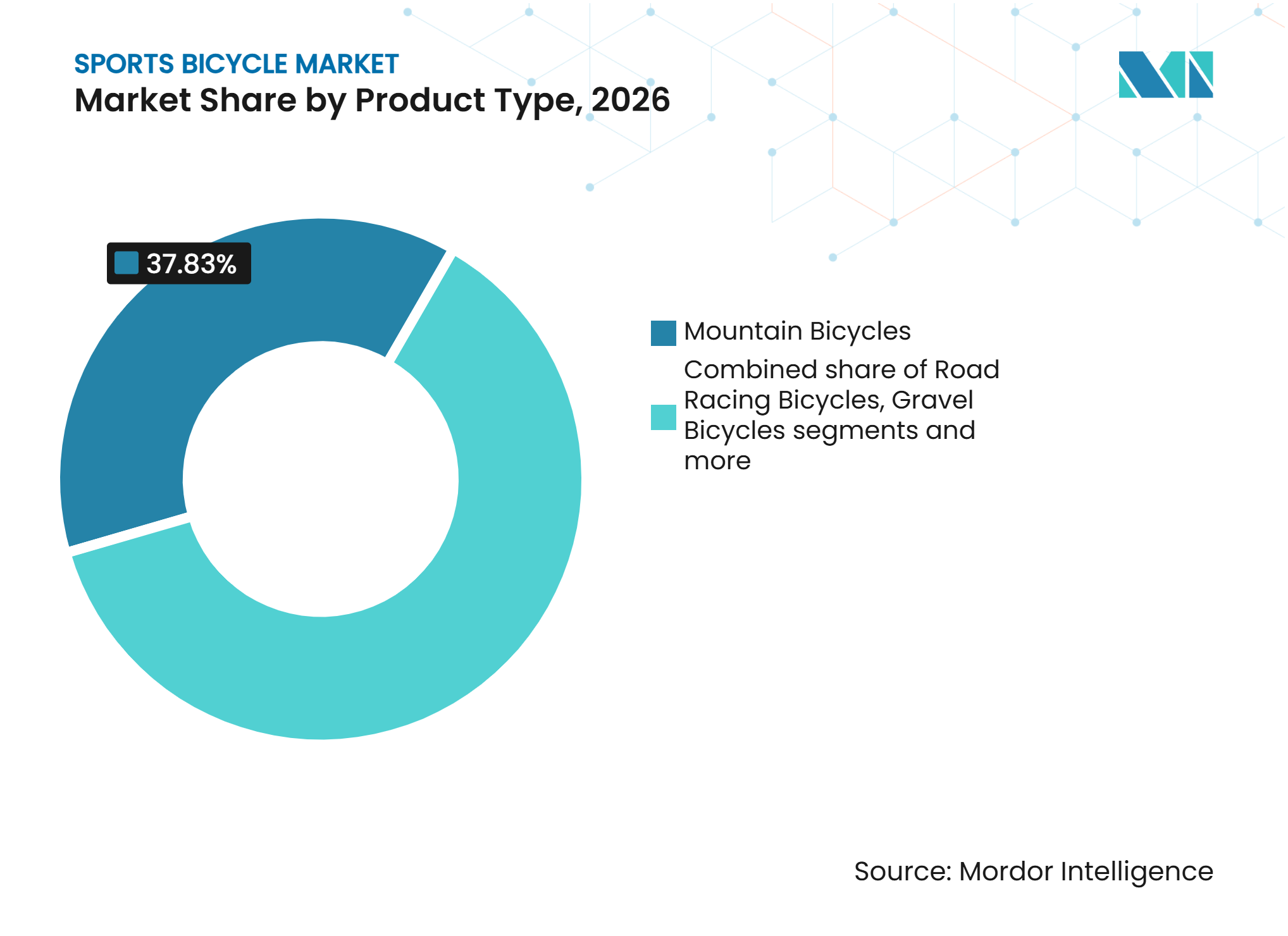
Mountain Leads as Gravel Accelerates GrowthMountain bicycles account for the largest share of the sports bicycle market in 2026, representing 37.83% of total revenues. Their leading position is supported by their versatility across recreational riding, competitive cycling, and off-road applications. Their ability to accommodate varied terrain, including rugged trails, steep inclines, and uneven surfaces, makes them suitable for a broad range of cycling activities. Continued consumer interest in outdoor recreation and trail-based cycling further supports demand for mountain bicycles. Their availability across different performance levels and price categories also contributes to their widespread adoption.
Gravel bicycles are projected to be the fastest-growing product type, registering a CAGR of 8.83% during 2027–2032. Their growth is supported by their versatility across paved roads, gravel paths, and mixed-terrain routes, allowing consumers to use a single bicycle for recreational riding, fitness, endurance cycling, and adventure activities. Their design combines characteristics of road and mountain bicycles, offering a balance of speed, comfort, and terrain adaptability. Increasing interest in flexible cycling experiences and bicycles suited to multiple riding environments is further strengthening their appeal. Manufacturers are also expanding their gravel bicycle offerings through improvements in frame design, tire clearance, and component integration.



By Mode of Operation:
Electric Gains Share in a Conventional-Led MarketConventional bicycles account for the largest share of the sports bicycle market in 2026, representing 64.73% of total revenues. Their leading position is supported by their established adoption across competitive cycling, recreational riding, and fitness activities. Conventional bicycles remain widely preferred for their direct pedaling experience, relatively simple mechanical systems, and suitability across different cycling disciplines. Their extensive availability across product designs, performance levels, and price categories further supports their market presence. Continued participation in traditional road racing, mountain biking, and other non-electric cycling activities sustains demand for conventional sports bicycles.
Electric sports bicycles are projected to be the fastest-growing mode of operation, registering a CAGR of 9.63% during 2027–2032. Their growth is supported by growing consumer interest in pedal-assisted cycling, which enables riders to undertake longer journeys, navigate challenging terrain, and engage in physically demanding activities with additional assistance. Improvements in battery technology, motor efficiency, and integrated bicycle designs are further enhancing product performance and usability. Manufacturers are increasingly expanding their electric offerings across mountain, gravel, and road bicycle categories to address diverse riding requirements. Growing acceptance of electric assistance in recreational and performance-oriented cycling is expected to support further adoption.
By Frame Material:
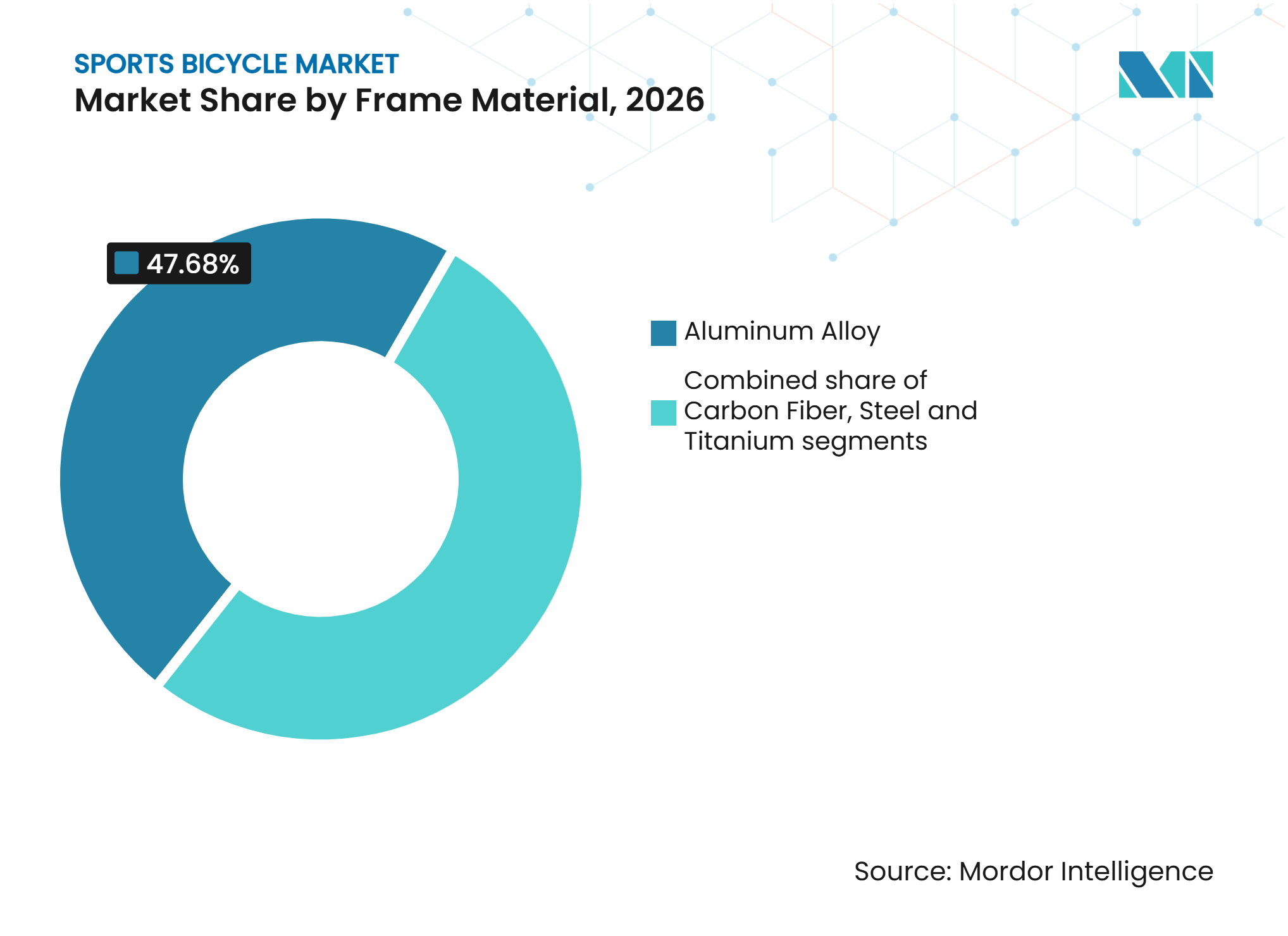
Aluminum's Reign Faces Carbon Fiber's AscentAluminum alloy frames account for the largest share of the sports bicycle market in 2026, representing 47.68% of total revenues. Their leading position is supported by a favorable balance of strength, weight, durability, and affordability, making them suitable for a wide range of sports-bike applications. Aluminum frames are widely used across entry-level, mid-range, and premium bicycle models, offering manufacturers flexibility in product development and pricing. Steel frames continue to serve consumers who prioritize durability, ride comfort, and ease of repair, while titanium remains a specialized option associated with lightweight construction, strength, and long-term durability. The established use of aluminum across different bicycle categories and performance levels supports its dominant market position.
Carbon fiber is projected to be the fastest-growing frame material, registering a CAGR of 8.43% during 2027–2032. Its growth is driven by increasing demand for lightweight bicycle frames, improved stiffness-to-weight characteristics, and enhanced performance across competitive and recreational cycling applications. Carbon fiber enables manufacturers to optimize frame geometry, aerodynamic efficiency, and vibration absorption while maintaining structural strength. Advancements in composite manufacturing and frame engineering are also supporting their adoption across road, mountain, and gravel bicycles. Growing consumer interest in performance-oriented equipment and the expanding availability of carbon fiber models across different price categories are expected to further strengthen demand for this material.

By Application:
Recreation Anchors Demand, Adventure Gains MomentumRecreation accounts for the largest share of the sports bicycle market in 2026, representing 32.63% of total revenues. Its leading position reflects the widespread use of sports bicycles for leisure activities, casual outdoor riding, and general physical exercise. Recreational cycling appeals to a broad consumer base, including individuals seeking outdoor experiences, social activities, and regular physical activity. The versatility of sports bicycles across different riding environments further supports their use for recreational purposes. Continued interest in outdoor leisure and accessible cycling activities sustains demand within this application.
Adventure cycling is projected to be the fastest-growing application, registering a CAGR of 8.63% during 2027–2032. Its growth is supported by growing consumer interest in long-distance riding, multi-day cycling experiences, bikepacking, and the exploration of varied terrain. Adventure cycling encourages demand for bicycles that combine durability, riding comfort, and adaptability across paved roads, gravel paths, and off-road routes. Growing interest in outdoor exploration and independent travel is further broadening the appeal of this application. Manufacturers are responding with bicycle designs that accommodate varied terrain and extended riding conditions, supporting the growth in demand for adventure-oriented sports bicycles.
By Price Range:
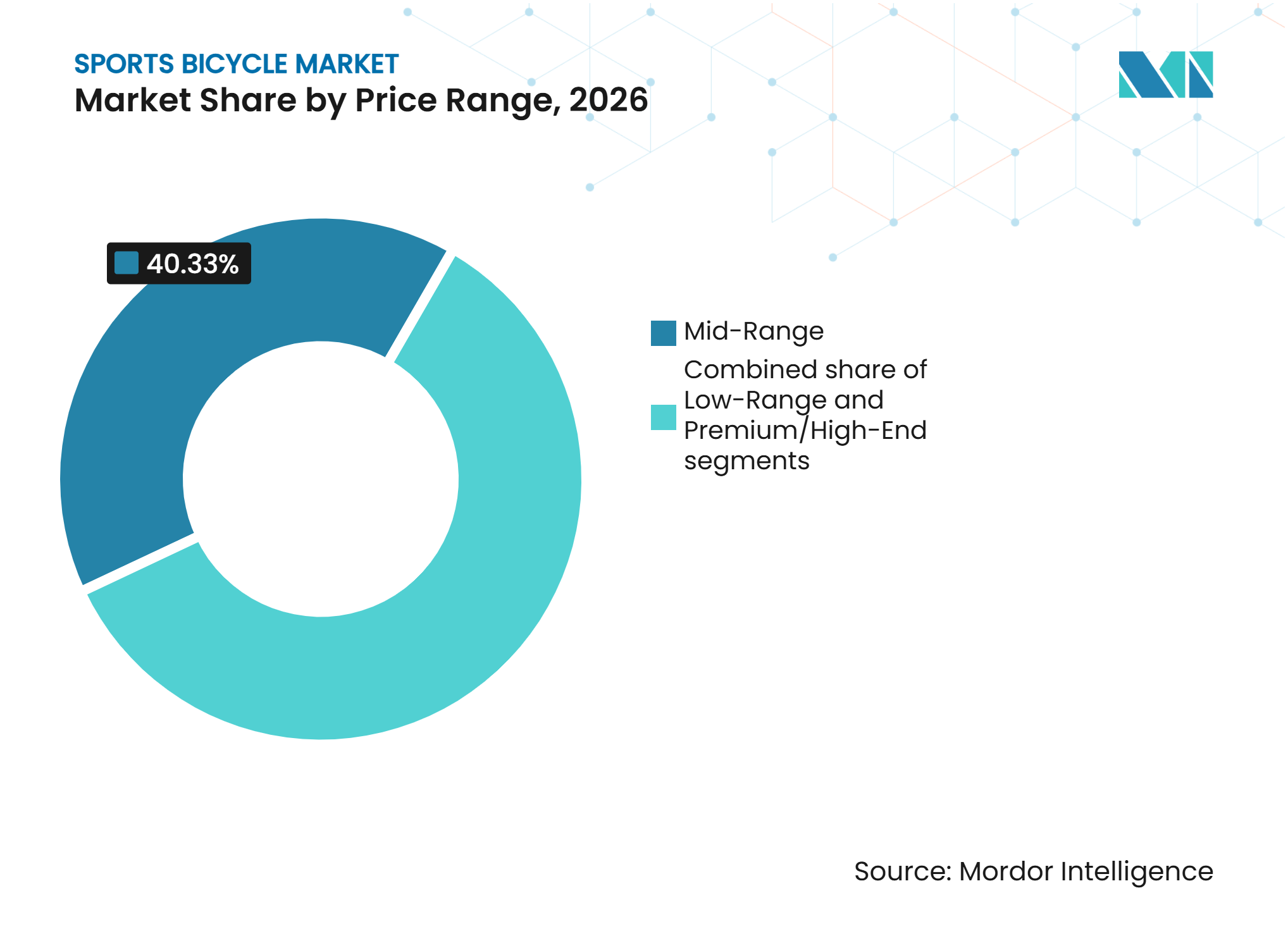
Mid-Range Dominates as Premium Commands GrowthMid-range bicycles account for the largest share of the sports bicycle market in 2026, representing 40.33% of total revenues. Their leading position reflects the balance they strike among affordability, product quality, and riding performance, appealing to consumers seeking more advanced features without paying premium prices. This range attracts both recreational cyclists upgrading from entry-level models and experienced riders seeking reliable equipment for regular use. The availability of a variety of frame materials, component configurations, and performance specifications across mid-range offerings further supports their appeal. Their balance of price and functionality sustains demand across a broad consumer base.
Premium/high-end bicycles are projected to be the fastest-growing price category, registering a CAGR of 8.23% during 2027–2032. Growth is supported by increasing consumer interest in advanced bicycle engineering, lightweight materials, aerodynamic designs, and high-performance components. These products appeal particularly to cycling enthusiasts and experienced riders who place greater emphasis on technical specifications, riding efficiency, and specialized performance capabilities. Continuous product innovation, improvements in carbon fiber construction, and the integration of advanced braking, gearing, and suspension technologies are further strengthening the premium category. Increasing willingness among committed cyclists to invest in specialized equipment is expected to support its growth over the forecast period.
By End User:
Adults Drive Value, Youth Closes the GapAdults account for the largest share of the sports bicycle market in 2026, representing 84.64% of total revenues. Their leading position reflects the widespread use of sports bicycles for fitness, recreational riding, competitive cycling, and outdoor activities. Adult consumers represent a broad customer base, ranging from occasional recreational riders to experienced cyclists seeking specialized equipment. Demand is further supported by the availability of bicycles across different performance levels, riding disciplines, and price categories. The established role of cycling in adult fitness and leisure activities continues to sustain this segment's market dominance.
Kids and youth are projected to be the fastest-growing end-user segment, registering a CAGR of 8.93% during 2027–2032. Growth is supported by increasing parental interest in outdoor activities, physical fitness, and early participation in cycling. Rising demand for age-appropriate bicycles with improved safety features, lightweight frames, and designs suited to different riding abilities is further supporting the segment. Manufacturers are expanding their youth-oriented offerings across the recreational, mountain, and performance bicycle categories to meet varied riding needs. Growing interest in organized cycling activities and the introduction of more specialized models for younger riders are expected to contribute to segment growth.
By Gender:
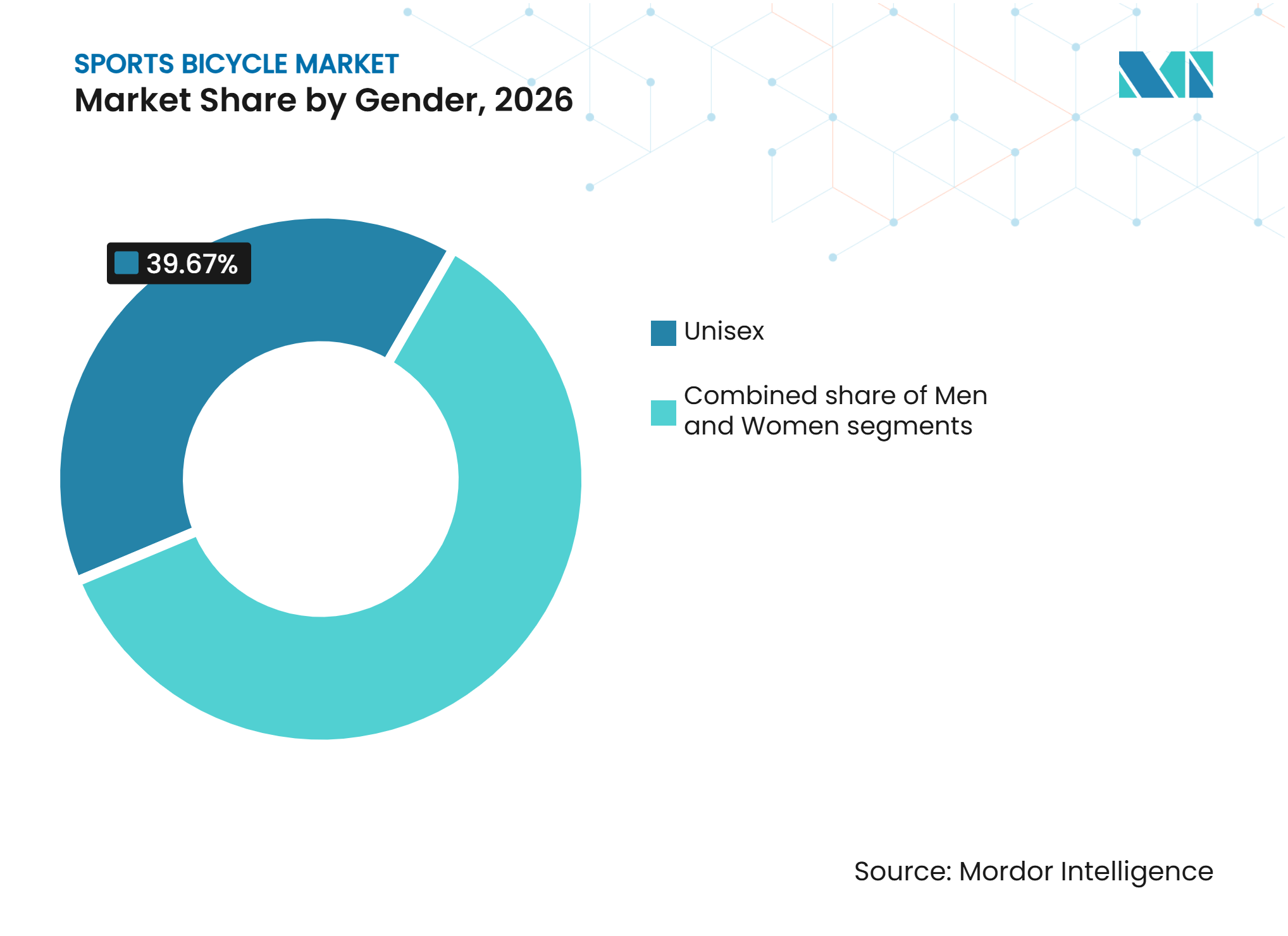
Unisex Leads as Women-Specific Cycling ExpandsUnisex bicycles account for the largest share of the sports bicycle market in 2026, representing 39.67% of total revenues. Their leading position reflects the broad applicability of these models across different rider profiles and cycling disciplines. Unisex designs offer manufacturers flexibility in product development and allow retailers to serve a wider customer base through shared frame designs, component configurations, and sizing options. Men's-specific bicycles also maintain a substantial market presence, supported by their established use across road racing, mountain biking, and other competitive cycling activities. The widespread availability of unisex models across different price and performance categories further supports their market position.
Women's sports bicycles are projected to be the fastest-growing gender segment, registering a CAGR of 8.83% during 2027–2032. Growth is supported by increasing female participation in recreational, competitive, and endurance cycling, alongside rising demand for products designed around women's riding requirements. Manufacturers are responding through women-specific frame geometries, component sizing, saddle designs, and product ranges intended to improve fit and riding comfort. The expansion of women-focused cycling events, communities, and participation initiatives is also helping broaden engagement across different cycling disciplines. Greater product availability and targeted efforts to address the requirements of female riders are expected to support further growth in this segment.
By Distribution Channel:
Specialty Retail Leads, Online Channels SurgeSpecialty bicycle retail stores account for the largest share of the sports bicycle market in 2026, representing 52.33% of total revenues. Their leading position is supported by the importance of product evaluation, test rides, expert guidance, and professional fitting when purchasing performance-oriented bicycles. These retailers also provide access to specialized components, accessories, maintenance, and after-sales services, strengthening customer relationships beyond the initial purchase. Their ability to offer product demonstrations and technical assistance is particularly relevant for consumers evaluating bicycles across different riding disciplines and performance levels. These factors continue to support the role of specialty retail stores as a key distribution channel.
Online retail and direct-to-consumer channels are projected to be the fastest-growing distribution channels, registering a CAGR of 9.43% during 2027–2032. Growth is supported by increasing consumer preference for convenient product discovery, wider model availability, and the ability to compare specifications and prices across brands. Manufacturers and retailers are strengthening their digital sales platforms, offering detailed product information, online configuration tools, and improved delivery services to facilitate purchases. The expansion of direct-to-consumer models is also enabling manufacturers to engage with customers through their own digital channels. Improvements in online purchasing experiences, inventory visibility, and fulfillment capabilities are expected to further support the growth of these channels.
Geography Analysis
North America
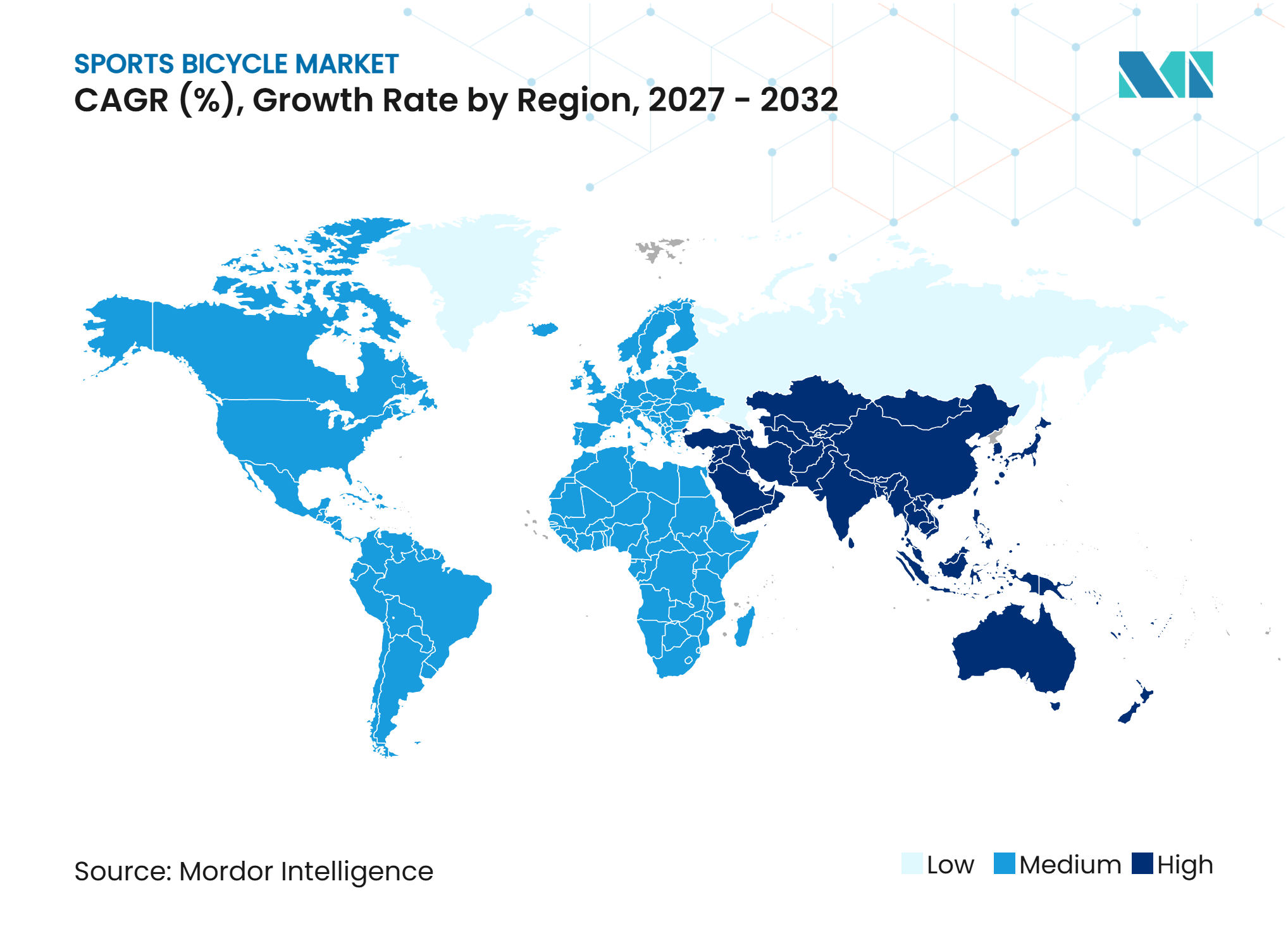
North America accounts for the largest share of the sports bicycle market in 2026, representing 34.20% of total revenues. Its leading position is supported by an established cycling culture, extensive specialty retail networks, and strong consumer demand for recreational, competitive, and performance-oriented bicycles. The United States is the region's primary market, benefiting from widespread participation in mountain biking, well-developed trail networks, and consumer interest in premium bicycle models. Canada also contributes through demand for road, gravel, and adventure cycling products, supported by its established outdoor recreation culture. Continued investment in cycling infrastructure, expanding access to off-road trails, and the availability of specialized products are sustaining regional demand. However, trade policy uncertainty, import costs, and inventory adjustments may influence product pricing and purchasing activity across the region.
Asia-Pacific
Asia-Pacific is projected to be the fastest-growing regional market, registering a CAGR of 8.63% during 2027–2032. Growth is supported by rising disposable incomes, increasing health and fitness awareness, and expanding participation in recreational and organized cycling. India represents an emerging growth opportunity as urban consumers increasingly turn to cycling for fitness, leisure, and outdoor recreation, while manufacturers are expanding product availability across price categories. China benefits from its established bicycle manufacturing base and a growing domestic market for performance-oriented products. Australia, South Korea, and Singapore contribute through established cycling communities, developed infrastructure, and demand for specialized bicycles. Growing adoption across Southeast Asian markets, including Thailand and Indonesia, is also creating opportunities for international brands and regional distributors.
Europe, South America, Middle East and Africa
Europe remains an important market for sports bicycles, supported by its established cycling heritage, developed cycling infrastructure, and strong participation in road cycling, mountain biking, and gravel riding. Germany, Italy, France, the Netherlands, and Spain represent significant national markets, with cycling tourism and recreational participation supporting demand for performance-oriented bicycles. Infrastructure investment and the expansion of cycling routes across European countries further strengthen the region's market potential. South America is an emerging market, with Brazil, Colombia, and Chile offering growth opportunities through the expansion of recreational cycling, urban cycling initiatives, and adventure tourism. In the Middle East and Africa, South Africa has an established sports cycling community, while the United Arab Emirates and Saudi Arabia are developing cycling infrastructure and promoting outdoor recreation. These developments are gradually creating opportunities for greater adoption of sports bicycles across emerging markets.
Competitive Landscape
Market Concentration
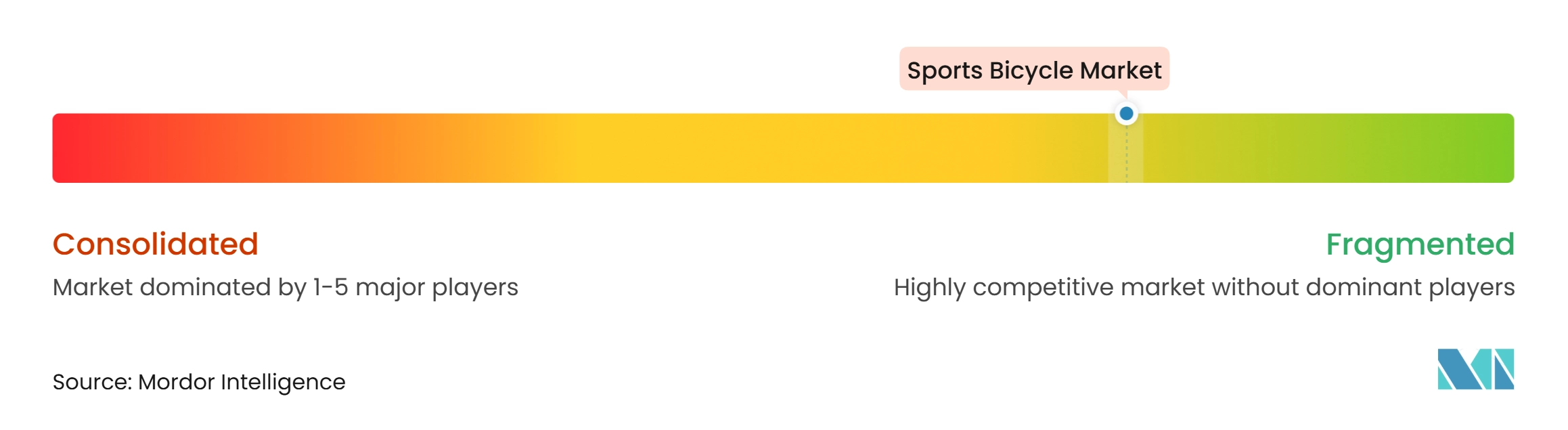
The sports bicycle market is fragmented, with competition distributed across established international manufacturers and specialized bicycle brands. Leading players include Trek Bicycle Corporation, Specialized Bicycle Components, Inc., Giant Bicycles, Canyon Bicycles GmbH, and MERIDA BIKES. These companies maintain competitive positions through broad product portfolios covering road, mountain, gravel, and electric sports bicycles, supported by established brand recognition, product development capabilities, and international distribution networks. Although these manufacturers have a significant market presence, competition remains dispersed among numerous regional and specialized brands, with no single company dominating the global market.
Leading manufacturers are focusing on product innovation, portfolio expansion, and technological improvements to strengthen their market positions. Their strategies include developing lightweight frame materials, refining bicycle geometry, improving braking and drivetrain systems, and incorporating advanced suspension and electric-assist technologies. Companies are also expanding product offerings across gravel, mountain, road, and women-specific bicycle categories to address evolving consumer requirements. In addition, manufacturers are strengthening direct-to-consumer sales, digital retail capabilities, and distribution partnerships to improve market access and customer engagement. These activities are increasing competition across product performance, pricing, and brand differentiation.
Emerging and specialized players are contributing to market competition by targeting specific consumer groups, cycling disciplines, and regional markets. Brands focused on gravel cycling, electric sports bicycles, women-specific models, and premium children's bicycles are developing differentiated offerings to address specialized demand. Direct-to-consumer business models are also enabling smaller manufacturers to reach customers beyond their traditional geographic markets while competing through product specifications and pricing. In emerging markets, regional manufacturers and distributors are expanding product availability and strengthening local retail and service networks. These developments are broadening the competitive landscape and creating additional alternatives across different price categories and cycling applications.
Sports Bicycle Industry Leaders
-
Trek Bicycle Corporation
-
Specialized Bicycle Components, Inc.
-
Giant Bicycles
-
Canyon Bicycles GmbH
-
MERIDA BIKES
- *Disclaimer: Major Players sorted in no particular order
Sports Bicycle Market Companies Covered in this Report
- Trek Bicycle Corporation
- Specialized Bicycle Components, Inc.
- Giant Bicycles
- Canyon Bicycles GmbH
- Pon Bicycle Holding B.V.
- Scott Sports SA
- MERIDA BIKES
- Hero Cycles Limited
- BMC Switzerland AG
- Pinarello S.p.A.
- Polygon Bikes
- Bianchi
- Colnago Ernesto and C. S.r.l.
- CUBE Bikes
- Look Cycle International
- Ridley Bikes
- Pivot Cycles
- Orbea S. Coop.
- Decathlon SE
- BH BIKES
Recent Industry Developments in Sports Bicycle Market
- April 2026: XDS expanded its X-LAB performance bicycle brand into 15 additional markets, including the United States, Norway, Japan, and Australia. The expansion introduced nine bicycle models across road, gravel, urban, and electric categories, including the brand's first gravel and electric bicycle platforms.
- March 2026: Factor Bikes partnered with Bugatti to introduce the Bugatti Factor ONE, a limited-edition, high-performance road bicycle that combines Bugatti's automotive design influences with Factor's bicycle engineering. Production was limited to 250 units worldwide.
- March 2026: Giant introduced the fourth-generation Propel aerodynamic road bicycle range, alongside the updated Liv EnviLiv range for the 2027 model year. The new models featured redesigned frames, integrated cockpits, and aerodynamic improvements aimed at enhancing speed and riding efficiency.
- November 2025: CUBE announced a partnership to become the official bicycle sponsor of the TotalEnergies Pro Cycling Team from the 2026 season. The agreement covered the professional team and its U19 and U23 development squads, with riders using CUBE racing bicycles.
Global Sports Bicycle Market Report Scope
The sports bicycle market comprises bicycles designed for competitive cycling, fitness, recreation, and adventure riding, including specialized models tailored to different terrains, disciplines, and performance requirements. The market is segmented by product type into road racing bicycles, mountain bicycles, gravel bicycles, cyclocross bicycles, track bicycles, BMX bicycles, and hybrid/fitness bicycles; by mode of operation into conventional and electric; by frame material into carbon fiber, aluminum alloy, steel, and titanium; by application into competitive racing, fitness/training, recreation, and adventure; by price range into low-range, mid-range, and premium/high-end; by end user into adults and kids and youth; by gender into men, women, and unisex; by distribution channel into specialty bicycle retail stores, sporting goods retail chains, and online retail/direct-to-consumer; and by geography into North America, Europe, Asia-Pacific, South America, and the Middle East and Africa. The market forecasts are provided in USD.
Segmentation Overview
| Road Racing Bicycles |
| Mountain Bicycles |
| Gravel Bicycles |
| Cyclocross Bicycles |
| Track Bicycles |
| BMX Bicycles |
| Hybrid/Fitness Bicycles |
| Conventional |
| Electric |
| Carbon Fiber |
| Aluminum Alloy |
| Steel |
| Titanium |
| Competitive Racing |
| Fitness/Training |
| Recreation |
| Adventure |
| Low-Range |
| Mid-Range |
| Premium/High-End |
| Adults |
| Kids and Youth |
| Men |
| Women |
| Unisex |
| Specialty Bicycle Retail Stores |
| Sporting Goods Retail Chains |
| Online Retail/Direct-To-Consumer |
| North America | United States |
| Canada | |
| Mexico | |
| Rest of North America | |
| Europe | Germany |
| United Kingdom | |
| Italy | |
| France | |
| Spain | |
| Netherlands | |
| Poland | |
| Belgium | |
| Sweden | |
| Rest of Europe | |
| Asia-Pacific | China |
| India | |
| Japan | |
| Australia | |
| Indonesia | |
| South Korea | |
| Thailand | |
| Singapore | |
| Rest of Asia-Pacific | |
| South America | Brazil |
| Argentina | |
| Colombia | |
| Chile | |
| Peru | |
| Rest of South America | |
| Middle East and Africa | South Africa |
| Saudi Arabia | |
| United Arab Emirates | |
| Nigeria | |
| Egypt | |
| Morocco | |
| Turkey | |
| Rest of Middle East and Africa |
| By Product Type | Road Racing Bicycles | |
| Mountain Bicycles | ||
| Gravel Bicycles | ||
| Cyclocross Bicycles | ||
| Track Bicycles | ||
| BMX Bicycles | ||
| Hybrid/Fitness Bicycles | ||
| By Mode of Operation | Conventional | |
| Electric | ||
| By Frame Material | Carbon Fiber | |
| Aluminum Alloy | ||
| Steel | ||
| Titanium | ||
| By Application | Competitive Racing | |
| Fitness/Training | ||
| Recreation | ||
| Adventure | ||
| By Price Range | Low-Range | |
| Mid-Range | ||
| Premium/High-End | ||
| By End User | Adults | |
| Kids and Youth | ||
| By Gender | Men | |
| Women | ||
| Unisex | ||
| By Distribution Channel | Specialty Bicycle Retail Stores | |
| Sporting Goods Retail Chains | ||
| Online Retail/Direct-To-Consumer | ||
| By Geography | North America | United States |
| Canada | ||
| Mexico | ||
| Rest of North America | ||
| Europe | Germany | |
| United Kingdom | ||
| Italy | ||
| France | ||
| Spain | ||
| Netherlands | ||
| Poland | ||
| Belgium | ||
| Sweden | ||
| Rest of Europe | ||
| Asia-Pacific | China | |
| India | ||
| Japan | ||
| Australia | ||
| Indonesia | ||
| South Korea | ||
| Thailand | ||
| Singapore | ||
| Rest of Asia-Pacific | ||
| South America | Brazil | |
| Argentina | ||
| Colombia | ||
| Chile | ||
| Peru | ||
| Rest of South America | ||
| Middle East and Africa | South Africa | |
| Saudi Arabia | ||
| United Arab Emirates | ||
| Nigeria | ||
| Egypt | ||
| Morocco | ||
| Turkey | ||
| Rest of Middle East and Africa | ||
Key Questions Answered in the Report
What is the projected size of the sports bicycle market by 2032?
The sports bicycle market is forecast to reach USD 28.08 billion by 2032, growing at a 7.29% CAGR from 2027 to 2032.
Which sports bicycle product category is growing the fastest?
Gravel bicycles are forecast to grow at an 8.83% CAGR from 2027 to 2032, supported by road, trail, bikepacking, and endurance use.
Which region leads sports bicycle sales?
North America held 34.20% share in 2026, supported by specialty retailers, trail networks, and established adult participation.
What sales channel is expected to grow most quickly?
Online retail and direct-to-consumer channels are forecast to expand at a 9.43% CAGR from 2027 to 2032, though specialist stores remain important for fitting and service.