
Solid Alternate Fuel and Raw Materials (AFR) Co-Processing Systems Market Size and Share
Market Overview
| Study Period | 2021 - 2031 |
|---|---|
| Market Size (2026) | USD 530.23 Million |
| Market Size (2031) | USD 861.56 Million |
| Growth Rate (2026 - 2031) | 10.19 % |
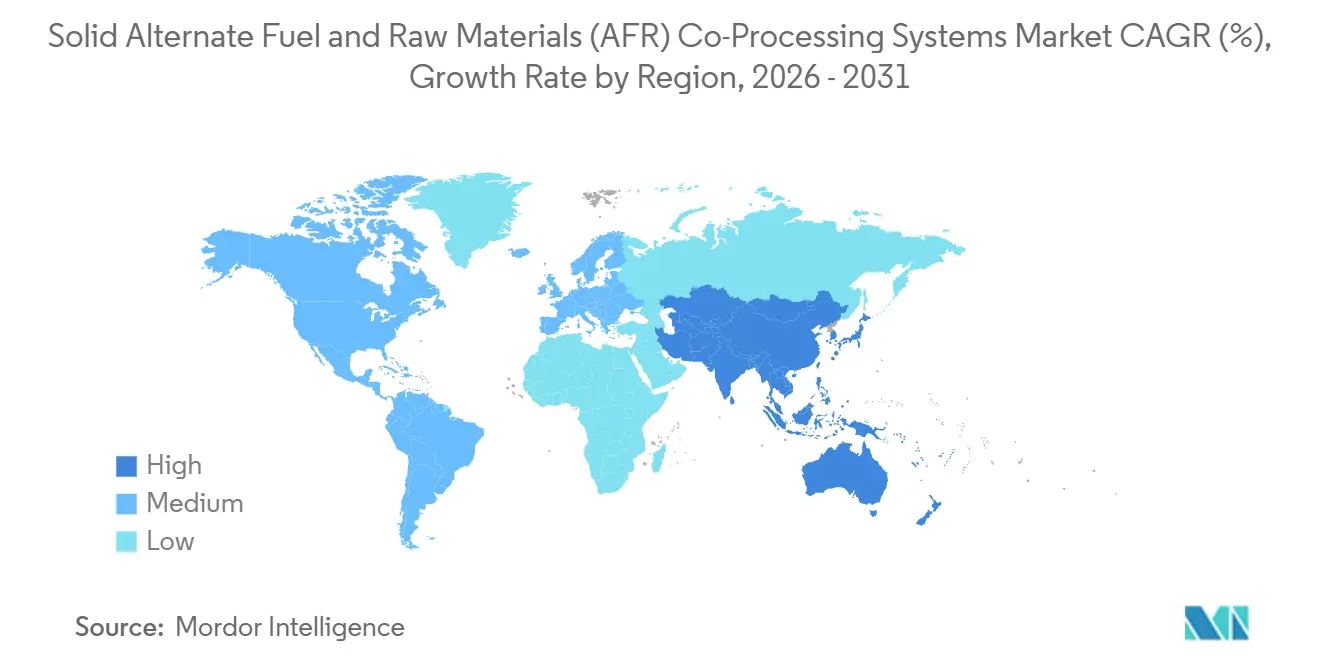
| Fastest Growing Market | Asia-Pacific |
| Largest Market | Europe |
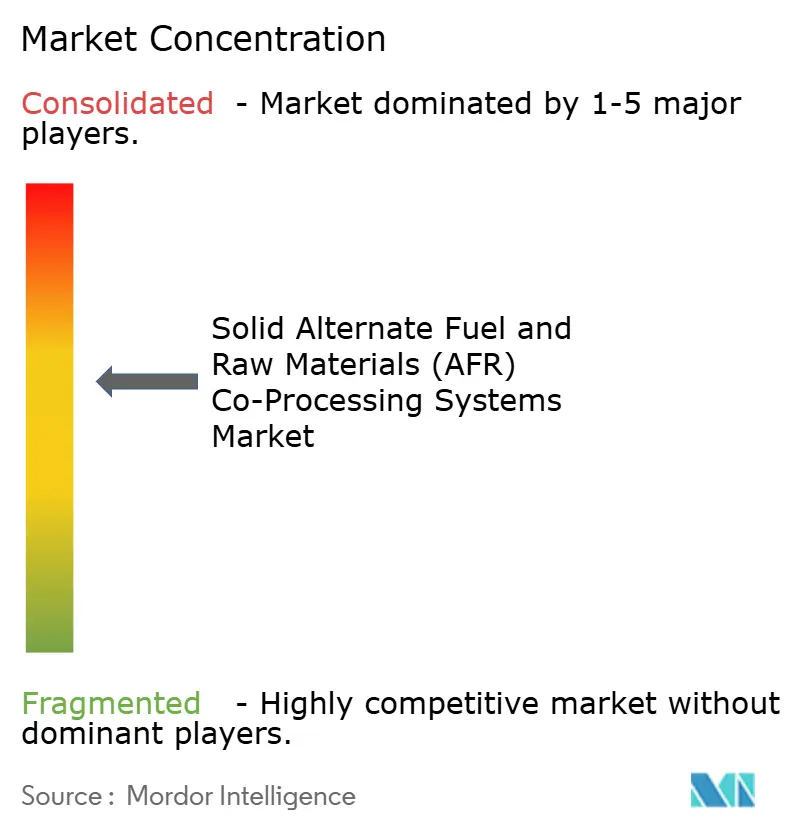
| Market Concentration | Medium |
Major Players *Disclaimer: Major Players sorted in no particular order Image © Mordor Intelligence. Reuse requires attribution under CC BY 4.0. | |
Solid Alternate Fuel and Raw Materials (AFR) Co-Processing Systems Market Analysis by Mordor Intelligence
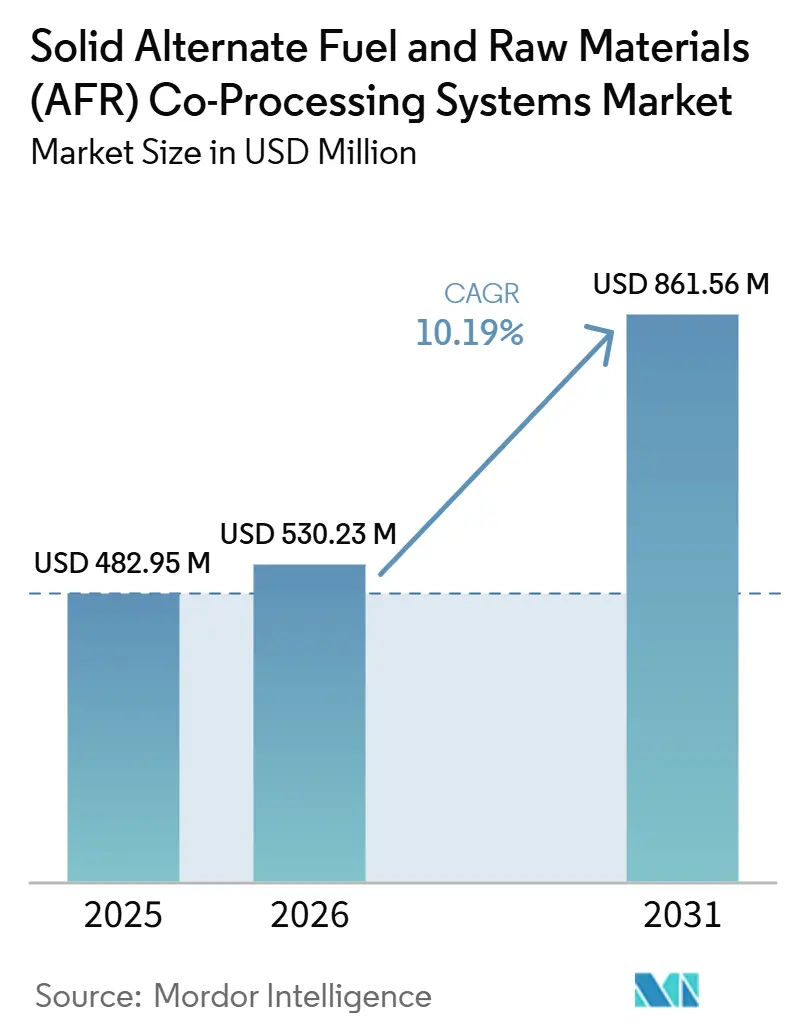
The Solid Alternate Fuel And Raw Materials Co-Processing Systems Market size is projected to be USD 482.95 million in 2025, USD 530.23 million in 2026, and reach USD 861.56 million by 2031, growing at a CAGR of 10.19% from 2026 to 2031. Carbon costs, landfill limits, and cement decarbonization programs are making alternative fuel equipment a more direct capital priority for kiln operators. The Solid AFR feeding systems market is also shifting toward systems that can manage variable fuel quality while maintaining stable kiln operation, rather than handling a narrow and predictable fuel stream. This favors suppliers that combine conveying, dosing, combustion, receiving, storage, and emissions-related engineering in one project scope, particularly where operators are raising substitution rates over time. European retrofit demand remains important because mature plants need better controls and bypass capacity, while policy-led capacity additions in Asia-Pacific and South America widen the addressable project base. Higher specifications for SRF and more demanding reporting requirements also make precise material handling a stronger part of the equipment decision.
Key Report Takeaways
- By system type, mechanical conveying systems held 35.8% of the Solid AFR feeding systems market share in 2025, while hybrid mechanical-pneumatic conveying systems are projected to expand at a CAGR of 11.1% through 2031.
- By fuel type, RDF held 36.4% of the Solid AFR feeding systems market share in 2025, while SRF is expected to grow at a CAGR of 10.5% through 2031.
- By end-user industry, cement held 82.6% of the Solid AFR feeding systems market share in 2025 and is expected to grow at a CAGR of 10.7% through 2031.
- By geography, Europe held 38.2% of the Solid AFR feeding systems market share in 2025, while Asia-Pacific is projected to expand at a CAGR of 11.6% through 2031.
Note: Market size and forecast figures in this report are generated using Mordor Intelligence’s proprietary estimation framework, updated with the latest available data and insights as of January 2026.
Market Trends and Insights
Drivers Impact Analysis of Solid Alternate Fuel and Raw Materials (AFR) Co-Processing Systems Market*
| Driver | (~) % Impact on CAGR Forecast | Geographic Relevance | Impact Timeline |
|---|---|---|---|
| Carbon and Fossil-Fuel Cost Avoidance | +2.40% | Global, concentrated in EU ETS zones and emerging carbon markets in China and South America | Medium term (2-4 years) |
| Landfill Diversion and Circular-Economy Mandates | +2.00% | EU core, with spillover to Asia-Pacific and South America | Medium term (2-4 years) |
| Cement Decarbonization and Thermal Substitution Targets | +1.80% | Global, led by Europe, with fast-scaling policy rollout in India and China | Long term (≥ 4 years) |
| AFR System Retrofits for Existing Kilns | +1.40% | North America, Europe, and India | Short term (≤ 2 years) |
| Quality-Adjusted Pricing of SRF and RDF | +0.90% | Europe, the United Kingdom, and the Nordics | Medium term (2-4 years) |
| Local Waste-to-Fuel Ecosystem Integration | +0.70% | Asia-Pacific, South America, and the Middle East and Africa | Long term (≥ 4 years) |
| Source: Mordor Intelligence | |||
Carbon and Fossil-Fuel Cost Avoidance
Carbon pricing has made fuel substitution a material investment consideration for cement plants in emissions-trading markets. Replacing coal with RDF or SRF can reduce exposure to allowance costs and reduce dependence on fossil fuel purchases. The Solid AFR feeding systems market benefits when this financial case supports both fuel-preparation investment and kiln-side equipment upgrades. Research published in 2025 found that RDF use can reduce carbon dioxide emissions by 20%, while biomass substitution can reduce net emissions by 30% to 50%, depending on fuel type and logistics. In China, Tianjin Jinyujia Huanbao reported a 25.1% fuel replacement rate using waste textiles and biomass in 2024. The operation avoided 17,400 metric tons of carbon dioxide annually and reduced fuel costs by CNY 7 million, equivalent to USD 1 million[1]China Building Materials Federation, “Cement Industry Carbon Reduction New Track,” China Building Materials Federation, cbmf.org. In Brazil, Votorantim’s target of 50% thermal substitution by 2030 and Cimento Itambé’s 67% test substitution rate show that the same cost logic is extending into South America.
Landfill Diversion and Circular-Economy Mandates
Waste policy supports the upstream supply of fuels used by the Solid AFR feeding systems market. The European Union requires member states to prepare 55% of municipal waste for reuse or recycling by 2025 and 60% by 2030, while its landfill target is limited to 10% by 2035. These rules direct nonrecyclable fractions toward RDF and SRF preparation instead of disposal. The resulting material flow creates demand for reception, storage, extraction, and mechanical conveying equipment at cement and lime plants. Higher landfill taxes also encourage processors to improve sorting, shredding, and density control before fuel reaches the kiln. That improvement shifts more attention to fuel specifications at the point of delivery and to the equipment needed to dose prepared material consistently. Indonesia’s 2025 regulation on waste processing into renewable energy indicates that policy support for dependable waste volumes is expanding beyond Europe.
Cement Decarbonization and Thermal Substitution Targets
Cement road maps are giving system suppliers clearer long-term demand signals. The GCCA plans to raise global alternative fuel use from 6% in 2020 to 22% by 2030 and 43% by 2050. Its GNR data showed that leading companies increased alternative fuel use from 19% in 2019 to 24% in 2023. Germany had already reached a 77% alternative fuel share in cement production during 2024, while India’s national thermal substitution rate remained at 7% to 8%. India’s Solid Waste Management Rules 2026 require cement plants to progress from a 5% RDF replacement baseline toward 15% within 6 years. This gap between mature and developing cement markets creates a wider range of retrofit and new-installation requirements for the Solid AFR feeding systems market. The IEA identifies alternative fuels as a near-term lever for reducing emissions from cement and concrete production.
AFR System Retrofits for Existing Kilns
Retrofit projects provide a near-term order base for the Solid AFR feeding systems market because many European and North American kilns have limited scope for greenfield expansion. Upgrades allow operators to install receiving, dosing, combustion, cooling, and bypass equipment without replacing the full production line. This can allow an existing kiln to accept a broader fuel mix while operators retain the main production assets already in place. These projects can also generate maintenance and upgrade activity across equipment lifecycles of 20 to 30 years. In November 2024, thyssenkrupp Polysius received the Eagle Materials Laramie modernization contract, which included an alternative fuel substitution system, a cooler, and a finish mill for a plant targeting 1.1 million metric tons of annual capacity. A TEC commissioned a calciner and chlorine bypass at Holcim Croatia in the fourth quarter of 2025, converting a preheater kiln into an in-line precalciner system. KHD had sold 23 Pyrorotor units across 6 countries by February 2026, and the company’s latest Turkey order shows that proprietary combustion systems remain central to retrofit programs.
Restraints Impact Analysis of Solid Alternate Fuel and Raw Materials (AFR) Co-Processing Systems Market*
| Restraint | (~) % Impact on CAGR Forecast | Geographic Relevance | Impact Timeline |
|---|---|---|---|
| Feedstock Quality and Calorific-Value Variability | -1.50% | Global, most acute in Asia-Pacific and South America where pre-processing ecosystems are nascent | Medium term (2-4 years) |
| Permitting and Emissions-Compliance Complexity | -1.20% | European Union, especially Italy and Eastern Europe, and emerging economies | Short term (≤ 2 years) |
| Chlorine, Alkali, and Trace-Metal Accumulation | -0.80% | Global, intensifying at high-substitution plants in Europe and early-adoption Asia-Pacific markets | Long term (≥ 4 years) |
| Seasonal and Contractual Reliability of Waste Streams | -0.60% | South America, the Middle East and Africa, and Asia-Pacific | Medium term (2-4 years) |
| Source: Mordor Intelligence | |||
Feedstock Quality and Calorific-Value Variability
Feedstock inconsistency remains the main operating constraint for the Solid AFR feeding systems market. Alternative fuels can range from 10 to 25 MJ/kg in net calorific value, while moisture, particle size, and density can change with collection patterns and pre-processing quality. A plant may therefore receive fuel with different combustion behavior even where nominal fuel categories remain unchanged. A 2025 study found that thermal substitution rates above 80% require optimized upstream fuel quality, and small deviations in particle size can reduce burnout efficiency in calciners [2]Springer Nature, “Effect of Waste-Derived Fuels SRF/RDF Composition on the Cement Kiln,” Waste and Biomass Valorization, link.springer.com. Fibrous and composite fuel fractions can move unpredictably through belt and chain conveyors. This can increase wear, interrupt kiln feeding, and weaken the lifecycle cost case used for equipment approvals. The constraint is more pronounced where waste sorting and fuel preparation systems remain immature.
Permitting and Emissions-Compliance Complexity
Permits for kiln co-processing can involve waste, environmental, and industrial emissions requirements at the same time. Italy’s end-of-waste approach for SRF differs from practices in Germany and the Netherlands, making standardized projects more difficult across European markets. The EU Industrial Emissions Directive revision requires tighter reporting for pollutants such as mercury and chlorine when permits are renewed. The European Commission has identified permitting complexity as a barrier to broader RDF and SRF management capacity. China’s GB/T 30760-2024 also tightened requirements for co-processing solid waste in cement kilns. These rules affect the Solid AFR feeding systems market because each equipment scope must support reliable control, monitoring, and documentation of the fuel entering the process. They raise the value of precise dosing, emissions control, and documented fuel quality, but they can delay project decisions.
*Our forecasts treat driver/restraint impacts as directional, not additive. The impact forecasts reflect baseline growth, mix effects, and variable interactions.
Solid Alternate Fuel and Raw Materials (AFR) Co-Processing Systems Market Segment Analysis
By System Type:
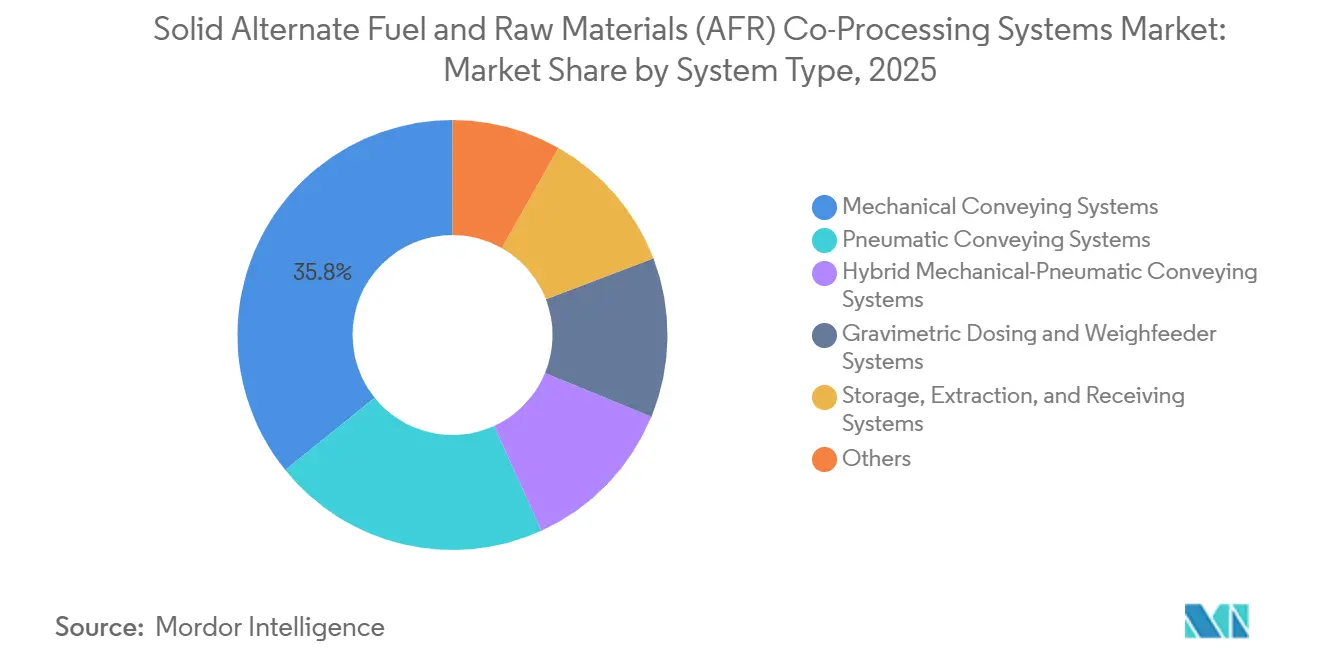
Mechanical Systems Anchor Volume, Hybrid Formats Scale FastestMechanical conveying systems accounted for 35.8% of the Solid AFR feeding systems market size in 2025, while hybrid mechanical-pneumatic systems are forecast to grow at 11.1% CAGR through 2031. Mechanical equipment remains the base system for fuel reception, enclosed storage, extraction, intermediate transfer, and controlled delivery to the kiln process. It is well-suited to coarse and heterogeneous materials that may contain irregular shapes, different moisture levels, and variable bulk density at high-volume cement plants. The installed base also supports recurring replacement, maintenance, and upgrade work when operators raise their thermal substitution objectives. The Solid AFR feeding systems market continues to favor these configurations where reliable material movement and capital efficiency are primary procurement factors.
Hybrid systems combine the strengths of mechanical and pneumatic transport in one process flow, which gives operators more flexibility when their fuel mix changes. Bulky shredded materials can move through belt, chain, or screw conveyors, while fine RDF can move pneumatically to calciner feed points where direct mechanical transport is less suitable. thyssenkrupp Polysius uses screw conveyors as the load-bearing element within its prepol Step Combustor configuration, with air-blast injection at the hot zone. Pneumatic systems remain necessary for vertical transport and controlled top feeding, and Coperion’s AF blow-through rotary valve is designed for nonhomogeneous fuels at pressures up to 350 mbar. Gravimetric dosing is becoming more relevant as EN 15359 raises expectations for fuel consistency, while storage halls, cranes, moving floors, and trailer unloading systems help plants buffer seasonal supply variation.



By Fuel Type:
RDF Dominance Meets SRF’s Accelerating Quality PremiumRDF held 36.4% of the Solid AFR feeding systems market size in 2025, supported by established supply arrangements in Germany, the United Kingdom, France, and the Netherlands. These countries have mature relationships between waste processors and cement plants, including gate-fee structures and regular delivery arrangements. RDF remains practical for plants that need widely available fuel volumes and have equipment designed to manage a broad range of material properties. SRF is forecast to expand at 10.5% CAGR through 2031 because it is produced to more defined specifications and can support tighter process control. The distinction between commodity RDF and specification-grade SRF is becoming more important for kiln operators, and the Solid AFR feeding systems market benefits when plants require better sorting, shredding, dosing, and monitoring to manage premium-grade fuels.
The EU standard EN 15359 and tighter reporting expectations under the Industrial Emissions Directive are increasing attention to chlorine and mercury content in alternative fuels. Existing RDF supply agreements may therefore require higher quality conditions that resemble SRF specifications, especially when kilns increase their substitution rates. BMH Technology introduced its TYRANNOSAURUS 8500 SRF Production Line at IFAT Munich in 2026 and made its first commercial sale in May 2026. Biomass and agricultural residues are growing in South and Southeast Asia, where JSW Cement co-processed 157,000 metric tons of RDF during fiscal year 2024-25 and reached a 16.5% thermal substitution rate at its Nandyal plant. Waste plastics, fluff, tire-derived fuel, and residual materials continue to serve specific high-heat applications, especially where fuel blends, particle size, and feed rates can be controlled within defined operating limits.
By End-User Industry:
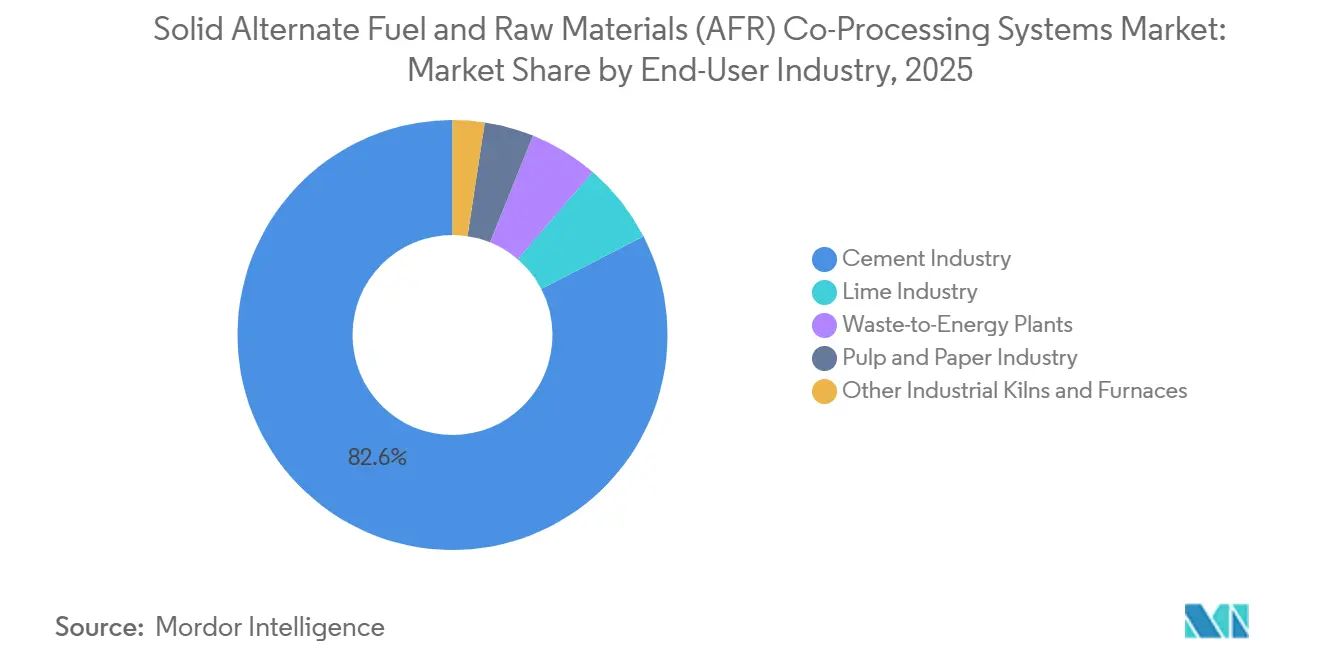
Cement’s Structural Lock-In Anchors the MarketThe cement industry held 82.6% of the Solid AFR feeding systems market share in 2025 and is forecast to grow at 10.7% CAGR through 2031. Cement kilns recover energy from nonrecyclable organic waste and incorporate mineral ash into clinker, which reduces the need for separate ash disposal in suitable applications. This dual-recovery role supports continued concentration of demand in cement rather than in other industrial users that cannot use the mineral fraction in the same way. Regulatory decarbonization plans, fuel-cost pressure, and landfill limits further reinforce the sector’s position. The Solid AFR feeding systems industry therefore remains closely tied to kiln retrofit schedules, fuel procurement models, emissions compliance requirements, and the ability of plants to raise thermal substitution without reducing clinker quality.
Lime production is a related end-user opportunity because it uses high-temperature kiln processes with similar decarbonization needs and many comparable material-handling requirements. Thyssenkrupp Polysius agreed in 2025 to supply an electric kiln for SMA Mineral’s zero-emission quicklime project in Norway, which reflects capital spending on lower-emission lime production. Waste-to-energy plants are another destination for sorting rejects, but their grate-fired and fluidized-bed systems need configurations that differ from cement-kiln feeding and calciner injection. Pulp and paper mills provide a useful comparison because Nordic kraft pulp operations already rely heavily on biofuels for lime kiln energy, showing that mature fuel substitution depends on dependable fuel preparation. Steel direct-reduced iron units and glass furnaces remain exploratory settings for solid alternative fuels and have not reached the commercial scale, process acceptance, or equipment standardization seen in cement.
Geography Analysis
Europe Solid Alternate Fuel and Raw Materials (AFR) Co-Processing Systems Market
Europe held 38.2% of the Solid AFR feeding systems market share in 2025, supported by long-standing waste valorization policies, mature cement co-processing practices, and established RDF and SRF supply networks. Germany reached a 77% alternative fuel share in cement production during 2024 and is targeting 90% by 2045 [3]Institut der deutschen Wirtschaft, “Zementindustrie: Mit Neuer Technologie Für Mehr Klimaschutz,” iwd.de, iwd.de. This operating level shifts procurement from initial installations toward retrofits, chlorine bypasses, precise gravimetric dosing, and equipment that can manage stricter fuel specifications. A TEC’s chlorine bypass work at Vicat’s Peille plant reflects the need to upgrade legacy kiln lines for higher substitution rates without changing the role of the underlying kiln. Poland and Romania are developing RDF supply infrastructure as European recycling and landfill targets take effect.
APAC Solid Alternate Fuel and Raw Materials (AFR) Co-Processing Systems Market
Asia-Pacific is forecast to grow at 11.6% CAGR through 2031, the fastest regional rate in the Solid AFR feeding systems market. India’s co-processing guidance, Solid Waste Management Rules 2026, and NITI Aayog road map point to a rise in the national thermal substitution rate from 7% to 8% toward 15% within 6 years. China had an average fuel substitution rate of 5%, and its energy-conservation action plan targeted alternative fuel technology at 30% of cement production lines by the end of 2025. The China Building Materials Federation recorded technical exchanges that used Germany’s substitution performance as a reference point for China’s longer-term progress. Sinoma International had built 11 alternative fuel processing centers in China by the end of 2024, with combined annual capacity of 1.2 million metric tons, creating fuel supply infrastructure that can support plant-level co-processing upgrades.
The Americas and MEA Solid Alternate Fuel and Raw Materials (AFR) Co-Processing Systems Market
North America is a moderate-growth region where retrofit projects account for much of the current order activity, including the Eagle Materials Laramie project with a full alternative fuel system that is scheduled for completion in the second half of 2026. The preference for modernization reflects the mature regional cement base and the opportunity to improve existing kiln lines rather than build new capacity. South America is accelerating through Brazilian projects, including Cimento Itambé’s new kiln in Paraná, which reached a 67% alternative-fuel thermal substitution rate in testing during 2025. Votorantim’s USD 920 million upgrade program also supports a 50% thermal substitution target by 2030. The Middle East and Africa are more exposed to greenfield projects, including Sinoma CBMI’s USD 250 million Bamburi Cement contract in Kenya, which includes capacity to use local biomass and municipal solid waste.

Competitive Landscape
The Solid AFR feeding systems market is moderately concentrated around full-system suppliers that can combine reactor technology, conveying equipment, commissioning, and long-duration service support. thyssenkrupp Polysius, KHD Humboldt Wedag, Sinoma International Engineering, and BMH Technology compete through proprietary designs and experience across multiple kiln environments. Kiln-specific integration requirements, climate conditions, site layouts, and warranty obligations create meaningful entry barriers for new suppliers. Equipment suppliers also need to prove that their systems can handle changes in moisture, calorific value, chlorine, and particle size without causing interruptions in fuel flow. These requirements make established installation records, process knowledge, and commissioning capability important parts of customer selection.
Leading suppliers are extending their scope toward upstream fuel preparation as fuel quality becomes more important, and BMH Technology’s TYRANNOSAURUS range covers SRF production as well as kiln-side handling, allowing the company to participate across the waste-to-kiln chain. The launch of the TYRANNOSAURUS 8500 at IFAT Munich in 2026 marked a move into stand-alone shredder equipment and complete SRF production lines. This approach responds to customer demand for more consistent fuel output before material reaches storage, conveying, and dosing systems. Smaller specialists can remain competitive in process-intensive areas such as calciner conversion and chlorine-bypass engineering. A TEC Production & Services, a Loesche Group subsidiary, has completed more than 600 retrofit and greenfield projects and focuses on these technical niches.
KHD’s Pyrorotor technology shows how proprietary combustion systems can become a repeatable platform for multi-country projects. In February 2026, KHD received an order from Batisöke Söke Çimento Sanayii in Turkey, its 23rd Pyrorotor sale across 6 countries [4]KHD Humboldt Wedag, “KHD Expands Pyrorotor Footprint in Türkiye With Batisöke Order,” KHD Humboldt Wedag, khd.com. KHD also commissioned its second Pyrorotor system in China at Conch Group’s Baoshan plant during December 2025. Sinoma’s bundled engineering, procurement, and construction model creates an advantage in greenfield markets where customers value project-wide delivery, including integrated fuel-preparation and plant-construction requirements. Real-time calorific-value sensing, density monitoring, and automated dosing remain less developed vendor capabilities, while smaller cement markets in Sub-Saharan Africa and Southeast Asia offer new installation opportunities.
Solid Alternate Fuel and Raw Materials (AFR) Co-Processing Systems Industry Leaders
Fuller Technologies, Inc.
thyssenkrupp Polysius GmbH
Fives Group
KHD Humboldt Wedag International AG
Sinoma International Engineering Co., Ltd.
- *Disclaimer: Major Players sorted in no particular order
Solid Alternate Fuel and Raw Materials (AFR) Co-Processing Systems Market Companies Covered in this Report
- A TEC Production & Services GmbH
- Beijing Triumph International Engineering Co., Ltd.
- BMH Technology Oy
- CNBM International Engineering Co., Ltd.
- Dynamis Ltd.
- Fives FCB S.A.
- Fuller Technologies, Inc.
- KHD Humboldt Wedag International AG
- SATAREM S.A.
- Sinoma International Engineering Co., Ltd.
- thyssenkrupp Polysius GmbH
- Unitherm Cemcon Feuerungsanlagen GmbH

Recent Industry Developments in Solid Alternate Fuel and Raw Materials (AFR) Co-Processing Systems Market
- March 2026: KHD Humboldt Wedag commissioned its second Pyrorotor® alternative fuel system in China, at Conch Group's Baoshan plant in Yunnan Province, following successful commissioning under challenging fuel conditions. Conch Group indicated plans to expand waste-preparation capacity and source external RDF, opening potential for additional Pyrorotor installations across China's largest cement producer.
- February 2026: KHD Humboldt Wedag received a Pyrorotor® alternative fuel system order from Batisöke Söke Çimento Sanayii in Turkey, marking the 23rd global sale of the technology across South Korea, China, Turkey, Portugal, Thailand, and Cambodia. The system supports TSR above 90% in the calciner, reinforcing the Pyrorotor's position as a commercial-scale high-substitution solution with multi-continent installed references.
- July 2025: KHD Humboldt Wedag, through its Indian subsidiary Humboldt Wedag India, won a contract package exceeding EUR 100 million (USD 108 million) from Goldcrest Cement Private Limited for a new 10,000 tpd cement plant, covering engineering, procurement, construction supervision, and commissioning.


Global Solid Alternate Fuel and Raw Materials (AFR) Co-Processing Systems Market Report Scope
Solid Alternative Fuel and Raw Materials (AFR) co-processing systems are integrated mechanical, pneumatic, storage, dosing, and feeding systems that enable cement plants and other high-temperature industrial kilns to receive, store, prepare, meter, convey, and inject solid waste-derived fuels and alternative raw materials into the production process, where they are used simultaneously as fuel (energy source) and/or raw material (mineral input).
The Solid Alternate Fuel and Raw Materials (AFR) Co-Processing Systems Market is segmented by system type, fuel type, end-user industry, and geography. By system type, the market is segmented into mechanical conveying systems, pneumatic conveying systems, hybrid mechanical-pneumatic conveying systems, gravimetric dosing and weighfeeder systems, storage, extraction and receiving systems, and other system types. By fuel type, the market is segmented into refuse-derived fuel (RDF), solid recovered fuel (SRF), biomass, waste plastics, tire-derived fuel (TDF), and other alternative fuels. By end-user industry, the market is segmented into cement plants, lime plants, waste-to-energy (WtE) plants, pulp and paper plants, and other industrial kilns and furnaces. The report also covers the market size and forecasts for the global solid AFR co-processing systems market across 26 contries in key regions. For each segment, the market sizing and forecasts have been provided on the basis of value (USD).
| Mechanical Conveying Systems |
| Pneumatic Conveying Systems |
| Hybrid Mechanical-Pneumatic Conveying Systems |
| Gravimetric Dosing and Weighfeeder Systems |
| Storage, Extraction, and Receiving Systems |
| Others |
| Refuse-Derived Fuel (RDF) |
| Solid Recovered Fuel (SRF) |
| Biomass and Agricultural Residues |
| Waste Plastics and Fluff |
| Tire-Derived Fuel (TDF) |
| Others |
| Cement Industry |
| Lime Industry |
| Waste-to-Energy Plants |
| Pulp & Paper Industry |
| Other Industrial Kilns and Furnaces |
| North America | United States |
| Canada | |
| Mexico | |
| Europe | Germany |
| France | |
| Italy | |
| Spain | |
| United Kingdom | |
| Poland | |
| Russia | |
| Rest of Europe | |
| Asia-Pacific | China |
| India | |
| Japan | |
| South Korea | |
| Australia | |
| Indonesia | |
| Vietnam | |
| Thailand | |
| Rest of Asia-Pacific | |
| South America | Brazil |
| Argentina | |
| Chile | |
| Rest of South America | |
| Middle East and Africa | Saudi Arabia |
| United Arab Emirates | |
| Egypt | |
| South Africa | |
| Morocco | |
| Rest of Middle East and Africa |
| By System Type | Mechanical Conveying Systems | |
| Pneumatic Conveying Systems | ||
| Hybrid Mechanical-Pneumatic Conveying Systems | ||
| Gravimetric Dosing and Weighfeeder Systems | ||
| Storage, Extraction, and Receiving Systems | ||
| Others | ||
| By Fuel Type | Refuse-Derived Fuel (RDF) | |
| Solid Recovered Fuel (SRF) | ||
| Biomass and Agricultural Residues | ||
| Waste Plastics and Fluff | ||
| Tire-Derived Fuel (TDF) | ||
| Others | ||
| By End-User Industry | Cement Industry | |
| Lime Industry | ||
| Waste-to-Energy Plants | ||
| Pulp & Paper Industry | ||
| Other Industrial Kilns and Furnaces | ||
| By Geography | North America | United States |
| Canada | ||
| Mexico | ||
| Europe | Germany | |
| France | ||
| Italy | ||
| Spain | ||
| United Kingdom | ||
| Poland | ||
| Russia | ||
| Rest of Europe | ||
| Asia-Pacific | China | |
| India | ||
| Japan | ||
| South Korea | ||
| Australia | ||
| Indonesia | ||
| Vietnam | ||
| Thailand | ||
| Rest of Asia-Pacific | ||
| South America | Brazil | |
| Argentina | ||
| Chile | ||
| Rest of South America | ||
| Middle East and Africa | Saudi Arabia | |
| United Arab Emirates | ||
| Egypt | ||
| South Africa | ||
| Morocco | ||
| Rest of Middle East and Africa | ||


Key Questions Answered in the Report
How large is the Solid AFR feeding systems market?
The Solid AFR feeding systems market size is USD 530.23 million in 2026 and is projected to reach USD 861.56 million by 2031, at a 10.19% CAGR.
What is driving demand for solid AFR feeding systems?
Carbon costs, landfill diversion rules, and cement decarbonization targets are increasing investment in systems that handle RDF, SRF, biomass, and other alternative fuels. These forces also increase the need for reliable receiving, conveying, and dosing equipment throughout the Solid AFR feeding systems market.
Which system type leads demand?
Mechanical conveying systems led with 35.8% share in 2025, while hybrid mechanical-pneumatic systems are forecast to grow fastest at 11.1% CAGR through 2031. Hybrid designs combine material-handling approaches for varied fuel fractions in the Solid AFR feeding systems market.
Why is SRF gaining importance in cement plants?
SRF is projected to grow at 10.5% CAGR because its more controlled quality helps plants manage calorific value, chlorine, mercury, and dosing requirements. It can also support more stable fuel use at higher substitution rates.
Which end-user has the greatest need for these systems?
Cement held 82.6% of end-user demand in 2025 and is projected to expand at 10.7% CAGR through 2031 because kilns recover both energy and mineral value from waste.
Page last updated on:





