
Sodium Percarbonate Market Size and Share
Market Overview
| Study Period | 2022 - 2032 |
|---|---|
| Market Size (2027) | USD 579.54 Million |
| Market Size (2032) | USD 817.79 Million |
| Growth Rate (2027 - 2032) | 7.13 % |
| Fastest Growing Market | Asia-Pacific |
| Largest Market | Asia-Pacific |
| Market Concentration | Medium |
Major Players *Disclaimer: Major Players sorted in no particular order Image © Mordor Intelligence. Reuse requires attribution under CC BY 4.0. | |
Sodium Percarbonate Market Analysis by Mordor Intelligence
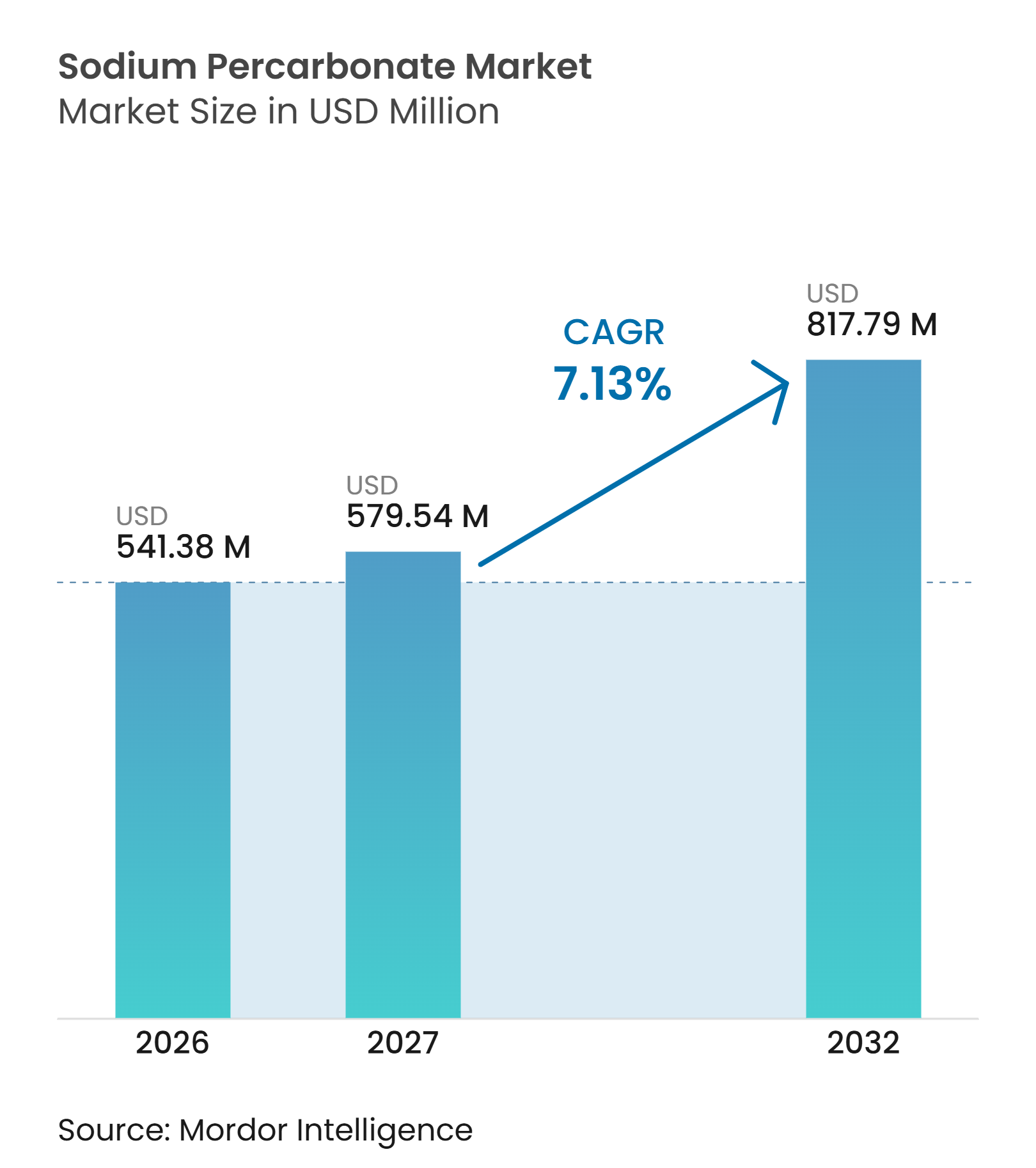
The Sodium Percarbonate Market size was valued at USD 541.38 million in 2026 and is estimated to grow from USD 579.54 million in 2027 to reach USD 817.79 million by 2032, at a CAGR of 7.13% during the forecast period (2027-2032). Demand is moving toward oxygen-based bleaching systems as detergent producers, institutional cleaners, and industrial users seek products that do not leave chlorinated residues. Environmental rules and retailer requirements are raising the value of biodegradable, active-oxygen formulations. Coated grades are becoming more important because they protect active oxygen in humid storage and support compact detergent formats. Capacity investment is also changing supply conditions, particularly in China and the United States. The sodium percarbonate market therefore combines steady household demand with faster adoption in industrial cleaning, water treatment, and textile processing.
Key Report Takeaways
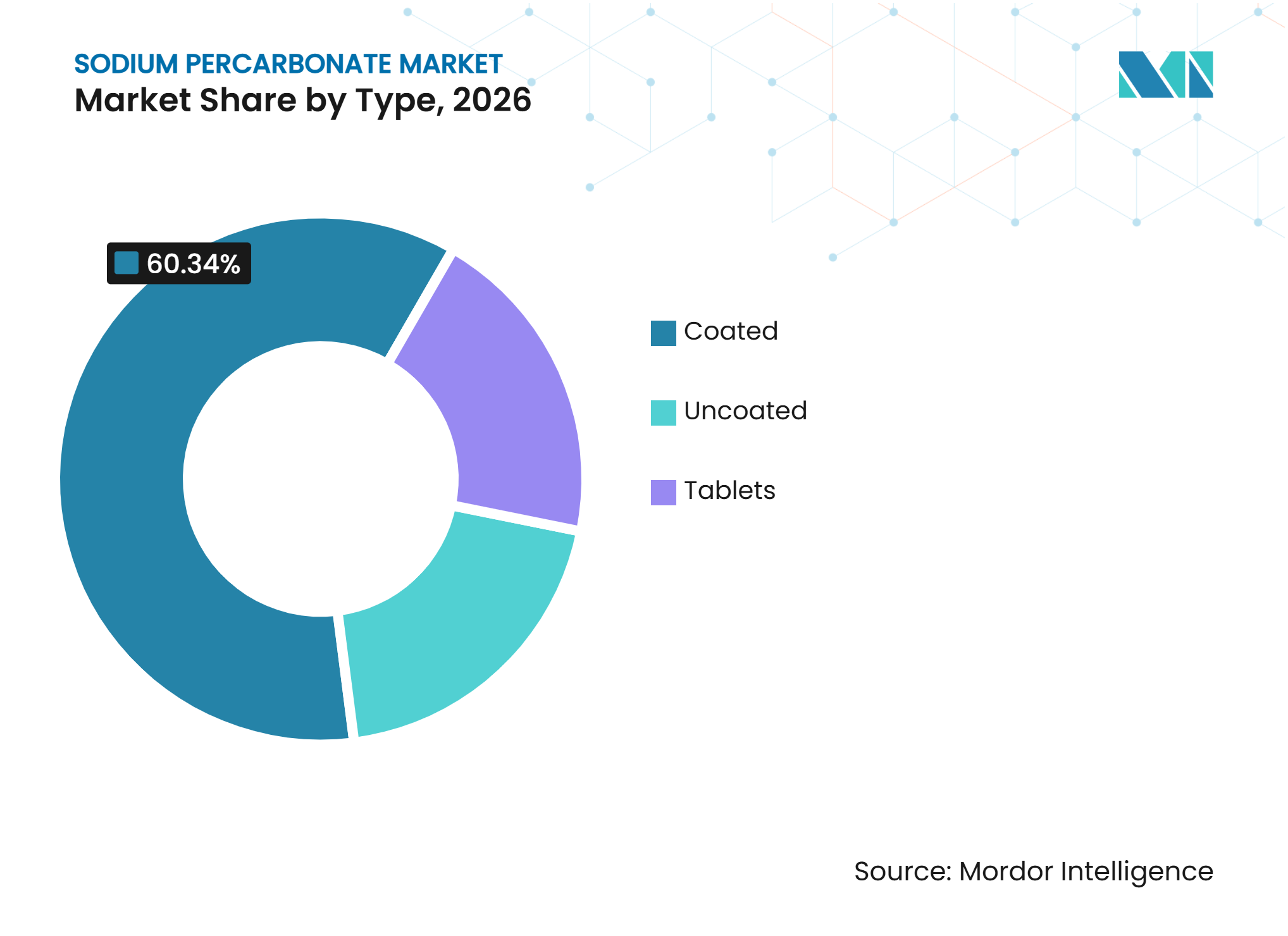
- By type, coated held 60.34% of the sodium percarbonate market share in 2026 and is projected to advance at an 8.07% CAGR through 2032.
- By application, detergent agents held 48.13% of the sodium percarbonate market share in 2026, while cleaning agents are projected to advance at an 8.31% CAGR through 2032.
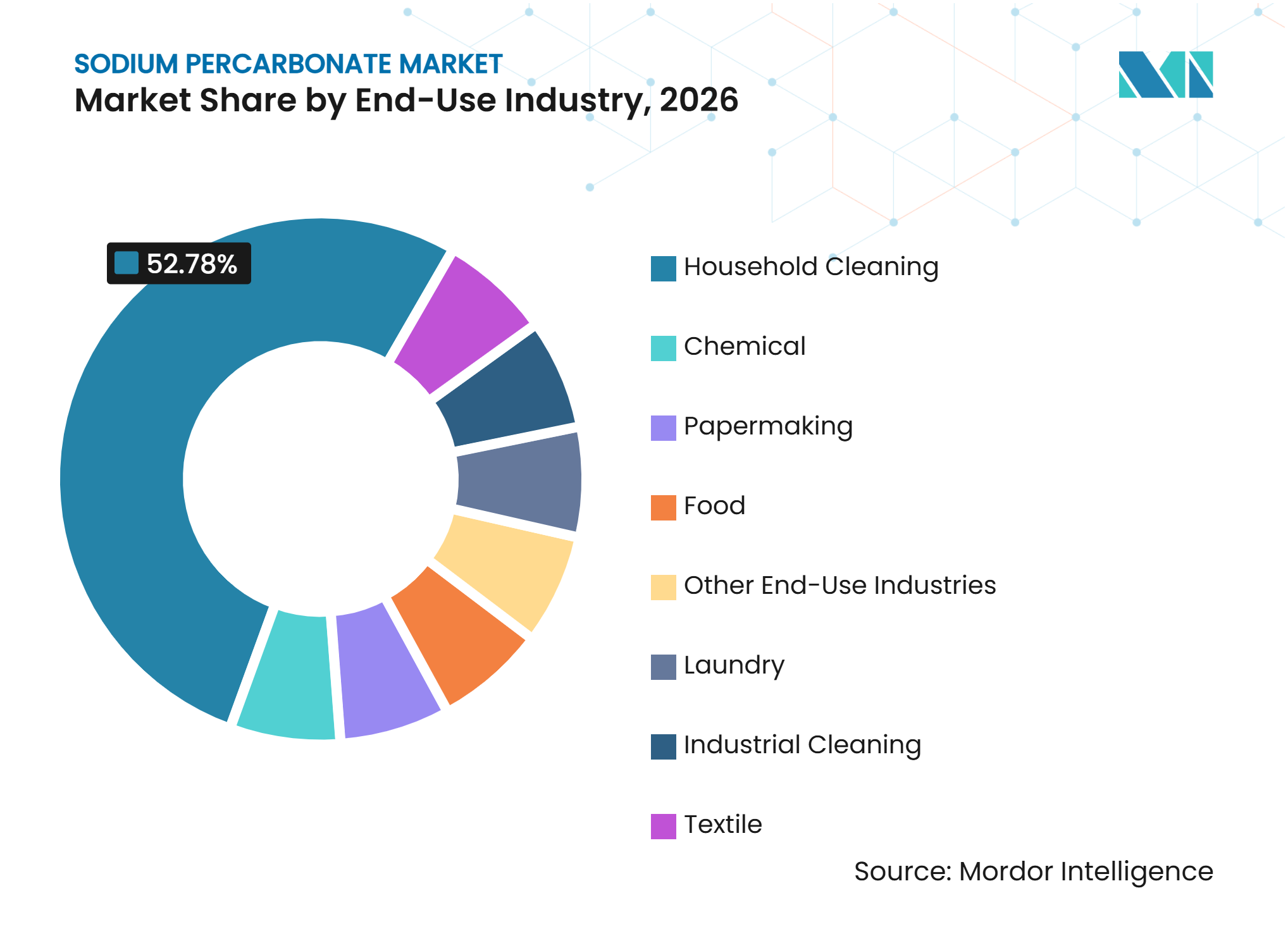
- By end-use industry, household cleaning held 52.78% of the sodium percarbonate market share in 2026, while industrial cleaning is projected to advance at an 8.56% CAGR through 2032.
- By geography, Asia-Pacific held 39.15% of the sodium percarbonate market share in 2026 and is projected to advance at an 8.44% CAGR through 2032.
Note: Market numbers in this report are based on Mordor Intelligence's proprietary estimation framework, which combines nine months of actuals with Q4 projections for base year 2026.
Market Trends and Insights
Drivers Impact Analysis of Sodium Percarbonate Market*
| Driver | (~) % Impact on CAGR Forecast | Geographic Relevance | Impact Timeline |
|---|---|---|---|
| Shift from Chlorine to Oxygen-Based Bleaching | +2.1% | Global, led by EU, North America, and India | Long term (≥ 4 years) |
| Detergent Premiumization and Cold-Wash Performance | +1.6% | North America, Europe, and East Asia (Japan, South Korea) | Medium term (2-4 years) |
| Water and Wastewater Treatment Adoption | +1.2% | APAC core, spillover to MEA | Medium term (2-4 years) |
| Textile and Pulp and Paper Effluent Compliance | +1.0% | South & Southeast Asia, Brazil, NORDIC Countries | Long term (≥ 4 years) |
| Coating Innovation for Humid-Climate Export Stability | +0.8% | ASEAN Countries, MEA, South America | Short term (≤ 2 years) |
| Source: Mordor Intelligence | |||
Shift from Chlorine to Oxygen-Based Bleaching
Chlorine-based agents are losing formulation share in household, institutional, and industrial uses as buyers tighten expectations for wastewater quality. The European Commission announced a provisional agreement in June 2025 on the revised EU Detergents Regulation, which adds requirements around digital product information, biodegradability, and product safety[1]. These requirements make oxygen-based bleaching systems more suitable for formulators seeking compliance across the EU. Compact powders and unit-dose products also place greater value on storage stability rather than only oxidative strength. This gives coated sodium percarbonate suppliers an advantage where they can document consistent performance and product stability. The sodium percarbonate market benefits because this shift supports use in both consumer and professional cleaning products.
Detergent Premiumization and Cold-Wash Performance
Energy-conscious washing habits are increasing interest in cold-wash detergent performance. Sodium percarbonate usually needs a bleach activator, such as tetraacetylethylenediamine, to work effectively at temperatures below 40 °C. Detergent producers are responding with coated grades and particle designs that dissolve more effectively in low-temperature cycles. LANXESS introduced Oxone Monopersulfate Compound for cold-wash detergents in November 2025 and stated that it can support lower-temperature cleaning. The launch also shows that competition in the sodium percarbonate market is intensifying around cleaning performance. Producers with activator-compatible coated grades can address this requirement more effectively than suppliers focused on uncoated commodity material.
Water and Wastewater Treatment Adoption
Sodium percarbonate breaks down into oxygen, water, and soda ash, which supports its use where users want to avoid halogen-containing residues. It is used in aquaculture, municipal wastewater aeration, and industrial effluent pretreatment. Australia’s Greenhouse and Energy Minimum Standards Regulator approved sodium percarbonate in September 2025 as an alternative bleaching agent for washing-machine energy-efficiency testing[2]. The decision supported its recognized role as an alternative to more hazardous test substances. In Southeast Asian aquaculture, tablet-form material can provide pond oxygenation and extend demand beyond conventional cleaning applications. This gives the sodium percarbonate market an additional route into food production and water-management activities.
Textile and Pulp and Paper Effluent Compliance
Textile mills that supply export markets face greater pressure to reduce chlorine use in bleaching and dyeing. Sodium percarbonate can support chlorine-free bleaching while reducing the risk of fiber damage in relevant applications. High active-oxygen stability is particularly important in tropical manufacturing locations with humid storage conditions. This need directs demand toward coated material rather than standard uncoated products. The sodium percarbonate market also gains support from pulp and paper operations that are moving toward chlorine-free bleaching processes.
Restraints Impact Analysis of Sodium Percarbonate Market*
| Restraint | (~) % Impact on CAGR Forecast | Geographic Relevance | Impact Timeline |
|---|---|---|---|
| Hydrogen Peroxide, Soda Ash and Energy Cost Volatility | -1.8% | Global, most acute in Europe and North America | Short term (≤ 2 years) |
| Substitution by Enzymes, Liquid Hydrogen Peroxide and Peracetic Acid | -1.4% | Europe, North America, Japan | Medium term (2-4 years) |
| Oxidizer Packaging, Storage and Transport Burden | -0.9% | MEA, South America, ASEAN Countries | Long term (≥ 4 years) |
| Source: Mordor Intelligence | |||
Hydrogen Peroxide, Soda Ash and Energy Cost Volatility
Hydrogen peroxide and soda ash are the principal inputs for sodium percarbonate, but their cost cycles do not always move together. This can compress margins when both inputs increase at the same time. The result illustrates the pressure that feedstock movements can create across the chemical value chain. Producers integrated into hydrogen peroxide and soda ash production can manage supply conditions more effectively than producers that rely on spot purchases. The sodium percarbonate market remains exposed to this cost pressure even where end-use demand is stable.
Substitution by Enzymes, Liquid Hydrogen Peroxide and Peracetic Acid
Enzyme blends, liquid hydrogen peroxide, and peracetic acid create substitution pressure in premium detergents and professional sanitation. Enzyme systems can reduce the amount of oxygen bleach needed in cold-wash laundry products. Hodogaya Chemical Co., Ltd. reported that sodium percarbonate sales declined because customers adjusted inventories during the fiscal year ended March 2026. The company also identifies peracetic acid as an area of focus in its basic chemicals activities. Growth in liquid detergents limits the natural use of solid oxygen bleach in developed markets. Suppliers in the sodium percarbonate market are responding by targeting water treatment, food-contact sanitation, and specialized industrial uses.
*Our forecasts treat driver/restraint impacts as directional, not additive. The impact forecasts reflect baseline growth, mix effects, and variable interactions.
Sodium Percarbonate Market Segment Analysis
By Type:
Coated Leads Both Scale and GrowthThe coated segment held 60.34% of the sodium percarbonate market share in 2026 and is projected to advance at an 8.07% CAGR through 2032. Coatings based on silicates or polymers protect active oxygen from moisture during storage and transport. This is important in humid climates, compact powders, and automatic dishwasher tablets. JINKE Company Limited’s 100,000 metric tons per year plant added scale in a category where buyers seek stable, high-performance grades.
Uncoated material remains relevant for bulk detergents and applications that need rapid dissolution at ambient temperatures. Cost-sensitive powder detergents in South Asia and Africa continue to provide a practical outlet for this format. Tablets are also developing as a specialized format for pond oxygenation and industrial sanitation. AKKİM lists sodium percarbonate in its product portfolio and provides technical specifications for the material. Its product documentation also demonstrates the role of defined stability criteria for customers operating under EU Registration, Evaluation, Authorisation and Restriction of Chemicals (REACH) requirements. These factors make coating capability a key differentiator in the sodium percarbonate industry.



By Application:
Detergent Agents Lead, While Cleaning Agents Expand Beyond Traditional Laundry UsesDetergent agents held 48.13% of the sodium percarbonate share in 2026. The segment remains important because the material is used in powder laundry detergents and automatic dishwasher formulations. Large detergent producers demand dependable quality, storage performance, and supply continuity from their chemical suppliers. This structure can limit pricing flexibility for sodium percarbonate producers serving high-volume contracts. The sodium percarbonate market size in detergent agents remains supported by the broad installed base of powder and dishwasher products.
Cleaning agents are projected to advance at an 8.31% CAGR through 2032. Institutional kitchens, healthcare settings, and foodservice facilities need products that can clean surfaces without leaving chlorine residues. The application also benefits from demand for materials that support biodegradable cleaning formulations. A 2025 review of cotton bleaching described the continuing move from hypochlorite toward hydrogen peroxide-based systems in textile processing. Water treatment, aquaculture, and specialized oxidation applications add further outlets for the sodium percarbonate market. The revised EU detergent framework also improves clarity around information requirements for cleaning-product ingredients.
By End-Use Industry:
Household Cleaning Anchors Revenue, While Industrial Cleaning GrowsHousehold cleaning held 52.78% of the sodium percarbonate share in 2026. Powder laundry products, dishwasher tablets, and domestic oxygen bleach products account for much of this demand. Consumers continue to value stain removal and whitening in lower-temperature wash cycles. This supports use in premium formulations where the product is paired with compatible bleach activators. Household cleaning gives the sodium percarbonate market a stable base of repeat consumption.
Industrial cleaning is projected to advance at an 8.56% CAGR through 2032. Food processing plants, commercial laundries, and healthcare facilities need sanitation systems that are compatible with hygiene rules and stainless-steel equipment. Chlorine-free formulations can also reduce concerns about organohalogen residues in wastewater. Textile, chemical, papermaking, and food-related users create additional demand where oxidation and residue control are important. Hodogaya Chemical Co., Ltd.’s focus on food-related and sanitation chemicals indicates continued attention to high-value adjacent applications. This wider end-use base reduces reliance on a single consumer cleaning channel.

Geography Analysis
Asia-Pacific
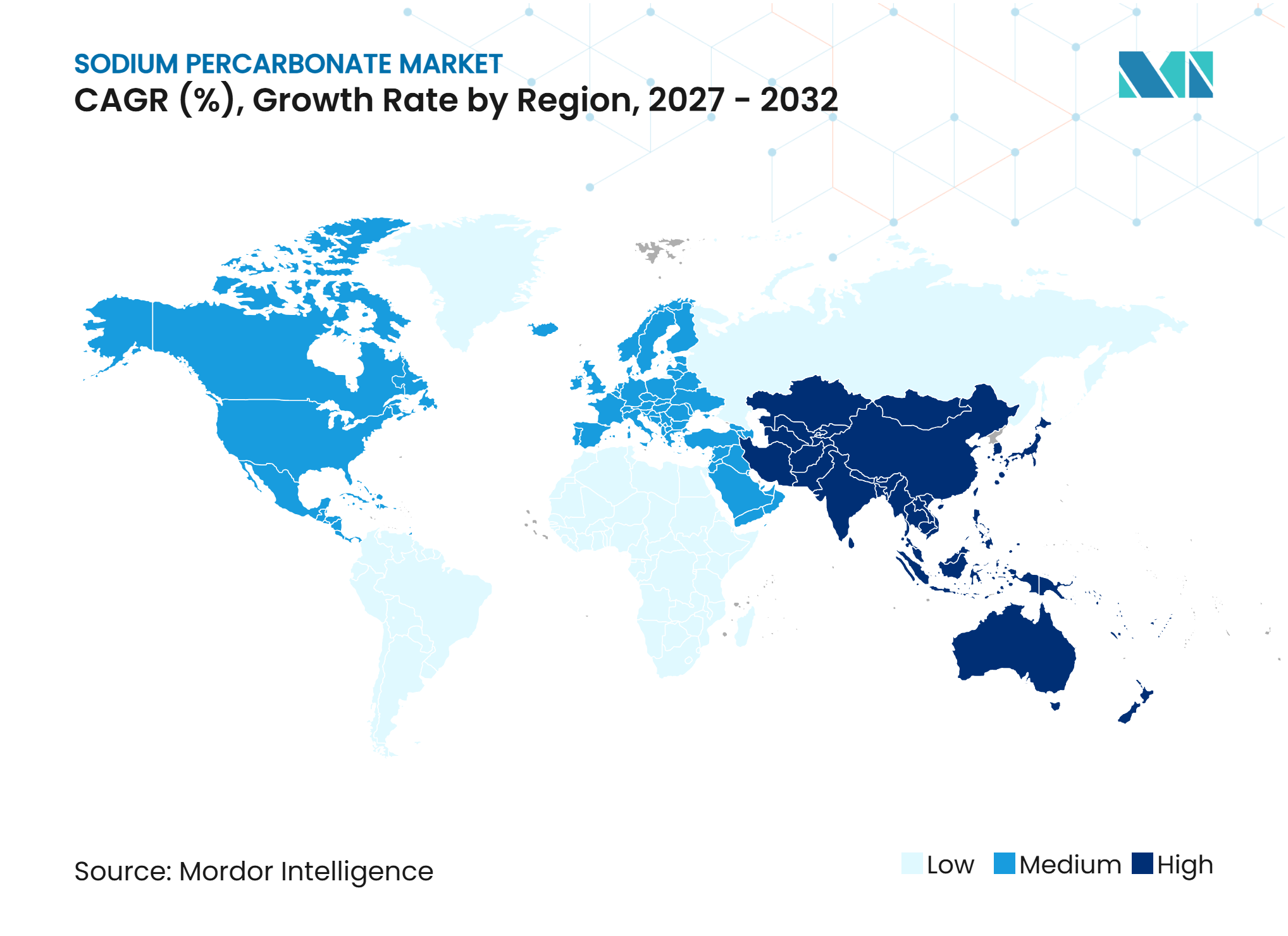
Asia-Pacific held 39.15% of the sodium percarbonate market share in 2026 and is projected to advance at an 8.44% CAGR through 2032. China remains the region’s central production base, supported by manufacturers such as JINKE Company Limited, Hongye Holding Group Corporation Ltd., and Zhejiang Jiehua New Materials Co., Ltd. JINKE Company Limited’s Tianjin investment shows the regional focus on coated grades, automated production, and larger export capacity. Hongye Holding Group Corporation Ltd. states that its sodium percarbonate products include coated, uncoated, and tablet grades for international customers. India, Vietnam, and Bangladesh offer demand from export-oriented textile production, while Southeast Asian aquaculture provides a separate tablet-use channel. Urbanization and rising laundry-product use in Indonesia, Vietnam, and the Philippines support the sodium percarbonate market size in the region. Manufacturers must also meet product-registration and stability requirements as they supply regulated export markets.
North America
North America has a distinct supply structure because OCI ALABAMA is the region’s only sodium percarbonate producer. OCI ALABAMA began a USD 18 million expansion at its Decatur, Alabama facility in September 2025, covering warehouse, rail, packaging, and raw-material handling improvements. Its Provox product range is listed by NSF International for drinking-water treatment chemicals under NSF/ANSI 60. This certification improves the supplier’s position in the sodium percarbonate market. Canada and Mexico mainly consume the material through imported finished detergent products, although Mexico’s consumer-goods manufacturing base may create additional demand.
Europe, South America, and Middle East and Africa
Europe is shaped by compliance factors under the EU detergent framework, including product information, biodegradability, and notification requirements. Germany, France, and Nordic countries support demand from premium powder detergents, industrial dishwasher products, and textile processing. Solvay serves homecare and personal-care markets with peroxide-based solutions, including sodium percarbonate. Within the sodium percarbonate market, Brazil’s institutional cleaning demand and Argentina’s cost-sensitive formulator base support South American adoption. In the Middle East and Africa, petrochemical, food processing, textile, and water-treatment investment creates a longer-term opportunity. However, oxidizer packaging, humidity control, and freight requirements remain constraints in areas with limited chemical-logistics infrastructure. Tablet products can reduce caking and simplify handling for users without specialized oxidizer storage.
Competitive Landscape
Market Concentration
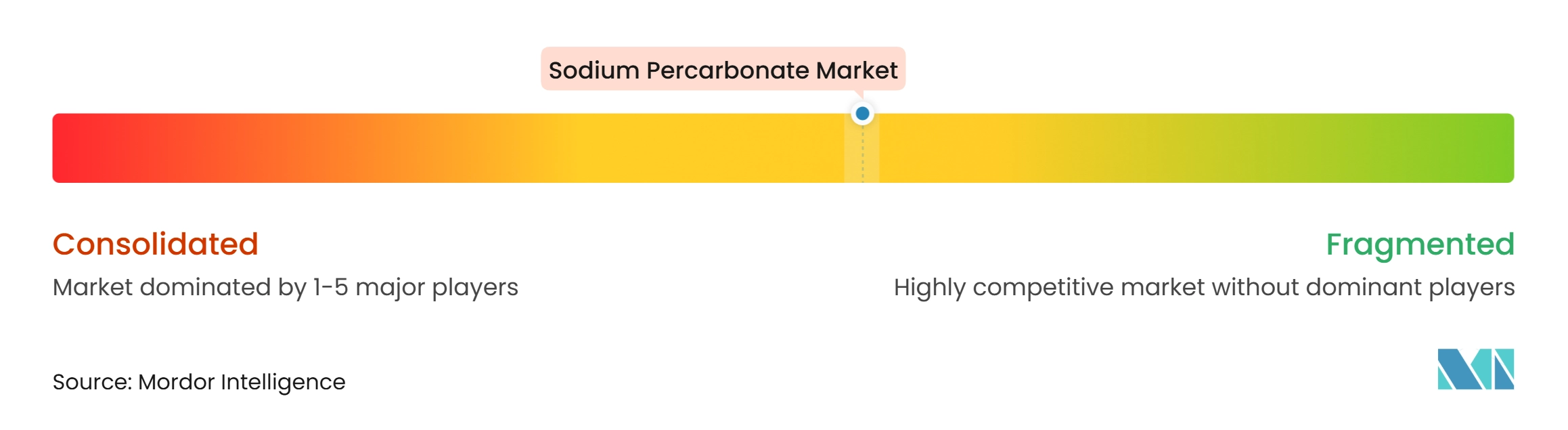
The sodium percarbonate market is moderately concentrated, with top players including Solvay, OCI ALABAMA, Evonik Industries AG, Kemira Oyj, and JINKE Company Limited. Evonik Industries AG competes through specialty chemical capabilities and coated-grade technology for higher-value detergent and healthcare uses. Solvay benefits from its peroxide solutions platform and integrated chemical capabilities. Compliance with EU Registration, Evaluation, Authorisation and Restriction of Chemicals requirements is a barrier for suppliers that do not have complete registration and product documentation.
Chinese producers in the sodium percarbonate market compete through scale, export pricing, and access to feedstocks. JINKE Company Limited added 100,000 metric tons per year of coated non-phosphorus sodium percarbonate capacity in Tianjin as the first phase of a 200,000 metric tons per year project. Hongye Holding Group Corporation Ltd. received national Patent-Intensive Product certification for its sodium percarbonate product in March 2025. Zhejiang Jiehua New Materials Co., Ltd. also produces sodium percarbonate within its inorganic peroxide portfolio.
Other suppliers in the sodium percarbonate market maintain positions through regional supply, specialized grades, or established customer relationships. Opportunities remain in moisture-stable coatings, pharmaceutical-grade materials, and stable tablets for equatorial distribution. Competitive positions will depend on feedstock integration, regulatory documentation, coated-grade performance, and supply reliability.
Sodium Percarbonate Industry Leaders
-
Solvay
-
OCI ALABAMA
-
Evonik Industries AG
-
Kemira Oyj
-
JINKE Company Limited
- *Disclaimer: Major Players sorted in no particular order
Sodium Percarbonate Market Companies Covered in this Report
- AKKİM
- Evonik Industries AG
- Hexing Chemical Industry Co., Ltd.
- Hodogaya Chemical Co., Ltd.
- Hongye Holding Group Corporation Ltd.
- Jiangsu Kolod Food Ingredients Co., Ltd.
- Jiangxi Boholy Chemical Co., Ltd.
- JINKE Company Limited
- JSC Khimprom
- Kemira Oyj
- OCI ALABAMA
- Shandong Haihua Group Co., Ltd.
- Solvay
- Wuxi Wanma Chemical Co., Ltd.
- Zhejiang Jiehua New Materials Co., Ltd.
Recent Industry Developments in Sodium Percarbonate Market
- September 2025: Australia's Greenhouse and Energy Minimum Standards (GEMS) Regulator approved the use of sodium percarbonate as an alternative to sodium perborate tetrahydrate in detergent formulations used for clothes-washing machines. The approval recognized sodium percarbonate as a less hazardous bleaching agent and expanded its permitted use in standardized detergent testing applications.
- May 2025: OCI ALABAMA began a USD 19.15 million expansion of its manufacturing facility in Decatur, Alabama, including a 50,000-square-foot warehouse, additional raw-material storage silos, expanded rail infrastructure, unloading equipment, and a new packaging line. The investment is intended to improve storage, material handling, and distribution capabilities at the facility, which produces sodium percarbonate for detergent and cleaning applications.
Global Sodium Percarbonate Market Report Scope
Sodium percarbonate is an oxygen-based bleaching and cleaning compound formed by combining sodium carbonate and hydrogen peroxide. It releases active oxygen when dissolved in water, providing bleaching, stain removal, deodorizing, and disinfecting properties. Its solid form and relatively low environmental residue make it suitable for use in laundry detergents, household cleaners, industrial cleaning formulations, textile processing, and water treatment.
The Sodium Percarbonate Market is segmented by type, application, end-use industry, and geography. By type, the market is segmented into coated, uncoated, and tablets. By application, the market is segmented into detergent agents, cleaning agents, bleaching agents, water treatment, and other applications. By end-use industry, the market is segmented into household cleaning, laundry, industrial cleaning, textile, chemical, papermaking, food, and other end-use industries. The report also covers the market size and forecasts for sodium percarbonate in 15 countries across major regions. For each segment, the market sizing and forecasts have been done on the basis of value (USD).
Segmentation Overview
| Coated |
| Uncoated |
| Tablets |
| Detergent Agents |
| Cleaning Agents |
| Bleaching Agents |
| Water Treatment |
| Other Applications |
| Household Cleaning |
| Laundry |
| Industrial Cleaning |
| Textile |
| Chemical |
| Papermaking |
| Food |
| Other End-Use Industries |
| Asia-Pacific | China |
| India | |
| Japan | |
| South Korea | |
| ASEAN Countries | |
| Rest of Asia-Pacific | |
| North America | United States |
| Canada | |
| Mexico | |
| Europe | Germany |
| United Kingdom | |
| France | |
| Italy | |
| NORDIC Countries | |
| Rest of Europe | |
| South America | Brazil |
| Argentina | |
| Rest of South America | |
| Middle East and Africa | Saudi Arabia |
| South Africa | |
| Rest of Middle East and Africa |
| By Type | Coated | |
| Uncoated | ||
| Tablets | ||
| By Application | Detergent Agents | |
| Cleaning Agents | ||
| Bleaching Agents | ||
| Water Treatment | ||
| Other Applications | ||
| By End-Use Industry | Household Cleaning | |
| Laundry | ||
| Industrial Cleaning | ||
| Textile | ||
| Chemical | ||
| Papermaking | ||
| Food | ||
| Other End-Use Industries | ||
| By Geography | Asia-Pacific | China |
| India | ||
| Japan | ||
| South Korea | ||
| ASEAN Countries | ||
| Rest of Asia-Pacific | ||
| North America | United States | |
| Canada | ||
| Mexico | ||
| Europe | Germany | |
| United Kingdom | ||
| France | ||
| Italy | ||
| NORDIC Countries | ||
| Rest of Europe | ||
| South America | Brazil | |
| Argentina | ||
| Rest of South America | ||
| Middle East and Africa | Saudi Arabia | |
| South Africa | ||
| Rest of Middle East and Africa | ||
Key Questions Answered in the Report
What is the size of the sodium percarbonate market?
The sodium percarbonate market size was valued at USD 541.38 million in 2026 and is estimated to grow from USD 579.54 million in 2027 to reach USD 817.79 million by 2032, at a CAGR of 7.13% during the forecast period (2027-2032).
Which type held the largest share in 2026?
The coated segment held 60.34% of the sodium percarbonate market share in 2026.
What is driving demand for sodium percarbonate?
The shift from chlorine-based bleaching, cold-wash detergent demand, water treatment use, and textile effluent requirements support adoption.
Which application is projected to advance fastest through 2032?
Cleaning agents are projected to advance at an 8.31% CAGR through 2032 as institutional and foodservice users seek oxygen-based cleaning formulations.