
Sleep Mask Market Size and Share
Market Overview
| Study Period | 2022 - 2032 |
|---|---|
| Market Size (2027) | USD 20.88 Million |
| Market Size (2032) | USD 27.56 Million |
| Growth Rate (2027 - 2032) | 5.71 % |
| Fastest Growing Market | Asia-Pacific |
| Largest Market | North America |
| Market Concentration | Low |
Major Players *Disclaimer: Major Players sorted in no particular order Image © Mordor Intelligence. Reuse requires attribution under CC BY 4.0. | |
Sleep Mask Market Analysis by Mordor Intelligence
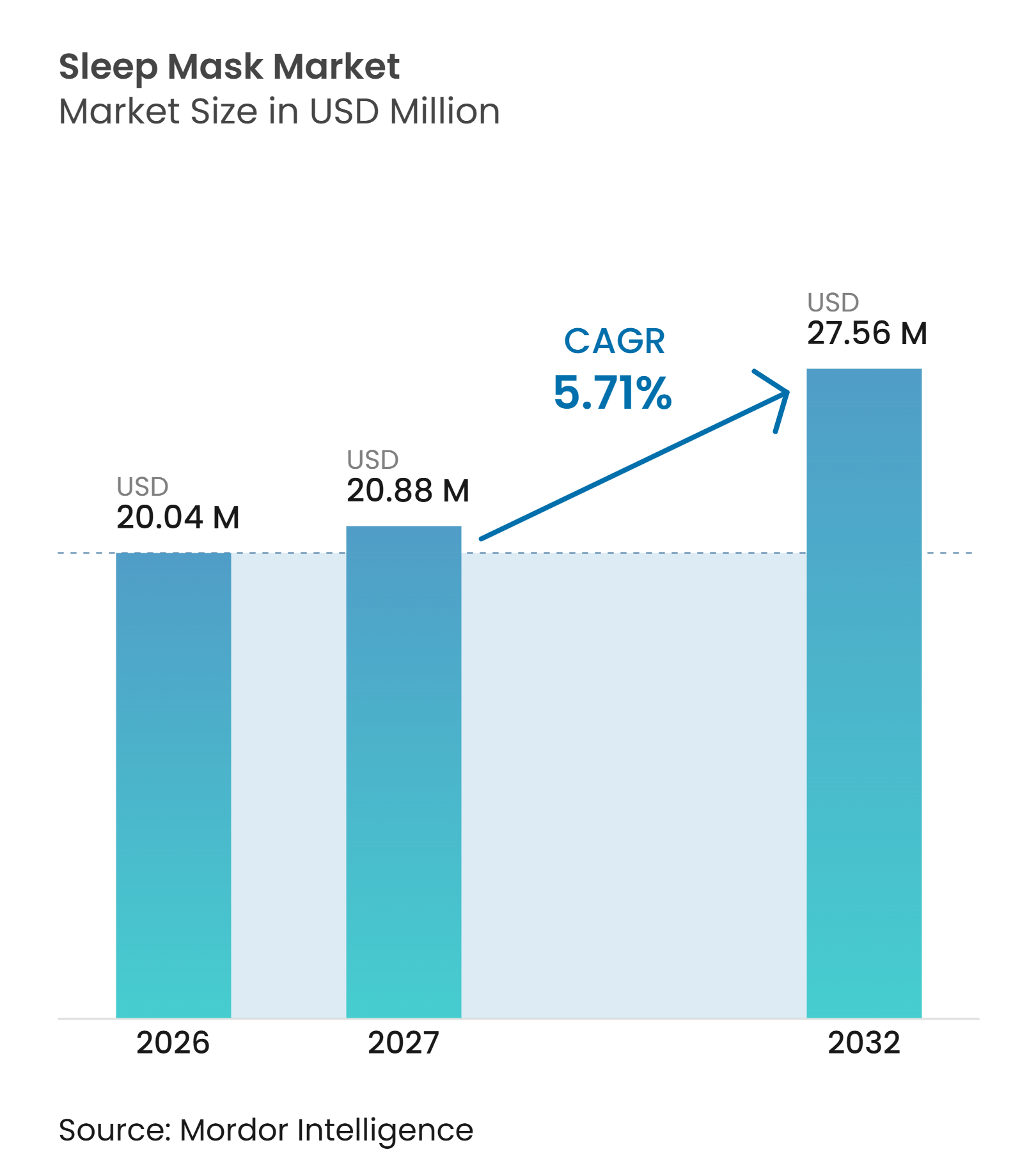
The Sleep Mask Market size is expected to grow from USD 20.04 million in 2026 to USD 20.88 million in 2027 and is forecast to reach USD 27.56 million by 2032 at 5.71% CAGR over 2027-2032.
The sleep mask market size is expected to grow from USD 20.04 million in 2026 to USD 20.88 million in 2027 and is forecast to reach USD 27.56 million by 2032 at a 5.71% CAGR over 2027-2032. The market is evolving from a travel-oriented accessory category into an everyday wellness segment, supported by growing consumer awareness of sleep quality, sleep hygiene, and the importance of consistent bedtime routines. Increasing interest in holistic wellness, alongside the adoption of sleep-tracking wearables and other sleep-enhancement products, is encouraging consumers to incorporate sleep masks into their daily routines. Product innovation, including contoured designs, improved light-blocking capabilities, breathable fabrics, and premium materials, is further broadening the category's appeal across different consumer preferences. Additionally, the growing influence of skincare and self-care routines is positioning sleep masks as lifestyle accessories rather than purely functional products. Expanding e-commerce accessibility and short-video-driven product discovery are also strengthening consumer engagement, enabling niche brands to reach wider audiences through differentiated designs, materials, and comfort-focused offerings.
Key Report Takeaways
-
By product type, Regular Sleep Masks held 60.83% in 2026, while Wrap-Around Sleep Masks are forecast to grow at a 7.34% CAGR during 2027-2032.
-
By material, Cotton held 46.27% in 2026, while Silk is forecast to grow at a 7.46% CAGR during 2027-2032.
-
By distribution channel, Online held 53.46% in 2026 and is forecast to grow at a 7.82% CAGR during 2027-2032.
-
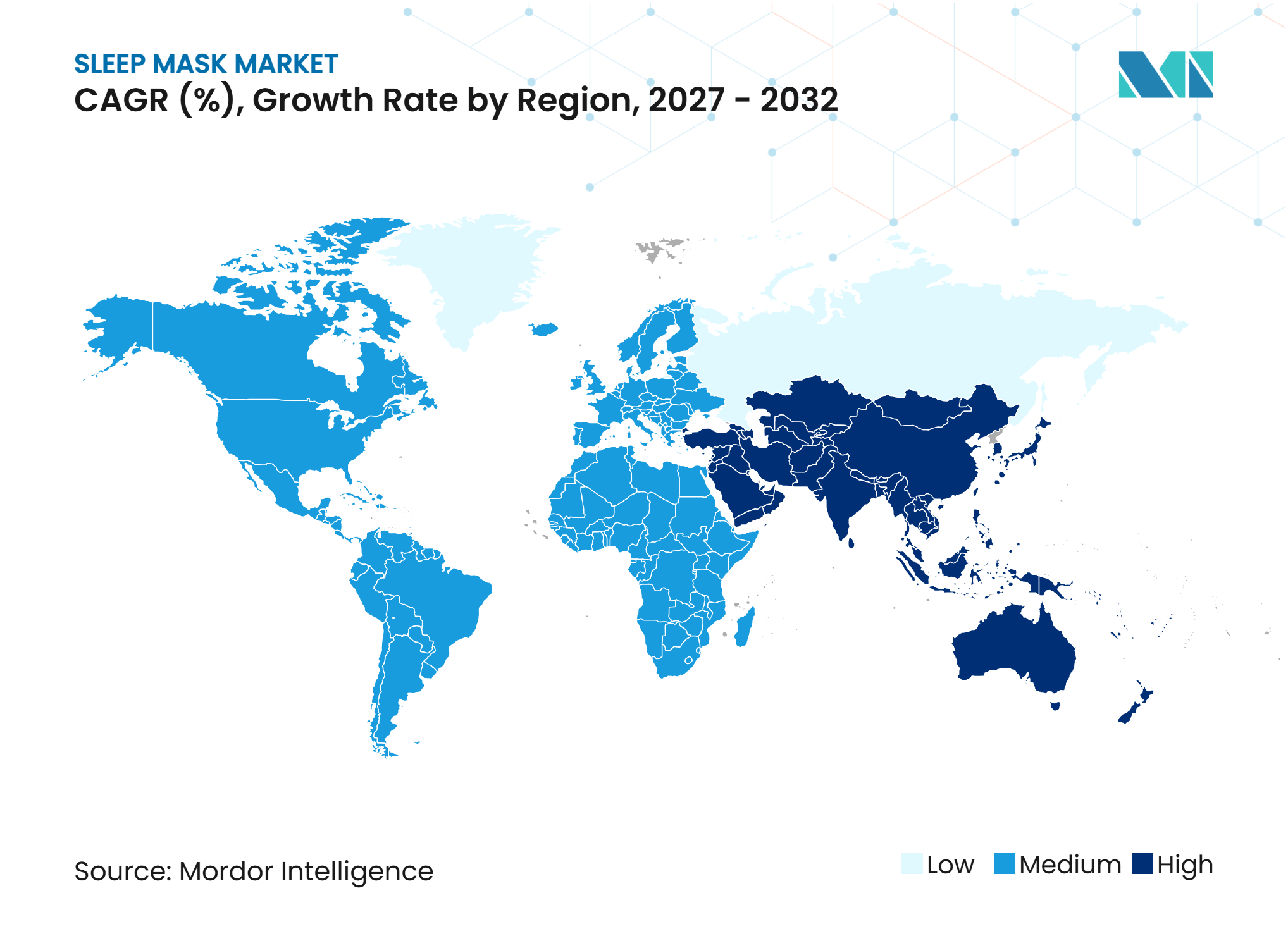
By geography, North America held 60.74% in 2026, while Asia-Pacific is forecast to grow at a 7.57% CAGR during 2027-2032.
Note: Market numbers in this report are based on Mordor Intelligence's proprietary estimation framework, which combines nine months of actuals with Q4 projections for base year 2026.
Market Trends and Insights
Drivers Impact Analysis of Sleep Mask Market*
| Driver | (~) % Impact on CAGR Forecast | Geographic Relevance | Impact Timeline |
|---|---|---|---|
| Growing sleep-health awareness and prevalence of sleep difficulties | +1.8% | Global, with concentrated intensity in North America, East Asia, and Western Europe | Medium term (2–4 years) |
| Expansion of international travel and demand for portable sleep accessories | +1.2% | Global; highest in Asia and North America air corridors | Medium term (2–4 years) |
| Increasing demand from shift workers and individuals with irregular schedules | +0.8% | Global; Asia core (manufacturing, healthcare), spill-over to North America and Europe | Long term (≥ 4 years) |
| Growth of e-commerce and online accessibility of sleep products | +1.0% | Global; highest impact in China, South Korea, Southeast Asia, and North America | Short term (≤ 2 years) |
| Rising preference for ergonomic designs and enhanced light-blocking performance | +0.5% | Global, with early adoption in North America and Europe | Short to medium term |
| Product innovation through multifunctional and sensory sleep technologies | +0.6% | North America and East Asia (primary Research hubs); gradual diffusion globally | Long term (≥ 4 years) |
| Source: Mordor Intelligence | |||
Growing Sleep-Health Awareness and Prevalence of Sleep Difficulties
Growing awareness of sleep health and the widespread prevalence of sleep difficulties are strengthening demand for products that support more comfortable sleeping environments. According to the National Sleep Foundation's 2025 Sleep in America Poll, approximately 6 in 10 American adults do not get sufficient sleep, while nearly 4 in 10 experience difficulty falling asleep at least three nights per week and almost half report similar difficulties staying asleep[1]. These findings highlight the importance of consistent sleep routines and improved sleep hygiene, encouraging consumers to explore accessible products that support their bedtime environments. Sleep masks are gaining relevance in this context by helping block unwanted ambient light, particularly for individuals exposed to artificial lighting or irregular sleeping schedules. Growing consumer interest in preventive wellness and sleep-enhancement accessories is further supporting the integration of such products into everyday self-care routines.
Expansion of International Travel and Demand for Portable Sleep Accessories
The continued expansion of international travel is creating opportunities for portable sleep accessories, including sleep masks, as travellers increasingly seek comfort and convenience during flights, airport transits, and hotel stays. According to the International Air Transport Association (IATA), international air passenger demand increased by 7.1% in 2025 compared with 2024, reflecting sustained growth in cross-border air travel[2]. The growing volume of long-haul journeys and frequent business and leisure travel is increasing demand for compact, lightweight accessories that can be easily carried in hand luggage and used across different sleeping environments. Sleep masks provide a convenient solution for reducing exposure to cabin lighting and unfamiliar ambient light in temporary accommodation, supporting their integration into travel wellness kits and personal travel essentials.
Increasing Demand From Shift Workers and Individuals With Irregular Schedules
The growing prevalence of non-traditional working arrangements, including night shifts, rotating schedules, and extended working hours, is creating demand for sleep accessories that help individuals manage daytime rest and irregular sleep routines. Unlike individuals following conventional sleeping hours, shift workers often need to rest during daylight, when external light exposure can interfere with their sleeping environment. Sleep masks offer a convenient and portable solution by blocking ambient light and helping create darker resting conditions regardless of the time of day. Their ease of use, compact design, and suitability for different sleeping environments are supporting their adoption among healthcare professionals, industrial workers, transportation personnel, and other individuals with irregular work schedules.
Growth of E-Commerce and Online Accessibility of Sleep Products
The expansion of e-commerce is strengthening the global accessibility and market reach of sleep products, including sleep masks, by enabling consumers to explore a wider range of designs, materials, and price points through digital retail platforms. The growing adoption of online shopping across markets is creating opportunities for sleep mask brands to reach consumers beyond traditional retail networks. For instance, Ireland's Central Statistics Office (CSO) reported that 85% of internet users purchased goods or services online in 2025, illustrating the increasing penetration of digital shopping channels[3]. Additionally, product reviews, comparison tools, social media marketing, and short-video commerce are improving product discovery and helping consumers evaluate different materials, designs, and functional features before purchasing. These developments are supporting wider product visibility, purchasing convenience, and the expansion of online sales channels for sleep masks.
Restraints Impact Analysis of Sleep Mask Market*
| Restraint | (~) % Impact on CAGR Forecast | Geographic Relevance | Impact Timeline |
|---|---|---|---|
| Poor fit, product slippage, and pressure-related discomfort | –0.9% | Global; most acute in e-commerce-heavy markets where fit cannot be pre-verified | Short term (≤ 2 years) |
| Skin irritation, material sensitivity, and hygiene-related concerns | –0.4% | Global; heightened in hot and humid climates (Southeast Asia, Middle East and Africa) | Short to medium term |
| Price competition from low-cost generic products and limited brand differentiation | –0.6% | Global, most acute in price-sensitive Asia-Pacific markets | Medium term (2–4 years) |
| Limited clinical validation of smart and therapeutic sleep-related claims | –0.5% | North America and Europe | Long term (≥ 4 years) |
| Source: Mordor Intelligence | |||
Poor Fit, Product Slippage, and Pressure-Related Discomfort
Poor fit and pressure-related discomfort remain key factors limiting the adoption and consistent use of sleep masks, as differences in facial structures, sleeping positions, and individual comfort preferences can affect product suitability. Masks with poorly designed straps or inadequate adjustability may shift during sleep, allowing unwanted light to enter and reducing their functional effectiveness. Similarly, excessive pressure around the eyes, temples, or head can cause discomfort, particularly among side sleepers and individuals who wear masks for extended periods. Material quality, strap tension, weight distribution, and contour design therefore play an important role in determining overall comfort and user satisfaction. These challenges can discourage repeat purchases and limit adoption among consumers who are sensitive to facial pressure or require a secure fit throughout the night.
Skin Irritation, Material Sensitivity, and Hygiene-Related Concerns
Skin irritation and material sensitivity can restrict the adoption of sleep masks, particularly among consumers with sensitive skin or allergies to certain textile fibres, dyes, and synthetic materials. Prolonged contact with facial skin, especially around the delicate eye area, may cause discomfort, itching, or irritation when masks are manufactured using unsuitable fabrics or chemical finishes. Additionally, sleep masks can accumulate sweat, skin oils, cosmetics, and other residues through repeated use, making regular cleaning important for maintaining product hygiene. Masks with complex constructions, delicate materials, or non-removable components may also be more difficult to clean and maintain. These concerns can influence purchasing decisions, increase consumer preference for skin-friendly and washable materials, and potentially discourage consistent product use.
*Our forecasts treat driver/restraint impacts as directional, not additive. The impact forecasts reflect baseline growth, mix effects, and variable interactions.
Sleep Mask Market Segment Analysis
By Product Type:
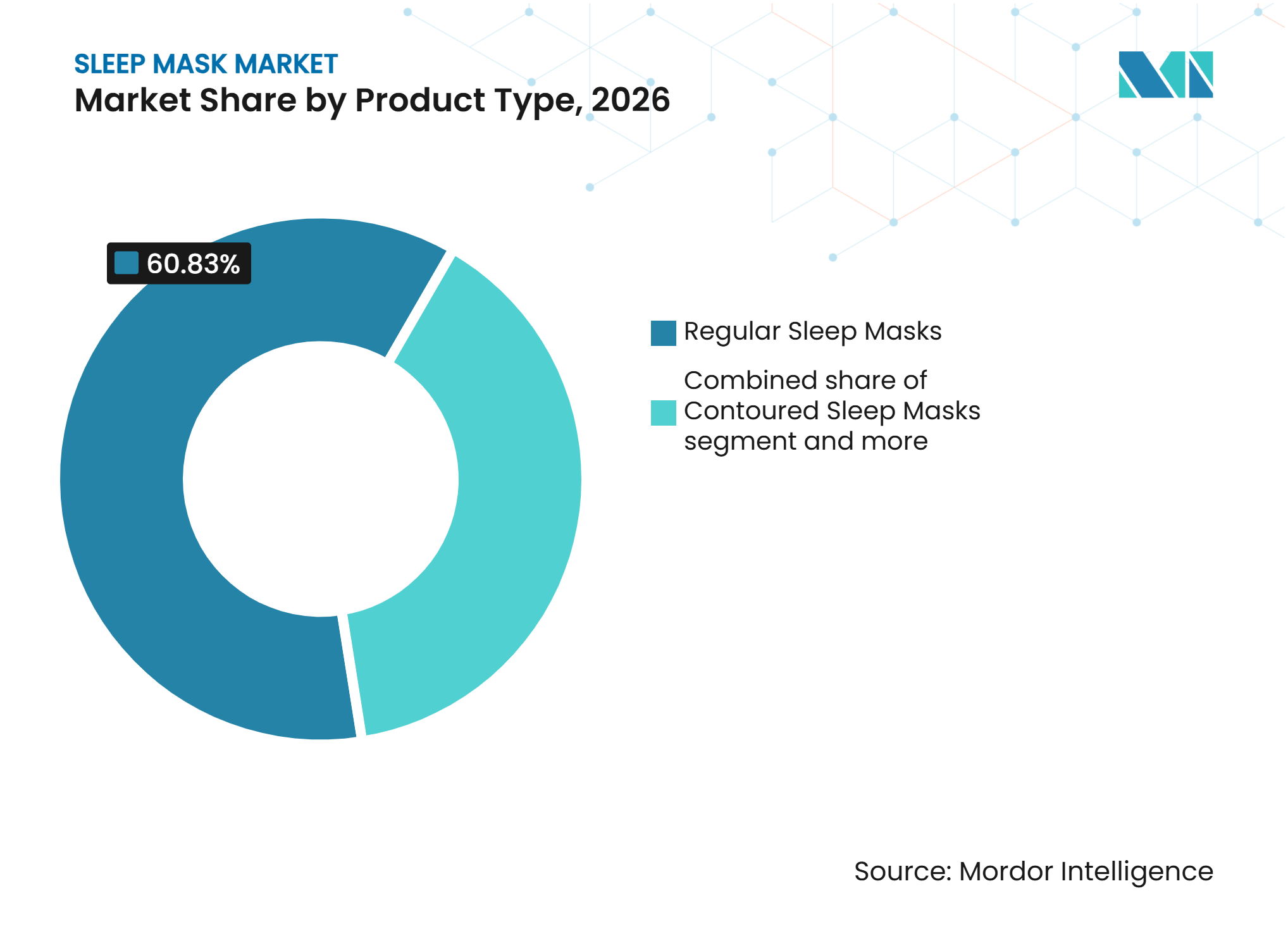
Wrap-Around Formats Redefine Light-Block StandardsRegular Sleep Masks represent the largest product segment, accounting for 60.83% of the market in 2026. Their leading position is supported by affordability, straightforward designs, and widespread availability across online and offline retail channels. Their ease of use and familiarity make them accessible to a broad consumer base, including first-time buyers and individuals seeking basic light-blocking functionality. Contoured Sleep Masks also maintain demand among consumers seeking reduced pressure around the eyes, improved fit, and greater comfort during extended use. The segment benefits from product designs that accommodate different sleeping positions and individual comfort preferences.
Wrap-Around Sleep Masks are the fastest-growing product segment, projected to expand at a 7.34% CAGR during 2027–2032. Their growth is supported by designs that provide broader facial coverage, improved light-blocking capabilities, and a more secure fit during sleep. These features make them particularly appealing to consumers seeking to minimise light exposure and maintain consistent comfort across different sleeping positions. Continued product innovation involving adjustable straps, contoured construction, breathable fabrics, and integrated cooling features is further expanding the segment's appeal. Other Sleep Masks, including weighted, steam, and aromatherapy-infused variants, also contribute to product diversification by catering to specialised consumer preferences.



By Material:
Cotton's Scale Advantage Faces a Silk-Led Premiumisation ChallengeCotton represents the largest material segment, accounting for 46.27% of the sleep mask market in 2026. Its leading position is supported by affordability, widespread availability, breathability, and suitability for everyday use across different consumer groups. Cotton sleep masks cater to mass-market demand by offering a practical combination of comfort, durability, and ease of maintenance. Their broad availability across retail channels and compatibility with different product designs further support their continued adoption. Other commonly used materials, including polyester and blended fabrics, also contribute to the market by offering manufacturers flexibility in product design, pricing, and functional characteristics.
Silk is the fastest-growing material segment, projected to expand at a 7.46% CAGR during 2027–2032. Its growth is supported by increasing consumer interest in premium sleep accessories that combine comfort with skincare-oriented benefits. The material's smooth texture and soft contact with facial skin make it attractive to consumers seeking reduced friction around the delicate eye area. Growing interest in premium self-care products and beauty-oriented sleep accessories is further strengthening demand for silk sleep masks. Other materials, including bamboo fibre, synthetic cooling fabrics, and alternative silk fabrics, are also gaining attention by catering to consumers seeking specific comfort, functional, and material preferences.
By Distribution Channel:
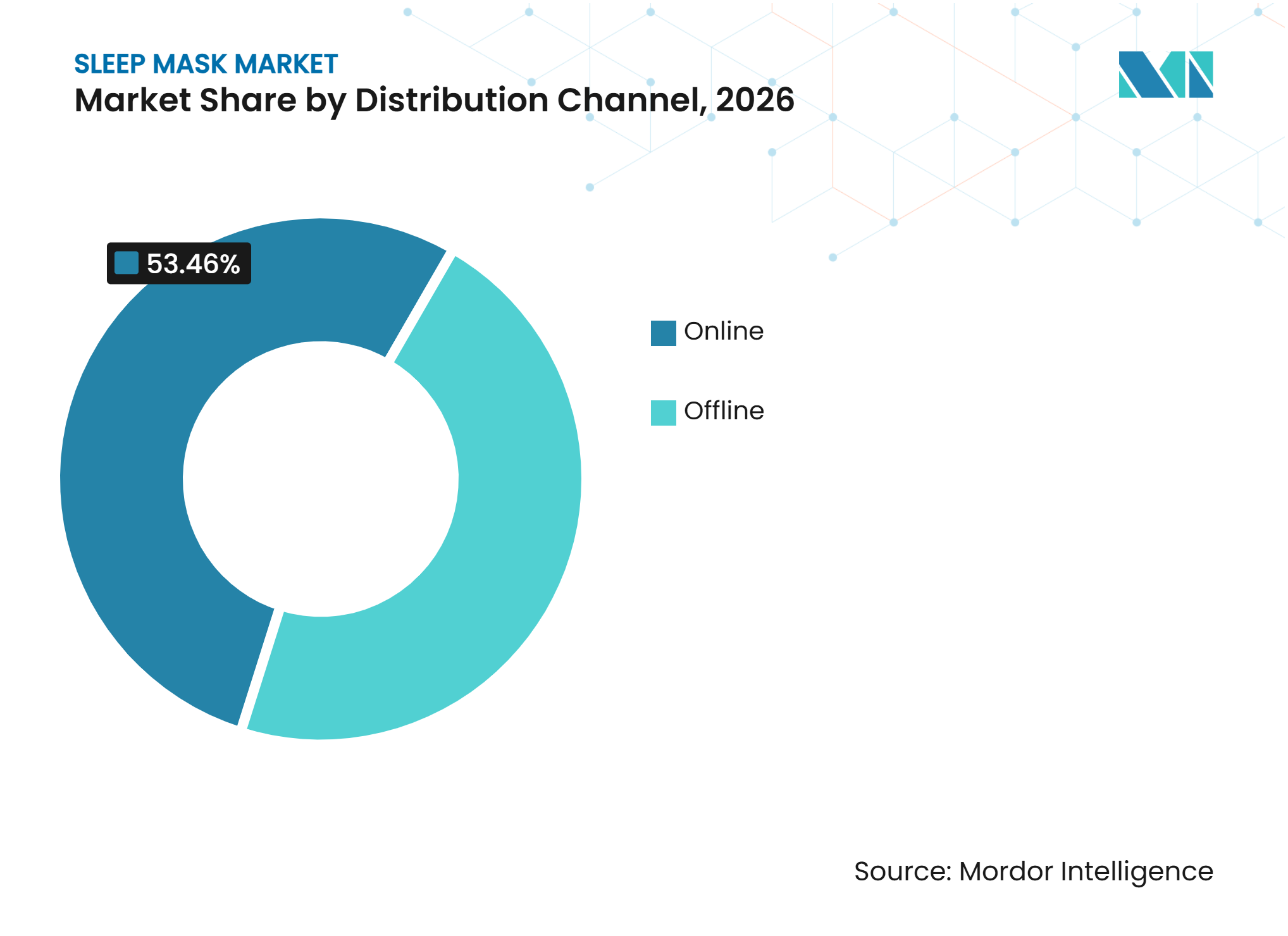
Online Leads in Share and Growth, Reshaping Brand StrategyOnline distribution represents both the largest and fastest-growing channel, accounting for 53.46% of market sales in 2026 and projected to expand at a 7.82% CAGR during 2027–2032. Its leading position is supported by the convenience of digital purchasing, broad product availability, and access to multiple brands, designs, and price points through e-commerce platforms. Product reviews, ratings, and visual demonstrations help consumers evaluate material quality, fit, and functional features before purchasing. Additionally, direct-to-consumer platforms and online marketplaces enable niche brands to reach wider consumer audiences, while social media marketing and short-video commerce further strengthen product discovery and online sales.
Offline distribution remains an important channel through pharmacies, department stores, specialty sleep retailers, travel retail outlets, and other physical stores. These channels allow consumers to examine product materials, assess fabric softness, and evaluate fit before making purchasing decisions. Travel retail and airport stores also provide opportunities for consumers to purchase sleep masks as convenient travel accessories. Physical retail therefore continues to serve consumers who prefer in-person product evaluation, while supporting brand visibility and product accessibility across established retail networks.

Geography Analysis
North America
North America accounts for the largest share of the sleep mask market, representing 60.74% in 2026. Its leading position is supported by strong consumer awareness of sleep health, established wellness-product retail networks, and widespread availability of sleep accessories across online and offline channels. Growing consumer interest in sleep hygiene and personal wellness is encouraging the adoption of sleep masks as part of everyday bedtime routines. The region also benefits from established e-commerce infrastructure, strong purchasing power, and a broad presence of specialised sleep accessory brands. Increasing product innovation and the availability of premium materials, contoured designs, and comfort-focused features further support regional demand
Asia-Pacific
Asia-Pacific is the fastest-growing regional market, projected to expand at a 7.57% CAGR during 2027–2032. Growth is supported by increasing awareness of sleep health, expanding online retail, rising disposable incomes, and growing consumer interest in personal wellness products. The region benefits from a large consumer base and increasing accessibility to sleep accessories through digital marketplaces and organised retail channels. Demand is also supported by the growing adoption of premium sleep products and the availability of diverse materials and product designs catering to different consumer preferences. Expanding urban populations and increasing exposure to global wellness trends are further contributing to the region's growth prospects.
Europe, South America, and Middle East and Africa
Europe represents an established market for sleep masks, supported by consumer interest in personal wellness, premium sleep accessories, and travel-related products. Demand is further supported by established retail networks, widespread e-commerce penetration, and consumer preference for comfortable, high-quality materials. South America remains an emerging market, where expanding online retail accessibility and growing awareness of sleep hygiene are creating opportunities for wider product adoption. Demand is largely supported by affordable and functional sleep accessories, particularly regular sleep masks. The Middle East and Africa region presents varied growth opportunities, with increasing interest in premium wellness products, travel accessories, and hospitality-related sleep amenities supporting market development. Growing digital retail access and expanding consumer exposure to sleep-health trends are expected to contribute to gradual regional adoption.
Competitive Landscape
Market Concentration
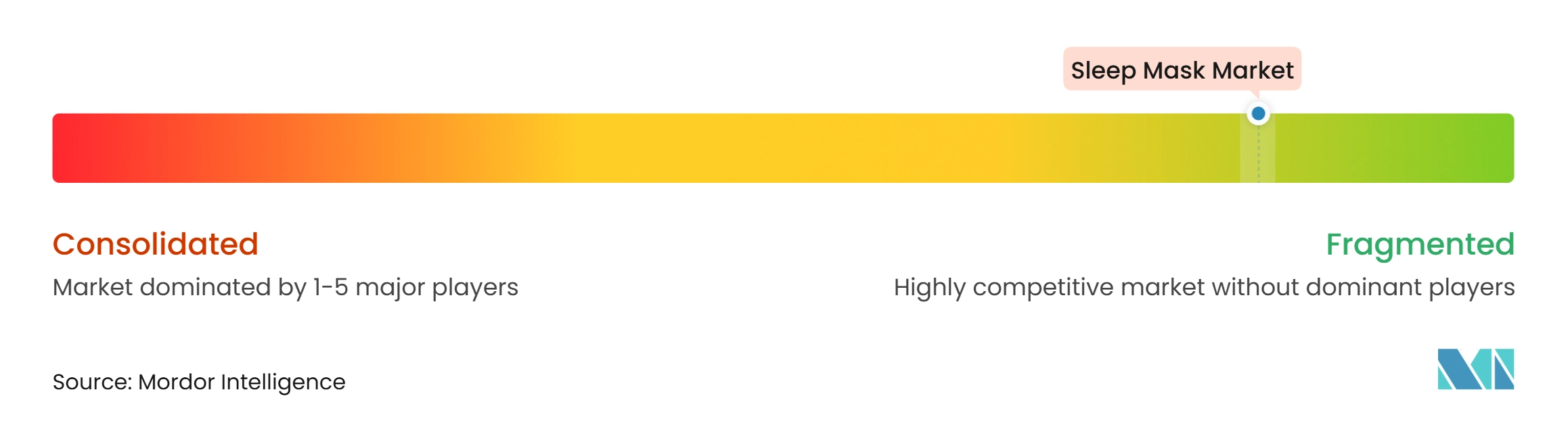
The global sleep mask market is highly fragmented, indicating the presence of numerous brands competing through product differentiation, pricing, material selection, and specialised functional features. The competitive landscape includes established players such as Alaska Bear, Manta Sleep LLC, Nidra Sleep, Bucky, and Therabody Inc., which have developed market positions through differentiated product portfolios and brand positioning. No single company dominates the overall category, as competition is distributed across value-oriented, premium, comfort-focused, and technology-enabled sleep mask offerings.
Leading players are focusing on strengthening their product portfolios through material innovation, improved ergonomic designs, enhanced light-blocking capabilities, and additional comfort-oriented features. Companies are also expanding their distribution reach through e-commerce marketplaces, direct-to-consumer platforms, and partnerships with established retail channels. Premium positioning through silk fabrics, contoured designs, adjustable fits, and specialised sleep-enhancement features is another common competitive approach. These strategies allow established brands to address diverse consumer preferences while strengthening brand visibility and customer retention.
Emerging players are entering the market with differentiated offerings targeting specific consumer requirements, including weighted sleep masks, cooling fabrics, aromatherapy-infused products, and technology-integrated designs. Several newer brands are also emphasising sustainable materials, skin-friendly fabrics, and customisable product features to distinguish themselves from established competitors. The expansion of online marketplaces and direct-to-consumer retail is lowering distribution barriers for smaller brands, enabling them to access international consumers without extensive physical retail networks. This is sustaining competitive entry and encouraging continued product diversification across the market.
Sleep Mask Industry Leaders
-
Alaska Bear
-
Manta Sleep LLC
-
Nidra Sleep
-
Bucky
-
Therabody Inc.
- *Disclaimer: Major Players sorted in no particular order
Sleep Mask Market Companies Covered in this Report
- Alaska Bear
- Bedtime Bliss
- Manta Sleep LLC
- Sleep Master
- Wild Essentials LLC
- Nidra Sleep
- Earth Therapeutics
- HappyLuxe
- Sonoma Lavender Co.
- Lumos Sleep
- EcoTools Beauty
- PrettyCare
- Loftie, Inc.
- Bucky
- Azurous Inc.
- Ostrichpillow
- Slip Silk Pillowcase LLC
- Drowsy Sleep Co.
- Casper Sleep Inc.
- Tempur World LLC
- Samsonite IP Holdings S.àr.l.
- Sea to Summit
- Therabody Inc.
- Sound Oasis
- Lunya
Recent Industry Developments in Sleep Mask Market
- September 2026: Belgian consumer brand Loop announced the launch of Loop Eclipse, its first product outside the earplug category. The launch marks the company's expansion into sleep accessories and the broader sensory-wellness category. The sleep mask is designed to provide light blockage while addressing fit, eye pressure, and slippage.
- August 2026: Smart-wearable brand DR H launched the Mind Ease Mask, expanding its product portfolio beyond smart ring-based health monitoring into sleep-focused products. The wearable combines light management, adjustable temperature control, and audio features in a single sleep mask, supported by the company's health-management application.
- November 2025: SELEPU announced the launch of DreamPilot, introducing an AI-enabled sleep mask incorporating electroencephalography (EEG) monitoring, adaptive artificial intelligence analysis, and a multimodal sleep-support system. The product was made available through Kickstarter, extending the company's sleep-technology portfolio into consumer sleep accessories.
Global Sleep Mask Market Report Scope
The sleep mask market comprises products designed to block or reduce ambient light during sleep, supporting improved sleeping environments across residential, travel, and wellness settings. The market is segmented by product type into regular sleep masks, contoured sleep masks, wrap-around sleep masks, and other sleep masks; by material into cotton, silk, and other materials; by distribution channel into offline and online; and by geography into North America, Europe, Asia-Pacific, South America, and the Middle East and Africa. The market forecasts are provided in terms of value (USD million).
Segmentation Overview
| Regular Sleep Masks |
| Contoured Sleep Masks |
| Wrap-Around Sleep Masks |
| Other Sleep Masks |
| Cotton |
| Silk |
| Other Materials |
| Offline |
| Online |
| North America | United States |
| Canada | |
| Mexico | |
| Rest of North America | |
| Europe | Germany |
| United Kingdom | |
| Italy | |
| France | |
| Spain | |
| Netherlands | |
| Poland | |
| Belgium | |
| Sweden | |
| Rest of Europe | |
| Asia-Pacific | China |
| India | |
| Japan | |
| Australia | |
| Indonesia | |
| South Korea | |
| Thailand | |
| Singapore | |
| Rest of Asia-Pacific | |
| South America | Brazil |
| Argentina | |
| Colombia | |
| Chile | |
| Peru | |
| Rest of South America | |
| Middle East and Africa | South Africa |
| Saudi Arabia | |
| United Arab Emirates | |
| Nigeria | |
| Egypt | |
| Morocco | |
| Turkey | |
| Rest of Middle East and Africa |
| By Product Type | Regular Sleep Masks | |
| Contoured Sleep Masks | ||
| Wrap-Around Sleep Masks | ||
| Other Sleep Masks | ||
| By Material | Cotton | |
| Silk | ||
| Other Materials | ||
| By Distribution Channel | Offline | |
| Online | ||
| By Geography | North America | United States |
| Canada | ||
| Mexico | ||
| Rest of North America | ||
| Europe | Germany | |
| United Kingdom | ||
| Italy | ||
| France | ||
| Spain | ||
| Netherlands | ||
| Poland | ||
| Belgium | ||
| Sweden | ||
| Rest of Europe | ||
| Asia-Pacific | China | |
| India | ||
| Japan | ||
| Australia | ||
| Indonesia | ||
| South Korea | ||
| Thailand | ||
| Singapore | ||
| Rest of Asia-Pacific | ||
| South America | Brazil | |
| Argentina | ||
| Colombia | ||
| Chile | ||
| Peru | ||
| Rest of South America | ||
| Middle East and Africa | South Africa | |
| Saudi Arabia | ||
| United Arab Emirates | ||
| Nigeria | ||
| Egypt | ||
| Morocco | ||
| Turkey | ||
| Rest of Middle East and Africa | ||
Key Questions Answered in the Report
What is the projected value of the Sleep Mask Market by 2032?
The category is forecast to reach USD 27.56 million by 2032, expanding at a 5.71% CAGR during 2027-2032.
Which Sleep Mask Market product type has the largest share?
Regular Sleep Masks lead with 60.83% share in 2026.
Which material is growing fastest for sleep masks?
Silk is forecast to grow at a 7.46% CAGR during 2027-2032.
Which region is expected to record the fastest growth?
Asia-Pacific is forecast to grow at a 7.57% CAGR during 2027-2032.