
Singapore Bonsai Market Size and Share
Market Overview
| Study Period | 2021 - 2031 |
|---|---|
| Forecast Data Period | 2026 - 2031 |
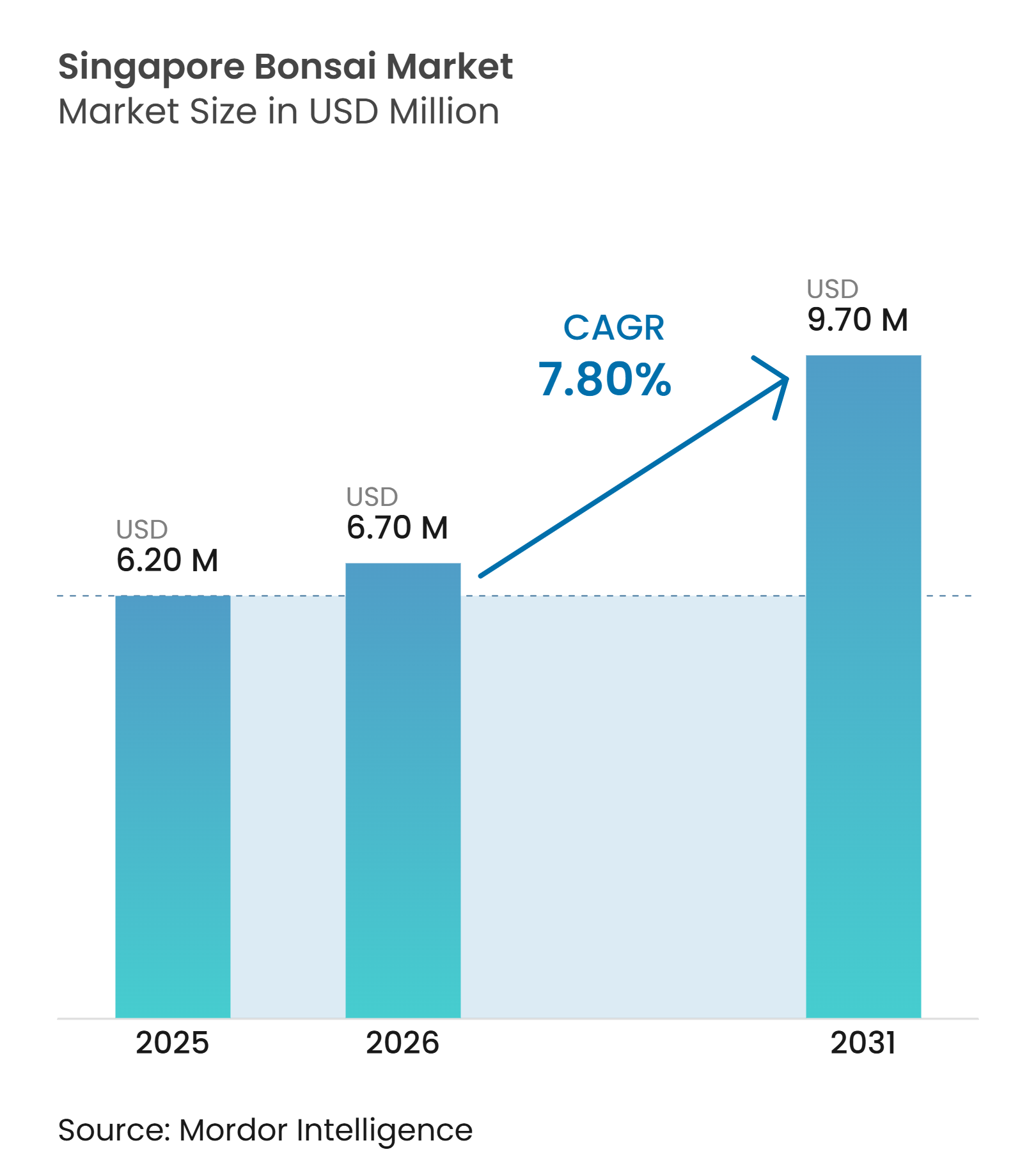
| Base Year Market Size (2025) | USD 6.20 Million |
| Market Size (2026) | USD 6.70 Million |
| Market Size (2031) | USD 9.70 Million |
| Growth Rate (2026 - 2031) | 7.80 % |
| Market Concentration | Medium |
Major Players *Disclaimer: Major Players sorted in no particular order Image © Mordor Intelligence. Reuse requires attribution under CC BY 4.0. | |
Singapore Bonsai Market Analysis by Mordor Intelligence
The Singapore bonsai market size was valued at USD 6.20 million in 2025 and is estimated to grow from USD 6.70 million in 2026 to reach USD 9.70 million by 2031, at a CAGR of 7.80% during the forecast period (2026-2031). Dense apartment living supports market demand, as compact plants are well-suited for balconies, windowsills, and indoor spaces. Public programs that expand community gardens and urban greenery are increasing opportunities for residents to participate in gardening activities. Digital retail is broadening access for new buyers, while specialty nurseries remain important for higher-value trees and care advice. Import dependence, climate-sensitive species, and the need for skilled maintenance will continue to influence operator costs and product choices in the Singapore bonsai market.
Key Report Takeaways
- By species, indoor species accounted for 41% of the Singapore bonsai market share in 2025 and are forecast to grow at a CAGR of 9.1% from 2026 to 2031.
- By distribution channel, offline channels accounted for 57% of the Singapore bonsai market share in 2025, while online channels are forecast to grow at a CAGR of 11.2% from 2026 to 2031.
- By application, residential applications accounted for 46% of the market share in 2025, while commercial applications are forecast to grow at a CAGR of 8.6% from 2026 to 2031.
Note: Market size and forecast figures in this report are generated using Mordor Intelligence’s proprietary estimation framework, updated with the latest available data and insights as of January 2026.
Market Trends and Insights
Drivers Impact Analysis of Singapore Bonsai Market*
| Driver | (~) % Impact on CAGR Forecast | Geographic Relevance | Impact Timeline |
|---|---|---|---|
| Compact Urban Living and Space-Efficient Greenery | +1.5% | Singapore-wide, strongest across HDB residential clusters and newer Build-to-Order estates | Short term (≤ 2 years) |
| Rising Premium Spending on Living Art and Gifting | +1.2% | City core, Orchard Road corridor, and central business district corporate buyers | Medium term (2-4 years) |
| Digital Discovery and Omnichannel Bonsai Retail | +1.1% | Singapore-wide, with online platforms serving residential areas through same-day delivery | Medium term (2-4 years) |
| HDB Gardening and Indoor Plant Styling | +0.9% | HDB estates, particularly mature towns with community garden clusters | Short term (≤ 2 years) |
| Structured Bonsai Workshops and After-Care Services | +0.8% | Singapore-wide, with early commercial use in central and north-central zones | Medium term (2-4 years) |
| Import-Led Premium Species Availability | +0.7% | Singapore-wide, supported by supply pipelines from Japan, China, Malaysia, and Indonesia | Long term (≥ 4 years) |
| Source: Mordor Intelligence | |||
Compact Urban Living and Space-Efficient Greenery
Singapore’s dense urban environment and prevalence of compact housing support demand for space-efficient greenery that can be maintained within limited residential areas. Many residents live in HDB flats, where balconies and other small outdoor areas provide limited space for gardening. Bonsai offers households a compact greenery option that can meet decorative and personal gardening needs without requiring a conventional garden. Its small form makes it suitable for windowsills, balconies, and interior spaces where larger plants may be impractical. HDB's Biophilic Towns approach further supports the incorporation of plants into everyday living spaces[1]. As urban households seek practical ways to introduce greenery into compact homes, the suitability of bonsai for small residential spaces is expected to support its adoption in Singapore.
Rising Premium Spending on Living Art and Gifting
Growing interest in premium living products supports spending on bonsai among buyers who value craftsmanship, presentation, and cultural significance. Bonsai can serve as both corporate and personal gifts, offering a living alternative to conventional gifts. Specialist retailers can increase the value of bonsai purchases by offering premium pots, tree styling, delivery, repotting, and care guidance, enabling customers to purchase more customized, higher-value products. Singapore's Green Plan 2030 emphasizes sustainability and urban greenery, providing a broader policy context for integrating nature into urban environments[2]. The presence of offices, hospitality establishments, and commercial spaces also creates opportunities to purchase bonsai as decorative plants and gifts. Overall, premiumization, gifting applications, and value-added retail services are expected to support spending on bonsai in Singapore, particularly for higher-quality trees and customized offerings.
Digital Discovery and Omnichannel Bonsai Retail
Singapore’s established digital retail environment provides bonsai retailers with additional channels to reach consumers beyond specialty nurseries and physical stores. Online retail accounted for 15.4% of Singapore’s total retail sales in April 2026, indicating the continued importance of digital purchasing channels in the country’s retail landscape[3]. Digital platforms allow retailers to showcase bonsai varieties through detailed photographs, product specifications, care instructions, and pricing, helping potential buyers evaluate trees before visiting a store or placing an order. Delivery services can further improve accessibility, particularly for customers who may not visit specialty nurseries regularly. Retailers can also use digital channels to promote repotting services, maintenance products, accessories, and care reminders after the initial purchase, creating opportunities for recurring customer engagement. The combination of online product discovery, convenient delivery, and post-purchase services can broaden access to bonsai and support purchases from both first-time and existing buyers. Overall, the growing integration of digital channels with physical retail is expected to strengthen market reach and support repeat sales in Singapore’s bonsai market.
HDB Gardening and Indoor Plant Styling
Singapore’s community gardening initiatives are increasing residents’ exposure to horticulture and plant care, fostering a broader environment for household participation in gardening. In March 2025, the National Parks Board (NParks) marked the 20th anniversary of its Community in Bloom program, which supports more than 2,000 community gardens across Singapore. The program provides residents with opportunities to participate in gardening activities and build horticultural knowledge through community networks. HDB’s Green Towns Programme has also expanded greenery and community gardening spaces within residential environments, including multi-story car park rooftops. By January 2025, the program had upgraded 24 such rooftops with greenery and community gardens. These initiatives provide residents with greater opportunities to participate in gardening activities and develop plant-maintenance skills. For apartment residents, bonsai can complement this interest by functioning as both a manageable gardening activity and a decorative indoor or balcony plant. As gardening awareness expands across residential communities, bonsai can benefit from greater exposure to plant care and indoor greenery. Overall, community gardening initiatives and the growing use of greenery in residential settings can support consumer familiarity with bonsai and contribute to its adoption as a home décor and gardening product.
Restraints Impact Analysis of Singapore Bonsai Market*
| Restraint | (~) % Impact on CAGR Forecast | Geographic Relevance | Impact Timeline |
|---|---|---|---|
| Import Permits, Phytosanitary Documentation, and CITES Exposure | -1.5% | Singapore-wide, applying to commercially imported bonsai consignments | Short term (≤ 2 years) |
| Labor-Intensive Pruning, Repotting, and After-Care | -0.9% | Singapore-wide, with the greatest friction in residential and boutique specialty retail | Medium term (2-4 years) |
| Limited Local Growing Space and Inventory Turnover Constraints | -0.7% | Singapore-wide, most acute for specialty nurseries with high inventory requirements | Long term (≥ 4 years) |
| Tropical Climate Stress on Temperate Species | -0.6% | Singapore-wide, especially for Japanese maple, juniper, and pine varieties | Medium term (2-4 years) |
| Source: Mordor Intelligence | |||
Import Permits, Phytosanitary Documentation, and CITES Exposure
Singapore’s regulatory requirements for imported ornamental plants increase the administrative and operational burden for bonsai suppliers. Imported plants and plant products require an import permit from the National Parks Board (NParks) and must comply with plant health requirements applicable to the commodity and its country of origin. Commercial imports may also require phytosanitary documentation, while species listed under the Convention on International Trade in Endangered Species of Wild Fauna and Flora (CITES) can be subject to additional controls. These requirements increase documentation workloads and create additional planning and lead-time considerations, particularly for smaller nurseries and retailers that depend on overseas suppliers. Requirements related to plant health, inspection, treatment, and documentation can also affect the timing and handling of living bonsai during importation. For imported soil-grown plants, additional conditions may apply depending on the plant material and country of origin. As a result, regulatory compliance increases the complexity and cost of sourcing imported bonsai, potentially limiting supplier flexibility and affecting the availability of certain species in the Singapore market.
Labor-Intensive Pruning, Repotting, and After-Care
Bonsai maintenance requires regular pruning, wiring, repotting, pest management, and species-specific monitoring, making after-care more labor-intensive than routine maintenance for many conventional houseplants. These activities require specialized horticultural skills and can limit the number of trees that a specialist can maintain effectively. Bonsai Inc. lists pruning and wiring services from SGD 35 (USD 26) and on-site maintenance visits from SGD 150 (USD 113), illustrating the cost associated with skilled bonsai care services. Recurring maintenance increases the total cost of ownership for consumers, particularly for premium specimens that require more specialized care. First-time buyers may also be hesitant to purchase higher-value bonsai if they are uncertain about the time, skills, and ongoing expenses required to maintain the trees. Service packages, maintenance visits, and workshops can help address these concerns, but providers must maintain qualified personnel and sufficient service capacity to meet demand. Overall, the specialized labor and recurring after-care requirements of bonsai increase maintenance costs and create a barrier to adoption, particularly among first-time and price-sensitive buyers.
*Our forecasts treat driver/restraint impacts as directional, not additive. The impact forecasts reflect baseline growth, mix effects, and variable interactions.
Singapore Bonsai Market Segment Analysis
By Species:
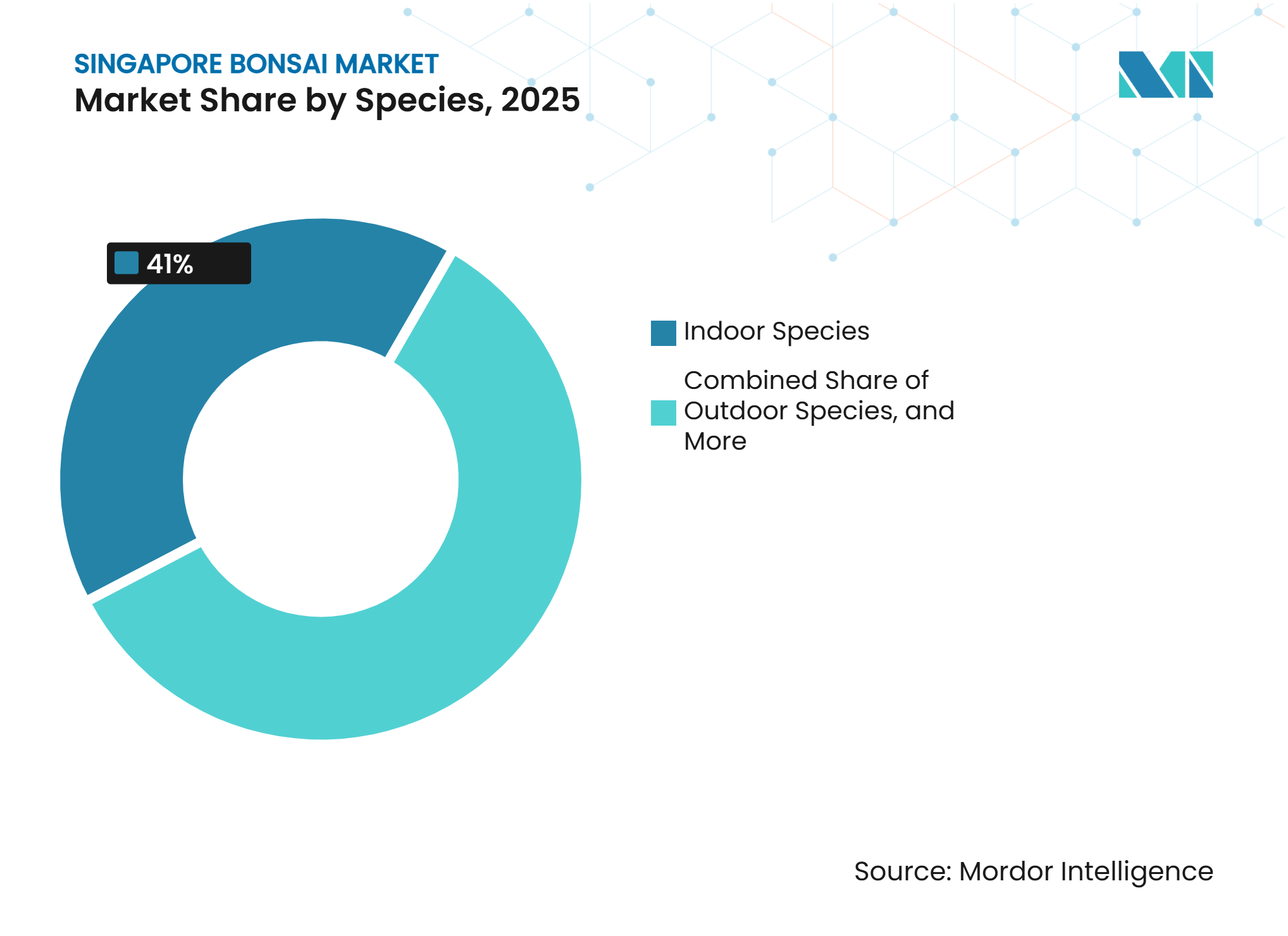
Indoor Species Lead and Register the Fastest GrowthIndoor species accounted for 41% of the Singapore bonsai market share in 2025 and are forecast to grow at a CAGR of 9.1% from 2026 to 2031. Their position reflects apartment-based living, where many households have limited private outdoor space and require plants that can be kept near windows or indoors. Ficus microcarpa, Fukien Tea, Water Jasmine, and Premna serratifolia are well-suited to warm, humid conditions and the filtered light typical of HDB homes. Bonsai Inc. offers tropical bonsai workshops, including a session listed at SGD 188 (USD 141) per participant, pairing plant selection with practical care education. This format can make the first purchase more accessible for residents who want an ornamental tree but lack experience with pruning, watering, or pest control.
Outdoor species, needle trees, and deciduous trees cater to different buyer preferences in the Singapore bonsai market. Japanese black pine, Shimpaku juniper, and Hinoki cypress mainly appeal to collectors, as their styling, care requirements, and desired visual form are more demanding. Japanese maple remains a premium option despite the challenges posed by the local climate, and Soilboy sells Japanese Maple Bonsai Iroha-momiji sourced from Japan and acclimatized for Singapore conditions. Imported Fukien Tea, Ficus, and Carmona trees provide a more accessible entry tier, allowing customers to develop their interest before selecting specialized imported specimens. The product range therefore supports both practical home ownership and the more demanding collector activity that underpins the premium end of the market.



By Distribution Channel:
Offline Channels Lead While Online Channels Register the Fastest GrowthOffline channels accounted for 57% of the Singapore bonsai market share in 2025, reflecting the continued role of direct plant inspection in bonsai purchases. Buyers can assess a living tree's trunk form, leaf health, pot quality, and overall condition before making a purchase decision. Chengtai Nursery operates a nine-acre facility at 51 Sungei Tengah Road and displays around 2,800 bonsai plants, providing a specialized setting for this process. The location also supports family visits, landscaping discussions, and corporate selection, making a nursery visit more than a straightforward retail transaction. In-person specialists can offer advice, physical selection, pot styling, and delivery for households and corporate buyers that require a higher level of confidence.
Online distribution is forecast to grow at an 11.2% CAGR from 2026 to 2031, the fastest rate among the distribution channels. Tumbleweed Plants lists bonsai from SGD 14 (USD 11) to SGD 915 (USD 688), demonstrating how online catalogs can support both entry-level purchases and more considered selections. Product photography, species notes, and care instructions give first-time buyers information that previously required a nursery visit. Singapore's short delivery distances also make rapid delivery more practical for living plants than in geographically larger markets. Online channels can promote workshops, care services, and accessories after purchase, while physical retail remains important for buyers of premium trees who prefer an in-person assessment.
By Application:
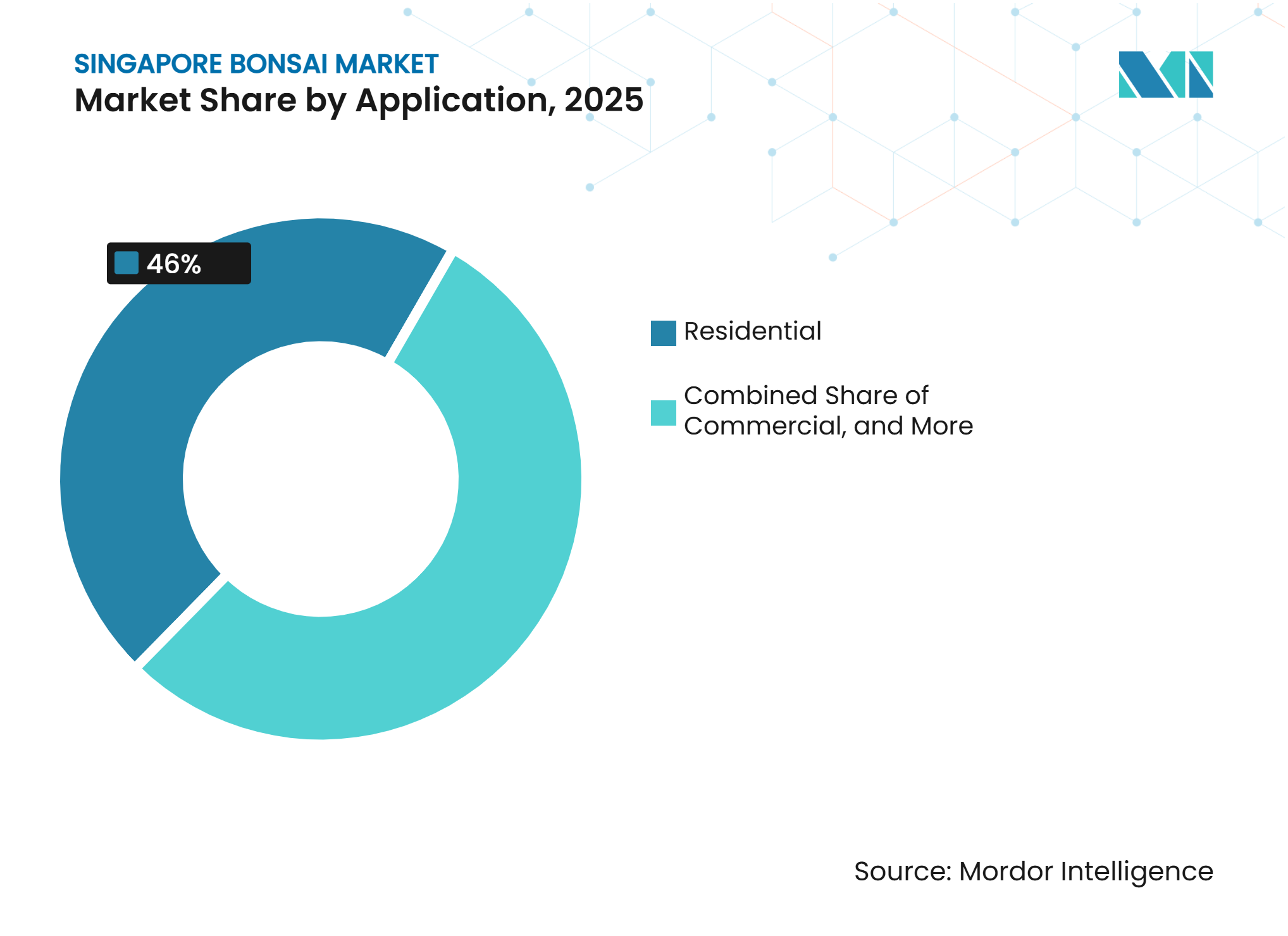
Residential Applications Lead While Commercial Applications Register the Fastest GrowthResidential accounted for 46% of the Singapore bonsai market share in 2025, making households the largest application group. Demand spans beginner-level tropical trees, decorative indoor specimens, and collector plants selected for visual interest or cultural significance. New households can use compact trees to personalize apartments without the space, expense, or upkeep associated with larger outdoor gardens. Residential owners also generate demand for repotting, maintenance, recovery support, and basic guidance after purchase, thereby establishing a recurring service relationship for specialists.
Commercial applications are forecast to grow at an 8.6% CAGR from 2026 to 2031. Offices, hotels, and corporate reception areas can use bonsai as a contained decorative feature that does not require extensive planted space. Bonsai Inc. lists corporate team-building and private workshops from SGD 168 (USD 126) per participant, extending commercial demand beyond plant placement alone. Crafted Identity provides maintenance and repotting services at City Sprouts Punggol, reflecting the specialist support required when businesses use living trees in shared spaces. The others category, including institutional gifts and art fairs, remains smaller but can generate high-value purchases connected to specific events and premium presentation.

Geography Analysis
Singapore is a high-income urban location where compact homes make small ornamental plants relevant to everyday living. Its cultural mix broadens demand beyond traditional collector groups and supports several styles, species, price points, and use cases. The Singapore Green Plan 2030 targets creating more than 130 hectares of new parks and enhancing 170 hectares of existing parks with lush vegetation by 2026. These public investments align plant ownership with Singapore's broader focus on urban greenery.
Limited space for local propagation keeps sourcing and import management central to the Singapore bonsai market. Retailers source from Japan, China, Taiwan, Malaysia, and Indonesia, although every shipment requires careful handling and compliance planning. NParks sets the import and plant-health requirements that influence how nurseries schedule commercial consignments. Premium imported plants carry higher logistics costs and a greater risk of loss when a specialist holds only limited inventory. Malaysia is relevant to regional availability due to its established production base and its appeal to Singapore collectors.
The 10th World Bonsai Convention in Kuala Lumpur in August 2026 highlighted efforts to expand Malaysia’s bonsai production and export capacity. Digital access also supports geographic coverage across the Singapore bonsai market. Singapore’s digital economy accounted for 18.6% of gross domestic product in 2025. Short delivery distances make direct shipment practical for many living plants, while workshops can reach people who would not visit a specialty nursery. Bonsai Inc. has a workshop listing on Klook, placing bonsai alongside mainstream leisure activities. These channels can build access for first-time buyers, while specialist nurseries remain the primary source of direct guidance.
Competitive Landscape
Market Concentration
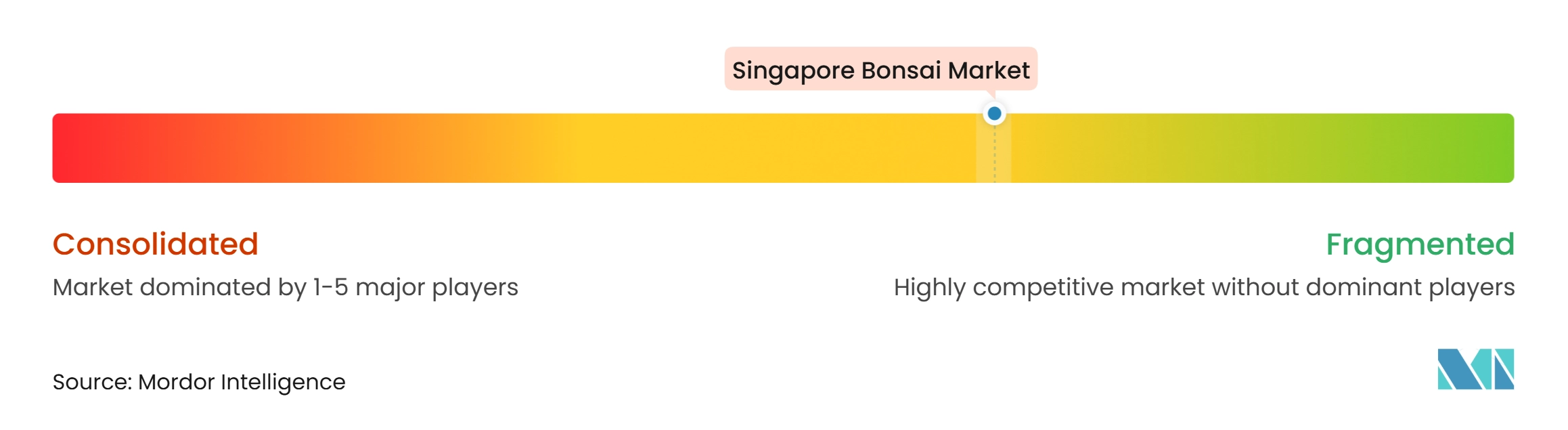
The Singapore bonsai market is fragmented, with competition centered on specialist expertise, product selection, physical presence, digital reach, and after-sales services. Chengtai Nursery and Bonsai Inc. are notable specialist businesses in the local market. Chengtai Nursery competes by offering a large physical site and an extensive display of living stock, allowing customers to inspect and select trees in person.
Bonsai Inc. uses workshops, curated selection, and maintenance services to build a service-led position. Its advanced workshop is priced at SGD 480 (USD 361) per participant and covers techniques such as deadwood styling. The company also offers corporate workshops, extending its role into group activities and office events. Tumbleweed Plants and Soilboy use digital catalogs, plant photography, and delivery to address the needs of first-time buyers. Soilboy's Japanese maple offering demonstrates how direct sourcing and local acclimatization can differentiate a digitally led retailer. These business models differentiate specialist retailers through product curation, physical selection, and after-sales care support.
Open opportunities include subscription-based maintenance, corporate leasing, and documented records of a tree's origin and care history. A maintenance subscription can support residential customers who value bonsai but cannot regularly prune and repot them. Leasing and replacement services can suit offices that require a consistently well-kept display without assigning care responsibilities to internal staff. Provenance records can strengthen buyer confidence in premium imported trees, as regulatory clearance and condition are important considerations. Workshops can also convert casual visitors into customers who understand basic care and the long-term requirements of ownership.
Singapore Bonsai Industry Leaders
-
Chengtai Nursery Pte. Ltd.
-
Bonsai Inc
-
Tumbleweed Plants Pte. Ltd.
-
The Green Corner (Prince’s Landscape Pte. Ltd.)
-
The Nursery Pte. Ltd.
- *Disclaimer: Major Players sorted in no particular order
Singapore Bonsai Market Companies Covered in this Report
- Bonsai Inc.
- Chengtai Nursery Pte. Ltd.
- JIA Bonsai Singapore
- Boh Bonsai
- The Green Corner (Prince’s Landscape Pte. Ltd.)
- Tumbleweed Plants Pte. Ltd.
- The Nursery Pte. Ltd.
- Soilboy Pte. Ltd.
- Bonsai Gallery (S) Pte. Ltd.
- Ban Nee Chen Nursery and Trading Pte. Ltd.
- GreenGift Enterprise
- Omuro Singapore
Recent Industry Developments in Singapore Bonsai Market
- August 2026: The 10th World Bonsai Convention was held at Pavilion Bukit Jalil, Kuala Lumpur, Malaysia, where Singapore was identified as a key overseas market for finished bonsai and raw materials from Malaysian producers. The event also highlighted plans to strengthen Malaysia’s bonsai production, training, tourism, and international trade.
- 2025: Soilboy introduced Japanese Maple Bonsai 'Iroha-momiji', flown directly from Japan and acclimated to Singapore's climate. The bonsai is priced at SGD 459 and is potted in a handmade bonsai planter made in South Korea.
- July 2024: Bonsai Inc. co-hosted a Bonsai Competition at the Aquatic and Garden Asia Show 2024 in Singapore, expanding its community-engagement footprint and positioning itself as an anchor operator within Singapore’s organized horticulture exhibition circuit.
Singapore Bonsai Market Report Scope
Our study defines the Singapore bonsai market as the annual value of miniature, living woody plants intentionally trained to mimic mature trees, along with the pots, soils, and pruning inputs sold with them. Values represent consumer-level spending through specialty nurseries and general retail channels in Singapore and are expressed in USD.
The Singapore Bonsai Market Report is Segmented by Species (Indoor Species, Outdoor Species, Needle Tree Species, and Deciduous Tree Species), by Distribution Channel (Online and Offline), and by Application (Residential, Commercial, and Others). The Market Forecasts are Provided in Terms of Value (USD).
Segmentation Overview
| Indoor Species |
| Outdoor Species |
| Needle Tree Species |
| Deciduous Tree Species |
| Online |
| Offline |
| Residential |
| Commercial |
| Others (Institutional Gifts and Art Fairs) |
| By Species | Indoor Species |
| Outdoor Species | |
| Needle Tree Species | |
| Deciduous Tree Species | |
| By Distribution Channel | Online |
| Offline | |
| By Application | Residential |
| Commercial | |
| Others (Institutional Gifts and Art Fairs) |
Key Questions Answered in the Report
What is the forecasted size of the Singapore bonsai market by 2031?
The Singapore bonsai market is forecast to reach USD 9.7 million by 2031, rising from USD 6.7 million in 2026 at a 7.8% CAGR.
Which bonsai species category leads in Singapore?
Indoor species accounted for 41% of the Singapore bonsai market share in 2025, supported by their suitability for apartments, windowsills, and other space-constrained settings.
Which distribution channel is growing fastest for bonsai in Singapore?
Online distribution is forecast to grow at an 11.2% CAGR from 2026 to 2031.
What is the most popular application of bonsai in Singapore?
Residential application accounted for 46% share in 2025, supported by apartment decoration, gifting, and demand for care services.