
Russia Pet Veterinary Diet Market Size and Share
Market Overview
| Study Period | 2021 - 2031 |
|---|---|
| Forecast Data Period | 2026 - 2031 |
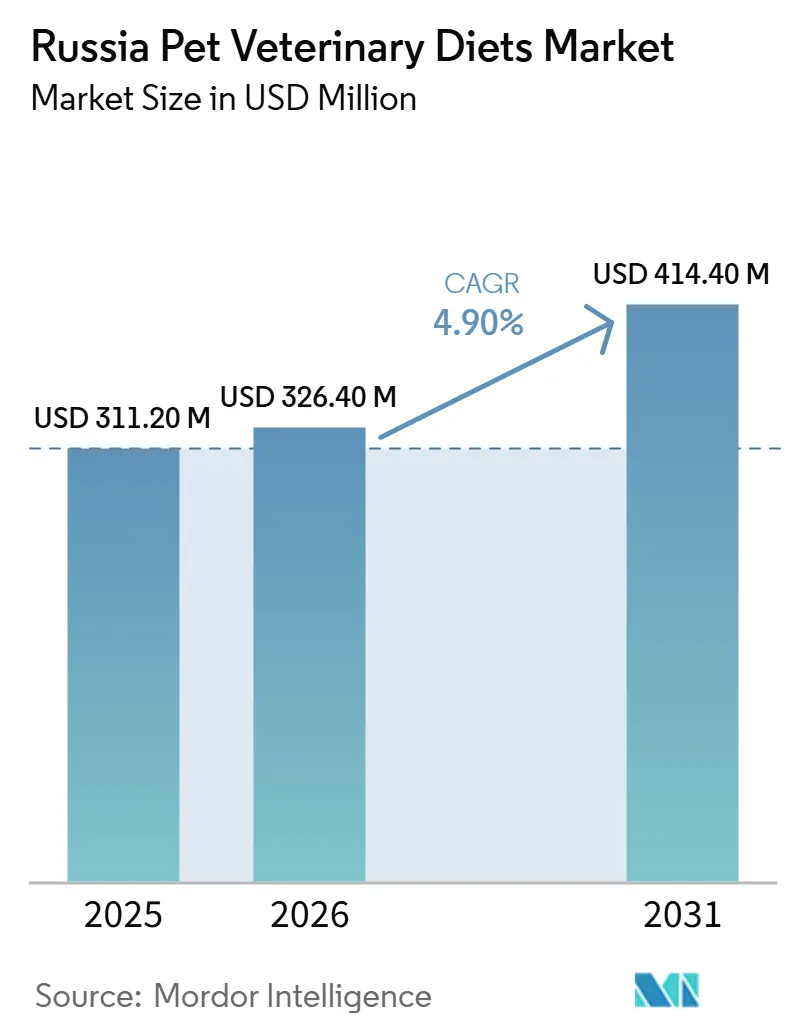
| Base Year Market Size (2025) | USD 311.20 Million |
| Market Size (2026) | USD 326.40 Million |
| Market Size (2031) | USD 414.40 Million |
| Growth Rate (2026 - 2031) | 4.90 % |
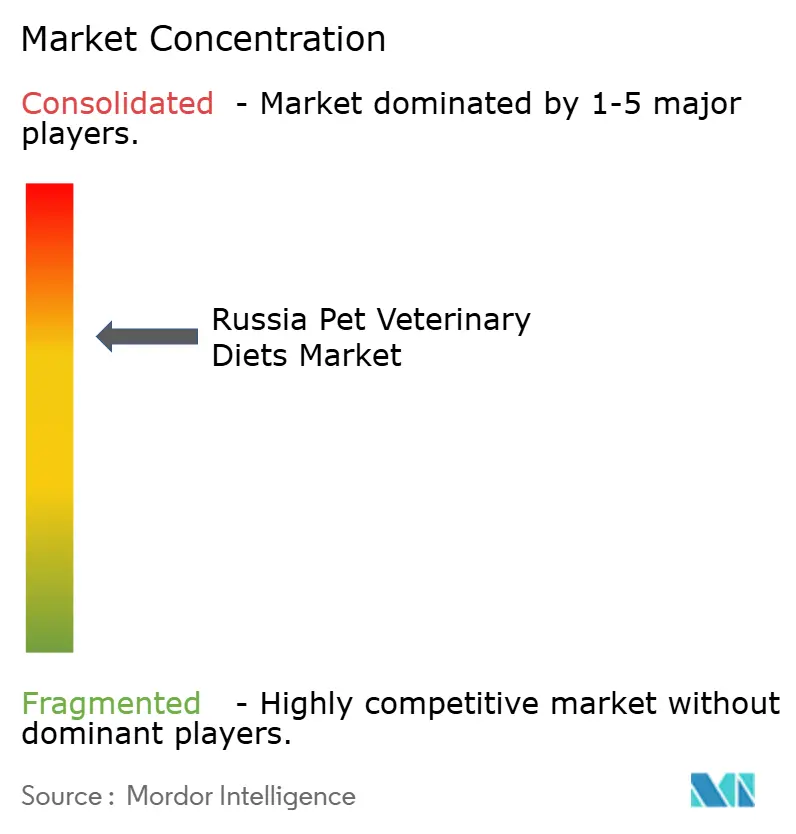
| Market Concentration | Medium |
Major Players *Disclaimer: Major Players sorted in no particular order Image © Mordor Intelligence. Reuse requires attribution under CC BY 4.0. | |
Russia Pet Veterinary Diet Market Analysis by Mordor Intelligence
The Russia pet veterinary diet market size is projected to expand from USD 311.2 million in 2025 to USD 326.4 million in 2026, and to USD 414.4 million by 2031, registering a compound annual growth rate (CAGR) of 4.9% between 2026 and 2031. The Russia pet veterinary diet market is being shaped by rising diagnoses of chronic conditions in companion animals, broader use of dietary management in veterinary care, and a steady shift toward prescribed nutrition in urban clinics. Import restrictions on several international brands have changed supply patterns across the Russia pet veterinary diet market, which has increased the relevance of domestic production, certified imports, and digital channels that can still reach underserved cities. Mandatory labeling rules for dry and wet pet food have also raised the compliance threshold, creating a more transparent operating environment and making it harder for unlabeled parallel imports to compete in prescription-sensitive categories. The Russia pet veterinary diet market is also developing a clearer split between premium clinically established products and newer domestic preventive offerings, which leaves room for companies that can combine clinical credibility, stable supply, and accessible pricing. From 2026 to 2031, the Russia pet veterinary diet market is likely to stay supported by stronger veterinary recommendation patterns, gradual supply recovery, and improving local formulation capability.
Key Report Takeaways
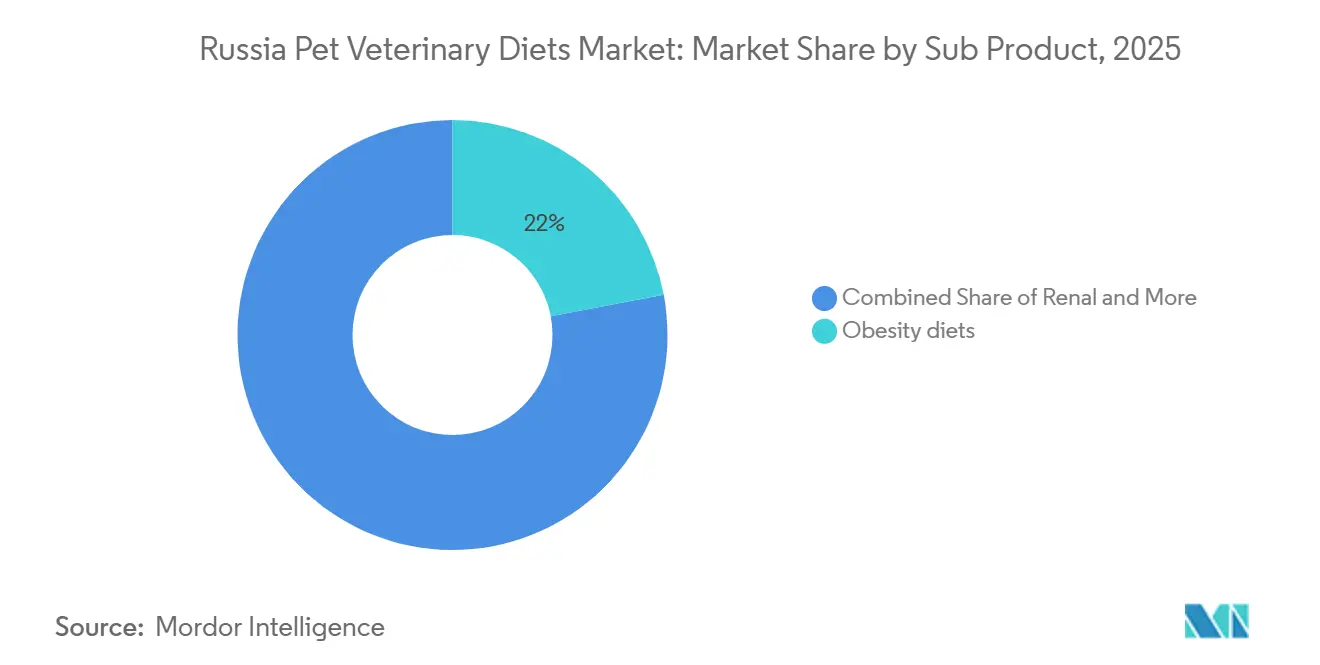
- By sub-product, the obesity diet held 22.0% of the Russia pet veterinary diet market share in 2025, while the diabetes diet is forecast to expand at a 6.3% CAGR through 2031.
- By pets, dogs accounted for 54.0% share of the Russia pet veterinary diet market size in 2025, while cats recorded the highest projected CAGR at 5.6% through 2031.
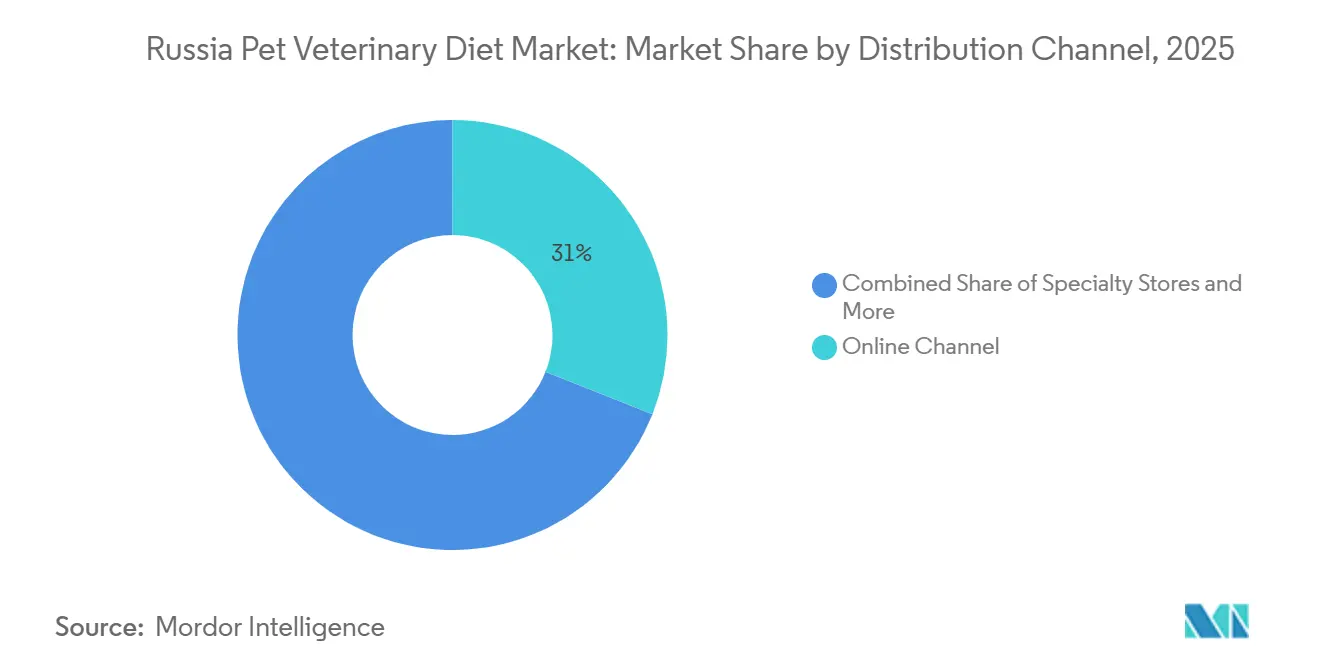
- By distribution channel, the online channel led with 31.0% of the Russia pet veterinary diet market size in 2025, and is anticipated to advance at an 8.2% CAGR through 2031.
Note: Market size and forecast figures in this report are generated using Mordor Intelligence’s proprietary estimation framework, updated with the latest available data and insights as of January 2026.
Russia Pet Veterinary Diet Market Trends and Insights
Drivers Impact Analysis*
| Driver | (~) % Impact on CAGR Forecast | Geographic Relevance | Impact Timeline |
|---|---|---|---|
| Faster diagnosis of chronic pet conditions in Russian cities | +1.2% | Russia, with strongest relevance in Moscow and Saint Petersburg | Short term (≤ 2 years) |
| Growing veterinarian recommendation of condition-specific diet | +1.0% | Russia, especially Tier-1 cities with deeper professional veterinary networks | Short term (≤ 2 years) |
| Expansion of imported and local therapeutic diet availability | +0.8% | Russia nationwide, with spillover relevance across the Eurasian Economic Union (EAEU) | Medium term (2-4 years) |
| Rising online access to veterinary diet outside tier-1 cities | +0.7% | Russia, especially secondary cities and underserved regions | Short term (≤ 2 years) |
| Premiumization of pet health spending among urban owners | +0.8% | Russia, led by Moscow and Saint Petersburg and followed by Yekaterinburg and Novosibirsk | Medium term (2-4 years) |
| Import substitution encouraging local veterinary diet production | +0.9% | Russia nationwide, with production concentration in the Central Federal District | Long term (≥ 4 years) |
| Source: Mordor Intelligence | |||
Faster Diagnosis of Chronic Pet Conditions in Russian Cities
The Russia pet veterinary diet market is benefiting from a higher rate of chronic condition diagnosis in urban companion animals, especially where indoor lifestyles, lower activity levels, and aging pet populations are now more visible in daily clinical practice. When obesity, renal impairment, urinary issues, or diabetes are identified earlier, veterinarians can shift from symptom management to structured diet-based care, giving prescription nutrition a more regular place in treatment plans. This matters because the Russia pet veterinary diet market depends less on impulse spending and more on clinically triggered purchasing, where each diagnosis creates a direct need for a suitable formula. The growing use of diagnostic tools in major cities is also changing owner behavior, as conditions that once went unrecognized are now discussed more openly and treated over longer periods. As a result, the Russia pet veterinary diet market is seeing stronger repeat demand because therapeutic diet are often used for sustained disease management rather than short, one-time interventions.
Growing Veterinarian Recommendation of Condition-Specific Diet
The Russia pet veterinary diet market is also moving forward, as more veterinarians are treating nutrition as part of therapy rather than a secondary recommendation after medicine alone. In larger Russian cities, professional training, stronger clinic networks, and broader exposure to evidence-based care are making practitioners more confident in recommending disease-specific diet for obesity, renal disease, diabetes, and urinary conditions. Dietary modification is recognized as a primary therapeutic strategy for canine and feline diabetes, renal disease, and obesity in the Merck Veterinary Manual[1]Source: Merck Veterinary Manual, “Diabetes Mellitus in Dogs and Cats,” Merck Veterinary Manual, merckvetmanual.com, which provides clinical support for these recommendations in everyday practice. This change strengthens the prescription channel inside the Russia pet veterinary diet market, because a recommendation delivered during diagnosis carries more authority and usually leads to higher compliance than general retail advice. As more clinics integrate nutrition into chronic care pathways, the Russia pet veterinary diet market should continue to convert veterinary trust into steady volume growth.
Expansion of Imported and Local Therapeutic Diet Availability
The Russia pet veterinary diet market was disrupted after 2022, when import controls, geopolitical disruption, and regulatory actions narrowed the range of available international therapeutic brands. Even so, supply conditions have been improving as some imports return under tighter controls and local producers expand premium and preventive manufacturing capabilities, helping reduce empty shelves and long replacement cycles. This matters because veterinarians are more likely to prescribe a therapeutic formula when they are confident that patients can continue to buy the same product without interruption for several months. Better product availability also reduces reliance on gray-market supply, which has been a quality assurance concern in a category where nutrient balance and ingredient consistency are central to treatment outcomes. As supply becomes more dependable, the Russia pet veterinary diet market gains a firmer base for both first prescriptions and long-term repeat purchases.
Import Substitution Encouraging Local Veterinary Diet Production
Import substitution is becoming a longer-term structural support for the Russia pet veterinary diet market because domestic manufacturers now have stronger policy reasons to invest in higher-value pet nutrition lines. New capacity in premium and super-premium pet food is important because therapeutic diet require more than simple volume expansion, they require controlled formulation, specialized ingredients, and a pathway that can satisfy clinical and regulatory expectations. The Russia pet veterinary diet market therefore benefits when domestic producers move beyond standard food categories and build technical capabilities to support preventive, functional, and eventually prescription-grade products. This transition will not be immediate, since hydrolyzed proteins, condition-specific micronutrient balances, and validation standards create a more demanding development path than mainstream pet food. Even so, every step toward deeper local capability reduces long-term supply risk in the Russia pet veterinary diet market and broadens the competitive field beyond a few imported premium brands.
Restraints Impact Analysis*
| Restraint | (~) % Impact on CAGR Forecast | Geographic Relevance | Impact Timeline |
|---|---|---|---|
| Premium pricing limits mass adoption in mass-market pet households | -0.70% | Russia nationwide, with the strongest effect outside Tier-1 cities and in lower-income households | Short term (≤ 2 years) |
| Limited veterinary diet awareness in smaller Russian cities | -0.50% | Russia, especially cities below 500,000 population and rural areas | Medium term (2-4 years) |
| Import certification and supply disruption risk for specialty formulas | -0.60% | Russia nationwide, with the highest effect on specialty clinic-distributed brands | Short term (≤ 2 years) |
| Restricted brand choice from regulatory and trade constraints | -0.50% | Russia nationwide, especially in the veterinary specialty channel | Medium term (2-4 years) |
| Source: Mordor Intelligence | |||
Premium pricing limits mass adoption in mass-market pet households
The Russia pet veterinary diet market still faces a meaningful affordability barrier because therapeutic diet are priced well above standard pet food and require continuous use to deliver results. This pricing gap matters most outside the largest metropolitan areas, where household spending on pet food is often guided by budget discipline rather than preventive health priorities. In practical terms, the Russia pet veterinary diet market loses part of its potential base when owners either delay the first therapeutic purchase or discontinue use before the treatment plan is complete. That pattern weakens both clinical outcomes and veterinarians' future willingness to recommend a diet when they expect low owner adherence due to cost. Unless suppliers improve pack-size options, build more accessible price tiers, or find support through clinic programs and pet insurance structures, the Russia pet veterinary diet market will continue to face slower penetration in lower-income segments.
Import certification and supply disruption risk for specialty formulas
The market also remains exposed to import certification and supply disruption risk because specialty formulas depend on strict compliance, approved facilities, and reliable consignment documentation. Prescription diet for renal disease, diabetes, gastrointestinal sensitivity, or urinary disorders cannot be replaced easily with general pet food, since these products depend on precise nutrient ratios and clinically relevant ingredients. That makes the Russia pet veterinary diet market more vulnerable than the broader pet food category when a supplier is suspended, a facility loses approval, or a shipment fails to clear regulatory controls. The issue is amplified by the fact that several recognized therapeutic brands rely on concentrated manufacturing footprints, which means a disruption in one facility can affect supply across multiple products and patient groups. Domestic capability may reduce this risk over time, but during the current transition period the Russia pet veterinary diet market still carries a clear dependency on secure specialist supply.
*Our forecasts treat driver/restraint impacts as directional, not additive. The impact forecasts reflect baseline growth, mix effects, and variable interactions.
Segment Analysis
By Sub Product: Metabolic disorders remain the core value anchor
Obesity diet were the largest sub-product segment and held 22.0% of the Russian pet veterinary diet market share in 2025, reflecting the rising clinical visibility of excess body weight in urban companion animals. The segment benefits from the fact that obesity is now treated as a manageable condition with long-duration dietary intervention, not only as a lifestyle issue or a cosmetic concern. In 2025, research published in Frontiers in Veterinary Science linked feline obesity to chronic systemic inflammation[2]Source: Frontiers in Veterinary Science, “Establishing Diagnostic Criteria for Feline Obesity Using a Highly Sensitive Serum Amyloid A Assay,” Frontiers in Veterinary Science, frontiersin.org, supporting the medical relevance of sustained nutritional management in cats. That clinical backdrop keeps obesity diet central to the Russia pet veterinary diet market, as they often serve as the first prescription for animals entering long-term metabolic care. Renal, urinary tract disease, digestive sensitivity, oral care, derma, and other veterinary diet also remain established niches, supported by recurring need and regular veterinarian oversight in chronic conditions.
The diabetes diet is the fastest-growing sub-product segment and is projected to expand at a 6.3% CAGR through 2026-2031, indicating that metabolic cases can shift from weight management to more specialized therapeutic feeding over time. This creates an important sequence inside the Russia pet veterinary diet industry, since animals first managed through obesity programs may later require a shift into diabetes-specific formulas as their condition progresses. That demand pattern smooths category growth because it links two related therapeutic needs instead of depending on isolated episodes of illness. International specialists that still have recognized clinical credibility keep an advantage in these sub-products, especially when veterinarians want consistent ingredient performance in complex cases. Domestic players are improving their reach in adjacent functional and preventive areas, but matching clinically established prescription lines across every sub-product still requires deeper formulation capability and regulatory stability.



By Pets: Dogs lead revenue while cats accelerate demand
Dogs were the largest pet segment and held 54.0% of the Russia pet veterinary diet market in 2025, which aligns with the country’s historically strong dog ownership base and the larger per-feeding volume required by many canine patients. The dog segment also has high therapeutic relevance because obesity, endocrine disorders, joint stress, and breed-linked metabolic risk factors can prolong the duration of prescribed diet use. The Merck Veterinary Manual identifies obesity, endocrine disorders, and breed predisposition as key risk factors for insulin resistance, cardiovascular disease, and joint pathology in dogs, supporting steady therapeutic feeding needs in canine care. In the Russia pet veterinary diet market, this gives dogs a strong value position because each case often combines larger portion requirements with longer treatment cycles. The segment, therefore, remains the primary revenue base for brands seeking stability, scale, and broad clinical applicability across multiple disease categories.
Cats were the fastest-growing pet segment and are projected to grow at a 5.6% CAGR through 2026-2031, supported by urban apartment living and ownership patterns that favor feline companionship in dense cities. The Russia pet veterinary diet market gains from this shift because cats are increasingly represented in households that already show stronger interest in preventive and premium health products. The Merck Veterinary Manual also notes breed predisposition to diabetes mellitus in some feline lines, which reinforces the clinical role of specialized diet in cat care. In commercial terms, the cat segment combines a growing installed base with stronger owner willingness to follow product-specific feeding routines, which can improve compliance once a prescription is issued. Other pets remain a smaller opportunity, but their relevance could improve gradually as specialty veterinary practice expands and owners seek more species-specific care.
By Distribution Channel: Online access is reshaping therapeutic reach
The online channel was the largest distribution segment, accounting for 31.0% of the Russia pet veterinary diet market in 2025, underscoring how therapeutic purchases align with digital buying behavior characterized by repeat orders and planned replenishment. The same channel is also the fastest-growing and is projected to register an 8.2% CAGR through 2026-2031, which reflects its ability to serve owners beyond dense specialty retail networks. This matters because the Russia pet veterinary diet market depends on continuity, and online platforms make it easier to compare formulas, locate niche stock-keeping units, and reorder after a veterinary consultation. The online route also shortens the distance between prescription and purchase when teleconsultation, follow-up advice, and product fulfillment work together in a single customer journey. As a result, digital access is becoming one of the clearest structural advantages in the Russia pet veterinary diet market, especially in secondary and tertiary cities.
Specialty stores remained the second-largest channel in 2025, and they continue to matter because trained staff and stronger product presentation can reduce hesitation in higher-involvement purchases. Supermarkets and hypermarkets serve a narrower role, mostly where product complexity is lower and the therapeutic need is less clinically specialized. Convenience stores remain marginal for this category because therapeutic diet selection rarely fits impulse buying behavior or limited shelf depth. Clinic-dispensed products, included in other distribution channels, still hold the strongest prescriptive credibility and can support premium pricing when veterinarians want controlled treatment adherence. Over time, the Russia pet veterinary diet market is likely to keep moving toward a more integrated model where clinical recommendation, digital replenishment, and selected specialist retail formats work together rather than competing directly.
Geography Analysis
The Russia pet veterinary diet market is a single-country market, but demand remains concentrated by city tier, clinic density, and product availability rather than being evenly distributed across the country. Moscow and Saint Petersburg continue to anchor the highest-value demand because they combine stronger household spending power, broader access to specialist care, and a more developed habit of treating pet nutrition as part of chronic disease management. These metropolitan areas also set the tone for the Russia pet veterinary diet market because veterinarians in larger urban systems are more likely to recommend disease-specific nutrition early in treatment. The Central Federal District and the Northwestern Federal District, therefore, remain the most established bases for premium and prescription-oriented consumption.
A second layer of opportunity is forming in Tier-1 cities beyond the two capitals, including Novosibirsk, Yekaterinburg, Kazan, and Nizhny Novgorod, where veterinary infrastructure and digital access are improving. In these cities, the Russia pet veterinary diet market benefits from rising awareness, broader e-commerce penetration, and a gradual increase in specialist pet retail formats that can support more complex therapeutic choices. The market still faces a clear urban-rural gap, because smaller cities and rural areas have weaker awareness, thinner product availability, and greater price sensitivity. Those constraints reduce first-time adoption and make long-term compliance harder, especially in conditions that require strict feeding routines for several months. Even so, these underdeveloped areas remain important for the Russia pet veterinary diet market because they represent the largest untapped volume pool if supply, education, and affordability improve together.
The Far Eastern Federal District and the Siberian Federal District remain underpenetrated because geographic distance, logistics burdens, and lower local purchasing power limit the depth of therapeutic assortment. New production capacity in central and southern locations should gradually improve dry format availability, which is easier to move and store than wet therapeutic products across long routes. Mandatory labeling for both dry and wet food also supports confidence in regulated supply, which matters more in regions where international brand familiarity is lower. Over the forecast period, regional access rather than headline demand is likely to be the main factor that determines how evenly the Russia pet veterinary diet market develops across the country.
Competitive Landscape
The Russia pet veterinary diet market is moderately concentrated, with Mars, Incorporated and Nestlé Purina PetCare (Nestlé S.A.) among the leading players. Mars, Incorporated operates in Russia through RUSKAN, Closed Joint Stock Company (CJSC), and benefits from Royal Canin's strong clinical positioning and brand recognition. Nestlé Purina PetCare (Nestlé S.A.) strengthens its presence through veterinary familiarity, established product portfolios, and consistent product quality. Their position matters because therapeutic diets are not chosen like ordinary pet food, and clinics often favor suppliers with dependable clinical history and stable product performance. The Russia pet veterinary diet market also includes a second line of international specialists, such as Farmina Pet Foods, Virbac SA, VAFO Group a.s., and Dechra Pharmaceuticals Limited, which keeps the upper end competitive even when brand access changes. Domestic manufacturers are gaining importance in the broader premium and functional space, but prescription-grade therapeutic capabilities remain less mature than those of established international players.
Recent strategic moves show how companies are positioning around this gap. VAFO Group a.s. expanded its Brit Veterinary Diet line in 2025 with new functional formulas for gastrointestinal, hypoallergenic, and renal needs[3]Source: VAFO Group, “VAFO Leads with Innovation at Zoomark 2025,” VAFO, vafo.com, which signals an effort to deepen its relevance in clinically adjacent categories. Farmina Pet Foods signed a national distribution agreement with MWI Animal Health in 2025 to expand the reach of its VetLife therapeutic line across veterinary practices in the United States, which shows how specialist brands are strengthening professional channels even outside Russia. Dechra Pharmaceuticals Limited also entered a different ownership phase after its acquisition by EQT AB in January 2024, which may support sharper portfolio focus on higher-margin veterinary categories. In Russia, domestic investment by Limkorm Petfood, Joint Stock Company (JSC), and Petexpert, Limited Liability Company (LLC), suggests that local players want to narrow the gap first in preventive and functional diet before they attempt wider prescription-grade coverage.
The main barriers in the Russia pet veterinary diet market are clinical and regulatory rather than purely commercial. State registration, specialty ingredient approval, and the need for validated formulations slow the pace at which new entrants can respond to supply gaps or imitate established therapeutic lines. Patent-linked know-how in areas such as hydrolyzed proteins and disease-specific nutrient balance also helps international specialists defend premium pricing in sensitive applications. At the same time, the lower competitive tier remains fragmented, which leaves room for consolidation if a domestic player can combine technical capability with better pricing and reliable national distribution.
Russia Pet Veterinary Diet Industry Leaders
Mars, Incorporated
Farmina Pet Foods
Virbac SA
Hills Pet Nutrition Inc. (Colgate-Palmolive Company)
Nestlé Purina PetCare (Nestlé S.A.)
- *Disclaimer: Major Players sorted in no particular order

Recent Industry Developments
- July 2025: Farmina Pet Foods signed a national distribution agreement with MWI Animal Health, a part of Cencora, formerly AmerisourceBergen, to distribute its VetLife therapeutic diet line across veterinary practices in the United States, representing a strategic geographic diversification beyond markets affected by import restrictions.
- May 2025: VAFO Group a.s. officially expanded its Brit Veterinary Diet product line at Zoomark 2025 in Bologna, Italy, launching functional recipes including Gastrointestinal High Fibre for Cats, Gastrointestinal Junior, Gastrointestinal Small Breeds, Hypoallergenic Hydrolyzed, and Renal formulations for dogs and cats.
- March 2025: Mandatory wet pet food labeling requirements came into full force in Russia under Russian government labeling decrees, completing the national rollout of digital traceability for all cat and dog food products including therapeutic formulations. This followed the October 2024 rollout for dry formats and requires all products to carry Honest Sign digital labels.


Russia Pet Veterinary Diet Market Report Scope
Pet veterinary diet (also known as therapeutic or prescription diet) are specialized, scientifically formulated pet food designed to treat, prevent, or manage specific medical conditions.
The Russia Pet Veterinary Diet Market Report is segmented by sub product (Diabetes, Renal, Urinary Tract Disease, Digestive Sensitivity, Oral Care Diets, Derma Diets, Obesity Diets, and Others), by pets (Cats, Dogs, and Other Pets), by distribution channel (Convenience Stores, Online Channel, Specialty Stores, Supermarkets/Hypermarkets, and others). The market forecasts are provided in terms of value in USD and volume in metric tons.
| Diabetes |
| Renal |
| Urinary Tract Disease |
| Digestive Sensitivity |
| Oral Care Diets |
| Derma Diets |
| Obesity Diets |
| Other Veterinary Diets |
| Cats |
| Dogs |
| Other Pets |
| Convenience Stores |
| Online Channel |
| Specialty Stores |
| Supermarkets/Hypermarkets |
| Other Channels |
| By Sub Product | Diabetes |
| Renal | |
| Urinary Tract Disease | |
| Digestive Sensitivity | |
| Oral Care Diets | |
| Derma Diets | |
| Obesity Diets | |
| Other Veterinary Diets | |
| By Pets | Cats |
| Dogs | |
| Other Pets | |
| By Distribution Channel | Convenience Stores |
| Online Channel | |
| Specialty Stores | |
| Supermarkets/Hypermarkets | |
| Other Channels |


Key Questions Answered in the Report
What is the projected value of the Russia pet veterinary diet space by 2031?
It is projected to reach USD 414.4 million by 2031.
Which sub product leads therapeutic demand in Russia?
Obesity diet were the largest sub-product segment in 2025 with a 22.0% share.
Which pet category is growing the fastest in Russia?
Cats are the fastest-growing pet segment, with projected growth of 5.6% over 2026-2031.
What is limiting wider adoption of prescribed pet diet in Russia?
The main limits are premium pricing, uneven awareness outside major cities, and the risk of import certification or supply disruption in specialty formulas.
Page last updated on:


 Your data is secure and never sold or shared.


