
Rice Noodles Market Size and Share
Market Overview
| Study Period | 2021 - 2031 |
|---|---|
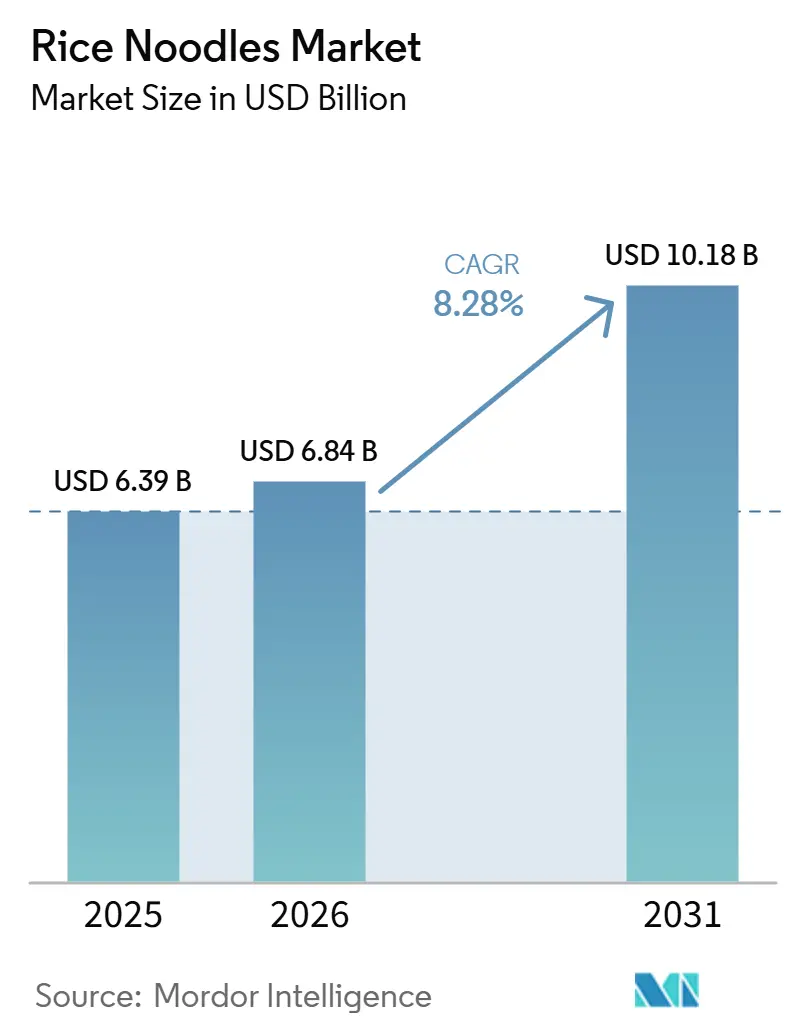
| Market Size (2026) | USD 6.84 Billion |
| Market Size (2031) | USD 10.18 Billion |
| Growth Rate (2026 - 2031) | 8.28 % |
| Fastest Growing Market | North America |
| Largest Market | Asia-Pacific |
| Market Concentration | Medium |
Major Players *Disclaimer: Major Players sorted in no particular order Image © Mordor Intelligence. Reuse requires attribution under CC BY 4.0. | |
Rice Noodles Market Analysis by Mordor Intelligence
The rice noodles market size is projected to expand from USD 6.39 billion in 2025 and USD 6.84 billion in 2026 to USD 10.18 billion by 2031, registering a CAGR of 8.28% between 2026 and 2031. The rice noodles market is supported by wider home cooking of Asian dishes, demand for gluten-free alternatives, and greater use of convenient meal formats. Restaurant visits continue to introduce consumers to products that they later prepare at home, which supports retail availability in markets outside Asia-Pacific. Diaspora communities remain an important demand base and also help move rice noodles from specialty stores into mainstream grocery assortments. Product makers are balancing high-volume production with premium offerings that emphasize simple ingredients, organic certification, and clearer product information. Input-price movements and competing wheat, quinoa, chickpea, and egg noodles remain material risks for the rice noodles market.
Key Report Takeaways
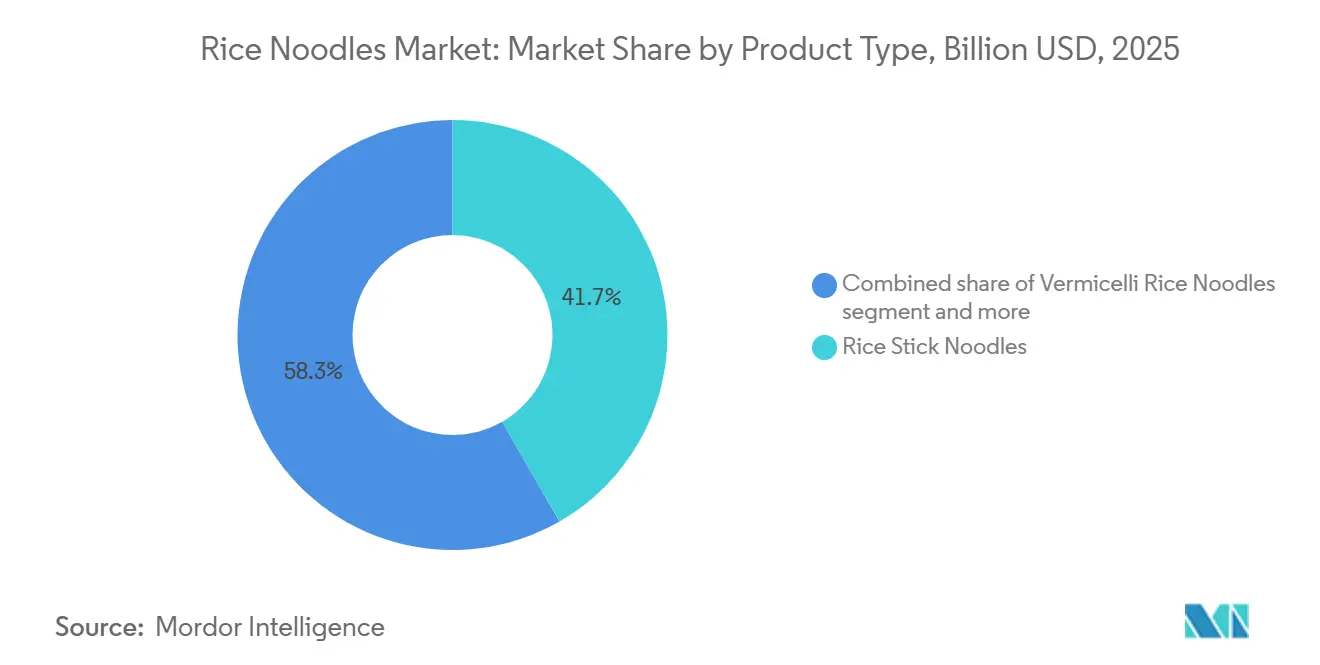
- By product type, rice stick noodles held 41.71% of the rice noodles market share in 2025, while vermicelli rice noodles are forecast to grow at a 9.46% CAGR through 2031.
- By category, conventional products held 88.62% of the rice noodles market share in 2025, while organic products are forecast to grow at a 10.11% CAGR through 2031.
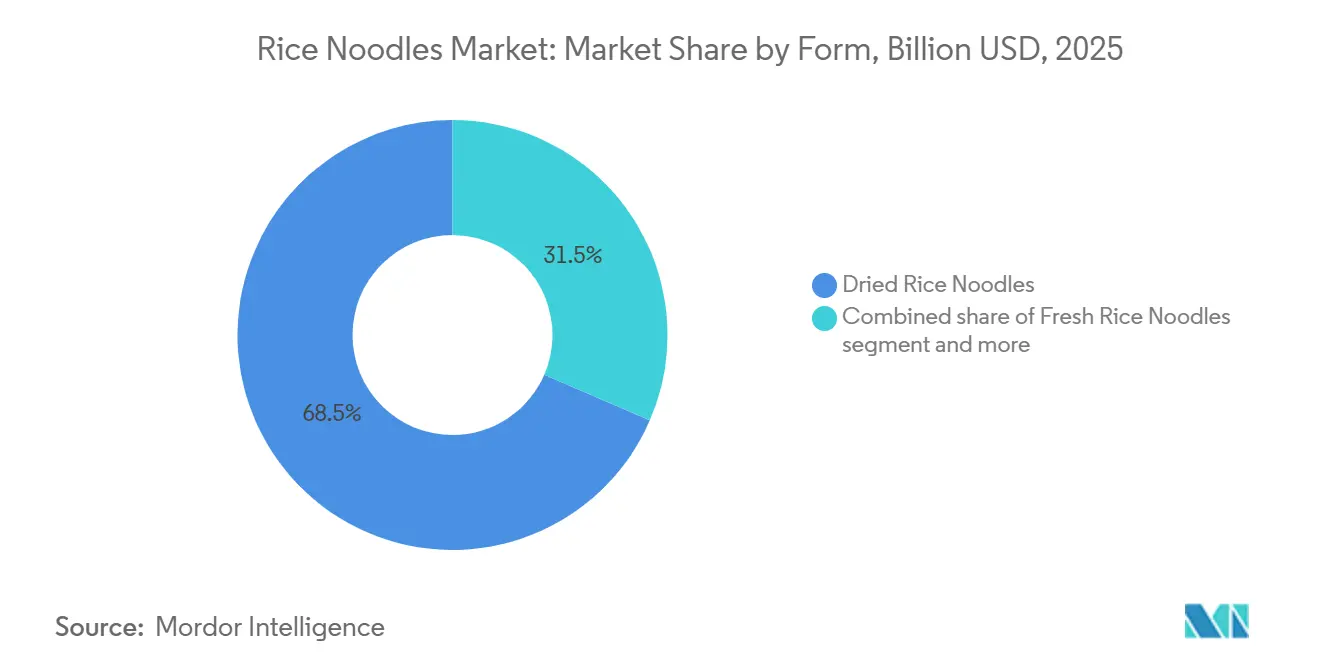
- By form, dried noodles held 68.51% of the rice noodles market size in 2025, while fresh noodles are forecast to grow at a 9.88% CAGR through 2031.
- By distribution channel, foodservice held 59.13% of the rice noodles market size in 2025, while retail is forecast to grow at a 9.51% CAGR through 2031.
- By geography, Asia-Pacific held 63.9% of the rice noodles market in 2025, while North America is forecast to grow at a 9.98% CAGR through 2031.
Note: Market size and forecast figures in this report are generated using Mordor Intelligence’s proprietary estimation framework, updated with the latest available data and insights as of January 2026.
Market Trends and Insights
Drivers Impact Analysis of Rice Noodles Market*
| Driver | (~) % Impact on CAGR Forecast | Geographic Relevance | Impact Timeline |
|---|---|---|---|
| Mainstream adoption of Asian cuisine | +1.8% | Global, concentrated in North America, Europe, and the Asia-Pacific urban markets | Long term (≥ 4 years) |
| Gluten-free and allergen-aware eating | +1.6% | North America and Europe; spill-over to affluent Asia-Pacific urban consumers | Medium term (2–4 years) |
| Instant and ready-to-cook meal adoption | +1.4% | Global; core in the Asia-Pacific, accelerating in North America, the Middle East and Africa | Short term (≤ 2 years) |
| Foodservice and QSR menu expansion | +1.2% | North America, the Asia-Pacific, Europe, and South America are growing | Medium term (2–4 years) |
| Diaspora-led authenticity and premiumization | +0.8% | North America, Europe, and Australia | Long term (≥ 4 years) |
| Digital discovery of long-tail ethnic SKUs | +0.6% | North America and Europe; early gains in Gulf Middle East and Africa, and South Korea online channels | Short term (≤ 2 years) |
| Source: Mordor Intelligence | |||
Mainstream adoption of Asian cuisine
The mainstream adoption of Asian cuisine is significantly driving the global rice noodles market by expanding consumer exposure to authentic dishes such as pho, pad thai, laksa, and stir-fried rice noodles through restaurants, retail, and home cooking. Governments and industry bodies have actively promoted Asian food culture internationally. For example, Japan's Ministry of Agriculture, Forestry and Fisheries (MAFF) reported approximately 181,000 Japanese restaurants operating overseas in 2025, reflecting the continued globalization of Asian cuisine and increasing demand for complementary ingredients such as rice noodles[1]Source: Ministry of Agriculture, Forestry and Fisheries (MAFF), “Japanese restaurants operating overseas”, www.maff.go.jp. MAFF also continues to support overseas promotion of Japanese food through certified supporter stores and culinary initiatives. Capitalizing on this trend, Blue Dragon entered the Indian market in March 2025, expanding its portfolio of Asian cooking products, including rice noodles, through a local distribution partnership. Additionally, in 2026, brands continued to broaden their Asian noodle offerings to meet rising international demand for authentic, convenient meal solutions, reinforcing rice noodles' growing presence in mainstream retail and foodservice channels.
Gluten-free and allergen-aware eating
Growing consumer awareness of celiac disease, gluten intolerance, and allergen-sensitive diets is accelerating demand for rice noodles, as they are naturally gluten-free and serve as a suitable alternative to wheat-based noodles. The U.S. Food and Drug Administration (FDA) strengthened this trend by initiating actions in 2026 to improve gluten ingredient disclosure and reduce gluten cross-contact in packaged foods, enhancing transparency for consumers seeking gluten-free products[2]Source: U.S. Food and Drug Administration (FDA), “FDA Takes Steps to Improve Gluten Ingredient Disclosure in Foods”, www.fda.gov. In parallel, scientific and industry research has intensified around improving the texture, nutrition, and sensory quality of gluten-free noodles, further expanding their mainstream appeal. For instance, a comprehensive review published in Comprehensive Reviews in Food Science and Food Safety (2025) highlighted advances in gluten-free noodle formulations using hydrocolloids and novel processing techniques to improve product quality. Reflecting this market opportunity, Lotus Foods expanded its gluten-free rice noodle portfolio in 2025 with new organic rice ramen varieties for retail channels, while Thai President Foods introduced additional gluten-free rice noodle offerings in 2026 targeting export markets and health-conscious consumers, reinforcing category growth across retail and foodservice.
Instant and ready-to-cook meal adoption
The increasing adoption of instant and ready-to-cook meals is driving the global rice noodles market as consumers seek convenient, quick-to-prepare meal solutions without compromising on taste or authenticity. Urbanization, busy lifestyles, and rising demand for single-serve meal formats have encouraged manufacturers to incorporate rice noodles into instant cups, meal kits, and heat-and-eat products. Supporting this trend, the U.S. Food and Drug Administration (FDA) recognizes instant noodle products and dry meal mixes as established food categories within packaged convenience foods, reflecting their widespread commercialization and regulatory classification. Product innovation continues to strengthen the market. In June 2025, Nissin Foods expanded beyond traditional instant noodles by launching KANZEN MEAL, a frozen single-serve meal range developed to deliver convenient, nutrient-dense comfort foods for health-conscious consumers. Additionally, in 2026, several Asian food manufacturers broadened their ready-to-cook rice noodle meal kits and instant rice noodle cup offerings across international retail and e-commerce channels, catering to growing demand for fast, restaurant-style meals at home and reinforcing the expansion of the global rice noodles market.
Foodservice and QSR menu expansion
The expansion of foodservice outlets and quick-service restaurants (QSRs) is driving the global rice noodles market by increasing the availability of Asian noodle-based meals across casual dining, fast-casual, and takeaway formats. Rising consumer demand for authentic yet convenient Asian cuisine has encouraged restaurant chains to diversify their menus with rice noodle dishes such as pho, pad thai, stir-fried noodles, and noodle bowls. Supporting this trend, the National Restaurant Association (U.S.) identifies globally inspired flavors and Asian noodles among the key menu trends influencing restaurant innovation and consumer preferences. Reflecting this momentum, Yoshinoya Holdings announced a major 2025 strategy to expand its ramen business into a core growth pillar through acquisitions and restaurant expansion, highlighting the increasing commercial importance of Asian noodle offerings in foodservice. Additionally, in 2026, Noodles & Company continued strengthening its Asian noodle portfolio by testing new ramen platforms and expanding Asian-inspired menu offerings following its comprehensive menu transformation, further boosting demand for rice noodles across the global foodservice sector.
Restraints Impact Analysis of Rice Noodles Market*
| Restraint | (~ % Impact on CAGR Forecast | Geographic Relevance | Impact Timeline |
|---|---|---|---|
| Rice crop and export-policy volatility | -0.8% | The Asia-Pacific core; spill-over to the Middle East and Africa, and South American importers | Medium term (2–4 years) |
| Substitution by wheat, egg, quinoa, and chickpea noodles | -0.7% | North America and Europe; spill-over to South Korea and Japan urban markets | Long term (≥ 4 years) |
| Texture and cooking-consistency failures in export markets | -0.5% | North America, Europe, and Australia | Medium term (2–4 years) |
| Cold-chain and short shelf-life constraints for fresh noodles | -0.4% | North America, Europe, and the Asia-Pacific urban markets | Short term (≤ 2 years) |
| Source: Mordor Intelligence | |||
Rice crop and export-policy volatility
Volatility in rice production and export policies restrains the global rice noodles market by creating uncertainty in raw material availability, procurement costs, and international supply chains. Since rice is the primary input for rice noodles, fluctuations caused by adverse weather, changing harvests, or export restrictions can increase manufacturing costs and disrupt production planning for noodle manufacturers. The OECD's 2025 Inventory of Export Restrictions on Staple Crops highlights that rice remained the most targeted staple crop for export restrictions between 2024 and mid-2025, with export quotas, prohibitions, and licensing measures affecting global trade flows and price stability[3]Source: Organization for Economic Co-operation and Development (OECD), “OECD Inventory of Export Restrictions on Staple Crops Policy Trends up to 2025”, www.oecd.org. Reflecting these challenges, Thai President Foods noted in its 2025 Annual Report that volatility in agricultural raw material prices, including rice, remained a key business risk requiring procurement and inventory management strategies. Additionally, in 2026, research by Japan's Policy Research Institute (MAFF) demonstrated that export policy interventions in major rice-exporting countries amplify international rice price volatility and supply uncertainty, creating cost pressures for downstream industries such as rice noodle manufacturing.
Substitution by wheat, egg, quinoa, and chickpea noodles
The growing availability of wheat-, egg-, quinoa-, and chickpea-based noodles is restraining the global rice noodles market by intensifying competition within the broader noodle category and giving consumers a wider range of choices based on nutrition, taste, texture, and protein content. While rice noodles are favored for their gluten-free nature, alternative noodles often offer higher protein, dietary fiber, or a texture closer to conventional wheat noodles, appealing to health-conscious and mainstream consumers alike. Research published in the International Journal of Food Science and Technology in 2025 demonstrated that quinoa-enriched noodles significantly improve antioxidant properties and nutritional value compared to conventional formulations, reinforcing the appeal of pseudocereal-based alternatives. Reflecting this competitive landscape, Banza launched its Brown Rice Pasta blended with chickpeas in 2025, expanding beyond its traditional chickpea portfolio to target gluten-free consumers seeking improved texture and nutrition. Furthermore, 2026 scientific reviews highlighted rapid innovation in gluten-free noodles using chickpea, quinoa, buckwheat, and other alternative ingredients, further diversifying consumer options and limiting the growth potential of traditional rice noodles.
*Our forecasts treat driver/restraint impacts as directional, not additive. The impact forecasts reflect baseline growth, mix effects, and variable interactions.
Rice Noodles Market Segment Analysis
By Product Type:
Rice Stick Dominates Today as Vermicelli Builds Export MomentumRice stick noodles held a 41.71% value share in 2025, supported by their widespread use in globally popular dishes such as pho, pad thai, and stir-fried noodles, making them the preferred format across restaurants and retail. According to the Food and Agriculture Organization (FAO), global rice production is forecast to remain robust, ensuring a reliable raw material supply for rice-based processed foods and supporting large-scale manufacturing. The segment also benefits from strong export capabilities in Thailand and Vietnam, where manufacturers continue expanding value-added rice noodle offerings for international markets. At THAIFEX–Anuga Asia 2026, Vietnamese producer Tanisa showcased an expanded range of rice sticks and pho noodles, highlighting continued investment in export-oriented production and reinforcing the segment's leadership in the global market.
Vermicelli rice noodles are projected to grow at a 9.46% CAGR during 2026–2031, driven by rising demand for gluten-free, quick-cooking, and versatile noodle formats across retail and foodservice. Their application in salads, soups, spring rolls, and instant meals has broadened consumer adoption beyond traditional Asian cuisine. Supporting this trend, the International Rice Research Institute (IRRI) continues to promote innovations that strengthen the global rice value chain, improving the availability of quality rice for value-added food products. Reflecting strong product innovation, Duy Anh Foods introduced vegetable-, cereal-, dragon fruit-, and watermelon-based rice vermicelli at THAIFEX–Anuga Asia 2026, demonstrating manufacturers' focus on premiumization and differentiated export offerings to capture growing international demand.



By Category:
Organic Commands the Fastest Growth, Reshaping Retail ExpectationsConventional rice noodles accounted for 88.62% of the global market in 2025, driven by their affordability and widespread consumption across the Asia-Pacific region, where they remain the preferred choice for households, restaurants, and institutional foodservice. According to the Food and Agriculture Organization (FAO), Asia continues to account for nearly 90% of global rice production and consumption, ensuring abundant raw material availability for conventional rice noodle manufacturing. This well-established supply chain, combined with cost-efficient production and extensive retail distribution, reinforces the segment's dominant position in both domestic and export markets.
The organic rice noodle segment is projected to expand at a 10.11% CAGR during 2026–2031, outpacing the overall market as consumers increasingly seek clean-label, pesticide-conscious, and sustainably produced foods. The IFOAM – Organics International and the Research Institute of Organic Agriculture (FiBL) reported continued growth in global organic food sales and organically managed farmland, reflecting strengthening consumer demand for certified organic products. Capitalizing on this trend, King Soba expanded its organic rice noodle portfolio in 2026 with certified organic, gluten-free noodle variants for European and North American retail markets, reinforcing premiumization and accelerating the adoption of organic rice noodles globally.
By Form:
Dried Noodles Anchor Global Logistics While Fresh Formats Scale in Dense Urban MarketsDried rice noodles accounted for 68.51% of the global market in 2025, owing to their long shelf life, ambient storage stability, and cost-efficient transportation, making them the preferred format for international trade and large-scale retail distribution. According to the International Trade Center (ITC), processed cereal products, including dried noodle products, continue to benefit from expanding cross-border food trade due to their lower logistics costs and reduced perishability. This commercial advantage enables major exporters such as Vietnam and Thailand to efficiently supply global retail and foodservice markets, reinforcing the segment's market leadership.
Fresh rice noodles are projected to grow at a 9.88% CAGR during 2026–2031, driven by rising consumer preference for minimally processed foods offering authentic texture and restaurant-quality eating experiences. A 2026 review published in the Journal of Food Measurement and Characterization identified modified atmosphere packaging (MAP), natural preservatives, and acid-based preservation technologies as key innovations extending the commercial shelf life of fresh rice noodles while maintaining quality. Complementing these technological advances, Sun Hing Foods expanded its portfolio of refrigerated fresh rice noodles across North American retail and foodservice channels in 2026, reflecting increasing investments in premium fresh noodle offerings to meet growing consumer demand.
By Distribution Channel:
Foodservice Leads on Value, Retail Resets the VelocityFoodservice accounted for 59.13% of the global rice noodles market in 2025, supported by the widespread consumption of rice noodle dishes across restaurants, hotels, street food outlets, and institutional catering, particularly in the Asia-Pacific region. According to the World Tourism Organization (UN Tourism), international tourism continued its recovery in 2025, driving higher restaurant traffic and demand for authentic local cuisines. This resurgence has strengthened procurement by foodservice operators, while established restaurant chains and independent eateries continue to rely on rice noodles as a staple ingredient across diverse Asian menu offerings.
Retail is projected to expand at a 9.51% CAGR during 2026–2031, driven by growing at-home consumption, increasing availability of ethnic foods, and rising demand for gluten-free meal solutions. According to the National Retail Federation (NRF), consumers are increasingly purchasing packaged food products through omnichannel retail, encouraging retailers to expand shelf space for international cuisine. Reflecting this momentum, Thai Wah Public Company Limited expanded the international distribution of its ROSE rice noodle portfolio across modern retail channels in 2026, introducing consumer-friendly packaging and premium product variants to strengthen its presence in supermarkets and specialty grocery stores worldwide.
Geography Analysis
APAC and North America Rice Noodles Market
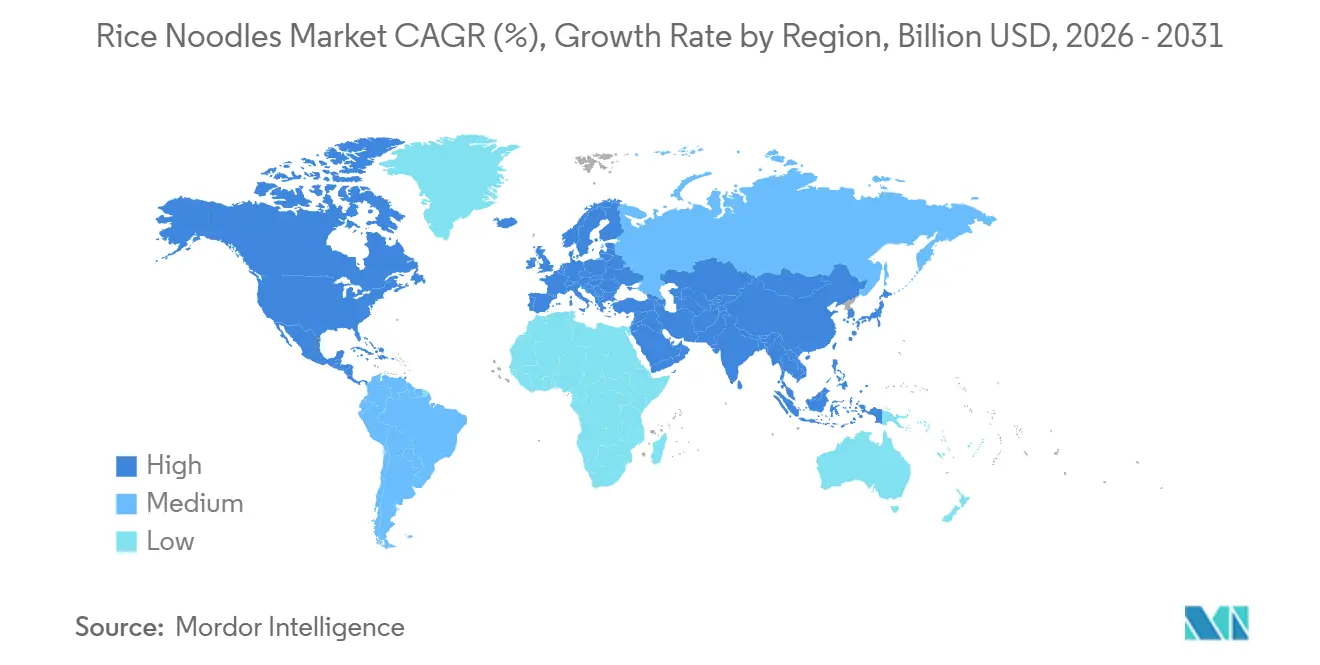
Asia-Pacific is expected to hold a 63.90% market share in 2025, reflecting structural dominance driven by the region's dual role as the world's largest consumer and production hub. Vietnam, Thailand, and Indonesia together account for approximately 71% of Southeast Asian rice noodle consumption, while Vietnam's fresh phở-style noodle formats represent the largest fresh-segment volume in the region. Instant rice noodle products are recording strong retail channel growth in markets such as the Philippines and Malaysia, where younger and increasingly urban demographics drive demand for convenient and affordable meal formats. China shows demand bifurcation, with mass-tier volume remaining stable and brand penetration rising in lower-tier cities as health consciousness shifts consumer preference toward packaged, additive-free products. Vietnamese exporters targeting Japan, South Korea, and the United States have set 20% export revenue growth targets, citing stable raw material pricing following India's export policy normalization as the primary tailwind.
United States and Canada Rice Noodles Market
North America is the fastest-growing geography, with a projected CAGR of 9.98% during 2026-2031. Three concurrent structural forces support this growth: the rising share of Asian-heritage households that consume rice noodles as a dietary staple, the clinically gluten-free population that uses rice noodles as a wheat substitute, and a growing mainstream consumer base that has encountered rice noodle formats through restaurant visits and social media. The US FDA's allergen labeling framework under FALCPA and the FASTER Act supports certified gluten-free rice noodles as trusted staples in health retail settings. Mars' Ben's Original is expected to enter the Canadian instant noodle segment in 2025 with its Street Food Noodles line, signaling that mainstream multinationals view the North American instant noodle space as ready for rice-adjacent innovation.
EMEA and South America Rice Noodles Market
Europe represents a significant and growing market, with the United Kingdom, Germany, and France serving as the primary revenue contributors. The continent's regulatory focus on allergen transparency under EU FIR 1169/2011 creates a favorable compliance environment for gluten-free noodles. In addition, the health-driven shift toward clean-label and minimally processed foods is attracting mainstream grocery shoppers to rice noodle alternatives in the pasta and noodle aisle. South America, while smaller in current market share, is generating early demand signals from Brazil's large East Asian diaspora population and from consumers in Peru, Chile, and Colombia, who are becoming more familiar with Asian cuisine through restaurant expansion. The Middle East and Africa region receives support from Southeast Asian and South Asian expatriate communities in the UAE, Saudi Arabia, and Nigeria, while online grocery penetration in Gulf markets is opening new discovery pathways for premium rice noodle formats.

Competitive Landscape
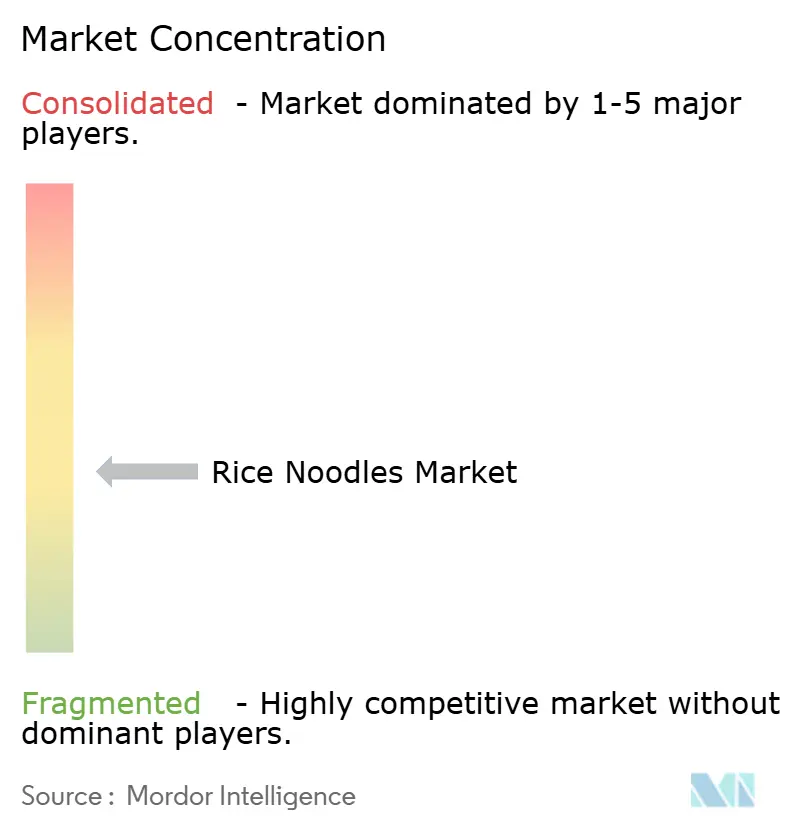
The rice noodles market is moderately fragmented. Thai President Foods, Nissin Foods, Toyo Suisan Kaisha, and Acecook Vietnam compete through production scale, distributor networks, and broad product portfolios. These companies leverage established manufacturing bases, strong brand visibility, and access to modern retail and traditional trade channels to maintain their positions. Their strategies often focus on cost control, reliable supply, and formats that meet everyday demand, including instant, dried, and ready-to-cook rice noodle products. This approach remains especially important across the high-volume Asia-Pacific base, where rice noodles are a staple food category and where affordability, availability, and product consistency strongly influence purchasing decisions.
Acecook Vietnam announced plans to invest VND 2.2 trillion, equivalent to USD 88 million, in its Thang Long II Industrial Park facility in 2025. The company expects the factory to reach an annual capacity of 750 million packets when it begins operations in January 2027. This move indicates that leading suppliers are adding capacity to protect scale advantages and strengthen their ability to serve both domestic and export demand. It also reinforces the continued importance of manufacturing efficiency as rice costs and export conditions evolve. Larger production facilities can help companies improve throughput, stabilize unit costs, support wider distribution, and respond more effectively to demand fluctuations across key markets.
Premium competition is emerging around organic certification, single-ingredient products, and transparent sourcing. Lotus Foods is expected to launch Organic Wide White Rice Ramen in March 2025, positioning the product as organic and naturally gluten-free to address premium retail demand. Nissin Foods Singapore is expected to launch NISSIN IRVINS Bowl Noodle in Carbonara Salted Egg Flavor in July 2026 through a co-branded collaboration, adding a flat noodle format and fish-ham garnish. Sa Giang Food’s 2026 recognition for Moringa Salad Bún also highlights interest in health-focused rice vermicelli products. These initiatives indicate that the rice noodles market includes both volume-led and premium-led competitive strategies. While large manufacturers continue to compete on price, scale, and distribution reach, premium and specialty players are differentiating through cleaner labels, functional ingredients, flavor innovation, and sourcing claims that appeal to health-conscious and higher-income consumers.
Rice Noodles Industry Leaders
Thai President Foods Public Company Limited
TOYO SUISAN KAISHA, LTD.
NISSIN FOODS CO., LTD.
NONGSHIM CO., LTD.
McCormick & Company, Inc.
- *Disclaimer: Major Players sorted in no particular order
Rice Noodles Market Companies Covered in this Report
- Thai President Foods Public Company Limited
- NONGSHIM CO., LTD.
- NISSIN FOODS CO., LTD.
- TOYO SUISAN KAISHA, LTD.
- Acecook Vietnam Joint Stock Company
- CJ CheilJedang Corporation
- McCormick & Company, Inc.
- Lotus Foods Inc.
- Nasoya Foods USA, LLC
- Kikkoman Corporation
- JFC International Inc.
- Natural Earth Products Inc.
- Nona Lim LLC
- Roland Foods LLC
- Erawan Food Public Company Limited
- Charoen Pokphand Foods Public Company Limited
- Bich Chi Food Company
- Leong Guan Food Manufacturer Pte Ltd.
- Thaitan Foods International Co. Ltd.
- Vietnam Food Technology Joint Stock Company

Recent Industry Developments in Rice Noodles Market
- July 2026: Nissin Foods Singapore launched the NISSIN IRVINS Bowl Rice Noodle in Carbonara Salted Egg Flavor in a co-branded collaboration, featuring a new flat noodle format and a first-ever fish-ham garnish. The launch illustrated Nissin's strategy of leveraging local brand partnerships to expand premium noodle SKUs in Asian markets with strong fusion-cuisine cultures and demonstrated the company's intent to premiumize its flat noodle sub-range.
- July 2026: Daesang (Ofood brand) expanded its Korean HMR noodle portfolio to Canada and the United States through major retail channels, launching Real Kimchi Ramyun and Real Fiery Kimchi Ramyun made with authentic, fresh Jongga Kimchi. The expansion intensified competition for Asian noodle shelf space in North American grocery stores and reinforced the role of K-food momentum in pulling consumers toward Asian noodle formats beyond their established preferences.
- March 2026: Toyo Suisan Kaisha launched Maruchan Vertical Big Okinawa Soba nationally across Japan, recreating a regional specialty in a mainstream vertical-cup convenience format. The product converted a geographically restricted culinary tradition into a scalable mass-market innovation, reflecting the company's consistent strategy of translating regional flavors into accessible national SKUs.


Global Rice Noodles Market Report Scope
Rice noodles are a versatile Asian staple made simply from ground rice flour and water. The global rice noodles market is segmented by product type, category, form, distribution channel, and geography. By product type, the market is segmented into vermicelli rice noodles, rice stick noodles, flat rice noodles, and other rice noodles. By category, the market is segmented into organic and conventional. By form, the market is segmented into fresh, dried, frozen, and other forms. By distribution channel, the market is segmented into foodservice and retail. The retail market is further sub-segmented into supermarkets/hypermarkets, convenience stores, online retail stores, and other distribution channels. By geography, the market is segmented into North America, Europe, Asia-Pacific, South America, and Middle East and Africa). The market forecasts are provided in terms of value (USD).
| Vermicelli Rice Noodles |
| Rice Stick Noodles |
| Flat Rice Noodles |
| Other Rice Noodles |
| Organic |
| Conventional |
| Fresh |
| Dried |
| Frozen |
| Other Forms |
| Foodservice | |
| Retail | Supermarkets/Hypermarkets |
| Convenience Stores | |
| Online Retail Stores | |
| Other Distribution Channels |
| North America | United States |
| Canada | |
| Mexico | |
| Rest of North America | |
| Europe | United Kingdom |
| Germany | |
| France | |
| Italy | |
| Spain | |
| Sweden | |
| Belgium | |
| Poland | |
| Netherlands | |
| Rest of Europe | |
| Asia-Pacific | China |
| Japan | |
| India | |
| Thailand | |
| Singapore | |
| Indonesia | |
| South Korea | |
| Australia | |
| Rest of Asia-Pacific | |
| South America | Brazil |
| Argentina | |
| Colombia | |
| Peru | |
| Chile | |
| Rest of South America | |
| Middle East and Africa | United Arab Emirates |
| South Africa | |
| Saudi Arabia | |
| Nigeria | |
| Egypt | |
| Morocco | |
| Turkey | |
| Rest of Middle East and Africa |
| Product Type | Vermicelli Rice Noodles | |
| Rice Stick Noodles | ||
| Flat Rice Noodles | ||
| Other Rice Noodles | ||
| Category | Organic | |
| Conventional | ||
| Form | Fresh | |
| Dried | ||
| Frozen | ||
| Other Forms | ||
| Distribution Channel | Foodservice | |
| Retail | Supermarkets/Hypermarkets | |
| Convenience Stores | ||
| Online Retail Stores | ||
| Other Distribution Channels | ||
| Geography | North America | United States |
| Canada | ||
| Mexico | ||
| Rest of North America | ||
| Europe | United Kingdom | |
| Germany | ||
| France | ||
| Italy | ||
| Spain | ||
| Sweden | ||
| Belgium | ||
| Poland | ||
| Netherlands | ||
| Rest of Europe | ||
| Asia-Pacific | China | |
| Japan | ||
| India | ||
| Thailand | ||
| Singapore | ||
| Indonesia | ||
| South Korea | ||
| Australia | ||
| Rest of Asia-Pacific | ||
| South America | Brazil | |
| Argentina | ||
| Colombia | ||
| Peru | ||
| Chile | ||
| Rest of South America | ||
| Middle East and Africa | United Arab Emirates | |
| South Africa | ||
| Saudi Arabia | ||
| Nigeria | ||
| Egypt | ||
| Morocco | ||
| Turkey | ||
| Rest of Middle East and Africa | ||


Key Questions Answered in the Report
What is the projected value of the rice noodles market by 2031?
The category is forecast to reach USD 10.18 billion by 2031, growing from USD 6.84 billion in 2026 at an 8.28% CAGR.
Which rice noodle product type is growing the fastest?
Vermicelli rice noodles are projected to grow at a 9.46% CAGR through 2031, supported by Vietnamese cuisine and convenient formats.
Why are gluten-free products important for rice noodle suppliers?
Rice noodles address demand from consumers with celiac disease and those who report gluten or wheat sensitivity.
Which distribution channel leads rice noodle sales?
Foodservice held 59.13% of value in 2025, while retail is forecast to grow at a 9.5% CAGR through 2031.
Page last updated on:





