
Resuscitation Masks Market Size and Share
Market Overview
| Study Period | 2020 - 2031 |
|---|---|
| Market Size (2026) | USD 1.51 Billion |
| Market Size (2031) | USD 2.09 Billion |
| Growth Rate (2026 - 2031) | 6.66% CAGR |
| Fastest Growing Market | Asia-Pacific |
| Largest Market | North America |
| Market Concentration | Medium |
Major Players *Disclaimer: Major Players sorted in no particular order Image © Mordor Intelligence. Reuse requires attribution under CC BY 4.0. | |
Resuscitation Masks Market Analysis by Mordor Intelligence
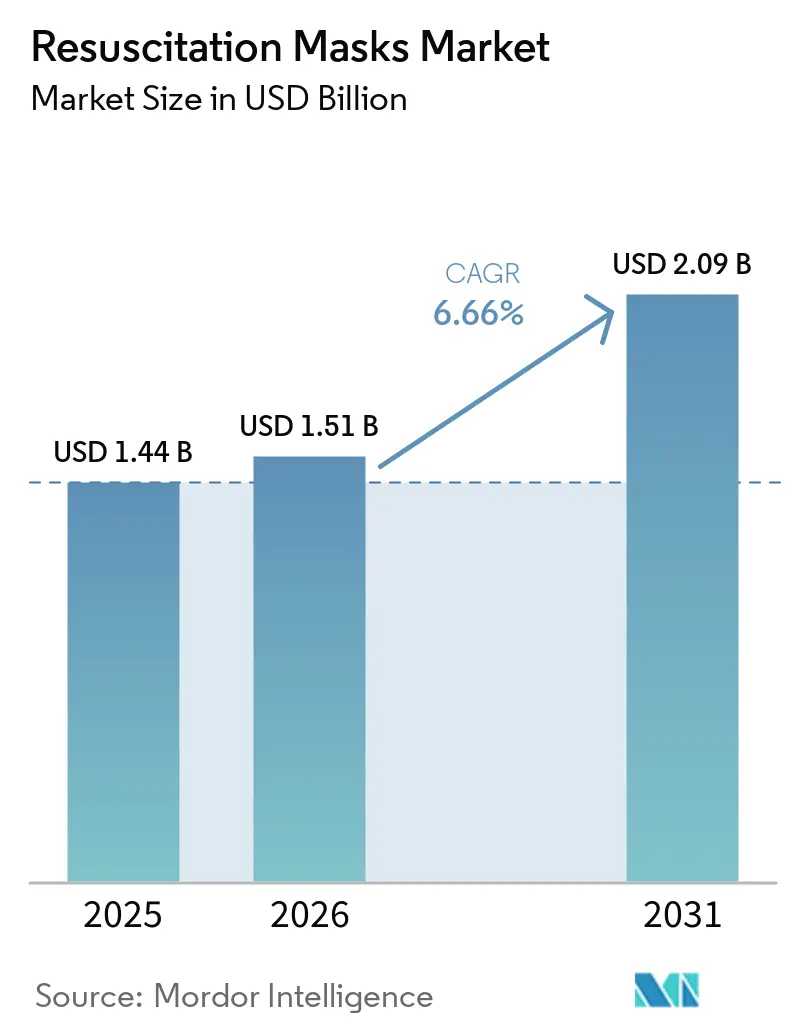
The Resuscitation Masks Market size is expected to increase from USD 1.44 billion in 2025 to USD 1.51 billion in 2026 and reach USD 2.09 billion by 2031, growing at a CAGR of 6.66% over 2026-2031.
Growth is supported by the continued shift toward single-patient-use devices in hospitals, emergency medical services, and public-access response kits. Clinical protocols for adult, pediatric, and neonatal care continue to shape procurement requirements and favor masks with reliable fit and ventilation control. Ambulance fleet additions and wider CPR training broaden demand beyond hospital replenishment programs. Suppliers are responding through wider airway-care portfolios, material changes, and products that reduce manual ventilation error. The resuscitation masks market also faces growing scrutiny of disposable plastic packaging, especially in Europe, where the new packaging regulation applies from August 2026.[1]European Parliament and Council, “Regulation (EU) 2025/40 on Packaging and Packaging Waste,” EUR-Lex, eur-lex.europa.eu
Key Report Takeaways
- By product type, disposable resuscitation masks held 58.41% of the resuscitation masks market share in 2025, while advanced valve masks are forecast to grow at a 7.83% CAGR through 2031.
- By usage, single-use masks accounted for 58.44% of the resuscitation masks market size in 2025 and are projected to expand at a 6.78% CAGR through 2031.
- By patient type, adult masks held 71.32% of demand in 2025, while neonatal masks are expected to record a 7.65% CAGR through 2031.
- By application, cardiopulmonary arrest accounted for 42.36% of the resuscitation masks market share in 2025, while neonatal resuscitation is forecast to grow at a 7.21% CAGR through 2031.
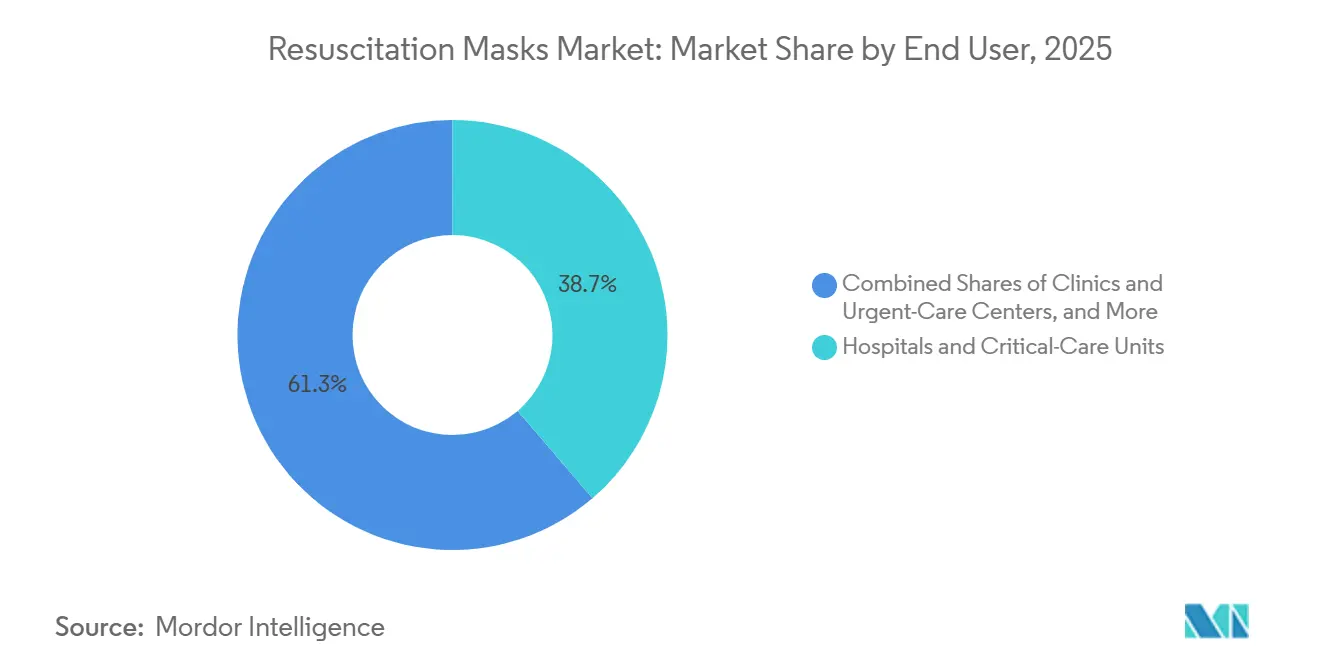
- By end user, hospitals and critical-care units held 38.71% of demand in 2025, while ambulance services and EMS agencies are expected to expand at a 7.54% CAGR through 2031.
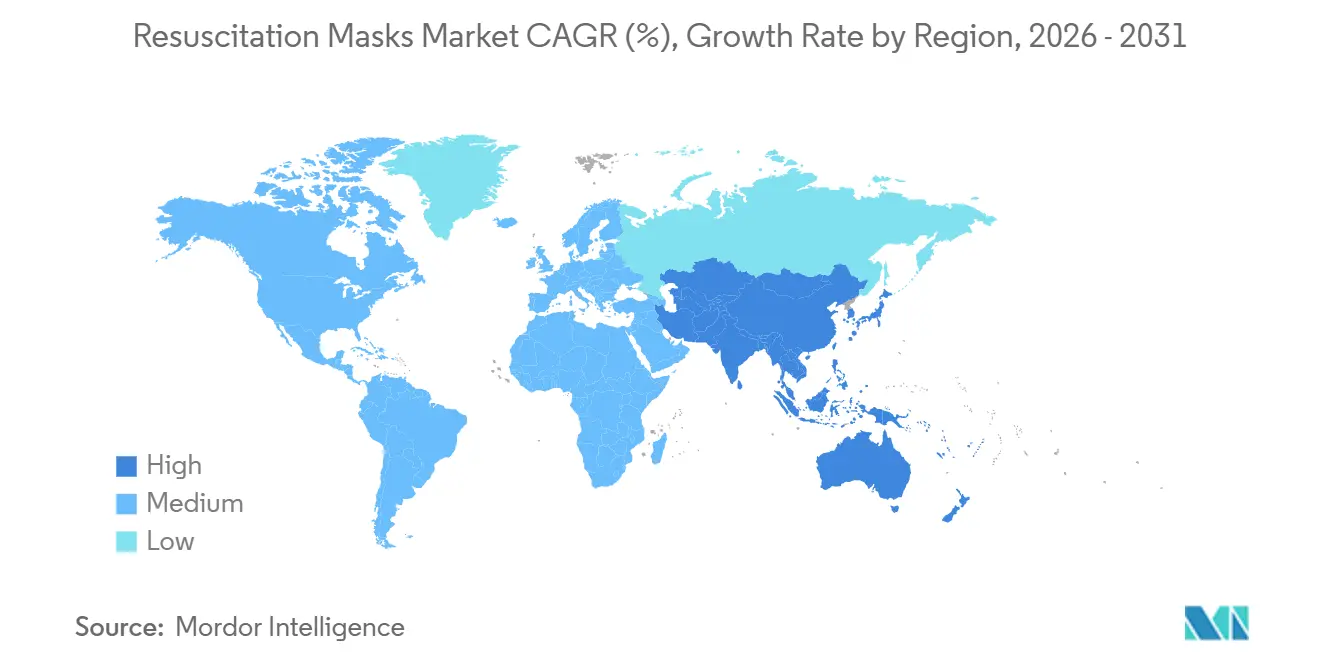
- By geography, North America held 41.23% of the global value in 2025, while the Asia-Pacific is forecast to grow at a 7.65% CAGR through 2031.
Note: Market size and forecast figures in this report are generated using Mordor Intelligence’s proprietary estimation framework, updated with the latest available data and insights as of January 2026.
Global Resuscitation Masks Market Trends and Insights
Drivers Impact Analysis*
| Driver | (~) % Impact on CAGR Forecast | Geographic Relevance | Impact Timeline |
|---|---|---|---|
| Infection-Control Preference for Single-Patient-Use Devices | +1.8% | Global, strongest in North America and Western Europe | Short term (≤ 2 years) |
| Expansion of Emergency Medical Services and Ambulance Fleets | +1.5% | Asia-Pacific, South America, Eastern Europe, Middle East and Africa | Medium term (2-4 years) |
| Wider CPR Training and Public-Access Resuscitation Programs | +0.9% | North America, Europe, Japan, and Australia | Medium term (2-4 years) |
| Growth in Cardiac Arrest and Respiratory Emergency Interventions | +1.0% | Global, highest incidence in North America and Northern Europe | Long term (≥ 4 years) |
| Protocol-Led Demand for Neonatal and Pediatric Fit | +0.7% | Global, supported by 2025 AHA, AAP, and ERC guidance | Short term (≤ 2 years) |
| Procurement Shift Toward Integrated, Error-Reducing Kits | +0.5% | North America, Europe, and core Asia-Pacific markets | Medium term (2-4 years) |
| Source: Mordor Intelligence | |||
Infection-Control Preference for Single-Patient-Use Devices
The resuscitation masks market continues to benefit from procurement practices that treat single-patient-use airways as a routine infection-control requirement. The U.S. Food and Drug Administration classifies cardiopulmonary resuscitation masks as Class II devices under 21 CFR Part 880, which places product design and documentation at the center of purchasing decisions. Single-use formats reduce the need for sterilization validation and simplify records associated with reprocessing. Hospitals and EMS agencies can also maintain more consistent stock levels when a mask is replaced after use. Ambu changed its King Mask line to phthalate-free and DEHP-free materials in 2025, showing how material compliance can be paired with clearer size identification. The resuscitation masks market, therefore, receives a dependable reorder base from facilities that standardize on disposable airway supplies.
Wider CPR Training and Public-Access Resuscitation Programs
CPR training programs extend mask demand into schools, workplaces, community groups, and first-aid kit programs. The American Red Cross trained nearly 8,000 people each day in CPR and AED use during 2025, while more than 824,000 health professionals and first responders completed its Resuscitation Suite programs[2]American Red Cross, “CPR Facts and Statistics,” American Red Cross, redcross.org. The American Heart Association reported that 41% of U.S. out-of-hospital cardiac arrest victims received CPR before EMS arrived in 2025[3]American Heart Association, “2025 AHA Guidelines for Cardiopulmonary Resuscitation and Emergency Cardiovascular Care,” American Heart Association, professional.heart.org. Its 2025 guidance supports media campaigns, instructor-led training, and CPR education for children aged 12 and above. These measures enlarge the base of people who may use entry-level pocket masks and resuscitation kits. The resuscitation masks market gains an additional purchasing channel when public-access defibrillation programs bundle masks with AED and first-response equipment.
Growth in Cardiac Arrest and Respiratory Emergency Interventions
The ongoing burden of cardiac arrest and respiratory emergencies supports baseline demand for resuscitation masks across care settings. CARES recorded 140,427 non-traumatic, treated out-of-hospital cardiac arrests in the United States in 2025. The same registry reported a 42.5% bystander CPR rate and 10.5% overall survival. The European Resuscitation Council reported an annual EMS-treated out-of-hospital cardiac arrest incidence of 55 per 100,000 people across Europe, with bystander CPR rates ranging from 13% to 82%. Respiratory emergencies accounted for 9% of adult and 39% of pediatric out-of-hospital cardiac arrest cases in the United States.[4]European Resuscitation Council, “ERC Guidelines 2025, Epidemiology of Cardiac Arrest,” European Resuscitation Council, erc.eduThese clinical needs keep cardiopulmonary arrest at the center of demand while sustaining requirements for masks designed for respiratory failure and pediatric care.
Protocol-Led Demand for Neonatal and Pediatric Fit
The resuscitation masks market is receiving stronger support from guidance that places facemask ventilation at the center of neonatal care. The 2025 AHA and AAP neonatal guidance identifies facemask ventilation as the primary neonatal resuscitation interface. It also states that 5% to 10% of newborns need ventilatory support at birth. The ERC guidance supports two-person facemask assistance and a tight-fit interface for positive-pressure ventilation in preterm infants. These protocols require mask sizes and face seals that differ from adult equipment. NICU directors and neonatal teams, therefore, have a clearer basis for reviewing purpose-built supplies. This supports continued demand for neonatal designs with appropriate geometry, sealing performance, and tidal volume control.
Restraints Impact Analysis*
| Restraint | (~) % Impact on CAGR Forecast | Geographic Relevance | Impact Timeline |
|---|---|---|---|
| Operator-Dependent Ventilation Quality | -0.8% | Global, most acute in prehospital and community settings | Short term (≤ 2 years) |
| Low-Resource-Market Price Sensitivity | -0.7% | Sub-Saharan Africa, South Asia, rural Asia-Pacific, and Latin America outside Brazil | Long term (≥ 4 years) |
| Disposable-Plastic Sustainability and Waste Requirements | -0.5% | Europe, expanding to North America | Medium term (2-4 years) |
| Substitution by Advanced Airway and Automated Ventilation Solutions | -0.6% | High-acuity hospital settings in North America and Europe | Long term (≥ 4 years) |
| Source: Mordor Intelligence | |||
Operator-Dependent Ventilation Quality
Conventional mask ventilation depends heavily on the user’s technique, which can constrain confidence in standard products. Archeon Medical’s 2025 French field study found that more than 60% of trained EMS professionals did not achieve guideline-compliant tidal volumes. The study associated inadequate ventilation with a reduction in survival odds from 13.5% to 4.1%. A 2025 study in Transactions on Additive Manufacturing Meets Medicine found that conventional BVM use accounted for 79% of hyperventilation events during basic life support. This performance gap can limit procurement confidence in basic mask systems. At the same time, it supports demand for advanced valve and feedback-enabled products that help users deliver more controlled ventilation.
Low-Resource-Market Price Sensitivity
Price remains a material barrier to wider access in low-resource health systems, especially for premium products. A 2025 review in Acta Paediatrica found that neonatal resuscitation equipment in low- and middle-income countries remained underfunded, with cost and availability limiting care quality. The need is significant because neonatal respiratory support depends on basic, reliable mask ventilation. A 2025 study in BMC Pediatrics also linked neonatal resuscitation readiness to the availability of equipment and trained staff. Facilities with limited budgets may prioritize basic disposable formats or defer replacement of more advanced equipment. This reduces the addressable volume for higher-priced systems in several regions. Manufacturers with a clear range of basic and advanced products are better placed to serve different procurement budgets without changing the underlying clinical purpose.
*Our forecasts treat driver/restraint impacts as directional, not additive. The impact forecasts reflect baseline growth, mix effects, and variable interactions.
Segment Analysis
By Product Type: Disposability Supports Core Demand
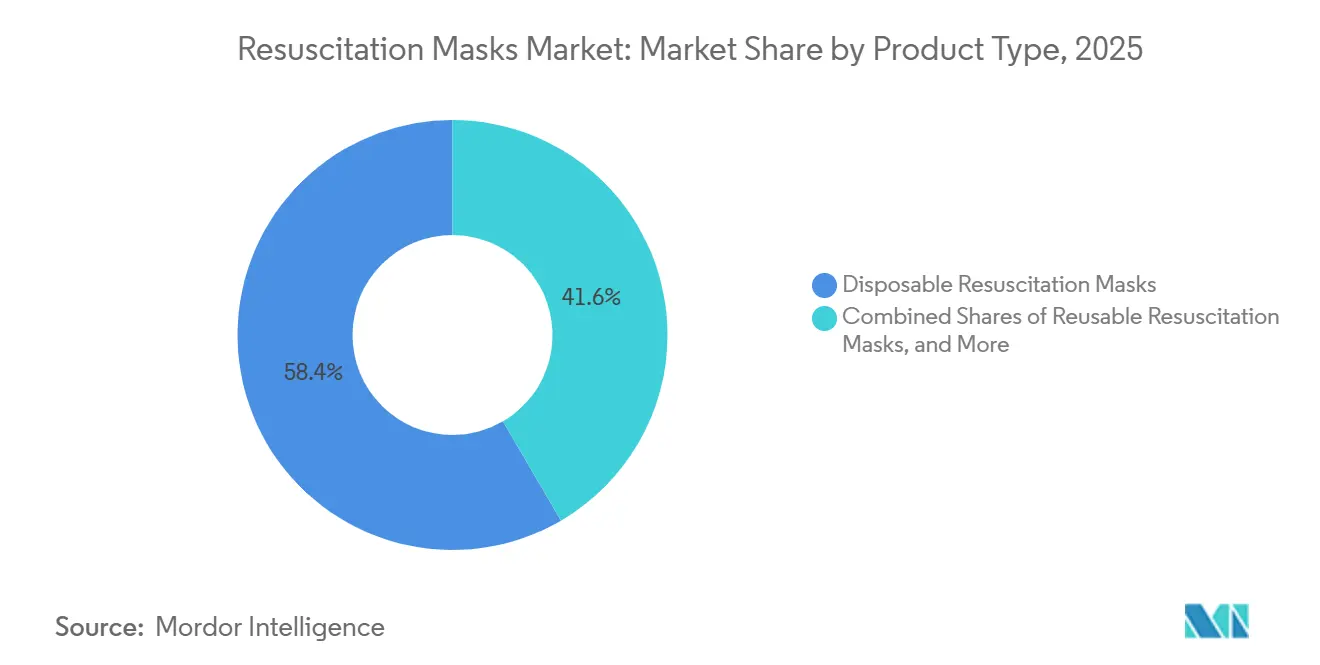
Disposable resuscitation masks held 58.41% of value in 2025, giving them the leading position in the resuscitation masks market. Their use across emergency departments, ambulance kits, and public-access programs reflects the practical value of replacing a device after a single patient encounter. Single-use procurement reduces the need to document reprocessing steps and can simplify inventory control. The FDA’s Class II framework keeps safety, design, and infection-control features important in purchasing decisions.
Reusable masks remain relevant in training settings and in facilities that have reliable sterilization procedures. Ambu’s Oval Plus Silicone Resuscitator illustrates where reuse economics can continue to support product selection. Pocket CPR masks and oxygen-port integrated designs serve community response and home-care needs where compact storage is important. Advanced valve masks are the fastest-growing product category, with a forecast CAGR of 7.83% through 2031. Their growth reflects the need to reduce variation in manual ventilation during resuscitation. Intersurgical’s VT Select BVM is designed to support controlled volume delivery and shows the direction of product development.



By Usage: Single-Use Formats Simplify Replenishment
Single-use resuscitation masks accounted for 58.44% of the resuscitation masks market size in 2025 and are forecast to grow at a 6.78% CAGR through 2031. The format aligns closely with hospital infection-control procedures and with EMS restocking after a response. It avoids the time and validation burden of cleaning and sterilizing reusable devices. It also makes par-level inventory management easier for purchasers responsible for several emergency locations. These operational benefits support routine reorder patterns across hospitals, ambulances, and public-access kits. The resuscitation masks market therefore continues to rely on single-use devices for consistent recurring demand.
By Patient Type: Adult Demand Leads, Neonatal Care Grows Faster
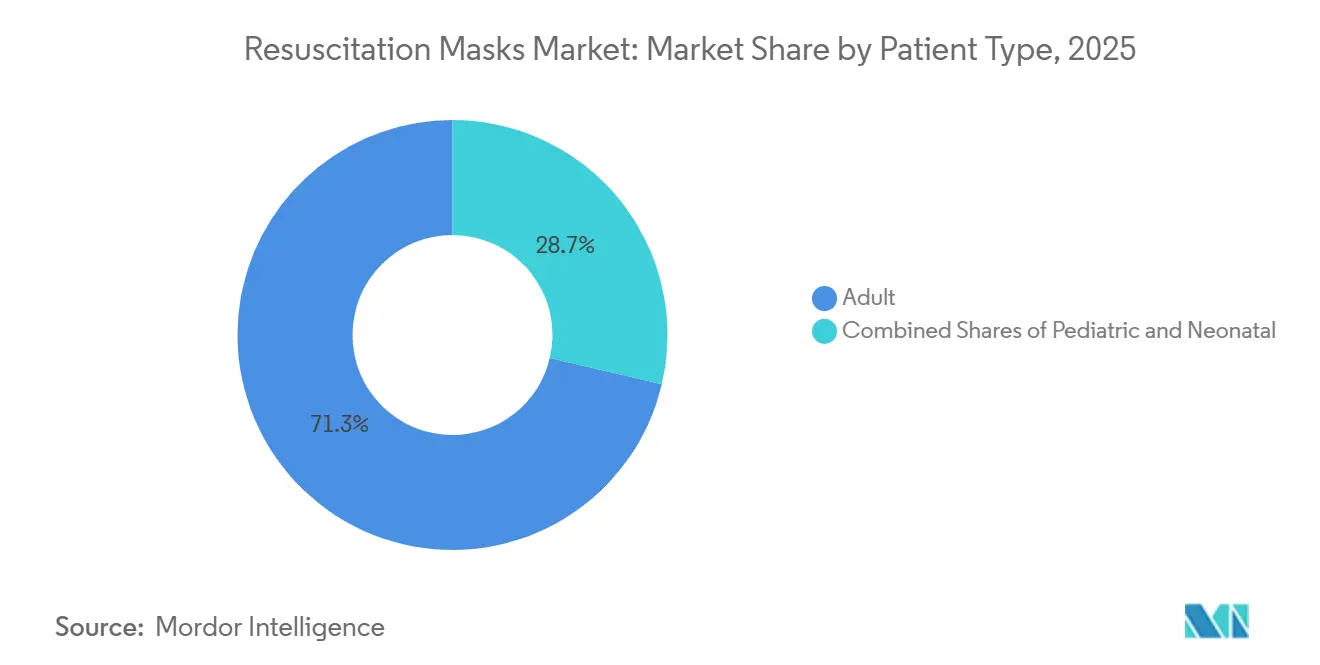
Adult masks represented 71.32% of volume in 2025, making adult care the largest patient category in the resuscitation masks market. CARES data showed that adults represented 97.3% of EMS-treated out-of-hospital cardiac arrest events in the United States in 2025. Cardiac causes accounted for 84% of adult arrests in that registry.
Neonatal masks are forecast to grow the fastest at a 7.65% CAGR through 2031. The AHA and AAP guidance states that 5% to 10% of newborns require ventilatory support at birth. Purpose-built neonatal designs must support appropriate face fit and controlled positive-pressure ventilation. This explains why neonatal and pediatric categories offer an important area for technical differentiation.
By Application: Cardiac Arrest Remains the Main Use Case
Cardiopulmonary arrest accounted for 42.36% of the resuscitation masks market size in 2025. This application is tied to emergency clinical needs rather than discretionary purchasing, which supports a stable demand base. CARES recorded 140,427 treated non-traumatic out-of-hospital cardiac arrests in the United States in 2025. The European Resuscitation Council recorded an EMS-treated incidence of 55 per 100,000 people across Europe. Hospitals, ambulances, and community response programs all require masks for this core use case. Cardiopulmonary arrest, therefore, provides the largest current application base. Neonatal resuscitation is the fastest-growing application, with a projected 7.21% CAGR through 2031. The AHA, AAP, and ERC guidance all reinforce facemask ventilation as a key interface in early neonatal care.
By End User: Hospitals Lead, EMS Expands Faster
Hospitals and critical-care units accounted for 38.71% of demand in 2025, giving them the largest end-user position in the resuscitation masks market. Institutional procurement commonly follows standardized clinical protocols and contract cycles that run from 12 to 24 months. Hospitals use masks across emergency departments, critical-care units, delivery rooms, and code-response systems.
Ambulance services and EMS agencies are forecast to grow at a 7.54% CAGR through 2031. These users restock at the unit level after deployments, which creates a different purchasing cycle from periodic hospital replenishment. Fleet additions also create new kit requirements before a vehicle enters service. London Ambulance Service’s 77 new electric vehicles illustrate how fleet modernization can extend equipment demand.
Geography Analysis
North America held 41.23% of the global value in 2025, making it the largest regional part of the resuscitation masks market. CARES covered more than 189 million people through 36 statewide registries in 2025, supporting a detailed emergency response infrastructure. The AHA’s 2025 guidelines support broader CPR training and revised neonatal resuscitation protocols.
Europe remains a major regional demand center because of mature prehospital care systems and a strong focus on regulatory compliance. The ERC’s 2025 adult and neonatal guidance prompted purchasing reviews across national EMS systems and hospital networks.
Asia-Pacific is forecast to grow at a 7.65% CAGR through 2031, the highest rate among the regions in the resuscitation masks market. Government EMS development, cardiovascular disease burden, and wider use of recognized resuscitation protocols support this growth. China and Japan provide established hospital demand, while South Korea has a strong community and EMS response activity. Australia’s national neonatal data showed that 10.3% of live births received positive-pressure ventilation in recent years.

Competitive Landscape
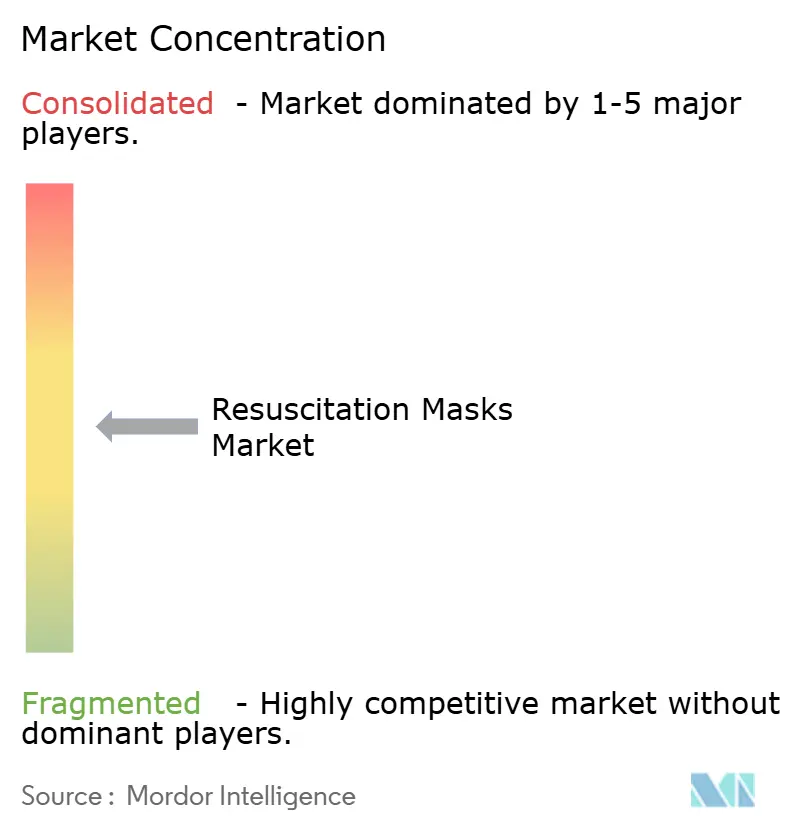
The resuscitation masks market has moderate concentration, with Ambu A/S and Laerdal Medical holding established positions in emergency medicine and CPR training. Intersurgical, Mercury Medical, and regional manufacturers compete through product range, pricing, and distribution coverage. Competition is increasingly based on the ability to provide related airway products rather than a single mask line. Intersurgical agreed to acquire Teleflex’s Acute Care and Interventional Urology businesses in December 2025 under a USD 530 million transaction that is expected to close in the second half of 2026. The planned transaction expands Intersurgical’s respiratory and acute-care portfolio. It also shows why product breadth has become important in supplier positioning.
Resuscitation Masks Industry Leaders
Ambu A/S
Laerdal Medical
Teleflex Incorporated
ICU Medical, Inc.
Intersurgical Ltd.
- *Disclaimer: Major Players sorted in no particular order

Recent Industry Developments
- July 2026: Master Medical announced the launch of its CPR First Aid Emergency Rescue Breathing Mask, designed for CPR training, first aid education, and emergency response applications. The company stated that the mask included a training adapter and CPR valve to support hygienic rescue-breathing practice while improving infection control during repeated training sessions.
- October 2025: GaleMed introduced Dispo-Bag Plus, an upgraded manual resuscitator featuring enhanced connectors and pressure management components. The product is targeted at emergency ventilation and resuscitation applications across EMS and hospital settings.


Global Resuscitation Masks Market Report Scope
As per the scope of the market, resuscitation masks are emergency respiratory devices used to deliver rescue breaths and assisted ventilation during cardiopulmonary resuscitation (CPR) and other respiratory emergencies. These masks create a barrier between the rescuer and the patient, helping reduce the risk of cross-contamination while facilitating effective oxygen delivery and ventilation. Resuscitation masks are widely used by healthcare professionals, emergency medical personnel, first responders, and trained caregivers in hospitals, ambulances, clinics, and community settings.
The resuscitation masks market report segments the market by product type, including disposable resuscitation masks, reusable resuscitation masks, advanced valve masks, and others (pocket CPR masks, masks with oxygen ports, etc.). The market is also categorized by usage, covering single-use and multi-use & reprocessable resuscitation masks. Based on patient type, the market is segmented into adult, pediatric, and neonatal resuscitation masks.
By application, the market includes cardiopulmonary arrest, respiratory failure and apnea, neonatal resuscitation, trauma and prehospital care, chronic obstructive pulmonary disease (COPD) emergencies, and other emergency respiratory conditions. The end-user segmentation comprises hospitals and critical-care units, ambulance services and emergency medical services (EMS), clinics and urgent-care centers, ambulatory surgical centers (ASCs), and others, including home care and community responders, training institutes, and CPR education centers. Geographically, the market is segmented into North America, Europe, Asia-Pacific, the Middle East & Africa, and South America. The market report also covers the estimated market sizes and trends for 17 countries across major regions globally. For each segment, the market size and forecast are provided in terms of value (USD).
| Disposable Resuscitation Masks |
| Reusable Resuscitation Masks |
| Advanced Valve Masks |
| Others (Pocket CPR Masks, Masks with Oxygen Port, etc.) |
| Single-Use |
| Multi-Use and Reprocessable |
| Adult |
| Pediatric |
| Neonatal |
| Cardiopulmonary Arrest |
| Respiratory Failure and Apnea |
| Neonatal Resuscitation |
| Trauma and Prehospital Care |
| Chronic Obstructive Pulmonary Disease Emergencies |
| Hospitals and Critical-Care Units |
| Ambulance Services and Emergency Medical Services |
| Clinics and Urgent-Care Centers |
| Ambulatory Surgical Centers |
| Others (Home Care and Community Responders, Training Institutes and CPR Education Centers, etc.) |
| North America | United States |
| Canada | |
| Mexico | |
| Europe | Germany |
| United Kingdom | |
| France | |
| Italy | |
| Spain | |
| Rest of Europe | |
| Asia-Pacific | China |
| India | |
| Japan | |
| Australia | |
| South Korea | |
| Rest of Asia-Pacific | |
| Middle East and Africa | GCC |
| South Africa | |
| Rest of Middle East and Africa | |
| South America | Brazil |
| Argentina | |
| Rest of South America |
| By Product Type | Disposable Resuscitation Masks | |
| Reusable Resuscitation Masks | ||
| Advanced Valve Masks | ||
| Others (Pocket CPR Masks, Masks with Oxygen Port, etc.) | ||
| By Usage | Single-Use | |
| Multi-Use and Reprocessable | ||
| By Patient Type | Adult | |
| Pediatric | ||
| Neonatal | ||
| By Application | Cardiopulmonary Arrest | |
| Respiratory Failure and Apnea | ||
| Neonatal Resuscitation | ||
| Trauma and Prehospital Care | ||
| Chronic Obstructive Pulmonary Disease Emergencies | ||
| By End User | Hospitals and Critical-Care Units | |
| Ambulance Services and Emergency Medical Services | ||
| Clinics and Urgent-Care Centers | ||
| Ambulatory Surgical Centers | ||
| Others (Home Care and Community Responders, Training Institutes and CPR Education Centers, etc.) | ||
| By Geography | North America | United States |
| Canada | ||
| Mexico | ||
| Europe | Germany | |
| United Kingdom | ||
| France | ||
| Italy | ||
| Spain | ||
| Rest of Europe | ||
| Asia-Pacific | China | |
| India | ||
| Japan | ||
| Australia | ||
| South Korea | ||
| Rest of Asia-Pacific | ||
| Middle East and Africa | GCC | |
| South Africa | ||
| Rest of Middle East and Africa | ||
| South America | Brazil | |
| Argentina | ||
| Rest of South America | ||


Key Questions Answered in the Report
What is the current market size of the resuscitation masks?
The resuscitation masks market size was USD 1.54 billion in 2026, and is projected to reach USD 2.09 billion by 2031.
What is driving growth in the resuscitation masks market?
The resuscitation masks market is projected to grow at a 6.66% CAGR from 2026 to 2031, supported by single-use procurement, EMS expansion, CPR training, and neonatal protocol updates.
Which product type leads resuscitation mask demand?
Disposable masks led with 58.41% of value in 2025 because hospitals and EMS agencies use them to simplify infection control and replenishment.
Which resuscitation mask category is growing fastest?
Advanced valve masks are projected to grow at a 7.83% CAGR through 2031 as care teams seek more controlled manual ventilation.
Why are neonatal resuscitation masks gaining demand?
Neonatal masks are forecast to grow at a 7.65% CAGR, supported by 2025 guidance that identifies facemask ventilation as the primary neonatal resuscitation interface.
Which end users purchase the most resuscitation masks?
Hospitals and critical-care units held 38.71% of demand in 2025, while ambulance services and EMS agencies are the fastest-growing end-user group at a 7.54% CAGR.
Which region has the strongest growth outlook for resuscitation masks?
Asia-Pacific is forecast to grow at a 7.65% CAGR through 2031, while North America remained the largest region with 41.23% of global value in 2025.
Page last updated on:





