
Protein Hydrolysis Enzymes Market Size and Share
Market Overview
| Study Period | 2021 - 2031 |
|---|---|
| Market Size (2026) | USD 2.81 Billion |
| Market Size (2031) | USD 3.78 Billion |
| Growth Rate (2026 - 2031) | 6.13 % |
| Fastest Growing Market | Asia-Pacific |
| Largest Market | North America |
| Market Concentration | Medium |
Major Players
*Disclaimer: Major Players sorted in no particular order Image © Mordor Intelligence. Reuse requires attribution under CC BY 4.0. |
|
Protein Hydrolysis Enzymes Market Analysis by Mordor Intelligence
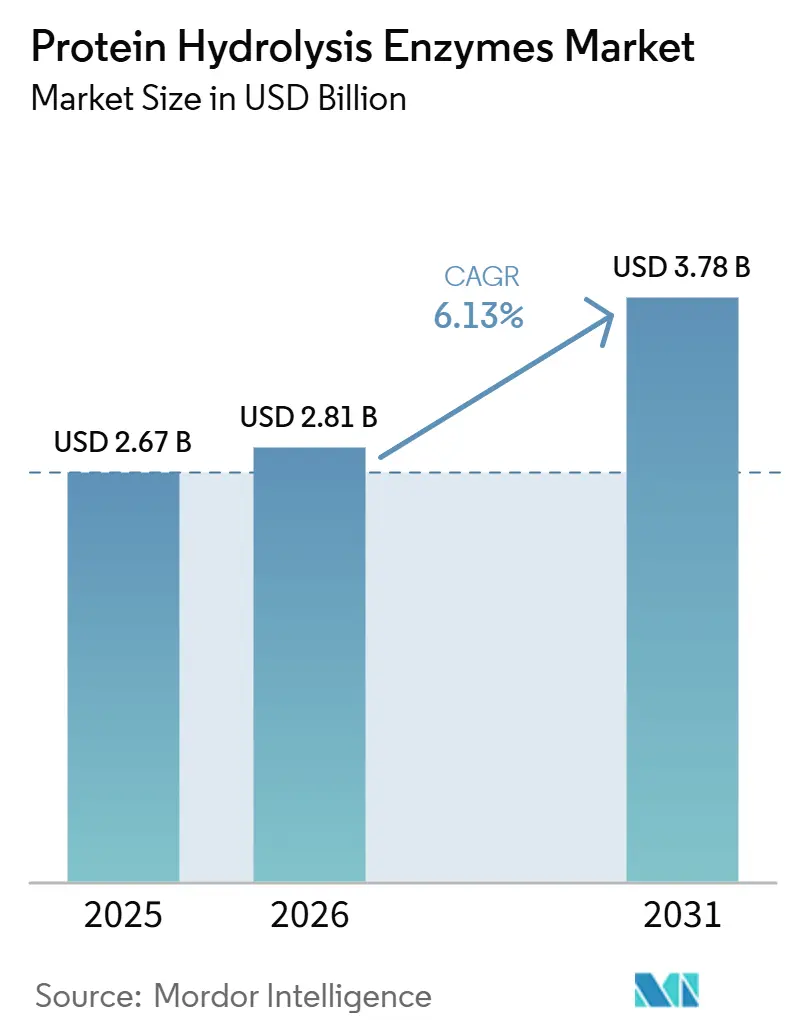
The global protein hydrolysis enzymes market was valued at USD 2.67 billion in 2025 and is projected to reach USD 2.81 billion in 2026, further expanding to USD 3.78 billion by 2031, registering a CAGR of 6.13% during 2026–2031. Market growth is primarily driven by the expanding use of enzymatic protein modification to enhance the functional properties of proteins across industrial manufacturing processes. Continuous advancements in enzyme engineering, microbial fermentation technologies, and precision bioprocessing are enabling the development of highly specific and efficient protein hydrolysis enzymes with improved catalytic performance and process consistency. Additionally, increasing production of hydrolyzed proteins for specialized nutrition and advanced food formulations, coupled with the growing adoption of enzymatic processing over conventional chemical hydrolysis, continues to strengthen demand for protein hydrolysis enzymes across multiple end-use industries.
Key Report Takeaways
- By source, microorganisms held 51.23% of the protein hydrolysis enzymes market share in 2025, while plant-derived enzymes are forecast to grow at a 7.87% CAGR through 2031.
- By form, liquid formulations accounted for 68.12% of the protein hydrolysis enzymes market size in 2025, while powder formulations are projected to expand at a 6.59% CAGR through 2031.
- By application, food and beverages captured 38.56% of the protein hydrolysis enzymes market share in 2025, while pharmaceutical applications are expected to record the highest CAGR of 7.54% through 2031.
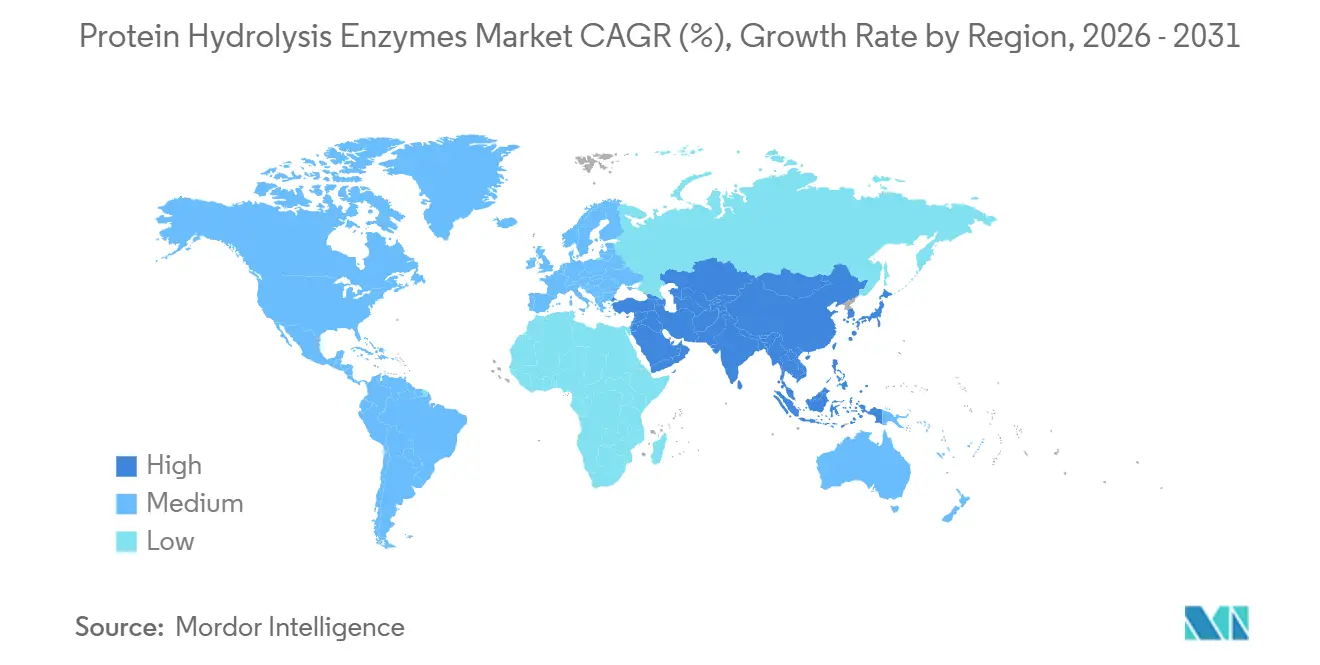
- By geography, North America held 32.12% of the global protein hydrolysis enzymes market in 2025, while Asia-Pacific is projected to grow at a 7.61% CAGR through 2031.
Note: Market size and forecast figures in this report are generated using Mordor Intelligence’s proprietary estimation framework, updated with the latest available data and insights as of January 2026.
Market Trends and Insights
Drivers Impact Analysis of Protein Hydrolysis Enzymes Market*
| Driver | (~) % Impact on CAGR Forecast | Geographic Relevance | Impact Timeline |
|---|---|---|---|
| Demand for high-protein and functional food products | +1.4% | Global, with concentrated impact in North America and Europe | Short term (≤ 2 years) |
| Increasing utilization in infant and medical nutrition formulations | +1.0% | North America and Europe | Medium term (2–4 years) |
| Expansion of plant-based protein ingredient manufacturing | +1.2% | Global; Asia-Pacific core, spill-over to North America and Europe | Short term (≤ 2 years) |
| Advancements in enzyme engineering improving efficiency and specificity | +0.8% | North America and Europe (Research and Development-led markets) | Medium term (2–4 years) |
| Demand for flavor enhancement and food formulation optimization | +0.5% | Global | Short term (≤ 2 years) |
| Growing preference for sustainable enzyme-based food processing solutions | +0.4% | Europe and North America | Medium term (2–4 years) |
| Source: Mordor Intelligence | |||
Demand for high-protein and functional food products
The growing demand for high-protein and functional food products is a major driver of the protein hydrolysis enzymes market. Food manufacturers increasingly require enzymatic technologies to modify protein structures and enhance ingredient functionality. Protein hydrolysis enzymes break intact proteins into smaller peptides and amino acids, improving solubility, digestibility, dispersibility, emulsification, foaming, and water-binding properties. This enables the development of high-performance protein ingredients for modern food formulations. Compared to conventional protein ingredients, hydrolyzed proteins produced through enzymatic processing offer superior functional characteristics. These properties support their incorporation into beverages, dairy products, protein powders, nutritional bars, clinical nutrition products, infant formula, bakery products, and specialized nutritional formulations without significantly affecting texture or processing efficiency.
Increasing utilization in infant and medical nutrition formulations
The increasing use of protein hydrolysis enzymes in infant and medical nutrition formulations is a significant driver of the protein hydrolysis enzymes market. These enzymes enable the production of partially and extensively hydrolyzed proteins with improved digestibility and reduced allergenic potential. Controlled enzymatic hydrolysis breaks down complex milk and other dietary proteins into smaller peptides that are easier to absorb. These peptides are widely used in specialized infant formulas, enteral nutrition products, and clinical nutritional supplements. The ability to precisely control the degree of hydrolysis allows manufacturers to produce formulations that meet stringent nutritional and regulatory specifications while maintaining consistent protein quality and functionality. Demand for these specialized formulations continues to grow alongside infant nutrition requirements. For instance, according to the World Bank, India's total fertility rate stood at 1.96 children per woman in 2024, indicating a substantial and continuous need for infant nutrition products in one of the world's largest birth cohorts [1]Source: World Bank, "Total fertility rate in children per woman in India ", worldbank.org.
Expansion of plant-based protein ingredient manufacturing
The expansion of plant-based protein ingredient manufacturing is driving growth in the protein hydrolysis enzymes market, as enzymatic hydrolysis has become an essential processing step for improving the functional performance of plant proteins. Native plant proteins often exhibit limited solubility, undesirable flavor profiles, and poor emulsification and foaming properties, making controlled enzymatic hydrolysis necessary to produce ingredients with enhanced functionality and improved processing characteristics. Protein hydrolysis enzymes enable manufacturers to generate customized peptide profiles and optimize the physicochemical properties of proteins for use in food formulations. As manufacturers continue investing in commercial-scale production of plant protein ingredients, demand for protein hydrolysis enzymes rises proportionally, as these enzymes are integral to downstream protein modification processes.
Advancements in enzyme engineering improving efficiency and specificity
Advancements in enzyme engineering are significantly driving the protein hydrolysis enzymes market by enabling the development of highly specific proteases with enhanced catalytic efficiency, substrate selectivity, and operational stability. Modern protein engineering techniques, including directed evolution, rational protein design, and recombinant DNA technology, allow manufacturers to tailor enzyme characteristics for specific protein substrates and processing conditions. These advancements improve hydrolysis precision, reduce unwanted peptide formation, enhance reaction yields, and shorten processing times while maintaining consistent product quality. Engineered enzymes with improved tolerance to varying temperatures, pH levels, and processing environments increase manufacturing flexibility and reduce enzyme dosage requirements, improving overall process efficiency. Continued investment in enzyme innovation further supports market expansion.
Restraints Impact Analysis of Protein Hydrolysis Enzymes Market*
| Restraint | (~) % Impact on CAGR Forecast | Geographic Relevance | Impact Timeline |
|---|---|---|---|
| High production and purification costs of specialty enzymes | -1.0% | Global; acute in developing markets in Asia and Africa | Medium term (2–4 years) |
| Strict regulatory requirements for approval and food safety | -0.8% | Europe (EFSA, EC No 1332/2008) and North America (FDA) | Long term (≥ 4 years) |
| Sensitivity of enzymes to processing conditions | -0.4% | Global; most acute in industrial-scale applications | Short term (≤ 2 years) |
| Challenges in achieving consistent degree of protein hydrolysis | -0.3% | Global | Medium term (2–4 years) |
| Source: Mordor Intelligence | |||
High production and purification costs of specialty enzymes
High production and purification costs of specialty enzymes remain a significant restraint on the protein hydrolysis enzymes market. Manufacturing high-performance proteolytic enzymes requires sophisticated fermentation systems, downstream purification technologies, and rigorous quality control procedures. Production involves multiple stages, including microbial strain development, controlled fermentation, enzyme recovery, concentration, purification, stabilization, and formulation, each adding to operational complexity and manufacturing costs. Achieving high enzyme purity and consistent activity often requires advanced filtration, ultrafiltration, chromatography, and drying technologies, particularly for enzymes intended for food, pharmaceutical, and clinical nutrition applications where stringent quality standards must be met. Maintaining sterile production environments, validating batch consistency, and complying with regulatory requirements further increase production expenses.
Strict regulatory requirements for approval and food safety
Strict regulatory requirements for approval and food safety restrain the protein hydrolysis enzymes market by increasing the time, cost, and complexity of commercializing new enzyme products. Manufacturers must demonstrate enzyme safety, purity, production process consistency, and intended conditions of use before products can be approved for food or pharmaceutical applications. Regulatory updates also require continuous monitoring and documentation, compelling manufacturers to invest in dedicated quality assurance and regulatory affairs capabilities. For instance, EU Regulation (EC) No. 1332/2008 established a harmonized framework for the authorization, evaluation, and use of food enzymes across the European Union, requiring food enzymes to undergo a scientific safety assessment by the European Food Safety Authority (EFSA) before inclusion in the Union list of authorized enzymes. These approval requirements can delay market entry and increase the overall cost of developing and commercializing new protein hydrolysis enzymes.
*Our forecasts treat driver/restraint impacts as directional, not additive. The impact forecasts reflect baseline growth, mix effects, and variable interactions.
Protein Hydrolysis Enzymes Market Segment Analysis
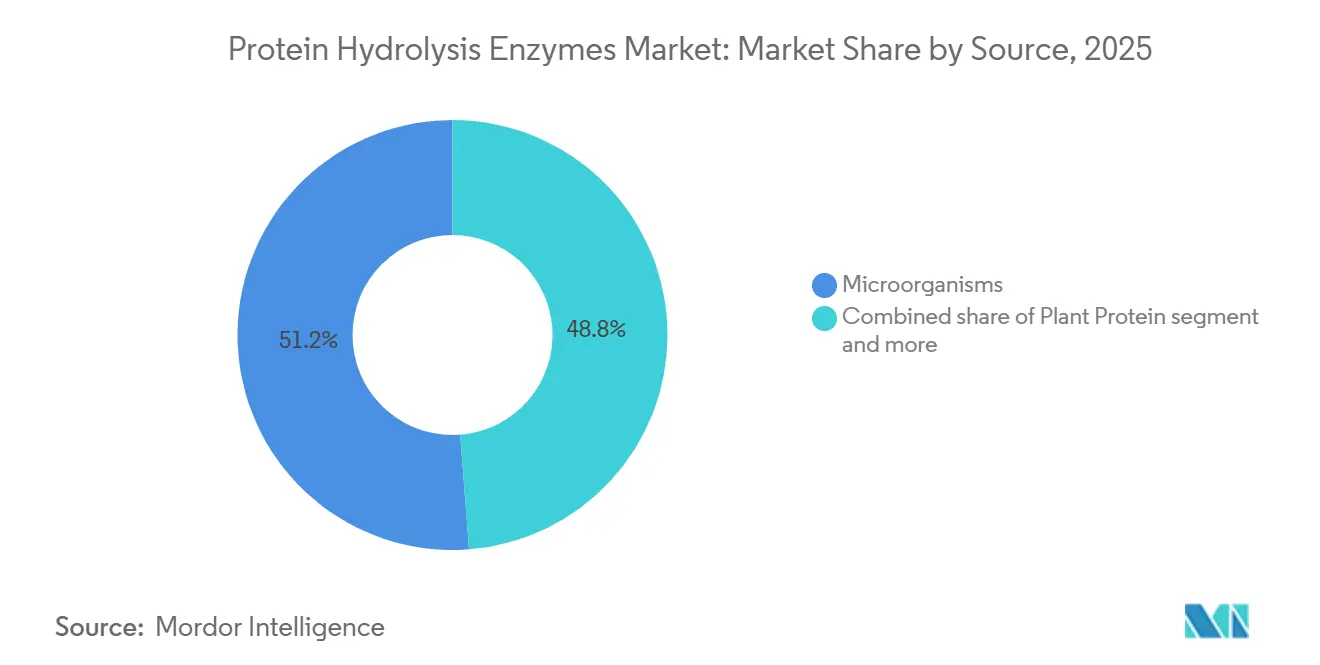
Microorganisms accounted for 51.23% of the market value by source in 2025. The segment maintains its leading position due to the ability of microbial strains to produce highly specific proteolytic enzymes with consistent activity and high purity. Microbial enzyme production enables controlled fermentation under standardized conditions, allowing manufacturers to achieve uniform hydrolysis performance while maintaining stringent quality specifications. Regulatory confidence in microbial enzymes continues to strengthen market adoption; for instance, the European Food Safety Authority (EFSA) updated the safety evaluation of a microbial food enzyme for use across 11 food manufacturing processes, reinforcing the acceptance of microbial enzyme technologies and supporting continued market growth [2]Source: European Food Safety Authority (EFSA), "Safety evaluation of an extension of use of the food enzyme", efsa.europa.eu.
Plant-derived protein hydrolysis enzymes are projected to expand at a CAGR of 7.87% during 2026–2031. Growth is supported by increasing innovation in naturally sourced enzymes such as papain, bromelain, and ficin, which offer broad substrate specificity and effective proteolytic activity under mild processing conditions. These enzymes are valued for their ability to preserve protein functionality while reducing harsh processing requirements, making them suitable for manufacturers seeking naturally derived processing aids. Ongoing research aimed at improving enzyme stability, extraction efficiency, and catalytic performance is further enhancing the commercial viability of plant-derived enzymes. In addition, advancements in sustainable cultivation and extraction technologies are improving the consistency and availability of botanical enzyme sources, strengthening the long-term growth outlook for this segment.



By Form:
Liquid Formulations Serve Industrial Scale, Powder Formats Target Precision MarketsLiquid formulations accounted for 68.12% of the market by form in 2025. This segment leads due to immediate enzyme availability, eliminating the need for reconstitution before use and enabling precise metering in continuous production systems. Liquid formulations provide superior dispersion and homogeneous mixing with protein substrates, ensuring consistent hydrolysis efficiency across processing batches. They also simplify automated dosing and process control in industrial manufacturing environments, reducing operational complexity and variability in enzyme performance. Additionally, liquid enzymes can be readily incorporated into closed processing systems, supporting uninterrupted production with lower handling requirements.
Powder-form protein hydrolysis enzymes are projected to grow at a CAGR of 6.59% during 2026–2031. Growth is supported by enhanced storage stability and retention of enzymatic activity over extended periods, making them well suited for long-distance distribution and inventory management. Powder formulations offer greater flexibility in customized blending and concentration adjustment before use, allowing manufacturers to formulate products according to specific process requirements. Their lower moisture content reduces the likelihood of microbial degradation during storage, while advancements in drying and encapsulation technologies continue to improve enzyme stability and ease of handling.
By Application:
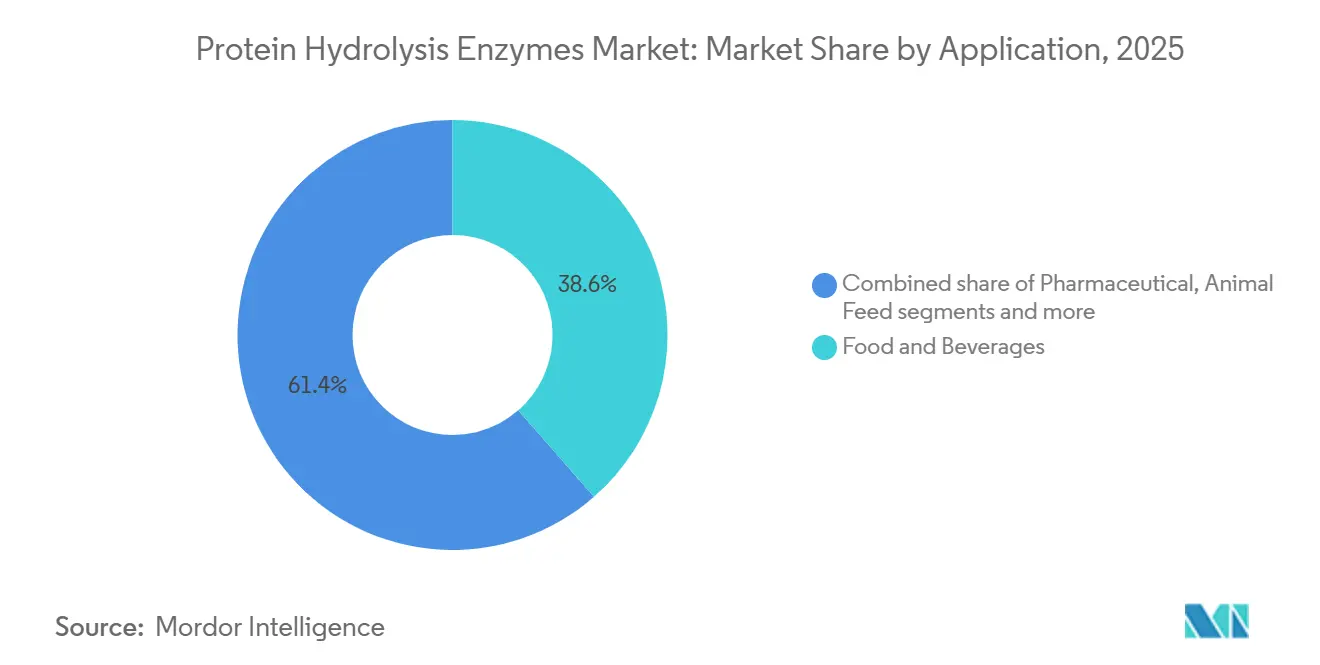
Food and Beverages Anchors Revenue, Pharmaceutical AcceleratesFood and Beverages accounted for 38.56% of the market value in 2025. The segment dominates due to the extensive use of protein hydrolysis enzymes for achieving precise control over protein structure and functionality during food processing. These enzymes enable manufacturers to tailor peptide profiles, improve protein solubility, optimize emulsification characteristics, and develop consistent product textures while maintaining process efficiency. Their ability to generate proteins with targeted molecular weights also supports formulation flexibility across a wide range of processed food products. The large scale of food manufacturing further reinforces enzyme consumption; for instance, according to the Office for National Statistics (UK), consumer spending on food and beverages in the United Kingdom reached nearly GBP 148 billion in 2025, reflecting the substantial production base that continues to support demand for protein-processing technologies [3]Source: Office for National Statistics (UK), "Consumer spending on food and non-alcoholic drinks in the United Kingdom", ons.gov.uk.
The Pharmaceutical segment is projected to grow at a CAGR of 7.54% during 2026–2031. Growth is driven by the increasing use of controlled enzymatic hydrolysis to produce highly defined peptide fractions with reproducible molecular characteristics required for pharmaceutical manufacturing. Protein hydrolysis enzymes provide high substrate specificity, enabling precise protein modification while minimizing unwanted degradation and impurities. Their compatibility with tightly controlled bioprocessing environments and ability to deliver consistent product quality make them increasingly valuable in peptide synthesis, biologics manufacturing, and advanced therapeutic production, where process precision and reproducibility are critical.
Geography Analysis
North America Protein Hydrolysis Enzymes Market
North America accounted for 32.12% of the global protein hydrolysis enzymes market value in 2025, maintaining its leading regional position. The region benefits from a well-established industrial biotechnology ecosystem, advanced enzyme manufacturing capabilities, and widespread adoption of precision fermentation technologies. Strong integration between enzyme developers, biotechnology research institutions, and large-scale manufacturing facilities supports continuous innovation in enzyme engineering and commercial production. Highly automated production infrastructure and stringent quality management systems further enable manufacturers to produce high-performance protein hydrolysis enzymes with consistent quality and scalability.
APAC Protein Hydrolysis Enzymes Market
Asia-Pacific is projected to register the fastest CAGR of 7.61% during 2026–2031. The region's growth is supported by the rapid expansion of industrial enzyme manufacturing capacity, increasing investments in microbial fermentation infrastructure, and the development of biotechnology parks and life science clusters. Countries across the region continue to strengthen domestic enzyme production through advancements in fermentation technology, bioprocess optimization, and research collaborations between academia and industry. Expanding contract manufacturing capabilities and growing availability of skilled biotechnology expertise are also enhancing regional competitiveness in global enzyme production.
EMEA and South America Protein Hydrolysis Enzymes Market
Europe, South America, and the Middle East and Africa continue to strengthen their positions through advancements in industrial biotechnology and enzyme manufacturing capabilities. Europe remains a key center for enzyme research, supported by strong regulatory oversight, continuous innovation in microbial strain development, and investments in sustainable bioprocessing technologies. South America is gradually expanding fermentation-based manufacturing, supported by its abundant agricultural feedstocks used in industrial biotechnology. The Middle East and Africa are witnessing increasing investments in biotechnology infrastructure and industrial diversification initiatives that are fostering the adoption and local production of specialty enzymes.

Competitive Landscape
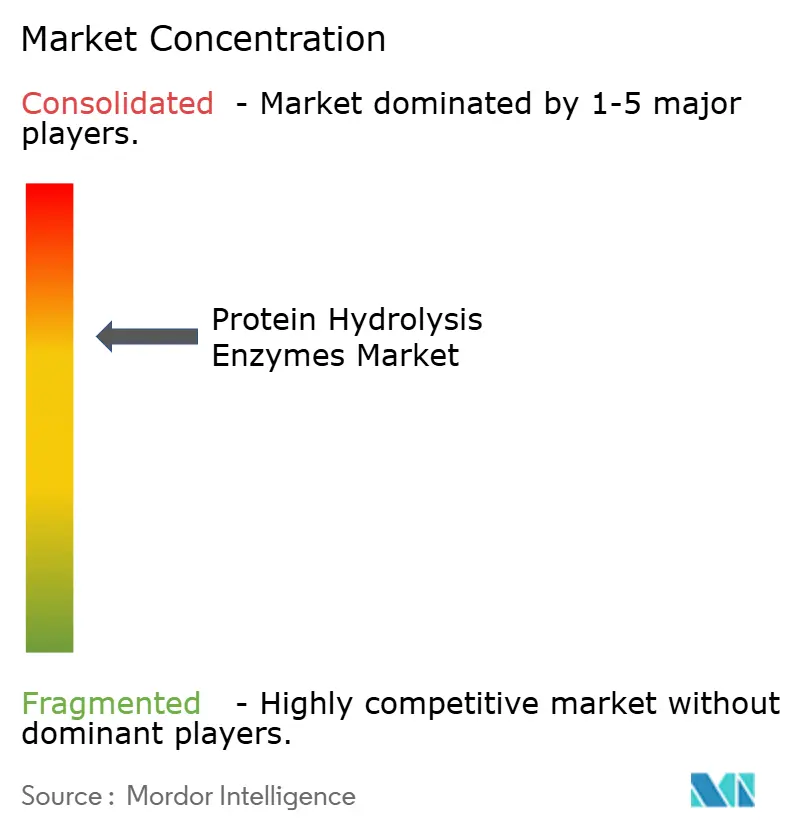
The protein hydrolysis enzymes market is moderately consolidated, with major participants including Novonesis A/S, dsm-firmenich AG, International Flavors & Fragrances Inc., Kerry Group plc, Amano Enzyme Inc., and Advanced Enzyme Technologies Limited accounting for a significant share of the competitive landscape. These companies compete through extensive enzyme portfolios, proprietary microbial strains, advanced fermentation technologies, and strong research and development capabilities. Continuous investments in enzyme engineering, strain optimization, and application-specific protease development enable them to deliver high-performance enzyme solutions tailored to diverse industrial protein hydrolysis requirements.
Competition is increasingly centered on technological differentiation rather than price alone. Manufacturers are focusing on improving enzyme specificity, catalytic efficiency, operational stability, and compatibility with different protein substrates to enhance processing performance. Companies are also expanding production capacities, strengthening global distribution networks, and offering customized technical support to meet the evolving requirements of food ingredient manufacturers, pharmaceutical companies, animal nutrition producers, and industrial biotechnology firms. These capabilities support long-term customer relationships and the commercialization of next-generation enzyme solutions.
A significant opportunity exists in clinical nutrition and biopharmaceutical manufacturing, where stringent quality requirements and highly specialized production processes create favorable conditions for premium enzyme suppliers. These applications demand exceptional batch-to-batch consistency, validated manufacturing systems, comprehensive regulatory documentation, and reliable long-term supply agreements. As the production of specialized peptide-based ingredients and biologics continues to expand, manufacturers capable of providing highly purified, application-specific protein hydrolysis enzymes with proven process reliability are expected to gain a strong competitive advantage while remaining relatively insulated from price-based competition.
Protein Hydrolysis Enzymes Industry Leaders
-
Novonesis A/S
-
dsm-firmenich AG
-
International Flavors & Fragrances Inc.
-
Kerry Group plc
-
Amano Enzyme Inc.
- *Disclaimer: Major Players sorted in no particular order
Protein Hydrolysis Enzymes Market Companies Covered in this Report
- Novonesis A/S
- dsm-firmenich AG
- International Flavors & Fragrances Inc.
- Kerry Group plc
- Amano Enzyme Inc.
- BASF SE
- Associated British Foods plc
- DuPont de Nemours, Inc.
- Advanced Enzyme Technologies Limited
- AB Enzymes GmbH
- Dyadic International, Inc.
- Specialty Enzymes and Biotechnologies Co.
- Biocatalysts Ltd.
- Solvay S.A.
- Chr. Hansen Holding A/S
- Jiangsu Boli Bioproducts Co., Ltd.
- Rossari Biotech Limited
- Enzyme Development Corporation
- Aumgene Biosciences
- Enzybel International S.A.

Recent Industry Developments in Protein Hydrolysis Enzymes Market
- March 2026: IFF established its first fermentation-based enzyme production facility in Arroyito, Argentina, alongside a household care application laboratory at its Innovation Center in São Paulo, Brazil. This investment expands IFF's regional manufacturing capabilities.
- October 2025: Amano Enzyme USA Co. Ltd. showcased its range of specialty microbial enzymes at SupplySide Global in Las Vegas from October 29–30, 2025. Visitors to Amano Enzyme's booth #2783 had the opportunity to learn about the company's enzyme portfolio and its applications in delivering texture, taste, and overall performance.
- March 2025: Novonesis expanded its product portfolio for liquid laundry detergents with the launch of two protein stain removal solutions, Progress Beyond and Progress Go. These two new proteases are designed to meet consumer needs by delivering efficient stain removal across washing temperatures and formulations.


Global Protein Hydrolysis Enzymes Market Report Scope
Protein hydrolysis enzymes, commonly known as proteases or peptidases, are biological catalysts that break down proteins into smaller peptides and individual amino acids by inserting a water molecule to cleave the peptide bonds. The protein hydrolysis enzymes market is segmented by source, form, application, and geography. Based on source, the market is segmented into animal protein, plant protein, and microorganisms. Based on form, the market is segmented into liquid and powder. Based on application, the market is segmented into food and beverages, detergent and cleansing, pharmaceutical, animal feed, textile and leather, and others. Based on geography, the market is segmented into North America, Europe, Asia-Pacific, South America, and Middle East and Africa. For each segment, the market sizing and forecast have been done based on the value (in USD million).
| Animal Protein |
| Plant Protein |
| Microorganisms |
| Liquid |
| Powder |
| Food and Beverages |
| Detergent and Cleansing |
| Pharmaceutical |
| Animal Feed |
| Textile and Leather |
| Others |
| North America | United States |
| Canada | |
| Mexico | |
| Rest of North America | |
| Europe | United Kingdom |
| Germany | |
| France | |
| Italy | |
| Spain | |
| Netherlands | |
| Rest of Europe | |
| Asia-Pacific | China |
| Japan | |
| India | |
| Australia | |
| Rest of Asia-Pacific | |
| South America | |
| Middle East and Africa |
| By Source | Animal Protein | |
| Plant Protein | ||
| Microorganisms | ||
| By Form | Liquid | |
| Powder | ||
| By Application | Food and Beverages | |
| Detergent and Cleansing | ||
| Pharmaceutical | ||
| Animal Feed | ||
| Textile and Leather | ||
| Others | ||
| By Geography | North America | United States |
| Canada | ||
| Mexico | ||
| Rest of North America | ||
| Europe | United Kingdom | |
| Germany | ||
| France | ||
| Italy | ||
| Spain | ||
| Netherlands | ||
| Rest of Europe | ||
| Asia-Pacific | China | |
| Japan | ||
| India | ||
| Australia | ||
| Rest of Asia-Pacific | ||
| South America | ||
| Middle East and Africa | ||


Key Questions Answered in the Report
What is the size of the protein hydrolysis enzymes market?
The protein hydrolysis enzymes market is valued at USD 2.81 billion in 2026 and is projected to reach USD 3.78 billion by 2031, growing at a 6.13% CAGR.
Which source segment leads protein hydrolysis enzyme demand?
Microorganisms lead the source segment, accounting for 51.23% of market value in 2025. Fungal and bacterial strains support scalable production and adaptable enzyme performance.
Which application is growing fastest for protein hydrolysis enzymes?
Pharmaceutical applications are the fastest-growing application segment, with a projected CAGR of 7.54% through 2031. Demand is supported by clinical nutrition, infant formula, and biopharmaceutical production.
Why are protein hydrolysis enzymes important in food and beverage production?
These enzymes improve protein solubility, flavor development, texture, and bioavailability. Food and beverages remained the largest application segment with a 38.56% share in 2025.
Page last updated on:





