
Povidone Iodine Market Size and Share
Market Overview
| Study Period | 2021 - 2031 |
|---|---|
| Market Size (2026) | USD 187.68 Million |
| Market Size (2031) | USD 232.32 Million |
| Growth Rate (2026 - 2031) | 4.36 % |
| Fastest Growing Market | Asia-Pacific |
| Largest Market | North America |
| Market Concentration | Low |
Major Players *Disclaimer: Major Players sorted in no particular order Image © Mordor Intelligence. Reuse requires attribution under CC BY 4.0. | |
Povidone Iodine Market Analysis by Mordor Intelligence
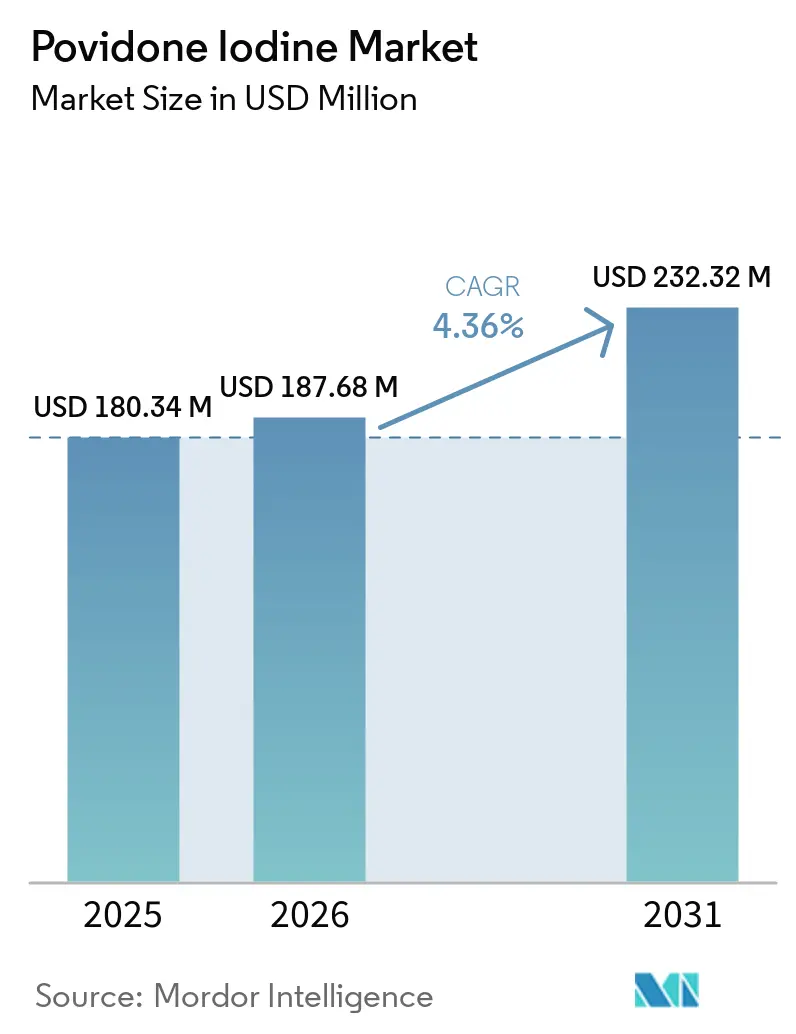
The povidone iodine market size was valued at USD 180.34 million in 2025 and is estimated to grow from USD 187.68 million in 2026 to reach USD 232.32 million by 2031, at a CAGR of 4.36% during the forecast period (2026-2031). Demand is supported by infection-control programs, surgical antisepsis protocols, and wound care use across healthcare settings. Povidone iodine remains relevant because no documented resistance to free iodine’s oxidative bactericidal mechanism has been reported after decades of widespread use. This characteristic supports its position in routine antisepsis protocols even where newer products compete for institutional purchasing. Product development is focused on applicators, film-forming combinations, and slow-release iodine dressings rather than new active ingredients. Opportunities also extend beyond hospitals into veterinary biosecurity, aquaculture, nasal decolonization, and ophthalmic antisepsis.
Key Report Takeaways
- By product type, povidone iodine solution held 39.67% revenue share in 2025, while povidone iodine scrub is forecast to grow at a 4.75% CAGR through 2031.
- By application, antiseptic applications accounted for 36.16% of the povidone iodine market share in 2025, while first aid is forecast to expand at a 4.81% CAGR through 2031.
- By end user, hospitals held 42.39% of the povidone iodine market share in 2025, while clinics recorded the highest projected CAGR at 4.94% through 2031.
- By geography, North America held 43.81% revenue share in 2025, while Asia-Pacific is forecast to grow at a 4.63% CAGR through 2031.
Note: Market size and forecast figures in this report are generated using Mordor Intelligence’s proprietary estimation framework, updated with the latest available data and insights as of January 2026.
Global Povidone Iodine Market Trends and Insights
Drivers Impact Analysis*
| Driver | (~) % Impact on CAGR Forecast | Geographic Relevance | Impact Timeline |
|---|---|---|---|
| Rising Surgical And Invasive Procedure Volumes | +1.2% | Global, concentrated in North America and Asia-Pacific | Short term (≤ 2 years) |
| Expanding Hospital Infection-Control Programs | +0.8% | Global, with early gains in North America and Western Europe | Medium term (2-4 years) |
| Growth In Chronic Wound And Diabetic Ulcer Management | +0.9% | North America and Europe, with a growing Asia-Pacific presence | Long term (≥ 4 years) |
| Healthcare Infrastructure Expansion In Asia-Pacific | +0.7% | Asia-Pacific, with spillover to the Middle East and Africa | Medium term (2-4 years) |
| Expansion Of Veterinary And Aquaculture Biosecurity Use | +0.4% | Asia-Pacific and European aquaculture markets | Long term (≥ 4 years) |
| Source: Mordor Intelligence | |||
Rising Surgical And Invasive Procedure Volumes
Surgical activity continues to support antiseptic use in hospitals and surgical centers. Each incision requires a preoperative antisepsis step, which links procedure volumes to povidone iodine consumption. The NHS has committed to expand robotic-assisted joint replacement and cancer surgery to 500,000 robotic procedures each year by 2035. This plan supports long-term demand for established surgical antiseptics in the United Kingdom. Solventum’s 3M Skin and Nasal Antiseptic contains 5% povidone iodine and is used for nasal Staphylococcus aureus decolonization before procedures. The company reports a 99.5% reduction in nasal S. aureus within 1 hour that continued for at least 12 hours, which supports use in orthopedic and cardiac surgery pathways.
Expanding Hospital Infection-Control Programs
Healthcare facilities are expanding infection prevention and control programs as clinical standards and regulatory oversight place greater emphasis on healthcare-associated infections. A 2025 multisociety position paper stated that all healthcare facilities require adequately resourced infection prevention programs. This requirement supports the use of established antiseptics for surgical preparation and wound care. Carilion Clinic increased its infection prevention staff from 11 to 24 professionals, and the program reported lower rates of catheter-associated urinary tract infections, C. difficile infections, and colon surgical site infections. These protocol reviews may favor povidone iodine for surgical preparation and wound care while supporting chlorhexidine for catheter-site applications. Infection-control guidelines and quality requirements continue to support the inclusion of povidone iodine in hospital care bundles.[1]Association for Professionals in Infection Control and Epidemiology, “Raising the Bar: Necessary Resources and Structure for Effective Healthcare Facility Infection Prevention and Control Programs,” Infection Control & Hospital Epidemiology, cambridge.org.
Growth In Chronic Wound And Diabetic Ulcer Management
Chronic wound care drives recurring demand for antiseptic products across clinical and outpatient settings. Healthcare providers use povidone iodine for wound cleansing and irrigation due to its broad antimicrobial activity. A peer-reviewed review found that dilute povidone iodine can disrupt bacterial biofilms when delivered through appropriate systems. The review also highlighted its use in hand disinfection, skin preparation, and antiseptic irrigation. Bulk solutions meet routine wound irrigation requirements, while gauze and slow-release iodine systems support extended wound management cycles. Cadexomer iodine, povidone iodine gauze, and other controlled-release formats represent a higher-value segment of the povidone iodine market than commodity solutions.
Healthcare Infrastructure Expansion In Asia Pacific
New and upgraded healthcare facilities across Asia-Pacific require standardized clinical supply chains and antiseptic products. In August 2026, the Asian Development Bank is expected to approve a USD 225 million loan to modernize 19 provincial hospitals in Mongolia and construct a 300-bed facility in Uvurkhangai Province. This investment would represent the bank’s largest health-sector investment in Mongolia. The Asian Infrastructure Investment Bank has also approved EUR 197.923 million for the RSAB Harapan Kita Hospital project in Indonesia. The project is expected to increase the hospital’s bed capacity from 271 to 550 beds, with construction scheduled through 2029. These new facilities and ambulatory care settings may increase demand for compact, single-use povidone-iodine formats.
Restraints Impact Analysis*
| Restraint | (~) % Impact on CAGR Forecast | Geographic Relevance | Impact Timeline |
|---|---|---|---|
| Competition From Chlorhexidine And Alcohol-Based Antiseptics | -1.3% | Global, most acute in North America and Europe | Short term (≤ 2 years) |
| Skin Irritation, Thyroid Risk, And Use-Related Safety Concerns | -0.8% | North America and Europe, with growing awareness in the Asia Pacific | Medium term (2-4 years) |
| Slower Drying And Lower Workflow Acceptance Of Povidone Iodine | -0.5% | Global, most acute in high-throughput surgical settings | Short term (≤ 2 years) |
| Source: Mordor Intelligence | |||
Competition From Chlorhexidine And Alcohol-Based Antiseptics
Chlorhexidine- and alcohol-based products compete directly with povidone iodine in institutional settings, where formulary decisions rely on clinical evidence. A 2025 meta-analysis of 32 randomized controlled trials involving 29,748 participants found that chlorhexidine reduced the overall risk of surgical site infections compared with povidone iodine, with a risk ratio of 0.83. The analysis reported greater benefits for chlorhexidine in clean-contaminated surgeries and cesarean sections. However, the difference was not statistically significant in orthopedic, cardiac, or gastrointestinal procedures. A second 2025 meta-analysis of 10 randomized controlled trials involving 9,689 catheters found that chlorhexidine was more effective in preventing catheter-related bloodstream infections, with a risk ratio of 0.460. These findings create procedure-specific competitive pressure on the povidone iodine market while supporting its continued use across several surgical categories.
Skin Irritation, Thyroid Risk, And Use-Related Safety Concerns
Systemic iodine absorption can limit the prolonged or extensive use of povidone-iodine in vulnerable patient groups. A 2024 study evaluating a topical 3% povidone-iodine liposomal hydrogel dressing reported reductions in T3, T4, and free T4 levels after four weeks of treatment. The study recommended thyroid function monitoring for patients receiving extended povidone-iodine wound therapy. Product labels also warn against use on large body areas, deep wounds, puncture wounds, and in patients with thyroid conditions. These limitations restrict routine use in certain burn care, neonatal care, and sensitive wound care settings. Health system formulary committees may require patient risk assessments before approving povidone-iodine for these clinical applications.
*Our forecasts treat driver/restraint impacts as directional, not additive. The impact forecasts reflect baseline growth, mix effects, and variable interactions.
Segment Analysis
By Product Type: Solutions Anchor Institutional Share, Scrubs Lead Growth
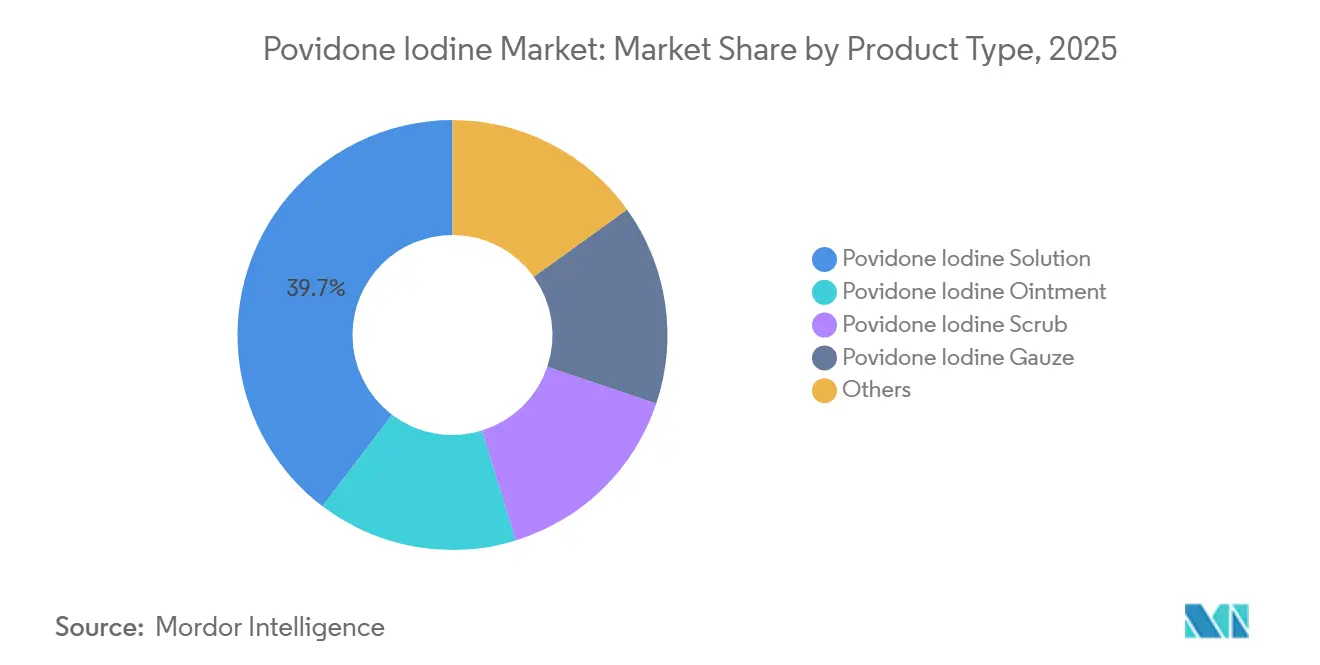
Povidone Iodine Solution held 39.67% of the povidone iodine market share by product revenue in 2025. Its position reflects use in surgical preparation, wound irrigation, and facility disinfection. Hospitals purchase standardized bulk solutions, often in 7.5% and 10% concentrations, through institutional procurement contracts. This purchasing pattern supports repeated demand from surgical and infection-control departments. Solution formats are also used in ambulatory and retail settings because they serve several antiseptic needs. Their broad clinical role makes them the principal volume format in the povidone iodine market.
Povidone Iodine Scrub is forecast to record a 4.75% CAGR from 2026 to 2031, making it the fastest-growing product type. The povidone iodine market size for scrub benefits from preoperative skin and hand-scrubbing requirements. WHO surgical site infection guidance supports preoperative antisepsis practices in healthcare settings. iVIEW Therapeutics received US Patent No. 12514873 in February 2026 for stable dilute povidone iodine formulations in polyethylene terephthalate and polypropylene containers. The formulation addresses iodine stability constraints that had limited use in ophthalmic antiseptic products. Gauze, ointment, cartridge applicators, hydrogel dressings, and sprays also extend product choice across wound-care and consumer applications. [2]World Health Organization, “Global Guidelines for the Prevention of Surgical Site Infection,” World Health Organization, who.int.



By Application: Antiseptic Demand Anchors Revenue, First Aid Channels Unlock Growth
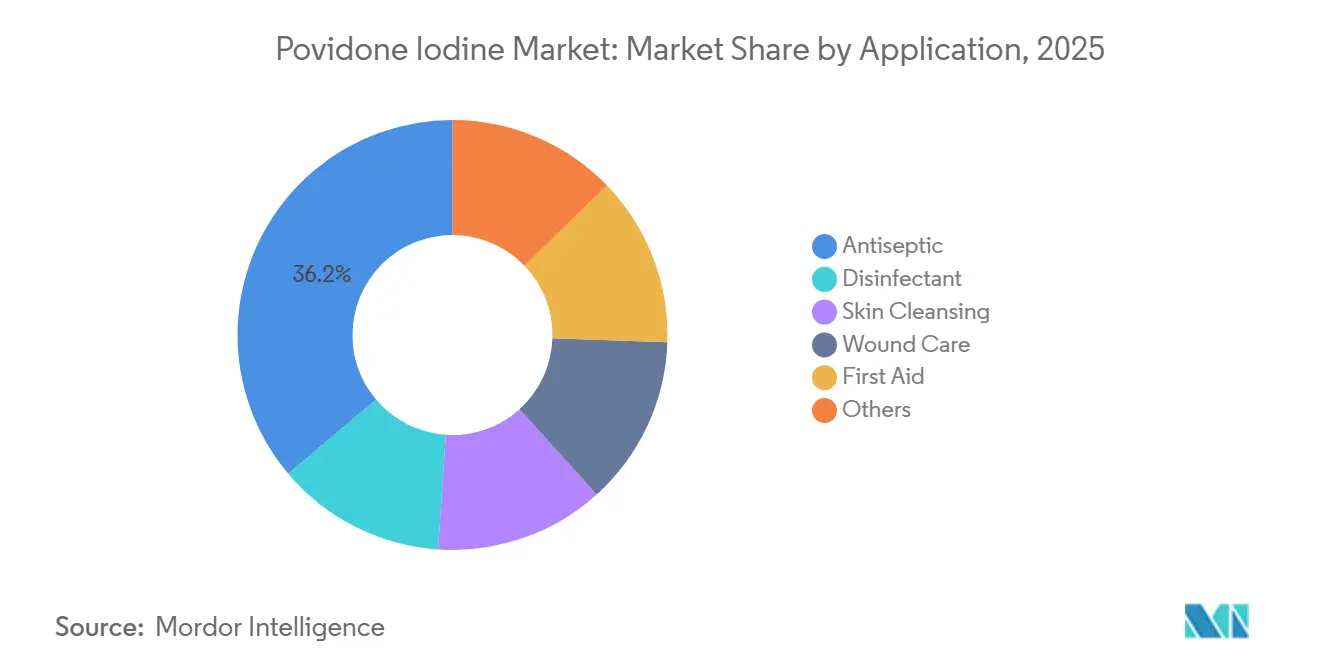
Antiseptic applications represented 36.16% of the povidone iodine market share in 2025. Surgical site preparation, catheter-site antisepsis, and procedural wound care supported this position. Disinfectant and skin-cleansing uses provide further demand across hospital infection-control protocols. Wound care remains important because povidone iodine can be used to manage bacterial biofilms without documented resistance induction. This profile supports its use in chronic wound management alongside other care approaches. The application mix keeps institutional clinical use central to the povidone iodine market.
First aid applications are forecast to grow at a 4.81% CAGR through 2031. Consumer awareness of wound management and broader over-the-counter distribution support this growth. Small portable products are suited to retail purchases and use before physical activity. iNova Pharmaceuticals Indonesia launched Betadine Clear Liquid 5 mL in September 2026 for first-aid preparedness. India’s Central Drugs Standard Control Organization and the US Food and Drug Administration regulate over-the-counter povidone iodine products through their applicable frameworks. These controls support quality expectations in consumer-facing antiseptic products.
By End User: Hospital Procurement Leads, Clinics Redefine the Growth Trajectory
Hospitals accounted for 42.39% of the povidone iodine market in 2025. They remain the main institutional location for surgical preparation, wound care, and infection-control use. Accreditation standards and clinical guidance support the use of validated antiseptics in hospital formularies. Centralized purchasing also favors formats that can serve multiple departments and procedures. Ambulatory surgical centers and pharmacies provide additional demand as procedures and routine care move beyond inpatient settings. Home care, veterinary settings, and aquaculture form part of the remaining end-user base.
Clinics are forecast to grow at a 4.94% CAGR from 2026 to 2031. Their growth reflects the movement of procedural care toward smaller outpatient facilities. Dermatology clinics, podiatry practices, and outpatient wound-care centers can require compact and single-use antiseptic formats. The povidone iodine market size for clinics is also supported by care for chronic wounds outside hospitals. Pharmacies benefit when products are positioned for self-care and first-aid use. These channels create demand patterns that differ from bulk hospital procurement.
Geography Analysis
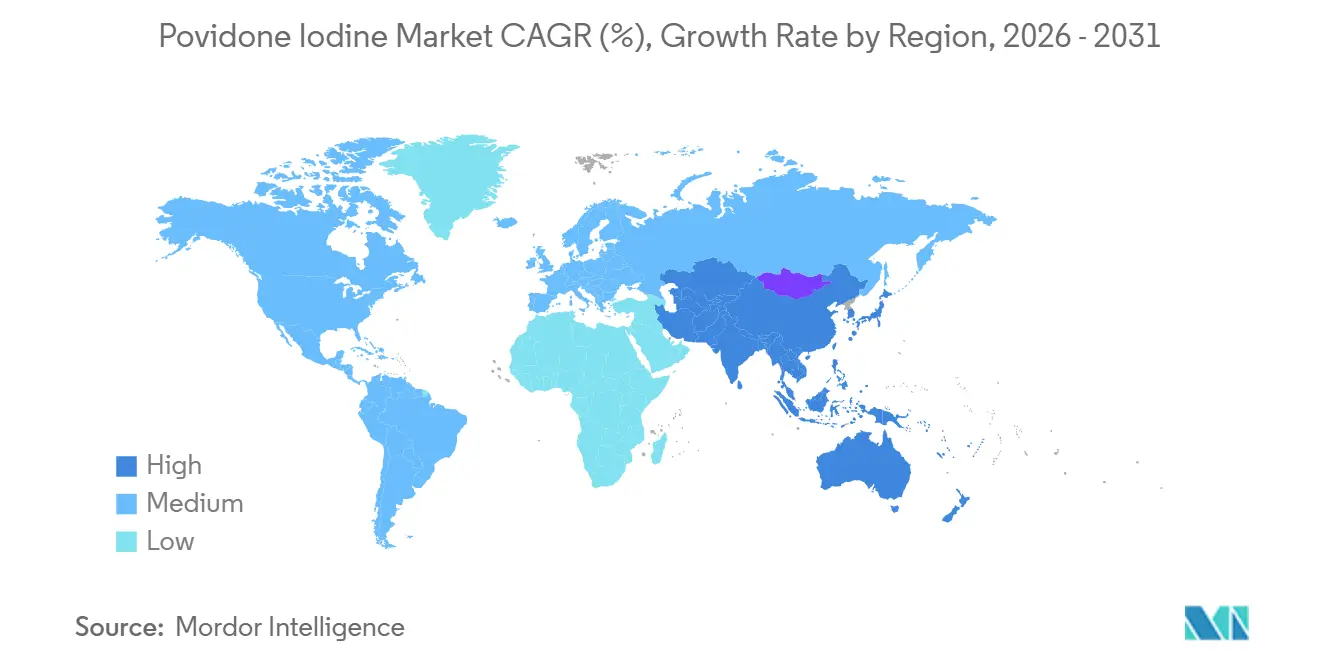
North America held 43.81% of the povidone iodine market share in 2025. The United States supported demand through hospital, government, and consumer health channels. Hospital accreditation requirements and infection-prevention guidance create a stable institutional purchasing base. The United States also uses pharmaceutical-grade specifications for hospital antiseptic products. Canada supports procedural antisepsis and wound-care demand through healthcare formularies. Mexico provides a secondary opportunity through its private hospital sector, where branded products compete with generics.
Asia-Pacific is forecast to expand at a 4.63% CAGR from 2026 to 2031. The povidone iodine market size in the region is supported by hospital construction, clinical supply expansion, and increasing surgical activity. Mongolia’s USD 225 million healthcare loan and Indonesia’s hospital expansion project illustrate public investment in additional capacity. China, Japan, and South Korea have established surgical antisepsis practices. Otsuka Pharmaceutical Factory’s 2025 cartridge launch shows demand for delivery-system innovation in Japan. ASEAN countries are expanding through hospital capacity programs and regulatory harmonization for pharmaceutical products.
Europe has a stable position because of pharmaceutical standards, hospital antiseptic consumption, and preoperative care protocols. Germany, the United Kingdom, and France have established use in surgical, dental, and wound-care settings. South America has moderate growth potential, with Brazil supported by its hospital network and infection-control awareness. The Middle East and Africa remain smaller but are developing through regulatory registrations and private healthcare investment. Tanzania registered Betadine Throat Spray 0.45% w/v in August 2026. Saudi Arabia’s healthcare privatization program is expanding private hospital capacity and can support standardized antiseptic adoption.

Competitive Landscape
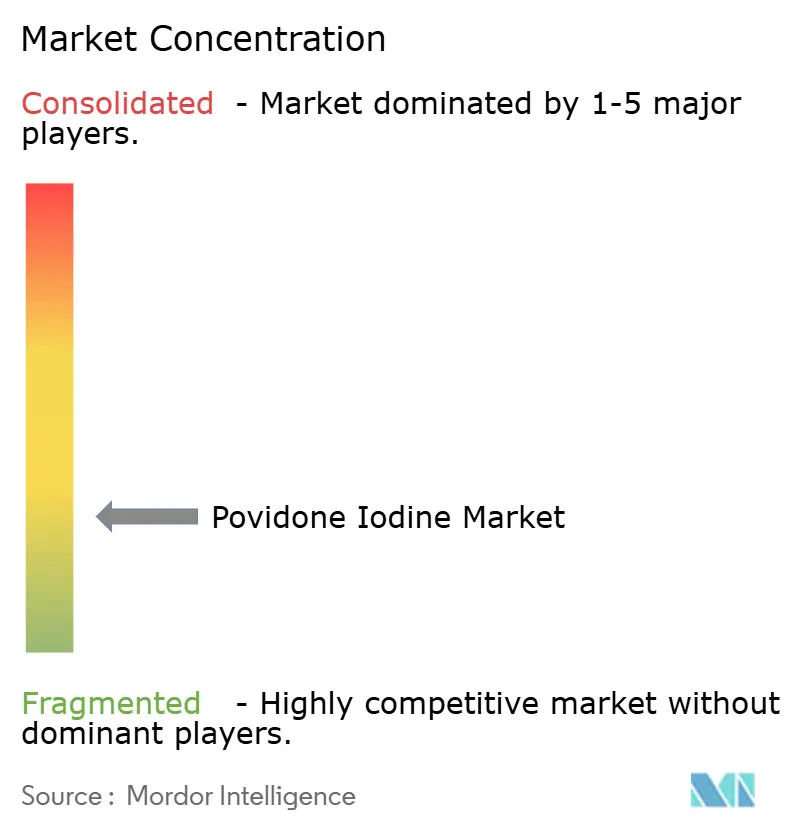
The povidone iodine market has separate upstream and downstream competitive groups. BASF, Merck KGaA, Ashland, Nippon Shokubai, and other producers supply pharmaceutical-grade polyvinylpyrrolidone, the polymer used in povidone iodine. BASF opened its GMP Solution Center in Wyandotte, Michigan, in June 2025 to expand pharmaceutical ingredient capabilities. Branded consumer health companies compete through clinical positioning, product portfolios, and distribution. API and formulation manufacturers in Asia also compete on price in institutional channels. This structure combines larger suppliers with a fragmented group of generic producers.
Solventum uses a film-forming polymer with povidone iodine in its 3M Skin and Nasal Antiseptic product for nasal decolonization. The company positions the product for orthopedic and cardiac surgery pathways. Otsuka Pharmaceutical Factory introduced a cartridge-applicator platform in Japan in August 2025. The platform enables selection of different antiseptic cartridges according to patient needs and procedural requirements. iVIEW Therapeutics received a patent in February 2026 for stable dilute povidone iodine formulations in PET and polypropylene containers. These actions show that differentiation is based on stability, packaging, and delivery formats rather than a new antiseptic active.
Compliance requirements can favor suppliers with established regulatory and quality capabilities. European biocidal approval requirements, US over-the-counter product rules, and ISO 13485-related quality systems affect access to regulated procurement channels. Ophthalmic formulations, slow-release wound dressings, and aquaculture products remain areas with limited incumbent competition. Medline maintains a hospital antiseptic applicator portfolio that includes povidone iodine solution, swabs, prep pads, and gel products. iNova Pharmaceuticals distributes Betadine across retail and institutional channels in more than 60 countries. Other relevant companies include Adani Pharmachem, Boai NKY Pharmaceuticals, Glide Chem, JH Nanhang Life Sciences, Lasa Supergenerics, R.N Laboratories, Samrat Pharmachem, Thatcher Company, and Vishal Laboratories.
Povidone Iodine Industry Leaders
Avrio Health L.P.
3M
BASF
iNova Pharmaceuticals
Samrat Pharmachem Limited
- *Disclaimer: Major Players sorted in no particular order

Recent Industry Developments
- March 2026: Corona Remedies Limited completed the acquisition of Wokadine, India’s number 2 povidone iodine brand, from Dr. Reddy’s Laboratories effective March 30, 2026. The brand comprises 14 SKUs serving surgeons, ENT specialists, and gynecologists. Funded entirely from internal accruals, the acquisition was Corona’s fifth brand deal and marked its entry into the antiseptic specialty category.
- August 2025: Otsuka Pharmaceutical Factory launched three antiseptics, including Povidone Iodine Solution 10% Antiseptic Cartridges Otsuka 25 mL, on August 27, 2025. The cartridge-applicator format broadens procedural compatibility for povidone iodine in surgical settings. The format allows selection of an appropriate antiseptic cartridge based on patient background.


Global Povidone Iodine Market Report Scope
Povidone iodine is a broad-spectrum antiseptic medication used to prevent and treat skin infections in minor cuts, scrapes, and burns, and to disinfect the skin before medical procedures.
The povidone iodine market is segmented by product type, application, end user, and geography. By product type, the market is segmented into povidone iodine solution, povidone iodine scrub, povidone iodine gauze, and povidone iodine ointment. By application, the market is segmented into antiseptic, disinfectant, skin cleansing, wound care, first aid, and others. By end user, the market is segmented into hospitals, clinics, ambulatory surgical centers, pharmacies, and others. By geography, the market is segmented into Asia Pacific, North America, Europe, South America, the Middle East and Africa. The report also covers the povidone iodine market size and forecasts for the povidone iodine market in 15 countries across major regions. For each segment, the market sizing and forecasts have been done on the basis of value (USD).
| Povidone Iodine Solution |
| Povidone Iodine Scrub |
| Povidone Iodine Gauze |
| Povidone Iodine Ointment |
| Others |
| Antiseptic |
| Disinfectant |
| Skin Cleansing |
| Wound Care |
| First Aid |
| Others |
| Hospitals |
| Clinics |
| Ambulatory Surgical Centers |
| Pharmacies |
| Others |
| Asia-Pacific | China |
| India | |
| Japan | |
| South Korea | |
| ASEAN Countries | |
| Rest of Asia-Pacific | |
| North America | United States |
| Canada | |
| Mexico | |
| Europe | Germany |
| United Kingdom | |
| France | |
| Italy | |
| NORDIC Countries | |
| Rest of Europe | |
| South America | Brazil |
| Argentina | |
| Rest of South America | |
| Middle East and Africa | Saudi Arabia |
| South Africa | |
| Rest of Middle East and Africa |
| By Product Type | Povidone Iodine Solution | |
| Povidone Iodine Scrub | ||
| Povidone Iodine Gauze | ||
| Povidone Iodine Ointment | ||
| Others | ||
| By Application | Antiseptic | |
| Disinfectant | ||
| Skin Cleansing | ||
| Wound Care | ||
| First Aid | ||
| Others | ||
| By End User | Hospitals | |
| Clinics | ||
| Ambulatory Surgical Centers | ||
| Pharmacies | ||
| Others | ||
| By Geography | Asia-Pacific | China |
| India | ||
| Japan | ||
| South Korea | ||
| ASEAN Countries | ||
| Rest of Asia-Pacific | ||
| North America | United States | |
| Canada | ||
| Mexico | ||
| Europe | Germany | |
| United Kingdom | ||
| France | ||
| Italy | ||
| NORDIC Countries | ||
| Rest of Europe | ||
| South America | Brazil | |
| Argentina | ||
| Rest of South America | ||
| Middle East and Africa | Saudi Arabia | |
| South Africa | ||
| Rest of Middle East and Africa | ||


Key Questions Answered in the Report
What is the current and forecast market value for the povidone iodine market?
The market is projected to increase from USD 187.68 million in 2026 to USD 232.32 million by 2031, at a 4.36% CAGR.
Which product type leads povidone iodine market?
Povidone Iodine product type held a revenue share with a 39.67% share in 2025 because it is used for surgical preparation, wound irrigation, and disinfection.
Which application is expected to grow the fastest during the forecast period?
First aid is projected to grow at a 4.81% CAGR through 2031, supported by consumer wound-care awareness and retail formats.
Which region is growing fastest for povidone iodine market?
Asia-Pacific is forecast to grow at a 4.63% CAGR through 2031 as healthcare capacity and surgical activity expand.
Page last updated on:


 Your data is secure and never sold or shared.


