
Pension Risk Transfer Market Size and Share
Market Overview
| Study Period | 2021 - 2032 |
|---|---|
| Market Size (2027) | USD 104.10 Billion |
| Market Size (2032) | USD 149.5 Billion |
| Growth Rate (2027 - 2032) | 7.50 % |
| Fastest Growing Market | Asia-Pacific |
| Largest Market | North America |
| Market Concentration | Medium |
Major Players
*Disclaimer: Major Players sorted in no particular order Image © Mordor Intelligence. Reuse requires attribution under CC BY 4.0. |
|
Pension Risk Transfer Market Analysis by Mordor Intelligence
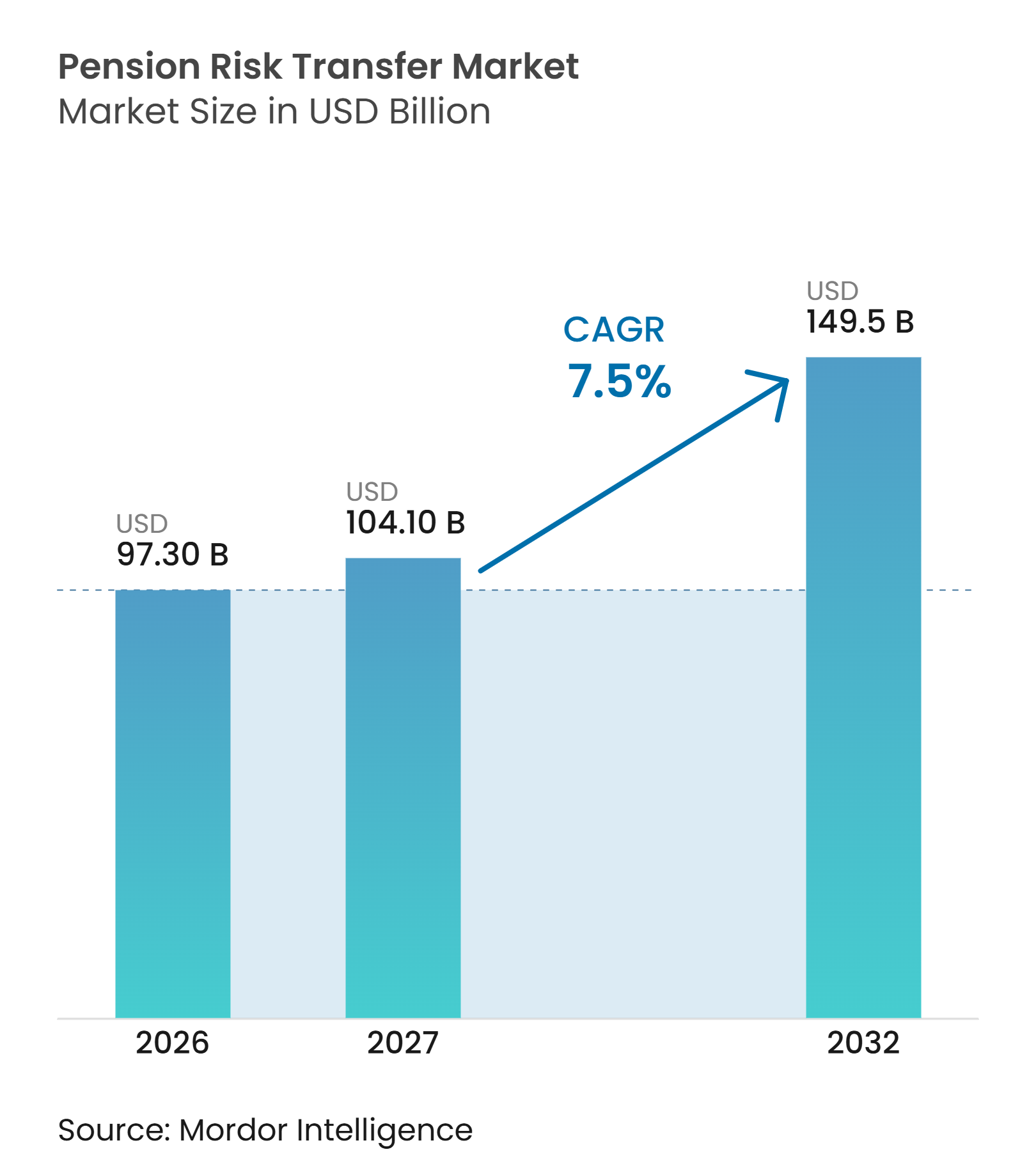
The Pension Risk Transfer Market size is expected to increase from USD 97.30 billion in 2026 to USD 104.10 billion in 2027 and reach USD 149.5 billion by 2032, growing at a CAGR of 7.5% over 2027-2032.
Defined benefit plan funding has improved in the United States and United Kingdom, making full liability transfer more achievable for plan sponsors. United States single-premium pension risk transfer sales reached USD 48.5 billion across 700 contracts in 2025, which was the third-highest annual result on record. The United Kingdom completed 367 bulk annuity transactions in 2025, while pricing and insurer participation remained favorable for many schemes. Consolidation among insurers is changing bidding capacity, and longevity reinsurance continues to support the capital required for larger transactions. Interest-rate movements and supervisory attention on funded reinsurance may still affect transaction timing and insurer pricing.
Key Report Takeaways
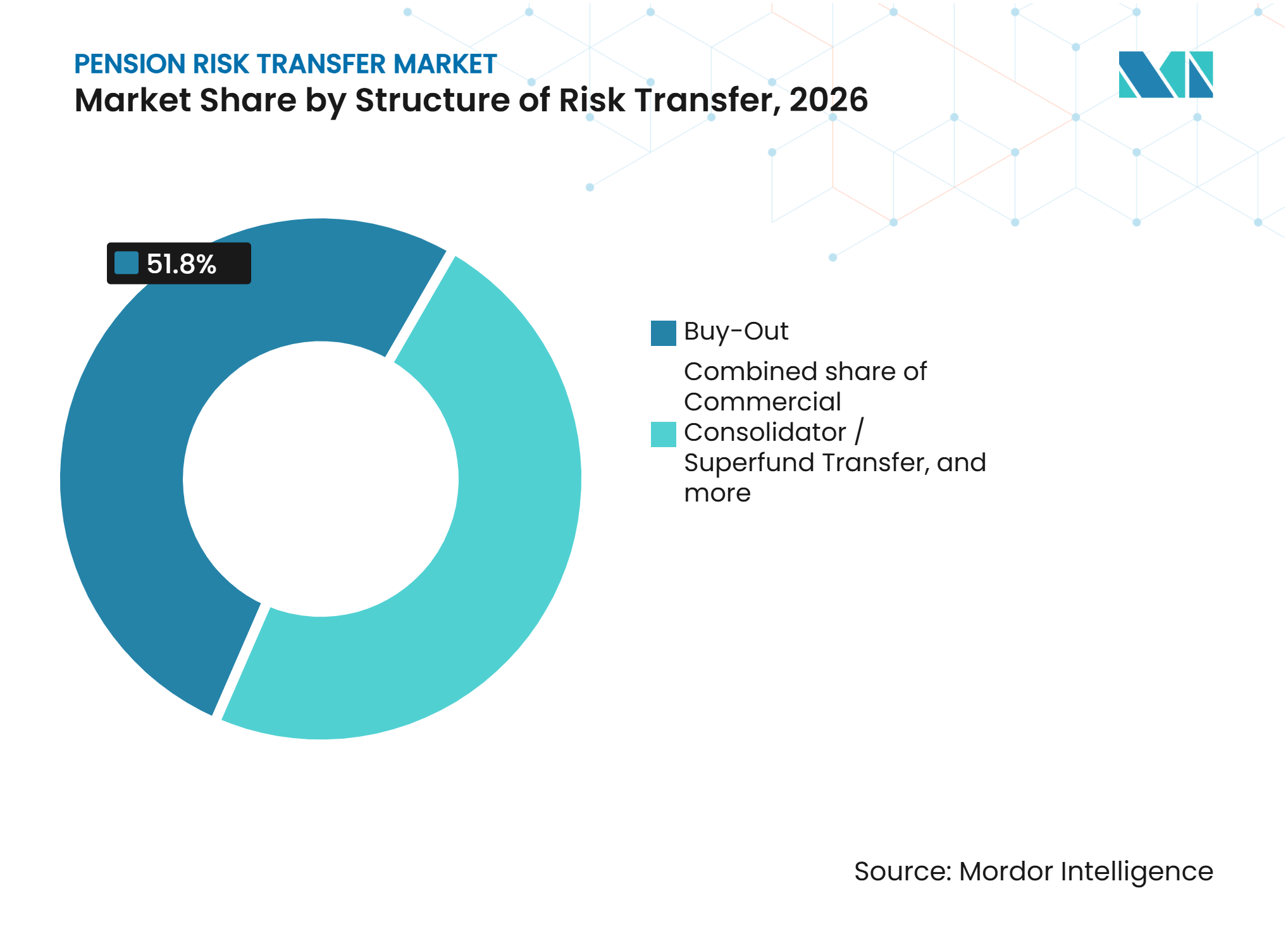
- By risk transfer structure, buy-outs captured 51.8% of the share of the pension risk transfer market in 2026, while commercial consolidator and superfund transfers are projected to grow at a 13.6% CAGR through 2032.
- By liability profile, in-pay retirees and beneficiaries captured 45.6% of the pension risk transfer market share of the pension risk transfer market in 2026, while deferred vested members are projected to grow at 9.5% CAGR through 2032.
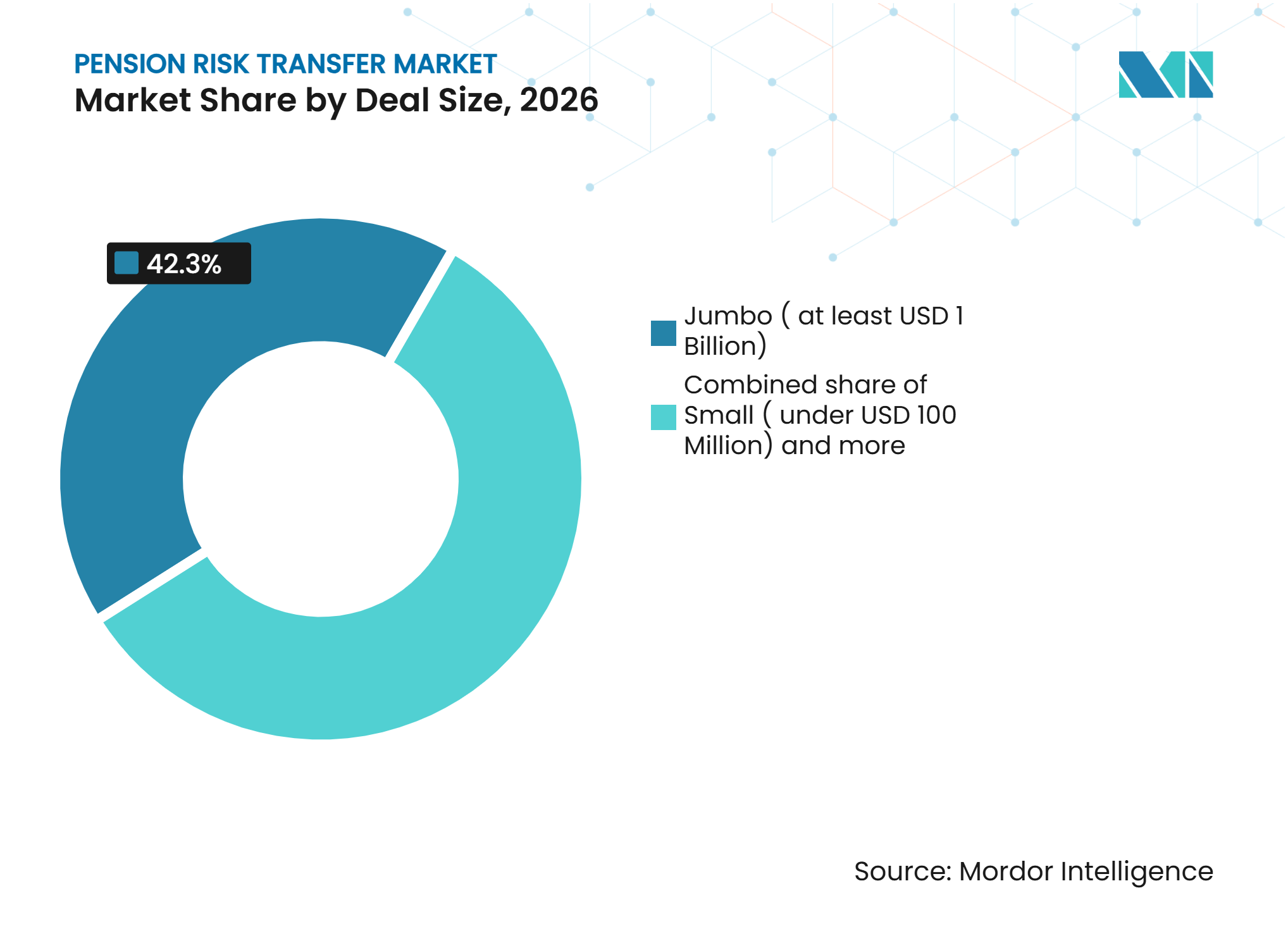
- By deal size, jumbo transactions of USD 1 billion or above captured 42.3% of the pension risk transfer market share in 2026, while small transactions below USD 100 million are projected to grow at 8.9% CAGR through 2032.
- By plan sponsor type, private-sector corporate plans captured 80.1% of the pension risk transfer market share in 2026, while multiemployer plans are projected to grow at 9.5% CAGR through 2032.
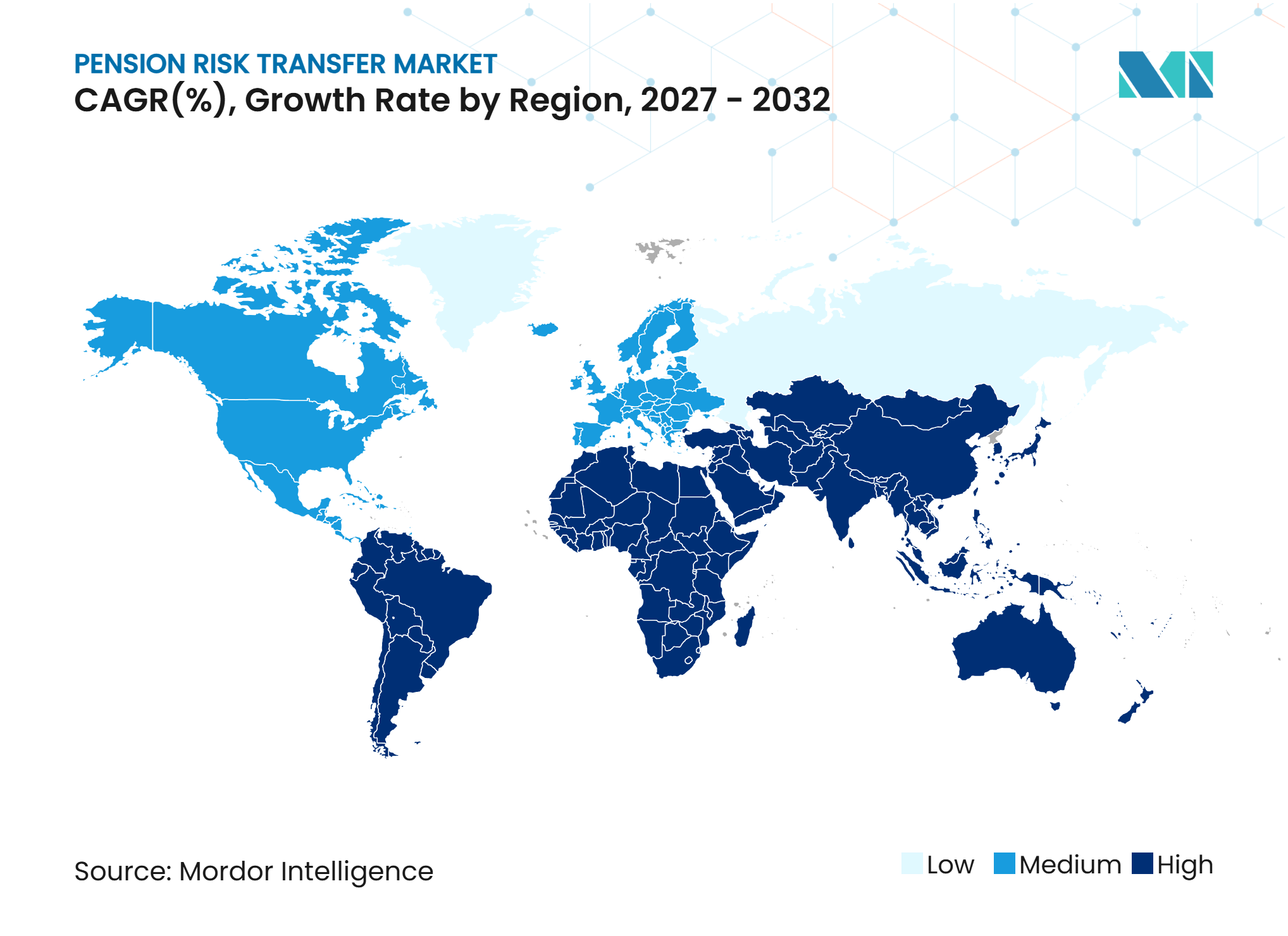
- By geography, North America captured 47.9% of the pension risk transfer market share in 2026, while Asia-Pacific is projected to grow at 10.5% CAGR through 2032.
Note: Market numbers in this report are based on Mordor Intelligence's proprietary estimation framework, which combines nine months of actuals with Q4 projections for base year 2026.
Market Trends and Insights
Drivers Impact Analysis of Pension Risk Transfer Market*
| Driver | (~) % Impact on CAGR Forecast | Geographic Relevance | Impact Timeline |
|---|---|---|---|
| Improving Defined Benefit Funding Levels and De-risking Affordability | +1.9% | North America and Europe | Short term (≤ 2 years) |
| Corporate Demand for Balance-Sheet and Pension Liability Risk Reduction | +1.7% | Global | Short term (≤ 2 years) |
| Longevity Risk and Aging Population Pressures | +1.3% | Global, with early gains in Western Europe and North America | Long term (≥ 4 years) |
| Insurer Capacity and Competitive Pension Risk Transfer Pricing | +1.1% | North America and European Union | Medium term (2-4 years) |
| Adoption of Flexible Pension De-risking and Risk Transfer Solutions | +0.6% | Global | Medium term (2-4 years) |
| Regulatory and Governance Pressure for Stronger Pension Risk Management | +0.4% | United Kingdom, European Union, and Australia | Medium term (2-4 years) |
| Source: Mordor Intelligence | |||
Improving Defined Benefit Funding Levels Unlock the Economics of De-risking
Improved defined benefit funding has made pension liability transfers more accessible to United States corporate sponsors. The funded ratio of the 100 largest United States corporate defined benefit plans reached 103.8% at year-end 2025, with an aggregate surplus of USD 48.1 billion, compared with 101.1% in 2024[1]. This indicates that more sponsors have funding positions capable of supporting pension risk transfer without substantial additional contributions. MetLife's October 2026 survey found that 95% of sponsors with de-risking goals intended to fully divest their pension liabilities, while 55% expected to complete the process within 2–5 years and another 25% within two years. These findings demonstrate how improved funding positions are translating into stronger demand for insurer-led pension risk transfer solutions.
Corporate Balance-Sheet Discipline Reshapes Transaction Structures
Corporate sponsors increasingly use pension risk transfer to reduce balance-sheet liabilities, limit funded-status volatility, and simplify long-term pension administration. United States buy-in premiums reached USD 17.5 billion in 2025, increasing 372% year over year, as sponsors adopted staged approaches to liability reduction. Unlike a buy-out, a buy-in allows the pension plan to retain its obligations to members while holding an insurance contract that transfers investment and longevity risks to the insurer. According to LIMRA, total United States single-premium pension risk transfer sales reached USD 48.8 billion in 2025, including USD 31.3 billion in buy-out premiums and USD 17.5 billion in buy-in premiums[2]. The growing use of buy-ins provides sponsors with pricing certainty and flexibility before proceeding with full plan termination.
Longevity Risk Creates a Durable Transfer Motive
Increasing life expectancy exposes defined benefit pension plans to uncertainty around the duration and total cost of future benefit payments. Pension risk transfer provides a mechanism for sponsors to transfer this exposure to insurers through group annuity buy-ins and buy-outs, alongside investment and interest-rate risks. In 2025, more than 740,000 defined benefit plan participants were covered by United States pension risk transfer transactions, demonstrating the scale of liability transfers involving long-term retirement obligations[3]. The growing use of insurer-backed buy-ins also allows sponsors to transfer longevity exposure while retaining plan administration and the legal pension obligations during the transition. This creates a structural source of demand for pension risk transfer beyond short-term changes in interest rates and asset valuations.
Insurer Capacity Expansion Keeps Pricing Competitive Across Deal Tiers
Insurer participation in the United States pension risk transfer market has broadened, increasing competition for both large and smaller transactions. According to Aon's 2026 annual report, 22 insurers were actively bidding in the United States market entering 2026, with 15 insurers individually writing more than USD 1 billion in pension risk transfer premiums during 2025. Market participation remained broad in 2026: nine insurers recorded more than USD 100 million in sales during the second quarter, while 180 contracts were issued, representing 24% year-over-year growth. Smaller transactions below USD 50 million remained particularly active despite lower overall premium volumes. This wider insurer participation supports competitive pricing, expands transaction options for mid-sized sponsors, and strengthens the market's ability to accommodate different pension liability profiles.
Restraints Impact Analysis of Pension Risk Transfer Market*
| Restraint | (~) % Impact on CAGR Forecast | Geographic Relevance | Impact Timeline |
|---|---|---|---|
| Pension Data Quality, Benefit Reconciliation, and Administrative Readiness Challenges | -0.5% | Global | Medium term (2-4 years) |
| Interest-Rate Volatility and Asset-Liability Valuation Movements | -0.5% | Global | Short term (≤ 2 years) |
| Regulatory Complexity, Fiduciary Scrutiny, and Insurer Counterparty Risk | -0.3% | United Kingdom and North America | Medium term (2-4 years) |
| Competing Run-On and Self-Sufficiency Strategies Reducing Buyout Demand | -0.2% | United Kingdom and North America | Long term (≥ 4 years) |
| Source: Mordor Intelligence | |||
Pension Data Quality Gaps Constrain Transaction Speed and Certainty
Incomplete pension records can delay United States pension risk transfer transactions even when sponsors have sufficient funding and insurer interest. Insurers require accurate participant demographics, employment histories, benefit calculations, marital status, and beneficiary information to establish reliable pricing and eligibility assumptions. Mercer's 2025 survey of 173 United States corporate pension executives found that 63% considered their pension data to be in good condition. Data inaccuracies can create additional reconciliation, participant tracing, and benefit validation requirements, increasing transaction costs and delaying insurer quotations. These challenges are particularly significant for smaller sponsors with limited administrative resources. Consequently, data cleansing and administrative preparation remain essential prerequisites for timely and cost-effective pension liability transfers.
Interest-Rate Volatility Introduces Timing Uncertainty for Plan Sponsors
Fluctuations in interest rates influence defined benefit plan liabilities, funded positions, and insurer annuity pricing, making transaction timing an important consideration for sponsors. Lower discount rates generally increase the present value of pension obligations, potentially raising the funding required to complete a buy-out. United States pension risk transfer sales totalled USD 6.79 billion in the first half of 2026, declining 39% year over year. However, LIMRA attributed the slowdown primarily to transaction timing following the strong fourth quarter of 2025 and the absence of large transactions, rather than establishing interest-rate volatility as the direct cause. In Q2 2026, no transactions exceeding USD 250 million were completed, despite a 24% increase in contract volumes to 180. This uneven deal flow highlights how market conditions, pricing considerations, and sponsor transaction schedules can create quarterly volatility in pension risk transfer activity.
*Our forecasts treat driver/restraint impacts as directional, not additive. The impact forecasts reflect baseline growth, mix effects, and variable interactions.
Pension Risk Transfer Market Segment Analysis
By Structure of Risk Transfer:
Buy-Outs Anchor an Evolving Product MixBuy-outs accounted for an estimated 51.8% of the global pension risk transfer market in 2026, supported by corporate sponsors' objective of removing defined benefit pension obligations from their balance sheets. They transfer responsibility for covered benefits directly to an insurer, providing members with an insurance-backed income commitment and enabling sponsors to complete plan termination where funding and regulatory requirements permit. Buy-ins remain an important alternative for schemes seeking to secure pension liabilities with an insurer while retaining the obligation to pay members and administer the plan during a transition. In the United States, buy-in premiums reached USD 17.5 billion in 2025, increasing 372% year over year and illustrating the growing use of staged de-risking strategies. In the United Kingdom, Legal & General completed a GBP 4.6 billion (USD 6.2 billion) buy-in with Ford pension schemes in October 2025, securing benefits for more than 35,000 retirees. Longevity swaps also remain relevant, particularly for large schemes seeking to transfer longevity risk without transferring all investment and benefit obligations.
Commercial consolidator and superfund transfers are projected to record a 13.6% CAGR through 2032, making them the fastest-growing structure in the global pension risk transfer market. These arrangements offer an alternative for defined benefit schemes that may not be sufficiently funded to complete an immediate insurer buy-out or prefer a different endgame structure. The United Kingdom is currently an important market for this model, with the government targeting the establishment of a permanent regulatory framework for defined benefit superfunds by 2028. Unlike conventional buy-ins and buy-outs, superfunds consolidate pension liabilities into a separate pension vehicle supported by a capital buffer rather than transferring them directly to an insurance company. Although adoption remains geographically concentrated, regulatory development and growing interest in pension consolidation could broaden the role of these structures in the global market.


By Liability Profile:
Pensioner Liabilities Drive Near-Term Transfer VolumeIn-pay retirees and beneficiaries accounted for an estimated 45.6% of the global Pension Risk Transfer market in 2026. Insurers can generally assess these liabilities more readily because members are already receiving benefits and the timing of payments is more predictable than for younger deferred members. This supports the pricing and execution of bulk annuity transactions involving large retiree populations. For example, Legal & General completed a GBP 4.6 billion (USD 6.2 billion) buy-in with the Ford pension schemes in October 2025, securing benefits for more than 35,000 retirees. The transaction illustrates the scale of retiree liabilities that can be transferred through a single deal and reinforces the importance of pensioner populations in the transaction pipeline.
Deferred vested members are forecast to grow at a 9.5% CAGR through 2032, as better-funded schemes increasingly move from partial de-risking towards comprehensive liability settlement. Including deferred members enables sponsors to extend insurance protection beyond existing retirees and progress towards full plan termination. Legal & General's 2025 United Kingdom market update noted that schemes reaching buy-out surplus can use the additional funding to enhance member benefits, creating greater flexibility in their settlement strategies. The growing ability to accommodate different member groups within bulk annuity transactions is therefore expected to support broader liability coverage across the global Pension Risk Transfer market.
By Deal Size:
Jumbo Premium Anchors a Fragmented Deal LandscapeJumbo transactions of USD 1 billion or above accounted for an estimated 42.3% of the global pension risk transfer market in 2026. These transactions contribute substantial premium volumes because large corporate pension schemes can transfer significant retiree populations through a single arrangement. Recent examples include Legal & General's GBP 4.6 billion (USD 6.2 billion) buy-in with the Ford pension schemes and Pension Insurance Corporation's GBP 4.3 billion (USD 5.8 billion) buy-in with the Rolls-Royce United Kingdom Pension Fund, both completed in 2025. The Rolls-Royce transaction subsequently progressed to a full buy-out in July 2026, covering approximately 36,000 members. Such transactions require substantial insurer capital, detailed actuarial assessments, and coordination among trustees, sponsors, and advisers. Their size also means that a relatively small number of jumbo deals can materially influence annual market premiums.
Small transactions below USD 100 million are projected to grow at an 8.9% CAGR through 2032, reflecting increased participation by smaller and mid-sized pension schemes seeking insurer-backed solutions. The United Kingdom provides evidence of this expanding transaction activity: 304 of its 367 bulk annuity transactions in 2025 were below GBP 100 million (USD 135 million), representing approximately 83% of the total deal count. This activity demonstrates the importance of smaller transactions in broadening market participation beyond large corporate schemes. Greater use of streamlined quotation processes, standardised data requirements, and dedicated smaller-scheme solutions could further support this segment's development across established PRT markets.

By Plan Sponsor Type:
Corporate Sponsors Lead, Multiemployer Plans AcceleratePrivate-sector corporate plans accounted for an estimated 80.1% of the global Pension Risk Transfer market in 2026, reflecting their established role in transferring defined benefit pension obligations to insurers. Corporate sponsors increasingly use buy-ins, buy-outs and longevity solutions to reduce pension-related balance-sheet exposure, investment risk and ongoing administration requirements. Mature defined benefit markets in the United States and United Kingdom have well-established insurance, regulatory and advisory frameworks that support these transactions. In the United States, Pension Benefit Guaranty Corporation (PBGC) premiums and the costs associated with maintaining defined benefit plans can also influence sponsors' decisions to evaluate plan termination and liability transfer. Public-sector schemes generally have different funding, governance, and sponsor-support arrangements, which can make commercial insurance transfer less common in certain jurisdictions.
Multiemployer plans are expected to expand at a 9.5% CAGR through 2032. This segment is particularly relevant to the United States, where multiple employers participate in collectively governed pension arrangements. Their shared governance structures, diverse employer contributions, and complex participant populations can make commercial risk transfer more difficult than for single-employer corporate plans. The PBGC reported that its United States Multiemployer Program had a positive net position of USD 2.6 billion as of September 30, 2025, reflecting an improvement in the programme's financial position. However, this development should be viewed as an indicator of the programme's financial condition rather than direct evidence of increased commercial PRT transactions. Future segment growth will depend on the availability of suitable risk-transfer structures, regulatory conditions, and the financial capacity of individual plans to secure member benefits.
Geography Analysis
North America
North America accounted for an estimated 47.9% of the Pension Risk Transfer market in 2026, supported by the scale of the United States corporate defined benefit pension system and its established insurer and regulatory infrastructure. United States single-premium PRT assets reached USD 342.1 billion in 2025, comprising USD 326 billion in buy-out assets and USD 16.1 billion in buy-in assets. MetLife's 2026 PRT Poll found that 92% of United States sponsors with de-risking objectives had formal or informal transaction trigger frameworks, while 78% were discussing PRT strategies with C-suite executives. The Employee Retirement Income Security Act (ERISA), administered through the Department of Labor, and the Pension Benefit Guaranty Corporation (PBGC) provide important regulatory oversight of pension funding, fiduciary responsibilities, and plan termination. In January 2026, the Department of Labor filed an amicus brief in Konya v. Lockheed Martin, clarifying its position on ERISA requirements and fiduciary responsibilities in pension risk transfer decisions. These established market structures, strong sponsor engagement, and insurer capacity support North America's leading position, although transaction timing remains sensitive to interest rates and annuity pricing.
Asia-Pacific
Asia-Pacific is projected to grow at a 10.5% CAGR through 2032, driven by evolving capital regulations, reinsurance use, and retirement income solutions. Japan introduced J-ICS on March 31, 2026, requiring insurers to assess capital adequacy based on the economic value of assets and liabilities. In March 2026, Talcott Life Re expanded its reinsurance arrangement with Japan Post Insurance by JPY 100 billion (USD 625 million) for in-force payout annuities, highlighting cross-border risk transfer. In Australia, the Australian Prudential Regulation Authority finalized an advanced illiquidity premium option for eligible longevity products, effective July 1, 2026. Aware Super's AUD 30 million (USD 19 million) buy-in with Challenger in December 2025 further demonstrates insurer-backed defined benefit liability management. These developments support the regional risk-transfer ecosystem.
Europe, South America, and Middle East and Africa
Europe is a key pension risk transfer market, led by the United Kingdom's mature bulk annuity and longevity-risk transfer sectors. The United Kingdom recorded 367 bulk annuity transactions worth GBP 38.2 billion (USD 51.5 billion) in 2025, along with GBP 18.8 billion (USD 25.4 billion) in longevity swap transactions. The Netherlands is transitioning to a new pension system under the Future of Pensions Act, with accrued entitlements required to move by January 1, 2028. Germany, France, and Italy offer varied liability-transfer opportunities due to differences in pension structures, regulations, and insurer participation. South America, the Middle East, and Africa remain nascent PRT markets, with growth dependent on pension-system development, regulatory changes, and local insurer capacity.
Competitive Landscape
Market Concentration
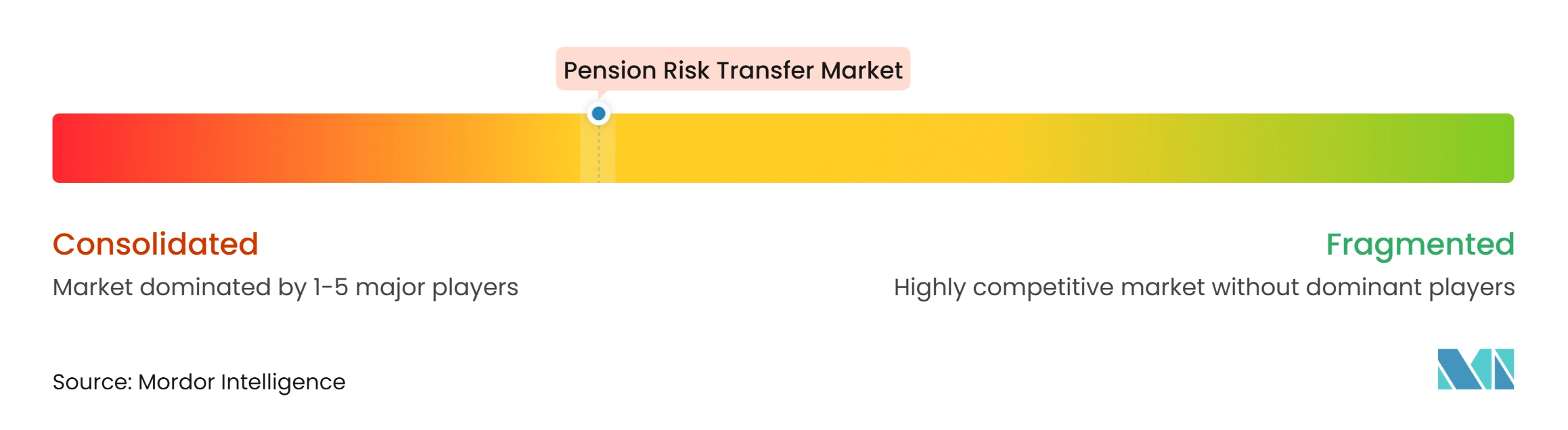
The pension risk transfer (PRT) market is moderately concentrated, with a relatively small group of large insurers and reinsurers accounting for a significant proportion of transaction activity, particularly in the United States and United Kingdom. The competitive landscape includes established providers such as Prudential Financial, Legal & General, Athora (including Pension Insurance Corporation), Rothesay, Aviva, Brookfield Wealth Solutions (including Just Group), MetLife, Canada Life and other regional insurers. The United States recorded USD 48.7 billion in PRT premiums across 697 transactions in 2025, with 22 insurers actively bidding, while the United Kingdom recorded GBP 38.2 billion (USD 51.6 billion) in buy-in transactions across 367 deals. These markets represent the largest established centers of PRT activity, although Canada, the Netherlands, Ireland and Germany are also developing opportunities for pension risk transfer.
Competition is increasingly shaped by consolidation, international investment and insurers' ability to source long-duration assets. Acquisitions involving Athora and Pension Insurance Corporation and Brookfield Wealth Solutions and Just Group demonstrate the growing participation of global investment platforms in retirement risk transfer. Insurers are also strengthening their capabilities through partnerships, alternative capital arrangements and longevity reinsurance. In the United States, 22 insurers actively bid for PRT business in 2025, while the United Kingdom recorded participation from 11 insurers, reflecting expanding underwriting capacity and competition. These developments are enabling providers to pursue larger transactions, diversify investment portfolios and expand their presence across pension markets.
Regulatory requirements, longevity exposure, capital efficiency and investment capabilities remain important competitive differentiators across markets. Supervisory frameworks governing insurer solvency, asset-liability management, counterparty exposure and reinsurance arrangements influence providers' ability to assume long-term pension liabilities. Meanwhile, growing demand for buy-ins, buy-outs, longevity swaps and cross-border pension solutions is encouraging insurers and reinsurers to develop more flexible risk transfer propositions. Providers with strong capital positions, diversified reinsurance relationships, access to private credit and infrastructure investments, and efficient administration capabilities are better positioned to compete across established and emerging PRT markets.
Pension Risk Transfer Industry Leaders
-
Legal & General Group Plc
-
Pension Insurance Corporation Group Limited
-
Rothesay Life Plc
-
Aviva plc
-
Standard Life Assurance Limited
- *Disclaimer: Major Players sorted in no particular order
Pension Risk Transfer Market Companies Covered in this Report
- Legal & General Group plc
- Pension Insurance Corporation (PIC)
- Rothesay Life plc
- Aviva plc
- Standard Life
- Just Retirement (Just Group)
- M&G plc
- Royal London Mutual Insurance Society Limited
- Canada Life
- JAB Pensions
- Blumont Annuity Company
- MetLife, Inc.
- Prudential Financial, Inc.
- Corebridge Financial, Inc.
- New York Life Insurance Company
- MassMutual
- Athene
- Principal Financial Group
- Pacific Life
- Securian Financial
Recent Industry Developments in Pension Risk Transfer Market
- October 2026: L&G and the UBS (United Kingdom) Group Pension Plan completed a GBP 1.7 billion (USD 2.3 billion) buy-in, the largest announced United Kingdom pension risk transfer deal of 2026, covering more than 7,000 members and incorporating the novation of an existing longevity hedge with Zurich.
- July 2026: Brookfield Wealth Solutions completed the acquisition of Just Group for GBP 2.4 billion (USD 3.2 billion), lifting Brookfield's global insurance assets under management to USD 180 billion and adding more than 700,000 customers. Brookfield has guided to GBP 40 billion to GBP 50 billion (USD 53.9 billion to USD 67.4 billion) of annual United Kingdom pension risk transfer flow at scale via Just and plans to consolidate Blumont under the Just brand.
- April 2026: Athora Holding completed the acquisition of Pension Insurance Corporation Group for GBP 5.7 billion (USD 7.7 billion), creating one of Europe's largest savings and retirement services groups with EUR 139 billion (USD 187.5 billion) of assets under management and administration and 3.1 million policyholders. Athora plans to relocate its headquarters to the United Kingdom by late 2027, subject to Prudential Regulation Authority approval.
- March 2026: Swiss Re executed a USD 2 billion longevity reinsurance transaction with Athene covering United States retirees, its first longevity reinsurance transaction in the United States, extending a track record covering more than USD 50 billion of pension benefits and over 1 million retirees globally.
Global Pension Risk Transfer Market Report Scope
Segmentation Overview
| Buy-In |
| Buy-Out |
| Longevity Swap / Longevity Reinsurance |
| Commercial Consolidator / Superfund Transfer |
| In-Pay Retirees and Beneficiaries |
| Deferred Vested Members |
| Active Members |
| Mixed-Member Liability Portfolios |
| Small: < USD 100 million |
| Mid-Sized: USD 100 million to < USD 500 million |
| Large: USD 500 million to < USD 1 billion |
| Jumbo: ≥ USD 1 billion |
| Private-Sector Corporate Pension Plans |
| Public-Sector Pension Plans |
| Multiemployer and Industry-Wide Pension Plans |
| North America | United States |
| Canada | |
| Mexico | |
| South America | Brazil |
| Argentina | |
| Rest of South America | |
| Europe | United Kingdom |
| Germany | |
| France | |
| Italy | |
| Spain | |
| Rest of Europe | |
| Asia-Pacific | China |
| Japan | |
| India | |
| South Korea | |
| Australia | |
| Indonesia | |
| Thailand | |
| Malaysia | |
| Singapore | |
| Vietnam | |
| Rest of Asia-Pacific | |
| Middle East and Africa | Saudi Arabia |
| United Arab Emirates | |
| Turkey | |
| South Africa | |
| Egypt | |
| Rest of Middle East and Africa |
| By Structure of Risk Transfer | Buy-In | |
| Buy-Out | ||
| Longevity Swap / Longevity Reinsurance | ||
| Commercial Consolidator / Superfund Transfer | ||
| By Liability Profile | In-Pay Retirees and Beneficiaries | |
| Deferred Vested Members | ||
| Active Members | ||
| Mixed-Member Liability Portfolios | ||
| By Deal Size | Small: < USD 100 million | |
| Mid-Sized: USD 100 million to < USD 500 million | ||
| Large: USD 500 million to < USD 1 billion | ||
| Jumbo: ≥ USD 1 billion | ||
| By Plan Sponsor Type | Private-Sector Corporate Pension Plans | |
| Public-Sector Pension Plans | ||
| Multiemployer and Industry-Wide Pension Plans | ||
| By Geography | North America | United States |
| Canada | ||
| Mexico | ||
| South America | Brazil | |
| Argentina | ||
| Rest of South America | ||
| Europe | United Kingdom | |
| Germany | ||
| France | ||
| Italy | ||
| Spain | ||
| Rest of Europe | ||
| Asia-Pacific | China | |
| Japan | ||
| India | ||
| South Korea | ||
| Australia | ||
| Indonesia | ||
| Thailand | ||
| Malaysia | ||
| Singapore | ||
| Vietnam | ||
| Rest of Asia-Pacific | ||
| Middle East and Africa | Saudi Arabia | |
| United Arab Emirates | ||
| Turkey | ||
| South Africa | ||
| Egypt | ||
| Rest of Middle East and Africa | ||
Key Questions Answered in the Report
What is driving pension risk transfer activity?
Better funding positions, balance-sheet risk reduction, and the need to manage longevity exposure are supporting demand. The market is projected to reach USD 149.5 billion by 2032 at a 7.5% CAGR.
Which risk transfer structure has the largest share?
Buy-outs lead with a 51.8% share in 2026 because they can remove pension liabilities from a sponsor's balance sheet.
Which pension risk transfer structure is growing fastest?
Commercial consolidator and superfund transfer is projected to grow at a 13.6% CAGR through 2032.
Why do sponsors use pension buy-ins?
A buy-in lets a sponsor secure an insurer contract and begin staged de-risking while the pension liability remains within the plan. United States buy-in premiums reached USD 17.5 billion in 2025.
Which region leads pension risk transfer activity?
North America leads with a 47.9% share in 2026, supported by the depth of the United States corporate defined benefit system.
What is the key risk affecting transaction timing?
Interest-rate volatility can change liability values and insurer pricing. United States sales fell 39% in the first half of 2026 from the first half of 2025.