
Organic Rice Flour Market Size and Share
Market Overview
| Study Period | 2021 - 2031 |
|---|---|
| Market Size (2026) | USD 204.27 Million |
| Market Size (2031) | USD 307.69 Million |
| Growth Rate (2026 - 2031) | 8.54 % |
| Fastest Growing Market | Asia-Pacific |
| Largest Market | Asia-Pacific |
| Market Concentration | Medium |
Major Players
*Disclaimer: Major Players sorted in no particular order Image © Mordor Intelligence. Reuse requires attribution under CC BY 4.0. |
|
Organic Rice Flour Market Analysis by Mordor Intelligence
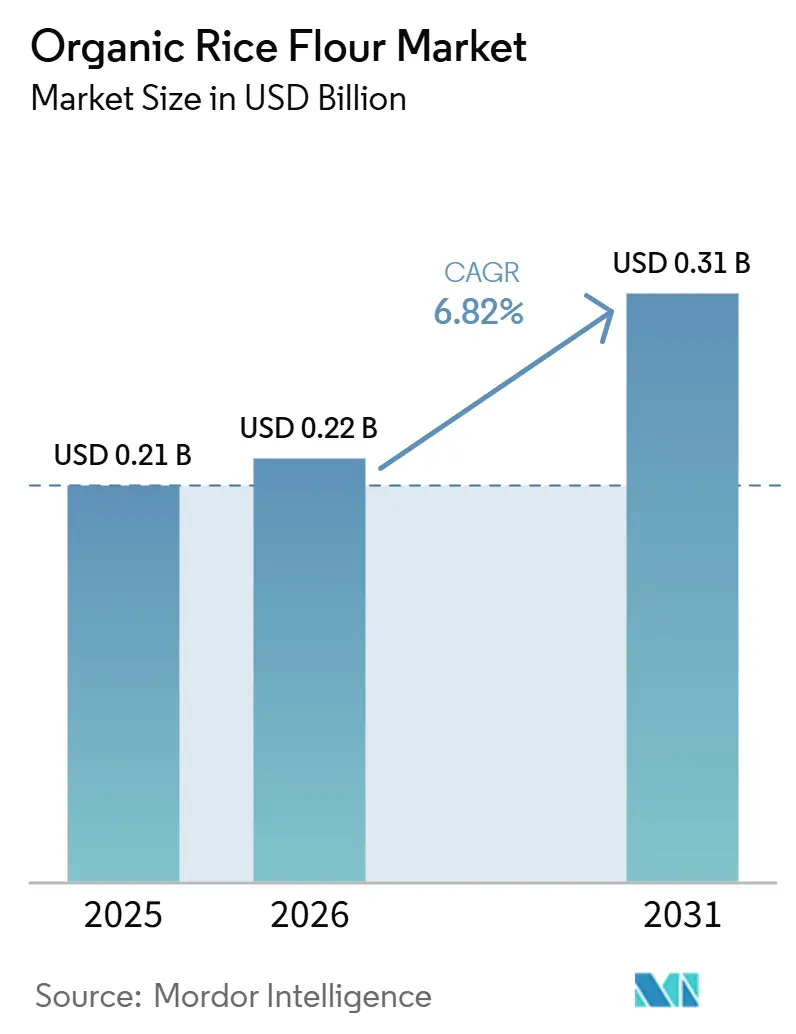
The global organic rice flour market was valued at USD 183.59 million in 2025 and is estimated to reach USD 204.27 million in 2026, growing to USD 3007.69 million by 2031, at a CAGR of 8.54% during the forecast period. Market growth is driven by increasing consumer preference for clean-label, minimally processed, and certified organic food ingredients, as well as the growing adoption of gluten-free diets and allergen-friendly formulations. Rising demand for organic bakery products, infant nutrition, functional foods, and plant-based products is encouraging food manufacturers to incorporate organic rice flour into a wider range of formulations. Additionally, advancements in organic milling technologies and strengthening organic certification and traceability systems are improving product quality, consistency, and consumer confidence, supporting sustained market expansion.
Key Report Takeaways
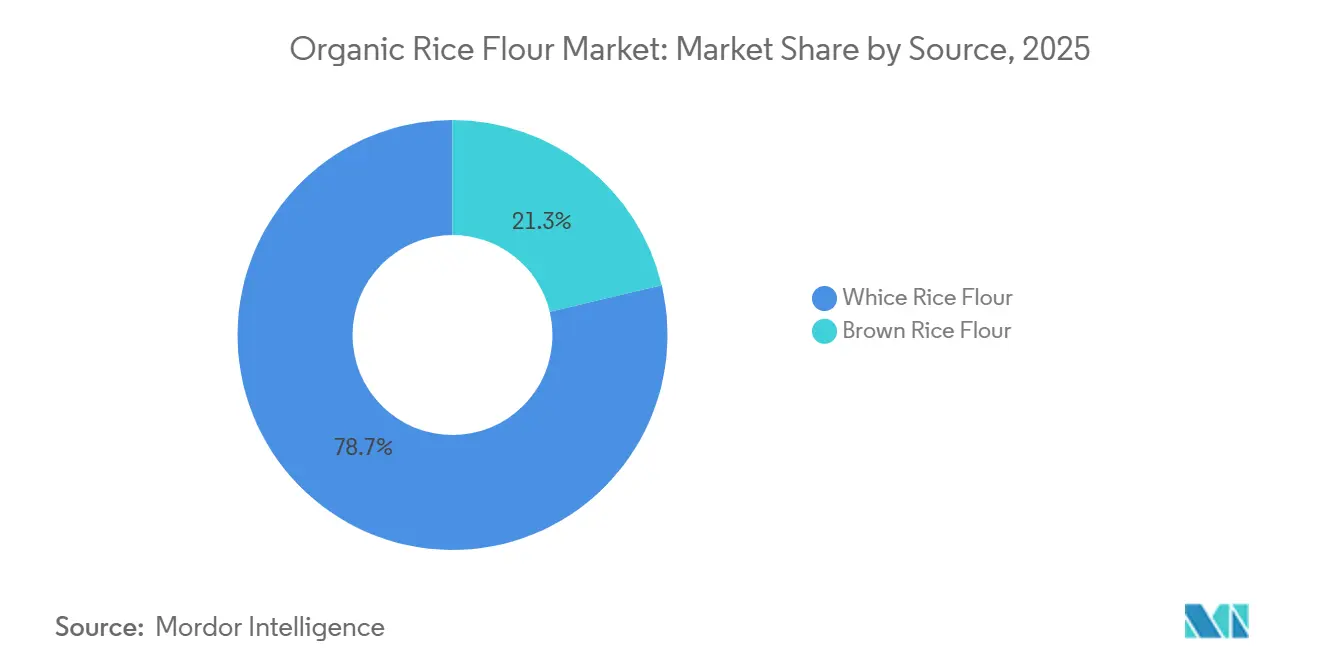
- By source, white rice flour held 78.72% of the organic rice flour market share in 2025, while brown rice flour is forecast to grow at a 9.04% CAGR through 2031.
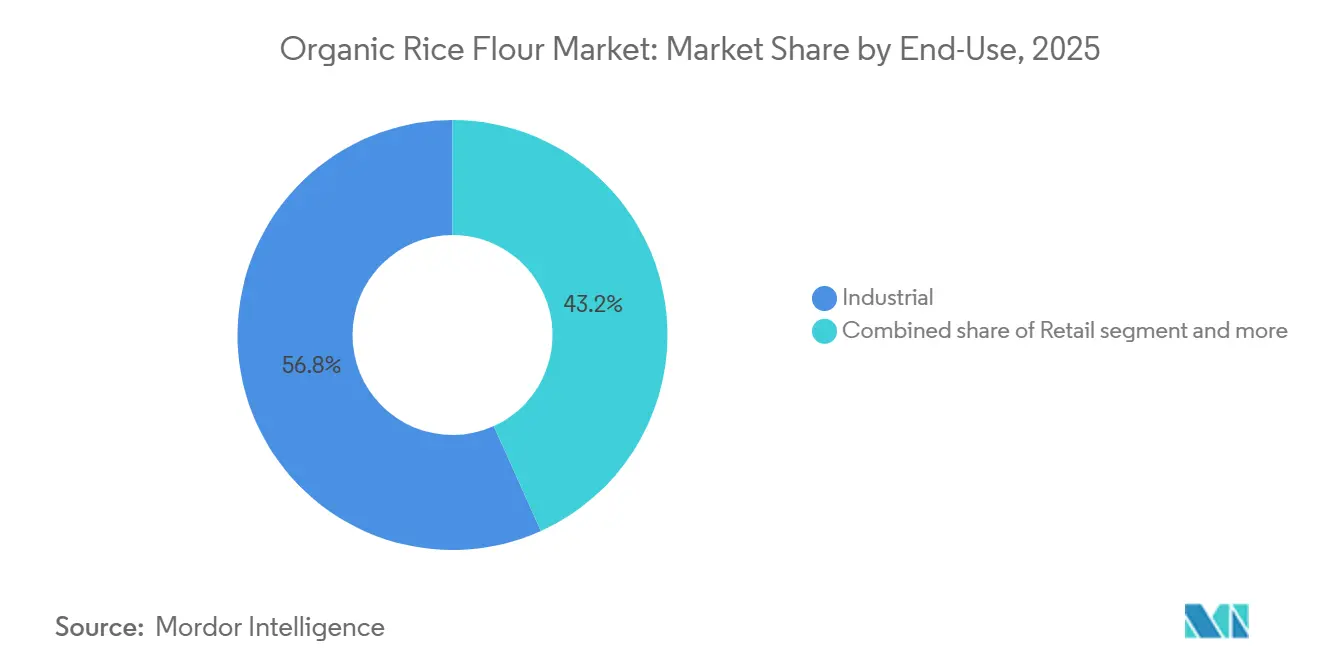
- By end-use, the industrial segment accounted for 56.76% of the organic rice flour market share in 2025, while retail is projected to record the highest CAGR of 9.83% through 2031.
- By geography, Asia-Pacific captured 46.75% of the organic rice flour market share in 2025 and is expected to remain the fastest-growing region at a 9.28% CAGR through 2031.
Note: Market size and forecast figures in this report are generated using Mordor Intelligence’s proprietary estimation framework, updated with the latest available data and insights as of January 2026.
Market Trends and Insights
Drivers Impact Analysis of Organic Rice Flour Market*
| Driver | (~) % Impact on CAGR Forecast | Geographic Relevance | Impact Timeline |
|---|---|---|---|
| Consumer preference for clean-label and minimally processed ingredients | +2.1% | Global, with higher intensity in North America and Western Europe | Medium term (2–4 years) |
| Adoption of gluten-free diets and food intolerance management | +1.8% | Global; concentrated in North America, Europe, and urban Asia-Pacific | Short term (≤ 2 years) |
| Expanding demand for organic bakery and confectionery products | +1.2% | North America, Europe, Asia-Pacific urban centers | Medium term (2–4 years) |
| Organic certification and traceability standards enhancing consumer confidence | +0.9% | Global; regulatory influence most acute in Europe and North America | Medium term (2–4 years) |
| Advancements in organic milling and processing technologies | +0.6% | Asia-Pacific manufacturing hubs; spill-over to Europe processors | Long term (≥ 4 years) |
| Emphasis on sustainable and environmentally responsible agriculture | +0.5% | Global; early gains in Southeast Asia, South Asia | Long term (≥ 4 years) |
| Source: Mordor Intelligence | |||
Consumer preference for clean-label and minimally processed ingredients
Consumers are increasingly prioritizing foods made with simple, recognizable ingredients and minimal processing, driving demand for organic rice flour as a naturally derived, clean-label ingredient. Organic rice flour aligns with this preference as it is produced without synthetic pesticides, artificial additives, or genetically modified ingredients, making it well suited for manufacturers developing transparent ingredient lists and organic food formulations. According to the International Food Information Council (IFIC) 2025 Food & Health Survey, 28% of Americans reported preferring foods that are minimally or not processed, highlighting the growing consumer shift toward cleaner and less processed food products [1]Source: International Food Information Council (IFIC), "2025 IFIC Food & Health Survey", ific.org. This trend is encouraging food manufacturers to incorporate organic rice flour into formulations that support clean-label positioning and ingredient transparency, thereby driving market growth.
Adoption of gluten-free diets and food intolerance management
The growing adoption of gluten-free diets and increasing awareness of food intolerances are key drivers of the organic rice flour market. As a naturally gluten-free ingredient, organic rice flour serves as an effective alternative to wheat flour for consumers with celiac disease, gluten sensitivity, or those following gluten-free diets. Its neutral taste, digestibility, and versatile functional properties make it a preferred ingredient across a wide range of gluten-free food formulations. Ongoing research and healthcare initiatives continue to raise awareness and improve the diagnosis and management of gluten-related disorders. For Fiscal Year (FY) 2025, despite significant federal budget reductions, the United States National Institutes of Health (NIH) allocated USD 10 million for celiac disease research, underscoring the continued emphasis on advancing the understanding, diagnosis, and treatment of gluten-related conditions [2]Source: National Institutes of Health (NIH), "New FY 2025 NIH Categorical Spending Data Available", nih.gov. This sustained focus is expected to support long-term demand for naturally gluten-free ingredients such as organic rice flour.
Expanding demand for organic bakery and confectionery products
Growing demand for organic bakery and confectionery products is a key driver of the organic rice flour market. Food manufacturers are increasingly incorporating organic rice flour into breads, cakes, cookies, muffins, pastries, crackers, and other baked goods to meet consumer demand for certified organic, clean-label, and allergen-friendly products. Organic rice flour offers a fine texture, neutral flavor, and good binding and thickening properties, making it suitable for a wide range of bakery formulations and supporting gluten-free product development. The growing number of organic product launches, combined with increasing innovation in premium baked goods free from synthetic additives and artificial ingredients, is further driving its adoption. As manufacturers continue expanding their organic bakery portfolios to meet evolving consumer preferences for natural and minimally processed foods, demand for organic rice flour as a functional baking ingredient is expected to grow steadily over the forecast period.
Organic certification and traceability standards enhancing consumer confidence
Stringent organic certification and traceability standards are strengthening consumer confidence and driving demand for organic rice flour by ensuring product authenticity, transparency, and compliance throughout the supply chain. Certified organic labels assure consumers that products are produced without prohibited synthetic pesticides, fertilizers, or genetically modified organisms, while adhering to rigorous production, handling, and documentation requirements. These standards have become increasingly important as consumers seek verified organic products with complete farm-to-market traceability. A significant regulatory development supporting this trend is the United States Department of Agriculture (USDA) Strengthening Organic Enforcement (SOE) Rule, which came into full compliance in March 2024. The SOE Rule enhances oversight across the organic supply chain through stricter certification requirements, improved import verification, mandatory electronic certification for imported organic products, expanded recordkeeping, and stronger traceability measures.
Restraints Impact Analysis of Organic Rice Flour Market*
| Restraint | (~) % Impact on CAGR Forecast | Geographic Relevance | Impact Timeline |
|---|---|---|---|
| Limited availability of certified organic rice | -1.5% | Global; supply deficit most acute in North America; import dependence in Europe | Short to medium term (1–4 years) |
| Shorter shelf life due to the absence of synthetic preservatives | -0.8% | Global; disproportionate in tropical climates (Southeast Asia, Middle-East) | Short term (≤ 2 years) |
| Risk of contamination during harvesting, processing, and transportation | -0.6% | Asia-Pacific production hubs; import corridors to North America and Europe | Medium term (2–4 years) |
| Susceptibility to pest infestation during storage | -0.4% | South and Southeast Asia, South America | Medium term (2–4 years) |
| Source: Mordor Intelligence | |||
Limited availability of certified organic rice
The limited availability of certified organic rice is a key restraint for the organic rice flour market, as organic rice cultivation accounts for only a small share of total global rice production. Farmers must complete a multi-year land conversion period and comply with stringent requirements for organic cultivation, documentation, inspection, and certification before their harvest can be marketed as organic, restricting the supply of certified raw materials. Organic rice cultivation also requires strict segregation from conventional crops across farming, harvesting, storage, transportation, and processing to maintain certification integrity, which adds complexity to the supply chain. Additionally, fluctuations in organic crop yields due to pest pressure, climatic conditions, and the prohibition of synthetic agrochemicals can limit the consistent availability of certified organic rice.
Shorter shelf life due to the absence of synthetic preservatives
The absence of synthetic preservatives limits the shelf life of organic rice flour and increases its susceptibility to quality deterioration during storage and distribution. Organic rice flour is more vulnerable to moisture absorption, oxidation, microbial growth, and insect infestation, particularly under unfavorable storage conditions. This requires manufacturers to adopt stricter inventory management and handling practices. Maintaining product freshness often requires advanced packaging technologies, such as moisture-barrier materials and vacuum sealing, which increase packaging complexity and operational costs. Additionally, shorter shelf life limits long-distance distribution and raises the risk of spoilage-related product losses, creating further challenges for manufacturers and retailers in maintaining consistent product quality while complying with organic processing standards.
*Our forecasts treat driver/restraint impacts as directional, not additive. The impact forecasts reflect baseline growth, mix effects, and variable interactions.
Organic Rice Flour Market Segment Analysis
By Source:
White Rice Flour Anchors Volume; Brown Rice Flour Unlocks Premium GrowthWhite rice flour dominated the organic rice flour market by source, accounting for 78.72% of the market in 2025. The segment's leadership is primarily supported by its neutral flavor, bright appearance, smooth texture, and consistent functional characteristics, making it the preferred choice for standardized food formulations. Organic white rice flour exhibits excellent blending capability, fine particle size, and superior starch functionality, enabling manufacturers to achieve uniform product quality and desirable sensory attributes. Its low fat content contributes to improved storage stability compared with whole-grain alternatives, while its mild taste allows it to complement a wide range of flavor profiles without altering the final product. In addition, advancements in organic milling technologies have enhanced flour consistency, purity, and processing efficiency, encouraging greater adoption by food processors seeking reliable organic ingredients.
Brown rice flour is projected to be the fastest-growing source segment, registering a CAGR of 9.04% during 2026–2031. Growth is driven by its superior nutritional profile, as it retains the bran and germ layers of the rice grain, resulting in higher levels of dietary fiber, vitamins, minerals, antioxidants, and bioactive compounds compared to refined white rice flour. Increasing emphasis on whole-grain nutrition and minimally processed organic foods has strengthened its appeal among health-focused consumers and food manufacturers seeking ingredient differentiation. Brown organic rice flour also aligns with the growing demand for naturally nutrient-dense ingredients that support digestive wellness, sustained energy release, and balanced nutrition. Furthermore, continuous advancements in milling technologies have improved texture, particle uniformity, and processing performance, overcoming earlier limitations associated with whole-grain flours.


By End-Use:
Industrial Volume Shapes Market Economics; Retail Defines Margin OpportunityThe industrial segment accounted for 56.76% of the organic rice flour market by end-use in 2025. This dominance is supported by the increasing integration of organic rice flour into large-scale food manufacturing, where consistent quality, certified traceability, and reliable ingredient performance are essential. Food processors increasingly favor organic rice flour for its process stability, uniform particle size, high starch functionality, and compatibility with automated production systems. Growing investments in organic food manufacturing facilities, expansion of dedicated organic processing lines, and the adoption of stringent quality assurance protocols have further strengthened industrial demand.
The retail segment is projected to register the fastest CAGR of 9.83% during 2026–2031. Growth is driven by the rapid expansion of direct consumer access to certified organic pantry staples through supermarkets, specialty organic stores, online grocery platforms, and brand-owned digital channels. Consumers are increasingly purchasing organic rice flour for home cooking, gluten-free baking, and clean-label meal preparation, supported by greater product visibility, wider stock keeping unit (SKU) availability, and improved packaging formats designed for household use. Retailers are also expanding their private-label organic product portfolios and dedicating more shelf space to organic food categories, further improving product accessibility.

Geography Analysis
APAC Organic Rice Flour Market
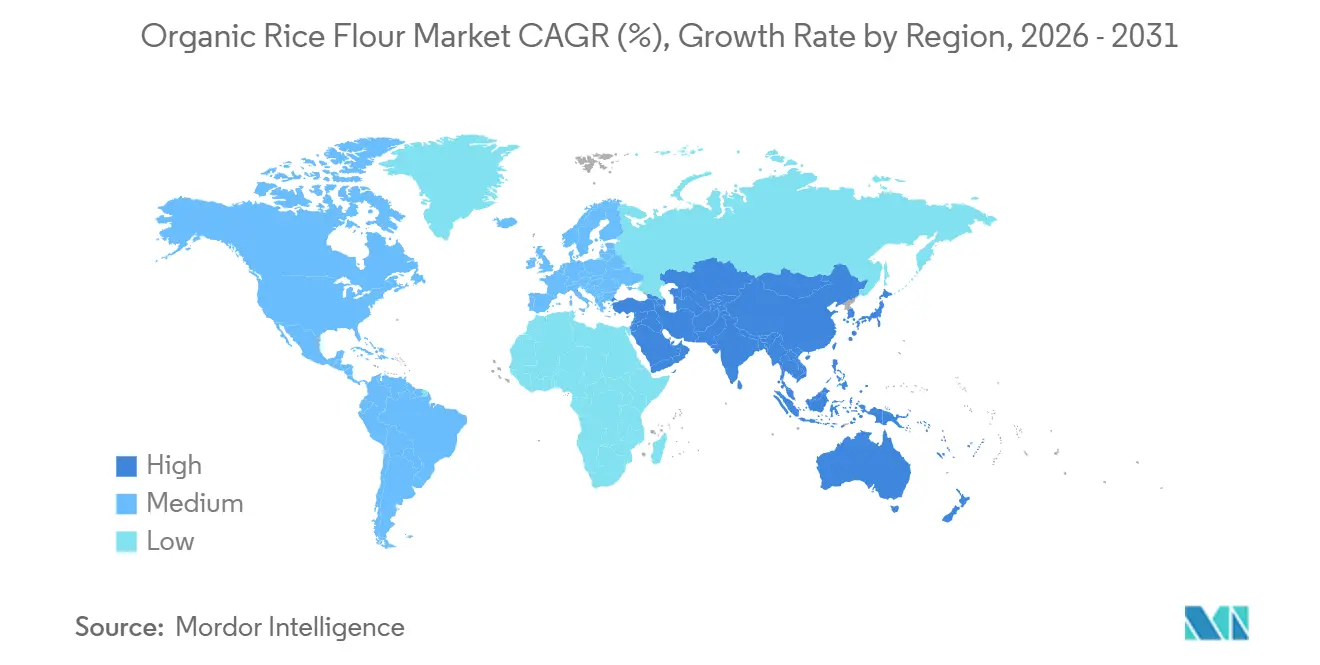
Asia-Pacific accounted for 46.75% of the global organic rice flour market in 2025 and is projected to register the fastest CAGR of 9.28% during 2026–2031. The region is both the world's largest rice-producing region and an increasingly important organic food manufacturing hub. It benefits from abundant rice cultivation, an extensive organic farming base, and well-established milling infrastructure, ensuring a reliable supply of certified organic rice for flour production. According to the United States Department of Agriculture (USDA), India produced approximately 151 million metric tons of milled rice during the 2025/2026 crop year, the highest output globally, reinforcing Asia-Pacific's position in raw material availability [3]Source: United States Department of Agriculture (USDA), "Leading countries based on the production of milled rice in 2025/2026", usda.gov. The region is also witnessing rapid expansion in certified organic cultivation, investments in organic food processing facilities, and greater adoption of clean-label, gluten-free, and plant-based food ingredients by manufacturers, further strengthening both domestic consumption and export-oriented production.
North America and Europe Organic Rice Flour Market
North America is the second-largest regional market, supported by its mature organic food ecosystem, advanced certification frameworks, and widespread consumer acceptance of gluten-free and organic products. The region benefits from well-developed retail distribution networks, strong private-label organic offerings, and continuous innovation in certified organic food ingredients, driving sustained demand for organic rice flour across packaged food manufacturing. Europe represents another significant market, driven by stringent organic regulations, high traceability standards, and an established preference for sustainably sourced food ingredients. The expansion of organic farming initiatives, increasing availability of certified organic products through mainstream retail channels, and continued product innovation in clean-label and allergen-friendly foods are supporting the region's long-term market outlook.
MEA and South America Organic Rice Flour Market
South America is emerging as a promising market, supported by the gradual expansion of certified organic agriculture, improving organic processing capabilities, and increasing participation in international organic food supply chains. Regional producers are investing in value-added organic grain processing and strengthening export-oriented production, creating new opportunities for organic rice flour manufacturers. The Middle East and Africa are also witnessing steady market development, driven by improving availability of premium organic food products, expansion of modern retail infrastructure, and increasing adoption of internationally certified organic ingredients by food manufacturers and hospitality operators. Rising investments in specialty food distribution, coupled with greater emphasis on food quality, traceability, and clean-label formulations, are expected to support the region's sustained growth over the forecast period.

Competitive Landscape
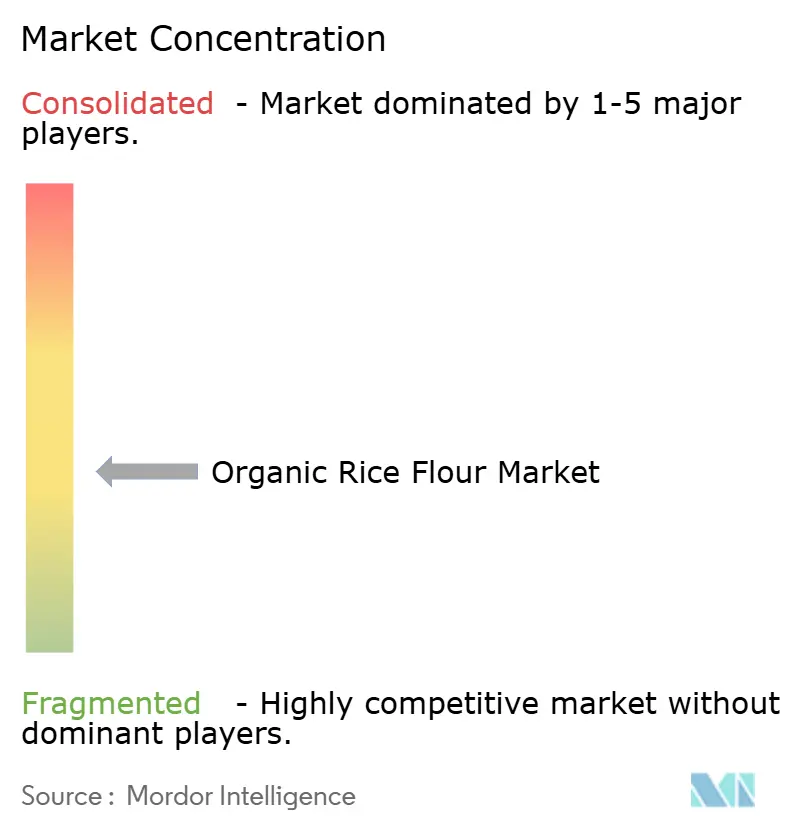
The organic rice flour market is moderately fragmented, with competition characterized by the presence of multinational ingredient manufacturers, rice processors, and specialized organic food companies. Participants compete on certified raw material sourcing, product quality, traceability, and processing capabilities rather than price alone. Key participants, including Bob's Red Mill Natural Foods, Inc., Südzucker Group (BENEO GmbH), LT Foods Ltd., and Ebro Foods, S.A., have strengthened their market positions through diversified organic ingredient portfolios, advanced milling technologies, and compliance with internationally recognized organic certification standards. Market participants are increasingly differentiating themselves by ensuring consistent quality, transparent sourcing practices, and reliable year-round supply to food manufacturers.
Companies are increasingly investing in dedicated organic supply chains, establishing long-term partnerships with certified organic rice growers, and expanding traceable procurement networks to ensure uninterrupted access to high-quality raw materials. Strategic investments in dedicated organic milling facilities, segregation systems, quality assurance programs, and vertically integrated operations enable manufacturers to meet stringent organic certification requirements while supporting multi-year supply agreements with industrial food processors. Companies are also expanding their application development capabilities, collaborating with customers to develop customized ingredient solutions that meet specific processing, texture, stability, and formulation requirements across a broad range of food products.
Innovation remains a key competitive strategy, with manufacturers expanding portfolios through functional and sprouted organic rice flour variants that address growing demand for nutrient-rich, clean-label, and naturally functional ingredients. Companies are also introducing premium retail offerings, particularly for organic brown rice flour, utilizing modified-atmosphere packaging (MAP) and advanced moisture-barrier packaging technologies to extend shelf life, preserve freshness, and maintain product quality without synthetic preservatives. Product differentiation through enhanced nutritional positioning, sustainable packaging initiatives, and value-added organic formulations continues to strengthen brand competitiveness across both retail and industrial channels.
Organic Rice Flour Industry Leaders
-
Bob's Red Mill Natural Foods, Inc.
-
Südzucker Group (BENEO GmbH)
-
LT Foods Ltd
-
Ebro Foods, S.A.
-
Shipton Mill Ltd
- *Disclaimer: Major Players sorted in no particular order
Organic Rice Flour Market Companies Covered in this Report
- Bob's Red Mill Natural Foods, Inc.
- Agspring, LLC
- Sudzucker Group (BENEO GmbH)
- LT Foods Ltd
- Ebro Foods, S.A.
- Shipton Mill Ltd
- Koda Farms, Inc.
- Eden Foods, Inc.
- The Hain Celestial Group, Inc.
- Aryan International
- Burapa Prosper Co. Ltd.
- Thai Flour Industry Co. Ltd.
- Ingredion Incorporated
- Archer-Daniels-Midland Company
- Associated British Foods plc
- Phalada Pure & Sure
- Wilmar International Limited
- Firma Organic Pvt Ltd
- Sresta Natural Bioproducts Pvt. Ltd.
- Clearspring Ltd.

Recent Industry Developments in Organic Rice Flour Market
- July 2025: LT Foods' organic arm, Nature Bio Foods (NBF), expanded into the European Business-to-Consumer (B2C) segment with a new processing and packaging facility in Maasvlakte, Rotterdam, spanning 20,000 square meters.
- June 2025: Paragon Pure launched SproutedByNature whole grain organic rice flour and barley flour, offering a smooth texture and clean label for sugar replacement in bakery, confectionery, and snacks.


Global Organic Rice Flour Market Report Scope
Organic rice flour is a finely milled powder made from organically grown rice grains, free from synthetic pesticides, herbicides, or artificial fertilizers. The organic rice flour market is segmented by source, end-use, and geography. Based on source, the market is segmented into white rice flour and brown rice flour. Based on end-use, the market is segmented into retail, industrial, and foodservice/HORECA. Based on geography, the market is segmented into North America, Europe, Asia-Pacific, South America, and Middle East and Africa. For each segment, the market sizing and forecast have been done based on the value (in USD million).
| Whice Rice Flour |
| Brown Rice Flour |
| Retail |
| Industrial |
| Foodservice/HORECA |
| North America | United States |
| Canada | |
| Mexico | |
| Rest of North America | |
| Europe | United Kingdom |
| Germany | |
| France | |
| Italy | |
| Spain | |
| Netherlands | |
| Poland | |
| Belgium | |
| Sweden | |
| Rest of Europe | |
| Asia-Pacific | China |
| Japan | |
| India | |
| Australia | |
| Indonesia | |
| South Korea | |
| Thailand | |
| Singapore | |
| Rest of Asia-Pacific | |
| South America | Brazil |
| Argentina | |
| Colombia | |
| Chile | |
| Peru | |
| Rest of South America | |
| Middle East and Africa | South Africa |
| Saudi Arabia | |
| United Arab Emirates | |
| Nigeria | |
| Egypt | |
| Morocco | |
| Turkey | |
| Rest of Middle East and Africa |
| By Source | Whice Rice Flour | |
| Brown Rice Flour | ||
| By End-Use | Retail | |
| Industrial | ||
| Foodservice/HORECA | ||
| By Geography | North America | United States |
| Canada | ||
| Mexico | ||
| Rest of North America | ||
| Europe | United Kingdom | |
| Germany | ||
| France | ||
| Italy | ||
| Spain | ||
| Netherlands | ||
| Poland | ||
| Belgium | ||
| Sweden | ||
| Rest of Europe | ||
| Asia-Pacific | China | |
| Japan | ||
| India | ||
| Australia | ||
| Indonesia | ||
| South Korea | ||
| Thailand | ||
| Singapore | ||
| Rest of Asia-Pacific | ||
| South America | Brazil | |
| Argentina | ||
| Colombia | ||
| Chile | ||
| Peru | ||
| Rest of South America | ||
| Middle East and Africa | South Africa | |
| Saudi Arabia | ||
| United Arab Emirates | ||
| Nigeria | ||
| Egypt | ||
| Morocco | ||
| Turkey | ||
| Rest of Middle East and Africa | ||


Key Questions Answered in the Report
What is the 2026 value of the organic rice flour market?
The organic rice flour market size is USD 204.27 million in 2026 and is forecast to reach USD 307.69 million by 2031, at a 8.54% CAGR.
Which source type leads organic rice flour demand?
White rice flour led demand with a 78.72% share in 2025. Its neutral flavor and consistent functional properties support use in bakery, baby food, coatings, and sauces.
Which source segment is growing fastest?
Brown rice flour is forecast to expand at a 9.04% CAGR through 2031. Its bran content supports nutritional positioning, although oxidation sensitivity can limit shelf life in ambient distribution.
Which end-use channel has the strongest growth outlook?
Retail is forecast to grow at an 9.83% CAGR through 2031. Consumer-facing formats are expanding as producers invest in dedicated retail distribution and smaller package formats.
Page last updated on:





