
Mushroom Coffee Market Size and Share
Market Overview
| Study Period | 2021 - 2031 |
|---|---|
| Market Size (2026) | USD 1.40 Billion |
| Market Size (2031) | USD 2.47 Billion |
| Growth Rate (2026 - 2031) | 12.02 % |
| Fastest Growing Market | Asia-Pacific |
| Largest Market | North America |
| Market Concentration | Low |
Major Players
*Disclaimer: Major Players sorted in no particular order Image © Mordor Intelligence. Reuse requires attribution under CC BY 4.0. |
|
Mushroom Coffee Market Analysis by Mordor Intelligence
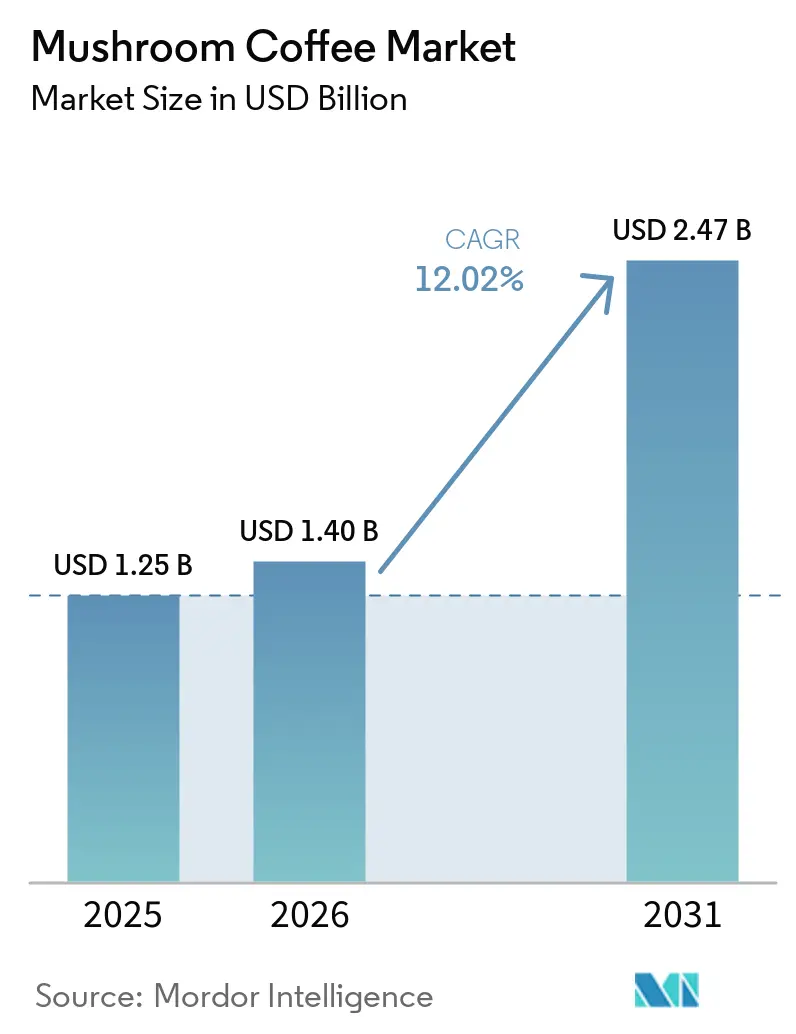
The mushroom coffee market size is expected to grow from USD 1.25 billion in 2025 to USD 1.40 billion in 2026 and is forecast to reach USD 2.47 billion by 2031 at a 12.02% CAGR over 2026-2031. The market is experiencing steady growth, driven by increasing consumer interest in functional beverages that combine traditional coffee with ingredients associated with wellness and cognitive support. Demand is supported by preferences for clean-label products, convenient consumption formats, and innovative formulations that align with evolving health-conscious lifestyles. Expanding availability through online platforms, retail stores, and specialty outlets is improving product accessibility and consumer adoption. At the same time, manufacturers are focusing on product quality, transparent labeling, and scientifically supported ingredient positioning to address evolving regulatory requirements and strengthen consumer confidence in the category.
Key Report Takeaways
- By form, instant mushroom coffee held 52.55% of the 2025 mushroom coffee market share, while ready-to-drink coffee is forecast to grow at a 13.54% CAGR during 2026-2031.
- By mushroom extract, lion’s mane held 35.35% of the 2025 mushroom coffee market share, while cordyceps is forecast to grow at a 13.36% CAGR during 2026-2031.
- By distribution channel, online retail stores held 44.25% of the 2025 mushroom coffee market share and are forecast to grow at a 13.86% CAGR during 2026-2031.
- By geography, North America held 37.55% of the 2025 mushroom coffee market share, while Asia-Pacific is forecast to grow at a 13.65% CAGR during 2026-2031.
Note: Market size and forecast figures in this report are generated using Mordor Intelligence’s proprietary estimation framework, updated with the latest available data and insights as of January 2026.
Global Mushroom Coffee Market Trends and Insights
Drivers Impact Analysis*
| Driver | (~) % Impact on CAGR Forecast | Geographic Relevance | Impact Timeline |
|---|---|---|---|
| Rising consumer preference for functional beverages | +3.5% | Global, strongest in North America and Asia-Pacific core | Medium term (2–4 years) |
| Growing demand for adaptogens and cognitive wellness | +2.8% | North America, Europe, Asia-Pacific core (Japan, South Korea, China) | Medium term (2–4 years) |
| Expansion of clean-label and natural ingredient preferences | +1.2% | North America and Europe, spill-over to Australia | Long term (≥ 4 years) |
| Increasing scientific research on medicinal mushrooms | +1.2% | Global | Long term (≥ 4 years) |
| Product innovation across flavors and formats | +1.5% | North America and Asia-Pacific core | Short term (≤ 2 years) |
| Premiumization of specialty coffee products | +0.8% | North America, Germany, United Kingdom, Australia | Medium term (2–4 years) |
| Source: Mordor Intelligence | |||
Rising Consumer Preference for Functional Beverages
Rising consumer preference for functional beverages is driving demand for mushroom coffee, as consumers increasingly seek products that offer health and wellness benefits alongside everyday consumption. Mushroom coffee aligns with this by combining traditional coffee with functional ingredients while maintaining familiarity and convenience. According to the 2024 International Food Information Council (IFIC) Food & Health Survey, 43% of consumers actively seek foods and beverages that provide energy or reduce fatigue[1].Source: International Food Information Council, "2024 IFIC Food & Health SURVEY", ific.orgThe survey also found that 62% of consumers report that healthfulness has a very or somewhat impactful influence on their food and beverage purchasing decisions, reinforcing the growing demand for functional beverages such as mushroom coffee[2]Source: International Food Information Council, "2024 IFIC Food & Health SURVEY", ific.org.
Growing Demand for Adaptogens and Cognitive Wellness
Growing demand for adaptogens and cognitive wellness is supporting the adoption of mushroom coffee, particularly among consumers seeking beverages associated with focus, mental clarity, and stress management. Functional mushrooms such as lion's mane, reishi, and cordyceps are increasingly incorporated into coffee formulations to meet these evolving preferences. According to the 2024 International Food Information Council (IFIC) Food & Health Survey, 28% of consumers actively seek foods and beverages that support brain function, including memory and focus[3]Source: International Food Information Council, "2024 IFIC Food & Health SURVEY", ific.org. This growing interest in cognitive wellness is encouraging manufacturers to expand mushroom coffee portfolios featuring adaptogenic ingredients and brain health positioning.
Expansion of Clean-Label and Natural Ingredient Preferences
The growing preference for clean-label and natural ingredients is supporting the growth of the mushroom coffee market, as consumers increasingly favor products made with recognizable, minimally processed, and naturally sourced ingredients. Mushroom coffee aligns with these preferences by incorporating functional mushroom extracts and plant-based ingredients while avoiding artificial additives commonly found in conventional beverages. Manufacturers are responding by emphasizing transparent ingredient labeling, organic certifications, and simplified formulations to strengthen consumer trust. As demand for clean-label products continues to rise, these attributes are expected to support broader adoption of mushroom coffee across both retail and online channels.
Increasing Scientific Research on Medicinal Mushrooms
Growing scientific research on medicinal mushrooms is supporting the expansion of the mushroom coffee market by building evidence around the bioactive compounds and functional properties of ingredients such as lion's mane, reishi, chaga, and cordyceps. Ongoing studies are improving the understanding of their potential applications in cognitive health, immune support, and general wellness, contributing to greater industry confidence in mushroom-based formulations. This research activity is encouraging product development, ingredient innovation, and broader commercialization of mushroom-infused beverages, supporting the continued growth of the mushroom coffee market.
Restraints Impact Analysis*
| Restraint | (~) % Impact on CAGR Forecast | Geographic Relevance | Impact Timeline |
|---|---|---|---|
| Limited consumer awareness of functional mushrooms | -0.8% | South America, Middle East and Africa, Tier-2/3 cities in Asia-Pacific | Medium term (2–4 years) |
| Distinct flavor profile compared with traditional coffee | -0.5% | Global | Short term (≤ 2 years) |
| Competition from alternative functional beverages | -0.6% | North America and Europe | Medium term (2–4 years) |
| Consumer skepticism toward functional food claims | -0.7% | Europe, North America | Long term (≥ 4 years) |
| Source: Mordor Intelligence | |||
Limited Consumer Awareness of Functional Mushrooms
Limited consumer awareness of functional mushrooms remains a key restraint on the mushroom coffee market, particularly in regions where medicinal mushrooms are not widely recognized as functional food ingredients. Many consumers are unfamiliar with the mushroom species used in these products and their intended applications, which can slow product adoption. Misconceptions regarding taste, safety, and product effectiveness may further discourage first-time purchases. The unfamiliarity of mushroom-based ingredients can also make it difficult for consumers to distinguish between different mushroom varieties and understand their functional properties. This knowledge gap may reduce willingness to experiment with mushroom coffee, especially among consumers who are accustomed to conventional coffee products. As a result, manufacturers continue to invest in consumer education, transparent labeling, and awareness campaigns to build confidence in mushroom coffee products.
Distinct Flavor Profile Compared with Traditional Coffee
The distinct flavor profile of mushroom coffee, compared to traditional coffee, remains a challenge to wider consumer adoption. Although manufacturers formulate these products to minimize the earthy taste of functional mushrooms, the flavor can still differ from what regular coffee drinkers expect. Differences in aroma, aftertaste, and overall mouthfeel may further affect consumer acceptance, particularly among those seeking the familiar sensory characteristics of conventional coffee. These differences can make it more difficult for mushroom coffee to become part of established daily coffee routines and may limit repeat consumption. This difference may reduce repeat purchases among consumers seeking a conventional coffee experience. As a result, manufacturers continue to invest in flavor optimization, improved roasting techniques, and blended formulations to enhance taste while maintaining the functional benefits of mushroom ingredients.
*Our forecasts treat driver/restraint impacts as directional, not additive. The impact forecasts reflect baseline growth, mix effects, and variable interactions.
Segment Analysis
By Form: Instant Format Dominates While Ready-to-Drink Redefines Accessibility
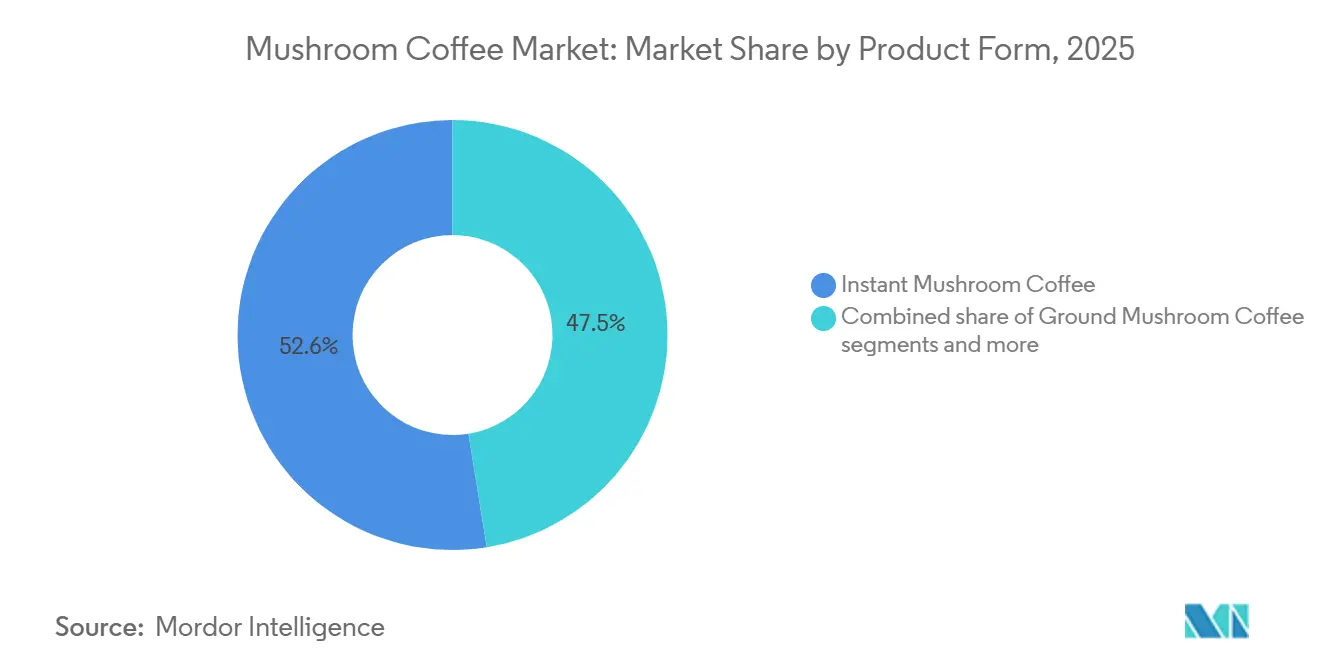
Instant mushroom coffee accounted for 52.55% of the global mushroom coffee market in 2025, making it the largest product form segment. Its dominance is driven by ease of preparation, convenience, and widespread availability across online and retail channels, making it well suited to busy lifestyles and daily consumption. The format also benefits from its compatibility with direct-to-consumer and subscription-based sales models, which have played an important role in expanding consumer access. Ground mushroom coffee represented the second-largest segment, while coffee pods and capsules accounted for a comparatively smaller share.
Ready-to-drink mushroom coffee is projected to register the fastest growth, expanding at a 13.54% CAGR during the forecast period (2026–2031). Growth is supported by increasing consumer demand for convenient, on-the-go functional beverages and the expanding availability of ready-to-drink products across retail channels. Manufacturers are introducing new formulations with improved taste, clean-label ingredients, and functional mushroom blends to appeal to a broader consumer base. Continued product innovation and greater retail penetration are expected to support the strong growth of this segment over the forecast period.



By Mushroom Extract: Lion's Mane Anchors the Market While Cordyceps Closes the Evidence Gap
Lion's Mane accounted for 35.35% of the global mushroom coffee market by mushroom extract in 2025, making it the largest extract segment. Its dominance is driven by growing consumer interest in cognitive wellness and the increasing use of Lion's Mane in functional coffee formulations positioned for focus, mental clarity, and daily performance. The segment also benefits from a growing body of scientific research and strong recognition among consumers of functional foods and beverages. Chaga represented the second-largest segment, supported by demand for antioxidant-rich ingredients and its established presence in functional mushroom product portfolios.
Cordyceps is projected to register the fastest growth, expanding at a 13.36% CAGR during the forecast period (2026–2031). Growth is driven by rising consumer interest in ingredients associated with energy, endurance, and active lifestyles, along with expanding use in premium functional beverage formulations. Increasing research on medicinal mushrooms and continued product innovation are encouraging manufacturers to broaden the use of Cordyceps across mushroom coffee products. As consumer awareness of functional mushroom ingredients continues to grow, demand for Cordyceps-based formulations is expected to increase steadily over the forecast period.
By Distribution Channel: Online Retail Stores Lead in Market Share and Growth
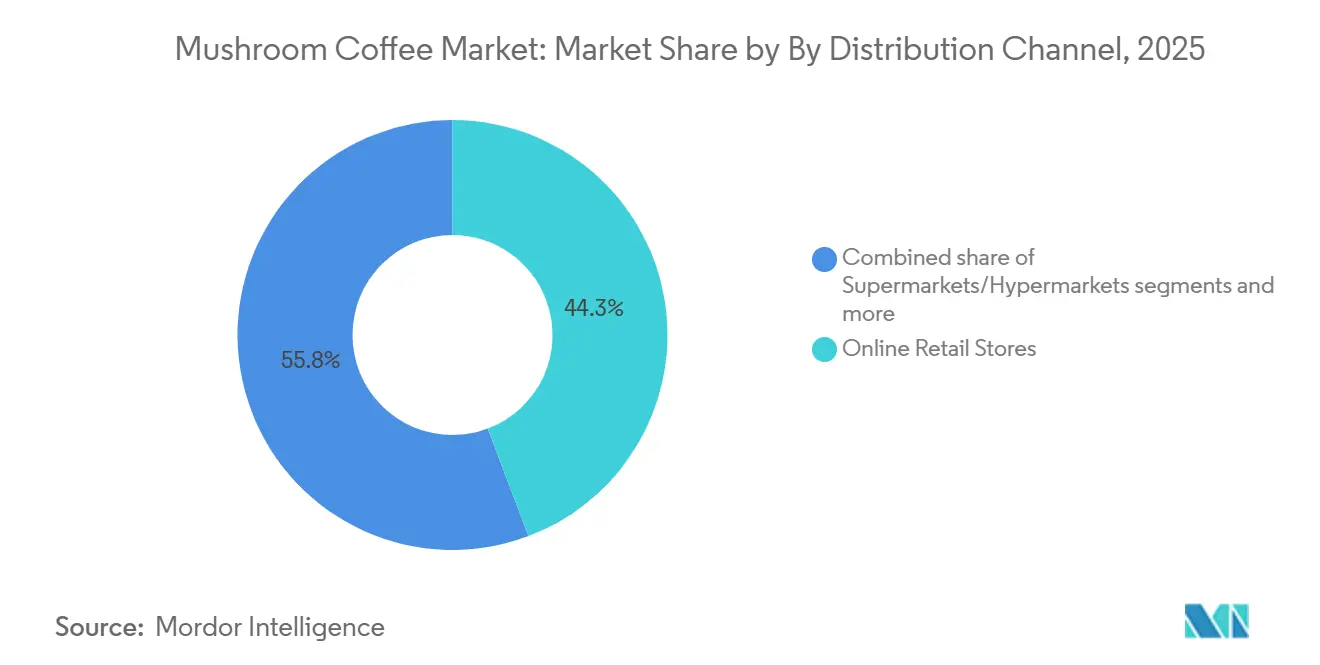
Online retail stores accounted for 44.25% of the global mushroom coffee market by distribution channel in 2025 and are projected to register the fastest growth, expanding at a 13.86% CAGR during the forecast period (2026–2031). This segment's performance is driven by the strong presence of direct-to-consumer brands, growing consumer preference for online shopping, and the widespread adoption of subscription-based purchasing models. Online platforms also enable manufacturers to introduce new products, reach broader consumer groups, and engage directly with consumers through digital marketing, supporting continued market expansion.
Supermarkets/hypermarkets, specialty stores, convenience stores, and other distribution channels continue to support market growth by expanding product accessibility across a range of retail formats. Supermarkets and specialty stores improve product visibility among mainstream and health-conscious consumers, while convenience stores are gradually increasing their offerings as the category matures. Other distribution channels, including independent retailers and alternative sales outlets, further contribute to market penetration by serving diverse consumer preferences and regional demand.
Geography Analysis
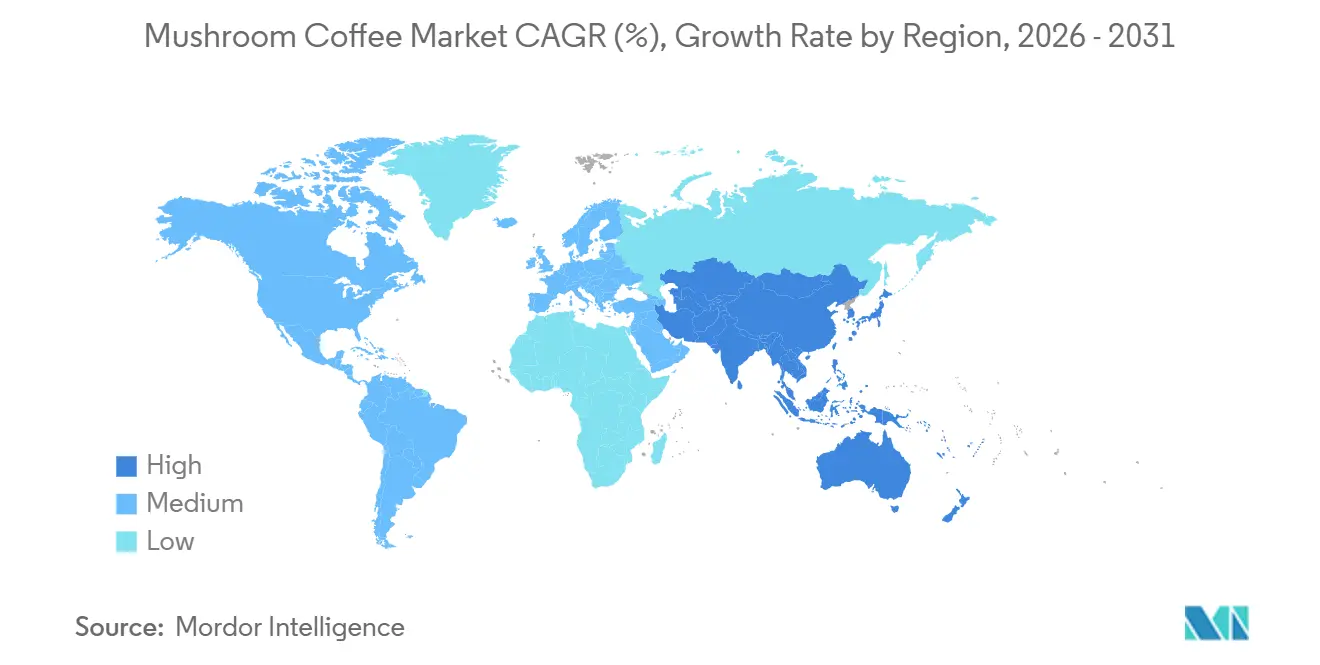
North America accounted for 37.55% of the global mushroom coffee market in 2025, making it the largest regional market. This position is supported by strong consumer awareness of functional beverages, an established specialty coffee culture, high e-commerce penetration, and the presence of major mushroom coffee brands. The United States is the primary market within the region, driven by increasing demand for wellness-oriented products and expanding availability across online and retail channels. Canada also contributes to regional growth through rising interest in natural health products and functional food and beverage offerings.
Asia-Pacific is projected to register the fastest growth, expanding at a CAGR of 13.65% during the forecast period (2026–2031). Growth is supported by increasing consumer interest in functional ingredients, traditional familiarity with medicinal mushrooms, and rising demand for wellness-focused beverages. China, Japan, India, Australia, and South Korea are expected to contribute significantly to regional expansion due to growing health awareness, increasing e-commerce adoption, and broader acceptance of premium functional products. The region's existing familiarity with mushroom-based ingredients provides a favorable foundation for mushroom coffee adoption.
Europe, South America, and the Middle East and Africa are emerging markets for mushroom coffee, supported by growing demand for clean-label products, specialty coffee offerings, and functional beverages. European markets, including Germany, the United Kingdom, France, and Italy, are seeing increasing product availability through online and specialty retail channels, although regulatory requirements for novel ingredients may influence market development. South America and the Middle East and Africa remain relatively nascent markets, with future growth opportunities concentrated in urban areas where premium wellness products and alternative beverage formats are gaining consumer interest.

Competitive Landscape
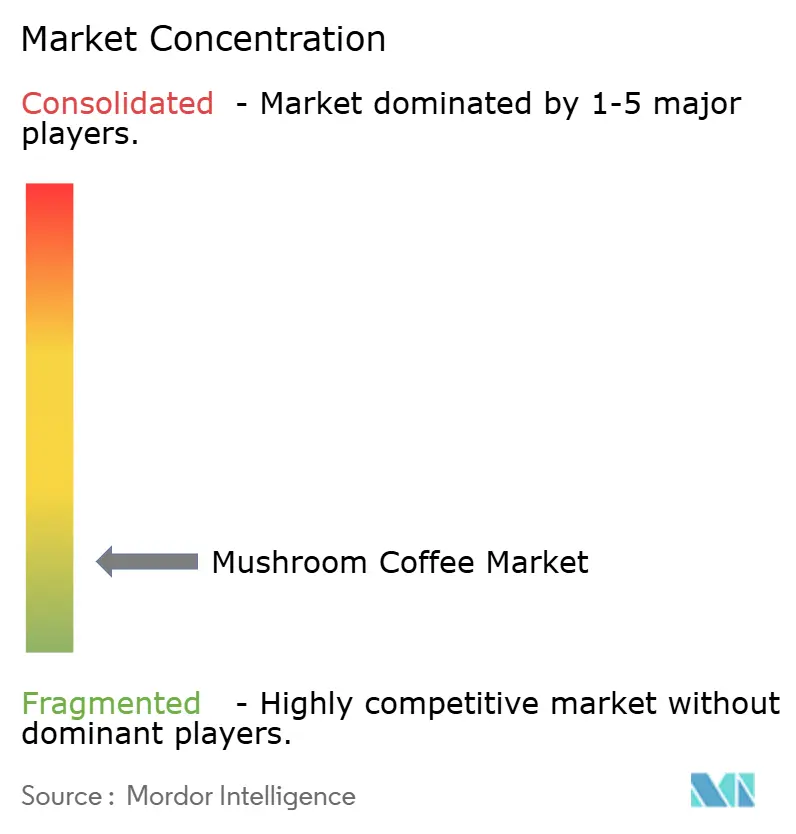
The mushroom coffee market is fragmented, with competition spread across direct-to-consumer functional beverage brands, specialty wellness companies, and established functional food players entering the category. Companies compete through brand positioning, functional ingredient differentiation, subscription-based purchasing models, and expanding distribution networks across online and retail channels. The market remains dynamic as brands seek to build consumer awareness, strengthen product credibility, and capture demand from the growing functional beverage segment.
Leading players such as Four Sigmatic, RYZE Superfoods, MUD\WTR, Laird Superfood, Inc., and Everyday Dose Inc. are strengthening their market presence through product innovation, digital-first marketing strategies, and broader distribution expansion. These companies have established strong consumer recognition through online channels while increasingly pursuing omnichannel strategies that combine direct-to-consumer sales with retail partnerships. Expansion into new product formats, functional ingredient blends, and targeted wellness positioning remains a key focus area among major participants.
Emerging players such as Clevr Blends, DIRTEA Limited, Rheal Superfoods, La Republica Superfoods, and Om Mushroom Superfood are contributing to market diversification through differentiated formulations and niche consumer targeting. These brands are focusing on clean-label positioning, premium ingredients, and specialized wellness benefits to attract health-conscious consumers. As the category develops, competition is expected to increasingly center on ingredient transparency, scientific support, convenient formats, and effective consumer education strategies.
Mushroom Coffee Industry Leaders
-
Four Sigmatic
-
RYZE Superfoods
-
MUD\WTR
-
Laird Superfood, Inc.
-
Everyday Dose Inc.
- *Disclaimer: Major Players sorted in no particular order

Recent Industry Developments
- June 2026: Laird Superfood expanded the availability of its Organic PERFORM Functional Mushroom Coffee and DEFEND Functional Mushroom Coffee to Target stores nationwide, increasing retail access to functional mushroom coffee products. The offerings feature mushroom extracts such as chaga, lion’s mane, cordyceps, reishi, and maitake, targeting energy, focus, and wellness-oriented consumers.
- May 2026: RYZE launched three new Target-exclusive instant lattes, including Ube Vanilla Latte, Matcha Latte, and Chai Latte, expanding its mushroom-infused functional beverage portfolio. The products feature RYZE’s SUPER6™ organic mushroom blend and target consumers seeking plant-based beverages with added functionality, including energy, mental clarity, and digestive support.
- May 2026: Bulletproof entered the mushroom coffee category with the launch of The Mood Booster, a functional ground coffee blend featuring lion’s mane, reishi, and ashwagandha. The product targets consumers seeking coffee products with added benefits related to mood support, stress management, and mental focus.


Global Mushroom Coffee Market Report Scope
The mushroom coffee market refers to the global market for coffee products infused with functional mushroom extracts marketed for their potential wellness and cognitive health benefits. The market is segmented by form (instant mushroom coffee, ground mushroom coffee, and other formats), mushroom extract (lion's mane, chaga, cordyceps, and other extracts), distribution channel (supermarkets/hypermarkets, specialty stores, convenience stores, and other channels), and geography (North America, Europe, Asia-Pacific, South America, and Middle East and Africa). For each segment, the market sizing and forecasting have been done in value terms (USD billion).
| Instant mushroom coffee |
| Ground mushroom coffee |
| Ready-to-drink mushroom coffee |
| Coffee pods/capsules |
| Lion's Mane |
| Chaga |
| Cordyceps |
| Reishi |
| Other Mushroom Extracts |
| Supermarkets/Hypermarkets |
| Specialty Stores |
| Convenience stores |
| Online Retail Stores |
| Other Distribution Channel |
| North America | United States |
| Canada | |
| Rest of North America | |
| Europe | Germany |
| United Kingdom | |
| Italy | |
| France | |
| Rest of Europe | |
| Asia-Pacific | China |
| India | |
| Japan | |
| Australia | |
| South Korea | |
| Rest of Asia-Pacific | |
| South America | Brazil |
| Rest of South America | |
| Middle East and Africa | South Africa |
| Saudi Arabia | |
| United Arab Emirates | |
| Rest of Middle East and Africa |
| By Form | Instant mushroom coffee | |
| Ground mushroom coffee | ||
| Ready-to-drink mushroom coffee | ||
| Coffee pods/capsules | ||
| By Mushroom Extract | Lion's Mane | |
| Chaga | ||
| Cordyceps | ||
| Reishi | ||
| Other Mushroom Extracts | ||
| By Distribution Channel | Supermarkets/Hypermarkets | |
| Specialty Stores | ||
| Convenience stores | ||
| Online Retail Stores | ||
| Other Distribution Channel | ||
| By Geography | North America | United States |
| Canada | ||
| Rest of North America | ||
| Europe | Germany | |
| United Kingdom | ||
| Italy | ||
| France | ||
| Rest of Europe | ||
| Asia-Pacific | China | |
| India | ||
| Japan | ||
| Australia | ||
| South Korea | ||
| Rest of Asia-Pacific | ||
| South America | Brazil | |
| Rest of South America | ||
| Middle East and Africa | South Africa | |
| Saudi Arabia | ||
| United Arab Emirates | ||
| Rest of Middle East and Africa | ||


Key Questions Answered in the Report
How large is the mushroom coffee market?
The mushroom coffee market size is estimated at USD 1.40 billion in 2026 and is forecast to reach USD 2.47 billion by 2031 at a 12.02% CAGR. Growth reflects demand for functional coffee options, but it also depends on credible claims, acceptable taste, and ingredient cost management.
Which mushroom coffee form has the largest share?
Instant coffee led with 52.55% share in 2025, supported by easy preparation and its fit with subscriptions and online retail. Ground products continue to serve buyers who value familiar brewing methods, while ready-to-drink products can meet mobile consumption needs.
Which mushroom extract is growing fastest?
Cordyceps is forecast to grow at a 13.36% CAGR during 2026-2031, supported by interest in active-lifestyle and performance occasions. Its use can vary by region because ingredient authorization and product specifications are not uniform across all markets.
Which region is growing fastest for mushroom coffee?
Asia-Pacific is forecast to grow at a 13.65% CAGR during 2026-2031, supported by established familiarity with medicinal mushrooms. North America remained the largest region in 2025 with a 37.55% share, supported by developed direct-to-consumer channels and expanding retail placement.
Page last updated on:


 Your data is secure and never sold or shared.


