
Modified Alkyd Resin Market Size and Share
Market Overview
| Study Period | 2021 - 2031 |
|---|---|
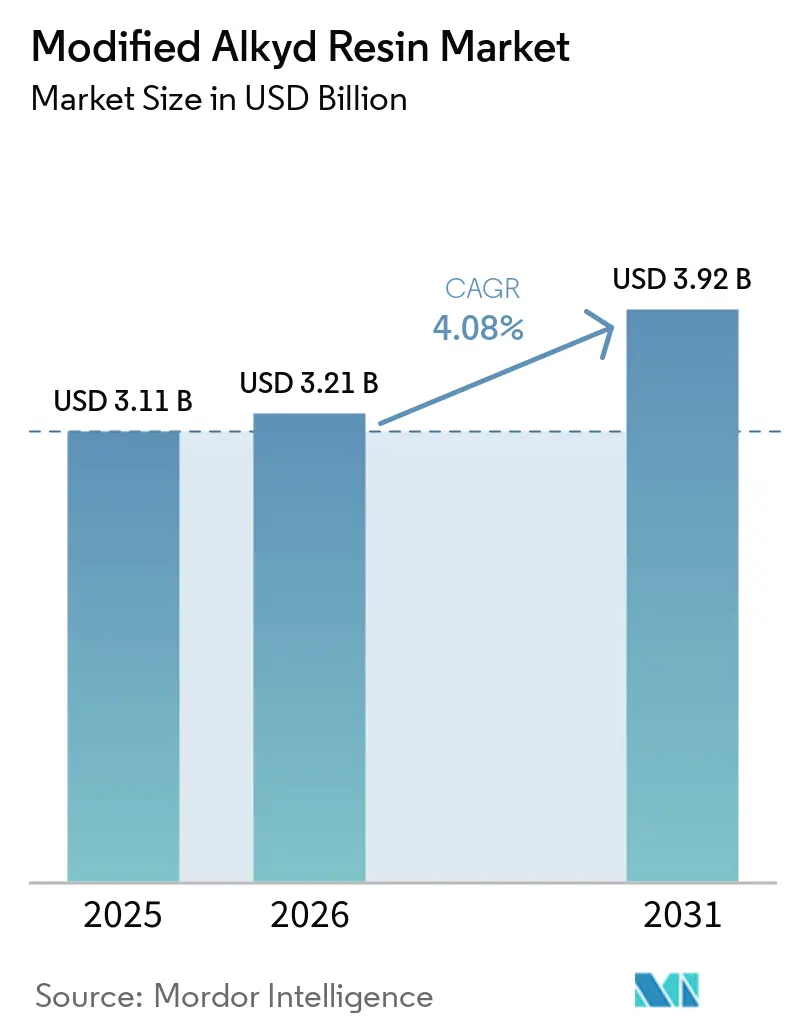
| Market Size (2026) | USD 3.21 Billion |
| Market Size (2031) | USD 3.92 Billion |
| Growth Rate (2026 - 2031) | 4.08 % |
| Fastest Growing Market | Asia-Pacific |
| Largest Market | Asia-Pacific |
| Market Concentration | Medium |
Major Players *Disclaimer: Major Players sorted in no particular order Image © Mordor Intelligence. Reuse requires attribution under CC BY 4.0. | |
Modified Alkyd Resin Market Analysis by Mordor Intelligence
The Modified Alkyd Resin Market size was estimated at USD 3.11 billion in 2025 and is estimated to grow from USD 3.21 billion in 2026 to USD 3.92 billion by 2031, at a CAGR of 4.08% during the forecast period (2026-2031). The modified alkyd resin market is being shaped by coating producers seeking lower-emission formulations that maintain adhesion, gloss, corrosion resistance, and ease of application. Waterborne and high-solids systems are gaining attention as they address compliance requirements and support product development for institutional coatings programs. Construction maintenance, transportation repair, and industrial protection continue to provide a broad base of demand for the modified alkyd resin market. Feedstock costs remain an important commercial consideration, as vegetable oils, phthalic anhydride, and glycerin affect formulation economics. Producers with bio-based, recycled-content, or waterborne offerings can use these capabilities to differentiate their portfolios in the modified alkyd resin market.
Key Report Takeaways
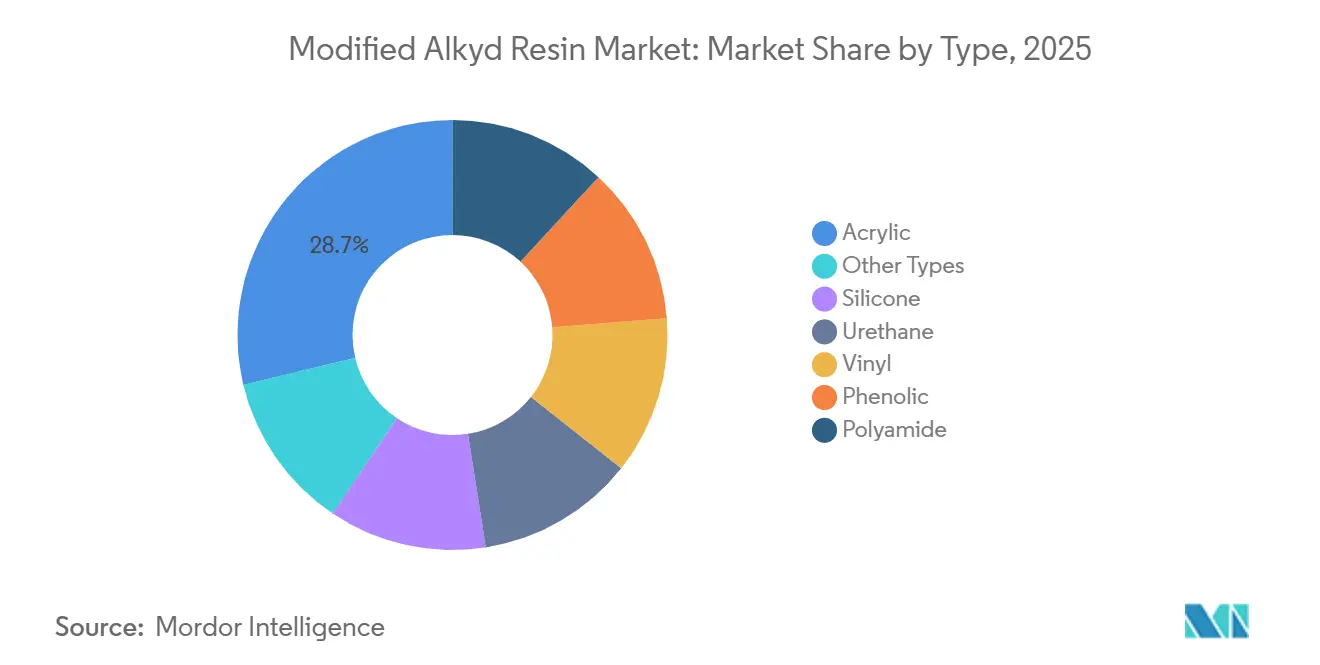
- By type, acrylic-modified grades held 28.71% of the modified alkyd resin market share in 2025, while urethane-modified grades recorded the highest projected CAGR of 4.92% through 2031.
- By technology, solvent-based systems held 54.33% of the modified alkyd resin market share in 2025, while water-based systems recorded the highest projected CAGR of 5.39% through 2031.
- By application, coatings accounted for 63.83% of the modified alkyd resin market size in 2025, while electrical insulating coatings recorded the highest projected CAGR of 4.81% through 2031.
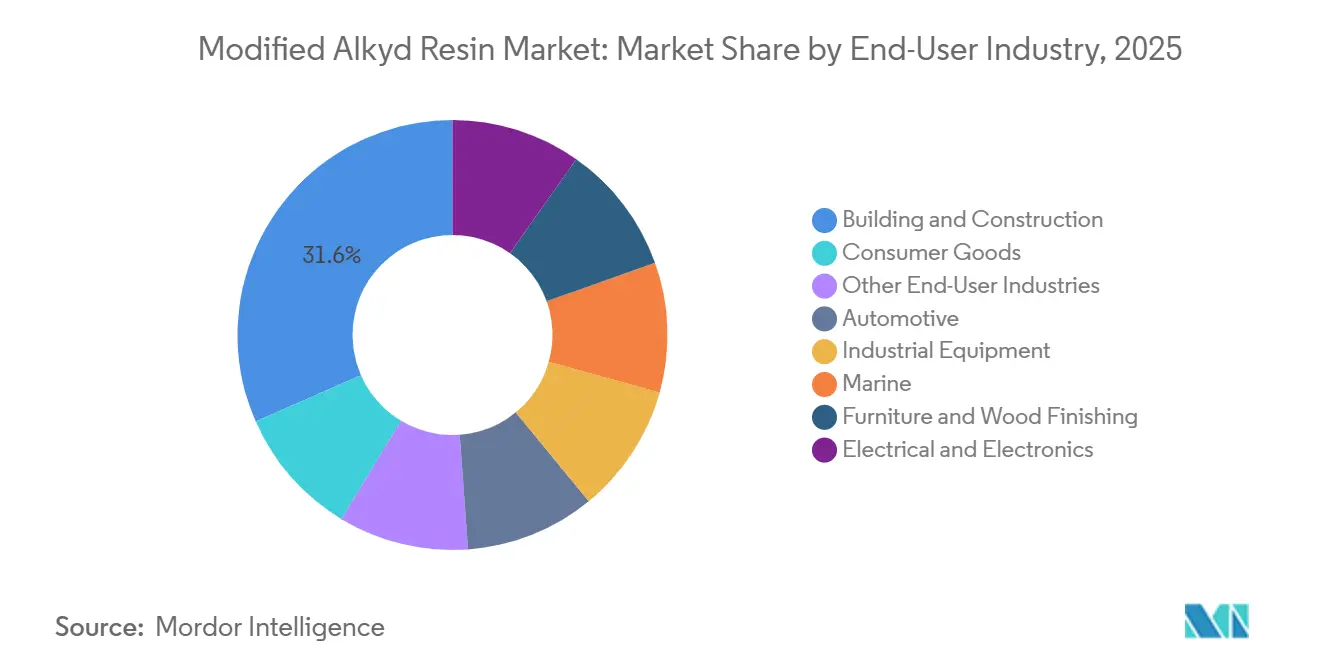
- By end-user industry, building and construction held 31.59% of demand in 2025, while electrical and electronics recorded the highest projected CAGR of 5.07% through 2031.
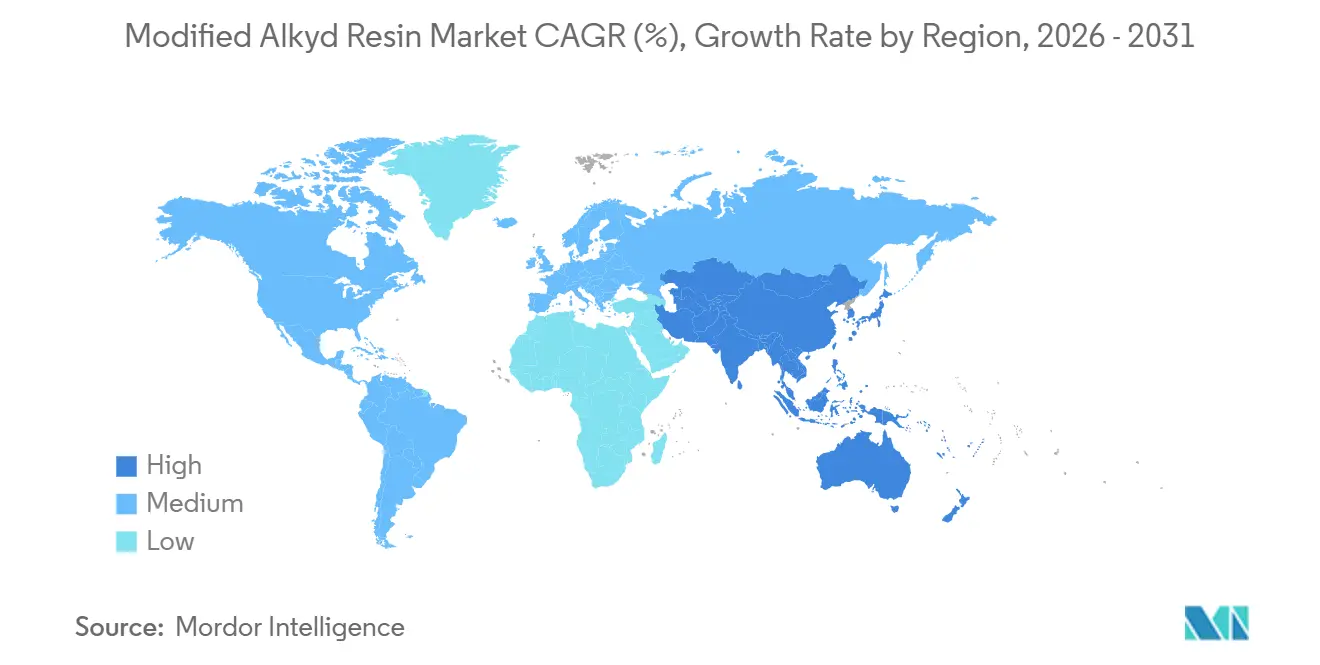
- By geography, Asia-Pacific held 43.88% of the value in 2025 and recorded the highest projected CAGR of 4.77% through 2031.
Note: Market size and forecast figures in this report are generated using Mordor Intelligence’s proprietary estimation framework, updated with the latest available data and insights as of January 2026.
Market Trends and Insights
Drivers Impact Analysis of Modified Alkyd Resin Market*
| Drivers | (~) % Impact on CAGR Forecast | Geographic Relevance | Impact Timeline |
|---|---|---|---|
| Expansion of Volatile Organic Compound (VOC)-Low and Waterborne Coating Formulations | +1.3% | Global, with the strongest relevance in Europe, North America, and China | Short term (≤ 2 years) |
| Growth of Construction and Infrastructure Coatings | +1.1% | Asia-Pacific, with relevance in the Middle-East, Africa, and South America | Medium term (2-4 years) |
| Automotive Refinishing and Transportation Coating Demand | +0.6% | Global, with a concentration in Asia-Pacific, North America, and Europe | Medium term (2-4 years) |
| Demand for Corrosion-Resistant Industrial and Marine Coatings | +0.5% | Global, including East Asia, Europe, the Middle-East, Africa, India, and Southeast Asia | Medium term (2-4 years) |
| Bio-Based Feedstock Adoption in Alkyd Resin Formulation | +0.8% | Europe and North America, with growing relevance in the Asia-Pacific | Long term (≥ 4 years) |
| Source: Mordor Intelligence | |||
Expansion of Low-VOC and Waterborne Coating Formulations
The modified alkyd resin market is shifting toward waterborne and low-VOC coatings as formulators respond to stricter product requirements. This transition is significant because traditional solvent-based products may face a smaller addressable customer base as coating specifications increasingly prioritize lower emissions. Waterborne alkyd dispersions have improved in gloss, adhesion, and corrosion resistance, addressing a long-standing performance concern among professional users. The American Coatings Association has described near-zero-VOC waterborne alkyd dispersions designed to deliver performance comparable to solventborne alkyds[1]. Improved catalyst selection and resin design are helping coatings producers reduce the trade-off between drying performance and environmental objectives. Arkema positions its SYNAQUA 4804 waterborne alkyd emulsion for paints requiring bio-based content and lower-emission characteristics.
Growth of Construction and Infrastructure Coatings
Construction and infrastructure maintenance support steady consumption in the modified alkyd resin market, as steel, concrete, wood, and exterior trim require protective coatings. Alkyd-based formulations remain relevant where applicators value straightforward application, reliable adhesion, and established coating systems. New construction generates demand, while renovation activity also supports recurring coating purchases in mature economies. Low-odor and waterborne alkyd systems are relevant in renovation projects where indoor air quality and workplace conditions influence product selection. The modified alkyd resin market serves both decorative coatings and protective maintenance products, reducing reliance on any single construction activity. Demand from infrastructure programs also supports primers and maintenance coatings for transport assets, public buildings, and industrial facilities.
Automotive Refinishing and Transportation Coating Demand
Automotive refinish activity supports the modified alkyd resin market through repair shops that value cost-effective, single-component coating options. Modified alkyds provide leveling behavior and compatibility with established shop-floor practices in applications where straightforward processes remain important. Their use is particularly relevant in price-sensitive repair settings where application speed and material cost influence purchasing decisions. Urethane-modified alkyds offer improved hardness development and abrasion resistance for transport-related equipment and exterior surfaces. These characteristics support use on forklift chassis, railcar exteriors, and selected repair applications. The modified alkyd resin market therefore benefits from transportation maintenance demand even where original-equipment applications use more specialized resin systems.
Demand for Corrosion-Resistant Industrial and Marine Coatings
Industrial and marine protection remain important segments of the modified alkyd resin market, as many assets operate in wet, saline, or high-temperature environments. Silicone-modified alkyds are used where heat stability and gloss retention are required, including engine casings and exhaust-related equipment. Phenolic-modified alkyds can produce lower-permeability films for metal structures, port assets, and other surfaces exposed to moisture. A Scientific Reports study described the use of recycled iron oxide pigment from cold-forming mill scale in alkyd-based primer paints that met corrosion-performance standards. A separate peer-reviewed study found that phosphate modification of aqueous acrylic-alkyd resin improved cross-linking and protection of iron substrates. These developments help modified alkyd systems remain relevant alongside epoxy and polyurethane products in selected protective applications.
Restraints Impact Analysis of Modified Alkyd Resin Market*
| Restraints | (~) % Impact on CAGR Forecast | Geographic Relevance | Impact Timeline |
|---|---|---|---|
| Volatility in Petrochemical and Vegetable-Oil Feedstock Prices | -0.3% | Global, especially producers without backward integration in India and Southeast Asia | Medium term (2-4 years) |
| Volatile Organic Compound (VOC) and Hazardous-Substance Compliance Costs | -0.2% | Europe and North America, with developing relevance in India and China | Long term (≥ 4 years) |
| Drying Time and Reformulation Trade-Offs in Waterborne Systems | -0.4% | Global, with a stronger effect in humid parts of Asia-Pacific, the Middle-East, and Africa | Short term (≤ 2 years) |
| Source: Mordor Intelligence | |||
Volatility in Petrochemical and Vegetable-Oil Feedstock Prices
Feedstock price volatility constrains the modified alkyd resin market, as vegetable oils and petrochemical intermediates are essential components of many resin formulations. Changes in agricultural supply, biofuel demand, and petrochemical operating conditions make material purchasing less predictable. This exposure is greater for producers that lack scale, long-term supply arrangements, or backward integration. Formulators can respond by qualifying more than one source of vegetable oil or by introducing alternative renewable inputs. Waste cooking oil, recycled fats, and tall oil derivatives are potential options, although each requires reliable quality control. Research on waste cooking oil-derived alkyds illustrates why these pathways are receiving increased research attention.
VOC and Hazardous-Substance Compliance Costs
Compliance requirements impose additional costs on market participants in the modified alkyd resin market, as product reformulation requires laboratory work, testing, and customer qualification. Documentation requirements also expand when buyers need more information about substance content and product stewardship. These requirements tend to favor integrated producers with regulatory, technical, and customer support resources. Smaller regional manufacturers face longer reformulation cycles when replacing solvents or redesigning dispersion systems. As a result, producers place greater focus on waterborne, high-solids, and lower-hazard formulations. This pressure also makes verified product documentation a more important factor in supplier selection within the modified alkyd resin industry.
*Our forecasts treat driver/restraint impacts as directional, not additive. The impact forecasts reflect baseline growth, mix effects, and variable interactions.
Modified Alkyd Resin Market Segment Analysis
By Type:
Acrylic Grades Lead, Urethane Alkyds Support Higher-Performance UsesAcrylic-modified grades held 28.71% of the modified alkyd resin market share in 2025. Their UV durability, color retention, and hard-film properties support use in exterior architectural coatings and industrial maintenance applications. These attributes are relevant in South and Southeast Asia, where coatings face frequent humidity fluctuations and strong sunlight. Hybrid emulsification approaches have improved stability and film formation consistency in waterborne alkyd systems. Acrylic modification provides formulators with an established route to improve weathering performance without fully abandoning alkyd chemistry. This positioning keeps acrylic grades relevant for surface protection applications where appearance and retention matter. The segment also benefits from broad familiarity among coatings formulators and applicators.
Urethane-modified grades are forecast to grow at a CAGR of 4.92% through 2031. They offer faster hardness development, abrasion resistance, and flexibility without requiring two-component mixing. These characteristics support infrastructure maintenance, automotive refinishing, and equipment coatings that require practical application methods. Silicone-modified grades remain useful in high-temperature applications such as engine casings and exhaust systems. Phenolic grades provide drying and chemical-resistance benefits for metal packaging and selected original-equipment finishes. Vinyl and polyamide modifications address printing inks and adhesion-focused uses. A study of bio-renewable furandicarboxylic acid (FDCA)-based alkyds found that greater unsaturation improved tack-free time and cross-linking, supporting continued work on bio-based performance hybrids.

By Technology:
Solvent-Based Systems Remain Established as Water-Based Systems Gain GroundSolvent-based systems held 54.33% of the modified alkyd resin market share in 2025. Their position reflects established use in exterior coatings, marine products, and industrial formulations where adhesion and corrosion resistance are important. Many applicators are familiar with how these systems behave across common substrates and site conditions. This familiarity remains valuable in maintenance work that requires dependable results and minimal changes to existing processes. Solvent-based products can also remain relevant in environments where humidity makes waterborne drying less consistent. The large installed base of compatible application practices supports continued demand during the forecast period. At the same time, the segment faces increasing pressure to reduce emissions and improve product stewardship.
Water-based technology is forecast to grow at a CAGR of 5.39% through 2031, the fastest pace among technology categories. Improved catalyst systems and resin design are helping formulators narrow the performance gap with solvent-based products. Borchers GmbH presents OXY-Coat 1101 as a catalyst technology intended to improve drying behavior and cleanability in waterborne alkyd coatings[2]. High-solids alkyds provide another route for reducing solvent use while maintaining a thicker coating film per coat. Ultraviolet (UV)-curable systems serve specialty wood and industrial uses where fast cure is essential. Hybrid alkyd-polyurethane and alkyd-acrylic systems address projects that require single-component convenience with higher-performance properties. These alternatives expand the technology choices available in the modified alkyd resin market.
By Application:
Coatings Dominate Demand as Electrical Insulation ExpandsCoatings accounted for 63.83% of the demand for modified alkyd resin in 2025. Architectural coatings, industrial maintenance products, and protective systems for infrastructure account for the largest share of this application base. End uses include wood finishes, structural steel primers, concrete sealing products, automotive primers, and marine topcoats. This diversity gives the modified alkyd resin market exposure to several coating end uses rather than a single narrow application. Adhesives and sealants, printing inks, and composites provide smaller but meaningful outlets for modified formulations. Phenolic- and vinyl-modified grades can support printing ink applications that require quick drying and adhesion to metal or plastic surfaces. The broad coatings base remains central to demand in the modified alkyd resin market.
Electrical insulating coatings are forecast to grow at a CAGR of 4.81% through 2031. Alkyd resins have dielectric properties and are used in impregnation-varnish formulations for transformer windings, motor coils, and generator assemblies, supporting a role in equipment linked to electrification and grid investment. The segment benefits where producers require cost-effective insulating materials that can be processed in established varnish systems. Requirements for documented product performance can influence supplier selection for electrical applications. The growth outlook is also linked to industrial motors, power equipment, and electrical components that require durable insulation. This application offers a faster-growing path for the modified alkyd resin market beyond the core coatings category.
By End-User Industry:
Construction Remains the Largest Outlet as Electrical and Electronics Grow FasterBuilding and construction held 31.59% of modified alkyd resin demand in 2025. Architectural enamels, structural steel primers, and concrete surface coatings support consumption across residential, commercial, and infrastructure projects. Alkyd systems are used for wood finishes, metal roofing, interior enamels, and exterior trim, creating multiple points of demand within the built environment. Maintenance and renovation work adds recurring demand beyond new construction, providing a stable base for the modified alkyd resin market. Product choices vary by substrate, required durability, application method, and local emissions requirements. Construction customers also generate demand for both decorative and protective coating systems.
The electrical and electronics sector is forecast to grow at a CAGR of 5.07% through 2031. Transformer and motor production, electronic-component encapsulation, and power-electronics manufacturing support demand for insulating resin systems. Automotive remains another major end-user, as repair coatings require adhesion, rapid drying, and single-stage processes. Industrial equipment, marine uses, furniture and wood finishing, and consumer goods form a balanced secondary customer base. Marine coatings remain important for exposed structures that require protection against salt spray and ultraviolet exposure. Suppliers with documented testing for insulating varnishes and related materials can benefit where customers require such qualification. This broader customer mix limits dependence on a single end-user category in the modified alkyd resin market.
Geography Analysis
APAC Modified Alkyd Resin Market
Asia-Pacific held 43.88% of the modified alkyd resin market share in 2025 and grew at a CAGR of 4.77% through 2031. The region benefits from high construction activity, significant manufacturing capacity, demand for transportation repairs, and industrial maintenance needs. China is the largest regional consumption center, supported by architectural and industrial coating activity. India and Southeast Asian economies contribute demand from infrastructure development and industrial expansion. Japan and South Korea represent more mature markets with conventional demand, though specialty modified grades and waterborne systems offer opportunities for value growth. Across the region, suppliers must balance lower emission requirements with customer expectations for fast drying and consistent application.
North America and Europe Modified Alkyd Resin Market
North America and Europe represent the next major demand block for the modified alkyd resin market. North American demand is supported by renovation-related coatings, automotive refinish work, and a continued shift toward lower volatile organic compound (VOC) products. European customers place strong emphasis on product stewardship, lower-emission systems, and verified sustainability claims, making the region important for the development of waterborne, high-solids, and bio-based products. In mature markets, renovation and maintenance applications tend to take precedence over new construction. Suppliers that provide technical guidance and reliable documentation can strengthen their position with professional coatings customers. Both regions also serve as important testing grounds for new resin formulations before wider commercialization.
MEA and South America Modified Alkyd Resin Market
South America, the Middle-East, and Africa are smaller in current value but remain relevant to the modified alkyd resin market. Brazil supports demand for architectural coatings through housing and construction activity, while local feedstock conditions can influence formulation economics. In the Middle-East, large construction projects and industrial assets require coatings that protect steel and concrete surfaces. Parts of Africa also generate demand for durable products used in infrastructure renewal and industrial maintenance. High ultraviolet exposure, heat, salt, and humidity make corrosion protection and application reliability central to product selection. These conditions support continued demand for modified alkyds that offer practical application and cost-effective protection.
Competitive Landscape
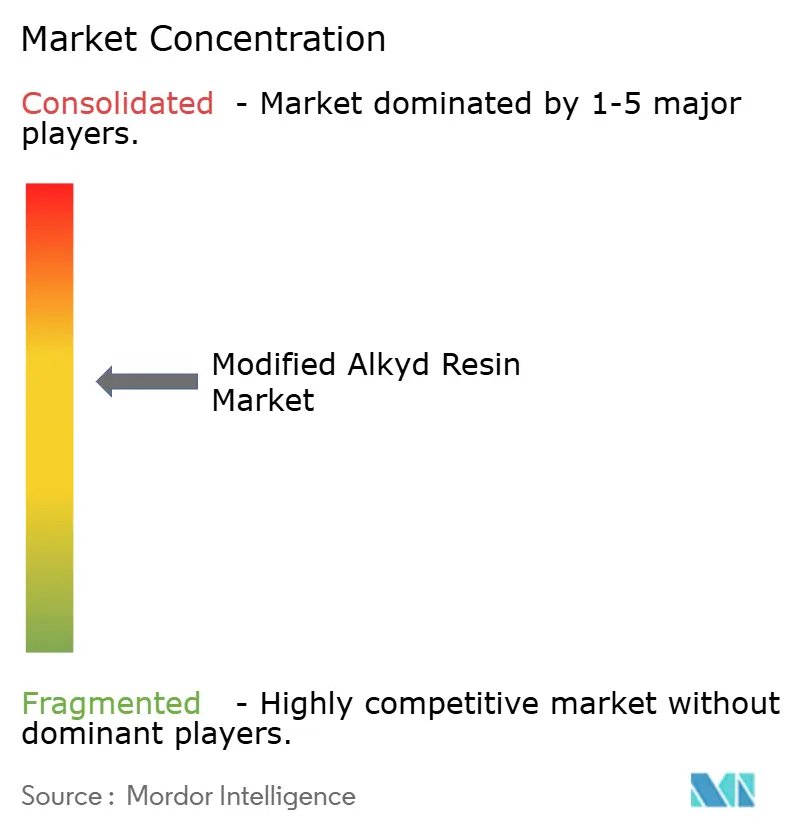
The modified alkyd resin market is moderately consolidated, comprising global integrated producers and regional specialists. Allnex GmbH, Arkema, Covestro AG, DIC Corporation, and Polynt S.p.A. are identified in the supplied research as major multinational participants. Their breadth in resin technology, sustainability initiatives, and technical support differentiates them from smaller suppliers. Regional companies compete through local customer knowledge, tailored product ranges, and cost positioning. The market includes both premium offerings and standard formulations that serve price-sensitive coatings applications. Competition is particularly active where customers can choose from established resin chemistries and local producers. The competitive position of any supplier depends on product performance, readiness for compliance, access to feedstocks, and customer qualification support.
Arkema has positioned SYNAQUA 4856 as a waterborne alkyd emulsion made with 97% bio-based Nordic forest byproducts and carrying the USDA BioPreferred label. This approach links renewable content to use in coatings that target lower-emission and eco-label-oriented solutions. Allnex introduced VIALKYD and DUROFTAL liquid resins for the Asia-Pacific region that incorporate post-consumer recycled PET. The series includes 5-20% recycled PET and can reduce a product's carbon footprint by 3.7-10%. These developments indicate that sustainability attributes are becoming part of product differentiation in the modified alkyd resin market.
Waterborne urethane-alkyd hybrids for humid climates remain an active product development area, as stable performance under challenging curing conditions is commercially valuable. Regional suppliers such as Helios Resins and Synpol Products Private Limited have positioned water-reducible and bio-based options around local requirements. Helios Resins has highlighted sustainable composite solutions and bio-based materials in its public communications. Certification and traceable material claims can influence institutional and professional procurement in Europe and other regulated markets. Local low-cost producers in China continue to apply price pressure on standard long-oil formulations, particularly where buyers prioritize cost. Suppliers that combine practical coating performance with credible sustainability credentials and compliance support are therefore well-positioned in the modified alkyd resin market.
Modified Alkyd Resin Industry Leaders
-
Allnex GMBH
-
Arkema
-
Polynt S.p.A.
-
HELIOS RESINS
-
Synthomer plc
- *Disclaimer: Major Players sorted in no particular order
Modified Alkyd Resin Market Companies Covered in this Report
- Allnex GMBH
- Arakawa Chemical Industries,Ltd.
- Arkema
- Ciech Sarzyna S.A.
- Covestro AG
- D.S.V. Chemicals
- Deltech Corporation
- DIC Corporation
- Eternal Materials Co., Ltd.
- HELIOS RESINS
- Macro Polymers
- Polynt S.p.A.
- Spolchemie a.s.
- Synpol Products Private Limited
- Synthomer plc
- Uniform Synthetics
Recent Industry Developments in Modified Alkyd Resin Market
- June 2026: Mutares SE & Co. KGaA signed an agreement to acquire Synthomer a.s. from Synthomer plc in a carve-out transaction. The deal represents a strategic portfolio restructuring by Synthomer plc, with the transaction closing expected by the end of Q3 2026.
- April 2026: Allnex launched VIALKYD and DUROFTAL solvent-borne alkyd and polyester recycled polyethylene terephthalate (rPET) liquid resins in the Asia-Pacific region. The series incorporates 5-20% post-consumer recycled PET and targets automotive original equipment, automotive refinish, and general metal-coating applications.
Global Modified Alkyd Resin Market Report Scope
Modified alkyd resins are synthetic polyester binders altered with additional compounds such as acrylic, urethane, or silicone to improve drying speed, durability, and weather resistance. They are widely used in commercial paints, varnishes, and industrial coatings for metal and wood applications.
The modified alkyd resin market is segmented by type, technology, application, end-user industry, and geography. By type, the market is segmented into acrylic, silicone, urethane, vinyl, phenolic, polyamide, and other types. By technology, the market is segmented into solvent-based, water-based, high-solids, UV/radiation-curable, and hybrid resin systems. By application, the market is segmented into coatings, adhesives and sealants, printing inks, composites, electrical insulating coatings, composites, and other applications. By end-user industry, the market is segmented into building and construction, automotive, industrial equipment, marine, furniture and wood finishing, electrical and electronics, consumer goods, and other end-user industries. The report also covers market size and forecasts for modified alkyd resin across 16 countries in major regions. The market sizes and forecasts are provided in terms of value (USD).
Segmentation Overview
| Acrylic |
| Silicone |
| Urethane |
| Vinyl |
| Phenolic |
| Polyamide |
| Other Types |
| Solvent-Based |
| Water-Based |
| High-Solids |
| UV/Radiation-Curable |
| Hybrid Resin Systems |
| Coatings |
| Adhesives and Sealants |
| Printing Inks |
| Composites |
| Electrical Insulating Coatings |
| Other Applications |
| Building and Construction |
| Automotive |
| Industrial Equipment |
| Marine |
| Furniture and Wood Finishing |
| Electrical and Electronics |
| Consumer Goods |
| Other End-User Industries |
| Asia-Pacific | China |
| India | |
| Japan | |
| South Korea | |
| Rest of Asia-Pacific | |
| North America | United States |
| Canada | |
| Mexico | |
| Europe | Germany |
| United Kingdom | |
| France | |
| Italy | |
| Russia | |
| Rest of Europe | |
| South America | Brazil |
| Argentina | |
| Rest of South America | |
| Middle-East and Africa | Saudi Arabia |
| South Africa | |
| Rest of Middle-East and Africa |
| By Type | Acrylic | |
| Silicone | ||
| Urethane | ||
| Vinyl | ||
| Phenolic | ||
| Polyamide | ||
| Other Types | ||
| By Technology | Solvent-Based | |
| Water-Based | ||
| High-Solids | ||
| UV/Radiation-Curable | ||
| Hybrid Resin Systems | ||
| By Application | Coatings | |
| Adhesives and Sealants | ||
| Printing Inks | ||
| Composites | ||
| Electrical Insulating Coatings | ||
| Other Applications | ||
| By End-User Industry | Building and Construction | |
| Automotive | ||
| Industrial Equipment | ||
| Marine | ||
| Furniture and Wood Finishing | ||
| Electrical and Electronics | ||
| Consumer Goods | ||
| Other End-User Industries | ||
| By Geography | Asia-Pacific | China |
| India | ||
| Japan | ||
| South Korea | ||
| Rest of Asia-Pacific | ||
| North America | United States | |
| Canada | ||
| Mexico | ||
| Europe | Germany | |
| United Kingdom | ||
| France | ||
| Italy | ||
| Russia | ||
| Rest of Europe | ||
| South America | Brazil | |
| Argentina | ||
| Rest of South America | ||
| Middle-East and Africa | Saudi Arabia | |
| South Africa | ||
| Rest of Middle-East and Africa | ||
Key Questions Answered in the Report
What is current market size of Modified Alkyd Resin Market?
The Modified Alkyd Resin Market size was estimated at USD 3.11 billion in 2025 and is estimated to grow from USD 3.21 billion in 2026 to USD 3.92 billion by 2031, at a CAGR of 4.08% during the forecast period (2026-2031).
Which modified alkyd resin technology is growing fastest?
Water-based systems are forecast to grow at a CAGR of 5.39% through 2031, supported by continued work on drying and cleanability performance.
Which application uses the most modified alkyd resin?
Coatings accounted for 63.83% of demand in 2025, spanning architectural, industrial maintenance, automotive, and marine coating uses.
Which region leads to demand for modified alkyd resins?
Asia-Pacific led with a 43.88% value share in 2025 and is forecast to grow at a CAGR of 4.77% through 2031.