
Mobile Hospitals Market Size and Share
Market Overview
| Study Period | 2020 - 2031 |
|---|---|
| Market Size (2026) | USD 22.79 Billion |
| Market Size (2031) | USD 36.06 Billion |
| Growth Rate (2026 - 2031) | 9.60 % |
| Fastest Growing Market | Asia-Pacific |
| Largest Market | North America |
| Market Concentration | Low |
Major Players *Disclaimer: Major Players sorted in no particular order Image © Mordor Intelligence. Reuse requires attribution under CC BY 4.0. | |
Mobile Hospitals Market Analysis by Mordor Intelligence
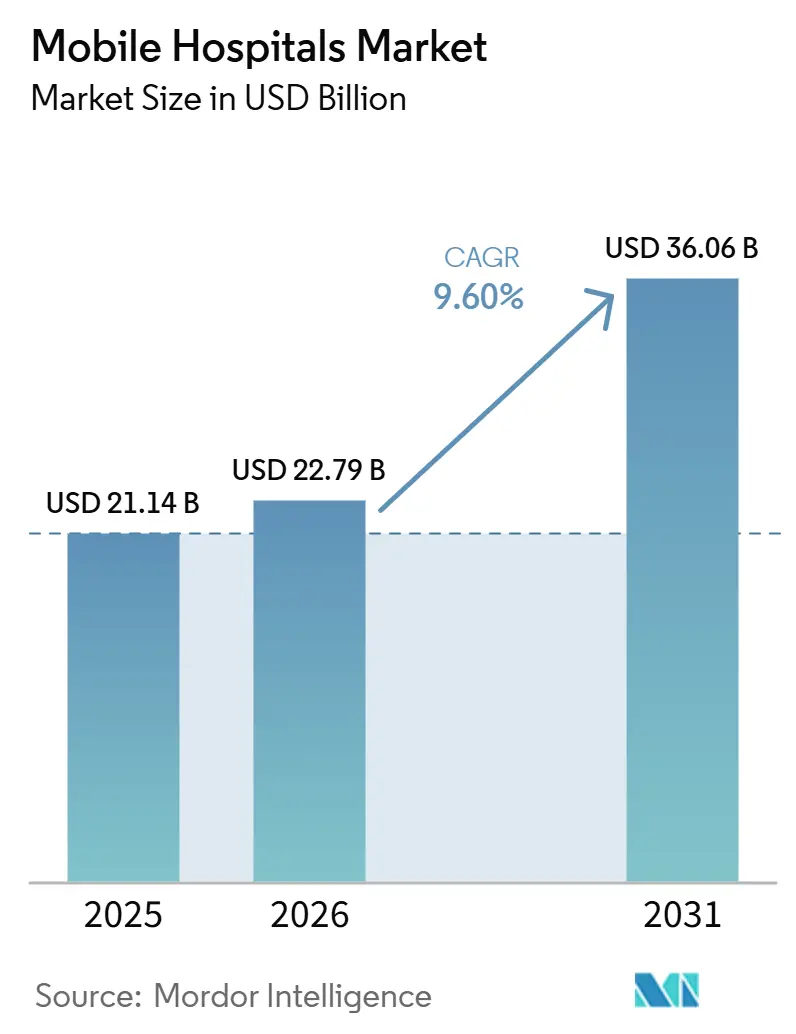
The Mobile Hospitals Market size is expected to grow from USD 21.14 billion in 2025 to USD 22.79 billion in 2026 and is forecast to reach USD 36.06 billion by 2031 at 9.60% CAGR over 2026-2031.
The mobile hospitals market is growing as defense agencies move Role 2 capabilities closer to active conflict zones and expect faster mobility, protection, and treatment continuity in the same deployment model. The mobile hospitals market is also benefiting from public health systems rebuilding isolation and surge capacity after recent infectious disease emergencies, while aid agencies continue to pre-position modular units before climate shocks and displacement events. Another support factor comes from rural and remote health programs, where vehicle-based and containerized formats help providers deliver imaging, screening, and urgent care in areas that cannot sustain permanent specialty infrastructure. Product development is widening the addressable base as portable CT, low-field MRI, AI-enabled ultrasound, and off-grid energy systems make field units more clinically capable and easier to operate in constrained settings. Competitive activity remains broad rather than concentrated, with defense contractors, modular shelter manufacturers, vehicle integrators, and imaging developers all pursuing contracts that tie mobility, digital diagnostics, and energy resilience into a single service model.
Key Report Takeaways
- By facility, accident & emergency care facilities led with 28.32% share in 2025, while diagnostics & imaging facilities are projected to grow at a 10.32% CAGR through 2031.
- By structure, containerized / expandable hospitals held 34.53% share in 2025, while vehicle-based hospitals are forecast to expand at an 11.32% CAGR through 2031.
- By bed capacity, under 50-bed units accounted for 45.35% share in 2025, while 50–100-bed systems are projected to advance at a 12.24% CAGR through 2031.
- By application, military operations & combat support represented 31.34% of demand in 2025, while screening & preventive programs are expected to record an 11.98% CAGR through 2031.
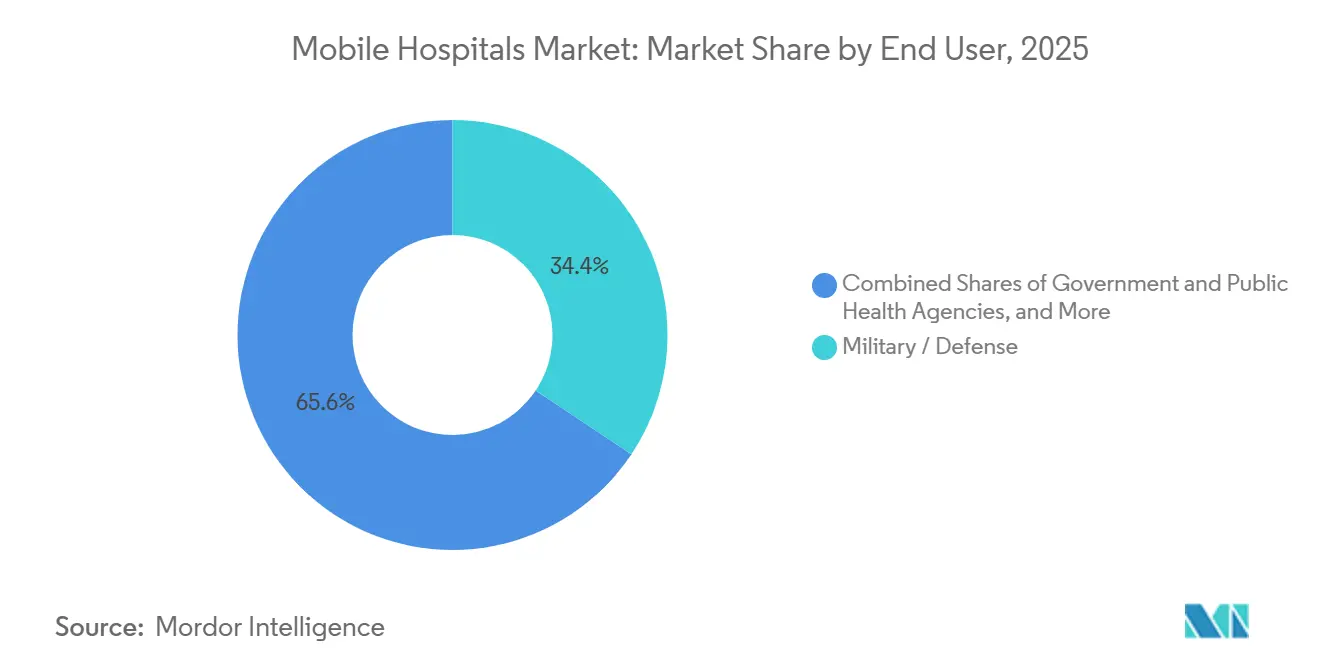
- By end user, military/defense held 34.36% of the mobile hospitals market share in 2025, while NGOs & international organizations are projected to grow at a 10.56% CAGR through 2031.
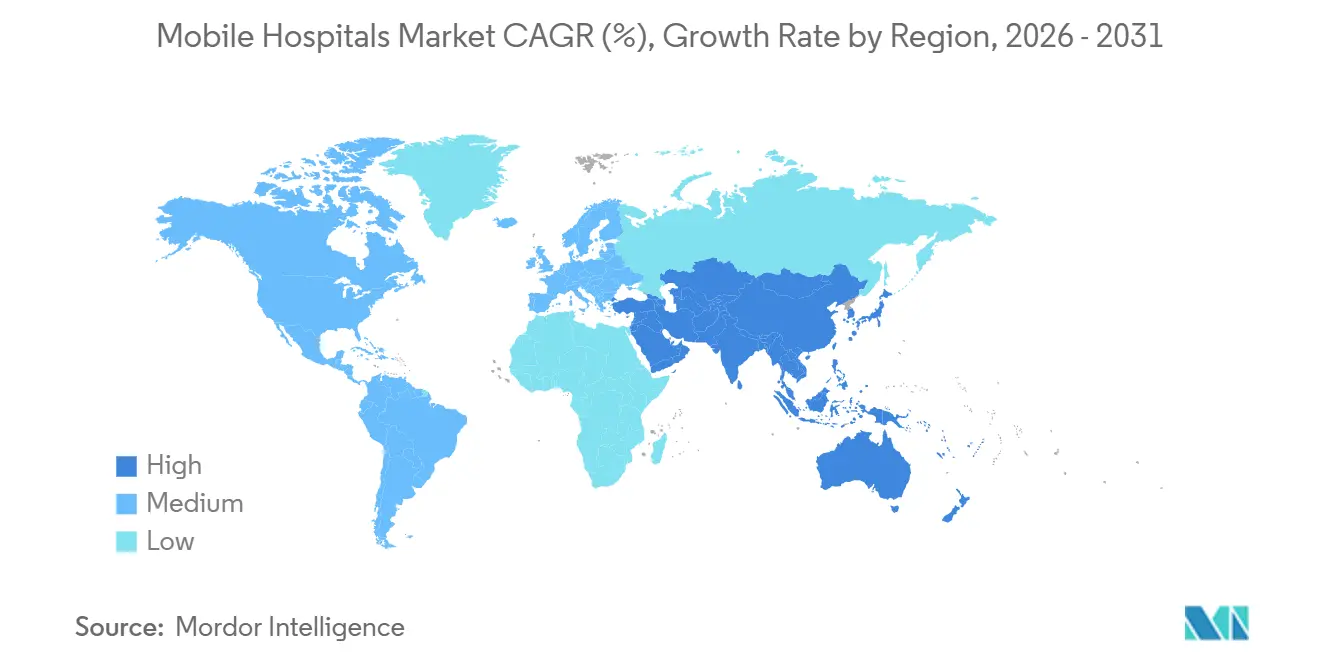
- By geography, North America captured 39.84% of the mobile hospitals market size in 2025, while Asia-Pacific is forecast to grow at a 10.56% CAGR through 2031.
Note: Market size and forecast figures in this report are generated using Mordor Intelligence’s proprietary estimation framework, updated with the latest available data and insights as of January 2026.
Global Mobile Hospitals Market Trends and Insights
Drivers Impact Analysis*
| Driver | (~) % Impact on CAGR Forecast | Geographic Relevance | Impact Timeline |
|---|---|---|---|
| Disaster Response And Emergency Preparedness Demand | +2.8% | Global, with concentration in hurricane-prone Americas and cyclone-affected Asia-Pacific | Medium term (2-4 years) |
| Expanding Access Needs In Remote And Underserved Areas | +1.9% | Rural Americas, Sub-Saharan Africa, Asia-Pacific island states, Australian outback | Long term (≥ 4 years) |
| Military Modernization And Expeditionary Medical Procurement | +2.5% | NATO Europe, Indo-Pacific, Middle East | Short term (≤ 2 years) |
| Telemedicine, Portable Imaging, And AI-Enabled Workflows | +1.5% | Global, early gains in North America, Western Europe, urban India and China | Medium term (2-4 years) |
| Negative-Pressure Isolation And Surge-Capacity Readiness | +1.2% | Global, with spill-over to Southeast Asia and West Africa | Short term (≤ 2 years) |
| Sustainable, Off-Grid Power Reducing OPEX | +0.7% | Africa, remote Pacific islands, Arctic deployments, disaster zones globally | Long term (≥ 4 years) |
| Source: Mordor Intelligence | |||
Disaster Response And Emergency Preparedness Demand
Governments and humanitarian agencies continue to treat deployable medical capacity as part of first-response planning because fixed hospitals may be damaged, inaccessible, or overloaded during disasters and conflicts. In September 2024, Ghana Armed Forces accepted a USD 5 million, 60-bed Level II Plus mobile field hospital from the U.S. Government with two operating theaters, x-ray and laboratory rooms, a morgue, and dual generator sets for rapid use in remote northern locations[1]GNA, “Ghana Armed Forces Gets 60-Bed Mobile Field Hospital from US Government,” Ghana News Agency, gna.org.gh. The U.S. Defense Health Agency also tested modular and convertible surge solutions at Brooke Army Medical Center, linking hard-sided and soft-sided elements from multiple vendors to expand bed capacity by 20% within days for mass casualty or pandemic conditions. BLU-MED has shown how this model can scale in practice, with deployable field hospitals that can be operational in 72 hours and expand from 15 beds to more than 300 beds, including negative-pressure isolation configurations[2]“Deployable Field Hospitals,” BLU-MED, blu-med.com. As a result, the mobile hospitals market is increasingly tied to national readiness planning rather than to one-off emergency procurement cycles.
Expanding Access Needs In Remote And Underserved Areas
The mobile hospitals market is also supported by health systems that need reliable service delivery in remote communities where permanent emergency and specialty infrastructure is difficult to maintain. Northwestern Medicine unveiled an upgraded Mobile Stroke Unit in March 2026[3]Northwestern Medicine, “Northwestern Medicine Unveils Upgraded Mobile Stroke Unit, Delivering Life-Saving Care to Residents in the Western Suburbs,” Northwestern Medicine, news.nm.orgwith a 32-slice CT scanner and a smaller vehicle footprint, cutting dispatch-to-thrombolytic time from 83 minutes to 47 minutes across 20 western Chicago communities. Heart of Australia[4]“National Lung Cancer Screening Program,” Heart of Australia, heartofaustralia.com.au is deploying 5 mobile CT lung-screening clinics from November 2025 to May 2027 to visit 50 rural and remote communities each year where lung cancer incidence is materially higher than in major cities.
In Ukraine, World Bank support helped install 130 solar-plus-battery systems across health facilities by November 2025, with one clinic able to operate 36 hours without grid power after saving 5,475 kWh in 8 months. MSF also reported that a hybrid system at Mali’s Niafounké hospital now covers 60% of energy needs, which shows how mobile and modular care becomes more practical when energy resilience improves alongside clinical access.
Military Modernization And Expeditionary Medical Procurement
Military procurement remains one of the clearest growth pillars for the mobile hospitals market because armed forces now want advanced surgery, diagnostics, and resuscitation much closer to the point of injury. Denmark signed a late 2025 contract with Rheinmetall for 5 Role 2 field hospitals, including 3 Role 2B Basic units and 2 Role 2E Enhanced systems with greater ICU and imaging capability, for delivery by 2027. Germany followed with a September 2025 framework valued at more than EUR 300 million (USD 342.6 million) for protected Role 2B facilities on military trucks for brigade deployment in Lithuania. Estonia and Lithuania also awarded MDSC Systems a EUR 150 million (USD 169.3 million), 7-year framework in October 2025 covering field hospitals, medical aid stations, maintenance, and training.
The U.S. Department of Defense added further depth by allocating USD 59.8 million in FY 2025 for expeditionary medical systems, including 4 facilities with 150 beds, 21 Expeditionary Resuscitative Surgical Systems, and 22 En-Route Care Systems, which reinforces that the mobile hospitals market is becoming a standing part of force design.
Telemedicine, Portable Imaging, And AI-Enabled Workflows
The mobile hospitals market is gaining clinical depth as portable imaging and telemedicine reduce the gap between field care and fixed-site diagnostics. Philips received FDA clearance in April 2026 for Verida spectral CT, an AI-powered platform that reconstructs 145 images per second and can support 270 exams a day in compact settings. Hyperfine’s Swoop portable MRI brings neuroimaging to the bedside through an ultra-low-field system controlled by iPad, with Optive AI software used to reduce noise and blur in mobile or intensive care settings. PhysioMRI strengthened this direction in February 2026 with EUR 4.5 million in capital for ELLIMRI, a portable MRI designed for emergencies, rural clinics, and field hospitals, with energy modes suited to unstable grids and generator-backed environments. LifeBot Health has also deployed telemedicine stacks across ambulances, helicopters, and armored vehicles to transmit real-time vitals, ECG, ultrasound, and x-ray data to remote physicians over LTE, 5G, and satellite links. These advances give the mobile hospitals market more relevance in stroke, trauma, neuroimaging, and distributed specialty care.
Restraints Impact Analysis*
| Restraint | (~) % Impact on CAGR Forecast | Geographic Relevance | Impact Timeline |
|---|---|---|---|
| High Capital and Lifecycle Operating Costs | -1.4% | Budget-constrained governments in Sub-Saharan Africa, Latin America, Southeast Asia; NGOs dependent on donor cycles | Medium term (2–4 years) |
| Cross-Border Regulatory, Licensing, and Data-Compliance Complexity | -0.9% | EU (GDPR/EHDS/AI Act), Middle East (GCC localization), India (DPDP Act), Russia (Federal Law No. 242-FZ), China (Data Security Law/PIPL) | Long term (≥ 4 years) |
| Specialized Clinical and Technical Workforce Constraints | -0.8% | Global, acute in rural and frontier markets; spill-over to MEA and island-state deployments; early pressure in North America and Western Europe | Medium term (2–4 years) |
| Long Lead Times and Supply-Chain Bottlenecks for Advanced Units | -0.6% | Global; concentrated in procurement pipelines for advanced medical-device components (CT scanners, HEPA HVAC, medical gas systems) dependent on Asia-Pacific manufacturing | Short term (≤ 2 years) |
| Source: Mordor Intelligence | |||
High Capital And Lifecycle Operating Costs
The mobile hospitals market still faces a meaningful affordability barrier because advanced deployable care requires spending on structures, equipment, HVAC, power, transport, certification, and staffing at the same time. Infinity Chassis Units lists containerized operating theater modules at USD 250,000, trailer-based surgical units at USD 350,000, and truck-based mobile surgery units at USD 750,000, which makes the entry point difficult for smaller public buyers. The Wisconsin Hospital Association reported that labor, supply, and pharmaceutical expenses stayed well above inflation in 2024, while Medicaid and Medicare reimbursement remained well below actual cost, and vacancies still pressured hospitals to pay overtime and higher wages.
Health New Zealand’s 2024 workforce plan projected large shortfalls in doctors, nurses, and allied health professionals through 2033 if structural changes do not occur, which implies higher labor costs for mobile and fixed care alike. The American Hospital Association’s 2026 scan also pointed to inflation, elevated interest rates, supply-chain instability, burnout, and administrative burden, all of which make long-life mobile deployments harder to fund and sustain.
Cross-Border Regulatory, Licensing, And Data-Compliance Complexity
The mobile hospitals market also encounters friction when units move across borders or transmit patient data between jurisdictions with different health privacy, hosting, and medical device rules. GDPR, the emerging European Health Data Space, the EU AI Act, China’s data laws, Russia’s localization rules, India’s DPDP framework, and multiple Middle East residency requirements create different obligations for storage, transfer, consent, audit trails, and model governance. These differences matter more as portable imaging, telemedicine, and AI-based diagnostics become core features rather than optional add-ons in the mobile hospitals market.
Compliance now extends beyond contracts into encryption, access control, pseudonymization, transfer assessments, and location-specific processing arrangements for vendors and operators. In practical terms, providers and manufacturers must often adapt the same deployable platform to different legal environments before a cross-border rollout can scale. That slows deployment speed, increases documentation costs, and can narrow the addressable opportunity in regions where emergency demand is otherwise strong.
*Our forecasts treat driver/restraint impacts as directional, not additive. The impact forecasts reflect baseline growth, mix effects, and variable interactions.
Segment Analysis
By Facility: Accident & Emergency Care Leads While Diagnostics Gains Pace
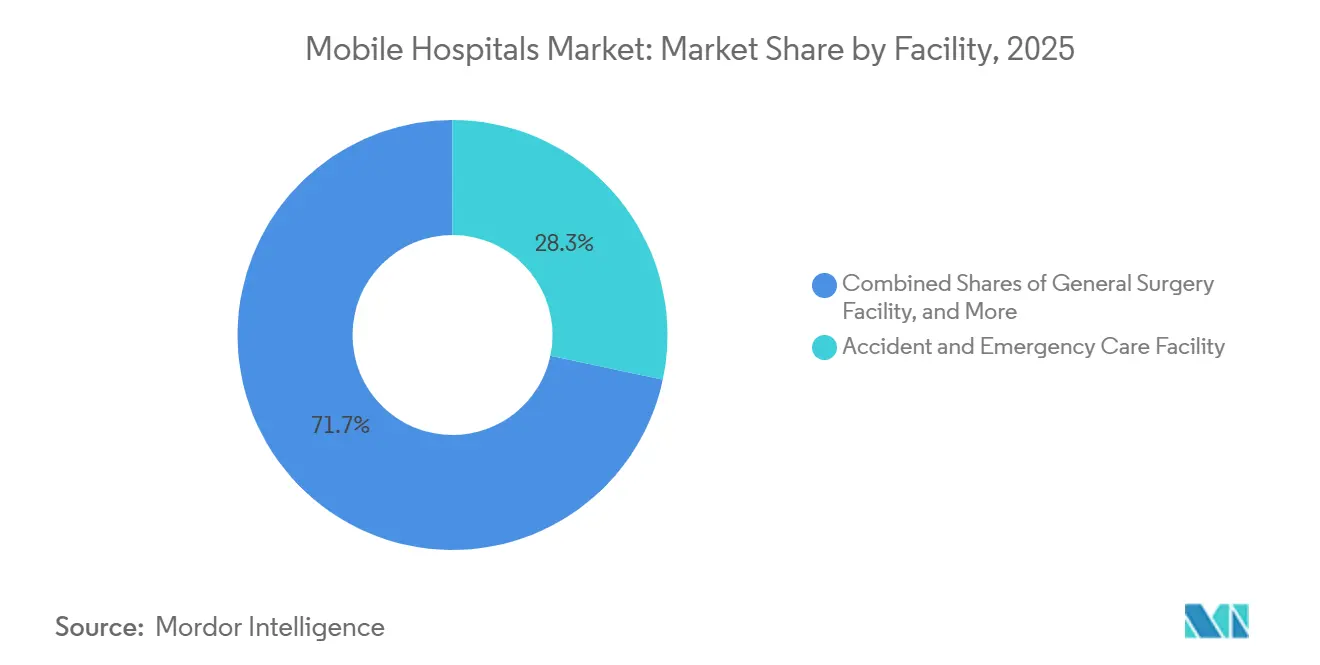
Accident & Emergency Care Facilities held 28.32% of the mobile hospitals market share in 2025 because they remain the core frontline format for triage, trauma stabilization, and rapid case sorting in conflicts and disasters. Diagnostics & Imaging Facilities represent the fastest-growing slice of the mobile hospitals market size with a 10.32% CAGR through 2031 as providers add CT, MRI, ultrasound, and connected image review into field operations. General Surgery Facilities continue to support urgent laparotomy and damage-control procedures where evacuation chains are long or disrupted. Specialized Surgery Facilities are also expanding as modular operating rooms add laminar-flow filtration, pass-through sterilization, and medical gas systems suited to higher acuity care in the field.
Demand within the mobile hospitals industry is widening beyond trauma alone because deployable facilities now cover dental, ophthalmic, maternal, mental health, pharmacy, and laboratory functions in the same network. The U.S. Army National Guard procured dental and infectious-disease containerized modular clinics through DLA ECAT, which shows how niche clinical functions are being standardized for deployable use. WHO also highlighted the breadth of mobile services in crisis settings through emergency health programming that included large-scale sexual and reproductive health consultations and mobile clinic deployment across multiple conflict zones.



By Structure: Containerized Formats Dominate While Vehicle-Based Systems Grow Fastest
Containerized / Expandable Hospitals accounted for 34.53% of demand in 2025 because they combine intermodal transport, fast setup, repeatable layouts, and easier scaling from small treatment nodes to larger complexes. Vehicle-based Hospitals are projected to grow at an 11.32% CAGR through 2031 as operators look for faster dispatch, lower setup burden, and more flexible urban and remote access routes. Mobile Field Hospitals still matter for short-duration overflow and first-contact care, but soft-wall systems face constraints in durability, sterility control, and climate management when compared with containerized or hard-wall formats. Hard-wall Operating Rooms continue to hold value where surgical quality, structural protection, and controlled air handling are central to the mission profile.
The mobile hospitals market is also moving toward hybrid fleets rather than a single preferred form factor. Frazer and Harbinger announced a partnership in March 2026 to build next-generation hybrid-electric EMS and mobile healthcare units with advanced auxiliary power systems, which points to a growing role for electrified vehicle platforms.
By Bed Capacity: Small Units Lead While 50–100 Beds Expand the Fastest
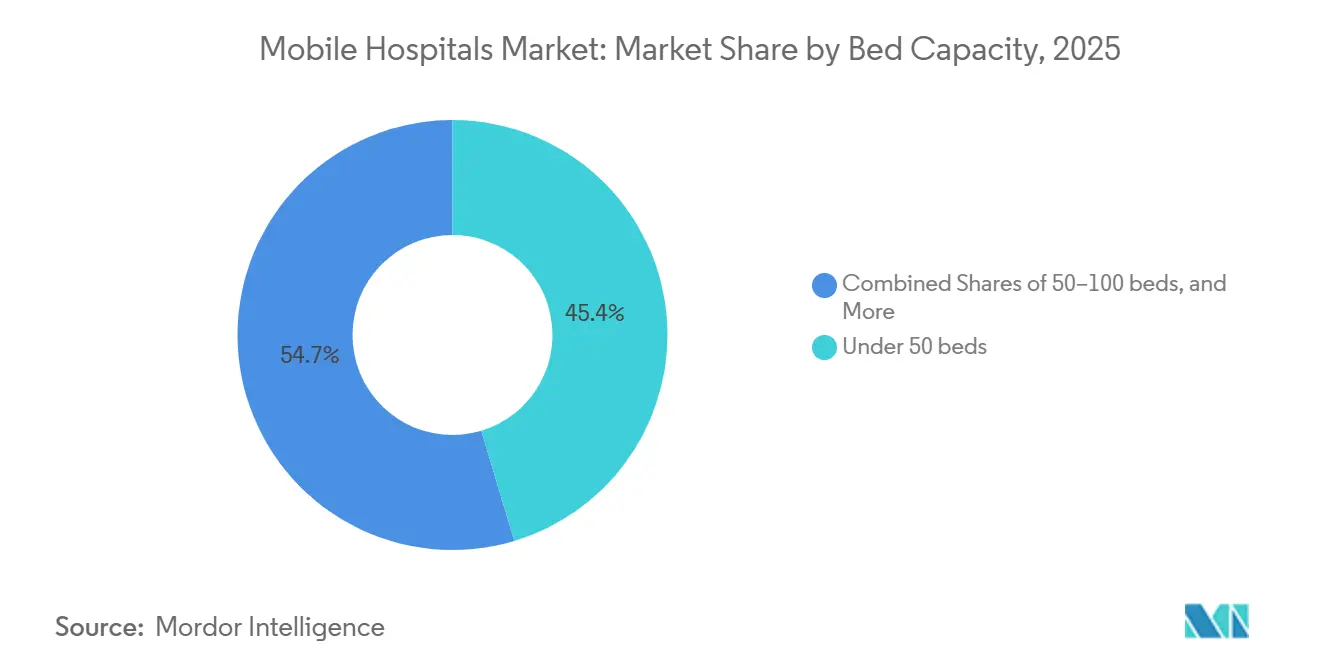
Under 50-bed units held 45.35% share in 2025 because they are easier to deploy, staff, transport, and reposition during disaster response and remote outreach work. The 50–100-bed category is expected to grow at a 12.24% CAGR through 2031 because it gives operators a stronger balance between ICU and surgical capability on one side and setup speed on the other. This makes mid-sized systems more suitable for situations where temporary care must move beyond triage into sustained treatment. Larger formats still have a role, but they are more demanding in logistics, staffing, and site preparation.
The U.S. Department of Defense continues to fund 150-bed expeditionary medical facilities, while BLU-MED maintains platforms that can scale above 300 beds when multiple modules are combined. The Australian Army’s Role 2 Basic facility, which can be erected or dismantled in just over 2 hours, reinforces the point that setup speed is now as important as nominal bed count in military planning.
By Application: Military Operations Lead While Screening Programs Accelerate
Military Operations & Combat Support represented 31.34% of application demand in 2025, making it the largest application base in the mobile hospitals market. Screening & Preventive Programs are forecast to rise at an 11.98% CAGR through 2031 as governments and health systems use mobile formats for population outreach, early detection, and condition-specific campaigns. Disaster Response & Humanitarian Relief remains a steady application layer because mobile assets can be placed where permanent facilities are damaged or absent. Emergency Medical Services & Surge Capacity also retains importance as hospitals prepare for overflow, outbreaks, and patient transport under constrained infrastructure conditions.
Military procurement remains the clearest anchor for the mobile hospitals industry in this segment view, with Denmark, Germany, Estonia, Lithuania, and the United States all expanding field medical capability through truck-mounted, containerized, or modular Role 2 systems.
By End User: Defense Buyers Anchor Demand While NGOs Gain Ground
Military / Defense captured 34.36% share in 2025, which reflects the scale, urgency, and technical complexity of battlefield and expeditionary medicine programs. NGOs & International Organizations are forecast to grow at a 10.56% CAGR through 2031 as conflict, displacement, and climate-linked emergencies continue to expand humanitarian need. Government & Public Health Agencies remain important because they buy mobile systems for disaster stockpiles, screening campaigns, and rural access. Hospitals & Health Systems also add demand by using mobile formats for surge capacity, specialty outreach, and fast imaging access.
Hospitals and health systems are using mobile units for stroke and disaster response, as seen in Northwestern Medicine and Lee Health programs. On the humanitarian side, ICRC’s Rafah hospital and WHO emergency operations show why NGOs and international bodies are the fastest-rising end-user group in the mobile hospitals market.
Geography Analysis
North America held 39.84% of the mobile hospitals market share in 2025, making it the largest regional contributor. The United States leads regional demand through defense procurement, with the Defense Health Program allocating USD 59.8 million to expeditionary medical systems and DLA supporting containerized modular dental and infectious-disease clinics for the Army National Guard. Texas added 70 expandable 20-foot units in January 2026 that became operational within 48 hours, which reflects state and municipal interest in rapid hard-wall deployment models. Regional innovation is also visible in hospital-led programs such as Northwestern Medicine’s upgraded Mobile Stroke Unit and Lee Health’s solar-enabled Mobile Disaster Response Unit. Europe remains another major center of the mobile hospitals market because defense modernization, battlefield logistics, and humanitarian support are all active at the same time.
Asia-Pacific is the fastest-growing regional block in the mobile hospitals market at a 10.56% CAGR through 2031. This regional growth is supported by China’s C909 flying eye hospital, Vietnam’s resident screening campaign across 168 wards, and Australia’s remote CT lung-screening program. The Australian Army’s Role 2 Basic deployment in Exercise Balikatan adds a defense angle to the region’s growth, with strong emphasis on quick setup and mobility.

Competitive Landscape
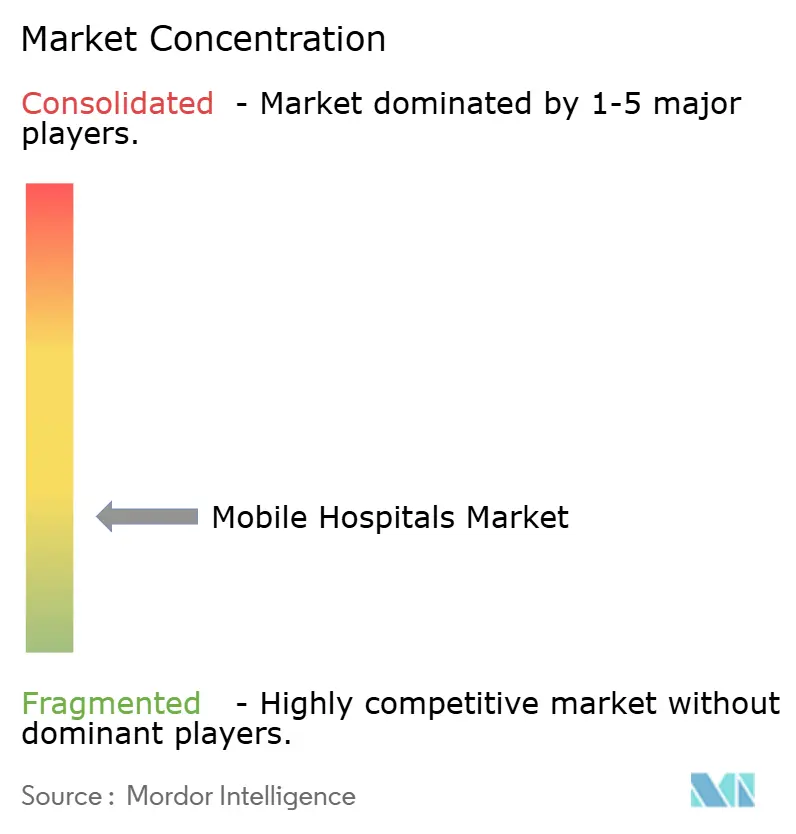
The mobile hospitals market remains fragmented, with more than 19 profiled players spread across defense primes, modular shelter specialists, vehicle integrators, and imaging or power-system innovators. No single vendor appears to control the mobile hospitals market at a scale that would define pricing or technology standards on its own. Rheinmetall has built one of the strongest positions in high-specification military deployments through Denmark’s Role 2 order, Germany’s protected medical truck framework, and earlier modernization work on modular medical facilities. BLU-MED competes from a different angle by scaling field hospitals from 15 to more than 300 beds and demonstrating readiness in drills and outbreak response. MDSC Systems also strengthened its position through the 7-year Estonia-Lithuania framework that covers not only supply but also maintenance and user training.
Competition in the mobile hospitals market is increasingly shaped by the ability to combine transport, power, imaging, data links, and workflow support in one deployable package. Frazer and Harbinger moved in that direction with their March 2026 partnership around hybrid-electric EMS and mobile healthcare platforms.
Mobile Hospitals Industry Leaders
BLU-MED Response Systems (AKS Industries)
BLADE/HDT
Marshall Land Systems
Weatherhaven Global Resources Ltd.
Rheinmetall AG
- *Disclaimer: Major Players sorted in no particular order

Recent Industry Developments
- March 2026: Northwestern Medicine unveiled an upgraded Mobile Stroke Unit serving 20 western suburban Chicago communities, featuring a 32-slice CT scanner (upgraded from 16-slice), smaller vehicle dimensions for tighter navigation, reducing dispatch-to-thrombolytic time from 83 to 47 minutes, and receiving DNV stroke certification in June 2025 as the second such certification globally.
- February 2026: Rheinmetall subsidiary Rheinmetall Mobile Systeme GmbH signed a contract with the Danish procurement authority for five Role 2 field hospitals (three Role 2B Basic, two Role 2E Enhanced), valued in the mid double-digit million euro range, booked in Q4 2025, with delivery scheduled within two years for the Army's 1st Brigade incorporating lessons from Ukraine.


Global Mobile Hospitals Market Report Scope
As per the scope of the report, the mobile hospitals refer to the global industry focused on the development, deployment, and operation of portable, rapidly deployable healthcare facilities designed to deliver medical services in emergency situations, remote areas, and temporary healthcare settings.
The mobile hospitals market is segmented by facility, including accident and emergency care, general surgery, diagnostics and imaging, specialized surgery, dental and ophthalmic, and other facilities. It is further categorized by structure into mobile field hospitals, containerized or expandable hospitals, hard-wall operating rooms, and vehicle-based hospitals, as well as by bed capacity into under 50 beds, 50–100 beds, and more than 100 beds. The market also covers applications such as military operations and combat support, disaster response and humanitarian relief, emergency medical services and surge capacity, access to remote or underserved regions, screening and preventive programs, and others, while end users include military and defense, government and public health agencies, hospitals and health systems, NGOs and international organizations, and private providers and enterprises. Geographically, the market spans North America, Europe, Asia-Pacific, the Middle East and Africa, and South America, with forecasts provided in terms of USD value.
| Accident & Emergency Care Facility |
| General Surgery Facility |
| Diagnostics & Imaging Facility |
| Specialized Surgery Facility |
| Dental & Ophthalmic Facility |
| Others |
| Mobile Field Hospitals |
| Containerized / Expandable Hospitals |
| Hard-wall Operating Rooms |
| Vehicle-based Hospitals |
| Under 50 beds |
| 50-100 beds |
| 100+ beds |
| Military Operations & Combat Support |
| Disaster Response & Humanitarian Relief |
| Emergency Medical Services & Surge Capacity |
| Remote / Underserved Region Access |
| Screening & Preventive Programs |
| Others (Maternal & Child Health, Infectious Disease Isolation) |
| Military / Defense |
| Government & Public Health Agencies |
| Hospitals & Health Systems |
| NGOs & International Organizations |
| Private Providers & Enterprises |
| North America | United States |
| Canada | |
| Mexico | |
| Europe | Germany |
| United Kingdom | |
| France | |
| Italy | |
| Spain | |
| Rest of Europe | |
| Asia-Pacific | China |
| India | |
| Japan | |
| Australia | |
| South Korea | |
| Rest of Asia-Pacific | |
| Middle East and Africa | GCC |
| South Africa | |
| Rest of Middle East and Africa | |
| South America | Brazil |
| Argentina | |
| Rest of South America |
| By Facility | Accident & Emergency Care Facility | |
| General Surgery Facility | ||
| Diagnostics & Imaging Facility | ||
| Specialized Surgery Facility | ||
| Dental & Ophthalmic Facility | ||
| Others | ||
| By Structure | Mobile Field Hospitals | |
| Containerized / Expandable Hospitals | ||
| Hard-wall Operating Rooms | ||
| Vehicle-based Hospitals | ||
| By Bed Capacity | Under 50 beds | |
| 50-100 beds | ||
| 100+ beds | ||
| By Application | Military Operations & Combat Support | |
| Disaster Response & Humanitarian Relief | ||
| Emergency Medical Services & Surge Capacity | ||
| Remote / Underserved Region Access | ||
| Screening & Preventive Programs | ||
| Others (Maternal & Child Health, Infectious Disease Isolation) | ||
| By End User | Military / Defense | |
| Government & Public Health Agencies | ||
| Hospitals & Health Systems | ||
| NGOs & International Organizations | ||
| Private Providers & Enterprises | ||
| By Geography | North America | United States |
| Canada | ||
| Mexico | ||
| Europe | Germany | |
| United Kingdom | ||
| France | ||
| Italy | ||
| Spain | ||
| Rest of Europe | ||
| Asia-Pacific | China | |
| India | ||
| Japan | ||
| Australia | ||
| South Korea | ||
| Rest of Asia-Pacific | ||
| Middle East and Africa | GCC | |
| South Africa | ||
| Rest of Middle East and Africa | ||
| South America | Brazil | |
| Argentina | ||
| Rest of South America | ||


Key Questions Answered in the Report
What is the projected value of the mobile hospitals market by 2031?
The mobile hospitals market is projected to reach USD 36.06 billion by 2031, rising from USD 22.79 billion in 2026 at a 9.6% CAGR over 2026-2031.
Which segment leads by facility type in 2025?
Accident & Emergency Care Facilities lead by facility type with 28.32% share in 2025 because frontline triage and trauma stabilization remain the most immediate use cases.
Which structure type is expanding the fastest?
Vehicle-based Hospitals are the fastest-growing structure segment, with an 11.32% CAGR through 2031, supported by hybrid-electric platforms and armored evacuation vehicles.
Why is military demand so important for mobile hospitals?
Military Operations & Combat Support account for 31.34% of application demand in 2025, and procurement from Denmark, Germany, Estonia, Lithuania, Australia, and the United States is raising baseline demand.
Which region is growing the fastest through 2031?
Asia-Pacific is the fastest-growing region at a 10.56% CAGR through 2031.
What is driving adoption beyond emergency response?
Screening and prevention, portable imaging, telemedicine, and off-grid power systems are extending mobile hospitals into rural outreach, stroke care, lung screening, and infectious disease readiness.
Page last updated on:





