
Middle East and Africa Data Center Switchgear Market Size and Share
Market Overview
| Study Period | 2021 - 2032 |
|---|---|
| Forecast Data Period | 2026 - 2032 |
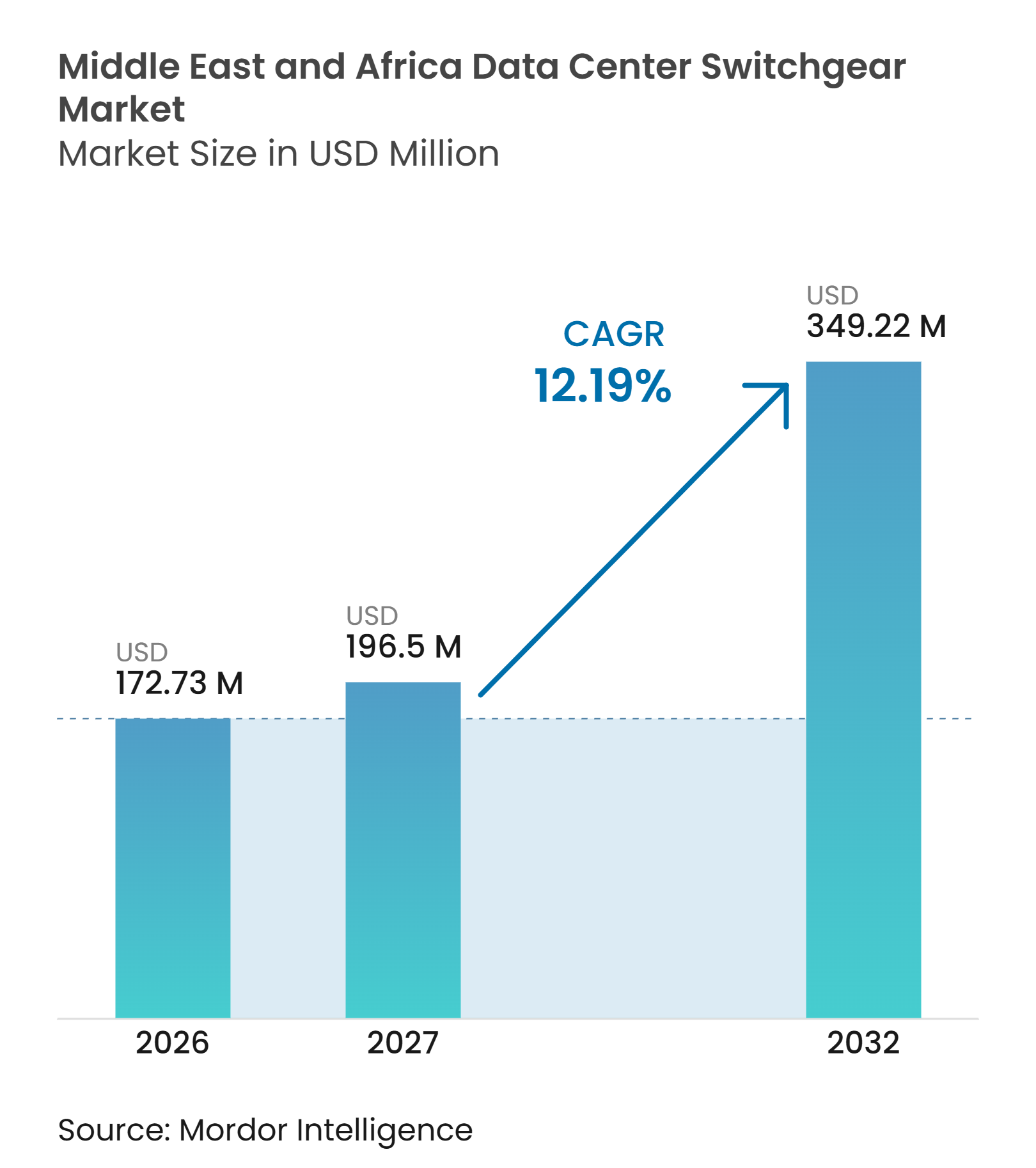
| Base Year Market Size (2026) | USD 172.73 Million |
| Market Size (2027) | USD 196.5 Million |
| Market Size (2032) | USD 349.22 Million |
| Growth Rate (2026 - 2032) | 12.19 % |
| Market Concentration | Medium |
Major Players *Disclaimer: Major Players sorted in no particular order Image © Mordor Intelligence. Reuse requires attribution under CC BY 4.0. | |
Middle East and Africa Data Center Switchgear Market Analysis by Mordor Intelligence
The Middle East and Africa data center switchgear market size was valued at USD 172.73 million in 2026 and estimated to expand from USD 196.50 million in 2027 to reach USD 349.22 million by 2032, at a CAGR of 12.19% during the forecast period 2027-2032. New AI campuses and cloud regions are increasing the amount of critical-power equipment required at each site, particularly where power systems must support dense compute loads and continuous availability. Procurement decisions are also moving earlier in the project cycle because delivery periods for critical equipment can affect energization dates, construction sequencing, and the timing of customer service launch. Local-content requirements are encouraging suppliers to add regional manufacturing and final-assembly capacity, with service presence and technical support becoming part of the wider procurement decision. The strongest opportunities are in equipment that supports high-density computing, modular expansion, alternatives to SF₆ insulation, resilient transfer arrangements, and coordinated monitoring across multiple distribution tiers. This supports planned procurement decisions.
Key Report Takeaways
- By voltage level, medium voltage switchgear led with 52.40% of the Middle East and Africa data center switchgear market share in 2026.
- By insulation type, other insulation technologies are projected to expand at a 15.10% CAGR through 2032, while air-insulated switchgear held 40.37% in 2026.
- By installation type, indoor switchgear accounted for 78.21% of the Middle East and Africa data center switchgear market size in 2026, while outdoor switchgear is projected to expand at a 13.57% CAGR through 2032.
- By configuration, modular switchgear held 38.14% in 2026 and is projected to expand at a 13.83% CAGR through 2032.
- By data center size, hyperscale facilities accounted for 41.29% of the Middle East and Africa data center switchgear market size in 2026 and are projected to expand at a 14.23% CAGR through 2032.
- By data center type, colocation held 39.12% in 2026, while cloud service providers are projected to expand at a 14.52% CAGR through 2032.
- By geography, Saudi Arabia held 42.31% of the Middle East and Africa data center switchgear market share in 2026 and is projected to expand at a 14.77% CAGR through 2032.
Note: Market numbers in this report are based on Mordor Intelligence's proprietary estimation framework, which combines nine months of actuals with Q4 projections for base year 2026.
Market Trends and Insights
Drivers Impact Analysis of Middle East and Africa Data Center Switchgear Market*
| Driver | (~) % Impact on CAGR Forecast | Geographic Relevance | Impact Timeline |
|---|---|---|---|
| AI and Hyperscale Capacity Expansion | +3.2% | Global, concentrated in Saudi Arabia and UAE | Short term (≤ 2 years) |
| Government Digital Economy and Sovereign Cloud Programs | +2.5% | Saudi Arabia, UAE, South Africa | Medium term (2-4 years) |
| Renewable-Ready and Hybrid Power Architecture Adoption | +1.5% | GCC-wide, with spillover to South Africa | Medium term (2-4 years) |
| High-Density Rack and Liquid-Cooling Power Requirements | +1.2% | GCC core, accelerating across MEA | Short term (≤ 2 years) |
| Grid Reliability and Load-Shedding Mitigation | +0.9% | Sub-Saharan Africa, including Nigeria and South Africa | Medium term (2-4 years) |
| Local Content and Regional Switchgear Assembly | +0.6% | Saudi Arabia and UAE | Long term (≥ 4 years) |
| Source: Mordor Intelligence | |||
AI and Hyperscale Capacity Expansion
The Middle East and Africa data center switchgear market is being shaped by projects that require large power blocks and redundant electrical architectures. Center3 announced in August 2025 an additional USD 10 billion investment to reach 1 GW of capacity by 2030, which concentrates equipment demand across its planned build program. Each redundant power block requires dedicated medium-voltage boards, bus couplers, protection relays, and distribution equipment. This requirement increases the value of switchgear installed per megawatt compared with conventional enterprise facilities. Suppliers with available production slots and regional service capability can benefit when buyers lock specifications early to protect commissioning schedules. It also raises the importance of engineering teams that understand redundancy and protection coordination.
Government Digital Economy and Sovereign Cloud Programs
Government cloud and localization programs are directing investment toward in-country digital infrastructure across the region. UNCTAD reported that international project finance in the GCC rose 65% to USD 114 billion in 2025, while telecommunications infrastructure finance more than tripled to nearly USD 24 billion. Saudi Arabia's In-Kingdom Total Value Add program supports a wider localization agenda through active investments and procurement targets. The UAE's supplier-certification guidelines make audited financial statements part of the in-country value process. These requirements favor manufacturers that combine technical qualifications with an established local operating presence. They also encourage earlier decisions on manufacturing, supplier qualification, and service support.
Renewable-Ready and Hybrid Power Architecture Adoption
Data center owners are seeking power systems that support renewable integration without compromising power quality for sensitive compute loads. The GCC Interconnection Authority signed USD 805 million in November 2025 contracts for a 400 kV UAE-Oman double-circuit line that is intended to add 1,600 MW of cross-border capacity by 2027.[1] Cross-border interconnection increases demand for switching and protection systems that can manage power flows across linked networks. In Africa, the need to combine grid supply, backup generation, and battery systems also raises the importance of coordinated protection and transfer switching. Equipment suppliers that offer digital protection, monitoring, and SF₆-free designs can address these requirements while reducing operational complexity. Projects that can operate across variable power sources place added value on protection settings that are clear and easily maintained.
High-Density Rack and Liquid-Cooling Power Requirements
High-density AI workloads are increasing electrical loads within individual data halls. du and NextGenAI presented a 13+ MW direct-to-chip liquid-cooled AI supercluster in Dubai during October 2025. These projects require electrical systems sized for simultaneous peak demand rather than lower diversified enterprise loads. Switchgear must therefore support higher fault levels, larger bus sections, and more detailed monitoring. Liquid cooling also links electrical and cooling controls more closely, which raises the value of integrated panels and related automation. Design teams need to coordinate electrical layouts and cooling controls from the early stages of facility planning.
Restraints Impact Analysis of Middle East and Africa Data Center Switchgear Market*
| Restraint | (~) % Impact on CAGR Forecast | Geographic Relevance | Impact Timeline |
|---|---|---|---|
| Grid Interconnection and Permitting Delays | -1.5% | Sub-Saharan Africa and select GCC markets | Medium term (2-4 years) |
| High Capital and Maintenance Costs | -1.1% | MEA-wide, most acute in Sub-Saharan Africa | Medium term (2-4 years) |
| Skilled Critical-Power O&M Labor Shortages | -0.8% | MEA-wide | Medium term (2-4 years) |
| Import, Foreign-Exchange, and Counterfeit Equipment Exposure | -0.5% | Sub-Saharan Africa and select GCC markets | Short term (≤ 2 years) |
| Source: Mordor Intelligence | |||
Grid Interconnection and Permitting Delays
Grid readiness can delay revenue generation even when a facility's internal systems are installed and commissioned. The Africa Data Centers Association reported transmission and distribution losses of 18% to 25% in East and West African countries during 2025, compared with a global range of 7% to 8%.[2] These conditions require many operators to plan utility, generator, and battery sources together. The wider design raises the number of transfer and protection devices required, but it also lengthens engineering and commissioning work. Developers with early utility engagement and clear approval plans can reduce the risk of idle completed capacity. Clear utility responsibilities and staged testing can also help projects manage handover risks.
High Capital and Maintenance Costs
High equipment prices and limited maintenance capacity can restrict project economics, particularly outside the GCC. The International Energy Agency reported in its Electricity 2026 analysis that wait times for large power equipment had almost doubled since 2021. Dust, heat, humidity, and corrosion increase inspection needs in several Middle East and African environments. In markets exposed to currency volatility, operators may defer replacement or select lower-specification equipment. This creates demand for durable products backed by local spares, technical training, and long-term service arrangements. Better lifecycle planning can help operators compare initial purchase costs with maintenance requirements and expected equipment availability.
*Our forecasts treat driver/restraint impacts as directional, not additive. The impact forecasts reflect baseline growth, mix effects, and variable interactions.
Middle East and Africa Data Center Switchgear Market Segment Analysis
By Voltage Level:
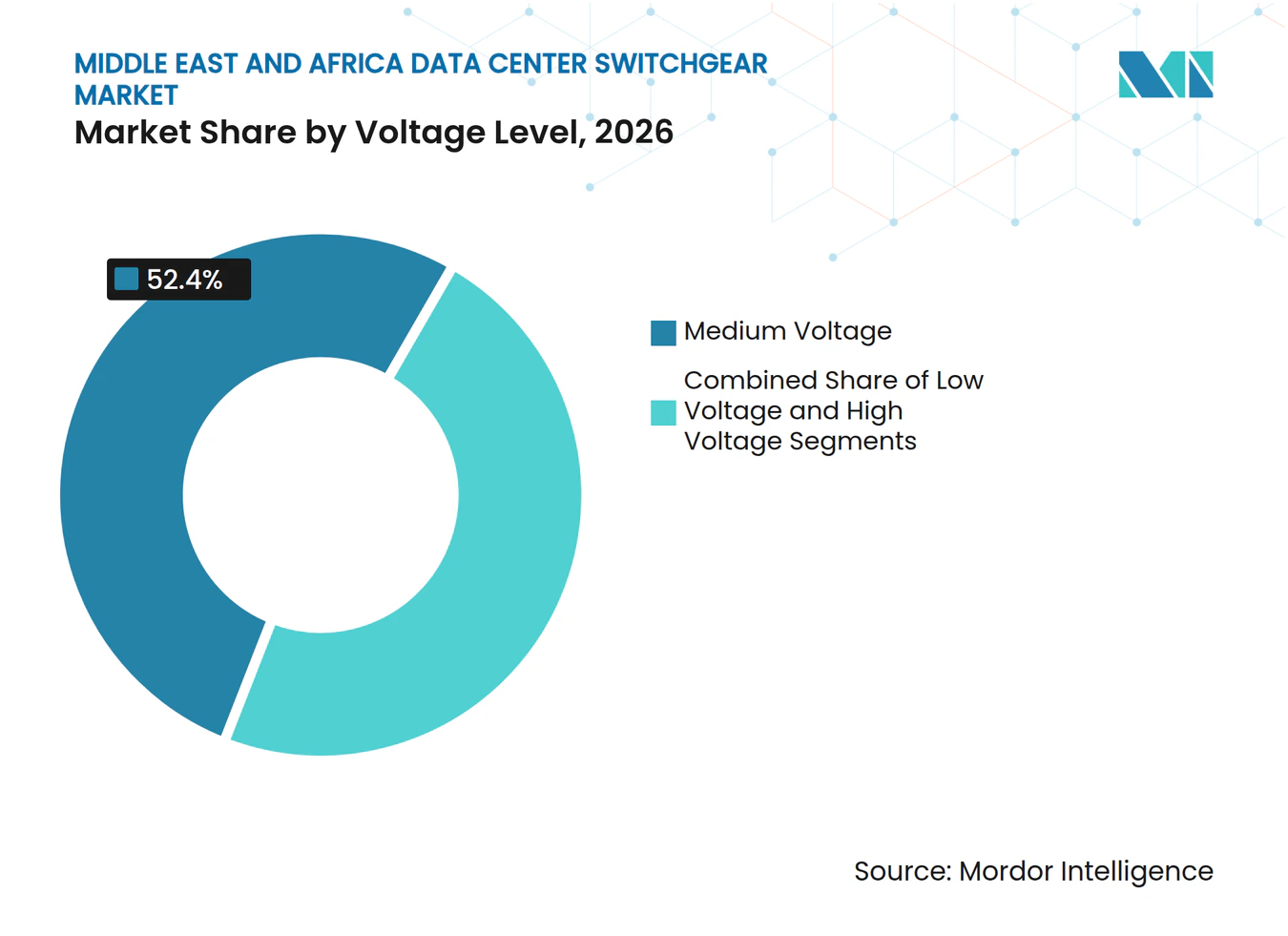
Medium Voltage Anchors Distribution ArchitectureMedium voltage switchgear held 52.40% of the Middle East and Africa data center switchgear market share in 2026. It occupies the main distribution tier between utility supply arrangements and low-voltage distribution equipment, where it must direct power safely to several downstream systems. New facilities require medium-voltage boards for each added power block, particularly where redundant layouts are specified. This gives the segment a combination of substantial unit value and broad application across the region because power expansion, protection coordination, and maintenance access all converge at this tier.
Low-voltage equipment continues to generate significant shipment volume in colocation and enterprise facilities. High-voltage equipment remains smaller in value, but large campuses increasingly need direct transmission-level connections. The GCC Interconnection Authority's expansion plans include 400 kV switching equipment at main substations, demonstrating the level of equipment needed as regional power networks expand. Vendors that can coordinate high-voltage and medium-voltage applications are positioned to support projects with complex utility interfaces and a broader set of protection requirements. Protection settings must also work across each voltage tier so that faults can be isolated without interrupting unrelated loads. This requirement gives engineering support and documented testing a larger role in vendor selection, especially when several suppliers must interface on one campus.



By Insulation Type:
Alternative Technologies Shift Equipment SelectionOther insulation technologies are projected to expand at a 15.10% CAGR through 2032, the highest rate within the insulation category. Air-insulated switchgear held 40.37% in 2026 because it remains familiar to operators and does not require specialized gas-handling capability, which can be important where technical support is limited. Gas-insulated equipment remains relevant in space-constrained developments. However, interest is increasing in designs that avoid SF₆ and simplify maintenance, while preserving the compact footprint and operating reliability required for critical-power installations.
Schneider Electric launched its GM AirSeT primary switchgear in November 2025, using pure air for insulation and vacuum interruption. The European Commission's LIFE Blue 420 kV GIS project also documents clean-air insulation and vacuum circuit-breaker development at transmission voltage. These platforms can help operators prepare for tighter environmental requirements while keeping an emphasis on equipment availability and safe operating procedures. Qualification under IEC 62271 remains important for participation in utility and state-affiliated projects. The transition can also change service needs because air and vacuum systems remove the need for SF₆ handling. Owners will evaluate lifecycle support, diagnostic functions, and technician readiness alongside initial equipment cost.
By Installation Type:
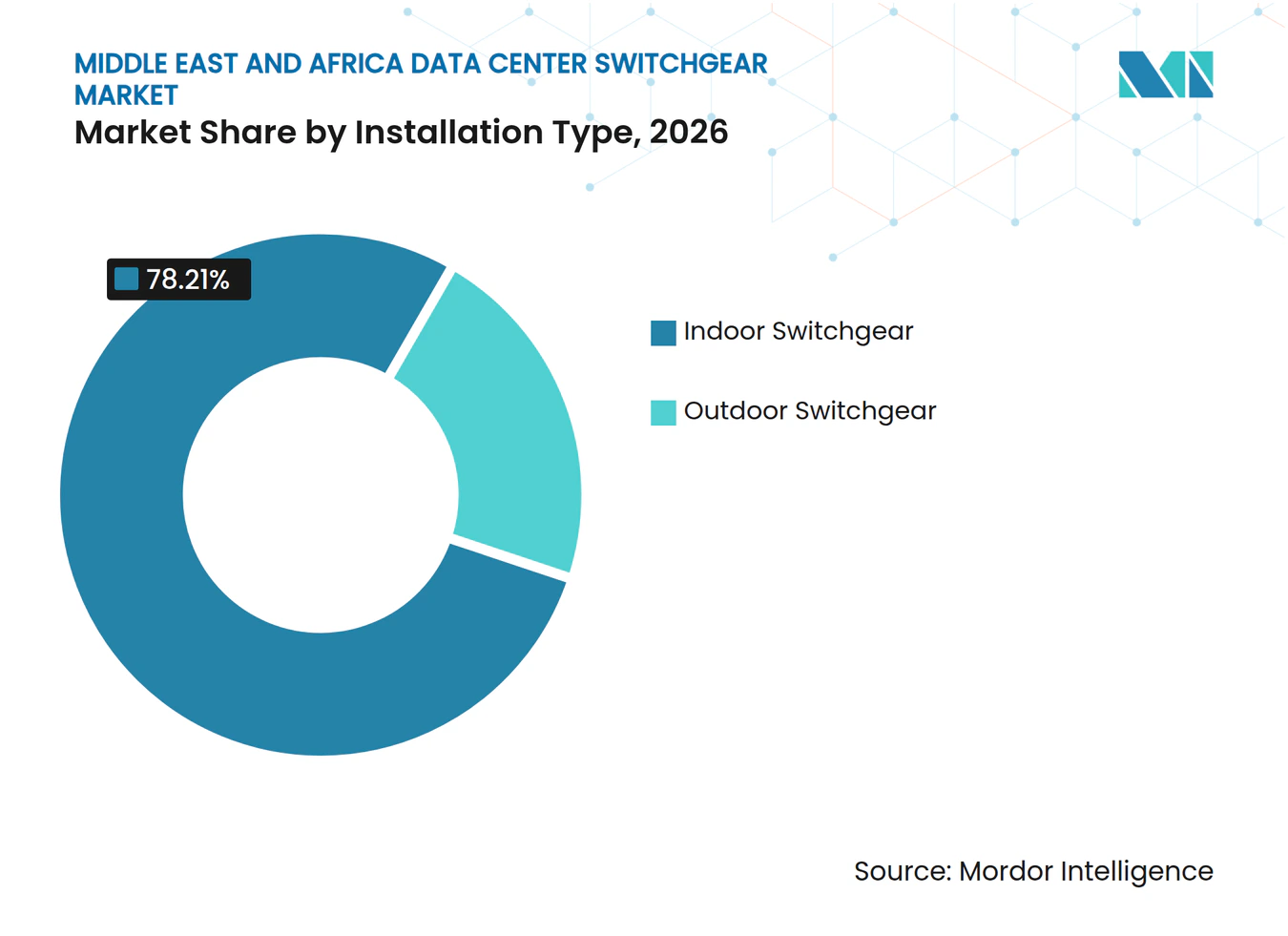
Indoor Systems Remain the StandardIndoor switchgear commanded 78.21% of the Middle East and Africa data center switchgear market size in 2026. Climate-controlled switch rooms protect equipment from heat, dust, moisture, and particulates, while allowing operators to maintain access for inspection and maintenance in a more predictable environment. They also provide a controlled setting for testing, monitoring, and preventive maintenance. These factors make indoor systems the normal choice for secondary distribution in data halls, especially where equipment reliability and service access are central to operating requirements.
Outdoor switchgear is projected to expand at a 13.57% CAGR through 2032 as larger campuses deploy outdoor substations and ring-main units. The Middle East and Africa data center switchgear market size for indoor systems remains larger because most distribution equipment must sit near controlled load environments. Outdoor primary equipment becomes more practical as sites add independent power blocks and need a scalable connection point beyond individual data halls. Suppliers with matched indoor and outdoor protection platforms can reduce training and integration work for operators. Site planning must balance the accessibility of outdoor equipment against environmental exposure and physical security requirements. This makes enclosure design, protection coordination, and maintenance access important selection factors, particularly where equipment must operate reliably through changing weather conditions.

By Configuration:
Modular Equipment Supports Phased ConstructionModular switchgear held 38.14% in 2026 and is projected to expand at a 13.83% CAGR through 2032. Factory-assembled modules allow operators to install capacity in stages without interrupting adjacent energized equipment, which is important when customer demand is added in planned blocks rather than at the start of a campus project. This fits the phased construction approach used for large cloud and AI campuses. It also gives developers more flexibility when tenant commitments change and allows construction, testing, and procurement work to be sequenced with greater control.
Fixed-mounted designs retain a role in smaller facilities where initial cost is a primary consideration. Withdrawable equipment is useful in colocation sites because breakers can be isolated and replaced without shutting down neighboring tenant circuits. Eaton and Siemens Energy announced a June 2025 partnership that pairs medium-voltage switchgear and distribution equipment with a modular 500 MW gas-turbine concept. This approach provides an option for projects where utility connection timing is uncertain. Modular packages can also simplify factory testing before equipment reaches the site and help project teams manage the interface between power-generation and distribution equipment. This can reduce the amount of on-site integration work needed before a new capacity block is energized.
By Data Center Size:
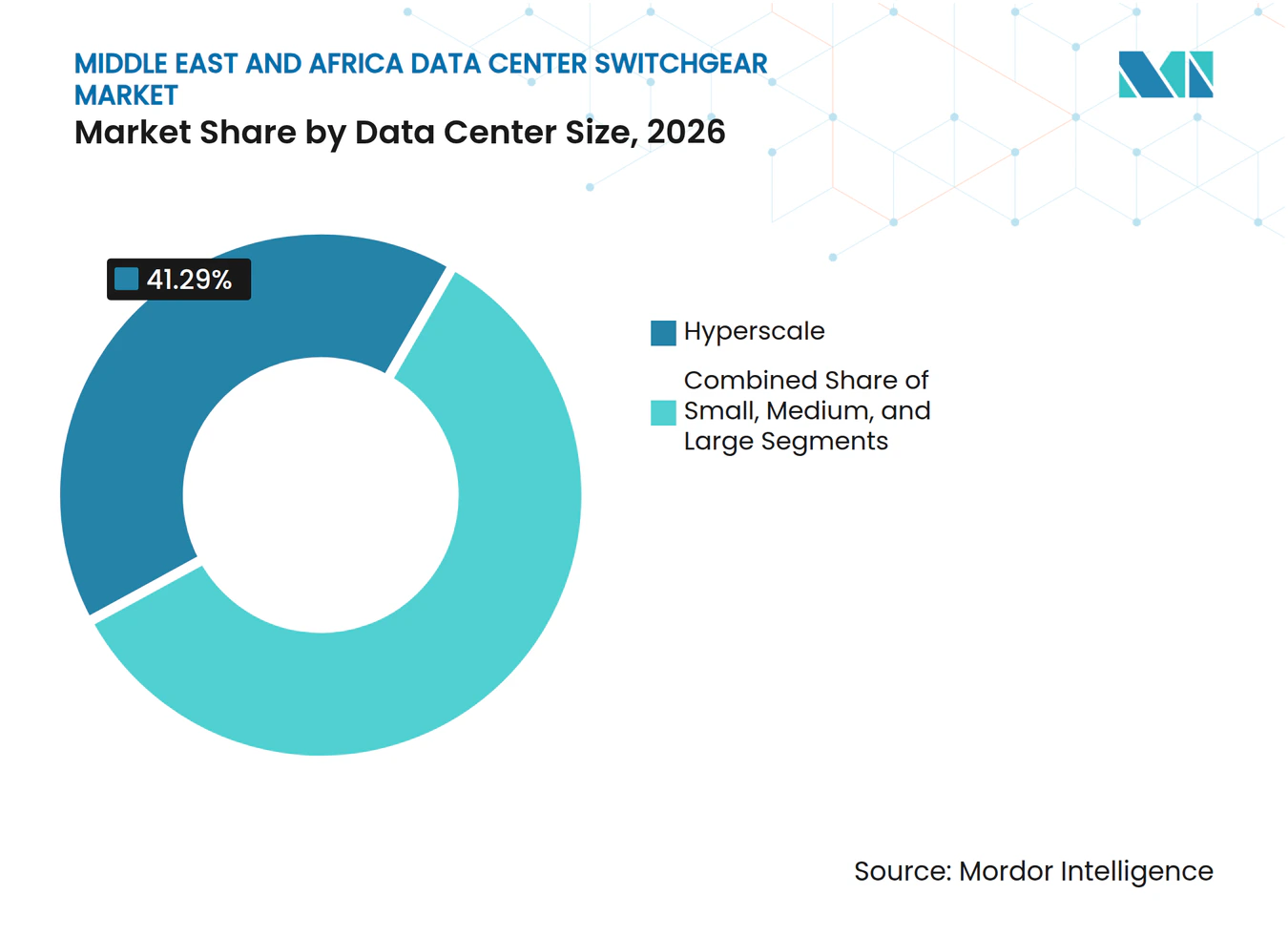
Hyperscale Facilities Concentrate Equipment SpendingHyperscale facilities accounted for 41.29% of the Middle East and Africa data center switchgear market share in 2026 and are projected to expand at a 14.23% CAGR through 2032. These sites need layered power systems that include primary distribution, bus-section breakers, transfer switches, bypass systems, and low-voltage distribution, with each layer designed to protect the continuity of downstream compute loads. Redundant 2N designs increase the amount of equipment required for each megawatt. This makes hyperscale customers more valuable than capacity figures alone indicate because redundancy, commissioning, monitoring, and expansion planning all add to the scope of the electrical package.
Large facilities also remain important as cloud providers establish national regions. Smaller and medium-sized sites serve enterprise and public workloads, especially in countries where facilities must maintain uptime despite weak grids. The African Energy Chamber reported that data centers can support investment in power infrastructure across Africa. As new capacity shifts toward larger sites, average order values are likely to rise while supplier requirements become more demanding and project schedules become more closely linked to utility and construction milestones. Large projects also require a broader coordination effort between utilities, contractors, equipment suppliers, and data center operators. That coordination favors vendors that can supply standardized equipment across several phases of the same campus and provide consistent technical records for each phase.
By Data Center Type:
Colocation Leads as Cloud Providers AccelerateColocation facilities accounted for 39.12% of the Middle East and Africa data center switchgear market size in 2026. Their installed base reflects the carrier-neutral ecosystems developed in the UAE, Saudi Arabia, and South Africa, where customers can place systems close to connectivity hubs without building and operating their own facilities. Cloud service providers are projected to expand at a 14.52% CAGR through 2032 as they add in-country infrastructure. These facilities usually require high redundancy and raise average equipment values because their power designs must support continuous services, planned maintenance, and the expected addition of new computing capacity.
The distinction between colocation and cloud service provider facilities is becoming less pronounced as hyperscalers lease capacity from specialist operators. Equinix announced a USD 22 million investment in its LG3 facility in Lagos during November 2025 as part of a wider regional commitment.[3] This supports demand for power systems designed to cloud-grade reliability standards and gives regional operators a clearer reason to invest in higher-specification distribution equipment. Enterprise and edge sites remain relevant where local processing and resilient transfer switching are required. Colocation operators are therefore seeking equipment that can serve multiple tenant load profiles without compromising service-level commitments. Suppliers can differentiate through coordinated commissioning, spare-parts coverage, and maintenance planning for critical tenant environments, where a planned intervention must avoid disrupting other customers.
Geography Analysis
Saudi Arabia
Saudi Arabia held 42.31% of the Middle East and Africa data center switchgear market share in 2026 and is projected to expand at a 14.77% CAGR through 2032. The country is combining large data center investments with a localization framework that affects supplier selection, manufacturing decisions, and service arrangements. Center3's announced expansion toward 1 GW of capacity by 2030 illustrates the scale of planned digital infrastructure and the need for phased electrical deployment.[4] Saudi Aramco's IKTVA program provides the wider policy basis for domestic value creation and procurement localization. Suppliers with Saudi manufacturing, assembly, service capacity, and proven technical support can improve their eligibility for projects linked to this framework.
United Arab Emirates
The UAE combines a large data center base with an active pipeline of AI-ready developments and a diverse operator environment. Its supplier-certification framework makes the in-country value score a material compliance factor for manufacturers serving government-linked procurement. du and NextGenAI's 13+ MW liquid-cooled supercluster shows the move toward facilities with high electrical density and more demanding cooling integration. These projects need systems that can manage peak loads, cooling coordination, redundant power paths, and close coordination between electrical and mechanical designs. The Middle East and Africa data center switchgear market size benefits when equipment suppliers can meet both technical and local-content requirements.
South Africa, Nigeria, and the Rest of Africa
South Africa and Nigeria are marked by a stronger focus on continuity of supply than on sovereign AI campuses. The Africa Data Centers Association documented grid losses of 18% to 25% in East and West African countries in 2025, compared with a global range of 7% to 8%, which increases the need for resilient site electrical design. This drives demand for automatic transfer systems that coordinate grid, generator, and battery power while allowing operators to isolate faults without affecting critical loads. Regional suppliers that offer in-country maintenance, verified components, practical service support, and staff training can compete effectively in these conditions.
Competitive Landscape
Market Concentration
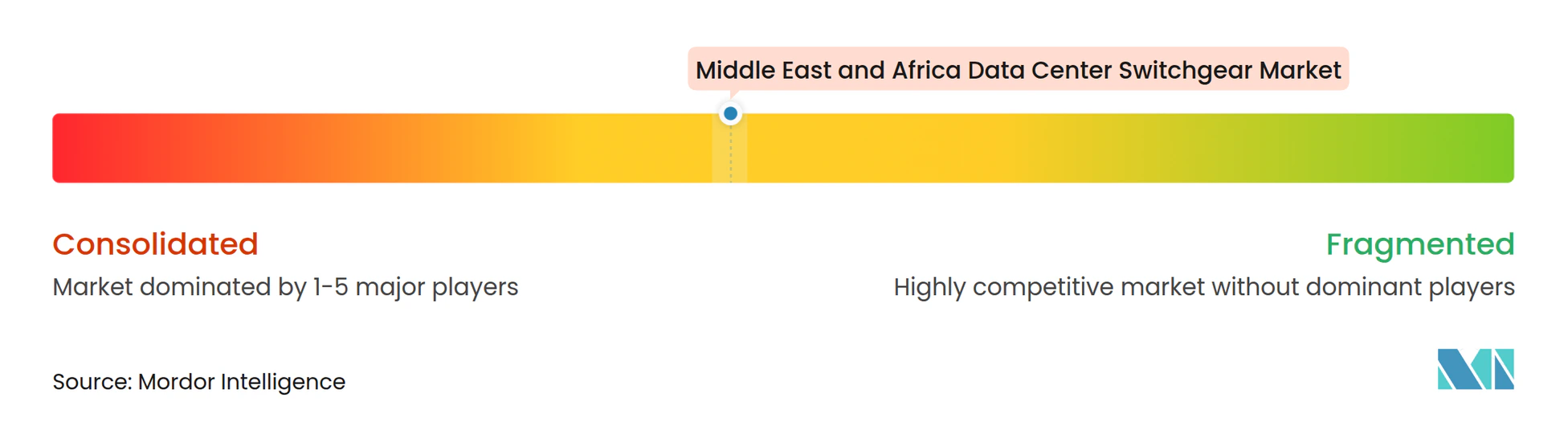
The Middle East and Africa data center switchgear market is moderately consolidated. Global original equipment manufacturers lead the high-specification end of the Middle East and Africa data center switchgear market. Schneider Electric, ABB, Siemens, Eaton, and Hitachi Energy have established product portfolios and regional distribution networks that support equipment selection, commissioning, and recurring service work. Their position is strongest where projects require tested equipment, extensive engineering support, and long-term maintenance capability across several voltage levels. Competition is not based solely on price because data center owners also consider safety, uptime, technical qualifications, delivery reliability, and the ability to meet a defined site schedule. Regional assembly and service capacity are becoming more important in public-sector and large private projects where compliance factors shape procurement eligibility.
Schneider Electric introduced its SF₆-free GM AirSeT platform in November 2025, adding a low-environmental-impact option for primary medium-voltage distribution and embedded monitoring capability. Eaton and Siemens Energy formed a partnership in June 2025 that combines switchgear, distribution equipment, and modular generation for data center projects. Alfanar highlighted SF₆-free switchgear products during the 2025 IKTVA Forum, which aligns its offer with Saudi localization objectives and a domestic manufacturing narrative. These moves show that product innovation, local content, and infrastructure resilience are shaping competitive strategies in parallel. The European Commission's LIFE Blue project also indicates continued technical development in clean-air high-voltage gas-insulated switchgear.
Regional suppliers can build positions in Saudi Arabia, Nigeria, and South Africa by offering local support and compliant equipment. The opportunity is strongest where project owners need a combined package of switchgear, transfer switching, commissioning support, and maintenance that matches local operating conditions. Service capability matters because downtime and delayed repairs can affect critical workloads, customer contracts, and planned capacity additions. Local providers can also respond to routine maintenance requirements more quickly than suppliers relying entirely on imported parts and visiting specialists. Global suppliers retain an advantage in highly specified projects that require broad testing records and mature product families. The market is therefore moderately consolidated among global suppliers at the most demanding end, while regional specialists have room to compete in locally supported applications.
Middle East and Africa Data Center Switchgear Industry Leaders
-
Schneider Electric SE
-
Eaton Corporation plc
-
Vertiv Holdings Co
-
Hitachi Energy Ltd
-
GE Vernova Inc.
- *Disclaimer: Major Players sorted in no particular order
Middle East and Africa Data Center Switchgear Market Companies Covered in this Report
- Schneider Electric SE
- Eaton Corporation plc
- ABB Ltd
- Siemens AG
- Vertiv Holdings Co
- Hitachi Energy Ltd
- GE Vernova Inc.
- Mitsubishi Electric Corporation
- Legrand SA
- Powell Industries, Inc.
- LS ELECTRIC Co., Ltd.
- Toshiba Energy Systems and Solutions Corporation
- Siemens Energy AG
- Lucy Electric
- CHINT Electric
- Huawei Digital Power Technologies Co., Ltd.
- Delta Electronics, Inc.
- Rittal GmbH and Co. KG
- Socomec Group
- Riello UPS S.p.A.
- Alfanar Group
- Havells India Limited
- Middle-East Switchgear Industries Ltd.
- Al Sumaa Electromechanical Industries LLC
- Nuventura GmbH
Recent Industry Developments in Middle East and Africa Data Center Switchgear Market
- August 2026: Amad Group announced plan to open a new switchgear manufacturing facility in Saudi Arabia by the end of 2026, as a part of its industrial expansion. The facility is being developed in the Saudi MODON Industrial Area with an investment of approximately SAR 50 million (USD 13.33 million).
- May 2026: Schneider Electric announced that it is bringing SF6-free switchgear technology to Saudi Arabia's grid infrastructure through its AirSeT range, which replaces SF6, a greenhouse gas with 23,500 times the warming potential of CO₂, with pure air technology.
- May 2026: IFC disbursed a USD 70 million financing package, comprising a USD 50 million equity investment and a USD 20.4 million sustainability-linked loan, for WIOCC to fund data center expansion in South Africa and Nigeria as part of a USD 577 million total project. Co-investors include Proparco and the Emerging Africa Infrastructure Fund, with the IFC board having approved the package in December 2025.
- March 2026: MTN Group confirmed South Africa and Nigeria as the 2 priority markets for AI-enabled data center development under Ambition 2030, targeting approximately 150 MW through Africa Data Hub Holding, a venture with a UAE-backed investor, following comprehensive market assessments completed in early 2025.
Middle East and Africa Data Center Switchgear Market Report Scope
The Middle East and Africa data center switchgear market refers to the regional industry focused on provisioning low- and medium-voltage electrical protection and distribution systems engineered to regulate and safeguard critical data infrastructure. It tracks market valuations, technological deployments, and smart infrastructure integration across the GCC and Africa.
The Middle East and Africa Switchgear Market Report is Segmented by Voltage Level (Low Voltage, Medium Voltage, and High Voltage), Insulation Type (Air-Insulated Switchgear, Gas-Insulated Switchgear, and Other Insulation Technologies), Installation Type (Indoor Switchgear and Outdoor Switchgear), Configuration (Fixed-Mounted Switchgear, Withdrawable Switchgear, and Modular Switchgear), Data Center Size (Small, Medium, Large, and Hyperscale), Data Center Type (Colocation, Cloud Service Providers [CSPs], and Enterprise / Edge), and Country (Saudi Arabia, United Arab Emirates, South Africa, Nigeria, and Rest of Middle East and Africa). The Market Forecasts are Provided in Terms of Value (USD).
Segmentation Overview
| Low Voltage |
| Medium Voltage |
| High Voltage |
| Air-Insulated Switchgear |
| Gas-Insulated Switchgear |
| Other Insulation Technologies |
| Indoor Switchgear |
| Outdoor Switchgear |
| Fixed-Mounted Switchgear |
| Withdrawable Switchgear |
| Modular Switchgear |
| Small |
| Medium |
| Large |
| Hyperscale |
| Colocation |
| Cloud Service Providers (CSPs) |
| Enterprise / Edge |
| Saudi Arabia |
| United Arab Emirates |
| South Africa |
| Nigeria |
| Rest of Middle East and Africa |
| By Voltage Level | Low Voltage |
| Medium Voltage | |
| High Voltage | |
| By Insulation Type | Air-Insulated Switchgear |
| Gas-Insulated Switchgear | |
| Other Insulation Technologies | |
| By Installation Type | Indoor Switchgear |
| Outdoor Switchgear | |
| By Configuration | Fixed-Mounted Switchgear |
| Withdrawable Switchgear | |
| Modular Switchgear | |
| By Data Center Size | Small |
| Medium | |
| Large | |
| Hyperscale | |
| By Data Center Type | Colocation |
| Cloud Service Providers (CSPs) | |
| Enterprise / Edge | |
| By Country | Saudi Arabia |
| United Arab Emirates | |
| South Africa | |
| Nigeria | |
| Rest of Middle East and Africa |
Key Questions Answered in the Report
What is the Middle East and Africa data center switchgear market size?
The Middle East and Africa data center switchgear market size is estimated at USD 196.50 million in 2027 and is forecast to reach USD 349.22 million by 2032 at a 12.19% CAGR. Demand is supported by AI, cloud, and colocation capacity additions that require resilient critical-power equipment, planned electrical distribution, and reliable protection arrangements.
Which voltage level leads data center switchgear demand in the region?
Medium voltage switchgear leads with 52.40% share in 2026 because it connects utility supply arrangements with downstream distribution systems. It is central to redundant facility designs because each added power block can require dedicated boards, protection relays, bus couplers, and carefully documented coordination with other voltage levels.
Why are SF₆-free switchgear systems gaining attention in the Middle East and Africa?
Suppliers are introducing air and vacuum interruption technologies that avoid SF₆ handling and can support evolving environmental requirements. Operators may also value reduced gas-management needs, condition-monitoring functions, simpler training requirements, and the potential for more standardized maintenance procedures over the operating life of the equipment.
Which country has the largest regional opportunity for data center switchgear?
Saudi Arabia held 42.31% share in 2026 and is projected to expand at a 14.77% CAGR through 2032. Localization requirements also make regional assembly, Saudi service capacity, technical compliance, and a credible ability to support project schedules relevant to supplier selection.
What is driving demand from hyperscale facilities?
AI and cloud campuses need redundant power systems, larger bus sections, and coordinated protection equipment for high-density computing loads. Their phased construction plans also increase the need for equipment that can be installed, tested, and energized in defined capacity blocks while maintaining compatibility with the electrical systems already operating on site.
How do grid conditions affect data center power-system procurement in Africa?
Grid losses and reliability concerns lead operators to specify utility, generator, and battery transfer arrangements, increasing the need for resilient switching systems. These systems must support coordinated protection, fault isolation, regular maintenance, and clear operating procedures in conditions where utility supply may be variable and critical workloads cannot tolerate long interruptions.