
Middle East and Africa Bottling Line Accumulating and Collating Machinery Market Size and Share
Market Overview
| Study Period | 2021 - 2032 |
|---|---|
| Forecast Data Period | 2027 - 2032 |
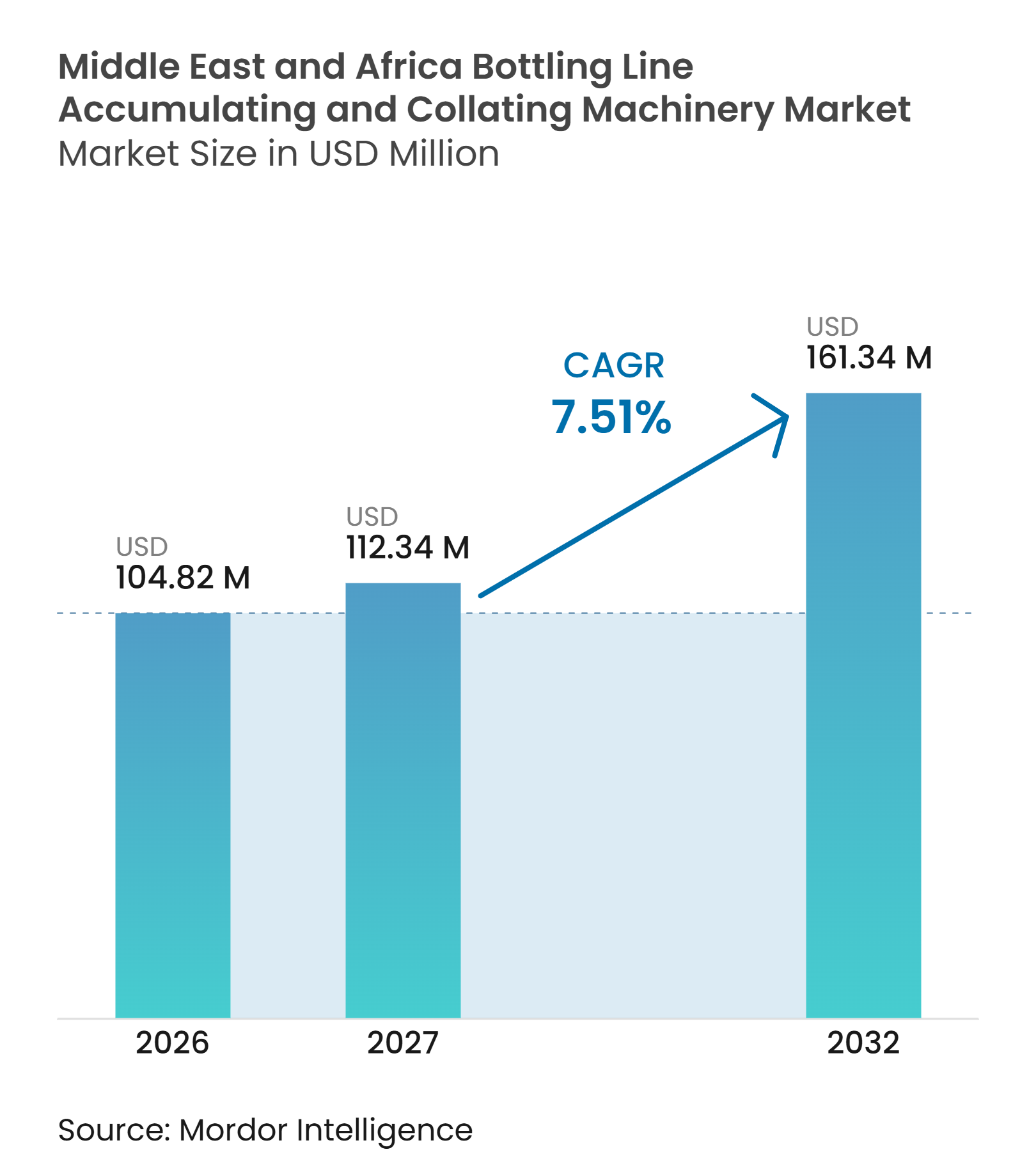
| Base Year Market Size (2026) | USD 104.82 Million |
| Market Size (2027) | USD 112.34 Million |
| Market Size (2032) | USD 161.34 Million |
| Growth Rate (2027 - 2032) | 7.51 % |
| Market Concentration | Medium |
Major Players *Disclaimer: Major Players sorted in no particular order Image © Mordor Intelligence. Reuse requires attribution under CC BY 4.0. | |
Middle East and Africa Bottling Line Accumulating and Collating Machinery Market Analysis by Mordor Intelligence
The Middle East and Africa bottling line accumulating and collating machinery market size is USD 104.82 million in 2026 and is forecast to reach USD 161.34 million by 2032, growing at a CAGR of 7.51% from 2027 to 2032. The bottling line accumulating and collating machinery market is benefiting from investment in water, soft drinks, dairy, and pharmaceutical production across the region. Producers are placing greater value on equipment that prevents line stoppages, protects containers, and supports faster changeovers between product formats. Saudi Arabia remains a major source of demand because new plants and upgrades support domestic manufacturing objectives. Nigeria offers a different opportunity, as a broader consumer goods production base is expected to support purchases of line-handling equipment. Suppliers that combine engineering support, digital line controls, and reliable local service are better placed to compete for larger projects.
Key Report Takeaways
- By equipment type, Inline, Serpentine, and Mass-Flow Accumulators held 26.88% of the bottling line accumulating and collating machinery market share in 2026, while Alpine, Spiral, and Vertical Accumulators are projected to grow at an 8.31% CAGR through 2032.
- By material type, Plastic accounted for 54.17% of the market in 2026, while Metal and Aluminum are projected to expand at an 8.26% CAGR through 2032.
- By container shape, Round Containers held 71.74% of the market in 2026, while Specialty and Irregular Geometries Containers are projected to grow at an 8.39% CAGR through 2032.
- By automation, Fully Automatic systems held 54.73% of the bottling line accumulating and collating machinery market share in 2026 and are projected to advance at a 8.57% CAGR through 2032.
- By end user, Beverage Producers accounted for 59.62% of the market in 2026, while Pharmaceutical and Healthcare Producers are projected to grow at a 8.28% CAGR through 2032.
- By geography, Saudi Arabia held 23.86% of the market in 2026, while Nigeria is projected to expand at a 8.43% CAGR through 2032.
Note: Market numbers in this report are based on Mordor Intelligence's proprietary estimation framework, which combines nine months of actuals with Q4 projections for base year 2026.
Market Trends and Insights
Drivers Impact Analysis of Middle East and Africa Bottling Line Accumulating and Collating Machinery Market*
| Driver | (~) % Impact on CAGR Forecast | Geographic Relevance | Impact Timeline |
|---|---|---|---|
| Expansion of Bottled Water and Non-Alcoholic Beverage Capacity | +2.1% | Saudi Arabia, UAE, Morocco, South Africa | Short term (≤ 2 years) |
| Rising Automation Demand From Labor-Cost Inflation | +1.8% | GCC core, spill-over to South Africa and Egypt | Medium term (2-4 years) |
| Modernization of Legacy Filling and Packaging Lines | +1.4% | Saudi Arabia, Egypt, Libya, South Africa | Medium term (2-4 years) |
| Food Safety, Traceability, and Product Integrity Requirements | +1.0% | GCC, East African Community, Nigeria | Medium term (2-4 years) |
| Localization of Beverage and Dairy Manufacturing in the Gulf | +0.8% | Saudi Arabia, UAE, Qatar | Long term (≥ 4 years) |
| High-Temperature and Multi-Format Line Designs Increasing Demand for Low-Pressure Accumulation | +0.5% | GCC, South Africa, Turkey | Long term (≥ 4 years) |
| Source: Mordor Intelligence | |||
Expansion of Bottled Water and Non-Alcoholic Beverage Capacity
Investment in bottled water and non-alcoholic beverage production is the clearest near-term demand signal for the bottling line accumulating and collating machinery market. Naqi Water Company announced a EUR 8,537,000 (USD 9.237 million) contract in July 2025 for a new Riyadh production line that will add 700 million bottles of annual capacity across several container sizes. SAMA Healthy Water Factory Co. also contracted Krones to supply and install 2 bottled-water lines in Saudi Arabia under a EUR 9 million (USD 9.75 million) agreement announced in April 2025. These projects require buffers that can handle multiple package formats without stopping the entire line. Serpentine and mass-flow systems are therefore more relevant than basic table accumulators for larger new facilities. Initial commissioning projects can also establish long-term supplier relationships because the equipment provider becomes familiar with the plant layout, operating speeds, and future expansion needs.
Rising Automation Demand From Labor-Cost Inflation
Higher labor costs are shortening the financial case for fully automatic accumulation systems at larger beverage plants. Tighter expatriate labor rules in GCC countries add to the appeal of automated buffering, sorting, and collation. The bottling line accumulating and collating machinery market is consequently moving toward sensor-guided systems that reduce manual intervention at line transfer points. Coca-Cola Beverages Africa invested ZAR 365 million (USD 19.7 million) in a 72,000-bottle-per-hour line in Midrand during 2025.[1] A line at this speed needs integrated accumulation to avoid starvation and downstream disruption.
Modernization of Legacy Filling and Packaging Lines
Many regional filling lines were installed before 2015 and now face increasing maintenance requirements and limited parts availability. Tetra Pak and Al Rabie announced a 3-year modernization agreement in March 2025 to update juice, nectar, and dairy facilities in Saudi Arabia as part of an Industry 4.0 program. Modernization projects often require customized buffering because existing buildings leave limited floor space for a new conveyor layout. Spiral and vertical designs can provide useful capacity where a horizontal mass-flow system cannot fit. Domty reported that modernizing an outdated filling line reduced primary energy consumption by 25% and increased production capacity by 45%. Such projects position accumulation upgrades as operating-cost investments rather than solely as additions to production capacity.
Food Safety, Traceability, and Product Integrity Requirements
Food-contact rules and traceability requirements are making product handling more important in packaging line design. The East African Community notified the World Trade Organization of new standards for food-contact packaging items in April 2025, including products made from plastics and paper-aluminum foil laminates. Saudi packaging and labeling requirements also emphasize producer identification, packaging dates, and country-of-origin information. GS1 UAE and the UAE Food Cluster launched a Universal Product Catalog in 2025 to create a centralized barcode registry. These systems increase the value of accumulation layouts that maintain serial and batch data through the transition from filling to secondary packaging. The bottling line accumulating and collating machinery market therefore has growing demand for encoder-integrated equipment in regulated food, beverage, and pharmaceutical operations.
Restraints Impact Analysis of Middle East and Africa Bottling Line Accumulating and Collating Machinery Market*
| Restraint | (~) % Impact on CAGR Forecast | Geographic Relevance | Impact Timeline |
|---|---|---|---|
| High Upfront Capital Expenditure and Extended Payback Periods | -1.3% | Africa-wide, particularly Sub-Saharan markets | Short term (≤ 2 years) |
| Shortage of Skilled Automation and Maintenance Engineers | -0.8% | Nigeria, Kenya, Ethiopia, parts of North Africa | Medium term (2-4 years) |
| Unstable Power Quality and Backup-Energy Requirements in Parts of Africa | -0.5% | Nigeria, Ethiopia, parts of East and West Africa | Medium term (2-4 years) |
| Import-Duty, Spare-Parts and After-Sales-Service Frictions | -0.4% | Across Africa, especially inland markets | Long term (≥ 4 years) |
| Source: Mordor Intelligence | |||
High Upfront Capital Expenditure and Extended Payback Periods
Fully automatic accumulation systems for high-speed lines can require payback periods beyond 5 years for producers with mid-tier throughput. A 2025 packaging automation survey found that 50% of non-adopters identified high initial cost or an unfavorable return on investment case as their main obstacle. Smaller companies can also struggle to meet the credit standards associated with export financing. This limits the addressable portion of the bottling line accumulating and collating machinery market in the short term. Lease-to-own arrangements, staged projects, and performance-based financing could reduce this barrier without changing the underlying need for better line reliability.
Shortage of Skilled Automation and Maintenance Engineers
Advanced accumulation equipment requires technicians who can maintain sensors, servo controls, programmable logic controllers, and connected line software. Interpack MEA reported in 2026 that African companies frequently operate in semi-automated environments because trained workers for advanced packaging automation are limited. Some installed multi-format systems are therefore operated in semi-automatic or manual modes, which reduces their productivity benefit. Training centers and local technical teams can improve utilization, but capacity remains limited relative to the planned pipeline of automated lines. The bottling line accumulating and collating machinery industry also faces a certification issue because pharmaceutical and high-care beverage buyers increasingly require recognized programmable logic controller capabilities. Suppliers with local training, commissioning, and maintenance support can turn this restraint into a service advantage.
*Our forecasts treat driver/restraint impacts as directional, not additive. The impact forecasts reflect baseline growth, mix effects, and variable interactions.
Middle East and Africa Bottling Line Accumulating and Collating Machinery Market Segment Analysis
By Equipment Type:
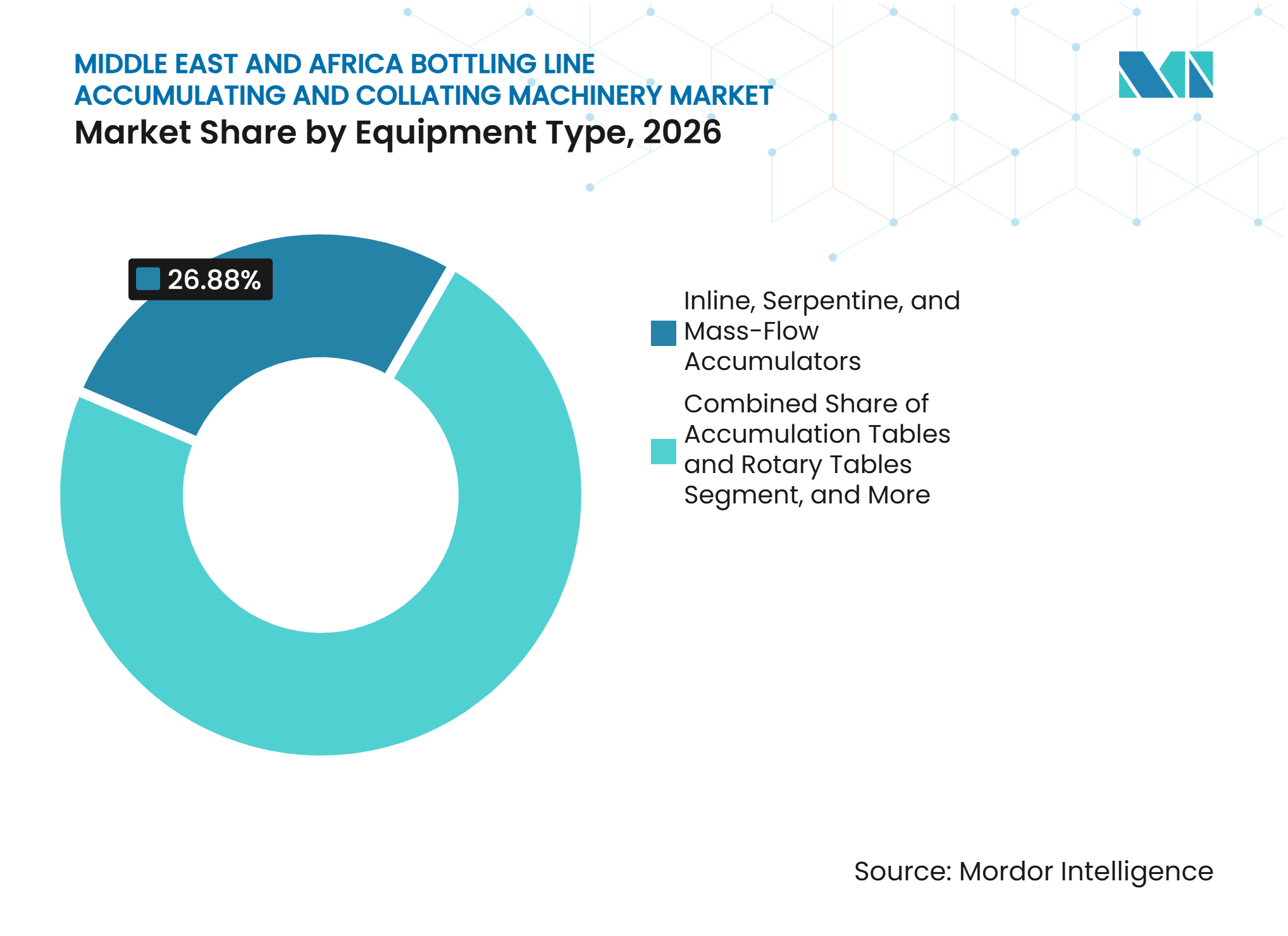
Inline Systems Lead While Compact Formats Gain GroundInline, Serpentine, and Mass-Flow Accumulators held 26.88% of the bottling line accumulating and collating machinery market share in 2026. Their position reflects use on high-volume PET lines for water, carbonated soft drinks, and energy drinks across GCC bottling facilities. These designs support high throughput with low contact pressure, which helps limit bottle scuffing and handling damage. Larger Saudi Arabian and Emirati projects often require speeds above 36,000 bottles per hour, making stable product flow important between filling, labeling, and packing stages. Alpine, Spiral, and Vertical Accumulators are projected to grow at an 8.31% CAGR from 2027 to 2032. Their appeal is strongest at compact sites and pharmaceutical packaging operations where a vertical layout can create buffering space without a larger building footprint.
AmbaFlex presented its AccuVeyor and SpiralVeyor systems at Interpack 2026, showing how a vertical configuration can provide up to 80 meters of product buffering within 10.6 m² of floor space. Bi-Directional and Recirculating Accumulators continue to play a role in aseptic and high-care lines. Standalone Collators, Grouping Systems, Bottle Laners, Combiners, and Lane Dividers become more relevant where plants run several SKUs. Accumulation Tables and Rotary Tables remain suitable for lower-speed installations in Tier 2 and Tier 3 African markets. Krones described its Alesayi Beverage Co. reference project in Jeddah as a facility with 4 production lines covering glass, PET, and can formats. That level of format diversity supports investing in configurable buffers rather than in basic fixed-table accumulation.



By Material Type:
Plastic Retains Scale While Aluminum Use ExpandsPlastic held 54.17% of the bottling line accumulating and collating machinery market share in 2026. PET remains common in water, juices, dairy, and non-alcoholic beverage applications because it offers cost and weight advantages at high line speeds. Glass continues to serve premium spirits and beverage applications in South Africa and Turkey. Carton and Composite Containers remain tied to dairy and liquid food lines using Tetra Pak and SIG technology. These lines require gentle handling because contact pressure can damage carton edges. Metal and Aluminum are projected to grow at an 8.26% CAGR from 2027 to 2032 as energy drink, beer, and ready-to-drink coffee formats gain relevance.
Aluminum cans need low-pressure movement through the accumulation area because they have less tolerance for edge contact. This creates demand for pressure-less mass-flow systems and dual-lane spirals instead of conventional single-file conveyor buffers. Existing producers that add a canning module may need a new buffer design between the filler and seamer. The original input also identifies a March 2026 plan by Indorama Ventures, Nigerian Breweries, and Genesis Energy to develop a 45,000-tonne food-grade recycled PET facility in Lagos, with completion by H1 2027. That project signals confidence in local demand for containers, even as aluminum canning expands. Mixed-material sites will need modular platforms that can accommodate PET and aluminum containers on shared production infrastructure.
By Container Shape:
Round Formats Anchor Demand and Specialty Shapes AccelerateRound Containers held 71.74% of the market in 2026. Water bottles, carbonated soft drink containers, and standard dairy formats are usually compatible with established mass-flow and serpentine layouts. Their predictable geometry allows equipment designers to use standard guide rails and line-transfer settings. Non-Round and Shaped Containers serve single-serve juice, nectar, and functional beverage formats, particularly in GCC facilities. These containers require adjustable lane widths and guide systems that can change without repeated tooling replacement. Specialty and Irregular Geometries Containers are projected to grow at an 8.39% CAGR from 2027 to 2032.
Personal care and cosmetics producers in the UAE and Turkey use flat-sided, oval, and asymmetric vessels to differentiate product presentation. Those shapes can mark or jam when they move through a standard straight-wall guide. Producers therefore require adjustable rail settings, sensor arrays, lane combiners, and dividers that can be reconfigured quickly. SIPA reported delivery of Xlabl RF roll-fed labelers in South Africa with label thicknesses below 20 microns and 15-minute bottle-to-bottle changeovers.[2] Precise label application increases the importance of low-contact accumulation upstream. The higher engineering content of specialty-container systems supports revenue growth that exceeds the related volume growth.
By Automation:
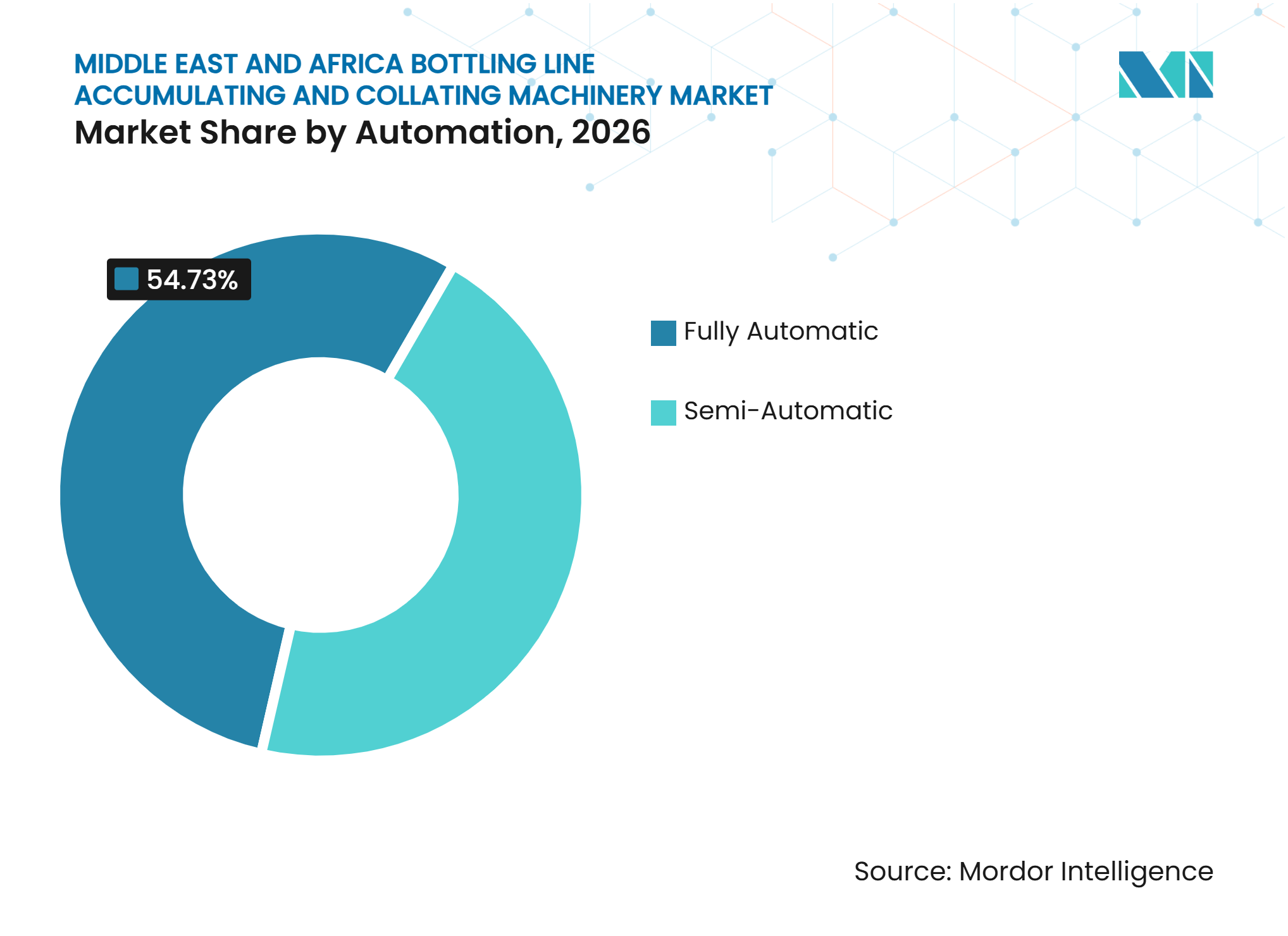
Fully Automatic Systems Change Line OperationsFully Automatic systems held 54.73% of the bottling line accumulating and collating machinery market share in 2026 and are projected to grow at an 8.57% CAGR through 2032. The combination of leading share and fastest growth shows that regional production is moving beyond manual line handling. These systems can connect programmable logic controllers with overall equipment effectiveness monitoring and supervisory control and data acquisition systems. The accumulator then becomes a source of cycle-time and stall-detection data, rather than acting only as a physical buffer. Semi-Automatic systems remain important for producers who need more dependable buffering but lack the skill base or budget for complex servo controls.
Chinese manufacturers, including Zhangjiagang King Machine Co., Ltd., are competing with lower-cost automatic systems in the lower-throughput African segment. Their approach can widen access to automation, although service coverage remains important after installation. Nigeria’s manufacturing sector contribution to GDP rose from 8.7% in H1 2025 to 9.6% in H1 2026, while manufacturing output growth increased from 1.4% to 3.3% over the same periods. This broader industrial base can support machinery investment in consumer goods production. The bottling line accumulating and collating machinery market should therefore see more upgrades from semi-automatic lines in Egypt, South Africa, and Nigeria. Suppliers must still match system complexity with customer training and maintenance capacity.

By End User:
Beverage Producers Lead While Pharmaceutical Demand GrowsBeverage Producers held 59.62% of the market in 2026. Water producers account for the largest share of this demand base, while carbonated soft drinks and functional beverages drive faster volume growth within the segment. Naqi Water’s Riyadh project and the SAMA Healthy Water Factory Co. order show continued investment in new bottled-water capacity in Saudi Arabia. Food and Dairy Producers are another large user group because downstream collation supports case packing and palletizing. The input also identifies Saudi Arabia’s NADEC investment plan for dairy, meat, and agriculture from 2027 to 2031 as supportive of line upgrades. Personal Care and Cosmetics Producers require low-contact handling for non-standard vessels, while Chemical and Household Product Producers often favor cost-conscious semi-automatic configurations.
Pharmaceutical and Healthcare Producers are projected to grow at an 8.28% CAGR from 2027 to 2032. GCC localization programs and the broader effort to expand medicine production in Africa are expected to support this segment. The input states that African domestic manufacturing supplies 3% of the continent’s medicine requirement. Pharmaceutical filling and packaging projects must comply with WHO Good Manufacturing Practice expectations and local requirements, such as approvals from the Saudi Food and Drug Authority and the South African Health Products Regulatory Authority. These conditions create demand for documented, cleanroom-compatible accumulation designs. Other end users, including edible oil, agrochemical, and paint producers, often require tailored engineering because container geometry and line speed vary sharply across their operations.
Geography Analysis
Saudi Arabia
Saudi Arabia is projected to hold a 23.86% share of the bottling line accumulating and collating machinery market in 2026. Vision 2030 continues to direct investment toward local food, beverage, and pharmaceutical production, reinforcing the Kingdom’s position as a major equipment procurement center. Bottled water production remains particularly active, as reflected in Naqi Water’s announced expansion in Riyadh and the supply contract awarded to SAMA Healthy Water Factory Co. Saudi Food and Drug Authority traceability requirements further support demand for encoder-based systems that maintain batch integrity. Krones expects its revenue in the Middle East and Africa to increase by 22.4% to USD 812 million in FY2025. High ambient temperatures, which can exceed 45°C, also increase the need for pressureless handling systems that prevent jams and bottle deformation.
Nigeria
Nigeria is projected to grow at an 8.43% CAGR from 2027 to 2032. The country’s consumer goods manufacturing base is becoming more established under the Nigeria First Policy and improving operating conditions. Manufacturing output grew from 1.4% in 2025 to 3.3% in H1 2026. Its GDP contribution also rose from 8.7% in H1 2025 to 9.6% in H1 2026. These figures support a longer-term need for filling, packaging, and line-handling equipment. Nigeria’s opportunity is tempered by currency risk, uneven power quality, and limited access to trained maintenance staff. Suppliers that provide local parts, flexible financing, and technical service may gain an advantage as demand grows.
UAE, Turkey, South Africa, Egypt, Morocco, and Rest of Africa
The UAE is shifting from basic capacity growth to digitally connected, sustainability-focused packaging operations. GS1 UAE’s Universal Product Catalog demonstrates greater attention to data continuity across the food value chain. Agthia’s acquisition of Riviere in 2025 further strengthened its water production position in the UAE.[3] Turkey has a domestic machinery base that supports faster service response and shorter commissioning cycles. South Africa is seeing investment in high-speed, multi-format line design, including Coca-Cola Beverages Africa’s Midrand project. Egypt and Morocco offer a pipeline for mid- and high-speed bottling components, while the Rest of Africa has stronger retrofit demand in older plants. Compact spiral and vertical systems are relevant in these sites because footprint limitations can prevent wider horizontal installations.
Competitive Landscape
Market Concentration
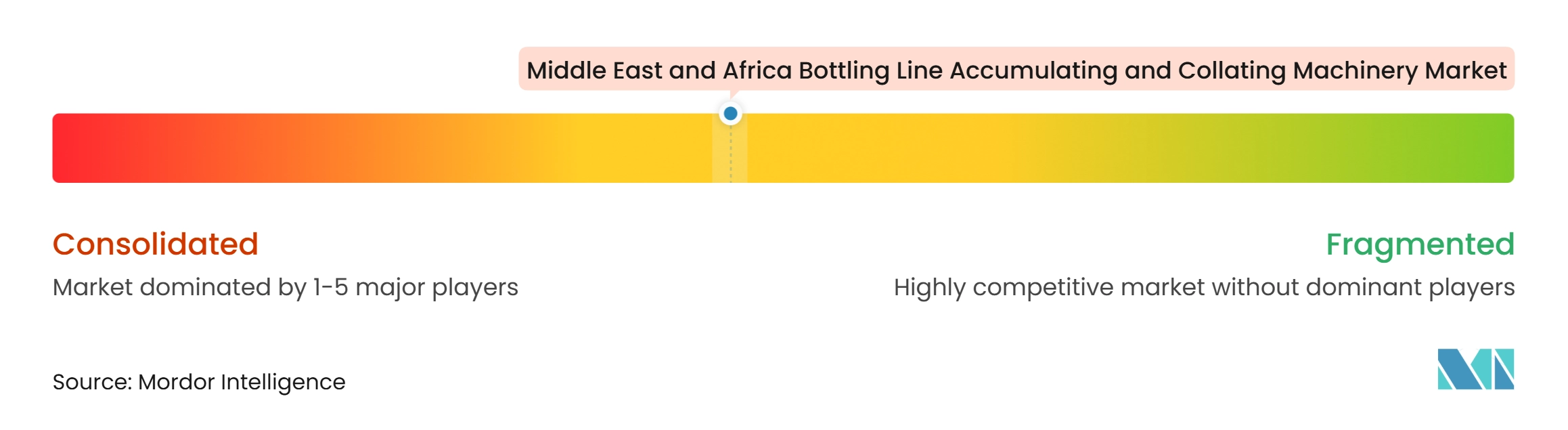
The bottling line accumulating and collating machinery market is moderately concentrated. Krones AG, KHS GmbH, Sidel S.p.A., ACMI S.p.A., and OCME S.r.l. have strong installed bases in GCC facilities because they can bundle accumulation and collation with filling, capping, and labeling. Their offers focus on overall operating cost, integrated design, digital tools, and service reach. Krones reported EUR 719 million (USD 778 million) in revenue in the Middle East and Africa for FY2025, reflecting 22.4% growth in the region. Its local Middle East and Africa support structure underscores the importance of spare parts availability and remote technical support. This operating model is difficult for suppliers with limited regional coverage to match.
Competition is also moving toward digital integration. Vendors that offer overall equipment effectiveness-linked software and connected stall detection can differentiate themselves from suppliers offering only mechanical hardware. Hartness, part of Barry-Wehmiller Companies, has a specialized position in circular spiral accumulation through its DYNAC platforms. The product category is relevant to pharmaceutical and high-care beverage operations where space-efficient, controlled flow is valuable. AmbaFlex also demonstrated compact conveying and dynamic accumulation equipment at Interpack 2026. These offerings reflect a shift toward systems that combine mechanical handling with more responsive control.
Chinese suppliers, led by Zhangjiagang King Machine Co., Ltd., are intensifying price competition in lower-throughput African applications. Their presence broadens the set of options for buyers who prioritize initial cost over advanced services and integration. European specialists retain an advantage where pharmaceutical projects require cleanroom-compatible design, documented controls, and regulated operating standards. Mobile and compact equipment can also serve smaller water producers that lack space for extensive conveyor layouts. IEC 61800-compliant drive specifications are increasingly important in tender requirements for regulated applications.
Middle East and Africa Bottling Line Accumulating and Collating Machinery Industry Leaders
-
Krones AG
-
KHS GmbH
-
Sidel S.p.A.
-
SACMI Cooperativa Meccanici Imola Società Cooperativa
-
Coesia S.p.A.
- *Disclaimer: Major Players sorted in no particular order
Middle East and Africa Bottling Line Accumulating and Collating Machinery Market Companies Covered in this Report
- Krones AG
- KHS GmbH
- Sidel S.p.A.
- SACMI Cooperativa Meccanici Imola Società Cooperativa
- Coesia S.p.A.
- SMI S.p.A.
- ACMI S.p.A.
- SIPA S.p.A.
- Serac Group SAS
- ProMach, Inc.
- Barry-Wehmiller Companies, Inc.
- OCME S.r.l.
- Zambelli Packaging S.r.l.
- CFT S.p.A.
- IC Filling Systems S.r.l.
- Zhangjiagang King Machine Co., Ltd.
- Hiemens Bottling Machines Private Limited
- Dyco, Inc.
- Garvey Corporation
Recent Industry Developments in Middle East and Africa Bottling Line Accumulating and Collating Machinery Market
- September 2026: Zawia Oil Refining Company in Libya commenced on-site execution of its Oil Blending and Packaging Plant Upgrade Project, aiming to increase production capacity from 40,000 to 100,000 tons annually by replacing aging lines with modern equipment. The project signals Libya's re-entry into active industrial plant modernization and creates a pipeline for packaging line retrofit projects across North Africa.
- July 2026: Krones AG reported a 4.5% year-on-year increase in group order intake in H1 2026 to EUR 2,852 million (USD 3,090 million), with the Middle East and Africa cited as a region of significant order volume growth compensating for softer North American intake. The result confirms sustained MEA capital deployment in filling and packaging line projects that include accumulation and collation system components.
- May 2026: Sidel launched its Cermex RoboSELEX robotic collating system at interpack 2026, featuring accumulation-free feeding up to 320 products per minute and 1-to-2-minute format changeovers for lightweight bottles. It provides Middle Eastern and African beverage and personal care bottlers with gentle, high-speed collating that prevents scuffing or tipping on thin-walled containers.
- March 2026: SMI S.p.A. opened SMI Machinery East Africa Limited in Nairobi, Kenya, its dedicated subsidiary for sales and after-sales service in East Africa, with a local spare-parts stock and an initial team covering operations and technical support. The launch signals SMI's strategic commitment to the East African bottling market, reducing customers' dependence on remote European service.
Middle East and Africa Bottling Line Accumulating and Collating Machinery Market Report Scope
The Middle East and Africa bottling line accumulating and collating machinery market comprises equipment used in bottling operations to accumulate, organize, and group bottles or containers before packaging, palletizing, or further processing. These machines help optimize production line efficiency, reduce bottlenecks, and ensure the smooth handling of products across beverage, food, pharmaceutical, and other end-use industries.
The Middle East and Africa Bottling Line Accumulating and Collating Machinery Market Report is Segmented by Equipment Type (Bi-Directional and Recirculating Accumulators, Alpine, Spiral, and Vertical Accumulators, Inline, Serpentine, and Mass-Flow Accumulators, Standalone Collators and Grouping Systems, Bottle Laners, Combiners, and Lane Dividers, Accumulation Tables and Rotary Tables, and Other Equipment Types), Material Type (Plastic, Glass, Metal and Aluminum, and Carton and Composite Containers), Container Shape (Round Containers, Non-Round / Shaped Containers, and Specialty and Irregular Geometries Containers), Automation (Semi-Automatic, and Fully Automatic), End User (Beverage Producers, Food and Dairy Producers, Pharmaceutical and Healthcare Producers, Personal Care and Cosmetics Producers, Chemical and Household Product Producers, and Other End Users), and Geography (Middle East [Saudi Arabia, United Arab Emirates, Turkey, and Rest of Middle East] and Africa [South Africa, Egypt, Nigeria, and Rest of Africa]). The Market Forecasts are Provided in Terms of Value (USD).
Segmentation Overview
| Bi-Directional and Recirculating Accumulators |
| Alpine, Spiral, and Vertical Accumulators |
| Inline, Serpentine, and Mass-Flow Accumulators |
| Standalone Collators and Grouping Systems |
| Bottle Laners, Combiners, and Lane Dividers |
| Accumulation Tables and Rotary Tables |
| Other Equipment Types |
| Plastic |
| Glass |
| Metal and Aluminum |
| Carton and Composite Containers |
| Round Containers |
| Non-Round / Shaped Containers |
| Specialty and Irregular Geometries Containers |
| Semi-Automatic |
| Fully Automatic |
| Beverage Producers |
| Food and Dairy Producers |
| Pharmaceutical and Healthcare Producers |
| Personal Care and Cosmetics Producers |
| Chemical and Household Product Producers |
| Other End Users |
| Middle East | Saudi Arabia |
| United Arab Emirates | |
| Turkey | |
| Rest of Middle East | |
| Africa | South Africa |
| Egypt | |
| Nigeria | |
| Rest of Africa |
| By Equipment Type | Bi-Directional and Recirculating Accumulators | |
| Alpine, Spiral, and Vertical Accumulators | ||
| Inline, Serpentine, and Mass-Flow Accumulators | ||
| Standalone Collators and Grouping Systems | ||
| Bottle Laners, Combiners, and Lane Dividers | ||
| Accumulation Tables and Rotary Tables | ||
| Other Equipment Types | ||
| By Material Type | Plastic | |
| Glass | ||
| Metal and Aluminum | ||
| Carton and Composite Containers | ||
| By Container Shape | Round Containers | |
| Non-Round / Shaped Containers | ||
| Specialty and Irregular Geometries Containers | ||
| By Automation | Semi-Automatic | |
| Fully Automatic | ||
| By End User | Beverage Producers | |
| Food and Dairy Producers | ||
| Pharmaceutical and Healthcare Producers | ||
| Personal Care and Cosmetics Producers | ||
| Chemical and Household Product Producers | ||
| Other End Users | ||
| By Geography | Middle East | Saudi Arabia |
| United Arab Emirates | ||
| Turkey | ||
| Rest of Middle East | ||
| Africa | South Africa | |
| Egypt | ||
| Nigeria | ||
| Rest of Africa | ||
Key Questions Answered in the Report
What is the size of the Middle East and Africa bottling line accumulating and collating machinery market?
The market size is USD 104.82 million in 2026 and is forecast to reach USD 161.34 million by 2032 at a 7.51% CAGR. The outlook reflects investment in higher-throughput production, automated line control, and upgrading projects across the region.
What is driving demand for bottling line accumulation equipment in the Middle East and Africa?
Investment in bottled water, non-alcoholic beverages, automated operations, and facility modernization is supporting demand. Producers need buffers that protect containers, limit stoppages, and accommodate product-format changes without compromising output.
Which equipment type leads the Middle East and Africa bottling line accumulating and collating machinery market?
Inline, Serpentine, and Mass-Flow Accumulators lead with a 26.88% share in 2026. Their use is closely linked to high-volume PET water, carbonated soft drink, and energy drink lines that need low-contact product movement.
Which end user is growing fastest for accumulating and collating machinery?
Pharmaceutical and Healthcare Producers are projected to grow at an 8.28% CAGR through 2032. Localization programs and compliance needs are encouraging investment in documented, cleanroom-compatible equipment that preserves product integrity.
Which country is expected to grow fastest through 2032?
Nigeria is projected to grow at an 8.43% CAGR, supported by a growing consumer goods manufacturing base. Buyers still require dependable service, flexible financing, and maintenance support because currency risk and skills shortages can delay investments.
Why do fully automatic systems have a strong position in the region?
Fully Automatic systems held 54.73% of demand in 2026 because they reduce manual intervention and provide line-monitoring capabilities. Their connected controls also allow plants to collect cycle-time and stall-detection data that can improve operating decisions.