
Middle East and Africa Animal Feed Organic Trace Minerals Market Size and Share
Market Overview
| Study Period | 2021 - 2031 |
|---|---|
| Forecast Data Period | 2026 - 2031 |
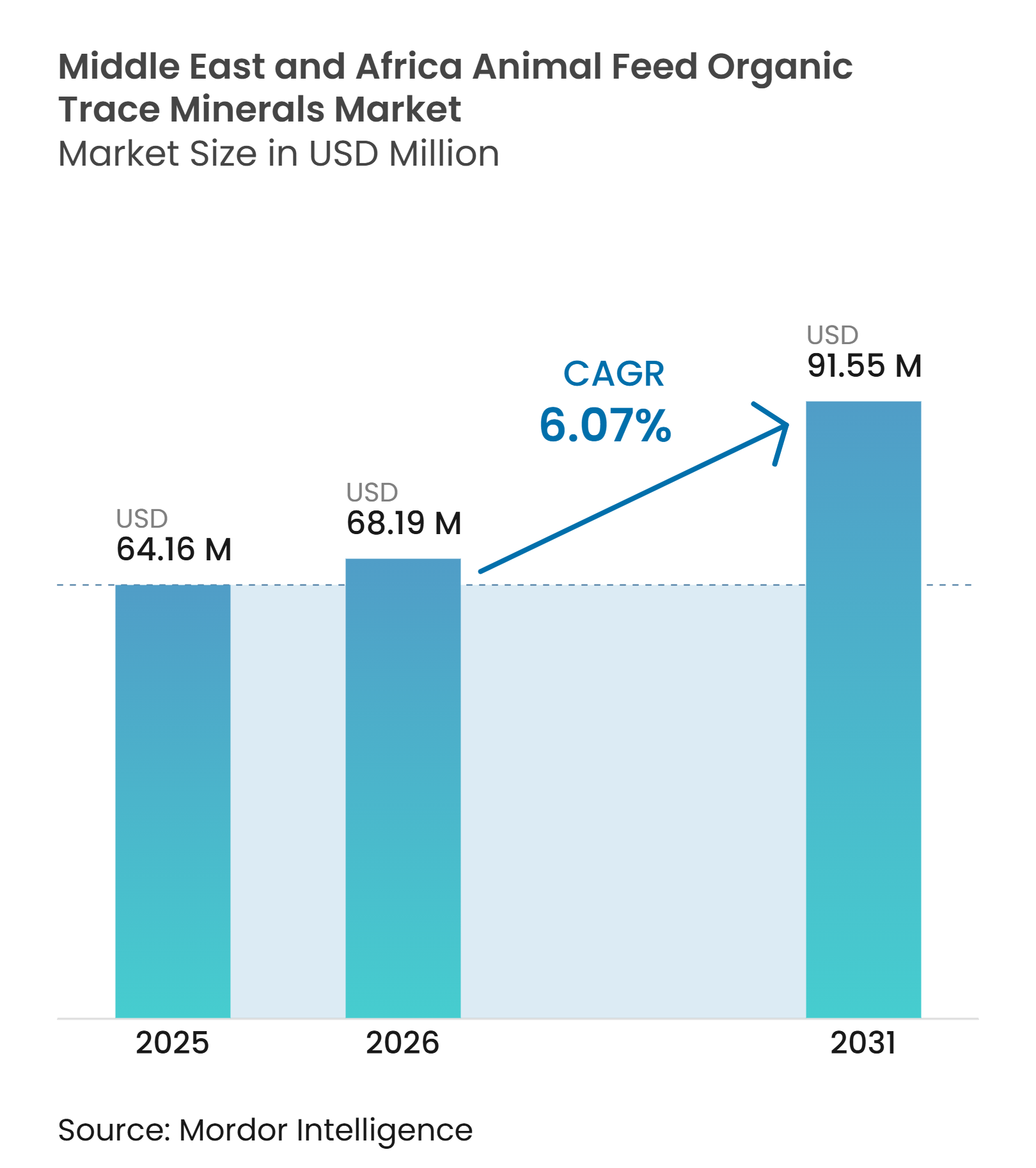
| Base Year Market Size (2025) | USD 64.16 Million |
| Market Size (2026) | USD 68.19 Million |
| Market Size (2031) | USD 91.55 Million |
| Growth Rate (2026 - 2031) | 6.07 % |
| Market Concentration | Medium |
Major Players *Disclaimer: Major Players sorted in no particular order Image © Mordor Intelligence. Reuse requires attribution under CC BY 4.0. | |
Middle East and Africa Animal Feed Organic Trace Minerals Market Analysis by Mordor Intelligence
The Middle East and Africa animal feed organic trace minerals market size is estimated to grow from USD 64.16 million and USD 68.19 million in 2026 to reach USD 91.55 million by 2031, growing at a CAGR of 6.07% from 2026 to 2031. The Middle East and Africa animal feed organic trace minerals market is supported by more intensive poultry, dairy, beef, and aquaculture production in Saudi Arabia, South Africa, Egypt, Nigeria, Kenya, and other countries in the region. Commercial producers are using chelated and complexed minerals to support animal performance when heat stress, water constraints, high stocking densities, and disease pressure affect production conditions. The opportunity is strongest in integrated operations that can measure feed conversion, mortality, reproductive performance, and product quality. Feed volume growth also expands the addressable base for specialty minerals, with Africa producing 64.2 million metric tons of compound feed in 2025, up 11.5% from 2024[1]. Suppliers compete through technical service, formulation support, and regional distribution in the Middle East and Africa animal feed organic trace minerals market.
Key Report Takeaways
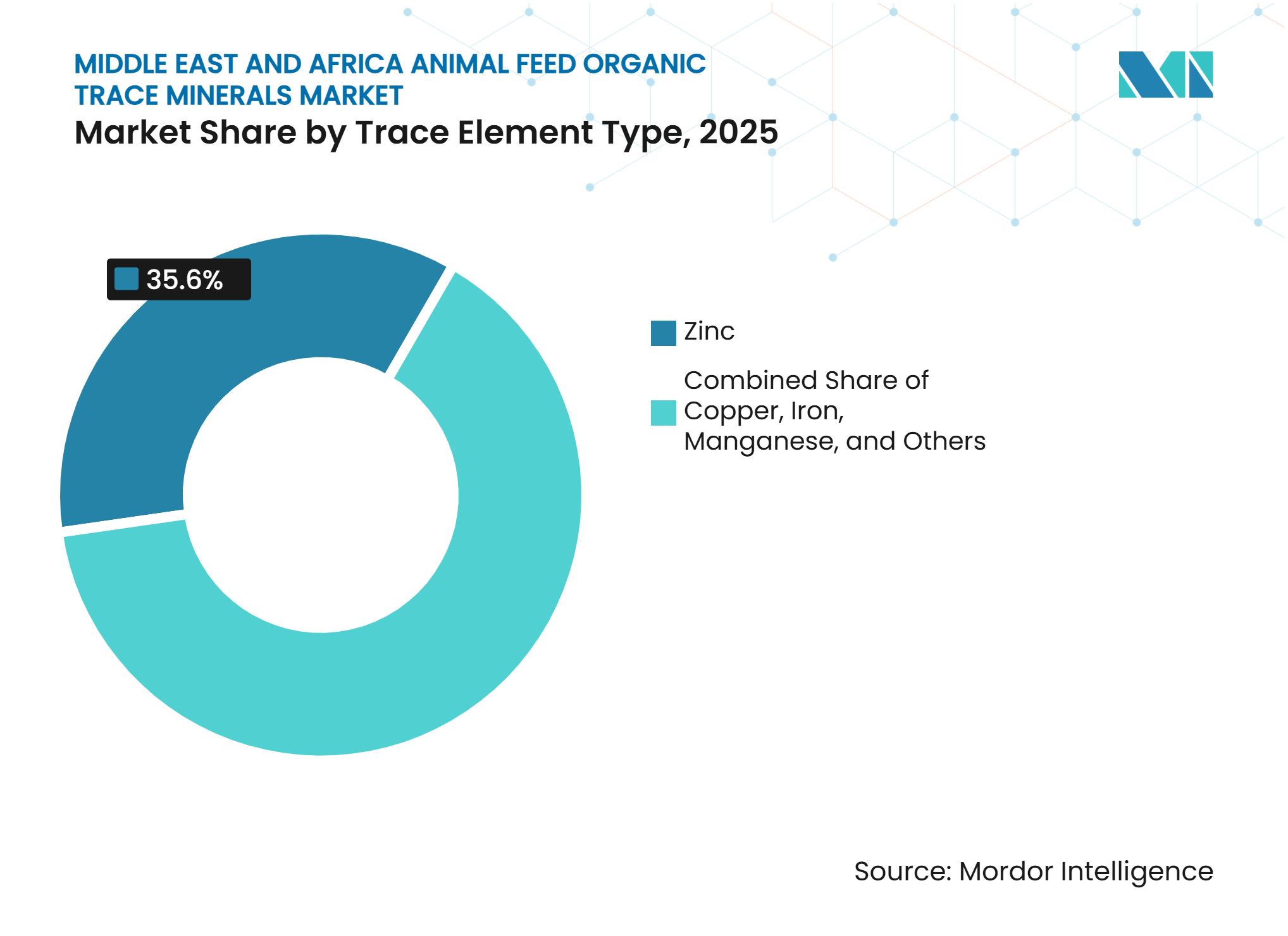
- By trace element type, zinc held 35.6% of the Middle East and Africa animal feed organic trace minerals market share in 2025, while selenium is projected to expand at a CAGR of 7.8% from 2026 to 2031.
- By chelation type, amino-acid chelates held 39.7% of the Middle East and Africa animal feed organic trace minerals market size in 2025, while hydroxy-trace minerals are estimated to have the highest forecast CAGR of 9.7% from 2026 to 2031.
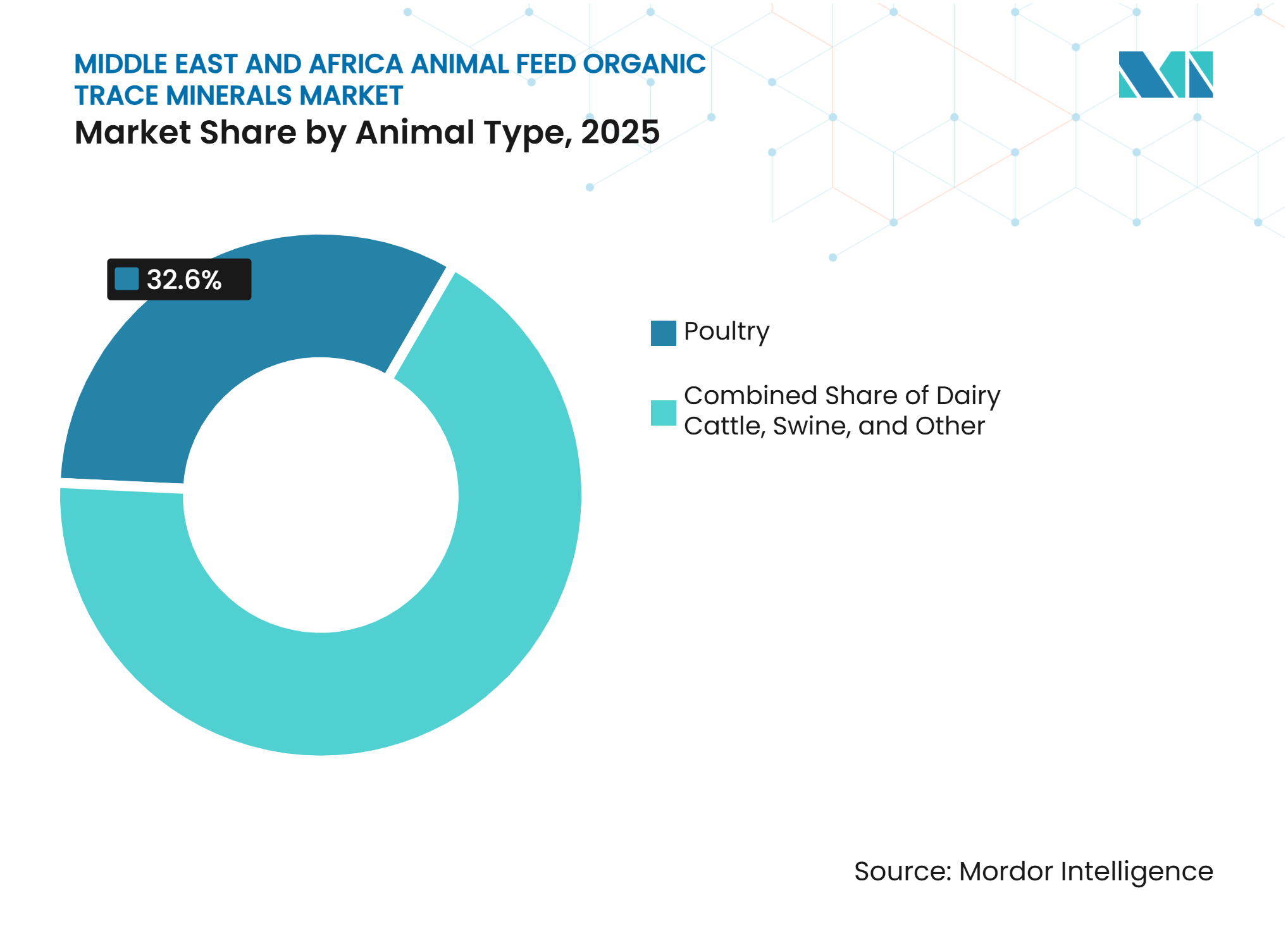
- By animal type, poultry held 32.6% of the Middle East and Africa animal feed organic trace minerals market share in 2025, while aquaculture is projected to expand at a CAGR of 8.9% from 2026 to 2031.
- By geography, Africa is estimated to account for approximately 65.4% of the Middle East and Africa animal feed organic trace minerals market share in 2025, while the Middle East is projected to grow at a CAGR of 7.8% from 2026 to 2031
Note: Market size and forecast figures in this report are generated using Mordor Intelligence’s proprietary estimation framework, updated with the latest available data and insights as of January 2026.
Market Trends and Insights
Drivers Impact Analysis of Middle East and Africa Animal Feed Organic Trace Minerals Market*
| Driver | (~) % Impact on CAGR Forecast | Geographic Relevance | Impact Timeline |
|---|---|---|---|
| Rising demand for nutrient-dense meat, milk, eggs and fish | +1.30% | Saudi Arabia, Egypt, South Africa, Nigeria, and Kenya | Medium term (2-4 years) |
| Expansion of commercial poultry, dairy, beef and aquaculture production | +1.00% | Middle East and Africa, with concentration in Saudi Arabia, Egypt, Turkey, and South Africa | Medium term (2-4 years) |
| Saudi arabia's aquaculture and food-security investment | +0.80% | Saudi Arabia, United Arab Emirates, and Gulf Cooperation Council countries | Long term (≥ 4 years) |
| Restrictions on antibiotic growth promoters | +0.70% | Nigeria, Egypt, Kenya, and other Middle East and Africa countries | Short term (≤ 2 years) |
| Demand for higher mineral bioavailability and lower excretion | +0.60% | South Africa and Turkey, with relevance across the region | Medium term (2-4 years) |
| Increasing adoption of regional precision-feed formulation | +0.50% | Saudi Arabia, United Arab Emirates, Turkey, and South Africa | Long term (≥ 4 years) |
| Source: Mordor Intelligence | |||
Rising Demand for Nutrient-Dense Meat, Milk, Eggs and Fish
Demand for consistent animal protein quality is increasing the need for more reliable nutrition programs across the Middle East and Africa animal feed organic trace minerals market. Producers serving formal retail, food service, and export channels have greater incentives to protect yield, egg quality, animal health, and carcass characteristics. Zinc, manganese, and selenium support eggshell formation, immunity, reproductive performance, and oxidative stress management in animal diets. These functions are important when commercial farms operate under heat exposure and high stocking densities. A 2025 broiler study found that low-inclusion organic trace mineral programs improved fillet and thigh muscle yields while maintaining bone development and immune measures comparable with commercial inorganic programs. The finding supports the use of organic mineral programs where producers seek measurable output quality rather than only lower input costs. This demand is reaching mid-sized commercial producers in Nigeria and Kenya as buyers place more value on dependable meat, milk, eggs, and fish quality. The Middle East and Africa animal feed organic trace minerals market can benefit where feed suppliers explain the link between mineral nutrition and farm-level results.
Expansion of Commercial Poultry, Dairy, Beef and Aquaculture Production
The expansion of commercial animal production is broadening the customer base for the Middle East and Africa animal feed organic trace minerals market. Africa’s feed production rose 11.5% in 2025, the fastest regional increase reported in Alltech, Incorporated’s global survey of 38,837 feed mills in 142 countries. Broiler feed output exceeded 20 million metric tons across Africa, while dairy feed rose 13.5% to 10 million metric tons in 2025, according to Alltech Agri-Food Outlook. Higher compound feed volumes give premix suppliers more opportunities to include organic minerals in standard formulations. Adoption remains concentrated among large integrators in South Africa, Egypt, and Turkey because these companies have formulation teams and performance records. Poultry, dairy, beef, and aquaculture systems also need different mineral profiles, which supports a wider range of specialized products. The underlying feed expansion is more valuable to organic mineral suppliers when customers move from basic mineral salts to programs designed for bioavailability. The Middle East and Africa animal feed organic trace minerals market consequently depends on commercial farm consolidation as well as livestock output growth.
Saudi Arabia's Aquaculture and Food-Security Investment
Saudi Arabia’s investment in aquaculture is creating a long-term demand base for specialized aquafeed minerals. A partnership between King Abdullah University of Science and Technology and the Ministry of Environment, Water and Agriculture formed the Aquaculture Development Program in June 2024. The program targets domestic aquaculture production of 530,000 metric tons annually by 2030, compared with 280,000 metric tons in 2024[2]. High-density production of shrimp, barramundi, seabream, and tilapia places greater focus on antioxidant protection and resilience to water-quality changes. A 2025 study titled Organic Trace Mineral Source Enhances the Bioavailability, Health Status, and Gut Microbiota Community in White Shrimp found that organic trace-mineral premixes improved mineral bioavailability, antioxidant capacity, immune-response indicators, and gut microbiota composition compared with inorganic or unsupplemented diets. Saudi Agricultural and Livestock Investment Company has increased its stake in National Aquaculture Group, which links aquaculture expansion with national food-security priorities. This investment makes aquaculture a central growth channel for the Middle East and Africa animal feed organic trace minerals market.
Restrictions on Antibiotic Growth Promoters
Restrictions on antibiotic growth promoters are opening a reformulation window for commercial feed producers. Nigeria’s National Agency for Food and Drug Administration and Control banned all antibiotic classes as growth promoters in livestock and poultry feed through Directive NAFDAC-RDAG-009-00, effective May 2025[3]. Egypt also published Food and Agriculture Organization-supported antimicrobial use guidelines for poultry and livestock in 2024. The policy changes do not make organic trace minerals direct substitutes for antibiotics. Instead, they encourage producers to review feed programs that support growth, immunity, and resilience without antibiotic growth promoters. Zinc and selenium chelates are relevant because better mineral availability can address nutritional limitations that may become more apparent after antibiotic removal. Contract growers that supply integrated processors also face stricter requirements for antibiotic-free production. This extends demand beyond large farm owners to the broader supply chains managed by processors and feed mills. The Middle East and Africa animal feed organic trace minerals market is therefore supported by compliance needs that overlap with producers’ operating priorities.
Restraints Impact Analysis of Middle East and Africa Animal Feed Organic Trace Minerals Market*
| Restraint | (~) % Impact on CAGR Forecast | Geographic Relevance | Impact Timeline |
|---|---|---|---|
| Premium pricing compared with inorganic mineral salts | -0.90% | Nigeria, Egypt, Kenya, and other Middle East and Africa countries | Medium term (2-4 years) |
| Limited awareness among smallholder producers | -0.80% | Nigeria, Kenya, Egypt, and other African smallholder markets | Long term (≥ 4 years) |
| Dependence on imported chelating ligands and finished products | -0.70% | Middle East and Africa, especially Nigeria, Egypt, and other African countries | Medium term (2-4 years) |
| Inconsistent registration and feed-labeling requirements | -0.50% | Middle East and Africa, with cross-border trade affected in Gulf Cooperation Council countries | Long term (≥ 4 years) |
| Source: Mordor Intelligence | |||
Premium Pricing Compared with Inorganic Mineral Salts
Premium pricing remains a major barrier to broader organic trace mineral use in the region. Amino-acid chelates and other complexed mineral products usually cost more than standard inorganic salts. This difference is particularly important for small and mid-sized farms that buy feed based on price per kilogram. Large integrated poultry and dairy operators can assess feed conversion, mortality, product yield, and veterinary expenses when evaluating the return on a mineral program. Smaller operators often lack the records and technical support needed to make the same comparison. This creates a divided pattern in which large commercial users adopt organic minerals while many producers continue to use inorganic sources. The problem is not only the purchase price because weak technical service also prevents producers from recognizing potential performance savings. The Middle East and Africa animal feed organic trace minerals market will remain limited in price-sensitive areas until suppliers can demonstrate practical returns under local production conditions.
Limited Awareness Among Smallholder Producers
Limited awareness among smallholder producers restricts the reach of the Middle East and Africa organic trace minerals animal feed market. In Nigeria, Kenya, and Egypt, many poultry and small-ruminant producers make feed decisions based on immediate cost rather than mineral availability. Veterinary extension coverage is often limited outside major commercial farming areas. Distribution channels also tend to focus on bulk commodity inputs rather than specialty mineral products. Some smallholders receive organic mineral exposure indirectly when they buy complete feed produced by commercial mills. However, this pathway does not necessarily build awareness of the benefits associated with organic mineral programs. Contract growing and commercial aggregation can create more opportunities for processors and feed companies to communicate those benefits. Adoption will still take time because producers need locally relevant evidence and dependable advice. The restraint is strongest where farms remain outside integrated supply chains and do not receive nutrition support.
*Our forecasts treat driver/restraint impacts as directional, not additive. The impact forecasts reflect baseline growth, mix effects, and variable interactions.
Middle East and Africa Animal Feed Organic Trace Minerals Market Segment Analysis
By Trace Element Type:
Zinc Leads Demand and Selenium Records the Fastest GrowthZinc accounted for 35.6% of regional demand by trace element type in 2025, supported by its broad use across poultry, ruminant, swine, and aquaculture diets. Its roles in immunity, hoof integrity, eggshell mineralization, and tissue development make it a consistent component of commercial premix formulations. Copper also represents a major-volume element, while iron and manganese remain widely used. Cobalt and chromium serve more specialized metabolic requirements, whereas iodine supports specific dairy and aquaculture applications, sustaining demand across integrated feed operations.
Selenium is anticipated to record the fastest CAGR of 7.8% from 2026 to 2031, driven by growing interest in antioxidant defense, reproductive performance, and meat quality. Premium forms such as selenomethionine and selenium yeast can support value-based positioning. A 2025 broiler study, Influence of Trace Mineral Sources and Levels on Growth Performance, reported that organic trace mineral programs containing selenium maintained oxidative stress measures comparable to commercial inorganic programs while improving muscle yield. This supports greater interest in targeted selenium nutrition, although demand for other trace elements will remain linked to species-specific nutritional requirements and feed production.



By Chelation Type:
Amino-Acid Chelates Lead and Hydroxy-Trace Minerals Expand FastestAmino-acid chelates accounted for 39.7% of regional demand by chelation type in 2025, supported by their established use in poultry, dairy, and swine diets and compatibility with commercial premixes. Their stability also facilitates handling during feed manufacturing. Novus International, Inc. markets MINTREX bis-chelated trace minerals, combining methionine activity with mineral ions. Meanwhile, proteinates, polysaccharide complexes, copper and magnesium chelates, and yeast-based complexes address complementary formulation requirements, with yeast-based products gaining relevance in premium applications requiring specific mineral forms. Amino-acid chelates therefore remain a familiar choice among commercial nutritionists.
Hydroxy-trace minerals are anticipated to record the fastest CAGR of 9.7% from 2026 to 2031, supported by their crystalline structure, which enhances premix stability and enables controlled mineral release. Their lower reactivity may also reduce antagonistic interactions that can affect mineral absorption. A 2025 study, Hydroxychloride Zinc and Copper Supplementation Improves Growth, Feed Efficiency, and Gut Health in Broiler Chickens, found that hydroxychloride zinc and copper improved broiler body weight by 4% and feed conversion ratio by 2.5%–3.8%, respectively, compared with inorganic sulfate sources[4]. Other chelation types remain relevant in specialized feed programs. Hydroxy-trace minerals offer an efficiency case when lower doses maintain production results. Their uptake will depend on support, pricing, and availability.
By Animal Type:
Poultry Leads Demand and Aquaculture Expands FastestPoultry accounted for 32.6% of regional demand by animal type in 2025, supported by integrated broiler, layer, and breeder operations across South Africa, Egypt, and Turkey. Organic zinc and manganese are increasingly used to support skeletal development and immune function in rapidly growing birds. Dairy cattle remain an important ruminant application, while beef cattle demand is expanding in Saudi Arabian feedlots. Swine use is concentrated in South Africa and Kenya, whereas equine and pet applications remain smaller specialized segments. Poultry maintains its lead because of its large-scale reliance on formulated feed.
Aquaculture is anticipated to record the fastest CAGR of 8.9% from 2026 to 2031, supported by expanding commercial production in Saudi Arabia, Egypt, and Nigeria. A 2025 study found that replacing 30%–50% of inorganic trace minerals with chelated sources improved antioxidant enzyme activity and muscle quality in white shrimp without compromising growth. While poultry is expected to remain the region’s largest feed-intensive category, expanding aquaculture production provides greater scope for organic trace mineral adoption. Codex Alimentarius standards further support formulation requirements for export-oriented aquaculture and poultry production.

Geography Analysis
Africa accounted for 65.4% of the Middle East and Africa organic trace mineral market in 2025. South Africa accounted for a major share of regional demand, supported by integrated broiler, layer, dairy, and beef production. Its developed premix sector can use specialty mineral inputs at commercial scale, giving suppliers direct access to sophisticated feed formulators. Egypt is the continent’s second-largest demand center, supported by expanding poultry, aquaculture, and dairy activity. Nigeria and Kenya are growing from a smaller commercial base as formulated feed production expands. Greater feed output increases the potential use of organic trace minerals in commercial formulations. The African sub-region is projected to grow significantly through 2031, with commercial intensification in the leading livestock economies driving most of the increase.
The Middle East is anticipated to grow faster, at a 7.8% CAGR through 2031. Government food-security programs are raising feed-quality requirements in commercial livestock and aquaculture systems. Turkey is one of the major domestic consumers of organic trace minerals in poultry, dairy, and ruminant diets. It also acts as a manufacturing and distribution gateway for regional feed markets. In the Gulf Cooperation Council, commercial livestock and aquaculture systems rely heavily on imported specialty nutrition inputs. This places more value on technical performance, reliable product supply, and field support than on the lowest purchase price. The Middle East is therefore likely to see a greater concentration of premium organic mineral demand during 2026 to 2031.
Adoption and distribution conditions estimated to shape supplier positions across both sub-regions. Nigeria’s National Agency for Food and Drug Administration and Control banned all antibiotic growth promoters in livestock and poultry feed through Regulatory Directive NAFDAC-RDAG-009-00, effective May 2025. The measure is encouraging feed reformulation, with selenium and zinc chelates relevant to programs that support animal health and growth without antibiotic growth promoters. Distribution remains a practical limitation because organic mineral products need reliable handling, local blending, and regional warehousing. This is particularly important in Gulf and Francophone African countries, where specialty mineral supply chains are less established than those for inorganic salts. Commercial aggregators and contract-growing programs are extending the reach of feed mills beyond the largest integrated operations. These channels can help suppliers communicate the performance value of organic minerals to a broader group of commercial producers.
Competitive Landscape
Market Concentration
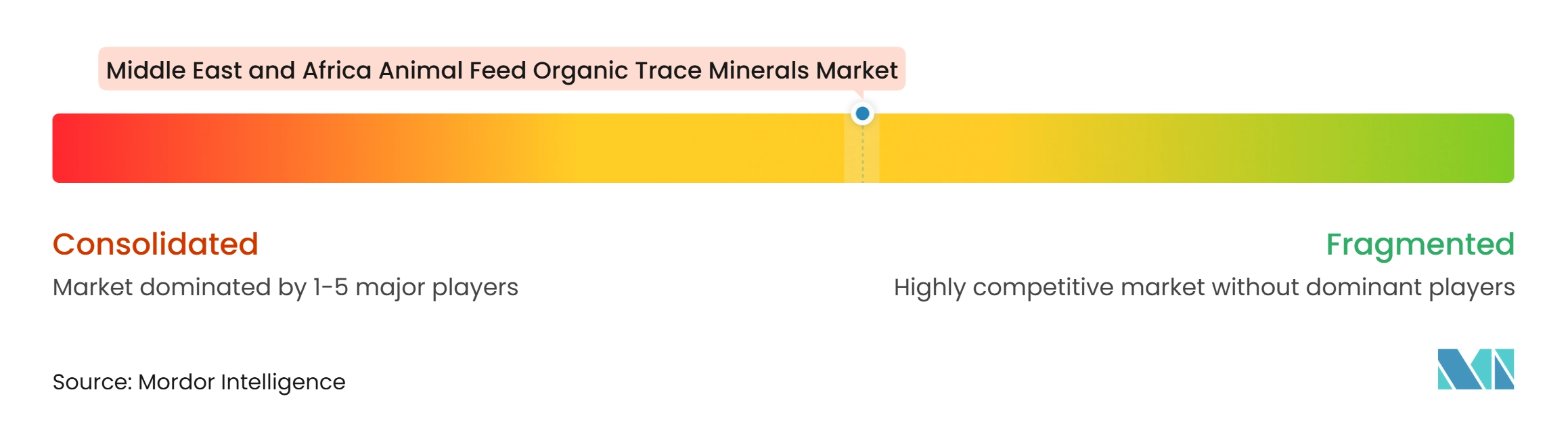
The Middle East and Africa animal feed organic trace minerals market is moderately concentrated, with Cargill, Incorporated, DSM-Firmenich, Zinpro Corporation, SHV (Nutreco N.V.), and Adisseo among the leading participants. Competition is primarily shaped by technical differentiation, product reliability, formulation support, and customer relationships. Zinpro Corporation leverages amino-acid complex technology and research capabilities, while Novus International, Inc. differentiates through the bis-chelated structure of its products. The competitive landscape leaves opportunities for regional suppliers offering localized technical support, reliable inventory, and customer-specific formulations.
DSM-Firmenich agreed in February 2026 to divest its Animal Nutrition and Health business to CVC Capital Partners at an enterprise value of USD 2.6 billion. The change may affect channel relationships, premix bundling, and technical service in the Middle East and African countries. SHV (Nutreco N.V.) uses the Trouw Nutrition and Selko brands to offer minerals as part of wider nutrition programs. ADM’s Pancosma acquisition and Alltech, Inc.’s Bioplex platform support broad portfolio offerings. These strategies reduce purchasing friction for integrated feed customers.
Kemin Industries, Inc., Orffa, Phibro Animal Health Corporation, Lallemand Inc., Royal Agrifirm Group, and Olmix S.A. serve specialist positions in the region. Their offerings focus on technical claims, particular mineral formats, and support for nutritionists at larger farms. Zinpro Corporation opened an innovation center in Spain in September 2025 to support gastrointestinal and rumen research, including research on organic trace mineral solutions. Companies with local blending, regional warehousing, and Arabic and French technical field support can improve their position. These capabilities matter in Gulf Cooperation Council and Francophone African markets where customers value access to qualified support. The competitive environment remains open to companies that combine product evidence with dependable regional execution.
Middle East and Africa Animal Feed Organic Trace Minerals Industry Leaders
-
Adisseo
-
Cargill, Incorporated
-
DSM-Firmenich
-
SHV (Nutreco N.V.)
-
Zinpro Corporation
- *Disclaimer: Major Players sorted in no particular order
Middle East and Africa Animal Feed Organic Trace Minerals Market Companies Covered in this Report
- Cargill, Incorporated
- DSM-Firmenich
- Zinpro Corporation
- SHV (Nutreco N.V.)
- Adisseo
- ADM
- Alltech, Inc.
- Novus International, Inc.
- Kemin Industries, Inc.
- Orffa
- Phibro Animal Health Corporation
- Lallemand Inc.
- Royal Agrifirm Group
- Olmix S.A.
Recent Industry Developments in Middle East and Africa Animal Feed Organic Trace Minerals Market
- November 2025: Cargill, Incorporated expanded its micronutrition production facility in Engerwitzdorf, Austria, increasing capacity by 50% to 30,000 metric tons per year. The capacity supports specialty mineral premix availability for the Middle East and Africa.
- November 2025: Zinpro Corporation launched the Zinpro Sow Excellence Index, a data-driven benchmarking system that connects claw lesion severity with sow productivity measures and supports customized mineral program recommendations
Middle East and Africa Animal Feed Organic Trace Minerals Market Report Scope
The Middle East and Africa animal feed organic trace minerals market report is segmented by trace element type (zinc, copper, iron, manganese, selenium, cobalt, chromium, iodine, and other trace elements), by chelation type (amino-acid chelates, proteinates, polysaccharide complexes, copper chelates, magnesium chelates, hydroxy-trace minerals, yeast-based complexes, and other chelation types), by animal type (dairy cattle, beef cattle, poultry, swine, aquaculture, pets, equine, and other animal types), and by Geography (Middle East and Africa). The market forecasts are provided in terms of value (USD).
Segmentation Overview
| Zinc |
| Copper |
| Iron |
| Manganese |
| Selenium |
| Cobalt |
| Chromium |
| Iodine |
| Other Trace Elements |
| Amino-Acid Chelates |
| Proteinates |
| Polysaccharide Complexes |
| Copper Chelates |
| Magnesium Chelates |
| Hydroxy-Trace Minerals |
| Yeast-Based Complexes |
| Other Chelation Types |
| Dairy Cattle |
| Beef Cattle |
| Poultry |
| Swine |
| Aquaculture |
| Pets |
| Equine |
| Other Animal Types |
| Middle East | Saudi Arabia |
| Turkey | |
| United Arab Emirates | |
| Israel | |
| Kuwait | |
| Oman | |
| Qatar | |
| Rest of Middle East | |
| Africa | South Africa |
| Egypt | |
| Kenya | |
| Nigeria | |
| Rest of Africa |
| By Trace Element Type | Zinc | |
| Copper | ||
| Iron | ||
| Manganese | ||
| Selenium | ||
| Cobalt | ||
| Chromium | ||
| Iodine | ||
| Other Trace Elements | ||
| By Chelation Type | Amino-Acid Chelates | |
| Proteinates | ||
| Polysaccharide Complexes | ||
| Copper Chelates | ||
| Magnesium Chelates | ||
| Hydroxy-Trace Minerals | ||
| Yeast-Based Complexes | ||
| Other Chelation Types | ||
| By Animal Type | Dairy Cattle | |
| Beef Cattle | ||
| Poultry | ||
| Swine | ||
| Aquaculture | ||
| Pets | ||
| Equine | ||
| Other Animal Types | ||
| By Geography | Middle East | Saudi Arabia |
| Turkey | ||
| United Arab Emirates | ||
| Israel | ||
| Kuwait | ||
| Oman | ||
| Qatar | ||
| Rest of Middle East | ||
| Africa | South Africa | |
| Egypt | ||
| Kenya | ||
| Nigeria | ||
| Rest of Africa | ||
Key Questions Answered in the Report
How large is the Middle East and Africa animal feed organic trace minerals market?
It is estimated at USD 68.19 million in 2026 and is forecast to reach USD 91.55 million by 2031, at a 6.07% CAGR.
Which trace element has the largest regional demand?
Zinc led by trace element type with a 35.6% share in 2025 because it is used across poultry, ruminant, swine, and aquaculture diets.
Which animal category is growing fastest for organic trace minerals?
Aquaculture is forecast to grow at an 8.9% CAGR through 2031, supported by Saudi Arabia’s expansion plans and growth in Egyptian and Nigerian aquafeed.
Why are organic trace minerals more costly than inorganic salts?
Chelated and complexed products have a higher initial cost, although large integrated farms may offset it through better feed conversion, health, and production results.