
Micromanipulator Market Size and Share
Market Overview
| Study Period | 2020 - 2031 |
|---|---|
| Market Size (2026) | USD 263.65 Million |
| Market Size (2031) | USD 361.56 Million |
| Growth Rate (2026 - 2031) | 6.52 % |
| Fastest Growing Market | Asia-Pacific |
| Largest Market | North America |
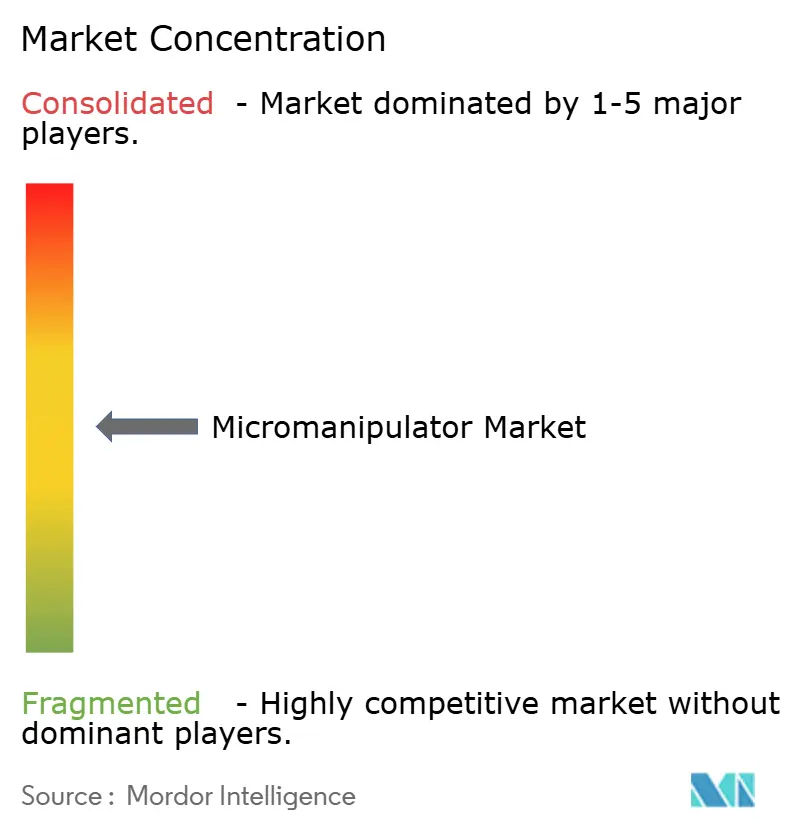
| Market Concentration | Medium |
Major Players *Disclaimer: Major Players sorted in no particular order Image © Mordor Intelligence. Reuse requires attribution under CC BY 4.0. | |
Micromanipulator Market Analysis by Mordor Intelligence
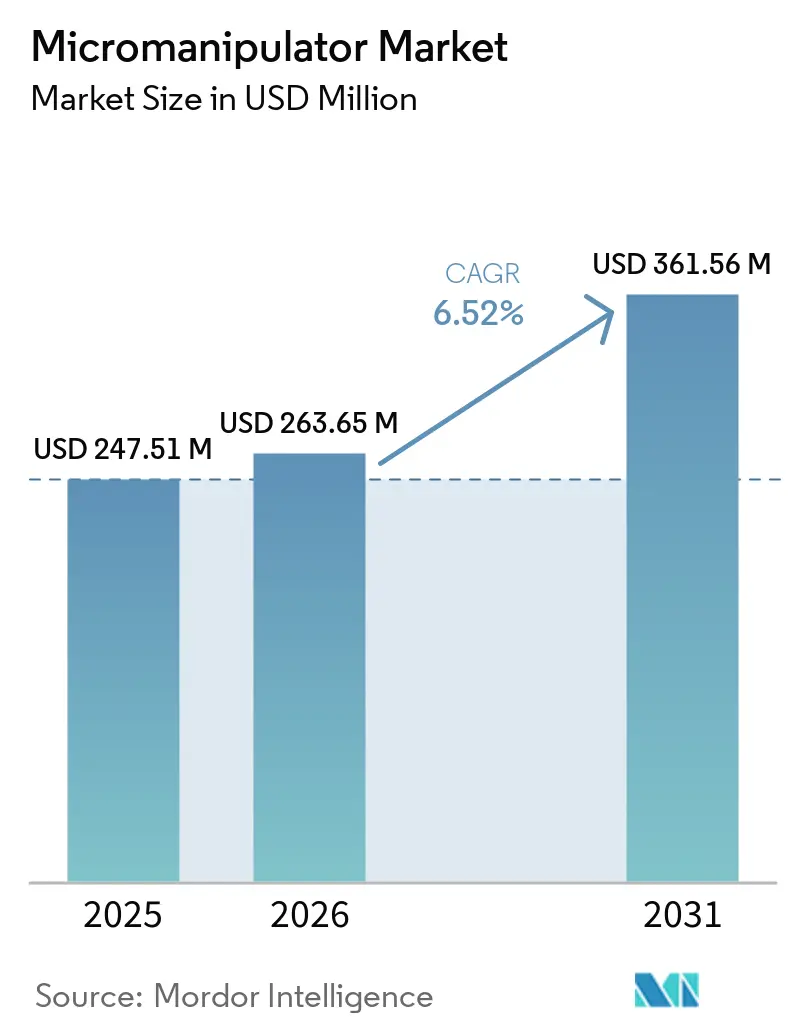
The Micromanipulator Market size is projected to expand from USD 247.51 million in 2025 and USD 263.65 million in 2026 to USD 361.56 million by 2031, registering a CAGR of 6.52% between 2026 and 2031.
The micromanipulator market is supported by wider use of ICSI, more demanding neural recording methods, and semiconductor inspection needs. The International Federation of Fertility Societies recorded 7,982 ART centers across 141 countries in 2025, up from 6,973 centers during the prior 3 years, which widened the equipment base for fertility laboratories. New Neuropixels designs and more complex semiconductor packaging require steadier motion, accurate positioning, and stronger links between instruments and laboratory software. The micromanipulator market also faces slower purchasing decisions, where integrated workstations require major capital budgets. At the same time, automation can reduce the effect of workforce shortages and create an upgrade path from manual equipment.
Key Report Takeaways
- By product type, electric and motorized micromanipulators held 49.31% of revenue in 2025 and are forecast to grow at a 7.65% CAGR through 2031.
- By application, cell micromanipulation accounted for 41.24% of revenue in 2025, while electrophysiology and neuroscience are forecast to grow at an 8.42% CAGR through 2031.
- By end user, research laboratories and diagnostic centers held 35.14% of revenue in 2025, while pharmaceutical and biotechnology companies are forecast to grow at an 8.12% CAGR through 2031.
- By axis configuration, multi-axis systems held 60.54% of revenue in 2025 and are forecast to grow at an 8.82% CAGR through 2031.
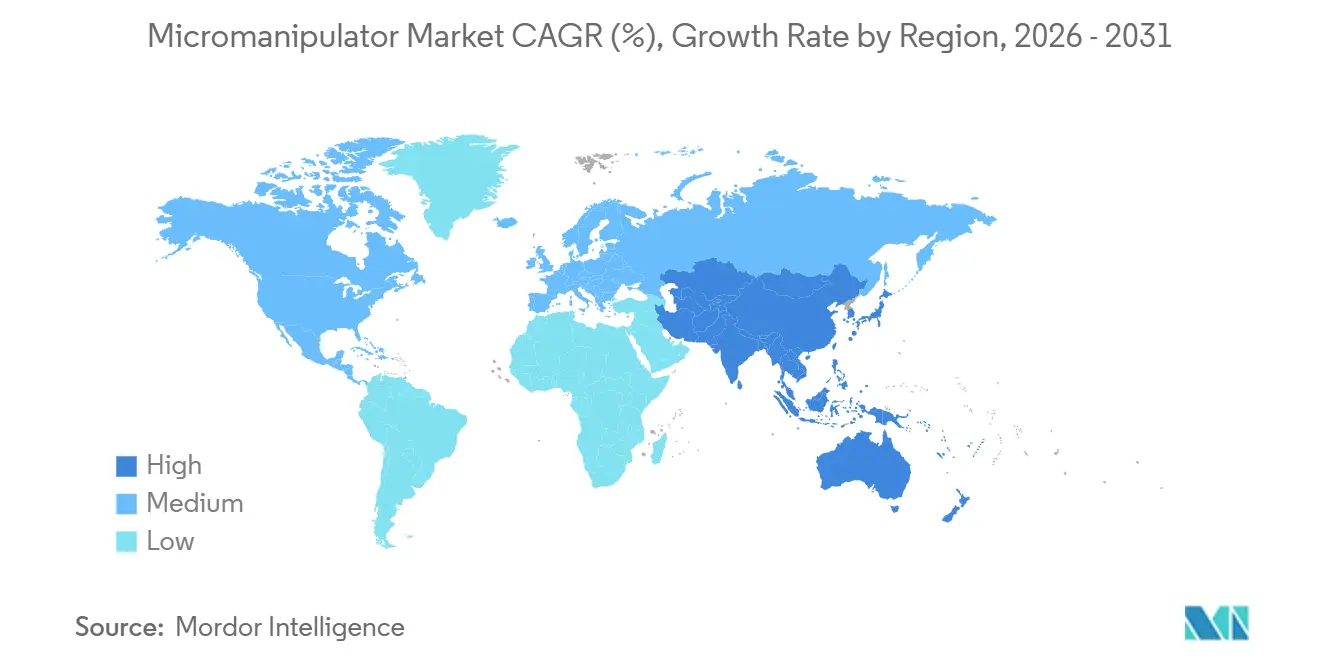
- By geography, North America held 38.61% of revenue in 2025, while Asia-Pacific is forecast to grow at an 8.25% CAGR through 2031.
Note: Market size and forecast figures in this report are generated using Mordor Intelligence’s proprietary estimation framework, updated with the latest available data and insights as of January 2026.
Global Micromanipulator Market Trends and Insights
Drivers Impact Analysis*
| Driver | (~) % Impact on CAGR Forecast | Geographic Relevance | Impact Timeline |
|---|---|---|---|
| Rising ICSI and Assisted Reproductive Procedures | +1.4% | Global, with concentrated gains in China, India, the United States, Japan, and European fertility hubs | Medium term (2-4 years) |
| Expansion of Cell Biology, Stem Cell, and Gene-Editing Research | +1.3% | North America and the European Union, with Asia-Pacific spillover | Medium term (2-4 years) |
| Demand for High-Stability Electrophysiology and Neuropixels Recordings | +1% | North America, the European Union, Japan, and South Korea | Short term (≤ 2 years) |
| Growth of Semiconductor Miniaturization and Microelectronic Inspection | +0.8% | Asia-Pacific, especially South Korea, Japan, Taiwan, and China, with spillover to North America and the European Union | Long term (≥ 4 years) |
| Automated Pipette Cleaning and Closed-Loop Positioning | +0.7% | Global, with early gains in North America and the European Union | Medium term (2-4 years) |
| Integration With Digital Twins and Experiment-Level Position Tracking | +0.5% | North America and the European Union, with emerging use in the Asia-Pacific | Long term (≥ 4 years) |
| Source: Mordor Intelligence | |||
Rising Intracytoplasmic Sperm Injection and Assisted Reproductive Procedures
The micromanipulator market benefits from the broader clinical use of ICSI in fertility care. The American Society for Reproductive Medicine stated in 2026 that ICSI is used in oocyte cryopreservation thaw, PGT cycles, and in vitro maturation. However, benefits in non-male-factor cases require consideration of added cost and complexity[1]ASRM Practice Committee, “Intracytoplasmic Sperm Injection for Non-Male Factor Indications: A Committee Opinion 2026,” American Society for Reproductive Medicine, asrm.org.. These procedures require precise handling during sperm injection and related laboratory steps. More varied treatment indications can increase demand for motorized platforms when manual control does not provide consistent performance across different oocyte conditions. The IFFS reported that 59 of 112 surveyed countries provided insurance or government funding coverage for ICSI in 2025. This policy support can expand procedure volumes and the installed base for the micromanipulator market in emerging countries.
Expansion of Cell Biology, Stem Cell, and Gene-Editing Research
The micromanipulator market is also linked to cell biology, stem cell, and gene-editing work. Cell manipulation supports delivery optimization and functional validation in gene-editing research. iPSC-derived tissue models require precise single-cell transfer, nuclear injection, and morphological verification during research workflows. Their wider use in pharmaceutical discovery can extend the use of micromanipulator assets beyond fertility and neuroscience laboratories. Gene-editing programs generally have multiyear development timelines, which supports sustained instrument utilization instead of one-time procedural demand. The micromanipulator market can therefore gain from laboratories that combine cell models, gene-editing workflows, and functional testing within the same research setting.
Demand for High-Stability Electrophysiology and Neuropixels Recordings
The micromanipulator market is gaining support from successive Neuropixels probe designs. Neuropixels Ultra, published in 2025, improved neuronal yield by more than 2 times in the mouse visual cortex by reducing site dimensions and spacing. Neuropixels 2.0 Quad Base has 1,536 channels and supports simultaneous recordings across more than 20 brain areas[2]Authors, “Neuropixels 2.0 Quad Base Probe Reveals Brain-Wide Communication Underlying Flexible Sensorimotor Sequences,” bioRxiv, biorxiv.org.. Neuropixels Opto combines high-density recording with 14 spatially addressable light emitters. Each generation raises the practical requirement for stable, repeatable probe insertion because positional drift can affect the value of dense recordings. The NIH continues to fund new neural recording tools through BRAIN Initiative mechanisms, which support continued equipment renewal in the micromanipulator market.
Automated Pipette Cleaning and Closed-Loop Positioning Enabling Higher Throughput
The micromanipulator market is supported by automated pipette cleaning and closed-loop positioning. A 2024 Science study used Sensapex micromanipulators and automated pipette cleaning to assess 7,200 synaptic connections in the human cerebral cortex. The study showed how automation can support work at a scale that manual patch clamp cannot sustain. A 2025 IEEE IROS study demonstrated vision-guided micropipette alignment with mean positioning errors below 3 µm in a 5-DOF micromanipulator platform. Closed-loop alignment removes a time-intensive setup step and can improve repeatability in high-throughput work. Pipette reuse can lower consumable use and strengthen the case for premium equipment where research teams need higher throughput.
Restraints Impact Analysis*
| Restraint | (~) % Impact on CAGR Forecast | Geographic Relevance | Impact Timeline |
|---|---|---|---|
| High Cost of Motorized and Integrated Workstations | -1.4% | Global, with greater pressure in Asia-Pacific emerging countries, South America, and the Middle East and Africa | Medium term (2-4 years) |
| Shortage of Skilled Embryologists and Electrophysiology Operators | -0.9% | Global, most acute in India, South America, and the Middle East and Africa, with pressure in the United States and the European Union | Long term (≥ 4 years) |
| Compatibility Constraints Across Microscopes, Holders, and Headstages | -0.6% | Global | Short term (≤ 2 years) |
| Reproducibility Risks From Vibration, Thermal Drift, and Calibration Variability | -0.5% | Global, concentrated in sensitive patch-clamp and ICSI settings | Medium term (2-4 years) |
| Source: Mordor Intelligence | |||
High Capital Cost of Motorized and Integrated Micromanipulation Workstations
The cost of integrated motorized workstations constrains the micromanipulator market. A complete system with a motorized manipulator, piezo impact drive, microinjector, inverted microscope, and anti-vibration platform can exceed USD 80,000 per station. Multi-probe electrophysiology rigs can reach more than USD 100,000 when headstages, amplifiers, and data acquisition hardware are included. The expense creates a purchasing barrier for emerging-market fertility programs, publicly funded academic laboratories, and hospital research centers. Long authorization processes can delay clinical upgrades even when higher precision is needed. High upfront cost can concentrate advanced capacity in larger laboratories and reduce equipment access for mid-tier institutions.
Shortage of Skilled Embryologists and Electrophysiology Operators
The micromanipulator market is affected by the limited availability of trained operators. The original research identified a retirement risk among practicing embryologists in the United States, but the supporting sources did not meet the required source standard, and the related figures are excluded. The operating constraint remains important because premium equipment provides less value when a clinic cannot recruit trained staff. In India, the ART Act 2021 requires qualified embryologists and accredited IVF laboratories, making staffing a compliance issue as well as an operating issue. Training efforts by the ASRM and CooperSurgical are building a clinical embryology learning infrastructure. The benefits of these training programs will take time to affect the available workforce.
*Our forecasts treat driver/restraint impacts as directional, not additive. The impact forecasts reflect baseline growth, mix effects, and variable interactions.
Segment Analysis
By Product Type: Motorized Platforms Redefine the Baseline for Precision Work
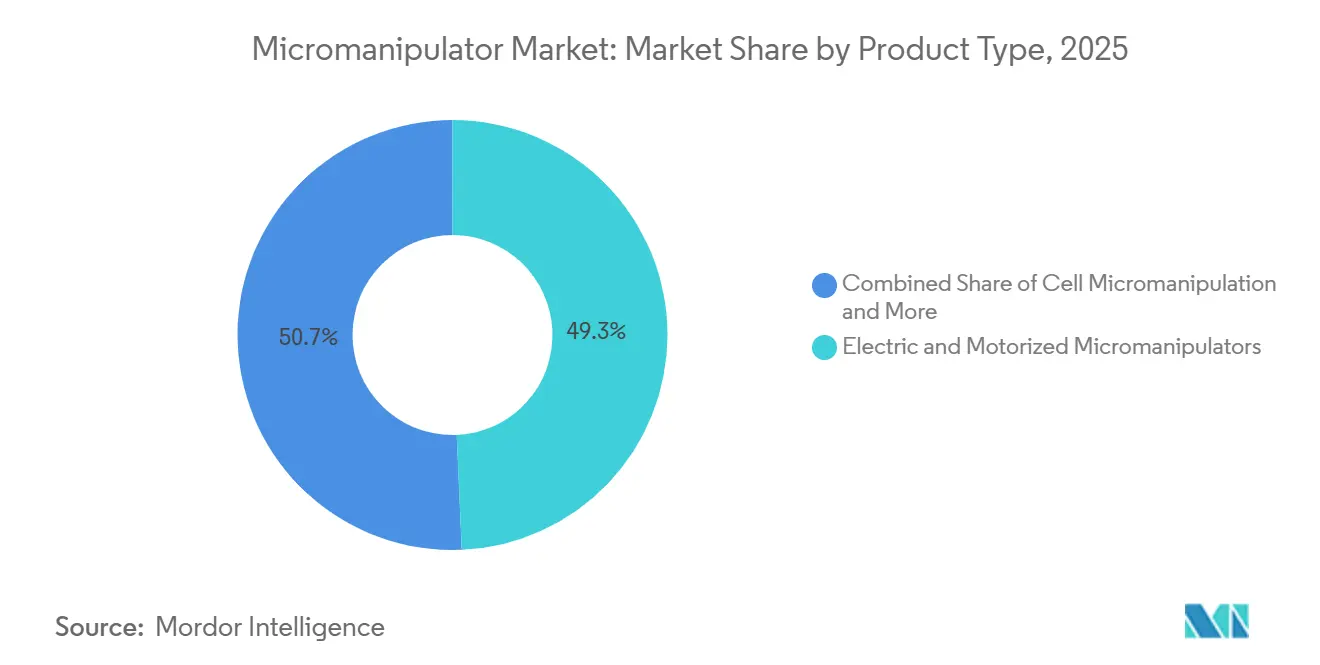
Electric and motorized micromanipulators held 49.31% of revenue in 2025 and are forecast to grow at a 7.65% CAGR through 2031. This product group held the leading micromanipulator market share because it supports closed-loop feedback control, digital position logging, and automated pipette exchange. These functions are increasingly relevant in neuroscience and high-quality ICSI procedures. Memory positions and controlled motion can reduce the operating gap between newer and experienced users. This can make advanced workflows easier to standardize within busy laboratories.
Manual micromanipulators retain demand in cost-sensitive fertility clinics and teaching institutions. Hydraulic systems remain useful in low-noise electrophysiology work because battery-operated hydraulic units avoid electrical interference. Pneumatic systems serve a smaller industrial niche where cleanroom compatibility and spark-free operation are required. The micromanipulator industry is moving toward motorized solutions as dense neural probes require more repeatable insertion. Manual and hydraulic systems, therefore, remain most relevant where budgets are constrained or a specialized requirement outweighs automation. The micromanipulator market retains space for each product type, although the technical gap between motorized and legacy platforms is widening.



By Application: Neural Recording Requirements Support Faster Electrophysiology Growth
Cell micromanipulation held 41.24% of revenue in 2025. It is the largest application because ICSI, CRISPR delivery, and iPSC-based discovery programs require controlled single-cell transfer and injection. Its revenue base is supported by recurring laboratory activity in fertility and cell research. Electrophysiology and neuroscience are forecast to grow at an 8.42% CAGR through 2031. This micromanipulator market size opportunity is supported by the renewal of rigs for Neuropixels Ultra, 2.0 Quad Base, and Opto protocols.
Industrial micromanipulation is another relevant application within the micromanipulator market. Advanced packaging inspection needs nanometer-class repeatability as trace and bump pitches become smaller. Materials science, nanofabrication, graphene transfer, and biosensor fabrication also use precision manipulation equipment. These uses contribute less than cell manipulation and electrophysiology, but they broaden the set of laboratory and industrial buyers. The premium growth in electrophysiology reflects the purchasing capacity of well-funded neuroscience institutions in the United States, Europe, and Japan. These institutions can replace hardware faster when newer probes require higher stability.
By End User: Pharmaceutical and Biotechnology Demand Expands Workflow Needs
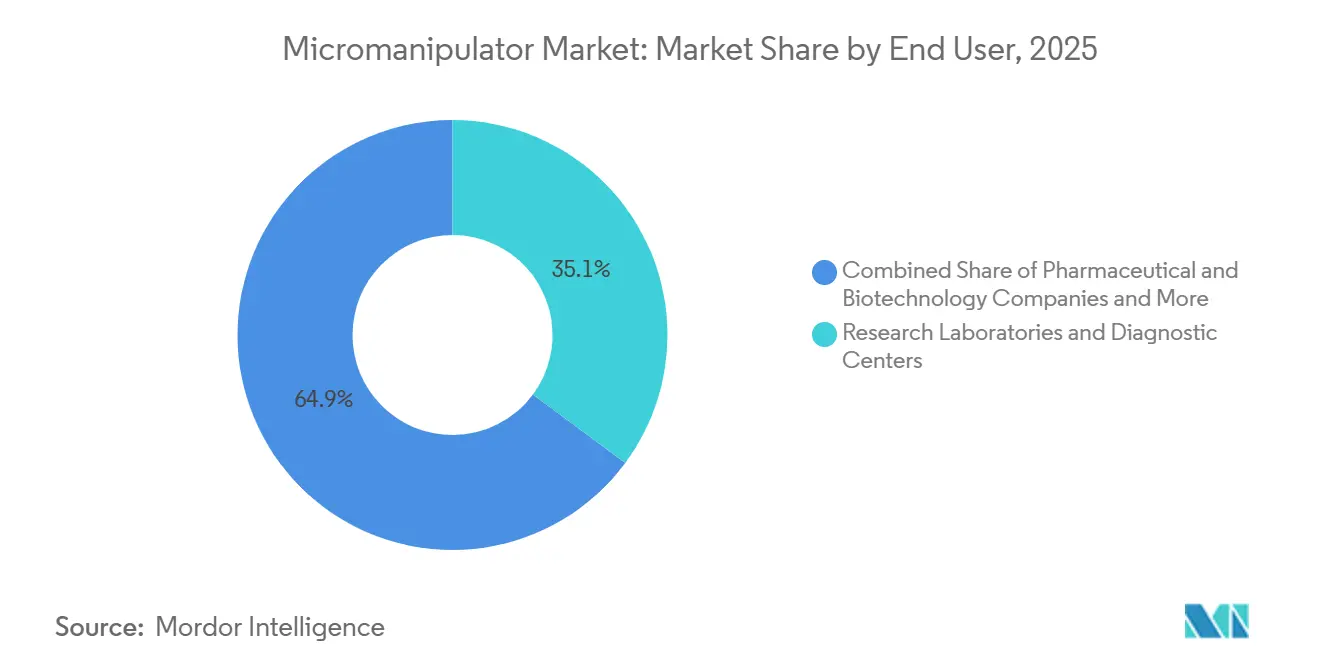
Research laboratories and diagnostic centers held 35.14% of revenue in 2025. Their lead reflects long-established use of micromanipulators in academic neuroscience, cell biology, and reproductive research. Grant-funded equipment programs support purchases in these settings. Pharmaceutical and biotechnology companies are forecast to grow at an 8.12% CAGR through 2031. The micromanipulator market gains from single-cell functional assays and gene therapy programs that require delivery and validation workflows.
Pharmaceutical buyers often assess equipment as part of a broader workflow rather than as a standalone device. This creates opportunities for suppliers that link hardware with automation software, consumables, and imaging solutions. Hospitals and fertility centers remain the second-largest end-user group because their demand is directly linked to ART procedures. Their purchasing decisions prioritize service contracts and regulatory compliance, including FDA 510(k) clearance or CE marking under EU MDR for clinical devices. Academic and government research institutes remain significant buyers, although grant cycles can restrict capital spending. The ASRM and CooperSurgical clinical embryology learning initiative also points to stronger attention to training infrastructure for future laboratory demand.
By Axis Configuration: Multi-Axis Systems Combine Scale With Growth
Multi-axis systems held 60.54% of revenue in 2025 and are forecast to grow at an 8.82% CAGR through 2031. They led both share and growth because in vivo electrophysiology, three-dimensional ICSI work, and stacked-die failure analysis need independent motion across several axes. This configuration held the largest micromanipulator market share among axis options. Multi-axis control supports angled probe insertion and more complex volumetric manipulation. It is becoming a standard requirement in leading neuroscience laboratories.
Brain-atlas-driven planning tools can work directly with multi-axis manipulators to prepare probe insertion sequences before experiments. Three-axis systems retain an established role in standard ICSI and patch-clamp setups. Two-axis systems address educational and introductory research uses, while single-axis systems fit specialized inspection tasks with a single directional need. Migration toward multi-axis systems is supported by more accessible software integration. Zaber’s DMA objective focus stage launched in May 2026 with open-source Python, C#, and C++ libraries and plug-and-play hardware. This approach can make automated multi-axis workflows easier for laboratories without dedicated hardware engineering teams.
Geography Analysis
North America held 38.61% of revenue in 2025. Its leading micromanipulator market share reflects NIH-funded neuroscience and reproductive medicine programs, a mature private IVF sector, and proximity to semiconductor design and advanced packaging activity. The United States leads regional demand through dense fertility clinic networks and well-funded academic neuroscience laboratories. BRAIN Initiative programs provide continuing support for neural recording tools. Canada also contributes through university research and established ART networks.
Europe is the second-largest region in the micromanipulator market. Germany, the United Kingdom, and France benefit from biomedical infrastructure, Horizon Europe programs, and high IVF use. ESHRE reported more than 923,000 ART cycles across 41 European countries in 2020, forming a clinical base that continued to grow through 2025[3]European Society of Human Reproduction and Embryology, “ART Fact Sheet v10,” European Society of Human Reproduction and Embryology, eshre.eu.. Multi-probe rigs are also being integrated into Human Brain Project successor programs. Standardized interfaces for Neuropixels recordings support coordinated laboratory equipment purchases. Italy and Spain provide additional regional demand.
Asia-Pacific is forecast to grow at an 8.25% CAGR through 2031. South Korea and Japan are investing in next-generation semiconductor packaging that requires precise positioning for inspection and failure analysis. China’s expanding IVF access adds a separate source of demand for the micromanipulator market. India generates compliance-led demand as the ART Act 2021 requires qualified embryologists and accredited IVF laboratories. Australia contributes through academic research, while South Korea also benefits from semiconductor leadership. The Middle East and Africa are early-stage markets for high-end motorized systems, with IVF access expanding in the UAE and Saudi Arabia. South America is centered on Brazil and Argentina, where rising IVF demand is moderated by public budget limits and import costs. Manual and hydraulic systems remain relevant in these regions, while Brazil’s biotechnology research activity adds a separate need for cell manipulation infrastructure.

Competitive Landscape
The micromanipulator market is moderately fragmented among application specialists. Narishige, Sensapex, Scientifica, Sutter Instrument, Luigs & Neumann, and Prior Scientific have established positions in fertility manipulation, in vivo electrophysiology, patch clamp, and precision staging. These suppliers compete through application knowledge and product fit rather than a single uniform customer base. Carl Zeiss and Leica Microsystems offer micromanipulation accessories that benefit from their installed microscopy base. Their ability to combine imaging, cameras, software, and stages can support cross-selling within existing laboratory systems.
Sensapex has aligned its products with peer-reviewed research methods. A 2024 Science publication using semi-automated patch clamp assessed 7,200 synaptic connections with Sensapex equipment and automated pipette cleaning. This type of publication visibility can affect laboratory purchases because researchers often review methods used by peer groups. Sensapex also offers the uMp-3NP with 5 nm resolution, 20 mm travel per axis, and zero-drift piezo technology for Neuropixels setups. The Finkelstein group at Tel Aviv University used controlled insertion speeds of 1 µm/second for multi-probe in vivo recordings with this equipment.
Scientifica launched PatchPad Evo in July 2026 with real-time XYZ coordinate display and stored memory positions for multi-device electrophysiology rigs. Zaber launched its DMA OEM Objective Focus Stage in May 2026 with 50 nm repeatability, open-source APIs, and online pricing transparency. The micromanipulator market has no single vendor offering a fully integrated benchtop platform for manipulation, imaging, liquid handling, and AI-guided cell selection. This leaves room for partnerships or acquisitions involving laboratory automation suppliers. Competition is therefore based on specialized performance, integration capability, and access to established laboratory ecosystems.
Micromanipulator Industry Leaders
Narishige Co., Ltd.
Eppendorf SE
Sutter Instrument Company
Scientifica Ltd.
Sensapex Oy
- *Disclaimer: Major Players sorted in no particular order

Recent Industry Developments
- June 2026: Scribe Therapeutics received over USD 25 million from the California Institute for Regenerative Medicine to advance two CRISPR-based gene-editing programs, STX-1200 for LPA and STX-1400 for APOC3, toward cardiometabolic disease clinical trials. These programs increased demand for precision cell micromanipulation in pharmaceutical applications.
- May 2026: Semarion secured USD 3.8 million to scale its SemaCyte platform, which converted adherent cell models into assay-ready, barcoded reagents for flexible drug screening. This platform supported demand for precision cell handling and micromanipulation in pharmaceutical drug discovery.


Global Micromanipulator Market Report Scope
As per the scope of the report, a micromanipulator is a device that allows precise control and movement of tiny objects or instruments at a microscopic scale. It is commonly used in scientific and medical applications such as electrophysiology, microinjection, and cell manipulation, enabling users to position tools or samples with high accuracy.
The micromanipulator market is segmented by product type into manual micromanipulators, hydraulic micromanipulators, electric and motorized micromanipulators, and pneumatic micromanipulators. By application, the market is segmented into cell micromanipulation, electrophysiology and neuroscience, industrial micromanipulation, and other applications. By end user, the market is segmented into hospitals and fertility centers, research laboratories and diagnostic centers, academic and government research institutes, pharmaceutical and biotechnology companies, and other end users. By axis configuration, the market is segmented into single-axis systems, two-axis systems, three-axis systems, and multi-axis systems. By geography, the market is segmented into North America, Europe, Asia-Pacific, the Middle East and Africa, and South America. The market report also covers the estimated market sizes and trends for 17 countries across major regions globally. For each segment, the market size and forecast are provided in terms of value (USD).
| Manual Micromanipulators |
| Hydraulic Micromanipulators |
| Electric and Motorized Micromanipulators |
| Pneumatic Micromanipulators |
| Cell Micromanipulation |
| Electrophysiology and Neuroscience |
| Industrial Micromanipulation |
| Other Applications |
| Hospitals and Fertility Centers |
| Research Laboratories and Diagnostic Centers |
| Academic and Government Research Institutes |
| Pharmaceutical and Biotechnology Companies |
| Other End Users |
| Single-Axis Systems |
| Two-Axis Systems |
| Three-Axis Systems |
| Multi-Axis Systems |
| North America | United States |
| Canada | |
| Mexico | |
| Europe | Germany |
| United Kingdom | |
| France | |
| Italy | |
| Spain | |
| Rest of Europe | |
| Asia-Pacific | China |
| Japan | |
| India | |
| Australia | |
| South Korea | |
| Rest of Asia-Pacific | |
| Middle East and Africa | GCC |
| South Africa | |
| Rest of Middle East and Africa | |
| South America | Brazil |
| Argentina | |
| Rest of South America |
| By Product Type | Manual Micromanipulators | |
| Hydraulic Micromanipulators | ||
| Electric and Motorized Micromanipulators | ||
| Pneumatic Micromanipulators | ||
| By Application | Cell Micromanipulation | |
| Electrophysiology and Neuroscience | ||
| Industrial Micromanipulation | ||
| Other Applications | ||
| By End User | Hospitals and Fertility Centers | |
| Research Laboratories and Diagnostic Centers | ||
| Academic and Government Research Institutes | ||
| Pharmaceutical and Biotechnology Companies | ||
| Other End Users | ||
| By Axis Configuration | Single-Axis Systems | |
| Two-Axis Systems | ||
| Three-Axis Systems | ||
| Multi-Axis Systems | ||
| By Geography | North America | United States |
| Canada | ||
| Mexico | ||
| Europe | Germany | |
| United Kingdom | ||
| France | ||
| Italy | ||
| Spain | ||
| Rest of Europe | ||
| Asia-Pacific | China | |
| Japan | ||
| India | ||
| Australia | ||
| South Korea | ||
| Rest of Asia-Pacific | ||
| Middle East and Africa | GCC | |
| South Africa | ||
| Rest of Middle East and Africa | ||
| South America | Brazil | |
| Argentina | ||
| Rest of South America | ||


Key Questions Answered in the Report
What is the projected value of the micromanipulator market in 2031?
The micromanipulator market is forecast to reach USD 361.56 million by 2031, growing at a 6.52% CAGR from 2026.
Which micromanipulator product type held the largest share in 2025?
Electric and motorized micromanipulators held 49.31% of revenue in 2025.
Which application is growing fastest through 2031?
Electrophysiology and neuroscience are forecast to grow at an 8.42% CAGR through 2031, supported by new Neuropixels recording requirements.
Why are multi-axis micromanipulators gaining adoption?
Multi-axis systems held 60.54% of revenue in 2025 and are forecast to grow at an 8.82% CAGR because complex research and inspection tasks require independent motion across several axes.
Which region will record the fastest growth through 2031?
Asia-Pacific is forecast to grow at an 8.25% CAGR through 2031, supported by semiconductor investment and wider IVF access.
What limits the adoption of motorized workstations?
Integrated motorized systems can exceed USD 80,000 per station, while staff shortages and compatibility requirements can also delay purchasing.
Page last updated on:





