
Microbiome Skincare Market Size and Share
Market Overview
| Study Period | 2021 - 2031 |
|---|---|
| Market Size (2026) | USD 545.68 Million |
| Market Size (2031) | USD 956.28 Million |
| Growth Rate (2026 - 2031) | 11.87 % |
| Fastest Growing Market | Asia-Pacific |
| Largest Market | North America |
| Market Concentration | Low |
Major Players *Disclaimer: Major Players sorted in no particular order Image © Mordor Intelligence. Reuse requires attribution under CC BY 4.0. | |
Microbiome Skincare Market Analysis by Mordor Intelligence
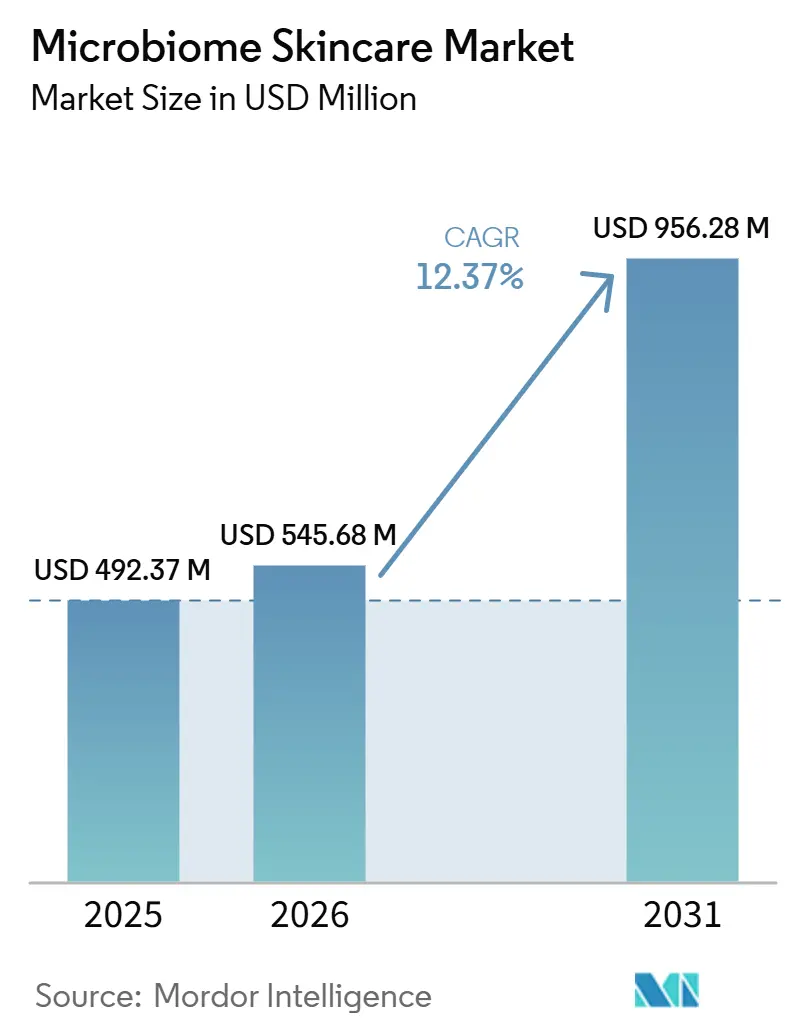
The microbiome skincare market size was valued at USD 492.4 million in 2025 and estimated to grow from USD 545.7 million in 2026 to reach USD 956.3 million by 2031, at a CAGR of 11.87% during the forecast period (2026-2031). The microbiome skincare market is moving beyond basic hydration claims as consumers look for products that support the skin barrier and its microbial balance. Demand is strongest where clinical positioning, pharmacy access, and consumer familiarity with sensitive-skin care are already established. Product developers are also shifting attention from live cultures toward prebiotics and postbiotics because these ingredients can be more stable in cosmetic formulations. This change gives suppliers of proprietary fermentation-derived ingredients a larger role in product differentiation. Regulatory requirements for claims and ingredient safety remain uneven across countries, which raises the cost of building a credible microbiome skincare market portfolio.
Key Report Takeaways
- By product type, moisturizers and creams held 43.29% of the microbiome skincare market share in 2025, while serums in the microbiome skincare market are forecast to grow at a 13.87% CAGR through 2031.
- By ingredient type, probiotics accounted for 43.29% of the microbiome skincare market share in 2025, while prebiotics in the microbiome skincare market are forecast to grow at a 14.02% CAGR through 2031.
- By distribution channel, pharmacies and drug stores held 53.49% of the microbiome skincare market in 2025, while online retail is forecast to grow at a 13.87% CAGR through 2031.
- By geography, North America held 36.59% of the microbiome skincare market in 2025, while Asia-Pacific is forecast to grow at a 13.68% CAGR through 2031.
Note: Market size and forecast figures in this report are generated using Mordor Intelligence’s proprietary estimation framework, updated with the latest available data and insights as of January 2026.
Market Trends and Insights
Drivers Impact Analysis of Microbiome Skincare Market*
| Driver | (~) % Impact on CAGR Forecasts | Geographic Relevance | Impact Timeline |
|---|---|---|---|
| Growing Consumer Awareness of Skin Microbiome Health | +2.5% | Global, concentrated in North America & Western Europe | Short term (≤ 2 years) |
| Rising Prevalence of Skin Conditions | +2.2% | Global, highest intensity in APAC and MEA | Short to Medium term (1–3 years) |
| Expanding Demand for Clean and Gentle Beauty Products | +2.0% | North America & EU core, spill-over to APAC | Medium term (2–4 years) |
| Growing Preference for Prebiotic, Probiotic, and Postbiotic Ingredients | +1.8% | Global | Medium term (2–4 years) |
| Increasing Demand for Dermatology-Inspired Skincare Solutions | +1.5% | North America, Europe, South Korea, Japan | Medium to Long term (3–5 years) |
| Increasing Scientific Research on the Gut–Skin and Skin Microbiome Axis | +1.3% | Global, with research concentration in EU and APAC | Long term (≥ 4 years) |
| Source: Mordor Intelligence | |||
Growing Consumer Awareness of Skin Microbiome Health
Consumer awareness of the skin microbiome now reaches beyond early adopters and is shaping purchase decisions across more age groups. The microbiome skincare market benefits when consumers understand terms such as microbiome balance and skin flora as part of everyday skin care. Social commerce has accelerated this education in South Korea, China, and the United States, although product claims still need clear support. People who see benefits from a product are more likely to repeat a purchase and share their experience with others. This pattern can strengthen demand for brands that explain ingredients and routine use in plain language. The microbiome skincare market therefore has an incentive to make scientific concepts understandable without overstating cosmetic outcomes.
Rising Prevalence of Skin Conditions
Atopic dermatitis, rosacea, acne, and skin sensitivity lead many consumers to consider gentler formulations and pharmacy-led care. A 2026 review reported that atopic dermatitis affects 15% to 30% of children globally, while Staphylococcus aureus colonizes the skin of 60% to 100% of people with atopic dermatitis and 5% to 30% of healthy individuals[1]. These findings support interest in approaches that protect the barrier and reduce disruption to the resident microbiota. The microbiome skincare market can gain from dermatologist and pharmacist engagement when products are presented as cosmetic support rather than as substitutes for medical treatment. Clinical studies of microbiome-based therapeutics have also increased attention to the biology behind inflammatory skin conditions. That attention may increase demand for evidence-backed cosmetic products in professional recommendation channels.
Expanding Demand for Clean and Gentle Beauty Products
Interest in clean and gentle beauty has moved consumer attention away from harsh cleansing systems, strong fragrances, and poorly explained ingredient lists. The microbiome skincare market fits this preference when brands connect mild formulas with barrier care and responsible testing. A microbiome-friendly claim can be more meaningful than a simple free-from claim if the evidence behind it is clear. European product requirements make product safety assessment and claim substantiation important for brands that sell across the region. This environment favors companies that can document their formulation choices and testing approach. A 2025 review also described microbiome-targeted topical approaches as complementary to barrier-repair formulations.
Growing Preference for Prebiotic, Probiotic, and Postbiotic Ingredients
Consumers increasingly distinguish between prebiotics, probiotics, and postbiotics instead of treating them as interchangeable labels. Prebiotics in the microbiome skincare market support beneficial resident microorganisms, probiotics introduce live or inactivated microorganisms, and postbiotics use fermentation-derived components. The microbiome skincare market is giving more attention to postbiotics because they can remain stable without cold-chain distribution. A 2026 study found that flaxseed and garlic-derived prebiotics selectively inhibited Staphylococcus aureus while promoting Staphylococcus epidermidis under the study conditions. This research supports more precise ingredient development, although cosmetic claims must match the available evidence. Ingredient suppliers with validated proprietary materials can therefore become important partners for consumer brands.
Restraints Impact Analysis of Microbiome Skincare Market*
| Restraint | (~) % Impact on CAGR Forecasts | Geographic Relevance | Impact Timeline |
|---|---|---|---|
| High Research and Product Development Costs | -0.8% | Global, most acute for SMEs in North America & EU | Medium term (2–4 years) |
| Challenges in Maintaining Probiotic Stability | -0.7% | Global, especially APAC tropical markets | Short to Medium term (1–3 years) |
| Competition from Alternative Skincare Products | -0.6% | North America, Europe | Medium term (2–4 years) |
| Manufacturing and Formulation Complexity | -0.5% | Global | Long term (≥ 4 years) |
| Source: Mordor Intelligence | |||
High Research and Product Development Costs
A clinically supported microbiome skincare formula requires more work than a standard cosmetic formula. Brands may need microbiome profiling, ingredient-specific efficacy testing, and stability checks at different temperatures and pH levels. These requirements can be difficult for smaller companies to finance. Beiersdorf integrated skin microbiome biotech S-Biomedic in 2022 and continues to report investments in skin research, which shows the resources needed to build a science-led portfolio. The result can be a split between products with substantial evidence and products that rely mainly on familiar ingredient names. The microbiome skincare market may become more concentrated among brands that can support their claims with reliable documentation.
Challenges in Maintaining Probiotic Stability
Live probiotic organisms can be affected by heat, ultraviolet exposure, pH changes, and preservative systems used in cosmetics. A formula may therefore have lower biological activity when it reaches the consumer than it had at production. The issue is more difficult in humid tropical markets where storage and transport conditions vary across retail networks. The microbiome skincare market has responded by using postbiotics and freeze-dried probiotic formats. These options can improve stability but add manufacturing cost and may require portfolio-wide reformulation. Brands that address stability at scale can establish a practical advantage over products using less differentiated probiotic extracts.
*Our forecasts treat driver/restraint impacts as directional, not additive. The impact forecasts reflect baseline growth, mix effects, and variable interactions.
Microbiome Skincare Market Segment Analysis
By Product Type, Moisturizers Lead While Serums Support Premium Product Development
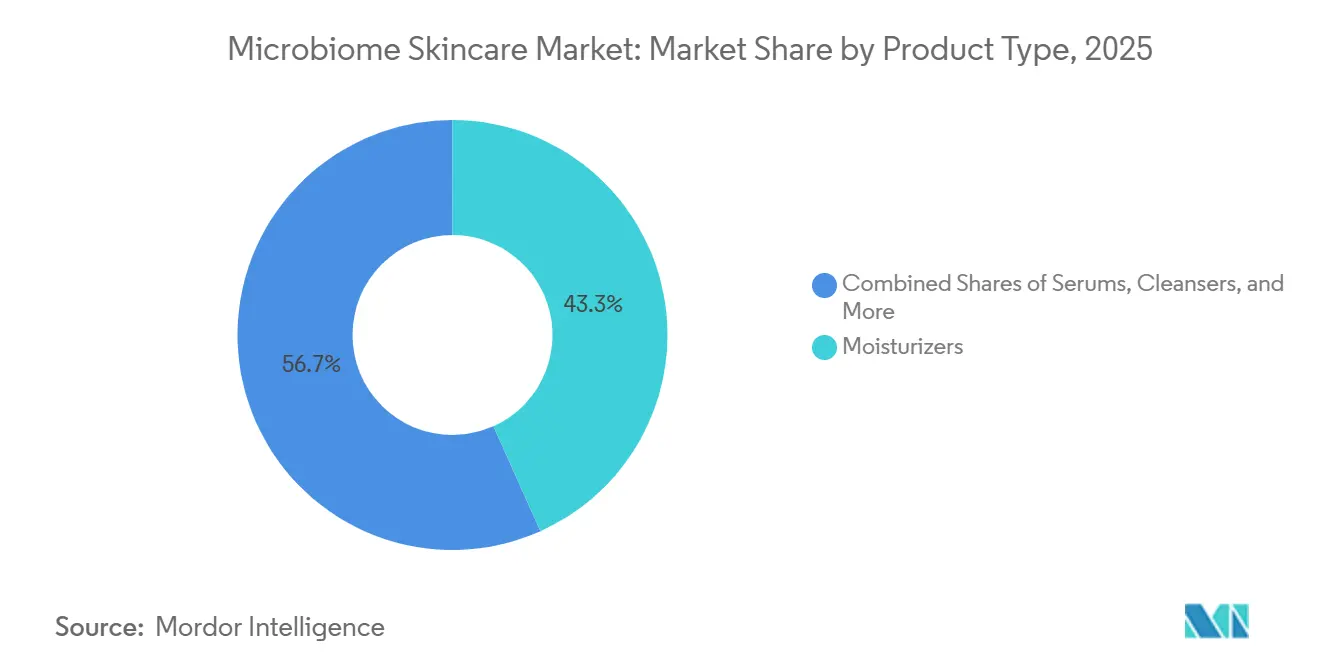
Moisturizers and creams held 43.29% of the microbiome skincare market size in 2025. Their leading position reflects the established habit of daily hydration and the ease of adding prebiotic or postbiotic ingredients to a familiar format. These products can introduce microbiome-oriented routines at a more accessible price point. Cleansers remain important because cleansing is the first regular point of contact between a product and the skin microbiota. Consumers seeking gentle cleansers may pay more for formulas that explain how they protect the barrier. Masks are a smaller format, but they give brands a way to communicate concentrated ingredient delivery and visible routine benefits. The others category includes targeted treatments, leave-on products, and patches with concentrated active ingredients.
Serums in the microbiome skincare market are forecast to grow at a 13.87% CAGR from 2026 to 2031. This format can carry higher concentrations of postbiotic actives without the cold-chain requirements associated with some live cultures. The microbiome skincare industry uses serums to support targeted routines for concerns such as sensitivity, uneven texture, and barrier disruption. Evidence on selective prebiotic activity provides a scientific basis for carefully framed microbiome-related product development. Consumers who add a serum to a routine may also purchase complementary cleansers and moisturizers. Brands with a connected routine can therefore support repeat purchases across several product types.

By Ingredient Type, Probiotics Lead While Prebiotics Gain Ground
Probiotics accounted for 43.29% of the microbiome skincare market size in 2025. Their position reflects years of consumer exposure to the idea of beneficial bacteria in health and skin care. Many consumer products use inactivated materials rather than live strains, which makes formulation and safety management more practical. Synbiotics combine probiotic and prebiotic components and are generally positioned at the premium end of the category. They allow brands to describe both the addition of beneficial organisms and the conditions intended to support them. The others category includes postbiotics and biosurfactants that give formulators alternatives to standard probiotic claims. These alternatives are drawing attention as brands seek stable ingredients with a clearer route to differentiated product performance.
Prebiotics in the microbiome skincare market are forecast to grow at a 14.02% CAGR from 2026 to 2031, the highest rate among ingredient types. They may offer more consistent cosmetic formulation outcomes because they are designed to support the existing skin ecosystem rather than establish introduced organisms. The microbiome skincare industry is also responding to research that links the gut microbiota and skin biology. A May 2026 study examined how gut microbiota-driven changes in bile acids affected keratinocyte lipid metabolism in psoriasis through FXR-NQO1 signaling. This research expands scientific understanding of the gut-skin axis, but topical cosmetic products should not imply therapeutic outcomes from those findings. Prebiotic and postbiotic ingredient programs remain most credible when they are paired with product-specific safety and substantiation work.
By Distribution Channel, Pharmacies Lead While Online Retail Extends Access
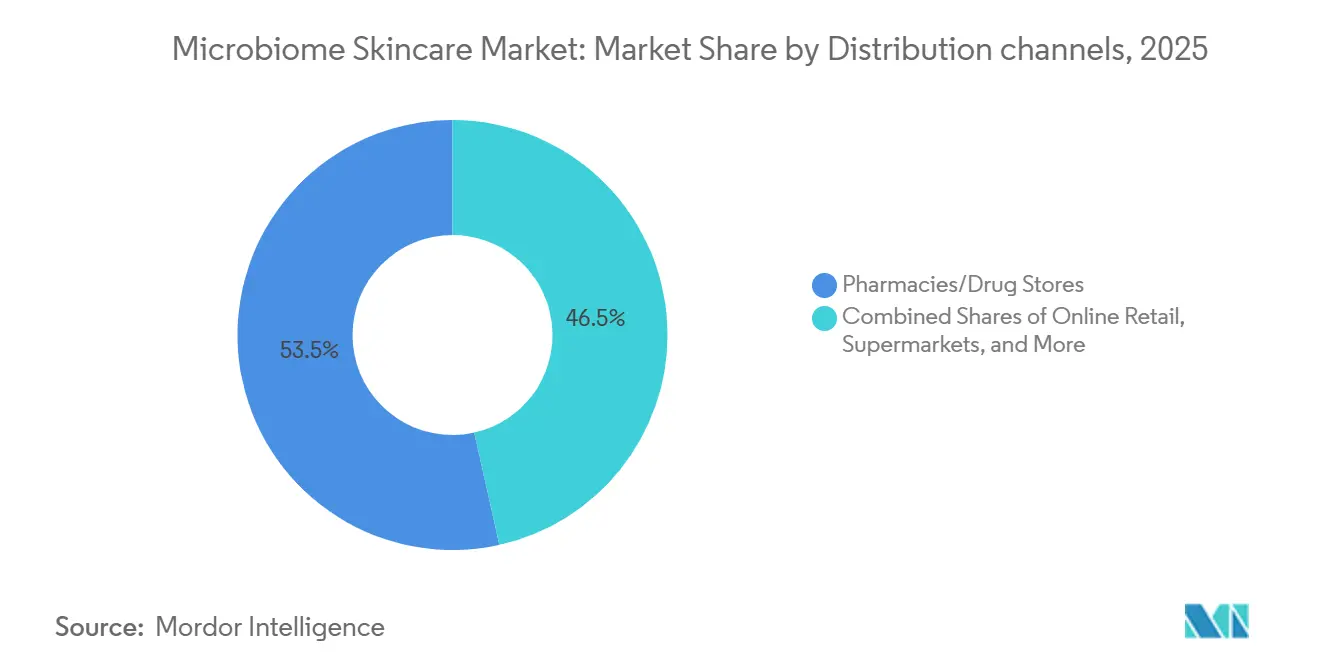
Pharmacies and drug stores accounted for 53.5% of the microbiome skincare market size in 2025. Their position reflects the clinical framing often used for microbiome-oriented products, particularly among consumers with acne, eczema, rosacea, or sensitive skin. Pharmacist recommendations can add confidence when shoppers are evaluating unfamiliar ingredients. Supermarkets and hypermarkets serve more price-sensitive buyers and support broader product availability. Specialty stores attract consumers seeking curated brands, detailed ingredient information, and premium product formats. In June 2025, Bausch Health Companies and YUN NV partnered to introduce YUN Probiotherapy products in Poland through pharmaceutical retail channels[2]. The move showed how pharmacy networks can support wider access to microbiome-oriented skin care.
Online retail is forecast to grow at a 13.87% CAGR from 2026 to 2031. Digital channels give brands more space to explain ingredients, routines, and expected cosmetic benefits than a store shelf can provide. They also make recurring delivery more practical for products designed for daily use. Direct-to-consumer businesses can use education content to build repeat purchases without depending solely on physical retail. The microbiome skincare market can benefit when online information is clear and does not overstate medical relevance. Personalization tools based on skin data may strengthen product recommendations, although privacy and claim standards remain important. Companies that connect education, routine guidance, and responsible data practices can improve the online experience.
Geography Analysis
North America Microbiome Skincare Market
North America held 36.59% of the microbiome skincare market in 2025. The region benefits from strong consumer familiarity with health-led skin care, an established dermocosmetic pharmacy channel, and a large base of science-led brands. The United States is the main source of demand, supported by consumer interest in clinical evidence and sensitive-skin products. Canada adds demand through pharmacy and specialty retail, while Mexico offers growth through expanding pharmacy-distributed skin care. The region also benefits from clinical research that has increased awareness of the role of the microbiome in inflammatory skin conditions.
Europe Microbiome Skincare Market
Europe is the second-largest regional block in the microbiome skincare market. Germany, France, the United Kingdom, and the Benelux countries serve as important innovation and retail centers. France’s dermocosmetic tradition gives brands a strong foundation for combining cosmetic formulation with pharmacy distribution. European requirements for cosmetic safety and substantiated claims place more scrutiny on weak microbiome-related messaging. This supports companies that can document ingredient origin, testing, and product safety. The region also gives postbiotics and fermentate formats an opportunity because these formats can be more stable than live probiotics in cosmetic systems.
APAC, South America and MEA Microbiome Skincare Market
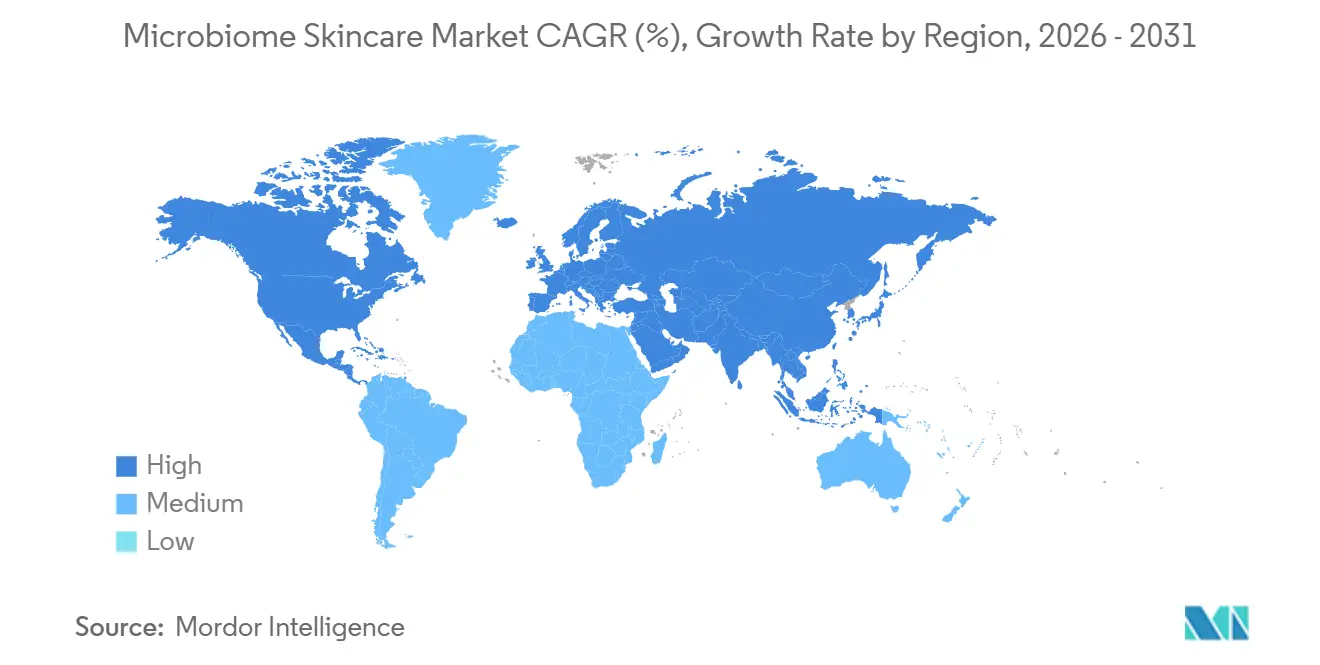
Asia-Pacific is forecast to grow at a 13.68% CAGR from 2026 to 2031. South Korea supports product innovation, while China and Southeast Asia expand the consumer base for science-led beauty products. Japan has an aging population and sustained demand for products addressing sensitivity and barrier disruption. Vietnam, Indonesia, and Thailand offer expanding opportunities where pharmacy investment can improve product availability. South America and the Middle East and Africa have smaller current positions in the microbiome skincare market. Brazil and the United Arab Emirates are key entry points because premium beauty demand supports early adoption of differentiated formulations.
Competitive Landscape
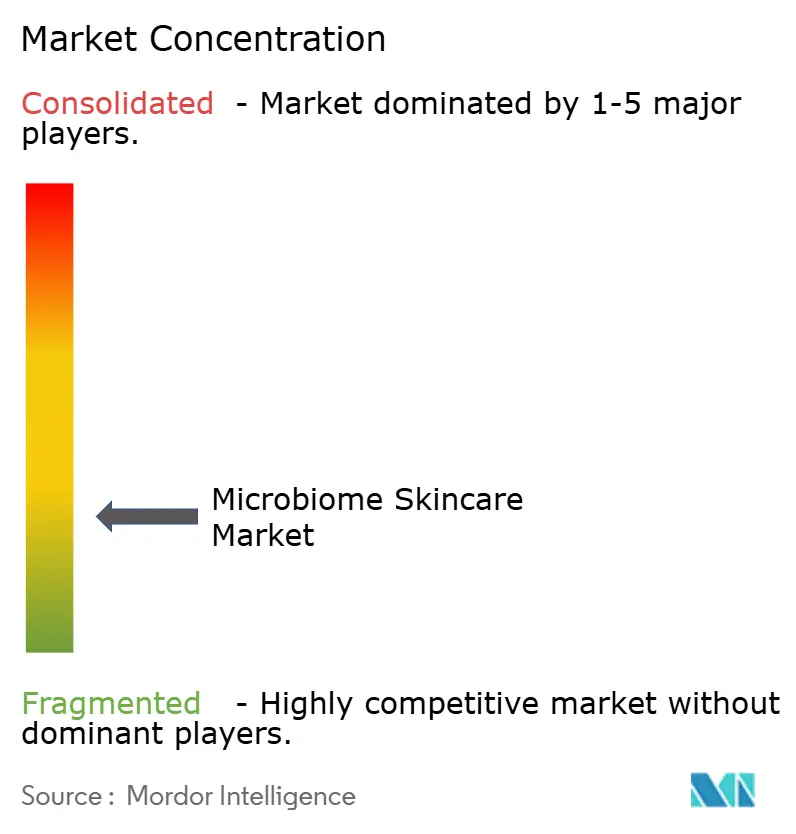
The microbiome skincare market has a fragmented concentration, which is consistent with a fragmented field where no single company has broad pricing power. Large consumer goods companies including L’Oréal, Unilever, Estée Lauder, Procter & Gamble, and Beiersdorf compete through portfolio depth, research resources, and global distribution. Beiersdorf continues to work with S-Biomedic and university partners on skin microbiome research in acne and barrier function. Amorepacific and Shiseido provide a strong Asia-Pacific presence, while Coty, Pierre Fabre, and NAOS operate at the premium dermocosmetic end of the category. Specialist brands such as TULA Life, Glowbiotics, Esse Skincare, Biossance, Codex Labs, and Eminence Organic compete through direct relationships with consumers, ingredient transparency, and specialized formats.
The microbiome skincare market has room for brands that pair credible clinical data with prices that are accessible to a wider consumer group. Large companies often concentrate on premium portfolios, while many specialists operate through narrower distribution networks. Cosmax’s collaboration with HelloBiome illustrates interest in combining skin microbiome analysis with customized formulation approaches. Ingredient and delivery patents are becoming more important as companies seek to protect distinctive prebiotic and postbiotic technologies. AOBiome received a composition-of-matter patent for its ammonia-oxidizing bacterial strain B244, although the company’s clinical-stage biologic work is outside the core consumer cosmetics category. Consumer brands that use probiotic language without explaining whether they use live cultures or lysates may face greater scrutiny as buyers become more informed.
Competitive advantage in the microbiome skincare market depends on science, formulation quality, and channel fit rather than on scale alone. Beiersdorf reported that its Derma division, including Eucerin and Aquaphor, achieved 11.7% organic sales growth in 2025 and EUR 1.5 billion in nominal sales[3]. The company is also focusing its 2026 and 2027 strategy on face care across China, the United States, India, Japan, and Brazil. Bausch Health and YUN NV used pharmacy distribution in Poland to introduce a live-probiotic acne-care range. These actions show the importance of distribution partnerships and research-backed positioning in a fragmented category.
Microbiome Skincare Industry Leaders
-
L’Oréal S.A.
-
Unilever PLC
-
The Estée Lauder Companies Inc.
-
Procter & Gamble Company
-
Amorepacific Corporation
- *Disclaimer: Major Players sorted in no particular order
Microbiome Skincare Market Companies Covered in this Report
- L’Oréal S.A.
- Unilever PLC
- The Estée Lauder Companies Inc.
- Procter & Gamble Company
- Johnson & Johnson
- Beiersdorf AG
- Shiseido Company, Limited
- Amorepacific Corporation
- Coty Inc.
- Pierre Fabre Group
- NAOS
- Gallinée Ltd.
- AOBiome Therapeutics Inc.
- Azitra, Inc.
- Glowbiotics LLC
- TULA Life, Inc.
- Eminence Organic Skin Care
- Biossance
- Codex Labs Corp.
- Esse Skincare Pty. Ltd.
- Marie Veronique Inc.
- LaFlore Probiotic Skincare LLC.
- BioGaia AB
Recent Industry Developments in Microbiome Skincare Market
- June 2026: Esse Skincare upgraded its flagship Probiotic Serum by introducing a fourth live probiotic species, Bacillus coagulans, to enhance hydration, strengthen the skin barrier, and regulate inflammation. The reformulated serum, supported by 28-day clinical studies, also features upgraded refillable packaging to improve sustainability while reinforcing the company's leadership in microbiome-based skincare innovation.
- September 2025: Bausch Health launched the YUN Probiotherapy™ ACN skincare line in Poland, expanding its microbiome-based dermatology portfolio through its partnership with YUN. The product range is formulated with live probiotics to help restore the skin microbiome, targeting acne-prone skin while reinforcing the company's presence in the growing probiotic skincare market across Europe.
- August 2025: Leucine Rich Bio launched Rychbiome Microbiome Balancing Cream, India's first skin microbiome-centric healthcare product. The probiotic skincare formulation is designed to restore skin microbial balance, improve hydration, strengthen the skin barrier, and reduce redness, sensitivity, and breakouts, expanding the company's microbiome-based preventive healthcare portfolio beyond gut health.
Global Microbiome Skincare Market Report Scope
Segmentation Overview
| Serums |
| Cleansers |
| Moisturizers & Creams |
| Masks |
| Others |
| Probiotics |
| Prebiotics |
| Synbiotics |
| Others |
| Supermarkets/Hypermarkets |
| Pharmacies and Drug Stores |
| Specialty Stores |
| Online Retail Stores |
| Other Distribution Channels |
| North America | United States |
| Canada | |
| Mexico | |
| Rest of North America | |
| Europe | Germany |
| United Kingdom | |
| France | |
| Italy | |
| Spain | |
| Netherlands | |
| Sweden | |
| Poland | |
| Belgium | |
| Rest of Europe | |
| Asia-Pacific | China |
| India | |
| Japan | |
| Australia | |
| South Korea | |
| Vietnam | |
| Indonesia | |
| Thailand | |
| Singapore | |
| Rest of Asia-Pacific | |
| South America | Brazil |
| Argentina | |
| Chile | |
| Peru | |
| Colombia | |
| Rest of South America | |
| Middle East and Africa | United Arab Emirates |
| Saudi Arabia | |
| South Africa | |
| Nigeria | |
| Egypt | |
| Morocco | |
| Turkey | |
| Rest of Middle East and Africa |
| By Product Type | Serums | |
| Cleansers | ||
| Moisturizers & Creams | ||
| Masks | ||
| Others | ||
| By Ingredient Type | Probiotics | |
| Prebiotics | ||
| Synbiotics | ||
| Others | ||
| By Distribution Channels | Supermarkets/Hypermarkets | |
| Pharmacies and Drug Stores | ||
| Specialty Stores | ||
| Online Retail Stores | ||
| Other Distribution Channels | ||
| By Geography | North America | United States |
| Canada | ||
| Mexico | ||
| Rest of North America | ||
| Europe | Germany | |
| United Kingdom | ||
| France | ||
| Italy | ||
| Spain | ||
| Netherlands | ||
| Sweden | ||
| Poland | ||
| Belgium | ||
| Rest of Europe | ||
| Asia-Pacific | China | |
| India | ||
| Japan | ||
| Australia | ||
| South Korea | ||
| Vietnam | ||
| Indonesia | ||
| Thailand | ||
| Singapore | ||
| Rest of Asia-Pacific | ||
| South America | Brazil | |
| Argentina | ||
| Chile | ||
| Peru | ||
| Colombia | ||
| Rest of South America | ||
| Middle East and Africa | United Arab Emirates | |
| Saudi Arabia | ||
| South Africa | ||
| Nigeria | ||
| Egypt | ||
| Morocco | ||
| Turkey | ||
| Rest of Middle East and Africa | ||
Key Questions Answered in the Report
What is the projected value of the microbiome skincare market by 2031?
The category is forecast to reach USD 956.28 million by 2031, growing at a 11.87% CAGR from 2026.
Which product type leads microbiome-oriented skin care sales?
Moisturizers and creams led with 43.29% share in 2025 because daily hydration is a familiar entry point for consumers.
Why are postbiotics important in cosmetic formulations?
Postbiotics can offer more stable cosmetic formulation options than live probiotic cultures and may reduce cold-chain requirements.
Which sales channel is most important for microbiome skin care products?
Pharmacies and drug stores held 53.49% share in 2025, reflecting the category’s clinical and sensitive-skin positioning.