
Melanin Market Size and Share
Market Overview
| Study Period | 2021 - 2031 |
|---|---|
| Market Size (2026) | USD 176.32 Million |
| Market Size (2031) | USD 244.76 Million |
| Growth Rate (2026 - 2031) | 6.78 % |
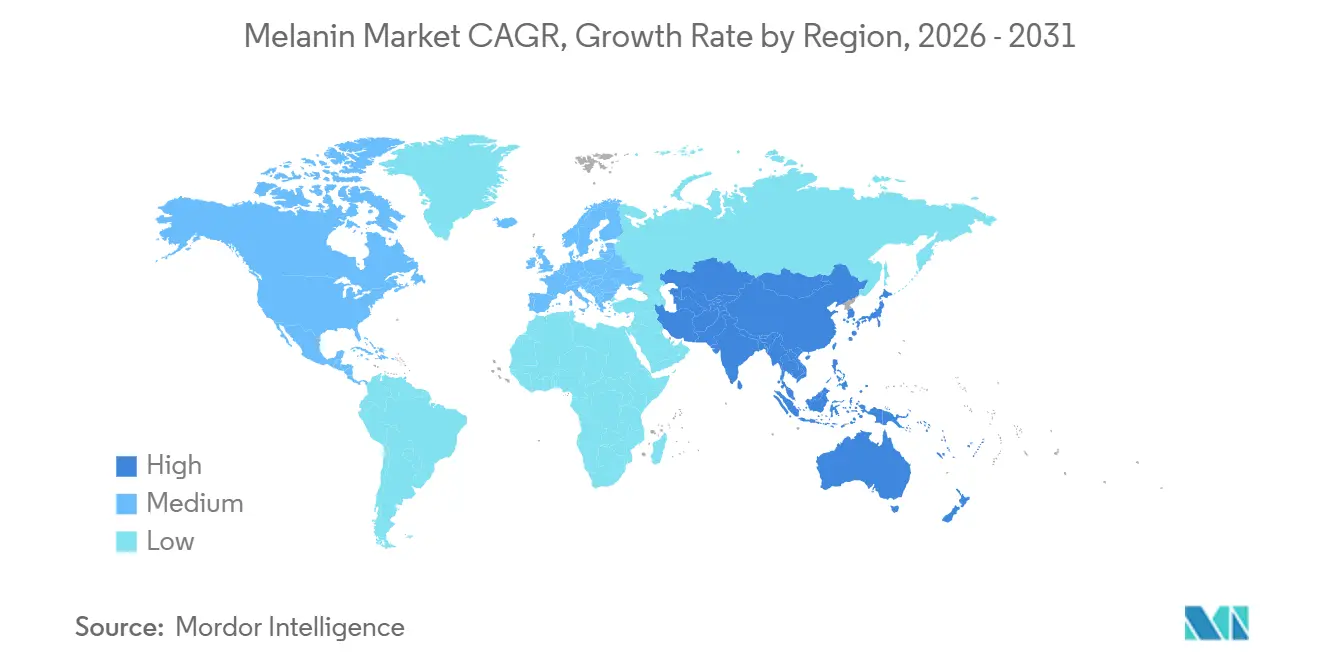
| Fastest Growing Market | Asia-Pacific |
| Largest Market | North America |
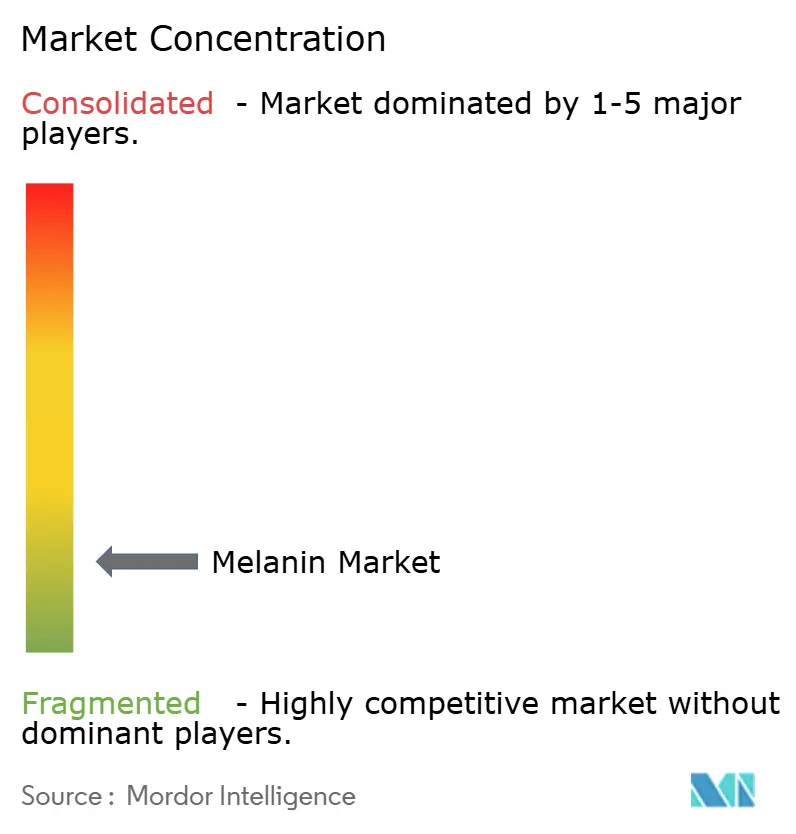
| Market Concentration | Low |
Major Players *Disclaimer: Major Players sorted in no particular order Image © Mordor Intelligence. Reuse requires attribution under CC BY 4.0. | |
Melanin Market Analysis by Mordor Intelligence
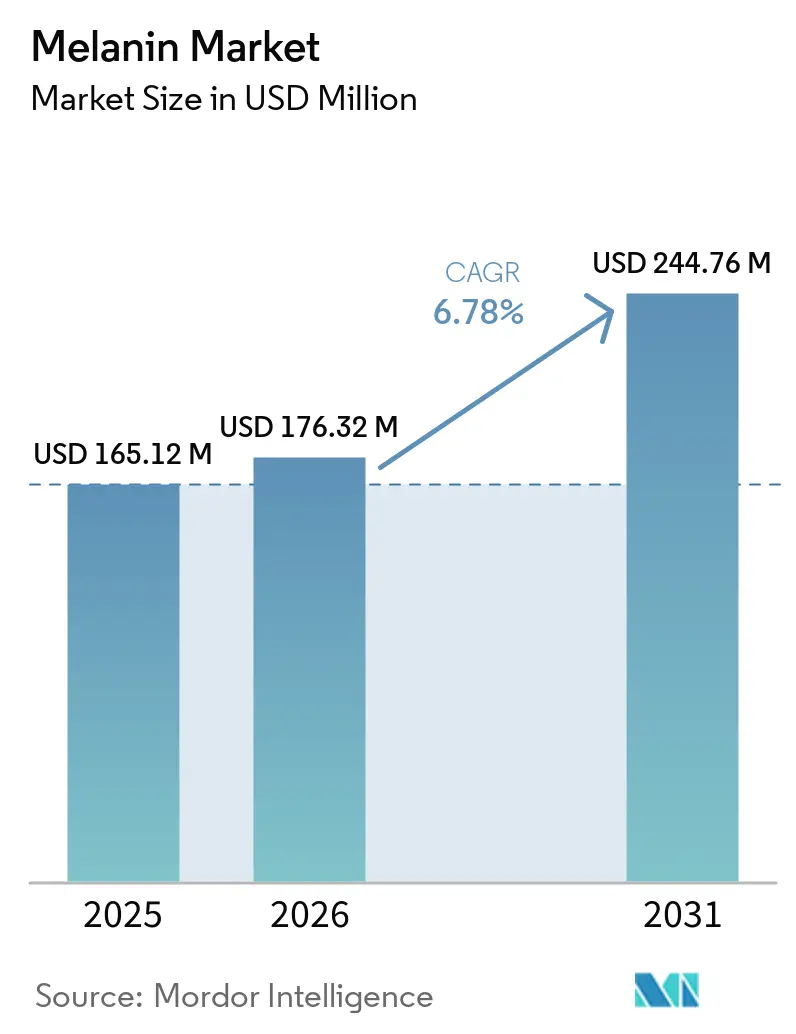
The Melanin Market size was valued at USD 165.12 million in 2025 and is estimated to grow from USD 176.32 million in 2026 to reach USD 244.76 million by 2031, at a CAGR of 6.78% during the forecast period (2026-2031). The melanin market is moving beyond its established use as a pigment toward uses in photoprotection, biomedical research, and advanced materials. Fermentation and synthetic biology are widening the supply base and allowing producers to control physical properties more consistently. Demand for broad-spectrum protection is also increasing as formulators address ultraviolet radiation and visible light exposure. Companies are seeking ingredients that can support inclusive skincare products and provide a documented safety profile. The melanin market faces a slower path in sunscreen applications because melanin nanoparticles are not listed as approved ultraviolet filters in the United States, the European Union, or ASEAN frameworks.
Key Report Takeaways
- By type, synthetic melanin held 64.67% of the melanin market share in 2025 and is projected to advance at a 7.23% CAGR through 2031.
- By application, pharmaceuticals held 44.34% of the melanin market share in 2025 and are projected to advance at a 7.45% CAGR through 2031.
- By geography, North America held 38.23% of the melanin market share in 2025, while Asia-Pacific is projected to advance at a 7.12% CAGR through 2031.
Note: Market size and forecast figures in this report are generated using Mordor Intelligence’s proprietary estimation framework, updated with the latest available data and insights as of January 2026.
Market Trends and Insights
Drivers Impact Analysis of Melanin Market*
| Driver | (~) % Impact on CAGR Forecast | Geographic Relevance | Impact Timeline |
|---|---|---|---|
| Rising Demand for Natural UV-Protective Ingredients | +2.0% | Global, concentrated in North America, Europe, and East Asia | Short term (≤ 2 years) |
| Expansion of Inclusive Skincare and Photoprotection | +1.5% | North America, Europe; spillover to South Asia and Southeast Asia | Short term (≤ 2 years) |
| Advances in Synthetic Biology and Microbial Fermentation | +1.3% | Global, with production hubs in North America, Europe, and APAC | Medium term (2–4 years) |
| Growth of Melanin-Based Biomedical Research | +1.0% | North America, East Asia (China, Japan, South Korea), Europe | Medium term (2–4 years) |
| Commercialization of Melanin Bioelectronics and Radiation-Shielding Materials | +0.8% | North America, Europe; early-stage in APAC | Long term (≥ 4 years) |
| Source: Mordor Intelligence | |||
Rising Demand for Natural UV-Protective Ingredients
Melanin absorbs wavelengths from ultraviolet-C through visible light and dissipates absorbed energy without producing a large thermal burden. This property gives the melanin market a role in products designed to address broader light exposure. Research on melanin and related nanocosmetic materials describes its use in photoprotection and hair coloration, while also noting the need for evidence on safety and performance. Visible light and long-wave ultraviolet exposure can worsen hyperpigmentation in darker skin types, which adds pressure to improve conventional sunscreen formulations. A European patent publication described water-soluble melanin produced through laccase-mediated oxidation for use as a Sun Protection Factor (SPF)-boosting additive in sunscreen compositions[1]“Cosmetic Compositions with Enhanced Sun Protection Factor and Preparation Thereof,” European Patent Office, data.epo.org. These developments support the use of melanin as a complementary ingredient rather than a replacement for approved ultraviolet filters.
Expansion of Inclusive Skincare and Photoprotection
The melanin market is supported by skincare demand that recognizes different responses to visible light across Fitzpatrick skin types III to VI. Dermatology research reports that tinted sunscreen products show a wide range of near-visible ultraviolet A and visible-light transmittance, which can affect their protection performance. Melanin has a native photoprotective role in skin, making it a relevant candidate for shade-inclusive product development. EltaMD introduced its Deep Tint line for darker skin tones in 2025, illustrating greater commercial attention to this consumer group. Avisa Myko launched a bio-based melanin sunscreen in India in January 2026, based on fungal fermentation. Tighter ingredient safety requirements in Europe also favor suppliers that can provide clear composition and safety documentation.
Advances in Synthetic Biology and Microbial Fermentation
Microbial production is changing the supply options available to the melanin market. Researchers can use 4-dihydroxy-L-phenylalanine (DOPA), 1,8-dihydroxynaphthalene, and pyomelanin pathways to make different melanin chemotypes with engineered microorganisms. Published work on a marine-associated Bacillus strain also described optimized melanin production for biomedical carbon-dot applications. Fermentation can reduce dependence on cephalopod and plant inputs that have limited supply consistency. Low-cost media derived from molasses, wheat bran, rice bran, and sugarcane bagasse can further reduce production input costs. The melanin market, therefore, has a clearer route to larger volumes and more controlled product specifications. Intellectual property around tyrosinase engineering may also help early producers protect differentiated manufacturing processes.
Growth of Melanin-Based Biomedical Research
Biomedical research gives the melanin market access to applications that need biocompatible and multifunctional materials. Natural melanin nanoparticles have been studied for antioxidant behavior, tumor accumulation, photothermal conversion, and metal-ion chelation. A 2026 review of engineered melanin nanomaterials examined their potential in tumor radiotherapy and the effect of iron or selenium doping on radioprotective and radiosensitizing behavior. Researchers also reported 99mTc-labeled melanin-targeted probes for single-photon emission computed tomography imaging of melanoma in 2025. Most published evidence remains at the in vitro and small-animal stage, so clinical translation will take time. Even so, the work expands the use case from therapy toward diagnostic imaging and radioprotection.
Restraints Impact Analysis of Melanin Market*
| Restraint | (~) % Impact on CAGR Forecast | Geographic Relevance | Impact Timeline |
|---|---|---|---|
| Complex Safety and Regulatory Qualification Requirements | -1.8% | Global; most acute in North America and Europe | Medium term (2–4 years) |
| High Extraction, Purification, and Formulation Costs | -1.5% | Global; disproportionately affects emerging market manufacturers | Short term (≤ 2 years) |
| Batch-to-Batch Variability in Bio-Derived Melanin | -0.9% | Global, most acute in pharmaceutical and research applications | Medium term (2–4 years) |
| Source: Mordor Intelligence | |||
Complex Safety and Regulatory Qualification Requirements
Regulatory qualification limits the near-term addressable applications of the melanin market. Melanin nanoparticles have shown photoprotective potential, but they are not approved as ultraviolet filters under the relevant United States, European Union, and ASEAN cosmetic rules. Formulators must therefore use them in non-SPF pathways unless the required safety and efficacy dossiers are accepted. In Europe, nanoparticle formats must meet requirements under the Registration, Evaluation, Authorisation and Restriction of Chemicals (REACH) framework and undergo relevant safety assessment before notification. Commission Regulation (EU) 2026/78 strengthened restrictions on carcinogenic, mutagenic, or reprotoxic cosmetic substances in January 2026[2]“Commission Regulation (EU) 2026/78 of 12 January 2026,” EUR-Lex, eur-lex.europa.eu. The rules encourage investment in documentation but add cost and time before commercial launch.
High Extraction, Purification, and Formulation Costs
High costs continue to restrict the use of melanin in price-sensitive products. Extraction methods can also affect molecular integrity and lead to inconsistent batches. Fermentation routes avoid some animal-source constraints, but they still require cost-effective precursors and downstream processing. These conditions favor synthetic melanin analogs such as polydopamine in applications where price and uniformity are more important than natural origin. The melanin market will need scalable purification and lower-cost substrates before its antioxidant and colorant properties gain broader adoption.
*Our forecasts treat driver/restraint impacts as directional, not additive. The impact forecasts reflect baseline growth, mix effects, and variable interactions.
Melanin Market Segment Analysis
By Type:
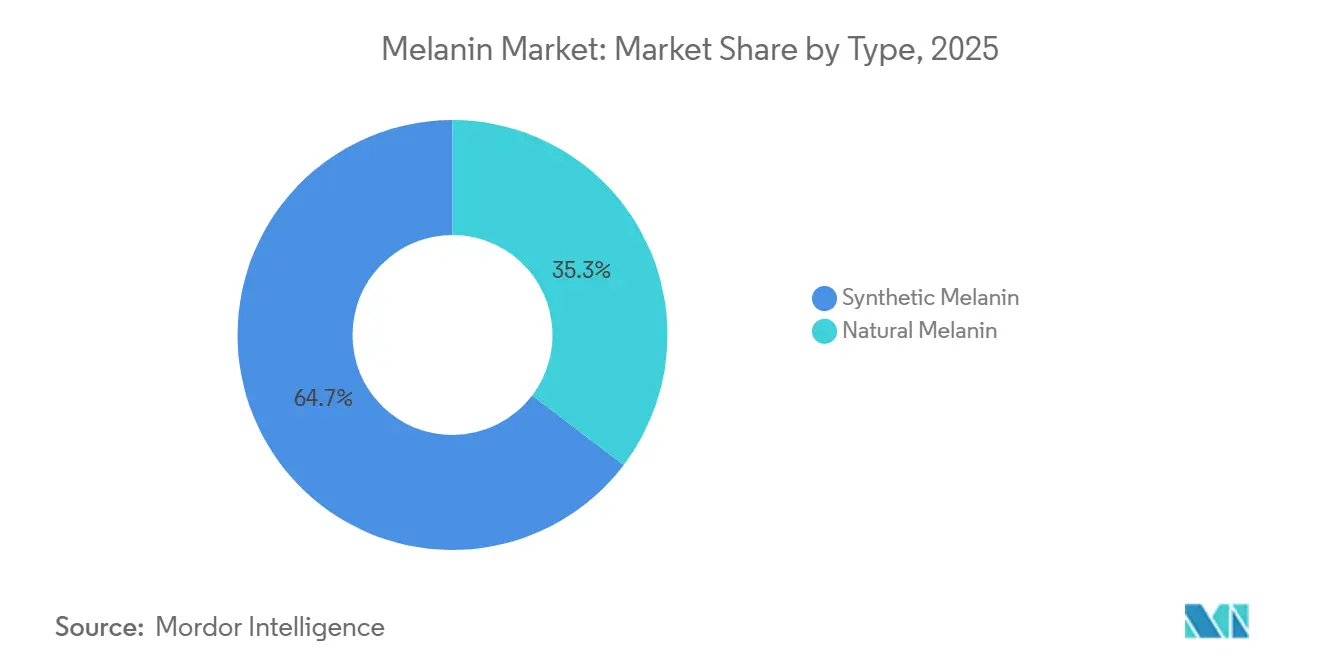
Synthetic Melanin Holds a Scale Advantage Through Functional PrecisionSynthetic melanin accounted for 64.67% of the global melanin market size in 2025 and is projected to grow at a 7.23% CAGR from 2026 to 2031. Its position reflects reproducibility advantages in regulated pharmaceutical and cosmetics applications. Polydopamine-based production and chemical DOPA polymerization can provide defined molecular-weight distributions. These methods can also provide more predictable ultraviolet attenuation profiles than natural extraction. Formulators value that control when they need consistent performance across production batches.
The segment also has a lead in advanced materials research. Molecularly engineered selenomelanin nanoparticles achieved a persistent radical concentration of 1.76 × 10¹⁸ spins g⁻¹ in a 2025 study. The study reported 100% 30-day murine survival following 6 Gy total-body gamma-ray irradiation at 7.5 mg kg⁻¹ body weight. Natural melanin remains relevant for applications that prioritize biocompatibility. Fungal eumelanin from Thermothelomyces hinnuleus SP1 demonstrated SPF values of 10.67 and human adult low Calcium high Temperature (HaCaT) cell viability from 94.9% to 98.83% in 2026 testing. Water-solubilization methods may improve the functional role of natural forms in high-value formulations.


By Application:
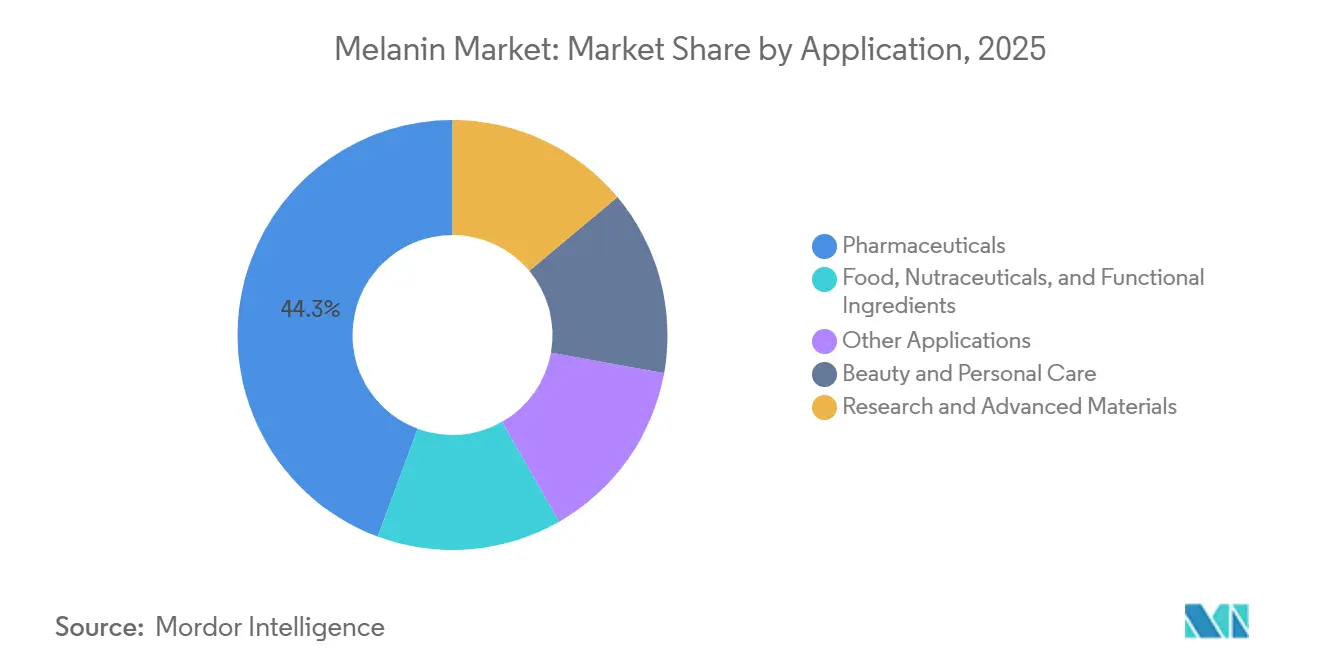
Pharmaceuticals Lead Across Current Demand and Forecast GrowthPharmaceuticals held 44.34% of the melanin market size in 2025 and are projected to advance at a 7.45% CAGR through 2031. This position reflects melanin’s biocompatibility, photothermal conversion efficiency, and metal-chelation capacity. It can support drug delivery, cancer imaging, photothermal therapy, and radioprotection research. A 2026 in vitro study reported 67.8% oxaliplatin loading efficiency for glycol chitosan-modified natural melanin nanoparticles. The result shows how melanin-based carriers can be engineered for controlled drug loading and release.
The melanin market also has applications in ocular pharmacology, where melanin-rich uveal tissue can act as a drug reservoir. A 2025 process developed at the University of Eastern Finland reduced melanin-binding screening time from 2–3 days to a few hours. Beauty and personal care remain important applications through photoprotection, hair pigmentation, and skin tone products. Research and advanced materials use melanin-like nanofibers for electromagnetic interference shielding. Food, nutraceuticals, and functional ingredients remain at an earlier stage because of cost limits. Plant melanin improved flaxseed oil microcapsule stability under ultraviolet exposure in a 2025 study.

Geography Analysis
North America Melanin Market
North America held 38.23% of the melanin market share in 2025. High pharmaceutical research spending and established personal care manufacturing support regional demand. The United States has a demand for dermatological pharmaceuticals and photoprotection cosmetics. Regulatory expectations are also raising the importance of supplier quality systems and safety records. This favors producers that can offer consistent research-grade and pharmaceutical-grade materials.
APAC Melanin Market
Asia-Pacific is projected to grow at a 7.12% CAGR from 2026 to 2031. The region supports the melanin market through pharmaceutical manufacturing in China and India, cosmetics development in South Korea and Japan, and expanding biotechnology capacity across ASEAN economies. South Korea and Japan use their cosmetics formulation ecosystems to develop pigmentation-management and ultraviolet-defense products. India’s Avisa Myko launched a fungal-fermentation melanin sunscreen in January 2026. China’s National Institutes for Food and Drug Control invited proposals for 2026 cosmetic standards focused on raw-material safety and restricted ingredients in December 2025. The proposal process can shape procurement requirements for bio-derived inputs across regional supply chains.
EMEA and South America Melanin Market
Europe has a significant position through Germany, the United Kingdom, and France. The region combines pharmaceutical innovation with demand for sustainable cosmetic ingredients. The melanin market is influenced by compliance with Regulation (EC) No. 1223/2009 and later amendments. Nordic countries show interest in circular bio-based supply chains, and Melatech ApS participates in this regional innovation group. South America and Middle East and Africa remain smaller contributors. Their demand is supported by high solar exposure and products addressing pigmentation concerns among sun-exposed populations.

Competitive Landscape
The melanin market is highly fragmented, with the top five players including Merck KGaA, Thermo Fisher Scientific Inc., Melatech ApS, Promecens, and Santa Cruz Biotechnology, Inc. Merck KGaA, Thermo Fisher Scientific Inc., Biosynth, Cayman Chemical, and MedChemExpress provide standardized research-grade and pharmaceutical-grade materials. Their distribution networks and documentation support laboratories and regulated users. Merck KGaA reported 4.0% organic sales growth in its Life Science sector in fiscal 2025. Its Process Solutions business reported 10.7% organic growth during the same period.
Specialized suppliers are pursuing production routes that can change supply economics. Insectta uses black soldier fly extraction and stated that its pilot process produced 200 times the output of conventional offerings. Its water-soluble, pH 7 melanin targets biomedical and organic electronics uses. Melsa Biotech Inc. is positioning water-soluble melanin for semiconductor, aerospace, and defense applications. These companies are moving beyond cosmetic and pharmaceutical catalog sales toward applications where electrical properties and purity carry greater value.
Patent activity shows active interest in photonic, ultraviolet-filter, and radioprotection applications. Photoprotective Technologies, Inc. has a portfolio related to melanin lenses and skincare applications. A Chinese patent application covering selenomelanin nanoparticles was filed in 2025 and follows research on biological radiation protection. Opportunities remain in water-soluble, pharmaceutical-grade melanin for clinical development. Lower-cost bio-derived materials for food and nutraceutical uses also remain underdeveloped because their cost structure has not matched that of synthetic antioxidants. The competitive picture, therefore, combines large catalog distributors with smaller firms focused on differentiated production and high-specification applications.
Melanin Industry Leaders
Merck KGaA
Thermo Fisher Scientific Inc.
Melatech ApS
Promecens
Santa Cruz Biotechnology, Inc.
- *Disclaimer: Major Players sorted in no particular order
Melanin Market Companies Covered in this Report
- Avisa Myko
- Biosynth
- Cayman Chemical
- Cephalosource
- Insectta
- MedChemExpress
- Melatech ApS
- Melsa Biotech Inc.
- Merck KGaA
- Oxyco
- Photoprotective Technologies, Inc.
- Promecens
- Santa Cruz Biotechnology, Inc.
- SimSon Pharma Limited
- Thermo Fisher Scientific Inc.

Recent Industry Developments in Melanin Market
- August 2026: Dr. Vanita Rattan Skincare launched T-Zincable SPF50, a matte-tinted mineral sunscreen specifically formulated for melanin-rich skin tones. The launch reflects growing demand for sun-protection products designed around the specific pigmentation characteristics and needs of melanin-rich skin.
- June 2026: MedX Health Corp. launched SkinSecure, a cloud-based platform that uses multispectral imaging to map melanin, collagen, and hemoglobin in living skin. The technology supports more precise measurement of melanin in clinical trials and skin research, strengthening applications for melanin assessment and pigmentation-related product development.


Global Melanin Market Report Scope
Melanin is a naturally occurring pigment produced by living organisms that contributes to coloration and provides protection against ultraviolet radiation. Its unique light-absorbing, antioxidant, and functional properties have generated interest in applications spanning healthcare, personal care, food-related formulations, and advanced materials.
The Melanin Market is segmented by type, application, and geography. By type, the market is segmented into synthetic melanin and natural melanin. By application, the market is segmented into pharmaceuticals, beauty and personal care, research and advanced materials, food, nutraceuticals, and functional ingredients, and other applications. The report also covers the market size and forecasts for melanin in 15 countries across major regions. For each segment, the market sizing and forecasts have been done on the basis of value (USD).
| Synthetic Melanin |
| Natural Melanin |
| Pharmaceuticals |
| Beauty and Personal Care |
| Research and Advanced Materials |
| Food, Nutraceuticals, and Functional Ingredients |
| Other Applications |
| Asia-Pacific | China |
| India | |
| Japan | |
| South Korea | |
| ASEAN Countries | |
| Rest of Asia-Pacific | |
| North America | United States |
| Canada | |
| Mexico | |
| Europe | Germany |
| United Kingdom | |
| France | |
| Italy | |
| NORDIC Countries | |
| Rest of Europe | |
| South America | Brazil |
| Argentina | |
| Rest of South America | |
| Middle East and Africa | Saudi Arabia |
| South Africa | |
| Rest of Middle East and Africa |
| By Type | Synthetic Melanin | |
| Natural Melanin | ||
| By Application | Pharmaceuticals | |
| Beauty and Personal Care | ||
| Research and Advanced Materials | ||
| Food, Nutraceuticals, and Functional Ingredients | ||
| Other Applications | ||
| By Geography | Asia-Pacific | China |
| India | ||
| Japan | ||
| South Korea | ||
| ASEAN Countries | ||
| Rest of Asia-Pacific | ||
| North America | United States | |
| Canada | ||
| Mexico | ||
| Europe | Germany | |
| United Kingdom | ||
| France | ||
| Italy | ||
| NORDIC Countries | ||
| Rest of Europe | ||
| South America | Brazil | |
| Argentina | ||
| Rest of South America | ||
| Middle East and Africa | Saudi Arabia | |
| South Africa | ||
| Rest of Middle East and Africa | ||


Key Questions Answered in the Report
What is the size of the melanin market?
The melanin market stands at USD 176.32 million in 2026 and is projected to reach USD 244.76 million by 2031.
What is driving demand for melanin products?
Demand is supported by photoprotection needs, inclusive skincare, microbial production, and biomedical research applications.
Which type led the market demand in 2025?
Synthetic melanin held 64.67% of the market share in 2025.
Which application led the market demand in 2025?
Pharmaceuticals held 44.34% of the market share in 2025.
Page last updated on:





