
Magnesium Supplements Market Size and Share
Market Overview
| Study Period | 2021 - 2031 |
|---|---|
| Market Size (2026) | USD 8.34 Billion |
| Market Size (2031) | USD 11.78 Billion |
| Growth Rate (2026 - 2031) | 7.15 % |
| Fastest Growing Market | Asia-Pacific |
| Largest Market | North America |
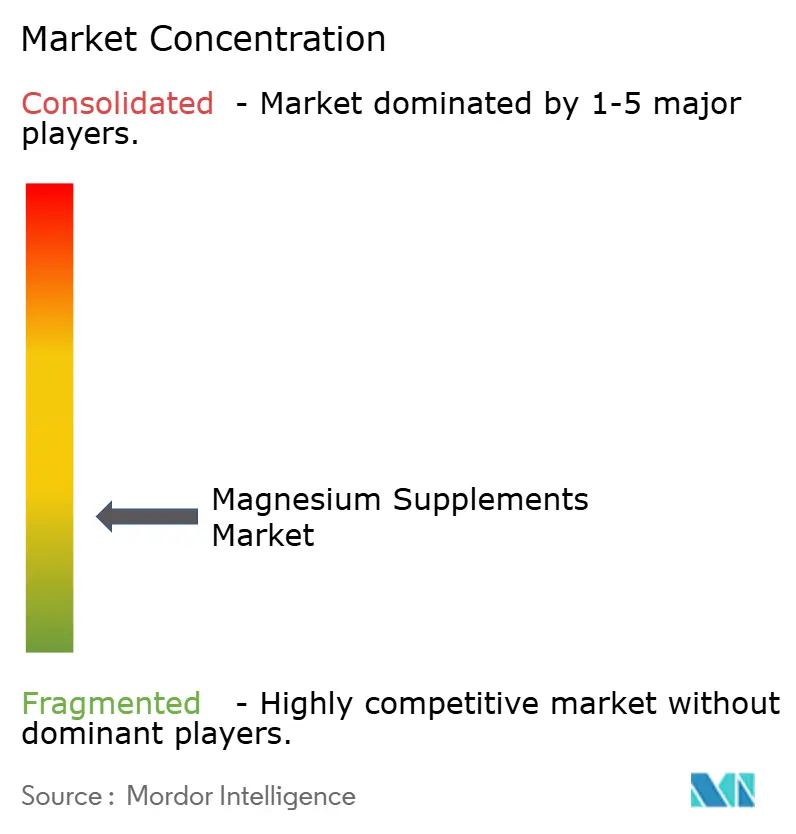
| Market Concentration | Low |
Major Players *Disclaimer: Major Players sorted in no particular order Image © Mordor Intelligence. Reuse requires attribution under CC BY 4.0. | |
Magnesium Supplements Market Analysis by Mordor Intelligence
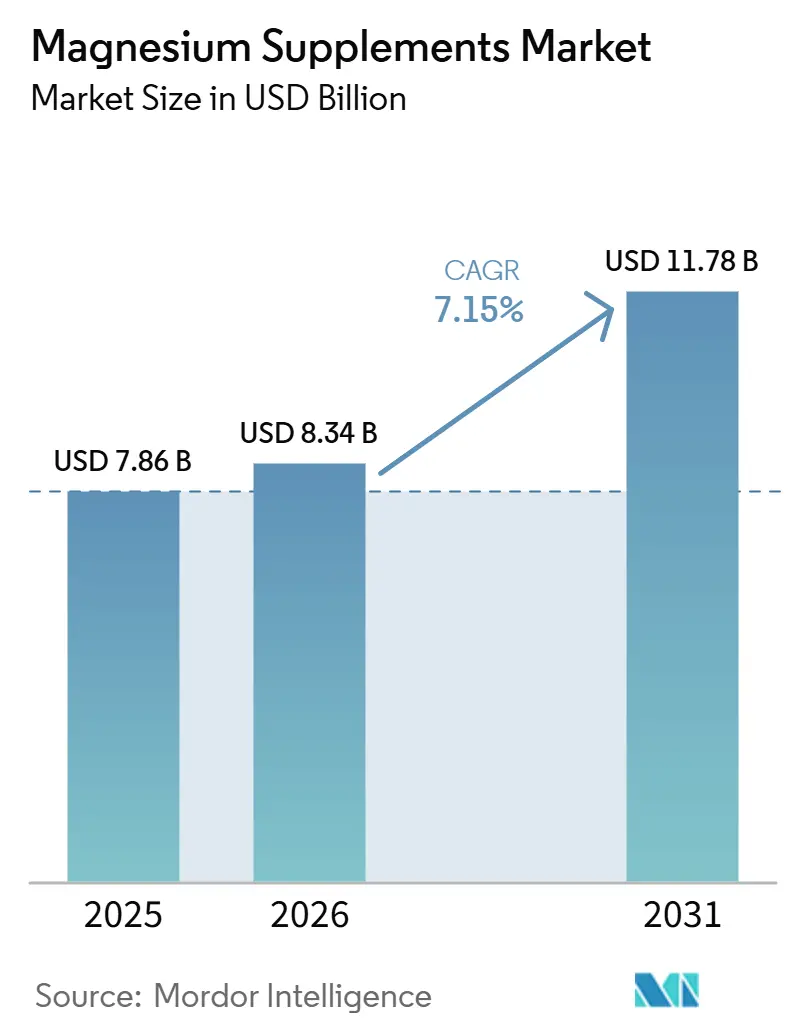
The magnesium supplements is expected to grow from USD 7.86 billion in 2025 to USD 8.34 billion in 2026 and is forecast to reach USD 11.78 billion by 2031 at 7.15% CAGR over 2026-2031. Demand is supported by continued dietary magnesium inadequacy, including the finding that 48% of Americans consumed less than their Estimated Average Requirement for magnesium. The magnesium supplements market is moving beyond basic deficiency correction as consumers seek products for sleep, stress, muscle recovery, and cognitive health. Brands are responding with chelated forms, powders, gummies, liquid products, and products that combine magnesium with other functional ingredients. Regulatory approvals for magnesium L-threonate in Europe and stronger attention to label accuracy will shape product development and market access. The magnesium supplements market also gives established brands room to use clinical evidence, quality documentation, and form-specific portfolios to distinguish their offerings.
Key Report Takeaways
- By product type, magnesium oxide held 25.62% of the magnesium supplements market share in 2025, while magnesium glycinate is forecast to grow at an 8.56% CAGR through 2031.
- By form, capsules accounted for 34.62% of the magnesium supplements market size in 2025, while powder is projected to expand at an 8.61% CAGR through 2031.
- By application, bone and muscle accounted for 29.65% of the magnesium supplements market size in 2025, while sleep support is projected to expand at an 9.67% CAGR through 2031.
- By end user, millennials held 32.42% of the magnesium supplements market share in 2025, while Gen Z is projected to grow at an 8.89% CAGR through 2031.
- By geography, North America held 36.11% of market value in 2025, while Asia-Pacific is forecast to expand at a 9.23% CAGR through 2031. CAGR through 2031.
Note: Market size and forecast figures in this report are generated using Mordor Intelligence’s proprietary estimation framework, updated with the latest available data and insights as of January 2026.
Market Trends and Insights
Drivers Impact Analysis of Magnesium Supplements Market*
| Driver | (~) % Impact on CAGR Forecast | Geographic Relevance | Impact Timeline |
|---|---|---|---|
| Rising Prevalence of Magnesium Deficiency | +2.0% | Global, with core gains in North America, Europe, and Asia-Pacific | Long term (≥ 4 years) |
| Growing Focus on Preventive Healthcare | +1.8% | North America and Europe, with Asia-Pacific emerging | Medium term (2-4 years) |
| Increasing Demand for Sleep and Stress-Management Solutions | +1.3% | North America and Europe, with spillover to Asia-Pacific and Middle East and Africa | Long term (≥ 4 years) |
| Rising Sports Nutrition and Fitness Participation | +0.9% | Global, concentrated in North America, Europe, and Australia | Medium term (2-4 years) |
| Growing Aging Population Supporing Growth | +0.7% | Japan, Germany, Italy, United States, and Australia | Long term (≥ 4 years) |
| Product Innovation and Formulation Diversification | +0.6% | Global, led by North America and Europe | Short term (≤ 2 years) |
| Source: Mordor Intelligence | |||
Rising Prevalence of Magnesium Deficiency
The rising prevalence of magnesium inadequacy is driving demand for magnesium supplements, as consumers seek to address insufficient dietary intake and support essential physiological functions. According to a 2025 review published in the National Library of Medicine, approximately 2.4 billion people, or around 31% of the global population, do not meet recommended magnesium intake levels [1]Source: National Library of Medicine, “Global Dietary Magnesium Deficiency: Prevalence, Underlying Causes, Health Consequences, and Strategic Solutions”, pubmed.ncbi.nlm.nih.gov. This widespread nutritional gap is raising awareness of magnesium’s role in muscle and nerve function, energy metabolism, bone health, and electrolyte balance, particularly as consumers become more proactive about preventive health and wellness. As a result, consumers are increasingly using supplements to bridge dietary gaps and maintain adequate magnesium levels, thereby supporting the growth of the global magnesium supplements market.
Increasing Demand for Sleep and Stress-Management Solutions
Increasing demand for sleep and stress-management solutions is supporting the growth of the magnesium supplements market as consumers increasingly seek natural products to address sleep disturbances, stress, and relaxation-related concerns. Rising work-related pressures, changing lifestyles, and growing awareness of the importance of sleep are encouraging consumers to explore nutritional supplements that support relaxation and overall well-being. Magnesium is increasingly incorporated into sleep and stress-management products, particularly formulations featuring magnesium glycinate, magnesium citrate, and other forms positioned for relaxation support. The growing preference for preventive wellness and non-pharmaceutical solutions is therefore expanding consumer interest in magnesium supplements and supporting market growth.
Rising Sports Nutrition and Fitness Participation
Rising participation in sports, fitness, and outdoor activities is driving demand for magnesium supplements as consumers increasingly seek products that support muscle function, energy metabolism, hydration, and post-exercise recovery. According to the Sports & Fitness Industry Association, 247.1 million Americans aged six and older participated in at least one sport, fitness, or outdoor activity in 2024, equivalent to 80% of the population. This represented 25.4 million more active Americans than in 2019, highlighting sustained growth in participation[2]Source: Sports & Fitness Industry Association, “SFIA’s Topline Participation Report Shows 247.1 Million Americans Were Active in 2024”, sfia.org. The expanding base of professional athletes, recreational exercisers, and fitness-focused consumers is increasing demand for sports nutrition products, including magnesium supplements, thereby supporting market growth.
Growing Aging Population Supporting Growth
The growing aging population is supporting the growth of the magnesium supplements market as older adults increasingly focus on maintaining muscle function, bone health, mobility, and overall nutritional well-being. According to the World Health Organization, by 2030, approximately 1 in 6 people worldwide will be aged 60 years or older, highlighting the accelerating shift toward an aging global population[3]Source: World Health Organization, “Ageing and health”, who.int. As age-related nutritional concerns and the importance of preventive health gain greater attention, demand for dietary supplements is increasing among older consumers. This demographic shift is therefore expanding the target consumer base for magnesium supplements and supporting market growth.
Restraints Impact Analysis of Magnesium Supplements Market*
| Restraint | (~) % Impact on CAGR Forecast | Geographic Relevance | Impact Timeline |
|---|---|---|---|
| Limited Consumer Awareness of Different Magnesium Forms | −0.6% | Global, most acute in Asia-Pacific and Middle East and Africa | Medium term (2–4 years) |
| Side Effects Associated with Excessive Consumption | −0.4% | Global | Short term (≤ 2 years) |
| Competition from Magnesium-Rich Foods | -0.3% | Europe and North America, expanding globally | Long term (≥ 4 years) |
| Regulatory Variations Across Countries | -0.3% | Global | Long term (≥ 4 years) |
| Source: Mordor Intelligence | |||
Limited Consumer Awareness of Different Magnesium Forms
Limited consumer awareness of the differences between magnesium forms is restraining the growth of the magnesium supplements market by creating confusion during product selection. Magnesium supplements are available in various forms, including magnesium citrate, glycinate, oxide, malate, and chloride, which differ in absorption characteristics, applications, and consumer positioning. However, many consumers have limited knowledge of these differences and may select products based primarily on price, dosage, or brand recognition. This lack of understanding can discourage purchases, reduce confidence in premium formulations, and make it more difficult for manufacturers to communicate product differentiation, thereby limiting market growth.
Side Effects Associated with Excessive Consumption
The potential side effects associated with excessive magnesium consumption may limit market growth by raising concerns about the safety of supplementation. While magnesium supplements are generally well tolerated when consumed at recommended levels, excessive intake can result in adverse effects such as diarrhea, nausea, and abdominal discomfort. These concerns may make consumers more cautious about supplement use, particularly when selecting dosage levels or combining multiple products containing magnesium. As a result, the need for greater awareness regarding appropriate intake and potential risks may discourage some consumers from using magnesium supplements regularly, thereby restraining market expansion.
*Our forecasts treat driver/restraint impacts as directional, not additive. The impact forecasts reflect baseline growth, mix effects, and variable interactions.
Magnesium Supplements Market Segment Analysis
By Product Type:
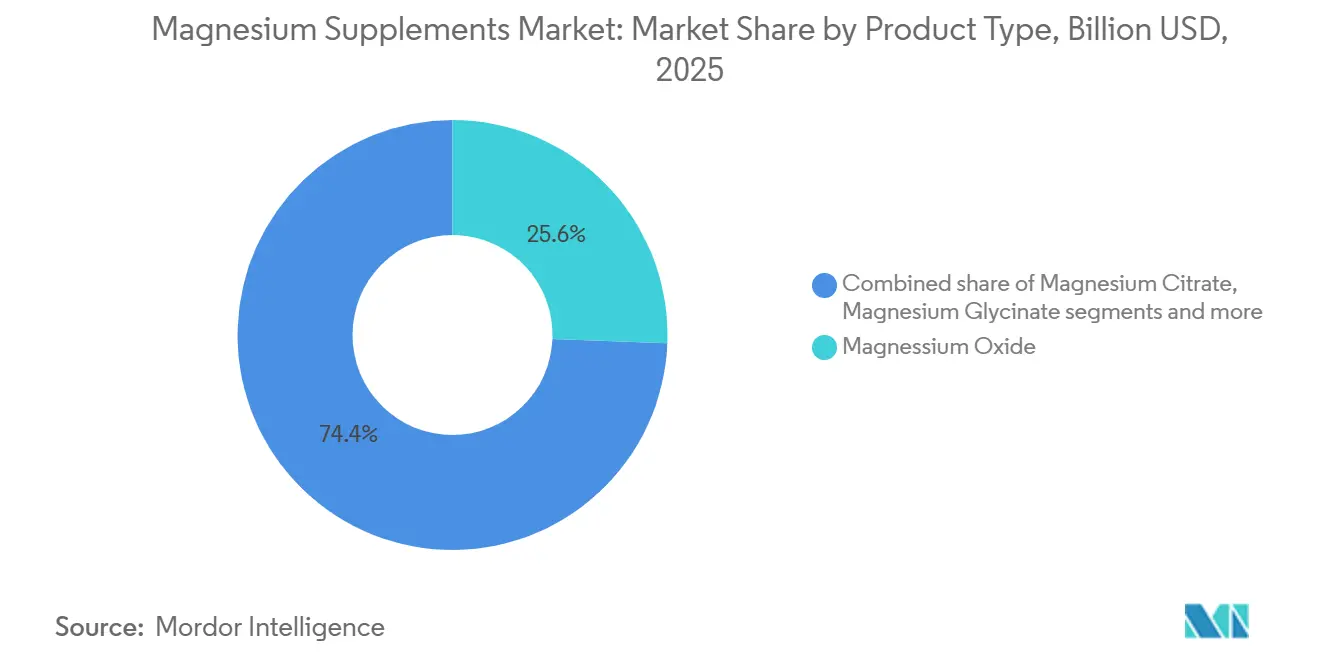
Cost Leadership Remains With Oxide While Glycinate Gains GroundMagnesium oxide held the largest share of the global magnesium supplements market, accounting for 25.62% in 2025. Its leading position is supported by its long-standing use in dietary supplements and broad consumer familiarity. Magnesium oxide is widely available across tablets and capsules, making it accessible through pharmacies, supermarkets, health stores, and online channels. Its relatively low production cost also supports its presence in mass-market and value-oriented supplement products. The ingredient is commonly positioned for general magnesium supplementation and bone and muscle health. Its established market presence and broad availability are expected to help it retain a significant share during the forecast period.
Magnesium glycinate is projected to be the fastest-growing product type, recording a CAGR of 8.56% from 2026 to 2031. Growth is being driven by increasing consumer interest in highly absorbable and well-tolerated magnesium formulations. The ingredient is particularly gaining traction among consumers seeking supplements for sleep support, relaxation, muscle recovery, and general wellness. Its premium positioning also aligns with the broader shift toward higher-quality and targeted nutritional supplements. Growing awareness of different magnesium forms is encouraging consumers to move beyond traditional magnesium oxide products.



By Form:
Capsules Lead While Powder Expands Through Active-Use OccasionsCapsules accounted for the largest share of the magnesium supplements market, representing 34.62% of the market size in 2025. Their leading position is supported by convenience, portability, and ease of consumption. Capsules also enable manufacturers to offer precise dosages across various magnesium formulations, including glycinate, citrate, and oxide. The format is widely distributed through pharmacies, health stores, supermarkets, and e-commerce platforms. Growing consumer preference for convenient daily supplementation further supports demand for capsule-based products. As a result, capsules are expected to remain the dominant form throughout the forecast period.
Powder is projected to be the fastest-growing form in the magnesium supplements market, expanding at a CAGR of 8.61% from 2026 to 2031. Growth is being supported by increasing demand for flexible dosing and convenient supplementation formats. Magnesium powders can be easily mixed with water or other beverages, appealing to consumers seeking alternatives to tablets and capsules. The format is also gaining traction among sports nutrition and wellness consumers focused on hydration, recovery, and daily supplementation.
By Application:
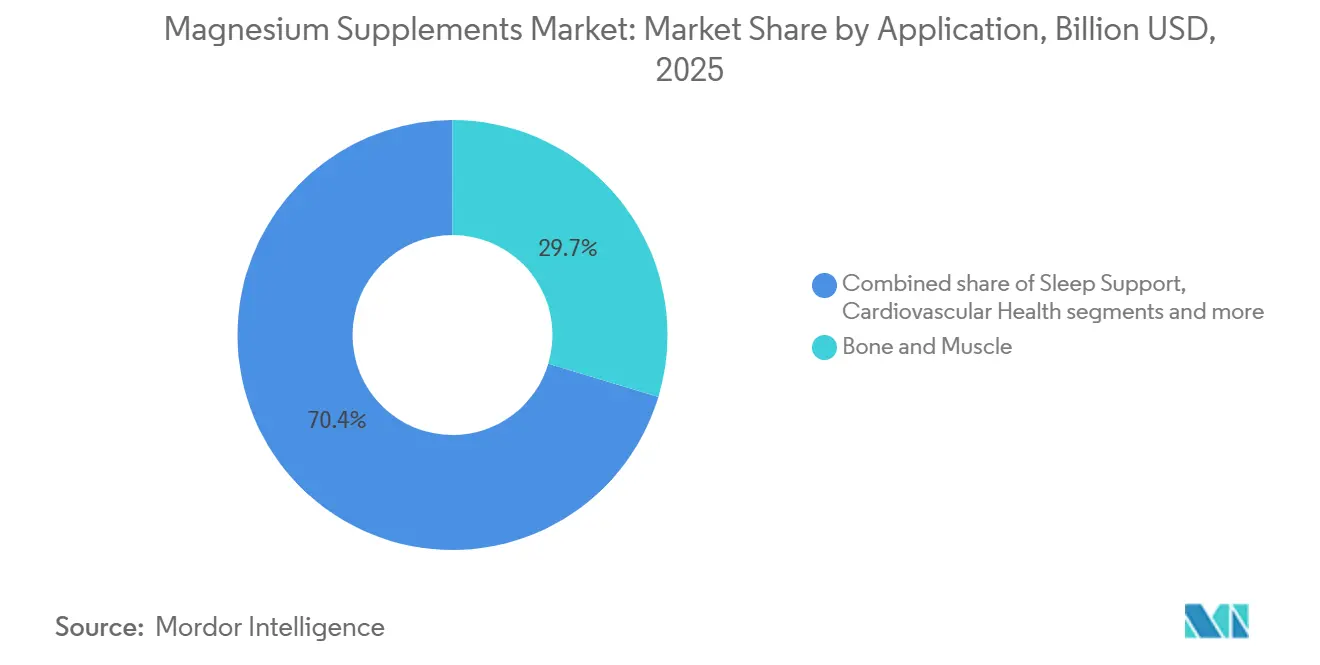
Bone and Muscle Leads While Sleep Support Grows FastestBone and muscle applications accounted for the largest share of the magnesium supplements market, representing 29.65% of the market size in 2025. This segment benefits from the essential role of magnesium in supporting muscle function, bone health, and overall physical performance. Demand is supported by consumers seeking supplements for muscle recovery, cramps, strength, and maintaining skeletal health. The growing participation in fitness, sports, and active lifestyles is further supporting the use of magnesium supplements for these applications. Consequently, bone and muscle is expected to remain the leading application segment during the forecast period.
Sleep support is projected to be the fastest-growing application in the magnesium supplements market, expanding at a CAGR of 9.67% from 2026 to 2031. Growth is being driven by rising consumer awareness of the relationship between magnesium intake, relaxation, and sleep quality. Increasing concerns related to stress, irregular sleep patterns, and demanding lifestyles are encouraging consumers to seek natural sleep-support solutions. Magnesium glycinate and other targeted formulations are increasingly positioned toward relaxation and nighttime wellness.
By End User:
Millennials Provide Scale While Gen Z Changes Product DiscoveryMillennials held the largest share of the magnesium supplements market, accounting for 32.42% of the market share in 2025. This segment benefits from strong awareness of preventive health, nutrition, and wellness products. Millennials are increasingly incorporating dietary supplements into their daily routines to support active lifestyles, stress management, sleep, and overall health. Their high engagement with e-commerce and digital health content also supports product discovery and purchase. The availability of magnesium supplements in capsules, powders, gummies, and other convenient formats further appeals to this consumer group.
Gen Z is projected to be the fastest-growing end-user segment in the magnesium supplements market, expanding at a CAGR of 8.89% from 2026 to 2031. Growth is being driven by rising interest in wellness, mental well-being, fitness, and preventive health among younger consumers. Gen Z consumers are increasingly engaging with supplement brands through social media, influencers, and digital commerce platforms. Their preference for convenient and appealing formats, including gummies, powders, and flavored products, is supporting market adoption.
Geography Analysis
North America Magnesium Supplements Market
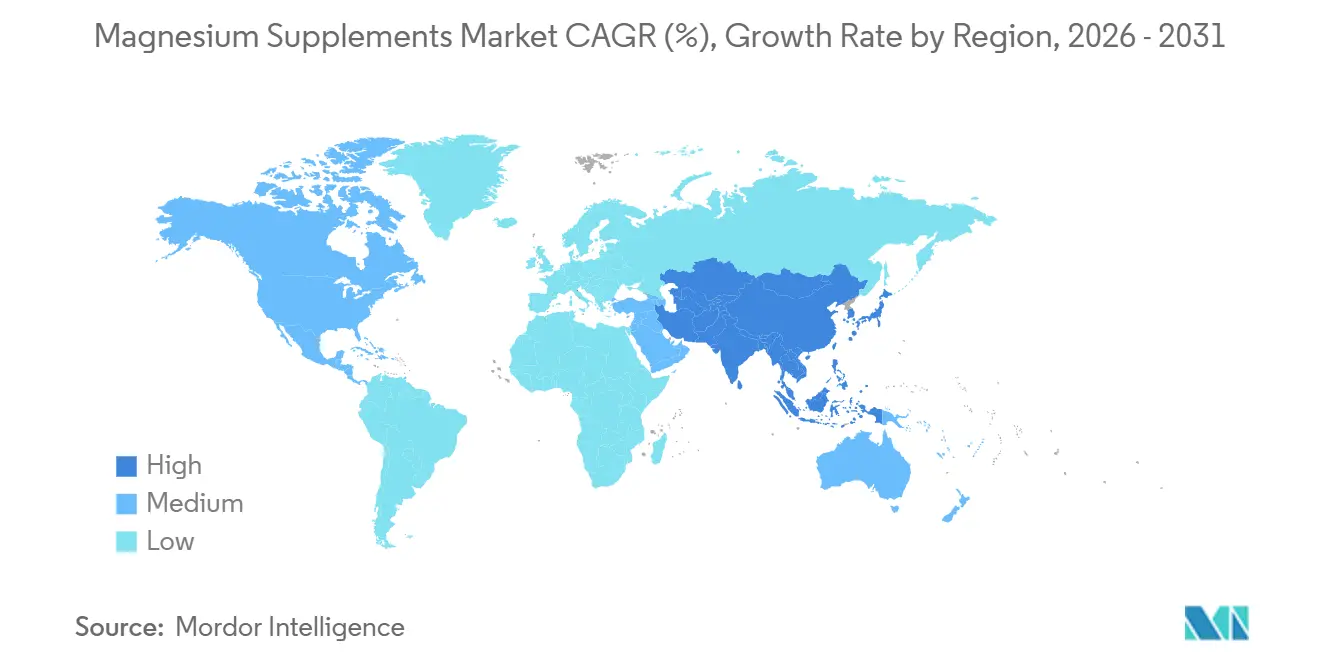
North America held the largest share of the global magnesium supplements market, accounting for 36.11% of market value in 2025. The region benefits from high consumer awareness of dietary supplements, preventive healthcare, and sports nutrition. Strong demand for products supporting muscle health, sleep, cardiovascular wellness, and cognitive health continues to support market growth. The presence of established supplement manufacturers, extensive retail networks, pharmacies, and e-commerce platforms further strengthens product accessibility. Consumers in the region also show strong interest in premium, specialized, and condition-focused magnesium formulations.
APAC Magnesium Supplements Market
Asia-Pacific is projected to be the fastest-growing regional market, expanding at a CAGR of 9.23% from 2026 to 2031. Growth is supported by rising health awareness, increasing disposable incomes, and the expanding adoption of dietary supplements across major markets such as China, Japan, India, and Australia. Growing interest in sports nutrition, sleep support, active lifestyles, and preventive healthcare is increasing demand for magnesium-based products. The expansion of e-commerce and modern retail is also improving access to international and domestic supplement brands.
EMEA and South America Magnesium Supplements Market
Europe represents a significant regional market, supported by strong health awareness, established supplement consumption, and demand for premium and clean-label products. South America is expected to benefit from rising wellness awareness and expanding retail and e-commerce distribution. The Middle East and Africa market is supported by growing interest in preventive health, fitness, and nutritional supplementation, although market penetration remains comparatively lower.

Competitive Landscape
The magnesium supplements market includes established consumer brands, specialty companies, direct-to-consumer sellers, and private-label products. Players such as Pharmavite, The Bountiful Company, NOW Foods, and Thorne HealthTech benefit from broad distribution, established brand awareness, and strong quality systems. Competition increasingly focuses on magnesium form, intended benefits, dosage clarity, delivery format, and product differentiation. Solaray’s launch of six magnesium products in January 2026 across sleep, cardiovascular health, and muscle support reflects the growing trend toward diversified product portfolios.
Ingredient technology is also becoming an important source of differentiation. Doctor’s Best’s use of Albion’s TRAACS technology in a magnesium powder highlights the role of chelated formulations and premium delivery formats. Magnesium L-threonate also holds a differentiated position due to its cognitive-health positioning. Companies investing in safety, accurate labelling, quality practices, and evidence-based communication can strengthen consumer and retailer trust.
Growth opportunities are particularly strong in sleep, stress, cognitive health, and convenient formats such as powders, gummies, and liquids. Brands that clearly communicate the benefits, tolerability, dosage, and suitability of specific magnesium forms can differentiate themselves in an increasingly crowded market. In Asia-Pacific, companies combining clinical support with strong local compliance capabilities can further strengthen their position through healthcare professionals and pharmacy channels.
Magnesium Supplements Industry Leaders
Pharmavite LLC
NOW Foods
Nested Naturals, Inc.
Solgar, Inc.
Nestlé S.A.
- *Disclaimer: Major Players sorted in no particular order
Magnesium Supplements Market Companies Covered in this Report
- Pharmavite LLC
- Nestlé S.A.
- NOW Foods
- Nested Naturals, Inc.
- Solaray (Nutraceutical International Corporation)
- Doctor's Best, Inc.
- Solgar, Inc.
- Pure Encapsulations, LLC
- Life Extension Foundation
- Thorne HealthTech, Inc.
- Natural Vitality (The Clorox Company)
- Jigsaw Health, LLC
- BioEmblem, LLC
- Balchem Corporation (Albion Minerals)
- Jungbunzlauer Suisse AG
- Fortitech, Inc.
- Magceutics, Inc.
- Swanson Health Products, Inc.
- Jarrow Formulas, Inc.
- Sundown Naturals (The Bountiful Company)

Recent Industry Developments in Magnesium Supplements Market
- July 2026: Doctor's Best launched High Absorption Magnesium Powder in Strawberry Lime flavor, featuring Albion's TRAACS-chelated magnesium lysinate glycinate technology. The launch extends the company's capsule franchise into the rapidly growing powder delivery format and targets muscle relaxation, nerve function, and sleep through both retail and online channels.
- June 2026: Unisom launched Magnesium + Ashwagandha Sleep Support Gummies, its first drug-free supplement, marking its entry from the OTC sleep-aid market into the vitamin and mineral supplement category. The move signals large consumer health companies' strategic focus on magnesium's role in the growing stress-to-sleep formulation space.
- June 2026: Amway Korea launched Nutrilite Magnesium+Relax, a stick-format product that combines 315 mg of magnesium, 200 mg of L-theanine, and vitamin B6 per serving. The product targets South Korea's rapidly growing stress-management supplement market, where co-formulation strategies that combine magnesium with functional amino acids are gaining traction.


Global Magnesium Supplements Market Report Scope
Magnesium supplements are dietary or nutritional products formulated to provide additional magnesium to the body when dietary intake may be insufficient or when higher intake is required to support normal physiological functions. The magnessium supplements market is segmented by product type, form, application, end user and geography. Based on product type, the market is segmented into magnesium oxide, magnesium citrate. magnesium glycinate, magnesium L-threonate, magnesium taurate and other product types. Based on form, the market is segmented into tablets, capsules, gummies, powder and liquid. Based on application, the market is segmented into bone and muscle, sleep support, cardiovascular health, brain and cognitive health and other applications. By geography, the market is segmented into North America, Europe, Asia-Pacific, South America, and Middle-East and Africa. For each segment, the market sizing and forecasting have been done in value terms (USD).
| Magnesium Oxide |
| Magnesium Citrate |
| Magnesium Glycinate |
| Magnesium L-Threonate |
| Magnesium Taurate |
| Other Product Types |
| Tablets |
| Capsules |
| Gummies |
| Powder |
| Liquid |
| Bone and Muscle |
| Sleep Support |
| Cardiovascular Health |
| Brain and Cognitive Health |
| Other Applications |
| Gen Alpha |
| Gen Z |
| Millennials |
| Gen X |
| Boomers |
| North America | United States |
| Canada | |
| Mexico | |
| Rest of North America | |
| Europe | Germany |
| United Kingdom | |
| Italy | |
| Spain | |
| France | |
| Belgium | |
| Poland | |
| Rest of Europe | |
| Asia-Pacific | China |
| India | |
| Japan | |
| Australia | |
| South Korea | |
| Thailand | |
| Indonesia | |
| Vietnam | |
| Rest of Asia-Pacific | |
| South America | Brazil |
| Argentina | |
| Chile | |
| Peru | |
| Rest of South America | |
| Middle East and Africa | South Africa |
| Saudi Arabia | |
| United Arab Emirates | |
| Qatar | |
| Egypt | |
| Morocco | |
| Rest of Middle East and Africa |
| By Product Type | Magnesium Oxide | |
| Magnesium Citrate | ||
| Magnesium Glycinate | ||
| Magnesium L-Threonate | ||
| Magnesium Taurate | ||
| Other Product Types | ||
| By Form | Tablets | |
| Capsules | ||
| Gummies | ||
| Powder | ||
| Liquid | ||
| By Application | Bone and Muscle | |
| Sleep Support | ||
| Cardiovascular Health | ||
| Brain and Cognitive Health | ||
| Other Applications | ||
| By End User | Gen Alpha | |
| Gen Z | ||
| Millennials | ||
| Gen X | ||
| Boomers | ||
| By Geography | North America | United States |
| Canada | ||
| Mexico | ||
| Rest of North America | ||
| Europe | Germany | |
| United Kingdom | ||
| Italy | ||
| Spain | ||
| France | ||
| Belgium | ||
| Poland | ||
| Rest of Europe | ||
| Asia-Pacific | China | |
| India | ||
| Japan | ||
| Australia | ||
| South Korea | ||
| Thailand | ||
| Indonesia | ||
| Vietnam | ||
| Rest of Asia-Pacific | ||
| South America | Brazil | |
| Argentina | ||
| Chile | ||
| Peru | ||
| Rest of South America | ||
| Middle East and Africa | South Africa | |
| Saudi Arabia | ||
| United Arab Emirates | ||
| Qatar | ||
| Egypt | ||
| Morocco | ||
| Rest of Middle East and Africa | ||


Key Questions Answered in the Report
What is driving growth in magnesium supplements?
Dietary magnesium inadequacy, sleep and stress products, preventive health demand, sports nutrition, and new delivery formats are supporting growth. The category is forecast to grow at a 7.15% CAGR through 2031.
Which magnesium form is growing fastest?
Magnesium glycinate is the fastest-growing product type, with an 8.56% CAGR projected through 2031.
Which delivery format has the strongest growth outlook?
Within the magnesium supplements market, powder is forecast to grow at an 8.61% CAGR through 2031.
What is the largest application for magnesium products?
Bone and muscle was the largest application, accounting for 29.65% of category value in 2025.
Page last updated on:





