
Luxury Handbag Market Size and Share
Market Overview
| Study Period | 2021 - 2031 |
|---|---|
| Market Size (2026) | USD 28.57 Billion |
| Market Size (2031) | USD 38.13 Billion |
| Growth Rate (2026 - 2031) | 5.94 % |
| Fastest Growing Market | Asia-Pacific |
| Largest Market | Asia-Pacific |
| Market Concentration | Medium |
Major Players
*Disclaimer: Major Players sorted in no particular order Image © Mordor Intelligence. Reuse requires attribution under CC BY 4.0. |
|
Luxury Handbag Market Analysis by Mordor Intelligence
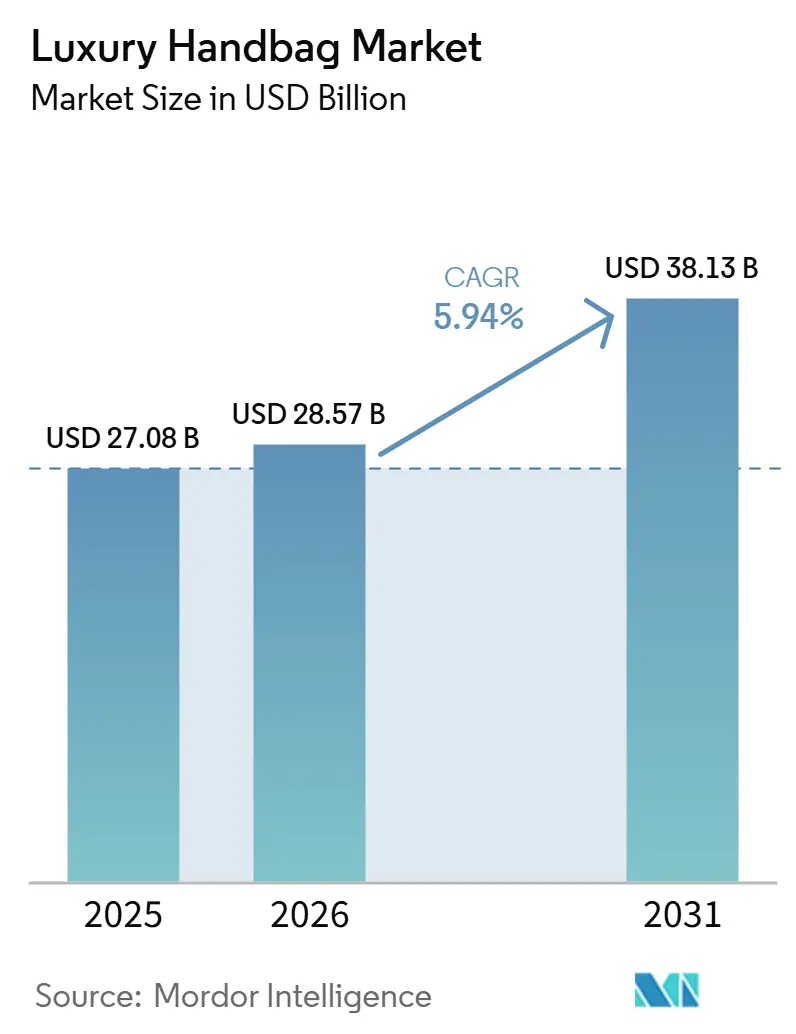
The luxury handbag market size is expected to grow from USD 27.08 billion in 2025 to USD 28.57 billion in 2026 and is forecast to reach USD 38.13 billion by 2031 at a 5.94% CAGR over 2026-2031. The market is experiencing steady growth, driven by rising consumer demand for premium fashion accessories, increasing disposable incomes, and the growing influence of digital retail channels. Evolving fashion trends, product innovation, and the expansion of luxury brands into emerging markets are further supporting demand. Online platforms continue to improve accessibility and consumer engagement alongside established offline retail networks. Manufacturers are responding to increasing expectations for responsible sourcing, transparent supply chains, and innovative materials, while also addressing challenges related to counterfeit products, fluctuating raw material costs, and evolving environmental regulations. These factors are expected to shape product development and long-term market growth.
Key Report Takeaways
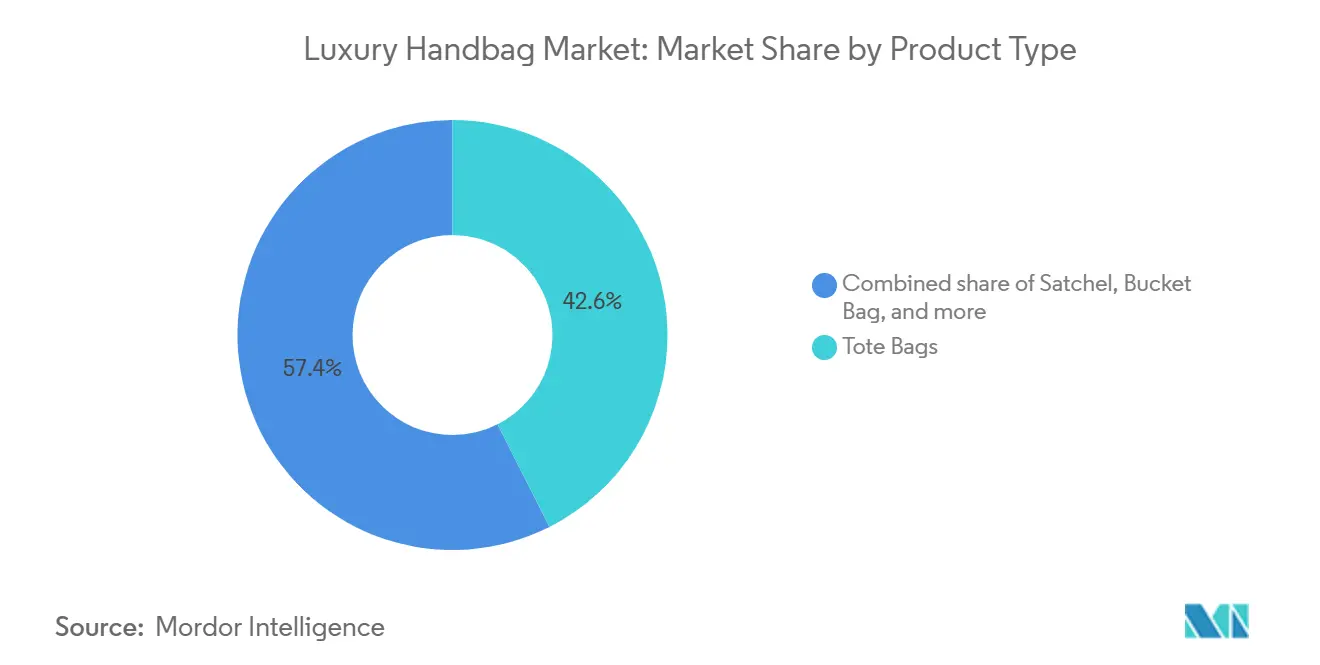
- By product type, tote bags held 42.56% share of the luxury handbags market size in 2025, while bucket bags are projected to expand at 6.95% CAGR through 2031.
- By end user, women accounted for 90.25% of the luxury handbags market share in 2025, whereas men recorded the highest projected CAGR at 7.15% through 2031.
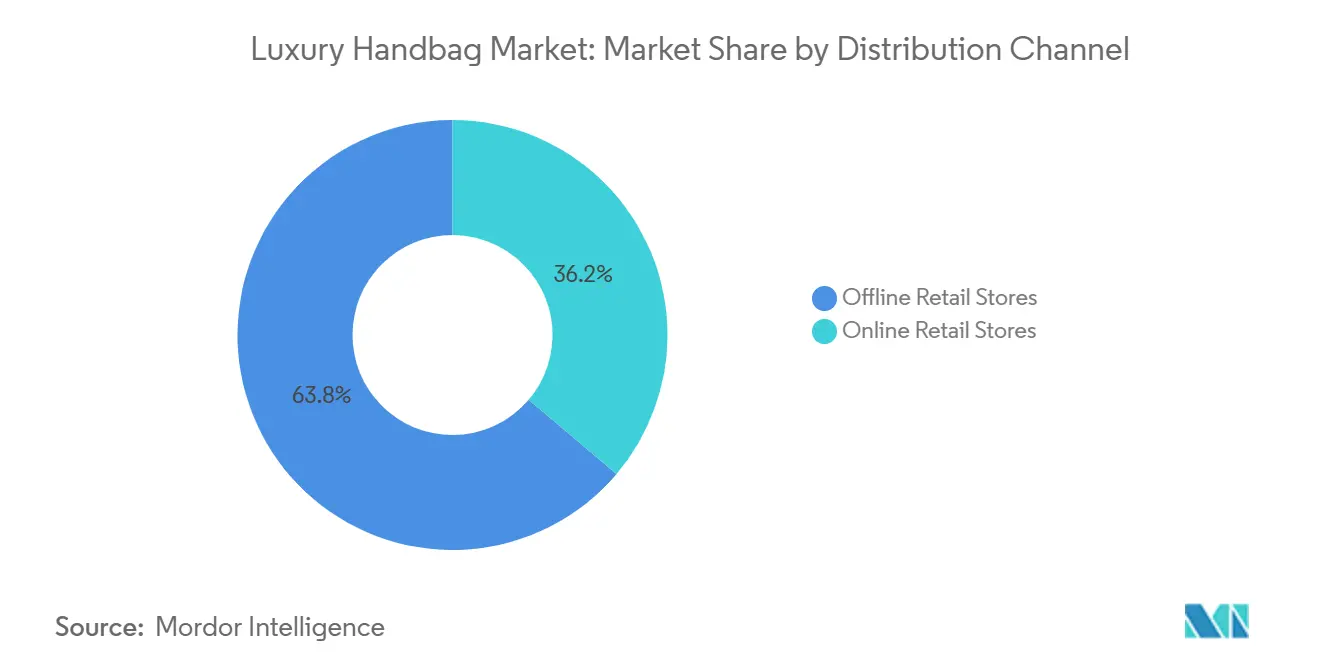
- By distribution channel, offline retail stores captured 63.80% share of the luxury handbags market size in 2025, while online retail stores are forecast to grow at 7.54% CAGR through 2031.
- By geography, Asia-Pacific accounted for the largest share of the market at 44.13% in 2025 and is expected to advance at the fastest CAGR of 7.46% through 2031.
Note: Market size and forecast figures in this report are generated using Mordor Intelligence’s proprietary estimation framework, updated with the latest available data and insights as of January 2026.
Global Luxury Handbag Market Trends and Insights
Drivers Impact Analysis*
| Driver | (~) % Impact on CAGR Forecast | Geographic Relevance | Impact Timeline |
|---|---|---|---|
| Increasing demand for limited-edition, exclusive, and collectible luxury handbags | +1.5% | Global, concentrated in North America and Asia-Pacific | Medium term (2–4 years) |
| Rising influence of social media and digital fashion content on luxury handbag purchases | +1.2% | Global, especially strong in Asia-Pacific and North America | Short term (≤ 2 years) |
| Growing demand for premium craftsmanship, heritage, and timeless luxury products | +0.9% | Europe, North America, Japan | Long term (≥ 4 years) |
| Growing celebrity and influencer endorsements driving brand visibility and consumer aspirations | +0.8% | Global, with spill-over into Middle East and Africa and South America | Short term (≤ 2 years) |
| Growing demand for personalized and exclusive luxury offerings | +0.7% | North America, Europe, high-net-worth Asia-Pacific | Medium term (2–4 years) |
| Increasing focus on sustainable materials and responsible sourcing | +0.5% | Europe core, with spill-over to North America and Australia | Long term (≥ 4 years) |
| Source: Mordor Intelligence | |||
Increasing demand for limited-edition, exclusive, and collectible luxury handbags
Luxury consumers are increasingly seeking limited-edition, exclusive, and collectible handbags that combine craftsmanship, rarity, and brand heritage. In response, luxury brands are expanding capsule collections, artist collaborations, seasonal exclusives, and bespoke offerings to strengthen brand desirability and create scarcity. These exclusive launches enhance consumer engagement and reinforce the long-term value and prestige associated with luxury handbags. The growing appeal of collectible handbags is also reflected in the increasing prominence of the luxury auction market. For example, Christie's reported strong global participation in its 2026 Handbags Online: The Paris Edit auction, where rare Hermès and Dior handbags achieved record-breaking results and attracted bidders from dozens of countries. These developments highlight rising consumer interest in exclusive and highly collectible luxury handbags, encouraging brands to continue investing in limited-production releases and exclusive product offerings.
Rising influence of social media and digital fashion content on luxury handbag purchases
Social media has become a key driver of luxury handbag discovery and purchasing decisions, particularly among younger consumers. Fashion influencers, celebrity endorsements, brand storytelling, and user-generated content across platforms such as Instagram, TikTok, and YouTube are increasing product visibility and strengthening consumer engagement. Luxury brands are increasingly using digital campaigns, livestreams, and exclusive online launches to build brand desirability and drive purchases. The growing reach of social media continues to reinforce this, according to the Pew Research Center's Americans' Social Media Use 2025 report, 84% of adults use YouTube, 71% use Facebook, and 50% use Instagram, while 80% of adults aged 18–29 report using Instagram. The report also found that 55% of women use Instagram compared with 44% of men, highlighting the platform's strong reach among female consumers, the primary target audience for luxury handbags, and its growing influence on fashion discovery and purchasing decisions[1]Source: Pew Research Center, "Americans’ Social Media Use 2025," pewresearch.org .
Growing demand for premium craftsmanship, heritage, and timeless luxury products
Consumers are increasingly seeking luxury handbags that combine exceptional craftsmanship, brand heritage, and timeless design, reflecting a shift toward long-term value over short-term fashion trends. Iconic collections, artisanal techniques, and premium materials continue to strengthen the appeal of luxury handbags, encouraging repeat purchases and reinforcing their position as enduring fashion investments. The growing preference for versatile, classic designs over fast-changing fashion trends is supporting sustained demand for heritage luxury brands. In response, luxury brands are expanding their focus on handcrafted production, product personalization, and heritage-inspired collections while preserving traditional leatherworking expertise. Many manufacturers continue to invest in skilled artisans, premium leather sourcing, and refined craftsmanship to maintain product quality and exclusivity. As consumers place greater emphasis on authenticity, durability, and superior quality, demand for luxury handbags that offer enduring design, functional excellence, and lasting brand prestige is expected to remain strong.
Increasing focus on sustainable materials and responsible sourcing
Sustainability is becoming an increasingly important purchasing consideration in the luxury handbag market, prompting brands to adopt responsibly sourced leather, recycled materials, bio-based alternatives, and more transparent supply chains. Consumers are placing greater emphasis on product durability, ethical sourcing, and environmental responsibility, leading luxury brands to strengthen traceability initiatives and invest in circular design and lower-impact manufacturing processes. The fashion industry's environmental footprint is driving this transition. According to EARTHDAY.ORG's Fashion for the Earth report, the fashion industry accounts for 4% of global greenhouse gas emissions, while clothing consumption is projected to increase by 63% by 2030, and global clothing production is expected to triple by 2050 if current consumption patterns continue[2]Source: earthday.org, "Broken Threads & Twisted Yarns: The Fashion Legislation Report," earthday.org . These sustainability challenges are prompting luxury brands to differentiate themselves through responsible material sourcing, longer product lifecycles, and circular business models that align with evolving consumer expectations.
Restraints Impact Analysis*
| Restraint | (~) % Impact on CAGR Forecast | Geographic Relevance | Impact Timeline |
|---|---|---|---|
| Growing prevalence of counterfeit luxury handbags and intellectual property infringement | -1.5% | Global, acute in Asia-Pacific, Middle East and Africa, and online marketplaces | Short term (≤ 2 years) |
| Increasing consumer scrutiny over animal-derived leather and exotic skins | -0.8% | Europe core, Australia, North America | Medium term (2–4 years) |
| Leather supply, compliance, and traceability constraints | -0.7% | Europe, North America | Long term (≥ 4 years) |
| Growing competition from the luxury resale and pre-owned handbag market | -1.0% | Global, highest penetration in North America and Europe | Medium term (2–4 years) |
| Source: Mordor Intelligence | |||
Growing prevalence of counterfeit luxury handbags and intellectual property infringement
The increasing availability of counterfeit luxury handbags continues to pose a significant challenge to the market by eroding brand exclusivity, weakening consumer confidence, and diverting sales from authentic products. The rapid growth of cross-border e-commerce, social commerce, and informal online marketplaces has made counterfeit products more accessible, while increasingly sophisticated replicas have made it more difficult for consumers to distinguish genuine products from imitations. This has prompted luxury brands to strengthen authentication technologies, intellectual property enforcement, and supply chain traceability. In response, luxury brands and regulatory authorities are intensifying efforts to combat trademark infringement and counterfeit trade through legal action and enhanced market surveillance. Recent enforcement actions, including the seizure of counterfeit luxury handbags during Vietnam's 2025 crackdown on counterfeit goods and multiple trademark infringement rulings in favor of luxury brands such as Louis Vuitton, highlight the continued scale of the issue and the growing emphasis on protecting brand integrity and consumer trust.
Increasing Consumer Scrutiny Over Animal-Derived Leather and Exotic Skins
Growing consumer concerns over animal-derived leather and exotic skins are restraining the luxury handbag market, as ethical sourcing and animal welfare considerations increasingly influence purchasing decisions. According to a 2024 YouGov survey commissioned by FOUR PAWS, 36% of consumers stated they would choose one fashion brand over another if it prioritized animal welfare, while 27% reported avoiding animal-based fashion altogether[3]Source: FOUR PAWS International, "FOUR PAWS Rates Over 200 Fashion Brands, Revealing Massive Shortcomings in Animal Welfare" four-paws.org. This shift is prompting some consumers to reconsider purchases of handbags made from conventional leather or exotic skins, particularly in markets with strong sustainability awareness. In response, luxury brands are expanding the use of responsibly sourced leather, certified supply chains, and alternative materials, while increasing transparency around sourcing practices. However, evolving consumer expectations and stricter scrutiny of animal-derived materials continue to present challenges for brands that rely heavily on traditional leather craftsmanship and exotic skins.
*Our forecasts treat driver/restraint impacts as directional, not additive. The impact forecasts reflect baseline growth, mix effects, and variable interactions.
Segment Analysis
By Product Type: Tote Bags Lead as Bucket Bags Redefine Seasonal Relevance
Tote bags accounted for 42.56% of the luxury handbag market in 2025, making them the largest product segment. Their dominance is supported by strong demand for versatile designs that combine functionality with premium aesthetics, making them suitable for work, travel, and everyday use. Consumer preference for timeless, high-quality handbags and understated luxury styles further reinforces the segment's position. The availability of tote bags across a wide range of luxury brands, materials, and price points further strengthens their market appeal. Satchels, shoulder bags, and clutches also maintain steady demand by addressing professional, casual, and occasion-specific usage needs.
Bucket bags are projected to register the fastest CAGR of 6.95% during 2026–2031. Their growing popularity is driven by evolving fashion preferences favoring relaxed yet structured silhouettes that blend style with practicality. Luxury brands are expanding bucket bag collections with premium materials, modern craftsmanship, and versatile designs to appeal to younger consumers as well as established luxury buyers. Increasing product launches featuring customizable details, distinctive hardware, and seasonal collections are further supporting demand. The segment also benefits from increasing demand for contemporary handbags that transition across multiple occasions.



By End User: Women Anchor Market, Men Shift from Niche to Strategic Category
Women accounted for 90.25% of the luxury handbag market in 2025, making them the largest end-user segment. This is driven by sustained demand across everyday, professional, travel, and occasion-based use, supported by continuous product innovation and expanding collections from luxury brands. Consumer preference for timeless designs, premium craftsmanship, and iconic styles continues to reinforce the segment's dominant position. Strong brand loyalty and repeat purchases among luxury consumers further contribute to the segment's leadership. The increasing availability of handbags across diverse styles, sizes, and seasonal collections also supports sustained demand.
The men's segment is projected to register the fastest CAGR of 7.15% during 2026–2031. Growth is supported by the expansion of dedicated men's luxury leather goods collections, increasing acceptance of luxury handbags as everyday fashion accessories, and rising demand for functional yet premium designs. Luxury brands are broadening their men's portfolios with versatile products suited for work, travel, and casual use, reflecting the category's growing strategic importance. Rising consumer interest in contemporary fashion trends and premium lifestyle products is further accelerating demand. Greater visibility of men's handbags through designer collections and luxury retail channels also continues to support segment growth.
By Distribution Channel: Offline Retail Holds, Online Retail Outpaces
Offline retail stores accounted for 63.80% of the luxury handbag market in 2025, making them the largest distribution channel. This position is supported by consumers' preference for in-store product inspection, personalized customer service, and exclusive boutique experiences when purchasing high-value luxury handbags. Flagship stores, brand boutiques, and department stores continue to play a key role in reinforcing brand image and customer loyalty. In-store shopping also allows consumers to evaluate product quality, craftsmanship, and fit before making premium purchases. Exclusive product launches and limited-edition collections available through physical stores further strengthen the channel's position.
Online retail is projected to register the fastest CAGR of 7.54% during 2026–2031. Growth is driven by increasing consumer adoption of luxury e-commerce, expanding brand-owned digital platforms, and improved omnichannel shopping experiences. Luxury brands are investing in digital storefronts, virtual consultations, authentication services, and streamlined online purchasing to enhance convenience while maintaining brand exclusivity and consumer trust. Growing integration of personalized recommendations, digital clienteling, and flexible delivery options is further enhancing the online shopping experience. The expansion of secure payment systems and authenticated resale platforms is also supporting greater consumer confidence in online luxury handbag purchases.
Geography Analysis
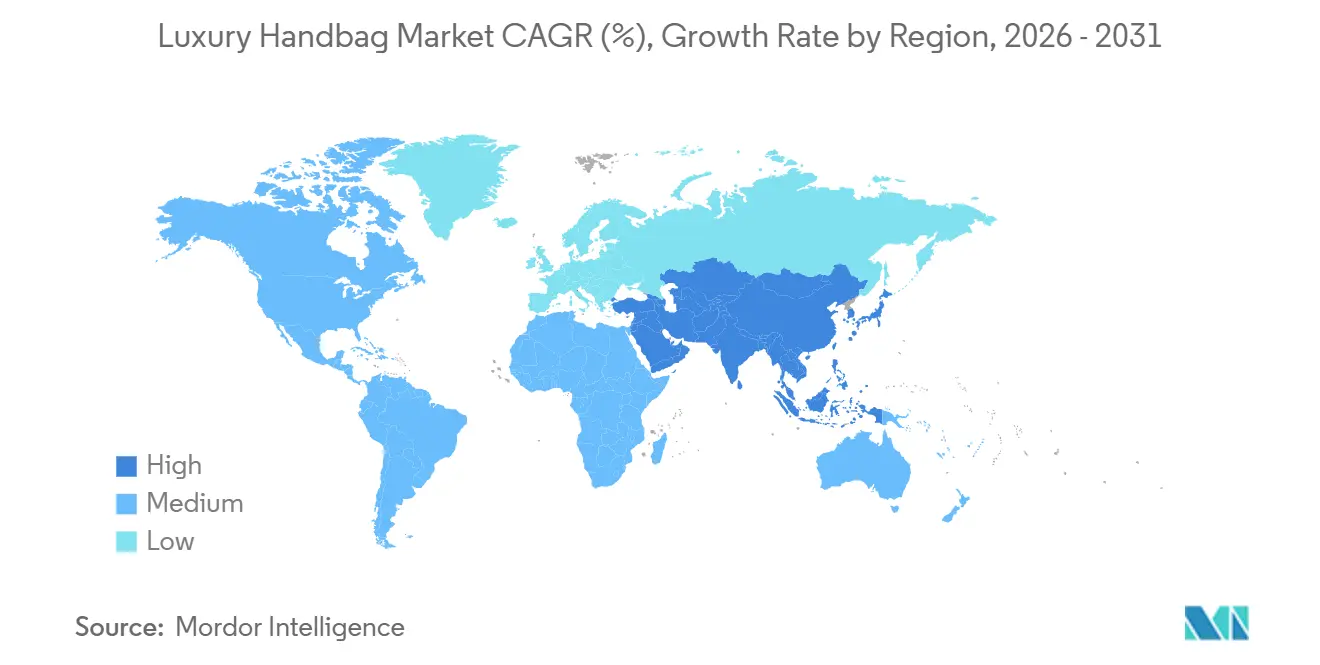
Asia-Pacific held the largest market share of 44.13% in 2025 and is projected to register the fastest CAGR of 7.46% during 2026–2031. The region benefits from rising disposable incomes, expanding affluent populations, increasing luxury consumption, and growing digital retail adoption. China, Japan, South Korea, and India remain key demand centers, driven by growing interest in premium fashion and international luxury brands. The rapid expansion of luxury shopping districts, premium malls, and brand-owned boutiques continues to strengthen regional demand. Increasing influence of social media, fashion trends, and younger luxury consumers is also supporting sustained market growth across the region.
Europe remains a significant market due to its strong luxury fashion heritage, concentration of established luxury brands, and well-developed manufacturing ecosystem. The region continues to benefit from high tourist spending, premium retail infrastructure, and sustained demand for heritage craftsmanship and luxury products. Countries such as France and Italy remain global centers for luxury handbag design and production, supporting the region's competitive position. Continued investments in flagship stores, exclusive collections, and premium shopping experiences further reinforce Europe's importance in the global luxury handbag market.
South America, North America, and the Middle East and Africa are witnessing steady market development, supported by rising consumer purchasing power, expanding luxury retail networks, and increasing brand investments. Growing digital commerce, premiumization trends, and wider access to international luxury brands are expected to generate additional growth opportunities across these regions during the forecast period. In North America, strong demand for premium fashion and omnichannel retail continues to support market expansion, while the Middle East benefits from a growing base of high-net-worth consumers. South America is also experiencing gradual growth as luxury brands expand their retail presence and strengthen their distribution networks across key urban markets.

Competitive Landscape
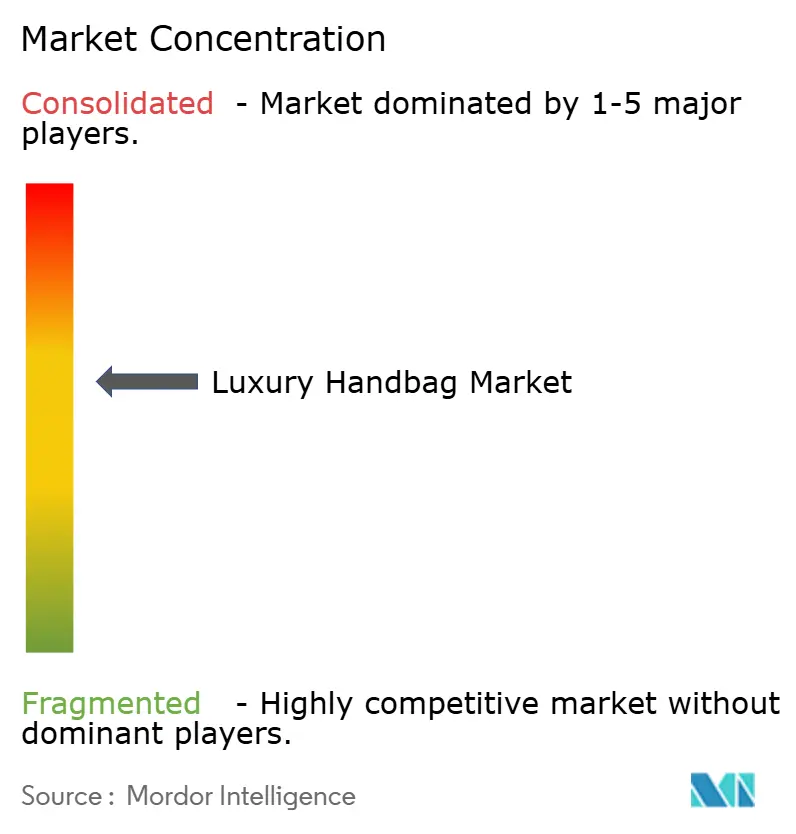
The luxury handbags market is moderately consolidated, with a small group of global luxury houses accounting for a significant share of global revenue. Major players include Louis Vuitton, Hermès International S.A., Chanel Ltd., Guccio Gucci S.p.A., and Prada S.p.A.. These companies compete through strong brand heritage, craftsmanship, exclusive product portfolios, controlled distribution networks, and continuous investments in flagship stores and customer experience. Their global brand recognition, loyal customer base, and pricing power further reinforce their leadership in the luxury handbags market. Continuous investments in marketing, fashion shows, and celebrity collaborations also strengthen their competitive positioning.
Leading companies are strengthening their market positions through product innovation, retail expansion, digital initiatives, and portfolio optimization. Luxury brands continue to introduce new handbag collections, invest in omnichannel capabilities, enhance personalization services, and expand manufacturing capacity to support long-term demand while maintaining product exclusivity. Strategic acquisitions and partnerships are also being used to strengthen brand portfolios and expand global market presence. Companies are further investing in advanced customer relationship management, digital clienteling, and exclusive shopping experiences to improve customer engagement. Limited-edition launches and collaborations with designers and artists also help sustain brand desirability and consumer interest.
Emerging and independent luxury brands are gaining visibility by focusing on contemporary designs, sustainable materials, limited-edition collections, and direct-to-consumer business models. Many are leveraging digital channels, social media, and authenticated resale platforms to reach younger luxury consumers, while emphasizing transparency, responsible sourcing, and craftsmanship to differentiate themselves in an increasingly competitive market. These brands are also expanding through selective retail partnerships and pop-up stores to increase brand awareness. Their ability to respond quickly to evolving fashion trends and changing consumer preferences is helping them establish a stronger presence in the luxury handbags market.
Luxury Handbag Industry Leaders
-
Louis Vuitton Malletier SAS
-
Hermès International S.A.
-
Chanel Ltd
-
Guccio Gucci S.p.A.
-
Prada S.p.A.
- *Disclaimer: Major Players sorted in no particular order

Recent Industry Developments
- July 2026: Louis Vuitton unveiled its High Summer 2026 capsule collection, introducing new seasonal handbags alongside refreshed versions of iconic designs crafted with raffia-inspired details, Monogram finishes, and summer-inspired materials. The collection strengthened the brand's luxury handbag portfolio by combining travel-inspired aesthetics with contemporary craftsmanship.
- May 2026: LVMH and WHP Global announced a definitive agreement for WHP Global to acquire the Marc Jacobs brand from LVMH. Following the transaction, Marc Jacobs will continue as Creative Director, while WHP Global and G-III Apparel Group will support the brand's future growth through expanded global operations, including its handbags and leather goods business.
- May 2026: Louis Vuitton introduced LV Touch, a new collection of men's leather goods designed by Men's Creative Director Pharrell Williams. The collection includes handbags and everyday leather accessories crafted from calfskin and suede, reflecting the brand's continued expansion of its men's luxury leather goods portfolio and growing focus on functional premium handbags.
- October 2025: Dior unveiled its Spring/Summer 2026 women's collection under new Creative Director Jonathan Anderson, introducing new leather goods and handbag designs that reinterpret the Maison's signature design codes, including cannage-inspired accessories.


Global Luxury Handbag Market Report Scope
Luxury handbags are premium fashion accessories crafted from high-quality materials and distinguished by superior craftsmanship, exclusive designs, and strong brand value. They are purchased for both functional use and fashion appeal across different consumer segments. The market is segmented by product type, end user, distribution channel, and geography. Based on product type, the market is segmented into satchels, bucket bags, clutches, tote bags, and other product types. By end user, the market is segmented into women and men. Based on distribution channel, the market is segmented into offline retail stores and online retail stores. Geographically, the market covers North America, Europe, Asia-Pacific, South America, and the Middle East and Africa. The market forecasts are provided in terms of value (USD).
| Satchel |
| Bucket Bag |
| Clutch |
| Tote Bag |
| Other Product Types |
| Women |
| Men |
| Offline Retail Stores |
| Online Retail Stores |
| North America | United States |
| Canada | |
| Mexico | |
| Rest of North America | |
| Europe | Germany |
| United Kingdom | |
| Italy | |
| France | |
| Spain | |
| Netherlands | |
| Poland | |
| Belgium | |
| Sweden | |
| Rest of Europe | |
| Asia-Pacific | China |
| India | |
| Japan | |
| Australia | |
| Indonesia | |
| South Korea | |
| Thailand | |
| Singapore | |
| Rest of Asia-Pacific | |
| South America | Brazil |
| Argentina | |
| Colombia | |
| Chile | |
| Peru | |
| Rest of South America | |
| Middle East and Africa | South Africa |
| Saudi Arabia | |
| United Arab Emirates | |
| Nigeria | |
| Egypt | |
| Morocco | |
| Turkey | |
| Rest of Middle East and Africa |
| By Product Type | Satchel | |
| Bucket Bag | ||
| Clutch | ||
| Tote Bag | ||
| Other Product Types | ||
| By End User | Women | |
| Men | ||
| By Distribution Channel | Offline Retail Stores | |
| Online Retail Stores | ||
| By Geography | North America | United States |
| Canada | ||
| Mexico | ||
| Rest of North America | ||
| Europe | Germany | |
| United Kingdom | ||
| Italy | ||
| France | ||
| Spain | ||
| Netherlands | ||
| Poland | ||
| Belgium | ||
| Sweden | ||
| Rest of Europe | ||
| Asia-Pacific | China | |
| India | ||
| Japan | ||
| Australia | ||
| Indonesia | ||
| South Korea | ||
| Thailand | ||
| Singapore | ||
| Rest of Asia-Pacific | ||
| South America | Brazil | |
| Argentina | ||
| Colombia | ||
| Chile | ||
| Peru | ||
| Rest of South America | ||
| Middle East and Africa | South Africa | |
| Saudi Arabia | ||
| United Arab Emirates | ||
| Nigeria | ||
| Egypt | ||
| Morocco | ||
| Turkey | ||
| Rest of Middle East and Africa | ||


Key Questions Answered in the Report
What is the expected value of the luxury handbags market by 2031?
The luxury handbags market is forecast to reach USD 38.13 billion by 2031, rising from USD 28.57 billion in 2026 at a 5.94% CAGR over 2026-2031.
Which product category leads luxury handbags sales today?
Tote bags led in 2025 with 42.56% share, supported by daily usability, premium positioning, and strong relevance among women buyers.
Why is Asia-Pacific so important for luxury handbags?
Asia-Pacific held 44.13% share in 2025 and is also forecast to grow fastest at 7.46% CAGR, which makes it the most important region for both scale and expansion.
What are the main risks affecting luxury handbags companies?
The main pressures are stronger counterfeit activity, tighter leather traceability requirements, and rising scrutiny of animal-derived and exotic-skin materials.
Page last updated on:





