
Liquid Bandages Market Size and Share
Market Overview
| Study Period | 2020 - 2031 |
|---|---|
| Market Size (2026) | USD 1.71 Billion |
| Market Size (2031) | USD 2.32 Billion |
| Growth Rate (2026 - 2031) | 6.25 % |
| Fastest Growing Market | Asia-Pacific |
| Largest Market | North America |
| Market Concentration | Medium |
Major Players *Disclaimer: Major Players sorted in no particular order Image © Mordor Intelligence. Reuse requires attribution under CC BY 4.0. | |
Liquid Bandages Market Analysis by Mordor Intelligence
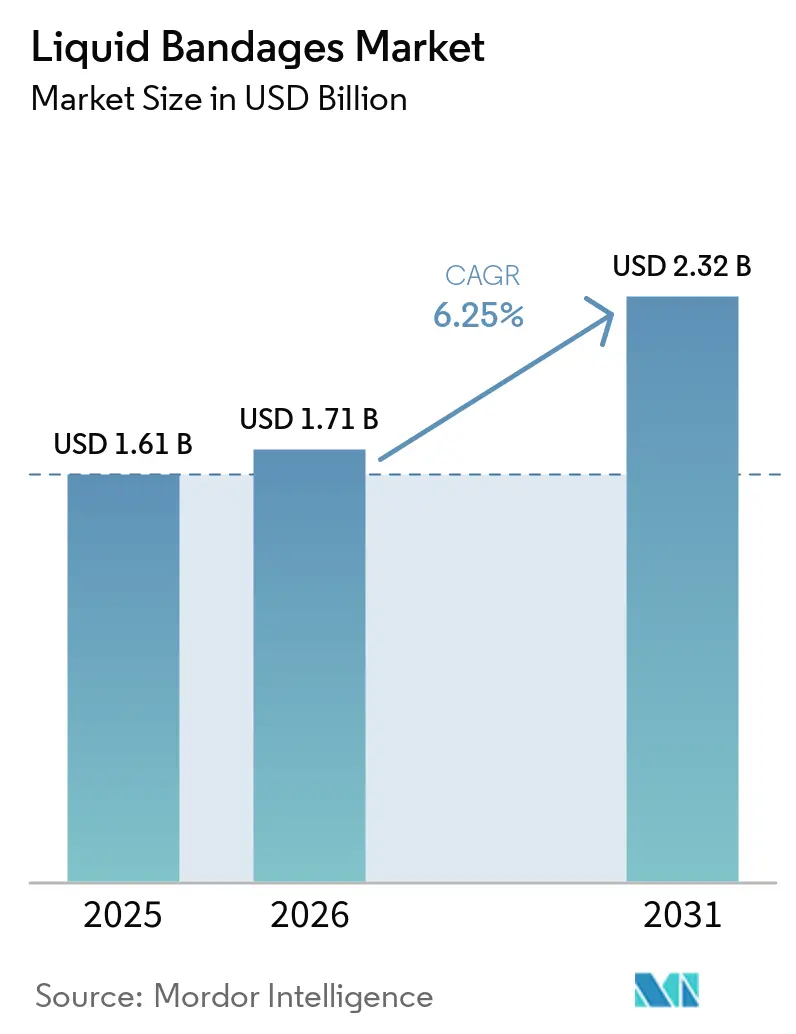
The Liquid Bandages Market size was valued at USD 1.61 billion in 2025 and is estimated to grow from USD 1.71 billion in 2026 to reach USD 2.32 billion by 2031, at a CAGR of 6.25% during the forecast period (2026-2031).
Growth is supported by increased self-treatment of minor wounds, the growing diabetes burden, and the wider use of topical adhesives in clinical wound closure. The IDF Diabetes Atlas reported 589 million adults with diabetes in 2024 and projected the number to reach 853 million by 2050, increasing demand for regular skin and peri-wound protection.[1] Products that protect minor household cuts without disrupting daily activities also support laparoscopic port closure and podiatric care. Established brands strengthen their position through retail availability, consumer trust, easy-to-apply formats, and relevant regulatory clearances.
Key Report Takeaways
- By product type, skin protectants held 62.45% of revenue in 2025, while tissue adhesives recorded the highest projected CAGR at 7.26% through 2031.
- By form, liquid held 34.55% of revenue in 2025, while Spray recorded the highest projected CAGR at 9.44% through 2031.
- By application, minor cuts and scrapes held 36.77% of revenue in 2025, while surgical and procedural wound closure projected a CAGR at 8.45% through 2031.
- By end user, households and personal first aid held 42.67% of revenue in 2025, while hospitals recorded the highest projected CAGR at 9.34% through 2031.
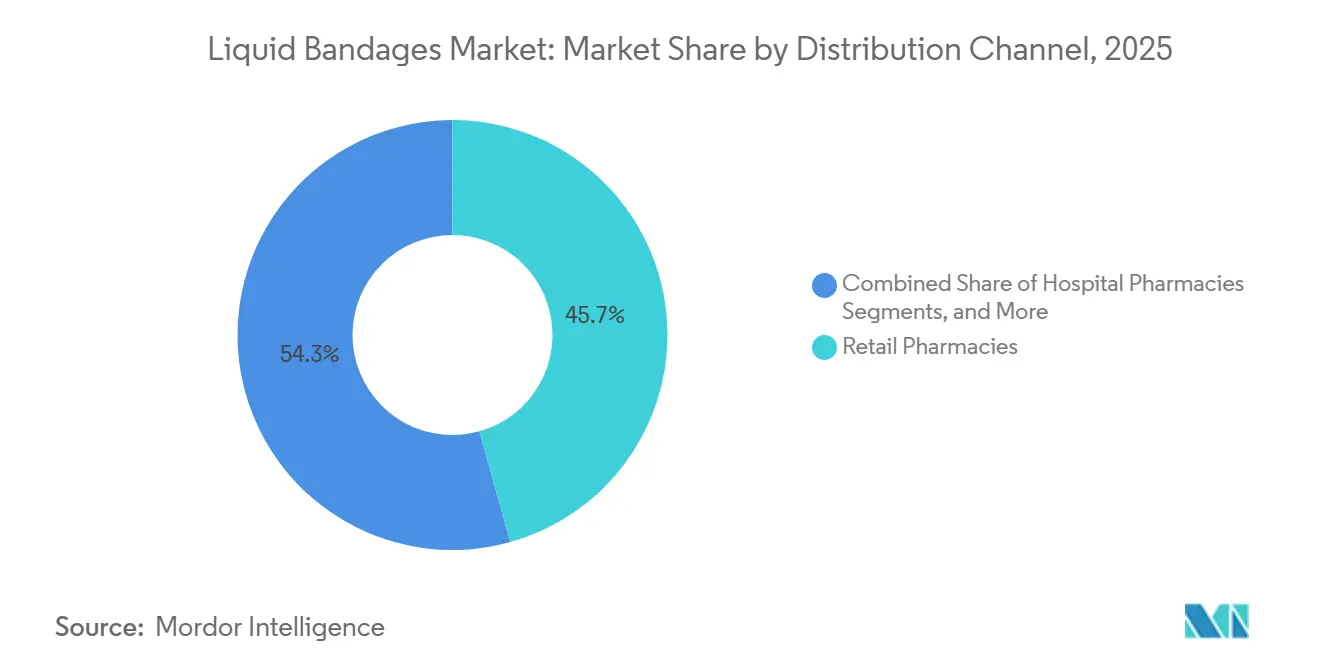
- By distribution channel, retail pharmacies held 45.67% of revenue in 2025, while online pharmacies recorded the highest projected CAGR at 8.65% through 2031.
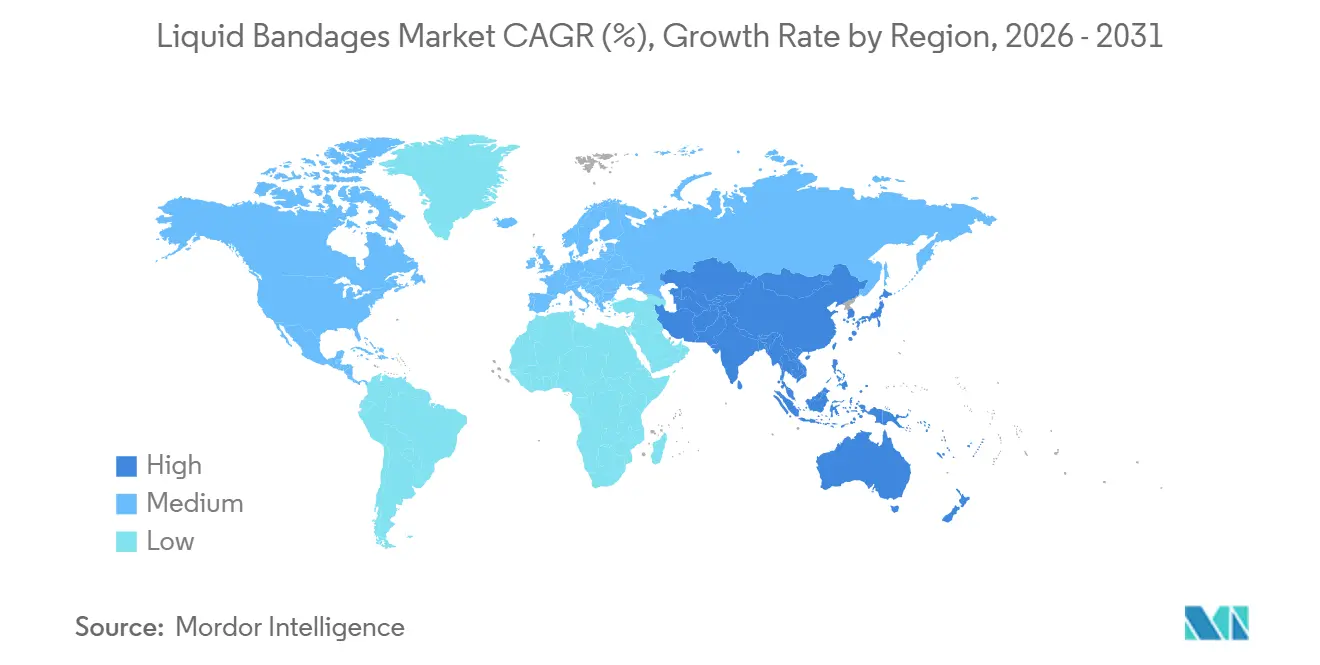
- By geography, North America held 42.34% of revenue in 2025, while Asia-Pacific recorded the highest projected CAGR at 9.53% through 2031.
Note: Market size and forecast figures in this report are generated using Mordor Intelligence’s proprietary estimation framework, updated with the latest available data and insights as of January 2026.
Market Trends and Insights
Drivers Impact Analysis of Liquid Bandages Market*
| DRIVER | (~) % IMPACT ON CAGR FORECAST | GEOGRAPHIC RELEVANCE | IMPACT TIMELINE |
|---|---|---|---|
| Minor-wound self-care and convenient first aid | +1.2% | Global, with greater intensity in North America and Western Europe | Short term (≤ 2 years) |
| Chronic-wound and diabetic-foot-care demand | +1.4% | Global, with the highest burden in South and Southeast Asia and North America | Long term (≥ 4 years) |
| Surgical and procedural use of topical adhesives | +0.9% | North America and Europe, with spillover into core Asia-Pacific markets | Medium term (2-4 years) |
| Sports, outdoor, and worksite injury prevention | +0.6% | North America, Europe, and Asia-Pacific | Short term (≤ 2 years) |
| Longer-wear cyanoacrylate films | +0.5% | Global, with early adoption gains in North America | Medium term (2-4 years) |
| Coverage of high-flex and irregular skin areas | +0.4% | Global | Medium term (2-4 years) |
| Source: Mordor Intelligence | |||
Growth in Minor-Wound Self-Care and Convenience-Led First Aid
Consumers increasingly manage minor wounds at home rather than making unplanned pharmacy visits. Spray and liquid-film formats supported this preference through quick application and compatibility with daily activities. In January 2026, Beiersdorf launched Second Skin Protection Spray Plaster and Liquid Plaster Concentrate under its Hansaplast, Elastoplast, and CURITAS brands. Research cited by the company showed that 58% of consumers avoided conventional plasters due to visibility, discomfort, or poor fit on difficult body areas. Beiersdorf's Health Care segment recorded 8.8% organic sales growth in the first nine months of 2025, supported by wound care and Second Skin Protection products. In the liquid bandages market, shelf visibility and established brand confidence remained key short-term purchase drivers.
Rising Chronic-Wound and Diabetic-Foot-Care Demand
Diabetic foot ulcers created a long-term demand base that was less dependent on discretionary consumer spending. A 2025 study reported 18.6 million new diabetic foot ulcer cases annually worldwide and estimated the lifetime risk among people with diabetes at 19% to 34%. Diabetes affected 11.11% of adults globally in 2024, representing 589 million people.[2] Liquid films supported early-stage diabetic foot and peri-wound care by providing a water-resistant protective layer without requiring clinical application skills. The supplied analysis reported a 13% diabetic foot ulcer prevalence among diabetes patients in North America, while South and East Asia accounted for the fastest-growing disease burden. The liquid bandages market had a growing clinical opportunity as podiatry and wound-care centers added topical barriers alongside advanced dressings.
Increasing Surgical and Procedural Use of Topical Adhesives
Clinicians expanded the use of topical tissue adhesives across procedures that previously relied on mechanical closure methods. A 2025 randomized controlled trial found that n-butyl cyanoacrylate liquid skin adhesive reduced wound management time compared with skin staplers, without a statistically significant difference in total wound costs.[3] In June 2026, Resivant Medical completed the first patient procedures using its Cutiva PLUS Skin Closure System at Eisenhower Health in California. In July 2026, BRIJ Medical launched BRIJ-SEAL, a cyanoacrylate-free, hypoallergenic wound sealant that claimed a 14-day bacterial barrier. These developments expanded material and applicator options for clinicians in the liquid bandages market.
Expansion of Sports, Outdoor and Worksite Injury Prevention
Sports, outdoor activities, and workplace first-aid requirements created demand opportunities beyond routine household replenishment. Employers in construction, logistics, and manufacturing added over-the-counter liquid bandage kits to first-aid inventories. Spray applications suited these settings because they avoided direct contact and dried within 30 seconds. Users could quickly cover minor abrasions while avoiding the bulk and adhesive residue associated with some conventional products. This advantage supported demand for the spray format, which was forecast to grow at a CAGR of 9.44% through 2031. Manufacturers could strengthen their position in the liquid bandages market by aligning spray-format development with active lifestyle and occupational-use applications.
Restraints Impact Analysis of Liquid Bandages Market*
| RESTRAINT | (~) % IMPACT ON CAGR FORECAST | GEOGRAPHIC RELEVANCE | IMPACT TIMELINE |
|---|---|---|---|
| Skin irritation, stinging, and sensitization risk | -1.0% | Global | Short term (≤ 2 years) |
| Clinical and regulatory claim boundaries | -0.7% | North America and Europe | Medium term (2-4 years) |
| Flammability, solvent odor, and storage constraints | -0.5% | Global, most acute in regulated retail markets | Short term (≤ 2 years) |
| Applicator-dose variability and film-removal friction | -0.4% | Global | Medium term (2-4 years) |
| Source: Mordor Intelligence | |||
Skin Irritation, Stinging and Sensitization Risk
Tolerability can limit repeat use, particularly among the category’s largest consumer segment. Legacy n-butyl cyanoacrylate and alcohol-solvent formulations may cause short-term stinging, while contact sensitization may prevent future product use among affected consumers. Although the FDA evaluates biocompatibility during premarket review, the supplied analysis noted that post-launch sensitization in real-world populations remained less clearly characterized. This risk drives demand for 2-octyl cyanoacrylate and silicone-based alternatives despite their higher material and manufacturing costs.
Clinical and Regulatory Claim Boundaries Across Skin Protectant and Tissue Adhesive Uses
Permitted claims influence liquid bandage product positioning. The supplied analysis stated that manufacturers could not claim antimicrobial efficacy, wound-healing promotion, or therapeutic activity without entering a higher-risk device pathway. These limitations created uncertainty for performance-oriented wound-care positioning and divided companies between broader regulatory investments and delivery-convenience strategies. The liquid bandages market faced greater price pressure when differentiation relied primarily on application format.
*Our forecasts treat driver/restraint impacts as directional, not additive. The impact forecasts reflect baseline growth, mix effects, and variable interactions.
Liquid Bandages Market Segment Analysis
By Product Type:
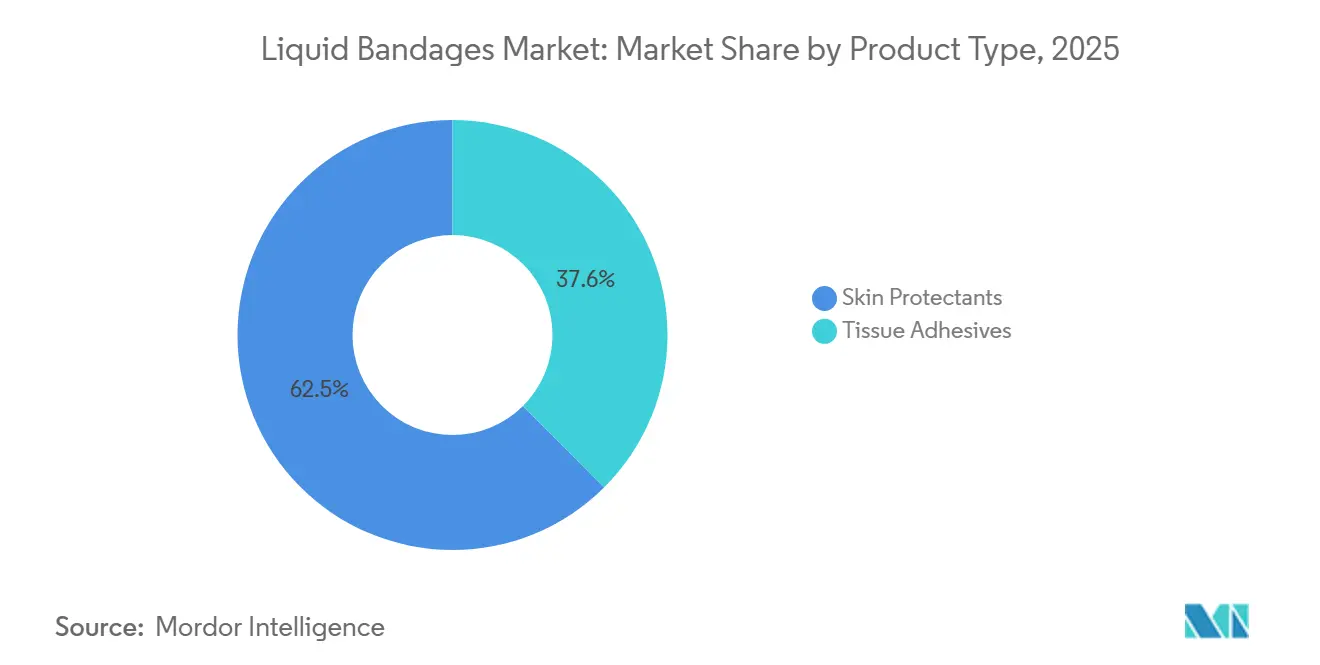
Skin Protectants Lead While Tissue Adhesives AccelerateSkin Protectants accounted for 62.45% of the liquid bandages market share in 2025. Consumer familiarity, broad availability, and a long history of over-the-counter use supported the segment's leading position. The segment addressed minor cuts, blisters, abrasions, and cracked skin across household, workplace, and sports settings. Its high-volume sales base provided established brands with a strong retail foundation. Tissue Adhesives represented a smaller revenue segment but are forecast to grow at a CAGR of 7.26% from 2026 to 2031, driven by increasing institutional use in surgical procedures and emergency wound management.
Regulatory requirements created a barrier to entry for cleared tissue adhesive products. Optmed received clearance for TearRepair in September 2024, while Resivant Medical completed the first clinical use of Cutiva™ PLUS in June 2026. Skin Protectants used widely available polymer chemistries and faced higher supplier competition. Tissue Adhesives relied on specialty-grade cyanoacrylate monomers from a narrower supplier base, increasing exposure to supply disruptions and price volatility. Long-term supply agreements or backward integration can improve reliability for institutional buyers.
By Form:
Spray Formats Outpacing All Others on Consumer PreferenceLiquid products held the largest form-level revenue share at 34.55% in 2025. Bottled and ampoule formats provided controlled application and bond strength for consumer and clinical use. Spray is forecast to be the fastest-growing format, registering a CAGR of 9.44% from 2026 to 2031. Its no-touch application and 30-second drying time support use on larger abrasions and uneven skin surfaces in active settings. Beiersdorf launched both spray and liquid products in January 2026 to address these varied use requirements.
Gel formulations served chronic wound and peri-surgical applications, as their higher viscosity enabled controlled placement on fragile skin without runoff. Foam formats represented the smallest share in the supplied assessment but gained attention in wound-care centers requiring exudate management and physical coverage. Propellant-free pump sprays also emerged as a product development opportunity. These designs can reduce flammability and storage concerns associated with aerosol-propellant over-the-counter formulations.
By Application:
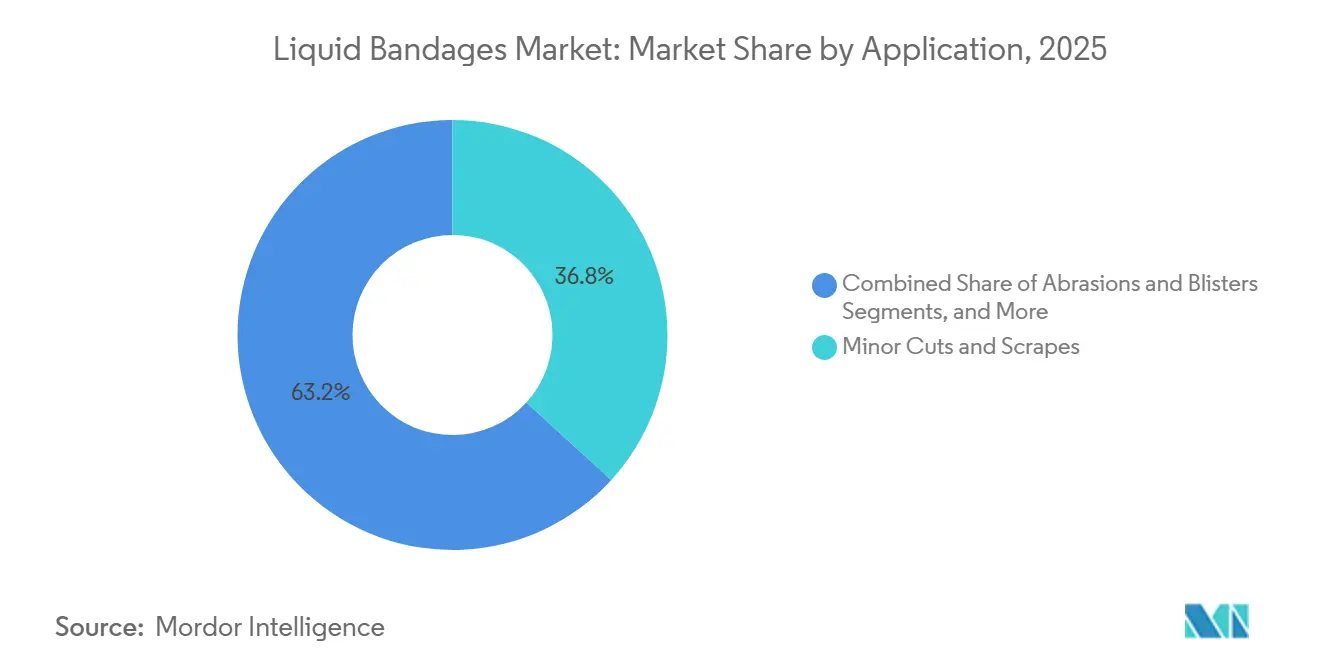
Surgical and Procedural Wound Closure Reshaping Demand MixMinor Cuts and Scrapes accounted for 36.77% of revenue in 2025, making this the largest application segment. The segment reflected the recurring nature of minor skin injuries in everyday settings. Surgical and Procedural Wound Closure is forecast to grow at a CAGR of 8.45% from 2026 to 2031 as clinical teams adopt topical adhesive protocols for suitable incision types. A 2025 randomized trial found that liquid adhesives reduced wound management time compared with skin staplers. This evidence supported broader clinical adoption where total wound treatment costs remained comparable.
Abrasions and Blisters benefited from sports and outdoor activities. Chronic and Diabetic Wounds also represented a growing demand base, supported by the reported annual incidence of 18.6 million new diabetic foot ulcer cases. Burns and Other Skin Openings remained the smallest application segment in the supplied analysis. Current formulations provided surface protection for superficial burns; however, their clinical use remained limited by the absence of approved antimicrobial and healing-promotion claims. The market will continue to depend on regulatory pathways to establish a broader clinical role.

By End User:
Hospitals Emerging as the Fastest-Growing Institutional ChannelHouseholds and Personal First Aid accounted for 42.67% of end-user revenue in 2025. Price sensitivity, familiarity with established brands, and low switching costs at the point of purchase shaped this category. Hospitals are forecast to expand at a CAGR of 9.34% through 2031. Demand is linked to the growing use of tissue adhesives and advanced wound sealants in surgery and postoperative care. Shorter wound management times can improve procedural efficiency when adhesives replace suitable mechanical alternatives.
Clinics and physician offices served walk-in trauma cases and planned minor procedures. These settings adopted preloaded single-use applicators to reduce waste and cross-contamination. Ambulatory Surgery Centers emerged as a focused procurement channel as elective procedures shifted from hospital operating rooms. Suppliers offering sterile single-use packaging and compatible unit pricing can improve access to this channel. Podiatry and wound-care centers remained more established in North America and Northern Europe, while sports and occupational health settings supported demand within the Other end-user category.
By Distribution Channel:
Online Pharmacies Capturing the Growth NarrativeRetail Pharmacies accounted for 45.67% of distribution revenue in 2025. Their position reflected their role as a primary purchase location for over-the-counter wound-care products. Pharmacy aisles benefited from customer traffic, impulse purchases, and proximity to other first-aid products. Online Pharmacies are forecast to grow at a CAGR of 8.65% from 2026 to 2031. Subscription reorders, detailed product information, and direct-to-consumer positioning supported adoption without physical shelf-space constraints.
Hospital Pharmacies procured products through formulary and tender processes, where clinical evidence and cost-effectiveness carried greater weight than retail brand recognition. Supermarkets and Mass Merchandisers supported convenient replenishment at lower price points. Sports Retail and Occupational Safety channels provided additional outlets for products used during physical activity and workplace settings. Digital platforms also generated data on reorder timing, format preferences, and local demand. Brands can use these data to improve inventory planning and pricing decisions.
Geography Analysis
North America Liquid Bandages Market
North America held a 42.34% share of the liquid bandages market in 2025, supported by established over-the-counter purchasing behavior and robust pharmacy and e-commerce channels. The United States supported consumer and institutional demand, while CMS listed HCPCS codes A6250 and A6251 for liquid skin barriers in its January 2025 quarterly update, providing hospitals with a reimbursement reference for institutional-grade products. Canada’s purchasing patterns closely followed those of the United States, while Mexico expanded through modern retail pharmacy chains.
Europe Liquid Bandages Market
Europe was the second-largest regional market in the assessment. Germany, the United Kingdom, and France supported institutional demand through specialized wound care centers and hospital formulary purchasing, supported by the regional manufacturing and distribution infrastructure of B. Braun Melsungen, Mölnlycke Health Care, and Coloplast. Smith+Nephew introduced ALLEVYN COMPLETE CARE Foam Dressing in the United States in March 2026 and planned European availability later in 2026. Italy, Spain, and other European countries offered growth opportunities for convenience formats as pharmacy coverage improved.
APAC, MEA and South America Liquid Bandages Market
Asia-Pacific is forecast to grow at a 9.53% CAGR from 2026 to 2031, the fastest regional growth rate. China and India have large and expanding diabetes populations, increasing demand for chronic and diabetic wound protection, while Japan has a mature category led by Kobayashi Pharmaceutical and Taisho Pharmaceutical. South Korea and Australia have advanced procurement channels for topical adhesives. The Middle East, Africa, and South America remain smaller markets, but GCC retail expansion and Brazil’s high diabetes burden support demand across over-the-counter and institutional settings.
Competitive Landscape
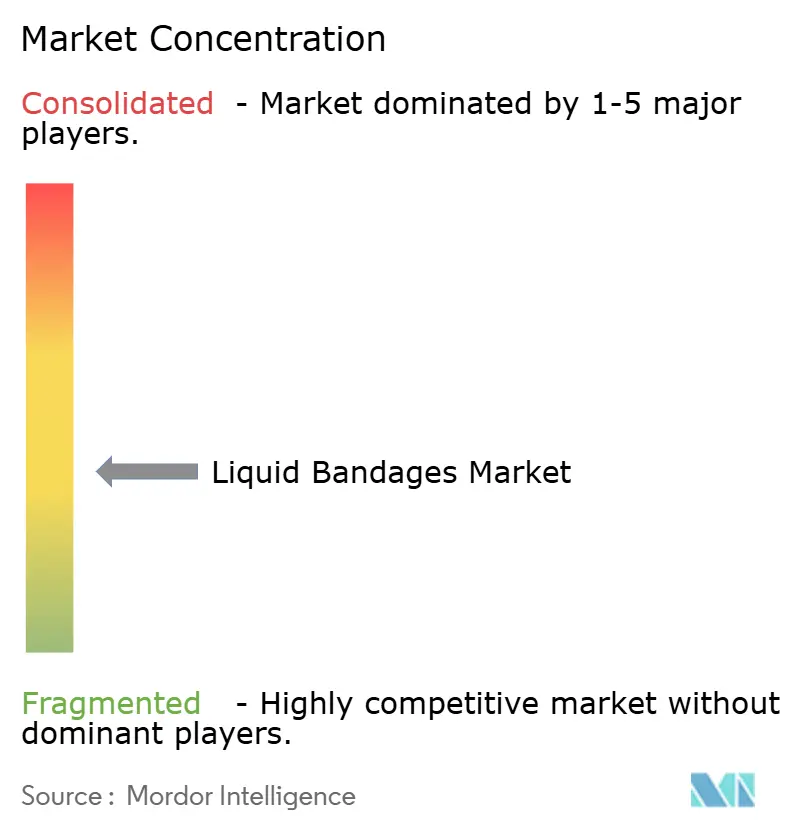
The liquid bandages market is moderately fragmented across two competitive tiers. Solventum, Advantice Health, LLC, Chemence Medical, Inc., Ferndale Laboratories, Inc., competed through clinical evidence, institutional relationships, and regulatory portfolios. Advantice Health, KeriCure, Kobayashi Pharmaceutical, and Taisho Pharmaceutical competed in consumer skin protection through retail presence, brand recognition, and product tolerability.
Solventum reported USD 497 million in Advanced Wound Care revenue in Q1 2026, representing total growth of 10.9% and organic growth of 8.3% year over year. Larger companies had broader resources for clinical evidence generation and hospital access. Specialist suppliers competed in applications that required focused adhesive expertise or targeted product use cases.
Solventum received U.S. Patent 12,396,894 in August 2025 for a hybrid silicone and acrylic adhesive cover for wound treatment. Resivant Medical completed its first patient cases with Cutiva PLUS in June 2026, and BRIJ Medical commercially launched BRIJ-SEAL in July 2026. These developments highlighted material selection and applicator design as key areas of competitive differentiation. Key opportunities included alcohol-free pediatric formulations for price-sensitive emerging markets, surgical-grade spray applicators, and antimicrobial liquid bandages, subject to regulatory approval. Haishi Hainuo Group expanded cost-competitive production for high-volume over-the-counter demand, while Resivant Medical and BRIJ Medical entered through materials science and applicator design innovations. Companies with differentiated formulations and broad retail and institutional distribution held a stronger competitive position.
Liquid Bandages Industry Leaders
-
Medline Industries, LP
-
Chemence Medical, Inc.
-
Advantice Health, LLC
-
Ferndale Laboratories, Inc.
-
Haishi Hainuo Group Co., Ltd.
- *Disclaimer: Major Players sorted in no particular order
Liquid Bandages Market Companies Covered in this Report
- Advantice Health, LLC
- Aleo BME, Inc.
- Chemence Medical, Inc.
- Ferndale Laboratories, Inc.
- Haishi Hainuo Group Co., Ltd.
- KeriCure, Inc.
- Kobayashi Pharmaceutical Co., Ltd.
- Medline Industries
- Optmed, Inc.
- Rochal Industries, LLC
- Smiths Group
- Solventum
- Taisho Pharmaceutical Co., Ltd.
Recent Industry Developments in Liquid Bandages Market
- August 2026: Resivant Medical conducted the first patient procedures using its Cutiva PLUS Skin Closure System at Eisenhower Health, California, advancing siliconized cyanoacrylate topical adhesive technology toward broader commercialization.
- July 2026: BRIJ Medical launched BRIJ-SEAL, a cyanoacrylate-free wound sealant offering a claimed 14-day bacterial barrier for postoperative plastic and orthopedic procedures in the United States and Canada.
- May 2026: Cardinal Health 200, LLC registered two Kendall liquid bandage products in the FDA GUDID database, expanding its institutional over-the-counter liquid wound care portfolio in the United States.
- January 2026: Beiersdorf AG launched Second Skin Protection Spray Plaster and Liquid Plaster Concentrate under its Hansaplast, Elastoplast, and CURITAS brands, targeting consumers who avoided conventional plasters.
Global Liquid Bandages Market Report Scope
As per the scope of the report, a liquid bandage is a fast-drying topical treatment that is painted or sprayed directly onto minor cuts, scrapes, or small cracks in the skin. It is made of polymers mixed in a liquid solvent that evaporates quickly to form a flexible, waterproof, and transparent protective film. This artificial skin layer keeps dirt, bacteria, and water out while helping the wound heal, and it naturally wears off after 5 to 10 days.
The liquid bandages market is segmented by product type, form, application, end user, distribution channel, and geography. By product type, the market includes skin protectants and tissue adhesives. By form, the market is segmented into liquid, spray, gel, and foam. By application, the market is categorized into minor cuts and scrapes; abrasions and blisters; chronic and diabetic wounds; surgical and procedural wound closure; and burns and other skin openings. By end user, the market is segmented into households and personal first aid, hospitals, clinics and physician offices, ambulatory surgery centers, podiatry and wound care centers, and others. By distribution channel, the market is segmented into retail pharmacies, hospital pharmacies, supermarkets and mass merchandisers, online pharmacies, and others. By geography, the market is analyzed across North America, Europe, Asia-Pacific, the Middle East and Africa, and South America. The report also covers estimated market sizes and trends for 17 countries across major regions globally. The report offers market sizes and forecasts in terms of value (USD) for the above segments.
Segmentation Overview
| Skin Protectants |
| Tissue Adhesives |
| Liquid |
| Spray |
| Gel |
| Foam |
| Minor Cuts and Scrapes |
| Abrasions and Blisters |
| Chronic and Diabetic Wounds |
| Surgical and Procedural Wound Closure |
| Burns and Other Skin Openings |
| Households and Personal First Aid |
| Hospitals |
| Clinics and Physician Offices |
| Ambulatory Surgery Centers |
| Podiatry and Wound-Care Centers |
| Others |
| Retail Pharmacies |
| Hospital Pharmacies |
| Supermarkets and Mass Merchandisers |
| Online Pharmacies |
| Others |
| North America | United States |
| Canada | |
| Mexico | |
| Europe | Germany |
| United Kingdom | |
| France | |
| Italy | |
| Spain | |
| Rest of Europe | |
| Asia-Pacific | China |
| India | |
| Japan | |
| Australia | |
| South Korea | |
| Rest of Asia-Pacific | |
| Middle East and Africa | GCC |
| South Africa | |
| Rest of Middle East and Africa | |
| South America | Brazil |
| Argentina | |
| Rest of South America |
| By Product Type | Skin Protectants | |
| Tissue Adhesives | ||
| By Form | Liquid | |
| Spray | ||
| Gel | ||
| Foam | ||
| By Application | Minor Cuts and Scrapes | |
| Abrasions and Blisters | ||
| Chronic and Diabetic Wounds | ||
| Surgical and Procedural Wound Closure | ||
| Burns and Other Skin Openings | ||
| By End User | Households and Personal First Aid | |
| Hospitals | ||
| Clinics and Physician Offices | ||
| Ambulatory Surgery Centers | ||
| Podiatry and Wound-Care Centers | ||
| Others | ||
| By Distribution Channel | Retail Pharmacies | |
| Hospital Pharmacies | ||
| Supermarkets and Mass Merchandisers | ||
| Online Pharmacies | ||
| Others | ||
| By Geography | North America | United States |
| Canada | ||
| Mexico | ||
| Europe | Germany | |
| United Kingdom | ||
| France | ||
| Italy | ||
| Spain | ||
| Rest of Europe | ||
| Asia-Pacific | China | |
| India | ||
| Japan | ||
| Australia | ||
| South Korea | ||
| Rest of Asia-Pacific | ||
| Middle East and Africa | GCC | |
| South Africa | ||
| Rest of Middle East and Africa | ||
| South America | Brazil | |
| Argentina | ||
| Rest of South America | ||
Key Questions Answered in the Report
What is the forecast growth rate for liquid bandages through 2031?
The category is forecast to grow at a CAGR of 6.25% from 2026 to 2031, reaching USD 2.32 billion in 2031.
Which product type generated the most liquid bandage revenue?
Skin Protectants led with 62.45% of revenue in 2025, supported by strong household use and broad retail availability.
Why are spray liquid bandages gaining adoption?
Spray is forecast to grow at a 9.44% CAGR because it provides no-touch application, quick drying, and easier coverage of irregular skin areas.
Which region is growing fastest for liquid bandages?
Asia-Pacific is projected to grow at a 9.53% CAGR through 2031, supported by diabetes prevalence, infrastructure investment, and digital distribution.
How are hospitals using liquid bandage products?
Hospitals are forecast to grow at a 9.34% CAGR as they increase use of tissue adhesives and wound sealants in surgical and postoperative care.
What limits wider use of liquid bandage products?
Skin irritation, stinging, claim restrictions, and some storage concerns can limit repeat use and product positioning.