
Lidocaine Patches Market Size and Share
Market Overview
| Study Period | 2020 - 2031 |
|---|---|
| Market Size (2026) | USD 649.02 Million |
| Market Size (2031) | USD 931.75 Million |
| Growth Rate (2026 - 2031) | 7.50 % |
| Fastest Growing Market | Asia-Pacific |
| Largest Market | North America |
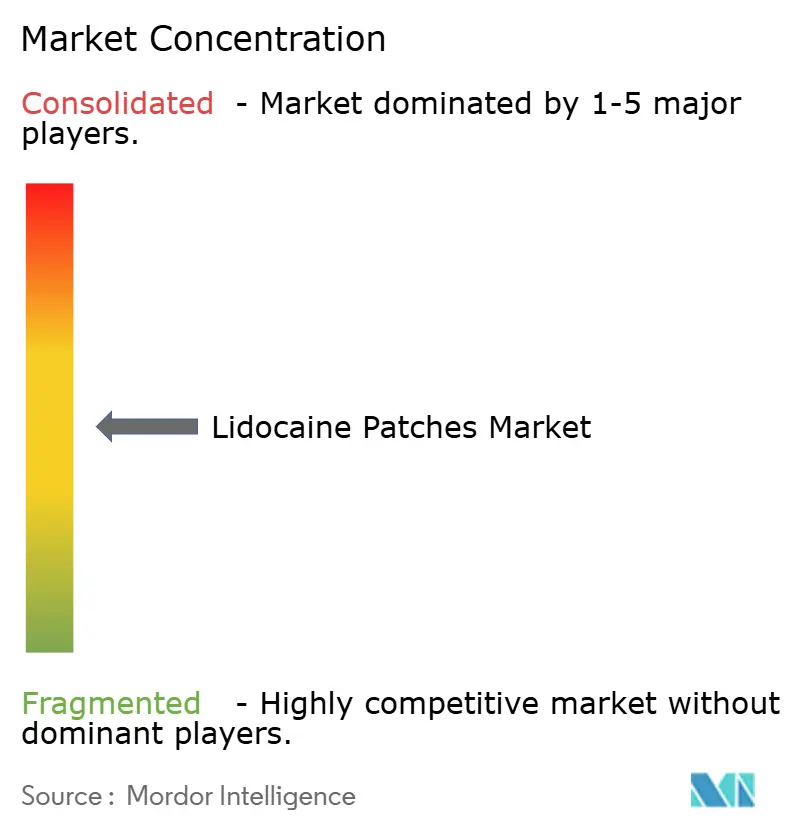
| Market Concentration | Medium |
Major Players *Disclaimer: Major Players sorted in no particular order Image © Mordor Intelligence. Reuse requires attribution under CC BY 4.0. | |
Lidocaine Patches Market Analysis by Mordor Intelligence
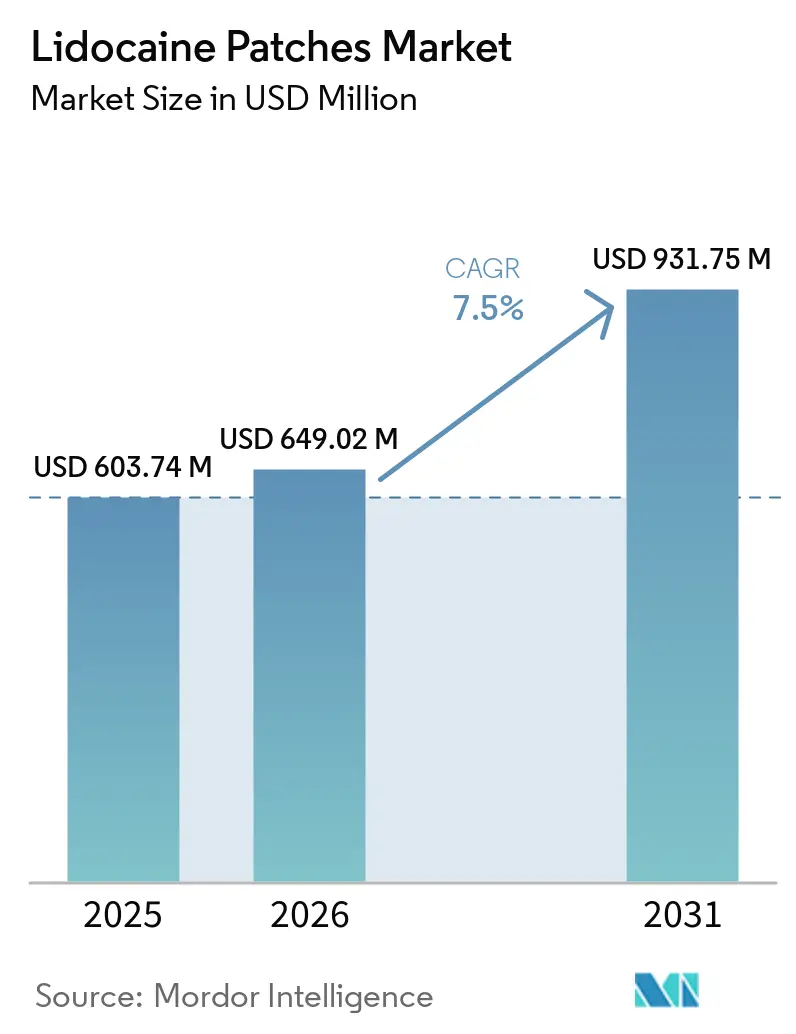
The Lidocaine Patches Market size was valued at USD 603.74 million in 2025 and is estimated to grow from USD 649.02 million in 2026 to reach USD 931.75 million by 2031, at a CAGR of 7.5% during the forecast period (2026-2031).
Demand is moving toward localized pain relief because patients and clinicians want options that reduce reliance on systemic medicines. Medicare reimbursement under the NOPAIN Act has improved the financial case for qualifying non-opioid products in hospital outpatient departments and ambulatory surgery centers. The proposed Relief of Chronic Pain Act of 2025 could widen coverage support in pharmacy settings by addressing deductibles and step therapy for approved non-opioid chronic pain medicines. Manufacturers are responding with better adhesion technologies, new strengths, and broader access through retail and online channels. Generic competition continues to reduce pricing power, while supply exits can create opportunities for brands that can maintain reliable availability.
Key Report Takeaways
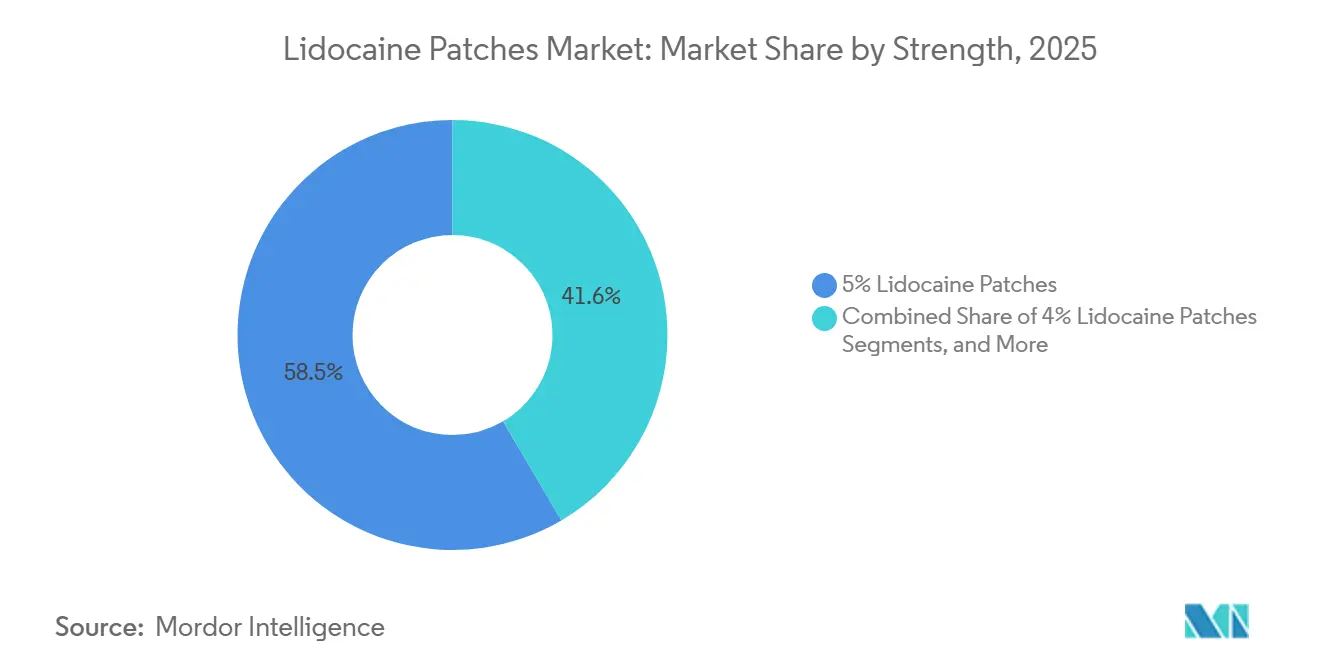
- By strength, 5% lidocaine patches held 58.45% of the lidocaine patches category share in 2025, while 4% patches are projected to grow at an 8.78% CAGR through 2031.
- By product type, prescription patches held 76.56% of the lidocaine patches category share in 2025, while over-the-counter patches are projected to grow at a 9.44% CAGR through 2031.
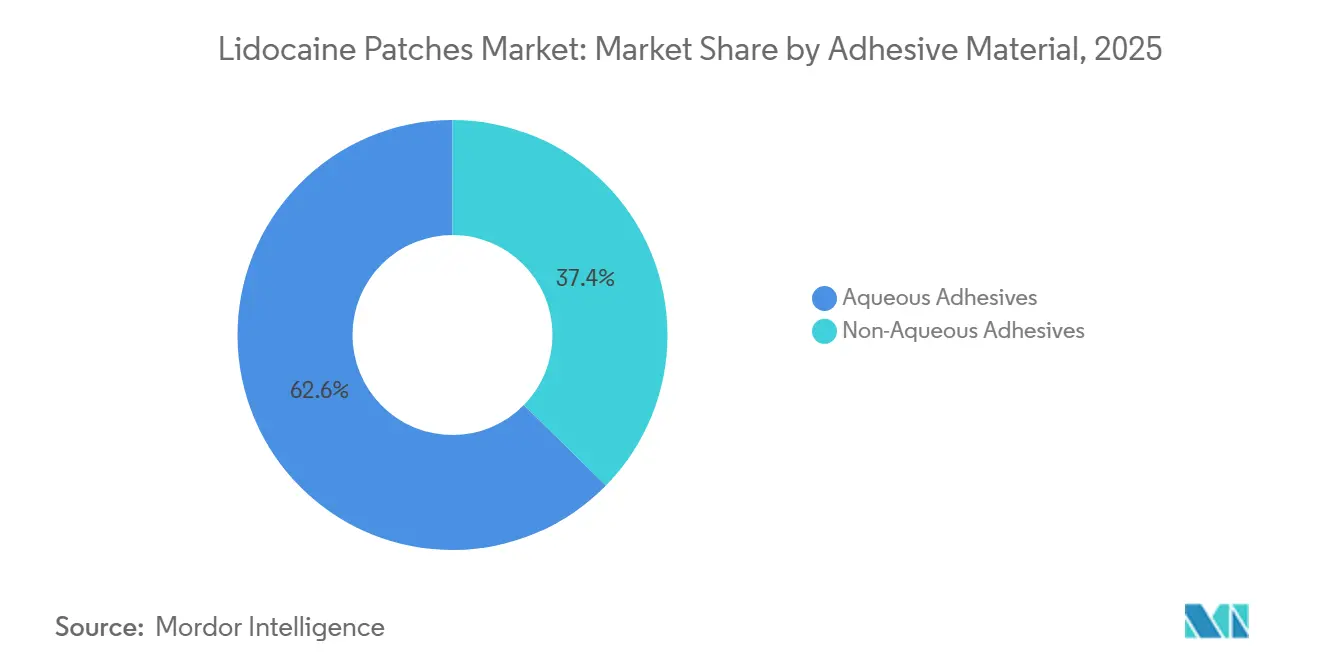
- By adhesive material, aqueous formulations held 62.65% of the lidocaine patches category share in 2025, while non-aqueous systems are projected to grow at a 10.25% CAGR through 2031.
- By application, post-herpetic neuralgia held 59.88% of the lidocaine patches category share in 2025, while lower-back pain is projected to grow at an 8.25% CAGR through 2031.
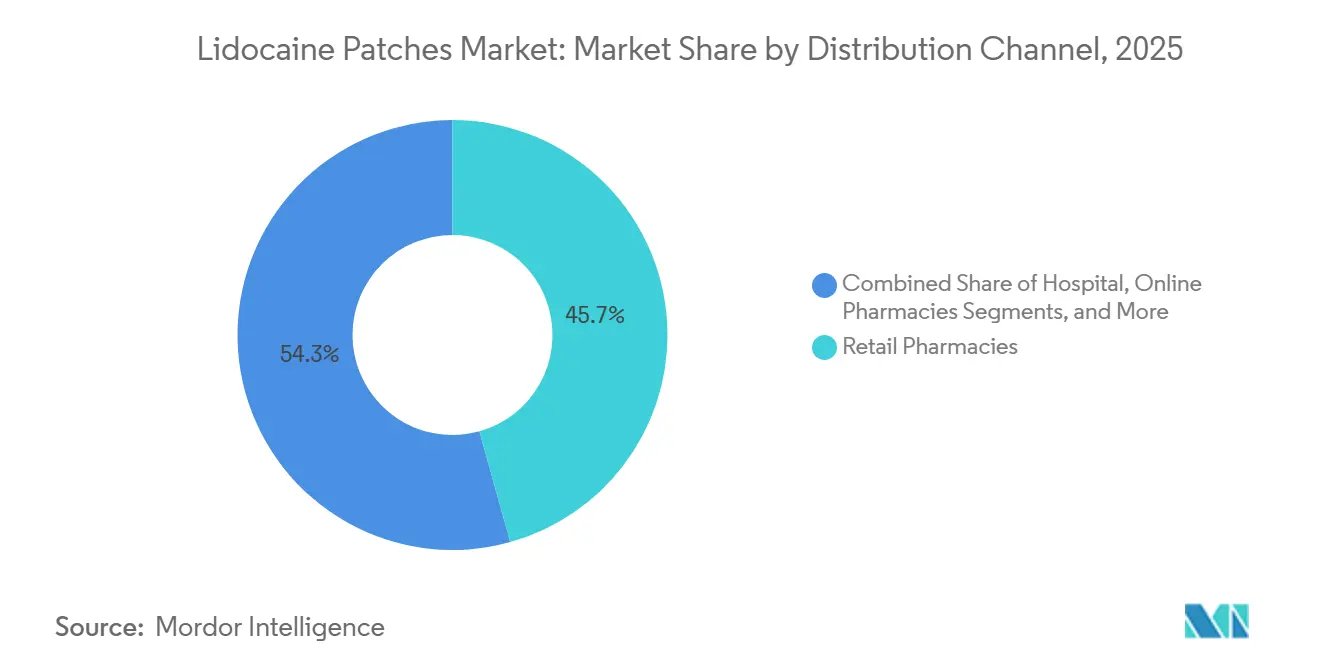
- By distribution channel, retail pharmacies held 45.67% of the lidocaine patches category share in 2025, while online pharmacies are projected to grow at an 8.65% CAGR through 2031.
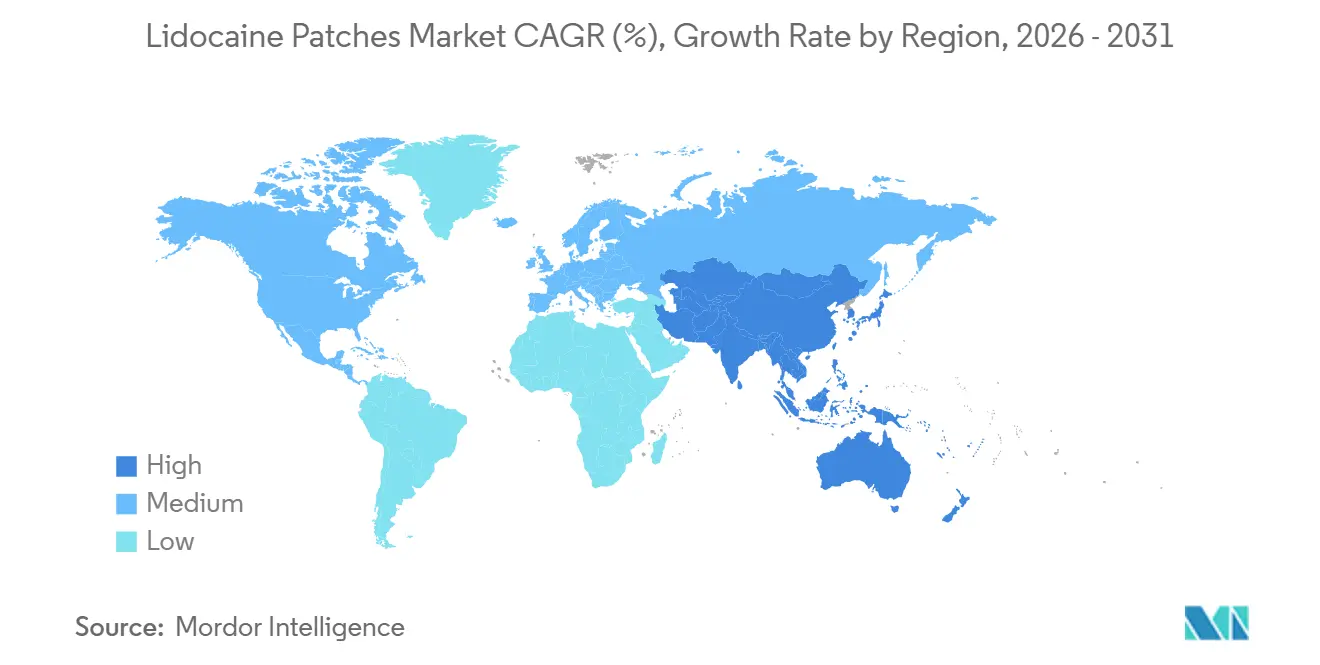
- By geography, North America held 39.34% of global demand in 2025, while Asia-Pacific is projected to expand at an 8.94% CAGR through 2031.
Note: Market size and forecast figures in this report are generated using Mordor Intelligence’s proprietary estimation framework, updated with the latest available data and insights as of January 2026.
Market Trends and Insights
Drivers Impact Analysis of Lidocaine Patches Market*
| DRIVER | (~) % IMPACT ON CAGR FORECAST | GEOGRAPHIC RELEVANCE | IMPACT TIMELINE |
|---|---|---|---|
| Aging population and neuropathic pain | +2.0% | Global, with concentration in North America, Europe, Japan, and China | Long term (≥ 4 years) |
| Non-opioid localized pain management | +1.8% | North America and Europe, with spillover to Asia-Pacific and South America | Medium term (2-4 years) |
| Over-the-counter self-care access | +1.2% | North America, emerging Asia-Pacific markets, and selected European countries | Short term (≤ 2 years) |
| Improved adhesion and drug delivery | +0.9% | Global, with early gains in North America and Japan | Medium term (2-4 years) |
| Generic and authorized-generic availability | +1.8% | North America and Europe, with spillover to Asia-Pacific and South America | Medium term (2-4 years) |
| Growing online pharmacy and telehealth access | +1.2% | North America, emerging Asia-Pacific markets, and selected European countries | Short term (≤ 2 years) |
| Source: Mordor Intelligence | |||
Aging Population and Chronic Neuropathic Pain Burden
The lidocaine patches market is supported by an aging population with a higher prevalence of neuropathic and musculoskeletal pain. Adults aged 45 years and older face elevated risks of herpes zoster, post-herpetic neuralgia, osteoarthritis-related pain, and diabetic peripheral neuropathic pain. A 2025 clinical review reported that non-systemic options were increasingly preferred for frail adults because oral NSAIDs and opioids increased fall and drug interaction risks. These conditions support recurring demand for prescription and consumer lidocaine products.[1] Japan demonstrated the commercial potential of topical pain-relief products in aging populations. Hisamitsu Pharmaceutical reported 4.5% year-over-year revenue growth in FY2026, driven by demand from older consumers. This performance indicates that consumer familiarity and retail availability can strengthen demand in aging markets. Manufacturers can benefit by offering convenient products aligned with older users’ safety requirements.
Preference for Non-Opioid Localized Pain Management
The lidocaine patches market benefits from the growing preference for non-opioid neuropathic pain management. Localized treatments target painful areas while limiting the systemic exposure associated with oral therapies. Researchers at Northeastern University reported that opioids had an efficacy rate below 20% for neuropathic pain, supporting alternative treatment approaches. Clinical and policy initiatives promoting localized pain management continue to support market demand.[2] A claims analysis cited in Scilex’s 2025 annual report found that 21.3% of ZTlido users achieved at least a 20% reduction in opioid use, compared with 13.4% of generic 5% lidocaine patch users. The difference was statistically significant at P = 0.0008. The NOPAIN Act has provided separate Medicare Part B reimbursement for qualifying non-opioid treatments in hospital outpatient departments and ambulatory surgery centers since January 1, 2025.[3] These reimbursement conditions can improve formulary placement and prescribing access for eligible products.
Expansion of Over-the-Counter Self-Care Access
The lidocaine patches market is expanding through over-the-counter products for lower back pain, sports injuries, and arthritic discomfort. Lower-strength patches are available through retail pharmacies and online storefronts without a prescription, improving access to short-term pain relief. This trend increases the importance of pharmacy shelf presence, digital product visibility, and consumer education. Hisamitsu’s Salonpas Lidocaine 4% Pain Relieving FLEX Patch was recognized as the leading new item in the External Analgesics OTC category for the 52 weeks ending December 2023. Retail expansion also involves intellectual property and supply risks. In April 2026, J.A.R. Laboratories filed a complaint that resulted in a U.S. International Trade Commission investigation into imported OTC topical lidocaine patches. The complaint named products associated with Hisamitsu, Perrigo, Reckitt Benckiser, and Chattem, among other respondents. A final determination is expected within 18 months. The market favors brands that combine competitive pricing with differentiated adhesion, clear labeling, and reliable supply.
Improved Patch Adhesion and Drug-Delivery Performance
The lidocaine patches market increasingly depends on products remaining attached during normal daily activities. Conventional hydrogel patches can lose skin contact during exercise and humid conditions. Reported data showed that certain generic 5% patches achieved less than 40% surface adhesion after 12 hours, while ZTlido 1.8% maintained nearly 100% adhesion through ZTech technology. Strong adhesion improves dose consistency and reduces the need to replace detached patches. MEDRx’s Bondlido 10% uses Ionic Liquid Transdermal System technology to improve transdermal delivery. Its clinical evaluation found that 98 of 100 applied systems maintained at least 75% surface adhesion at all observed points over 12 hours, including exercise conditions. Research published in 2025 described a lidocaine-loaded microneedle patch with smartphone-controlled iontophoresis and reported 93.1% drug delivery efficiency within 72 hours across 3 release modes. Although this technology remains preclinical, it reflects demand for controlled delivery solutions that maintain skin comfort.
Restraints Impact Analysis of Lidocaine Patches Market*
| RESTRAINT | (~) % IMPACT ON CAGR FORECAST | GEOGRAPHIC RELEVANCE | IMPACT TIMELINE |
|---|---|---|---|
| Generic price erosion and formulary substitution | -0.9% | North America, with a secondary effect in Europe | Short term (≤ 2 years) |
| Adhesion failure, skin irritation, and delivery variability | -0.6% | Global | Medium term (2-4 years) |
| Narrow approved indication for prescription products | -0.4% | Global | Medium term (2-4 years) |
| Competition from non-patch topical and systemic therapies | -0.5% | Global | Medium term (2-4 years) |
| Source: Mordor Intelligence | |||
Generic Price Erosion and Formulary Substitution
Generic entry materially constrains the branded segment of the lidocaine patches market. In March 2025, the FDA approved the first generic lidocaine 1.8% patch. Aveva Drug Delivery Systems received approval for an AB-rated alternative to Scilex’s ZTlido. In August 2026, a Federal Circuit ruling affirmed a non-infringement finding, enabling Aveva’s planned commercial launch with 180 days of market exclusivity. The case concerned the interpretation of a dissolving-agent claim in ZTlido patents, increasing price competition as payers favor lower-cost alternatives. Prior authorization and formulary tiering can limit branded access, particularly under pharmacy benefit plans. While policy proposals addressing deductibles and step therapy may ease access barriers for approved non-opioid products, brands without a clear clinical or technical advantage face a higher substitution risk.
Adhesion Failure, Skin Irritation, and Heat-Related Delivery Variability
Patch detachment and skin tolerability concerns can reduce adherence in chronic pain treatment, particularly during full-day or overnight use. Heat can increase percutaneous lidocaine flux, creating variability in drug absorption during routine activities. Clear use instructions, consistent adhesive design, and proper disposal are essential, as used patches can retain meaningful amounts of lidocaine. These factors influence confidence in both prescription and OTC products. Supply disruptions can require patients to switch between products with different adhesive and delivery properties. Teva discontinued its lidocaine 5% transdermal patch in April 2026, while Amneal was reported to be on backorder.
*Our forecasts treat driver/restraint impacts as directional, not additive. The impact forecasts reflect baseline growth, mix effects, and variable interactions.
Lidocaine Patches Market Segment Analysis
By Strength:
Prescription-Grade 5% Tier Anchors Revenue While 4% Variants AccelerateThe 5% lidocaine patch held 58.45% of the lidocaine patches market share in 2025, supported by its established use in post-herpetic neuralgia and familiarity among pain specialists. A 2024 study of 24 patients reported that mean Visual Analogue Scale scores declined from 8.71 at baseline to 3.58 after four weeks of treatment. The format remains a formulary benchmark, although generic supply changes may pressure volumes. Its relevance depends on clinical familiarity, availability, and payer access.
Other strengths, including 1.8% and 10% systems, expanded prescriber dosage options. Bondlido 10% received approval in September 2025, while ZTlido 1.8% entered a new phase of generic competition during 2025 and 2026. The 4% format is forecast to grow at an 8.78% CAGR through 2031, driven by OTC availability across retail and online channels. Teva’s April 2026 exit from the 5% generic category may support demand for accessible 4% products. Companies need retail visibility, clear dosing, and consistent performance to drive repeat purchases.

By Product Type:
Prescription Segment Leads as OTC Channels Disrupt the Revenue MixPrescription products accounted for 76.56% of the lidocaine patches market share in 2025, reflecting their established use for post-herpetic neuralgia under FDA-labeled indications. Scilex reported that more than 206 million prescription lidocaine patches were sold in the United States during 2025. Tennessee Medicaid added ZTlido to its Preferred Drug List, extending coverage to 1.5 million enrollees. Growth will depend on clinical evidence, reimbursement coverage, and management of generic substitution.
OTC patches are forecast to grow at a 9.44% CAGR through 2031, supported by broad access to lower-strength products for routine pain relief. Manufacturers can build demand through retail placement, digital advertising, and direct-to-consumer channels. The April 2026 ITC investigation highlighted potential legal disruption to imported OTC supply. Domestic manufacturing, defensible drug-in-adhesive technology, and brand recognition may strengthen competitive positioning, while excessive price promotions could weaken long-term value.
By Adhesive Material:
Non-Aqueous Systems Drive Next-Generation Formulation InnovationAqueous adhesive formulations held 62.65% of the lidocaine patches market share in 2025. These hydrogel-based systems benefit from manufacturing simplicity, regulatory acceptance, and broad familiarity among pharmacists and prescribers. However, some generic 5% hydrogel patches retained less than 40% surface adhesion after 12 hours. Hisamitsu’s 2025 patent covered a terpene-resin and propylene glycol combination designed to limit lidocaine crystallization and self-adhesion.
Non-aqueous systems are forecast to expand at a 10.25% CAGR through 2031, supported by drug-in-adhesive platforms such as ZTlido and Bondlido’s ionic liquid approach. These systems aim to improve adhesion and maintain drug delivery throughout the wear period. The August 2026 Aveva and Scilex litigation outcome reinforced the importance of formulation patents in market competition. FDA bioequivalence requirements for adhesion also create technical entry barriers, supporting demand for proven non-aqueous products.
By Application:
PHN Anchors Prescription Revenue While Lower-Back Pain Expands at PacePost-herpetic neuralgia accounted for 59.88% of the lidocaine patches market share in 2025, reflecting patient need and the narrow approved labeling of prescription-strength products. A 2025 study found that lidocaine and pregabalin offered complementary effects, with lidocaine addressing peripheral nociceptor hyperactivity and pregabalin targeting central sensitization. The application remains important for specialist prescribing and repeat use. Other applications include musculoskeletal, osteoarthritis-related, postsurgical, diabetic neuropathic, and sports-related pain.
Lower-back pain is forecast to be the fastest-growing application, registering an 8.25% CAGR through 2031. Growth is supported by off-label prescription use and OTC demand during acute lumbar pain episodes. Scilex’s SP-103, containing 5.4% lidocaine, completed Phase 2 trials and received FDA Fast Track designation for chronic neck and lower-back pain, with no serious adverse events reported. Hisamitsu also partnered with PLAYA Racquet Club in Malaysia during 2026 to associate Salonpas with athletic recovery.
By Distribution Channel:
Retail Leads but Digital Channels Outpace Conventional OutletsRetail pharmacies held 45.67% of the distribution channel share in 2025, serving as the primary access point for prescription dispensing and OTC purchases. Their visibility supports brand recognition for products such as Salonpas, while retail staff can guide consumers on appropriate OTC product selection and label directions. Hospital pharmacies remain relevant for specialist-supervised treatment, postsurgical care, and initial post-herpetic neuralgia management. Physical retail remains essential, although recurring purchases are increasingly shifting online.
Online pharmacies are forecast to grow at an 8.65% CAGR through 2031, supported by automatic replenishment, subscription models, and telehealth-linked prescribing. Telehealth prescribing extensions for non-controlled analgesics through the end of 2026 supported remote prescribing in the United States. One online provider listed 5% lidocaine patches at USD 61.99 for a 30-count pack in 2026. Digital channels enable direct engagement with repeat users, although providers must maintain prescription controls and promote safe use.
Geography Analysis
North America Lidocaine Patches Market
North America held 39.34% of the lidocaine patches market share in 2025, supported by established prescription infrastructure, a sizable aging population, and widespread use of topical pain treatments. The NOPAIN Act improved reimbursement for qualifying non-opioid products in hospital outpatient departments and ambulatory surgery centers from January 2025. Scilex Holding Company reported that more than 206 million prescription lidocaine patches were sold in the United States in 2025, with 6 principal manufacturers accounting for nearly 90% of prescription volume.
Europe Lidocaine Patches Market
Europe maintains a meaningful position in the lidocaine patches market, supported by an aging population and a structured regulatory environment. Germany, Italy, and Spain have sizable patient populations with post-herpetic neuralgia and musculoskeletal pain management needs. European Medicines Agency bioequivalence requirements for transdermal patches support generic entry and cost control across national health systems, placing continued pressure on prescription product pricing.
APAC Lidocaine Patches Market
Asia-Pacific is forecast to grow at a CAGR of 8.94% through 2031, making it the fastest-growing region in the lidocaine patches market. Japan and China combine aging populations with rising demand for accessible pain relief, while Southeast Asia is expanding access through retail distribution and broader OTC availability. Hisamitsu reported 4.5% FY2026 revenue growth and planned more than JPY 50 billion in Salonpas supply expansion, alongside over JPY 150 billion in research, development, and strategic investment. The supplied material cited these amounts as USD 323 million and USD 968 million, respectively. Hisamitsu launched Salonpas in Cambodia in May 2026 through a distribution agreement with Dynamic Argon Co., Ltd.
Competitive Landscape
The lidocaine patches market comprises a specialized prescription segment and a growing consumer product segment. Scilex and MEDRx are key innovators in branded prescription products. Scilex uses non-aqueous adhesive technology in ZTlido, while MEDRx uses an ionic liquid platform in Bondlido. Hisamitsu maintains a strong OTC presence through its Salonpas brand. In January 2026, Hisamitsu’s management proposed a buyout valued at approximately JPY 450 billion, (USD 2.9 billion), to support overseas expansion and strategic investment. Teva, Endo, and Mylan/Viatris exited the generic 5% segment, narrowing the supplier base. Amneal, Yaral Pharma, and Aveva are positioned to serve the generic category following these exits.
Competition centers on adhesion performance, approved indications, product strength, and channel access. Hisamitsu advanced adhesive formulation development through its 2025 patent activity. Scilex pursued indication expansion for SP-103 in chronic neck and lower back pain, while MEDRx differentiated Bondlido through its 10% system and ionic liquid delivery technology. These strategies reduce reliance on price competition through differentiated product profiles. The April 2026 ITC proceeding could reshape the OTC segment if it results in restrictions on imported products. Cipla, Alkem, and Apotex may address institutional generic supply gaps where procurement prioritizes availability. Companies compete through technical differentiation and supply reliability to secure formulary placements and retail positions.
In July 2024, Scilex signed an MOU with ACEA for exclusive ZTlido commercialization rights in China, Taiwan, Hong Kong, and Macau, highlighting Asia’s potential for intellectual property protection and commercialization. Hisamitsu supported expansion through e-commerce initiatives and regional distribution partnerships, including an April 2026 arrangement in Cambodia with DYNAMIC ARGON CO., LTD. The generic segment had fewer suppliers after recent exits, although new approvals continued to increase pricing pressure. Branded companies require clinical evidence, differentiated adhesion technologies, and broader approved uses to protect their positions, creating opportunities for both price-based competition and technology-led growth.
Lidocaine Patches Industry Leaders
-
Hisamitsu Pharmaceutical Co., Inc.
-
Scilex Pharmaceuticals Inc.
-
Endo Pharmaceuticals Inc.
-
Teikoku Seiyaku Co., Ltd.
-
Teva Pharmaceutical Industries Ltd.
- *Disclaimer: Major Players sorted in no particular order
Lidocaine Patches Market Companies Covered in this Report
- Actavis Laboratories UT, Inc.
- Alkem Laboratories Ltd.
- Amneal Pharmaceuticals
- Apotex
- Aveva Drug Delivery Systems
- Cipla
- DifGen Pharmaceuticals LLC
- Endo International
- Galen Limited
- Hisamitsu Pharmaceutical
- Mylan
- Nipro Pharma Corporation
- Oishi Koseido Co., Ltd.
- Scilex Pharmaceuticals Inc.
- Sparsha Pharma International Pvt. Ltd.
- Teikoku Seiyaku Co., Ltd.
- Teva Pharmaceutical Industries
- Viatris
Recent Industry Developments in Lidocaine Patches Market
- August 2026: Aveva Drug Delivery Systems reported that the U.S. Court of Appeals affirmed a non-infringement ruling, enabling the launch of its generic lidocaine 1.8% patch with 180-day exclusivity.
- April 2026: The U.S. International Trade Commission initiated a Section 337 investigation into imported OTC lidocaine patches following patent infringement allegations by J.A.R. Laboratories.
- January 2026: Hisamitsu Pharmaceutical announced a JPY 450 billion (USD 2.9 billion) privatization proposal and outlined investments in Salonpas supply expansion, R&D, and strategic initiatives.
Global Lidocaine Patches Market Report Scope
As per the scope of the report, lidocaine patches are transdermal adhesive patches infused with the local anesthetic lidocaine, designed to provide targeted, localized pain relief directly through the skin. They function by penetrating the epidermal layer to temporarily block voltage-gated sodium channels on local, damaged nerve fibers.
The lidocaine patches market is segmented by strength, product type, adhesive material, application, distribution channel, and geography. By strength, the market includes 4% lidocaine patches, 5% lidocaine patches, and other lidocaine patch strengths. By product type, the market is segmented into prescription lidocaine patches and over-the-counter lidocaine patches. By adhesive material, the market includes aqueous adhesives and non-aqueous adhesives. By application, the market is segmented into postherpetic neuralgia, musculoskeletal pain, lower back pain, osteoarthritis-associated pain, post-surgical pain, diabetic neuropathic pain, sports- and exercise-related pain, and other pain indications. By distribution channel, the market is segmented into hospital pharmacies, retail pharmacies, online pharmacies, and other distribution channels. By geography, the market is analyzed across North America, Europe, Asia-Pacific, the Middle East and Africa, and South America. The report also covers estimated market sizes and trends for 17 countries across major regions globally. The report offers market sizes and forecasts in terms of value (USD) for the above segments.
Segmentation Overview
| 4% Lidocaine Patches |
| 5% Lidocaine Patches |
| Other Lidocaine Strengths |
| Prescription Lidocaine Patches |
| Over-the-Counter Lidocaine Patches |
| Aqueous Adhesives |
| Non-Aqueous Adhesives |
| Post-Herpetic Neuralgia |
| Musculoskeletal Pain |
| Lower-Back Pain |
| Osteoarthritis-Associated Pain |
| Post-Surgical Pain |
| Diabetic Neuropathic Pain |
| Sports and Exercise-Related Pain |
| Other Pain Indications |
| Hospital Pharmacies |
| Retail Pharmacies |
| Online Pharmacies |
| Others |
| North America | United States |
| Canada | |
| Mexico | |
| Europe | Germany |
| United Kingdom | |
| France | |
| Italy | |
| Spain | |
| Rest of Europe | |
| Asia-Pacific | China |
| India | |
| Japan | |
| Australia | |
| South Korea | |
| Rest of Asia-Pacific | |
| Middle East and Africa | GCC |
| South Africa | |
| Rest of Middle East and Africa | |
| South America | Brazil |
| Argentina | |
| Rest of South America |
| By Strength | 4% Lidocaine Patches | |
| 5% Lidocaine Patches | ||
| Other Lidocaine Strengths | ||
| By Product Type | Prescription Lidocaine Patches | |
| Over-the-Counter Lidocaine Patches | ||
| By Adhesive Material | Aqueous Adhesives | |
| Non-Aqueous Adhesives | ||
| By Application | Post-Herpetic Neuralgia | |
| Musculoskeletal Pain | ||
| Lower-Back Pain | ||
| Osteoarthritis-Associated Pain | ||
| Post-Surgical Pain | ||
| Diabetic Neuropathic Pain | ||
| Sports and Exercise-Related Pain | ||
| Other Pain Indications | ||
| By Distribution Channel | Hospital Pharmacies | |
| Retail Pharmacies | ||
| Online Pharmacies | ||
| Others | ||
| By Geography | North America | United States |
| Canada | ||
| Mexico | ||
| Europe | Germany | |
| United Kingdom | ||
| France | ||
| Italy | ||
| Spain | ||
| Rest of Europe | ||
| Asia-Pacific | China | |
| India | ||
| Japan | ||
| Australia | ||
| South Korea | ||
| Rest of Asia-Pacific | ||
| Middle East and Africa | GCC | |
| South Africa | ||
| Rest of Middle East and Africa | ||
| South America | Brazil | |
| Argentina | ||
| Rest of South America | ||
Key Questions Answered in the Report
What is the 2026 value of the lidocaine patches market?
The lidocaine patches market was valued at USD 649.02 million in 2026 and is forecast to reach USD 931.75 million by 2031. This forecast reflects a 7.50% CAGR for the 2026 to 2031 period.
What is driving demand for lidocaine patches?
Demand is supported by non-opioid pain care, aging populations, OTC access, and improved patch adhesion technologies. Reimbursement support and access through retail and online channels also shape purchasing and prescribing.
Which lidocaine patch strength is growing fastest?
The 4% patch segment is forecast to grow at an 8.78% CAGR through 2031, supported by OTC availability. Its growth depends on accessible retail placement, clear dosing, and product performance.
Which product category currently leads sales?
Prescription patches led with 76.56% share in 2025, supported by their established use in post-herpetic neuralgia. Specialist prescribing, formulary access, and clinical familiarity reinforce this position.
Which region is growing fastest for lidocaine patches?
Asia-Pacific is forecast to grow at an 8.94% CAGR through 2031, supported by aging populations and wider retail access. Japan, China, and Southeast Asia contribute through consumer demand and distribution expansion.
Why does patch adhesion matter to patients and manufacturers?
Adhesion affects wear time, dose consistency, comfort, repeat use, and the ability of brands to differentiate from conventional hydrogel products. It also influences whether patients can use a patch reliably during exercise, work, daily routines, and periods of humid weather and normal movement.