
Lichen Nitidus Treatment Market Size and Share
Market Overview
| Study Period | 2021 - 2031 |
|---|---|
| Market Size (2026) | USD 122.85 Million |
| Market Size (2031) | USD 159.47 Million |
| Growth Rate (2026 - 2031) | 5.36 % |
| Fastest Growing Market | Asia-Pacific |
| Largest Market | North America |
| Market Concentration | Low |
Major Players *Disclaimer: Major Players sorted in no particular order Image © Mordor Intelligence. Reuse requires attribution under CC BY 4.0. | |
Lichen Nitidus Treatment Market Analysis by Mordor Intelligence
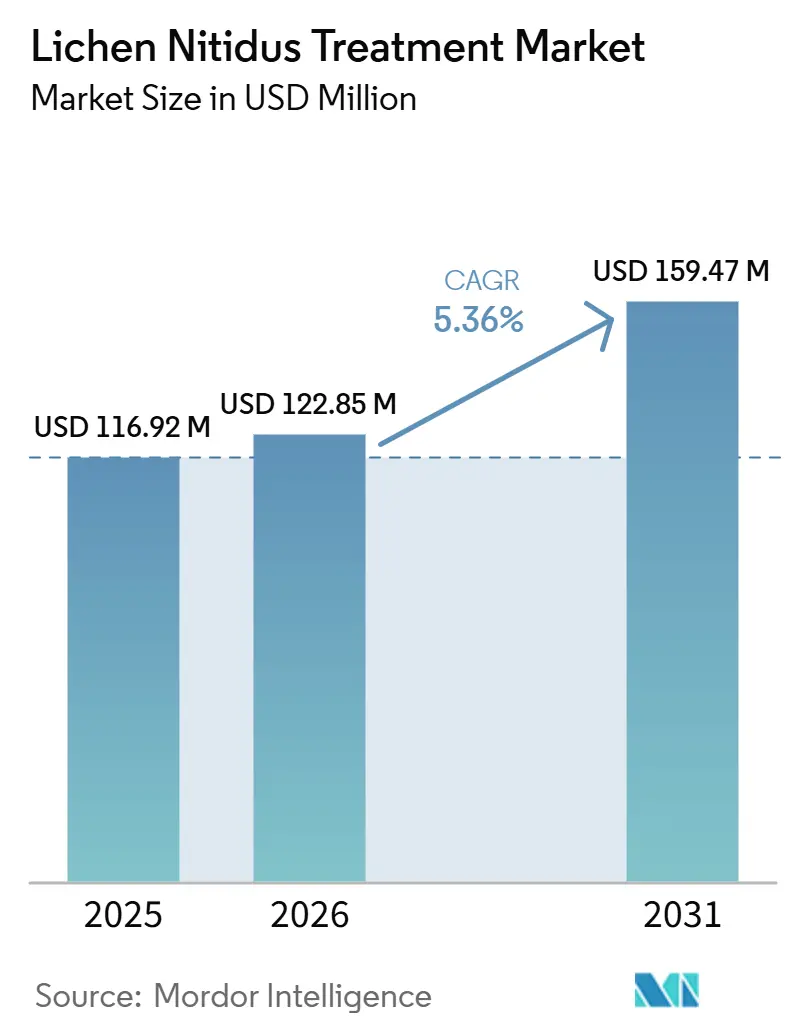
The Lichen Nitidus Treatment Market was valued at USD 116.92 million in 2025 and is estimated to grow from USD 122.85 million in 2026 to reach USD 159.47 million by 2031, at a CAGR of 5.36% during the forecast period (2026–2031). The lichen nitidus treatment market is growing as more symptomatic and generalized cases enter formal care after diagnosis. Wider access to dermatologists is bringing patients into treatment pathways across North America, Europe, and selected Asia-Pacific countries. Companies compete through established topical corticosteroid, calcineurin inhibitor, retinoid, and antihistamine portfolios because no therapy has a specific approval for lichen nitidus. This setting limits investment in disease-specific research, but it also gives companies with established dermatology products a practical route to serve off-label demand. Earlier recognition of atypical presentations may increase referrals to specialist settings where treatment begins, strengthening the lichen nitidus treatment market over time.
Key Report Takeaways
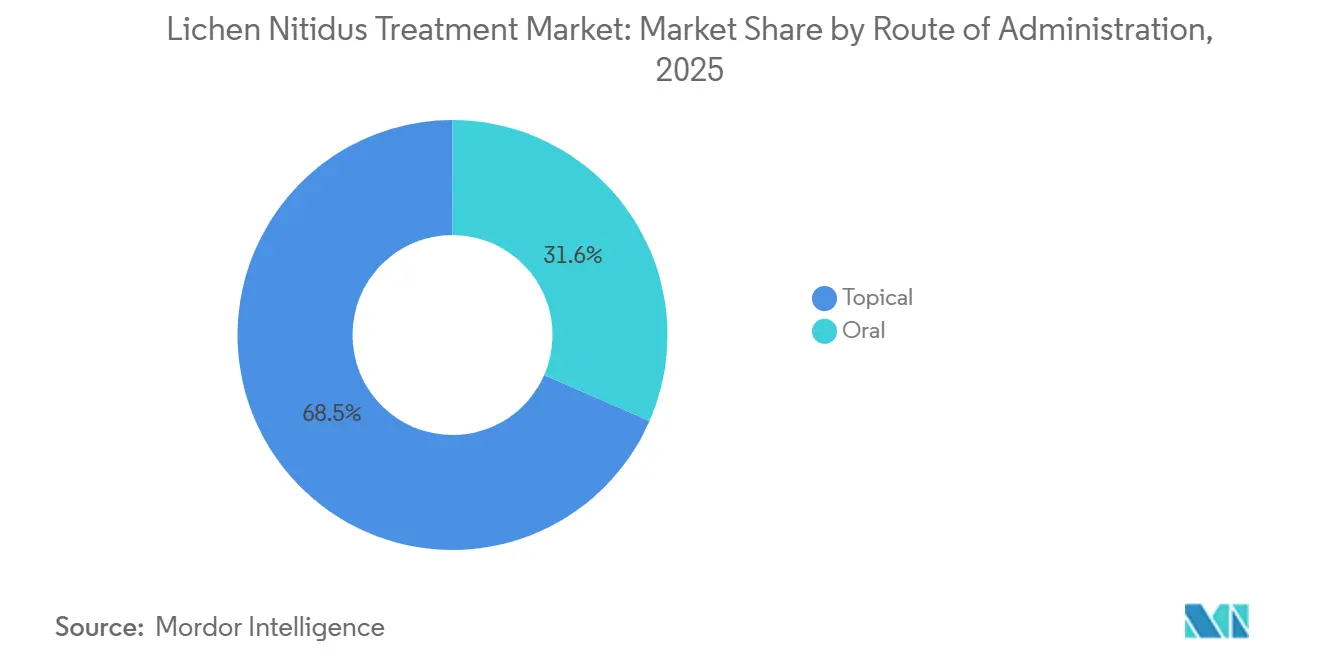
- By route of administration, topical held 68.45% of the lichen nitidus treatment market share in 2025 and is forecast to grow at a 5.48% CAGR through 2031.
- By diagnosis method, clinical examination held 49.61% of the lichen nitidus treatment market share in 2025, while reflectance confocal microscopy is forecast to grow at a 7.46% CAGR through 2031.
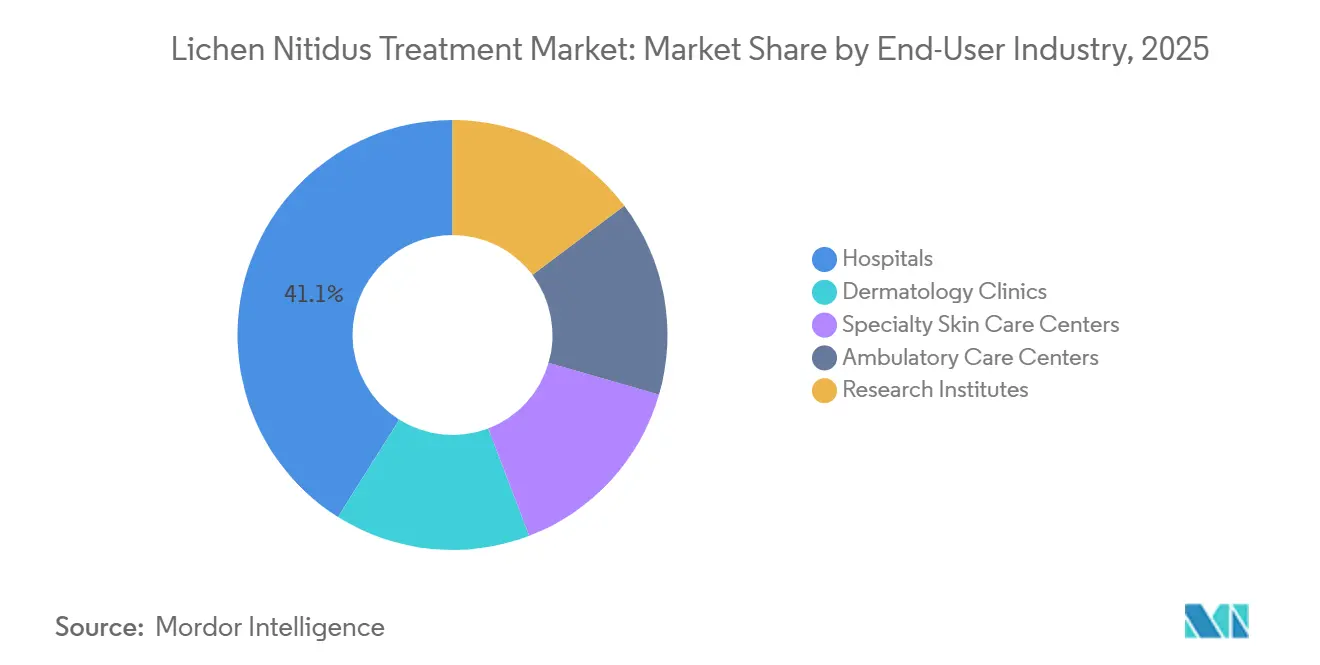
- By end-user industry, hospitals accounted for 41.07% of the lichen nitidus treatment market share in 2025, while specialty skin care centers are forecast to grow at a 6.71% CAGR through 2031.
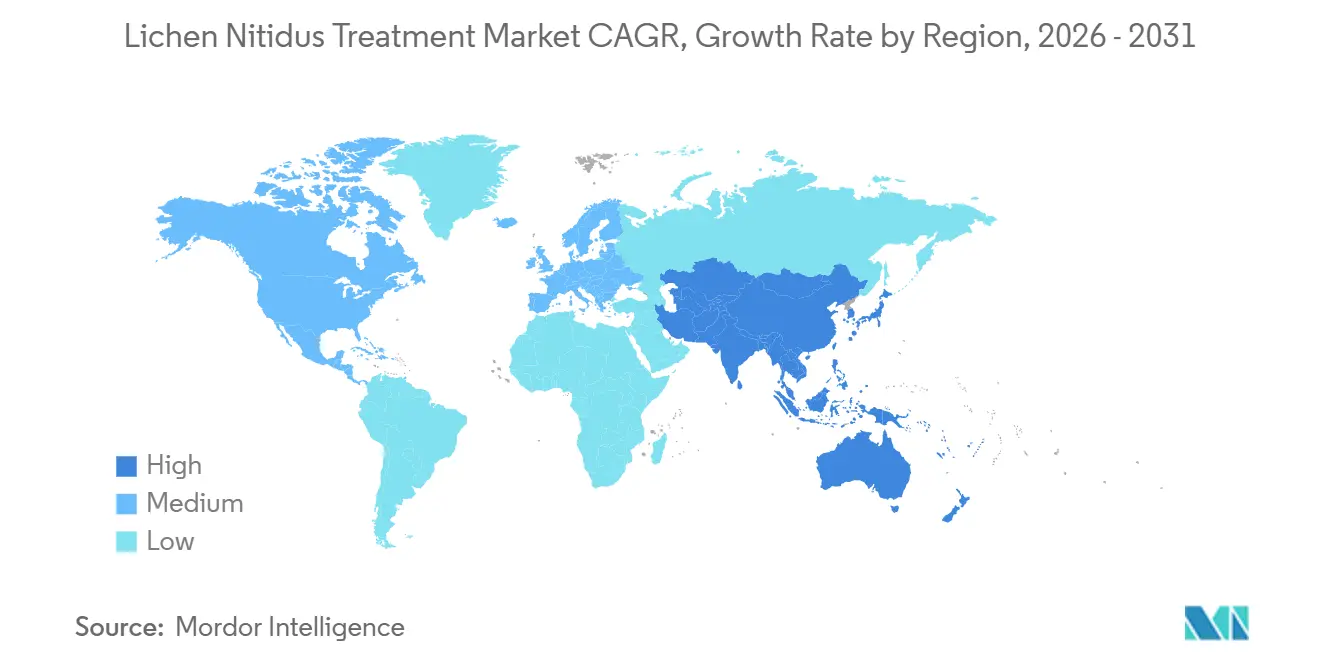
- By geography, North America accounted for 38.73% of the lichen nitidus treatment market share in 2025, while Asia-Pacific is forecast to grow at a 6.43% CAGR through 2031.
Note: Market size and forecast figures in this report are generated using Mordor Intelligence’s proprietary estimation framework, updated with the latest available data and insights as of January 2026.
Market Trends and Insights
Drivers Impact Analysis of Lichen Nitidus Treatment Market*
| Driver | (~) % Impact on CAGR Forecast | Geographic Relevance | Impact Timeline |
|---|---|---|---|
| Increasing Diagnosis of Symptomatic and Generalized Lichen Nitidus Cases | +1.2% | Global, concentrated gains in North America and Western Europe | Medium term (2–4 years) |
| Growing Access to Specialized Dermatology Care Services | +1.0% | APAC core, spill-over to MEA | Long term (≥ 4 years) |
| Rising Adoption of Topical Therapies and Non-Invasive Treatment Approaches | +0.9% | Global | Short to medium term (≤ 4 years) |
| Increasing Awareness and Early Recognition of Rare Dermatological Disorders | +0.8% | Global, early gains in North America, EU, and East Asia | Medium term (2–4 years) |
| Improved Clinical Recognition of Atypical and Generalized Disease Presentations | +0.7% | North America and EU | Short term (≤ 2 years) |
| Source: Mordor Intelligence | |||
Increasing Diagnosis of Symptomatic and Generalized Lichen Nitidus Cases
Lichen nitidus was often underdiagnosed because localized lesions can be asymptomatic, clinically inconspicuous, and unlikely to prompt a patient or a general practitioner to seek specialist advice. A more comprehensive assessment of inflammatory papular disorders identifies a larger share of symptomatic and generalized cases that warrant active care rather than routine observation. A 2024 report from Japan recorded 37 generalized cases, and 27 patients received topical steroids, with measurable improvement in 21 patients. A confirmed generalized or symptomatic presentation moves the patient from observation into a defined treatment pathway, which increases the number of treatment decisions made in specialist care. The lichen nitidus treatment market benefits when dermatologists distinguish these presentations from other papular disorders and explain appropriate options to patients. Greater recognition of atypical disease also supports earlier referral to specialist practices where follow-up can be organized.
Growing Access to Specialized Dermatology Care Services
Specialist dermatology access is expanding through larger practice networks and teledermatology services that can connect patients with trained clinicians sooner than traditional referral systems. This expansion increases the number of encounters in which uncommon inflammatory dermatoses can be identified, documented, and referred appropriately. The lichen nitidus treatment market, therefore, gains from access improvements even when the condition itself remains uncommon, and many localized cases do not need medication. Hospital dermatology departments, specialty clinics, and ambulatory centers each provide routes for diagnosis, prescription decisions, and follow-up. In the Asia-Pacific region, expanding hospital dermatology capacity may bring specialist assessment to populations that previously had limited access to formal skin disease care. More specialists' contact also reduces the likelihood that a symptomatic case is managed without a formal diagnosis or a clear plan for reassessment.
Rising Adoption of Topical Therapies and Non-Invasive Treatment Approaches
Topical therapy is preferred in lichen nitidus because it provides localized treatment, avoids systemic exposure in many cases, and fits the usual clinical approach to limited skin involvement. A 2024 case report described near-complete clearance after once-daily alclometasone dipropionate ointment in a pediatric generalized presentation. Another 2024 report described complete resolution after 4 weeks of once-daily roflumilast cream 0.3% in a patient whose disease had not responded to corticosteroids. Tacrolimus and pimecrolimus offer steroid-sparing options for sensitive skin areas and for pediatric patients, where the consequences of prolonged corticosteroid use may influence prescribing. The breadth of topical product portfolios is an important competitive factor in the lichen nitidus treatment market, especially for companies supplying familiar products across dermatology settings. Non-invasive diagnostic methods can also support treatment decisions without immediately requiring biopsy, which may improve the experience for patients with uncertain presentations.
Increasing Awareness and Early Recognition of Rare Dermatological Disorders
Professional education on rare inflammatory dermatoses can reduce delays in diagnosis by helping clinicians recognize patterns that might otherwise be mistaken for more common skin conditions. Lichen nitidus shares clinical features with other papular inflammatory disorders, so a stronger differential diagnosis can improve diagnostic accuracy and reduce reliance on broad descriptive labels. The lichen nitidus treatment market expands when patients receive a specific diagnosis instead of a nonspecific description of their lesions, and can be assessed for symptom burden. Earlier recognition can also direct patients toward therapies suited to symptomatic or generalized disease before lesions create persistent concern or repeated consultations. Growing rare-disease documentation may give clinicians and payers a clearer basis for discussing the condition, its treatment options, and the cases that need active care. This process is especially relevant where clinician exposure to rare dermatoses has historically been limited, and referral pathways are still developing.
Restraints Impact Analysis of Lichen Nitidus Treatment Market*
| Restraint | (~) % Impact on CAGR Forecast | Geographic Relevance | Impact Timeline |
|---|---|---|---|
| High Rate of Spontaneous Disease Resolution Reducing the Need for Active Treatment | -1.2% | Global | Short term (≤ 2 years) |
| Limited Availability of Robust Clinical Evidence and Controlled Trials | -0.8% | Global | Long term (≥ 4 years) |
| Limited Development of Disease-Specific Therapeutics and Commercial Products | -0.9% | Global | Long term (≥ 4 years) |
| Source: Mordor Intelligence | |||
High Rate of Spontaneous Disease Resolution Reducing the Need for Active Treatment
Lichen nitidus can resolve without pharmacological treatment, particularly in localized and asymptomatic presentations where the visible lesions do not create meaningful symptoms or functional limitations. This clinical pattern narrows the period during which active treatment is appropriate and makes observation a reasonable choice for many patients. The lichen nitidus treatment market has a structural limit because some diagnosed patients reasonably remain under observation after a specialist has confirmed the condition. Treatment courses are often limited to a few months, which reduces repeat prescribing for a single episode and limits the duration of product use. Clinicians may avoid treatment when the expected benefit does not outweigh the burden of medication use, monitoring, or concern about unwanted effects. Demand is therefore concentrated in symptomatic, generalized, persistent, or otherwise clinically significant cases where treatment can offer a clearer clinical benefit.
Limited Availability of Robust Clinical Evidence and Controlled Trials
Treatment evidence for lichen nitidus relies heavily on case reports and small case series, and no large randomized controlled trial has established the superiority of a pharmacological option[1]M. Bhatt and A. Bhatt, “Lichen Nitidus,” StatPearls, ncbi.nlm.nih.gov.. The evidence gap can lower payer priority when coverage decisions depend on extensive clinical evidence, comparative data, and clearly defined treatment outcomes. It can also make it harder for clinicians to choose between topical classes and to apply consistent care pathways across general and specialist settings. The lack of controlled data discourages disease-specific product development because companies face uncertain clinical and commercial returns when existing products already serve off-label demand. Care may vary between institutions when prescribers rely on local protocols, individual experience, and the available formulary rather than a common guideline. This variation makes demand in the lichen nitidus treatment market harder to standardize and makes systematic market development more difficult.
*Our forecasts treat driver/restraint impacts as directional, not additive. The impact forecasts reflect baseline growth, mix effects, and variable interactions.
Lichen Nitidus Treatment Market Segment Analysis
By Route of Administration:
Topical Route of Administration Maintains a Dual LeadTopical held 68.45% of revenue by route of administration in 2025 and is projected to grow at a CAGR of 5.48% through 2031. Its lead reflects a topical-first approach for localized disease and for many generalized cases, where physicians can target visible lesions without introducing the broader exposure associated with systemic medicines. A 2024 comparative case report found near-complete clearance using once-daily alclometasone dipropionate ointment over 3 months in a pediatric generalized case. Topical calcineurin inhibitors, including tacrolimus and pimecrolimus, provide steroid-sparing choices for pediatric patients, sensitive skin areas, and corticosteroid-refractory cases. The lichen nitidus treatment industry uses these products, where sustained corticosteroid use may create concerns about skin atrophy, while clinicians can still retain a familiar treatment approach.
Roflumilast cream 0.3% produced complete lesion resolution after 4 weeks of once-daily monotherapy in a documented 2024 case. Retinoids are used for palmoplantar and generalized presentations, while antihistamines can address pruritic disease and can complement treatment when itch remains an important patient concern. Oral route of administration makes up the remaining lichen nitidus treatment market size and is generally reserved for generalized, refractory, or phototherapy-unresponsive disease. Oral corticosteroids, retinoids, and immunosuppressants can serve as escalation options where topical therapy is inadequate or where disease severity makes localized treatment impractical. Their comparatively limited use reflects systemic safety considerations, short treatment windows, and the physician's preference for topical treatment first.


By Diagnosis Method:
Reflectance Confocal Microscopy Gains Clinical TractionClinical examination held 49.61% of revenue by diagnosis method in 2025, while reflectance confocal microscopy is forecast to grow at a CAGR of 7.46% through 2031. Clinical examination remains central because experienced dermatologists can recognize the typical flat-topped papules and can assess whether a patient needs treatment or further testing during the initial consultation. Dermoscopy offers an intermediate non-invasive step before biopsy in classical presentations and can support closer examination of inflammatory patterns. A 2024 cross-sectional study reported 82% correlation between dermoscopic and histopathological diagnoses in inflammatory papulosquamous dermatoses. Biopsy and histopathological examination remain important when clinical and dermoscopic findings are inconclusive or when atypical variants are suspected.
Reflectance confocal microscopy is gaining use because it can support non-invasive lesion assessment and may provide added confidence when the clinical picture is not straightforward. A 2025 prospective study found 70% concordance with histopathology across 1,285 suspicious skin lesions and reported a reduction in biopsy rates. This benefit is relevant for children and young adults, who are commonly affected by lichen nitidus and may benefit when an invasive procedure can be deferred. The lichen nitidus treatment industry can benefit from clearer characterization of atypical lesions when non-invasive imaging is available in specialist centers.
By End-User Industry:
Specialty Skin Care Centers Reshape Care DeliveryHospitals accounted for 41.07% of revenue by end-user industry in 2025, while specialty skin care centers are forecast to grow at a CAGR of 6.71% through 2031. Hospitals remain the key setting for generalized or complex cases that require histopathology, multidisciplinary review, or escalation beyond routine topical care. Dermatology clinics serve as a frontline setting for standard presentations in markets with established outpatient specialist care and can direct uncertain cases to higher-acuity services. Specialty skin care centers are gaining importance as dermatology delivery shifts toward networked ambulatory settings with concentrated specialist capacity. Their growth supports access to follow-up, topical treatment monitoring, and specialist assessment outside hospital departments.
Research institutes contribute case series and observational evidence that can support clinical practice where controlled trials are limited. Ambulatory care centers can manage follow-up after diagnosis while hospital systems seek more efficient care pathways for patients who do not require complex inpatient services. The lichen nitidus treatment market size in these settings depends on access to dermatology expertise, referral relationships, and diagnostic tools. Advanced equipment, such as reflectance confocal microscopy and digital dermoscopy, can be more feasible in high-volume specialty networks that serve multiple clinicians.

Geography Analysis
North America Lichen Nitidus Treatment Market
North America held 38.73% of global revenue in 2025. The United States provides specialist-led dermatology care and established insurance access for inflammatory skin disease management. Academic dermatology programs and rare-disease education support awareness of uncommon papular disorders. Canada and Mexico have their demand tied to broader specialist access.
Europe and South America Lichen Nitidus Treatment Market
In Europe, Germany, France, the United Kingdom, and Italy support demand through mature hospital dermatology departments and active clinical documentation networks for rare diseases. In 2025, the European Academy of Dermatology and Venereology (EADV) Congress in Paris included the POSITIVE study, which reported long-term real-world outcomes across dermatological conditions, including rare inflammatory diseases. Russia and Eastern Europe are building specialist capacity through healthcare modernization programs. South America is growing as diagnostic capability develops in urban tertiary centers, although advanced imaging remains concentrated in university hospitals. The lichen nitidus treatment market across these countries depends on whether specialist care and non-invasive imaging can be extended beyond major cities.
APAC and MEA Lichen Nitidus Treatment Market
Asia-Pacific is forecast to expand at a CAGR of 6.43% through 2031, the highest regional rate in the lichen nitidus treatment market. China, India, Japan, and South Korea support growth through expanding hospital dermatology networks and improving access to imaging technology. Japan documented 37 generalized cases, with topical corticosteroids used in most treated patients, providing a clinical reference for the region. China’s 2025 expert consensus on reflectance confocal microscopy strengthens the available diagnostic framework[2]Chinese Dermatologist Association, “Expert Consensus on Reflectance Confocal Microscopic Features of Common Non-Melanocytic Skin Tumors, 2025 Edition,” Chinese Journal of Dermatology, pifukezazhi.com.. In the Middle-East and Africa, progress depends on continued investment in specialist dermatology infrastructure.

Competitive Landscape
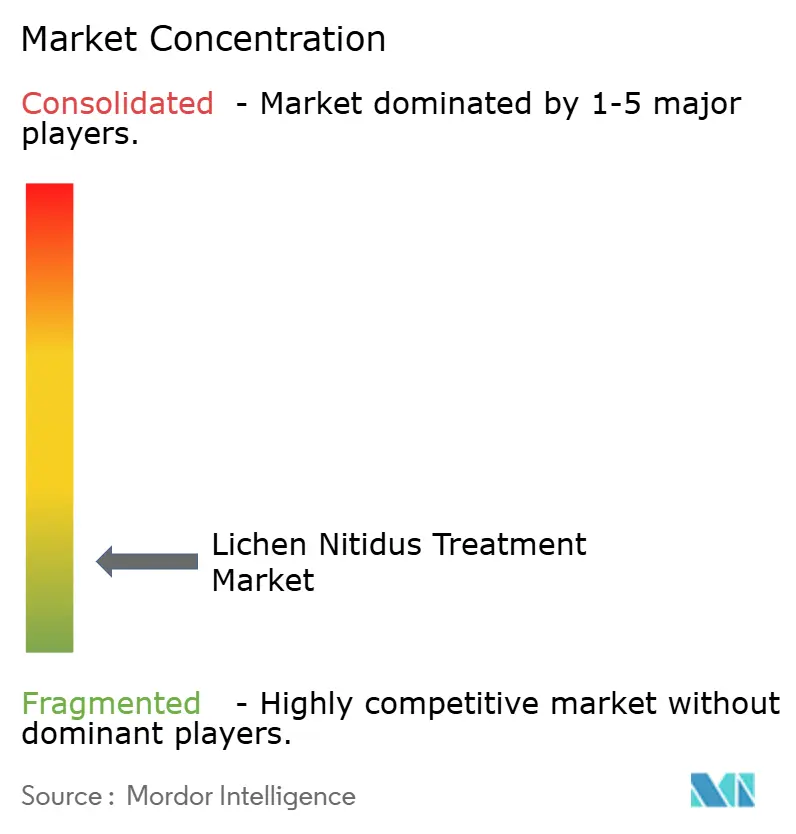
The lichen nitidus treatment market is highly fragmented. Within the lichen nitidus treatment market, commercial participation centers on off-label use of established topical and systemic dermatology products. Market position depends on portfolio breadth in corticosteroids, calcineurin inhibitors, retinoids, and antihistamines, as well as geographic reach and pricing in generic channels. Larger pharmaceutical companies participate through broad dermatology portfolios, while specialty-focused companies support prescriber engagement through medical dermatology capabilities. The absence of a disease-specific product leaves a clear opportunity for a company that can generate controlled evidence in lichen nitidus.
LEO Pharma stated in January 2026 that it is seeking partnerships and acquisitions in rare dermatological diseases, using its dermatologist network and clinical development platform to advance niche inflammatory disease assets. The company had finalized its acquisition of spesolimab in 2025, adding a targeted biologic for generalized pustular psoriasis to its strategic brands and signaling continued investment in rare dermatology. Almirall announced three new proof-of-concept clinical studies in 2026 for rare and high-unmet-need inflammatory skin diseases, including programs involving anti-IL-21 and IL-13 and OX-40L targets. The lichen nitidus treatment market could benefit if this broader capability is applied to conditions supported by a clearer clinical evidence base.
Cipla, Dr. Reddy’s Laboratories, Glenmark Pharmaceuticals, Sun Pharmaceutical Industries, Taro Pharmaceutical Industries, Viatris, and Perrigo support access through cost-competitive topical formulations. In March 2025, Cipla signed an exclusive multi-regional licensing agreement with Formosa Pharmaceuticals for clobetasol propionate ophthalmic suspension 0.05% across 11 countries. A controlled Phase 2 study could create a branded clinical narrative in a category now served by off-label products and case-report evidence. Companies in the lichen nitidus treatment market are therefore likely to focus on portfolio access, specialist engagement, evidence development, and differentiated topical options.
Lichen Nitidus Treatment Industry Leaders
Pfizer Inc.
Novartis AG
Sun Pharmaceutical Industries Ltd.
Glenmark Pharmaceuticals Ltd.
AbbVie Inc.
- *Disclaimer: Major Players sorted in no particular order
Lichen Nitidus Treatment Market Companies Covered in this Report
- AbbVie Inc.
- Almirall, S.A.
- Bausch Health Companies Inc.
- Cipla Limited
- Dr. Reddy's Laboratories Ltd.
- Glenmark Pharmaceuticals Ltd.
- LEO Pharma A/S
- Novartis AG
- Perrigo Company plc.
- Pfizer Inc.
- Sun Pharmaceutical Industries Ltd.
- Taro Pharmaceutical Industries Ltd.
- Viatris Inc.

Recent Industry Developments in Lichen Nitidus Treatment Market
- June 2026: AbbVie Inc. announced plans to acquire Apogee Therapeutics, Inc., expanding its immunology and dermatology pipeline with antibody therapies targeting inflammatory skin diseases with high unmet therapeutic need. This acquisition reflected a broader trend of increased investment in dermatological treatments, which was expected to influence the lichen nitidus treatment market as companies sought to address underserved inflammatory skin conditions.
- March 2025: Cipla Limited signed an exclusive multi-regional licensing agreement with Taiwan-based Formosa Pharmaceuticals, Inc. for the commercialization of clobetasol propionate ophthalmic suspension 0.05% across 11 countries. This agreement expanded Cipla's corticosteroid formulation presence into new specialty markets, reflecting the broader trend of pharmaceutical companies seeking to broaden their portfolios in the lichen nitidus treatment market.


Global Lichen Nitidus Treatment Market Report Scope
Lichen nitidus treatment involvs therapeutic approaches aimed at relieving symptoms such as itching and reducing skin lesions associated with this uncommon inflammatory skin condition. Treatment is often based on disease severity and may include topical or oral medications, while diagnosis relies on clinical evaluation and specialized dermatological techniques to differentiate the condition from other papular dermatoses.
The Lichen Nitidus Treatment Market is segmented by route of administration, diagnosis method, end-user industry, and geography. By route of administration, the market is segmented into topical (corticosteroids, calcineurin inhibitors, retinoids, and antihistamines) and oral (corticosteroids, immunosuppressants, retinoids, and antihistamines). By diagnosis method, the market is segmented into clinical examination, dermoscopy, skin biopsy, histopathological examination, and reflectance confocal microscopy. By end-user industry, the market is segmented into hospitals, dermatology clinics, specialty skin care centers, ambulatory care centers, and research institutes. The report also covers the market size and forecasts for lichen nitidus treatment in 16 countries across major regions. For each segment, the market sizing and forecasts have been done on the basis of value (USD).
| Topical | Corticosteroids |
| Calcineurin Inhibitors | |
| Retinoids | |
| Antihistamines | |
| Oral | Corticosteroids |
| Immunosuppressants | |
| Retinoids | |
| Antihistamines |
| Clinical Examination |
| Dermoscopy |
| Skin Biopsy |
| Histopathological Examination |
| Reflectance Confocal Microscopy |
| Hospitals |
| Dermatology Clinics |
| Specialty Skin Care Centers |
| Ambulatory Care Centers |
| Research Institutes |
| Asia-Pacific | China |
| India | |
| Japan | |
| South Korea | |
| Rest of Asia-Pacific | |
| North America | United States |
| Canada | |
| Mexico | |
| Europe | Germany |
| United Kingdom | |
| France | |
| Italy | |
| Russia | |
| Rest of Europe | |
| South America | Brazil |
| Argentina | |
| Rest of South America | |
| Middle-East and Africa | Saudi Arabia |
| South Africa | |
| Rest of Middle-East and Africa |
| By Route of Administration | Topical | Corticosteroids |
| Calcineurin Inhibitors | ||
| Retinoids | ||
| Antihistamines | ||
| Oral | Corticosteroids | |
| Immunosuppressants | ||
| Retinoids | ||
| Antihistamines | ||
| By Diagnosis Method | Clinical Examination | |
| Dermoscopy | ||
| Skin Biopsy | ||
| Histopathological Examination | ||
| Reflectance Confocal Microscopy | ||
| By End-User Industry | Hospitals | |
| Dermatology Clinics | ||
| Specialty Skin Care Centers | ||
| Ambulatory Care Centers | ||
| Research Institutes | ||
| By Geography | Asia-Pacific | China |
| India | ||
| Japan | ||
| South Korea | ||
| Rest of Asia-Pacific | ||
| North America | United States | |
| Canada | ||
| Mexico | ||
| Europe | Germany | |
| United Kingdom | ||
| France | ||
| Italy | ||
| Russia | ||
| Rest of Europe | ||
| South America | Brazil | |
| Argentina | ||
| Rest of South America | ||
| Middle-East and Africa | Saudi Arabia | |
| South Africa | ||
| Rest of Middle-East and Africa | ||


Key Questions Answered in the Report
What is the size of the lichen nitidus market?
The lichen nitidus treatment market stands at USD 122.85 million in 2026 and is projected to reach USD 159.47 million by 2031.
Which route of administration led the market in 2025?
Topical held a 68.45% share in 2025 because it aligns with the usual localized, topical-first treatment approach.
Which diagnostic method is expected to grow fastest through 2031?
Reflectance confocal microscopy is forecast to grow at a 7.46% CAGR through 2031 because it supports non-invasive lesion assessment and may reduce the need for biopsy in selected cases.
Which end-user industry is expected to grow fastest through 2031?
Specialty skin care centers are forecast to grow at a 6.71% CAGR through 2031 as ambulatory dermatology capacity expands.
Page last updated on:





