
Lemongrass Oil Market Size and Share
Market Overview
| Study Period | 2022 - 2032 |
|---|---|
| Market Size (2027) | USD 34.76 Million |
| Market Size (2032) | USD 49.24 Million |
| Growth Rate (2027 - 2032) | 7.21 % |
| Fastest Growing Market | Asia-Pacific |
| Largest Market | Europe |
| Market Concentration | Medium |
Major Players *Disclaimer: Major Players sorted in no particular order Image © Mordor Intelligence. Reuse requires attribution under CC BY 4.0. | |
Lemongrass Oil Market Analysis by Mordor Intelligence
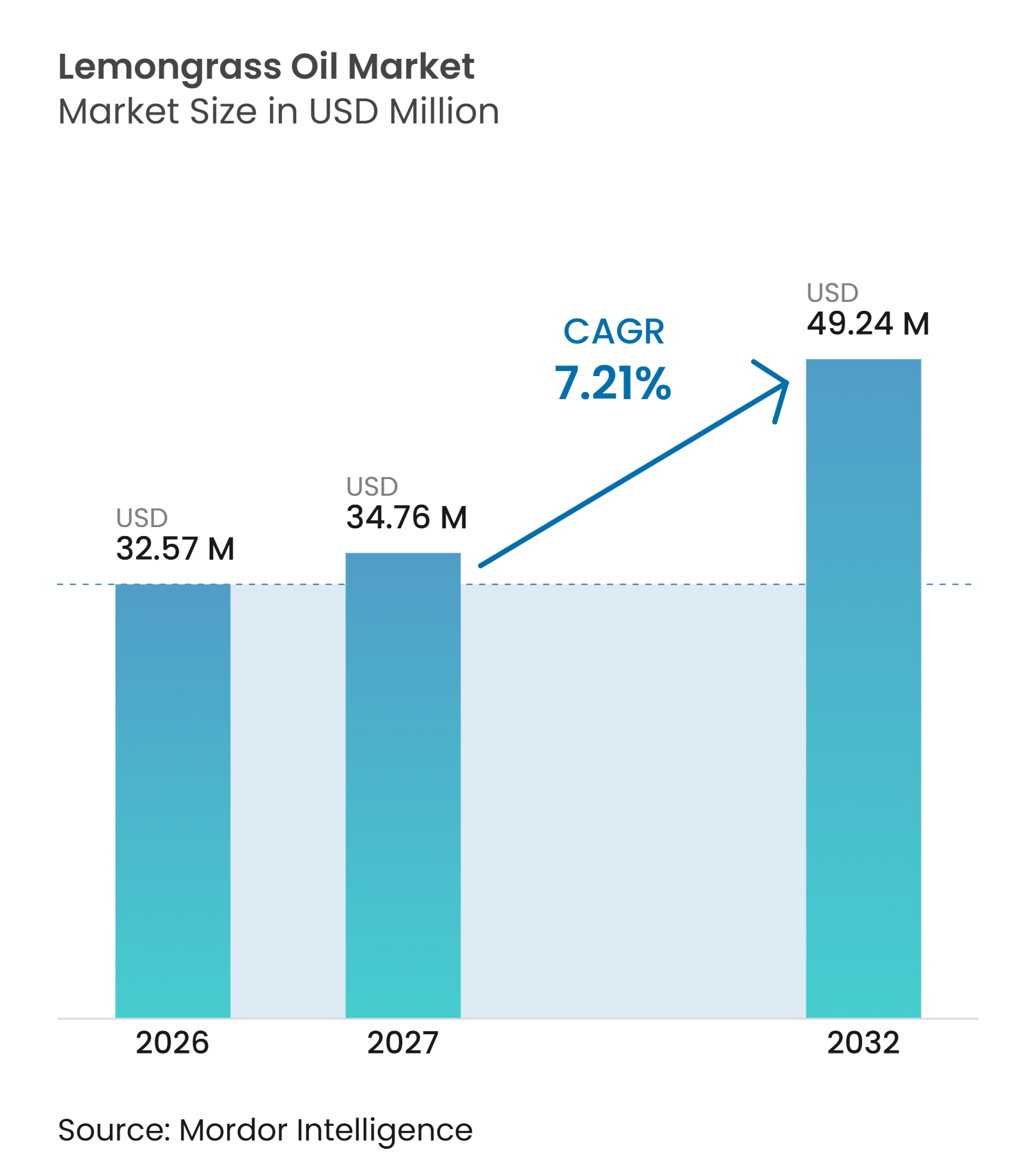
The Lemongrass Oil Market is expected to grow from USD 32.57 million in 2026 to USD 34.76 million in 2027 and reach USD 49.24 million by 2032, at a CAGR of 7.21% during the forecast period (2027-2032). Demand from personal care, food processing, and wellness manufacturers seeking natural-origin ingredients with traceable supply chains supports market growth. Citral provides lemongrass oil with its characteristic fragrance and enables its use in products formulated for antimicrobial, antioxidant, and anti-inflammatory benefits[1]. In the United States, food manufacturers may use lemongrass essential oil under its Generally Recognized as Safe (GRAS) status. In the European Union, Implementing Regulation (EU) 2025/630 reauthorized its use as a sensory feed additive for all animal species. Europe remains a major demand center, while Asia-Pacific accounts for most production, supplemented by supplies from Africa and South America. This supply structure makes traceability, consistent product specifications, and multi-origin procurement critical commercial capabilities in the lemongrass oil market.
Key Report Takeaways
- By product type, pure lemongrass oil held 83.24% of the Lemongrass Oil Market share in 2026, while blended lemongrass oil is projected to grow at a 12.81% CAGR through 2032.
- By grade, therapeutic grade accounted for 37.27% of the Lemongrass Oil Market size in 2026, while food grade is forecast to expand at a 12.69% CAGR through 2032.
- By application, personal care and cosmetics captured 49.25% of the Lemongrass Oil Market share in 2026, while food and beverage is projected to grow at a 13.06% CAGR through 2032.
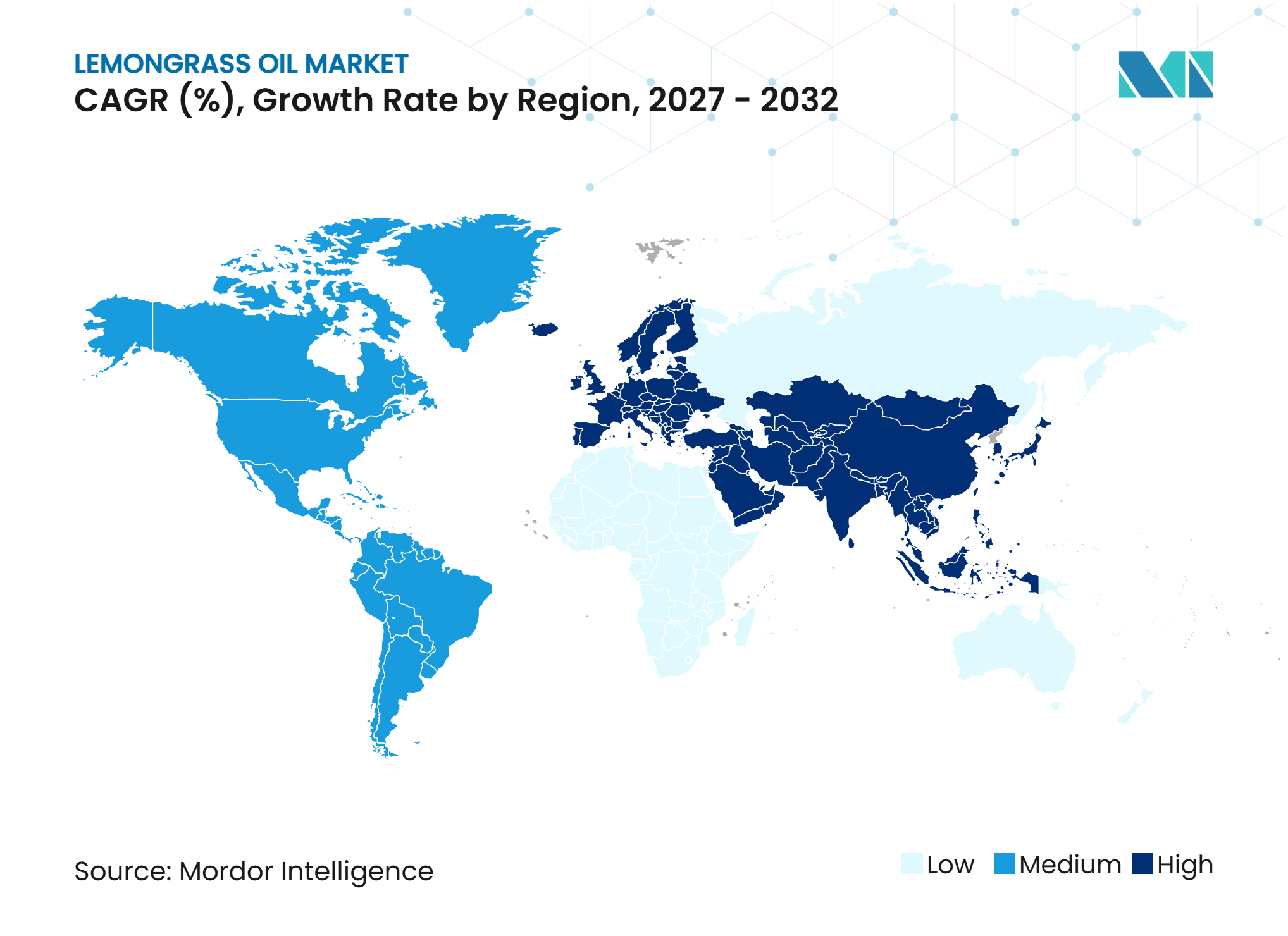
- By geography, Europe accounted for 42.71% of the market in 2026, while Asia-Pacific is forecast to grow at a 12.75% CAGR through 2032.
Note: Market numbers in this report are based on Mordor Intelligence's proprietary estimation framework, which combines nine months of actuals with Q4 projections for base year 2026.
Market Trends and Insights
Drivers Impact Analysis of Lemongrass Oil Market*
| Driver | (~) % Impact on CAGR Forecast | Geographic Relevance | Impact Timeline |
|---|---|---|---|
| Rising Demand for Natural Essential Oils | +1.5% | Global, with intensity in North America, and Europe | Long term (≥ 4 years) |
| Growing Adoption of Aromatherapy and Wellness | +1.2% | Global; highest in North America, Europe, and Asia-Pacific | Medium term (2–4 years) |
| Increasing Use in Personal Care Formulations | +1.0% | Europe & North America core; spill-over to APAC | Long term (≥ 4 years) |
| Expanding Applications in Food and Beverages | +0.9% | Global, led by North America, and APAC | Medium term (2–4 years) |
| Rising Preference for Plant-Based Fragrance Ingredients | +0.7% | Europe and North America | Long term (≥ 4 years) |
| Growing Demand for Natural Cleaning Products | +0.4% | North America and Europe | Short term (≤ 2 years) |
| Source: Mordor Intelligence | |||
Rising Demand for Natural Essential Oils
Personal care, household, and food brands are increasingly using plant-derived ingredients with documented origins to meet consumer preferences for natural formulations and improve supply chain transparency. Lemongrass essential oil provides fragrance benefits and contains citral, geraniol, flavonoids, and polysaccharides. These compounds support its applications across the healthcare, food, and chemical industries, including fragrance formulations, flavoring applications, and selected wellness products. India remains an established export origin for lemongrass oil, supported by its cultivation base and processing capabilities, while regulated markets continue to demand documented product specifications and traceability. Buyers increasingly prioritize consistent citral content, reliable quality parameters, and third-party authentication over price alone when selecting suppliers. These trends support a specification-led supply model in the lemongrass oil market, favoring suppliers that can provide standardized quality, traceable sourcing, and verified compliance documentation.
Growing Adoption of Aromatherapy and Wellness
Aromatherapy supports demand for therapeutic-grade lemongrass oil across consumer wellness channels. Manufacturers use the oil in products positioned for stress management and general well-being. Direct-to-consumer brands leverage subscription models, online education, and repeat-purchase programs to strengthen customer relationships. These channels can reduce the gap between essential oil producers and wellness consumers. According to the Norwegian Government, the EU safety assessment supporting Regulation 2025/630 determined that lemongrass essential oil is safe for all animal species at specified maximum inclusion levels[2]. This regulatory decision provides suppliers serving adjacent applications with a recognized safety reference.
Increasing Use in Personal Care Formulations
Personal care formulators use lemongrass oil in skin care, hair care, and deodorant products for its astringent, sebum-regulating, and antimicrobial properties. Personal care brands also require substantiated natural ingredient claims and consistent product specifications. Commission Regulation (EU) 2023/1545 expanded fragrance allergen labeling requirements for cosmetic products. Suppliers must declare citral in leave-on products when its concentration exceeds 0.001%, increasing documentation requirements. Nanoemulsions and cyclodextrin inclusion complexes can stabilize volatile compounds and help formulators control ingredient concentrations. These technologies enable the lemongrass oil market to meet shelf-life and compliance requirements in regulated cosmetic applications.
Expanding Applications in Food and Beverages
Food processors are shifting from simple ingredient substitution toward ingredients that deliver both flavor and functional benefits. Lemongrass oil is used in flavored waters, kombuchas, functional ready-to-drink teas, and other products with citrus-herbal flavor profiles. According to PubMed Central, a 2025 study found that 0.2% w/w soy lecithin-stabilized lemongrass oil nanoemulsions increased the antioxidant activity of orange juice from 14.38% to 77.38% while maintaining consumer acceptance during 15 days of refrigerated storage. Its Generally Recognized as Safe (GRAS) status supports its use in food products in the United States, subject to applicable formulation requirements. In the European Union, Regulation (EC) No. 1334/2008 establishes the framework for its use as a food flavoring, provided compositional requirements are met. These regulatory pathways enable procurement teams to evaluate lemongrass oil for large-scale food and beverage applications.
Restraints Impact Analysis of Lemongrass Oil Market*
| Restraint | (~) % Impact on CAGR Forecast | Geographic Relevance | Impact Timeline |
|---|---|---|---|
| Fluctuating Availability of Raw Lemongrass Biomass | -1.5% | Global; highest impact in the Asia-Pacific supply corridors | Medium term (2–4 years) |
| Seasonal Variations in Agricultural Production | -1.0% | The Asia-Pacific core (India, Vietnam); spill-over to the Middle East and Africa | Short to medium term |
| Competition from Synthetic Fragrance Alternatives | -1.2% | Global; most acute in price-sensitive Asia-Pacific and the Middle East and Africa | Long term (≥ 4 years) |
| Stringent Regulatory Requirements for Essential Oils | -0.6% | Europe and North America | Medium term (2–4 years) |
| Source: Mordor Intelligence | |||
Fluctuating Availability of Raw Lemongrass Biomass
Agricultural conditions influence biomass availability, yields, and lemongrass oil procurement costs. Heavy rainfall can disrupt harvests and alter supply conditions within a single growing season. According to Agricultural and Food Economics, a 2025 study of the Caraga Region in the Philippines found that many production nodes lacked the technical knowledge, logistics infrastructure, and market linkages required to manage demand variability. A separate 2025 production-system study identified harvesting as the largest contributor to total production costs. Multi-origin sourcing across India, Vietnam, the Philippines, and South America can reduce exposure to a single harvest outcome. Suppliers with robust quality systems are better positioned to support buyers during supply disruptions.
Competition from Synthetic Fragrance Alternatives
Synthetic citral offers consistent batch quality and year-round availability for applications that do not require natural-origin claims. Natural isolates provide a plant-derived alternative while reducing the compositional variability associated with whole essential oils. These factors create pressure on whole lemongrass oil in fragrance and flavor blends, where formulation flexibility is critical. Commission Regulation (EU) 2023/1545 also makes citral concentration management essential in leave-on products. However, adulteration with synthetic citral can undermine confidence in commodity supply. According to the Malaysian Journal of Chemistry, FTIR spectroscopy combined with chemometrics can support the authentication of lemongrass and citronella oils used in fragrance products.
*Our forecasts treat driver/restraint impacts as directional, not additive. The impact forecasts reflect baseline growth, mix effects, and variable interactions.
Lemongrass Oil Market Segment Analysis
By Product Type:
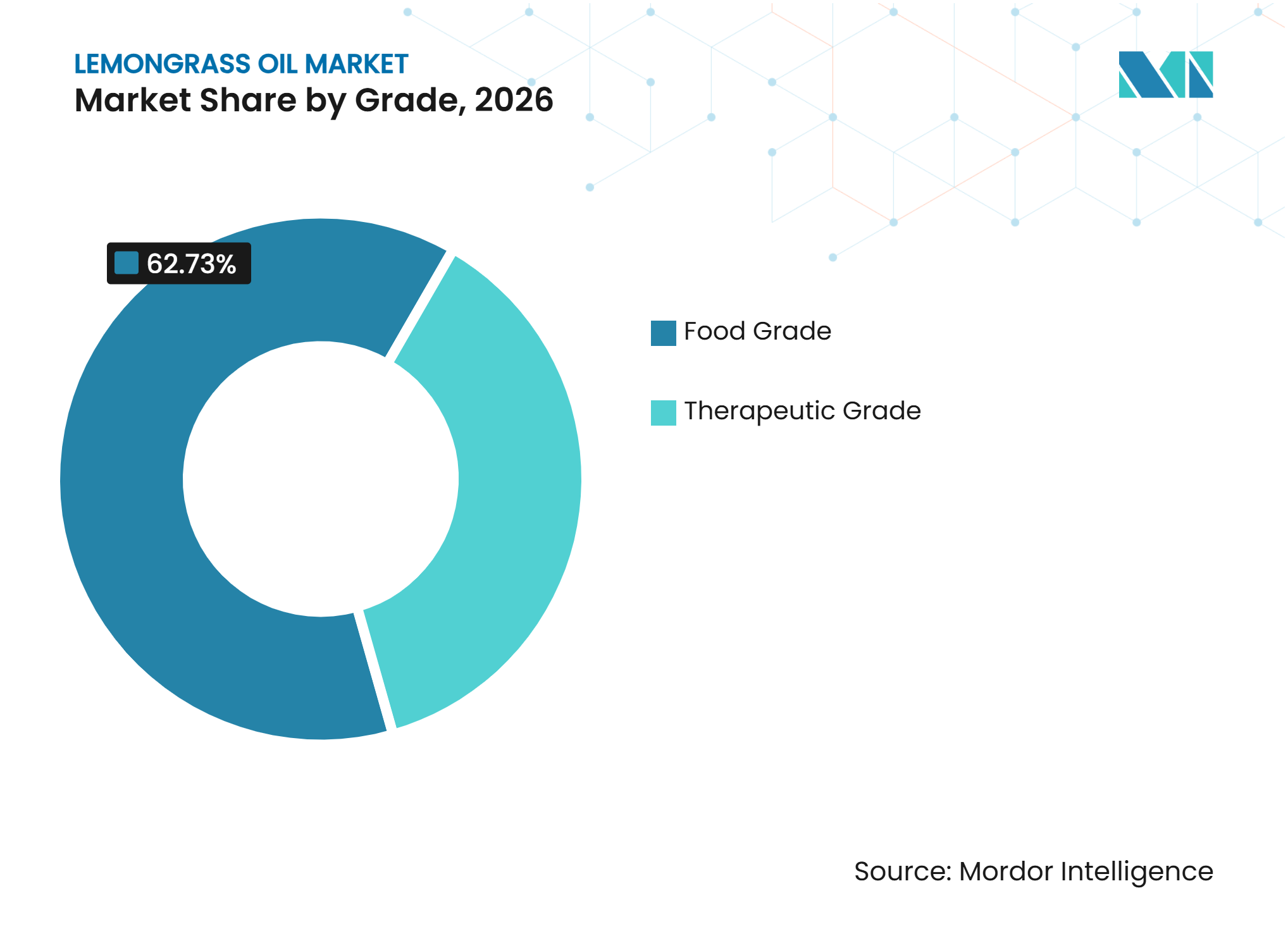
Pure Oil Supports Verified Sourcing, While Blends Expand Formulation OptionsPure lemongrass oil accounted for 83.24% of the product-type share in 2026, driven by institutional demand for unblended botanicals with independently verifiable species identity and citral content. Historically, manufacturers have sold pure oil as a commodity input, while downstream formulators have undertaken blending activities. However, blended lemongrass oil is projected to grow at a CAGR of 12.81% through 2032. Specialty compounders and vertically integrated brands increasingly use pre-formulated blends to reduce technical requirements for smaller cosmetic and personal care manufacturers. This trend expands the range of applications within the lemongrass oil market.
According to a 2025 agronomic study published in PubMed Central, selective leaf harvesting under natural light produced oil with citral concentrations 7.2% higher than those of stem-derived oil[3]. These findings support product differentiation based on sourcing specifications. Developers of blended products can use such specifications when selecting raw material inputs. The EU allergen disclosure framework also affects formulation decisions for products containing citral. Controlled blending enables formulators to manage citral concentrations while maintaining botanical positioning. Consequently, product suppliers require both analytical documentation and formulation support.



By Grade:
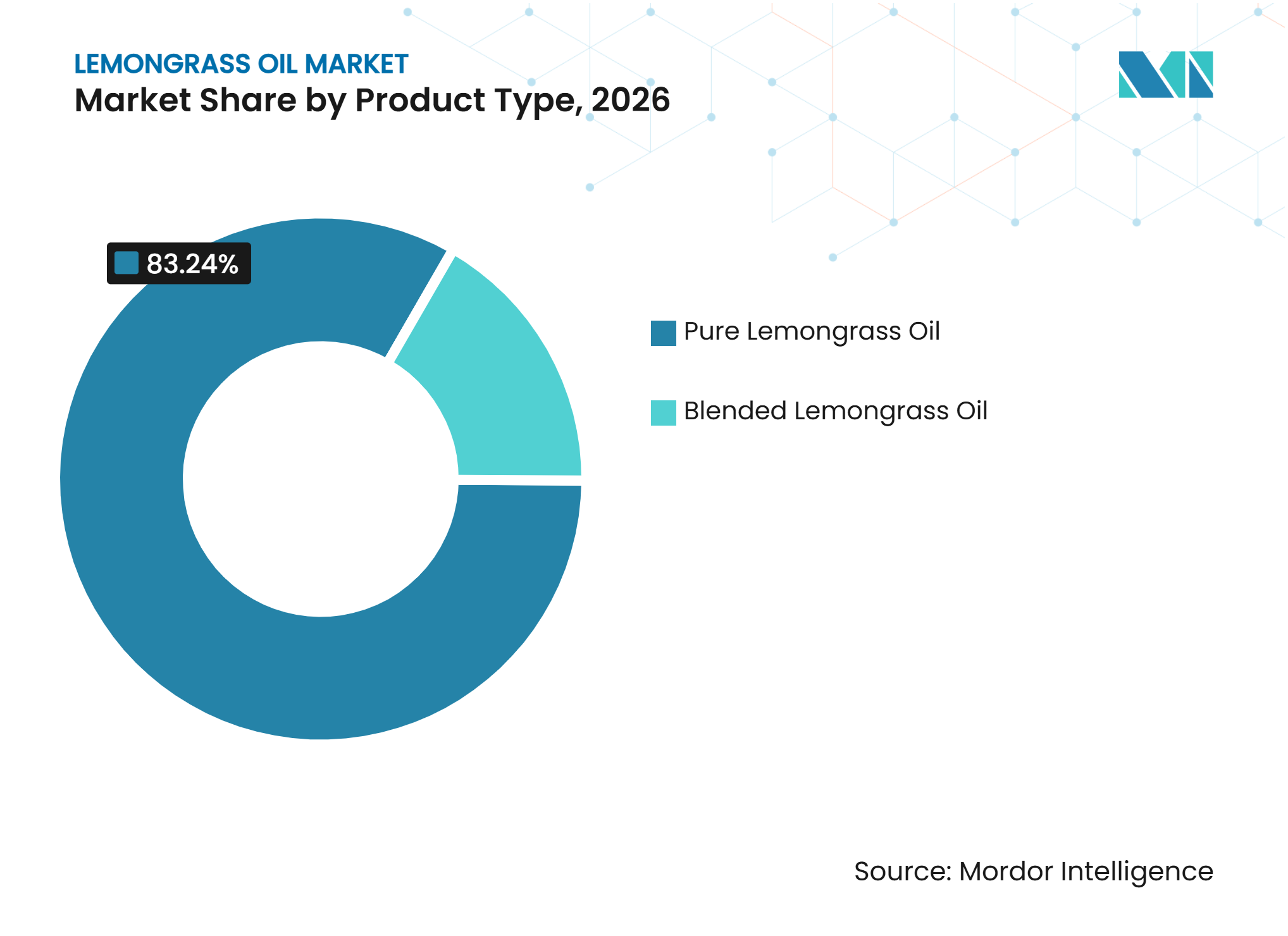
Therapeutic Grade Leads, While Food Grade Broadens DemandTherapeutic grade accounted for 37.27% of the lemongrass oil market's grade segment in 2026. Aromatherapy buyers seek high-purity oil with documented citral content, origin, extraction method, and safety information. Established direct-selling brands use third-party verification as a key component of their commercial offerings. Food grade is projected to grow at a CAGR of 12.69% through 2032, supported by established regulatory pathways for food applications in the United States and the European Union. These factors make grade-specific quality assurance critical across the lemongrass oil market.
Food-grade lemongrass oil requires a documentation structure distinct from that of therapeutic- or cosmetic-grade products. Suppliers must demonstrate compositional purity, compliance with good manufacturing practices, batch traceability, and adherence to applicable food regulations. The FDA's Generally Recognized as Safe (GRAS) framework supports food applications in the United States, while Regulation (EC) No. 1334/2008 establishes the EU framework for food flavorings. Therapeutic-grade suppliers continue to emphasize purity verification and origin documentation. Producers that maintain capabilities for both food and therapeutic grades can address multiple demand channels.

By Application:
Personal Care Holds Scale, While Food and Beverage Grows FasterPersonal care and cosmetics accounted for 49.25% of application revenue in 2026. Manufacturers use lemongrass oil in skin care and hair care products for its antimicrobial and sebum-regulating properties. The food and beverage segment is projected to expand at a CAGR of 13.06% through 2032, supported by clean-label product development and functional beverage launches. Nanoemulsion technology also facilitates the incorporation of lemongrass oil into aqueous formulations. Therefore, formulation advancements and consumer-facing product positioning support the growth of the lemongrass oil market in the food and beverage segment.
Functional drinks, kombuchas, ready-to-drink herbal teas, and wellness shots use lemongrass oil for its citrus-herbal flavor profile. According to PubMed Central, a 2025 study on orange juice nanoemulsions demonstrated how delivery systems can support antioxidant activity and consumer acceptance of refrigerated products. Pharmaceutical applications leverage the oil’s reported antioxidant and anti-inflammatory properties. Perfumery and fragrance applications require careful management of citral limits in leave-on products. Aromatherapy demand benefits from e-commerce channels and direct-to-consumer education. These applications require suppliers to provide application-specific technical support.
Geography Analysis
Europe
Europe is projected to account for 42.71% of the lemongrass oil market size in 2026. Cosmetics manufacturers in Germany and fragrance compounders in France drive demand for consistent botanical ingredients. Buyers in these markets typically evaluate citral content, traceability records, and supply documentation before approving suppliers. Regulation (EC) No. 1223/2009 governs cosmetic applications, including allergen declarations for citral in leave-on products at concentrations above 0.001%. Regulation (EC) No. 1334/2008 supports food flavoring applications when applicable conditions are met. According to the Norwegian Government, EU Implementing Regulation 2025/630 is set to reauthorize lemongrass essential oil as a sensory feed additive for all animal species. This decision will create an additional animal nutrition application for suppliers serving European customers. The United Kingdom’s aromatherapy retail channel and France’s premium cosmetics segment remain important sources of demand.
Asia-Pacific
Asia-Pacific is projected to expand at a CAGR of 12.75% through 2032. India remains a major supplier, exporting lemongrass oil to more than 80 countries, according to the Journal of Agricultural Research. Cultivation in Kerala, Karnataka, and Uttar Pradesh benefits from favorable growing conditions and varietal development programs. In the Philippines, a 2025 study published in Agricultural and Food Economics reported a producer return on investment of 149.7% in the Caraga Region. However, the study also identified gaps in producer knowledge, logistics, and market linkages. China, Vietnam, and other Southeast Asian markets are driving demand for aromatherapy products, herbal personal care products, and functional foods. Investments in steam distillation and solar-thermal extraction technologies can improve yield consistency while reducing energy consumption. These developments are strengthening Asia-Pacific's position as both a key supply hub and an expanding consumption base.
North America, South America, and the Middle East and Africa
North America benefits from the United States GRAS framework, which supports food and beverage product development using lemongrass essential oil. Direct-selling businesses, including doTERRA International LLC and Young Living Essential Oils, use online education and repeat-purchase models to reach wellness consumers. South America provides an emerging source of lemongrass oil, particularly for buyers seeking supply diversification beyond Asia. Brazil and other tropical-climate countries can support local cultivation. The Middle East and Africa have growing wellness and personal care demand, especially in Gulf Cooperation Council markets and urban African centers. Natural cleaning products are also gaining attention in these markets. Together, these regions represent smaller individual positions than Europe or Asia-Pacific. Their combined role adds demand breadth and helps buyers diversify procurement options.
Competitive Landscape
Market Concentration
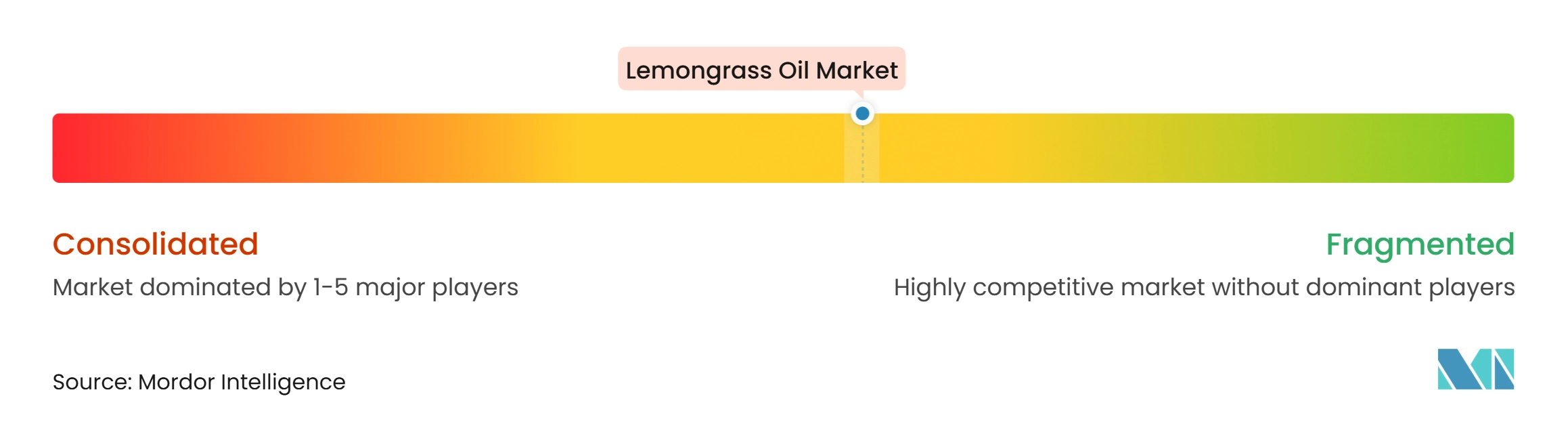
The lemongrass oil market has a broad supplier base across ingredient, specialty oil, and direct-to-consumer channels. Givaudan SA and International Flavors and Fragrances Inc. compete through documented sourcing, analytical capability, and relationships with fragrance and personal care customers. These capabilities matter where customers prioritize consistency and regulatory documentation. Givaudan committed CHF 55 million to Campus 52 in Grasse, France, a center that combines agronomy, extraction, production, and fragrance creation. The project supports greater control from cultivation to finished ingredient supply. doTERRA International LLC and Young Living Essential Oils use farm partnerships, sourcing programs, and purity testing to support consumer trust.
Competition increasingly depends on provenance verification, delivery reliability, and application-specific service. AOS Products Private Limited and Mane Kancor Ingredients Private Limited serve export customers that need documented grades for food, cosmetic, and pharmaceutical applications. Edens Garden Inc. and Plant Therapy Essential Oils use e-commerce, third-party testing, and accessible pricing in consumer aromatherapy. IFRA concentration guidance for citral in leave-on formulations increases the need for pre-tested blends. Suppliers that provide products designed for concentration compliance can reduce formulation work for buyers. Authentication methods also matter because synthetic citral can be used to distort analytical readings. FTIR spectroscopy with chemometrics is one method used to identify relevant authenticity concerns.
Recent investments indicate that natural-ingredient suppliers are strengthening their technical and sourcing capabilities. IFF invested EUR 10 million, equivalent to USD 10.8 million, to expand its LMR Naturals site in Grasse by 75% to 4,687 square meters. The expansion adds a pilot hall and experimental field for traceable natural ingredients. Robertet acquired a minority stake in Vietnamese natural-materials partner Nhat Tan in September 2026. The investment strengthens access to natural raw materials in Vietnam. These actions favor companies that can link sourcing, testing, and product development.
Lemongrass Oil Industry Leaders
-
Givaudan
-
DSM-Firmenich
-
International Flavors & Fragrances Inc.
-
BASF
-
Symrise AG
- *Disclaimer: Major Players sorted in no particular order
Lemongrass Oil Market Companies Covered in this Report
- Givaudan
- DSM-Firmenich
- BASF
- Symrise AG
- Mane
- The Lebermuth Company, Inc.
- Ultra International B.V.
- doTERRA International LLC
- Young Living Essential Oils
- Aura Cacia
- Edens Garden Inc.
- Mountain Rose Herbs
- International Flavors & Fragrances Inc.
- Plant Therapy Essential Oils
- Phoenix Aromas & Essential Oils LLC
- Berjé Inc.
- Kanta Enterprises Private Limited
- AOS Products Private Limited
- Mane Kancor Ingredients Private Limited
- Robertet Group
Recent Industry Developments in Lemongrass Oil Market
- September 2026: Quanto Agroworld announced plans to establish a distillation plant at Ravalgaon, Maharashtra, alongside agricultural development initiatives. The proposed investment aimed to strengthen its lemongrass cultivation, processing capabilities, and essential oil production infrastructure to support future commercial operations.
- July 2026: Krishi Vigyan Kendra commissioned a 500 kg-batch-capacity lemongrass distillation facility in Kerala, India. The infrastructure enabled local farmers to process harvested lemongrass, extract essential oil, improve value addition and explore commercial opportunities in the essential oils industry.
- May 2025: Amrita Aromatherapy issued a Certificate of Analysis for an organically cultivated Indian lemongrass oil batch. The document recorded its composition, citral concentration and quality specifications, demonstrating product testing and quality-assurance practices for organically sourced essential oil.
Global Lemongrass Oil Market Report Scope
Lemongrass oil is a yellow to reddish-brown essential oil extracted primarily through the steam distillation of the leaves and stalks of tropical grasses belonging to the genus Cymbopogon. The lemongrass oil market report is segmented by product type, grade, application, and geography. By product type, the market is segmented into pure lemongrass oil and blended lemongrass oil. By grade, the market is segmented into therapeutic grade and food grade. By application, the market is segmented into food and beverage, personal care and cosmetics, pharmaceuticals, aromatherapy and wellness, and perfumery and fragrances. By geography, the market is segmented into North America, Europe, Asia-Pacific, South America, and the Middle East and Africa. The market forecasts are provided in terms of value (USD).
Segmentation Overview
| Pure Lemongrass Oil |
| Blended Lemongrass Oil |
| Therapeutic Grade |
| Food Grade |
| Food and Beverage | Bakery and Confectionery |
| Dairy | |
| Functional Drinks | |
| Others | |
| Personal Care and Cosmetics | |
| Pharmaceuticals | |
| Aromatherapy and Wellness | |
| Perfumery and Fragrances | |
| Others |
| North America |
| Europe |
| Asia-Pacific |
| South America |
| Middle East and Africa |
| By Product Type | Pure Lemongrass Oil | |
| Blended Lemongrass Oil | ||
| By Grade | Therapeutic Grade | |
| Food Grade | ||
| By Application | Food and Beverage | Bakery and Confectionery |
| Dairy | ||
| Functional Drinks | ||
| Others | ||
| Personal Care and Cosmetics | ||
| Pharmaceuticals | ||
| Aromatherapy and Wellness | ||
| Perfumery and Fragrances | ||
| Others | ||
| By Geography | North America | |
| Europe | ||
| Asia-Pacific | ||
| South America | ||
| Middle East and Africa | ||
Key Questions Answered in the Report
What is the forecast growth rate for lemongrass oil through 2032?
The Lemongrass Oil Market is forecast to grow at a 7.21% CAGR from 2027 to 2032, reaching USD 49.24 million by 2032.
Which product type has the largest lemongrass oil revenue share?
Pure lemongrass oil held 83.24% of product-type revenue in 2026.
Which application is growing fastest for lemongrass essential oil?
Food and beverage is projected to grow at a 13.06% CAGR through 2032.
Why is Europe important for lemongrass oil suppliers?
Europe held 42.71% of revenue in 2026.