
Lemon Myrtle Ingredients Market Size and Share
Market Overview
| Study Period | 2021 - 2031 |
|---|---|
| Market Size (2026) | USD 15.43 Million |
| Market Size (2031) | USD 28.58 Million |
| Growth Rate (2026 - 2031) | 13.12 % |
| Fastest Growing Market | North America |
| Largest Market | Europe |
| Market Concentration | High |
Major Players
*Disclaimer: Major Players sorted in no particular order Image © Mordor Intelligence. Reuse requires attribution under CC BY 4.0. |
|
Lemon Myrtle Ingredients Market Analysis by Mordor Intelligence
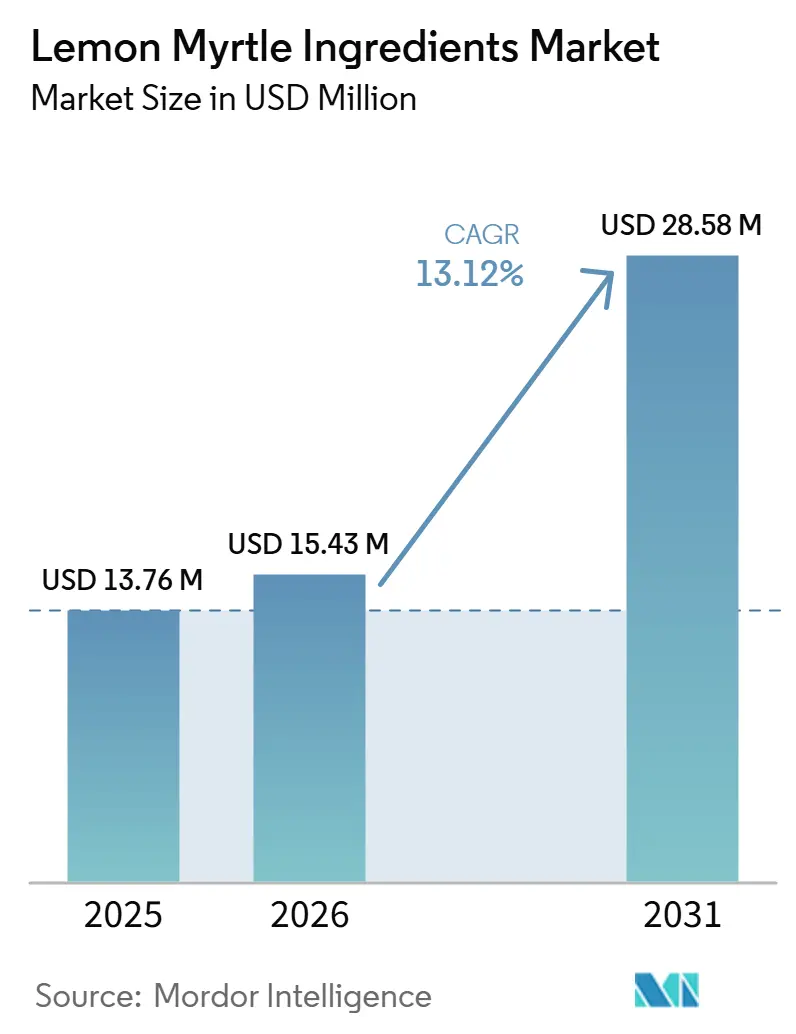
The Lemon Myrtle Ingredients Market was valued at USD 13.76 million in 2025 and is estimated to reach USD 15.43 million in 2026. The market is projected to expand to USD 28.58 million by 2031, registering a CAGR of 13.12% during 2026–2031. Growth is driven by rising demand for natural flavors and botanical ingredients, increasing adoption of functional foods and beverages, expanding clean beauty and personal care formulations, and growing preference for plant-based ingredients with antimicrobial and antioxidant properties. Lemon myrtle's high natural citral content, premium sensory profile, and versatility across food, nutraceutical, and personal care formulations continue to strengthen its commercial appeal.
Key Report Takeaways
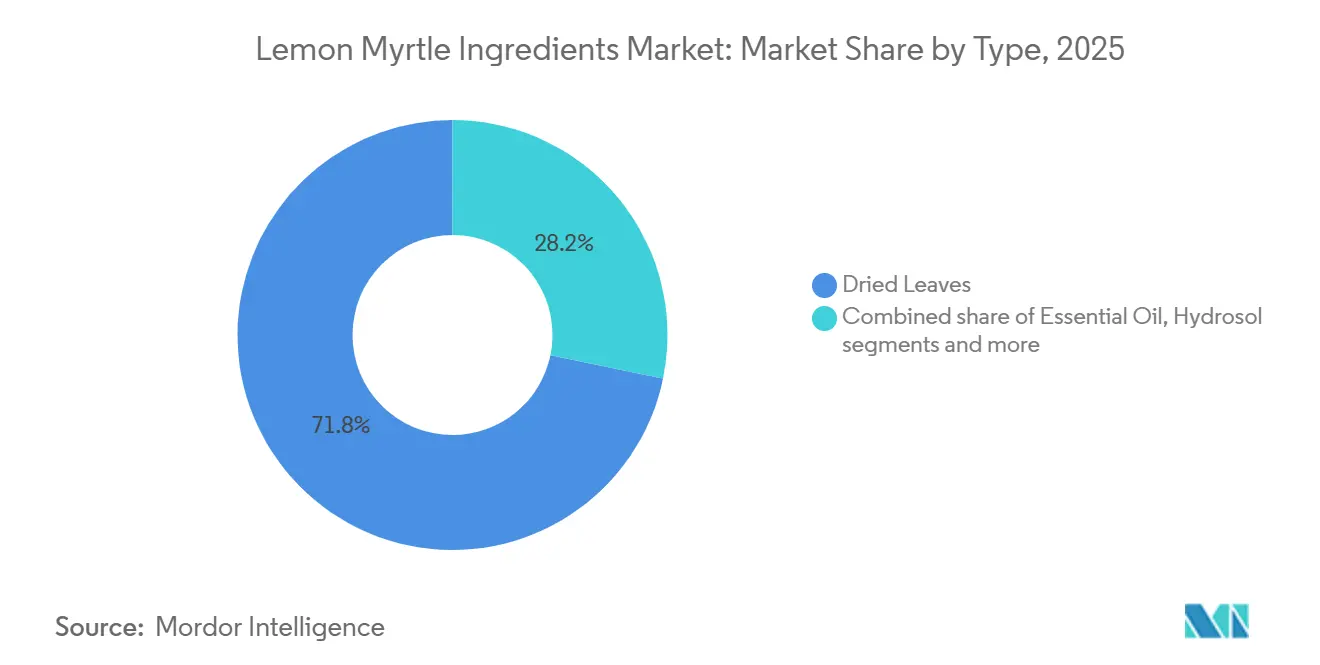
- By type, dried leaves held 71.76% share in 2025, while powder is forecast to expand at a 16.62% CAGR through 2031.
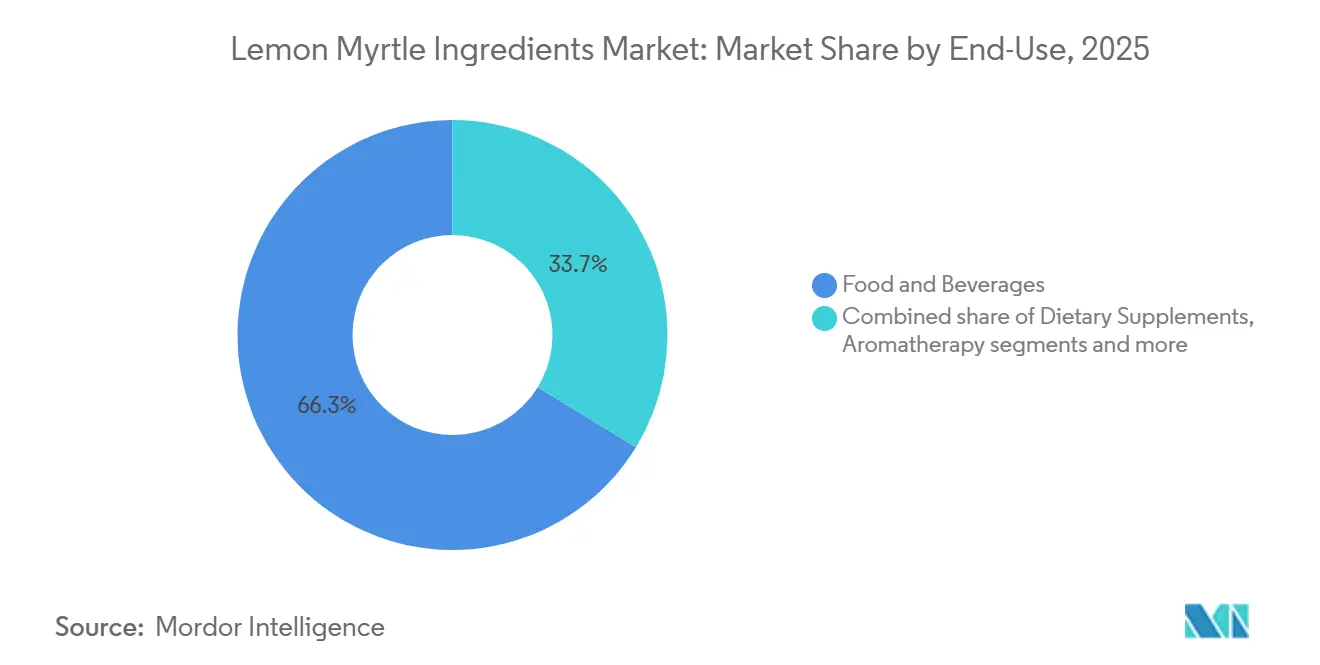
- By end-use, food and beverages held 66.26% of the lemon myrtle market size in 2025, while dietary supplements recorded the highest projected CAGR at 17.88% through 2031.
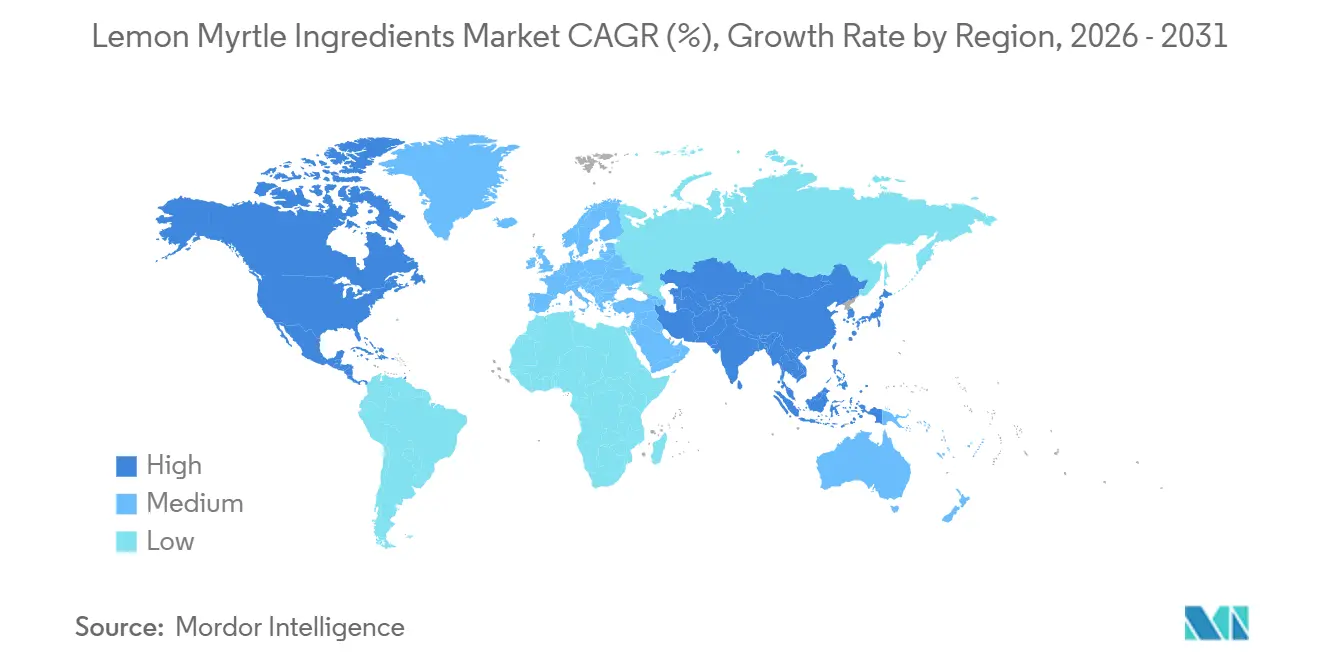
- By geography, Europe held 49.34% share in 2025, while North America is forecast to grow at a 14.55% CAGR through 2031.
Note: Market size and forecast figures in this report are generated using Mordor Intelligence’s proprietary estimation framework, updated with the latest available data and insights as of January 2026.
Market Trends and Insights
Drivers Impact Analysis of Lemon Myrtle Ingredients Market*
| Driver | (~) % Impact on CAGR Forecast | Geographic Relevance | Impact Timeline |
|---|---|---|---|
| Rising demand for natural flavors and botanical ingredients | +3.2% | Global; concentrated in Europe and North America | Medium term (2-4 years) |
| Growing demand for gut health and functional beverages | +2.5% | North America and Europe; spill-over to Asia-Pacific | Medium term (2-4 years) |
| Rising demand for clean beauty and natural soaps | +1.8% | Western Europe, North America | Medium term (2-4 years) |
| High citral content and natural antimicrobial properties | +2.0% | Global | Long term (≥ 4 years) |
| Increasing use in premium alcoholic and no-/low-alcohol beverages | +1.5% | North America, Europe, Australia | Short to medium term (≤ 4 years) |
| Increasing innovation in essential oils and aromatherapy products | +1.2% | North America, Western Europe, Asia-Pacific | Medium term (2-4 years) |
| Source: Mordor Intelligence | |||
Rising demand for natural flavors and botanical ingredients
The increasing preference for natural flavors and plant-derived ingredients is shaping the market. Lemon myrtle, known for its high natural citral content and intense citrus aroma, enables manufacturers to deliver a clean, fresh flavor profile while supporting clean-label product development. The ingredient also aligns with the broader consumer preference for minimally processed, naturally derived formulations, encouraging its incorporation into new product development across the food industry. Consumer purchasing behavior further reinforces this trend. According to the 2025 International Food Information Council (IFIC) Food & Health Survey, 13% of United States consumers reported actively following clean-label eating practices, while 41% said they look for "natural" claims when shopping for foods and beverages, highlighting the growing preference for products formulated with natural ingredients [1]Source: International Food Information Council (IFIC), "2025 IFIC FOOD & HEALTH SURVEY", ific.org.
Growing demand for gut health and functional beverages
Growing consumer interest in digestive wellness and preventive nutrition is driving demand for botanical ingredients with naturally occurring bioactive compounds, supporting the adoption of lemon myrtle in functional food and beverage formulations. Consumers are increasingly seeking plant-derived ingredients that offer both distinctive sensory characteristics and scientifically supported health benefits. Lemon myrtle is particularly valued for its high natural citral content, which has attracted growing research interest due to its biological activity. For instance, a 2025 study published in the Italian Journal of Food Science reported that citral, the primary bioactive compound in lemon myrtle, significantly inhibited adipogenesis in 3T3-L1 preadipocytes during the mitotic clonal expansion stage, demonstrating its potential role in metabolic health research. Such scientific evidence is encouraging ingredient manufacturers to explore lemon myrtle as a botanical ingredient for functional food and beverage applications, contributing to market growth.
Rising demand for clean beauty and natural soaps
The growing preference for clean beauty products and naturally derived personal care formulations is driving demand for lemon myrtle ingredients in the cosmetics industry. Consumers are increasingly seeking products formulated with botanical ingredients that are free from synthetic fragrances, harsh chemicals, and artificial additives, prompting manufacturers to incorporate plant-based alternatives into their formulations. Lemon myrtle is gaining recognition for its natural citrus aroma, high citral content, and antimicrobial and antioxidant properties, making it an attractive ingredient for clean-label personal care products. Its multifunctional profile allows formulators to combine natural fragrance with functional benefits while meeting consumer expectations for ingredient transparency and sustainability. As beauty brands continue to expand botanical-based product portfolios and invest in naturally sourced ingredients, lemon myrtle is expected to see increasing adoption, supporting the growth of the global lemon myrtle ingredients market.
High citral content and natural antimicrobial properties
Lemon myrtle's high natural citral content is a key factor driving demand for its ingredients across multiple industries. Citral is responsible for the plant's characteristic lemon aroma and is widely recognized for its antimicrobial, antioxidant, and deodorizing properties, making lemon myrtle a valued botanical ingredient. Its multifunctional characteristics enable manufacturers to formulate products with natural flavor, fragrance, and bioactive benefits while reducing reliance on synthetic alternatives. The consistency and potency of lemon myrtle's essential oil also add to its commercial appeal for premium formulations requiring high-quality botanical ingredients. Steam-distilled lemon myrtle essential oil typically contains 90–98% citral, one of the highest naturally occurring citral concentrations among plant essential oils, providing a competitive advantage over many other citrus-derived botanicals.
Restraints Impact Analysis of Lemon Myrtle Ingredients Market*
| Restraint | (~) % Impact on CAGR Forecast | Geographic Relevance | Impact Timeline |
|---|---|---|---|
| Limited geographical cultivation and supply concentration | −1.5% | Global supply chain; North American and European buyers most exposed | Long term (≥ 4 years) |
| Seasonal variability affecting raw material availability | −0.8% | Australia (primary production zone), with global procurement knock-on effects | Short term (≤ 2 years) |
| High production and processing costs | −0.7% | Australia-origin supply; affects price-sensitive food and beverage buyers | Medium term (2-4 years) |
| Competition from alternative natural citrus ingredients | −0.6% | Global; most acute in commodity-grade food and beverage applications | Medium term (2-4 years) |
| Source: Mordor Intelligence | |||
Limited geographical cultivation and supply concentration
The limited geographical cultivation of lemon myrtle restricts the consistent availability of raw materials for commercial production, acting as a significant restraint on market growth. As cultivation is concentrated in a relatively small number of regions, the global supply chain remains vulnerable to weather variability, crop diseases, and harvest fluctuations, which can disrupt production and create sourcing challenges for ingredient manufacturers. Additionally, establishing new plantations requires suitable agro-climatic conditions and several years before trees reach commercial maturity, limiting the industry's ability to rapidly expand production in response to growing demand. This constrained supply base can result in inconsistent raw material availability, longer procurement lead times, and price volatility, posing challenges for manufacturers seeking a stable and scalable supply of lemon myrtle ingredients.
Seasonal variability affecting raw material availability
Seasonal fluctuations in harvesting conditions remain a key restraint for the lemon myrtle ingredients market, as they can disrupt the steady supply of raw materials and affect production schedules. Although lemon myrtle leaves can theoretically be harvested throughout the year, harvesting operations are often influenced by regional weather conditions that limit field access and reduce harvesting efficiency. For instance, the January-to-March monsoon season across northern Queensland's major production zones restricts harvesting activities due to heavy rainfall and unfavorable field conditions. These seasonal disruptions can reduce the timely availability of fresh leaves for processing, create supply inconsistencies, and increase inventory management challenges for ingredient manufacturers. As a result, seasonal harvesting constraints can affect production planning, extend procurement lead times, and limit the market's ability to consistently meet growing global demand for lemon myrtle ingredients.
*Our forecasts treat driver/restraint impacts as directional, not additive. The impact forecasts reflect baseline growth, mix effects, and variable interactions.
Lemon Myrtle Ingredients Market Segment Analysis
By Type:
Dried Leaf Dominates Revenue; Foundational to Supply ChainDried leaves accounted for 71.76% of the Lemon Myrtle Ingredients Market by value in 2025, driven by their superior handling characteristics, long shelf life, and ability to retain much of the plant's natural aroma and flavor after processing. Unlike more volatile ingredient forms, dried leaves are less susceptible to degradation during storage and transportation, enabling efficient inventory management and reducing post-harvest losses. Their relatively simple processing requirements support stable commercial production with lower technical complexity than extracted ingredients. Dried leaves also maintain quality over extended periods without requiring specialized storage conditions, making them a practical choice for manufacturers seeking consistent raw material availability. Their ease of packaging, lower susceptibility to leakage or oxidation compared to liquid ingredients, and compatibility with conventional drying and processing infrastructure further strengthen their commercial appeal.
Powder is the fastest-growing format by type, projected to expand at a CAGR of 16.62% during 2026–2031. This growth is supported by its formulation versatility, longer storage stability, and ease of incorporation into industrial manufacturing processes. Compared with fresh or liquid forms, powdered lemon myrtle offers improved handling, precise dosing, and greater consistency in large-scale production, reducing formulation variability and minimizing processing waste. Advances in drying and milling technologies have further improved the retention of aroma compounds and overall ingredient quality, increasing manufacturer confidence in powdered formats. The lightweight nature of powders also improves transportation and warehousing efficiency while reducing packaging and logistics complexity.



By End-Use:
Food and Beverages Commands Scale; Dietary Supplements Generates MomentumFood and beverages held a 66.26% share of the Lemon Myrtle Ingredients Market in 2025, supported by the ingredient's distinctive citrus profile, natural origin, and broad formulation versatility. Its high natural citral content delivers an intense lemon flavor and aroma, allowing manufacturers to achieve strong sensory characteristics with relatively small inclusion levels. Lemon myrtle also offers greater flavor stability than many conventional citrus ingredients, making it suitable for products requiring extended shelf life and consistent taste. The ingredient complements both sweet and savory formulations while aligning with clean-label product development and the growing preference for botanical-based ingredients. Its ability to provide a naturally derived flavor profile while supporting product differentiation has reinforced its position as one of the most commercially significant ingredient formats across the food and beverage industry.
Dietary supplements are projected to be the fastest-growing end-use segment, registering a CAGR of 17.88% during 2026–2031, as consumers increasingly seek plant-based ingredients with naturally occurring bioactive compounds to support overall wellness. Lemon myrtle contains naturally occurring antioxidants and bioactive constituents that align with the growing demand for botanical ingredients in preventive health and wellness formulations. This is further supported by dietary recommendations such as the Dietary Guidelines for Americans 2020–2025, which identify nutrients including calcium, potassium, dietary fiber, and vitamin D as components of public health concern due to widespread inadequate intake and their association with chronic disease risk [2]Source: United States Department of Agriculture (USDA), "Dietary Guidelines for Americans", usda.gov. Growing emphasis on preventive nutrition and plant-derived wellness ingredients is expected to accelerate innovation and demand within the dietary supplements segment over the forecast period.
Geography Analysis
Europe Lemon Myrtle Ingredients Market
Europe accounted for 49.34% of the global Lemon Myrtle Ingredients Market by value in 2025, supported by its well-established botanical ingredient processing industry, mature natural food ecosystem, and strong dependence on imports for specialty plant-based ingredients. The region has a highly developed network of ingredient importers, flavor houses, herbal tea manufacturers, and natural product formulators that continuously source premium botanical raw materials from international suppliers. Germany, the Netherlands, and the United Kingdom serve as major trade and distribution hubs for essential oils and botanical ingredients, facilitating efficient supply across European markets. This import infrastructure reinforces the availability and commercial adoption of lemon myrtle ingredients throughout the region. For instance, according to the Observatory of Economic Complexity (OEC), Germany imported USD 400 million worth of essential oils in 2024, making it the third-largest importer of essential oils globally, highlighting Europe's substantial demand for botanical ingredients and aromatic plant extracts [3]Source: Observatory of Economic Complexity (OEC), "Essential Oils in Germany", oec.world.
North America Lemon Myrtle Ingredients Market
North America is projected to be the fastest-growing regional market, expanding at a CAGR of 14.55% during 2026–2031, driven by accelerating innovation in botanical ingredients, increasing preference for clean-label formulations, and expanding commercialization of plant-derived functional ingredients. Manufacturers across the region are actively incorporating novel botanical extracts into premium formulations to differentiate products and address evolving consumer preferences for natural ingredients. The growing emphasis on preventive wellness, botanical supplementation, and naturally sourced flavor systems is encouraging ingredient suppliers to broaden their portfolios with high-value native botanicals such as lemon myrtle. Continued investment in product innovation, advanced ingredient processing technologies, and premium botanical sourcing is expected to further strengthen regional demand during the forecast period.
APAC and Global Markets
Asia-Pacific and the Rest of the World are becoming increasingly important markets as awareness of premium botanical ingredients expands beyond traditional consuming regions. Ingredient manufacturers and distributors are strengthening supply networks, introducing specialty plant-based ingredients, and expanding their portfolios to address growing demand for natural flavors, botanical extracts, and clean-label ingredients. Rising interest in herbal formulations, functional nutrition, and naturally derived personal care ingredients is supporting broader market penetration for lemon myrtle. As international trade in specialty botanicals continues to expand and manufacturers seek differentiated ingredients for premium product development, these regions are expected to play an increasingly significant role in the global growth of the lemon myrtle ingredients market.

Competitive Landscape
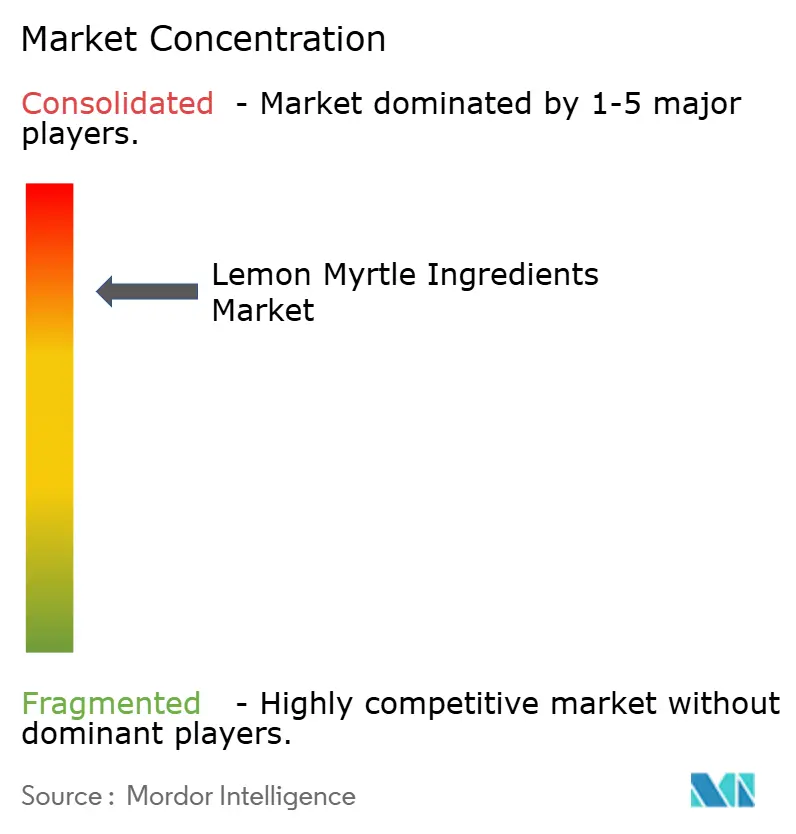
The lemon myrtle ingredients market is consolidated, with a small group of specialized Australian producers accounting for a significant share of global commercial production and exports. Key market participants include Australian Native Products, Down Under Enterprises, O&3 Limited, MyrtleCo, and Australian Native – Lemon Myrtle Farms, all of which maintain strong positions through vertically integrated cultivation, processing, and international distribution capabilities. Among these, Australian Native Products is recognized as the world's largest commercial producer, operating more than 250,000 lemon myrtle trees and supplying commercial volumes of certified organic and conventional dried leaf, essential oils, hydrosols, microfibre, and botanical extracts to food, beverage, cosmetic, and nutraceutical manufacturers worldwide. Established players also leverage long-term grower networks and export relationships to ensure reliable raw material availability and product consistency.
Competitive differentiation is increasingly shifting beyond product portfolio expansion toward certification strength, scientific validation, and cultivation excellence. Manufacturers are investing in organic certification to meet the procurement standards of global food, personal care, and dietary supplement brands. Suppliers are also strengthening their market position through bioactive documentation, including analytical validation of citral content, antioxidant properties, antimicrobial efficacy, and traceability from plantation to finished ingredient. Companies capable of providing standardized active compound profiles, comprehensive technical documentation, and regulatory compliance are gaining a competitive advantage, particularly in premium export markets.
Technology adoption and sustainable cultivation practices are becoming important competitive factors across the industry. Producers are investing in improved propagation techniques, precision irrigation, mechanized harvesting, advanced drying systems, steam distillation technologies, and quality-controlled extraction processes to maximize oil yield and preserve the natural bioactive compounds of lemon myrtle. In parallel, companies are expanding plantation acreage using sustainable farming practices, implementing soil and water conservation measures, and enhancing post-harvest processing efficiency to improve product quality and supply reliability. As demand for clean-label botanical ingredients continues to grow, competition is expected to increasingly focus on scalable cultivation, processing technology, sustainability credentials, and value-added ingredient innovation rather than price alone.
Lemon Myrtle Ingredients Industry Leaders
-
Australian Native Products
-
Down Under Enterprises
-
O&3 Limited
-
MyrtleCo
-
Australian Native – Lemon Myrtle Farms
- *Disclaimer: Major Players sorted in no particular order
Lemon Myrtle Ingredients Market Companies Covered in this Report
- Australian Native Products
- Down Under Enterprises
- O&3 Limited
- MyrtleCo
- Australian Native - Lemon Myrtle Farms
- Native Oils Australia
- Golden Grove Naturals
- Synergy Essential Pvt. Ltd.
- Sri Venkatesh Aromas
- Essentially Australia
- Australian Functional Ingredients Pty Ltd
- Sifu Tani Sdn Bhd

Recent Industry Developments in Lemon Myrtle Ingredients Market
- October 2025: Down Under Enterprises won the New South Wales (NSW) Export Award for Sustainability and Green Economy, recognizing its sustainable production and export of Australian native botanicals, including lemon myrtle oil.
- April 2025: Australian Native Products was confirmed as an Official Provider to the Australian Government's Australia Pavilion at Expo 2025 Osaka, formalizing partnerships with Japanese companies across tea, culinary, skincare, and functional foods.


Global Lemon Myrtle Ingredients Market Report Scope
Lemon myrtle, a native Australian plant (Backhousia citriodora), is recognized for its highly fragrant leaves, which are rich in citral. This compound imparts a strong lemon aroma and flavor, often considered more intense than that of lemon. The lemon myrtle ingredients market is segmented by type, end-use, and geography. Based on type, the market is segmented into dried leaf, essential oil, hydrosol, and powder. Based on end-use, the market is segmented into food and beverages, personal care and cosmetics, household and cleaning products, dietary supplements, aromatherapy, and other applications. Based on geography, the market is segmented into North America, Europe, Asia-Pacific, and Rest of the World. The report provides market size and forecasts in both value (USD) and volume (tons) for all the mentioned segments.
| Dried Leaf |
| Essential Oil |
| Hydrosol |
| Powder |
| Food and Beverages |
| Personal Care and Cosmetics |
| Household and Cleaning Products |
| Dietary Supplements |
| Aromatherapy |
| Other Applications |
| North America |
| Europe |
| Asia-Pacific |
| Rest of World |
| By Type | Dried Leaf |
| Essential Oil | |
| Hydrosol | |
| Powder | |
| By End-Use | Food and Beverages |
| Personal Care and Cosmetics | |
| Household and Cleaning Products | |
| Dietary Supplements | |
| Aromatherapy | |
| Other Applications | |
| By Geography | North America |
| Europe | |
| Asia-Pacific | |
| Rest of World |


Key Questions Answered in the Report
What is the projected value of the lemon myrtle market by 2031?
The lemon myrtle market is forecast to reach USD 28.58 million by 2031, rising from USD 15.43 million in 2026 at a 13.12% CAGR.
Which product type leads lemon myrtle demand?
Dried leaves led with 71.76% share in 2025 because they are sold directly and used as feedstock for oil distillation.
Which end use is growing fastest for lemon myrtle?
Dietary supplements are forecast to grow at a 17.88% CAGR through 2031, supported by interest in standardized bioactive formats.
Why is lemon myrtle used in food and beverages?
It provides a citrus botanical profile for tea, spirits, kombucha, bakery, sauces, and functional drinks. Food and beverages held 66.26% share in 2025.
Page last updated on:





