
Laundry Sanitizer Market Size and Share
Market Overview
| Study Period | 2027 - 2032 |
|---|---|
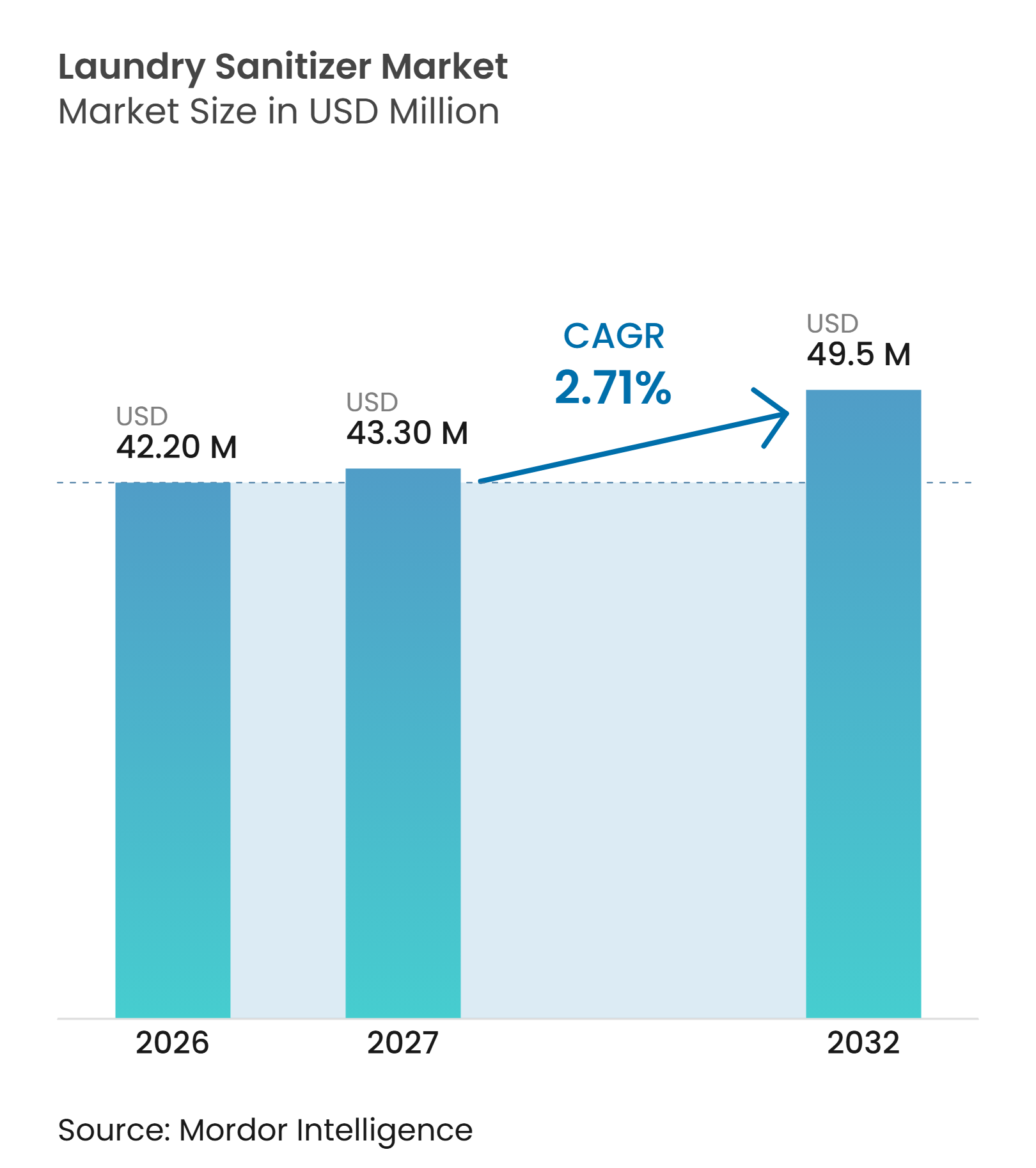
| Market Size (2027) | USD 43.30 Million |
| Market Size (2032) | USD 49.5 Million |
| Growth Rate (2027 - 2032) | 2.71 % |
| Fastest Growing Market | North America |
| Largest Market | Asia-Pacific |
| Market Concentration | Medium |
Major Players *Disclaimer: Major Players sorted in no particular order Image © Mordor Intelligence. Reuse requires attribution under CC BY 4.0. | |
Laundry Sanitizer Market Analysis by Mordor Intelligence
The laundry sanitizers market size is expected to increase from USD 42.20 million in 2026 to USD 43.30 million in 2027 and reach USD 49.50 million by 2032, growing at a CAGR of 2.71% over 2027–2032. Market growth is supported by rising consumer awareness of laundry hygiene, microbial protection, and odor control, alongside increasing adoption of sanitizing products in healthcare and institutional laundry applications. Demand for scented formulations, fragrance-free alternatives, and products suitable for low-temperature washing creates opportunities for product differentiation. Conventional formulations and bottled products continue to account for significant market shares, while natural and plant-based alternatives and online retail are expected to gain traction as consumers increasingly prioritize ingredient transparency and purchasing convenience. However, relatively higher product prices, limited awareness of the distinction between laundry sanitizers and conventional detergents, and regulatory requirements for antimicrobial efficacy claims may constrain wider adoption. Growth therefore favors manufacturers that can demonstrate product effectiveness, develop differentiated formulations, and strengthen distribution through supermarkets and expanding online retail channels.
Key Report Takeaways
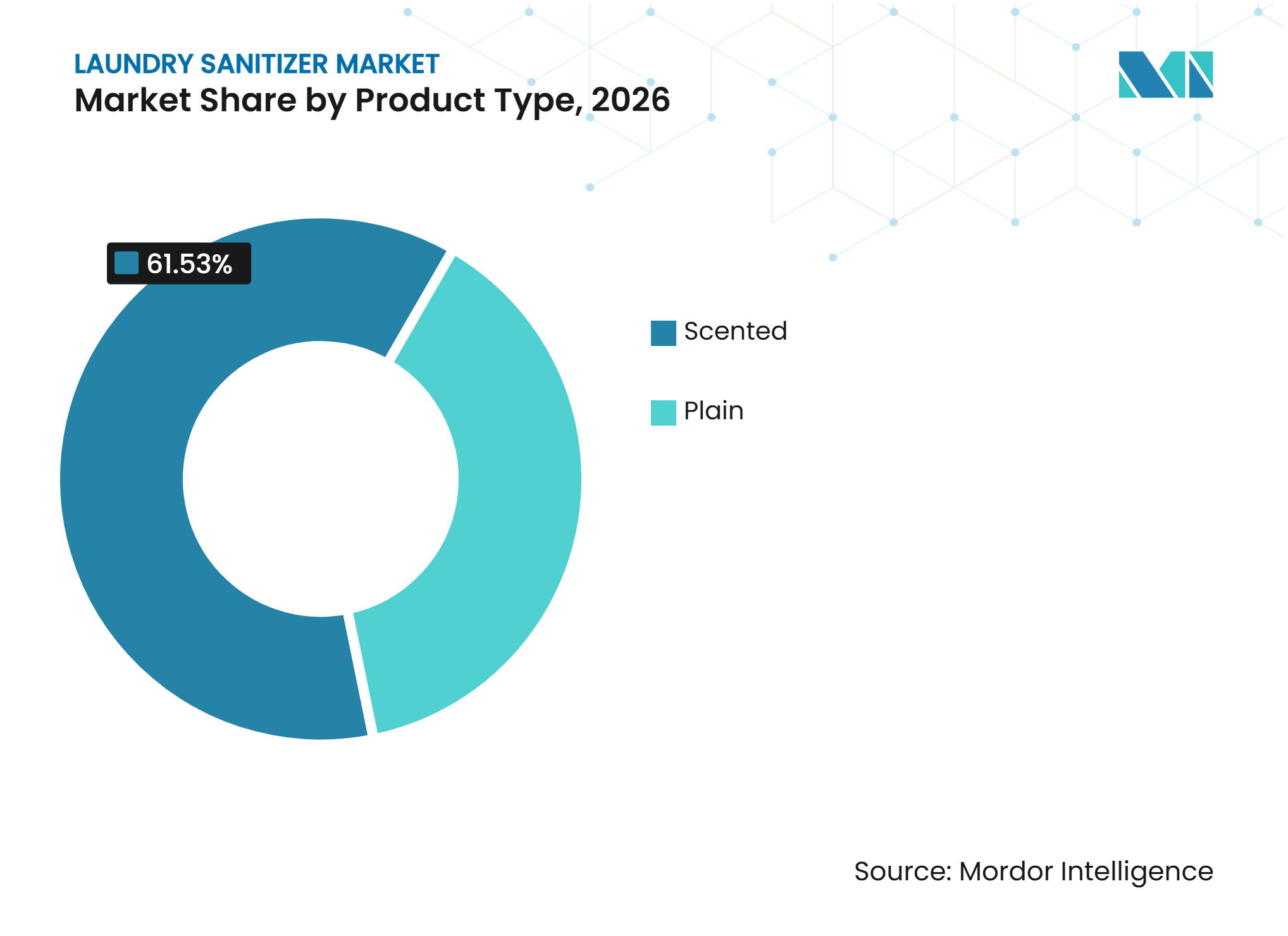
- By product type, scented laundry sanitizers accounted for the largest share at 61.53% in 2026, while plain laundry sanitizers are forecast to grow fastest at a 3.38% CAGR over 2027–2032.
- By nature, conventional laundry sanitizers dominated with a 73.56% market share in 2026, while natural and plant-based laundry sanitizers are projected to record the fastest growth at a 4.90% CAGR over 2027–2032.
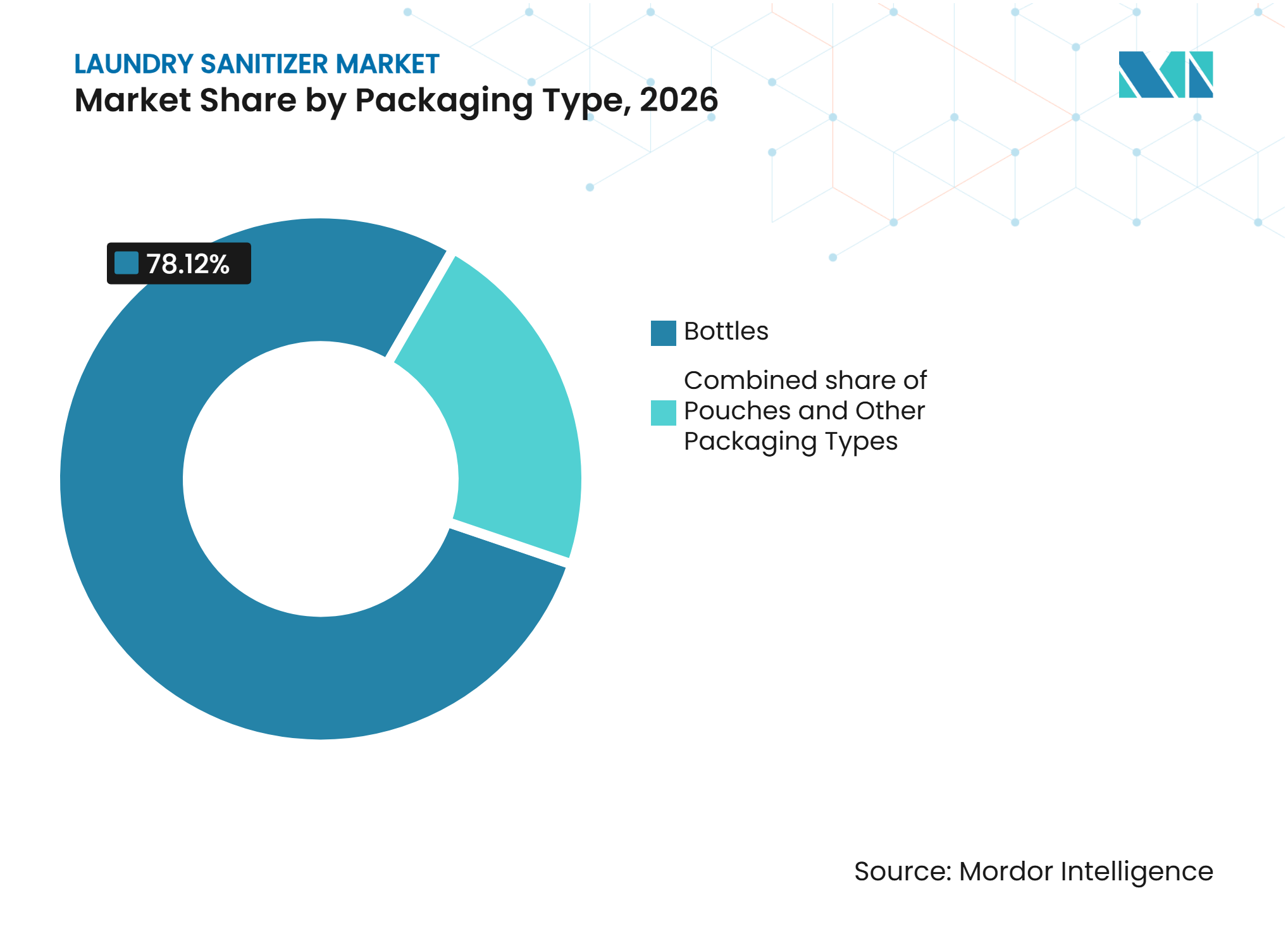
- By packaging type, bottles led with a 78.12% market share in 2026, while pouches are expected to grow fastest at a 4.31% CAGR over 2027–2032.
- By distribution channel, supermarkets and hypermarkets accounted for the largest share at 47.45% in 2026, while online retail is forecast to grow fastest at a 5.50% CAGR over 2027–2032.
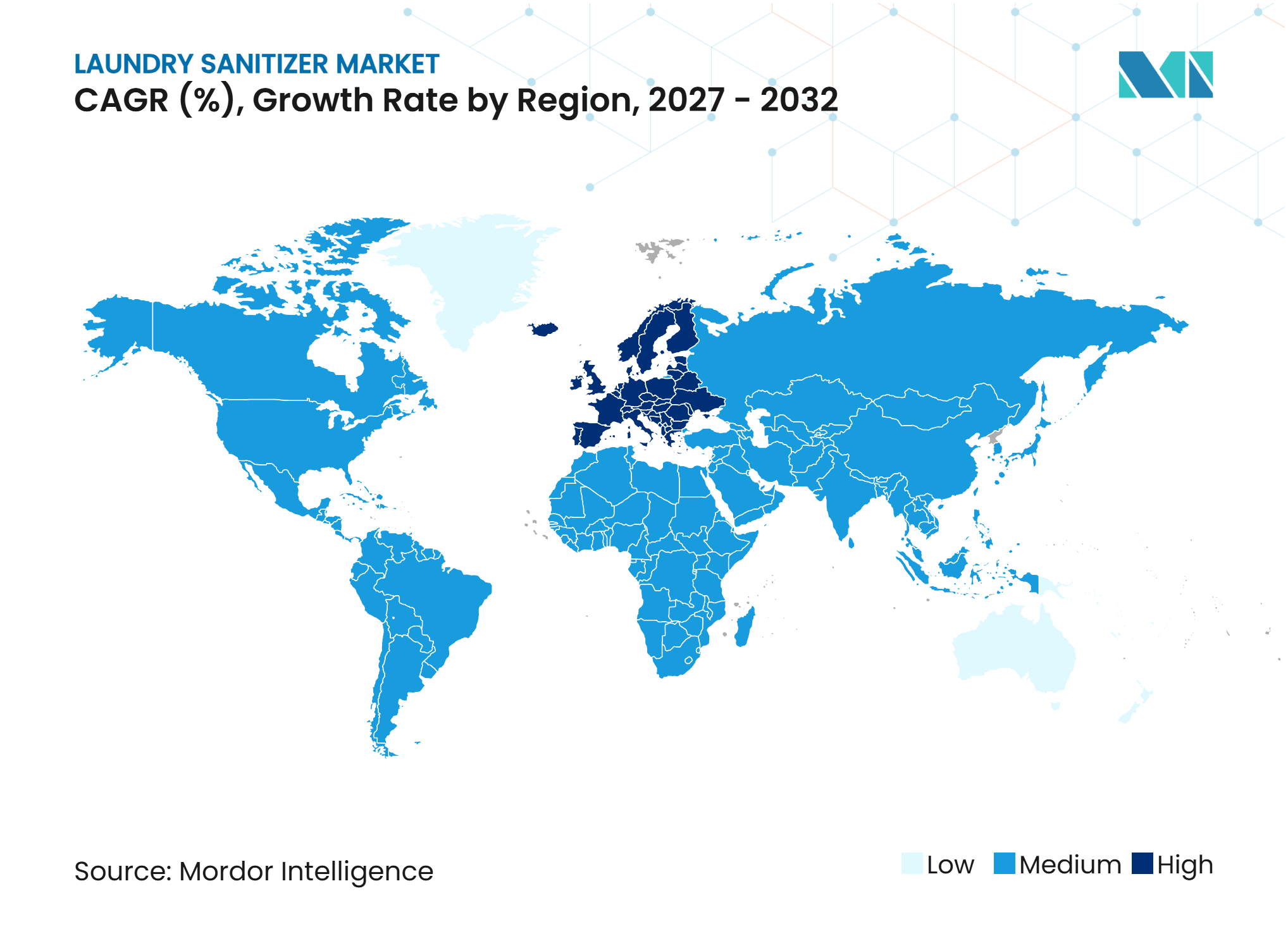
- Among geographies, Asia-Pacific led with a 37.90% share of the laundry sanitizers market in 2026, while North America is projected to grow fastest at a 3.94% CAGR over 2027–2032.
Note: Market numbers in this report are based on Mordor Intelligence's proprietary estimation framework, which combines nine months of actuals with Q4 projections for base year 2026.
Market Trends and Insights
Drivers Impact Analysis of Laundry Sanitizer Market*
| Driver | (~) % Impact on CAGR Forecast | Geographic Relevance | Impact Timeline |
|---|---|---|---|
| Rising consumer awareness regarding laundry hygiene and microbial protection | +0.8% | Global, particularly North America and Europe, where awareness of household hygiene and antimicrobial laundry care is well established | Medium term (2–4 years) |
| Increasing demand for laundry sanitizers in healthcare and institutional applications | +0.7% | Global, particularly North America, Europe and Asia-Pacific, supported by hygiene requirements in healthcare facilities, hospitality and commercial laundry operations | Long term (More than 4 years) |
| Growing consumer preference for scented laundry sanitizers offering freshness and odor control | +0.5% | Global, particularly Asia-Pacific and North America, where fragrance-oriented household and fabric care products have strong consumer appeal | Short term (Less than 2 years) |
| Rising adoption of laundry sanitizers for low-temperature washing and delicate fabrics | +0.4% | Global, particularly Europe and North America, where energy-efficient laundry practices and fabric-care considerations support product adoption | Medium term (2–4 years) |
| Increasing awareness of fragrance-free and skin-sensitive laundry care formulations | +0.3% | Global, particularly North America and Europe, with growing opportunities across urban markets in Asia-Pacific | Medium term (2–4 years) |
| Source: Mordor Intelligence | |||
Rising Consumer Awareness Regarding Laundry Hygiene and Microbial Protection
Growing awareness of household hygiene and microbial contamination is supporting demand for laundry sanitizers as supplementary products to conventional detergents. Clothing, towels, bedding, and other washable textiles can retain microorganisms from body fluids, environmental exposure, and daily use, creating interest in effective laundry hygiene practices. The US Centers for Disease Control and Prevention (CDC) identifies contaminated textiles as a potential source of pathogenic microorganisms and highlights the importance of appropriate laundering procedures, including effective washing, drying, and hygienic handling [1]. The CDC also recommends using the warmest appropriate water setting and drying laundry completely as part of routine hygiene practices [2]. These recommendations reinforce the importance of maintaining textile hygiene and create opportunities for laundry sanitizer manufacturers to position their products around microbial reduction and additional hygiene benefits. However, antimicrobial effectiveness and associated product claims need to be supported by appropriate testing and product-specific evidence.
Increasing Demand for Laundry Sanitizers in Healthcare and Institutional Applications
Healthcare facilities, hospitals, nursing homes, and commercial laundry operators require consistent procedures to manage contaminated textiles and maintain hygienically clean linens, uniforms, bedding, and patient garments. The CDC's Guidelines for Environmental Infection Control in Health-Care Facilities identify laundering as an important component of infection prevention and explain that healthcare textiles can contain microorganisms originating from blood, skin, and other bodily substances [3]. India's National Centre for Disease Control (NCDC), under the Ministry of Health and Family Welfare, also includes disinfection and appropriate laundering procedures for hospital linens, bed sheets, curtains, and patient garments in its National Guidelines for Infection Prevention and Control in Healthcare Facilities [4]. These institutional hygiene requirements create opportunities for specialized laundry sanitizing formulations, particularly where facilities seek additional antimicrobial treatment alongside established washing procedures. Demand is also supported by commercial laundry services catering to hospitality, healthcare, and other institutional customers, although product selection remains dependent on efficacy, fabric compatibility, operating costs, and applicable hygiene protocols.
Growing Consumer Preference for Scented Laundry Sanitizers Offering Freshness and Odor Control
Consumer preference for fresh-smelling laundry is encouraging manufacturers to incorporate fragrances into laundry care formulations, including sanitizing products. Fragrance can improve the perceived cleanliness of washed fabrics by providing pleasant scents, masking undesirable odors, and enhancing the overall laundry experience. A 2022 study published in Cognitive Research: Principles and Implications examined consumer preferences for scented household products and found that 82.1% of surveyed laundry product users considered fragrance either very important or somewhat important. The study also found that consumers associated laundry fragrance with pleasant-smelling fabrics, freshness, and the removal of unpleasant odors [5]. These findings indicate opportunities for manufacturers to differentiate scented laundry sanitizers through fragrance variety, longer-lasting freshness, and odor-control positioning. However, fragrance selection needs to balance consumer preferences with formulation stability, fabric compatibility, and the availability of fragrance-free alternatives.
Rising Adoption of Laundry Sanitizers for Low-Temperature Washing and Delicate Fabrics
Increasing use of low-temperature washing cycles is creating opportunities for laundry sanitizers formulated to provide additional hygiene benefits without requiring consumers to rely exclusively on high-temperature washing. Lower-temperature cycles are relevant for energy-conscious households and consumers washing delicate fabrics that may be unsuitable for repeated exposure to high temperatures. The CDC's healthcare laundry guidelines recognize that low-temperature washing can be used when appropriate chemicals are selected at the correct concentrations, while also emphasizing the importance of following fabric-care requirements [3]. Its guidance further notes that the effectiveness of laundry processing depends on factors such as washing conditions, chemical selection, drying temperatures, and cycle management [6]. These considerations support product development focused on antimicrobial efficacy under recommended low-temperature washing conditions and compatibility with different textile types. Manufacturers that demonstrate reliable performance across suitable washing conditions can strengthen their positioning among consumers seeking convenient laundry hygiene solutions.
Increasing Awareness of Fragrance-Free and Skin-Sensitive Laundry Care Formulations
Growing attention to fragrance sensitivity and skin compatibility is creating opportunities for fragrance-free and specially formulated laundry sanitizers. Consumers concerned about skin irritation or allergic contact dermatitis may prefer laundry products that avoid unnecessary fragrance ingredients and provide greater transparency regarding formulation components. DermNet, a clinical dermatology resource, identifies fragrances as potential causes of allergic contact dermatitis and recommends that fragrance-allergic individuals avoid products containing fragrance ingredients where possible [7]. It also highlights that products labelled as unscented may still contain masking fragrances, making ingredient transparency an important consideration. This creates opportunities for manufacturers to develop plain laundry sanitizers and fragrance-free formulations that address the requirements of sensitive-skin consumers while maintaining their intended sanitizing performance. Clear ingredient disclosure, appropriate dermatological testing, and substantiated product claims can help manufacturers differentiate these formulations in the broader laundry care market.
Restraints Impact Analysis of Laundry Sanitizer Market*
| Restraint | (~) % Impact on CAGR Forecast | Geographic Relevance | Impact Timeline |
|---|---|---|---|
| Higher product prices compared with conventional laundry detergents and fabric care products | −0.7% | Global, particularly price-sensitive markets across Asia-Pacific, South America and the Middle East and Africa, where consumers may prioritize lower-cost laundry alternatives | Medium term (2–4 years) |
| Limited consumer awareness regarding the differences between laundry sanitizers and detergents | −0.5% | Global, particularly emerging markets across Asia-Pacific, South America and the Middle East and Africa, where specialized laundry hygiene products have comparatively lower consumer familiarity | Medium term (2–4 years) |
| Regulatory requirements for antimicrobial efficacy claims and product safety | −0.4% | Global, particularly North America and Europe, where antimicrobial product claims and chemical safety requirements involve established regulatory frameworks | Long term (More than 4 years) |
| Availability of alternative laundry disinfection methods and hygiene additives | −0.3% | Global, particularly developed markets across North America and Europe, where consumers and institutional users have access to disinfecting detergents, bleach-based products and specialized laundry additives | Short term (Less than 2 years) |
| Source: Mordor Intelligence | |||
Higher Product Prices Compared with Conventional Laundry Detergents and Fabric Care Products
Laundry sanitizers generally represent an additional expense for households because they are purchased alongside conventional laundry detergents rather than replacing them entirely. Their formulations may require antimicrobial active ingredients, fragrance components, stabilizers, and specialized formulation processes to deliver the intended sanitizing performance. These additional formulation and manufacturing requirements can increase production costs compared with standard laundry detergents and fabric conditioners. Premium positioning, specialized packaging, and distribution expenses can further raise retail prices, particularly for concentrated and branded sanitizer products. This price difference may discourage regular purchases among budget-conscious households, especially in emerging markets where consumers often prioritize multipurpose and lower-priced laundry care products. Manufacturers therefore need to balance antimicrobial efficacy, formulation quality, and competitive pricing through efficient sourcing, production scale, and affordable pack sizes.
Limited Consumer Awareness Regarding the Differences Between Laundry Sanitizers and Detergents
Limited consumer understanding of the distinction between laundry sanitizers and conventional detergents can restrict category adoption. Detergents are primarily designed to remove dirt, stains, oils, and other visible residues, whereas laundry sanitizers are formulated to provide additional antimicrobial benefits when used according to their product instructions. However, consumers may assume that routine detergent washing alone provides sufficient protection against microorganisms, reducing their perceived need to purchase a separate sanitizing product. The US Environmental Protection Agency (EPA) regulates antimicrobial pesticide products and requires applicable public-health antimicrobial claims to be supported by appropriate efficacy data, highlighting the importance of clearly communicating product functionality and approved claims . Insufficient product education and unclear differentiation at retail outlets can therefore limit consumer willingness to pay for laundry sanitizers. Manufacturers need to strengthen product labelling, usage instructions, and consumer education to communicate the specific benefits of sanitizing formulations without overstating their effectiveness.
*Our forecasts treat driver/restraint impacts as directional, not additive. The impact forecasts reflect baseline growth, mix effects, and variable interactions.
Laundry Sanitizer Market Segment Analysis
By Product Type:
Scented Laundry Sanitizers Lead While Plain Formulations Expand FasterIn 2026, scented laundry sanitizers accounted for an estimated 61.53% of the laundry sanitizers market, making them the leading product type. Their dominance reflects consumer preference for laundry products that combine hygiene benefits with fragrance, freshness, and odor control. Scented formulations allow manufacturers to differentiate their products through fragrance varieties and longer-lasting freshness, while addressing consumers' expectations of clean-smelling clothes and fabrics. Meanwhile, plain laundry sanitizers are projected to record the fastest growth, at an estimated CAGR of 3.38% through 2032. This growth is supported by increasing awareness of fragrance sensitivities and demand for laundry care products with fewer fragrance-related ingredients. Plain formulations also provide opportunities to address consumers seeking sanitizing benefits without additional fragrance.
Both product categories serve distinct consumer preferences, requiring manufacturers to balance antimicrobial performance, formulation stability, and fabric compatibility. Scented products are likely to retain their leading position through fragrance-led differentiation, while plain formulations can gain traction among consumers prioritizing simpler laundry care products. The ability to offer effective sanitizing performance across different fragrance preferences will remain important for manufacturers.



By Nature:
Conventional Formulations Dominate While Natural and Plant-Based Products Gain MomentumConventional laundry sanitizers accounted for an estimated 73.56% of the market in 2026, making them the leading category by nature. Their dominance is supported by established product availability, familiarity among consumers, and the widespread use of conventional antimicrobial ingredients in laundry care formulations. These products benefit from established manufacturing capabilities and broad retail distribution, allowing manufacturers to serve diverse household and institutional requirements. Meanwhile, natural and plant-based laundry sanitizers are projected to register the fastest growth, at a CAGR of 4.90% through 2032. This growth is supported by increasing consumer interest in plant-derived ingredients, ingredient transparency, and laundry care products perceived as more environmentally conscious. Manufacturers are responding through formulations that incorporate naturally derived components while maintaining the intended hygiene and fabric-care benefits.
Conventional formulations are expected to retain their leading position due to established consumer acceptance and product availability. However, natural and plant-based alternatives offer manufacturers opportunities to address evolving preferences for ingredient-conscious household products. Product efficacy, formulation stability, affordability, and clear ingredient disclosure will remain important factors influencing competition between the two categories.
By Packaging Type:
Bottles Lead While Pouches Record Faster GrowthBottles accounted for an estimated 78.12% of the laundry sanitizers market in 2026, making them the dominant packaging type. Their leading position reflects consumer familiarity, convenient handling, controlled dispensing, and suitability for liquid laundry sanitizer formulations. Bottled products also provide manufacturers with opportunities to differentiate through pack sizes, dispensing designs, and product visibility across retail shelves. Meanwhile, pouches are projected to record the fastest growth, at a CAGR of 4.31% through 2032. Their growth is supported by demand for convenient packaging, reduced storage requirements, and refill formats that can help consumers reuse existing bottles. Pouches also provide manufacturers with opportunities to optimize packaging material use and offer products in different quantities.
Bottles are expected to maintain their leading position because of their established role in liquid household care packaging and consumer convenience. However, pouches can gain traction as manufacturers expand refill-oriented formats and seek packaging options that address storage and material-efficiency considerations. Packaging durability, ease of use, product protection, and compatibility with liquid formulations will remain important considerations across both categories.

By Distribution Channel:
Supermarkets and Hypermarkets Lead While Online Retail Expands FasterSupermarkets and hypermarkets accounted for an estimated 47.45% of the laundry sanitizers market in 2026, making them the leading distribution channel. Their dominance is supported by broad product availability, established consumer shopping habits, and the ability to compare laundry care products across brands and formulations. Physical retail outlets also allow manufacturers to improve product visibility through shelf placement, promotional offers, and in-store product communication. Meanwhile, online retail is projected to record the fastest growth, at a CAGR of 5.50% through 2032. This growth is supported by the increasing use of e-commerce platforms for household replenishment, convenient home delivery, and access to a wider selection of specialized laundry care products. Online channels also provide opportunities for manufacturers to communicate product features, ingredients, and usage instructions through detailed product listings.
Supermarkets and hypermarkets are expected to remain important distribution channels because of their established retail reach and direct product visibility. However, online retail is positioned to gain traction as digital purchasing becomes increasingly integrated into household shopping routines. Manufacturers are likely to benefit from maintaining a presence across both physical and digital channels, supported by competitive pricing, product availability, and clear communication of sanitizing benefits.
Geography Analysis
Asia-Pacific Laundry Sanitizers Market
Asia-Pacific accounted for an estimated 37.90% of the laundry sanitizers market in 2026, making it the largest regional market. The region benefits from a large population base, expanding urban households, and established demand for household laundry and fabric-care products. Countries such as China, India, Japan, and Australia provide opportunities for manufacturers through their sizeable consumer markets and established retail distribution networks. Increasing attention to household hygiene and the availability of specialized laundry-care formulations also support regional demand. Manufacturers can address varied consumer preferences through scented and plain formulations, different pack sizes, and products positioned around fabric hygiene and odor control.
North America Laundry Sanitizers Market
North America is projected to be the fastest-growing regional market, with an estimated CAGR of 3.94% over 2027–2032. Demand is supported by established household hygiene practices, consumer familiarity with specialized laundry-care products, and the presence of major home-care manufacturers. The United States and Canada offer opportunities for differentiated formulations, including products designed for odor control, low-temperature washing, and fragrance-sensitive consumers. Established supermarket networks and e-commerce platforms also provide manufacturers with broad routes to market. Product efficacy, transparent labelling, and clear communication of sanitizing benefits will remain important to strengthening consumer adoption.
Europe, South America, and Middle East and Africa Laundry Sanitizers Market
Europe offers opportunities through established household laundry-care markets and consumer interest in specialized formulations, including products suitable for low-temperature washing, delicate fabrics, and fragrance-sensitive users. Countries such as the United Kingdom, Germany, France, Italy, and Spain provide opportunities for manufacturers to expand differentiated product portfolios through established retail channels. South America benefits from expanding urban consumer markets and demand for household cleaning and laundry-care products, with Brazil and Argentina representing important markets for regional expansion. In the Middle East and Africa, rising attention to household hygiene and the development of modern retail channels create opportunities for laundry sanitizer adoption, particularly in South Africa, Saudi Arabia, and the United Arab Emirates. Across these regions, manufacturers need to address differences in consumer purchasing power, product awareness, regulatory requirements, and distribution infrastructure while maintaining competitive pricing and demonstrating product effectiveness.
Competitive Landscape
Market Concentration
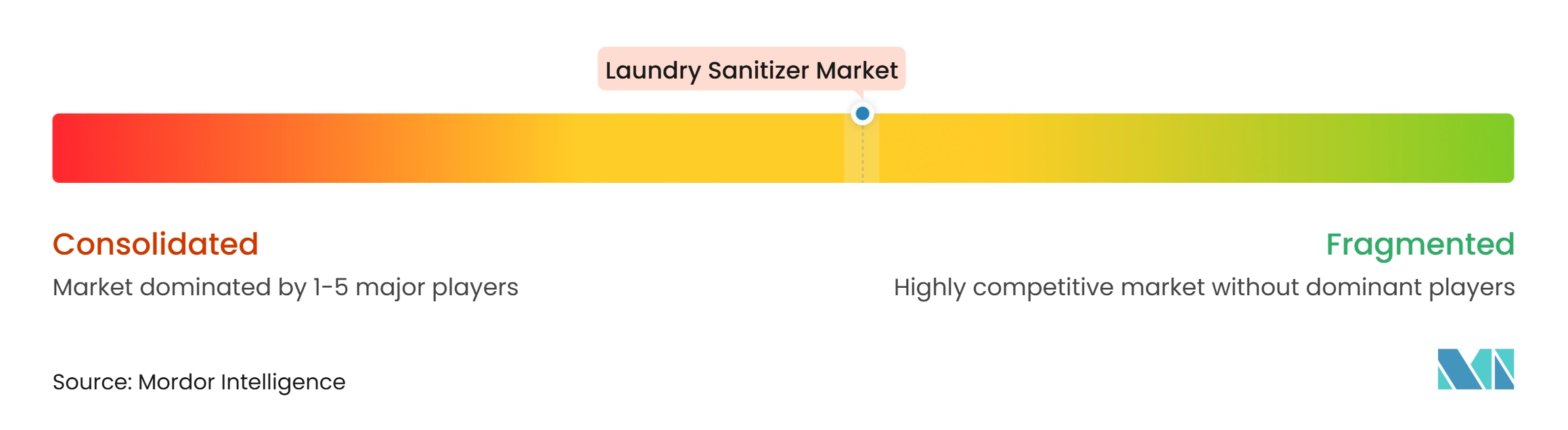
The Laundry Sanitizers Market includes multinational home-care companies, household cleaning brands, specialty hygiene-product manufacturers, and institutional cleaning suppliers competing through formulation development, antimicrobial performance, brand positioning, and distribution reach. The companies have varying levels of exposure to the market through dedicated laundry sanitizers, laundry additives, fabric-care products, and broader household or commercial hygiene portfolios. Specialist manufacturers can differentiate through targeted sanitizing formulations, while larger consumer-goods companies can leverage established brands, manufacturing capabilities, and retail distribution networks.
Competitive strategies in the Laundry Sanitizers Market focus on developing differentiated formulations, strengthening antimicrobial and odor-control positioning, and extending product availability across retail channels. For example, Reckitt markets Lysol Laundry Sanitizer in scented variants such as Crisp Linen, Lavender Fusion, and Tropical Escape, alongside its Free & Clear formulation for consumers seeking fragrance-free options. The product is positioned for use in cold-water washing and across fabrics such as towels, bedding, gym clothes, and delicates. The Clorox Company also participates in adjacent laundry hygiene and odor-control products through Clorox FreshGuard Laundry Odor Remover, whose formulation was previously marketed as Clorox Laundry Sanitizer. These examples demonstrate how established household-care companies use brand recognition, formulation features, and product positioning to compete in the wider laundry hygiene category.
Sourcing, regulatory compliance, and distribution remain important competitive considerations. Companies with established chemical sourcing, formulation, and manufacturing capabilities can support product consistency, while broad supermarket, hypermarket, and online retail networks improve consumer access. Institutional suppliers such as Ecolab and Diversey also operate in commercial cleaning and laundry hygiene markets, serving customers with specialized operational requirements. However, the competitive landscape includes companies with different degrees of direct exposure: some offer dedicated laundry sanitizers, while others participate through detergents, bleach-based products, fabric-care additives, or broader hygiene portfolios. Manufacturers must therefore demonstrate product-specific efficacy, maintain fabric compatibility, comply with antimicrobial product regulations, and communicate the distinction between sanitizing and conventional cleaning benefits. These factors make formulation performance, brand credibility, regulatory compliance, and distribution reach important areas of competition.
Laundry Sanitizer Industry Leaders
-
Reckitt Benckiser Group plc
-
The Clorox Company
-
Ecolab Inc.
-
Diversey Holdings, Ltd.
-
Henkel AG & Co. KGaA
- *Disclaimer: Major Players sorted in no particular order
Laundry Sanitizer Market Companies Covered in this Report
- Reckitt Benckiser Group plc
- Unilever PLC
- The Procter & Gamble Company
- The Clorox Company
- Church & Dwight Co., Inc.
- Cosmo First Limited
- ITC Limited
- Dabur India Limited
- Marico Limited
- Micro Balance Health Products
- Henkel AG & Co. KGaA
- Kao Corporation
- Lion Corporation
- Ecolab Inc.
- Diversey Holdings, Ltd.
- S. C. Johnson & Son, Inc.
- Spectrum Brands Holdings, Inc.
- Colgate-Palmolive Company
- Jyothy Labs Limited
- RSPL Group
Recent Industry Developments in Laundry Sanitizer Market
- November 2026: Lysol partnered with Motiv Sports to become the official laundry sanitizer for post-race hygiene at selected running events. The collaboration began at the 2XU Long Beach Marathon and included consumer sampling and an interactive demonstration highlighting Lysol Laundry Sanitizer's odor-control benefits. The partnership extends the brand's engagement with sports participants and positions laundry sanitizing as part of post-exercise clothing care.
- June 2026: Kao Corporation introduced Attack ActivClean+ Hygiene Guard in Singapore, expanding its laundry-care portfolio with a hygiene-focused laundry stick. The 10-in-1 formulation was promoted for germ-killing performance and protection against six common viruses, including Influenza A and viruses associated with hand, foot, and mouth disease. The launch reflects the expansion of hygiene-oriented laundry products that address consumer interest in fabric cleanliness beyond visible stain removal.
- March 2026: The Clorox Company transitioned its Clorox Laundry Sanitizer Liquid to the Clorox FreshGuard Laundry Odor Remover name, with updated packaging reaching stores nationwide. The company retained the product's core formula while shifting its positioning toward tackling and neutralizing tough laundry odors. This repositioning highlights the importance of odor-control benefits and product differentiation in the laundry hygiene category.
- February 2026: Reckitt's Lysol brand launched Spring Burst Lysol Laundry Sanitizer in the United States, introducing the first floral fragrance in its Laundry Sanitizer range. The product was designed to kill odor-causing bacteria in laundry when used as directed and was made available through Target. The launch expanded the brand's scented product portfolio and strengthened its fragrance-led positioning in the laundry sanitizer segment.
Global Laundry Sanitizer Market Report Scope
For this study, the Laundry Sanitizers Market is defined as the sales value of commercially produced liquid and other formulated laundry sanitizing products designed to provide additional antimicrobial hygiene benefits during the washing process. The market covers scented and plain laundry sanitizers, segmented by nature into conventional and natural and plant-based products; by packaging type into bottles, pouches, and other packaging types; and by distribution channel into off-trade and its subchannels, including supermarkets and hypermarkets, convenience stores, specialty stores, online retail, and other distribution channels. The market is analyzed across North America, Europe, Asia-Pacific, South America, and the Middle East and Africa, with country-level coverage as specified in the report. Market sizing and forecasts are presented in value terms (USD) across the defined segments and geographies.
Segmentation Overview
| Scented |
| Plain |
| Conventional |
| Natural and Plant-Based |
| Bottles |
| Pouches |
| Other Packaging Types |
| Off-Trade |
| Supermarkets/Hypermarkets |
| Convenience Stores |
| Specialty Stores |
| Online Retail |
| Other Distribution Channels |
| North America | United States |
| Canada | |
| Mexico | |
| Rest of North America | |
| Europe | United Kingdom |
| Germany | |
| France | |
| Italy | |
| Spain | |
| Rest of Europe | |
| Asia-Pacific | China |
| Japan | |
| India | |
| Thailand | |
| Australia | |
| Rest of Asia-Pacific | |
| South America | Brazil |
| Argentina | |
| Rest of South America | |
| Middle East and Africa | South Africa |
| Saudi Arabia | |
| United Arab Emirates | |
| Rest of Middle East and Africa |
| By Product Type | Scented | |
| Plain | ||
| By Nature | Conventional | |
| Natural and Plant-Based | ||
| By Packaging Type | Bottles | |
| Pouches | ||
| Other Packaging Types | ||
| By Distribution Channel | Off-Trade | |
| Supermarkets/Hypermarkets | ||
| Convenience Stores | ||
| Specialty Stores | ||
| Online Retail | ||
| Other Distribution Channels | ||
| By Geography | North America | United States |
| Canada | ||
| Mexico | ||
| Rest of North America | ||
| Europe | United Kingdom | |
| Germany | ||
| France | ||
| Italy | ||
| Spain | ||
| Rest of Europe | ||
| Asia-Pacific | China | |
| Japan | ||
| India | ||
| Thailand | ||
| Australia | ||
| Rest of Asia-Pacific | ||
| South America | Brazil | |
| Argentina | ||
| Rest of South America | ||
| Middle East and Africa | South Africa | |
| Saudi Arabia | ||
| United Arab Emirates | ||
| Rest of Middle East and Africa | ||
Key Questions Answered in the Report
What is the projected size of the Laundry Sanitizers Market by 2032?
The Laundry Sanitizers Market is projected to reach USD 49.50 million by 2032, increasing from USD 42.20 million in 2026.
Which product type holds the largest share of the Laundry Sanitizers Market?
Scented laundry sanitizers hold the largest share, accounting for an estimated 61.53% of the market in 2026.
Which segment is expected to grow fastest in the Laundry Sanitizers Market?
Online retail is projected to be the fastest-growing distribution channel, registering an estimated CAGR of 5.50% over 2027–2032. Among product types, plain laundry sanitizers are expected to grow at a CAGR of 3.38%.
Which region dominates the Laundry Sanitizers Market?
Asia-Pacific dominates the market, accounting for an estimated 37.90% share in 2026. North America is projected to be the fastest-growing region, with an estimated CAGR of 3.94% over 2027–2032.