
Laundry Detergent Pods Market Size and Share
Market Overview
| Study Period | 2022 - 2032 |
|---|---|
| Market Size (2027) | USD 15.13 Billion |
| Market Size (2032) | USD 20.41 Billion |
| Growth Rate (2027 - 2032) | 6.17 % |
| Fastest Growing Market | Asia-Pacific |
| Largest Market | North America |
| Market Concentration | Medium |
Major Players *Disclaimer: Major Players sorted in no particular order Image © Mordor Intelligence. Reuse requires attribution under CC BY 4.0. | |
Laundry Detergent Pods Market Analysis by Mordor Intelligence
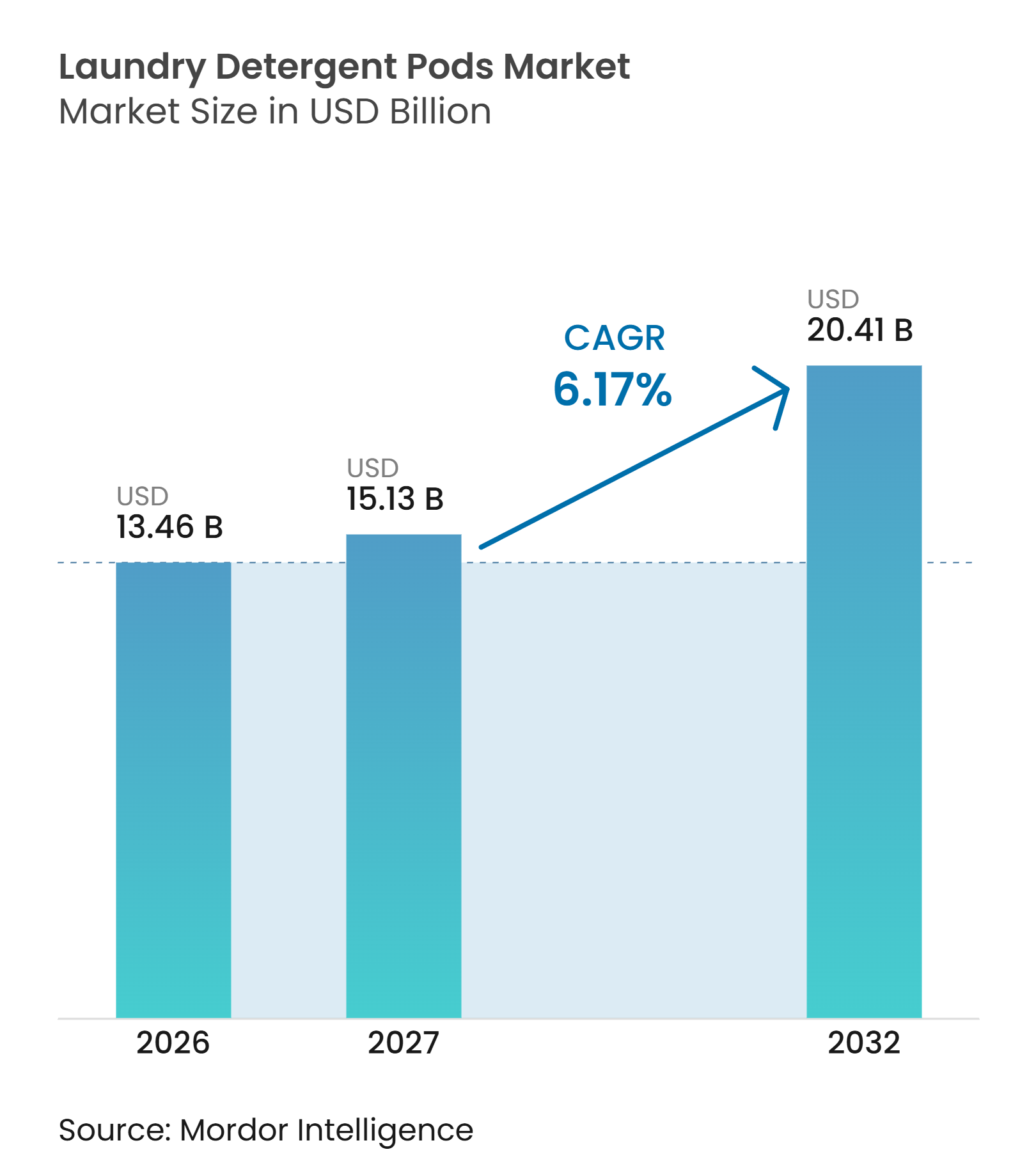
The laundry detergent pods market size is expected to grow from USD 13.46 billion in 2026 to USD 15.13 billion in 2027 and is forecast to reach USD 20.41 billion by 2032 at a 6.17% CAGR over 2027-2032. The global laundry detergent pods market is driven by increasing consumer preference for convenient, pre-measured laundry solutions, growing demand for concentrated cleaning formulations, and expanding automatic washing machine usage. Consumers are adopting detergent pods because they eliminate manual measurement, reduce detergent handling, and combine multiple cleaning and fabric-care functions into a single dose. Demand is further supported by product innovation, particularly multi-chamber capsules that integrate stain-removal enzymes, fragrances, and fabric-conditioning ingredients. Manufacturers are focusing on concentrated formulations, specialized fabric-care benefits, improved water-soluble film technology, and packaging innovations to differentiate their products and drive premium product adoption.
Key Report Takeaways
-
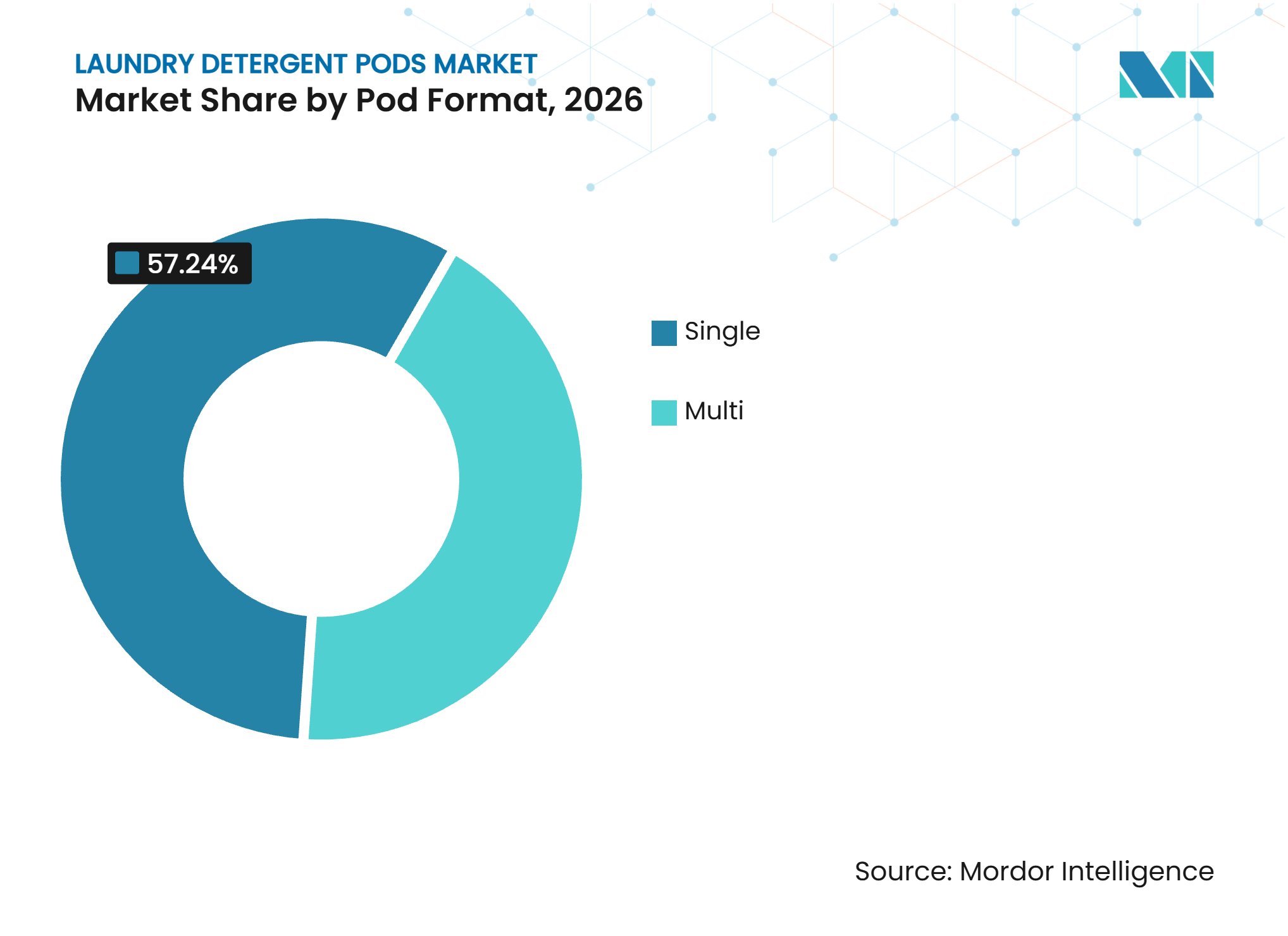
By pod format, single-chamber pods held 57.24% of the laundry detergent pods market share in 2026, while multi-chamber pods are forecast to grow at a 6.48% CAGR through 2032.
-
By end user, household and residential users accounted for 58.78% revenue share in 2026, while commercial users are projected to grow at a 6.52% CAGR through 2032.
-
By fragrance profile, scented pods held a 47.88% share in 2026, while unscented pods are forecast to expand at a 6.54% CAGR through 2032.
- By geography, North America held a 35.12% share in 2026, while Asia-Pacific is forecast to expand at a 6.12% CAGR through 2032.
Note: Market numbers in this report are based on Mordor Intelligence's proprietary estimation framework, which combines nine months of actuals with Q4 projections for base year 2026.
Market Trends and Insights
Drivers Impact Analysis of Laundry Detergent Pods Market of Laundry Detergent Pods Market*
| Driver | (~) % Impact on CAGR Forecast | Geographic Relevance | Impact Timeline |
|---|---|---|---|
| Convenient pre-measured laundry solutions | +1.8% | Global, strongest in North America and Western Europe | Short term (≤ 2 years) |
| Concentrated high-performance detergents | +1.2% | North America, Europe, East Asia | Medium term (2-4 years) |
| E-commerce and modern retail expansion | +1.1% | North America, China, Europe | Short term (≤ 2 years) |
| Premium multi-chamber and specialized formulations | +0.9% | North America, United Kingdom, Germany, Japan, South Korea | Medium term (2-4 years) |
| Product Innovation and Development of Multi-Chamber and Multi-Functional Pods | +0.8% | North America, Europe, China, Japan, South Korea | Medium term (2–4 years) |
| Growing Consumer Preference for Premium and Specialized Laundry Care Products | +0.7% | North America, Western Europe, Japan, South Korea, Australia | Medium to long term (2–5 years) |
| Source: Mordor Intelligence | |||
Growing Consumer Preference for Convenient and Pre-Measured Laundry Solutions
Increasing consumer preference for convenient household cleaning solutions is supporting the adoption of laundry detergent pods, particularly among working professionals, urban households, and consumers seeking simplified laundry routines. Unlike conventional liquid and powder detergents, pods provide a pre-measured dose for individual wash cycles, reducing the need for manual measurement and minimizing spillage and detergent wastage. Their compact packaging improves storage convenience and makes them suitable for households with limited storage space. The American Cleaning Institute has emphasized safe storage practices for laundry packets, reflecting the product format's widespread household use and the need for responsible handling[1]. The growing preference for time-saving household products is encouraging manufacturers to expand their pod portfolios across different cleaning requirements and price points. The integration of detergent, stain-removal, and fragrance components into a single unit is also strengthening their appeal as an all-in-one laundry solution. Unilever's 2026 launch of its redesigned four-chamber Dirt Is Good capsule highlights how manufacturers are continuing to build on the convenience proposition through enhanced cleaning and fragrance delivery.
Increasing Demand for Concentrated and High-Performance Laundry Detergents
Growing demand for concentrated laundry detergents is supporting market expansion, as consumers increasingly seek effective cleaning performance from smaller product quantities. IFF identifies concentration and formulation design as central to current home-care product development[2]. Laundry pods generally contain concentrated surfactants, enzymes, builders, and other cleaning ingredients within a water-soluble film, enabling manufacturers to deliver multiple cleaning functions in a single pre-measured dose. This format is particularly attractive to consumers seeking improved stain removal, odor control, and fabric care without manually combining different laundry products. Manufacturers are also improving the performance of concentrated formulations for lower-temperature and shorter washing cycles, helping consumers reduce energy consumption while maintaining cleaning efficacy. For instance, Unilever's 2026 Dirt Is Good capsule redesign incorporates a rapidly dissolving film intended to work in short and cold wash cycles. Such developments are encouraging the adoption of higher-performance pods and supporting premium product differentiation.
Premiumization Through Multi-Chamber and High-Performance Formulations
The premiumization of household laundry care is encouraging manufacturers to introduce multi-chamber detergent pods that combine different ingredients while keeping them separate until the washing cycle begins. These products can integrate concentrated cleaning agents, stain-removal technologies, fragrance components, and fabric-protection ingredients, delivering multiple benefits in a single unit. This trend is particularly relevant as consumers increasingly expect laundry products to offer more than basic cleaning, including long-lasting freshness, color protection, and improved treatment of difficult stains. Henkel's Persil 4in1 Discs illustrate the growing adoption of multi-chamber detergent capsules, featuring a four-chamber design that combines four distinct performance benefits: strong stain removal, long-lasting freshness, enhanced brightness, and fabric protection. The formulation incorporates a specialized enzyme blend to tackle stubborn stains, optimized fragrance compositions for sustained freshness, performance polymers to improve fabric brightness, and a balanced surfactant blend to support fiber care. These innovations are becoming important competitive differentiators in the premium laundry pods category.
Expansion of E-commerce and Modern Retail Distribution Channels
The expansion of organized retail and e-commerce platforms is improving the accessibility and visibility of laundry detergent pods across developed and emerging markets. Supermarkets and hypermarkets allow consumers to compare brands, formulations, pack sizes, and promotional offers, while online marketplaces support convenient repeat purchases and access to specialized product variants. E-commerce is particularly relevant for detergent pods, as their compact packaging and standardized unit-dose format make them well-suited for multipack purchases, subscription services, and home delivery. Church & Dwight reported that e-commerce accounted for 24% of company sales in 2025, with ARM & HAMMER laundry recording digital growth above 14%[3]. Digital platforms also allow manufacturers to communicate product benefits, such as concentrated cleaning, sensitive-skin formulations, and multi-functional performance, through product demonstrations and consumer reviews. Direct-to-consumer brands such as Dropps have developed online-led distribution models, offering specialized laundry pods and recurring purchase options. These channels are helping manufacturers reach consumers beyond traditional retail networks and are supporting broader adoption of premium and differentiated laundry pod products.
Restraints Impact Analysis of Laundry Detergent Pods Market of Laundry Detergent Pods Market*
| Restraint | (~) % Impact on CAGR Forecast | Geographic Relevance | Impact Timeline |
| Higher prices than liquid and powder detergents | -1.5% | South and Southeast Asia, Latin America, Sub-Saharan Africa | Short term (≤ 2 years) |
| Safety concerns about accidental ingestion and exposure | -0.8% | North America, Europe | Medium term (2-4 years) |
| Environmental Concerns Regarding Water-Soluble Film and Packaging Materials | -0.6% | Europe, North America, Asia-Pacific | Medium to long term (2–5 years) |
| Performance Limitations Under Certain Washing Conditions and Improper Usage | -0.5% | Asia-Pacific, Latin America, Middle East and Africa | Short to medium term (1–3 years) |
| Source: Mordor Intelligence | |||
Higher Product Prices Compared with Conventional Liquid and Powder Detergents
The relatively higher cost per wash of laundry detergent pods compared with conventional liquid and powder detergents remains a significant barrier to wider adoption, particularly among price-sensitive consumers in developing economies. Pods use concentrated detergent formulations, specialized water-soluble films, and multi-compartment manufacturing technologies, which increase production and packaging costs. As a result, consumers who purchase detergents primarily on price may continue to prefer bulk liquid and powder formats, which generally offer greater flexibility in dosage and pack sizes. This price difference is particularly relevant in countries such as India, Indonesia, and other Southeast Asian markets, where consumers frequently prioritize affordability and smaller-value purchases. Additionally, larger households with frequent laundry requirements may find the fixed-dose format expensive, as the number of pods required increases with the number and size of wash loads. This limits penetration beyond premium and urban consumer groups, although promotional multipacks and smaller pack sizes can partially address the affordability barrier.
Safety Concerns Related to Accidental Ingestion and Exposure to Detergent Pods
Safety concerns related to accidental ingestion or exposure to concentrated laundry detergent pods, particularly among young children, can negatively affect consumer acceptance and increase packaging and compliance responsibilities for manufacturers. Unlike conventional detergents, pods contain concentrated cleaning chemicals enclosed in soft, water-soluble films that can rupture when bitten, squeezed, or exposed to moisture. According to America's Poison Centers, poison centers managed 1,423 laundry detergent packet exposure cases involving children aged five years and younger as of February 29, 2024, highlighting the ongoing risk associated with these products. Additionally, the US Consumer Product Safety Commission announced a 2024 recall of approximately 8.2 million bags of Tide, Gain, Ace, and Ariel detergent packets, as defective packaging could split near the zipper track, potentially exposing children and other vulnerable individuals to the contents. Such incidents can generate negative consumer perceptions, encourage cautious purchasing behavior among households with young children, and increase the need for child-resistant packaging, secure closures, and prominent safety warnings.
*Our forecasts treat driver/restraint impacts as directional, not additive. The impact forecasts reflect baseline growth, mix effects, and variable interactions.
Laundry Detergent Pods Market Segment Analysis
By Pod Format:
Single Pods Dominate While Multi-Chamber Pods Add ValueSingle-chamber pods held a 57.24% revenue share in 2024. Single-chamber laundry detergent pods account for the largest share of the market due to their straightforward product architecture, convenience, and established consumer acceptance. These products deliver a pre-measured quantity of concentrated detergent within a single water-soluble compartment, making them suitable for everyday household laundry requirements. Their relatively simpler manufacturing process allows manufacturers to offer products across different price points and pack sizes. Established brands such as Tide, Ariel, and other regional detergent manufacturers have strengthened consumer familiarity with single-dose laundry products. Their suitability for routine washing requirements and compatibility with a wide range of automatic washing machines further support their continued adoption among residential consumers.
Multi-chamber pods are forecast to grow at a 6.48% CAGR through 2032. Multi-chamber laundry detergent pods are expected to record comparatively faster growth as manufacturers increasingly focus on combining multiple cleaning and fabric-care functions within a single product. Their compartmentalized architecture allows incompatible or differently concentrated ingredients, such as stain-removal agents, detergents, and fragrance components, to remain separated until the wash cycle. This enables brands to introduce advanced formulations targeting difficult stains, fabric brightness, odor control, and long-lasting freshness. Unilever's 2026 four-chamber Dirt Is Good capsule, incorporating Nano-Power and Nano-Sense technologies, illustrates the growing commercial emphasis on this format. Such developments are expected to support premiumization, encourage product differentiation, and increase consumer willingness to adopt advanced multi-functional capsules.



By End User:
Commercial Adoption Builds Beyond Household UseHousehold and residential users accounted for 58.78% of revenue share in 2026. This segment is supported by increasing preference for convenient washing solutions, with pre-measured detergent quantities and multi-benefit cleaning products driving pod adoption among residential consumers. The availability of branded products through supermarkets, hypermarkets, and online retail platforms further improves household accessibility. In the United States, the Energy Information Administration's 2024 Residential Energy Consumption Survey recorded approximately 113 million homes with a clothes washer, highlighting the substantial addressable household laundry base. Manufacturers are also developing pod variants for everyday washing, stain removal, colour protection, and sensitive-skin requirements, supporting wider residential adoption.
The commercial user segment is projected to grow at a CAGR of 6.5% from 2027 to 2032. This growth is expected as hotels, hospitality establishments, laundromats, serviced apartments, and other institutional facilities increasingly seek standardized and convenient laundry solutions. Pre-measured pods can simplify detergent handling, reduce manual dosing requirements, and support consistency across repetitive laundry operations. They may also help smaller commercial operators manage detergent inventory and minimize spillage associated with conventional liquid and powder products. The recovery and expansion of hospitality, tourism, and short-term accommodation activities are generating additional demand for regular linen, towel, and uniform washing. However, adoption among large-scale institutional laundries may remain constrained by cost per wash and the need for high-capacity dosing systems, making smaller commercial establishments a more relevant growth opportunity.
By Fragrance Profile:
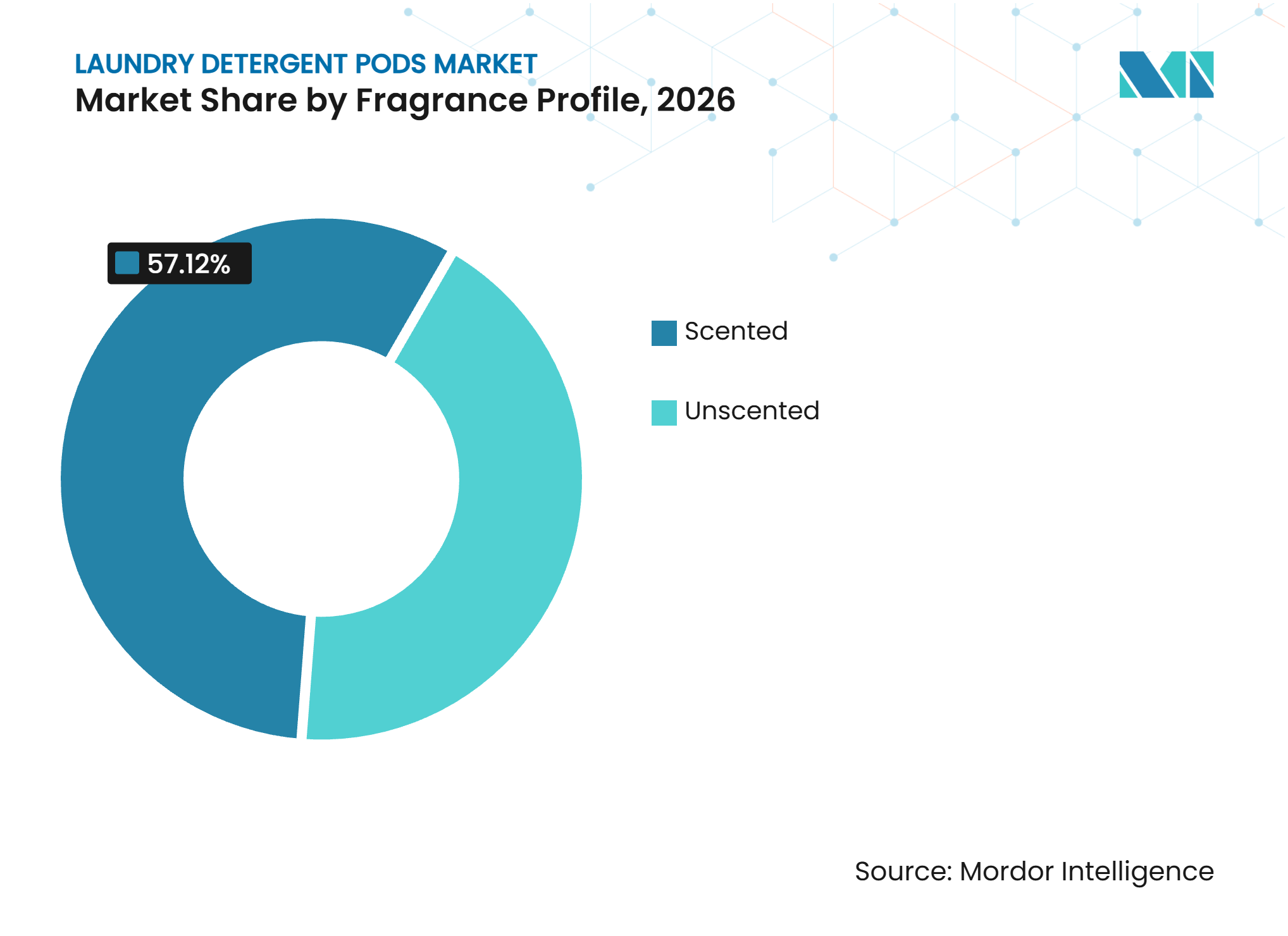
Unscented Pods Gain Relevance in Sensitive-Use SettingsScented pods held a 57.12% share in 2024. Scented laundry detergent pods represent the largest segment because fragrance is an important consumer consideration when evaluating laundry cleanliness and fabric freshness. Consumers increasingly seek products that provide not only effective stain removal but also a pleasant fragrance that remains on clothes after washing. Manufacturers are incorporating fragrance technologies, encapsulated perfume ingredients, and controlled-release systems into their laundry pod formulations to improve fragrance longevity. Multi-chamber designs also allow manufacturers to separate fragrance ingredients from other detergent components, helping optimize product performance.
Unscented pods are forecast to expand at a 6.54% CAGR from 2027 to 2032. Unscented laundry detergent pods are expected to grow faster as consumer interest in fragrance-free and sensitive-skin household cleaning products increases. Some consumers prefer to avoid added fragrances due to personal sensitivities, concerns about skin irritation, or a preference for products without lingering scent. This is encouraging manufacturers to develop fragrance-free and hypoallergenic laundry formulations that deliver cleaning performance without added scent. Such products are particularly relevant for households washing baby clothing, bedding, and garments for individuals with sensitive skin. Online retail expansion is also improving access to specialized laundry products, making it easier for consumers to identify and purchase fragrance-free alternatives. Growing awareness of ingredient transparency and specialized fabric-care requirements is expected to support this segment over the forecast period.

Geography Analysis
North America: Mature Retail Systems Support Continued Premium Demand
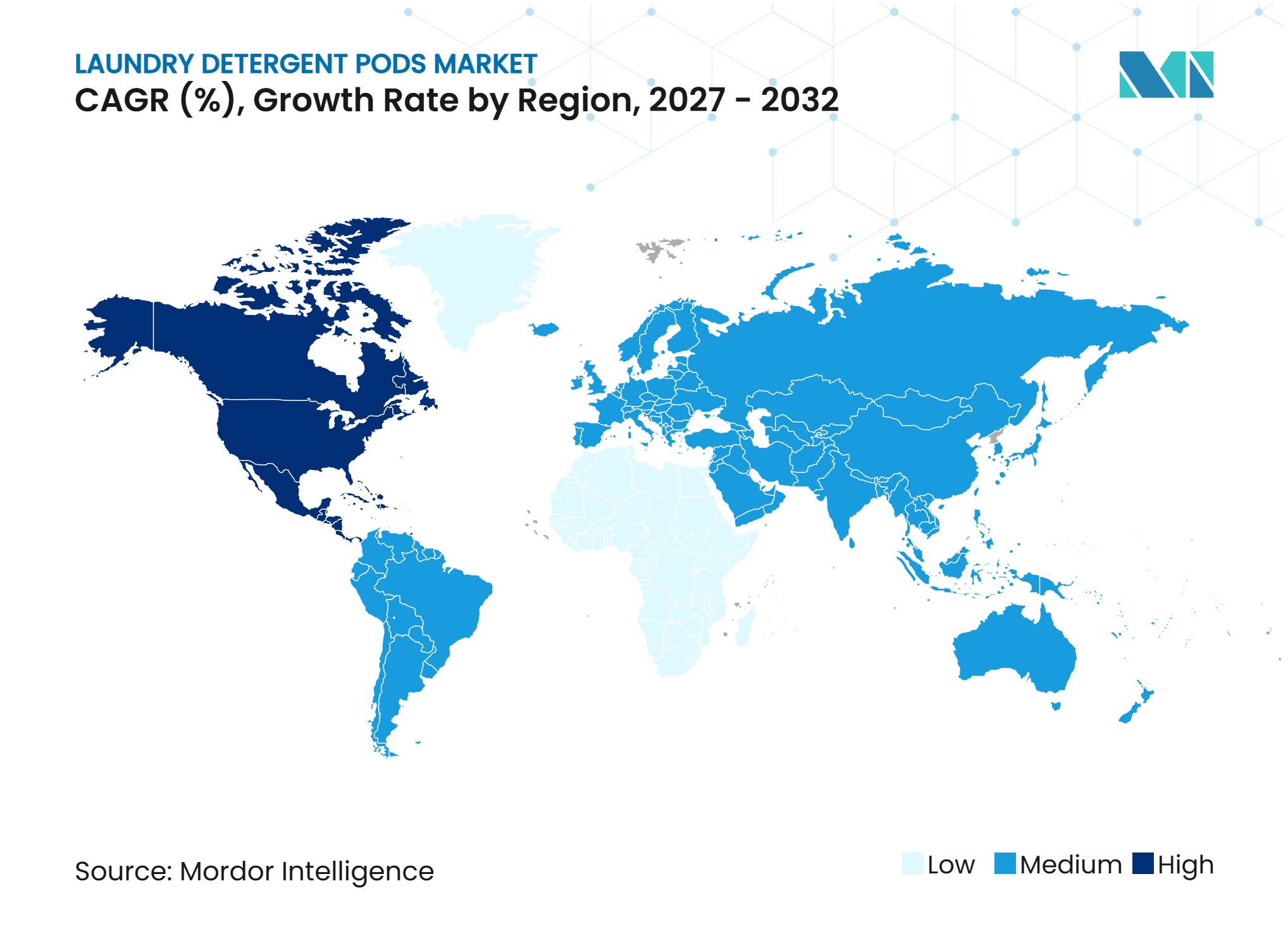
North America held 35.12% of the laundry detergent pods market share in 2026 and is forecast to expand at a 6.12% CAGR through 2032. North America is the largest regional market for laundry detergent pods, supported by established consumer familiarity with unit-dose laundry products, high household washing machine penetration, and the presence of major manufacturers such as Procter & Gamble, Church & Dwight, and Henkel. Packaging safety is a key regulatory requirement, as products must address accidental exposure risks under the framework overseen by the U.S. Consumer Product Safety Commission. Mexico presents a different growth profile, where affordability constraints limit wider adoption despite expanding urban retail.
Europe: Packaging and Formula Expectations Shape Product Development
Europe is an established laundry pods market where environmental and safety requirements shape product design and retail positioning. The European Chemicals Agency administers the REACH framework, which remains an important compliance factor for chemical substances placed on the European market. Unilever completed a Port Sunlight facility upgrade in May 2026 that supports manufacturing of more complex Persil laundry capsules. The United Kingdom, Germany, France, and the Nordic countries provide favorable conditions for brands that combine cleaning performance with packaging and formulation improvements. The Radienz Living package launch combines child resistance with curbside recyclability.
Asia-Pacific, South America, and the Middle East and Africa: Adoption Varies With Income, Urban Living, and Retail Access
Asia-Pacific shows contrasting adoption patterns, with Japan and South Korea more established than India and Indonesia. China offers a large urban customer base and strong digital retail channels, where local and multinational suppliers compete for premium consumers. The laundry detergent pods market in India and Indonesia has room to grow, but price sensitivity and preference for low-cost formats remain significant constraints. In South America, early demand for laundry detergent pods has concentrated in major urban centers. In the Middle East, the United Arab Emirates offers a more accessible route for modern retail products compared to lower-income markets across the wider region.
Competitive Landscape
Market Concentration
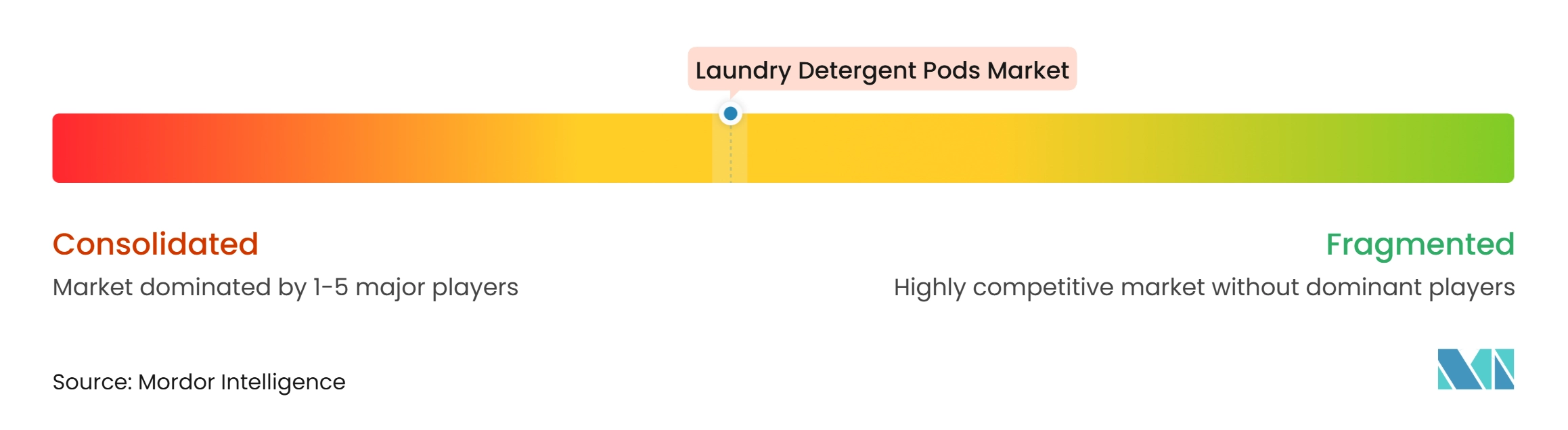
The laundry detergent pods market is moderately concentrated, with Procter & Gamble, Unilever, Henkel, Church & Dwight, and The Clorox Company shaping competition across major retail channels. Large suppliers benefit from established brands, wide distribution networks, and resources to fund formulation development and packaging changes. Private-label producers and direct-to-consumer brands compete on lower prices, specialized formulas, and sustainability-focused packaging. Competition centers on cleaning performance, price per wash, product safety, and product claims, which places continued pressure on incumbents in the value tier, where basic cleaning results are easier to compare.
Procter & Gamble maintains a strong competitive position through its Tide PODS, Gain Flings, and Ariel PODS portfolios, with a focus on concentrated formulations, stain-removal performance, and multi-functional cleaning benefits. In 2026, Unilever introduced an advanced four-chamber capsule featuring Nano-Power and Nano-Sense technologies, targeting difficult stains, fabric brightness, and fragrance longevity. The company also invested in its Port Sunlight production facility in the UK to triple capsule manufacturing capacity. These developments indicate that large suppliers are investing in both formulation capability and manufacturing scale. Smaller brands must rely on specialized propositions, online customer relationships, or packaging differentiation to compete without matching that level of capital investment.
Packaging suppliers are addressing the need for products that meet child-resistance requirements while reducing plastic use. Radienz Living and Graphic Packaging International introduced a paperboard solution certified to U.S. 16 CFR 1700.20, linking safety with recyclability. Reckitt completed the divestment of its Essential Home business in December 2025, which included the Woolite and Resolve brands, creating a standalone home-care platform outside its core health and hygiene operations. Companies that simultaneously advance pod performance, affordability, safety, and packaging are better positioned to compete in the laundry detergent pods market.
Laundry Detergent Pods Industry Leaders
-
Procter & Gamble Company
-
Unilever PLC
-
Henkel AG & Co. KGaA
-
Church & Dwight Co., Inc.
-
The Clorox Company
- *Disclaimer: Major Players sorted in no particular order
Laundry Detergent Pods Market Companies Covered in this Report
- Procter & Gamble Company
- Henkel AG & Co. KGaA
- Unilever PLC
- Church & Dwight Co., Inc.
- The Clorox Company
- Reckitt Benckiser Group plc
- Colgate-Palmolive Company
- Kao Corporation
- Lion Corporation
- Guangzhou Liby Enterprise Group Co., Ltd.
- Nice Group Co., Ltd.
- Guangzhou LONKEY Industrial Co., Ltd.
- Seventh Generation, Inc.
- Dropps, PBC
- Blueland
- Tru Earth
- Ecozone Ltd.
- AspenClean
- Cleavia Eco Solutions
- Soluble Systems Pvt. Ltd.
Recent Industry Developments in Laundry Detergent Pods Market
- May 2026: Unilever completed an investment at its Port Sunlight, United Kingdom, manufacturing site, expanding laundry capsule production capacity from 660 to 2,000 capsules per minute. The upgrade enables smaller, more complex multi-chamber capsule formats and supports the launch of Persil's four-chamber capsules developed at Port Sunlight's research and development labs.
- March 2026: Henkel announced a new Consumer Brands Center of Research & Development in Trumbull, Connecticut, representing the company's largest non-manufacturing capital investment in North America in the past decade at over USD 70 million. The campus will house Laundry & Home Care Product Development across more than 110,000 square feet with 27 laboratories and 3 pilot plants, and it is scheduled to open at the end of 2027.
- December 2025: Reckitt Benckiser Group plc completed the divestiture of its Essential Home business, which includes laundry brands Woolite and Resolve, to Advent International for an enterprise value of up to USD 4.8 billion. Reckitt retains a 30% equity stake in Advent's acquisition vehicle.
- November 2025: Church & Dwight committed USD 28 million to expand its ARM & HAMMER manufacturing plant in Old Fort, Ohio, adding a second production line for unit-dose detergent power paks. The investment is projected to create at least 40 jobs, with production expected to begin in early 2027, in direct response to growing consumer demand for the ARM & HAMMER pod format.
Global Laundry Detergent Pods Market Report Scope
Laundry detergent pods are pre-measured, concentrated units of laundry detergent enclosed in a water-soluble film, typically made from polyvinyl alcohol (PVA/PVOH). They contain concentrated cleaning ingredients, including surfactants, enzymes, stain-removal agents, builders, and fragrance components, which are released when the film dissolves during the washing cycle. Available in single- or multi-chamber formats, laundry detergent pods offer convenient, mess-free dosing, delivering cleaning, stain removal, fragrance, and fabric-care benefits in a ready-to-use format. The laundry detergent pods market is segmented by pod format, end user, fragrance profile, and geography. Based on pod format, the market is segmented into single and multi. Based on end user, the market is segmented into household/residential and commercial. Based on fragrance profile, the market is segmented into scented pods and unscented. Based on geography, the market is segmented into North America, Europe, Asia-Pacific, South America, and the Middle East and Africa. For each segment, the market sizing and forecast have been done based on value (in USD).
Segmentation Overview
| Single |
| Multi |
| Household/Residential |
| Commercial |
| Scented Pods |
| Unscented |
| North America | United States |
| Canada | |
| Mexico | |
| Rest of North America | |
| Europe | United Kingdom |
| Germany | |
| France | |
| Italy | |
| Spain | |
| Sweden | |
| Belgium | |
| Poland | |
| Netherlands | |
| Rest of Europe | |
| Asia-Pacific | China |
| India | |
| Japan | |
| Thailand | |
| Singapore | |
| Indonesia | |
| South Korea | |
| Australia | |
| New Zealand | |
| Rest of Asia-Pacific | |
| South America | Brazil |
| Argentina | |
| Peru | |
| Colombia | |
| Chile | |
| Rest of South America | |
| Middle East and Africa | South Africa |
| Saudi Arabia | |
| United Arab Emirates | |
| Nigeria | |
| Egypt | |
| Morocco | |
| Rest of Middle East and Africa |
| By Pod Format | Single | |
| Multi | ||
| By End User | Household/Residential | |
| Commercial | ||
| By Fragrance Profile | Scented Pods | |
| Unscented | ||
| By Geography | North America | United States |
| Canada | ||
| Mexico | ||
| Rest of North America | ||
| Europe | United Kingdom | |
| Germany | ||
| France | ||
| Italy | ||
| Spain | ||
| Sweden | ||
| Belgium | ||
| Poland | ||
| Netherlands | ||
| Rest of Europe | ||
| Asia-Pacific | China | |
| India | ||
| Japan | ||
| Thailand | ||
| Singapore | ||
| Indonesia | ||
| South Korea | ||
| Australia | ||
| New Zealand | ||
| Rest of Asia-Pacific | ||
| South America | Brazil | |
| Argentina | ||
| Peru | ||
| Colombia | ||
| Chile | ||
| Rest of South America | ||
| Middle East and Africa | South Africa | |
| Saudi Arabia | ||
| United Arab Emirates | ||
| Nigeria | ||
| Egypt | ||
| Morocco | ||
| Rest of Middle East and Africa | ||
Key Questions Answered in the Report
What is the projected value of the laundry detergent pods market by 2032?
The category is projected to reach USD 20.41 billion by 2032, rising from USD 13.46 billion in 2026 at a 6.17% CAGR from 2027 to 2032. Growth is supported by convenient dosing, premium product development, and wider access through e-commerce and modern retail.
Which pod format is growing fastest?
Multi-chamber pods are forecast to grow at a 6.48% CAGR through 2032 because they can combine several cleaning and fabric-care functions in one dose. These products help brands differentiate from basic single-chamber offerings and justify a premium price when the added functions are clear.
Why are commercial buyers adopting laundry detergent pods?
Commercial users are projected to grow at a 6.52% CAGR through 2032, supported by controlled dosing, lower handling needs, and consistent wash results. Hotels, healthcare facilities, and institutional operators can use the format to limit over-pouring and improve consistency across frequent wash cycles.
What factors limit wider adoption of laundry detergent pods?
Higher prices than powder and liquid products, safety requirements, and concerns around water-soluble film disposal can slow adoption in price-sensitive and regulated settings. Suppliers need to protect cleaning performance while improving per-wash value, packaging safety, and product communication.