
Kid's Water Bottle Market Size and Share
Market Overview
| Study Period | 2021 - 2031 |
|---|---|
| Market Size (2026) | USD 2.78 Billion |
| Market Size (2031) | USD 3.60 Billion |
| Growth Rate (2026 - 2031) | 5.32 % |
| Fastest Growing Market | Asia-Pacific |
| Largest Market | North America |
| Market Concentration | Medium |
Major Players
*Disclaimer: Major Players sorted in no particular order Image © Mordor Intelligence. Reuse requires attribution under CC BY 4.0. |
|
Kid's Water Bottle Market Analysis by Mordor Intelligence
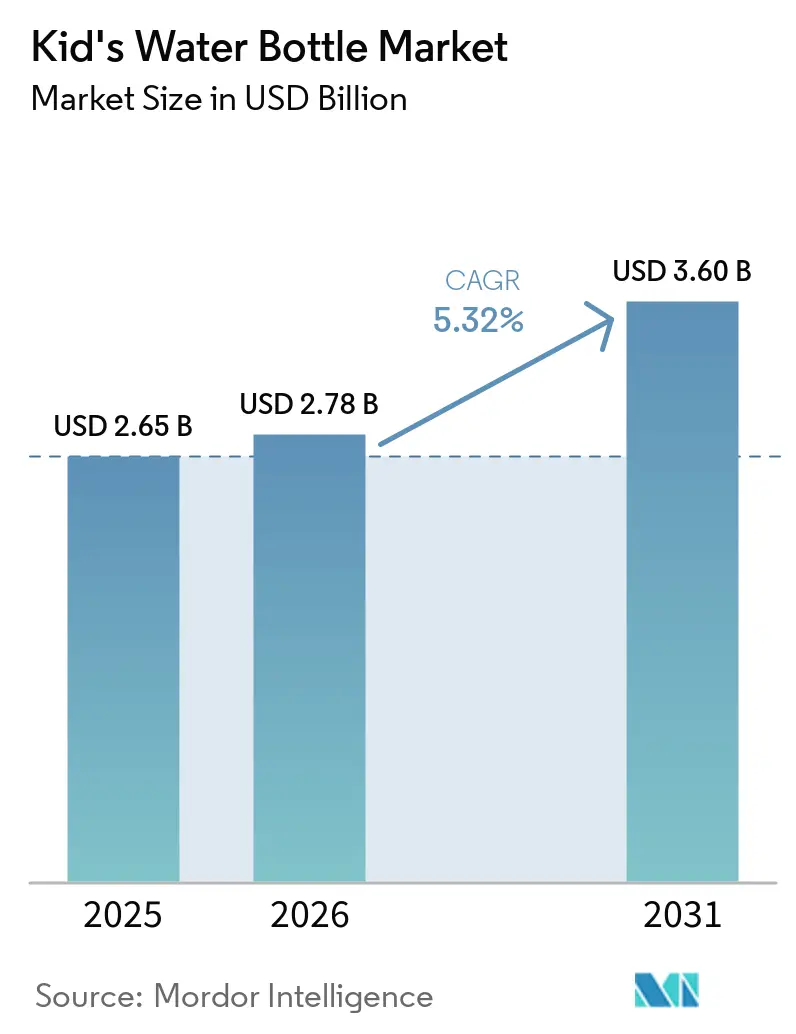
The kid's water bottle market size is projected to expand from USD 2.65 billion in 2025 and USD 2.78 billion in 2026 to USD 3.60 billion by 2031, registering a CAGR of 5.32% between 2026 to 2031. Demand is supported by reusable-drinkware rules, greater attention to hydration and material safety, and continued participation in sports and outdoor activities. In 2024, 58% of U.S. children ages 6-17 participated in organized sports, which gives bottle makers a large base of school and activity users. Youth outdoor participation increased 5.6% in 2025, while 22.6 million children ages 6-12 took part in outdoor activities. The kids water bottles market is also shaped by changing school rules, as reusable-bottle mandates can support demand while restrictions on metal or opaque bottles can move purchases toward clear BPA-free plastic formats. This split creates a planning challenge for manufacturers because demand for stainless steel, aluminum, and clear plastic may differ by school district and procurement policy.
Key Report Takeaways
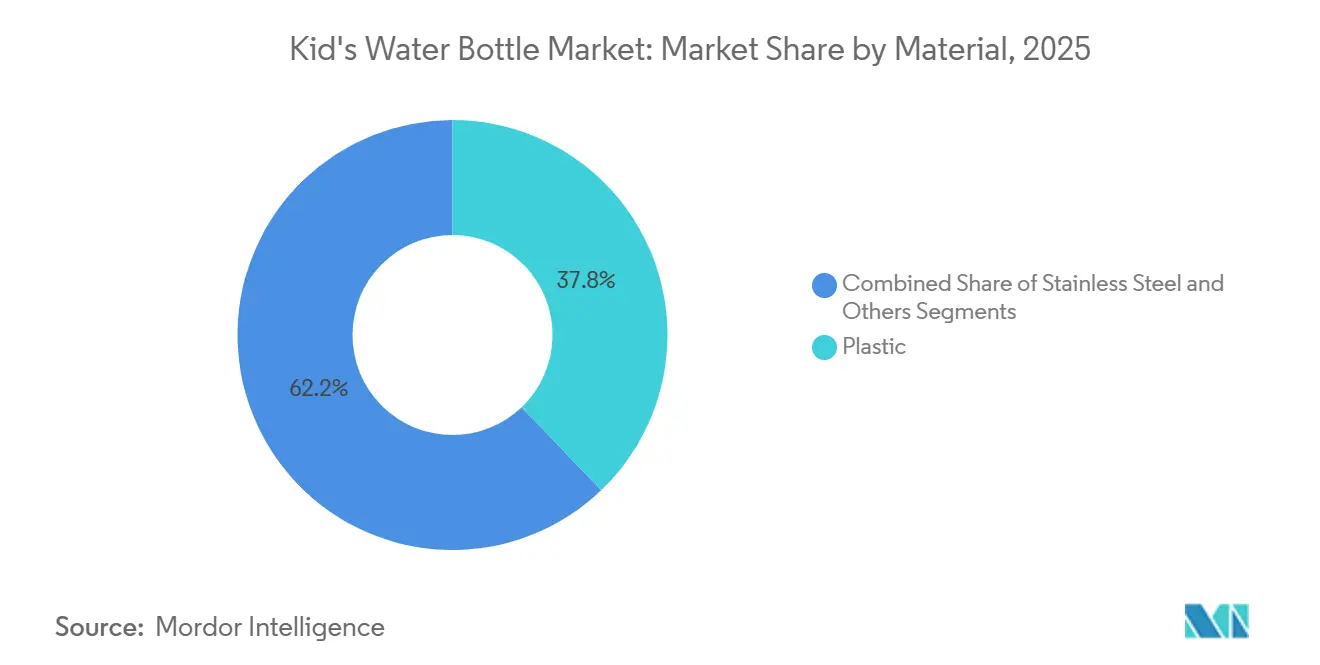
- By material, plastic held 37.84% of the kid's water bottle market share in 2025, while aluminium recorded the highest projected CAGR at 6.01% through 2031.
- By price range, mass products accounted for 71.65% of the kid's water bottle market share in 2025, while premium products are forecast to grow at a 6.12% CAGR through 2031.
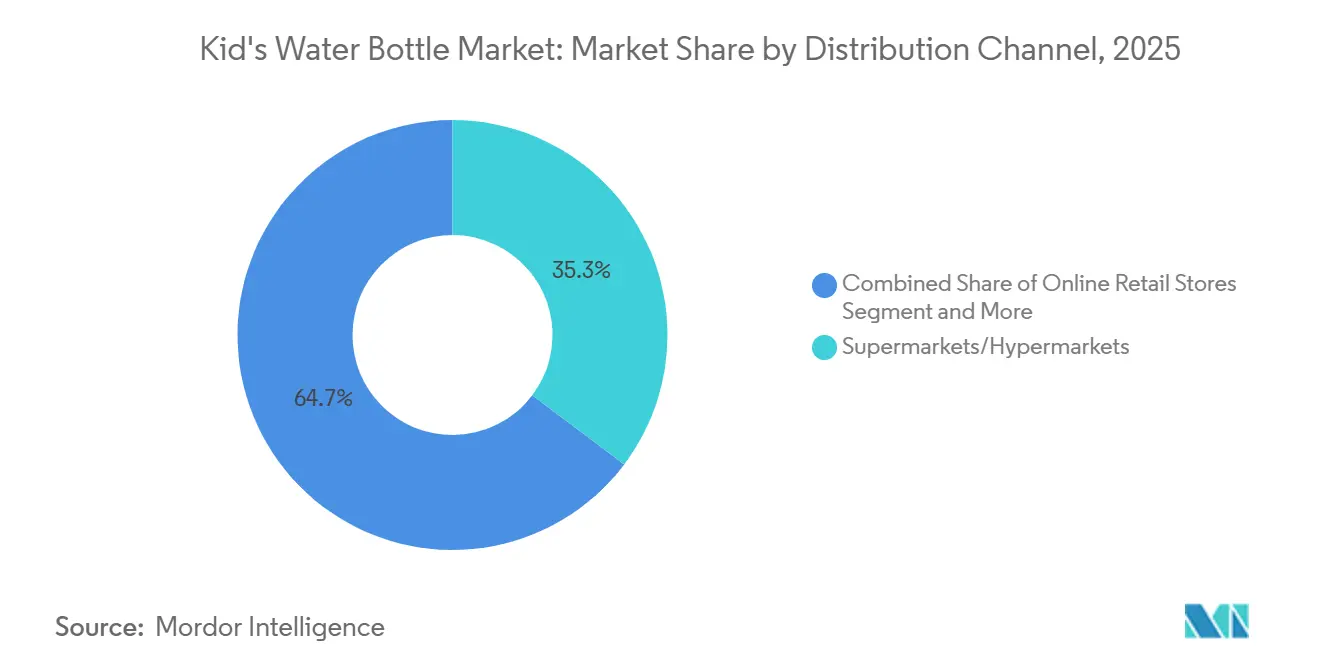
- By distribution channel, supermarkets/hypermarkets held 35.28% share in 2025, while online retail stores are projected to expand at a 6.34% CAGR through 2031.
- By geography, North America held the largest share of the kid's water bottle market at 40.37% in 2025, while Asia-Pacific is expected to register the fastest growth, with a CAGR of 6.28% through 2031.
Note: Market size and forecast figures in this report are generated using Mordor Intelligence’s proprietary estimation framework, updated with the latest available data and insights as of January 2026.
Global Kid's Water Bottle Market Trends and Insights
Drivers Impact Analysis*
| Driver | (~) % Impact on CAGR Forecast | Geographic Relevance | Impact Timeline |
|---|---|---|---|
| Increasing preference for reusable water bottles | +1.2% | Global, particularly North America and Europe | Short term (≤ 2 years) |
| Rising participation in sports and outdoor activities | +0.9% | North America, Asia-Pacific, Europe | Medium term (2-4 years) |
| Growing demand for child-safe materials | +0.8% | Europe, spillover to North America and Asia-Pacific | Short term (≤ 2 years) |
| Increasing demand for ergonomic and child-friendly designs | +0.7% | Global | Medium term (2-4 years) |
| Growing adoption of smart hydration solutions | +0.5% | North America, East Asia, urban Europe | Long term (≥ 4 years) |
| Increasing demand for insulated and temperature-retaining bottles | +0.8% | Global, strongest in North America and Asia-Pacific | Medium term (2-4 years) |
| Source: Mordor Intelligence | |||
Increasing preference for reusable water bottles
Municipal plastic restrictions and school purchasing policies are making reusable bottles a more regular purchase for families. Regulation (EU) 2025/40 on packaging and packaging waste entered into force on February 11, 2025, and applies from August 12, 2026. [1]EUR-Lex European Union, "Packaging and packaging waste", eur-lex.europa.eu Its recyclability requirements encourage retailers and school buyers to favor durable drinkware. India’s National Green Tribunal began suo motu proceedings in April 2026 concerning schools that required plastic rather than metal bottles. The proceeding points to stronger support for non-plastic choices in school purchasing. School, summer-camp, and daycare orders can provide the kids water bottles market with steadier volumes than individual retail purchases because they are less sensitive to short-term price changes. Growing awareness of plastic pollution is also encouraging parents to shift toward reusable alternatives that can withstand frequent daily use. Stainless steel and other durable materials are gaining attention because they combine longevity with lower reliance on disposable plastics. Features such as leak-proof lids, lightweight construction, easy cleaning, and child-friendly designs are further influencing purchasing decisions. These trends are expected to support sustained demand for reusable kids’ water bottles as environmental awareness becomes more closely linked with everyday family consumption.
Rising participation in sports and outdoor activities
Organized sports and outdoor use support demand for children’s bottles with features suited to active use. The Healthy People 2030 program reported that 58% of United States children ages 6-17 participated in organized sports in 2024, against a 2030 target of 63%. [2]Project Play, "U.S. youth sports participation increased to 58% in pursuit of 63% by 2030", projectplay.org The Outdoor Industry Association reported a 5.6% increase in youth outdoor participation during 2025. Hiking, camping, and fishing participation rose among families with children. These uses favor compact insulated bottles with spill-resistant flip straws and capacities of 350-500 ml. As these formats become more common in sports channels, the kids water bottles market gains use cases beyond the school day. Parents increasingly prioritize lightweight, durable, and easy-to-carry designs that can withstand frequent outdoor activity and accidental drops. Sports teams, camps, and recreational programs also provide additional opportunities for branded and bulk bottle purchases. Demand for dishwasher-safe materials and easy-clean components is increasing as parents seek convenient products for repeated daily use. These trends are encouraging manufacturers to develop bottles that combine portability, durability, insulation, and child-friendly functionality for both sports and outdoor activities.
Growing demand for child-safe materials
Food-contact rules are accelerating the move toward materials that can meet strict safety requirements. Commission Regulation (EU) 2024/3190 was adopted on December 19, 2024, entered into force on January 20, 2025, and banned BPA, its salts, and other hazardous bisphenols in covered food-contact materials. The regulation includes reusable children’s drinking bottles and provided a transition period through July 20, 2026. The United States Food and Drug Administration prohibits BPA-based polycarbonate resins in infant feeding bottles and sippy cups. These requirements favor Tritan, food-grade stainless steel, and certified BPA-free polypropylene. They also make product testing and clear safety communication more important for brands serving the kids water bottles market. Manufacturers are increasingly required to strengthen material traceability, migration testing, and compliance documentation to demonstrate product safety. Growing parental awareness of chemical exposure is also increasing demand for bottles with transparent material and safety claims. Brands that invest in third-party certifications and rigorous quality-control processes can build greater consumer trust and differentiate their products. As regulations become more stringent across major markets, compliance is expected to become an increasingly important factor in product development, sourcing, and market entry.
Increasing demand for insulated and temperature-retaining bottles
Insulated bottles address a practical need for drinks to remain cold through school, commuting, sports, and outdoor activities. Stainless steel supports vacuum insulation and is often associated with durability and chemical safety. This combination helps premium products make a value case based on repeat use over several school years. YETI’s Rambler Jr. 12 oz kids bottle uses stainless steel, vacuum insulation, and a straw-cap format designed for children YETI. Insulation is especially relevant in North America and Asia-Pacific, where school and outdoor use are important demand settings. It also allows the kids water bottles market to serve families that place greater value on temperature retention than on low initial cost. Growing consumer awareness of reusable products further supports demand for durable insulated bottles as families seek alternatives to single-use plastic bottles. Premium models can also differentiate through leak-resistant lids, ergonomic designs, lightweight construction, and easy-clean components. Product features such as dishwasher compatibility and interchangeable caps further improve convenience for parents and children. As a result, insulation can strengthen both product differentiation and brand positioning within the premium kids water bottles segment.
Restraints Impact Analysis*
| Restraint | (~) % Impact on CAGR Forecast | Geographic Relevance | Impact Timeline |
|---|---|---|---|
| High Prices of Premium and Stainless-Steel Bottles | -0.5% | Global, strongest in South America and Middle East and Africa | Medium term (2-4 years) |
| Strict Regulations for Food-Contact Materials and Product Safety | -0.3% | Europe, North America, expanding to Asia-Pacific | Short term (≤ 2 years) |
| Intense Competition From Low-Priced Generic Bottles | -0.4% | Global, most acute in Asia-Pacific and South America | Medium term (2-4 years) |
| Growing Concerns Regarding Plastic Safety and Environmental Impact | -0.4% | Global, led by North America and Europe | Long term (≥ 4 years) |
| Source: Mordor Intelligence | |||
High prices of premium and stainless-steel bottles
Premium pricing limits adoption among families that need to buy bottles for more than one child. Stainless steel insulated models typically command a 100%–250% premium over standard BPA-free plastic bottles, while smart bottles can carry a 150%–300% premium. This cost difference is difficult to justify in lower-income households and in markets where replacement purchases are frequent. Price sensitivity remains important in India and Brazil, where the mass tier holds the broadest demand base. The kids water bottles market therefore has a smaller premium customer pool outside higher-income urban households. The higher price premium becomes more significant for families purchasing multiple bottles, particularly when products require frequent replacement due to loss, damage, or changing age requirements. As a result, affordability remains a key consideration for manufacturers seeking to expand premium products beyond affluent urban consumers.
Growing concerns regarding plastic safety and environmental impact
Concerns about microplastics and chemical migration can reduce confidence in entry-level plastic bottles. The European Food Safety Authority established a BPA tolerable daily intake of 0.2 ng per kg of body weight per day, helping shape the policy basis for tighter European restrictions. [3]EUR-Lex European Union, "Commission Regulation (EU)", eur-lex.europa.euThese concerns can shift purchases toward stainless steel and aluminum instead of reducing all reusable-bottle demand. Plastic-focused manufacturers may face both weaker repeat purchase and higher reformulation costs. Brands that use BPA-free materials still need to explain their safety credentials clearly. Parents are increasingly attentive to material composition, food-contact safety, and the long-term durability of bottles used by children. Retailers may also give greater visibility to products carrying recognized safety certifications and transparent material disclosures. Manufacturers are therefore investing in alternative polymers, improved barrier technologies, and safer coatings to address concerns without significantly increasing product costs. Product labeling, third-party testing, and clear communication around chemical-free materials are becoming important differentiators in purchasing decisions. The result is a gradual change in the material mix of the kids water bottles market, with more importance placed on credible safety claims.
*Our forecasts treat driver/restraint impacts as directional, not additive. The impact forecasts reflect baseline growth, mix effects, and variable interactions.
Segment Analysis
By Material: Plastic Remains Largest While Aluminium Grows Fastest
Plastic held the largest share of the kids water bottles market at 37.84% in 2025, supported by its low cost, lightweight properties, and design flexibility. Stainless steel was the second-largest material, driven by demand for durability, insulation, and chemical inertness. Aluminum remains an attractive alternative for lightweight and recyclable bottles, particularly among sustainability-focused buyers. Tritan, silicone, and hybrid composites serve niche needs such as shatter resistance and flexibility. BPA-free Tritan and food-grade polypropylene are gaining preference over restricted polycarbonate-type products. The broad availability of plastic bottles across mass-market retail channels and their suitability for colorful, character-based designs further reinforce their widespread adoption.
Aluminum is projected to be the fastest-growing material, with a 6.01% CAGR from 2026 to 2031, supported by recyclability and alignment with circular-economy initiatives. SIGG promotes its WMB ONE Kids aluminium bottle around recyclability and the absence of BPA, phthalates, and estrogen-mimicking substances. Stainless steel will continue benefiting from its durability and insulation performance, particularly in premium and reusable formats. Growing consumer interest in long-lasting, sustainable materials is expected to strengthen demand for aluminum and stainless steel products during the forecast period.



By Price Range: Mass Products Lead While Premium Products Expand Faster
The mass segment accounted for the largest share of the kid's water bottles market, representing 71.65% of the market size in 2025. Everyday school use favors bottles that balance affordability and durability over advanced features, making mass-market products the preferred choice among families seeking practical options for regular use. The segment benefits from broad demand for reliable bottles that can withstand frequent handling while keeping replacement costs manageable. Wide availability across supermarkets, general merchandise stores, and online channels further supports the segment’s leading position.
The premium segment is projected to be the fastest-growing price tier, expanding at a 6.12% CAGR from 2026 to 2031. Parents increasingly consider insulation, material safety certification, ergonomics, and durability when purchasing higher-priced bottles. Premium products commonly feature vacuum-insulated stainless steel, stronger caps, and specialized drinking mechanisms. For example, YETI launched its Rambler Jr. kids bottle in November 2025, a USD 33, 12 oz vacuum-insulated stainless steel bottle, highlighting the growing emphasis on premium construction and longer-term use. The expansion of premium licensed designs and functional features is also encouraging parents to trade up from basic plastic bottles.
By Distribution Channel: Supermarkets Lead While Online Retail Grows Fastest
Supermarkets/Hypermarkets represented the largest distribution channel, accounting for 35.28% of the kid's water bottles market in 2025. Their leading position is supported by strong back-to-school traffic, impulse purchases, and the ability to merchandise bottles alongside school supplies and children’s products. Health and beauty stores also provide a trusted purchasing environment for safety-focused products, particularly bottles designed for toddlers. Direct-to-consumer websites, sports specialty stores, and institutional procurement contribute to the remaining channel demand.
Online retail is the fastest-growing distribution channel, forecast to expand at a 6.34% CAGR between 2026 and 2031. Digital platforms enable parents to compare product claims, licensed designs, materials, prices, and customer reviews before purchasing. Online growth is also improving market access for smaller brands that may not have extensive physical shelf placement, intensifying competition, particularly in the mid-price segment. In July 2026, Trove Brands’ Owala introduced six exclusive 16 fl oz insulated Kids FreeSip designs in collaboration with Target’s Cat & Jack brand, with availability across both online and in-store channels. The collaboration highlights how retail exclusives can combine physical visibility with digital reach. Schools and camps additionally provide institutional volume opportunities for suppliers capable of meeting bulk-order requirements.
Geography Analysis
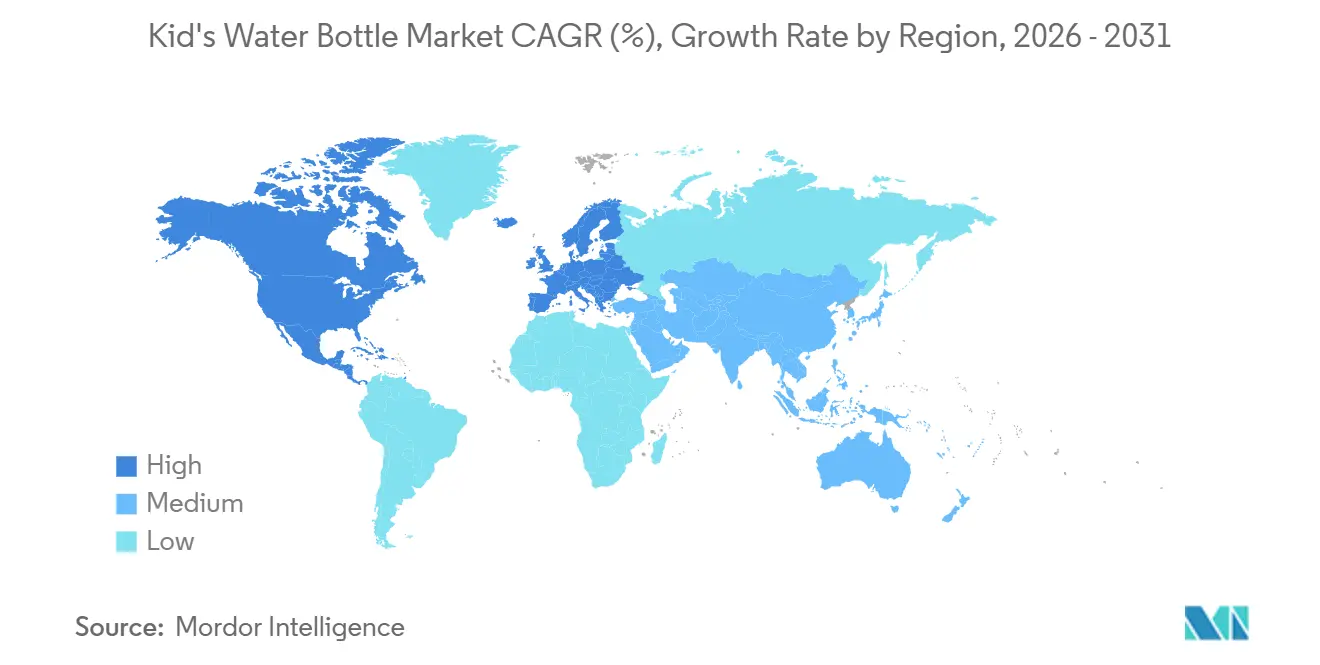
North America accounted for 40.37% of global value in 2025. The region benefits from established back-to-school spending, youth sports facilities, and purchasing by school districts and summer camps. The Healthy People 2030 program has a 63% target for youth sports participation by 2030, compared with 58% reported in 2024. Canada reported that 56% of children and youth participated in sports or physical activity with a coach or instructor in its 2025. YETI, CamelBak, Hydro Flask, Contigo, and Nalgene are among the brands with a visible presence in the region.
Asia-Pacific is forecast to grow at a 6.28% CAGR through 2031, the highest rate among regions. China is both a production center and a major regional consumer, with e-commerce representing a significant proportion of its kid’s bottle retail sales in 2026. Parents use digital marketplaces and social commerce to discover licensed and premium products. India’s April 2026 National Green Tribunal proceedings related to school bottle policies point toward greater support for non-plastic hydration choices. Japan and South Korea show demand for insulated formats designed to fit school bags. Indonesia, Vietnam, and the Philippines have school hydration campaigns that can support institutional orders for basic reusable bottles.
Europe maintains an important position because safety and sustainability requirements influence material selection. The EN 14350 standard addresses chemical safety, mechanical integrity, and choking hazards for children’s drinking equipment. These requirements favor suppliers that can meet detailed product standards and can limit low-cost noncompliant imports. SIGG’s position in Germany and Switzerland reflects regional interest in aluminum and certified-safe plastic products. South America and the Middle East and Africa remain smaller and more volume-oriented areas, where mass-tier plastic is common. Brazil and South Africa show early premium demand in urban areas as modern retail expands and parents place more weight on material safety.

Competitive Landscape
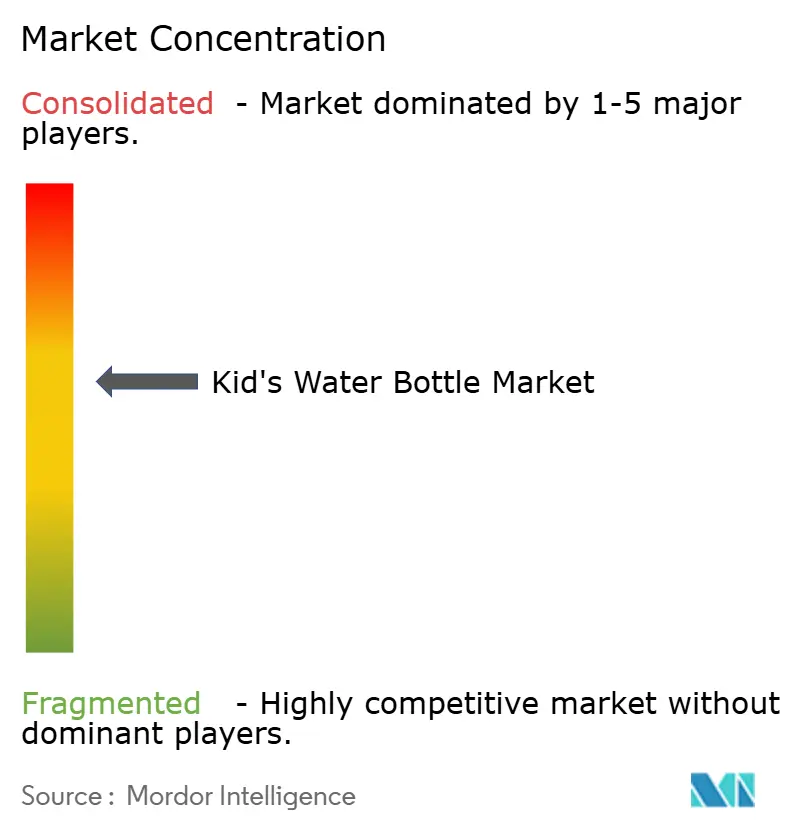
The kid's water bottle market has a moderately concentrated structure, with CamelBak Products, Nippon Sanso Holdings Corporation, Newell Brands, Thermo Fisher Scientific, and Tupperware Brands Corporation, among others, holding prominent shelf positions. These companies compete through licensing, retail collaboration, product design, and insulation performance. Brand recognition remains important because parents may buy bottles repeatedly for school and activity use. Larger brands can use established retailer relationships to secure placement during back-to-school periods. They also have greater capacity to develop specialized caps, insulated formats, and safety-focused material claims. Smaller and direct-to-consumer brands compete by offering lower prices or distinctive product features.
Licensing and limited retail releases are increasingly used to distinguish premium bottles from comparable functional products. In March 2026, Simple Modern expanded into the toddler hydration segment by launching its first dedicated drinkware line for children aged 24 months and older through Walmart, highlighting portfolio expansion and mass-retail penetration as competitive strategies in the kids’ water bottle market.
Smart products represent a less established area of competition. A 2025 study found that smart hydration devices can support greater drinking frequency among children. Connected products use child-facing engagement tools, intake tracking, gamified rewards, and parent-facing dashboards. They target premium buyers and require incumbent brands to decide whether these functions fit their existing product strategies.
Kid's Water Bottle Industry Leaders
-
CamelBak Products, LLC
-
Nippon Sanso Holdings Corporation
-
Newell Brands
-
Thermo Fisher Scientific
-
Tupperware Brands Corporation
- *Disclaimer: Major Players sorted in no particular order

Recent Industry Developments
- March 2026: b.box launched its limited-edition SUPERMAN children’s drink bottle range in collaboration with Warner Bros., featuring 600 ml Tritan and 350 ml insulated bottles with child-friendly designs, highlighting the growing use of licensed characters and functional features to differentiate kids’ hydration products.
- February 2026: Tiger Corporation launched its MTA-Q Series 2WAY Kids Bottle, designed to adapt to children as they grow, with vacuum insulation and a simple, durable design, highlighting continued innovation in the global kids’ water bottle market.
- October 2025: WaterH launched the Boost Kids smart water bottle, featuring an integrated screen with HydroBuddy Kiki, hydration reminders, and an accompanying app that enables parents to monitor children’s drinking patterns. The bottle also incorporates child-friendly features such as a spill-proof lock, non-slip grip, drop-resistant sleeve, and 24-hour insulation.


Global Kid's Water Bottle Market Report Scope
| Plastic |
| Stainless Steel |
| Aluminium |
| Other Product Types |
| Mass |
| Premium |
| Supermarkets/Hypermarkets |
| Health and Beauty Stores |
| Online Retail Stores |
| Other Distribution Channels |
| North America | United States |
| Canada | |
| Mexico | |
| Rest of North America | |
| Europe | Germany |
| United Kingdom | |
| Italy | |
| France | |
| Spain | |
| Netherlands | |
| Poland | |
| Belgium | |
| Sweden | |
| Rest of Europe | |
| Asia-Pacific | China |
| India | |
| Japan | |
| Australia | |
| Indonesia | |
| South Korea | |
| Thailand | |
| Singapore | |
| Rest of Asia-Pacific | |
| South America | Brazil |
| Argentina | |
| Colombia | |
| Chile | |
| Peru | |
| Rest of South America | |
| Middle East and Africa | South Africa |
| Saudi Arabia | |
| United Arab Emirates | |
| Nigeria | |
| Egypt | |
| Morocco | |
| Turkey | |
| Rest of Middle East and Africa |
| By Material | Plastic | |
| Stainless Steel | ||
| Aluminium | ||
| Other Product Types | ||
| By Price Range | Mass | |
| Premium | ||
| By Distribution Channel | Supermarkets/Hypermarkets | |
| Health and Beauty Stores | ||
| Online Retail Stores | ||
| Other Distribution Channels | ||
| By Geography | North America | United States |
| Canada | ||
| Mexico | ||
| Rest of North America | ||
| Europe | Germany | |
| United Kingdom | ||
| Italy | ||
| France | ||
| Spain | ||
| Netherlands | ||
| Poland | ||
| Belgium | ||
| Sweden | ||
| Rest of Europe | ||
| Asia-Pacific | China | |
| India | ||
| Japan | ||
| Australia | ||
| Indonesia | ||
| South Korea | ||
| Thailand | ||
| Singapore | ||
| Rest of Asia-Pacific | ||
| South America | Brazil | |
| Argentina | ||
| Colombia | ||
| Chile | ||
| Peru | ||
| Rest of South America | ||
| Middle East and Africa | South Africa | |
| Saudi Arabia | ||
| United Arab Emirates | ||
| Nigeria | ||
| Egypt | ||
| Morocco | ||
| Turkey | ||
| Rest of Middle East and Africa | ||


Key Questions Answered in the Report
What is the projected growth rate for kid's water bottle through 2031?
The market is projected to grow at a 5.32% CAGR from 2026 to 2031, rising from USD 2.78 billion in 2026 to USD 3.60 billion by 2031.
Which material leads kid's water bottle sales?
Plastic led with 37.84% share in 2025 because it remains light, affordable, and suitable for licensed designs.
Why are premium kid’s water bottles gaining demand?
Premium products are projected to grow at a 6.12% CAGR because insulation, durable construction, material safety, and child-friendly designs support their value proposition.
Which sales channel is expanding fastest for kid's water bottles?
Online retail stores are forecast to grow at a 6.34% CAGR through 2031 as parents compare materials, claims, and licensed designs online.
Page last updated on:





