
Ketone Supplements Market Size and Share
Market Overview
| Study Period | 2022 - 2032 |
|---|---|
| Market Size (2027) | USD 295.51 Million |
| Market Size (2032) | USD 398.06 Million |
| Growth Rate (2027 - 2032) | 6.14 % |
| Fastest Growing Market | Asia-Pacific |
| Largest Market | North America |
| Market Concentration | Low |
Major Players *Disclaimer: Major Players sorted in no particular order Image © Mordor Intelligence. Reuse requires attribution under CC BY 4.0. | |
Ketone Supplements Market Analysis by Mordor Intelligence
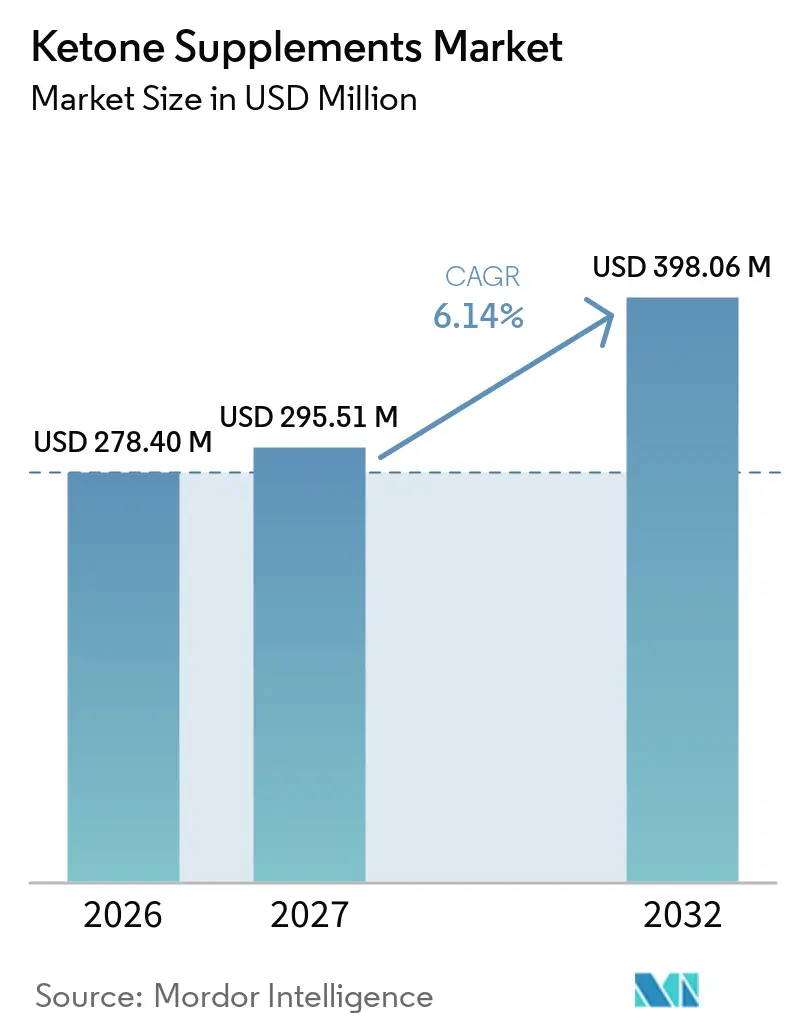
The ketone supplements size is expected to grow from USD 278.40 million in 2026 to USD 295.51 million in 2027 and is forecast to reach USD 398.06 million by 2032 at a 6.14% CAGR over 2027-2032. The market is expanding beyond its traditional use among ketogenic diet followers and sports enthusiasts, creating opportunities to reach consumers interested in energy, weight management, and metabolic health. Brands are improving product convenience through different formats, including powders, capsules, liquids, and gummies. Wider online availability, retail partnerships, and science-based product positioning are also helping increase consumer awareness and market reach. These developments create opportunities for companies to attract new users and encourage repeat purchases.
Key Report Takeaways
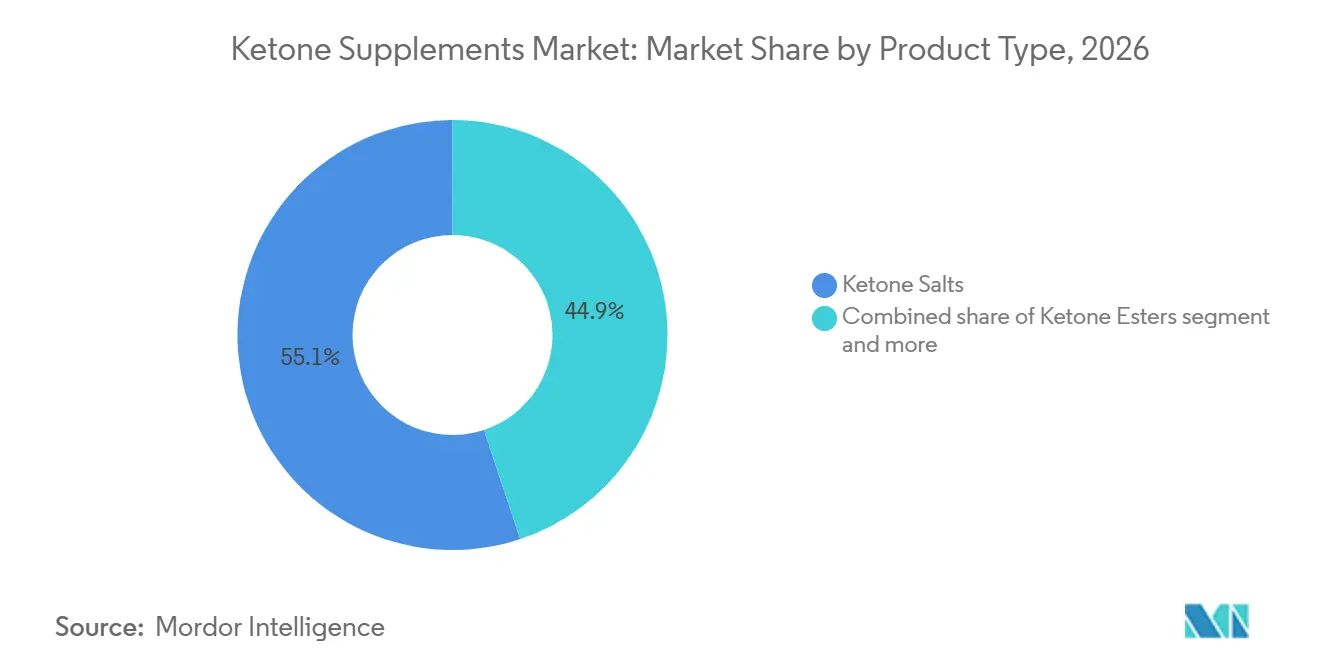
- By product type, ketone salts held 55.12% of the ketone supplements market share in 2026, while ketone esters recorded the highest projected CAGR at 9.51% through 2032.
- By form, powder held 45.11% of the ketone supplements market share in 2026, while gummies recorded the highest projected CAGR at 9.42% through 2032.
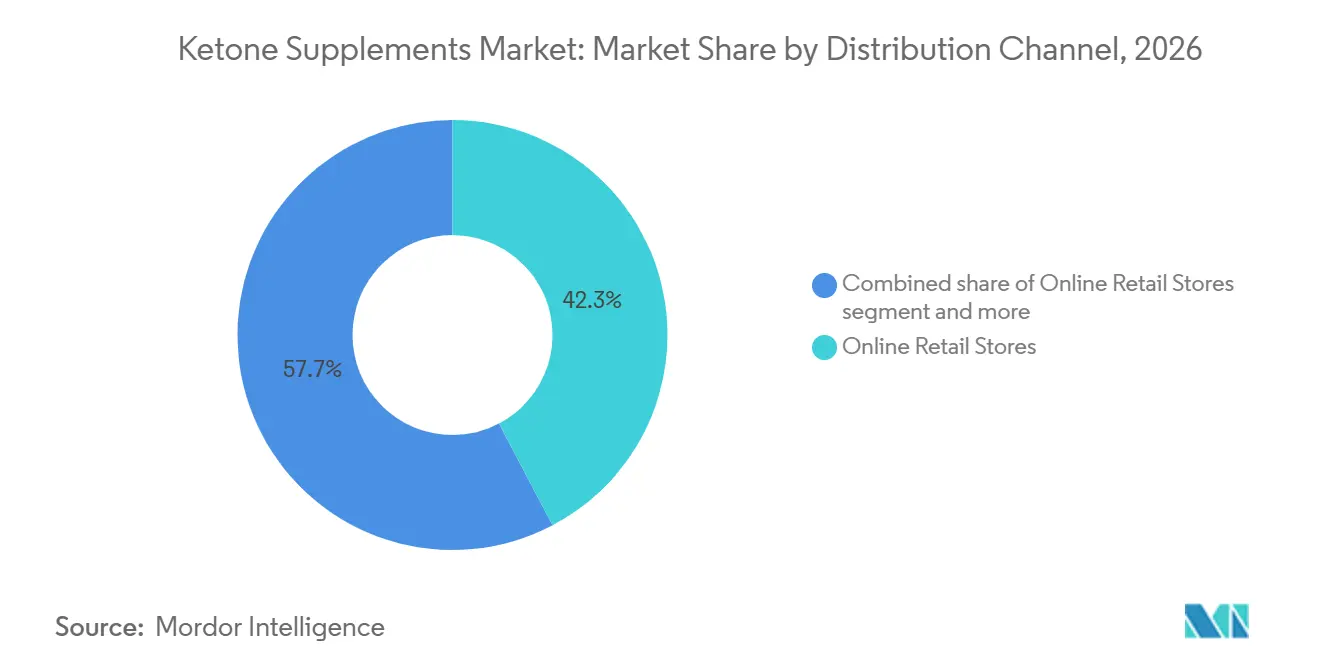
- By distribution channel, online retail stores held 42.34% of the ketone supplements market share in 2026 and recorded the highest projected CAGR at 8.55% through 2032.
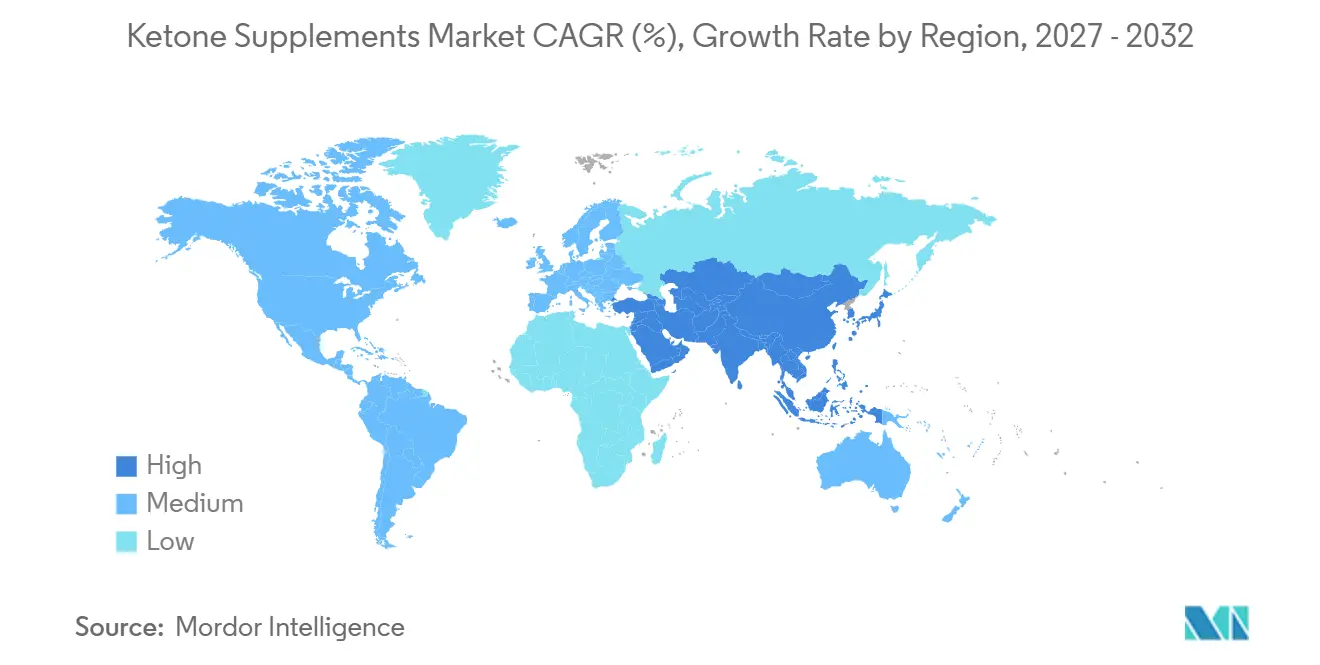
- By geography, North America held 47.62% of the ketone supplements market share in 2026, while Asia-Pacific recorded the highest projected CAGR at 8.52% through 2032.
Note: Market numbers in this report are based on Mordor Intelligence's proprietary estimation framework, which combines nine months of actuals with Q4 projections for base year 2026.
Market Trends and Insights
Drivers Impact Analysis of Ketone Supplements Market*
| Driver | (~) % Impact on CAGR Forecast | Geographic Relevance | Impact Timeline |
|---|---|---|---|
| Rising demand for sports performance and exercise recovery supplements | +0.9% | North America and Europe core, Asia-Pacific emerging | Medium term (2-4 years) |
| Increasing adoption of ketone supplements and ketosis-focused nutrition | +1.0% | Global, with early gains in North America and Western Europe | Short term (≤ 2 years) |
| Growing consumer focus on weight management and metabolic health | +0.8% | Global, strongest in North America, South America, and Asia-Pacific | Medium term (2-4 years) |
| Increasing interest in cognitive support and sustained mental energy | +0.6% | North America and Asia-Pacific, driven by online penetration | Short term (≤ 2 years) |
| Improving awareness and availability of ketone supplements | +0.7% | Japan, United States, and Western Europe | Long term (≥ 4 years) |
| Advancements in Product Formulations, Flavors, and Convenient Delivery Formats | +0.4% | Global, with rapid uptake in United States and China direct-to-consumer channels | Short term (≤ 2 years) |
| Source: Mordor Intelligence | |||
Rising Demand for Sports Performance and Exercise Recovery Supplements
Ketone supplements are gaining attention in sports nutrition due to their potential role in post-exercise recovery. For instance, in August 2025, according to the National Library of Medicine, a randomized crossover trial involving 13 endurance-trained men found that ketone ester supplementation increased ingested sucrose retention from 206 ± 26 g with placebo to 220 ± 26 g, while blood glucose levels were reduced by more than 1 mmol/L compared with placebo. Blood beta-hydroxybutyrate concentrations also exceeded 3.5 mmol/L [1].
Increasing Adoption of Ketone Supplements and Ketosis-Focused Nutrition
Growing interest in exogenous ketones is expanding their potential applications in cognitive and metabolic wellness. For instance, in March 2025, a study involving 20 adults at the University of Southern Mississippi found that ketone ester supplementation improved working-memory measures (p <= 0.035) and reduced blood glucose levels (p < 0.001) within 2 hours [2]. These findings highlight the potential of ketone supplements to address consumer interests in mental performance and metabolic health, encouraging manufacturers to explore new product applications and expand their target audiences beyond traditional sports nutrition consumers.
Growing Consumer Focus on Weight Management and Metabolic Health
Growing research into exogenous ketone supplements is highlighting their potential role in supporting cardiovascular health. For instance, in February 2025, a University of Portsmouth study involving 13 participants with type 2 diabetes found that all participants experienced improved cardiac efficiency after consuming a ketone ester drink, both at rest and during moderate-intensity exercise, compared with a placebo. Cardiac function was assessed 30 minutes after consumption, highlighting the potential of ketone supplements for further research into cardiovascular and metabolic health applications [3].
Increasing Interest in Cognitive Support and Sustained Mental Energy
Growing interest in cognitive wellness is creating new opportunities for the ketone supplements market beyond weight management. Aging populations and rising demand for products that support mental focus and sustained energy are encouraging research into the potential cognitive benefits of exogenous ketones. Studies examining ketone monoester supplementation and its effects on attention and task performance are further expanding interest in these applications, creating opportunities for companies to explore products targeting cognitive wellness and mental performance.
Restraints Impact Analysis of Ketone Supplements Market*
| Restraint | (~) % Impact on CAGR Forecast | Geographic Relevance | Impact Timeline |
|---|---|---|---|
| High cost compared with conventional dietary supplements | -0.8% | Global, most acute in price-sensitive markets in South America, the Middle East and Africa, and emerging Asia-Pacific markets | Short term (≤ 2 years) |
| Gastrointestinal side effects and limited evidence of consistent efficacy | -0.7% | Global | Medium term (2-4 years) |
| Mineral intake limitations associated with ketone salt formulations | -0.4% | Global, most impactful for high-volume salt users | Medium term (2-4 years) |
| Regulatory uncertainty surrounding labeling, health claims, and long-term safety | -0.5% | European Union, North America, and Asia-Pacific | Long term (≥ 4 years) |
| Source: Mordor Intelligence | |||
High Cost Compared with Conventional Dietary Supplements
High prices remain a key restraint on the ketone supplements market, particularly for premium ketone esters, which may be less affordable than established sports nutrition products such as creatine and whey protein. These price differences can make consumers more cautious about trying ketone supplements and limit repeat purchases among budget-conscious users. Developing cost-efficient ingredients and production methods could help manufacturers improve affordability and expand their customer base. However, competitive pricing must be balanced against product quality, taste, convenience, and perceived effectiveness to sustain consumer demand.
Gastrointestinal Side Effects and Limited Evidence of Consistent Efficacy
Gastrointestinal discomfort and unpleasant taste remain key challenges for the ketone supplements market, as they may discourage repeat use. Studies have reported digestive symptoms and taste-related concerns that can lead consumers to discontinue supplementation. Inconsistent evidence on exercise performance may also affect consumer confidence. Manufacturers can address these challenges by improving flavor formulations, providing clear dosing instructions, and communicating transparently about product benefits and tolerability to encourage continued use.
*Our forecasts treat driver/restraint impacts as directional, not additive. The impact forecasts reflect baseline growth, mix effects, and variable interactions.
Ketone Supplements Market Segment Analysis
By Product Type:
Ketone Salts Anchor Volume While Ketone Esters Gain Clinical AttentionKetone salts accounted for 55.12% of the ketone supplements market in 2026, supported by their relative affordability and the established manufacturing base for beta-hydroxybutyrate salt products. Ketone salts are available in convenient formats, including powders, capsules, and ready-to-mix products, making them accessible to consumers seeking supplemental ketosis. Ongoing research into the safety of different ketone formulations highlights the importance of careful ingredient selection and product development to support product quality and consumer confidence.
Ketone esters are projected to expand at a CAGR of 9.51% through 2032, making them the fastest-growing product type in the ketone supplements market. Ketone esters are gaining interest among sports users and consumers focused on cognitive wellness because of their ability to rapidly increase blood beta-hydroxybutyrate levels. Product innovation is creating opportunities to improve taste, convenience, and consumer acceptance while addressing existing cost and tolerability challenges. MCT oil also serves a broader metabolic-health audience, while ketone diol-based and hybrid formulations offer manufacturers opportunities to diversify their product portfolios and strengthen market positioning.

By Form:
Powder Retains Broad Use While Gummies Lower the Entry BarrierPowder accounted for 45.11% of the ketone supplements market in 2026 as it offers flexibility in serving sizes, ingredients, and use occasions. Powder formulations offer flexibility and convenience, as consumers can easily mix them into beverages, shakes, or daily nutrition routines. They also allow precise portioning and support a variety of flavors and functional ingredient combinations. These features make ketone supplement powders suitable for athletes, consumers focused on metabolic health, and users following practitioner-guided nutrition plans.
Gummies are projected to expand at a CAGR of 9.42% through 2032, making them the fastest-growing form in the ketone supplements market. Capsules and tablets offer a convenient option for consumers who prefer standardized doses and easy daily use over stronger-tasting liquid formulations. Their portability and ease of consumption can support consistent supplementation, while clear labeling helps consumers understand the quantities of active ingredients and sugar content. Other formats, including liquids, sachets, and bars, provide additional flexibility for ready-to-drink consumption and on-the-go use.
By Distribution Channel:
Online Retail Stores Combine Scale with GrowthOnline retail stores accounted for 42.34% of the ketone supplements market in 2026 and are projected to expand at a CAGR of 8.55% through 2032. Digital platforms provide detailed ingredient information, product comparisons, and customer reviews, helping consumers make informed purchasing decisions. Subscription programs also encourage repeat purchases among consumers who include ketone supplements in their daily wellness or training routines. These advantages are expected to support continued expansion of the online channel as consumers increasingly value convenience and access to a wider range of supplement products.
E-commerce platforms allow smaller brands to reach wider audiences without relying entirely on physical retail networks, while established companies can use consumer feedback and purchasing patterns to refine their product offerings. Meanwhile, supermarkets and hypermarkets remain relevant for MCT oil products, while health and pharmacy/drug Stores cater to health-focused shoppers seeking supplement options. Gyms, sports clubs, and practitioner dispensaries also provide specialized access to consumers interested in sports performance and targeted nutrition.
Geography Analysis
North America Ketone Supplements Market
North America held 47.62% of the ketone supplements market share in 2026. North America benefits from established ketogenic diet communities, a mature sports nutrition retail network, and strong direct-to-consumer channels, supporting demand for ketone supplements across fitness and wellness applications. The United States represents the largest national market, while the United States Food and Drug Administration (FDA) influences product labeling, marketing claims, and disclaimer requirements. These regulatory guidelines encourage manufacturers to maintain transparent product information and ensure compliance with applicable dietary supplement regulations.
APAC, South America and MEA Ketone Supplements Market
Asia-Pacific is forecast to grow at a CAGR of 8.52% through 2032. Japan’s focus on healthy aging, cognitive wellness, and preventive healthcare supports interest in metabolic-health products, including ketone supplements. China offers opportunities in its expanding digital retail landscape, helping brands reach consumers online. In South America, growing interest in fitness and nutrition creates potential for market expansion, although affordability and import costs may limit accessibility. The Middle East and Africa region remains at an earlier stage of market development, with interest in ketogenic diets providing a potential foundation for future demand.
Europe Ketone Supplements Market
Europe remains an important region for the ketone supplements market, with Germany, Italy, and the United Kingdom contributing through varied consumer demand for fitness, nutrition, and wellness products. Regulatory compliance plays a key role in shaping product availability and market competition. The European Union's Novel Food requirements and health-claim regulations influence how manufacturers develop, market, and position ketone supplements. These requirements encourage companies to prioritize compliant formulations, transparent labeling, and scientifically supported product claims to build consumer trust and strengthen their market presence.
Competitive Landscape
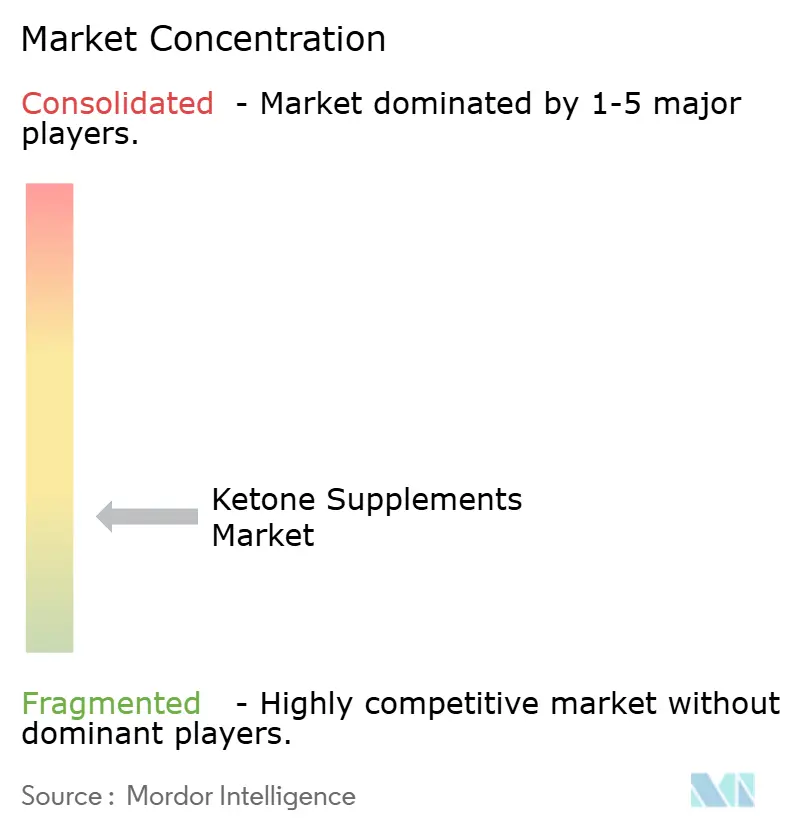
The ketone supplements market is fragmented, with established direct-selling brands, startups, and multinational nutrition companies competing through product innovation, scientific research, and distribution reach. Companies differentiate their offerings through formats such as ready-to-drink shots, gummies, and powders, as well as sports partnerships and specialized formulations. However, competitive success depends on managing pricing, taste, tolerability, and regulatory compliance while building consumer trust and encouraging repeat purchases.
The ketone supplements market is shaped by competition in product innovation, distribution, and brand positioning. Companies leverage direct-selling networks, sports nutrition partnerships, and specialized formulations to reach diverse consumer groups, including athletes and wellness-focused users. Differentiation through product formats, ingredient quality, and research-backed positioning helps brands strengthen their market presence. Established distribution channels and effective marketing also support consumer awareness, while taste, affordability, and product tolerability remain important factors influencing purchasing decisions and repeat use.
Potential opportunities in the ketone supplements market include personalized dosing, metabolic monitoring, and products targeting cognitive and metabolic wellness. Companies must support product claims with credible evidence and avoid presenting supplements as disease treatments. Smaller brands can compete through specialized formulations and research partnerships, while larger companies benefit from broader distribution networks. The market creates opportunities for companies to differentiate through product innovation, credible positioning, and stronger consumer engagement.
Ketone Supplements Industry Leaders
-
Prüvit Ventures, Inc.
-
Real Ketones, LLC
-
Health Via Modern Nutrition, Inc. (HVMN)
-
KetoneAid
-
KetoLogic
- *Disclaimer: Major Players sorted in no particular order
Ketone Supplements Market Companies Covered in this Report
- Prüvit Ventures, Inc.
- Real Ketones, LLC
- Health Via Modern Nutrition, Inc. (HVMN)
- KetoneAid
- KetoLogic
- Hi-Tech Pharmaceuticals, Inc. (BPI Sports)
- Ancient Brands, LLC (Ancient Nutrition)
- Zhou Nutrition
- KetoSports, Inc.
- TdeltaS Global, Inc (deltaG Ketones)
- Kaizen First (Ruketo)
- Keto and Company
- TDeltaS Global Inc.
- Momentum Performance Brands LLC
- KetoSwiss AG
- Herbalife Ltd.
- Compound Solutions, Inc.
- Caldic B.V.
- Sapien Body LLC
- KETŌND LLC
Recent Industry Developments in Ketone Supplements Market
- July 2025: Momentum Performance Brands launched KETONENRG, a ketone supplement brand featuring a dual-delivery system combining (R)-1,3-butanediol and free-acid D-BHB with electrolytes and trace minerals. The products aimed to target energy, mental clarity, and metabolic wellness.
- April 2025: Qitone launched a flavorless pro-ketone powder designed to support brain, heart, and metabolic health. The powder can be mixed into hot or cold beverages, offering a convenient format for ketone supplementation.
- April 2025: Ketone-IQ introduced four new energy-shot variants in Green Apple and Raspberry Lemonade flavors, available in ketone-only and ketone-plus-caffeine formulations. The company also announced NSF Certified for Sport certification across its product range, strengthening its positioning in sports nutrition
Global Ketone Supplements Market Report Scope
The ketone supplements market includes dietary supplements designed to increase ketone availability and support energy, fitness, and metabolic wellness. The market is segmented by Product Type, Form, Distribution Channel, and Geography. By product type, the categories include Ketone salts, Ketone esters, MCT Oil, and other ketone supplements. By form, it includes powder, capsules and tablets, liquid, gummies, and other forms. By distribution channel, the categories include supermarkets/hypermarkets, health and pharmacy/drug stores, online retail stores, and other distribution Channels. By Geography, it covers North America, Europe, Asia-Pacific, South America, and the Middle East and Africa, with selected countries analyzed within each region. Market forecasts for each segment are provided in terms of value (USD).
Segmentation Overview
| Ketone Salts |
| Ketone Esters |
| MCT Oil |
| Other Ketone Supplements |
| Powder |
| Capsules and Tablets |
| Liquid |
| Gummies |
| Other Forms |
| Supermarkets/Hypermarkets |
| Health and Pharmacy/Drug Stores |
| Online Retail Stores |
| Other Distribution Channels |
| North America | United States |
| Canada | |
| Europe | Germany |
| United Kingdom | |
| Italy | |
| Asia-Pacific | Japan |
| Australia | |
| China | |
| South America | Brazil |
| Argentina | |
| Middle East and Africa | South Africa |
| Saudi Arabia |
| By Product Type | Ketone Salts | |
| Ketone Esters | ||
| MCT Oil | ||
| Other Ketone Supplements | ||
| By Form | Powder | |
| Capsules and Tablets | ||
| Liquid | ||
| Gummies | ||
| Other Forms | ||
| By Distribution Channel | Supermarkets/Hypermarkets | |
| Health and Pharmacy/Drug Stores | ||
| Online Retail Stores | ||
| Other Distribution Channels | ||
| By Geography | North America | United States |
| Canada | ||
| Europe | Germany | |
| United Kingdom | ||
| Italy | ||
| Asia-Pacific | Japan | |
| Australia | ||
| China | ||
| South America | Brazil | |
| Argentina | ||
| Middle East and Africa | South Africa | |
| Saudi Arabia | ||
Key Questions Answered in the Report
What is the projected value of the ketone supplements market by 2032?
The ketone supplements market is projected to reach USD 398.06 million by 2032, growing at a 6.14% CAGR from 2027.
Which ketone supplement product type leads sales?
Ketone salts lead with 55.12% of revenue in 2026 because they are relatively accessible and widely available across common supplement formats. Their broad use in powders and capsules helps reach consumers who want an entry point into supplemental ketosis rather than a high-priced ester product.
Why are gummies gaining attention in ketone supplements?
Gummies are forecast to grow at a 9.42% CAGR through 2032 because they provide a more convenient and palatable alternative to stronger-tasting liquid products. The ketone supplements market can benefit from this format where companies clearly communicate active-ingredient amounts, sugar content, and intended use.
What are the main challenges for ketone supplement brands?
High prices, gastrointestinal side effects, uneven evidence on exercise performance, and strict product-claim requirements can reduce repeat purchase and limit adoption. The ketone supplements market needs clear dosing guidance, better flavor systems, and stronger human evidence to improve consumer trust and retention.