
Kenaf Seed Oil Market Size and Share
Market Overview
| Study Period | 2021 - 2031 |
|---|---|
| Market Size (2026) | USD 281.93 Million |
| Market Size (2031) | USD 400.06 Million |
| Growth Rate (2026 - 2031) | 7.25 % |
| Fastest Growing Market | Asia-Pacific |
| Largest Market | Asia-Pacific |
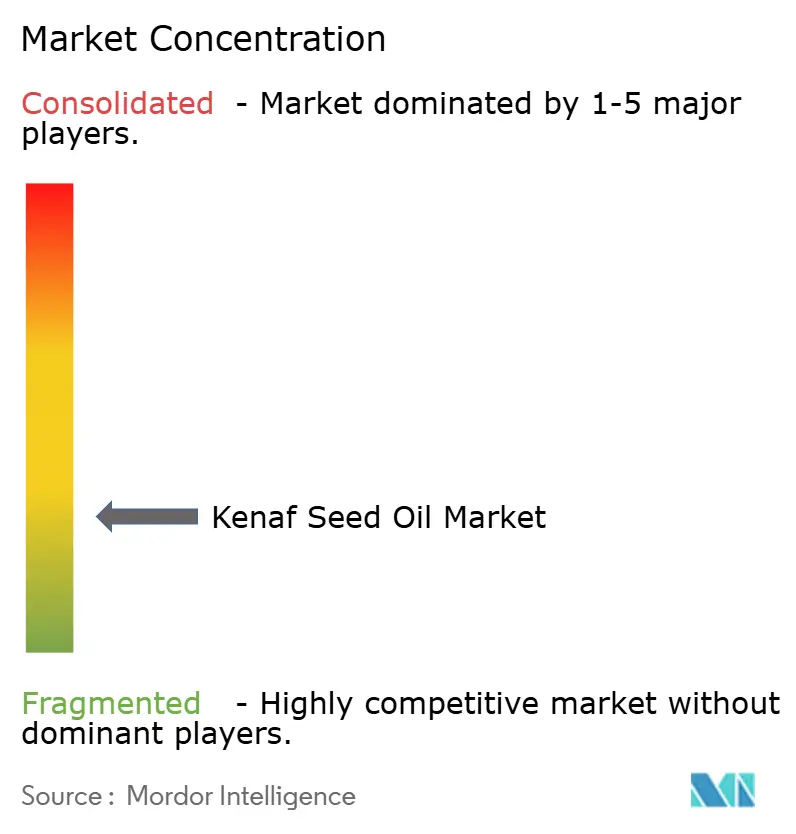
| Market Concentration | Low |
Major Players
*Disclaimer: Major Players sorted in no particular order Image © Mordor Intelligence. Reuse requires attribution under CC BY 4.0. |
|
Kenaf Seed Oil Market Analysis by Mordor Intelligence
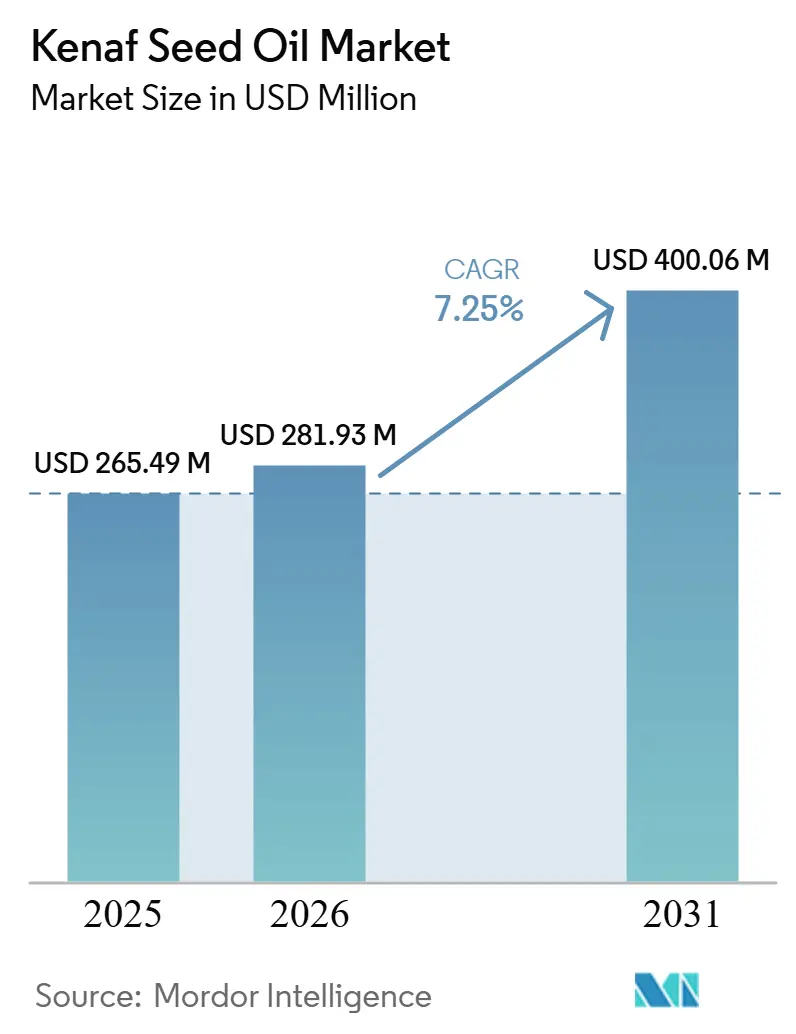
The global kenaf seed oil market was valued at USD 265.49 million in 2025 and is projected to grow from USD 281.93 million in 2026 to USD 400.06 million by 2031, registering a CAGR of 7.25% during the forecast period (2026–2031). Market growth is driven by rising demand for plant-based functional ingredients across food, nutraceutical, personal care, and industrial value chains. Growing adoption of clean-label and naturally derived botanical oils, along with increasing interest in sustainable and renewable raw materials, is accelerating the commercialization of kenaf seed oil. Advances in extraction and refining technologies, including supercritical CO₂ extraction and improved cold-press processing, are enhancing oil quality, preserving bioactive compounds, and improving production efficiency.
Key Report Takeaways
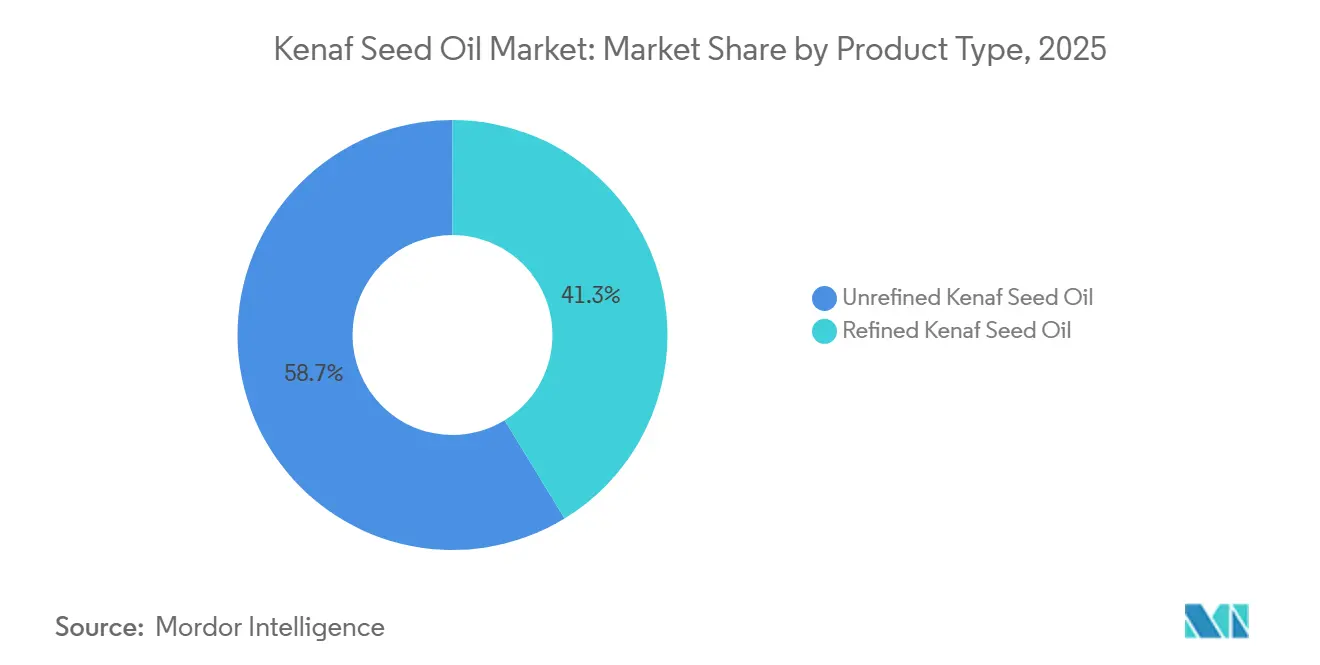
- By product type, unrefined oil held 58.73% of the Kenaf seed oil market share in 2025, while refined oil is forecast to expand at a 9.09% CAGR through 2031.
- By nature, conventional oil held 65.65% of the Kenaf seed oil market share in 2025, while organic oil is forecast to grow at a 9.33% CAGR through 2031.
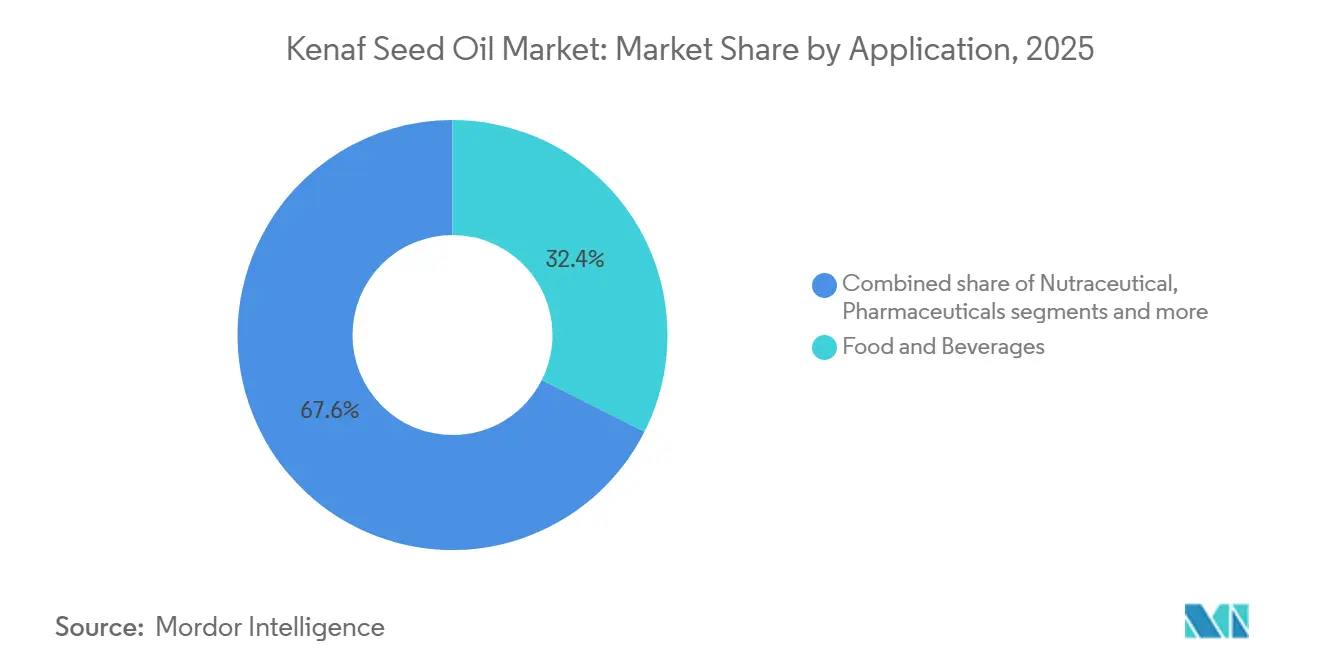
- By application, food and beverages accounted for 32.43% of the Kenaf seed oil market size in 2025, while personal care and cosmetics is forecast to advance at an 8.95% CAGR through 2031.
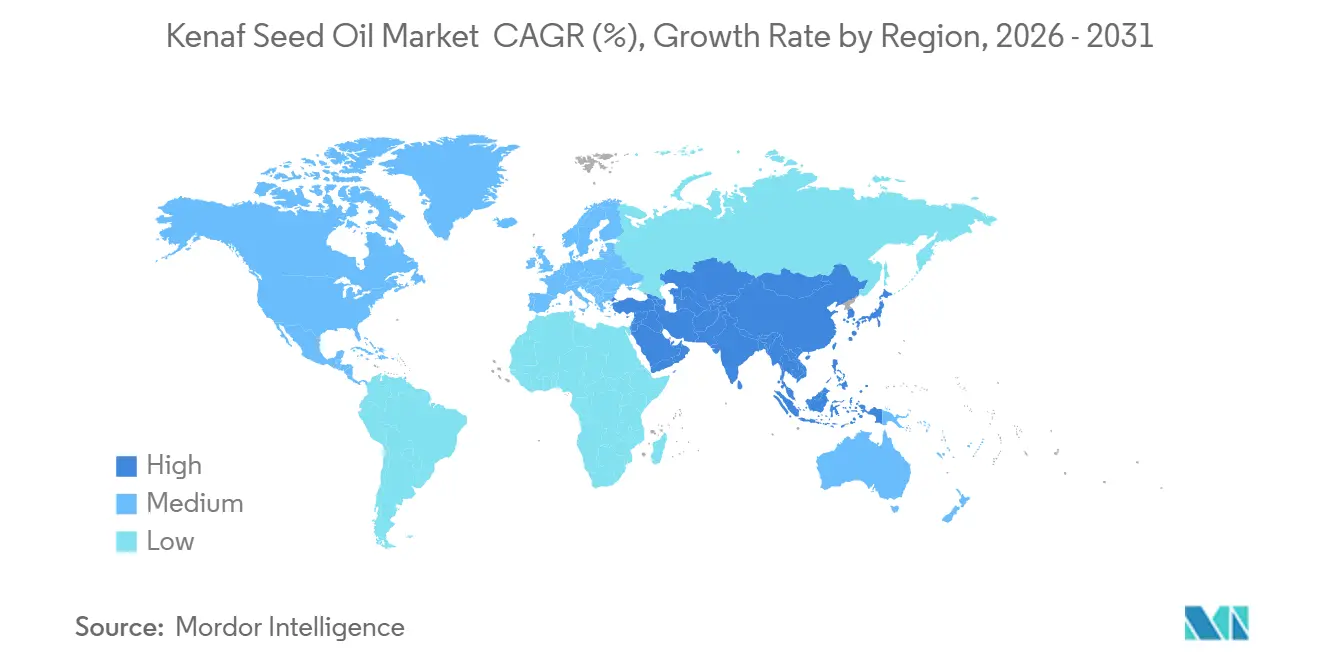
- By geography, Asia-Pacific held 34.92% of the Kenaf seed oil market size in 2025 and is forecast to grow at a 9.81% CAGR through 2031.
Note: Market size and forecast figures in this report are generated using Mordor Intelligence’s proprietary estimation framework, updated with the latest available data and insights as of January 2026.
Market Trends and Insights
Drivers Impact Analysis of Kenaf Seed Oil Market*
| Driver | (~) % Impact on CAGR Forecast | Geographic Relevance | Impact Timeline |
|---|---|---|---|
| Rising demand for plant-based functional ingredients | +2.1% | Global, with high concentration in North America, Europe, and Asia-Pacific | Medium term (2-4 years) |
| Growing adoption of natural and clean-label cosmetics | +1.5% | Europe and North America core, expanding into East Asia | Medium term (2-4 years) |
| Increasing utilization in bio-based lubricants and biofuels | +1.0% | Asia-Pacific, Europe, North America | Long term (≥ 4 years) |
| Advancements in oil extraction and refining technologies | +0.8% | Global, technology hubs in Malaysia, India, Germany | Medium term (2-4 years) |
| Supportive sustainability initiatives promoting bio-based crops | +0.6% | Southeast Asia, Sub-Saharan Africa | Short term (≤ 2 years) |
| Growing demand for specialty vegetable oils in food processing | +0.7% | Asia-Pacific, North America, Europe | Medium term (2-4 years) |
| Source: Mordor Intelligence | |||
Rising demand for plant-based functional ingredients
The growing preference for plant-based functional ingredients is a major factor driving the global kenaf seed oil market. Manufacturers in the food, nutraceutical, pharmaceutical, and personal care industries are increasingly seeking botanical ingredients that offer both functional performance and naturally occurring bioactive compounds. Kenaf seed oil is recognized for its favorable composition of essential fatty acids, tocopherols (vitamin E), phytosterols, and phenolic antioxidants, making it an attractive ingredient for value-added formulations. It offers a differentiated nutritional and functional profile while supporting the industry's shift toward naturally derived ingredients. Ongoing scientific research highlighting the antioxidant potential, lipid composition, and oxidative stability of kenaf seed oil has further strengthened its commercial acceptance among ingredient developers.
Growing adoption of natural and clean-label cosmetics
Cosmetic manufacturers are increasingly incorporating plant-derived oils into product formulations to meet rising demand for ingredients that are naturally sourced, minimally processed, and free from synthetic additives. Kenaf seed oil is valued for its rich content of essential fatty acids, tocopherols, phytosterols, and antioxidant compounds, which contribute to skin nourishment, moisture retention, and protection against oxidative stress. As brands focus on ingredient transparency and simplified formulations, botanical oils with well-defined natural compositions are gaining greater commercial acceptance. According to the National Sanitation Foundation (NSF), 74% of consumers in 2024 considered organic ingredients important in personal care products, reflecting the growing preference for naturally derived and certified ingredients [1]Source: National Sanitation Foundation (NSF), "74% of Consumers Consider Organic Ingredients Important in Personal Care Products", nsf.org.
Increasing utilization in bio-based lubricants and biofuels
Industries are increasingly seeking renewable, biodegradable, and plant-derived feedstocks to reduce dependence on petroleum-based raw materials and meet sustainability objectives. Kenaf seed oil has favorable fatty acid characteristics that make it suitable for conversion into biodiesel and for use in bio-based lubricant formulations. Its biodegradability, renewable origin, and compatibility with bio-based industrial processes have increased interest among manufacturers developing next-generation sustainable materials. According to the Organisation for Economic Co-operation and Development (OECD), global biofuel consumption reached approximately 217.72 million metric tons in 2025, reflecting growing worldwide demand for renewable fuel sources [2]Source: Organisation for Economic Co-operation and Development (OECD), "Biofuel consumption worldwide", oecd.org. This expanding bioeconomy is encouraging greater exploration of alternative oilseed crops capable of supporting industrial applications beyond conventional edible oils.
Advancements in oil extraction and refining technologies
Continuous innovation in processing methods has enabled manufacturers to recover higher-quality oil while preserving its naturally occurring bioactive compounds. Among these technologies, Supercritical Carbon Dioxide (CO₂) Fluid Extraction (SFE) has emerged as a notable advancement, producing solvent-free kenaf seed oil with higher retention of antioxidants, tocopherols, phytosterols, and essential fatty acids compared to conventional hexane-based solvent extraction. The technology also minimizes thermal degradation and oxidation during processing, resulting in higher purity, greater oxidative stability, and improved shelf life. Additionally, improvements in cold-press extraction, expeller pressing, filtration, and refining processes have contributed to greater process efficiency and more consistent product quality across production batches.
Restraints Impact Analysis of Kenaf Seed Oil Market*
| Restraint | (~) % Impact on CAGR Forecast | Geographic Relevance | Impact Timeline |
|---|---|---|---|
| Limited commercial cultivation of kenaf for seed production | -1.2% | Global, most acute in regions outside Malaysia, India, and West Africa | Short term (≤ 2 years) |
| Competition from established plant-based oils | -0.9% | North America and Europe where alternative oil ecosystems are well-established | Medium term (2-4 years) |
| Limited processing infrastructure and supply chain development | -0.7% | Sub-Saharan Africa, South America, parts of Southeast Asia | Long term (≥ 4 years) |
| Low consumer awareness of kenaf seed oil | -0.5% | North America, Europe, South America | Medium term (2-4 years) |
| Source: Mordor Intelligence | |||
Limited commercial cultivation of kenaf for seed production
Limited commercial cultivation of kenaf specifically for seed production remains a major restraint on the global kenaf seed oil market. In most producing regions, kenaf is primarily grown as a fiber crop for applications such as paper, textiles, composites, and industrial materials, with seed production treated as a secondary objective. As a result, agricultural practices, harvesting schedules, and crop management strategies are generally optimized to maximize fiber yield rather than seed output, limiting the volume of raw material available for oil extraction. The relatively small area dedicated to seed-focused cultivation creates an inconsistent supply of high-quality seeds, making it difficult for processors to secure reliable feedstock for continuous production. Furthermore, limited adoption of high-yielding seed varieties, specialized harvesting techniques, and dedicated seed production systems constrains productivity and restricts large-scale commercialization.
Competition from established plant-based oils
Competition from established plant-based oils is a significant restraint on the growth of the global kenaf seed oil market. The market is highly competitive, with well-established vegetable and specialty oils such as sunflower, soybean, canola, flaxseed, sesame, hemp seed, olive, coconut, and argan oil benefiting from decades of commercial production, extensive processing infrastructure, and widespread global distribution. These oils have well-documented nutritional profiles, strong regulatory acceptance, and high levels of consumer and industrial familiarity, making them the preferred choice for many manufacturers. In contrast, kenaf seed oil remains a relatively niche ingredient with limited commercial awareness and a smaller supplier base. Manufacturers often favor established oils due to their consistent availability, standardized quality specifications, and proven performance across multiple industries.
*Our forecasts treat driver/restraint impacts as directional, not additive. The impact forecasts reflect baseline growth, mix effects, and variable interactions.
Kenaf Seed Oil Market Segment Analysis
By Product Type:
Unrefined Grade Anchors Revenue; Refined Grades AcceleratingUnrefined kenaf seed oil held a 58.73% value share in 2025, supported by its minimal processing requirements, which help retain naturally occurring tocopherols, phytosterols, polyphenols, and essential fatty acids. The absence of extensive refining steps allows producers to preserve the oil's native nutritional composition while reducing processing complexity, improving extraction efficiency, and shortening production cycles. This enables manufacturers to maximize oil recovery from harvested seeds while maintaining product authenticity, an increasingly valued characteristic in the botanical oil industry. The segment also benefits from lower energy consumption and reduced chemical usage during production, aligning with the growing preference for minimally processed, naturally derived ingredients.
Refined kenaf seed oil is projected to be the fastest-growing product type, expanding at a CAGR of 9.09% through 2031. Growth is supported by increasing industry emphasis on ingredient consistency, purity, and extended storage stability. Refining removes naturally occurring pigments, free fatty acids, waxes, moisture, suspended solids, and volatile compounds, resulting in a uniform product with improved physicochemical characteristics and enhanced resistance to oxidation. Manufacturers increasingly prioritize refined oils because they offer standardized quality across production batches, enabling greater process reliability and easier compliance with stringent manufacturing specifications. Advancements in degumming, neutralization, bleaching, deodorization, and filtration technologies have further improved refining efficiency while preserving the oil's valuable lipid composition.


By Nature:
Conventional Scale Dominates; Organic Certification Reshapes Premium SupplyConventional kenaf seed oil accounted for a 65.65% value share in 2025, supported by well-established cultivation practices, higher seed availability, and consistent year-round supply from mature agricultural production systems. The segment benefits from broader participation of growers using conventional farming methods, enabling larger harvest volumes and a more reliable raw material pipeline for processors. Existing cultivation infrastructure, established agronomic expertise, and widespread access to conventional crop management practices contribute to stable production and efficient procurement. In addition, conventional production allows manufacturers to source seeds from a wider supplier base without the lengthy certification processes associated with organic farming, improving supply flexibility and operational continuity.
Organic kenaf seed oil is projected to register the fastest CAGR of 9.33% through 2031, driven by increasing emphasis on certified, traceable, and sustainably produced botanical ingredients across global value chains. Growing regulatory oversight surrounding organic labeling, ingredient authenticity, and production transparency has encouraged manufacturers to source certified organic raw materials that comply with internationally recognized organic standards. Certification systems requiring strict control over cultivation, harvesting, processing, and traceability have strengthened buyer confidence in organically produced oils, supporting greater commercial adoption. At the same time, increasing investments in organic farming practices, certification programs, and sustainable agricultural management are expanding the supply of certified kenaf seeds.
By Application:
Food and Beverages Leads Volume; Personal Care Captures Premium GrowthFood and Beverages accounted for the largest application segment, holding a 32.43% value share in 2025, supported by the favorable nutritional composition and functional characteristics of kenaf seed oil. The oil contains a balanced profile of unsaturated fatty acids, tocopherols, phytosterols, and natural antioxidants, making it an attractive botanical oil for ingredient developers seeking nutrient-rich plant-derived oils. Its mild taste, light texture, and good oxidative stability allow easier incorporation into food formulations without significantly altering product sensory attributes. Scientific research has further strengthened confidence in the ingredient, with studies published by the Institute of Food Technologists (IFT) reporting that kenaf seeds contain approximately 21.4%–30.5% crude protein, highlighting the crop's overall nutritional value and reinforcing interest in maximizing the utilization of both seeds and their oil.
Personal Care and Cosmetics is projected to be the fastest-growing application segment, expanding at a CAGR of 8.95% through 2031. Growth is driven by the increasing incorporation of multifunctional botanical oils into skincare and haircare formulations. Kenaf seed oil is valued for its naturally occurring tocopherols, phytosterols, essential fatty acids, and antioxidant compounds, which contribute to skin conditioning, moisture retention, and protection against oxidative stress. Ongoing innovation in botanical ingredient development has encouraged formulators to explore lesser-known plant oils with differentiated biochemical profiles, while advances in extraction, purification, and quality standardization have improved ingredient consistency for commercial-scale manufacturing.

Geography Analysis
APAC Kenaf Seed Oil Market
Asia-Pacific dominated the global kenaf seed oil market, accounting for a 34.92% value share in 2025, and is projected to register the fastest CAGR of 9.81% through 2031. The region's position is supported by its strong agricultural base for kenaf cultivation, expanding processing capabilities, and continued investment in bio-based value chains. Several countries have prioritized kenaf as a strategic industrial crop, strengthening raw material availability and encouraging greater commercial utilization of kenaf-derived products. In Malaysia, the Department of Statistics Malaysia (DOSM) reported in the 2024 Agricultural Census that kenaf remained a high-potential crop, with 1,497.0 hectares under cultivation producing 9,916.1 tonnes of output [3]Source: Department of Statistics Malaysia (DOSM), "Agricultural Census identifies kenaf, Napier grass, seaweed as high-potential crops", dosm.gov.my . The availability of locally produced raw materials, combined with ongoing improvements in seed quality, extraction technologies, and downstream processing infrastructure, continues to support regional market expansion.
Europe and North America Kenaf Seed Oil Market
Europe held the second-largest share of the global kenaf seed oil market in 2025, supported by the region's mature botanical ingredient industry, stringent quality standards, and well-developed value chain for natural plant-derived oils. Strong emphasis on certified raw materials, traceability, ingredient transparency, and sustainable sourcing has encouraged broader adoption of specialty vegetable oils across multiple industries. The region also benefits from a well-developed research ecosystem, with universities and research institutions continuously investigating the nutritional, functional, and bioactive properties of emerging plant oils. North America represents a market characterized by strong innovation, advanced processing technologies, and increasing commercialization of specialty botanical oils, supported by extensive research into plant-based ingredients and growing investments in sustainable product development.
MEA and South America Kenaf Seed Oil Market
South America and the Middle East and Africa represent emerging markets, where expanding awareness of high-value agricultural crops, improving cultivation practices, and gradual investments in oil extraction infrastructure are creating new growth opportunities. Rising interest in crop diversification, improved utilization of agricultural resources, and government support for sustainable farming initiatives are encouraging greater cultivation of non-traditional oilseed crops, including kenaf. As processing capabilities continue to develop and supply chains become more organized, these regions are expected to strengthen their contribution to the global kenaf seed oil market over the forecast period.

Competitive Landscape
The global kenaf seed oil market is fragmented, with competition characterized by a mix of specialty botanical oil manufacturers, agro-processing companies, and ingredient suppliers serving diverse industrial value chains. Market participants primarily compete on product quality, extraction technology, raw material sourcing, certification, and consistency of oil composition rather than on production scale alone. As kenaf seed oil remains a niche botanical ingredient, companies are increasingly investing in quality assurance systems, traceable sourcing networks, and advanced processing capabilities to strengthen their competitive positioning.
Key companies, including Parchem Fine & Specialty Chemicals Inc., AOS Products Pvt. Ltd., ConnOils LLC, Shree Raghvendra Agro Processors, and KenaChempro Technovation, are expanding their presence by broadening specialty oil portfolios, enhancing extraction capabilities, and strengthening relationships with global ingredient buyers. Manufacturers are increasingly adopting advanced processing technologies such as cold pressing and supercritical CO₂ fluid extraction (SFE) to produce premium-quality kenaf seed oil with higher retention of tocopherols, phytosterols, and other bioactive compounds.
Competitive advantage is expected to increasingly depend on the ability to integrate the entire value chain, from certified kenaf cultivation and seed procurement to advanced extraction, refining, and value-added product development. Investments in agronomic research, high-yield seed varieties, digital traceability, sustainable processing technologies, and strategic collaborations with research institutions and ingredient manufacturers are also expected to shape the next phase of competition as the market continues to mature.
Kenaf Seed Oil Industry Leaders
-
Parchem Fine & Specialty Chemicals Inc.
-
AOS Products Pvt. Ltd.
-
ConnOils LLC
-
Chempro Technovation
-
Shree Raghvendra Agro Processors
- *Disclaimer: Major Players sorted in no particular order
Kenaf Seed Oil Market Companies Covered in this Report
- Parchem Fine & Specialty Chemicals Inc.
- AOS Products Pvt. Ltd.
- Hallstar
- ConnOils LLC
- Chempro Technovation
- Shree Raghvendra Agro Processors
- Hemp, Inc.
- Advanced Biofuel Center
- Gincoc Limited
- Thar Process, Inc.
- National Kenaf
- Shree Laxminarayan Oils
- Pepagora
- Gustav Heess GmbH
- Henry Lamotte Oils GmbH
- Jedwards International, Inc.
- O&3 Limited
- Beraca Ingredientes Naturais S.A.
- Naturalin Bio-Resources Co., Ltd.
- Nutra Green Biotechnology Co., Ltd.

Recent Industry Developments in Kenaf Seed Oil Market
- November 2025: At CPhI India 2025, AOS Products Pvt. Ltd. showcased its expanded portfolio of natural ingredients, including carrier oils, essential oils, natural butters, menthol and mint oils, and pine oil derivatives. The portfolio targets the pharmaceutical, cosmetic, personal care, food, and wellness industries.
- October 2025: Hallstar Beauty launched HallSens DIAS, a patent-pending, 100% naturally derived emollient positioned as a sustainable alternative to cyclomethicone in personal care formulations. The company also introduced UBI Oléoactif, an active ingredient targeting skin rejuvenation through the ubiquitin pathway.


Global Kenaf Seed Oil Market Report Scope
Kenaf seed oil is a versatile, edible plant oil extracted from the seeds of the kenaf plant (Hibiscus cannabinus). The kenaf seed oil market is segmented by product type, nature, application, and geography. Based on product type, the market is segmented into unrefined kenaf seed oil and refined kenaf seed oil. Based on nature, the market is segmented into organic and conventional. Based on application, the market is segmented into food and beverages, personal care and cosmetics, nutraceutical, pharmaceuticals, biofuel and lubricants, and other industrial applications. Based on geography, the market is segmented into North America, Europe, Asia-Pacific, South America, and Middle East and Africa. The report provides market size and forecasts in both value (USD) and volume (tons) for all the mentioned segments.
| Unrefined Kenaf Seed Oil |
| Refined Kenaf Seed Oil |
| Organic |
| Conventional |
| Food and Beverages |
| Personal Care and Cosmetics |
| Nutraceutical |
| Pharmaceuticals |
| Biofuel and Lubricants |
| Others Industrial Application |
| North America | United States |
| Canada | |
| Mexico | |
| Rest of North America | |
| Europe | United Kingdom |
| Germany | |
| France | |
| Italy | |
| Spain | |
| Rest of Europe | |
| Asia-Pacific | China |
| Japan | |
| India | |
| Australia | |
| Rest of Asia-Pacific | |
| South America | |
| Middle East and Africa |
| By Product Type | Unrefined Kenaf Seed Oil | |
| Refined Kenaf Seed Oil | ||
| By Nature | Organic | |
| Conventional | ||
| By Application | Food and Beverages | |
| Personal Care and Cosmetics | ||
| Nutraceutical | ||
| Pharmaceuticals | ||
| Biofuel and Lubricants | ||
| Others Industrial Application | ||
| By Geography | North America | United States |
| Canada | ||
| Mexico | ||
| Rest of North America | ||
| Europe | United Kingdom | |
| Germany | ||
| France | ||
| Italy | ||
| Spain | ||
| Rest of Europe | ||
| Asia-Pacific | China | |
| Japan | ||
| India | ||
| Australia | ||
| Rest of Asia-Pacific | ||
| South America | ||
| Middle East and Africa | ||


Key Questions Answered in the Report
What is driving demand for kenaf seed oil?
Demand is supported by clean-label food ingredients, natural cosmetics, and bio-based industrial formulations. The sector is forecast to grow at a 7.25% CAGR from 2026 to 2031.
Which application leads kenaf seed oil use?
Food and beverages led with 32.43% share in 2025. Personal care and cosmetics is forecast to grow fastest at an 8.95% CAGR through 2031.
Why is refined kenaf seed oil growing faster?
Cosmetic and nutraceutical buyers require more consistent color, odor, and particulate levels. Refined oil is forecast to grow at a 9.09% CAGR through 2031.
Which region has the strongest outlook for kenaf seed oil?
Asia-Pacific held 34.92% share in 2025 and is forecast to grow at a 9.81% CAGR through 2031. Malaysia’s cultivation and downstream programs support this position.
Page last updated on:





