
Japan Bonsai Market Size and Share
Market Overview
| Study Period | 2021 - 2031 |
|---|---|
| Forecast Data Period | 2026 - 2031 |
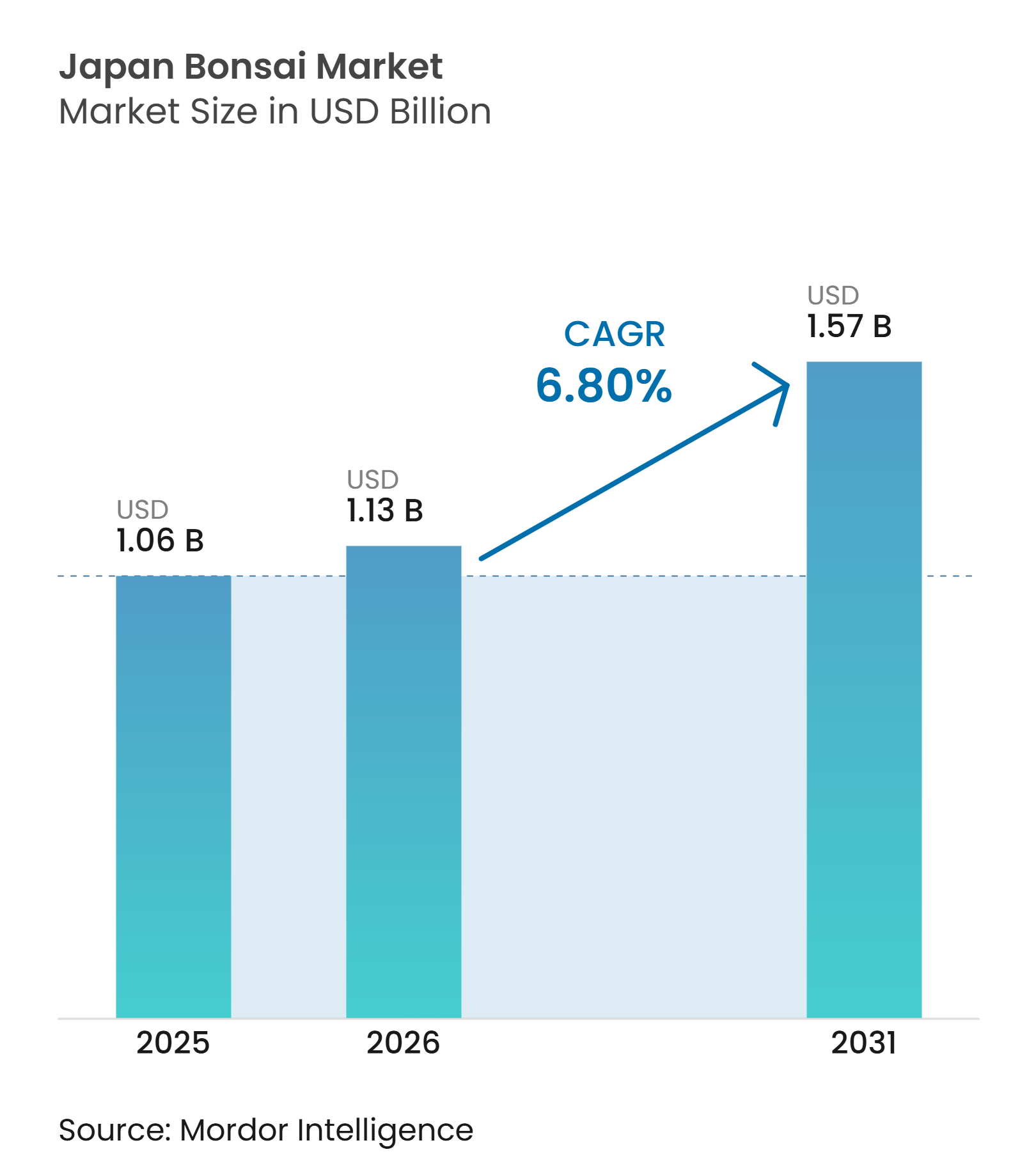
| Base Year Market Size (2025) | USD 1.06 Billion |
| Market Size (2026) | USD 1.13 Billion |
| Market Size (2031) | USD 1.57 Billion |
| Growth Rate (2026 - 2031) | 6.80 % |
| Market Concentration | Low |
Major Players *Disclaimer: Major Players sorted in no particular order Image © Mordor Intelligence. Reuse requires attribution under CC BY 4.0. | |
Japan Bonsai Market Analysis by Mordor Intelligence
The Japan bonsai market was valued at USD 1.06 billion in 2025 and is projected to grow from USD 1.13 billion in 2026 to USD 1.57 billion by 2031, at a CAGR of 6.8% during the forecast period from 2026 to 2031. Demand is expanding beyond traditional hobby use as compact plants become suitable for apartments, gifting, interior design, and cultural purchases. Urban living trends and growing interest in biophilic design are reinforcing this shift, with consumers increasingly viewing bonsai as functional décor rather than purely a hobbyist pursuit. Domestic buyers continue to support retail sales, while the reopening of selected export channels broadens the addressable customer base. International interest in Japanese cultural products has further supported export demand, particularly in North America and Europe where bonsai is associated with craftsmanship and heritage. Higher-value specimens are attracting buyers who prioritize provenance, age, and cultivation history, supporting investment in documentation and specialist care. This trend is also encouraging growers to maintain detailed cultivation records, which adds to the perceived and commercial value of individual specimens. Supply remains concentrated among skilled growers, so businesses with export compliance capabilities and trained cultivation teams are better positioned to serve premium demand. The market also benefits from its position across gardening, home décor, and collecting, although the long training period for growers limits the pace at which premium supply can expand.
Key Report Takeaways
- By species, indoor bonsai accounted for the largest 58.0% of the Japan bonsai market share in 2025, while indoor bonsai is projected to grow at the fastest CAGR of 8.2% from 2026 to 2031.
- By distribution channel, the offline segment accounted for the largest 61.0% share in 2025, while the Japan Bonsai market size for the online segment is projected to grow at the fastest CAGR of 11.6% from 2026 to 2031.
- By application, residential accounted for the largest 64.0% share in 2025, while commercial is projected to grow at the fastest CAGR of 7.8% from 2026 to 2031.
Note: Market size and forecast figures in this report are generated using Mordor Intelligence’s proprietary estimation framework, updated with the latest available data and insights as of January 2026.
Market Trends and Insights
Drivers Impact Analysis of Japan Bonsai Market*
| Driver | (~) % Impact on CAGR Forecast | Geographic Relevance | Impact Timeline |
|---|---|---|---|
| Urban space constraints favoring compact living plants | +1.3% | Japan, with emphasis on Tokyo, Osaka, and Nagoya metropolitan areas | Short term (≤ 2 years) |
| Digital discovery and specialty e-commerce adoption | +1.5% | Japan, with uptake in urban and suburban areas | Short term (≤ 2 years) |
| Premiumization of finished and collector-grade bonsai | +1% | Japan and export destinations in the European Union, United States, and China | Medium term (2-4 years) |
| Export reopening and Japanese origin premium | +0.8% | Japan and export destinations in the European Union, United States, China, and Vietnam | Medium term (2-4 years) |
| Cultural tourism and bonsai experience consumption | +0.5% | Saitama, Kagawa, Kyoto, and Tokyo | Medium term (2-4 years) |
| Indoor wellness and workplace greening demand | +0.7% | Japan, particularly corporate and commercial districts | Short term (≤ 2 years) |
| Source: Mordor Intelligence | |||
Urban Space Constraints Favoring Compact Living Plants
Japan's highly urbanized housing environment supports demand for compact ornamental plants such as bonsai that fit limited residential spaces. According to the Statistics Bureau of Japan's Japan Statistical Yearbook 2026, apartment buildings constitute a major dwelling type across the country, particularly in densely populated metropolitan areas where living space is constrained. Compact bonsai require minimal space while providing aesthetic and cultural value, making them well suited for apartments and condominiums. Their popularity as interior décor and premium gifts further broadens adoption beyond traditional hobbyists, supporting sustained demand in the market.
Digital Discovery and Specialty E-Commerce Adoption
Digital commerce is expanding consumer access to specialist bonsai beyond traditional production regions such as Saitama and Kagawa by enabling nationwide purchases through dedicated online platforms. According to the Ministry of Economy, Trade and Industry (METI) FY2024 E-Commerce Market Survey, Japan's domestic B2C e-commerce market reached JPY 26.1 trillion in 2024, a 5.1% year-over-year increase, reflecting continued growth in online retail adoption[1]. Specialist bonsai retailers use digital storefronts to provide cultivation guidance, provenance information, and after-sales support, reducing purchase barriers for first-time buyers while expanding market access for premium and collector-grade bonsai across Japan.
Premiumization of Finished and Collector-Grade Bonsai
Premiumization is strengthening Japan's bonsai market as collectors increasingly seek authenticated, exhibition-quality specimens with documented provenance and long cultivation histories. According to the Nippon Bonsai Association (2026), the 100th Kokufu Bonsai Exhibition showcased 181 bonsai displays in each of its two exhibition sessions at the Tokyo Metropolitan Art Museum, featuring Japan's highest-quality trees evaluated for the prestigious Kokufu Award. The exhibition reinforces international recognition of master-grade bonsai, supporting premium pricing for specimens with verified cultivation records, artist attribution, and exhibition history, while encouraging growers to invest in long-term quality and traceability.
Export Reopening and Japanese Origin Premium
Japan's bonsai industry is benefiting from expanded export opportunities as overseas markets recognize Japanese cultivation standards and phytosanitary compliance. According to the Ministry of Agriculture, Forestry and Fisheries (MAFF, 2026), Japan has established dedicated export inspection procedures and phytosanitary requirements for bonsai exports to the European Union and the United Kingdom, enabling qualified growers to ship certified bonsai under harmonized inspection protocols[2]. Export access enhances the value of Japanese-origin specimens, cultivation expertise, and documented production practices, allowing specialist nurseries to capture premium international demand while strengthening the global competitiveness.
Restraints Impact Analysis of Japan Bonsai Market*
| Restraint | (~) % Impact on CAGR Forecast | Geographic Relevance | Impact Timeline |
|---|---|---|---|
| Aging grower base and succession bottlenecks | -1.3% | Japan, particularly Saitama and Kagawa production clusters | Long term (≥ 4 years) |
| Phytosanitary compliance and soil-removal costs | -0.7% | Japan and export destinations in the European Union, United States, China, and other markets | Medium term (2-4 years) |
| High skill and maintenance burden for new owners | -0.9% | Japan | Short term (≤ 2 years) |
| Climate volatility, heat stress, and pest pressure | -0.6% | Japan, particularly Kagawa and coastal production areas | Long term (≥ 4 years) |
| Source: Mordor Intelligence | |||
Aging Grower Base and Succession Bottlenecks
Japan's bonsai industry relies on highly specialized cultivation techniques that require decades of training, making business succession a critical challenge for long-established nurseries. According to the Small and Medium Enterprise Agency (SMEA) 2025 White Paper, more than half of Japanese SME owners are aged 60 years or older, highlighting the growing need for generational transfer across traditional businesses[3]. Many bonsai nurseries remain family-operated, and the limited availability of skilled successors threatens the preservation of cultivation expertise, premium tree production, and long-term supply, thereby constraining the sustainable growth in the market.
Phytosanitary Compliance and Soil-Removal Costs
Japan's bonsai exporters must comply with stringent phytosanitary regulations imposed by importing countries, which increases operational complexity and export costs. According to the Ministry of Agriculture, Forestry and Fisheries (MAFF, updated June 2026), live plants intended for planting must be accompanied by a phytosanitary certificate. For many destinations, additional requirements include production-site inspections, pest-free verification, and specific declarations prior to export. These compliance requirements raise certification, inspection, and handling costs, particularly for small bonsai nurseries with limited export resources. The need to meet country-specific quarantine standards and soil-free shipment protocols can slow access to overseas markets and restrain growth in the market.
*Our forecasts treat driver/restraint impacts as directional, not additive. The impact forecasts reflect baseline growth, mix effects, and variable interactions.
Japan Bonsai Market Segment Analysis
By Species:
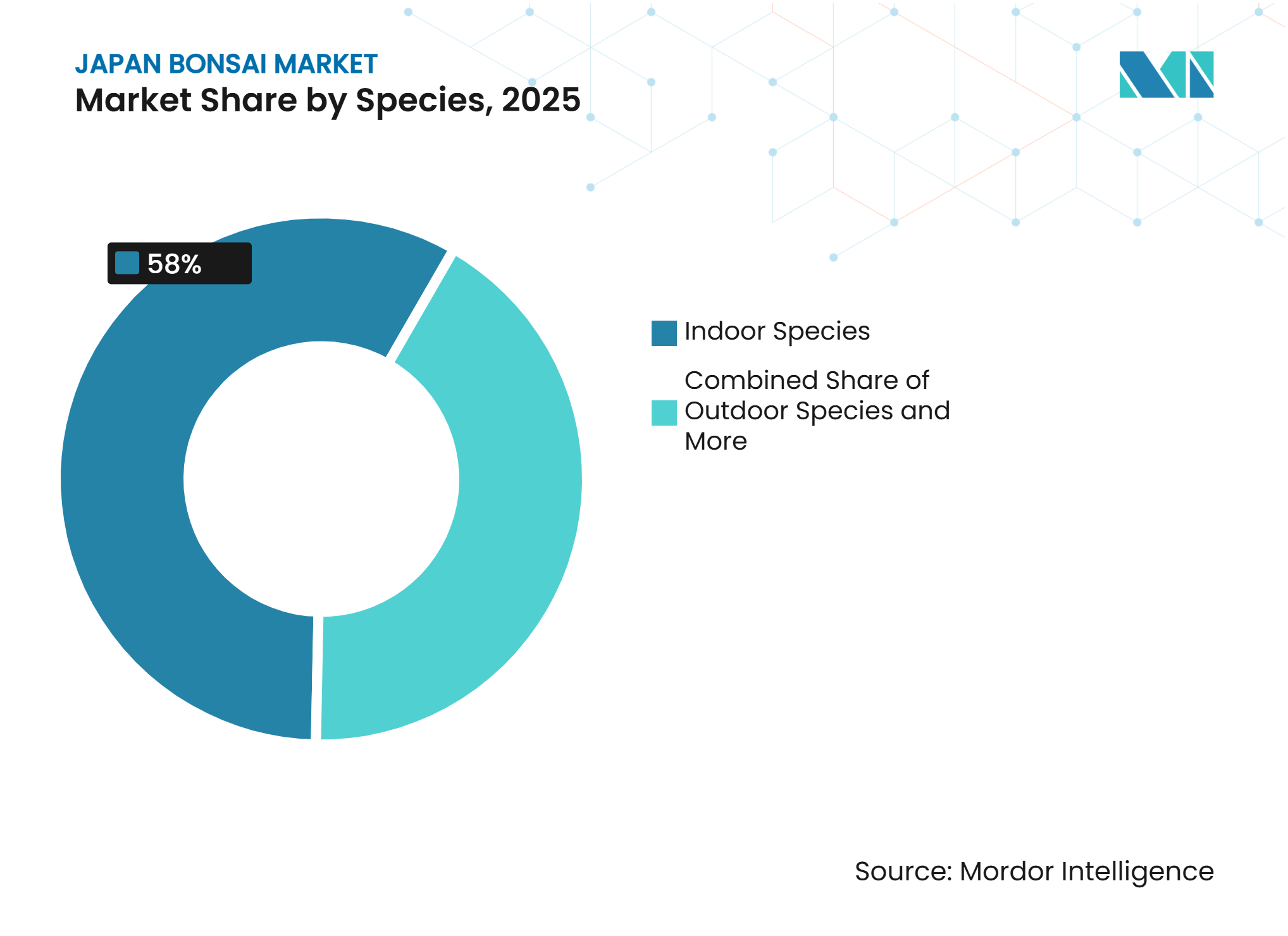
Indoor Species Anchor Retail Volume While Pine and Deciduous Trees Define Collector PremiumsIndoor species held the largest Japan bonsai market share of 58.0% in 2025 and are forecast to grow at the fastest CAGR of 8.2% from 2026 to 2031. They serve as a practical entry point for buyers living in apartments or seeking manageable plants for interior settings. Suitable varieties include Chinese juniper, satsuki azalea, and selected ficus types that adapt well to indoor conditions. Demand is also driven by gifting, wellness décor, and first-time buyers seeking simpler care. Tourism workshops in Kyoto and Saitama introduce indoor trees as cultural keepsakes, creating an additional first-purchase occasion. These factors make indoor species central to retail volume in the Japan bonsai market.
Outdoor species serve dedicated hobbyists and collectors who can provide seasonal conditions and more advanced care. Japanese black pine and Japanese white pine form the premium needle-tree category, while Japanese maple and zelkova offer seasonal foliage appeal. Japanese black pine also benefits from the European Union export pathway that resumed under the established plant-health framework. The broad range from indoor starter plants to mature pine trees allows nurseries to serve buyers with varying budgets and experience levels. This variety supports a wide price range without altering the central role of specialist cultivation.



By Distribution Channel:
Offline Retail Maintains Quality Premium as Online Channels Redefine Market AccessThe offline segment accounted for the largest share of 61.0% in 2025. Buyers often prefer to inspect a living tree in person, as trunk structure, branch development, root flare, and overall appearance directly affect value. Specialty gardens such as Kimura Bonsai Garden, Fuyo-en Co., Ltd., and Fujikawa Kouka-en build customer loyalty through cultivation expertise and direct advice. Nursery visits also allow buyers to observe growing conditions and receive specific care guidance from sellers. These interactions support premium pricing and repeat business among serious hobbyists. Offline retail further benefits when bonsai tourism converts garden visits into purchases.
The Japan bonsai market size for the online segment is forecast to grow at the fastest CAGR of 11.6% from 2026 to 2031. Digital storefronts serve first-time residential buyers seeking entry-level indoor trees, as well as collectors looking for authenticated premium specimens. Sellers can support transactions with provenance records, scheduled consultations, and post-purchase care materials, helping to address the risks that arise when buyers cannot inspect a specimen in person. The channel is likely to remain divided between convenience-driven entry-level purchases and higher-value documented sales. Online channels extend the geographic reach of the Japan bonsai market, though premium sellers still need to provide credible quality information to build buyer confidence.
By Application:
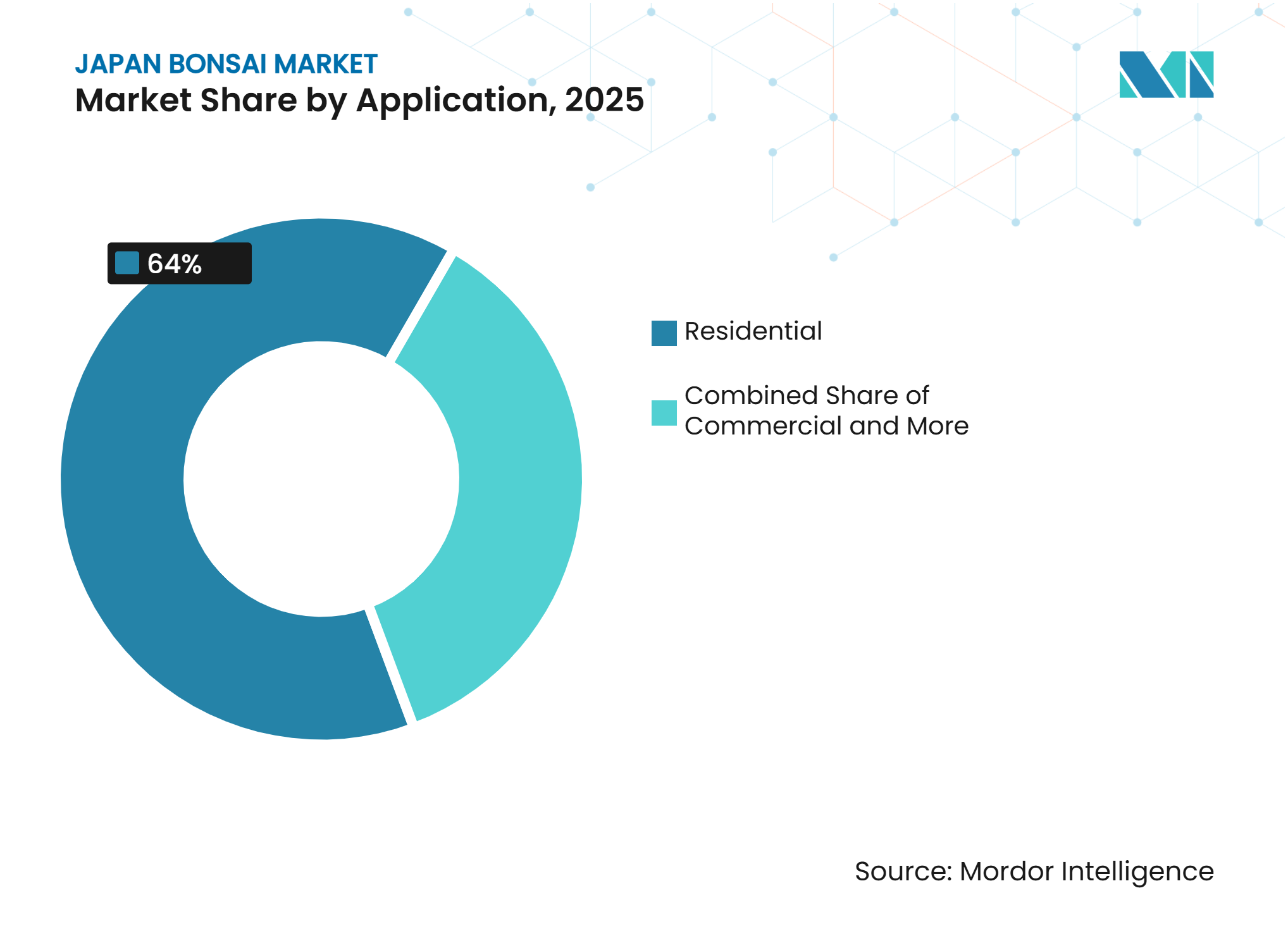
Residential Base Remains Dominant While Commercial Installations Drive Higher Unit ValuesThe residential segment accounted for the largest share of 64.0% in 2025. Household demand is supported by gifting, interior décor, and the appeal of a compact cultural object in urban homes. Older hobbyists remain an important customer group, while younger urban professionals increasingly encounter bonsai through digital content and retail displays. Bonsai Network Japan Co., Ltd. and Natubaya Inc. address these buyers with entry pricing, beginner kits, and growing media suited to non-specialist owners. Mid-range residential purchases remain relevant through changing economic conditions as they serve ongoing lifestyle and gift needs. This stable household base remains important to the Japan bonsai market.
The commercial segment is projected to expand at the fastest CAGR of 7.8% from 2026 to 2031. Corporate offices use bonsai in reception areas, executive floors, and meeting spaces where cultural identity and workplace presentation matter. Research on indoor biophilic design provides an evidence base for workplace greening in office environments. Luxury hotels and ryokan establishments offer another commercial setting for premium installations and maintenance contracts. KYOTO OMURO Garden and Design Co., Ltd. illustrates the type of operator that combines garden design, sourcing, and maintenance for institutional customers. Municipal spaces, temples, educational institutions, and cultural centers such as the Omiya Bonsai Art Museum provide additional stable demand.

Geography Analysis
Saitama Prefecture is one of Japan's most recognized bonsai centers, combining specialist production, education, tourism, and premium retail activity. Omiya Bonsai Village and the Omiya Bonsai Art Museum attract domestic and international visitors while supporting established nurseries that supply collectors, households, hotels, and corporate buyers. Proximity to the Tokyo metropolitan area enables efficient product distribution and strengthens consumer awareness through exhibitions, workshops, and cultural events. This concentration of skilled growers and public engagement reinforces the region's importance for premium bonsai cultivation and retail development.
Kagawa Prefecture is Japan's leading production center for pine bonsai, supported by favorable growing conditions, experienced multigenerational growers, and export-oriented cultivation practices. The Kinashi and Kokubunji districts have developed specialized expertise in Japanese black pine and Japanese white pine, making the region an important source for international collectors and professional distributors. Collaboration among producers, local organizations, and export promotion agencies has strengthened overseas market access while supporting nursery modernization. Bonsai tourism and educational experiences further enhance regional visibility and connect international visitors directly with producers.
Kyoto, Osaka, and the Chubu region complement production centers by strengthening cultural appreciation, retail demand, and educational activities for bonsai. Temple gardens, exhibitions, workshops, and specialized retailers introduce new consumers while supporting premium sales and collector interest. According to the Japan External Trade Organization, Kagawa accounts for 80% of Japan's pine bonsai production, highlighting the importance of regional specialization in supporting domestic distribution and international trade (Japan External Trade Organization).
Competitive Landscape
Market Concentration
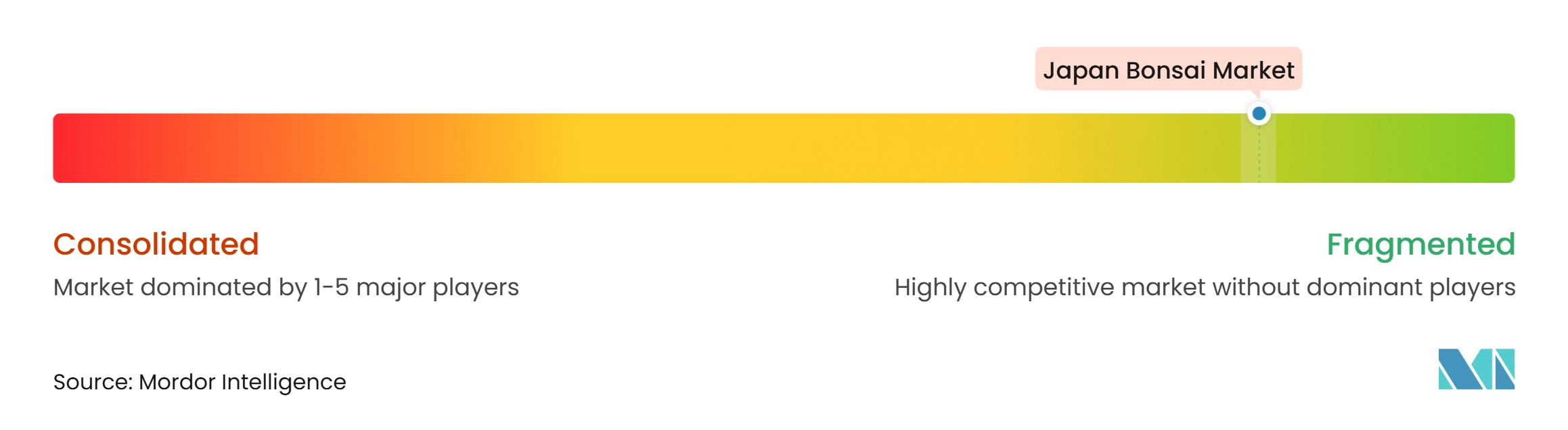
The competitive landscape remains fragmented, with Yoshoen Co., Ltd., Bonsai Network Japan Co., Ltd., The Yokohama Nursery Co., Ltd., KYOTO OMURO Garden and Design Co., Ltd., and Dashu Co., Ltd. as the key major players serving different customer segments through traditional cultivation, premium specimen sales, online retail, landscape design, and bonsai-related services. Competition is driven by tree quality, cultivation expertise, species diversity, brand reputation, and long-term customer relationships rather than production scale. Companies also differentiate themselves by offering educational programs, exhibitions, maintenance guidance, export capabilities, and customized solutions for collectors and commercial clients.
Product differentiation increasingly depends on cultivation expertise, provenance documentation, digital engagement, and value-added services. Established nurseries emphasize handcrafted premium specimens, while retail-focused businesses expand accessibility through e-commerce, accessories, and beginner-friendly products. Educational workshops, bonsai exhibitions, garden consultation, and after-sales maintenance strengthen customer loyalty and encourage repeat purchases. Export-oriented businesses focus on phytosanitary compliance, specialized packaging, and international logistics to improve overseas distribution while preserving tree quality during transportation.
Strategic collaboration continues to influence competitive positioning across the industry. In 2025, TAIZAN Co., Ltd. completed the business transfer of Withers Bonsai, expanding its regenerative bonsai portfolio and strengthening sustainable product offerings for domestic and international customers. The acquisition reflects a growing emphasis on portfolio diversification, environmental stewardship, and premium branding, encouraging companies to invest in specialized cultivation techniques, export readiness, and differentiated product offerings that support long-term competitiveness.
Japan Bonsai Industry Leaders
-
Yoshoen Co., Ltd.
-
Bonsai Network Japan Co., Ltd.
-
The Yokohama Nursery Co., Ltd.
-
KYOTO OMURO Garden and Design Co., Ltd.
-
Dashu Co., Ltd.
- *Disclaimer: Major Players sorted in no particular order
Japan Bonsai Market Companies Covered in this Report
- Yoshoen Co., Ltd.
- Bonsai Network Japan Co., Ltd.
- The Yokohama Nursery Co., Ltd.
- KYOTO OMURO Garden and Design Co., Ltd.
- Kobayashi Sangyo Co., Ltd.
- Dashu Co., Ltd.
- Natubaya Inc.
- Matsuda Seishoen
- Kimura Bonsai Garden
- Fuyo-en Co., Ltd.
- Fujikawa Kouka-en
- Taizan Co., Ltd.
- Jume Co., Ltd.
Recent Industry Developments in Japan Bonsai Market
- October 2025: Taizen Co., Ltd. launched the HIKARI BONSAI and Aroma Bonsai product lines through its WITHERS division, introducing bonsai art with sensory features for premium buyers.
- September 2025: Jume Co., Ltd. launched the Jume Bonsai luxury brand, offering export-ready bonsai products and establishing strategic partnerships across tourism, aviation, food manufacturing, and logistics to expand premium distribution in domestic and international markets.
- April 2025: Taizen Co., Ltd. signed a business transfer agreement to acquire Withers Bonsai, integrating the regenerative bonsai brand into its portfolio to expand its sustainable luxury bonsai and lifestyle product offerings.
Japan Bonsai Market Report Scope
Bonsai is the Japanese art of cultivating miniature trees in containers through pruning, wiring, and root management to replicate the form and proportions of mature trees. It is primarily used for ornamental, cultural, residential, commercial, and institutional applications.
The Japan bonsai market report is segmented by species (indoor species, outdoor species, needle tree species, and deciduous tree species), by distribution channel (online and offline), and by application (residential, commercial, and institutional and other applications). The market forecasts are provided in terms of value (USD).
Segmentation Overview
| Indoor Species |
| Outdoor Species |
| Needle Tree Species |
| Deciduous Tree Species |
| Online |
| Offline |
| Residential |
| Commercial |
| Institutional and Other Applications |
| By Species | Indoor Species |
| Outdoor Species | |
| Needle Tree Species | |
| Deciduous Tree Species | |
| By Distribution Channel | Online |
| Offline | |
| By Application | Residential |
| Commercial | |
| Institutional and Other Applications |
Key Questions Answered in the Report
What is the projected value of Japan bonsai sales by 2031?
The Japan bonsai market is forecast to reach USD 1.57 billion by 2031, growing at a 6.80% CAGR from 2026 to 2031.
Which bonsai species category is growing the fastest in Japan?
Indoor species are forecast to grow at the fastest 8.2% CAGR from 2026 to 2031, supported by apartment living, gifting, and interior use.
What is driving online bonsai sales in Japan?
Online segment is forecast to grow at the fastest 11.6% CAGR from 2026 to 2031 as digital storefronts improve access to care guidance and provenance information.
Which application has the largest demand for bonsai in Japan?
Residential accounted for the largest 64.0% in 2025, supported by gifting, home décor, and demand from urban households.