
Italy Turf Protection Market Size and Share
Market Overview
| Study Period | 2021 - 2031 |
|---|---|
| Forecast Data Period | 2026 - 2031 |
| Base Year Market Size (2025) | USD 281.88 Million |
| Market Size (2026) | USD 301.02 Million |
| Market Size (2031) | USD 418.07 Million |
| Growth Rate (2026 - 2031) | 6.79 % |
| Market Concentration | Medium |
Major Players *Disclaimer: Major Players sorted in no particular order Image © Mordor Intelligence. Reuse requires attribution under CC BY 4.0. | |
Italy Turf Protection Market Analysis by Mordor Intelligence
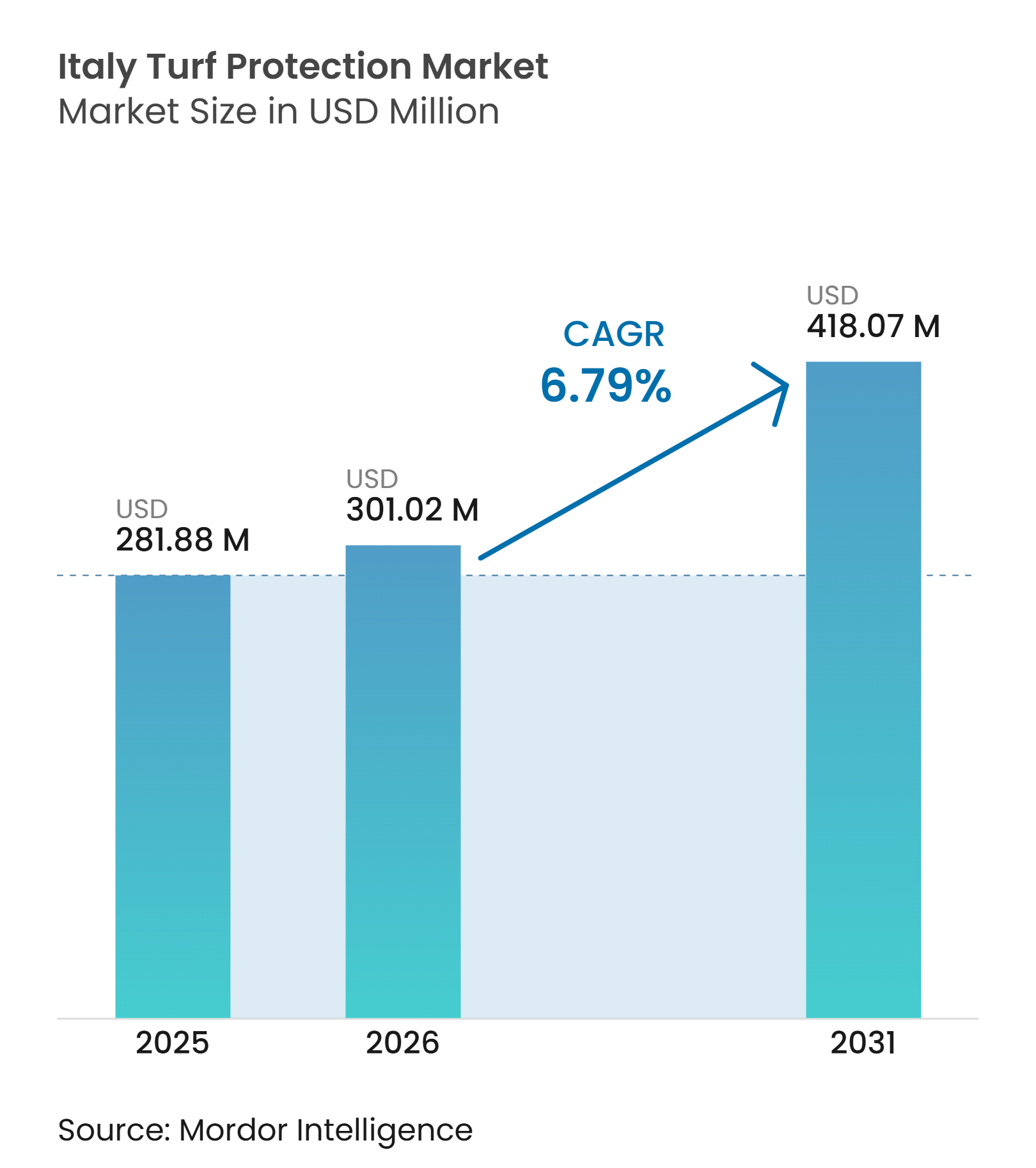
The Italy turf protection market size was valued at USD 281.88 million in 2025 and is estimated to grow from USD 301.02 million in 2026 to reach USD 418.07 million by 2031, at a CAGR of 6.79% during the forecast period (2026-2031). Italy's co-hosting of UEFA Euro 2032 with Turkey is driving the need for stadium modernization, while the country is investing EUR 3.4 billion (USD 3.5 billion) in 44 projects to build or upgrade sports facilities. These investments are supporting demand for turf establishment and maintenance products at professional sports venues[1]. These projects create sustained demand in the Italy turf protection market for fungicides, herbicides, insecticides, and specialist application products used to maintain high-quality playing surfaces during establishment and operational maintenance. Southern Italy's Mediterranean climate supports year-round turf activity, while northern and central locations face seasonal disease pressure from dollar spot, brown patch, and Microdochium nivale, requiring planned turf-protection treatments. Regulatory limits on chemical products influence product selection, application practices, and treatment scheduling across professional and publicly accessible turf areas over the forecast period.
Key Report Takeaways
- By product type, fungicides accounted for 37.5% of the Italy turf protection market share in 2025, while Insecticides are forecast to grow at an 8.6% CAGR from 2026 to 2031.
- By treatment type, chemical products accounted for 71.2% of the market share in 2025, while biological products are forecast to grow at an 11.6% CAGR from 2026 to 2031.
- By formulation, liquid concentrates accounted for 57.3% of the market share in 2025 and are forecast to grow at a 10.3% CAGR from 2026 to 2031.
- By application, landscaping accounted for 42.1% of the Italy turf protection market size in 2025, while sports fields are forecast to grow at a 9.4% CAGR from 2026 to 2031.
- By end user, residential customers accounted for 45.4% of the market share in 2025, while sports facility owners are forecast to grow at an 8.9% CAGR from 2026 to 2031.
Note: Market size and forecast figures in this report are generated using Mordor Intelligence’s proprietary estimation framework, updated with the latest available data and insights as of January 2026.
Market Trends and Insights
Drivers Impact Analysis of Italy Turf Protection Market*
| Driver | (~) % Impact on CAGR Forecast | Geographic Relevance | Impact Timeline |
|---|---|---|---|
| Expansion of Professional Sports and Golf Venue Maintenance | +1.8% | Italy and Western Europe | Short term (≤ 2 years) |
| Rising Turfgrass Disease Pressure from Heat and Humidity Volatility | +1.5% | Italy, Southern Europe, Central Europe, and Northern Europe | Short term (≤ 2 years) |
| Premium Residential and Historic-Garden Landscaping Demand | +0.9% | Italy, France, Germany, and the United Kingdom | Medium term (2-4 years) |
| Shift Toward Biological Turf Protection | +1.2% | Europe and North America | Medium term (2-4 years) |
| Sensor-Guided Irrigation and Precision Application | +1% | Global, with early gains in Northern Italy and the Middle East | Medium term (2-4 years) |
| Italian Turf Conversion Toward Warm-Season Grass | +0.6% | Italy, Spain, Southern France, and Portugal | Long term (≥ 4 years) |
| Source: Mordor Intelligence | |||
Expansion of Professional Sports and Golf Venue Maintenance
Italy’s investment in sports venues supports near-term demand in the Italy turf protection market, particularly for professional-grade disease control and turf establishment programs. The national program directs EUR 3.4 billion (USD 3.5 billion) to 44 projects related to international sporting events. Stadium redevelopment activity in Bologna, Florence, Rome, and Venice adds playing surfaces that require consistent maintenance before events and during subsequent operations. New and renovated stadiums require careful turf establishment before they can meet playing, visual, and quality certification requirements. This 2- to 3-year establishment period generally requires more frequent disease prevention, weed control, and turf nutrition than maintenance at an established facility does. Golf also provides recurring demand because greens, tees, and fairways require consistent surface quality. Lombardy's 66 Federazione Italiana Golf affiliated clubs generated EUR 165 million to EUR 185 million (USD 178 million to USD 200 million) in economic impact during 2024[2].
Rising Turfgrass Disease Pressure From Heat and Humidity Volatility
Warmer nights and longer dew periods have increased the risk of dollar spot on Italian golf greens and premium sports fields, where extended leaf wetness supports pathogen development. The disease has moved beyond southern Italy and now affects sites across the Po Valley, increasing the need for regular monitoring. Brown patch also becomes more likely when daytime temperatures reach 20°C to 30°C and nighttime temperatures remain above 17°C. These conditions are increasingly relevant for northern stadiums during summer maintenance periods, when traditional Microdochium nivale programs do not address the full disease risk. DLF reported in November 2025 that dollar spot risk across continental European golf and fine turf had approached that of Mediterranean zones[3]. Longer disease periods make product rotation more important, as repeated use of a single fungicide mode can increase resistance pressure and raise spending per hectare without increasing treated area.
Premium Residential and Historic-Garden Landscaping Demand
Historic landscapes, high-value residential properties, resorts, and agritourism estates support demand for specialist turf care in the Italy turf protection market, particularly where appearance and turf quality are important. Italy's large base of heritage gardens and landscaped properties creates a need for regular maintenance of lawns, ornamental turf, and other managed green spaces. Historic garden managers and private property owners use turf protection products to control diseases, weeds, and pests while maintaining the visual quality of landscaped areas. Properties in Tuscany, the Italian Lakes region, and Sicily often incorporate turf maintenance into broader landscaping programs, while resorts and agritourism estates use planned weed and disease management as part of recurring maintenance services. These applications support more regular product purchases by specialist distributors and landscaping contractors, and link turf-protection demand to ongoing property maintenance. Premium clients may also place greater emphasis on product performance and turf appearance, supporting demand for specialized turf-care solutions
Shift Toward Biological Turf Protection
The Italy turf protection market is shifting toward biological products and integrated treatment programs as chemical access becomes more constrained. The European Commission proposed its Food and Feed Safety Simplification Package in December 2025, including measures intended to improve market access for biological control agents. Italian turf managers are testing Bacillus subtilis and Trichoderma harzianum programs on golf fairways and sports pitches, often alongside reduced synthetic treatment schedules. European research has examined their use in managing Fusarium and red thread in programs that use lower synthetic doses. The European Commission's December 2025 Food and Feed Safety Simplification Package proposed faster market access procedures for biocontrol plant protection products, which could help make biological solutions more available in European turf management.
Restraints Impact Analysis of Italy Turf Protection Market*
| Restraint | (~) % Impact on CAGR Forecast | Geographic Relevance | Impact Timeline |
|---|---|---|---|
| Tight Restrictions on Pesticides in Publicly Accessible Sports Areas | -1.8% | Italy and Europe, with spillover to Australia and North America | Short term (≤ 2 years) |
| Limited Emergency Registrations for Critical Fungicides | -1.3% | Italy and European Union member states | Short term (≤ 2 years) |
| High Cost of Sustainable Turf Conversion and Water-Saving Infrastructure | -0.9% | Global, especially Southern Europe and the Middle East | Medium term (2-4 years) |
| Seasonal Revenue Volatility and Fragmented Turf-Care Procurement | -0.6% | Italy, Spain, Greece, South America, and Asia-Pacific | Medium term (2-4 years) |
| Source: Mordor Intelligence | |||
Tight Restrictions on Pesticides in Publicly Accessible Sports Areas
Italy's implementation of European Union Directive 2009/128/EC through its National Action Plan (PAN) for the sustainable use of plant protection products places greater emphasis on reducing pesticide risks and promoting integrated pest management. These requirements are particularly relevant to publicly accessible turf areas, such as football pitches, public parks, and recreational spaces, where pesticide use may be subject to additional restrictions or application requirements. For turf managers, these regulations can narrow the range of available products and application practices, increasing the need to select products based on approved uses and application conditions. As a result, tighter pesticide-use requirements can constrain the use of conventional turf-protection products in public sports and recreational areas.
Limited Emergency Registrations for Critical Fungicides
Italy’s golf and sports-turf operators use Article 53 emergency derogations under Regulation (EC) No. 1107/2009 for some critical fungicides that do not have routine national authorization for turf use. The Federazione Italiana Golf secured 120-day emergency registrations in November 2025 for Revystar and Vertenzo 2025. The authorizations covered targets including Clarireedia spp., Microdochium nivale, Rhizoctonia solani, and pythium spp. through 2025-2026. A 120-day period does not cover the entire Italian disease season or provide certainty for ordering, resistance-management planning, and multi-application programs after expiry. Smaller clubs and sports venues may lack the advisory capacity to track changing emergency registration dates and permitted treatment conditions. Specialist distributors can address this gap by combining agronomic support, permit guidance, product supply, and treatment planning for each approved use window.
*Our forecasts treat driver/restraint impacts as directional, not additive. The impact forecasts reflect baseline growth, mix effects, and variable interactions.
Italy Turf Protection Market Segment Analysis
By Product Type:
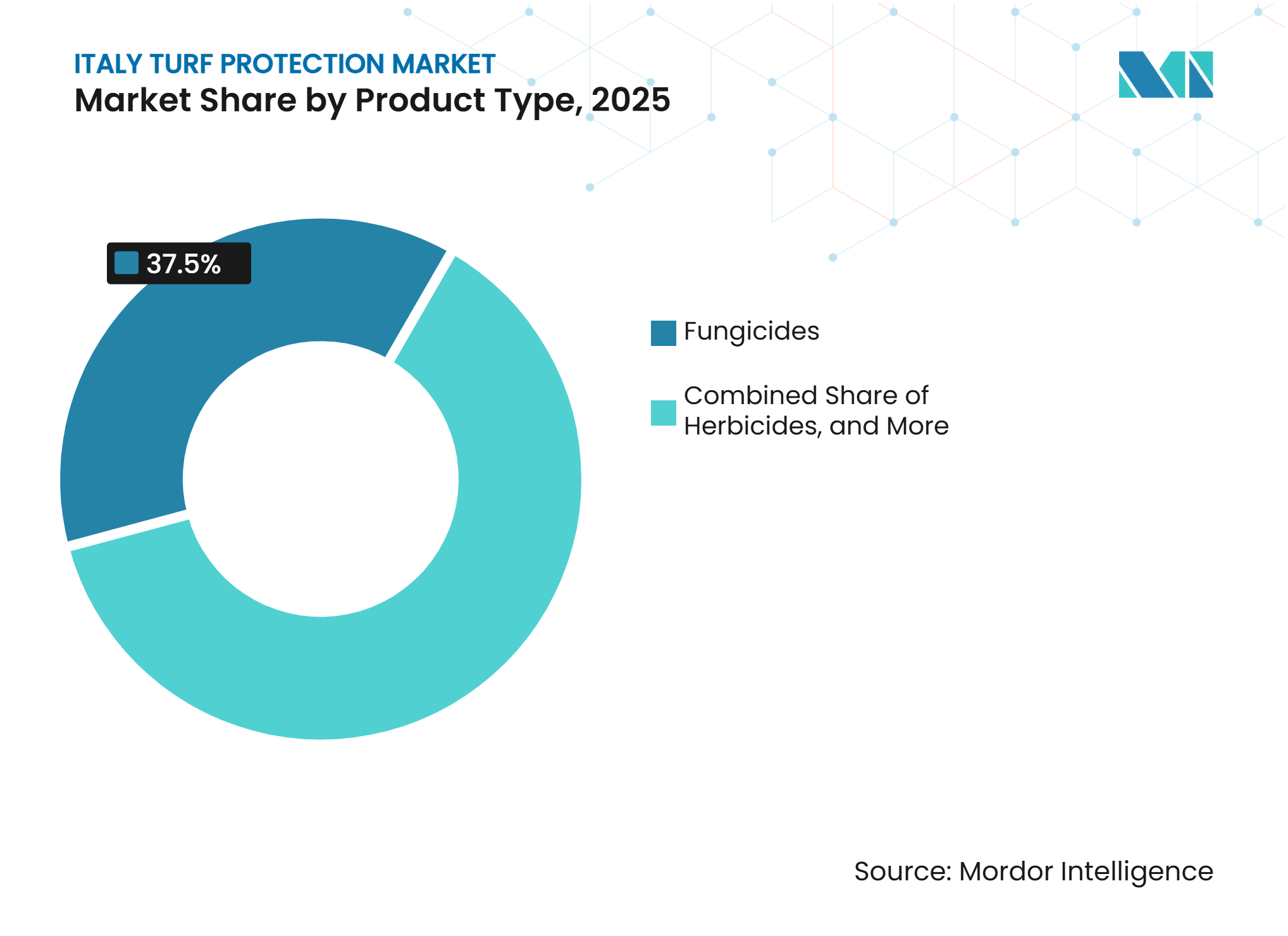
Fungicides Lead While Insecticides Grow FastestFungicides accounted for 37.5% of the Italy turf protection market share in 2025, reflecting persistent disease pressure on professionally managed golf surfaces and premium sports fields. Golf-course greens and fairways require preventive and curative treatment for dollar spot, Microdochium patch, and pythium blight from spring through autumn, when surface quality standards are especially demanding. Research on Italian turfgrass diseases found that propiconazole and tebuconazole provided reliable dollar spot control under Italian field conditions. Azoxystrobin and trifloxystrobin also supported brown patch management in the reported work. Herbicides were the second-largest product group because contractors manage broadleaf weeds and grass weeds in parks, sod farms, highway verges, and other regularly maintained landscaped areas.
Insecticides are forecast to grow at an 8.6% CAGR from 2026 to 2031, supported by targeted management of pests such as chafer grubs, leatherjackets, and ants in sports-field root zones and other intensively managed turf areas. Demand across the three product groups is supported by the need for regular disease, weed, and pest management in professionally maintained golf courses, sports fields, parks, and landscaped areas. Product selection is influenced by the target pest or disease, turf conditions, application requirements, and applicable pesticide-use regulations.



By Treatment Type:
Chemical Retain Scale While Biological Gain MomentumThe chemical segment accounted for 71.2% of the Italy turf protection market share in 2025, reflecting the performance required for professional disease control on high-value turf. Demethylation Inhibitor (DMI) and Succinate Dehydrogenase Inhibitor (SDHI) fungicides remain important for controlling active outbreaks of dollar spot and brown patch on golf surfaces within tight treatment windows. Their curative role is difficult to replace where disease thresholds are strict, turf appearance is closely monitored, and playing schedules leave limited time for recovery. Integrated solutions were the second mode-of-action category in the supplied segmentation. These programs combine chemical and biological components within planned rotations that address both disease complexity and compliance needs.
The biological segment is forecast to grow at an 11.6% CAGR from 2026 to 2031 as the European Union's sustainable-use policy narrows chemical choices on public turf. The European Biocontrol Manufacturers Association reported that approved European Union biofungicide active substances increased from 19 in 2018 to 34 in 2024. The expanding toolset gives Italian turf managers more biological options for preventive use. UPL Limited’s September 2026 biological product expansion presented biologicals as complements to synthetic programs rather than direct replacements. Combined rotations can maintain treatment flexibility and support compliance while preserving the role of chemistry in curative situations
By Formulation:
Liquid Concentrates Lead and Support Precision DeliveryLiquid concentrates accounted for 57.3% of the Italy turf protection market share in 2025 and are forecast to grow at a 10.3% CAGR from 2026 to 2031. Their dominance reflects compatibility with precision spraying equipment and automated irrigation systems used at golf courses and sports facilities with carefully managed fine turf. Emulsifiable concentrates and suspension concentrates support even active-ingredient distribution across fine turf and rapid rainfast performance under changing weather conditions. These formats also fit tank-mix programs used by professional managers who need flexible disease, weed, and nutrient applications. Italian distributors strengthen demand for liquids by pairing product recommendations with sprayer calibration services and on-site use guidance.
Granular formulations are commonly used for pre-emergent weed control on sod farms and landscaped areas. Their role remains complementary in broadcast applications where standard equipment is used, and lower-cost treatments are required. Wettable powders remain relevant for older registered fungicide active ingredients that have not been reformulated as liquid products. Variable-rate sprayers and soil-moisture-triggered irrigation systems are designed around liquid products. This technology link supports liquid concentrates through 2031, and favors formulations suited to targeted, repeat applications
By Application:
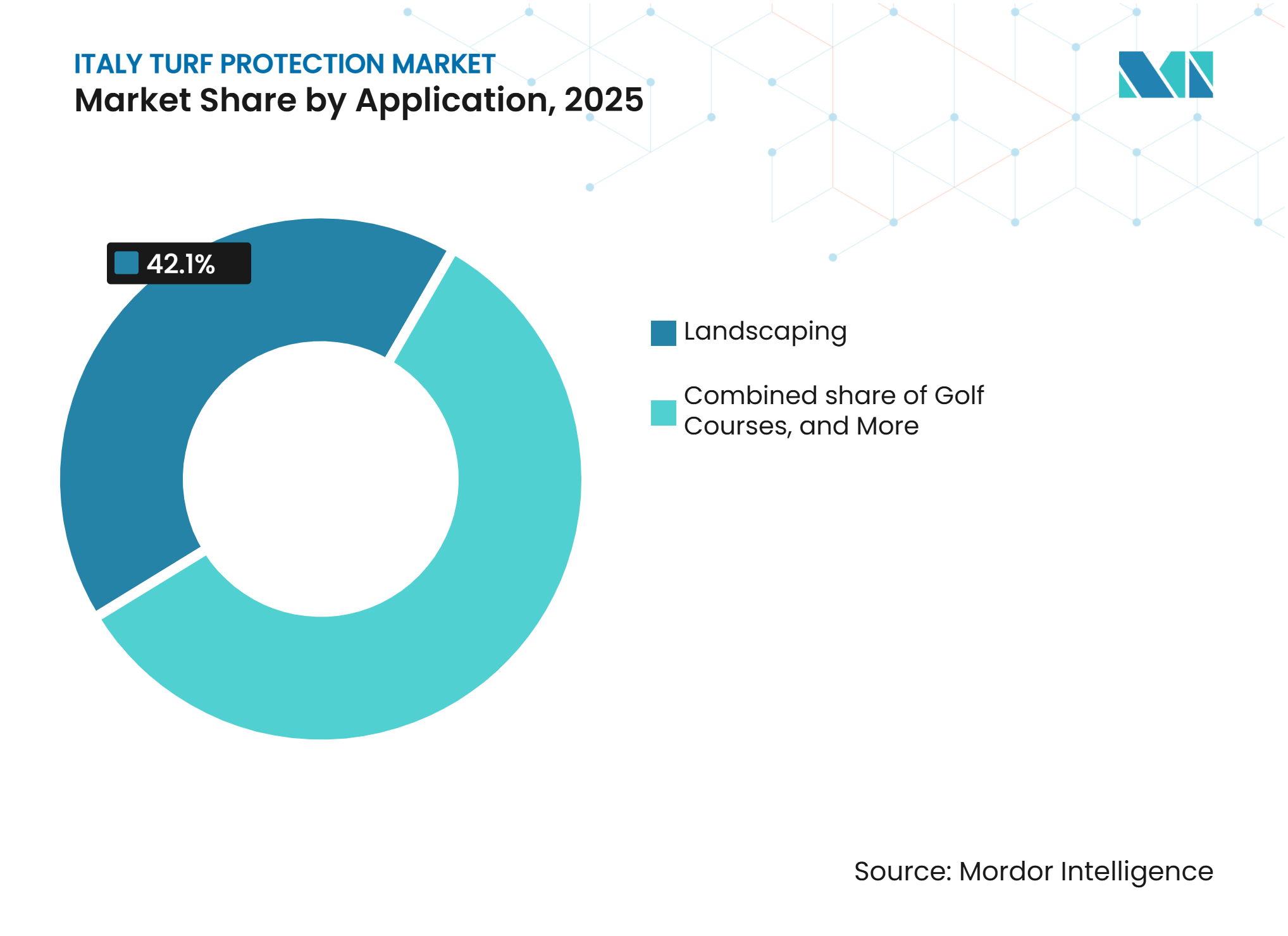
Landscaping Leads While Sports Fields Expand FastestLandscaping accounted for 42.1% of the Italy turf protection market share in 2025, making it the largest application category in the country. The segment includes premium ornamental green spaces, resort lawns, historic gardens, and municipal areas maintained by commercial contractors, often under service contracts that define regular work schedules. Contractors commonly purchase turf protection products under multiyear maintenance agreements, which makes demand more regular than isolated seasonal purchases. Golf courses were the second-largest application because greens, tees, and fairways have very low tolerance for visible disease and weed pressure. These surfaces require the highest protection spending per hectare among the listed applications, given their demanding visual and playing conditions.
Sod farms supply turf to both landscaping and sports-field projects, with production concentrated in the Po Delta and Veneto flatlands. Farm-level purchases tend toward cost-sensitive fungicide and herbicide programs rather than premium biological packages. Sports fields are forecast to grow at a 9.4% CAGR from 2026 to 2031, supported by stadium renovations and construction associated with UEFA Euro 2032. DLF’s 2025 surveillance analysis reported damaging grey leaf spot events at high-end European football stadiums during summer 2022. These events have supported structured preseason and in-season treatment programs at stadium sites, where field quality and playing continuity are essential.

By End User:
Residential Customers Lead While Sports Facility Owners AccelerateResidential customers accounted for 45.4% of the Italy turf protection market size in 2025, reflecting the broad base of private lawn-care users across the country. This share does not indicate the highest spending per customer, as professional facilities typically have greater treatment intensity and more frequent application needs. Premium residential demand is concentrated in Tuscany, Liguria, and the Italian Lakes, where villa owners maintain high landscaping standards across lawns, garden spaces, and ornamental turf. These buyers often select professional-grade fungicides and growth regulators rather than basic retail lawn-care products. Commercial landscape contractors were the second-largest end-user group because they aggregate purchases across extensive public and private site portfolios.
Sports facility owners are forecast to grow at an 8.9% CAGR from 2026 to 2031 as stadium investment increases demand for managed playing surfaces. Municipalities and schools face the strongest restrictions under the Piano d’Azione Nazionale. Their approved product lists generally favor integrated pest management-compatible products and biological alternatives. Systemic insecticides are largely excluded from many public sites, narrowing the conventional options available to these users. This environment makes supplier guidance, compliant product selection, and treatment planning important for public-sector and sports-facility buyers.
Geography Analysis
The Italy turf protection market is characterized by regional variations in climate, turf composition, facility types, and maintenance intensity across Northern, Central, and Southern Italy, including Sicily and Sardinia. These differences influence product selection and treatment requirements across sports facilities, golf courses, landscaping projects, and residential properties. Northern Italy has a diversified demand base across professionally maintained sports facilities, golf courses, commercial landscapes, and residential properties. The region's established sports and landscaping infrastructure contributes to demand for fungicides, herbicides, insecticides, and biological turf-protection products. Product selection varies according to turf condition, disease and pest pressure, site requirements, and maintenance intensity.
Central Italy has a diversified demand base spanning sports facilities, golf courses, public and commercial landscapes, residential properties, and historic gardens. Turf protection requirements vary according to turf type, local climatic conditions, facility use, and maintenance practices. Public and recreational areas also require turf management programs that comply with applicable pesticide-use requirements, influencing product selection and application practices. The combination of tourism-related facilities, landscaped areas, and sports infrastructure supports demand across multiple turf-protection product categories.
Southern Italy, Sicily, and Sardinia have demand across landscaping, sports facilities, golf courses, and residential applications. Warmer climatic conditions influence turf selection, irrigation requirements, and the timing of maintenance activities, particularly in areas using warm-season turf varieties. Turf management requirements vary according to seasonal disease and pest pressure, water availability, and turf-use intensity. Across Italy, these regional differences contribute to variations in product selection and application patterns. Fungicides remain an important component of turf maintenance programs, while biological products provide additional options for managing turf diseases and pests within applicable regulatory requirements.
Competitive Landscape
Market Concentration
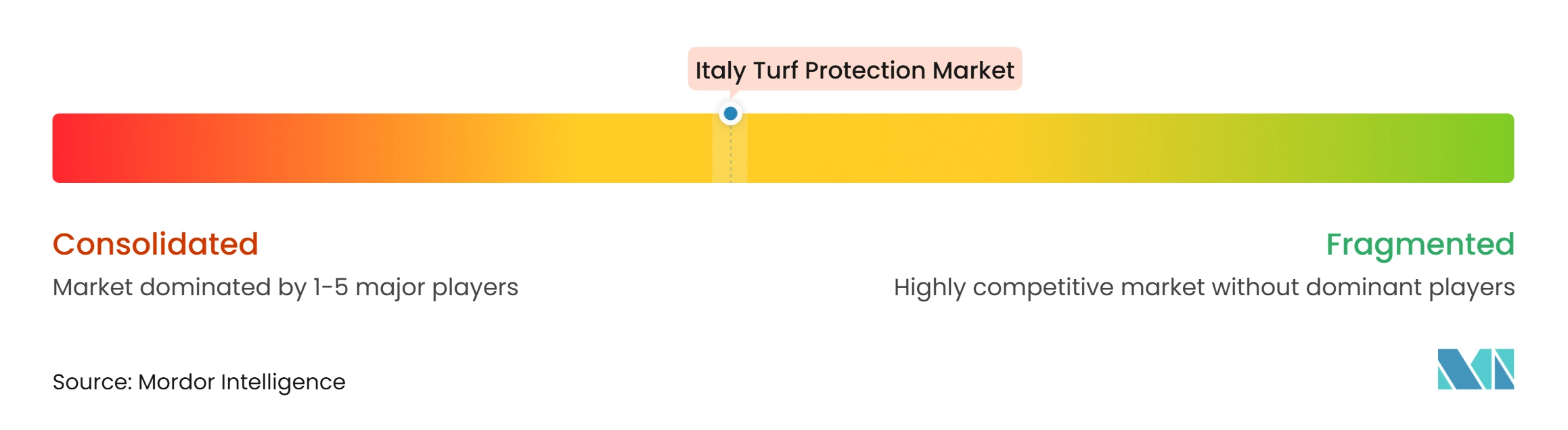
The Italy turf protection market was moderately concentrated in 2025, with key players including Syngenta Group, BASF SE, Envu, Corteva, Inc., UPL Limited, Sipcam-Oxon S.p.A., and Certis Belchim B.V. These companies compete across conventional turf protection products, biological turf protection products, formulations, and agronomic support. The supplier base leaves room for companies that combine product availability with regulatory expertise and reliable technical support.
Envu completed its acquisition of FMC Corporation’s Global Specialty Solutions business for USD 350 million in November 2024. The transaction increased Envu’s portfolio from 180 to 250 brands, adding more than 40 active ingredients and 200 product registrations. The expanded portfolio serves golf, sports fields, turf, and ornamental channels relevant to Italian professional turf users.
Smaller suppliers can compete by offering lower-risk products and expertise in Italian registration, particularly for small- and midsize golf clubs and municipal facilities. Digital disease forecasting and low-drift spray equipment are becoming useful points of differentiation. BASF SE's Insignia fungicide holds Italian turfgrass registration covering pink snow mold, take-all, red thread, dollar spot, brown patch, and Pythium. Broad disease coverage, regulatory compliance, and technical support are increasingly shaping suppliers' positions in Italy.
Italy Turf Protection Industry Leaders
-
Syngenta Group
-
BASF SE
-
Envu (Environmental Science U.S. LLC)
-
Corteva, Inc.
-
UPL Limited
- *Disclaimer: Major Players sorted in no particular order
Italy Turf Protection Market Companies Covered in this Report
- Syngenta Group
- BASF SE
- Envu (Environmental Science U.S. LLC)
- UPL Limited
- Corteva, Inc.
- Nufarm Limited
- ICL Group Ltd
- Green Ravenna S.r.l.
- Gowan Company L.L.C.
- Control Solutions, Inc. (ADAMA Agricultural Solutions Ltd.)
- Sumitomo Chemical Co., Ltd.
- Certis Belchim B.V.
- Sipcam-Oxon S.p.A.
Recent Industry Developments in Italy Turf Protection Market
- September 2026: Corteva, Inc. and Globachem N.V. signed a definitive agreement to establish a 50/50 joint venture to develop and commercialize formulated crop protection solutions for Europe and the Americas. The partnership is expected to expand Corteva and Globachem's crop protection portfolios, with new solutions for European markets, including turf and specialty applications, targeted for launch from the early 2030s, subject to regulatory approvals.
- July 2026: Envu launched Signature XTRA Stressgard Liquid, a new liquid formulation of fosetyl-Al developed for the golf and fine-turf market. The systemic fungicide is designed for cool- and warm-season turfgrass and supports disease management against Pythium diseases, anthracnose, Microdochium patch, leaf spots, and bermudagrass decline.
- November 2024: Envu completed the acquisition of FMC Corporation's Global Specialty Solutions business for USD 350 million. The acquisition expanded Envu's portfolio from 180 to 250 brands, adding more than 40 active ingredients and 200 product registrations.
Italy Turf Protection Market Report Scope
The turf protection market is defined as products and solutions used to prevent, control, and reduce pest, disease, and stress damage in natural turfgrass across residential, commercial, and sports surfaces, with market value measured at the point of sale in USD.
The Italy Turf Protection Market is Segmented by Product Type (Fungicides, Herbicides, and Insecticides), by Treatment Type (Chemical, and Biological), by Formulation (Granular, Liquid Concentrate, and Wettable Powder), by Application (Landscaping, Golf Courses, Sports Fields, and Sod Farms), and by End User (Residential Customers, Commercial Landscape Contractors, Sports Facility Owners, and Municipalities and Schools). The Market Forecasts are Provided in Terms of Value (USD).
Segmentation Overview
| Fungicides |
| Herbicides |
| Insecticides |
| Chemical |
| Biological |
| Granular |
| Liquid Concentrate |
| Wettable Powder |
| Landscaping |
| Golf Courses |
| Sports Fields |
| Sod Farms |
| Residential Customers |
| Commercial Landscape Contractors |
| Sports Facility Owners |
| Municipalities and Schools |
| By Product Type | Fungicides |
| Herbicides | |
| Insecticides | |
| By Treatment Type | Chemical |
| Biological | |
| By Formulation | Granular |
| Liquid Concentrate | |
| Wettable Powder | |
| By Application | Landscaping |
| Golf Courses | |
| Sports Fields | |
| Sod Farms | |
| By End User | Residential Customers |
| Commercial Landscape Contractors | |
| Sports Facility Owners | |
| Municipalities and Schools |
Key Questions Answered in the Report
What is the forecasted size of the Italy turf protection market through 2031?
The Italy turf protection market is forecast to reach USD 418.07 million by 2031, rising from USD 301.02 million in 2026 at a 6.79% CAGR from 2026 to 2031.
Which product category leads turf protection demand in Italy?
Fungicides accounted for 37.5% of the Italy turf protection market in 2025, as golf courses, sports fields, and other professional sites need regular disease-control programs.
Why are biological products gaining use on Italian turf?
Biological products are forecast to grow at 11.6% CAGR from 2026 to 2031 as public-area rules limit chemical choices and managers seek integrated treatment options.
Which application is expected to grow fastest through 2031?
Sports fields are forecast to grow at a 9.4% CAGR from 2026 to 2031, supported by stadium construction, renovation activity, and more structured turf-maintenance programs.