
ICU Clinical Decision Support Software Market Size and Share
Market Overview
| Study Period | 2020 - 2031 |
|---|---|
| Market Size (2026) | USD 1 Billion |
| Market Size (2031) | USD 1.8 Billion |
| Growth Rate (2026 - 2031) | 12.53 % |
| Fastest Growing Market | Asia-Pacific |
| Largest Market | North America |
| Market Concentration | Medium |
Major Players *Disclaimer: Major Players sorted in no particular order Image © Mordor Intelligence. Reuse requires attribution under CC BY 4.0. | |
ICU Clinical Decision Support Software Market Analysis by Mordor Intelligence
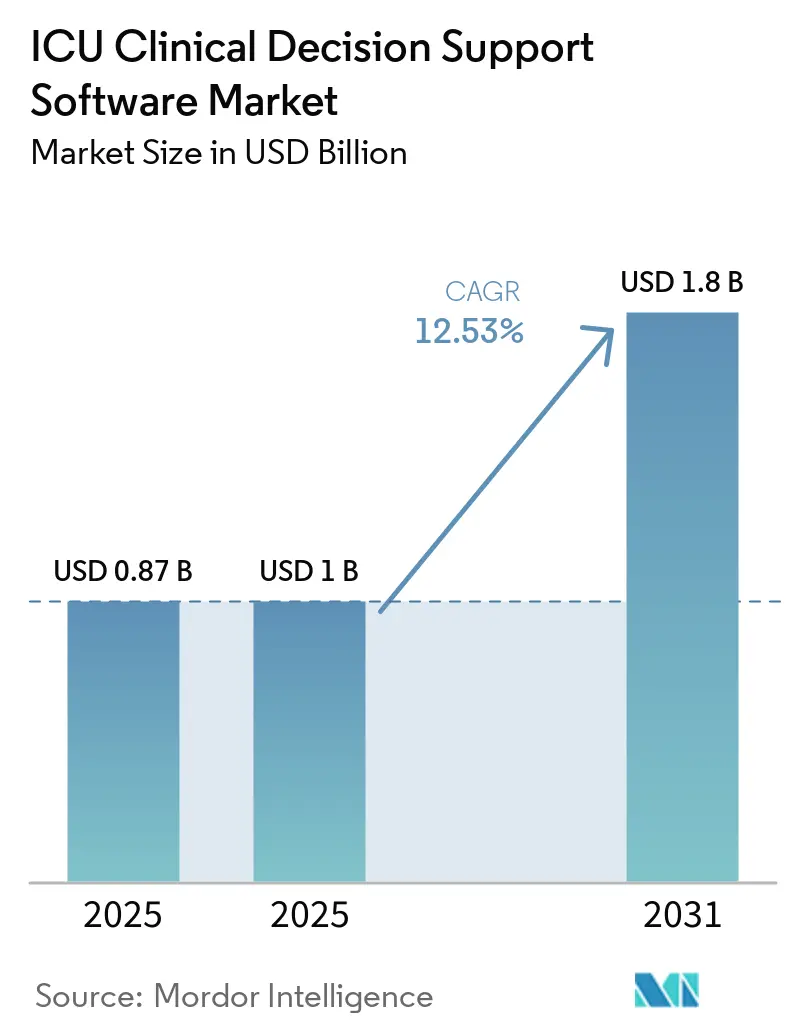
The ICU Clinical Decision Support Software Market size was valued at USD 0.87 billion in 2025 and is estimated to grow from USD 1 billion in 2026 to reach USD 1.8 billion by 2031, at a CAGR of 12.53% during the forecast period (2026-2031).
Rising patient acuity, shortages of intensive care specialists, and the adoption of predictive tools within electronic health records support demand for the ICU clinical decision support software market. FDA guidance issued in January 2026 clarified the pathway for certain healthcare professional decision-support tools, which supports investment in EHR-embedded products. Hospitals are also seeking measurable reductions in mortality, length of stay, and readmissions, which makes validated clinical tools more relevant to procurement decisions. The ICU clinical decision support software market remains fragmented because EHR suppliers, specialist critical-care vendors, and AI developers each address different clinical and technical needs.
Key Report Takeaways
- By product type, integrated ICU clinical decision support software held the largest share in 2025, while EHR-embedded modules are forecast to grow at a 12.8% CAGR through 2031.
- By clinical function, patient deterioration prediction held 24.6% of the ICU clinical decision support software market share in 2025, while sepsis recognition and management was the fastest-growing function through 2031.
- By technology and model, knowledge-based support held the largest share in 2025, while generative AI decision support is forecast to grow at a 13.2% CAGR through 2031.
- By deployment mode, on-premise systems accounted for 48.2% of the ICU clinical decision support software market size in 2025, while public-cloud deployment was the fastest-growing mode through 2031.
- By component, software licenses and subscriptions held the largest share in 2025, while data, model validation, and clinical content services are forecast to grow at a 12.9% CAGR through 2031.
- By end user, public hospitals accounted for 56.4% of demand in 2025, while academic medical centers were the fastest-growing end-user group through 2031.
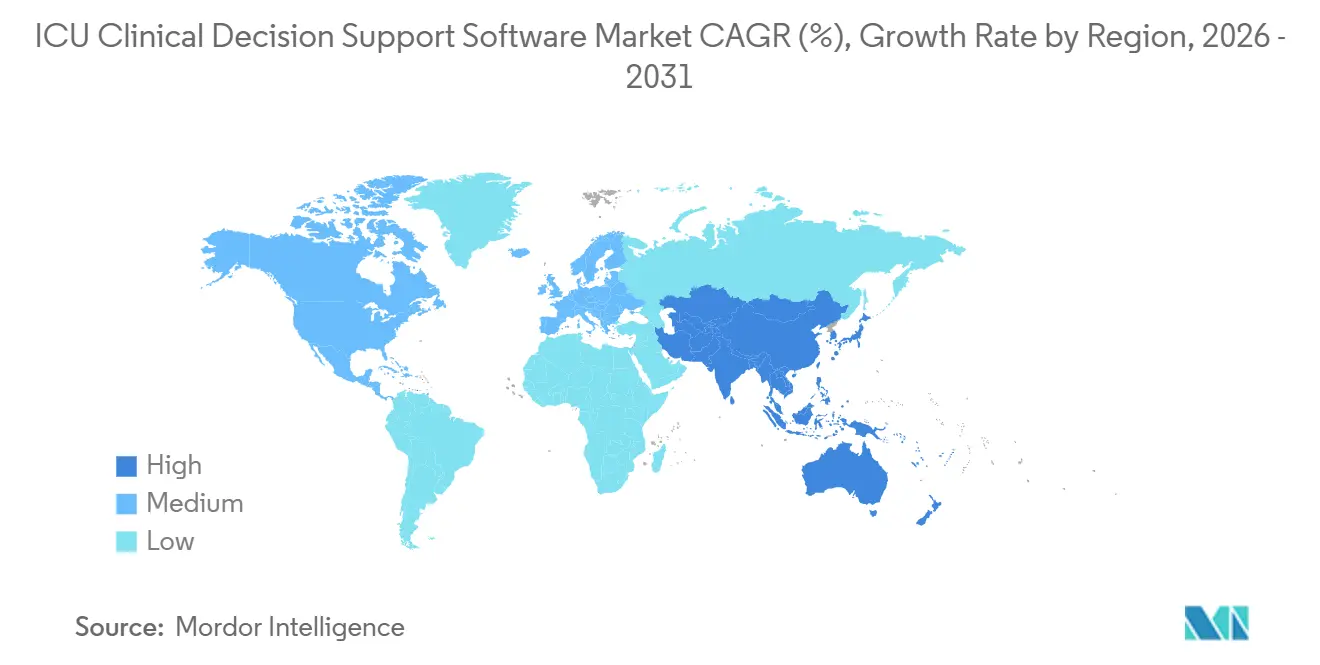
- By geography, North America held 45.61% of revenue in 2025, while Asia-Pacific is projected to grow at a CAGR of 13.25% through 2031.
Note: Market size and forecast figures in this report are generated using Mordor Intelligence’s proprietary estimation framework, updated with the latest available data and insights as of January 2026.
Market Trends and Insights
Drivers Impact Analysis of ICU Clinical Decision Support Software Market*
| Driver | (~) % Impact on CAGR Forecast | Geographic Relevance | Impact Timeline |
| Rising ICU Patient Acuity and Data Complexity | +2.3% | Global, strongest in North America and Western Europe | Long term (≥ 4 years) |
| EHR and Medical Device Integration Requirements | +1.8% | North America and Europe, with spillover to Asia-Pacific | Medium term (2-4 years) |
| Demand for Early Sepsis and Deterioration Detection | +2.5% | Global | Short term (≤ 2 years) |
| Intensivist Shortages and Tele-ICU Expansion | +1.6% | Asia-Pacific, with spillover to Latin America and Middle East and Africa | Medium term (2-4 years) |
| AI-Enabled Predictive Risk Stratification | +2.2% | North America, Europe, and Asia-Pacific | Long term (≥ 4 years) |
| ICU Workflow Digitization and Outcome-Based Care Pressure | +1.4% | Global, with early gains in the United States and Germany | Medium term (2-4 years) |
| Source: Mordor Intelligence | |||
Rising ICU Patient Acuity and Continuous Data Complexity
ICU monitoring can generate more than 1,440 data points per patient each hour from monitors, ventilators, pumps, and laboratory interfaces. Older patients and those with several chronic conditions add to the difficulty of recognizing early changes within those data streams. The ICU clinical decision support software market benefits when platforms combine these inputs into risk indicators that help clinicians direct attention to patients who need it. Etiometry reported that its users achieved a 36% reduction in ICU length of stay and a 41% reduction in readmissions through 2024. Its July 2025 platform update added high-fidelity waveform data from monitors and peripheral devices. This places data quality and the ability to interpret raw physiological signals alongside conventional structured data as important vendor capabilities.
Demand for Early Detection of Sepsis and Patient Deterioration
Early identification of sepsis remains a central use case for ICU clinical decision support software because delayed treatment can worsen clinical outcomes. In April 2026, the FDA cleared Bayesian Health’s Sepsis Flagging Device[1]through the 510(k) pathway for adult acute-care settings. The clearance used Prenosis Sepsis ImmunoScore, DEN230036, as the predicate device. The device continuously reviews EHR data and presents a Sepsis Risk High flag when its criteria are met. A 2025 JMIR Medical Informatics study reported that a real-time prediction platform could use dynamic temporal features while retaining clinical interpretability. Sepsis-related quality requirements also make these tools relevant to hospital efforts to document timely care. In 2025, BARMER and Universitätsklinikum Essen established a selective contract for digital sepsis diagnostics under the DigiSep study framework
Intensivist Shortages and Expansion of Tele-ICU Care
Limited availability of intensive care specialists increases the value of systems that identify patients who require immediate review. Tele-ICU models allow remote clinicians to oversee multiple beds, but this approach relies on reliable triage and timely alerts. A 2025 study[2] found that telemedicine-enhanced nighttime ICU staffing produced clinical outcomes comparable with traditional staffing while using fewer specialized personnel. In July 2026, West Tennessee Healthcare expanded an eICU program using Philips eCareManager and hellocare.ai across 127 ICU beds and 17 emergency department carts. The deployment shows why the ICU clinical decision support software market is linked to broader virtual-care expansion. As a tele-ICU network adds coverage, automation becomes more important for preventing remote teams from being overwhelmed by routine data.
AI-Enabled Predictive Risk Stratification
Risk assessment in critical care is shifting from fixed severity scores toward models that use changing physiological, medication, microbiology, and nursing data. A 2026 Scientific Reports study found that explainable deep-learning methods supported early sepsis detection from ICU time-series data. Explainability matters because clinical teams need to understand the basis for a recommendation before they incorporate it into care. The multinational IMPACT framework sets out six domains for evaluating generative AI in intensive care. Regulatory approvals for large-language-model-based medical devices remained limited as of May 2025, according to a 2026 review. This makes clinical validation and clearance planning important sources of differentiation in the ICU clinical decision support software market.
Restraints Impact Analysis of ICU Clinical Decision Support Software Market*
| Restraint | (~) % Impact on CAGR Forecast | Geographic Relevance | Impact Timeline |
|---|---|---|---|
| Interoperability and Data-Context Fragmentation | -1.2% | Global, most acute in Asia-Pacific and Middle East and Africa | Medium term (2-4 years) |
| Alert Fatigue and Clinician Trust Erosion | -1.5% | Global | Short term (≤ 2 years) |
| High Implementation, Validation, and Change-Management Costs | -0.9% | Asia-Pacific, Latin America, and Middle East and Africa | Medium term (2-4 years) |
| Cybersecurity, Privacy, and Algorithmic Liability Exposure | -1.1% | Global, most acute in Europe and the United States | Medium term (2-4 years) |
| Source: Mordor Intelligence | |||
Alert Fatigue and Clinician Trust Erosion
Alert fatigue can limit adoption when systems issue frequent notifications that do not change clinical decisions. A 2025 AJRCCM abstract found that monthly EHR alert volumes for medical ICU patients varied by nearly 3-fold even when census patterns did not explain the difference. This places greater value on alerts that are specific, timely, and relevant to the current patient context. In May 2024, CLEW Medical received FDA clearance for second-generation predictive models designed to lower false-positive rates. Hospitals are likely to favor systems that support clinician review instead of adding another stream of low-value messages. The ICU clinical decision support software market, therefore, favors vendors that can demonstrate alert performance in local workflows and patient populations.
Cybersecurity, Privacy, and Algorithmic Liability Exposure
A cyberattack can disrupt EHR access and suspend the data flows that clinical decision-support tools need. In April 2026, a ransomware attack on ChipSoft disrupted EHR services across 11 Dutch hospitals and affected facilities in Belgium. In July 2026, AnMed closed 79 of 106 facilities while responding to a malware incident. These incidents make resilience, recovery procedures, and security reviews central parts of procurement. Providers also need clear evidence of human oversight when AI tools influence clinical decisions. FDA guidance and European medical-device requirements increase the need for transparent model documentation and local governance.
*Our forecasts treat driver/restraint impacts as directional, not additive. The impact forecasts reflect baseline growth, mix effects, and variable interactions.
ICU Clinical Decision Support Software Market Segment Analysis
By Product Type:
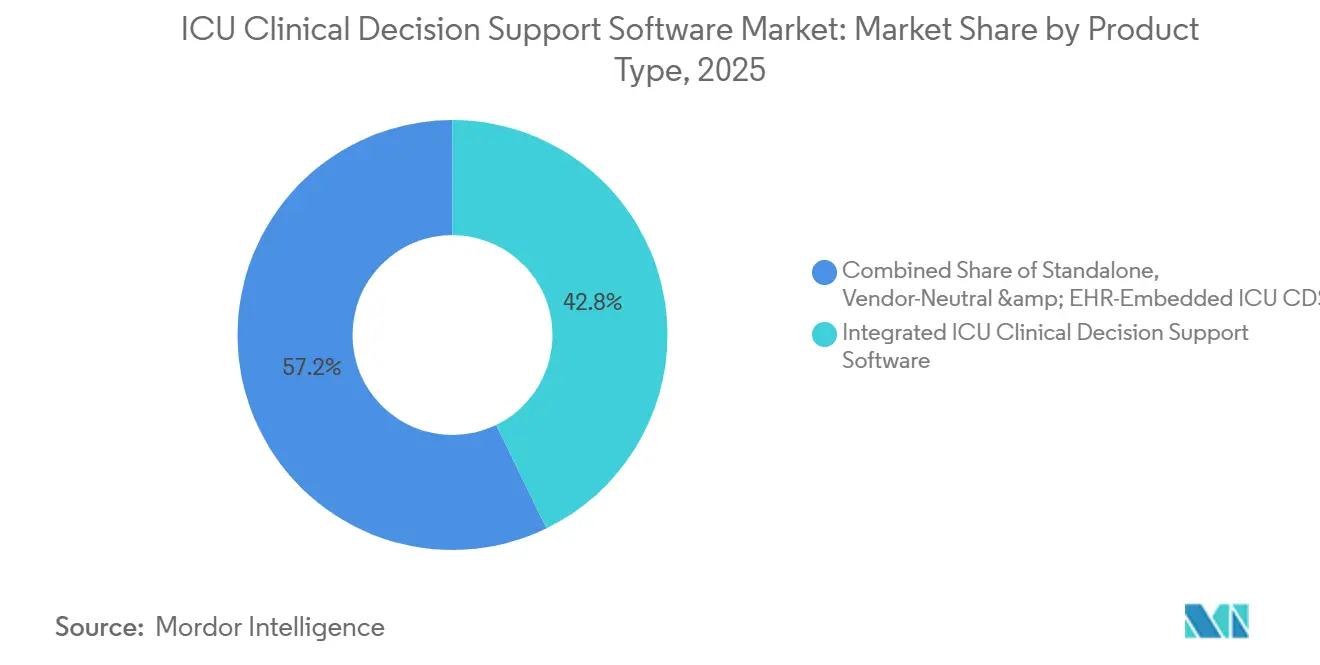
EHR Integration Reshapes the Competitive CoreEHR-embedded ICU decision support modules are forecast to grow at a 12.8% CAGR through 2031. They place guidance inside the workflow where clinicians review orders, notes, and patient records. This can reduce the need to move between separate systems during time-sensitive care in the ICU clinical decision support software market. Integrated ICU clinical decision support software held the largest product share in 2025 because it brings hemodynamic monitoring, medication management, and deterioration prediction into a single deployment. Standalone and vendor-neutral systems retain roles in specialized units and health systems with more than 1 EHR environment.
The boundary between EHR suppliers and specialist vendors is becoming less distinct. Oracle Health made its Clinical AI Agent available for U.S. inpatient and emergency settings in March 2026. Oracle reported that the tool had saved providers more than 200,000 hours, while AtlantiCare reported a 41% reduction in documentation time after deployment. These capabilities can reduce the role of standalone tools, while specialist suppliers respond through validated algorithms, clearances, and local model configuration. A 2026 meta-analysis reported variation between published and real-world performance for Epic clinical decision-support tools, reinforcing the need for local validation.

By Clinical Function:
Sepsis Detection Anchors the Growth AgendaPatient deterioration prediction accounted for 24.6% of the ICU clinical decision support software market share in 2025. It is often the first function adopted because it can direct attention to patients whose condition may worsen. Sepsis recognition and management was the fastest-growing clinical function through 2031. Its growth is supported by the need to identify deterioration early and document timely treatment. Hemodynamic, ventilator, and medication support remain relevant in cardiac surgery and intensive care workflows.
The ICU clinical decision support software market is moving toward platforms that cover more than 1 clinical function. Etiometry expanded its platform to include a cardiogenic shock tool and reported that the tool was FDA cleared for automated hospital-specific classification. Multi-function coverage can help specialized vendors respond to the broader capabilities of EHR platforms. Infection prevention and antimicrobial stewardship have lower product density, creating an opportunity for suppliers that combine microbiology inputs with dosing models. Sepsis guidelines and hospital quality metrics also guide product development toward functions that hospitals must monitor and report.
By Technology and Model:
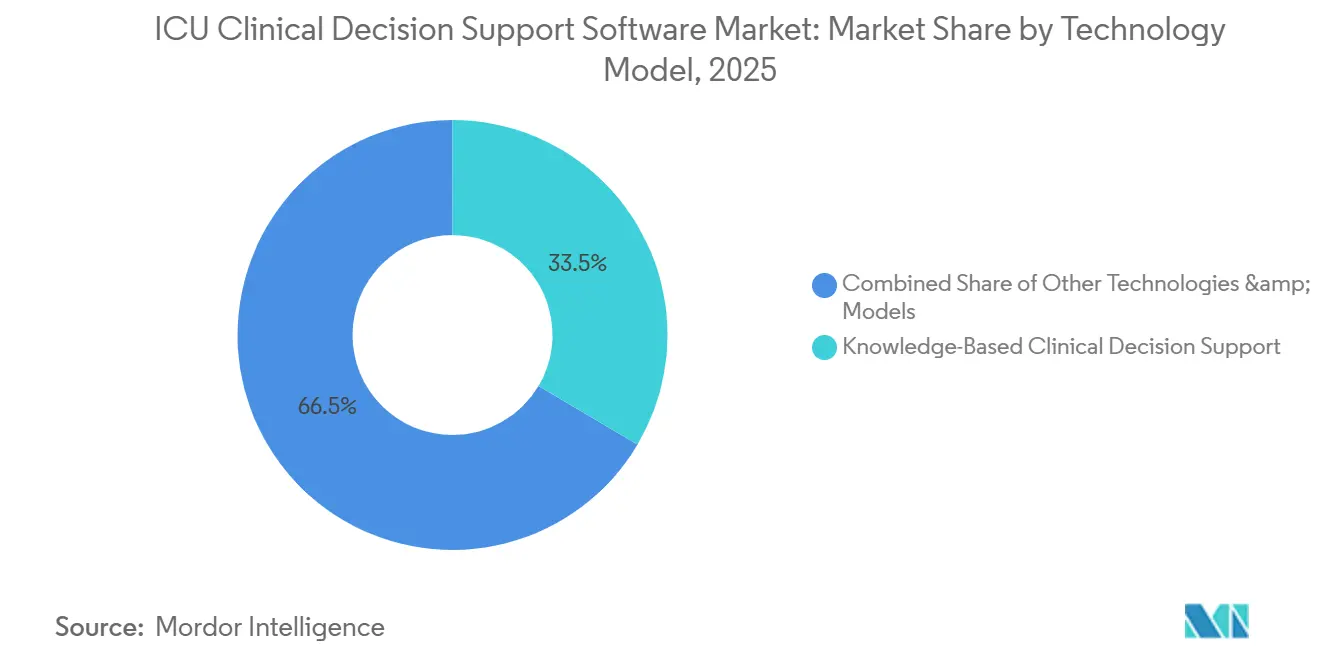
Knowledge-Based Foundations, Generative AI GrowthKnowledge-based clinical decision support held the largest technology share in 2025. Its explicit logic gives clinical, legal, and compliance teams a clear way to inspect recommendations. Rule-based, statistical, machine-learning, and deep-learning models serve different needs for interpretability, computing, and deterioration prediction. The ICU clinical decision support software market size for generative AI decision support is forecast to expand at a 13.2% CAGR through 2031. These systems can bring notes, reports, medication histories, and physiological data together in clinical summaries.
Generative tools in the ICU clinical decision support software market still require clinical evaluation that reflects the realities of ICU care. The IMPACT framework supports a structured approach to assessing these tools across 6 domains. Hybrid rules-and-AI systems provide an option for hospitals that want more precise alerts but cannot immediately replace established rule sets. This approach may suit European settings where model changes require clinical evaluation, and a model’s value depends on more than predictive accuracy. It also depends on whether clinicians can understand, test, and govern its recommendations.
By Deployment Mode:
Cloud Migration as a Clinical Capability PrerequisiteOn-premise deployment accounted for 48.2% of the ICU clinical decision support software market size in 2025. Many installed platforms were acquired when hospital cloud environments were less mature, while public-cloud deployment was the fastest-growing mode through 2031. Cloud infrastructure can support the computing and data-pooling needs of large model training and continuous learning. Private-cloud options support organizations with data-residency obligations. Hybrid and edge approaches can support time-sensitive alerts where latency is a concern.
Migration in the ICU clinical decision support software market is limited by more than infrastructure choice. A 2026 implementation study at a German university hospital found that EHR integration for an AI length-of-stay tool took 3 to 12 months, depending on existing IT infrastructure. These timelines create switching costs for hospitals with established on-premise systems. They also explain gradual cloud adoption, while interoperability requirements encourage systems to exchange data across care settings. Vendors that offer reliable integration and security controls can reduce a key barrier to migration.
By Component:
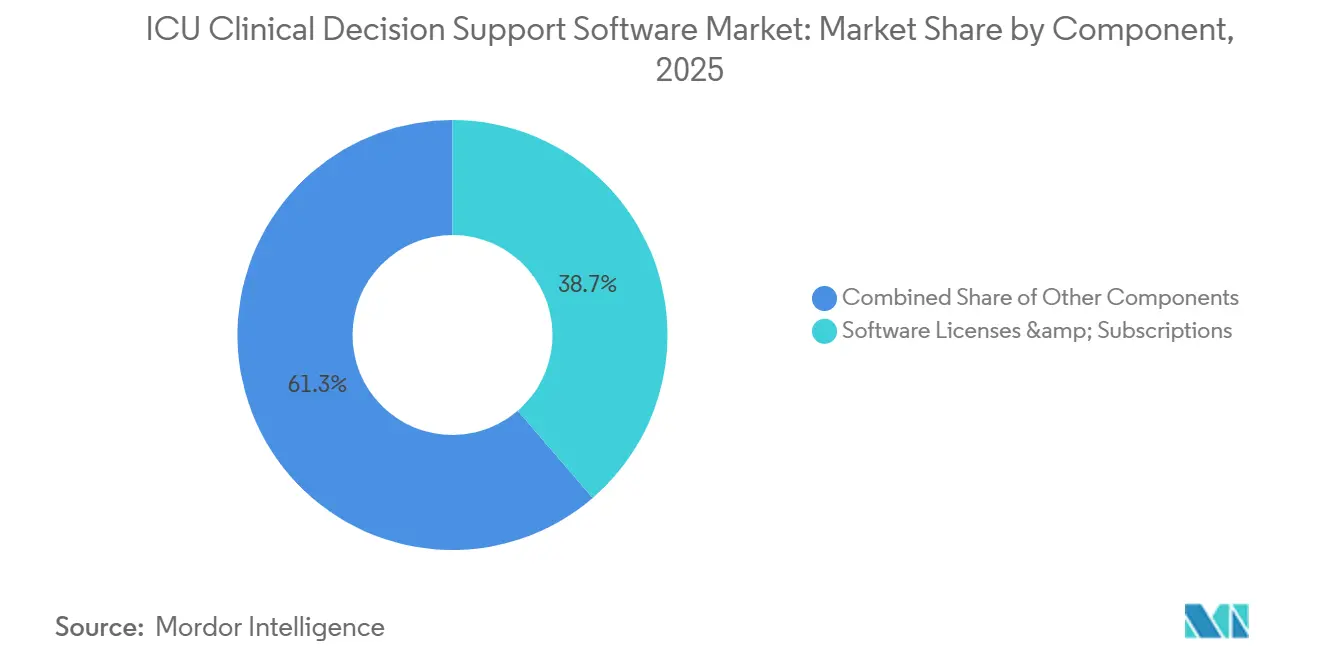
Service Layers Capture Post-Deployment ValueSoftware licenses and subscriptions held the largest component share in 2025. They capture the initial revenue associated with deploying ICU clinical decision support software. Data, model validation, and clinical content services are forecast to grow at a 12.9% CAGR through 2031. These services are recurring because evidence, patient populations, regulations, and model performance can change over time. Implementation, consulting, and workflow-design services remain important when systems standardize EHRs, alerts, and care processes across different ICUs.
Training can influence whether an ICU clinical decision support software market tool improves care or adds operational friction. A 2025 randomized controlled trial found that structured ventilator alarm-management training reduced alarm fatigue and the frequency of common ventilator alarms. This supports ongoing demand for training and change-management services. Maintenance and managed services can be valuable because replacing configured alert logic, content libraries, and workflow links can be harder than renewing a service contract. Vendors with established support organizations may therefore retain an advantage after initial deployment.
By End User:
Academic Medical Centers as the AI Validation GatewayPublic hospitals accounted for 56.4% of end-user demand in 2025. Their scale and public quality requirements support enterprise adoption across large ICU networks in the ICU clinical decision support software market. Academic medical centers were the fastest-growing end-user segment through 2031. They are important settings for evaluating new algorithms in peer-reviewed clinical studies. Successful studies can provide evidence for wider deployment, while private hospitals may move faster because of their payer mix and operational priorities.
CLEW Medical[3]launched its Sepsis Virtual Unit in March 2025 to support SEP-1 compliance and ICU outcome improvement. Academic center pilots can validate a clinical claim before a product is introduced across a hospital network. Private hospital chains in Asia-Pacific and the Middle East are creating opportunities as they implement enterprise EHRs. These deployments can avoid older-system migration issues, while long-term acute care and post-acute rehabilitation ICUs remain less served. Their patient acuity may still create a need for more consistent decision support.
Geography Analysis
North America ICU Clinical Decision Support Software Market
North America held the largest geographic share in 2026. The region combines mature EHR adoption, active FDA engagement, and hospital payment models that reward measurable clinical performance. The ONC HTI-1 rule created transparency and real-world testing requirements, while a 2025 study across 4 Los Angeles safety-net hospitals found that a closed tele-ICU program reduced length of stay in an underserved population. Canada advances more gradually because EHR standards vary across provinces.
Europe ICU Clinical Decision Support Software Market
Europe was the second-largest region in 2026. Germany, the United Kingdom, and France are major adoption centers because their providers are pursuing validated digital health tools. EU MDR 2017/745 raises the standard for clinical evaluation and post-market monitoring, and in January 2026 the optiSEP project began work on interoperable routine data and decision-support tools for sepsis care in Germany. The 2025 BARMER contract provides a payer-led adoption model for digital sepsis diagnostics. Cybersecurity has become more important after the ChipSoft incident disrupted services in Dutch hospitals.
APAC, Middle East and South America ICU Clinical Decision Support Software Market
Asia-Pacific is forecast to be the fastest-growing region through 2031. Specialist shortages, hospital digitization, and public health IT investment support the ICU clinical decision support software market across China, India, South Korea, and Australia. China requires localized clinical validation for AI-based tools, increasing entry barriers for foreign suppliers while supporting local platforms with validated datasets in the ICU clinical decision support software market. GCC countries are also adding first-generation systems through hospital construction and international partnerships. A 2025 study [4] in northern and northeastern Brazil found that tele-ICU support improved outcomes in resource-constrained settings
Competitive Landscape
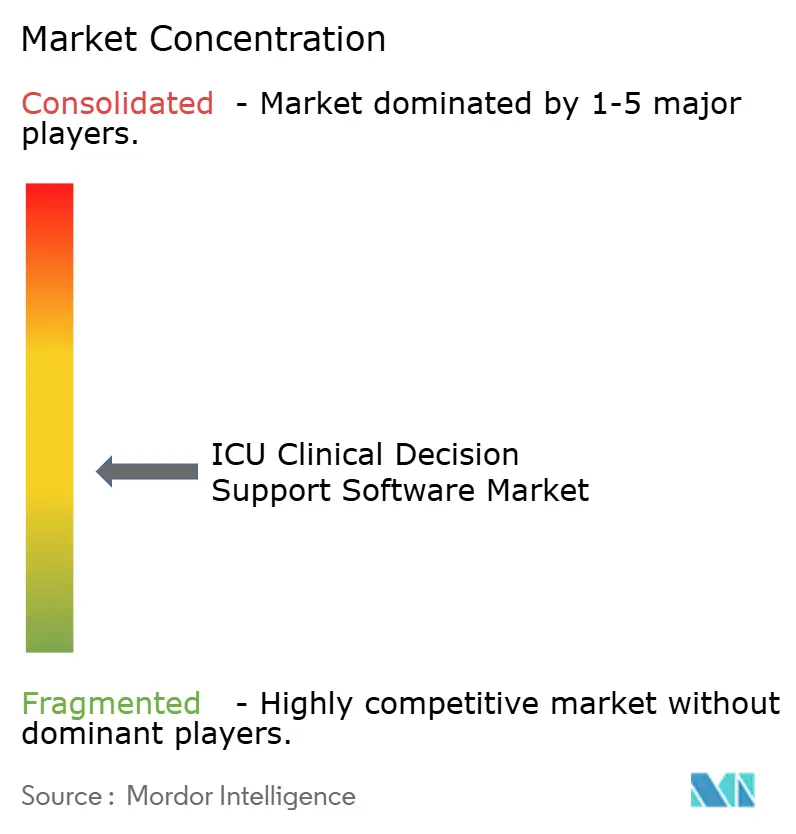
The ICU clinical decision support software market is moderately fragmented in 2026, and no individual supplier holds more than a low-double-digit global share. EHR providers, specialist critical-care vendors, and AI-focused companies compete for the same hospital customer through workflow integration, high-acuity functions, and validated algorithms. InterSystems launched IntelliCare at HIMSS25 in March 2025 as an AI-powered EHR with human-in-the-loop safeguards. In June 2026, InterSystems reported EU MDR Class IIa certification for IntelliCare.
Oracle Health made its Clinical AI Agent available to U.S. inpatient and emergency department providers in March 2026. This expansion reflects a strategy of incorporating decision support into the core EHR workflow. Etiometry has broadened its critical-care platform with waveform data integration and additional clinical tools. CLEW Medical has focused on predictive surveillance and lower false-positive rates. These approaches show that buyers compare integrated functionality, clinical specificity, alert performance, and academic evidence before enterprise sales.
Explainability is increasingly important because hospitals need to review how an algorithm reaches a recommendation. Regulatory clearance portfolios and live clinical evidence can make suppliers more credible, while antimicrobial stewardship and infection prevention remain less commercially developed than their clinical burden. This can create room for products that connect microbiology data with medication and dosing workflows. The ICU clinical decision support software market therefore rewards vendors that can support several clinical functions without losing the transparency needed for local oversight.
ICU Clinical Decision Support Software Industry Leaders
-
Epic Systems Corporation
-
Oracle Corporation
-
Koninklijke Philips N.V.
-
GE HealthCare Technologies Inc.
-
Siemens Healthineers AG
- *Disclaimer: Major Players sorted in no particular order
ICU Clinical Decision Support Software Market Companies Covered in this Report
- Epic Systems
- Oracle
- Koninklijke Philips
- GE HealthCare Technologies Inc.
- Siemens Healthineers
- Merative
- Wolters Kluwer
- Change Healthcare
- Meditech
- Zynx Health
- iMDsoft
- Ascom
- Picis Clinical Solutions, Inc.
- Intersystems
- Altera Digital Health
- Medhost
- Optum
- Elsevier B.V.
- CLEW Medical Ltd.
- Pacmed B.V.
- Etiometry Inc.
- AcuteCare.ai
- ehCOS
Recent Industry Developments in ICU Clinical Decision Support Software Market
- June 2026: West Tennessee Healthcare expanded its systemwide eICU program powered by Philips eCareManager and integrated with hellocare.ai's virtual care platform, extending virtual clinical decision support and AI-assisted monitoring to 127 ICU beds and 17 mobile emergency department carts across 19 counties serving 600,000+ residents. The deployment illustrates the tele-ICU-to-CDS demand coupling in community hospital markets.
- June 2026: Medcare Hospitals, part of Aster DM Healthcare Group, became the first healthcare provider in EMEA to adopt InterSystems IntelliCare. The platform’s planned agentic AI features will extend clinical decision-making support across GCC acute-care settings.
- March 2026: Oracle Health announced the availability of its Clinical AI Agent for note generation across U.S. inpatient and emergency department settings. Oracle reported more than 200,000 hours saved for U.S. providers, while AtlantiCare reported a 41% reduction in documentation time.
- January 2026: FDA issued final guidance on clinical decision-support software, clarifying the scope of the non-device software criteria under Section 520(o)(1)(E) and formally updating the prior September 2022 guidance
Global ICU Clinical Decision Support Software Market Report Scope
Segmentation Overview
| Integrated ICU Clinical Decision Support Software |
| Standalone ICU Clinical Decision Support Software |
| Vendor-Neutral ICU Clinical Decision Support Software |
| EHR-Embedded ICU Decision Support Modules |
| Patient Deterioration Prediction |
| Sepsis Recognition and Management |
| Hemodynamic Decision Support |
| Ventilator and Respiratory Management |
| Medication and Infusion Decision Support |
| Infection Prevention and Antimicrobial Stewardship |
| Sedation, Delirium and Mobility Management |
| Renal Replacement and Fluid Management |
| Clinical Documentation and Handover Support |
| Discharge, Transfer and Readmission Risk Prediction |
| ICU Capacity and Resource Optimization |
| Knowledge-Based Clinical Decision Support |
| Rule-Based Clinical Decision Support |
| Statistical Risk-Scoring Models |
| Machine-Learning Clinical Decision Support |
| Deep-Learning Clinical Decision Support |
| Generative Artificial Intelligence Decision Support |
| Hybrid Rules and Artificial Intelligence Models |
| On-Premise Deployment |
| Private-Cloud Deployment |
| Public-Cloud Deployment |
| Hybrid-Cloud Deployment |
| Edge and Local Deployment |
| Software Licenses and Subscriptions |
| Implementation and Integration Services |
| Consulting and Workflow Design Services |
| Training and Change-Management Services |
| Maintenance, Support and Managed Services |
| Data, Model Validation and Clinical Content Services |
| Hospitals and Health Systems |
| Public Hospitals |
| Private Hospitals |
| Academic Medical Centers |
| Integrated Delivery Networks |
| Specialty and Tertiary Care Hospitals |
| Government and Defense Hospitals |
| Tele-ICU and Virtual Care Providers |
| North America | United States |
| Canada | |
| Mexico | |
| Europe | Germany |
| United Kingdom | |
| France | |
| Italy | |
| Spain | |
| Rest of Europe | |
| Asia-Pacific | China |
| Japan | |
| India | |
| South Korea | |
| Australia | |
| Rest of Asia-Pacific | |
| Middle East and Africa | GCC |
| South Africa | |
| Rest of Middle East and Africa | |
| South America | Brazil |
| Argentina | |
| Rest of South America |
| Product Type | Integrated ICU Clinical Decision Support Software | |
| Standalone ICU Clinical Decision Support Software | ||
| Vendor-Neutral ICU Clinical Decision Support Software | ||
| EHR-Embedded ICU Decision Support Modules | ||
| Clinical Function | Patient Deterioration Prediction | |
| Sepsis Recognition and Management | ||
| Hemodynamic Decision Support | ||
| Ventilator and Respiratory Management | ||
| Medication and Infusion Decision Support | ||
| Infection Prevention and Antimicrobial Stewardship | ||
| Sedation, Delirium and Mobility Management | ||
| Renal Replacement and Fluid Management | ||
| Clinical Documentation and Handover Support | ||
| Discharge, Transfer and Readmission Risk Prediction | ||
| ICU Capacity and Resource Optimization | ||
| By Technology and Model | Knowledge-Based Clinical Decision Support | |
| Rule-Based Clinical Decision Support | ||
| Statistical Risk-Scoring Models | ||
| Machine-Learning Clinical Decision Support | ||
| Deep-Learning Clinical Decision Support | ||
| Generative Artificial Intelligence Decision Support | ||
| Hybrid Rules and Artificial Intelligence Models | ||
| By Deployment Mode | On-Premise Deployment | |
| Private-Cloud Deployment | ||
| Public-Cloud Deployment | ||
| Hybrid-Cloud Deployment | ||
| Edge and Local Deployment | ||
| Component | Software Licenses and Subscriptions | |
| Implementation and Integration Services | ||
| Consulting and Workflow Design Services | ||
| Training and Change-Management Services | ||
| Maintenance, Support and Managed Services | ||
| Data, Model Validation and Clinical Content Services | ||
| By End User | Hospitals and Health Systems | |
| Public Hospitals | ||
| Private Hospitals | ||
| Academic Medical Centers | ||
| Integrated Delivery Networks | ||
| Specialty and Tertiary Care Hospitals | ||
| Government and Defense Hospitals | ||
| Tele-ICU and Virtual Care Providers | ||
| By Geography | North America | United States |
| Canada | ||
| Mexico | ||
| Europe | Germany | |
| United Kingdom | ||
| France | ||
| Italy | ||
| Spain | ||
| Rest of Europe | ||
| Asia-Pacific | China | |
| Japan | ||
| India | ||
| South Korea | ||
| Australia | ||
| Rest of Asia-Pacific | ||
| Middle East and Africa | GCC | |
| South Africa | ||
| Rest of Middle East and Africa | ||
| South America | Brazil | |
| Argentina | ||
| Rest of South America | ||
Key Questions Answered in the Report
What is the projected value of ICU clinical decision support software by 2031?
The ICU clinical decision support software market is projected to reach USD 1.80 billion by 2031, growing at a 12.5% CAGR from 2026.
Which ICU clinical decision support software function held the largest share?
Patient deterioration prediction held 24.6% of the clinical-function segment in 2025.
Why are hospitals adopting EHR-embedded ICU support tools?
EHR-embedded modules are forecast to grow at a 12.8% CAGR because they place guidance inside existing clinical workflows.
What deployment model is expanding fastest for ICU decision support?
Public-cloud deployment is the fastest-growing model, while on-premise systems accounted for 48.2% of deployments in 2025.
How does generative AI affect ICU decision support?
Generative AI decision support is forecast to grow at a 13.2% CAGR by combining notes, reports, medication histories, and physiological data.
What is the key barrier to wider ICU decision-support adoption?
Alert fatigue, cybersecurity risk, interoperability gaps, and implementation costs can slow adoption and reduce clinician trust.