
Ice Hockey Skates Market Size and Share
Market Overview
| Study Period | 2022 - 2032 |
|---|---|
| Market Size (2027) | USD 668.10 Million |
| Market Size (2032) | USD 880.24 Million |
| Growth Rate (2027 - 2032) | 5.67 % |
| Fastest Growing Market | Asia-Pacific |
| Largest Market | Europe |
| Market Concentration | Low |
Major Players *Disclaimer: Major Players sorted in no particular order Image © Mordor Intelligence. Reuse requires attribution under CC BY 4.0. | |
Ice Hockey Skates Market Analysis by Mordor Intelligence
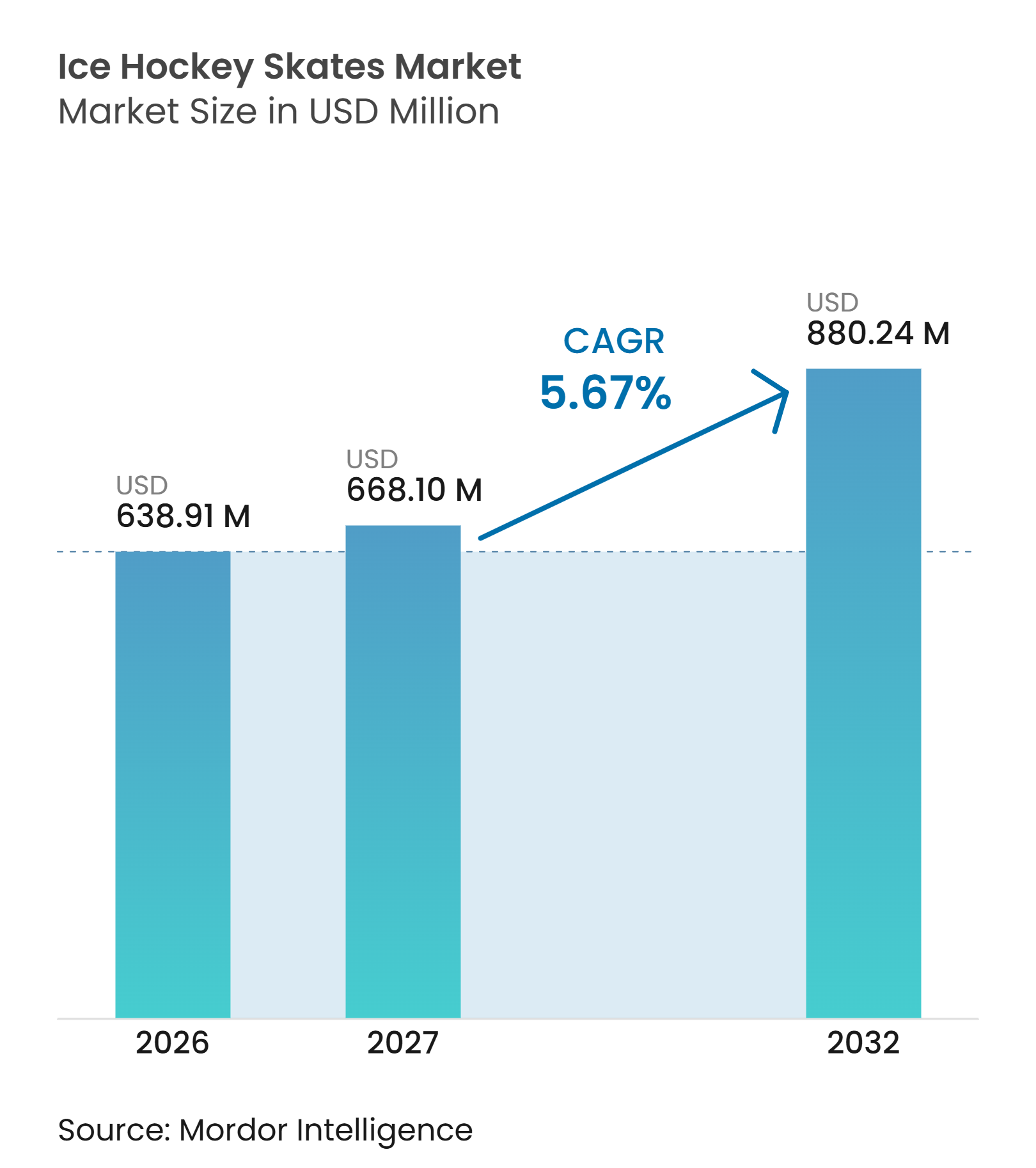
The Ice Hockey Skates Market was valued at USD 638.91 million in 2026 and is projected to grow to USD 668.10 million in 2027, reaching USD 880.24 million by 2032, at a CAGR of 5.67% from 2027 to 2032. Market growth is supported by the continued popularity of ice hockey, expanding participation in organized hockey activities, and ongoing advancements in skate design and manufacturing technologies. Demand is driven by the need for specialized skating footwear that offers comfort, stability, durability, and efficient power transfer during gameplay. Manufacturers are increasingly incorporating lightweight composite materials, thermoformable boot construction, advanced blade-holder systems, and improved fitting technologies to enhance product performance. Additionally, the growing visibility of professional competitions and structured training initiatives is strengthening interest in ice hockey and supporting demand for specialized skates.
Key Report Takeaways
-
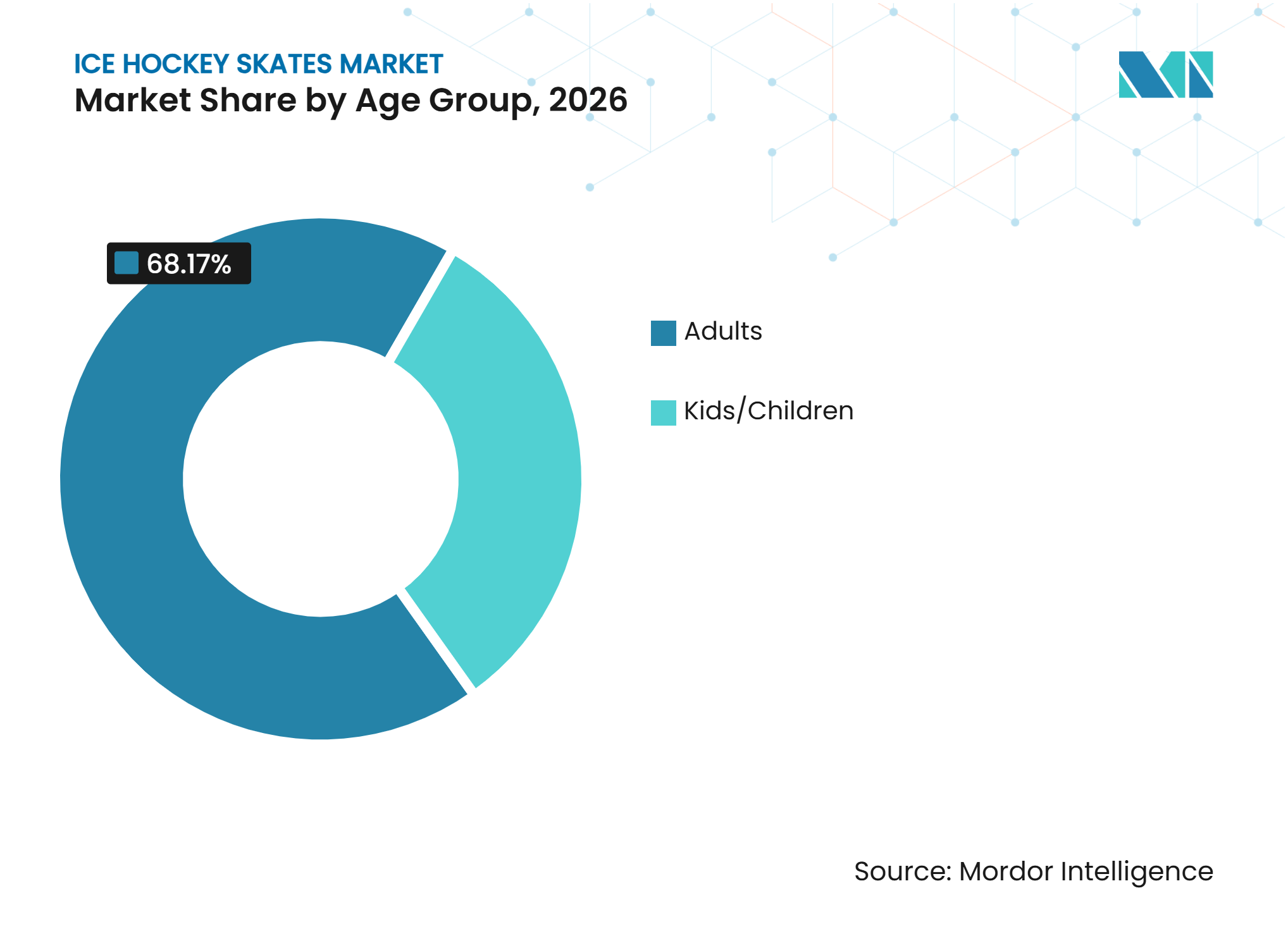
By age group, Adults held 68.17% of the ice hockey skates market share in 2026, while Kids/Children are projected to grow at a CAGR of 6.89% through 2032.
-
By player category, Amateur and Recreational Players accounted for 62.32% of the ice hockey skates market share in 2026, while Professional Players are forecast to expand at a CAGR of 6.51% through 2032.
-
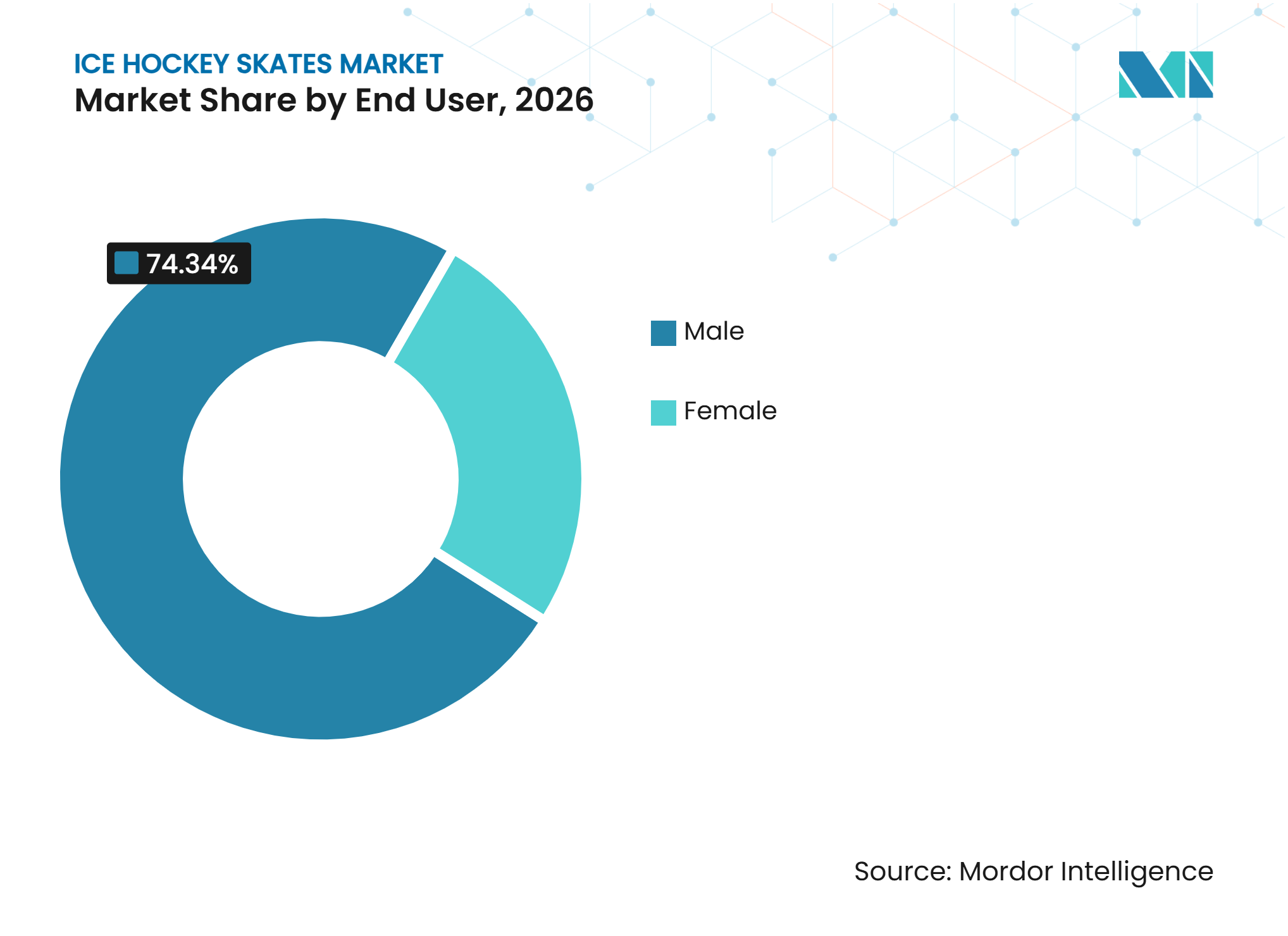
By end user, Male players represented 74.34% of the ice hockey skates market share in 2026, while the Female segment is projected to grow at a CAGR of 6.69% through 2032.
-
By category, Mass skates accounted for 68.12% of the ice hockey skates market share in 2026, while Premium skates are expected to grow at a CAGR of 7.04% through 2032.
-
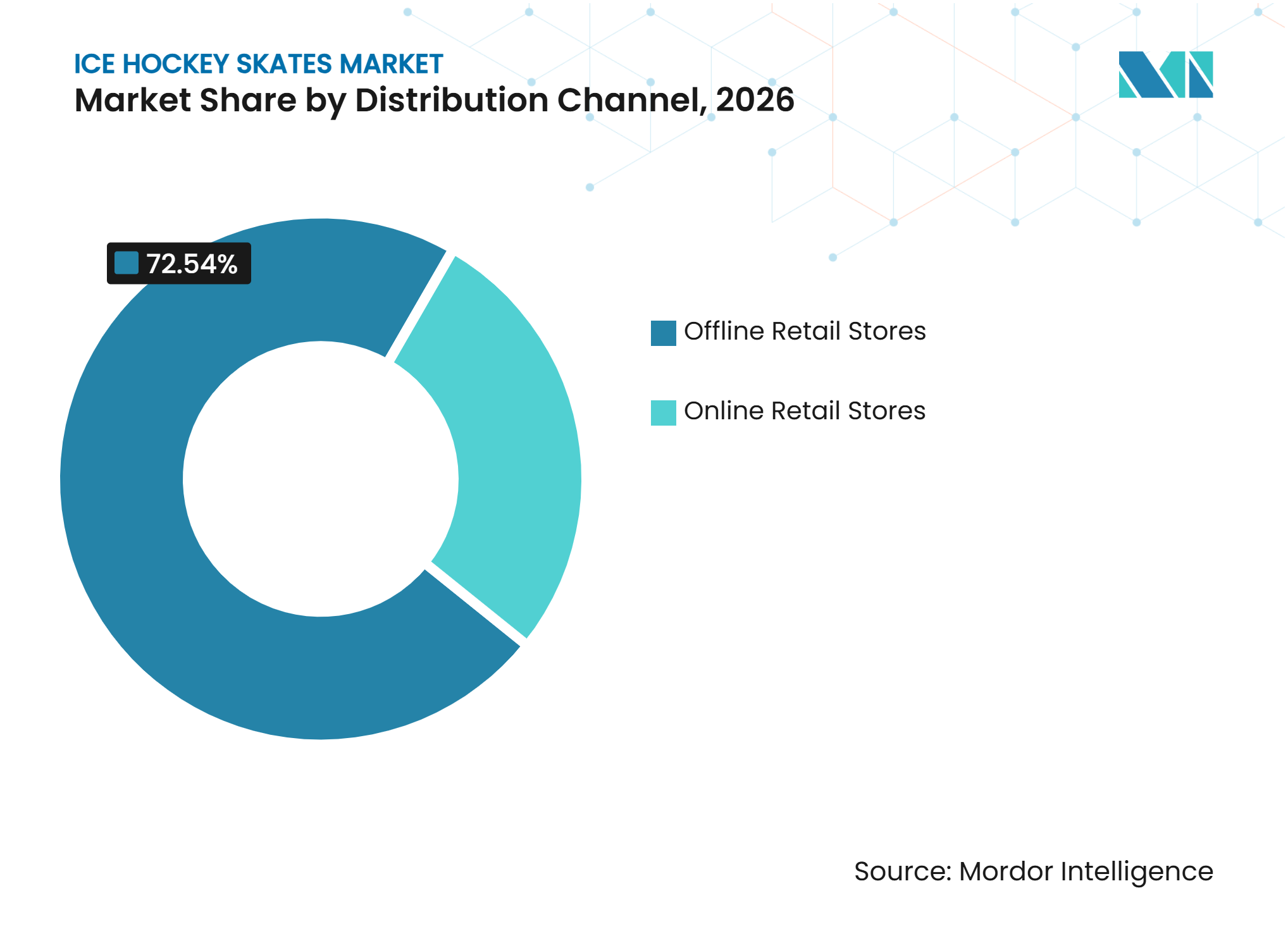
By distribution channel, Offline Retail Stores held 72.54% of the ice hockey skates market share in 2026, while Online Retail Stores are projected to expand at a CAGR of 7.45% through 2032.
-
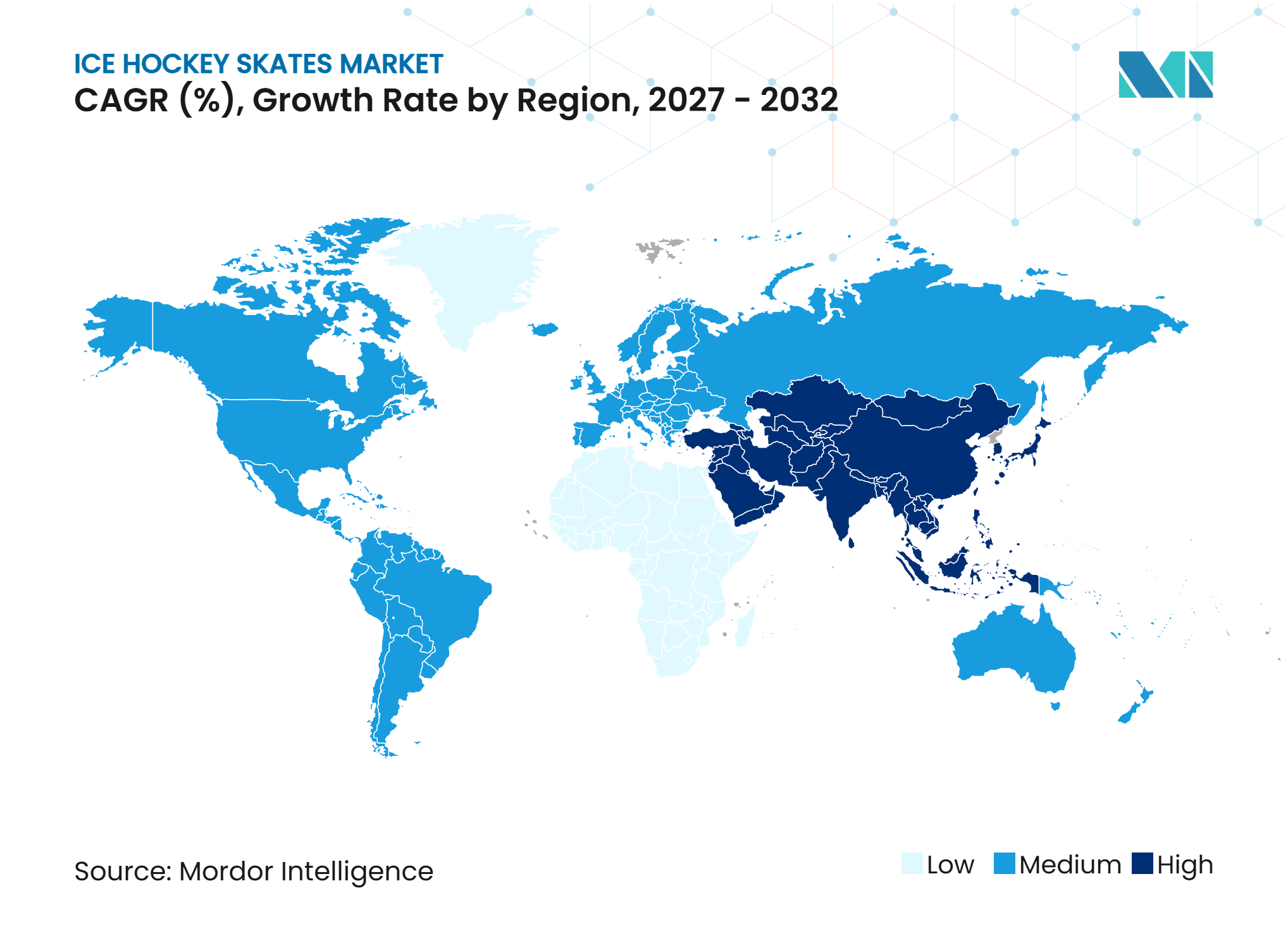
By geography, Europe accounted for 47.24% of the ice hockey skates market share in 2026, while Asia-Pacific is forecast to grow at a CAGR of 6.89% through 2032.
Note: Market numbers in this report are based on Mordor Intelligence's proprietary estimation framework, which combines nine months of actuals with Q4 projections for base year 2026.
Market Trends and Insights
Drivers Impact Analysis of Ice Hockey Skates Market*
| Driver | (~) % Impact on CAGR Forecast | Geographic Relevance | Impact Timeline |
|---|---|---|---|
| Expanding participation in organized ice hockey | +1.4% | Global | Medium term (2–4 years) |
| Rising engagement in youth hockey development programs | +1.0% | North America and Europe | Medium term (2–4 years) |
| Increasing number of ice hockey rinks and training facilities | +0.8% | North America, Europe, Asia-Pacific core | Long term (≥ 4 years) |
| Technological advancements in skate design | +0.9% | Global, led by North America | Short term (≤ 2 years) |
| Preference for customized fitting and personalized skate configurations | +0.6% | North America and Europe | Short term (≤ 2 years) |
| Expansion of professional ice hockey leagues and competitions | +0.7% | Global, with early gains in Asia-Pacific and Southern United States | Medium term (2–4 years) |
| Source: Mordor Intelligence | |||
Expanding Participation in Organized Ice Hockey
Growing participation in organized ice hockey is driving demand for specialized skating equipment across structured sporting environments. The establishment of amateur leagues, community hockey clubs, youth development programs, and organized training institutions is expanding the base of participants requiring purpose-built ice hockey skates. Participation in structured hockey activities also encourages players to select skates that offer appropriate blade stability, ankle support, boot flexibility, and reliable edge control to meet the technical requirements of the sport. Additionally, formal training and league participation involve regular equipment usage, generating recurring demand for skate replacement due to blade deterioration, boot wear, and changing performance requirements. The expansion of organized hockey participation is therefore supporting sustained demand for ice hockey skates across different consumer groups.
Rising Engagement in Youth Hockey Development Programs
Rising participation in youth hockey development programs is driving demand in the ice hockey skates market by introducing more children to organized skating and creating demand for age-specific equipment. These programs require properly fitted skates that provide adequate ankle support, comfort, and blade stability, helping young players build confidence and improve their skating skills. As children progress through training and their foot size changes, demand for replacement skates also increases. For instance, in July 2026, the Washington Capitals opened registration for their 2026–27 Future Caps Learn to Play program across 18 local rinks, offering children aged 5–9 eight on-ice training sessions, certified coaching, and hockey equipment[1]. Such initiatives introduce younger participants to organized ice hockey and support demand for youth-specific ice hockey skates.
Technological Advancements in Skate Design
Technological advancements in skate design are driving the ice hockey skates market by improving skating performance, energy transfer, comfort, and equipment durability. Manufacturers are incorporating lightweight composite materials, advanced boot construction, and redesigned blade-holder systems to enhance stability, acceleration, and responsiveness during gameplay. Developments in carbon-fiber technology and precision-engineered components help optimize power transfer from the player's foot to the ice, supporting faster strides and improved maneuverability. These innovations are encouraging players to adopt advanced skate models that offer better performance, structural support, and fit customization. For instance, Bauer's Supreme Shadow skates incorporate a 12K Carbon CURV composite boot, a Powerfly blade holder, and a Carbon connect outsole.
Expansion of Professional Ice Hockey Leagues and Competitions
The expansion of professional ice hockey leagues and competitions is driving the ice hockey skates market by increasing the sport's visibility and creating additional pathways for players to participate at competitive levels. The establishment of new teams in additional markets strengthens local hockey communities, encourages youth participation, and stimulates interest in organized leagues and training programs. Greater exposure to professional competitions also influences equipment preferences, as aspiring and recreational players seek skates with performance characteristics similar to those used by elite athletes. Additionally, league expansion creates opportunities for manufacturers to increase brand visibility through team partnerships, sponsorships, and product endorsements. For instance, in April 2025, the Professional Women's Hockey League (PWHL) announced expansion teams in Vancouver and Seattle for the 2025–26 season, increasing the league from six to eight teams and extending its presence into the Pacific Northwest.
Restraints Impact Analysis of Ice Hockey Skates Market*
| Restraint | (~) % Impact on CAGR Forecast | Geographic Relevance | Impact Timeline |
|---|---|---|---|
| High maintenance and replacement costs | -0.5% | Global | Long term (≥ 4 years) |
| Risk of foot injuries and discomfort | -0.2% | Global | Medium term (2–4 years) |
| Availability of counterfeit and low-quality products | -0.2% | Asia-Pacific, Emerging Markets | Medium term (2–4 years) |
| Dependence on seasonal participation and ice conditions | -0.3% | North America, Europe | Long term (≥ 4 years) |
| Source: Mordor Intelligence | |||
High Maintenance and Replacement Costs
High maintenance and replacement costs restrain the ice hockey skates market by increasing the overall cost of owning and using specialized skating equipment. Ice hockey skates require regular blade sharpening, steel replacement, holder repairs, and boot maintenance to preserve performance and safety. Frequent use causes wear and tear to the boot lining, ankle padding, eyelets, and blade components, resulting in additional servicing or replacement expenses. Premium skates incorporating advanced composite materials and specialized fitting technologies also carry higher purchase costs, making upgrades and replacements expensive for price-sensitive consumers. These recurring expenses may discourage occasional players and budget-conscious buyers from purchasing new or higher-performance skates, thereby limiting market growth.
Availability of Counterfeit and Low-Quality Products
The availability of counterfeit and low-quality products restrains the ice hockey skates market by undermining consumer confidence and creating unfair competition for established manufacturers. Unauthorized products may imitate recognized skate brands but often use inferior materials, poorly constructed boot assemblies, and substandard blade components. These products may provide inadequate ankle support, inconsistent blade stability, and poor durability, potentially affecting skating performance and player safety. Their lower prices can divert purchases away from genuine products, pressuring manufacturers on pricing and brand reputation. Additionally, consumers may find it difficult to distinguish counterfeit skates from authentic products when purchasing through unauthorized online sellers and informal retail channels, further weakening trust in the market.
*Our forecasts treat driver/restraint impacts as directional, not additive. The impact forecasts reflect baseline growth, mix effects, and variable interactions.
Ice Hockey Skates Market Segment Analysis
By Age Group:
Adults Drive Volume, Youth Programs Build Future DemandAdults accounted for 68.17% of the ice hockey skates market in 2026, supported by their established participation in organized ice hockey and preference for performance-oriented skating equipment. Adult players generally have well-defined equipment requirements, with purchasing decisions influenced by skate fit, boot stiffness, ankle support, blade stability, and overall durability. Their fully developed foot structures reduce the need for frequent size-related replacements, encouraging greater emphasis on long-term product usability and customized fitting features. For instance, according to USA Hockey, 181,339 adult players were registered during the 2024–25 season[2]. This substantial adult participation base highlights the established presence of adult players in organized ice hockey and supports demand for adult-sized ice hockey skates.
Kids/Children represent the fastest-growing age segment in the ice hockey skates market, projected to expand at a CAGR of 6.89% during 2027–2032. Demand within this segment is driven by the adoption of age-specific skate designs that address children's developing skating abilities and physical requirements. Features such as flexible boot construction, reinforced ankle areas, cushioned interiors, and simplified fastening systems influence product selection by providing better foot positioning and ease of use. The availability of junior-oriented sizing systems and adjustable skate configurations supports product suitability across different stages of childhood. Additionally, the use of durable boot materials and replaceable blade components is attracting purchasing interest from parents seeking equipment that can withstand regular practice sessions and repeated use.


By Player Category:
Recreational Base Anchors the Market, Professional Segment Sets Technology DirectionAmateur and recreational players accounted for 62.32% of the ice hockey skates market share in 2026, supported by demand for accessible, comfortable, and easy-to-maintain skating equipment. Purchasing preferences within this segment are largely influenced by practical product attributes, including lightweight construction, comfortable boot interiors, reliable blade performance, and simplified fitting systems. Players participating in leisure skating and non-professional hockey activities generally seek skates that provide adequate stability and ease of movement without requiring highly specialized technical configurations. The availability of versatile skate models suitable for different skating abilities and playing frequencies also broadens product acceptance within this category.
Professional players represent the fastest-growing player category in the ice hockey skates market, projected to register a CAGR of 6.51% during 2027–2032. Demand in this category is driven by the need for technically advanced skate configurations that support high-intensity skating movements, rapid directional changes, acceleration, and precise edge control. Professional players place particular emphasis on boot responsiveness, torsional rigidity, blade stability, and efficient energy transfer, encouraging demand for performance-engineered skate structures. Advancements in composite boot construction, precision-moulded shells, lightweight blade holders, and specialized blade profiling are further strengthening the adoption of specialized equipment.
By End User:
Male Dominance Persists, Female Segment Redefines Product StrategyMale players accounted for 74.34% of the ice hockey skates market in 2026, supported by their substantial participation in organized ice hockey and established demand for specialized skating equipment. Purchasing preferences within this segment are influenced by requirements for precise boot fitting, firm ankle support, enhanced blade stability, and durable skate construction to accommodate different skating techniques and playing intensities. For instance, according to the International Ice Hockey Federation (IIHF), Canada recorded 93,983 registered senior male ice hockey players in its 2026 player survey, highlighting the established participation base of male players in the sport[3]. This sustained participation supports demand for male-oriented ice hockey skate products.
The female segment is projected to register a CAGR of 6.69% during 2027–2032, supported by the expansion of women-specific skate designs and greater emphasis on anatomical fit requirements. Female players increasingly require skate configurations that accommodate differences in foot dimensions, heel positioning, forefoot width, and ankle structure. This is driving demand for ergonomically designed boots, improved heel-lock systems, anatomically shaped interiors, and supportive construction that enhances fit and skating control. The development of women-oriented skate collections with specialized sizing and fit profiles is also improving product suitability and broadening equipment choices.

By Category:
Mass Skates Hold the Volume, Premium Tier Captures the Margin GrowthMass skates accounted for 68.12% of the ice hockey skates market in 2026, supported by demand for affordable, functional, and standardized skating equipment. This category benefits from practical skate designs incorporating conventional boot materials, reliable blade assemblies, basic ankle-support structures, and essential comfort features. Product standardization and simplified manufacturing processes enable manufacturers to maintain consistent product specifications across different sizes and price points. The availability of versatile skate configurations with straightforward fitting mechanisms and durable construction further supports purchasing preferences among consumers seeking dependable equipment for regular skating activities. These characteristics strengthen the market position of mass-market ice hockey skates.
Premium skates represent the fastest-growing category, projected to register a CAGR of 7.04% during 2027–2032. Growth is driven by the adoption of advanced materials and precision-engineered components that enhance skate responsiveness, structural stability, and skating efficiency. Premium skate designs increasingly incorporate carbon-fibre composite shells, lightweight blade holders, thermoformable boot materials, and anatomically engineered interiors. These features improve weight distribution, foot positioning, and energy transfer during skating. Additionally, customizable boot fitting, replaceable blade systems, and specialized blade profiling are strengthening demand for premium skate configurations. Continuous refinement of boot construction and component engineering is supporting the expansion of the premium category within the ice hockey skates market.
By Distribution Channel:
Offline Retail Anchors Trust, Online Momentum AcceleratesOffline retail stores accounted for 72.54% of the ice hockey skates market in 2026, supported by the importance of physical product evaluation and specialized fitting services in skate purchasing decisions. Ice hockey skates require accurate sizing, appropriate boot width, heel positioning, and ankle support, making in-store fitting particularly valuable for consumers. Specialty hockey retailers also provide services such as heat moulding, blade sharpening, and component adjustments, allowing customers to obtain equipment suited to their individual requirements. The ability to physically assess boot stiffness, interior padding, blade construction, and fastening systems before purchasing further strengthens the relevance of offline retail outlets. Access to knowledgeable sales personnel and immediate product availability additionally supports the channel's established position in the ice hockey skates market.
Online retail stores represent the fastest-growing distribution channel in the ice hockey skates market, projected to register a CAGR of 7.45% during 2027–2032. Growth is driven by the wider availability of specialized skate models, broader size selections, and access to product specifications through digital retail platforms. Online catalogues allow consumers to evaluate different boot constructions, blade configurations, stiffness levels, and fitting options without being restricted to the inventory of nearby physical stores. Manufacturer-operated websites and specialized hockey e-commerce platforms provide access to detailed sizing charts, product comparisons, customer reviews, and technical descriptions, supporting more informed purchasing decisions. Convenient product ordering, home delivery, and easier access to replacement skate models are further strengthening the adoption of online purchasing channels within the ice hockey skates market.
Geography Analysis
Europe
Europe accounted for 47.24% of the ice hockey skates market in 2026, supported by its established ice hockey culture, extensive skating infrastructure, and strong tradition of organized winter sports. The region benefits from a well-developed network of indoor ice arenas, community skating facilities, and specialized ice hockey training infrastructure, providing consistent access to skating activities throughout the year. The established presence of ice hockey across several European markets, supported by structured club systems, national federations, and professional development pathways, sustains demand for specialized skating equipment. The region's strong emphasis on technical skating skills and equipment standards also encourages the adoption of skates offering precise blade control, appropriate boot stiffness, and reliable structural performance.
Asia-Pacific
Asia-Pacific is projected to be the fastest-growing geographic segment in the ice hockey skates market, registering a CAGR of 6.89% during 2027–2032. Regional expansion is supported by the gradual establishment of ice hockey as an organized sporting activity beyond its traditional participation centers. Investments in indoor ice arenas, winter sports facilities, and specialized skating infrastructure are improving access to ice-based activities in markets with developing hockey ecosystems. The introduction of youth hockey training initiatives, development of local skating academies, and expansion of organized competitions are creating opportunities for specialized skate adoption. The availability of modern indoor facilities also reduces dependence on natural ice conditions, supporting more consistent participation and training.
North America, South America, Middle East and Africa
North America represents a well-established market for ice hockey skates, supported by longstanding participation in organized hockey, established equipment distribution networks, and a mature ice rink infrastructure. The region benefits from strong consumer familiarity with specialized skating equipment and established demand for replacement skates across different age and performance categories. South America represents an emerging market for ice hockey skates, with market development influenced by the gradual introduction of organized ice hockey activities and the availability of indoor skating facilities. The Middle East and Africa represents a developing market for ice hockey skates, supported by investments in indoor ice facilities and the introduction of organized skating activities in selected markets.
Competitive Landscape
Market Concentration
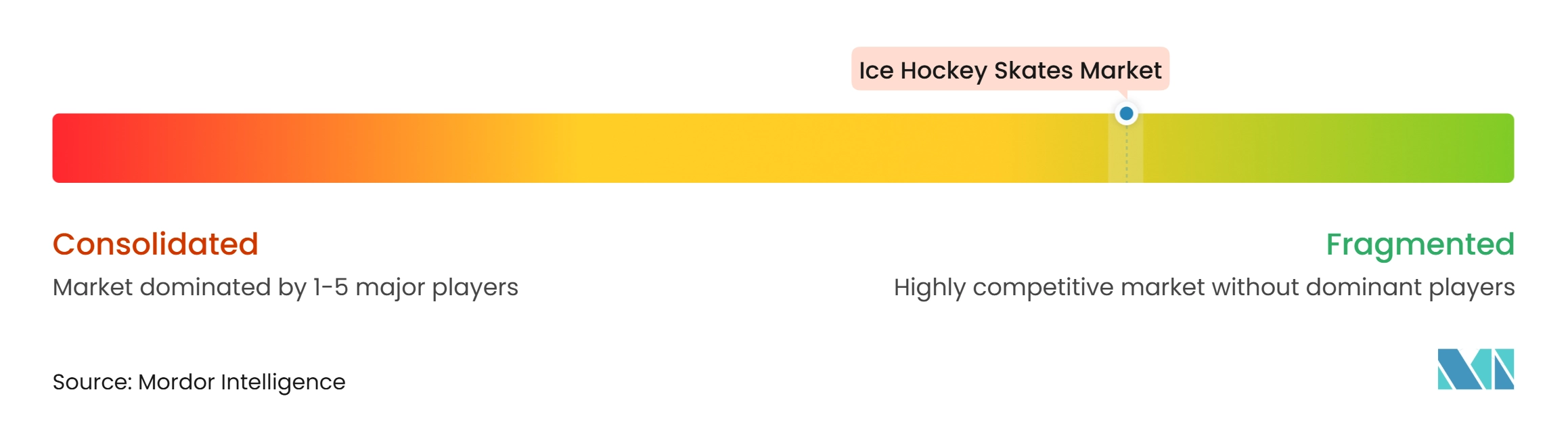
The ice hockey skates market is fragmented, with established manufacturers and specialized players competing across professional, amateur, and recreational product categories. Key companies include Bauer Hockey, LLC, Sport Maska Inc. (CCM Hockey), Graf Skates AG, Winnwell Inc., and Roces S.r.l. These companies compete on product innovation, brand positioning, product quality, pricing, and distribution reach. While established hockey equipment manufacturers offer extensive skate portfolios for different player levels, specialized manufacturers focus on specific skate designs, performance requirements, and recreational applications.
Companies are increasingly investing in technological advancements to differentiate their products and improve skating performance. Key innovation areas include lightweight composite materials, thermoformable boot construction, anatomical fitting systems, advanced blade holders, and improved blade technologies. For instance, Bauer offers its FitLab foot-scanning technology and customized skate options, while CCM incorporates one-piece boot construction and Step Steel blade technology across its skate portfolio. Graf focuses on precision, comfort, and handcrafted skate construction.
Market participants are also strengthening their competitive positions through differentiated product portfolios, availability across multiple price categories, and distribution through specialized hockey retailers and online channels. Manufacturers offer products across youth, junior, and senior sizes, as well as recreational and high-performance categories, enabling them to address varied consumer requirements. Competition is therefore shaped by the ability to introduce technologically advanced products, provide suitable fitting options, maintain product quality, and expand access to ice hockey skates across established and emerging markets.
Ice Hockey Skates Industry Leaders
-
Bauer Hockey, LLC
-
Sport Maska Inc. (CCM Hockey)
-
Graf Skates AG.
-
Winnwell Inc.
-
Roces S.r.l.
- *Disclaimer: Major Players sorted in no particular order
Ice Hockey Skates Market Companies Covered in this Report
- Bauer Hockey, LLC
- Sport Maska Inc. (CCM Hockey)
- Graf Skates AG.
- Winnwell Inc.
- Roces S.r.l.
- Jackson Ultima Skates
- TRUE Hockey
- American Athletic, Inc.
- Flite Hockey, Inc.
- HockeyTron
- TEK 2 Sport
- Vaughn Hockey
- Tour Hockey
- Botas
- Alkali Hockey
- Reebok Hockey
- Riedell Shoes, Inc.
- Mission Hockey
- Warrior Sports
- Sherwood Hockey
Recent Industry Developments in Ice Hockey Skates Market
- July 2026: Bauer introduced the Supreme Fuse skate as an addition to its Supreme family. Its features include a 12K CURV composite quarter, AMP FLEX 3.0 facing, Power coil tongue, and a forged carbon outsole.
- October 2025: The ECHL welcomed the expansion Greensboro Gargoyles for the 2025-26 season, bringing the league to 30 teams across 23 states and one Canadian province. Greensboro plays its first game in team history on Saturday when it hosts Jacksonville.
- July 2025: CCM launched its JETSPEED FTW collection, a hockey equipment line designed specifically for women and girls. The skate features a women-focused fit to address differences in foot shape and comfort requirements.
Global Ice Hockey Skates Market Report Scope
An ice hockey skate is a specialized athletic shoe with a steel blade attached to the sole, engineered specifically for playing ice hockey. The Ice Hockey Skates Market is segmented by age group, player category, end user, category, distribution channel, and geography. Based on age group, the market is segmented into adults and kids/children. Based on player category, the market is segmented into professional players and amateur and recreational players. Based on end user, the market is segmented into male and female. Based on category, the market is segmented into mass and premium. Based on distribution channel, the market is segmented into offline retail stores and online retail stores. Based on geography, the market is segmented into North America, Europe, Asia-Pacific, South America, and the Middle East and Africa. For each segment, the market sizing and forecast have been done based on value (in USD).
Segmentation Overview
| Adults |
| Kids/Children |
| Professional Players |
| Amateur and Recreational Players |
| Male |
| Female |
| Mass |
| Premium |
| Offline Retail Stores |
| Online Retail Stores |
| North America | United States |
| Canada | |
| Rest of North America | |
| Europe | Russia |
| Finland | |
| Sweden | |
| Czech Republic | |
| Switzerland | |
| Germany | |
| France | |
| United Kingdom | |
| Rest of Europe | |
| Asia-Pacific | China |
| Japan | |
| Australia | |
| Rest of Asia-Pacific | |
| South America | Brazil |
| Argentina | |
| Colombia | |
| Rest of South America | |
| Middle East and Africa | South Africa |
| Rest of Middle East and Africa |
| By Age Group | Adults | |
| Kids/Children | ||
| By Player Category | Professional Players | |
| Amateur and Recreational Players | ||
| By End User | Male | |
| Female | ||
| By Category | Mass | |
| Premium | ||
| By Distribution Channel | Offline Retail Stores | |
| Online Retail Stores | ||
| By Geography | North America | United States |
| Canada | ||
| Rest of North America | ||
| Europe | Russia | |
| Finland | ||
| Sweden | ||
| Czech Republic | ||
| Switzerland | ||
| Germany | ||
| France | ||
| United Kingdom | ||
| Rest of Europe | ||
| Asia-Pacific | China | |
| Japan | ||
| Australia | ||
| Rest of Asia-Pacific | ||
| South America | Brazil | |
| Argentina | ||
| Colombia | ||
| Rest of South America | ||
| Middle East and Africa | South Africa | |
| Rest of Middle East and Africa | ||
Key Questions Answered in the Report
What is the projected growth rate of the global ice hockey skates market?
The global ice hockey skates market is projected to grow at a CAGR of 5.67% from 2027 to 2032, reaching USD 880.24 million by 2032.
Which age group generates the highest demand for ice hockey skates?
Adults account for 68.17% of global demand in 2026, supported by established recreational leagues and replacement purchases tied to skate wear.
Why are kids’ ice hockey skates growing faster than adult skates?
Kids/Children skates are forecast to grow at a 6.89% CAGR through 2032 because children need frequent size replacements as they grow and youth participation continues to expand.
Which skate category is growing the fastest?
Premium skates are projected to grow at a 7.04% CAGR through 2032, supported by demand for lightweight composite materials, customized fit, and higher-performance designs.