
Ice Cream Processing Equipment Market Size and Share
Market Overview
| Study Period | 2027 - 2032 |
|---|---|
| Market Size (2027) | USD 1.9 Billion |
| Market Size (2032) | USD 5.70 Billion |
| Growth Rate (2027 - 2032) | 5.70 % |
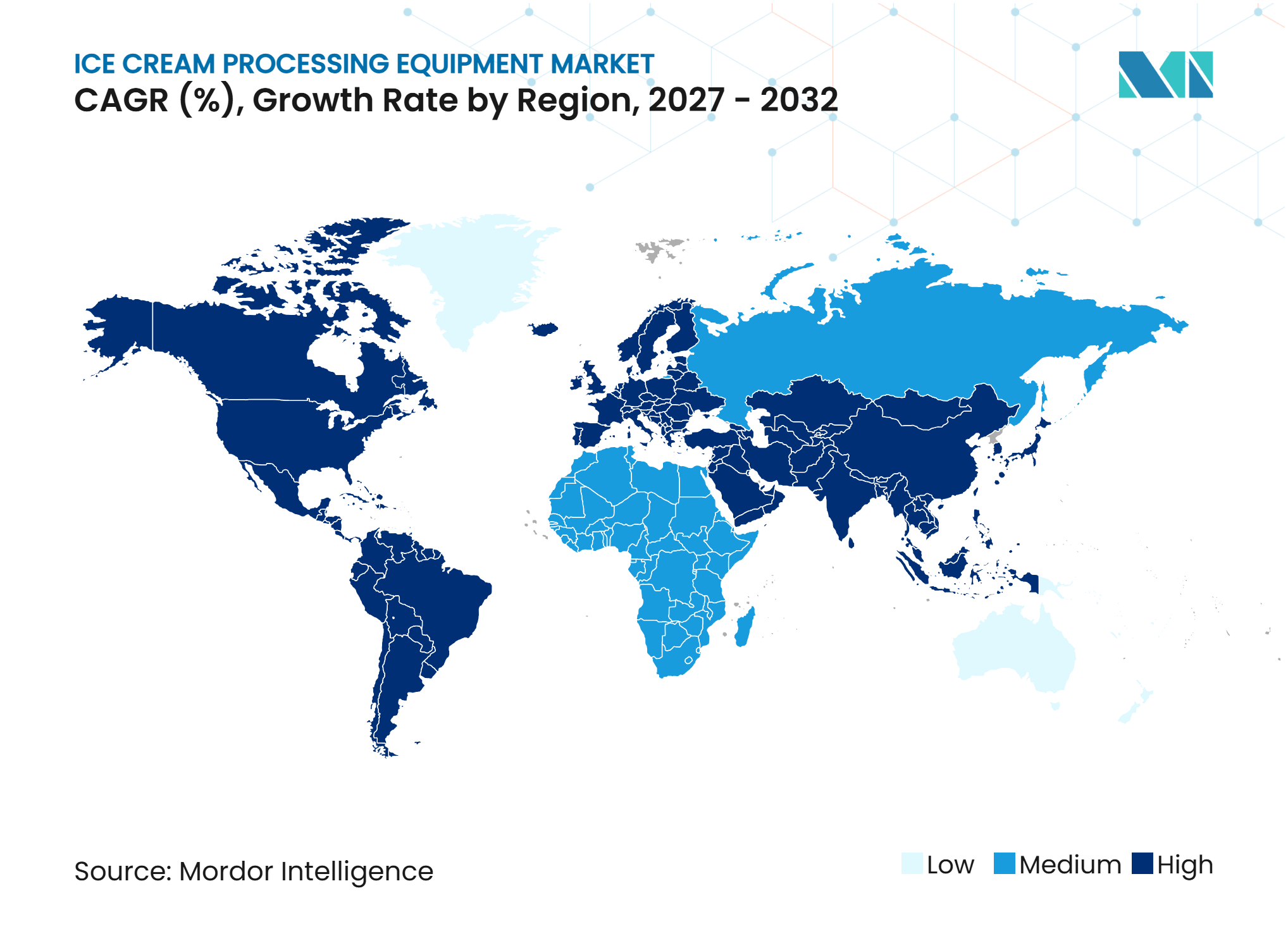
| Fastest Growing Market | Asia-Pacific |
| Largest Market | North America |
| Market Concentration | Medium |
Major Players *Disclaimer: Major Players sorted in no particular order Image © Mordor Intelligence. Reuse requires attribution under CC BY 4.0. | |
Ice Cream Processing Equipment Market Analysis by Mordor Intelligence
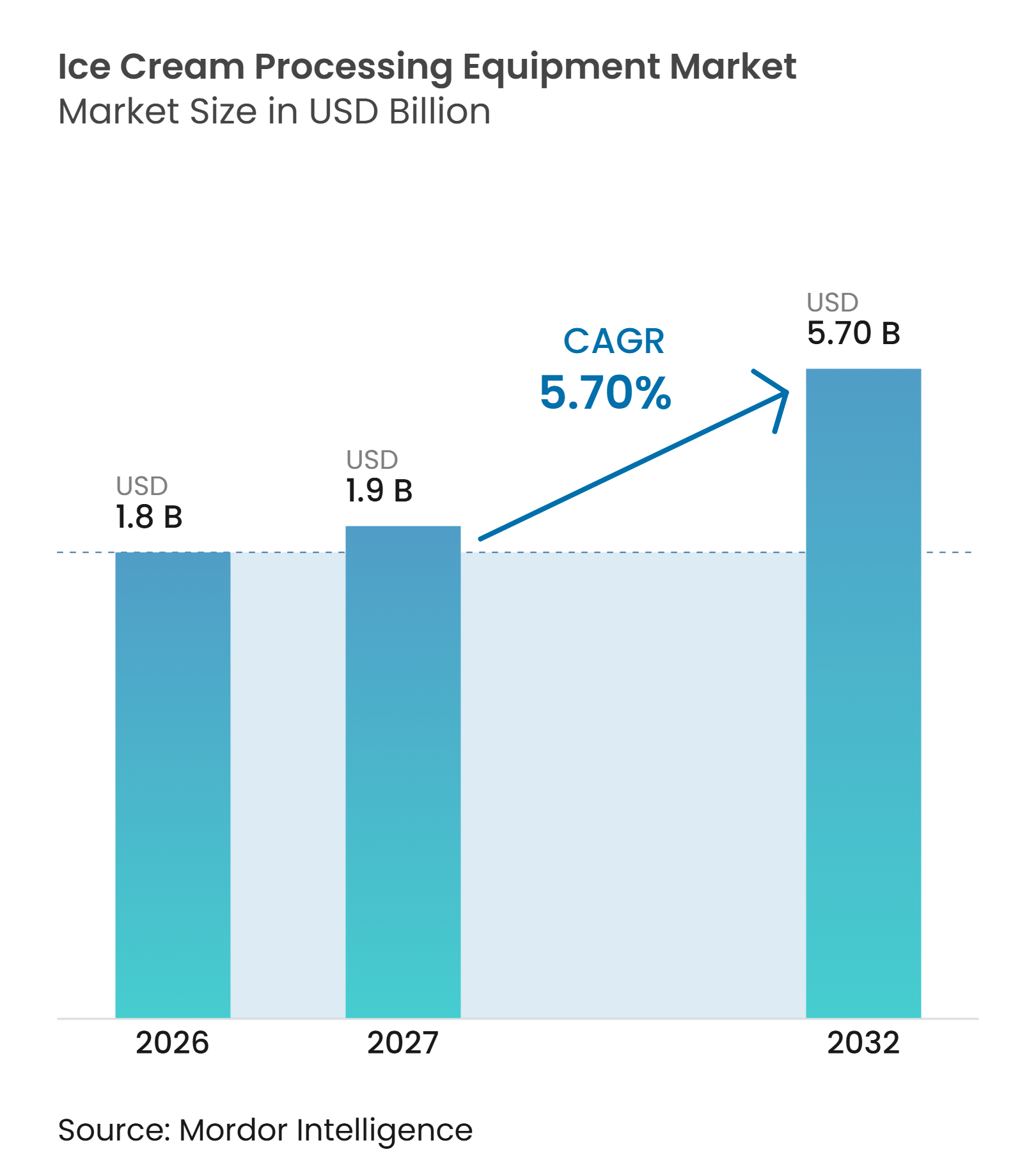
The ice cream processing equipment market size is expected to increase from USD 1.80 billion in 2026 to USD 1.90 billion in 2027 and reach USD 2.50 billion by 2032, growing at a CAGR of 5.70% over 2027–2032. Growth is supported by rising demand for premium and specialty ice cream products, increasing automation in industrial ice cream manufacturing, and investments in dairy processing and frozen dessert production capacity. Freezing equipment accounts for the largest share of the market, at 35.00% in 2026, reflecting its essential role in achieving product texture, consistency, and production efficiency. Fully automatic equipment represents the largest mode of operation segment, with a 48.00% share, and is also the fastest-growing segment, at a CAGR of 6.80%, as manufacturers increasingly adopt automated production systems to improve throughput and operational efficiency. Hard ice cream dominates the product type segment with a 43.00% share, while soft ice cream is expected to record the fastest growth at 7.00%. Industrial ice cream manufacturers account for 72.00% of the end-user segment, supported by large-scale production requirements. Geographically, North America holds the largest market share of 40.00%, while Asia-Pacific is projected to be the fastest-growing region, at a CAGR of 6.80%, supported by expanding frozen dessert production and manufacturing investments. However, high initial equipment costs, maintenance expenses, energy consumption, and complex equipment integration may constrain market expansion.
Key Report Takeaways
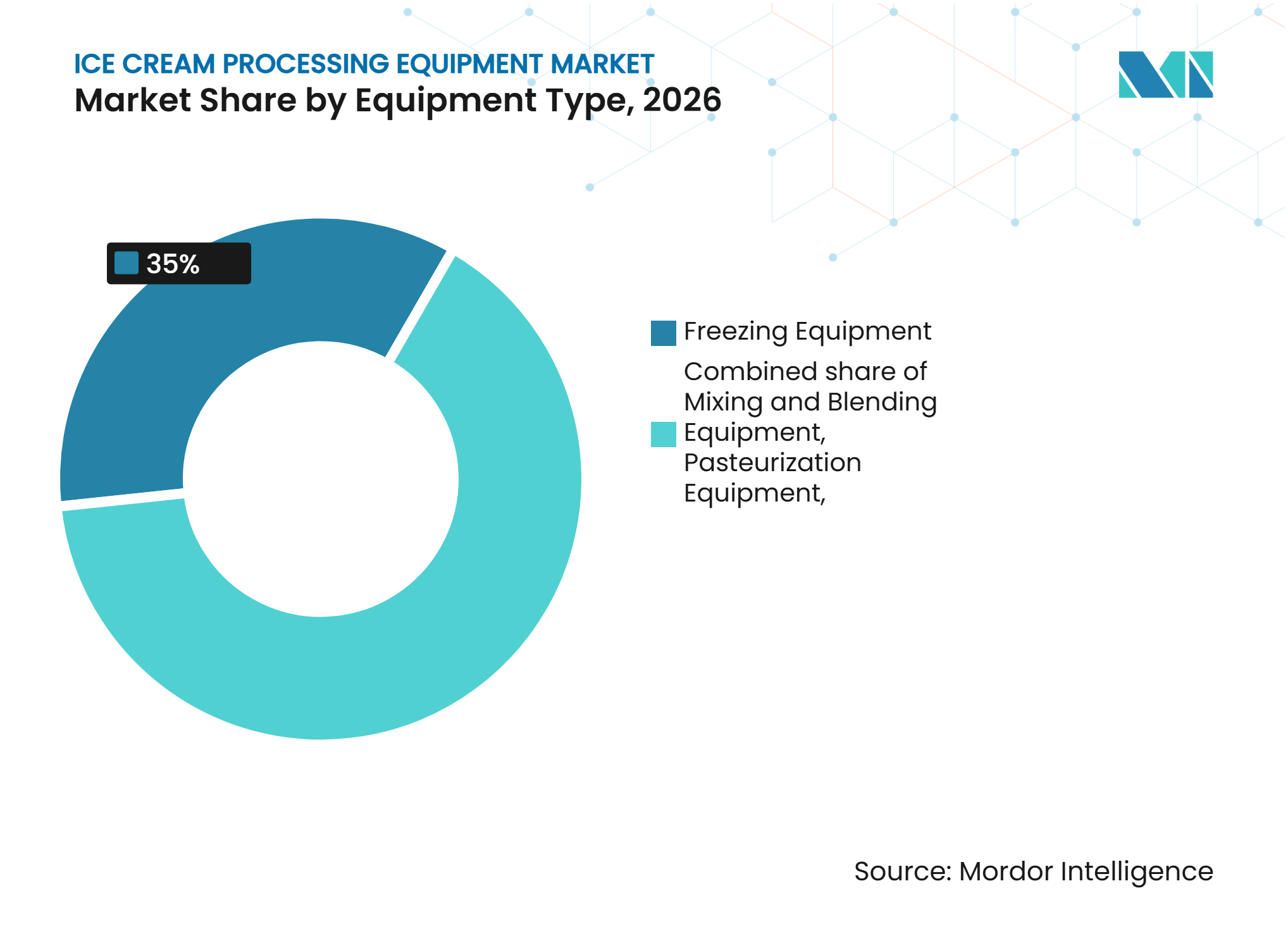
- By equipment type, freezing equipment accounted for the largest share of the ice cream processing equipment market size at 35.00% in 2026, while mixing and blending equipment is forecast to grow fastest at a 6.40% CAGR over 2026–2031.
- By mode of operation, fully automatic equipment dominated with a 48.00% market share in 2026 and is also projected to record the fastest growth at a 6.80% CAGR over 2026–2031.
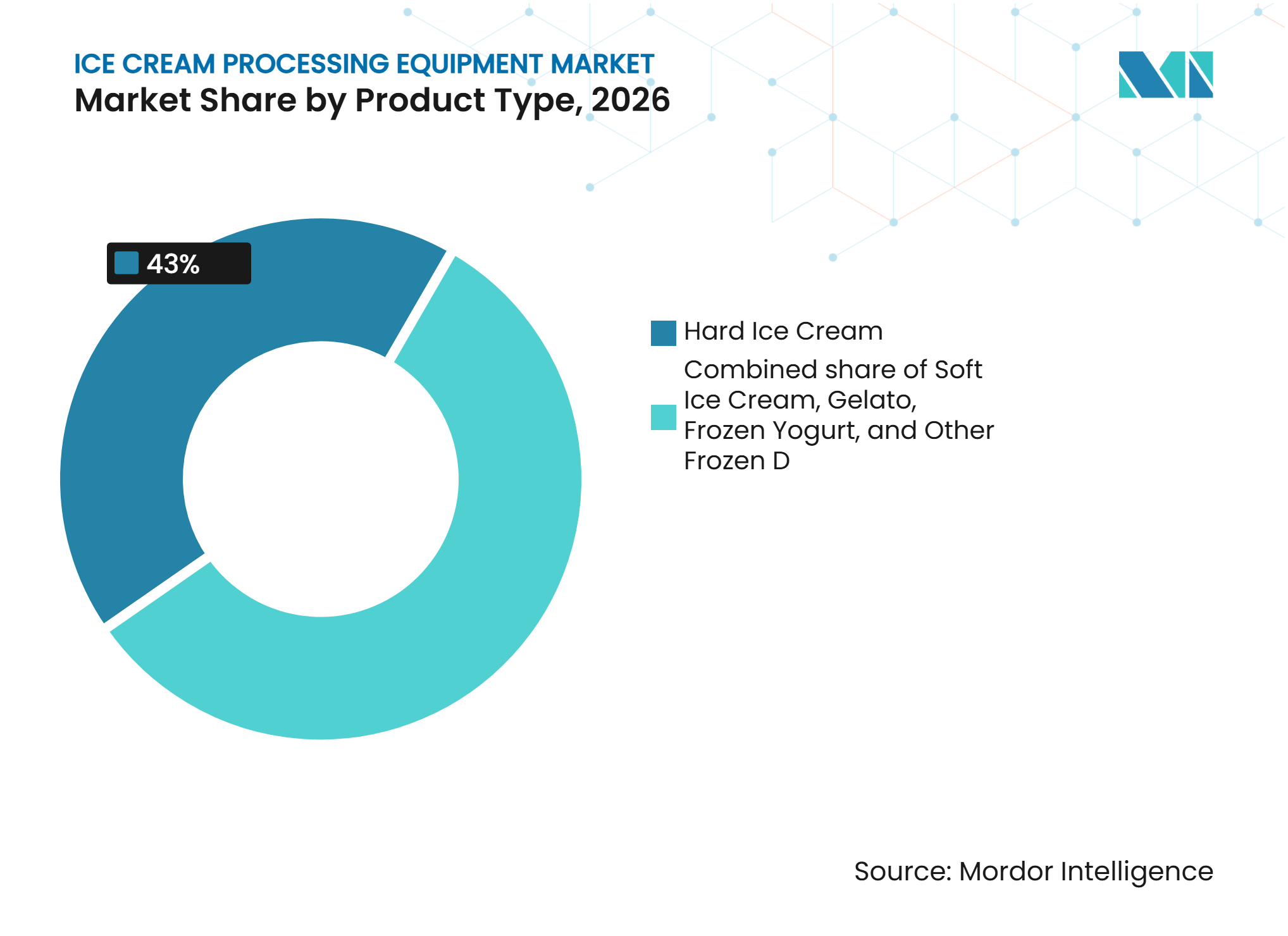
- By product type, hard ice cream accounted for the largest share at 43.00% in 2026, while soft ice cream is expected to grow fastest at a 7.00% CAGR over 2026–2031.
- By end user, industrial ice cream manufacturers led with a 72.00% share in 2026, while artisanal and small-scale ice cream manufacturers are forecast to grow fastest at a 6.80% CAGR over 2026–2031.
- Among geographies, North America held the largest share of the ice cream processing equipment market at 40.00% in 2026, while Asia-Pacific is projected to be the fastest-growing region, at a 6.80% CAGR over 2026–2031.
Note: Market numbers in this report are based on Mordor Intelligence's proprietary estimation framework, which combines nine months of actuals with Q4 projections for base year 2026.
Market Trends and Insights
Drivers of Ice Cream Processing Equipment Market*
| Driver | (~) % Impact on CAGR Forecast | Geographic Relevance | Impact Timeline |
|---|---|---|---|
| Rising demand for premium and specialty ice cream products | +0.9% | Global, particularly North America and Europe, where premium and specialty ice cream consumption is established, with growing opportunities across Asia-Pacific | 2–4 years |
| Increasing automation in industrial ice cream manufacturing | +0.8% | Global, particularly North America, Europe and Asia-Pacific, where manufacturers are investing in automated production lines | 2–4 years |
| Growing investments in dairy processing and frozen dessert production capacity | +0.7% | Global, particularly Asia-Pacific and South America, where expanding food-processing capacity supports equipment demand | More than 4 years |
| Rising demand for energy-efficient and high-capacity processing equipment | +0.6% | Global, particularly Europe and North America, where manufacturers are focused on improving energy efficiency and production performance | 2–4 years |
| Technological advancements in continuous freezing, extrusion, and filling systems | +0.5% | Global, particularly Europe, North America and Asia-Pacific, where equipment manufacturers and processors are adopting advanced production technologies | More than 4 years |
| Source: Mordor Intelligence | |||
Rising Demand for Premium and Specialty Ice Cream Products
The growing demand for premium and specialty ice cream products is encouraging manufacturers to expand product variety, introduce differentiated flavours, and develop products with varied textures, inclusions, coatings, and formats. Premium offerings such as artisanal-style ice cream, plant-based frozen desserts, and products with distinctive flavour combinations require processing systems that can handle different formulations and production requirements. Tetra Pak identifies premiumisation, natural ingredients, artisanal offerings, and more sophisticated product textures as emerging trends in India's ice cream industry [1]. This creates opportunities for equipment suppliers to provide flexible mixing, freezing, extrusion, and filling systems that support product innovation while maintaining consistency and production efficiency.
Increasing Automation in Industrial Ice Cream Manufacturing
The increasing need for higher production throughput, consistent product quality, and reduced dependence on repetitive manual operations is encouraging ice cream manufacturers to adopt automated processing equipment. Automation across filling, freezing, mixing, and product handling can improve process control, reduce labour-intensive activities, and support more consistent output across production batches. Tetra Pak's ice cream robot filler, for example, uses collaborative robotic technology to handle repetitive filling activities, allowing employees to focus on higher-value tasks [2]. As manufacturers expand production volumes and product portfolios, demand for fully automatic processing lines and integrated equipment is likely to increase, particularly among large-scale industrial producers.
Growing Investments in Dairy Processing and Frozen Dessert Production Capacity
Investments in dairy processing infrastructure and frozen dessert manufacturing facilities are creating demand for new ice cream processing equipment. As producers expand installed capacity, establish additional manufacturing locations, or upgrade existing facilities, they require equipment for mix preparation, pasteurization, homogenization, freezing, extrusion, hardening, and packaging. For example, Hindustan Foods reported an investment in expanding capacity at its ice cream plant in Lucknow during FY 2024–2025 [3]. Such capacity additions create opportunities for equipment suppliers to provide integrated processing lines and machinery suited to different production scales. Continued investment in manufacturing infrastructure can therefore support equipment demand across established and emerging ice cream markets.
Rising Demand for Energy-Efficient and High-Capacity Processing Equipment
Ice cream manufacturing involves energy-intensive operations, particularly freezing, refrigeration, hardening, and cold storage. Manufacturers are therefore seeking equipment that can increase output while improving energy use per unit of production and controlling operating expenses. Tetra Pak's high-capacity extrusion line is designed to produce up to 43,200 ice cream products per hour, with the company reporting that it can produce 60% more products using only 44% more energy compared with the referenced production configuration [4]. Such equipment characteristics demonstrate the potential for high-capacity machinery to improve production efficiency while addressing energy-cost considerations. This is encouraging manufacturers to evaluate modern extrusion lines, continuous freezers, and integrated systems that combine higher throughput with improved resource efficiency.
Technological Advancements in Continuous Freezing, Extrusion, and Filling Systems
Technological improvements in continuous freezing, extrusion, and filling systems are enabling manufacturers to improve product consistency, production flexibility, and processing efficiency. Modern continuous freezers incorporate automated controls and monitoring of key production parameters, supporting more uniform freezing and product quality. Tetra Pak's continuous freezer range, for example, includes computerised controls and monitoring systems and supports the continuous freezing and whipping of ice cream mix for different frozen dessert applications [5]. Advances in extrusion and filling equipment also allow manufacturers to produce multiple shapes, flavours, coatings, and product formats on integrated lines. These developments are increasing the relevance of technologically advanced processing equipment for producers seeking to diversify their offerings and improve manufacturing performance.
Restraints of Ice Cream Processing Equipment Market*
| Restraint | (~) % Impact on CAGR Forecast | Geographic Relevance | Impact Timeline |
|---|---|---|---|
| High initial investment and installation costs of industrial processing lines | −0.8% | Global, particularly price-sensitive markets across Asia-Pacific, South America and the Middle East and Africa, where capital constraints may delay equipment upgrades | Medium term (2–4 years) |
| High maintenance and energy consumption costs | −0.7% | Global, particularly Europe and North America, where energy expenses and equipment maintenance costs influence manufacturing economics | Medium term (2–4 years) |
| Complex equipment integration and technical skill requirements | −0.5% | Global, particularly emerging markets where limited access to specialized technical personnel may slow the adoption of advanced processing systems | Long term (More than 4 years) |
| Fluctuations in dairy ingredient costs and manufacturing investments | −0.4% | Global, particularly regions exposed to dairy input price volatility and uncertainty in food-processing capital expenditure | Short term (Less than 2 years) |
| Source: Mordor Intelligence | |||
High Initial Investment and Installation Costs of Industrial Processing Lines
Ice cream processing lines can require substantial capital investment, particularly when manufacturers establish new facilities or upgrade existing production operations with automated and high-capacity equipment. A complete processing setup may involve multiple stages, including mixing and blending, pasteurization, homogenization, freezing, extrusion, hardening, and filling, each requiring specialized machinery and supporting infrastructure. Additional expenses associated with equipment transportation, installation, commissioning, refrigeration systems, utilities, and production-line integration can further increase the initial investment. These costs can create barriers for artisanal and small-scale ice cream manufacturers, as well as producers operating in price-sensitive markets, where limited capital availability may delay capacity expansion or equipment modernization. Manufacturers therefore need to balance production capacity, automation levels, equipment efficiency, and expected operating requirements when selecting processing systems.
High Maintenance and Energy Consumption Costs
Ice cream processing equipment requires regular maintenance and substantial energy input to maintain consistent production conditions, particularly during pasteurization, freezing, hardening, and refrigeration operations. Continuous freezers, homogenizers, pumps, compressors, and automated filling systems contain mechanical, electrical, and refrigeration components that require periodic inspection, servicing, and replacement of worn parts. Equipment downtime during maintenance can also interrupt production schedules, reduce throughput, and increase operating costs for manufacturers. In addition, energy-intensive freezing and cooling operations expose producers to fluctuations in electricity prices, making operating expenses more difficult to manage. These costs can be particularly challenging for small and medium-sized manufacturers with limited maintenance budgets or older production lines. Consequently, manufacturers must consider energy efficiency, equipment reliability, maintenance requirements, and lifecycle costs when investing in ice cream processing systems.
*Our forecasts treat driver/restraint impacts as directional, not additive. The impact forecasts reflect baseline growth, mix effects, and variable interactions.
Ice Cream Processing Equipment Market Segment Analysis
By Equipment Type:
Freezing Equipment Leads While Mixing and Blending Equipment Expands FasterIn 2026, freezing equipment accounted for an estimated 35.00% of the ice cream processing equipment market, making it the leading equipment type. Its position reflects the essential role of freezing systems in converting prepared ice cream mixes into products with the required texture, consistency, and overrun. Industrial manufacturers rely on continuous freezers and batch freezing systems to control product temperature and incorporate air during processing. Meanwhile, mixing and blending equipment is projected to record the fastest growth, at an estimated CAGR of 6.40% over 2026–2031. Increasing product variety, including premium flavours and formulations with inclusions, is supporting demand for equipment that can deliver consistent ingredient dispersion and flexible mix preparation.
Pasteurization equipment remains an important part of processing lines because it supports the heat treatment of ice cream mixes before subsequent processing stages. Other equipment, including homogenizers, hardening systems, and supporting machinery, contributes to product quality and production-line efficiency. Demand across equipment categories will depend on manufacturers' production scale, product portfolios, automation requirements, and investment in upgrading existing facilities.



By Mode of Operation:
Fully Automatic Equipment Leads and Records the Fastest GrowthIn 2026, fully automatic equipment accounted for an estimated 48.00% of the ice cream processing equipment market, making it the leading mode of operation. Its position reflects the need for consistent production output, controlled processing conditions, and reduced reliance on manual intervention across industrial manufacturing operations. Automated systems can coordinate multiple stages, including mix preparation, freezing, filling, and product handling, helping manufacturers improve production-line efficiency and maintain uniform product quality. Fully automatic equipment is also projected to record the fastest growth, at an estimated CAGR of 6.80% over 2026–2031. The growing adoption of integrated processing lines and automated controls is supporting demand from large-scale manufacturers seeking higher throughput and improved process consistency.
Semi-automatic equipment continues to serve manufacturers that require a degree of automation while retaining manual control over selected production activities. Manual equipment remains relevant for small-scale and artisanal producers that prioritize lower initial investment, smaller production batches, and flexibility in product preparation. However, differences in capital availability, production volume, labour costs, and technical capabilities will influence the adoption of each operating mode.
By Product Type:
Hard Ice Cream Leads While Soft Ice Cream Expands FasterIn 2026, hard ice cream accounted for an estimated 43.00% of the ice cream processing equipment market by product type, making it the leading segment. Its position reflects the established production of hard ice cream across industrial manufacturing facilities and the need for specialized equipment to support mix preparation, continuous freezing, hardening, and packaging. Manufacturers producing packaged ice cream for retail distribution require processing systems capable of maintaining product consistency and supporting large production volumes. Meanwhile, soft ice cream is projected to record the fastest growth, at an estimated CAGR of 7.00% over 2026–2031. Demand from foodservice establishments and commercial outlets is supporting the need for equipment that can prepare and dispense soft ice cream efficiently across different serving formats.
Gelato production requires equipment that can accommodate specific formulation, freezing, and texture requirements, creating demand among specialized and artisanal producers. Frozen yogurt and other frozen desserts also contribute to equipment demand as manufacturers diversify their product portfolios beyond conventional ice cream. Processing equipment suppliers therefore need to offer flexible systems that can accommodate different product formulations, textures, production volumes, and serving formats.

By End User:
Industrial Ice Cream Manufacturers Lead While Artisanal and Small-Scale Producers Expand FasterIn 2026, industrial ice cream manufacturers accounted for an estimated 72.00% of the ice cream processing equipment market by end user, making them the largest customer group. Their dominance reflects the need for high-capacity machinery and integrated production lines across large-scale manufacturing facilities. These manufacturers invest in mixing and blending systems, pasteurization units, homogenizers, continuous freezers, filling lines, and hardening equipment to support high-volume production and consistent product quality. Meanwhile, artisanal and small-scale ice cream manufacturers are projected to record the fastest growth, at an estimated CAGR of 6.80% over 2026–2031. The expansion of specialized ice cream businesses and demand for differentiated products are creating opportunities for compact, flexible, and lower-capacity processing systems.
Foodservice and commercial outlets represent another end-user category, requiring equipment suited to on-site preparation and serving operations. Their requirements generally differ from those of industrial manufacturers, with greater emphasis on compact designs, ease of operation, and serving efficiency. Equipment suppliers therefore serve a varied customer base, ranging from large manufacturing plants to smaller producers and commercial operators, each with distinct capacity and investment requirements.
Geography Analysis
North America Ice Cream Processing Equipment Market
North America accounted for an estimated 40.00% of the ice cream processing equipment market in 2026, making it the largest regional market. The region's established ice cream manufacturing industry supports demand for equipment used in mix preparation, pasteurization, freezing, extrusion, and automated filling. The United States is a key market, with large-scale manufacturers and food-processing companies requiring high-capacity machinery to maintain production efficiency and product consistency. Canada and Mexico also contribute to regional demand through their dairy processing and frozen dessert industries. Equipment suppliers can address opportunities through automated production lines, energy-efficient freezing systems, and machinery that supports premium and specialty ice cream formats.
North America Ice Cream Processing Equipment Market
North America accounted for an estimated 40.00% of the ice cream processing equipment market in 2026, making it the largest regional market. The United States is an important centre for industrial ice cream production, supported by an established network of processing facilities and large-scale manufacturers. According to the Agricultural Marketing Resource Center, the United States produced 845 million gallons of regular ice cream and 381 million gallons of low-fat ice cream in 2025. This established production base supports demand for freezing, pasteurization, mixing, and automated filling equipment. Canada and Mexico also contribute to regional opportunities through their dairy processing and frozen dessert industries. Equipment suppliers can benefit from investments in production-line modernization, energy-efficient machinery, and automated processing systems.
Asia-Pacific Ice Cream Processing Equipment Market
Asia-Pacific is projected to be the fastest-growing regional market, with an estimated CAGR of 6.80% over 2026–2031. India is an important growth market, supported by investments in large-scale ice cream manufacturing facilities. For example, Lotte Wellfood inaugurated an ice cream manufacturing facility in Pune in February 2025, with an annual production capacity of 50 million litres, backed by an investment of INR 500 crore. Such capacity additions create opportunities for suppliers of industrial freezers, mixing and blending systems, pasteurization equipment, and automated production lines. China, Japan, South Korea, Indonesia, and other regional markets also offer opportunities through established food-processing industries and expanding frozen dessert production. Manufacturers and equipment suppliers will need to address varying production scales, automation requirements, and product preferences across the region.
Competitive Landscape
Market Concentration
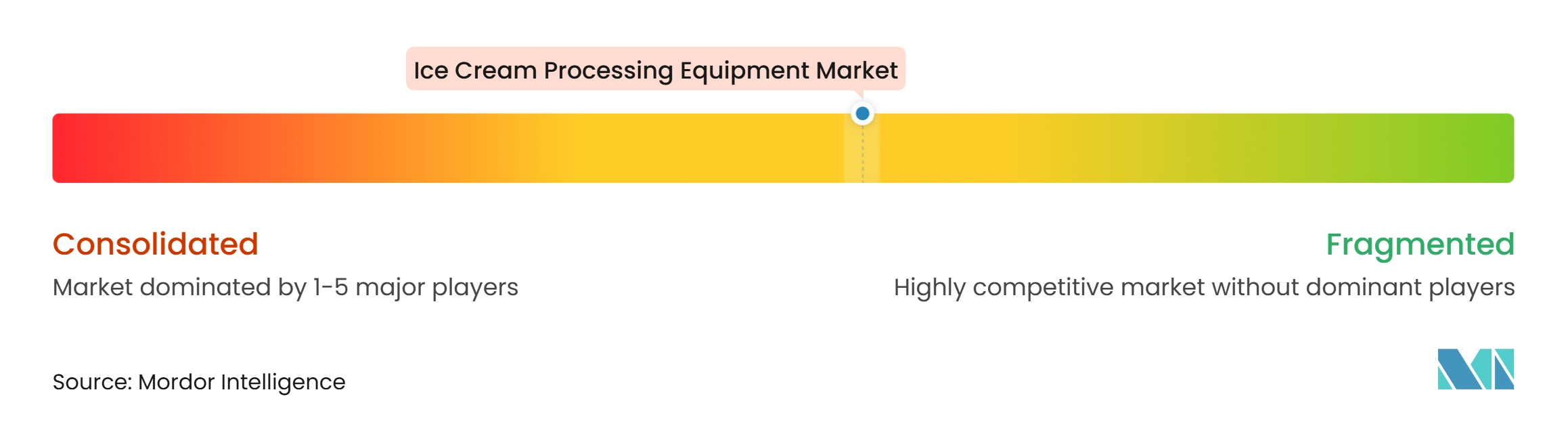
The Ice Cream Processing Equipment Market includes multinational food processing equipment manufacturers, specialized ice cream machinery suppliers, refrigeration technology providers, and manufacturers of commercial ice cream equipment. Companies compete through equipment performance, production capacity, automation capabilities, technological innovation, after-sales services, and geographic reach. GEA Group, Tetra Pak, Alfa Laval, and JBT Marel participate through broader food processing and industrial equipment portfolios, while specialized suppliers such as Gram Equipment, Technogel, Teknoice, Frigomat, and Carpigiani focus more directly on ice cream manufacturing and dispensing systems. These companies have varying levels of exposure across mixing, pasteurization, freezing, extrusion, filling, and other processing equipment categories.
Competitive strategies in the Ice Cream Processing Equipment Market focus on developing automated production lines, improving processing efficiency, expanding equipment capabilities, and supporting manufacturers with different production requirements. For example, Tetra Pak offers integrated ice cream processing solutions, including continuous freezers, extrusion lines, and automated filling systems. Gram Equipment provides specialized machinery and production-line solutions for industrial ice cream manufacturing, while Technogel and Teknoice offer equipment for processing and producing different ice cream formats. Carpigiani and Frigomat address commercial and artisanal production requirements through machinery designed for gelato, ice cream, and frozen dessert preparation. These offerings allow suppliers to differentiate through production capacity, equipment flexibility, automation, and application-specific capabilities.
Technological capabilities, equipment reliability, and after-sales support remain important competitive considerations. Manufacturers increasingly require machinery that can accommodate changing product formulations, improve production consistency, reduce energy consumption, and integrate with existing processing facilities. Suppliers with established installation, maintenance, and technical support networks can strengthen customer relationships, particularly when serving large industrial manufacturers operating continuous production lines. However, high equipment acquisition costs, complex installation requirements, maintenance expenses, and the need for specialized technical personnel can influence purchasing decisions. Equipment manufacturers must therefore balance technological advancement with operational reliability, lifecycle costs, production flexibility, and customer-specific requirements to maintain their competitive positions.
Ice Cream Processing Equipment Industry Leaders
-
GEA Group Aktiengesellschaft
-
Gram Equipment A/S
-
Tetra Pak International S.A.
-
Technogel S.p.A.
-
JBT Marel Corporation
- *Disclaimer: Major Players sorted in no particular order
Ice Cream Processing Equipment Market Companies Covered in this Report
- GEA Group Aktiengesellschaft
- Tetra Pak International S.A.
- Gram Equipment A/S
- Technogel S.p.A.
- Teknoice S.r.l.
- Carpigiani Group (Ali Group)
- Alfa Laval AB
- JBT Marel Corporation
- Ice Make Refrigeration Limited
- Frigomat S.r.l.
- Cattabriga (Ali Group)
- Electro Freeze (H.C. Duke & Son, LLC)
Recent Industry Developments in Ice Cream Processing Equipment Market
- September 2026: Tetra Pak showcased its end-to-end ice cream processing solutions at the Indian Ice Cream Congress & Exhibition (IICE) 2026 in Chennai. The portfolio included the Rotary Moulder 27 A4 complete line, High Shear Mixers, Continuous Freezers, ingredient dosing systems, and pump stations. The showcase highlighted technologies designed to improve production efficiency, control overrun, maintain product consistency, and support higher-capacity manufacturing.
- July 2026: Glacier announced a EUR 45 million investment programme to expand its European ice cream manufacturing capacity. The investment included two new production lines in Italy for extruded ice creams and moulded ice lollies, alongside additional warehousing, automation capabilities, and cooling facility upgrades in Belgium. The programme also included a high-capacity ice cream bites line designed to produce 50,000 units per hour, strengthening the company's manufacturing capabilities across different frozen dessert formats
- June 2026: Hangyo Ice Creams inaugurated a new manufacturing facility in Tirupati, Andhra Pradesh, India, with a production capacity of 100,000 litres per day. The facility incorporates automated production systems, modern cold-chain infrastructure, and quality-control technologies. The expansion strengthens the company's manufacturing capacity and reflects investment in advanced production infrastructure to support growing demand for ice cream and frozen desserts.
- March 2026: Gram Equipment highlighted advancements in industrial continuous freezing technology through its article on improving ice cream quality and production efficiency. The company discussed the role of precise temperature, airflow, and overrun control in maintaining product consistency, alongside automation features designed to reduce start-up waste and improve operational efficiency.
Global Ice Cream Processing Equipment Market Report Scope
For this study, the Ice Cream Processing Equipment Market is defined as the sales value of equipment used in the industrial and commercial production of ice cream and other frozen desserts. The market covers mixing and blending equipment, pasteurization equipment, freezing equipment, and other processing equipment, segmented by mode of operation into manual, semi-automatic, and fully automatic systems; by product type into hard ice cream, soft ice cream, gelato, frozen yogurt, and other frozen desserts; and by end user into industrial ice cream manufacturers, artisanal and small-scale ice cream manufacturers, and foodservice and commercial outlets. The market is analyzed across North America, Europe, Asia-Pacific, South America, and the Middle East and Africa, with country-level coverage as specified in the report. Market sizing and forecasts are presented in value terms (USD) across the defined segments and geographies.
Segmentation Overview
| Mixing and Blending Equipment | Pasteurization Equipment |
| Freezing Equipment | |
| Other Equipment |
| Manual | Semi-Automatic |
| Fully Automatic |
| Hard Ice Cream | Soft Ice Cream |
| Gelato | |
| Frozen Yogurt and Other Frozen Desserts |
| Industrial Ice Cream Manufacturers | Artisanal and Small-Scale Ice Cream Manufacturers |
| Foodservice and Commercial Outlets |
| North America | United States |
| Canada | |
| Mexico | |
| Rest of North America | |
| Europe | United Kingdom |
| Germany | |
| France | |
| Italy | |
| Spain | |
| Sweden | |
| Belgium | |
| Poland | |
| Netherlands | |
| Rest of Europe | |
| Asia-Pacific | China |
| Japan | |
| India | |
| Thailand | |
| Singapore | |
| Indonesia | |
| South Korea | |
| Australia | |
| Rest of Asia-Pacific | |
| South America | Brazil |
| Argentina | |
| Colombia | |
| Peru | |
| Chile | |
| Rest of South America | |
| Middle East and Africa | South Africa |
| Saudi Arabia | |
| United Arab Emirates | |
| Nigeria | |
| Egypt | |
| Morocco | |
| Turkey | |
| Rest of Middle East and Africa |
| By Equipment Type | Mixing and Blending Equipment | Pasteurization Equipment |
| Freezing Equipment | ||
| Other Equipment | ||
| By Mode of Operation | Manual | Semi-Automatic |
| Fully Automatic | ||
| By Product Type | Hard Ice Cream | Soft Ice Cream |
| Gelato | ||
| Frozen Yogurt and Other Frozen Desserts | ||
| By End User | Industrial Ice Cream Manufacturers | Artisanal and Small-Scale Ice Cream Manufacturers |
| Foodservice and Commercial Outlets | ||
| By Geography | North America | United States |
| Canada | ||
| Mexico | ||
| Rest of North America | ||
| Europe | United Kingdom | |
| Germany | ||
| France | ||
| Italy | ||
| Spain | ||
| Sweden | ||
| Belgium | ||
| Poland | ||
| Netherlands | ||
| Rest of Europe | ||
| Asia-Pacific | China | |
| Japan | ||
| India | ||
| Thailand | ||
| Singapore | ||
| Indonesia | ||
| South Korea | ||
| Australia | ||
| Rest of Asia-Pacific | ||
| South America | Brazil | |
| Argentina | ||
| Colombia | ||
| Peru | ||
| Chile | ||
| Rest of South America | ||
| Middle East and Africa | South Africa | |
| Saudi Arabia | ||
| United Arab Emirates | ||
| Nigeria | ||
| Egypt | ||
| Morocco | ||
| Turkey | ||
| Rest of Middle East and Africa | ||
Key Questions Answered in the Report
What is the projected size of the Ice Cream Processing Equipment Market?
The Ice Cream Processing Equipment Market is estimated at USD 1.8 billion in 2026 and is projected to reach USD 2.5 billion by 2032, growing at an estimated CAGR of 5.70% over 2027–2032.
Which equipment type holds the largest share of the Ice Cream Processing Equipment Market?
Freezing equipment holds the largest share, accounting for 35.00% of the Ice Cream Processing Equipment Market in 2026.
Which segment is expected to grow fastest in the Ice Cream Processing Equipment Market?
Soft ice cream processing equipment is expected to record the fastest growth by product type, with a projected CAGR of 7.00% over 2026–2031.
Which region dominates the Ice Cream Processing Equipment Market?
North America dominates the market, accounting for 40.00% of the market share in 2026, while Asia-Pacific is projected to be the fastest-growing region, registering a CAGR of 6.80% over 2026–2031.