
Guided Biofilm Therapy Market Size and Share
Market Overview
| Study Period | 2020 - 2031 |
|---|---|
| Market Size (2026) | USD 1.14 Billion |
| Market Size (2031) | USD 1.78 Billion |
| Growth Rate (2026 - 2031) | 9.36 % |
| Fastest Growing Market | Asia-Pacific |
| Largest Market | North America |
| Market Concentration | Medium |
Major Players *Disclaimer: Major Players sorted in no particular order Image © Mordor Intelligence. Reuse requires attribution under CC BY 4.0. | |
Guided Biofilm Therapy Market Analysis by Mordor Intelligence
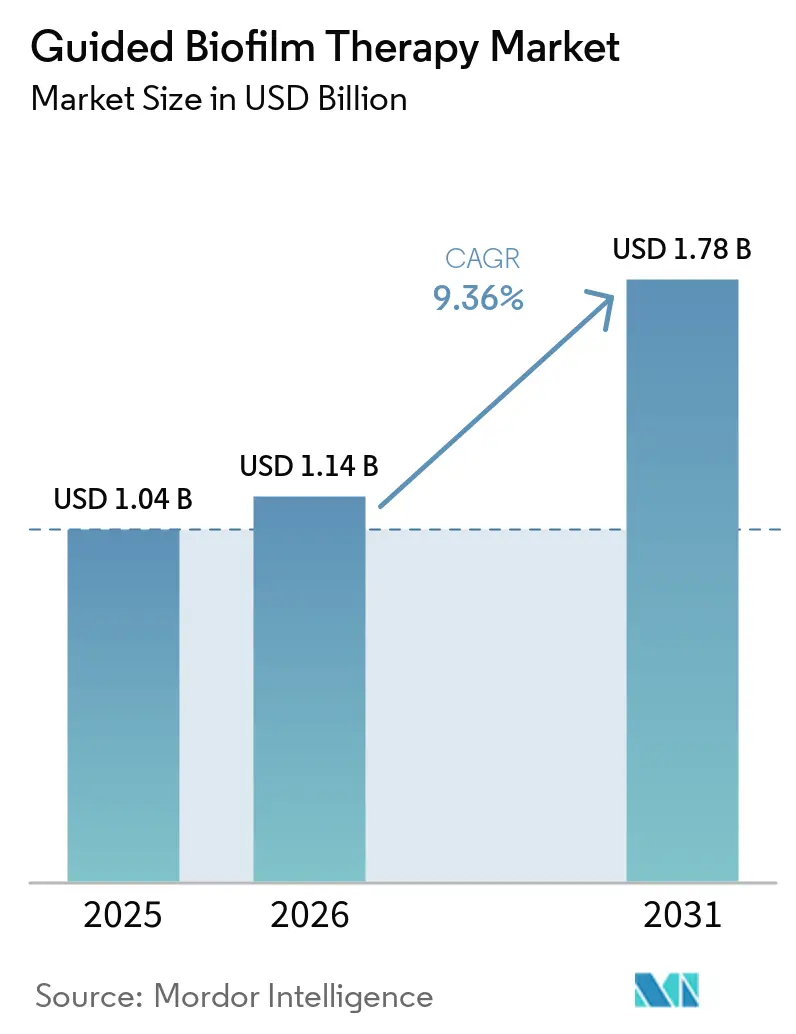
The Guided Biofilm Therapy Market size was valued at USD 1.04 billion in 2025 and is estimated to grow from USD 1.14 billion in 2026 to reach USD 1.78 billion by 2031, at a CAGR of 9.36% during the forecast period (2026-2031).
The guided biofilm therapy market is moving prophylaxis away from a commodity procedure and toward a defined clinical service. Its eight-step protocol combines disclosure, assessment, air polishing, subgingival removal, pocket cleaning, calculus removal, fluoride application, and recall scheduling. This approach gives practices a repeatable way to manage biofilm while improving patient comfort and appointment consistency. Dental service organizations and group practices can use the workflow to support clinical quality and hygiene throughput at the same time. As adoption extends outside Europe, the guided biofilm therapy market is also shifting from one-time equipment revenue toward recurring powders, tips, training, and service activity.
Key Report Takeaways
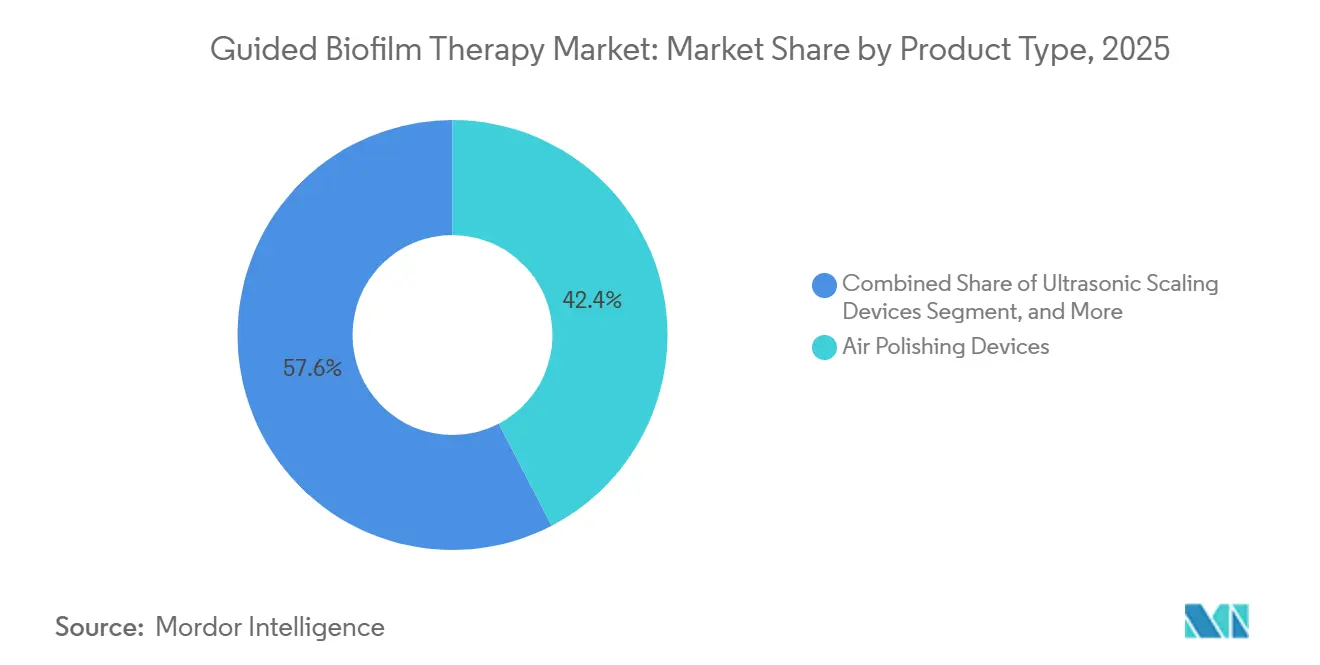
- By product type, air polishing devices held 42.37% of the guided biofilm therapy market share in 2025, while ultrasonic scaling devices are forecast to grow at a 9.82% CAGR through 2031.
- By indication, periodontal disease held 38.56% of the guided biofilm therapy market share in 2025, while peri-implantitis is forecast to grow at a 10.17% CAGR through 2031.
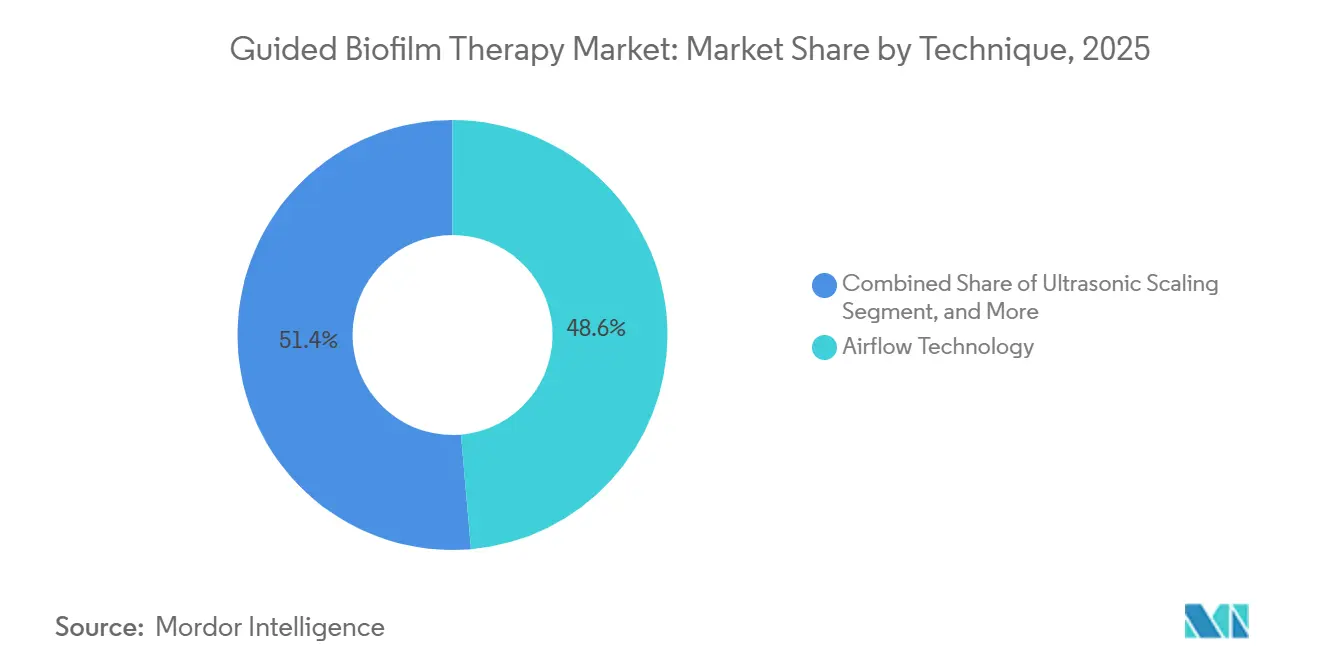
- By technique, airflow technology held 48.63% of the guided biofilm therapy market share in 2025, while ultrasonic scaling is forecast to grow at a 10.79% CAGR through 2031.
- By technology, air polishing systems held 41.59% of the guided biofilm therapy market share in 2025, while biofilm disclosure and visualization systems are forecast to grow at an 11.63% CAGR through 2031.
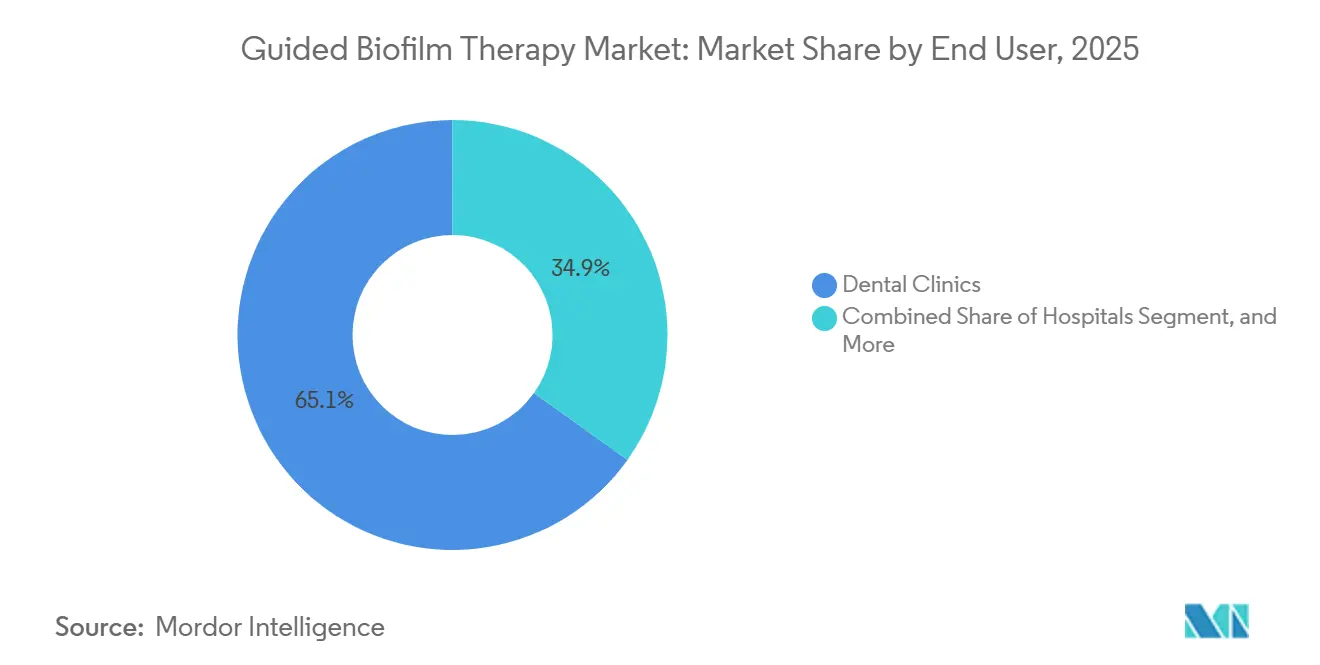
- By end user, dental clinics held 65.13% of the guided biofilm therapy market share in 2025, while hospitals are forecast to grow at a 12.58% CAGR through 2031.
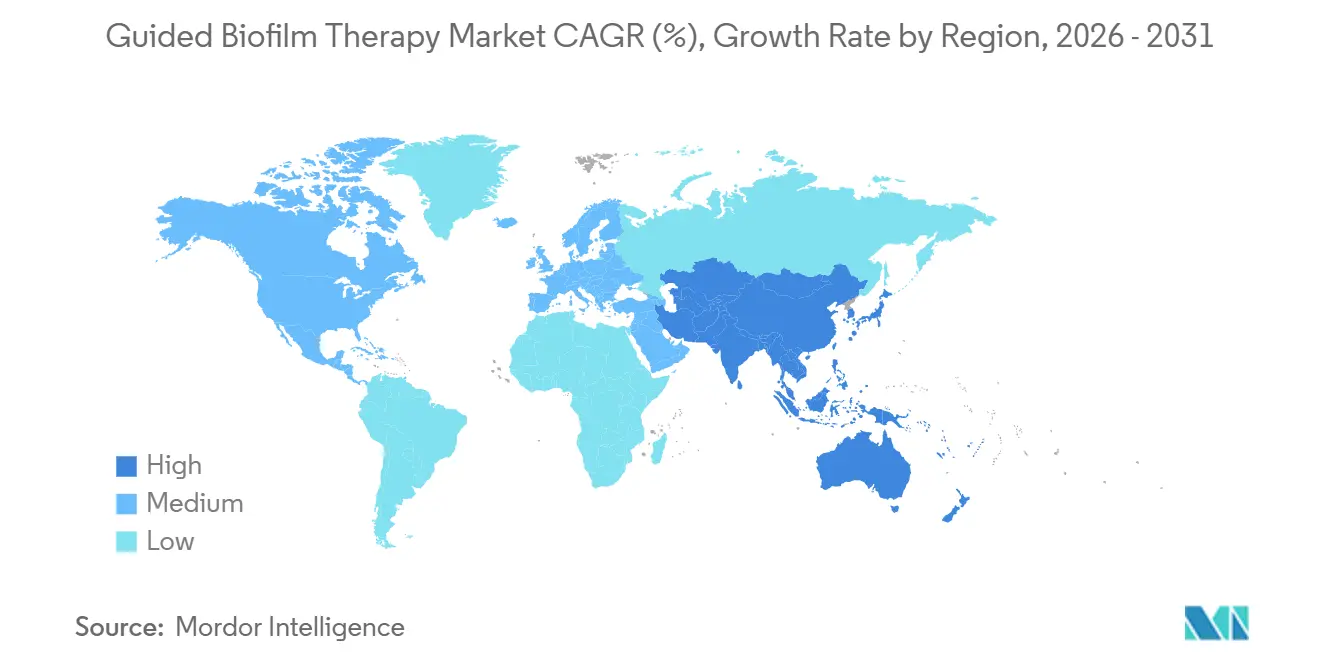
- By geography, North America held 39.16% of guided biofilm therapy market share in 2025, while Asia-Pacific is forecast to grow at a 13.57% CAGR through 2031.
Note: Market size and forecast figures in this report are generated using Mordor Intelligence’s proprietary estimation framework, updated with the latest available data and insights as of January 2026.
Market Trends and Insights
Drivers Impact Analysis of Guided Biofilm Therapy Market*
| Driver | (~) % Impact on CAGR Forecast | Geographic Relevance | Impact Timeline |
|---|---|---|---|
| Adoption of Minimally Invasive Periodontal Care | +2.0% | Global, concentrated in North America and Europe | Short term (≤ 2 years) |
| Prevalence of Periodontal Disease and Peri-Implant Conditions | +1.8% | Global, highest in South Asia and East Asia | Short term (≤ 2 years) |
| Preventive and Supportive Maintenance Dentistry | +1.5% | North America, Western Europe, and Japan | Medium term (2-4 years) |
| Integration of Air Polishing and Ultrasonic Workflows | +1.2% | Global, led by North America and Europe | Short term (≤ 2 years) |
| GBT Certification, Training, and Practice Differentiation | +0.9% | North America, Europe, and core APAC markets | Medium term (2-4 years) |
| Smart Connectivity and Treatment-Data Tracking | +0.6% | North America and the European Union, with expansion to APAC | Long term (≥ 4 years) |
| Source: Mordor Intelligence | |||
Increasing Adoption of Minimally Invasive Periodontal Care
Patient demand for more comfortable procedures is strengthening the position of minimally invasive periodontal care in the guided biofilm therapy market. Erythritol-based air polishing supports supra- and subgingival biofilm removal across implant maintenance, orthodontic care, and peri-implant applications. A randomized clinical study found comparable pocket-depth outcomes for guided biofilm therapy and conventional instrumentation in Stage III and IV non-surgical periodontal therapy.[1] The defined sequence can reduce uncertainty during hygiene appointments and make recall visits easier to plan. This can support more consistent productivity for dental service organizations and group practices. The clinical workflow, therefore, gives these providers a reason to evaluate the protocol beyond equipment performance alone. It also links the quality of the patient visit to a repeatable sequence, which is useful where practices need to maintain consistent service across several locations. The benefit is not only the selected instrument, but also the ability to use the same order of care in daily preventive and periodontal appointments.
Rising Prevalence of Periodontal Disease and Peri-Implant Conditions
The burden of periodontal disease is increasing the need for structured biofilm management in the guided biofilm therapy market. A 2025 Global Burden of Disease analysis reported that more than 1.07 billion people had severe periodontitis worldwide. It reported South Asia’s age-standardized rate at 17,566.1 cases per 100,000 people, while India and China each had more than 200 million cases. A 2025 AO/AAP review found that a history of periodontitis was associated with an odds ratio of 2.92 for peri-implantitis.[2] The same clinical continuum links periodontal management with implant longevity and repeat maintenance needs. Obesity and type 2 diabetes were also identified as peri-implantitis risk indicators in the review, which widens the group of patients who may require careful supportive care.[3] The relationship does not make every patient a candidate for the same procedure, but it increases the importance of routine assessment and maintenance. This supports a broader need for workflows that can be followed consistently across periodontal and implant-related recall visits.
Expansion of Preventive and Supportive Maintenance Dentistry
Preventive dentistry reimbursement is making recall-visit economics more important for the guided biofilm therapy market. Germany’s Federal Joint Committee updated its periodontal treatment directive in December 2024, with provisions effective from January 2025 and July 2025. The directive requires anti-infective subgingival biofilm disruption for pockets measuring 4 mm or more within funded closed periodontal treatment. A 2025 German adaptation of the European Federation of Periodontology guideline also sets lifelong supportive periodontal therapy as the fourth phase of care. These rules encourage practices to use systems that can support standardized and documented biofilm management. Practices can also use patient comfort as a service distinction during recurring care visits. The German pathway is important because it joins clinical requirements with funded treatment and ongoing maintenance. This creates a clearer reason for practices to assess whether their equipment can support both delivery and documentation of the required care.
Integration of Air Polishing and Ultrasonic Workflows
Procurement is shifting from a single-device decision toward a connected platform decision in the guided biofilm therapy market. Air polishing and ultrasonic scaling serve as consecutive steps rather than mutually exclusive procedures. EMS introduced its GBT Machine in 2025 with automatic handpiece recognition and an automated protocol mode. This type of design can reduce variation in operation among hygienists with different levels of experience. Once a practice selects a platform, its choice of powder, tips, and irrigation solutions may become tied to that system. Manufacturers, therefore, have an incentive to build recurring consumable demand alongside device sales. The choice of a platform can affect later purchasing because specific powders, scaler tips, and irrigation solutions are used throughout the care sequence. This makes the commercial relationship extend beyond the initial capital purchase and into regular clinic operations.
Restraints Impact Analysis of Guided Biofilm Therapy Market*
| Restraint | (~) % Impact on CAGR Forecast | Geographic Relevance | Impact Timeline |
|---|---|---|---|
| Capital Cost and Consumables Dependence | -1.2% | Global, most acute in emerging APAC markets and South America | Short term (≤ 2 years) |
| Limited Awareness and Uneven Clinician Training | -0.8% | Global, especially emerging APAC markets, the Middle East and Africa, and South America | Medium term (2-4 years) |
| Protocol Standardization and Evidence-Transfer Gaps | -0.5% | Global | Medium term (2-4 years) |
| Aerosol, Powder, and Waterline Management Concerns | -0.3% | Global, concentrated in markets with strict infection-control standards | Short term (≤ 2 years) |
| Source: Mordor Intelligence | |||
High Capital Cost and Consumables Dependence
Capital investment is a direct barrier to guided biofilm therapy market adoption, especially for small practices in cost-sensitive regions. A complete workstation includes the platform, air-polishing and pocket-cleaning handpieces, training, certification, and replenishment of powders and tips. Powder and tip orders can recur every 2-4 weeks, creating ongoing operating costs after the initial purchase. In lower-income markets, longer payback periods can deter solo practices and small groups. Some providers instead choose mid-tier glycine-based combination scalers as an entry route, which can fragment protocol use and clinical evidence. Geographic concentration in erythritol and high-purity glycine production also creates an exposure to supply-side price pressure. This risk can be more difficult for clinics to manage than the initial device cost because it appears within the recurring budget for each active treatment schedule. A provider evaluating the protocol must therefore consider both capital spending and the continuing cost of maintaining the required consumable supply.
Limited Awareness and Uneven Clinician Training
Limited clinician familiarity remains a constraint for the guided biofilm therapy market where general practitioners shape referral patterns and hygiene services. EMS stated that its Swiss Dental Academy delivered more than 8,000 courses worldwide in 2025 across 41 operating countries. That reach remains limited against the global dental workforce needed for broad protocol use. Urban academic centers have more access to postgraduate teaching and accredited workshops than rural and peri-urban practitioners. Digital and hybrid programs can widen access, but language-localized training remains limited in parts of Southeast Asia, South America, the Middle East, and Africa. Without hands-on instruction, practices may use selected techniques rather than implement the full protocol, which also limits recurring consumable demand. This also means that local adoption can be concentrated around academic centers and large urban practices, even within the same country. Broader training access is needed for the protocol to move from selected technique use toward consistent service delivery across more practice settings.
*Our forecasts treat driver/restraint impacts as directional, not additive. The impact forecasts reflect baseline growth, mix effects, and variable interactions.
Guided Biofilm Therapy Market Segment Analysis
By Product Type:
Platform Devices Support Recurring Consumable DemandAir polishing devices held 42.37% of the guided biofilm therapy market share in 2025. They serve as the main biofilm-removal instrument within the protocol and support frequent demand for powders, nozzles, and tips. GBT kits combine hardware with certification-entry materials, which can simplify the first purchasing decision for new users. These kits are relevant for dental service organizations entering preventive dentistry services. Accessories and consumables give manufacturers a revenue stream that does not depend on hardware replacement timing. Powder and tip replenishment every 2-4 weeks can make utilization more predictable after a platform is installed.
Ultrasonic scaling devices are forecast to grow at a 9.82% CAGR through 2031 within the guided biofilm therapy market. In the protocol, ultrasonic instruments address calculus after disclosure and air polishing have cleared biofilm from the surface. This is a more targeted use than traditional full-arch scaling. NSK introduced the Perio-Mate subgingival air polisher in the United States in February 2025, expanding its periodontal care offering. Purpose-specific tips for implants, periodontal sites, and ceramic-safe surfaces can add to accessory demand. The other category includes compact portable air polishers that can support outreach and mobile dentistry programs in Asia-Pacific and the Middle East. These formats extend the addressable use case beyond fixed dental operatories without changing the central role of air polishing in the protocol. Their relevance remains focused on community programs and mobile settings, while platform devices, consumables, and ultrasonic accessories continue to account for the established commercial structure.

By Indication:
Periodontal Care Provides Volume While Peri-Implant Care ExpandsPeriodontal disease accounted for 38.56% of the guided biofilm therapy market size in 2025. The segment benefits from long-established supportive periodontal therapy and frequent maintenance appointments. Standalone dental biofilm management includes routine prophylaxis for patients without active periodontal disease. This segment benefits where patients seek professional cleaning more frequently than an annual visit. Orthodontic care is also expanding because adult aligner treatment creates more patients needing biofilm control around fixed and removable appliances. Air polishing can address this need without relying on rotary polishing, where enamel abrasion is a concern.
Peri-implantitis is forecast to grow at a 10.17% CAGR through 2031. An AO/AAP review reported peri-implantitis in 21% of implant patients and peri-implant mucositis in 46% of implant patients. The growing implant-treated population increases the need for maintenance at intervals of 3-6 months. A 2025 consensus report described supportive peri-implant maintenance as central to long-term management. This supports demand for instruments designed for peri-implant surface decontamination. Other uses include peri-mucositis management, pediatric caries prevention, and implant-adjacent tissue care, where evidence for guided biofilm therapy protocols is developing. These uses broaden the clinical setting for biofilm management, but periodontal disease remains the volume base because of its established maintenance pathway. The faster peri-implant segment is therefore additive to routine periodontal care rather than a replacement for the main source of treatment appointments.
By Technique:
Airflow Has the Broadest Use While Ultrasonic Scaling Becomes More TargetedAirflow technology held 48.63% of guided biofilm therapy market share in 2025. Its use spans routine prophylaxis and peri-implant maintenance, both within and outside the full protocol. Standard nozzles are used for biofilm removal to 4 mm, while PERIOFLOW attachments are used to 9 mm. This range supports its role across a broad group of patients. Rinsing solutions remain a smaller technique segment but can create repeat purchasing tied to the first infection-control step. Pre-procedural antimicrobial rinses have received greater attention as dental practices maintain strict infection-control procedures.
Ultrasonic scaling is forecast to grow at a 10.79% CAGR through 2031. The guided biofilm therapy market uses it as a precision calculus-removal step after disclosure and air polishing. This differs from its older role as the primary instrument for broad prophylaxis. The narrower use requires tip designs for implants, restorations, and furcation access. Those applications can increase purchases of inserts beyond conventional scaling demand. The result is a deeper accessory requirement even though ultrasonic scaling serves a defined part of the treatment sequence. Airflow remains the wider technique because it is used across routine cleaning and peri-implant maintenance, while ultrasonic scaling is applied after the surface is already cleared. This order helps explain why the two techniques can grow together within the same clinical workflow instead of competing for the same procedural role.
By Technology:
Air Polishing Systems Lead as Visualization Gains Clinical and Practice ValueAir polishing systems held 41.59% of the guided biofilm therapy market size in 2025. Their lead reflects their role as the main clinical instrument and as the anchor for powder consumption. Piezoelectric ultrasonic systems form the second-largest technology category because they offer precision and reduced heat generation. They are also compatible with titanium and ceramic implant surfaces that require low-trauma debridement. Magnetostrictive systems retain a meaningful installed base in North America because of their established use in dental hygiene. New purchases in the region are progressively moving toward piezoelectric platforms.
Biofilm disclosure and visualization systems are forecast to grow at an 11.63% CAGR through 2031. Fluorescence-based and dual-tone disclosers make biofilm visible at the start of an appointment. This can improve patient engagement, treatment compliance, and acceptance of elective services. EMS has linked disclosure-integrated workflows with stronger patient motivation in its training approach. Digital imaging combined with biofilm disclosers can display mapped biofilm on a chairside screen. If these systems receive regulatory clearance, they could create a premium accessory layer above base hardware. Their value to clinics comes from combining a visible clinical starting point with a patient discussion that can support recall adherence and elective service acceptance. That practice-level role is distinct from the core removal function of air polishing systems, which retain the largest technology share.
By End User:
Clinics Deliver Most Procedures While Hospitals Change Procurement NeedsDental clinics held 65.13% of the guided biofilm therapy market share in 2025 and remain the primary channel for service delivery. EMS offers GBT Certified status through the Swiss Dental Academy and provides participating practices with patient-facing materials, customer support, and product access. This gives clinics a reason to formalize their adoption rather than use selected techniques informally. Academic institutions are strategically important because students who learn the protocol may apply it in later practice. Their immediate equipment volumes remain limited by budgets, procurement committees, and tender processes. Their importance is therefore greater in shaping future clinician familiarity than near-term hardware turnover.
Hospitals are forecast to grow at a 12.58% CAGR through 2031. Institutional interest reflects broader recognition that periodontal status is relevant to cardiovascular risk, glycemic control for diabetes, and surgical outcomes. Hospitals also favor standardized systems that can reduce variation between practitioners and support quality audits. A defined eight-step workflow can fit these requirements more readily than individualized prophylaxis. Instrument reprocessing requirements and hospital accreditation rules add to the need for documented processes. This can reshape purchasing from individual clinician preference toward system-level procurement. Clinics will still account for most procedures because they are the main delivery channel, but hospitals can bring larger and more formal purchasing processes. The hospital segment therefore links equipment selection to protocol consistency, reprocessing needs, and broader patient-care pathways rather than to a single hygienist’s preferred instrument.
Geography Analysis
North America Guided Biofilm Therapy Market
North America held 39.16% of the guided biofilm therapy market share in 2025. The region benefits from high dental spending per person, a mature hygiene profession, and partial preventive-service coverage in Canada and the United States. The United States remains the largest market in the region. In January 2026, the FDA granted 510(k) clearance K253254 for the EMS GBT Machine Airflow Prophylaxis Master. The clearance supports commercial deployment of the next-generation device in the United States. Canada’s provincial dental plans and Mexico’s growing urban private-clinic base add to regional demand. High hygiene capacity also supports procedure volume because hygienists can deliver preventive and maintenance care across a large patient base. The United States clearance gives EMS an important route to deploy its current connected platform, while regional demand continues to rest on preventive coverage and clinical autonomy.
EMEA Guided Biofilm Therapy Market
Europe is the second-largest regional guided biofilm therapy market and has the greatest concentration of GBT-certified practices. EMS’s base in Switzerland and its established relationships in Germany, the United Kingdom, France, Italy, and Spain support this position. Germany’s reimbursement rules require systematic subgingival biofilm disruption for pockets of 4 mm or more under the updated periodontal directive. The United Kingdom has a split pattern where NHS practices face fee constraints while private practices compete on patient experience. In the Middle East and Africa, GCC private chains have used certification as part of their service positioning. Saudi Arabia and the United Arab Emirates lead this adoption among premium clinic networks. Europe’s advantage comes from the combination of a mature clinical network, established training, and regulatory attention to supportive periodontal therapy. The mix of public reimbursement in Germany and private patient-experience competition in the United Kingdom gives providers different reasons to adopt the protocol.
APAC and South America Guided Biofilm Therapy Market
Asia-Pacific is forecast to grow at a 13.57% CAGR through 2031. Demand is linked to an expanding implant-treated population, higher middle-class dental spending, and new private clinics in China, India, Japan, South Korea, and Australia. Japan’s biocompatibility requirements for oral-contact powder formulations create a significant entry requirement for suppliers. Once met, these standards can also restrict low-cost powder substitutes. South America is expanding through Brazil and Argentina, where dental service organizations are introducing guided biofilm therapy as a differentiator in urban premium hygiene practices. This creates a path for wider adoption, although lower preventive-care revenue and partial insurance coverage still limit the pace in several developing markets. The region’s growth is driven by different conditions across markets, with Japan shaped by stringent material requirements and China and India shaped by clinic expansion and implant care. These differences mean suppliers need to balance premium clinical positioning with accessible equipment and training offers.
Competitive Landscape
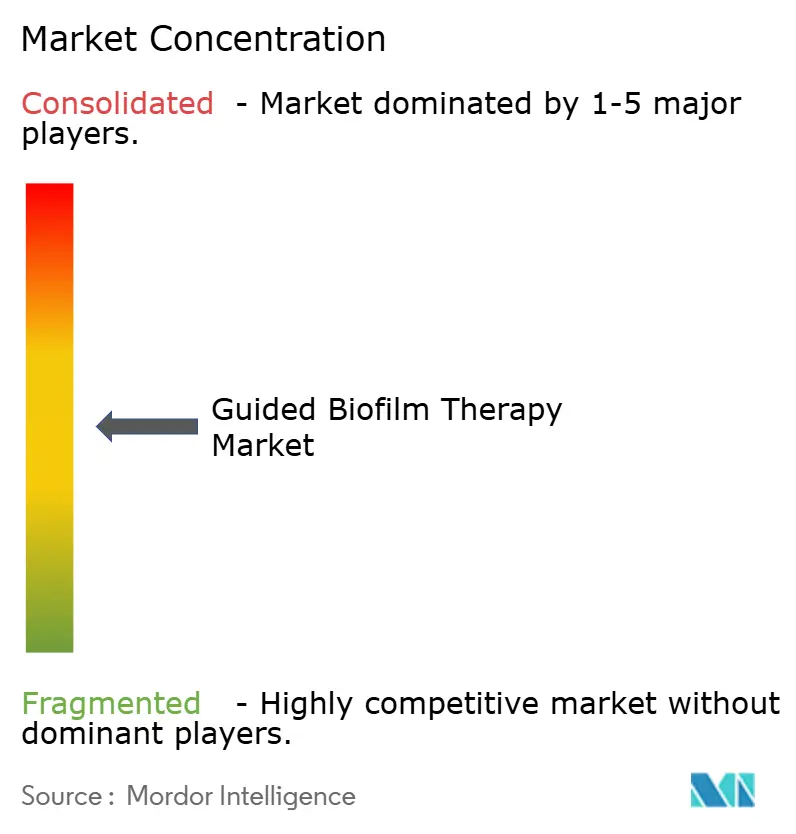
The guided biofilm therapy market is moderately concentrated, led by EMS Electro Medical Systems as the originator of the protocol and operator of the GBT Certified practice network. EMS combines device sales with certification, training, consumables, and upgrades. Its Swiss Dental Academy operates across 41 countries and delivered more than 8,000 courses in 2025. This training network gives the company a patient-facing recognition platform that equipment-only competitors do not have. FDA clearance for the EMS GBT Machine in January 2026 further supports its position in the United States. Its advantage is based on workflow adoption and recurring use, rather than device exclusivity alone. The certification model links clinical education with patient-facing recognition, which can strengthen repeat demand for training and consumables. This makes EMS’s position difficult to assess solely through comparison of device specifications or upfront equipment prices.
NSK, ACTEON, W&H, and Dentsply Sirona compete through ergonomics, combination units, connected workflows, and value-tier options for providers that want compatible procedures without complete protocol commitment. Dentsply Sirona reported plans to increase research and development spending to 5% of net sales in 2026, with an emphasis on digital workflow and connected dentistry. The company also announced a USD 40 million investment in its global clinical education program beginning in 2026. EMS introduced the connected GBT Machine at IDS 2025, with automatic handpiece recognition, automated workflow mode, and MyEMS dashboard connectivity. W&H showed new products at IDS 2025 that included its Oral Surgery Compass and Lisa Mini sterilizer, extending its surgical periodontology and infection-control offer. These moves show that competition extends across workflow, education, equipment, and reprocessing. Companies can compete by improving the physical design of devices, combining air polishing with ultrasonic functions, or building digital links around the dental operatory. They also need to address providers that want compatible treatment steps without the full certification and consumable structure associated with the reference protocol.
The clearest open opportunities are value-oriented clinic adoption in Asia-Pacific and Latin America, hospital integration, and chairside visualization. Premium platforms face a challenge in mid-tier clinics where lower-priced combination units can be more accessible. Hospital uptake remains less developed than the clinical evidence supporting periodontal and systemic care links. Visualization systems may also move toward digital imaging and software-supported treatment planning, subject to regulatory clearance. Patent activity involving non-powered subgingival delivery, antibiotic-eluting powders, and photonic disruption could create new entry paths over the medium term. These areas are distinct from the established equipment base and may broaden the ways that suppliers address biofilm management. Their commercial effect will depend on clinical evidence, practical use in dental settings, and any necessary regulatory clearance.
Guided Biofilm Therapy Industry Leaders
-
A-dec, Inc.
-
GC Corporation
-
Kerr Corporation
-
Planmeca Oy
-
Straumann Group
- *Disclaimer: Major Players sorted in no particular order
Guided Biofilm Therapy Market Companies Covered in this Report
- Acteon Group
- A-dec
- BIOLASE
- Brasseler USA
- Carestream Dental
- COLTENE Group
- Dentsply Sirona
- DÜRR DENTAL SE
- EMS Electro Medical Systems
- GC Corporation
- Henry Schein
- Hu-Friedy Mfg
- Kerr
- NSK Ltd.
- Parkell, Inc.
- Planmeca
- Straumann Group
- W&H Dentalwerk Bürmoos GmbH
- Young Innovations, Inc.
- Zhermack S.p.A.
Recent Industry Developments in Guided Biofilm Therapy Market
- June 2026: Straumann Group raised its 2026 profitability guidance to a core EBIT margin expansion of 140-170 basis points at constant 2025 exchange rates, up from the previous 30-60 basis point guidance, supported by continued operational improvements across all business franchises and lower-than-anticipated tariffs. The Group maintained its high single-digit organic revenue growth outlook for the full year, underpinning demand for its implant maintenance and peri-implant care products.
- March 2026: NSK launched the VarioSurg 4 ultrasonic bone surgery system with built-in Bluetooth connectivity, wireless foot control, and full compatibility with the Surgic Pro2 surgical micromotor, expanding NSK’s procedural scope in oral surgery and complementing its periodontal care portfolio with a premium synchronized surgical instrument system.
- January 2026: The US FDA granted 510(k) clearance K253254, with a decision date of January 28, 2026, for EMS Electro Medical Systems’ GBT Machine Airflow Prophylaxis Master as substantially equivalent, removing the primary regulatory barrier to the next-generation GBT platform’s US commercial deployment.
Global Guided Biofilm Therapy Market Report Scope
As per the scope of the report, guided biofilm therapy (GBT) is a modern, minimally invasive dental protocol designed to manage and remove oral biofilm. It combines air polishing systems, ultrasonic scaling, and biofilm disclosure techniques to ensure precise, patient‑friendly cleaning. The approach emphasizes preventive care, periodontal disease management, and implant maintenance, making it a standardized alternative to traditional scaling and polishing.
The guided biofilm therapy market is segmented by product type, Indication, technique, technology, end user, and geography. By product type, the market is segmented into guided biofilm therapy kits, air polishing devices, ultrasonic scaling devices, accessories, consumables, and others. By indication, the market is segmented into periodontal disease, dental biofilm management, orthodontic care, peri-implantitis, and others. By technique, the market is segmented into airflow technology, ultrasonic scaling, rinsing solutions, and others. By technology, the market is segmented into air polishing systems, piezoelectric ultrasonic systems, magnetostrictive ultrasonic systems, biofilm disclosure and visualization systems, and others. By end user, the market is segmented into dental clinics, hospitals, academic institutions, and others. The geography segment is further divided into North America, Europe, Asia-Pacific, the Middle East and Africa, and South America. The report also covers the estimated market sizes and trends for 17 countries across major regions globally. The report offers the market size and forecasts in value (USD) for the above segments.
Segmentation Overview
| Guided Biofilm Therapy Kits |
| Air Polishing Devices |
| Ultrasonic Scaling Devices |
| Accessories |
| Consumables |
| Others |
| Periodontal Disease |
| Dental Biofilm Management |
| Orthodontic Care |
| Peri-Implantitis |
| Others |
| Airflow Technology |
| Ultrasonic Scaling |
| Rinsing Solutions |
| Others |
| Air Polishing Systems |
| Piezoelectric Ultrasonic Systems |
| Magnetostrictive Ultrasonic Systems |
| Biofilm Disclosure and Visualization Systems |
| Others |
| Dental Clinics |
| Hospitals |
| Academic Institutions |
| Others |
| North America | United States |
| Canada | |
| Mexico | |
| Europe | Germany |
| United Kingdom | |
| France | |
| Italy | |
| Spain | |
| Rest of Europe | |
| Asia-Pacific | China |
| India | |
| Japan | |
| Australia | |
| South Korea | |
| Rest of Asia-Pacific | |
| Middle East and Africa | GCC |
| South Africa | |
| Rest of Middle East and Africa | |
| South America | Brazil |
| Argentina | |
| Rest of South America |
| By Product Type | Guided Biofilm Therapy Kits | |
| Air Polishing Devices | ||
| Ultrasonic Scaling Devices | ||
| Accessories | ||
| Consumables | ||
| Others | ||
| By Indication | Periodontal Disease | |
| Dental Biofilm Management | ||
| Orthodontic Care | ||
| Peri-Implantitis | ||
| Others | ||
| By Technique | Airflow Technology | |
| Ultrasonic Scaling | ||
| Rinsing Solutions | ||
| Others | ||
| By Technology | Air Polishing Systems | |
| Piezoelectric Ultrasonic Systems | ||
| Magnetostrictive Ultrasonic Systems | ||
| Biofilm Disclosure and Visualization Systems | ||
| Others | ||
| By End User | Dental Clinics | |
| Hospitals | ||
| Academic Institutions | ||
| Others | ||
| By Geography | North America | United States |
| Canada | ||
| Mexico | ||
| Europe | Germany | |
| United Kingdom | ||
| France | ||
| Italy | ||
| Spain | ||
| Rest of Europe | ||
| Asia-Pacific | China | |
| India | ||
| Japan | ||
| Australia | ||
| South Korea | ||
| Rest of Asia-Pacific | ||
| Middle East and Africa | GCC | |
| South Africa | ||
| Rest of Middle East and Africa | ||
| South America | Brazil | |
| Argentina | ||
| Rest of South America | ||
Key Questions Answered in the Report
How large is the guided biofilm therapy market?
The guided biofilm therapy market size is USD 1.14 billion in 2026 and is forecast to reach USD 1.78 billion by 2031, at a 9.36% CAGR. Growth is supported by preventive and supportive periodontal care, rising implant maintenance needs, air-polishing platforms, and recurring demand for powders, tips, and training.
Which product category held the largest share in 2025?
Air polishing devices led product demand with 42.37% share in 2025 because they are the primary biofilm-removal instrument in the protocol. Their commercial role also includes regular demand for powders, nozzles, and tips, which gives suppliers recurring revenue after a platform is installed in a dental practice.
Why is peri-implantitis important for guided biofilm therapy?
Peri-implantitis is the fastest-growing indication at a 10.17% CAGR through 2031, supported by the rising number of implant-treated patients needing maintenance. The cited AO/AAP review reported peri-implantitis in 21% of implant patients and peri-implant mucositis in 46%, supporting the need for structured ongoing care.
Which end user is growing fastest?
Hospitals are forecast to grow at a 12.58% CAGR through 2031 as they seek standardized preventive dental workflows and auditable care processes. Their buying decisions can be tied to institution-wide quality requirements, instrument reprocessing, and the need to reduce variation across clinical teams rather than individual clinician preferences.
Which region is expected to grow fastest?
Asia-Pacific is forecast to expand at a 13.57% CAGR through 2031, supported by implant care, private clinic growth, and rising dental expenditure. China, India, Japan, South Korea, and Australia contribute different demand conditions, while partial preventive-care coverage and lower revenue per patient can still constrain adoption in several developing markets.