
Sustainable Tourism Market Size and Share
Market Overview
| Study Period | 2021 - 2031 |
|---|---|
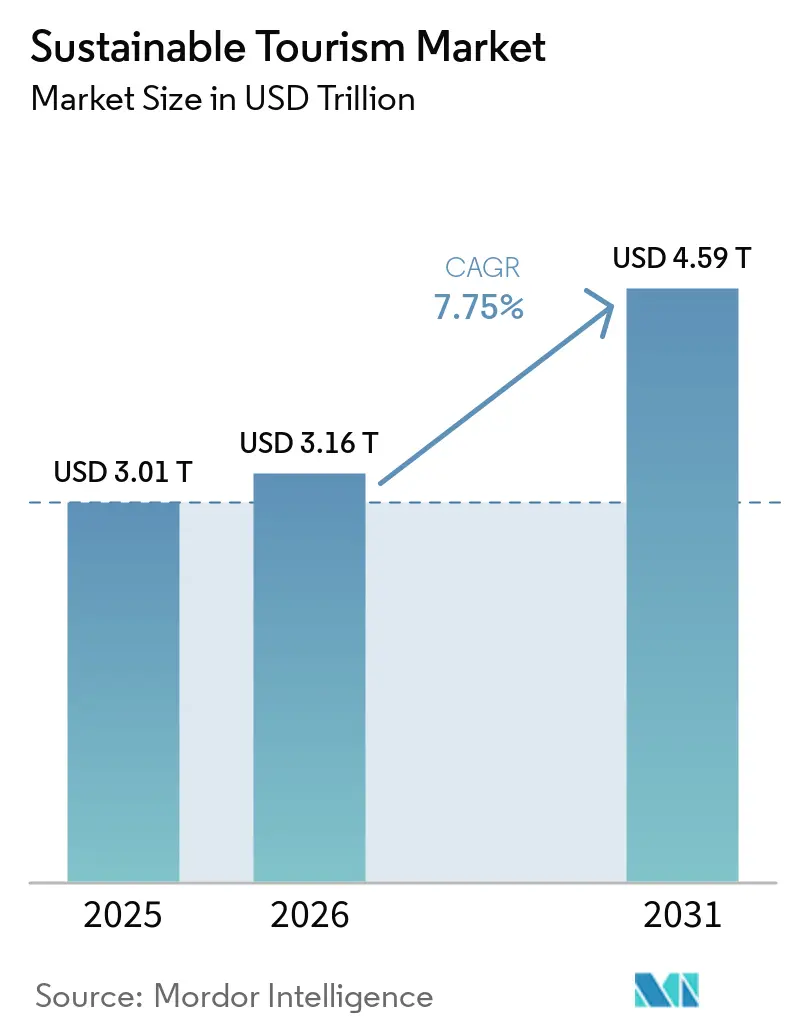
| Market Size (2026) | USD 3.16 Trillion |
| Market Size (2031) | USD 4.59 Trillion |
| Growth Rate (2026 - 2031) | 7.75 % |
| Fastest Growing Market | Asia-Pacific |
| Largest Market | Europe |
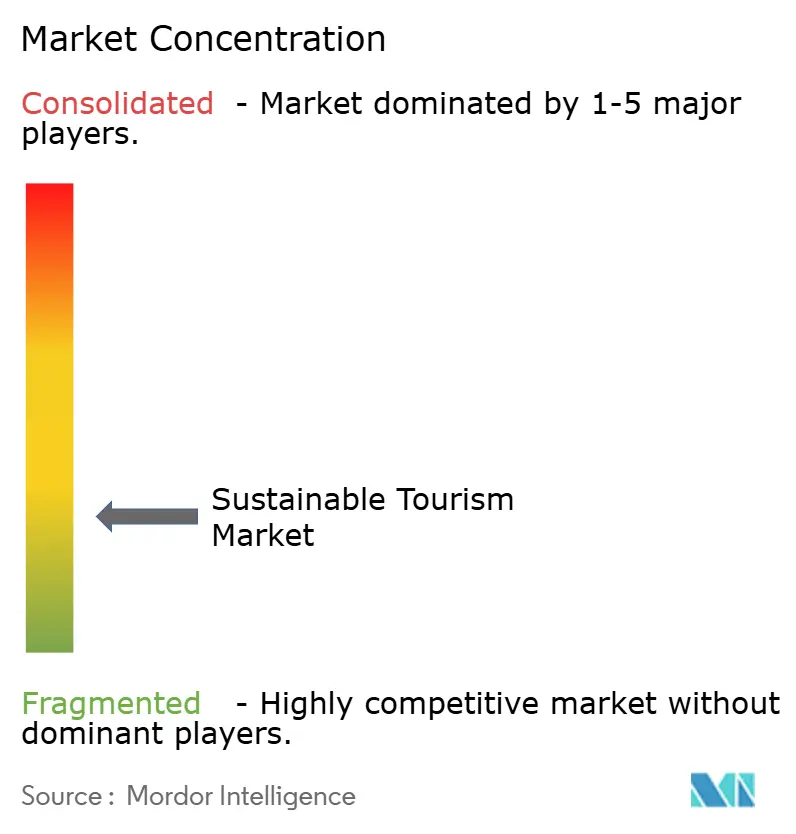
| Market Concentration | Low |
Major Players *Disclaimer: Major Players sorted in no particular order Image © Mordor Intelligence. Reuse requires attribution under CC BY 4.0. | |
Sustainable Tourism Market Analysis by Mordor Intelligence
The Global Sustainable Tourism Market was valued at USD 3.01 trillion in 2025 and is estimated to grow from USD 3.16 trillion in 2026 to reach USD 4.59 trillion by 2031, at a CAGR of 7.75% during the forecast period (2026–2031). International travel maintained a steady recovery in 2025, with 1.52 billion tourist arrivals worldwide, up 4% from 2024. UN Tourism expects a further 3%–4% increase in 2026, supported by continued improvements in demand, air connectivity, and outbound travel from emerging markets. Sustainability is now influencing actual buying behavior in the market, as travelers booked more than 100 million room nights at third-party certified properties on Booking.com in 2025, while certified supply on that platform rose 22% year on year to 28,000 properties. The market is also benefiting from stronger certification systems, tighter claim verification rules, and growing investor willingness to back operators that can demonstrate measurable conservation or community outcomes. These factors keep the market on a structural growth path, even as businesses face higher evidence standards for sustainability messaging and slower progress in transport decarbonization[1].
Key Report Takeaways
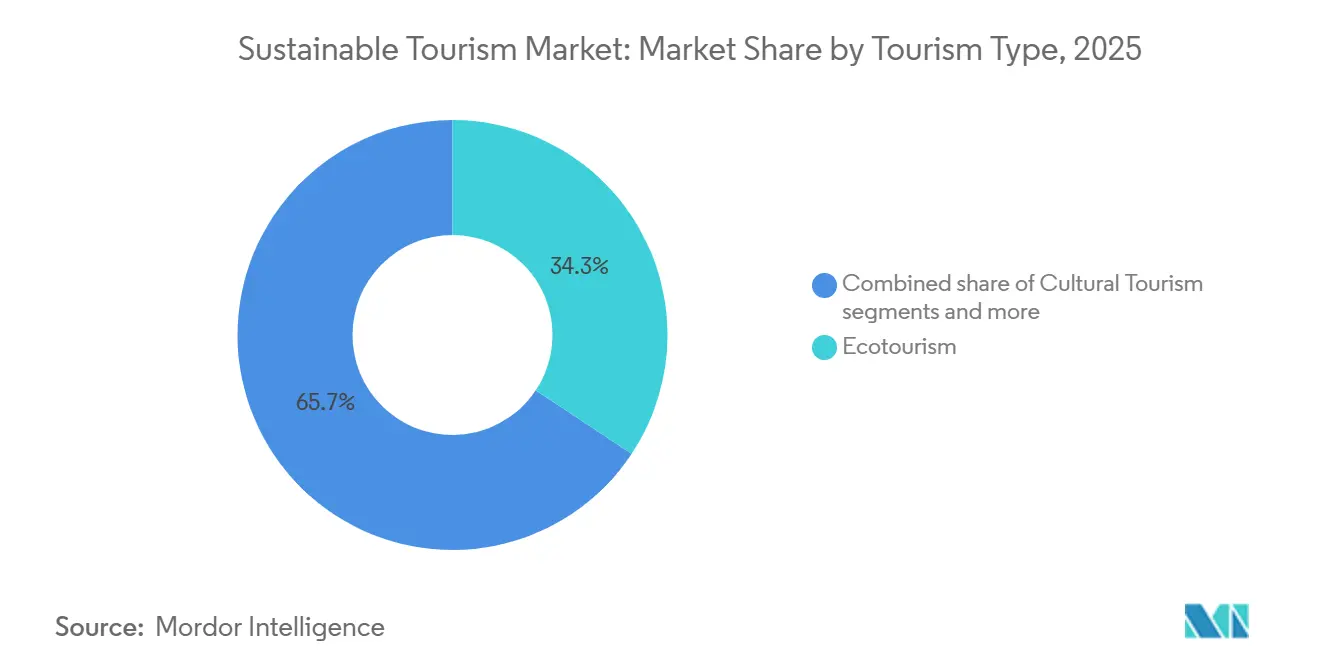
- By tourism type, ecotourism accounted for 34.31% of the Global Sustainable Tourism Market in 2025, while wellness tourism is projected to expand at the highest CAGR of 8.24% by 2031.
- By service type, accommodation accounted for 38.42% of the Global Sustainable Tourism Market in 2025, while activities and experiences are projected to grow at the highest CAGR of 8.09% by 2031.
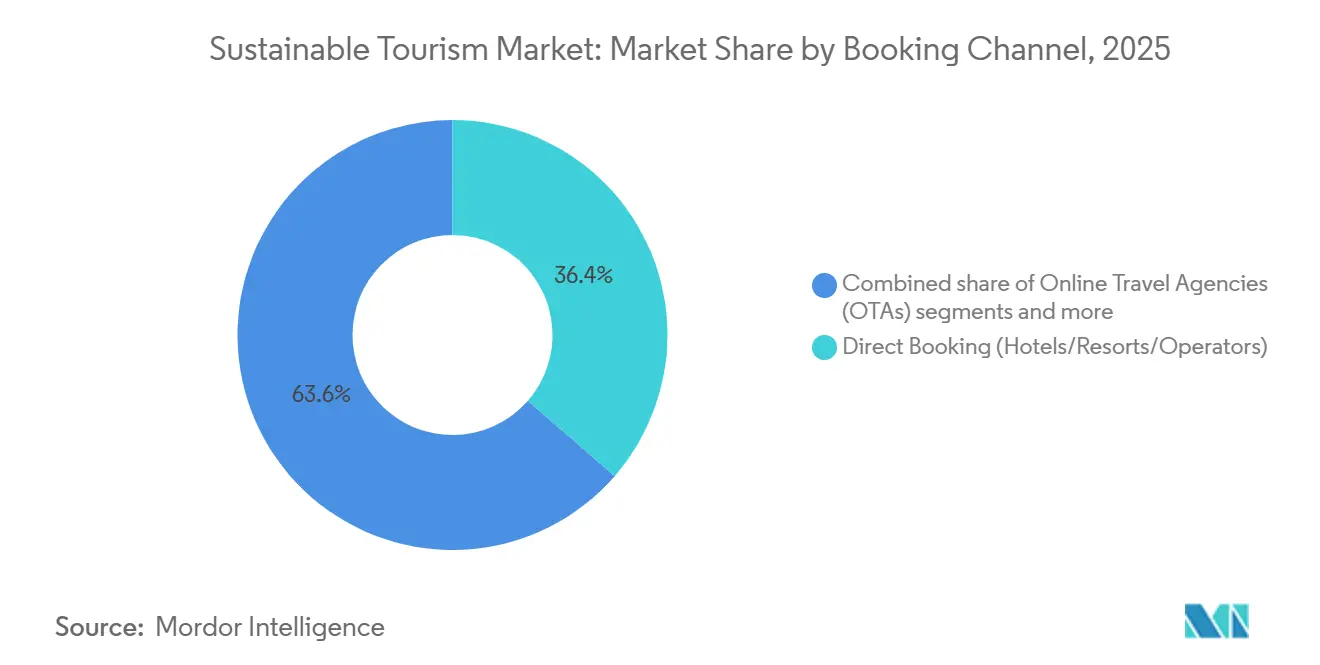
- By booking channel, direct booking held a 36.40% share of the Global Sustainable Tourism Market in 2025, while OTAs are projected to expand at the highest CAGR of 8.67% by 2031.
- By traveler type, domestic travelers accounted for 62.61% of the Global Sustainable Tourism Market in 2025, while international travelers are projected to grow at the highest CAGR of 8.48% by 2031.
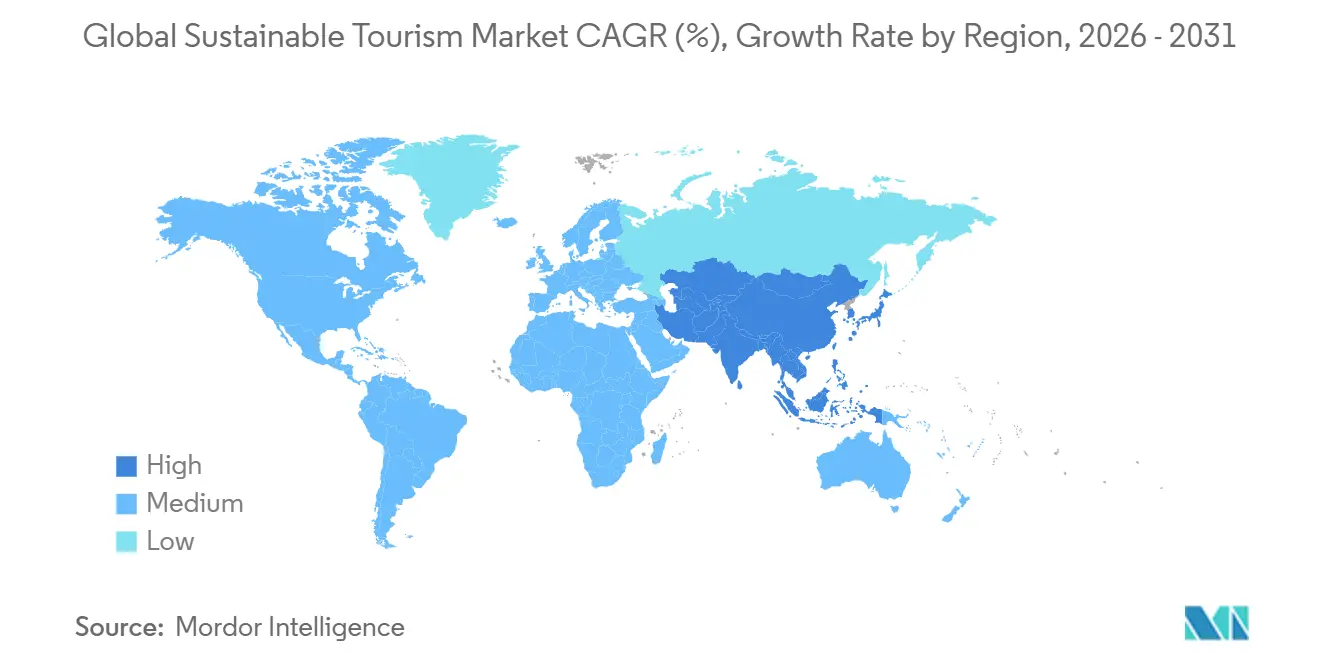
- By geography, Europe held a 34.38% share of the Global Sustainable Tourism Market in 2025, while Asia-Pacific is projected to expand at the highest CAGR of 9.13% by 2031.
Note: Market size and forecast figures in this report are generated using Mordor Intelligence’s proprietary estimation framework, updated with the latest available data and insights as of January 2026.
Global Sustainable Tourism Market Trends and Insights
Drivers Impact Analysis*
| Driver | (~) % Impact on CAGR Forecast | Geographic Relevance | Impact Timeline |
|---|---|---|---|
| Rising Demand for Authentic Low-Impact Travel | +2.1% | Global, with concentrated spending in Europe, North America, and Asia-Pacific | Long term (≥ 4 years) |
| Mainstreaming of Sustainability Certifications and Verified Labels | +1.4% | Europe, North America, Australia, with spillover to Asia-Pacific, the Middle East, and Africa | Medium term (2-4 years) |
| Corporate Decarbonization Commitments and Sustainable Aviation Fuel Partnerships | +1.1% | Global, with strong policy action in Europe, the United Kingdom, and Singapore | Medium term (2-4 years) |
| Destination Management Rules to Control Overtourism and Protect Carrying Capacity | +0.8% | Europe, with spillover to Asia-Pacific and Latin America | Short term (≤ 2 years) |
| Community-Led Tourism and Local Value Retention Models | +0.7% | Africa, South and Southeast Asia, Latin America, and Pacific destinations | Long term (≥ 4 years) |
| Dynamic Content Verification and Anti-Greenwashing Tools | +0.6% | The European Union first, followed by North America and Australia | Short term (≤ 2 years) |
| Source: Mordor Intelligence | |||
Rising Demand for Authentic Low-Impact Travel
Traveler demand in the global sustainable tourism market has shifted from stated preference to measurable purchase behavior. Booking.com's 2026 travel and sustainability research found that 74% of travelers consider extreme weather risk when choosing destinations or travel timing, and 31% canceled a trip due to these risks[2]. Climate exposure is now directly influencing where and when people travel. This demand shift is supporting growth in cooler, less crowded, and nature-linked destinations, while extending the travel season beyond peak summer periods. Operators that align itineraries with lower crowd density, reduced environmental stress, and clear local impact are better positioned to maintain pricing and repeat demand in the global sustainable tourism market.
Mainstreaming of Sustainability Certifications and Verified Labels
The global sustainable tourism market is benefiting from stricter and more credible certification frameworks that now cover climate resilience, biodiversity, responsible sourcing, and social inclusion. The Global Sustainable Tourism Council (GSTC) finalized its updated hotel and tour operator standards in 2025, raising the threshold for credible sustainable labels. TUI reported that 15 million guests stayed in independently certified hotels in FY2025, up from 10.5 million in FY2023, indicating that certification is moving into higher-volume mainstream travel channels. However, fewer than 2% of the nearly 600,000 tourism businesses globally hold any form of sustainability certification, leaving a wide supply gap in the market[3]. GSTC also required recognized standards to hold active accreditation or enter the formal framework from January 2025, tightening the compliance baseline for certification programs used across the market.
Corporate Decarbonization Commitments and Sustainable Aviation Fuel Partnerships
Transport emissions remain a key pressure point for the global sustainable tourism market, and sustainable aviation fuel (SAF) is the primary near-term commercial pathway currently being scaled. Global SAF production rose from 1 million tonnes in 2024 to 1.9 million tonnes in 2025 and is expected to reach 2.4 million tonnes in 2026, though this still covers only 0.8% of total jet fuel consumption. Despite this supply constraint, policy mandates are influencing procurement behavior: the European Union requires a 2% SAF blend from 2025, and Singapore introduces SAF incorporation requirements for departing flights from 2026. For the global sustainable tourism market, verified low-carbon transport inputs are becoming a stronger commercial differentiator, particularly in institutionally screened travel demand. Companies that can align itinerary design with measurable transport decarbonization are likely to secure stronger market positioning as procurement standards tighten.
Destination Management Rules to Control Overtourism and Protect Carrying Capacity
The sustainable tourism market is also benefiting from destination-level regulations that formally manage visitor pressure, rather than treating overtourism as a temporary issue. Santorini maintained its daily cruise passenger cap in 2025 and extended it into 2026, with the 2026 methodology applying full ship capacity in counting, making the system stricter in practice. Barcelona's tourism management plan for 2024-2027 notes that many residents believe the city has reached its tourism capacity limit, reflecting sustained local pressure on destination governance. These measures do not eliminate demand from the market; instead, they redirect it toward off-peak, lower-density, and better-managed alternatives. Operators with certified access to alternative sites and time slots are therefore better positioned to convert displaced demand into stable revenue within the market.
Restraints Impact Analysis*
| Restraint | (~) % Impact on CAGR Forecast | Geographic Relevance | Impact Timeline |
|---|---|---|---|
| Higher Operating Costs for Certified Supply Chains | -1.1% | Global, with stronger pressure on SMEs in Africa, Southeast Asia, and Latin America | Medium term (2-4 years) |
| Greenwashing Scrutiny and Claim Verification Risk | -0.9% | The European Union first, with litigation risk in North America and Australia | Short term (≤ 2 years) |
| Limited Certified Inventory in Secondary and Remote Destinations | -0.7% | Africa, Southeast Asia, the Pacific Islands, and remote Latin America | Long term (≥ 4 years) |
| Transport Decarbonization Constraints, Especially Aviation and Cruise | -1.0% | Global, especially on long-haul and cruise-linked routes | Long term (≥ 4 years) |
| Source: Mordor Intelligence | |||
Higher Operating Costs for Certified Supply Chains
Cost remains a significant barrier to supply expansion in the global sustainable tourism market, particularly for smaller operators with limited administrative and audit capacity. GSTC's accreditation fee schedule includes a daily assessor rate of USD 850, with additional travel and documentation costs, making certification cycles considerably more expensive for remote or multi-site businesses. A GSTC survey of certified hotels found that 35.35% reported revenue growth and 46.55% reported cost reductions after certification, but most respondents did not observe a major near-term financial change. As a result, the payback period can extend beyond one operating cycle, slowing adoption in margin-sensitive segments of the global sustainable tourism market. This contributes to a slower buildup of verified supply in areas where the market often has strong natural assets but limited financial capacity.
Greenwashing Scrutiny and Claim Verification Risk
Claim verification risk is rising in the global sustainable tourism market as regulation shifts from broad guidance to enforceable rules. The European Union framework, effective September 27, 2026, will treat unsubstantiated environmental claims as prohibited unfair commercial practices, creating direct exposure for travel businesses marketing to European Union consumers. NECSTouR's 2026 guide indicates that this pressure can also lead to greenwashing, where companies reduce disclosure because they are unsure how to present sustainability information without regulatory risk. The global sustainable tourism market, therefore, faces a short-term communication challenge, as genuine operators may become more cautious while weaker claims are screened out. Businesses that already rely on accredited certification frameworks are better positioned, as they have a clearer evidence base for product claims and marketing content[4].
*Our forecasts treat driver/restraint impacts as directional, not additive. The impact forecasts reflect baseline growth, mix effects, and variable interactions.
Segment Analysis
By Tourism Type: Ecotourism Anchors Scale as Wellness Reshapes Premium Demand
Ecotourism accounted for the largest share of the Global Sustainable Tourism Market in 2025, at 34.31%, reflecting its strong position in safari circuits, biodiversity destinations, and national park-linked travel, where nature conservation is central to the product offering. The segment also benefits from its established alignment with conservation funding, community partnerships, and protected-area management models. Cultural tourism continues to benefit from heritage protection efforts and destination stewardship, while adventure travel converges with ecotourism as operators place greater emphasis on environmental accountability in trip design. This positions ecotourism as the base volume anchor for the Global Sustainable Tourism Market, even as demand diversifies into more specialized travel motivations.
Wellness tourism is projected to record the fastest growth at 8.24% CAGR through 2031, indicating that demand in the Global Sustainable Tourism Market is broadening beyond traditional nature travel. The Global Wellness Institute reported wellness tourism receipts of USD 894 billion in 2024, projected to reach USD 975.20 billion in 2025, with 9.1% annual growth through 2029. This growth is closely linked to preventive health, recovery travel, and longer-stay formats that combine lodging, food, and destination experience into higher-value itineraries, reflecting a stronger overlap between wellness, responsible consumption, and place-based authenticity.

By Service Type: Accommodation Dominates, Experiences Capture Growth Premium
Accommodation accounted for 38.42% of the global sustainable tourism market in 2025, making it the largest service category by revenue. This position reflects the scale of hotel networks and the visibility that third-party certification brings to the lodging selection process. Marriott reported more than 500 third-party-certified properties across EMEA by the end of 2024, and nearly 50% of its Canada-region properties were certified under its Green Key Global engagement. Accommodation is also typically the first point where travelers encounter visible evidence of sustainability practices, whether through certification labels, energy systems, water management, or food sourcing standards. This keeps lodging central to trust formation in the sustainable tourism market.
Activities and experiences are forecast to grow at 8.09% CAGR through 2031, making them the fastest-growing service area in the market. This reflects a shift in traveler priorities, where trip value is increasingly tied to the quality of local engagement rather than accommodation grade alone. Food and beverage and local transport are also becoming part of the sustainability decision set, as they make community impact and carbon intensity more visible during travel. Intrepid's 2025 annual reporting showed that electric vehicle airport transfers expanded from 39% to 74% of its country offices, indicating that ground transport standards are moving toward routine operating practice. The global sustainable tourism market is therefore shifting toward an experience-led model, in which the overall service bundle carries more weight than any single service component.
By Booking Channel: Direct Booking Retains Loyalty, OTAs Race to Verify
Direct booking accounted for 36.40% of the Global Sustainable Tourism Market in 2025, making it the largest booking channel. This dominance indicates that verified operators and lodging brands retain strong customer trust at the point of purchase. This channel benefits travelers who seek direct access to impact information, itinerary customization, and loyalty benefits without platform intermediation. It is also well-suited to the sustainable tourism market because higher-consideration trips often involve questions about local sourcing, carbon footprint, conservation links, or certification details that travelers prefer to confirm directly with the provider. For specialist operators, direct booking supports better margin control and clearer communication of destination practices, explaining why direct sales remain resilient even as digital discovery becomes more platform-driven.
Online Travel Agencies (OTAs) are projected to expand at the fastest CAGR of 8.67% during 2026–2031. Their growth is supported by improved sustainability filters, larger certified inventory pools, and a broader journey scope extending beyond room booking. Booking.com's addition of EV taxi options in 1,600 cities and hybrid or electric car rentals in 90 countries illustrates how OTAs are working to coordinate more of the sustainable travel journey through a single interface. Tighter European Union regulations on sustainability claims increase the compliance burden for platforms that display sustainability cues without audit-backed evidence, making verified, traceable sustainability content a key differentiator for future growth.
By Traveler Type: Domestic Base Sustains Volume, International Segment Drives Revenue Intensity
Domestic travelers accounted for 62.61% of the Global Sustainable Tourism Market in 2025, making them the largest traveler segment. This confirms that local and intra-country demand remains the primary volume base for sustainable tourism. The World Economic Forum noted that domestic travel contributes more than 70% of direct tourism GDP worldwide, aligning with this segment's dominant share. Domestic trips benefit from shorter travel distances, greater familiarity with local destinations, and easier repeat travel to nature-linked or low-impact locations. These factors make domestic travel important for cash flow stability and for testing new responsible tourism formats. Domestic travel also supports year-round demand in regions where international traffic remains more seasonal.
International travelers are projected to grow at the fastest CAGR of 8.48% during 2026–2031, making them the fastest-growing traveler group in the market. Cross-border travel continues to recover, and sustainable itineraries in the ecotourism, adventure, and wellness segments attract higher per-trip spending than standard leisure packages. Airbnb's Q1 2026 results identified Latin America as its fastest-growing region by nights booked, indicating stronger interest among internationally mobile travelers in emerging and less conventional destinations. The market shows a split in which domestic travel supports volume and international travel drives stronger revenue intensity, keeping the market balanced between scale demand and higher-value cross-border demand over the forecast period.
Geography Analysis
Europe accounted for 34.38% of the Global Sustainable Tourism Market in 2025, making it the largest regional market. Its leadership is driven by strong consumer awareness, a well-established certification ecosystem, and a more stringent regulatory environment than most other regions. Barcelona's 2024–2027 tourism management plan and Santorini's daily cruise cap demonstrate how European destinations are formalizing carrying-capacity controls. Additionally, the European Union's Green Claims Directive, effective from September 2026, is expected to make Europe one of the strictest regions for consumer-facing sustainability communication in travel. As a result, the European market is increasingly focused on quality-controlled growth, regulatory compliance, and demand redistribution.
Asia-Pacific is projected to grow at the fastest CAGR of 9.13% during 2026–2031, supported by expanding middle-class travel, rising international mobility, and a diverse portfolio of nature, cultural, and wellness destinations. Singapore's Sustainable Air Hub Blueprint incorporates sustainable aviation fuel into one of Asia's largest aviation hubs from 2026, while a 2026 study on Bali highlighted that institutionalized community-based tourism can reduce economic leakage. Compared with Europe, the region still offers significant opportunities for certification expansion and platform-led discovery, which support its strong growth outlook. North America, South America, and the Middle East & Africa are also expected to witness steady expansion, supported by increasing demand for sustainable travel experiences, conservation-focused tourism investments, and stronger destination management initiatives. In Africa, Wilderness reported USD 17.1 million in FY2025 payments to governments and communities across seven countries, while Standard Bank led a USD 175 million sustainable finance deal in June 2026, highlighting growing investment in conservation-linked tourism. In South America, Peru's decision to maintain visitor limits at Machu Picchu underscores the increasing emphasis on balancing tourism growth with destination preservation.
Competitive Landscape
The global sustainable tourism market is highly fragmented, with competition distributed across global travel platforms, international hotel groups, specialist tour operators, eco-lodges, destination management companies, and community-based tourism providers. Large players compete through extensive digital reach, certified accommodation portfolios, and integrated booking ecosystems that simplify sustainable travel planning and improve customer confidence. Specialist operators differentiate themselves through authentic local experiences, conservation-focused tourism, community partnerships, and transparent sustainability practices. Competition is shifting from price alone toward the credibility of sustainability claims, verified responsible travel options, and end-to-end sustainable travel experiences. Companies are expanding certified inventories, strengthening digital capabilities, and integrating accommodation, transportation, and destination experiences into unified travel ecosystems. Growing regulatory scrutiny around environmental claims is encouraging operators to improve reporting standards, traceability, and certification compliance. This creates opportunities for both large-scale companies with global distribution networks and smaller regional providers with deep local expertise. Competitive differentiation is expected to depend on trusted sustainability credentials, meaningful local impact, personalized travel experiences, and the ability to balance commercial growth with environmental and community stewardship.
Sustainable Tourism Industry Leaders
-
Booking.com B.V.
-
TUI Group
-
Marriott International, Inc.
-
Expedia Group, Inc.
-
Intrepid Travel Pty Ltd
- *Disclaimer: Major Players sorted in no particular order
Recent Industry Developments
- June 2026: Standard Bank, as sole mandated lead arranger, closed a syndicated sustainable financing facility of USD 175 million for Wilderness Holdings, structured with embedded impact covenants covering biodiversity conservation, land preservation, and socio-economic empowerment, marking the largest conservation-linked debt arrangement disclosed for an African eco-tourism operator.
- May 2026: Airbnb expanded its offerings to include boutique and independent hotels across 20 cities, such as New York, Paris, London, and Singapore, along with car rentals, grocery delivery, airport pickups, and AI-powered trip planning tools, as part of a multi-step strategy to transition from a home-sharing platform to a full-service travel marketplace.
- October 2025: Intrepid Travel updated its climate strategy by replacing SBTi with an 8% carbon intensity reduction target by 2030, including customer flights. Traditional carbon offsetting was replaced with an annual Climate Impact Fund of USD 2 million, focused on direct community decarbonization projects to address previously unattainable Scope 3 supply-chain timelines.
- April 2025: Booking.com's 2025 Sustainability Report revealed growth in third-party certified properties on its platform, reaching 28,000 - a 22% year-on-year increase - with travelers booking over 100 million room nights at these properties. The platform also expanded EV taxi options in 1,600 cities and electric or hybrid car rentals across 90 countries.
Global Sustainable Tourism Market Report Scope
| Ecotourism |
| Cultural Tourism |
| Adventure Tourism |
| Wellness Tourism |
| Transportation |
| Accommodation |
| Food & Beverage |
| Activities & Experiences |
| Online Travel Agencies (OTAs) |
| Direct Booking (Hotels / Resorts / Operators) |
| Tour Operators / Travel Agencies |
| Destination Management Companies (DMCs) |
| Domestic Travelers |
| International Travelers |
| North America | United States |
| Canada | |
| Mexico | |
| South America | Brazil |
| Peru | |
| Chile | |
| Argentina | |
| Rest of South America | |
| Europe | United Kingdom |
| Germany | |
| France | |
| Spain | |
| Italy | |
| BENELUX (Belgium, Netherlands, Luxembourg) | |
| NORDICS (Denmark, Finland, Iceland, Norway, Sweden) | |
| Rest of Europe | |
| Asia-Pacific | India |
| China | |
| Japan | |
| Australia | |
| South Korea | |
| South-East Asia (Singapore, Malaysia, Thailand, Indonesia, Vietnam, and The Philippines) | |
| Rest of Asia-Pacific | |
| Middle East & Africa | United Arab Emirates |
| Saudi Arabia | |
| South Africa | |
| Nigeria | |
| Rest of Middle East & Africa |
| By Tourism Type | Ecotourism | |
| Cultural Tourism | ||
| Adventure Tourism | ||
| Wellness Tourism | ||
| By Service Type | Transportation | |
| Accommodation | ||
| Food & Beverage | ||
| Activities & Experiences | ||
| By Booking Channel | Online Travel Agencies (OTAs) | |
| Direct Booking (Hotels / Resorts / Operators) | ||
| Tour Operators / Travel Agencies | ||
| Destination Management Companies (DMCs) | ||
| By Traveler Type | Domestic Travelers | |
| International Travelers | ||
| By Geography | North America | United States |
| Canada | ||
| Mexico | ||
| South America | Brazil | |
| Peru | ||
| Chile | ||
| Argentina | ||
| Rest of South America | ||
| Europe | United Kingdom | |
| Germany | ||
| France | ||
| Spain | ||
| Italy | ||
| BENELUX (Belgium, Netherlands, Luxembourg) | ||
| NORDICS (Denmark, Finland, Iceland, Norway, Sweden) | ||
| Rest of Europe | ||
| Asia-Pacific | India | |
| China | ||
| Japan | ||
| Australia | ||
| South Korea | ||
| South-East Asia (Singapore, Malaysia, Thailand, Indonesia, Vietnam, and The Philippines) | ||
| Rest of Asia-Pacific | ||
| Middle East & Africa | United Arab Emirates | |
| Saudi Arabia | ||
| South Africa | ||
| Nigeria | ||
| Rest of Middle East & Africa | ||
Key Questions Answered in the Report
What is the Global Sustainable Tourism Market size?
The Global Sustainable Tourism Market size is expected to reach USD 3.16 trillion in 2026 and grow at a CAGR of 7.75% to reach USD 4.59 trillion by 2031.
Which is the largest segment in the Global Sustainable Tourism Market?
Ecotourism is the largest segment of the Global Sustainable Tourism Market, accounting for 34.31% in 2025.
Who are the key players in the Global Sustainable Tourism Market?
Booking.com B.V., TUI Group, Marriott International, Inc., Expedia Group, Inc., and Intrepid Travel Pty Ltd are the major companies operating in the Global Sustainable Tourism Market.
Which region has the highest growth rate in the Global Sustainable Tourism Market?
Asia-Pacific is estimated to grow at the highest CAGR over the forecast period (2026–2031).
Which region has the largest share of the Global Sustainable Tourism Market?
In 2025, Europe accounted for the largest market share in the Global Sustainable Tourism Market.
Which is the fastest-growing segment in the Global Sustainable Tourism Market?
Wellness Tourism is estimated to grow at the highest CAGR of 8.24% over the forecast period (2026–2031) among all tourism types in the Global Sustainable Tourism Market.