
Spiritual Wellness Tourism Market Size and Share
Market Overview
| Study Period | 2022 - 2032 |
|---|---|
| Market Size (2027) | USD 28.72 Billion |
| Market Size (2032) | USD 42.03 Billion |
| Growth Rate (2027 - 2032) | 7.91 % |
| Fastest Growing Market | Asia-Pacific |
| Largest Market | Asia-Pacific |
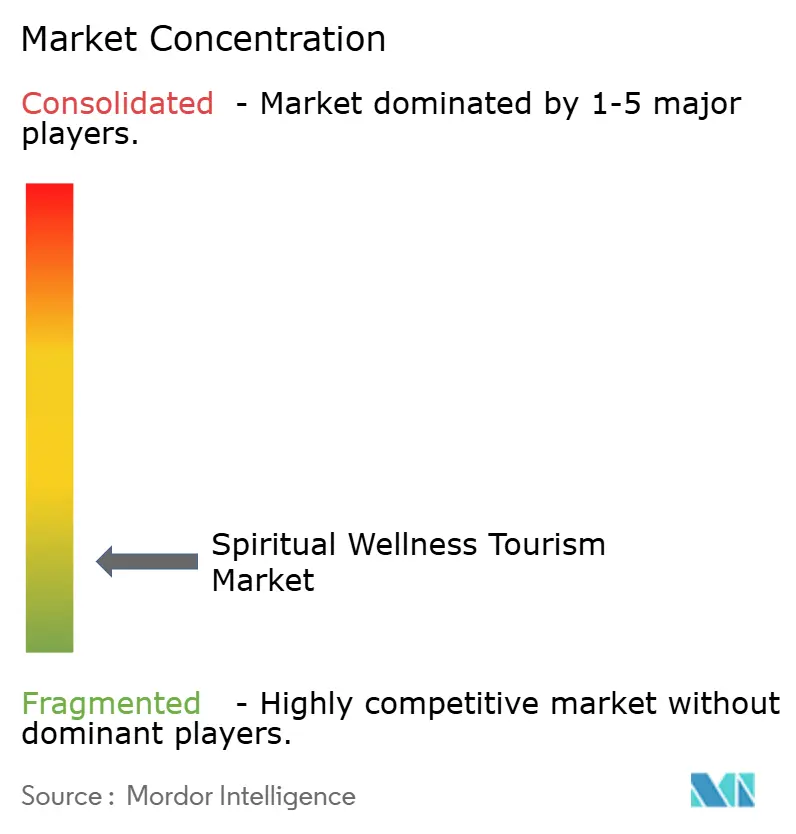
| Market Concentration | Low |
Major Players *Disclaimer: Major Players sorted in no particular order Image © Mordor Intelligence. Reuse requires attribution under CC BY 4.0. | |
Spiritual Wellness Tourism Market Analysis by Mordor Intelligence
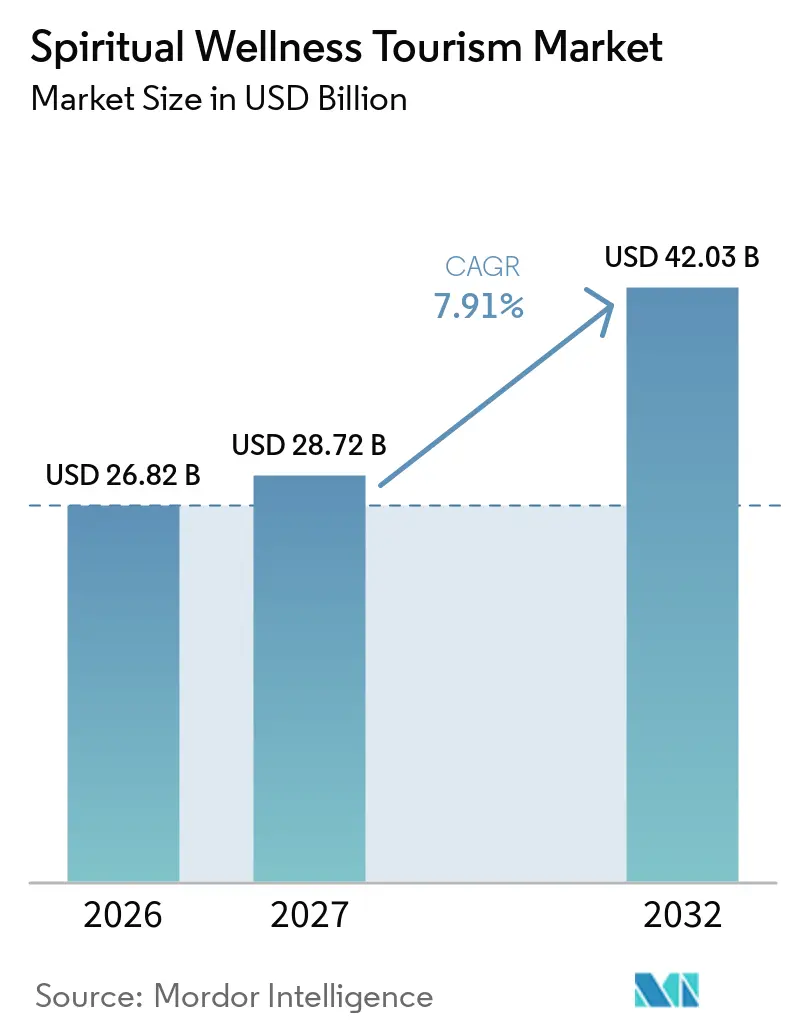
The Global Spiritual Wellness Tourism Market was valued at USD 26.82 billion in 2026 and is estimated to grow from USD 28.72 billion in 2027 to reach USD 42.03 billion by 2032, at a CAGR of 7.91% during the forecast period (2027-2032). Demand is shifting toward longer stays that combine rest, reflection, physical activity, and culturally rooted care, rather than short leisure breaks alone. Asia-Pacific plays a central role in this shift, as countries such as India and Thailand draw on yoga, Ayurveda, Buddhist traditions, pilgrimage, and spiritual heritage to support domestic and international travel. The global spiritual wellness tourism market also benefits from public investments that improve access, accommodation, sanitation, and visitor services at spiritual destinations. Fragmented supply creates opportunities for operators that demonstrate program quality, practitioner credibility, and respect for local culture.
Key Report Takeaways
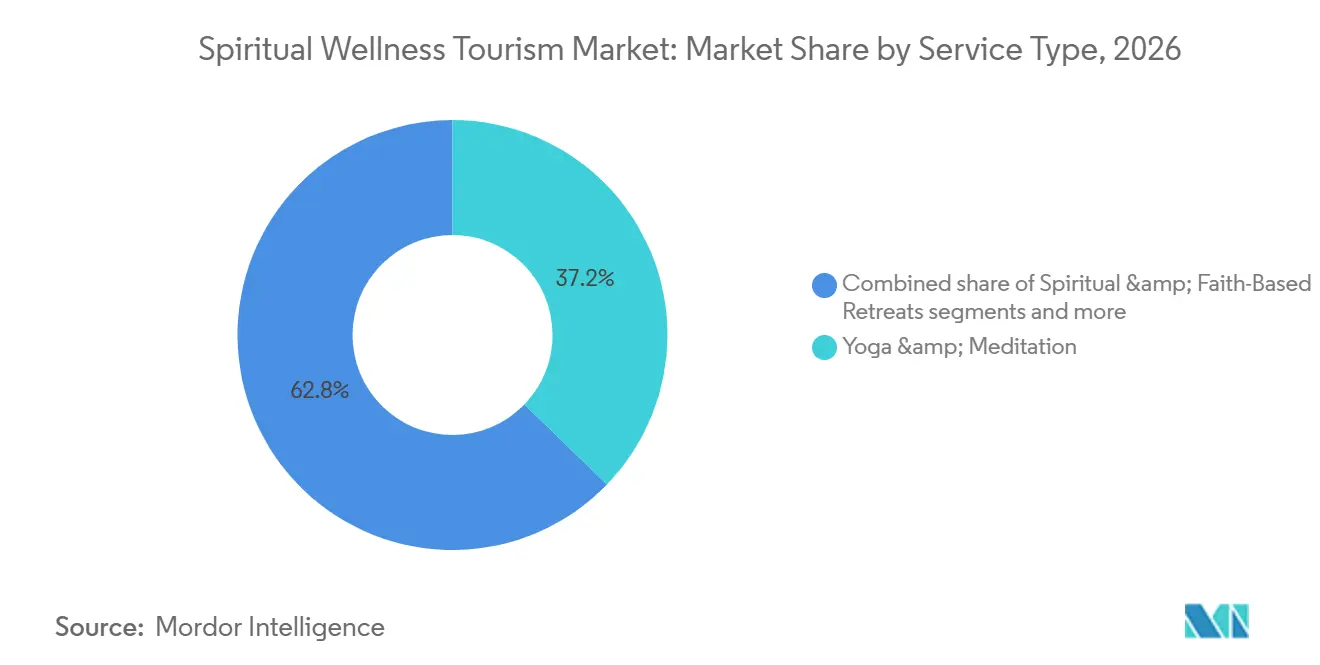
- By service type, Yoga & Meditation accounted for 37.23% of the Global Spiritual Wellness Tourism Market share in 2026, while Ayurveda & Traditional Healing is projected to grow at an 8.34% CAGR through 2032.
- By accommodation type, Spiritual Retreat Centers accounted for 42.24% of the Global Spiritual Wellness Tourism Market share in 2026, while Commercial Hospitality Accommodation is projected to grow at an 8.93% CAGR through 2032.
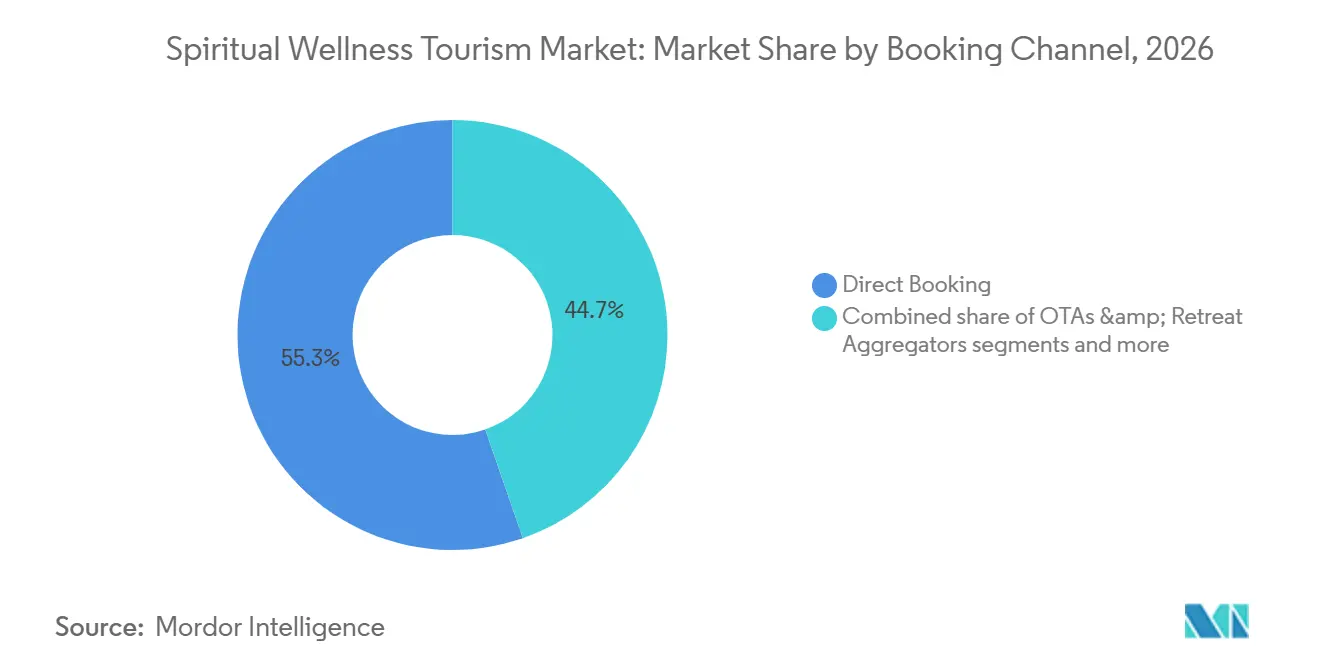
- By booking channel, Direct Booking accounted for 55.31% of the Global Spiritual Wellness Tourism Market share in 2026, while OTAs & Retreat Aggregators are projected to grow at an 8.64% CAGR through 2032.
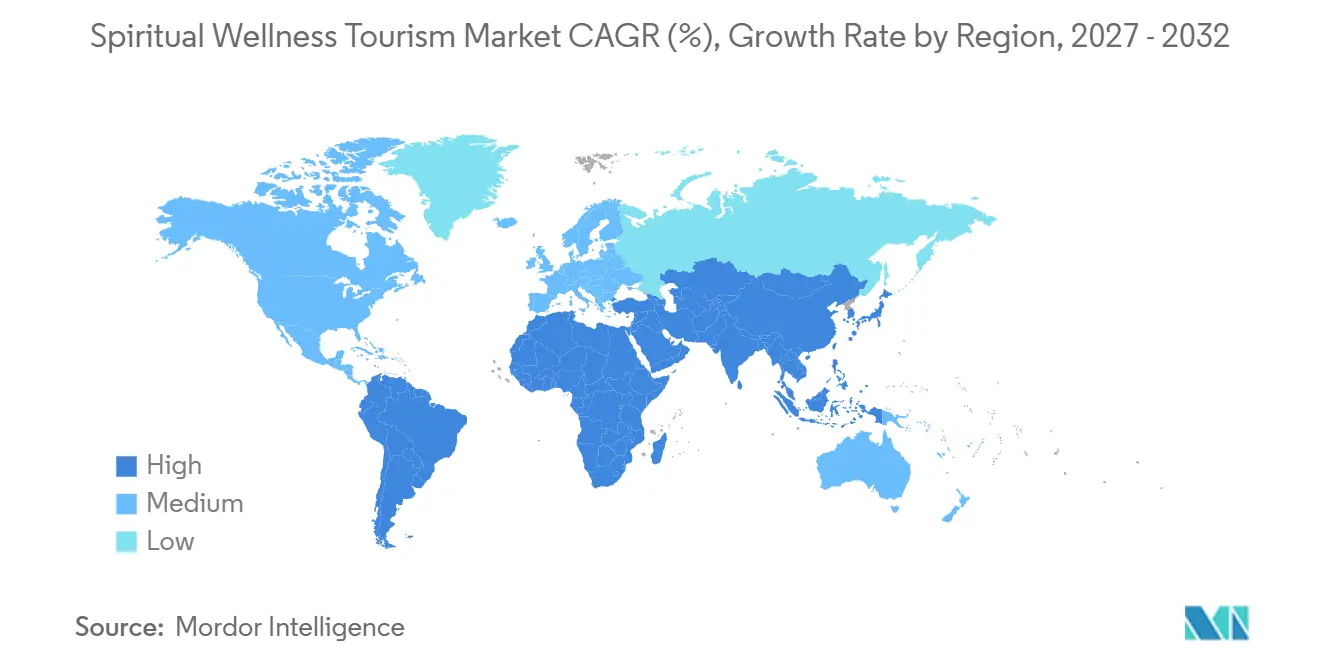
- By geography, Asia-Pacific accounted for 34.92% of the Global Spiritual Wellness Tourism Market share in 2026 and is projected to grow at an 8.94% CAGR through 2032.
Note: Market numbers in this report are based on Mordor Intelligence's proprietary estimation framework, which combines nine months of actuals with Q4 projections for base year 2026.
Global Spiritual Wellness Tourism Market Trends and Insights
Drivers Impact Analysis*
| Driver | (~) % Impact on CAGR Forecast | Geographic Relevance | Impact Timeline |
|---|---|---|---|
| Rising Mental-Health, Stress-Management and Nervous-System Recovery Demand | +2.1% | Global | Short term (≤ 2 years) |
| Growing Interest in Preventive Health, Mindfulness and Holistic Well-Being | +1.6% | Global | Medium term (2-4 years) |
| Younger Travelers Seeking Personal Growth, Authenticity and Spiritual Connection | +1.2% | North America, Europe, and Asia-Pacific | Short term (≤ 2 years) |
| Digital Discovery, Personalization and Hybrid Pre-Trip and Post-Trip Engagement | +0.9% | Global | Short term (≤ 2 years) |
| Government and Destination Investment in Spiritual, Cultural and Wellness Infrastructure | +0.8% | Asia-Pacific and Middle East Africa | Medium term (2-4 years) |
| Premiumization of Transformational Travel and High-Value Longer-Stay Programs | +1.0% | Global | Medium term (2-4 years) |
| Source: Mordor Intelligence | |||
Rising Mental-Health, Stress-Management, and Nervous-System Recovery Demand
More than 1 billion people live with mental health conditions, while depression and anxiety cost the global economy an estimated USD 1 trillion annually in lost productivity[1]. This burden is driving demand for retreats focused on rest, meditation, breathwork, and structured recovery, although these offerings do not replace clinical care. The global spiritual wellness tourism market is attracting travelers seeking relief from demanding work schedules and daily routines. Operators are offering programs that combine wellness practices with expert-led education and follow-up support. This trend supports formats that integrate yoga, Ayurveda, tranquil natural settings, and clear safety protocols.
Growing Interest in Preventive Health, Mindfulness, and Holistic Well-Being
Preventive health is expanding wellness travel beyond recovery from stress to ongoing personal care. This shift supports programs that integrate nutrition, movement, sleep, meditation, and traditional healing practices within a single stay. The global spiritual wellness tourism market can benefit as guests view retreats as planned components of their annual health routines. In February 2025, Kamalaya introduced its Cognitive House, which offers neurofeedback, neuromodulation, and transcranial photobiomodulation. This development shows how operators are incorporating measurable wellness services into established retreat formats. Destinations with traditional medicine systems, such as India with Ayurveda, can position traditional therapies as supervised, destination-based services alongside yoga and spiritual practices. However, providers must avoid broad therapeutic claims unsupported by program design or practitioner qualifications.
Younger Travelers Seeking Personal Growth, Authenticity, and Spiritual Connection
Younger travelers seek experiences that support reflection, personal growth, cultural learning, and a stronger sense of place. This trend benefits smaller retreats and local operators, where teachers, hosts, and cultural settings shape the guest experience. The global spiritual wellness tourism market benefits when destinations preserve the authenticity of religious sites, healing traditions, and community participation. India can meet this demand through carefully managed temple circuits, Himalayan retreats, yoga centers, and Ayurveda destinations. Operators must balance accessibility with respect for local customs, particularly in active spiritual spaces. Clear information on schedules, practices, conduct, and service limitations helps first-time international visitors select suitable programs.
Digital Discovery, Personalization, and Hybrid Pre-Trip and Post-Trip Engagement
Digital channels enable travelers to compare retreat locations, understand programs, and assess teacher or practitioner credentials before booking. Direct platforms support pre-arrival assessments, payments, itinerary planning, and post-departure communication. These capabilities support the global spiritual wellness tourism market, as travelers often require greater trust than for standard hotel bookings. Kamalaya launched Wellness Guardians in July 2025, providing guests who book stays of five or more nights with 12 months of personalized support, including quarterly virtual check-ins and nutrition coaching[2]. Operators can use similar digital engagement to explain treatment plans, travel requirements, and expectations before arrival. Digital delivery should complement the in-person experience without diminishing the cultural and interpersonal elements that distinguish these stays.
Restraints Impact Analysis*
| Restraint | (~) % Impact on CAGR Forecast | Geographic Relevance | Impact Timeline |
|---|---|---|---|
| Inconsistent Accreditation, Safety Standards and Quality Assurance | -0.4% | Global | Short term (≤ 2 years) |
| Shortage of Qualified Spiritual, Mental-Wellness and Traditional-Healing Practitioners | -0.3% | Asia-Pacific and South America | Medium term (2-4 years) |
| Commercialization, Cultural Appropriation and Loss of Destination Authenticity | -0.3% | Asia-Pacific and South America | Long term (≥ 4 years) |
| Environmental, Infrastructure and Carrying-Capacity Pressure at Sacred and Ecologically Sensitive Sites | -0.2% | Asia-Pacific and Europe | Long term (≥ 4 years) |
| Source: Mordor Intelligence | |||
Inconsistent Accreditation, Safety Standards, and Quality Assurance
Inconsistent standards constrain the market, as visitors may struggle to assess the quality of teachers, practitioners, facilities, and program safeguards before booking. This concern is particularly significant for offerings involving breathwork, trauma processing, mental well-being, or traditional treatments. Poor experiences that raise safety or trust concerns can discourage first-time customers in the global spiritual wellness tourism market. For example, India is developing stronger quality assurance through NABH accreditation; however, adoption remains limited among small providers. Clear disclosure of qualifications, program limitations, referral processes, and emergency support can reduce uncertainty. Robust quality systems can help legitimate Indian providers differentiate themselves in international travel and corporate procurement channels.
Shortage of Qualified Spiritual, Mental-Wellness, and Traditional-Healing Practitioners
The supply of experienced practitioners can constrain expansion when demand outpaces training, supervision, and retention. This challenge is particularly relevant to Ayurveda and other knowledge systems that require sustained education and practice. The global spiritual wellness tourism market requires practitioners who can serve international visitors without compromising the depth or safety of traditional care. For example, India allocated INR 60 crore (USD 6.68 million) to tourism skill development in its 2025-26 budget, including hospitality management training[3]. While this allocation addressed staffing needs, destination operators also require local career pathways and consistent service training. Partnerships among training institutions, health authorities, and retreat operators can expand practitioner capacity while maintaining service quality.
*Our forecasts treat driver/restraint impacts as directional, not additive. The impact forecasts reflect baseline growth, mix effects, and variable interactions.
Consumer Behavior Analysis
Wellness travelers increasingly seek specialized experiences spanning spirituality, mental well-being, nature, and traditional healing. A total of 1.24 billion wellness trips were recorded in 2024, representing 8.3% of global tourism trips but 17.6% of tourism expenditure. This spending disparity indicates an opportunity for spiritual retreats to develop personalized programs combining meditation, yoga, cultural immersion, and traditional practices, supported by credible practitioners and transparent inclusions.
India’s wellness tourism expenditure reached USD 26.2 billion in 2024, a 57.5% increase from 2023, ranking the country seventh globally. This growth creates opportunities for spiritual wellness operators to develop packages that combine accommodation, guided practices, and traditional therapies. Specialized experiences are also gaining traction. Canyon Ranch introduced its three-night, four-day Beat Burnout retreat in July 2025, combining expert coaching with wellness practices. Similar tailored retreats could attract corporate and high-spending travelers seeking structured well-being experiences.
Spiritual Wellness Performance Intelligence
Occupancy at spiritual wellness properties depends on seasonality, destination accessibility, program reputation, and visitor confidence. For example, in 2024-25, India’s Ministry of Tourism sanctioned destination-development projects for spiritual and cultural experiences, including INR 25 crore (USD 2.78 million) each for Ahobilam and Nagarjuna Sagar. These investments may support year-round visitor experiences but do not guarantee occupancy growth. Operators should track room occupancy, program participation, average length of stay, and repeat bookings to identify seasonal gaps and improve revenue performance.
Retreat pricing varies by accommodation type, stay duration, practitioner expertise, and included treatments. Kamalaya in Thailand lists its eight-night Sacred Renewal program at THB 120,633 (USD 3,830.41), excluding accommodation, and includes 21 treatments and additional wellness services. This model shows how structured spiritual experiences can support higher pricing through clearly defined programs rather than accommodation alone. Providers can offer transparent package tiers that combine meditation, yoga, traditional therapies, meals, and accommodation to serve different budget segments while clearly communicating value.
Segment Analysis
By Service Type: Ayurveda’s Growth Broadens Yoga’s Established Lead
Yoga & Meditation accounted for 37.23% of the global spiritual wellness tourism market in 2026, supported by broad recognition and adaptability across stay durations. Its appeal spans age groups and destinations, with delivery through retreats, hotels, ashrams, and outdoor settings. Yoga provides a familiar entry point for travelers new to spiritual wellness tourism. The market relies on quality instruction, appropriate group sizes, and practice-supportive environments. In its countries of origin, yoga links an internationally recognized activity with deep local knowledge.
Ayurveda & Traditional Healing is projected to grow at an 8.34% CAGR through 2032, making it the fastest-growing service category. Ayurveda supports longer stays centered on consultations, routines, diet, therapies, and recovery. In 2023, India’s Ministry of Ayush and the India Tourism Development Corporation agreed to promote Ayurveda and traditional medicine through tourism. Spiritual and faith-based retreats extend pilgrimages through accommodation, guided reflection, and locally appropriate wellness services. Research indicates that natural surroundings, teacher-participant relationships, and group cohesion influence well-being and repeat-visit intentions.

By Accommodation Type: Purpose-Built Retreats Lead as Hotels Add Wellness Capacity
Spiritual retreat centers accounted for 42.24% of category revenue in 2026. They control the guest environment, including schedules, meals, shared spaces, activities, and settings. This integrated model creates more cohesive multi-night programs than hotel stays with optional spa services. Centers near natural or spiritual destinations serve guests seeking structured yoga or Ayurveda stays.
Commercial hospitality accommodation is forecast to grow at an 8.93% CAGR through 2032 as hotels add wellness facilities and programs. Hotels can offer retreat packages without building new properties, provided programs remain credible. Ashrams and monasteries offer religious and contemplative experiences that commercial properties cannot replicate. South Korea’s Templestay program supports emotional recovery, inner reflection, and perceptual change. Destinations can preserve the value of ashrams and faith settings through visitor management that respects their religious purpose.
By Booking Channel: Direct Relationships Retain the Lead as Aggregators Improve Discovery
Direct booking accounted for 55.31% of category revenue in 2026. Guests often prefer direct contact because retreat selection may involve personal goals, dietary requirements, prior experiences, or questions about spiritual practices. Direct engagement also enables providers to explain eligibility, expectations, and program boundaries before arrival. The global spiritual wellness tourism market benefits from this trust-based process, particularly where provider quality varies. Operators can strengthen direct channels through accurate websites, prompt communication, and clear pre-arrival guidance.
OTAs and retreat aggregators are projected to grow at a CAGR of 8.64% through 2032. These channels can introduce travelers to diverse locations and program formats when providers publish verified information. Listings are most valuable when travelers can compare credentials, schedules, prices, and policies. Travel agencies and tour operators remain relevant for complex itineraries, corporate groups, and international travelers requiring logistical support. Kamalaya’s Wellness Guardians program combines direct booking relationships with post-stay support. Providers can use aggregators for discovery while retaining direct engagement for high-consideration bookings.
Geography Analysis
Asia-Pacific accounted for 34.92% of the global spiritual wellness tourism market in 2026 and is projected to grow at a CAGR of 8.94% through 2032. The region has strong yoga, Ayurveda, Buddhist, faith-based, and nature-linked wellness traditions. India integrates spiritual circuits, pilgrimage infrastructure, Ayurveda, and traditional medicine into its tourism policy. In November 2024, India sanctioned INR 3,295.8 crore (USD 366.8 million) in interest-free 50-year loans for 40 tourism projects across 23 states under its Special Assistance to States for Capital Investment scheme, alongside pilgrimage and destination infrastructure under PRASHAD and Swadesh Darshan 2.0. Kerala Ayurveda centers serving foreign nationals increased from 460 in 2023 to 550 in 2024.
Europe is both a source market and destination region for place-based wellness travel. Supply includes heritage hotels, rural retreats, spa properties, and nature-based programs. In March 2025, IHG unveiled plans for Six Senses Comporta in Portugal, including a 70-key resort and spa on the 400-ha Pinheirinho estate[4]. North America supports demand for executive, preventive, and extended-stay wellness formats.
The Middle East and Africa is expanding through destination projects, government investment, and hospitality-led wellness. Miraval The Red Sea, which opened in June 2026, includes a 3,700 m² Life in Balance Spa. South America supports smaller nature-based retreats, although provider availability and infrastructure vary. Governments and operators must manage sacred-site carrying capacity to protect cultural and natural value.
Spiritual Wellness Supply & Development Intelligence
Facility development increasingly integrates natural landscapes, cultural heritage, and structured wellness experiences. Hyatt opened the 22,000-square-foot Elysium Spa & Wellness House in Panama in October 2025, combining nature-inspired treatments with the surrounding volcanic landscape. This model enables retreats to differentiate through destination-specific therapies and immersive experiences. Heritage properties and locations near spiritual circuits could support similar developments, provided developers maintain conservation standards, accessibility, and cultural authenticity.
In India, Kerala’s Ayurveda centers serving foreign nationals increased from 460 in 2023 to 550 in 2024, a 19.6% rise. Revenue from Ayurvedic medical-value tourism grew from INR 10,800 crore (USD 1,202 million) to INR 13,500 crore (USD 1,502.5 million). These figures indicate growth in therapeutic wellness infrastructure beyond spiritual tourism alone. Across destinations, expanding affordable pilgrimage accommodation and specialized retreats could serve diverse visitor segments, provided service quality, trained personnel, and transport accessibility improve alongside capacity.
Competitive Landscape
The global spiritual wellness tourism market is fragmented, with activity spread across hotel groups, independent retreat operators, ashrams, faith-based travel providers, teachers, and specialist booking platforms. Marriott International, Accor, IHG, Hilton, and Hyatt participate in the segment, although wellness represents a limited share of their diversified operations. Kamalaya, Chiva-Som, Canyon Ranch, and Ananda in the Himalayas compete through program depth, practitioner quality, setting, and guest relationships. No single operating model defines the category, creating opportunities for operators with cultural credibility and consistent multi-site delivery.
Hospitality groups are expanding wellness capabilities through new properties, resort conversions, and branded programs. Hyatt opened Elysium Spa & Wellness House at Hotel La Compañia del Valle in Panama in October 2025. IHG’s Six Senses Comporta masterplan links a natural estate with a planned resort and spa. Kamalaya’s Wellness Guardians program maintains guest engagement after stays. Competition therefore includes relationship building and program design, not only property development.
Destinations with strong spiritual traditions have opportunities to combine credible Ayurveda, yoga, and pilgrimage experiences with organized accommodation and verified service standards. Improved accommodation and local mobility can extend stays in rural spiritual circuits. Digital platforms can help smaller facilities reach international travelers, but accurate descriptions and transparent practitioner qualifications remain essential. Corporate programs remain underdeveloped despite demand for stress-management and resilience services. Accreditation and other quality systems can support international and institutional demand. Cultural stewardship remains essential, as reduced authenticity could weaken destination appeal.
Spiritual Wellness Tourism Industry Leaders
-
Marriott International, Inc.
-
Accor S.A.
-
Hilton Worldwide Holdings Inc.
-
Hyatt Hotels Corporation
-
InterContinental Hotels Group PLC
- *Disclaimer: Major Players sorted in no particular order
Recent Industry Developments
- October 2026: Canyon Ranch partnered with celebrity facialist Iván Pol to introduce The Beauty Sandwich, expanding its beauty and skincare offerings. The partnership reflects how wellness resorts combine restorative stays with specialized beauty treatments and personalized self-care.
- June 2026: Hyatt opened Miraval The Red Sea in Saudi Arabia, its first Miraval resort outside the United States. The adults-only retreat offers 180 guestrooms, suites, and villas, integrating mindfulness, holistic wellness, and local heritage to expand Hyatt’s presence in destination-based spiritual and wellness tourism.
- October 2025: Hyatt Hotels Corporation opened the 22,000-sq. ft. Elysium Spa & Wellness House at Hotel La Compañia del Valle in El Valle de Antón, Panama. The facility offers healing treatments inspired by the region’s volcanic terrain, creating a wellness destination in Central America.
- October 2025: Thalasseo, a French wellness OTA that has served more than 1.5 million travelers, was acquired through a majority management buy-in backed by UI Investissement’s Cap Autrement impact fund, with a new chief executive taking over from the founder. The transaction marked an impact-fund investment in a dedicated wellness travel aggregator in Europe.
Global Spiritual Wellness Tourism Market Report Scope
The Global Spiritual Wellness Tourism Market report analyzes travel experiences focused on spiritual growth, mindfulness, faith-based practices, and holistic well-being. The market is segmented by service type (Yoga & Meditation, Spiritual & Faith-Based Retreats, Ayurveda & Traditional Healing, and Others), accommodation type, booking channel, and geography. The study assesses drivers, including demand for stress management, preventive well-being, authentic spiritual experiences, and wellness retreats. It also examines restraints, such as inconsistent quality standards, shortages of qualified practitioners, cultural commercialization, and pressure on sacred destinations. The report evaluates retreat facility supply, accommodation capacity, occupancy rates, package pricing, traveler preferences, booking behavior, and spending patterns. It provides market size and growth forecasts, regional and country-level analyses, competitive landscape assessments, market concentration, strategic developments, and profiles of hospitality groups, wellness resorts, retreat operators, and booking platforms. It also explores opportunities in integrated spiritual travel circuits, personalized wellness programs, and longer-stay experiences. Market estimates and forecasts are presented in value (USD) for all covered segments.
Key Questions Answered in the Report
What is driving demand for spiritual wellness tourism?
Demand is supported by interest in stress management, preventive health, culturally grounded travel, and longer stays that combine accommodation with guided wellness practices.
Which service category leads global spiritual wellness tourism?
Yoga & Meditation leads with a 37.23% share in 2026, while Ayurveda & Traditional Healing is projected to grow at an 8.34% CAGR through 2032.
How large is the global spiritual wellness tourism market?
India combines yoga, Ayurveda, pilgrimage routes, and public investment in spiritual tourism infrastructure through programs such as PRASHAD and Swadesh Darshan 2.0.
Which accommodation format has the largest share?
Spiritual Retreat Centers account for 42.24% of category revenue in 2026 because they can manage the full multi-night guest experience.
How do travelers usually book spiritual wellness retreats?
Direct Booking leads with a 55.31% share in 2026, while OTAs & Retreat Aggregators are the fastest-growing booking channel at an 8.64% CAGR.
What makes a spiritual wellness provider credible?
Clear practitioner qualifications, transparent program limits, reliable safety systems, respectful cultural practices, and recognized quality frameworks help build trust.