
Migratory Birds Tourism Market Size and Share
Market Overview
| Study Period | 2021 - 2031 |
|---|---|
| Market Size (2026) | USD 3.57 Billion |
| Market Size (2031) | USD 5.04 Billion |
| Growth Rate (2026 - 2031) | 7.14 % |
| Fastest Growing Market | Asia-Pacific |
| Largest Market | North America |
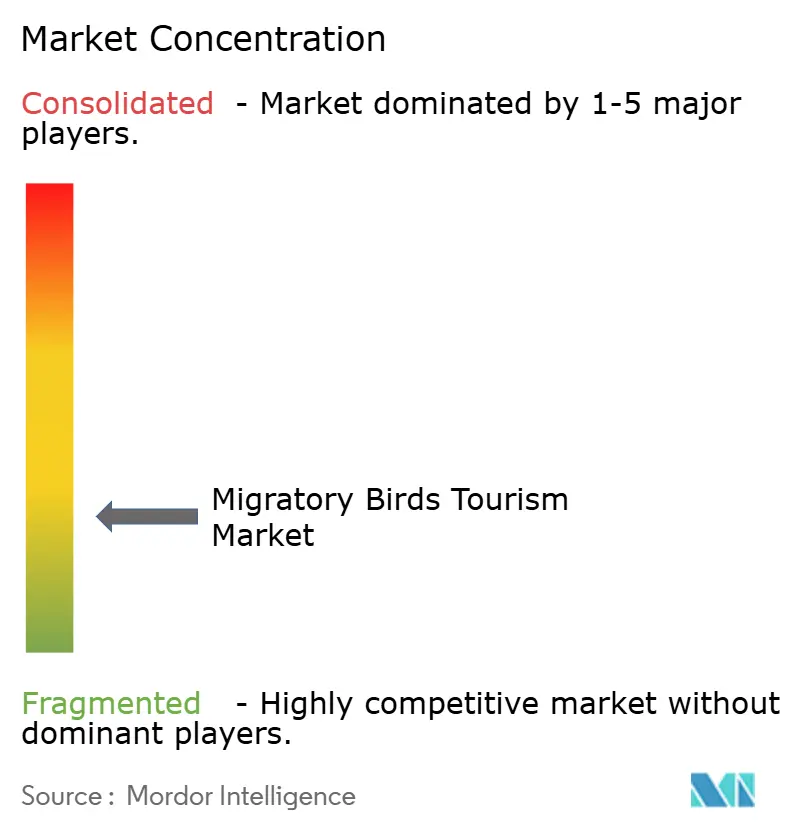
| Market Concentration | Low |
Major Players *Disclaimer: Major Players sorted in no particular order Image © Mordor Intelligence. Reuse requires attribution under CC BY 4.0. | |
Migratory Birds Tourism Market Analysis by Mordor Intelligence
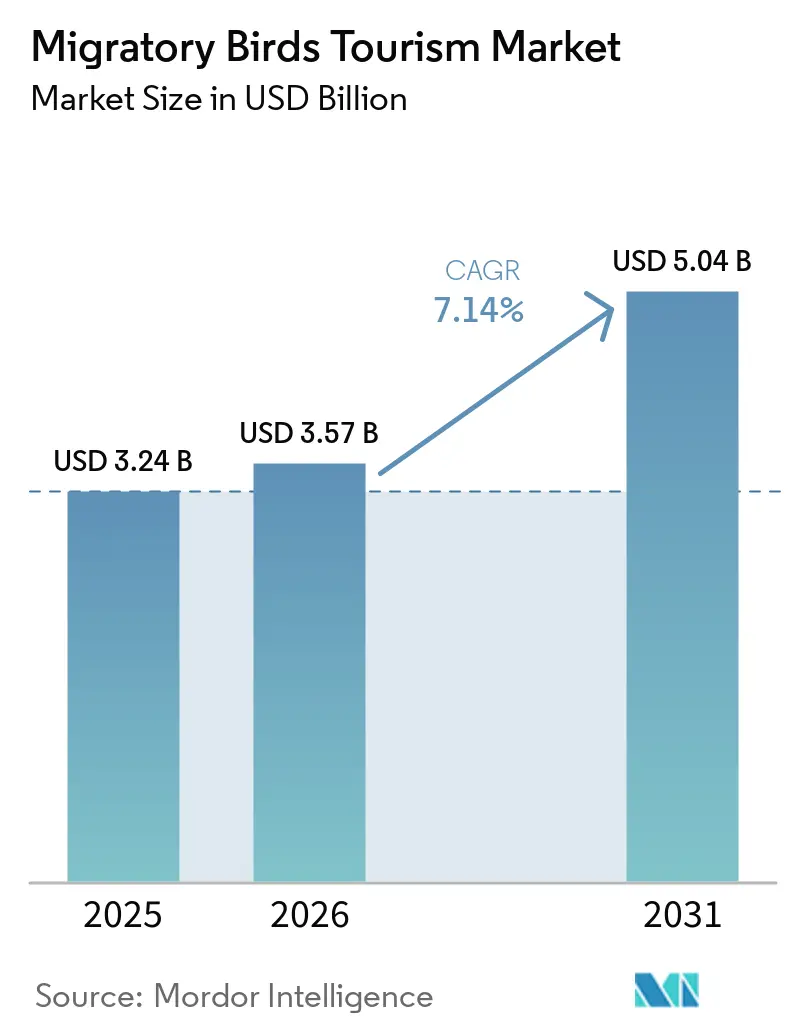
The Global Migratory Birds Tourism Market was valued at USD 3.24 billion in 2025 and estimated to grow from USD 3.57 billion in 2026 to reach USD 5.04 billion by 2031, at a CAGR of 7.14% during the forecast period (2026-2031). Migratory bird tours drive the market by turning seasonal species movements into structured itineraries, simplifying travel planning. Demand is increasing due to the popularity of nature-based recreation, accessibility of digital bird identification tools, and interest in guided small-group experiences. Citizen science platforms also play a role in converting casual bird observers into trip planners, with the Merlin Bird ID app surpassing 10 million active users globally in 2025 and eBird expanding observation coverage. Destination quality is influenced by factors beyond biodiversity[1]. An official study found the human development index accounted for 41.4% of destination choice variation, compared to 22.4% for species richness. This highlights the importance of guide availability, safety, and tourism infrastructure in decision-making. The market remains fragmented, with competition focusing on guide qualifications, conservation alignment, itinerary depth, and destination accessibility rather than price.
Key Report Takeaways
- By booking channel, Online Travel Agencies held a 34.82% share of the Global Migratory Birds Tourism Market in 2025, while Specialty Birding Tour Aggregators are projected to grow at the highest CAGR of 7.97% by 2031.
- By travel style, Mid-Range Birding Holidays accounted for a 52.43% share of the Global Migratory Birds Tourism Market in 2025, while Luxury Ecotourism is projected to grow at the highest CAGR of 8.96% by 2031.
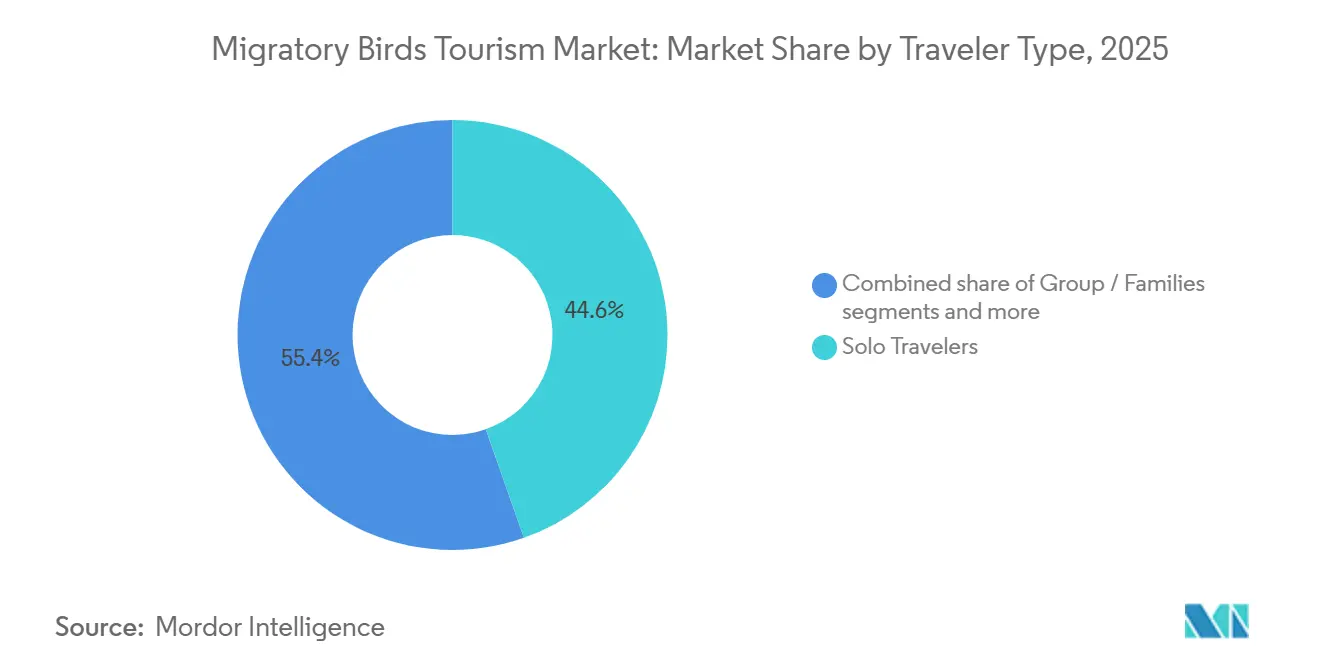
- By traveler type, Solo Travelers held a 44.61% share of the Global Migratory Birds Tourism Market in 2025, while Small Birding Clubs and Enthusiast Groups are projected to grow at the highest CAGR of 8.35% by 2031.
- By trip duration, Short Trips of 2-4 days led with a 43.24% share of the Global Migratory Birds Tourism Market in 2025, while Extended Trips of 5 or more days are projected to grow at the highest CAGR of 9.12% by 2031.
- By geography, North America held a 33.79% share of the Global Migratory Birds Tourism Market in 2025, while Asia-Pacific is projected to grow at the highest CAGR of 8.85% by 2031.
Note: Market size and forecast figures in this report are generated using Mordor Intelligence’s proprietary estimation framework, updated with the latest available data and insights as of January 2026.
Global Migratory Birds Tourism Market Trends and Insights
Drivers Impact Analysis*
| Driver | (~) % Impact on CAGR Forecast | Geographic Relevance | Impact Timeline |
|---|---|---|---|
| Rising Demand for Nature-Based and Wildlife-First Travel | +2.1% | Global | Short term (≤ 2 years) |
| Expansion of Community-Led Birdwatching Routes and Local Guides | +1.0% | Asia-Pacific, Africa, South America | Long term (≥ 4 years) |
| Growth of Premium Small-Group Ecotourism Itineraries | +1.3% | North America & European Union, Asia-Pacific | Medium term (2-4 years) |
| Easier Discovery Through Niche Digital Trip Marketplaces | +1.5% | Global | Short term (≤ 2 years) |
| Climate-Driven Bird Migration Variability Creating New Seasonal Destinations | +0.7% | Global, with early gains in Central Asia and Greenland | Long term (≥ 4 years) |
| Conservation Funding Tied to Birding Visitor Fees and Permits | +0.6% | Africa, South America, Middle East and Africa | Long term (≥ 4 years) |
| Source: Mordor Intelligence | |||
Rising Demand for Nature-Based and Wildlife-First Travel
The Global Migratory Birds Tourism Market is growing due to a shift toward nature-based travel, where wildlife viewing is increasingly seen as a planned holiday activity rather than a niche interest. Participation in wildlife watching is expected to increase across key outbound travel markets, with notable growth in countries like France, the United Kingdom, and Italy. This trend reflects a broader customer base that now includes travelers seeking outdoor breaks, guided experiences, and wellness-focused trips. The evolving demand supports the development of entry-level itineraries, mid-range packages, and repeat bookings for specialized migratory bird routes. It also encourages destination authorities and operators to position birding as a mainstream tourism product, driving infrastructure investment and enhancing package offerings within the market.
Expansion of Community-Led Birdwatching Routes and Local Guides
Community-led initiatives and local guide development are strengthening the supply side of the Global Migratory Birds Tourism Market, particularly in biodiversity-rich areas lacking formal tourism infrastructure. The Lake Nasser transition project, supported by BirdLife International, trained local stakeholders, including former hunting guides and boat operators, and facilitated the creation of birdwatching startups. This highlights how capacity building can transform natural habitats into tourism products[2]. The Great Kavango Zambezi Birding Route further demonstrated this through a cross-border framework involving Birding Route Ambassadors across multiple countries. These efforts are significant as birdwatchers often prioritize destinations with skilled guides, reliable routes, and local expertise. Over time, such initiatives are expected to help the market expand beyond established hotspots, incorporating more secondary destinations into organized supply chains.
Growth of Premium Small-Group Ecotourism Itineraries
Small-group travel is enhancing the value segment of the Global Migratory Birds Tourism Market, while the mid-range segment continues to dominate in volume. Luxury ecotourism is experiencing significant growth, reflecting a preference among high-spending birders for quality guiding, specialized accommodations, and access to rare species over cost considerations. Enthusiastic birders, particularly from Europe, contribute substantially to revenue per trip due to their willingness to invest in superior guiding and higher species yield. Examples such as specialized Peruvian Amazon packages and Papua New Guinea expeditions highlight that the market supports higher pricing when offerings provide credible depth[3]. This trend drives operators to focus on factors like group size, expert leadership, conservation value, and destination exclusivity rather than broad itinerary coverage.
Easier Discovery Through Niche Digital Trip Marketplaces
Digital discovery is simplifying the Global Migratory Birds Tourism Market by helping travelers move quickly from species interest to trip planning. Merlin Bird ID expanded its reach globally, covering thousands of species across numerous countries, with significant growth in usage in both the United States and Europe. The Great Backyard Bird Count saw a substantial increase in participation, further boosting the number of Merlin Bird IDs, highlighting the growing digital engagement among birding enthusiasts. Specialty birding aggregators and nature-focused online travel agency filters are addressing this demand by offering itineraries searchable by region, species interest, and travel format. This progress is improving the visibility of the Global Migratory Birds Tourism Market in regions where formal birding tour distribution has been limited, including parts of South and Southeast Asia.
Restraints Impact Analysis*
| Restraint | (~) % Impact on CAGR Forecast | Geographic Relevance | Impact Timeline |
|---|---|---|---|
| Seasonality and Narrow Migration Windows | -1.9% | Global | Short term (≤ 2 years) |
| Habitat Degradation at Key Stopover Sites | -1.4% | Asia-Pacific, Africa, South America | Long term (≥ 4 years) |
| Permit, Access, and Protected-Area Entry Constraints | -0.8% | Asia-Pacific core, Africa | Long term (≥ 4 years) |
| Limited Awareness of Birding Destinations in Mass Market Travel | -0.5% | Emerging markets | Medium term (2-4 years) |
| Source: Mordor Intelligence | |||
Seasonality and Narrow Migration Windows
Seasonality poses a structural challenge to the Global Migratory Birds Tourism Market, as bird presence at key locations is often restricted to a brief annual period. Analysis of trip reports from Spain, a well-established birding destination in Europe, revealed a noticeable decline in demand during the summer months. This highlights the reduced interest outside peak migration periods, leading to concentrated revenue streams and underutilization of accommodations, guides, and local transport services throughout the year. Smaller businesses face greater risks due to limited financial resources and insufficient geographic diversification to address seasonal gaps across various flyways. While strategies such as multi-country programming and cross-hemisphere scheduling can help mitigate these challenges, they are operationally complex and not universally accessible to all operators.
Habitat Degradation at Key Stopover Sites
Habitat degradation represents a significant long-term risk to the Global Migratory Birds Tourism Market by reducing the reliability of bird sightings, even when species diversity appears high. A review led by data analyzed by numerous countries found that logging, agricultural expansion, and extractive activities near key migratory habitats often resulted in stagnant or declining birding tourism. Countries such as Venezuela and the Democratic Republic of Congo were highlighted as examples. Similarly, BirdLife International reported pressures on Egypt’s Lake Nasser due to sediment disruption, pollution, and climate change, which required intervention to maintain its tourism potential. While interest in birding tourism continues to grow, ensuring the availability of high-quality habitats is becoming increasingly difficult. This creates a widening gap between traveler demand and the readiness of habitats in some of the most species-rich regions worldwide[4].
*Our forecasts treat driver/restraint impacts as directional, not additive. The impact forecasts reflect baseline growth, mix effects, and variable interactions.
Segment Analysis
By Booking Channel: Digital Discovery Is Reshaping Conversion Paths
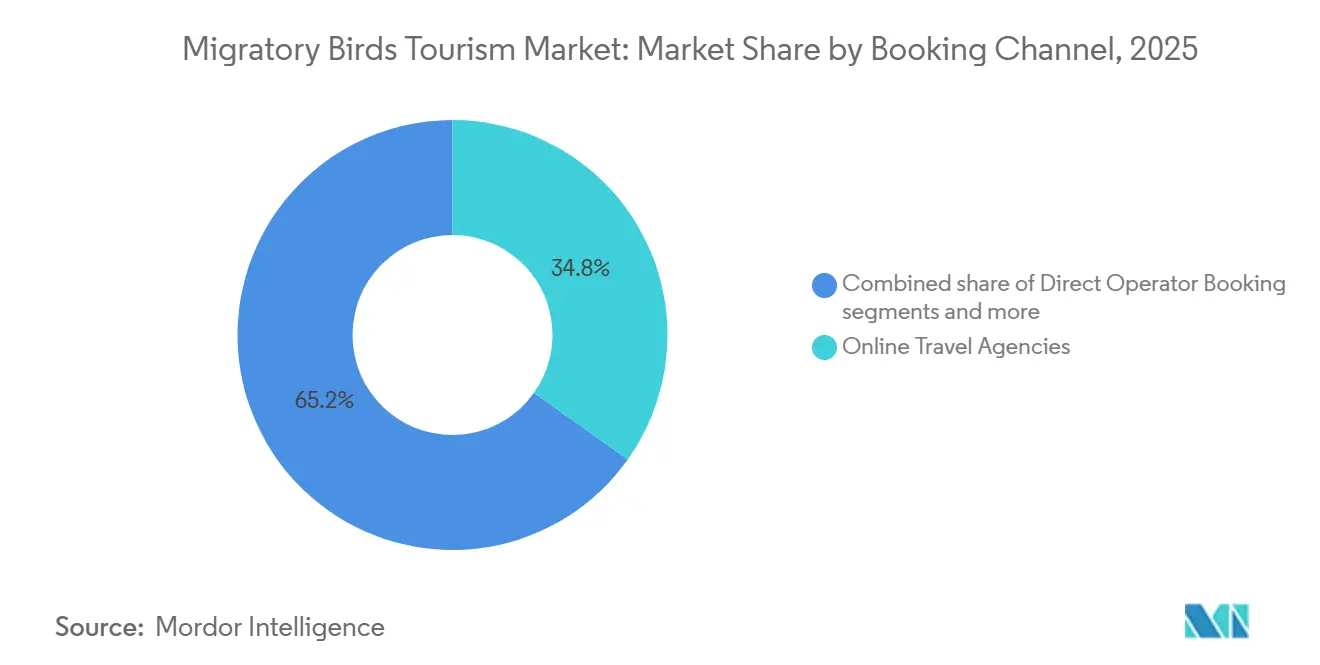
Online Travel Agencies (OTAs) represented 34.82% of booking channel value in 2025, making them the largest purchasing channel in the Global Migratory Birds Tourism Market. This reflects strong participation from travelers combining birding with broader holidays and favoring mainstream booking platforms over specialized operator websites. OTAs are particularly relevant for incidental users and first-time participants seeking simplified packages for transport, accommodation, and local activities. While this broadens the customer base, many OTA-driven bookings originate from general leisure interests rather than specific birding objectives. Volume in this segment is driven by convenience, platform visibility, and confidence in basic itineraries.
Specialty Birding Tour Aggregators are the fastest-growing booking channel, with a compound annual growth rate (CAGR) of 7.97% through 2031. This growth is linked to digitally engaged birders using tools like Merlin and eBird to plan trips. Direct operator bookings remain significant for repeat clients due to loyalty programs, newsletters, conservation partnerships, and prior guide experiences. Travel agents and destination management companies also play a role where travelers require mobility support or face complex in-country logistics. The migratory birds tourism industry is shifting toward a layered distribution model, where discovery, validation, and fulfillment are increasingly managed by distinct channel types.

By Travel Style: Mid-Market Volume Leads While Premium Value Expands Faster
Mid-Range Birding Holidays held 52.43% of the market share in 2025, reflecting a focus on practical and value-oriented itineraries. Travelers in this segment seek reliable guiding, reasonable comfort, and efficient access to birding areas while avoiding higher costs. This tier drives volume for operators in both established and emerging destinations and appeals to both repeat and new participants. The core of the Global Migratory Birds Tourism Market remains broad, even as product sophistication increases.
Luxury Ecotourism is expected to grow at a CAGR of 8.96% through 2031, the fastest among travel styles. Growth is linked to travelers prioritizing conservation, small group sizes, guide quality, and access to rare species over cost. Examples include Birding Ecotours’ Papua New Guinea package at USD 12,862 per person and Naturetrek’s Peru offering, showing support for higher pricing when routes and destinations are distinct. Budget Birdwatching Travel is gaining popularity among younger, digital-first, self-guided travelers. This trend pressures mid-range operators lacking clear value or differentiation. The migratory bird’s tourism market is evolving into a two-ended structure, with both low-cost options and specialized offerings gaining traction.
By Traveler Type: Solo Birders Lead Today While Organized Clubs Build Faster
Solo travelers held 44.61% of the market value in 2025, the largest share among traveler types in the Global Migratory Birds Tourism Market. This reflects the nature of serious birding, which often requires an individual pace, personalized species lists, and flexible time management. Many solo travelers prioritize control over photography stops, checklist preferences, and habitat focus, making this segment commercially sustainable. Even when joining group tours, their decisions are typically driven by individual objectives, ensuring solo demand remains a significant market component.
Small birding clubs and enthusiast groups are projected to grow at a compound annual growth rate (CAGR) of 8.35% through 2031, making them the fastest-growing traveler type. This growth is linked to reduced planning complexities, stronger group purchasing power, and better access to expert guides for specialized destinations. The 2026 Great Backyard Bird Count recorded 435 community events across 216 countries, up from 409 in 2025, highlighting the rise in organized participation. For operators, these groups improve departure reliability and simplify permit coordination, especially in regions with stricter local access requirements. The market is balancing the independent decision-making of solo travelers with the increasing coordination of club-based bookings.
By Trip Duration: Short Breaks Dominate Entry Demand While Longer Journeys Lift Value
Short trips of 2-4 days held a 43.24% share in 2025, making them the most popular duration format in the Global Migratory Birds Tourism Market. This is since productive birding often occurs within short timeframes at accessible reserves, wetlands, and flyway stopovers. These trips also align with urban work schedules and lower travel budgets. For first-time participants, they offer a focused experience with a realistic chance of sightings while requiring less commitment. As a result, short-duration trips remain the primary entry point in this market.
Extended trips of 5 or more days are expected to grow at a CAGR of 9.12% through 2031, making them the fastest-growing duration segment. This growth is driven by birders who prioritize species diversity and access to remote locations over convenience, particularly in regions such as the Amazon, Central Asia, and Papua New Guinea. For example, Limosa Holidays’ 2026 Amazon River cruise reached full capacity before departure, reflecting strong demand in this category. Day trips continue to play a role as introductory products, often converting casual participants into short-break or extended-trip customers. While shorter formats account for the highest booking volumes, the market for extended trips is expanding at a faster rate than other duration segments.
Geography Analysis
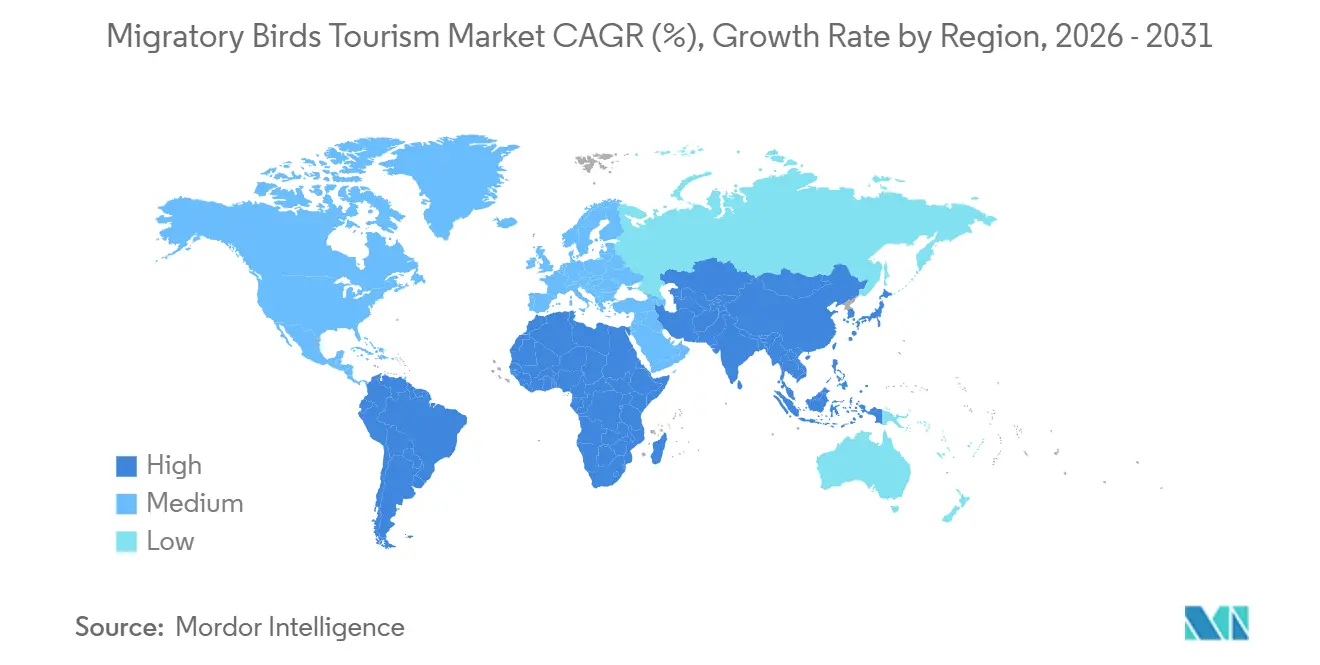
North America accounted for 33.79% of the projected 2025 market value, driven by the United States, where 96 million Americans participated in birding in 2022, with 43 million traveling for the activity. These activities generated USD 14 billion in trip-related spending and USD 279 billion in total economic output. The region is expected to grow at a CAGR of 6.80% through 2031, reflecting sustained demand. Outbound corridor development into Mexico, Central America, and the Caribbean supports growth, integrating migratory flyways and endemic circuits into tourism packages. North America remains a key domestic and outbound contributor to the market.
South America is projected to grow at a CAGR of 10.60% through 2031. Birding activity in Colombia increased 40-fold between 2010 and 2022, highlighting the region’s multi-country appeal. Brazil, Peru, Chile, and Argentina add demand through diverse ecosystems. Brazil’s tourism sector promotes birdwatching, as seen in Embratur’s 2025 birdwatching program. Europe remains significant as an outbound source, with its birdwatching market valued at USD 23.1 billion in 2024, including USD 5.6 billion from the United Kingdom.
The Asia-Pacific region is projected to grow at a CAGR of 8.85% through 2031, supported by rising participation in India and Indonesia. Indonesia hosts over 1,700 bird species, while India ranks among the top contributors to the 2026 Great Backyard Bird Count. Citizen science participation in India signals growing demand for guided birding along the East Asian-Australasian Flyway. Africa is projected to grow at a CAGR of 9.90%, supported by the Great Kavango Zambezi Birding Route launched in 2026, spanning five countries and over 650 bird species.
Competitive Landscape
The Global Migratory Birds Tourism Market is fragmented, with key players including Rockjumper Birding Tours, Birding Ecotours, Tropical Birding, Field Guides Inc., and Victor Emanuel Nature Tours. Competition is shaped by route credibility, guide expertise, conservation alignment, and destination novelty rather than pricing. Rockjumper Birding Tours combines scheduled tours with conservation efforts, contributing significantly to conservation initiatives and partnering with organizations such as BirdLife International and the American Birding Association. Conservation credibility is a critical factor for birding travelers, influencing perceptions of product quality. Brand strength in this market relies on field access, leadership, and traveler trust.
Large operators focus on expansion and diverse offerings to maintain market presence. Tropical Birding operates in numerous destinations with a wide range of tours, appealing to repeat customers seeking new routes while ensuring consistent standards. Birding Ecotours has introduced new expedition series, while Wild Birding is entering South America through Brazil. These strategies emphasize securing exclusive routes and enhancing destination appeal. Operators also expand regionally and launch new products to establish early presence in emerging birding destinations, keeping the market dynamic despite limited consolidation.
Smaller operators differentiate through personalized experiences, offering small group sizes and tailored trips. Examples include Red Hill Birding, Celtic Bird Tours, and Ornis Birding Expeditions. Digital integration, such as connecting trips with Merlin and eBird, enhances post-trip engagement and repeat bookings. Accessible birding travel for older and mobility-limited customers remains underdeveloped, presenting opportunities for tailored product design. The market remains competitive and open to growth for operators combining local expertise with digital engagement and conservation-focused access.
Migratory Birds Tourism Industry Leaders
-
Rockjumper Birding Tours
-
Birding Ecotours
-
Tropical Birding
-
Field Guides, Inc.
-
Victor Emanuel Nature Tours
- *Disclaimer: Major Players sorted in no particular order
Recent Industry Developments
- May 2026: The Great Kavango Zambezi Birding Route was launched by Angola, Botswana, Namibia, Zambia, and Zimbabwe at ITB Berlin 2026. This initiative spans the largest transfrontier conservation area globally, showcasing a diverse range of over 650 bird species. It also involves more than 100 Birding Route Ambassadors, structured as a commercially organized cross-border offering.
- January 2026: WINGS Birding Tours has added Georgia, Albania and Western Greece, Micronesia, and the Bahamas to its confirmed departure schedule for 2026-2027, enhancing its coverage in less-served birding regions.
- August 2025: Rockjumper Birding Tours has expanded its Birding Direct offerings and formed new partnerships with the Houston Audubon Society and The Wildlife Society. These efforts enhance its focus on scheduled tours and customized wildlife experiences.
- May 2025: Wild Birding joined Embratur Brazil’s birdwatching familiarization program, which included Boa Nova and Chapada Diamantina. This effort marks the company’s first structured step toward developing tours in South America.
Global Migratory Birds Tourism Market Report Scope
| Direct Operator Booking |
| Online Travel Agencies |
| Specialty Birding Tour Aggregators |
| Travel Agents and Tour Planners |
| Destination Management Companies |
| Luxury Ecotourism |
| Mid-Range Birding Holidays |
| Budget Birdwatching Travel |
| Solo |
| Group / Families |
| Small Birding Clubs and Enthusiast Groups |
| Day Trips |
| Short Trips (2 - 4 Days) |
| Extended Trips (5+ Days) |
| North America | United States |
| Canada | |
| Mexico | |
| South America | Brazil |
| Peru | |
| Chile | |
| Argentina | |
| Rest of South America | |
| Europe | United Kingdom |
| Germany | |
| France | |
| Spain | |
| Italy | |
| BENELUX (Belgium, Netherlands, and Luxembourg) | |
| NORDICS (Denmark, Finland, Iceland, Norway, and Sweden) | |
| Rest of Europe | |
| Asia-Pacific | India |
| China | |
| Japan | |
| Australia | |
| South Korea | |
| South East Asia (Singapore, Malaysia, Thailand, Indonesia, Vietnam, and Philippines) | |
| Rest of Asia-Pacific | |
| Middle East and Africa | United Arab Emirates |
| Saudi Arabia | |
| South Africa | |
| Nigeria | |
| Rest of Middle East and Africa |
| By Booking Channel | Direct Operator Booking | |
| Online Travel Agencies | ||
| Specialty Birding Tour Aggregators | ||
| Travel Agents and Tour Planners | ||
| Destination Management Companies | ||
| By Travel Style | Luxury Ecotourism | |
| Mid-Range Birding Holidays | ||
| Budget Birdwatching Travel | ||
| By Traveler Type | Solo | |
| Group / Families | ||
| Small Birding Clubs and Enthusiast Groups | ||
| By Trip Duration | Day Trips | |
| Short Trips (2 - 4 Days) | ||
| Extended Trips (5+ Days) | ||
| By Geography | North America | United States |
| Canada | ||
| Mexico | ||
| South America | Brazil | |
| Peru | ||
| Chile | ||
| Argentina | ||
| Rest of South America | ||
| Europe | United Kingdom | |
| Germany | ||
| France | ||
| Spain | ||
| Italy | ||
| BENELUX (Belgium, Netherlands, and Luxembourg) | ||
| NORDICS (Denmark, Finland, Iceland, Norway, and Sweden) | ||
| Rest of Europe | ||
| Asia-Pacific | India | |
| China | ||
| Japan | ||
| Australia | ||
| South Korea | ||
| South East Asia (Singapore, Malaysia, Thailand, Indonesia, Vietnam, and Philippines) | ||
| Rest of Asia-Pacific | ||
| Middle East and Africa | United Arab Emirates | |
| Saudi Arabia | ||
| South Africa | ||
| Nigeria | ||
| Rest of Middle East and Africa | ||
Key Questions Answered in the Report
What is the projected value of migratory bird’s tourism by 2031?
The Global Migratory Birds Tourism Market is projected to reach USD 5.04 billion by 2031, up from USD 3.57 billion in 2026.
What is the expected growth rate through 2031?
The market is expected to grow at a 7.14% CAGR from 2026 to 2031.
Which booking channel currently leads travel purchases?
Online Travel Agencies led with 34.82% share in 2025, although specialty birding tour aggregators are growing faster at 7.97% CAGR.
Which traveler segment is expanding the fastest?
Small Birding Clubs and Enthusiast Groups are projected to record the fastest growth at 8.35% CAGR through 2031.
Why is Asia-Pacific drawing more attention from operators?
Asia-Pacific is projected to grow at 8.85% CAGR, supported by rising participation in India and Indonesia and strong citizen science engagement across the region.
What is the main long-term risk for operators and destinations?
Habitat degradation at stopover sites remains the key long-term risk because it can weaken sighting quality and limit destination readiness even when demand continues to rise.