
Germany Pet Veterinary Diets Market Size and Share
Market Overview
| Study Period | 2021 - 2031 |
|---|---|
| Forecast Data Period | 2026 - 2031 |
| Base Year Market Size (2025) | USD 697.5 Million |
| Market Size (2026) | USD 731.60 Million |
| Market Size (2031) | USD 920.90 Million |
| Growth Rate (2026 - 2031) | 4.70 % |
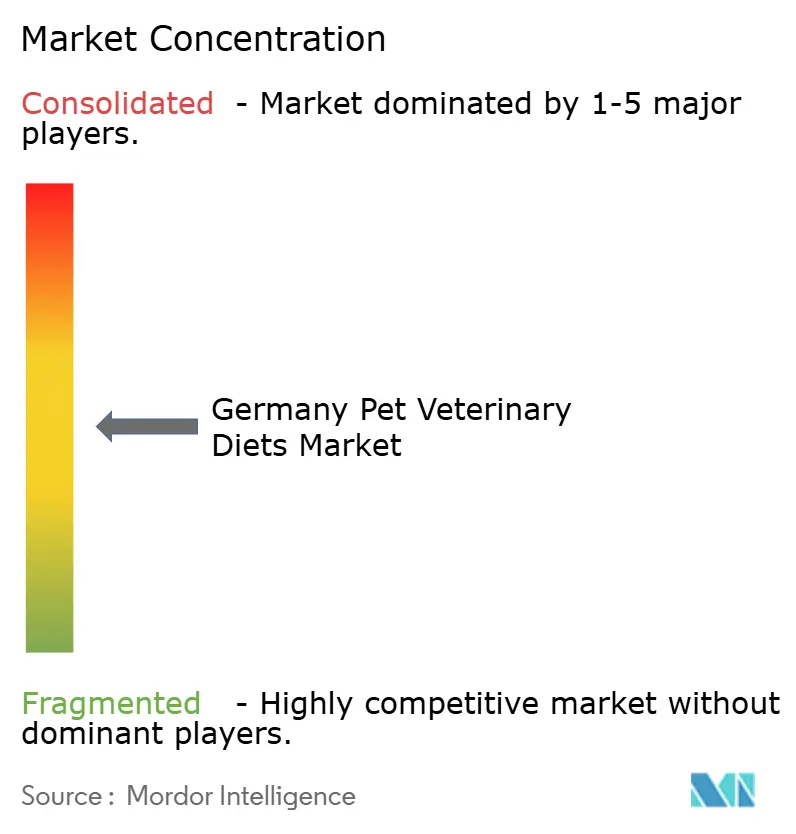
| Market Concentration | Medium |
Major Players *Disclaimer: Major Players sorted in no particular order Image © Mordor Intelligence. Reuse requires attribution under CC BY 4.0. | |
Germany Pet Veterinary Diets Market Analysis by Mordor Intelligence
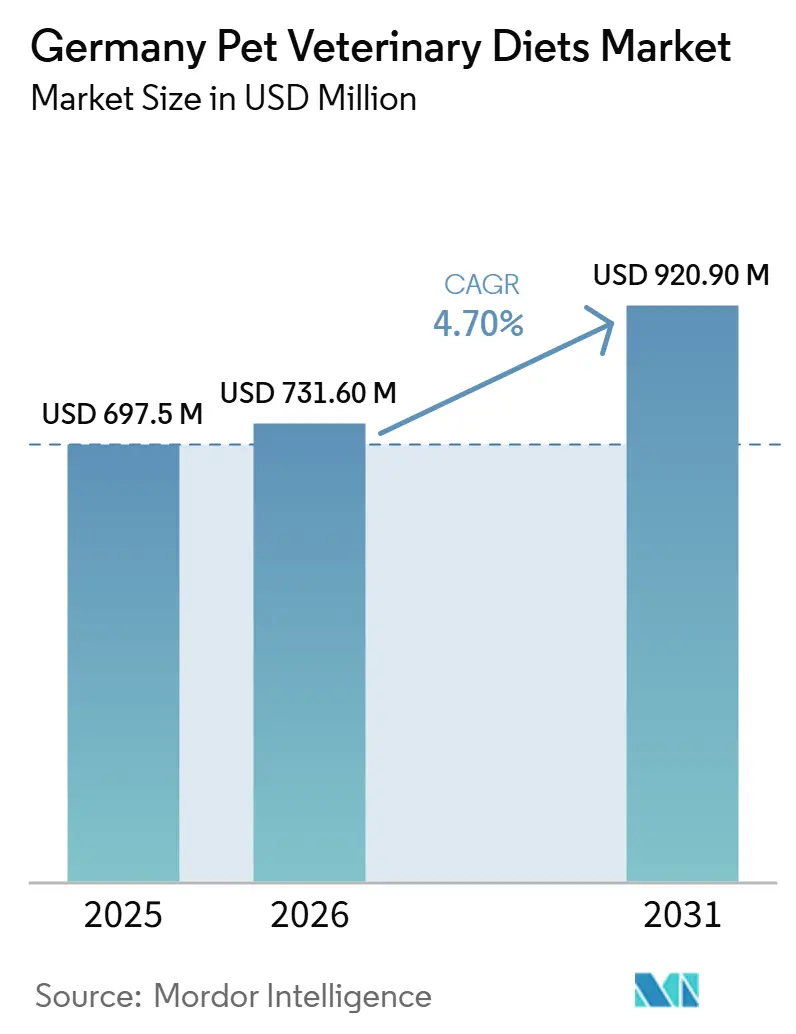
The Germany Pet Veterinary Diets Market size is projected to expand from USD 697.50 million in 2025 and USD 731.60 million in 2026 to USD 920.90 million by 2031, registering a CAGR of 4.70% between 2026 and 2031. The Germany pet veterinary diets market is growing steadily, driven by consistent clinical demand, longer nutritional support requirements for aging pets, and the continued influence of the veterinary channel on purchase decisions. Rising diagnoses of chronic conditions are keeping demand tied to treatment rather than to discretionary pet food spending, making the category more stable than many broader pet food segments. The market also benefits from improved online access to specialist formulas, making it easier for owners to refill prescriptions and supporting longer product use. Germany's pet population reached 33.4 million in 2025, including 15.7 million cats and 10 million dogs, providing a broad base of potential users as pets age and require more condition-specific care. Germany's retail and online pet food sales reached EUR 7 billion (USD 7.6 billion) in 2025, and this spending pattern supports continued willingness to pay for clinically positioned nutrition in the Germany pet veterinary diets market.
Key Report Takeaways
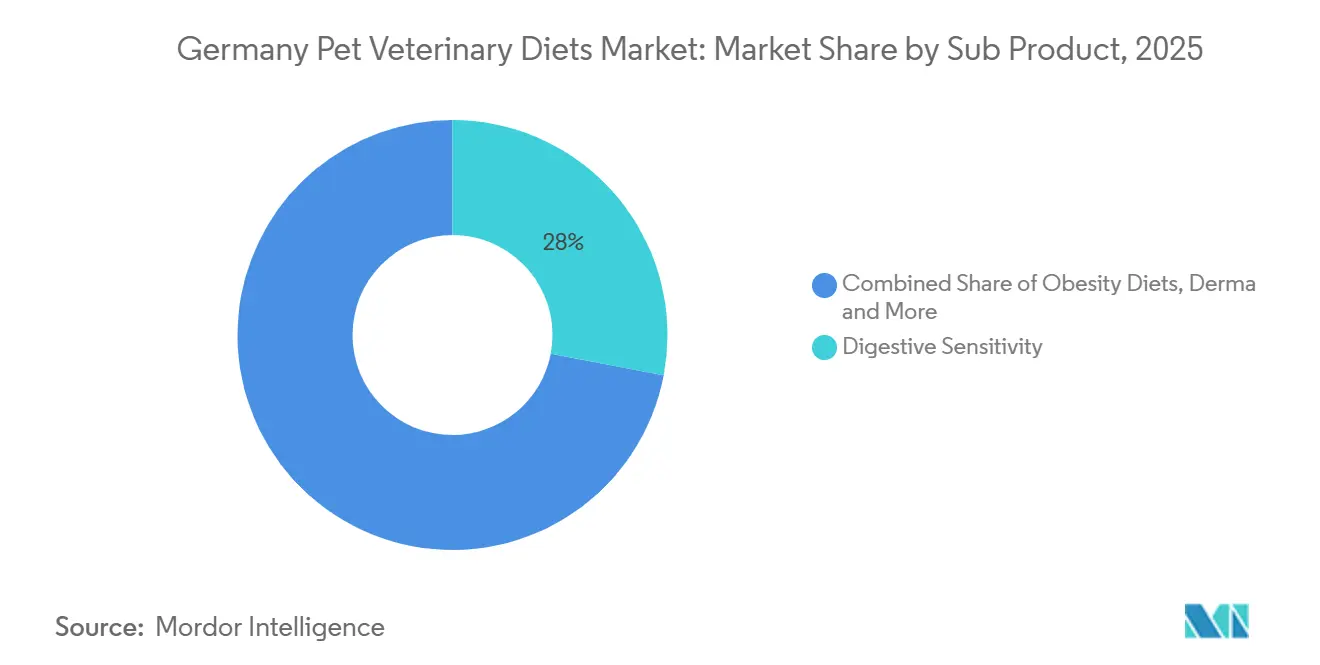
- By sub product, digestive sensitivity held 28.0% of Germany pet veterinary diets market share in 2025, while obesity diets are forecast to grow at the fastest 8.5% CAGR through 2031.
- By pets, cats accounted for 45.6% of the Germany pet veterinary diets market size in 2025, while dogs are projected to record the highest CAGR at 5.3% through 2031.
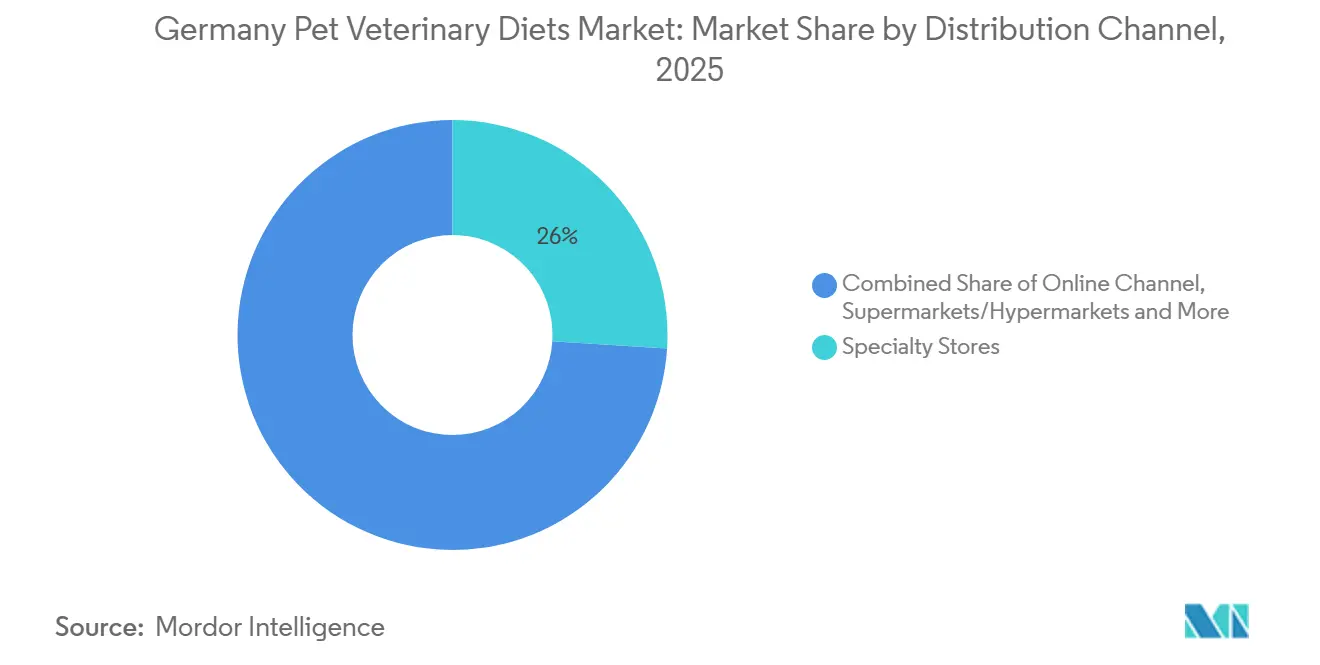
- By distribution channel, specialty stores held 26.0% share of the market in 2025, while the online channel is projected to expand at the fastest 6.1% CAGR through 2031.
Note: Market size and forecast figures in this report are generated using Mordor Intelligence’s proprietary estimation framework, updated with the latest available data and insights as of January 2026.
Germany Pet Veterinary Diets Market Trends and Insights
Drivers Impact Analysis*
| Driver | (~) % Impact on CAGR Forecast | Geographic Relevance | Impact Timeline |
|---|---|---|---|
| Rising Diagnosis Of Chronic Companion-Animal Conditions | +1.4% | Germany and Europe, with spillover to North America | Medium term (2-4 years) |
| Veterinary-Led Prescription Credibility | +1.0% | Highest in Germany and Europe | Long term (≥ 4 years) |
| Premiumization of Health-Focused Pet Food | +0.9% | Strongest in Germany, Europe, and North America | Medium term (2-4 years) |
| Aging Pet Population And Higher Therapeutic Diet Adoption | +0.8% | High in Germany, Europe, and North America | Long term (≥ 4 years) |
| E-Commerce Access To Specialized Diets | +0.5% | Highest in Germany, Asia-Pacific, and North America | Short term (≤ 2 years) |
| Private-Label Therapeutic Formulation Expansion | +0.4% | Strong in Germany and Europe | Medium term (2-4 years) |
| Source: Mordor Intelligence | |||
Rising Diagnosis of Chronic Companion-Animal Conditions
German veterinary clinics are diagnosing more cases of renal disease, dermatological sensitivity, diabetes mellitus, urinary disorders, and obesity in cats and dogs. Each confirmed condition often leads to a diet recommendation that may persist for months or years. As a result, the Germany pet veterinary diets market is growing not only as more pets enter treatment but also as treatment durations extend after diagnosis. Improved in-clinic testing also helps veterinarians identify health issues earlier, extending the period during which diet can support disease management. A 2026 paper in the Journal of the American Veterinary Medical Association states that aging is a modifiable factor in companion animal health and supports the role of targeted nutrition in extending healthy life years[1]Source: Journal of the American Veterinary Medical Association, “Aging Is Modifiable, Current Perspectives on Healthy Aging in Companion Dogs and Cats,” avmajournals.avma.org. Germany’s dense veterinary network reinforces this trend, as veterinarians can quickly translate diagnoses into nutrition plans at the point of care. Therefore, routine clinical practice, rather than short-term consumer trends, continues to support the growth of the Germany pet veterinary diets market.
Veterinary-Led Prescription Credibility
Veterinarians remain the most trusted source for German pet owners when it comes to therapeutic nutrition. This trust gives established prescription brands a structural advantage, as decisions often begin in the examination room rather than on a retail shelf. The Germany pet veterinary diets market benefits from this channel structure because it reduces direct substitution with standard premium food. Royal Canin strengthened this process in Germany by integrating feeding recommendations into the easyVET practice management software and the petsXL pet health app, placing nutrition advice directly into the clinical workflow. This integration shortens the decision path between diagnosis and purchase. It also improves repeat compliance because the recommendation remains linked to the patient record. Over time, this dynamic keeps the Germany pet veterinary diets market closely tied to professional advice and helps preserve price discipline across leading brands.
Premiumization of Health-Focused Pet Food
German pet owners continue to show a clear willingness to pay for products positioned around health outcomes. In the Germany pet veterinary diets market, this behavior is more pronounced, as owners of diagnosed animals tend to view therapeutic food as part of treatment rather than as an optional upgrade. As a result, price resistance remains lower than in adjacent premium pet food categories. The country’s broader premium pet food spending further supports this trend. Hill’s Pet Nutrition, Inc. reinforces its premium clinical positioning in June 2026 with the launch of Prescription Diet k/d + Derm Complete, a formula developed to support kidney health while addressing skin and gastrointestinal sensitivities. Multi-condition products, such as this one, support higher average selling prices because they address multiple needs in a single formula. This dynamic keeps the Germany pet veterinary diets market attractive for brands that can combine clinical evidence, product breadth, and premium positioning.
Aging Pet Population and Higher Therapeutic Diet Adoption
Germany’s pet base is large and aging, shifting the nutrition mix toward condition-specific diets. Older cats and dogs are more likely to require long-term support for kidney health, mobility, urinary health, digestion, and body weight management. The Germany pet veterinary diets market benefits from this trend, as age-related conditions often require dietary management for longer periods than short-term recovery cases. Germany’s total pet population declined from 33.9 million in 2024 to 33.4 million in 2025. However, this decline does not reduce the long-term need for therapeutic nutrition, as an older pet base typically spends more per animal on health management. The 2026 Journal of the American Veterinary Medical Association (JAVMA) paper also supports the role of targeted nutrition in healthy aging, giving veterinarians a stronger clinical basis for early dietary intervention. Aging, therefore, remains a gradual but persistent demand driver. It also indicates that the Germany pet veterinary diets market is likely to see rising demand for formulas that address overlapping conditions in senior animals.
Restraints Impact Analysis*
| Restraint | (~) % Impact on CAGR Forecast | Geographic Relevance | Impact Timeline |
|---|---|---|---|
| High Product Premium Versus Standard Pet Food | -0.9% | Visible globally, with a clear effect in Germany | Long term (≥ 4 years) |
| Tight German and European Feed Additive Compliance Burden | -0.7% | Strongest in Germany and Europe | Medium term (2-4 years) |
| Ingredient Cost Volatility for Specialized Proteins and Functional Inputs | -0.5% | Material across all regions, especially Europe and North America | Short term (≤ 2 years) |
| Consumer Pushback Against Overmedicalized Pet Food Claims | -0.3% | More visible in Germany, Europe, and North America | Medium term (2-4 years) |
| Source: Mordor Intelligence | |||
High Product Premium Versus Standard Pet Food
Veterinary diets continue to command a strong premium over standard pet food, which remains the clearest barrier to faster adoption. The price gap limits trial, especially among first-time users whose pets have milder conditions or who compare prescription food with premium wellness products. The Germany pet veterinary diets market faces lower exposure when animals have severe or chronic diseases. However, it faces higher exposure in categories such as weight management and oral care, where substitute products are available. The pressure also varies by pet type. Cat owners often continue using prescribed diets for kidney or urinary conditions despite high prices. In contrast, dog owners are more likely to compare alternatives in obesity management and digestive care if they believe the condition can be managed without a strict prescription program. German pet owners also make feeding decisions pragmatically, which means price and perceived value remain important even when emotional attachment to pets is high. This makes premium pricing a significant drag on volume growth in the Germany pet veterinary diets market, even though it supports strong revenue per unit for leading brands.
Tight German and European Feed Additive Compliance Burden
Germany strictly applies European feed and dietetic feed regulations, increasing the cost and time required to launch new therapeutic products. Large multinational companies manage these requirements more effectively because they have established regulatory teams, approved production systems, and broader distribution networks. Smaller suppliers face a more challenging approval pathway, which slows innovation and narrows the competitive field. Virbac’s announced September 2025 launch of Vikaly highlights the complexity of this route, as the product entered the market as the first medicated cat food under European Regulation 2019/4 and requires manufacturing approval at dedicated company-owned sites. As a result, the Germany pet veterinary diets market rewards scale and regulatory expertise more than many neighboring pet food segments. Compliance requirements also cover labeling, permitted claims, and prescription handling, which reduces speed to market. This restraint does not stop growth, but it limits the number of companies that can rapidly expand with novel formulations in the Germany pet veterinary diets market.
*Our forecasts treat driver/restraint impacts as directional, not additive. The impact forecasts reflect baseline growth, mix effects, and variable interactions.
Segment Analysis
By Sub Product: Digestive Sensitivity and Metabolic Conditions Drive Market Growth
Digestive sensitivity holds 28.0% of the Germany pet veterinary diets market size in 2025, making it the largest sub-product category in the market. This position reflects the steady use of hydrolyzed-protein and limited-ingredient formulas for dogs and cats with recurring gastrointestinal issues. German veterinarians continue to use these diets as an early step in managing chronic enteropathy and food sensitivity, sustaining broad demand across both major pet types. Renal diets also hold a strong position in the Germany pet veterinary diets market, as kidney-related conditions often require early and long-duration feeding support.
Obesity diets are projected to expand at a CAGR of 8.5% from 2026 to 2031, making them the fastest-growing sub-product category in the Germany pet veterinary diets market. The category is gaining momentum as weight management becomes a more routine part of veterinary consultations and as owners increasingly accept diet as a practical intervention for long-term control. Diabetes, oral care, derma diets, urinary tract disease, and other veterinary diets continue to serve important niche needs, while Hill’s Pet Nutrition, Inc.’s June 2026 launches show how multi-condition formulas are widening the addressable need within the Germany pet veterinary diets market.



By Pets: Cats Leads in the Market While Dogs Witness Growth
Cats accounted for 45.6% of the Germany pet veterinary diets market in 2025, making them the largest pet segment by value. This position is supported by the high treatment relevance of kidney disease, urinary tract conditions, and other chronic feline disorders that typically require sustained dietary management. Germany had 15.7 million cats in 2025, providing the category with a strong volume foundation for ongoing therapeutic demand[2]Source: FEDIAF, “FEDIAF Nutritional Guidelines 2025,” European Pet Food Industry Federation, europeanpetfood.org. Product development in this segment remains active, with Hill's Pet Nutrition, Inc. launching Prescription Diet Metabolic + j/d for cats in April 2026 to address feline weight management and mobility within a single formula.
Dogs are forecast to grow at the fastest rate of 5.3% CAGR through 2031 in the Germany pet veterinary diets market, driven by rising diagnosis of obesity and digestive sensitivity in the canine population. Germany's dog population reached 10 million in 2025, providing the segment with a broad base for ongoing veterinary diet adoption. The growing popularity of smaller breeds also widens the range of formulation requirements, as size, metabolism, and feeding patterns vary more among dogs than among most other companion animals. Other Pets remain a niche within the Germany pet veterinary diets market, though the segment is projected to expand as evidence-based nutritional frameworks become more widely applied beyond cats and dogs.
By Distribution Channel: Specialty Stores Lead as Online Channel Accelerates
Specialty stores accounted for a 26.0% share of the Germany pet veterinary diets market in 2025, making them the largest distribution channel. Their position is supported by trained staff, higher service levels, and a better fit with condition-based product selection compared to mass retail formats. Specialty retail also complements the veterinary channel, as pet owners often seek product explanation and follow-up support after an initial prescription recommendation. This keeps the Germany pet veterinary diets market centered on specialist touchpoints even as the range of available channels expands.
The online channel is forecast to grow at a CAGR of 6.1% through 2031, making it the fastest-growing distribution format in the Germany pet veterinary diets market. Growth is supported by auto-refill options, home delivery, and omnichannel retail systems that reduce the effort required to maintain a prescribed feeding program. Fressnapf Tiernahrungs GmbH reinforced this shift in April 2026 by expanding its rapid delivery coverage and opening a new logistics center in Nörvenich to support e-commerce fulfillment across Germany and neighboring markets. Farmina Pet Foods' clinician-gated home delivery partnership further indicates that digital growth in the Germany pet veterinary diets market to favor structured, prescription-aware platforms over open marketplaces.
Geography Analysis
South Germany represents the largest regional cluster in the Germany pet veterinary diets market in 2026, supported by above-average household income, strong veterinary coverage, and a premium pet care culture. Munich, Stuttgart, Nuremberg, and Augsburg are the main urban centers of demand, as pet owners in these cities tend to spend more on specialist care and nutrition formulated for clinical use. The region also benefits from a strong manufacturing base, including Bosch Tiernahrung GmbH and Co. KG, which provides South Germany with a significant domestic supply base. Veterinary hospitals and referral networks around major academic centers help connect diagnosis with therapeutic diet use more directly. Bosch Tiernahrung's May 2026 acquisition of Fair Food P&S GmbH further indicates that producers in the region continue to invest in health-positioned nutrition formats.
West Germany remains a core commercial zone for the Germany pet veterinary diets market, as North Rhine-Westphalia combines population scale with mature specialist retail infrastructure. Fressnapf's headquarters in Krefeld and its 2026 Nörvenich logistics center reinforce West Germany's importance as a distribution hub for specialist and online pet food flows. Cologne, Düsseldorf, and Bonn support premium demand, while the Ruhr area remains more price-sensitive and may show greater openness to lower-cost functional alternatives. Mera Tiernahrung's 2025 adoption of RELEX planning tools reflects continued operational investment in the West German pet food corridor.
North Germany is a premium-oriented part of the Germany pet veterinary diets market, with Hamburg standing out for digital adoption and strong online specialist purchases. East Germany still shows lower average household income and lower per-capita pet healthcare spending, but urban centers such as Dresden and Leipzig are moving closer to West German buying patterns. Heristo's 2025 Generationenbarometer Pet Food study found that German owners make feeding decisions rationally and that sustainability and evidence-based health claims matter more to younger buyers, which is particularly relevant in growing eastern cities. This generational shift should gradually narrow the regional spending gap and support broader demand across the Germany pet veterinary diets market through 2031.
Competitive Landscape
The Germany pet veterinary diets market is moderately fragmented, with the largest revenue pools controlled by global multinationals. Mars, Incorporated, Nestlé S.A. (Purina), and Colgate-Palmolive Company (Hill's Pet Nutrition, Inc.) are the global companies with a strong presence. These three companies maintain strong positions by combining veterinary relationships, broad prescription portfolios, and clinical education systems. A clear strategic pattern exists across the leading group, with increasing emphasis on multi-condition formulas, digital support tools, and solutions tied closely to the point of diagnosis. Hill's Pet Nutrition, Inc.'s June 2026 introduction of k/d + Derm Complete illustrates this approach, as it extends one prescription product to address kidney, skin, and gastrointestinal needs simultaneously.
Virbac and Farmina Pet Foods are the most prominent challengers in the Germany pet veterinary diets market. Virbac strengthened its clinical position in September 2025 with Vikaly, the first medicated cat food launched in Europe under the current medicated feed framework, giving it a differentiated entry in renal feline care[3]Source: Virbac, “Virbac Introduces World-First Medicated Feed For Cats,” corporate.virbac.com. Farmina Pet Foods has also been broadening its therapeutic footprint, including a July 2025 national distribution agreement with MWI Animal Health for VetLife in the veterinary channel. These moves indicate that challengers are competing through channel depth and focused clinical positioning rather than scale alone.
The competition in the Germany pet veterinary diets market is also among regional manufacturers and private-label specialists. Companies such as Deuerer GmbH and Heristo Aktiengesellschaft are well positioned if retailer-backed therapeutic or near-therapeutic lines expand further in Germany. The main barrier remains regulatory compliance, as dietetic claims, production standards, and prescription handling continue to raise the entry threshold. As a result, the Germany pet veterinary diets market remains open enough for selective gains by challengers, but brand credibility and regulatory readiness cannot be overlooked.
Germany Pet Veterinary Diets Industry Leaders
Mars Incorporated
Nestlé S.A. (Purina)
Virbac
Colgate-Palmolive Company (Hill's Pet Nutrition Inc.)
General Mills, Inc. (Blue Buffalo)
- *Disclaimer: Major Players sorted in no particular order

Recent Industry Developments
- June 2026: Hill’s Pet Nutrition, Inc. launched two Prescription Diet innovations the k/d + Derm Complete for kidney disease with skin and gastrointestinal sensitivities and the k/d + z/d Hydrolyzed, both featuring ActivBiome+ Kidney Defense technology and available through veterinarian recommendation globally, including Europe.
- April 2026: Hill’s Pet Nutrition, Inc. launched Prescription Diet Metabolic + j/d for cats, the first formula combining feline weight management and joint mobility support in a single prescription diet
- April 2026: Fressnapf Holding SE opened a new large-scale logistics center in Nörvenich, North Rhine-Westphalia, serving as the central e-commerce hub for Germany, and expanded the Wolt delivery partnership to 78 stores across 17 German cities.


Germany Pet Veterinary Diets Market Report Scope
A pet veterinary diet, often called a therapeutic or prescription diet, is a specialized animal food formulated to manage, treat, or prevent specific medical conditions in dogs and cats.
The Germany Pet Veterinary Diets Market Report is segmented by sub product (diabetes, renal, urinary tract disease, digestive sensitivity, oral care diets, derma diets, obesity diets, and other veterinary diets) by pets (cats, dogs, and other pets) by distribution channel (convenience stores, online channel, specialty stores, supermarkets/hypermarkets, and other channels). The market forecasts are provided in terms of value in USD and volume in metric tons.
| Diabetes |
| Renal |
| Urinary Tract Disease |
| Digestive Sensitivity |
| Oral Care Diets |
| Derma Diets |
| Obesity Diets |
| Other Veterinary Diets |
| Cats |
| Dogs |
| Other Pets |
| Convenience Stores |
| Online Channel |
| Specialty Stores |
| Supermarkets/Hypermarkets |
| Other Channels |
| By Sub Product | Diabetes |
| Renal | |
| Urinary Tract Disease | |
| Digestive Sensitivity | |
| Oral Care Diets | |
| Derma Diets | |
| Obesity Diets | |
| Other Veterinary Diets | |
| By Pets | Cats |
| Dogs | |
| Other Pets | |
| By Distribution Channel | Convenience Stores |
| Online Channel | |
| Specialty Stores | |
| Supermarkets/Hypermarkets | |
| Other Channels |


Key Questions Answered in the Report
What is the 2026 value and 2031 value of Germany pet veterinary diets?
The market is valued at USD 731.60 million in 2026 and is projected to reach USD 920.90 million by 2031 at a 4.70% CAGR.
Which sub product leads demand in Germany?
Digestive Sensitivity is the leading sub product, with 28.0% share in 2025, supported by steady veterinary use in gastrointestinal and food sensitivity cases.
Which pet type brings the most revenue?
Cats lead by value, accounting for 45.6% in 2025, mainly because kidney, urinary, and other chronic feline conditions often need long-duration diet use.
Which channel is growing fastest for therapeutic pet food in Germany?
The Online Channel is growing fastest, with a projected 6.1% CAGR through 2031, helped by delivery, refill convenience, and clinician-linked ordering models.
Page last updated on:





