
Germany Nutritional Supplements Market Size and Share
Market Overview
| Study Period | 2021 - 2031 |
|---|---|
| Forecast Data Period | 2026 - 2031 |
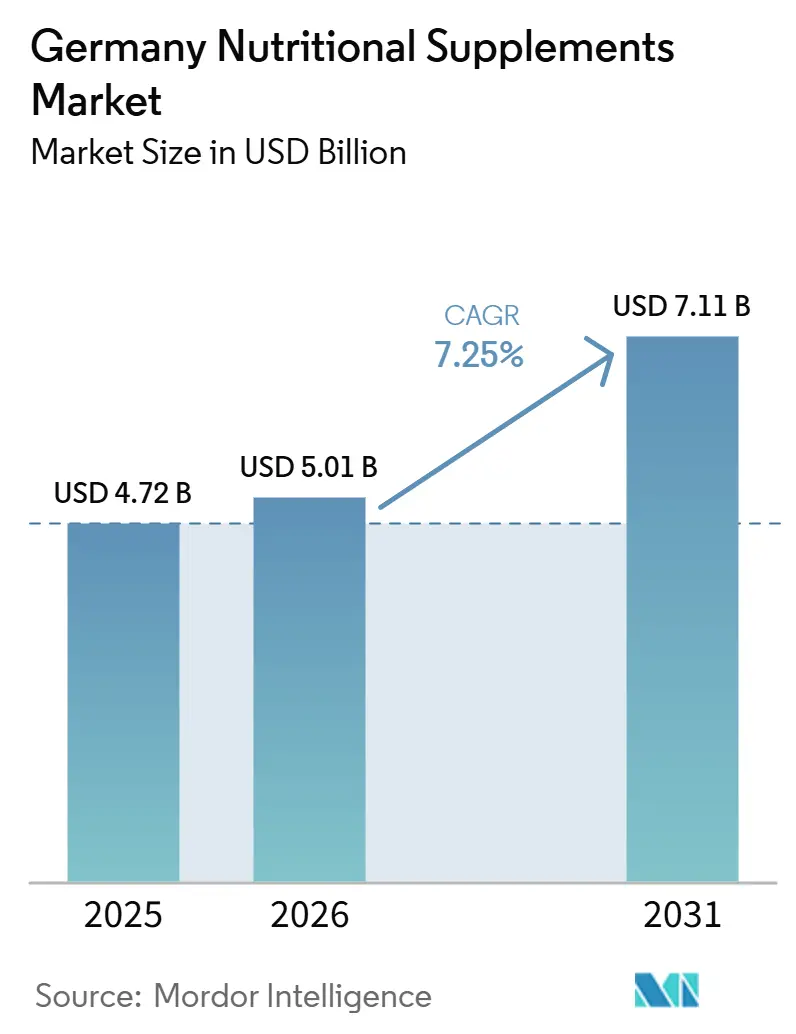
| Base Year Market Size (2025) | USD 4.72 Billion |
| Market Size (2026) | USD 5.01 Billion |
| Market Size (2031) | USD 7.11 Billion |
| Growth Rate (2026 - 2031) | 7.25 % |
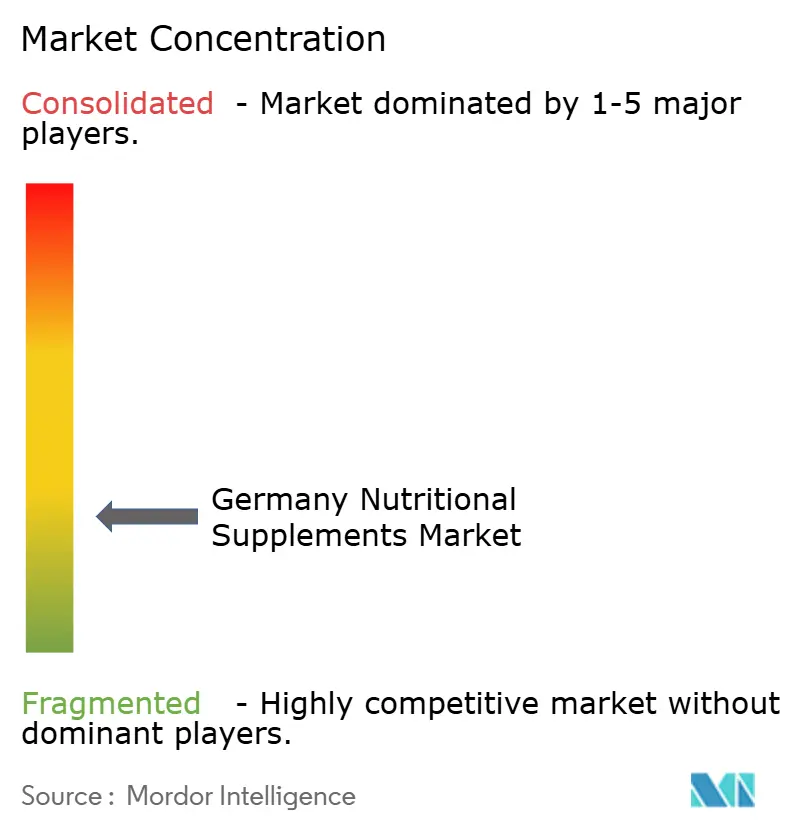
| Market Concentration | Low |
Major Players *Disclaimer: Major Players sorted in no particular order Image © Mordor Intelligence. Reuse requires attribution under CC BY 4.0. | |
Germany Nutritional Supplements Market Analysis by Mordor Intelligence
The Germany nutritional supplements market size is expected to grow from USD 4.72 billion in 2025 to USD 5.01 billion in 2026 and is forecast to reach USD 7.11 billion by 2031 at 7.25% CAGR over 2026-2031. The market is being driven by rising consumer awareness of preventive healthcare, increasing adoption of personalized nutrition, and growing demand for immunity, digestive health, and sports nutrition products. Germany's aging population and the increasing prevalence of lifestyle-related health conditions are encouraging consumers to incorporate dietary supplements into their daily wellness routines. Innovation in product formulations, including gummies, effervescent tablets, plant-based supplements, and clean-label ingredients, is further supporting market expansion. Additionally, the rapid growth of e-commerce and pharmacy distribution channels has improved product accessibility and strengthened consumer reach across the country.
Key Report Takeaways
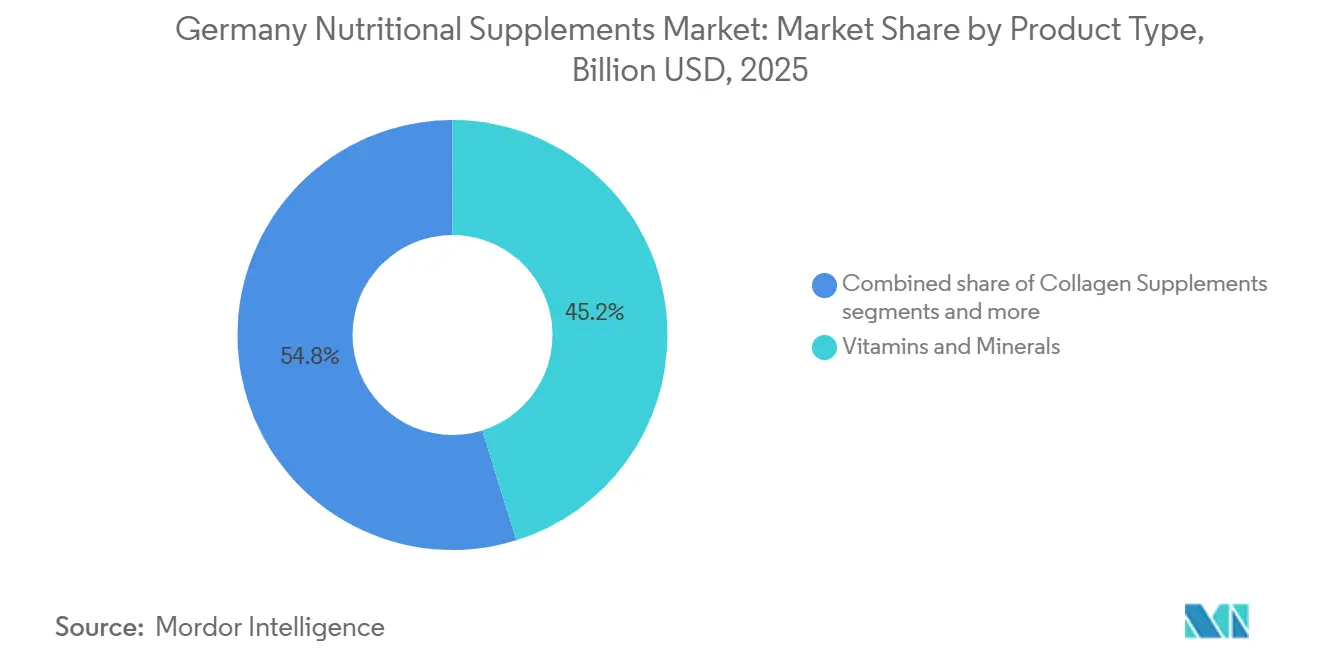
- By product type, vitamins and minerals held 45.18% of Germany nutritional supplements market share in 2025, while collagen supplements are forecasted to grow at an 8.61% CAGR through 2031.
- By form, capsules and softgels held 38.42% of Germany nutritional supplements market share in 2025, while gummies are forecasted to grow at an 8.93% CAGR through 2031.
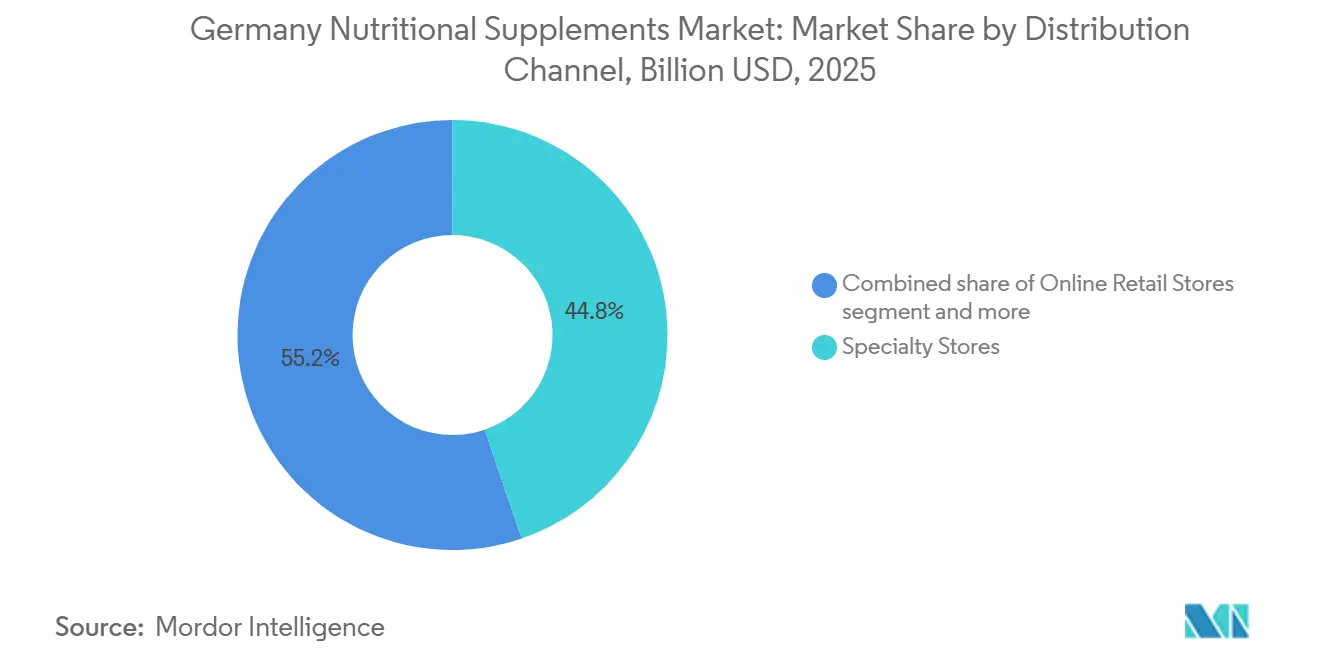
- By distribution channel, specialty stores held 44.78% of revenue in 2025, while online retail channels are forecasted to grow at a 9.01% CAGR through 2031.
Note: Market size and forecast figures in this report are generated using Mordor Intelligence’s proprietary estimation framework, updated with the latest available data and insights as of January 2026.
Germany Nutritional Supplements Market Trends and Insights
Drivers Impact Analysis*
| Driver | (~) % Impact on CAGR Forecast | Geographic Relevance | Impact Timeline |
|---|---|---|---|
| Growing health and wellness awareness | +1.4% | Germany-wide, with faster adoption in Berlin, Munich, and Hamburg | Short term (≤ 2 years) |
| Rising demand for preventive healthcare products | +1.2% | Germany-wide, supported by statutory health insurance preventive care frameworks | Medium term (2-4 years) |
| Increasing vitamin D deficiency concerns | +0.9% | Northern German states, with a national increase from October to March | Short term (≤ 2 years) |
| Aging population boosting supplement demand | +1.5% | National, with concentration among people aged 65 and above in eastern and southern states | Long term (≥ 4 years) |
| Increasing consumer spending on premium and branded nutritional supplements | +0.8% | Urban Germany and higher-income metropolitan groups | Medium term (2-4 years) |
| Rising demand for immunity-support supplements | +0.7% | Germany-wide, with seasonal peaks from October to March | Short term (≤ 2 years) |
| Source: Mordor Intelligence | |||
Growing health and wellness awareness
Increasing focus on preventive healthcare, immunity support, and overall well-being is significantly driving the growth of the Germany nutritional supplements market. Consumers are becoming more aware of the role of essential vitamins, minerals, and functional nutrients in maintaining health and addressing nutritional deficiencies. The aging population is further contributing to demand for supplements supporting bone health, joint care, cognitive function, and healthy aging. Additionally, rising participation in fitness activities and active lifestyles is encouraging the consumption of sports nutrition and performance-enhancing supplements. Growing interest in personalized nutrition, natural ingredients, and clean-label formulations is also influencing consumer preferences.
Rising demand for preventive healthcare products
Growing emphasis on preventive healthcare and proactive disease management is driving the demand for nutritional supplements in Germany, as consumers increasingly seek products that support long-term health and reduce the risk of nutrient deficiencies. Rising awareness regarding the importance of adequate vitamin and mineral intake has encouraged the adoption of supplements across different age groups. The Federal Institute for Risk Assessment (BfR) highlights the importance of targeted supplementation, stating that folic acid supplementation is advisable for women planning pregnancy, while vitamin D supplements may be appropriate when sunlight exposure is insufficient[1]Source: German Federal Institute for Risk Assessment, “Nutrients supply? Plate rather than pill!”, bfr.bund.de. Such recommendations are increasing consumer confidence in supplements for specific health needs.
Increasing vitamin D deficiency concerns
Growing concerns regarding vitamin D deficiency are contributing significantly to the expansion of the Germany nutritional supplements market, as limited sunlight exposure during winter months increases consumer awareness about the need for supplementation. Vitamin D plays an important role in maintaining bone health, immune function, and overall well-being, particularly among older adults. The German Osteology Association (DVO) recommends at least 800 IU of vitamin D per day for postmenopausal women and men aged 50 years and above to support bone health[2]Source: Dachverband Osteologie e.V., “AT THE SCIENTIFIC UMBRELLA ASSOCIATION FOR OSTEOLOGY (DVO) eV”, dv-osteologie.org. Increasing awareness of vitamin D-related health risks, including osteoporosis and weakened immunity, is encouraging consumers to adopt vitamin D supplements.
Aging population boosting supplement demand
Germany’s aging demographic structure is creating sustained demand for nutritional supplements, particularly products targeting age-related health concerns such as bone strength, joint health, cognitive function, and immunity support. Older consumers are increasingly adopting supplements to maintain quality of life and manage nutritional requirements associated with aging. People aged 65 and above represented around 21% of Germany’s population in 2025, and this share is projected to approach 28% by 2035, highlighting the expanding elderly consumer base[3]Source: Statistisches Bundesamt, “Federal Statistical Office of Germany”, destatis.de. This demographic shift is encouraging demand for specialized formulations, including vitamin D, calcium, omega-3, and multivitamin supplements. Additionally, greater awareness among older adults regarding preventive healthcare and healthy aging is further supporting supplement adoption.
Restraints Impact Analysis*
| Restraint | (~) % Impact on CAGR Forecast | Geographic Relevance | Impact Timeline |
|---|---|---|---|
| Strict EU supplement regulations | -1.4% | Germany-wide, with greater effects on companies distributing across the EU | Long term (≥ 4 years) |
| Limited awareness of supplement benefits | -0.7% | Rural Germany and lower-income groups | Medium term (2-4 years) |
| Competition from functional foods and pharmaceuticals | -1.1% | Germany-wide, with the highest effect in supermarkets and hypermarkets | Medium term (2-4 years) |
| Concerns over excessive supplement usage | -0.5% | Germany-wide, especially in self-medication | Short term (≤ 2 years) |
| Source: Mordor Intelligence | |||
Strict EU supplement regulations
Germany enforces a structured regulatory framework for nutritional supplements. The German Nutritional Supplements Ordinance requires manufacturers and importers to notify the Federal Office of Consumer Protection and Food Safety before marketing a product. EU regulations also restrict vitamin and mineral sources to the lists established under Directive 2002/46/EC. The Federal Institute for Risk Assessment has issued recommendations on maximum levels for vitamins and essential minerals, which inform ongoing European discussions on harmonized limits. Companies operating across several EU countries must manage varying national tolerance levels until regulators harmonize the rules. As a result, the Germany nutritional supplements market favors companies that integrate regulatory review, substantiation records, and compliant communications into product development.
Limited awareness of supplement benefits
Fortified dairy products, omega-3 beverages, collagen drinkables, and protein-enhanced cereals provide consumers with nutrient options through regular food purchases. These products meet the needs of individuals who do not identify as supplement users. Competition remains strongest in supermarkets and hypermarkets, where consumers often purchase functional foods and supplements during the same visit. Pharmacy-side alternatives also compete for consumer attention through brands such as Tetesept, Doppelherz, and MCM Klosterfrau. This pressure limits conversion among consumers who can obtain similar nutrients through fortified foods or familiar medicinal brands. Concerns about excessive supplement use create an additional constraint, as they encourage more cautious self-medication decisions.
*Our forecasts treat driver/restraint impacts as directional, not additive. The impact forecasts reflect baseline growth, mix effects, and variable interactions.
Segment Analysis
By Product Type: Vitamins and Minerals Anchored by Deficiency Science, Collagen Redefining Premium Growth
Vitamins and minerals accounted for the largest share of 45.18% in the Germany nutritional supplements market in 2025. The segment dominates due to strong consumer awareness regarding the importance of essential micronutrients in maintaining overall health and preventing nutritional deficiencies. Daily supplementation with vitamins such as Vitamin D, Vitamin C, and B-complex, along with minerals including magnesium, calcium, and zinc, has become increasingly common across different age groups. Germany's aging population and rising focus on preventive healthcare continue to support demand for these products. In addition, healthcare professionals frequently recommend vitamin and mineral supplements to address nutrient gaps, further strengthening consumer confidence.
Collagen supplements are projected to register the fastest CAGR of 8.61% during the forecast period through 2031. The rapid growth of this segment is driven by increasing consumer interest in healthy aging, skin health, joint mobility, and bone strength. Younger consumers are also adopting collagen supplements as part of beauty-from-within and wellness routines, expanding the target consumer base beyond older populations. Manufacturers are introducing innovative formulations such as marine collagen, bovine collagen peptides, flavored powders, gummies, and ready-to-drink products to improve convenience and appeal.



By Form: Capsules and Softgels Lead While Gummies Redefine Consumer Engagement
Capsules and Softgels represented 38.42% of form revenue in 2025. Their position reflects demand for precise dosing and product stability among consumers with a clinically oriented approach to supplements. Softgels are particularly suitable for omega-3 products and fat-soluble vitamins such as D3 and K2. Tablets maintain a major role in multivitamin and B-complex products, particularly for older consumers familiar with pharmaceutical-style formats. Powders serve collagen and sports nutrition needs, while stick packs improve single-serve convenience.
Gummies are forecasted to grow at an 8.93% CAGR from 2026 to 2031, the highest rate among forms. The format is expanding from children’s products into adult immunity, beauty, and cognitive health products. Gummy launches in Germany more than doubled between 2021 and 2025, with citrus and berry leading flavor choices and tropical profiles expanding appeal. Bear with Benefits introduced Kids Multivitamins in gummy form, while BrainEffect offered a Summer Collagen Powder with mango and passionfruit flavors. These launches show how flavor and format can help recruit new users to the Germany nutritional supplements market.
By Distribution Channel: Specialty Stores Defend Consultation Advantage, Online Accelerates
Specialty stores accounted for the largest revenue share of 44.78% in the Germany nutritional supplements market in 2025. The segment maintains its leadership due to the high level of consumer trust in expert guidance, product authenticity, and personalized recommendations offered by specialty retailers. These stores provide a broad portfolio of vitamins, minerals, herbal supplements, sports nutrition, and premium wellness products, catering to diverse consumer needs. In addition, Germany's well-established network of health food stores, nutrition retailers, and specialized pharmacies continues to support the segment's dominant position.
Online retail channels are projected to register the fastest CAGR of 9.01% during the forecast period through 2031. Rapid digitalization, increasing internet penetration, and the growing preference for convenient shopping are driving the expansion of this distribution channel. Consumers are increasingly purchasing nutritional supplements online due to wider product availability, competitive pricing, subscription services, and access to detailed product information and customer reviews. E-commerce platforms also enable manufacturers to reach a broader customer base while introducing direct-to-consumer sales models and personalized nutrition offerings.
Geography Analysis
Germany represents one of Europe's most mature and health-conscious nutritional supplements markets, supported by high consumer awareness, strong purchasing power, and a well-developed healthcare infrastructure. Demand is particularly strong in major urban centers such as Berlin, Munich, Hamburg, Frankfurt, and Cologne, where consumers actively invest in preventive healthcare and wellness products. The country's aging population and increasing prevalence of lifestyle-related health concerns continue to drive regular consumption of vitamins, minerals, probiotics, and specialty supplements.
German consumers also place significant emphasis on product quality, scientific validation, and ingredient transparency, encouraging manufacturers to develop premium and clinically supported formulations. The presence of established pharmacies, drugstores, health food stores, and modern retail chains ensures extensive product availability across the country. These factors collectively position Germany as a prominent market for nutritional supplements in Europe.
Southern and western Germany account for a significant share of premium supplement sales due to higher disposable incomes and greater adoption of health and wellness products. Meanwhile, eastern regions are witnessing steady growth as awareness of preventive nutrition continues to increase. This balanced retail infrastructure supports sustained market penetration throughout the country. Rising investments in digital health platforms, subscription-based supplement services, and direct-to-consumer sales are further strengthening market accessibility across urban and rural areas.
Competitive Landscape
The Germany nutritional supplements market is fragmented, with competition characterized by the presence of numerous multinational corporations, domestic manufacturers, pharmaceutical companies, and specialized nutrition brands. The fragmented structure encourages continuous product innovation and intense competition across both premium and mass-market segments. Companies differentiate themselves through scientifically validated formulations, clean-label ingredients, and targeted health benefits. Strong brand recognition, product quality, and compliance with stringent German and European regulations remain important competitive factors. Manufacturers also focus on expanding their product portfolios to address evolving consumer demand for preventive healthcare and personalized nutrition.
Companies are increasingly investing in research and development to introduce innovative formulations tailored to immunity, digestive health, healthy aging, cognitive wellness, and sports performance. Personalized nutrition, plant-based supplements, vegan formulations, sugar-free gummies, and convenient delivery formats such as powders, capsules, and effervescent tablets have become key areas of product differentiation. Many brands collaborate with healthcare professionals, nutritionists, and research institutions to strengthen product credibility and consumer trust.
Competition is further intensified by the rapid expansion of e-commerce, direct-to-consumer business models, and omnichannel distribution strategies. While pharmacies, specialty nutrition stores, and drugstores remain major sales channels, online platforms have enabled smaller brands to compete effectively with established players by reaching a wider consumer base. Market participants are expanding through strategic partnerships, acquisitions, product launches, and investments in digital marketing to enhance brand visibility.
Germany Nutritional Supplements Industry Leaders
Orthomol Holding GmbH
Queisser Pharma GmbH & Co. KG
Omega Pharma Deutschland GmbH
Merz Consumer Care GmbH
Bionorica SE
- *Disclaimer: Major Players sorted in no particular order

Recent Industry Developments
- June 2026: Orthomol Holding GmbH launched the Orthomol Essentials range through a new exclusive DTC online shop for the DACH region, Germany, Austria, Switzerland, incorporating Balchem's Albion Minerals chelated ingredients, including magnesium bisglycinate chelate and OptiMSM, in a clean-label, personalized nutrition format, signaling a strategic shift toward branded-ingredient positioning at the premium end of the Germany supplement market.
- June 2026: Sunday Natural Products GmbH, through its logistics subsidiary Sunday Natural Logistics GmbH, signs a long-term lease for a distribution warehouse in Viersen, North Rhine-Westphalia, to support European e-commerce operations from Q2 2026, reflecting the scale of DTC supplement demand growth and the need for dedicated fulfillment infrastructure.
- May 2026: Orthomol launched a reformulated gender-neutral Orthomol Vital product, with vitamin B12 elevated to 1,000 µg per daily dose, and introduced Orthomol Pro fem, a new probiotic combination for female vaginal flora support, both expanding the core Orthomol health platform into gender-specific and microbiome health segments.


Germany Nutritional Supplements Market Report Scope
Nutritional supplements are products designed to supplement the daily diet by providing essential nutrients and bioactive compounds that may be lacking or insufficient in regular food intake. The Germany nutritional supplements market is segmented by product type, form and distribution channel. Based on product type, the market is segmented into vitamins and minerals, herbal and botanical supplements, collagen supplements, omega fatty acid supplements and other product types. Based on form, the market is segmented into capsules and softgels, tablets, powders, gummies, liquid supplements and others. Based on distribution channel, the market is segmented into supermarkets/hypermarkets, specialty stores, online retail channels, direct selling and other distribution channels. For each segment, the market sizing and forecasting have been done in value terms (USD billion).
| Vitamins and Minerals |
| Herbal and Botanical Supplements |
| Collagen Supplements |
| Omega Fatty Acid Supplements |
| Other Product Types |
| Capsules and Softgels |
| Tablets |
| Powders |
| Gummies |
| Liquid Supplements |
| Others |
| Supermarkets/Hypermarkets |
| Specialty Stores |
| Online Retail Channels |
| Direct Selling |
| Other Distribution Channels |
| By Product Type | Vitamins and Minerals |
| Herbal and Botanical Supplements | |
| Collagen Supplements | |
| Omega Fatty Acid Supplements | |
| Other Product Types | |
| By Form | Capsules and Softgels |
| Tablets | |
| Powders | |
| Gummies | |
| Liquid Supplements | |
| Others | |
| By Distribution Channel | Supermarkets/Hypermarkets |
| Specialty Stores | |
| Online Retail Channels | |
| Direct Selling | |
| Other Distribution Channels |


Key Questions Answered in the Report
What is the value of nutritional supplements in Germany?
The Germany nutritional supplements market size is USD 5.01 billion in 2026 and is forecast to reach USD 7.11 billion by 2031, at a 7.25% CAGR.
Which product category leads sales in Germany?
Vitamins and Minerals led with 45.18% of revenue in 2025. Vitamin D, age- and gender-specific multivitamins, and products addressing established micronutrient needs underpin this position, while herbal and omega-3 products remain important adjacent categories.
What is the fastest-growing supplement format in Germany?
Gummies is projected to expand at an 8.93% CAGR through 2031 as adult consumers adopt products for immunity, beauty, and cognitive health.
Which sales channel has the largest role in Germany?
Specialty Stores held 44.78% of revenue in 2025 because many consumers value pharmacy and specialist advice.
What factors shape competition among German supplement brands?
Companies compete through compliant health claims, ingredient science, professional referral networks, and pharmacy-linked online distribution.
Page last updated on:





